Area of a Triangle Using Pythagoras' Theorem WORKSHEET
Suitable for Year groups: Year 10, Year 11
GCSE Tier: Higher
Targeting grades: 6-7
Prerequisite knowledge: Area of triangles. Pythagoras' theorem.
Learning Objective: Use Pythagoras’ Theorem in similar triangles to solve problems involving right-angled triangles, and, where possible, general triangles.
Area of a Triangle Using Pythagoras' Theorem WORKSHEET DESCRIPTION
This worksheet helps students practise finding the area of a triangle using Pythagoras’ Theorem.
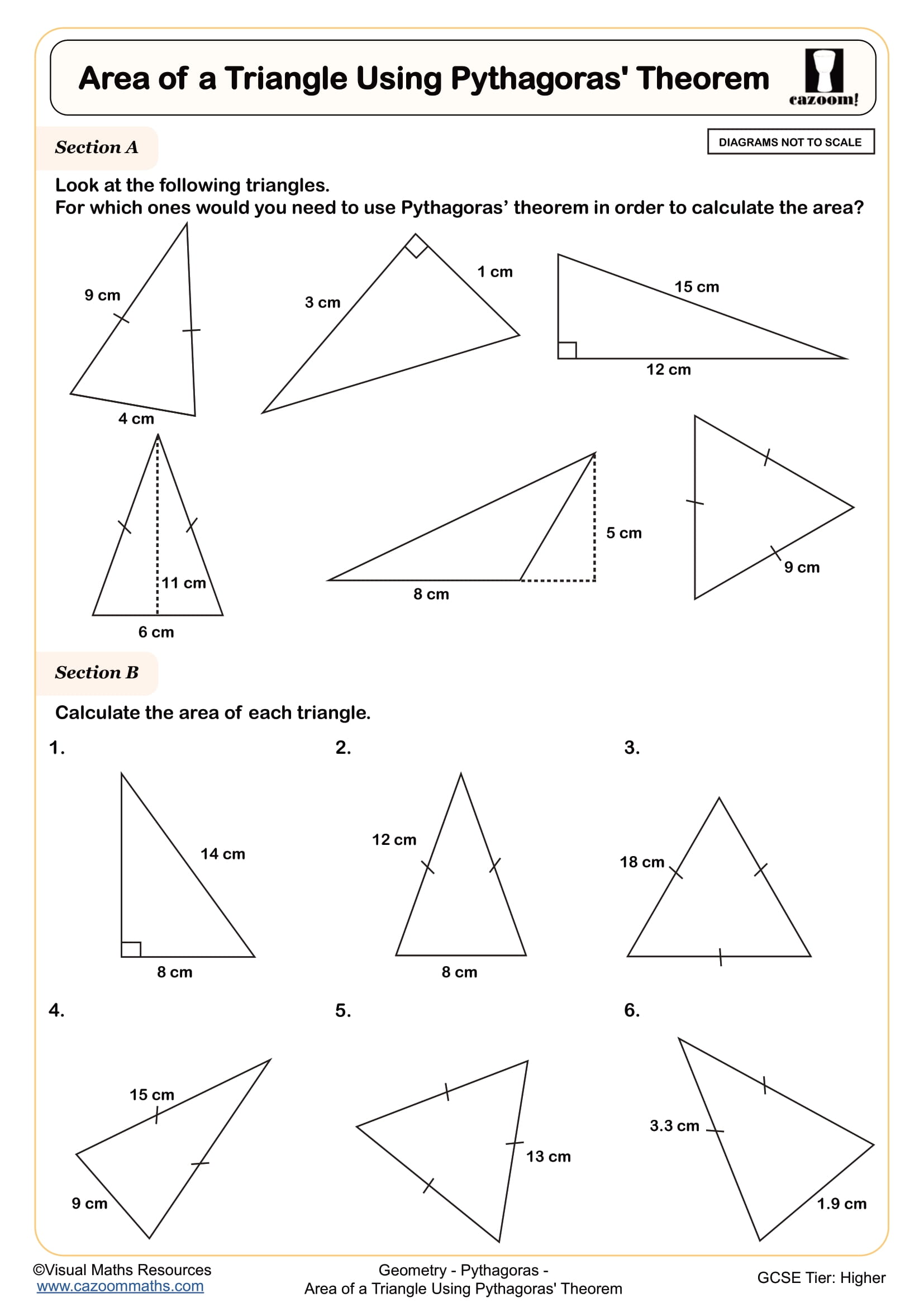
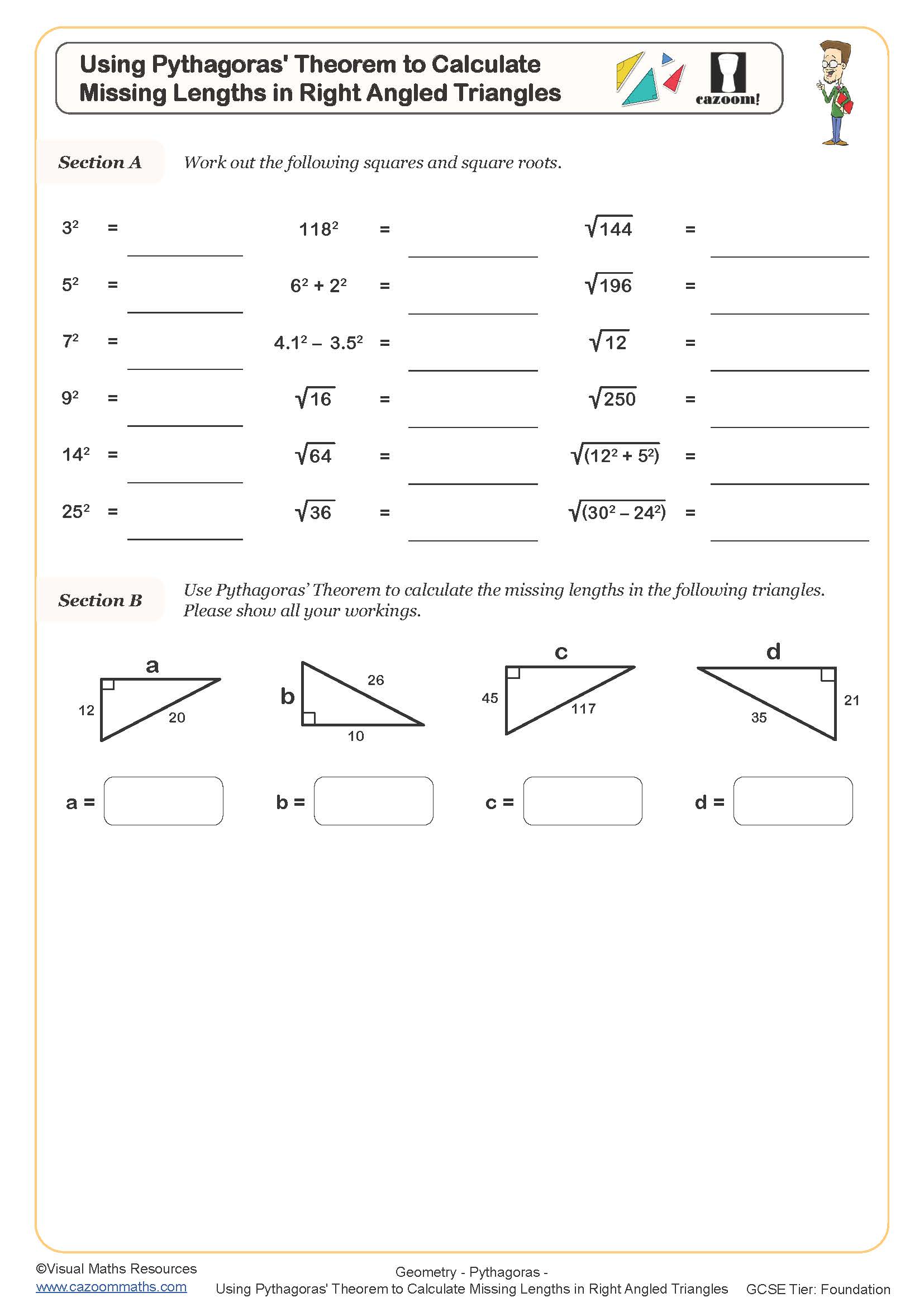
In Section A, students are shown a variety of triangles and must decide which ones require Pythagoras’ Theorem to work out the area. This encourages critical thinking and reinforces understanding of when Pythagoras’ Theorem can be used to find either the base or the height as required.
In Section B, learners are asked to calculate the area of several labelled triangles: including right angled, equilateral, and isosceles triangles. Pythagoras’ Theorem is needed to find missing side lengths before calculating the area in all cases. Diagrams are clearly laid out and varied in complexity.
In Section A, students are shown a variety of triangles and must decide which ones require Pythagoras’ Theorem to work out the area. This encourages critical thinking and reinforces understanding of when Pythagoras’ Theorem can be used to find either the base or the height as required.
In Section B, learners are asked to calculate the area of several labelled triangles: including right angled, equilateral, and isosceles triangles. Pythagoras’ Theorem is needed to find missing side lengths before calculating the area in all cases. Diagrams are clearly laid out and varied in complexity.
All worksheets are created by the team of experienced teachers at Cazoom Maths.
RELATED TO Area of a Triangle Using Pythagoras' Theorem WORKSHEET
Frequently Asked Questions
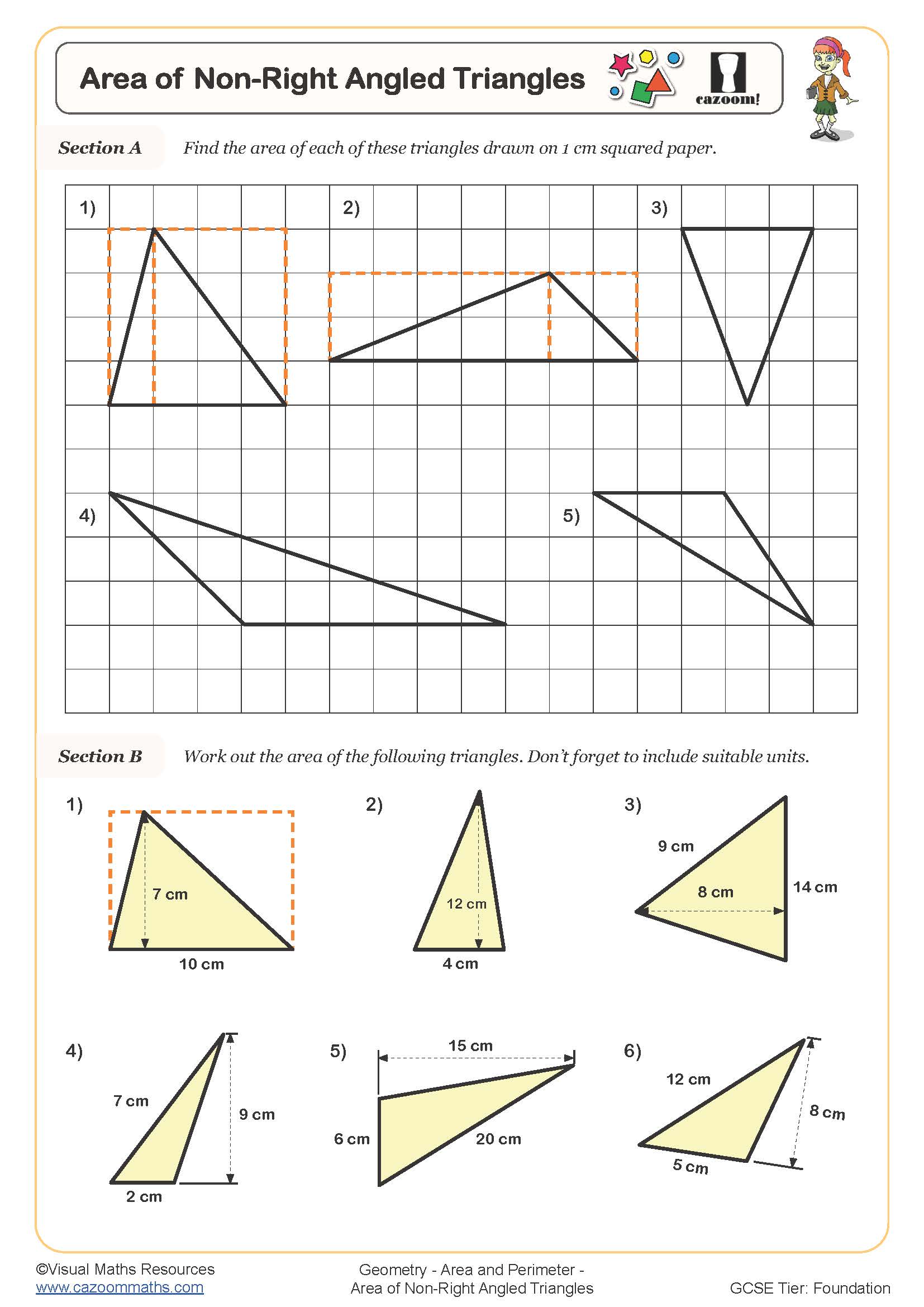
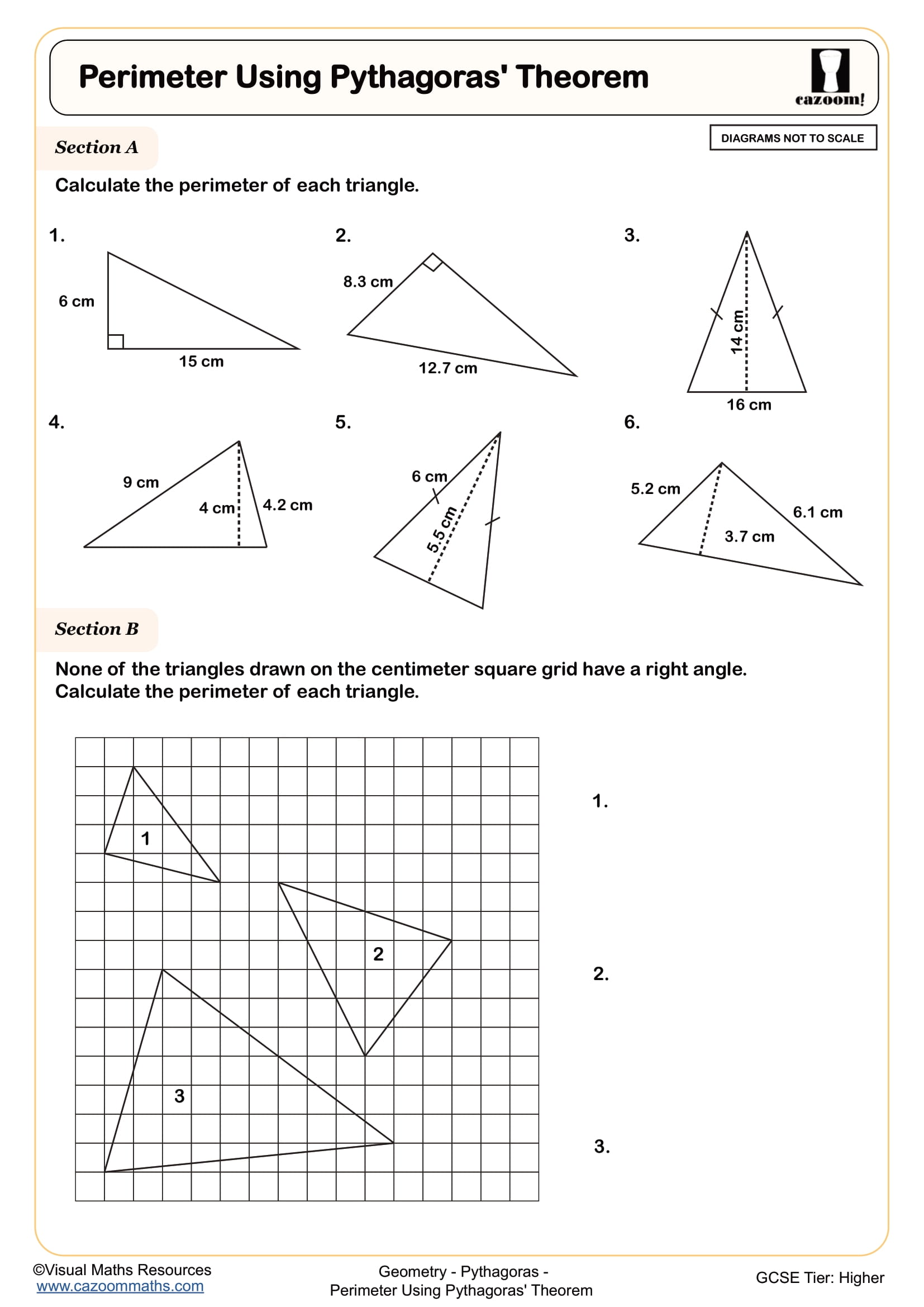
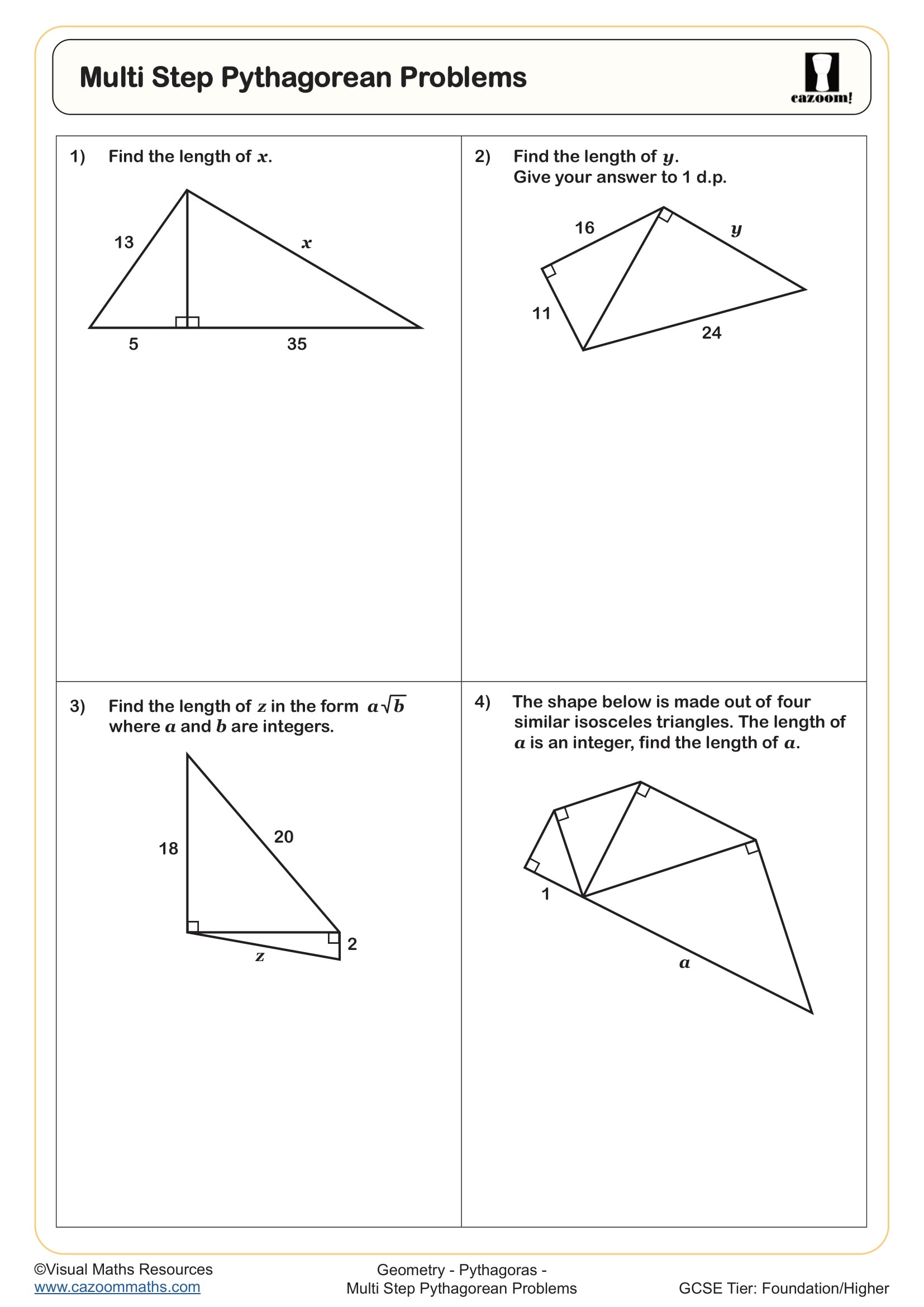
Use Pythagoras’ Theorem in similar triangles to solve problems involving right-angled triangles, and, where possible, general triangles.