Properties of 2D Shapes Worksheets
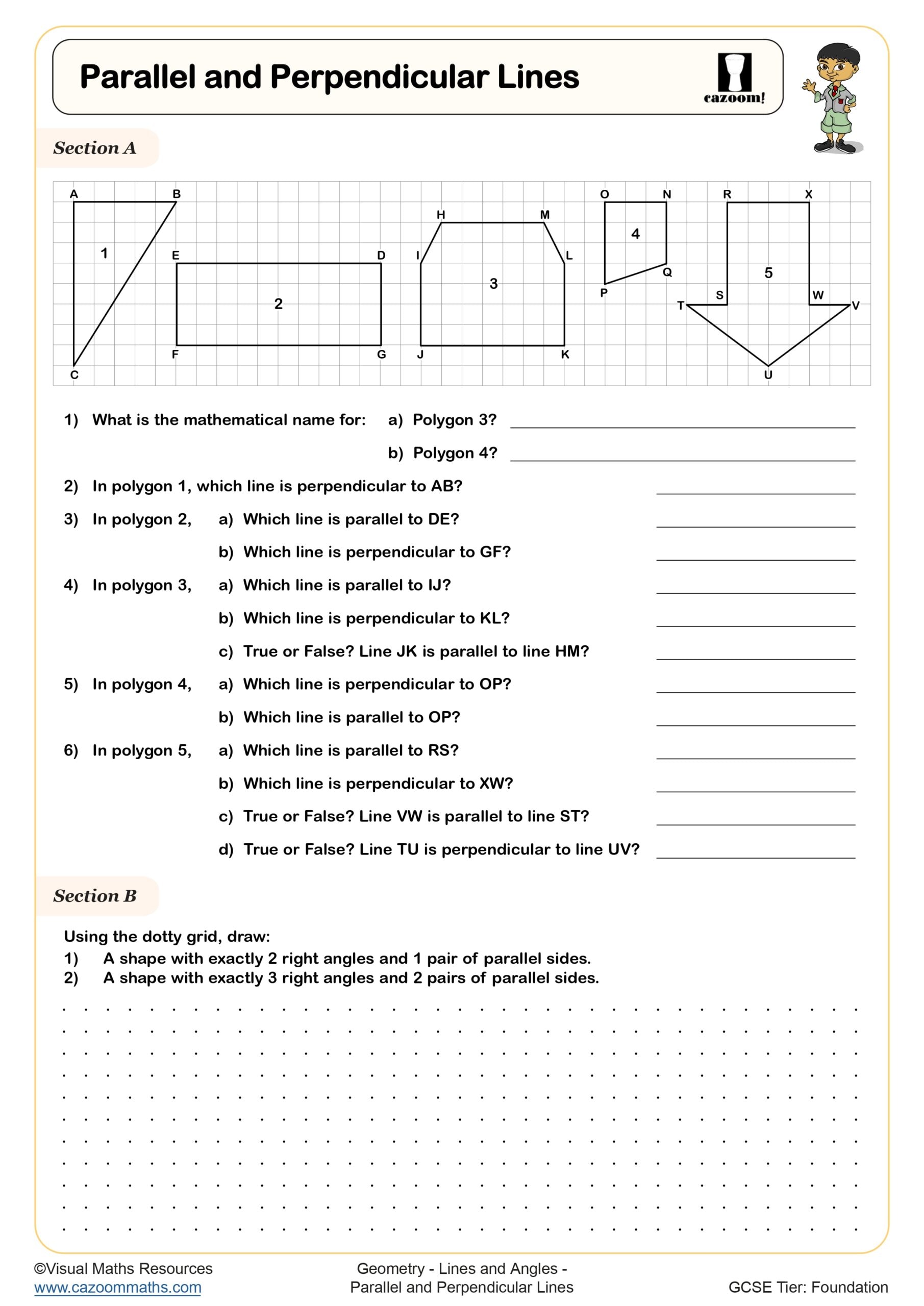
Parallel and Perpendicular Lines
Year groups: 7, 8
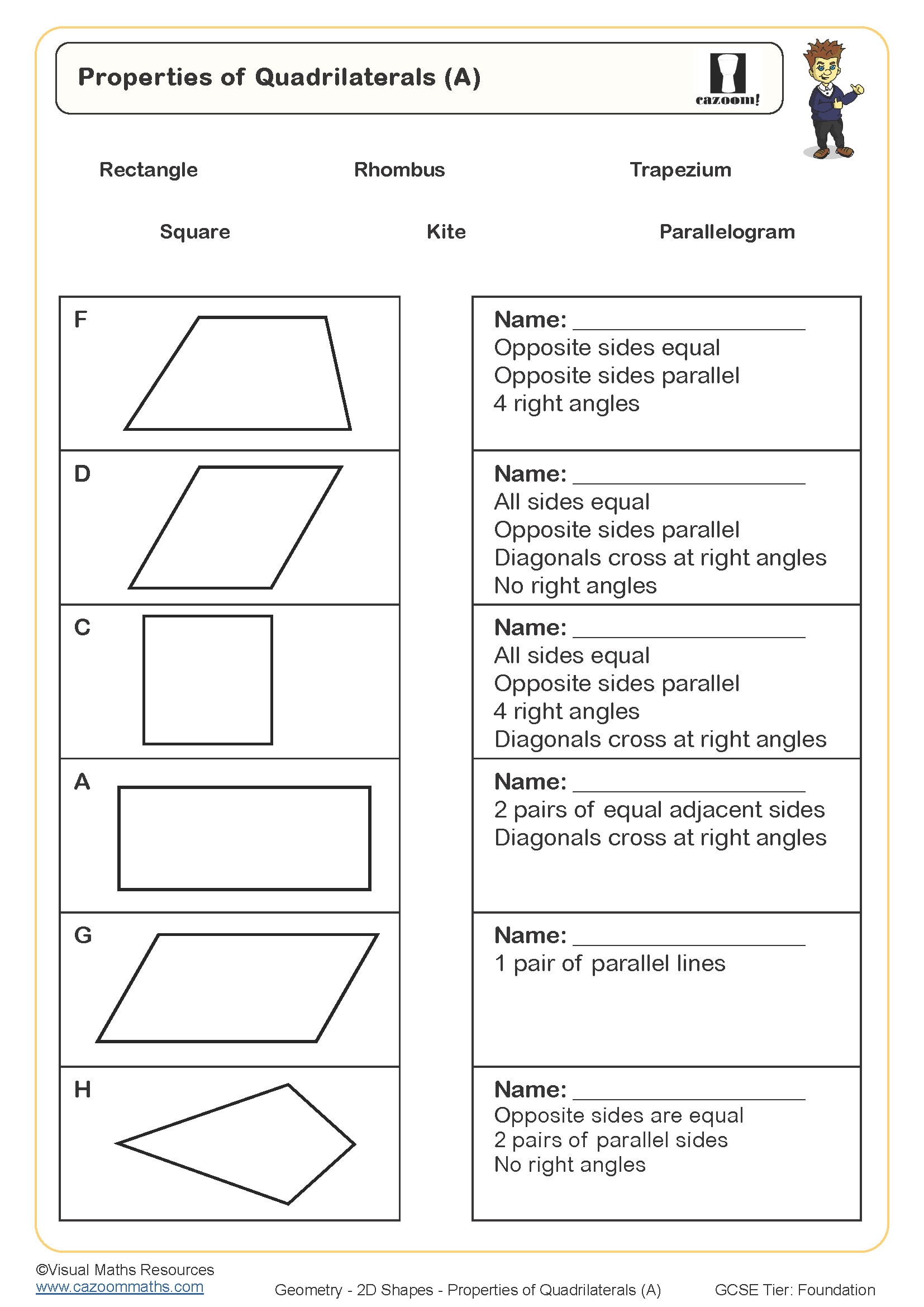
Properties of Quadrilaterals (A)
Year groups: 7, 8
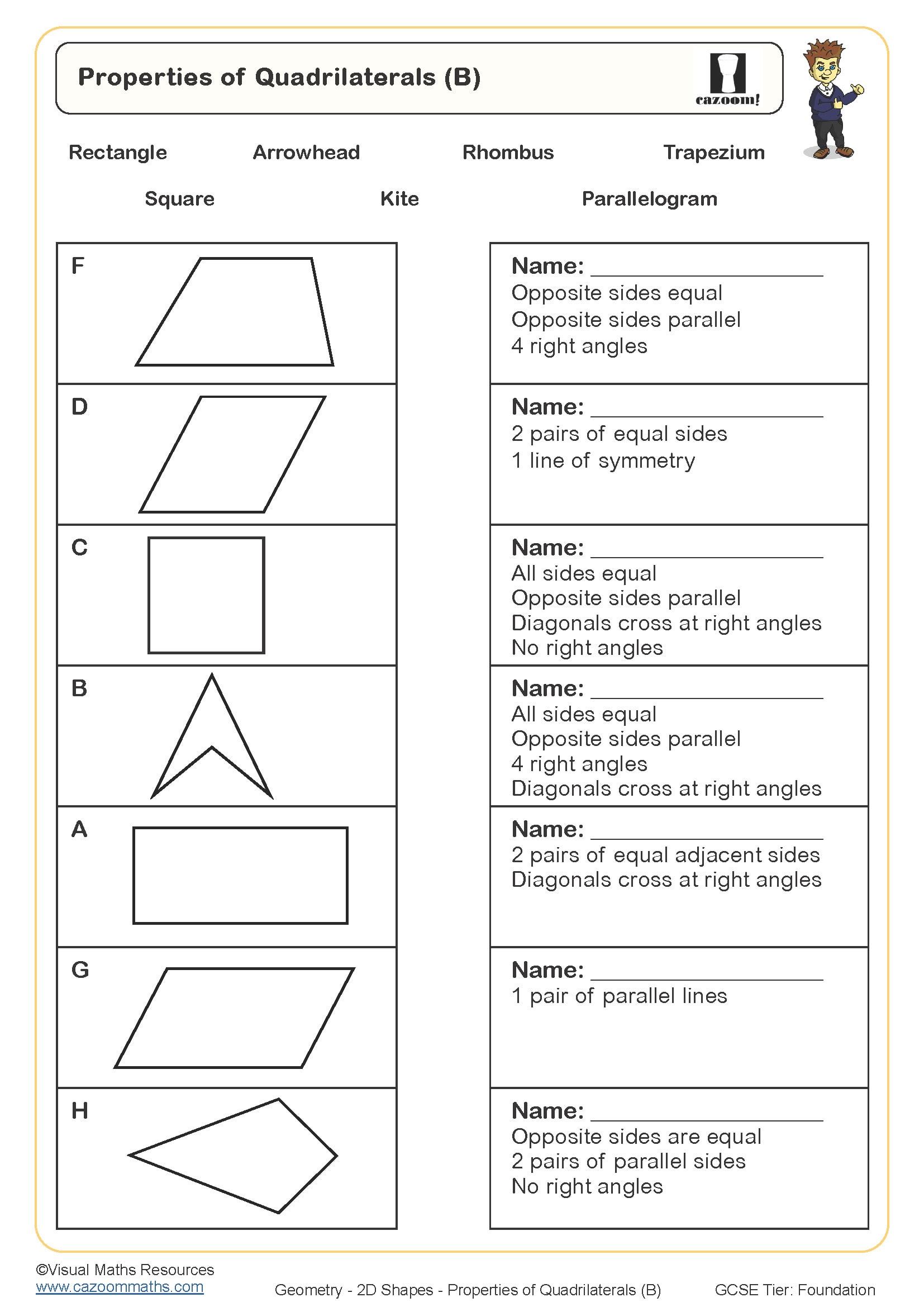
Properties of Quadrilaterals (B)
Year groups: 7, 8
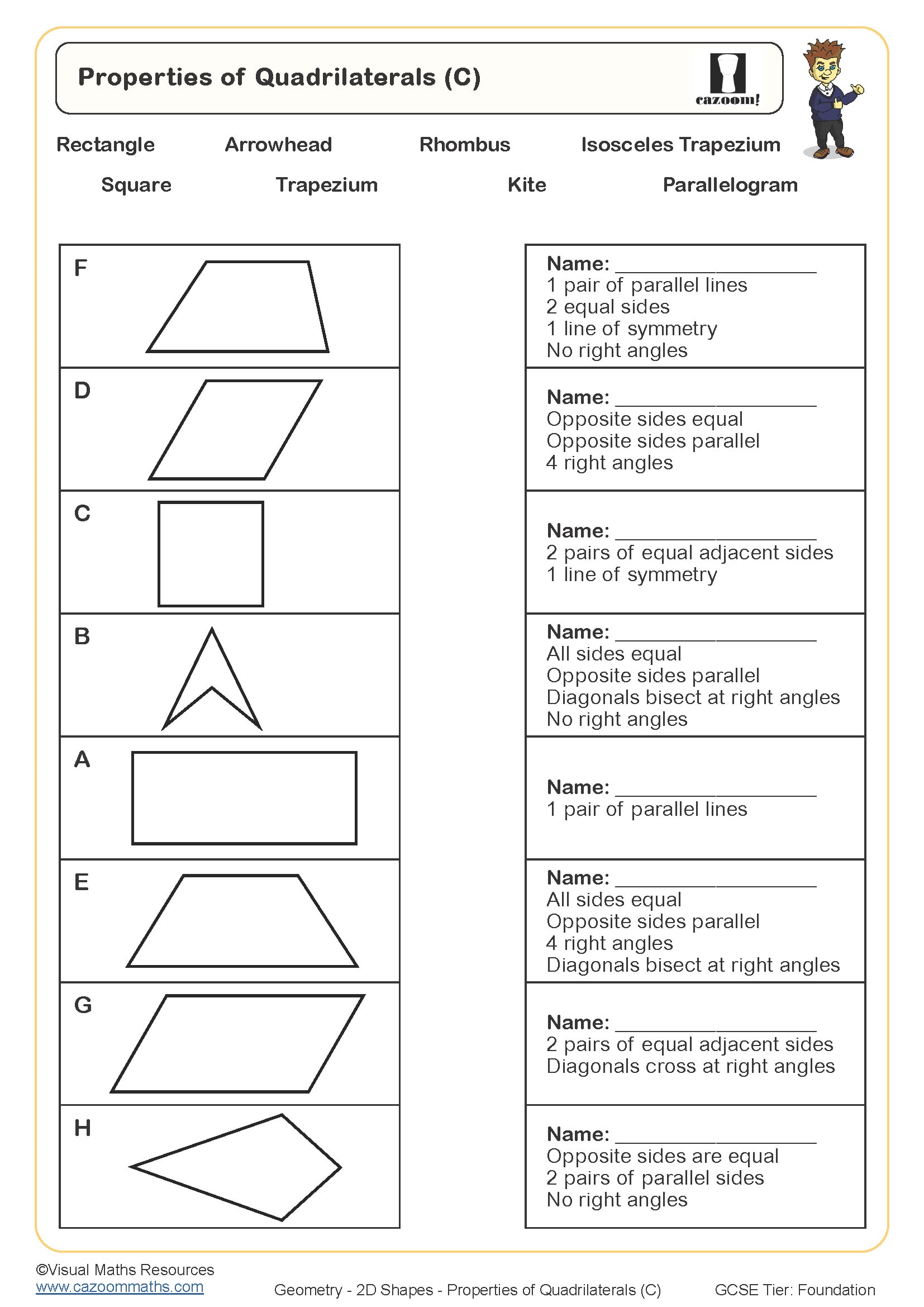
Properties of Quadrilaterals (C)
Year groups: 7, 8
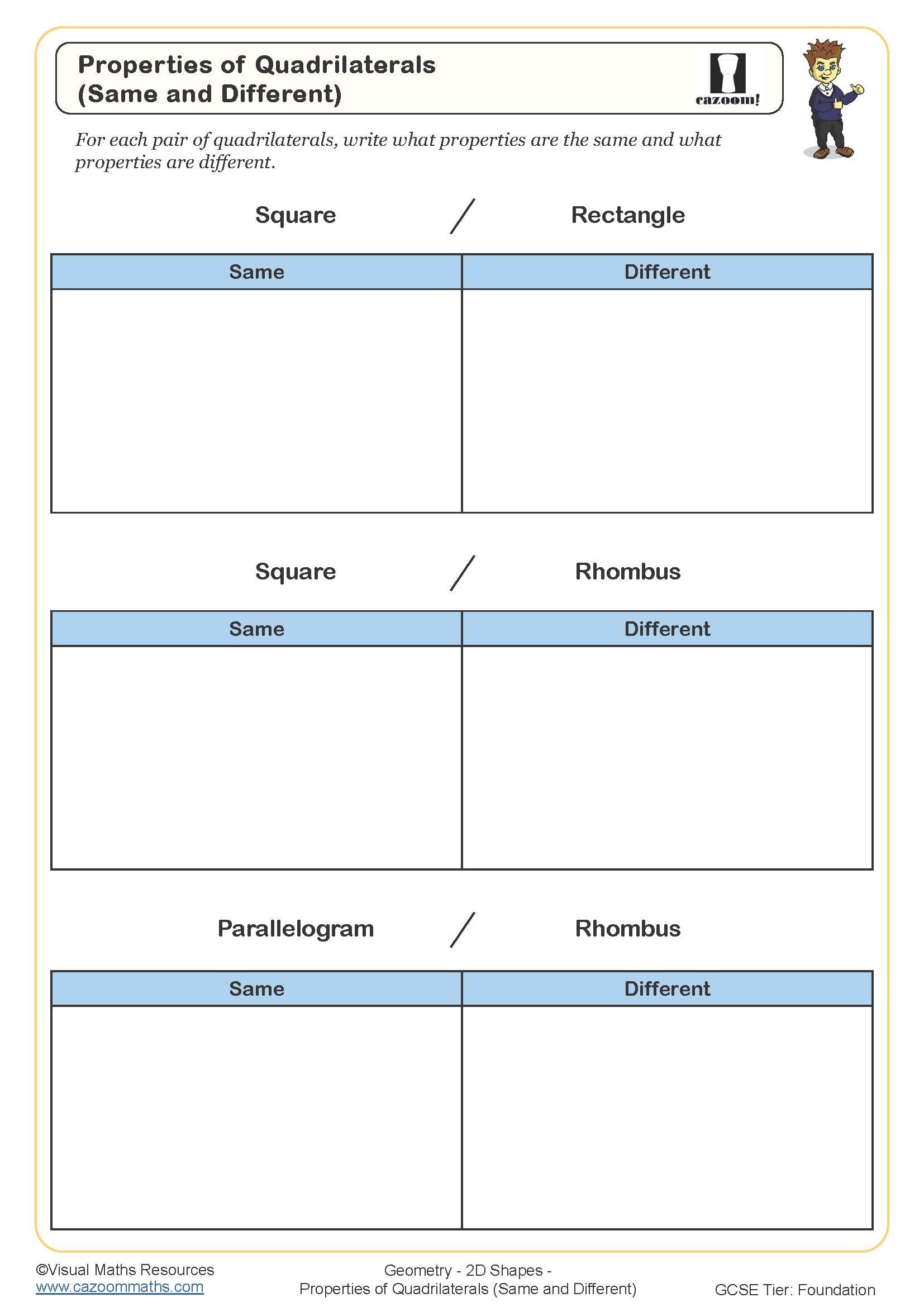
Properties of Quadrilaterals (Same and Different)
Year groups: 7, 8
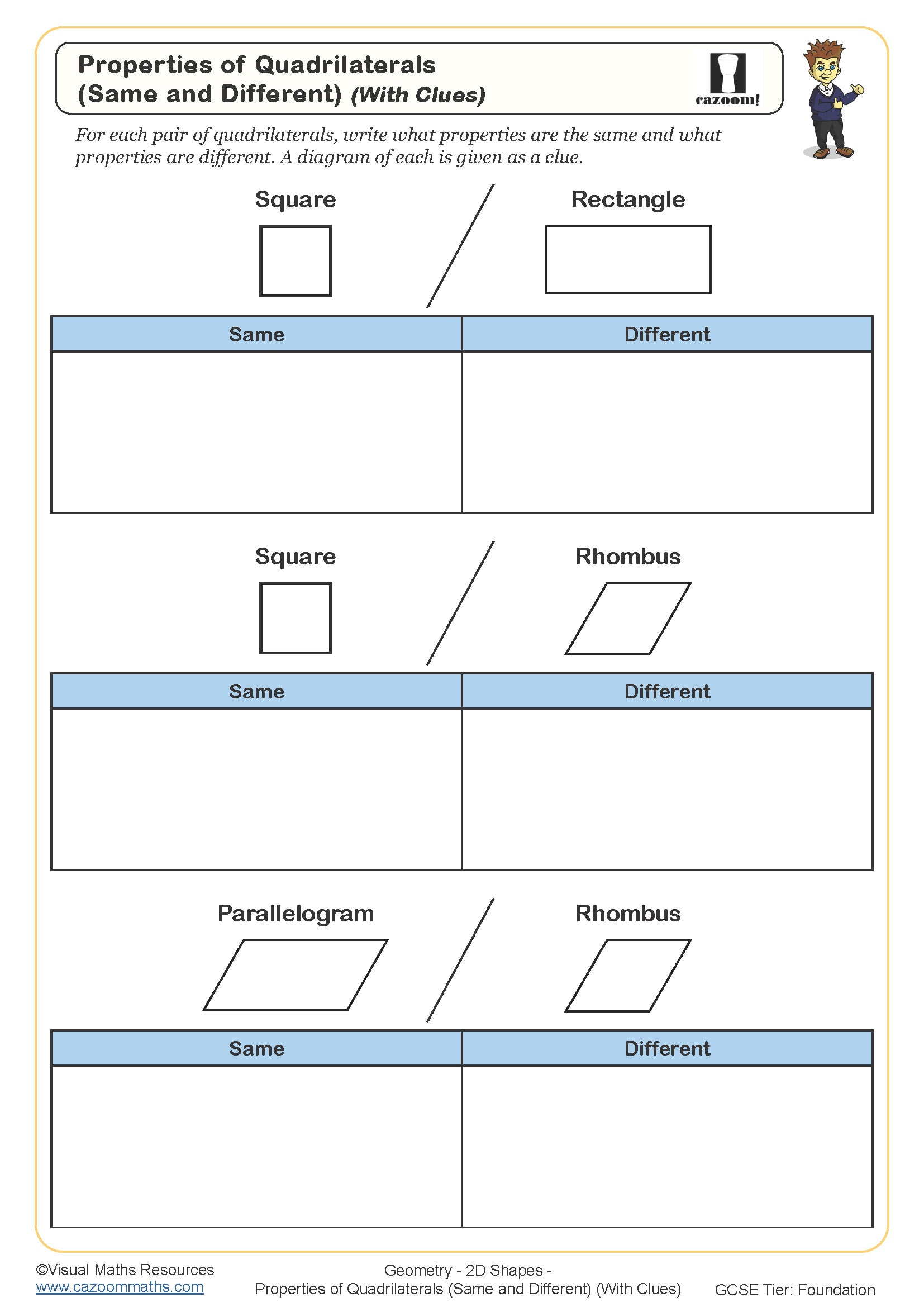
Properties of Quadrilaterals (Same and Different) (With Clues)
Year groups: 7, 8
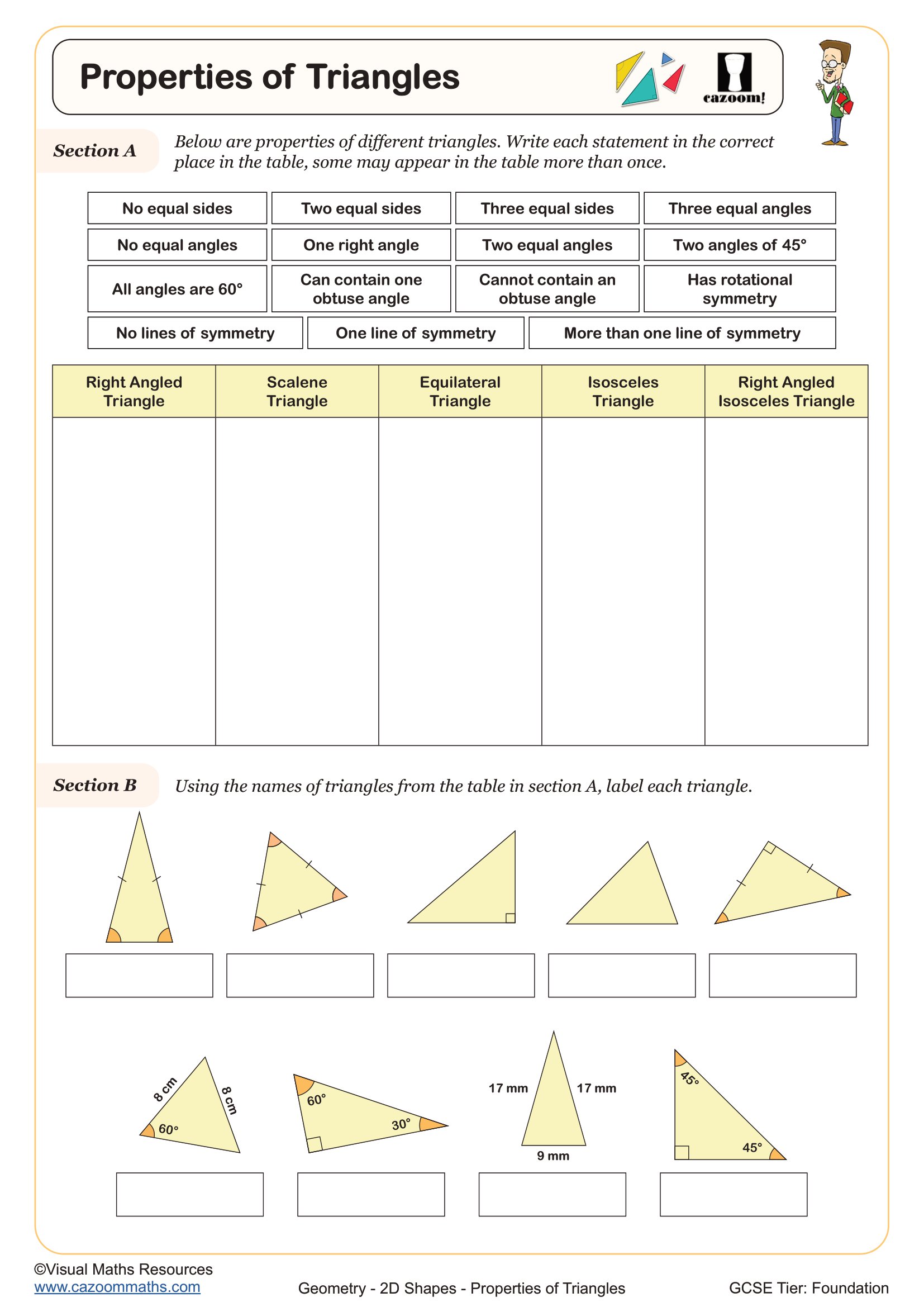
Properties of Triangles
Year groups: 7
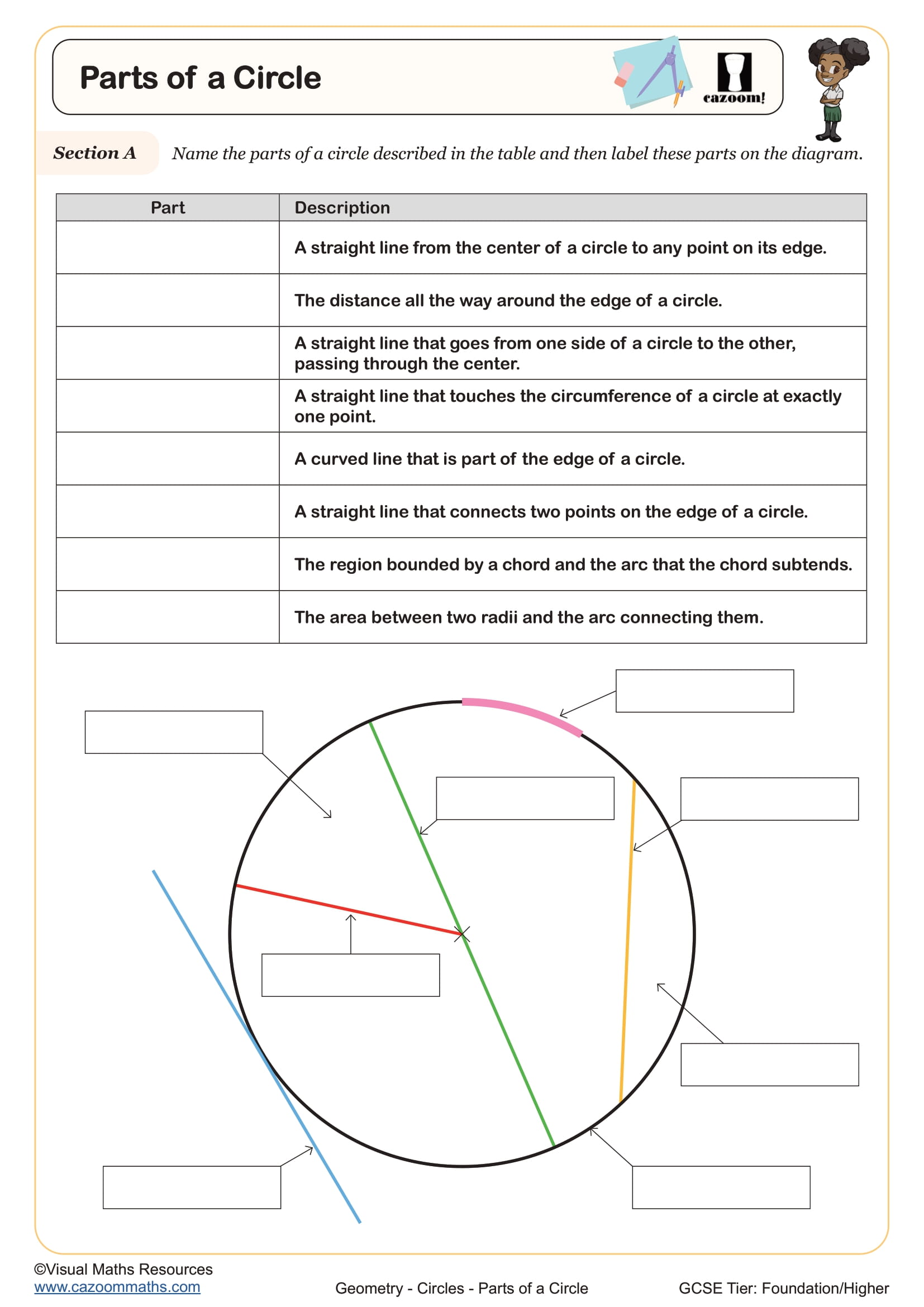
Parts of a Circle
Year groups: 8, 9
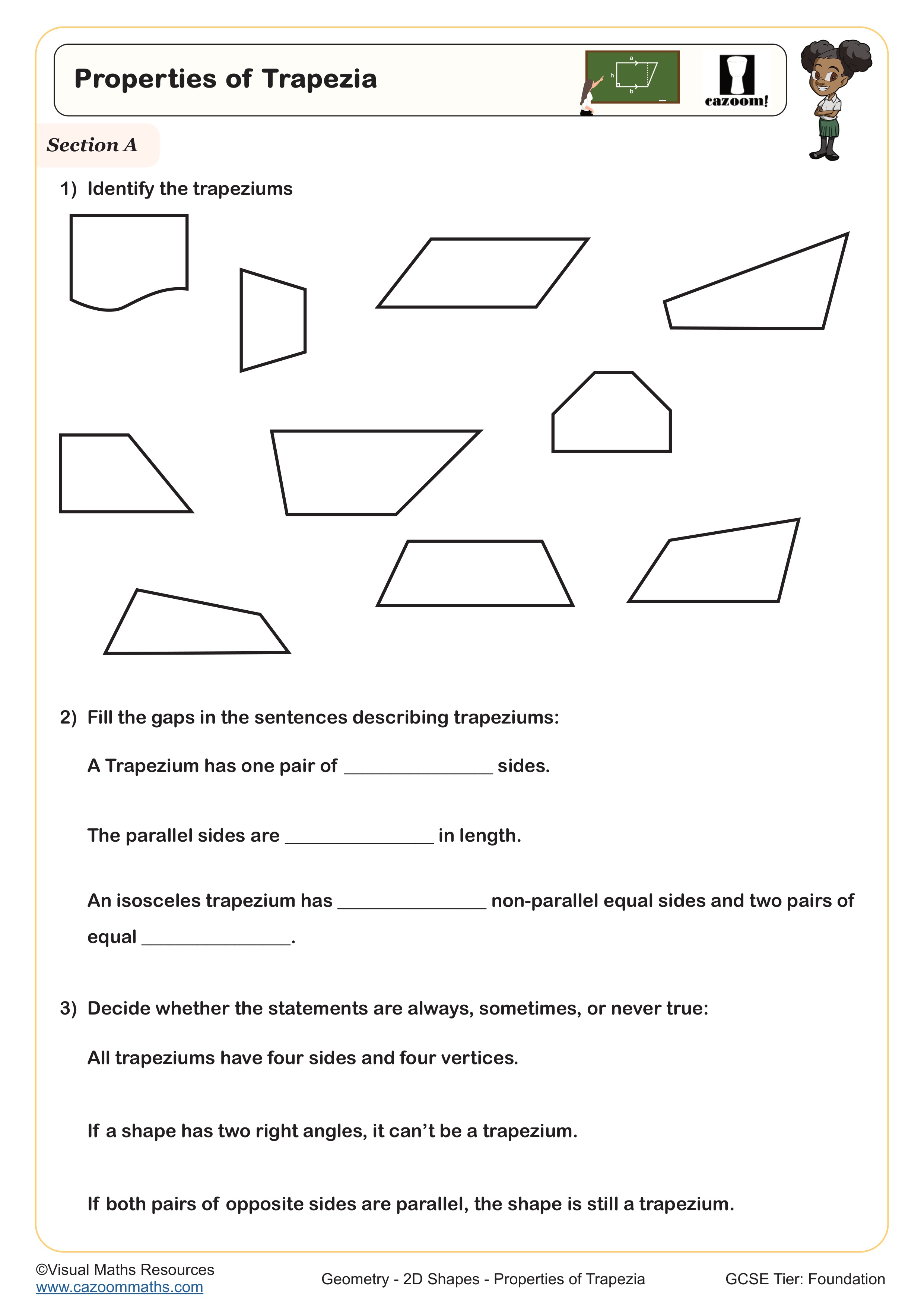
Properties of Trapezia
Year groups: 8, 9
All worksheets are created by the team of experienced teachers at Cazoom Maths.
What makes an effective properties of 2d shapes worksheet for KS3 students?
An effective properties of 2d shapes worksheet must progress systematically from basic identification to complex classification tasks. Students need structured practice identifying sides, angles, parallel lines, and symmetry properties across triangles, quadrilaterals, pentagons, and other polygons whilst connecting these features to shape names and categories.
Teachers notice that worksheets work best when they include visual sorting activities alongside written exercises. Students often confuse rhombus and parallelogram properties, so quality resources provide clear diagrams with marked equal sides and parallel indicators. The most successful worksheets also incorporate real-world contexts like architectural features or product design to help students recognise these geometric principles beyond the classroom.
Which year groups benefit most from 2d shapes properties worksheet practice?
Year 7 and Year 8 students gain the most from targeted 2d shapes properties practice as they transition from primary shape recognition to secondary geometric reasoning. At this stage, pupils must master formal mathematical language for describing polygons whilst developing logical thinking about why shapes belong to specific categories.
Year 9 students also benefit significantly when revisiting these concepts before tackling more complex topics like circle theorems or trigonometry. Teachers find that students who struggle with later geometric concepts often lack solid foundations in basic polygon properties, making targeted revision with a 2d shape worksheet particularly valuable for building confidence and filling knowledge gaps.
How do students develop understanding of angle properties in different 2d shapes?
Students build angle property understanding through systematic exploration of interior angles, starting with triangles (180°) and quadrilaterals (360°) before extending to regular polygons using the formula (n-2)×180°. Quality worksheets scaffold this learning with visual angle measurement tasks before introducing algebraic calculations.
Teachers observe that students frequently make errors when working with irregular polygons, assuming all quadrilaterals have equal angles or that pentagons must be regular. Effective practice includes mixed exercises where pupils calculate missing angles in various polygon types, reinforcing that angle sums depend on the number of sides rather than regularity. This connects directly to architectural applications where irregular shapes appear in roof designs and structural frameworks.
How can teachers use 2d shapes worksheets most effectively in lessons?
Teachers achieve best results by using these worksheets as part of active learning sequences rather than standalone practice. Starting lessons with hands-on shape sorting using physical manipulatives, then moving to worksheet consolidation helps students connect concrete experiences with abstract mathematical language and properties.
The answer sheets prove invaluable for peer assessment activities where students check each other's work and discuss reasoning. Teachers find that encouraging pupils to justify their classifications verbally whilst completing written exercises strengthens both understanding and mathematical communication skills. Regular use of these 2d shapes worksheets throughout the term, rather than intensive single lessons, helps maintain and deepen geometric vocabulary and reasoning abilities.