KS3 and KS4 3D Shapes Worksheets
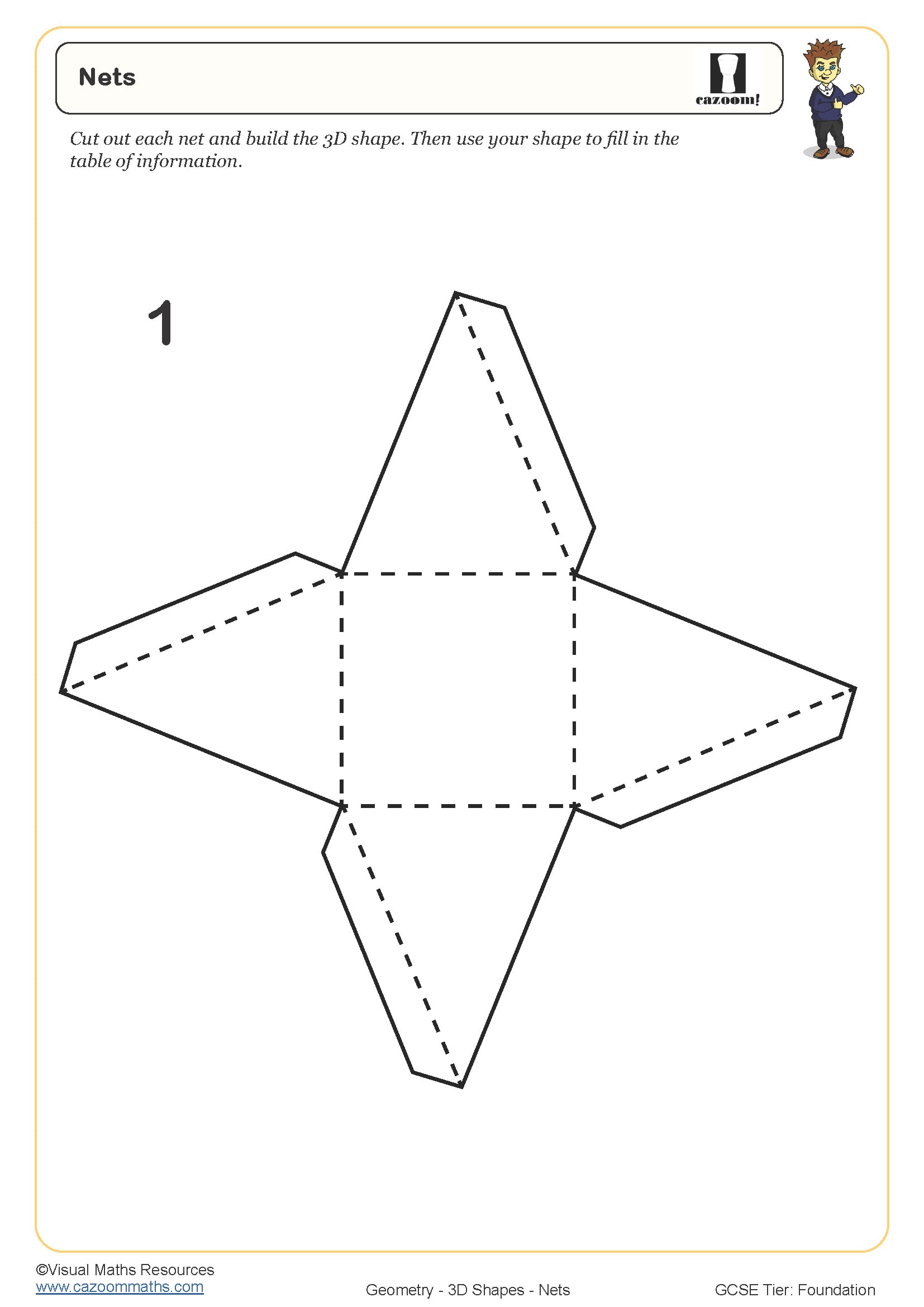
Nets
Year groups: 7, 8
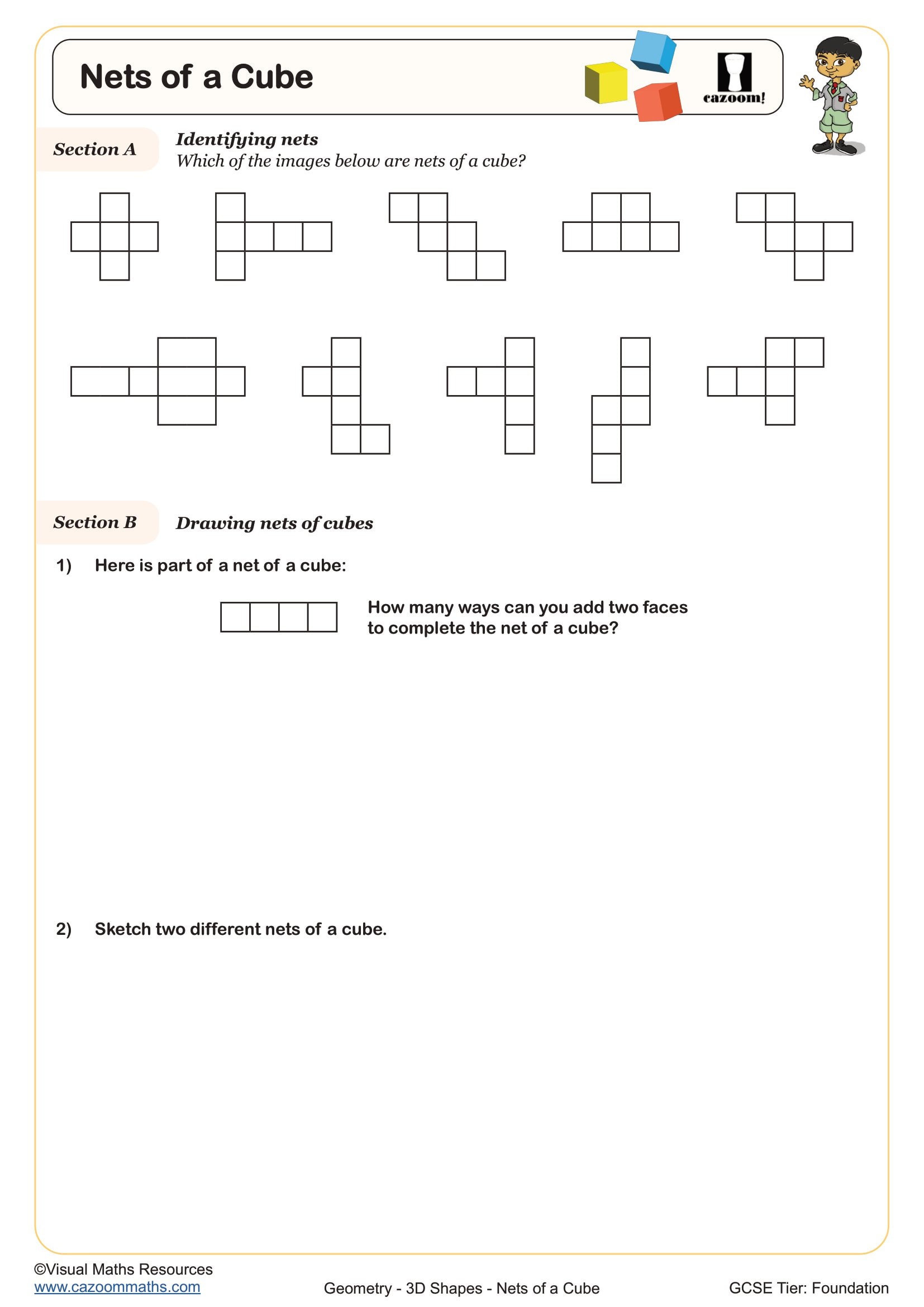
Nets of a Cube
Year groups: 7, 8
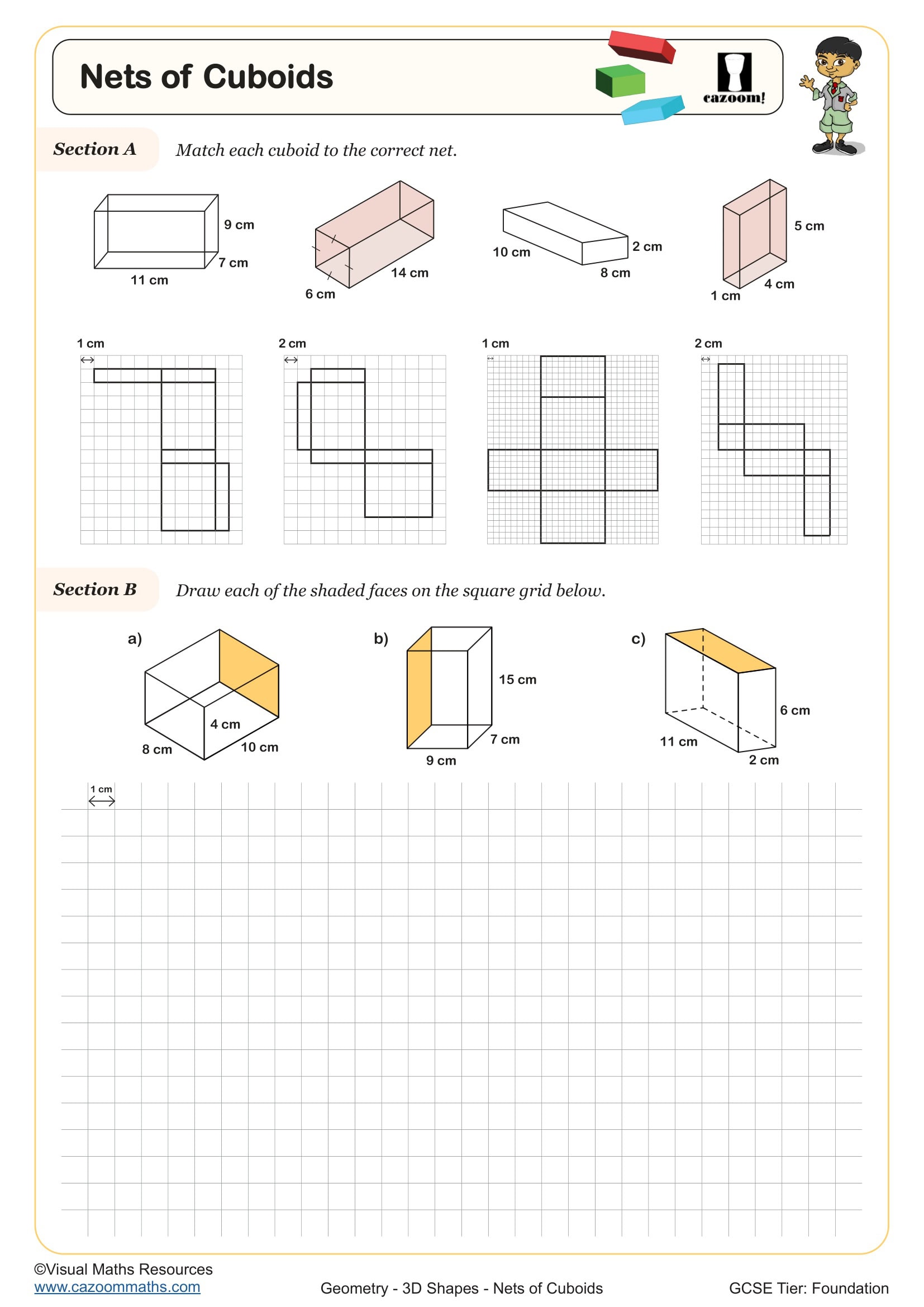
Nets of Cuboids
Year groups: 7, 8
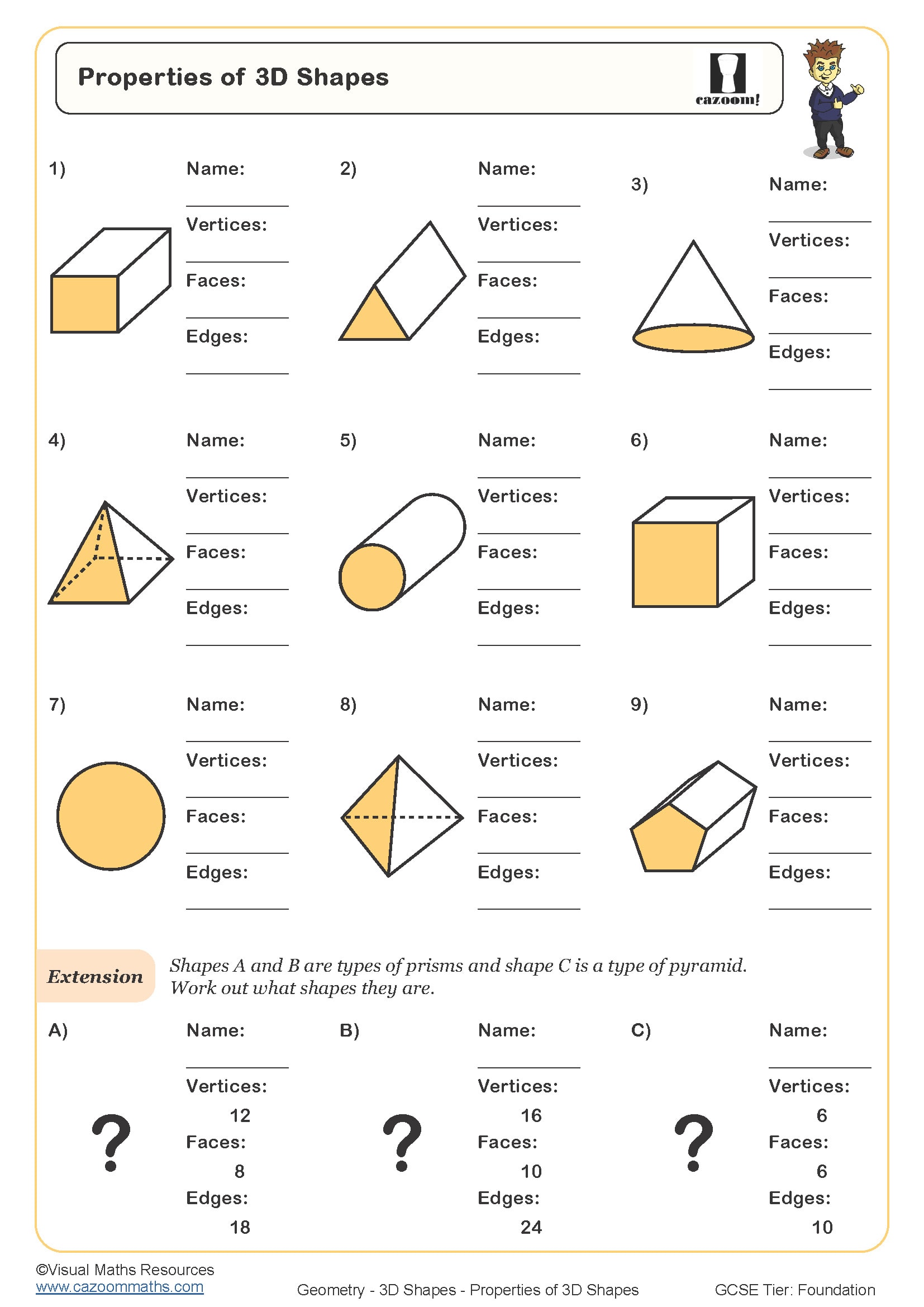
Properties of 3D Shapes
Year groups: 7, 8
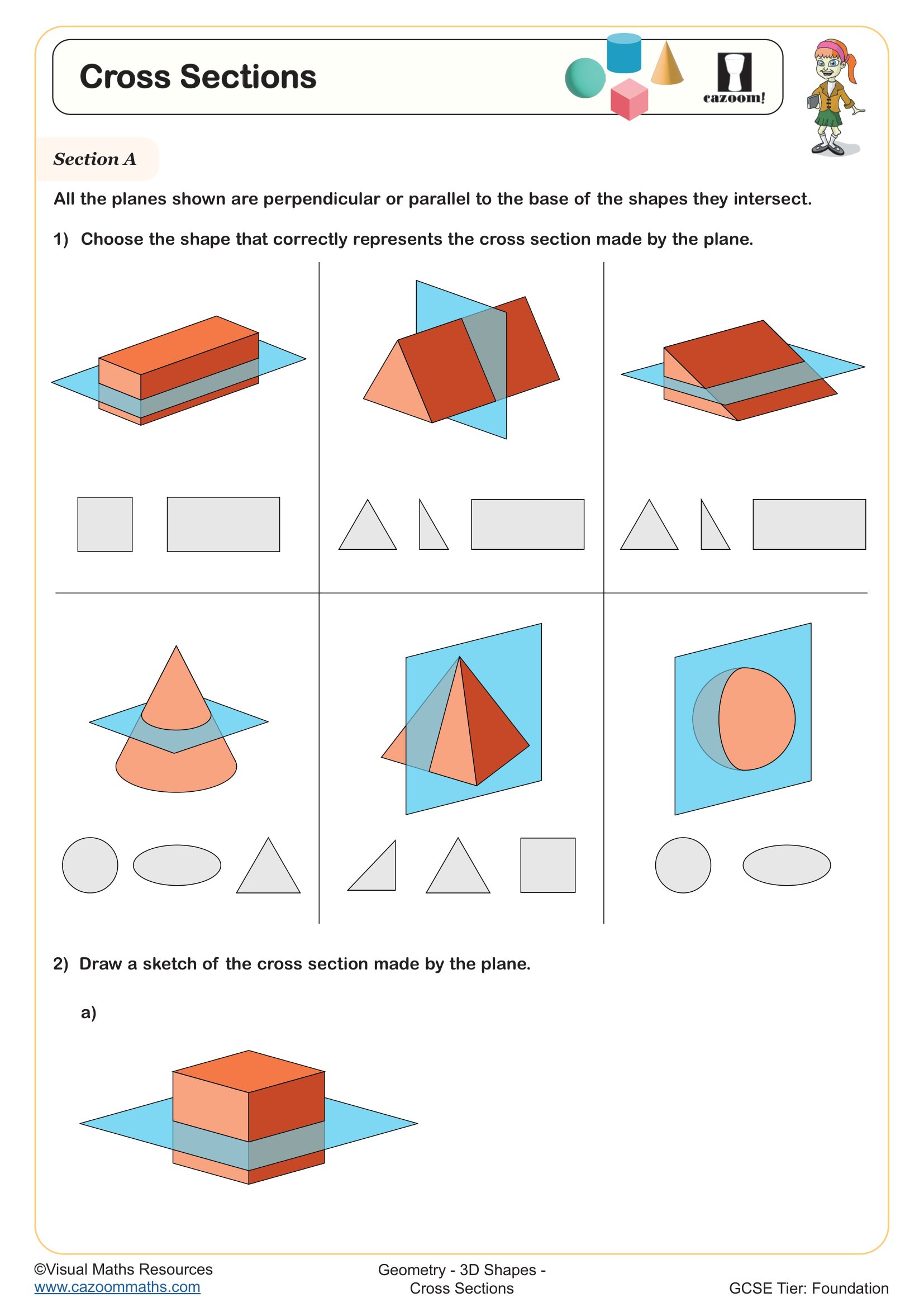
Cross Sections
Year groups: 8, 9
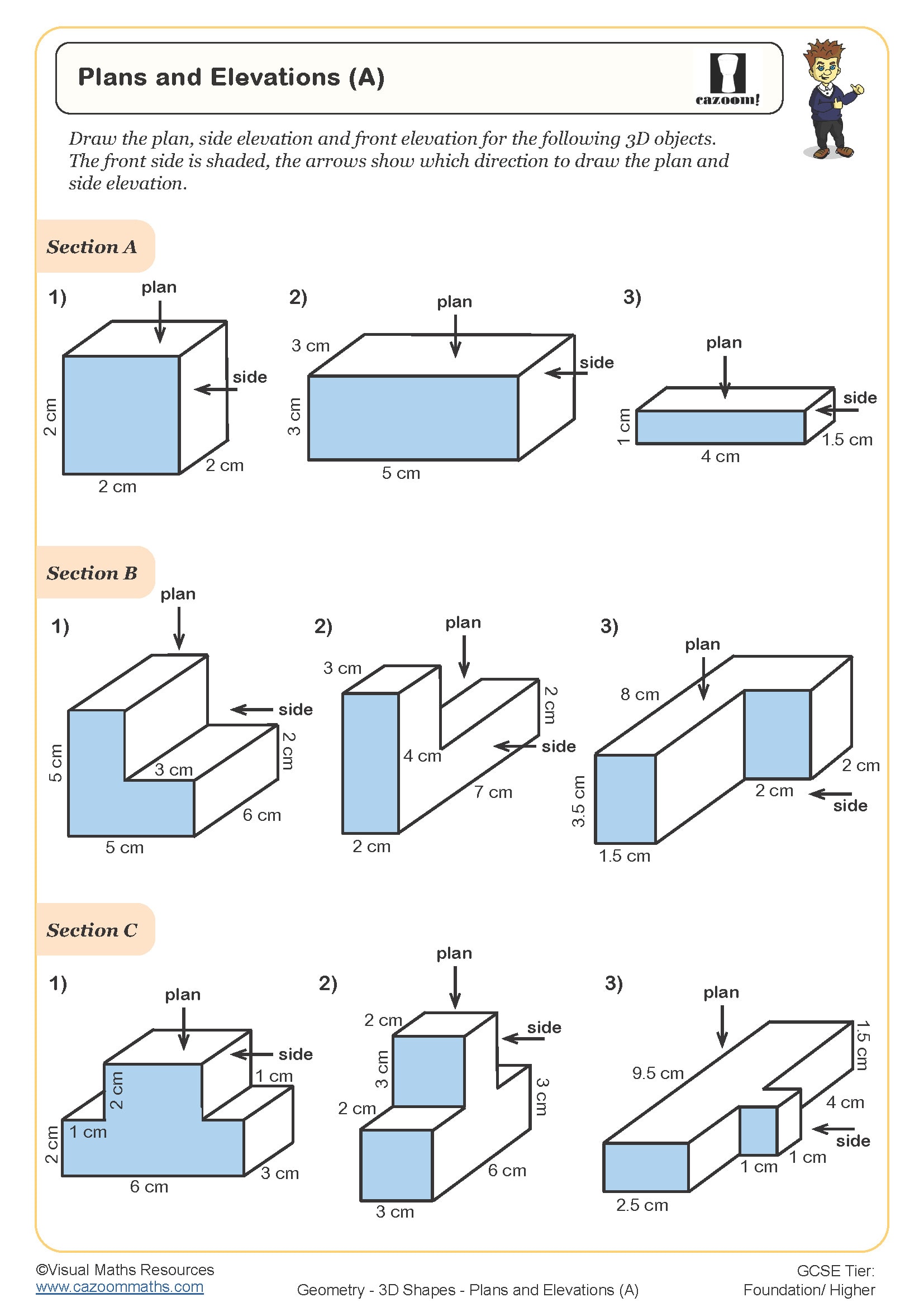
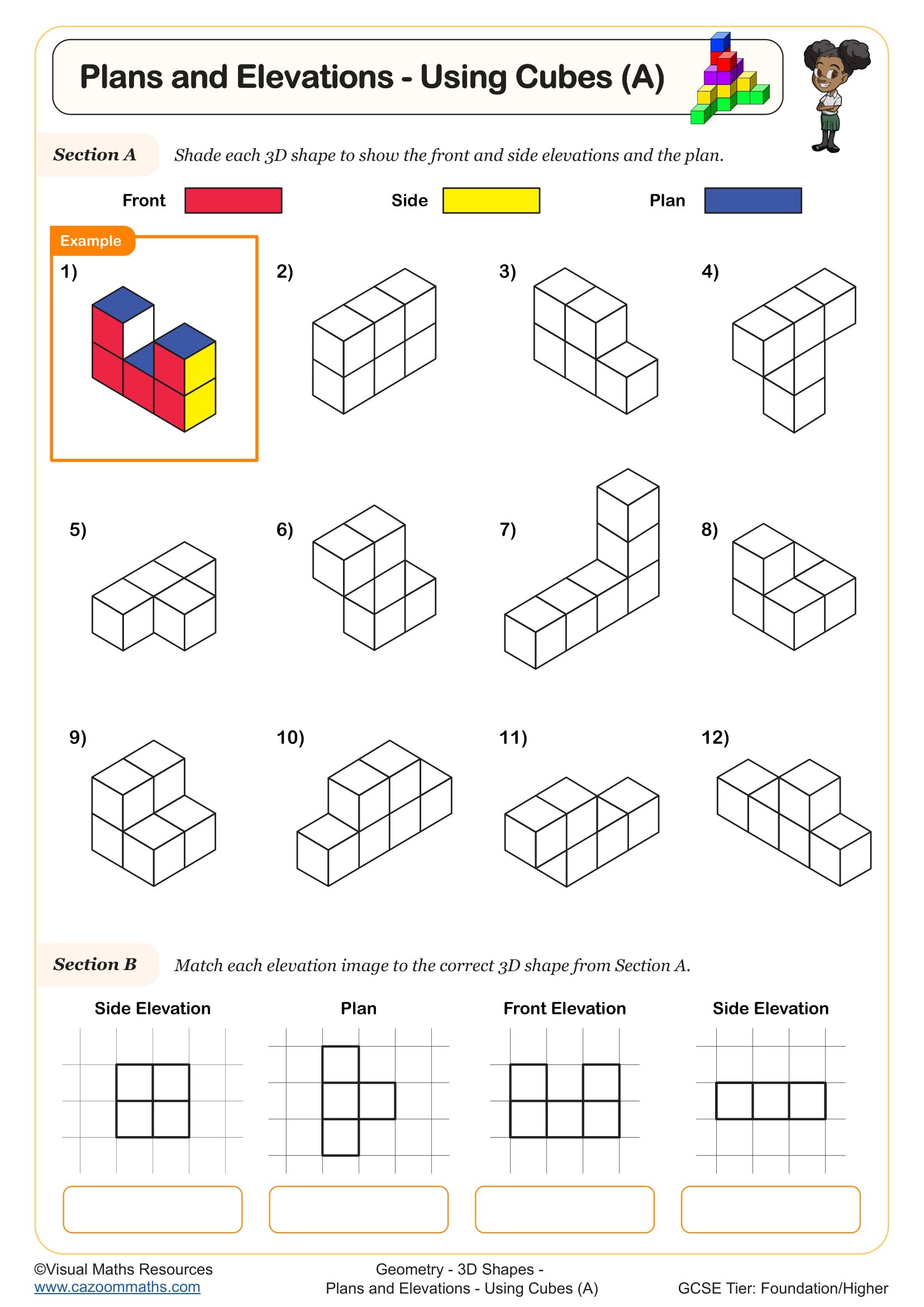
Plans and Elevations (A)
Year groups: 8, 9
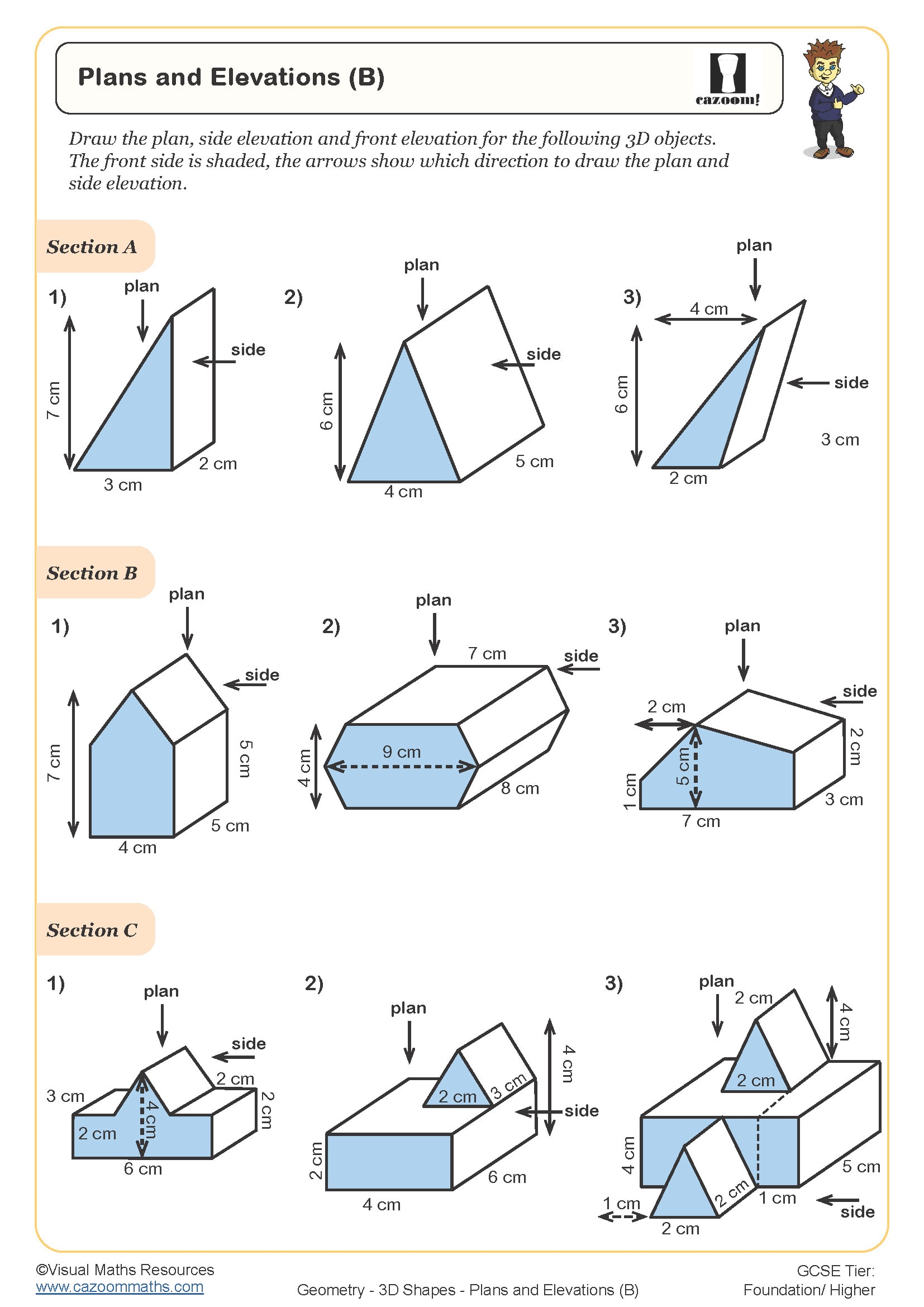
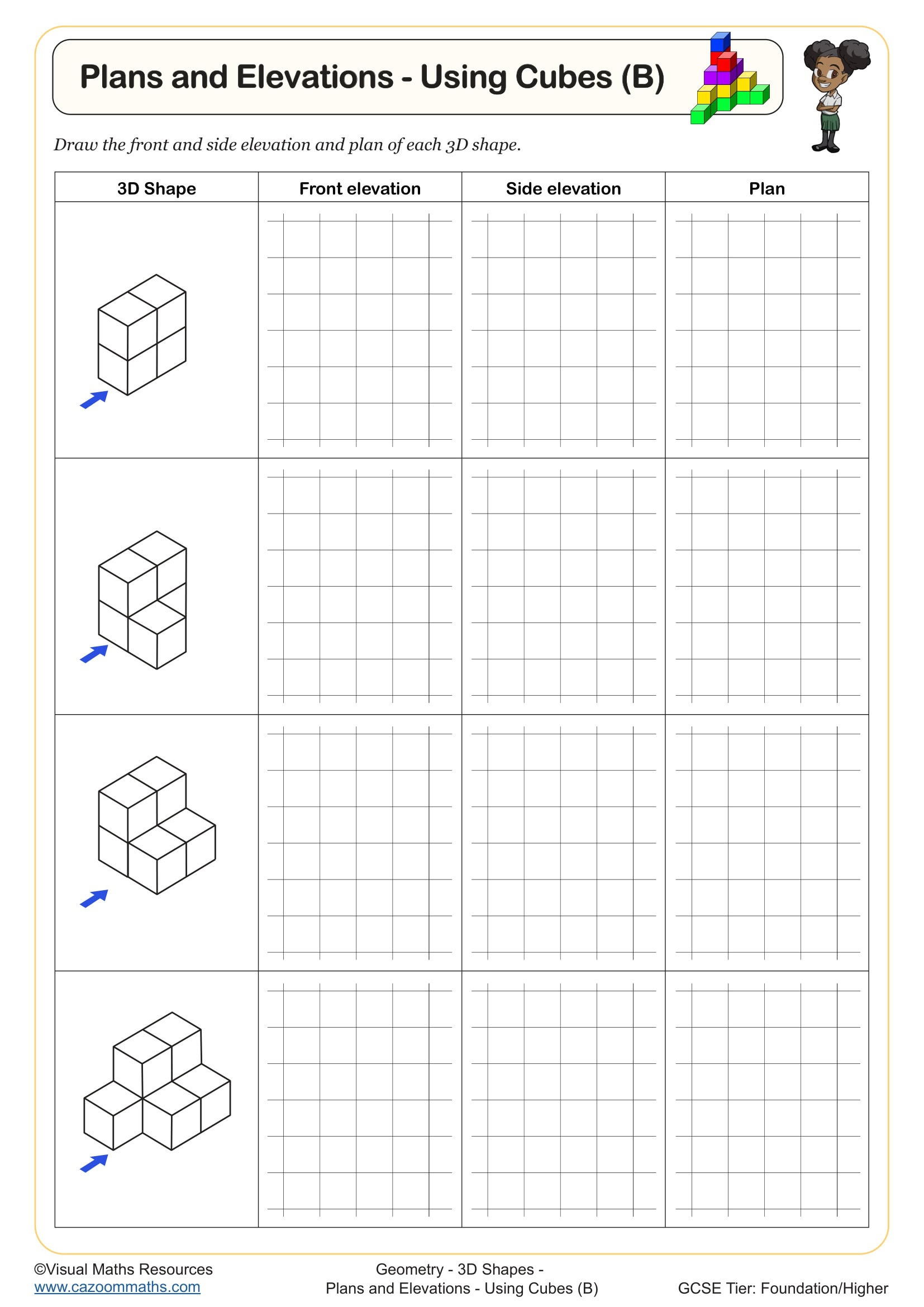
Plans and Elevations (B)
Year groups: 8, 9
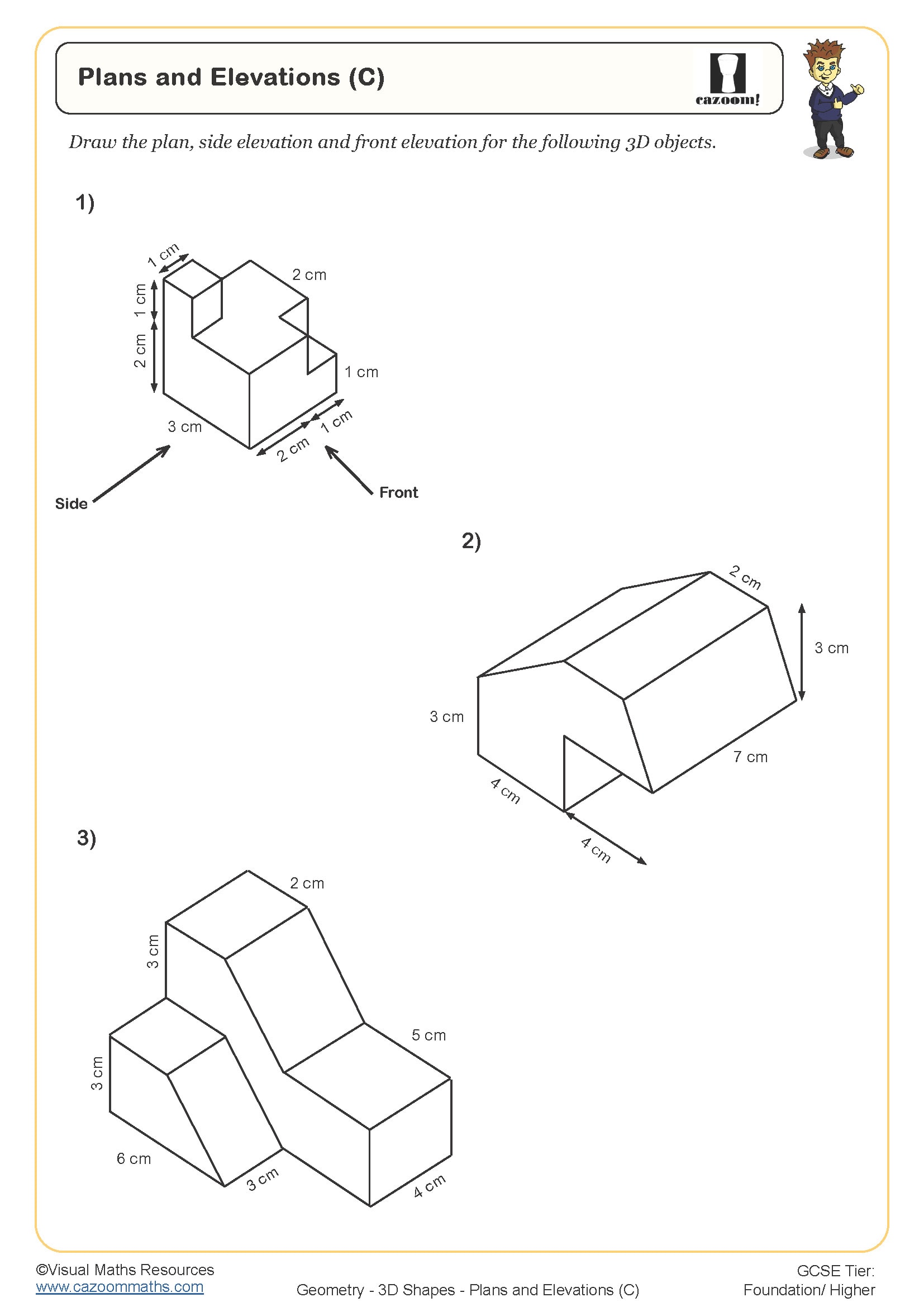
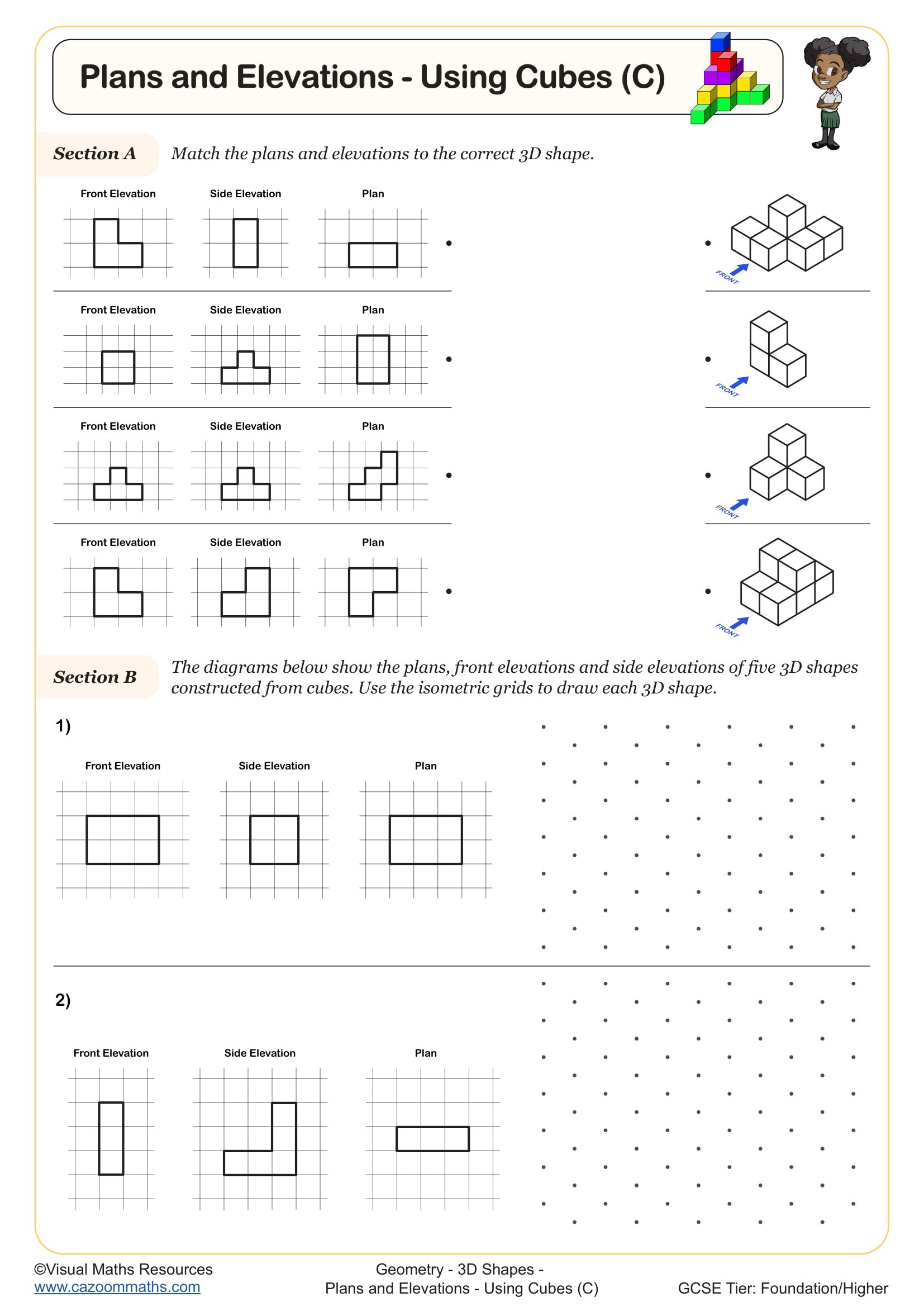
Plans and Elevations (C)
Year groups: 8, 9
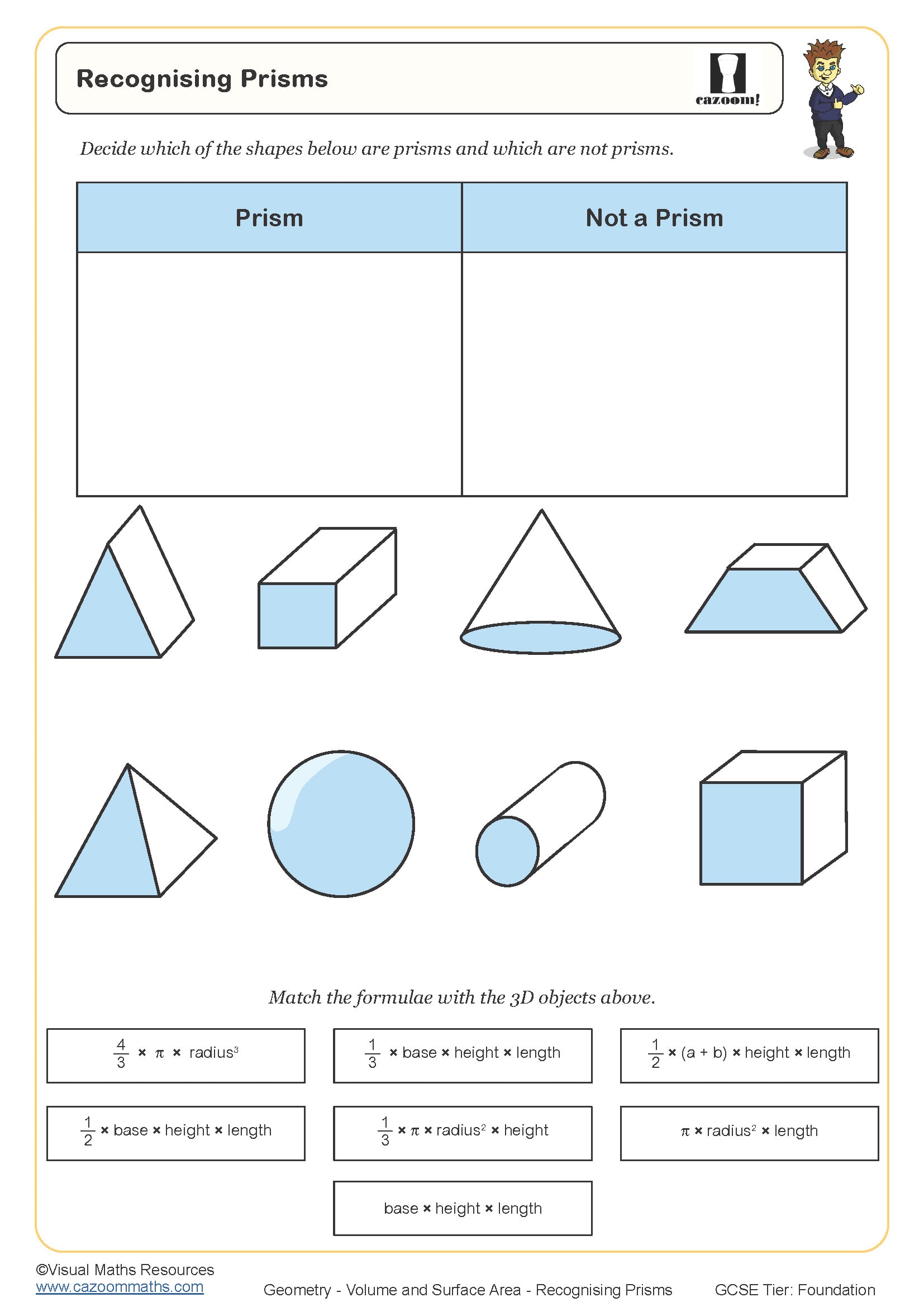
Recognising Prisms
Year groups: 9, 10
Plan and Elevations - Using Cubes (A)
Year groups: 10
Plan and Elevations - Using Cubes (B)
Year groups: 10
Plan and Elevations - Using Cubes (C)
Year groups: 10
All worksheets are created by the team of experienced teachers at Cazoom Maths.
What makes a good 3d shapes worksheet?
Effective 3d shapes worksheets combine multiple representations of the same geometric concepts, moving students between nets, isometric views, and standard 2D projections. They should include questions that specifically target common GCSE exam formats, such as identifying missing measurements from plans and elevations or calculating surface areas from nets.
Teachers consistently observe that students perform better when worksheets progress systematically from simple cubes and cuboids to more complex shapes like pentagonal prisms. Questions that ask students to match nets to their corresponding 3D shapes prove particularly valuable, as many students lose marks by not checking edge connections carefully during exams.
Which year groups benefit most from these worksheets?
The worksheets support students from Year 7 through to GCSE level, with content carefully structured to match curriculum progression. Year 7 students typically focus on identifying basic properties and simple nets, whilst Year 9 students tackle more complex nets of 3d shapes and begin working with plans and elevations systematically.
GCSE students require intensive practice with exam-style questions combining multiple skills, such as using isometric drawings to calculate volumes or working backwards from elevations to determine 3D measurements. Teachers find that students who struggled with basic shape recognition in Year 7 often excel at the more analytical aspects by Year 11, provided they receive consistent practice throughout Key Stage 3.
How do nets help students understand 3D shapes better?
Working with nets develops students' spatial visualisation skills by requiring them to mentally fold 2D patterns into 3D objects. This skill proves essential for GCSE questions involving surface area calculations and for understanding how geometric properties transfer between dimensions.
Many teachers report that students initially attempt to memorise which nets work for specific shapes rather than understanding the underlying geometric principles. The most effective approach involves getting students to physically construct shapes from paper nets first, then gradually moving to purely visual exercises. This progression helps students recognise why certain arrangements of faces cannot fold into valid 3D shapes.
How can teachers use these worksheets most effectively?
Teachers achieve best results by combining worksheet practice with hands-on activities using physical models or dynamic geometry software. Starting each lesson with a quick identification exercise using the worksheets helps consolidate previous learning before introducing new concepts like oblique projections or cross-sections.
The answer sheets prove particularly valuable for peer assessment activities, allowing students to identify their own misconceptions about spatial relationships. Teachers often use selected worksheet questions as starter activities, focusing on problems that highlight the specific challenges their classes face with topics like distinguishing between plans, front elevations, and side elevations in technical drawing contexts.