Algebra Tiles Worksheets
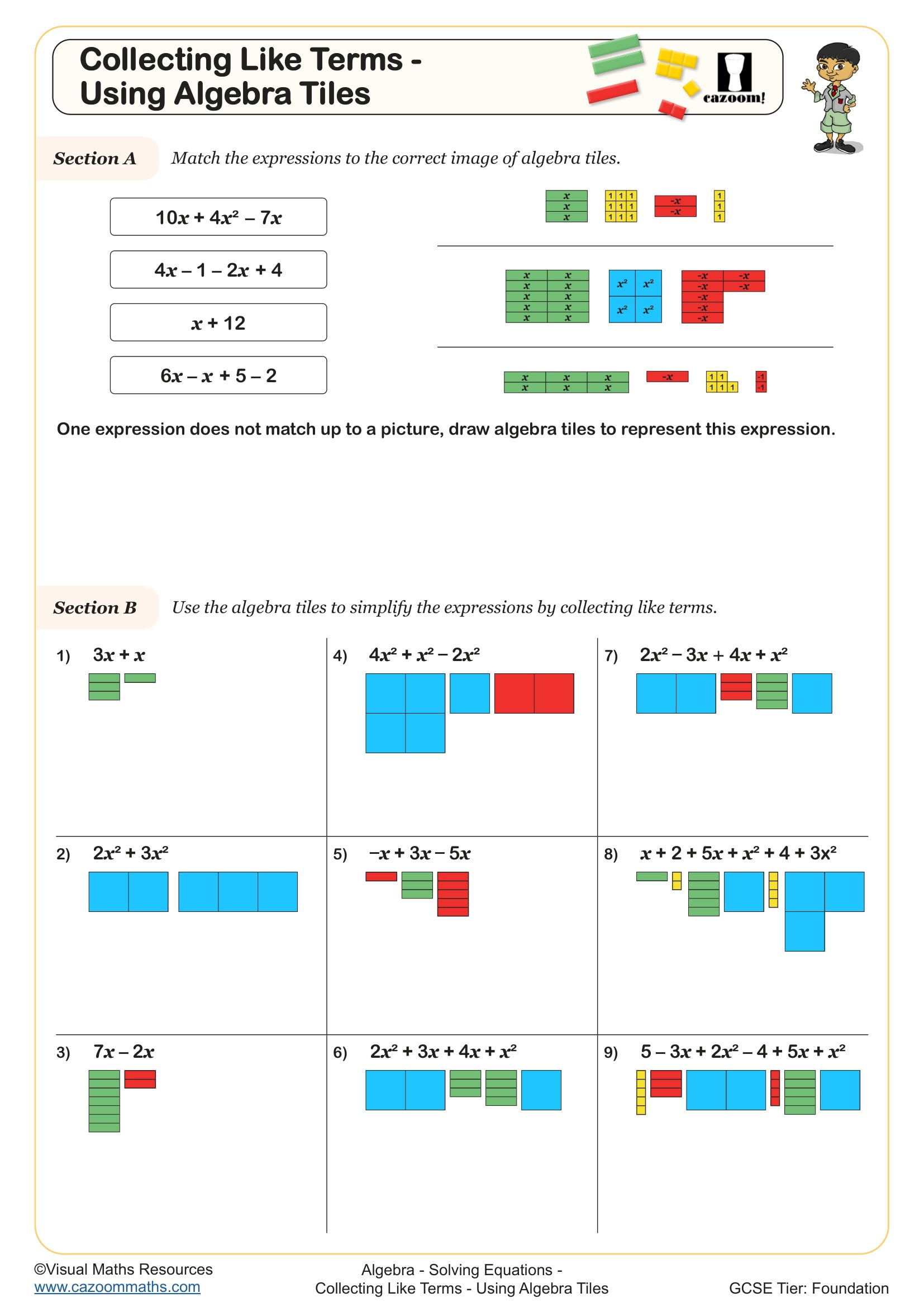
Collecting Like Terms - Using Algebra Tiles
Year groups: 7, 8
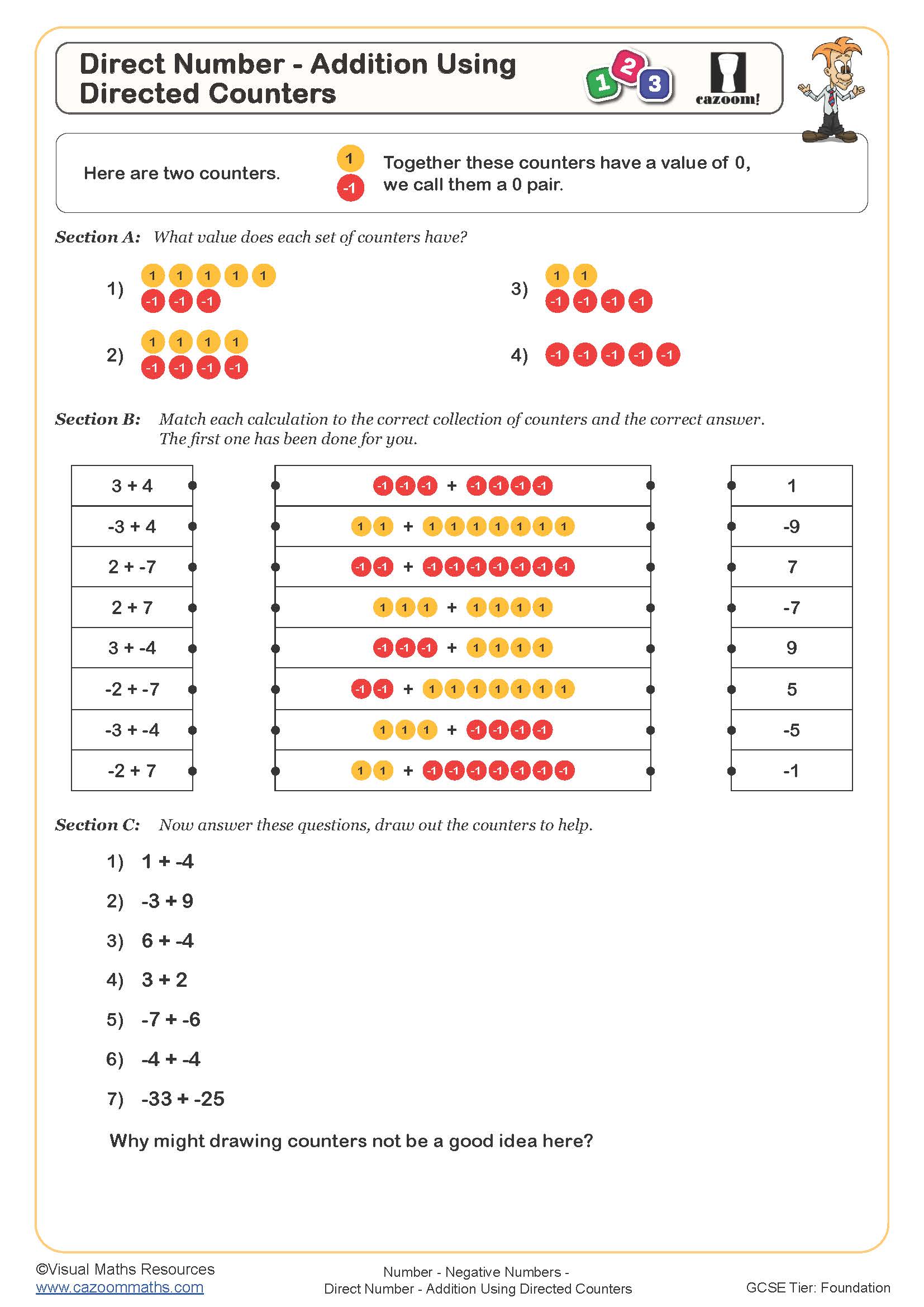
Directed Number - Addition Using Directed Counters
Year groups: 7, 8
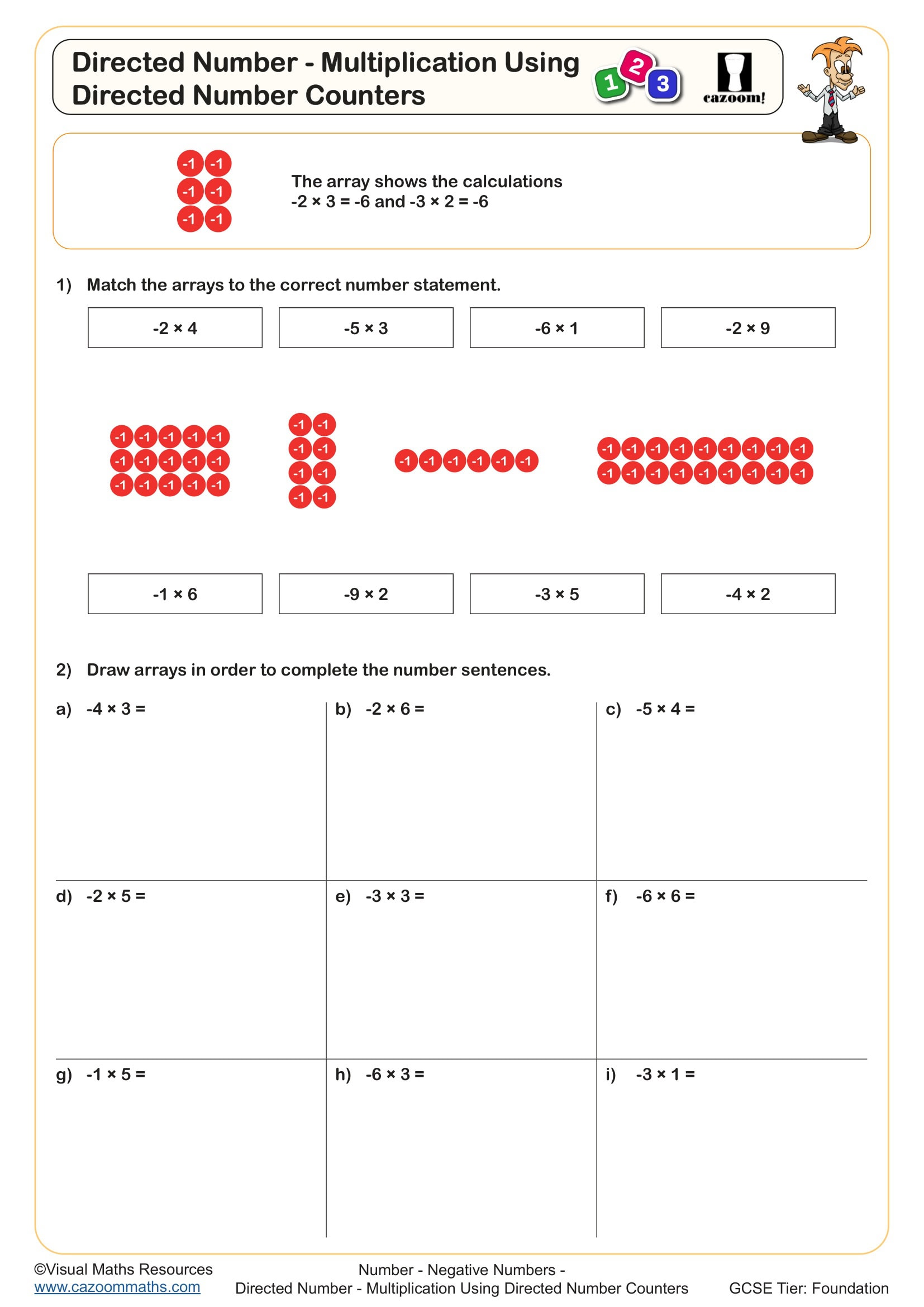
Directed Number - Multiplication Using Directed Number Counters
Year groups: 7, 8
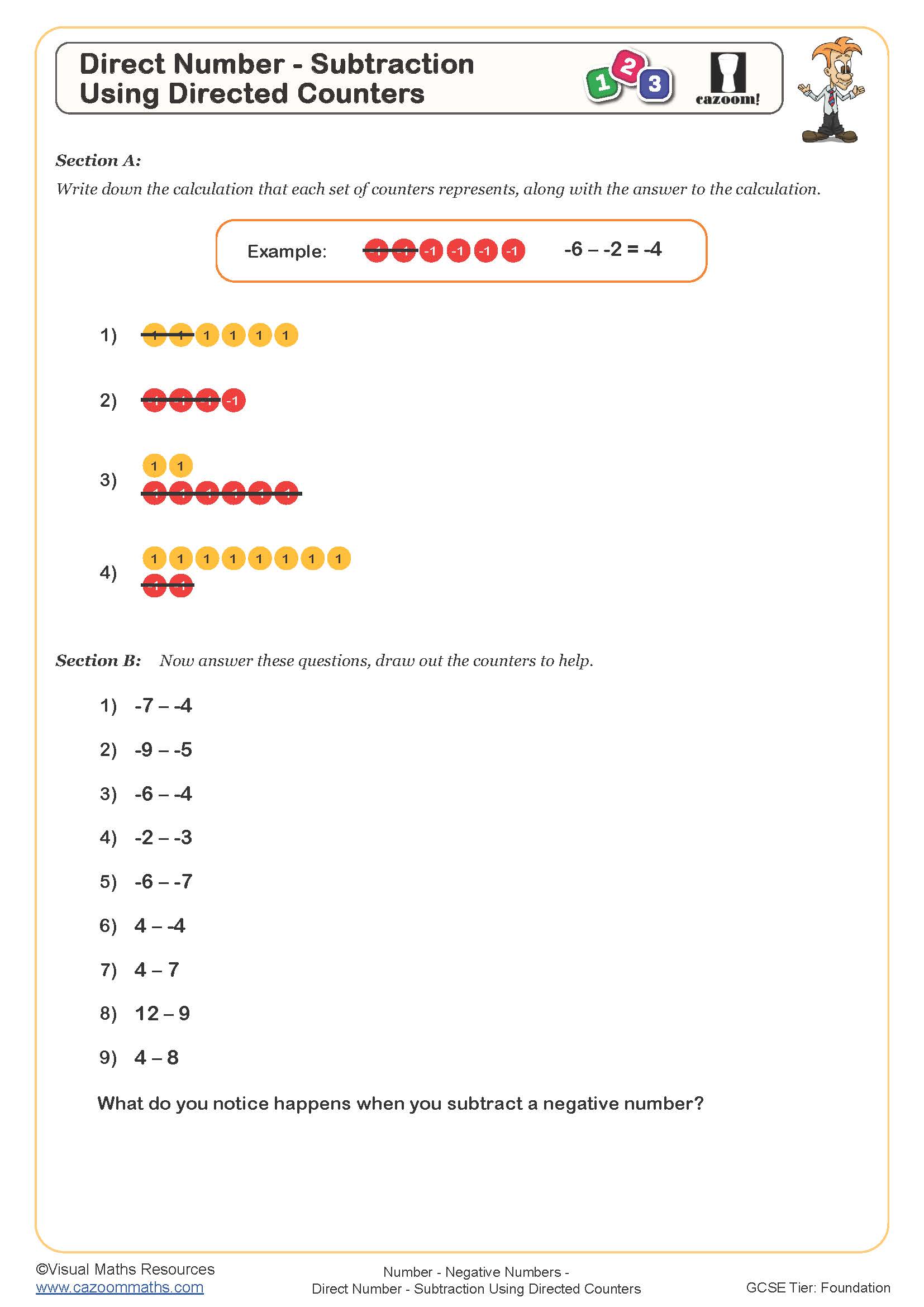
Directed Number - Subtraction Using Directed Counters
Year groups: 7, 8
Introducing Algebra Tiles
Year groups: 7
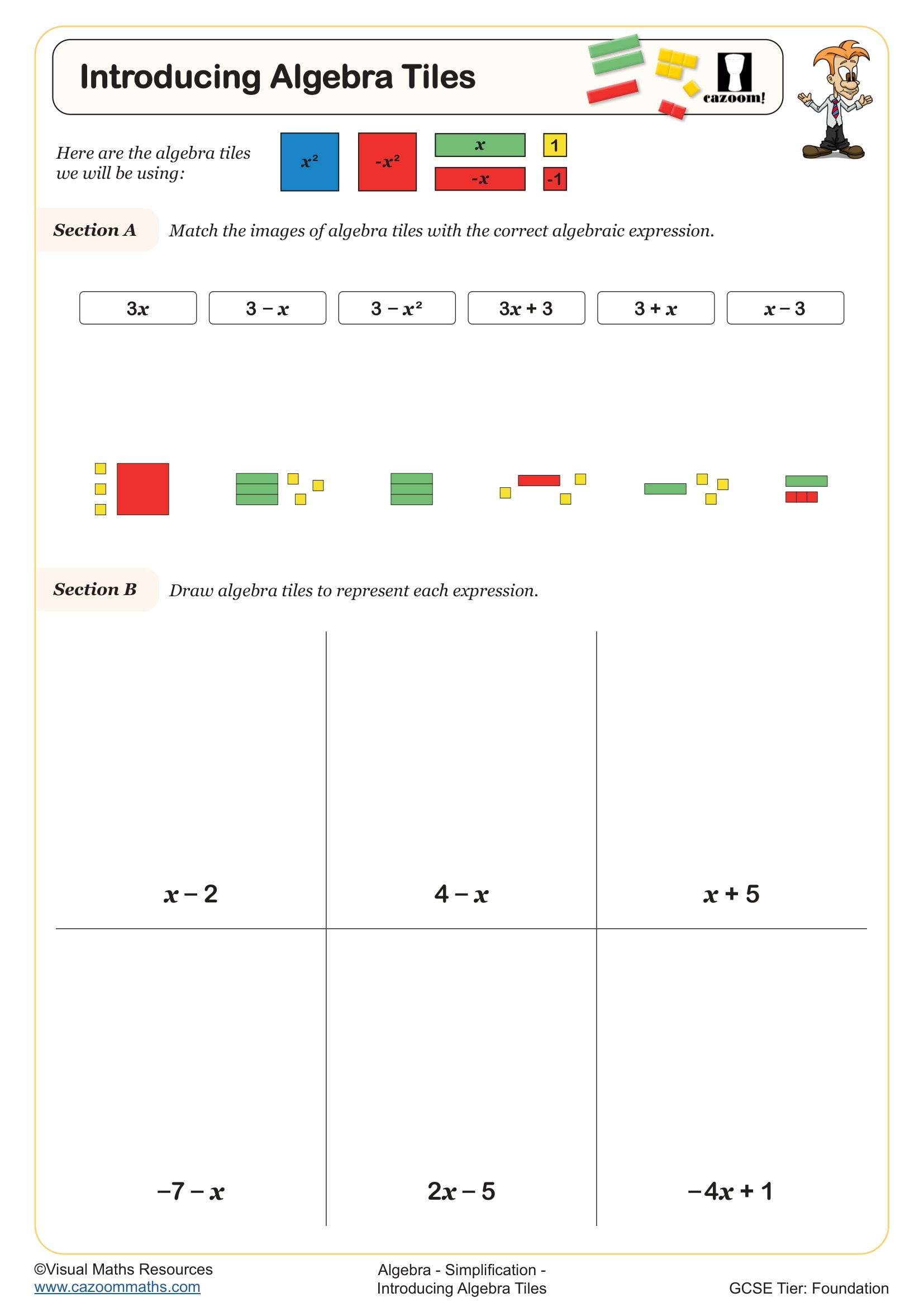
Representing Numbers - Using Directed Counters
Year groups: 7, 8
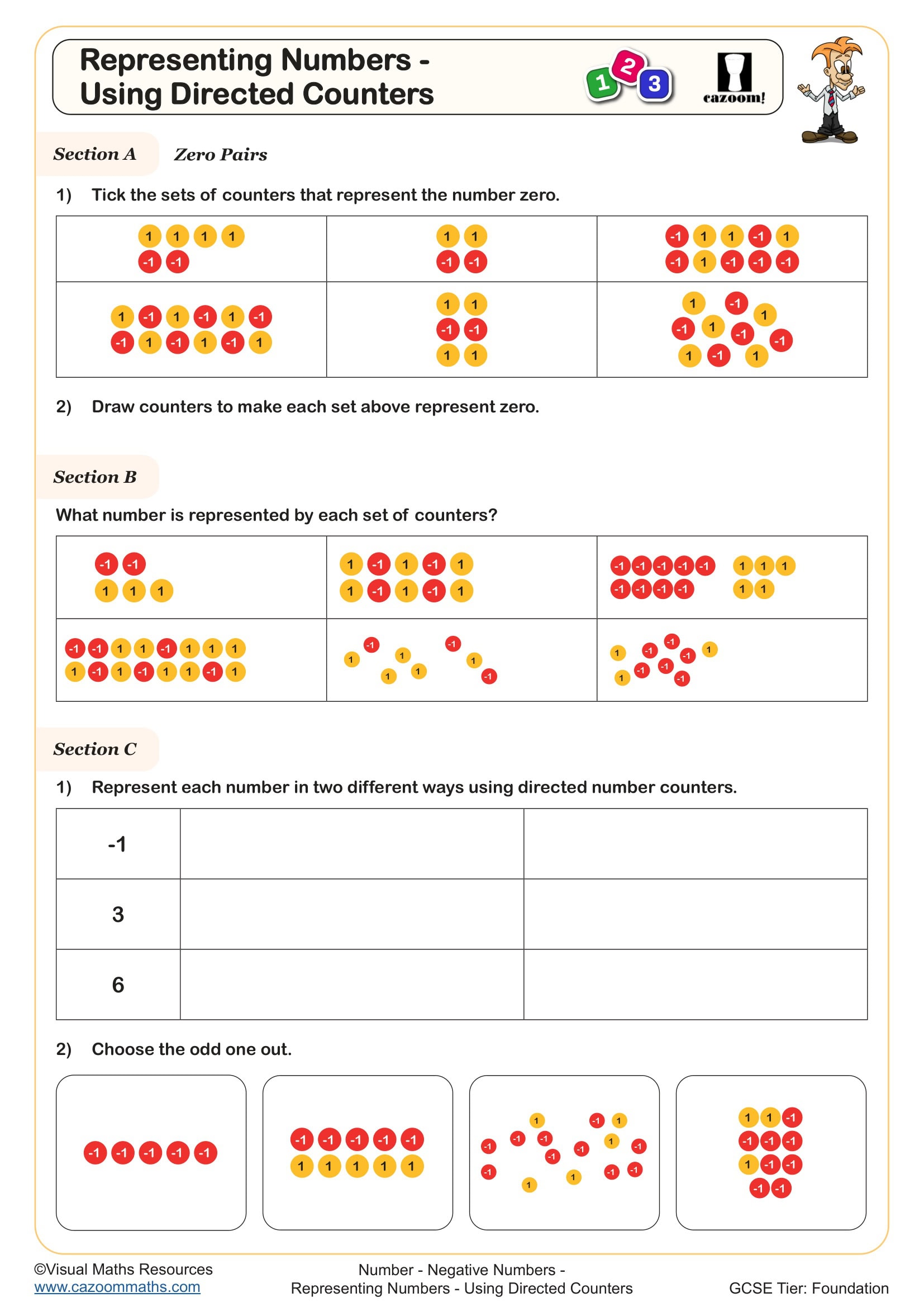
Solving One Step Equations with Algebra Tiles
Year groups: 7, 8
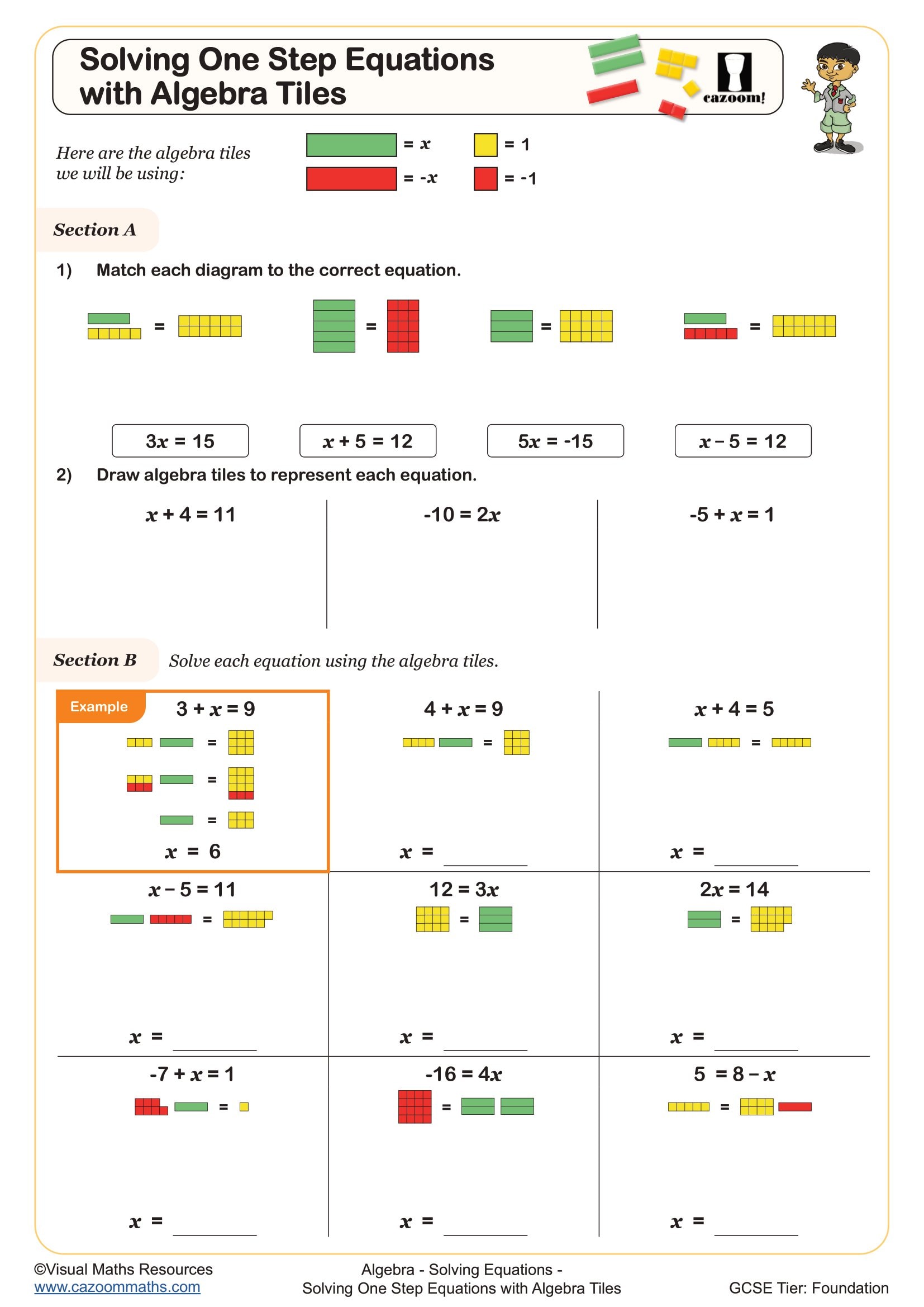
Solving Two Step Equations with Algebra Tiles
Year groups: 7, 8
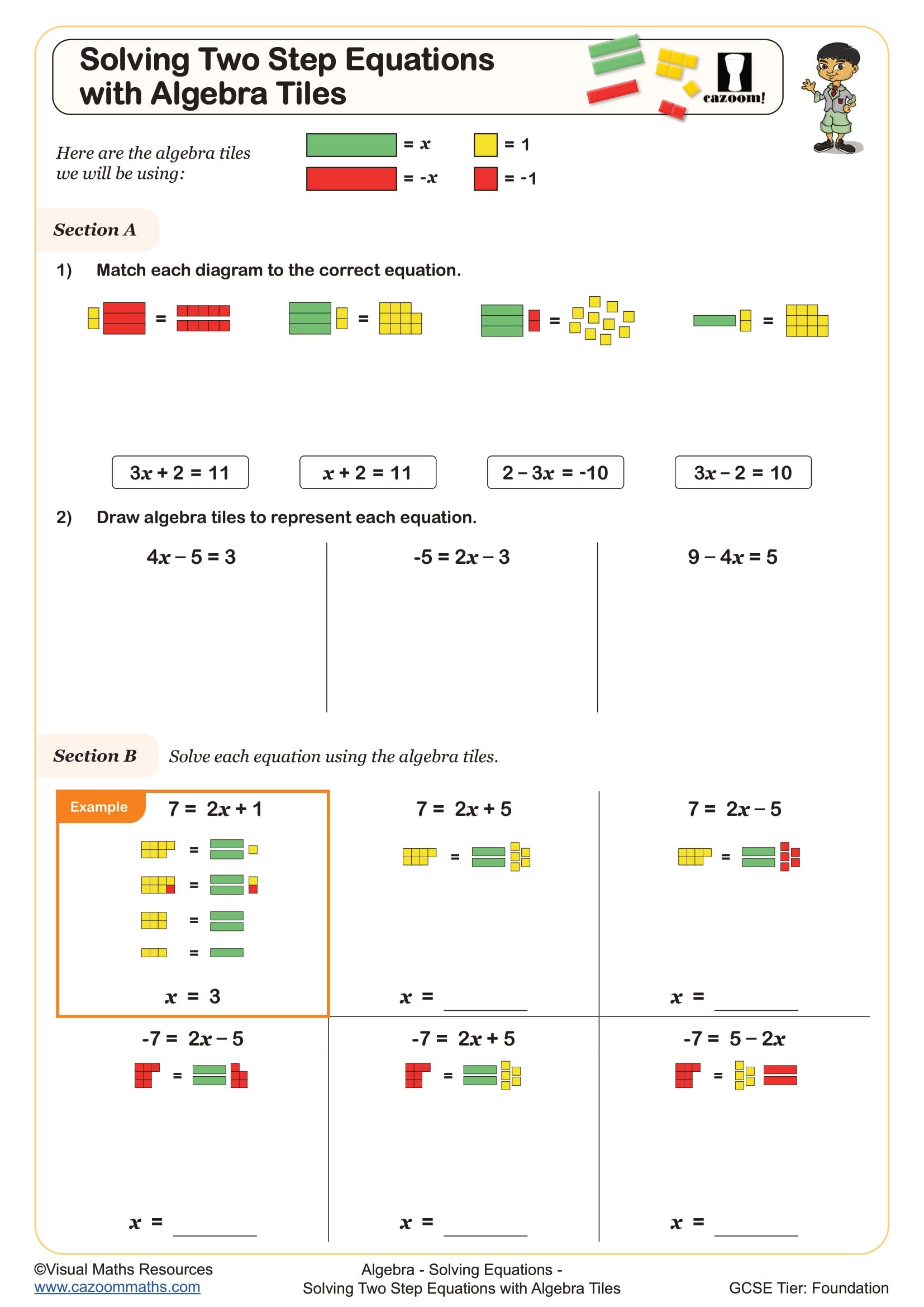
Substitution - Using Algebra Tiles
Year groups: 7, 8
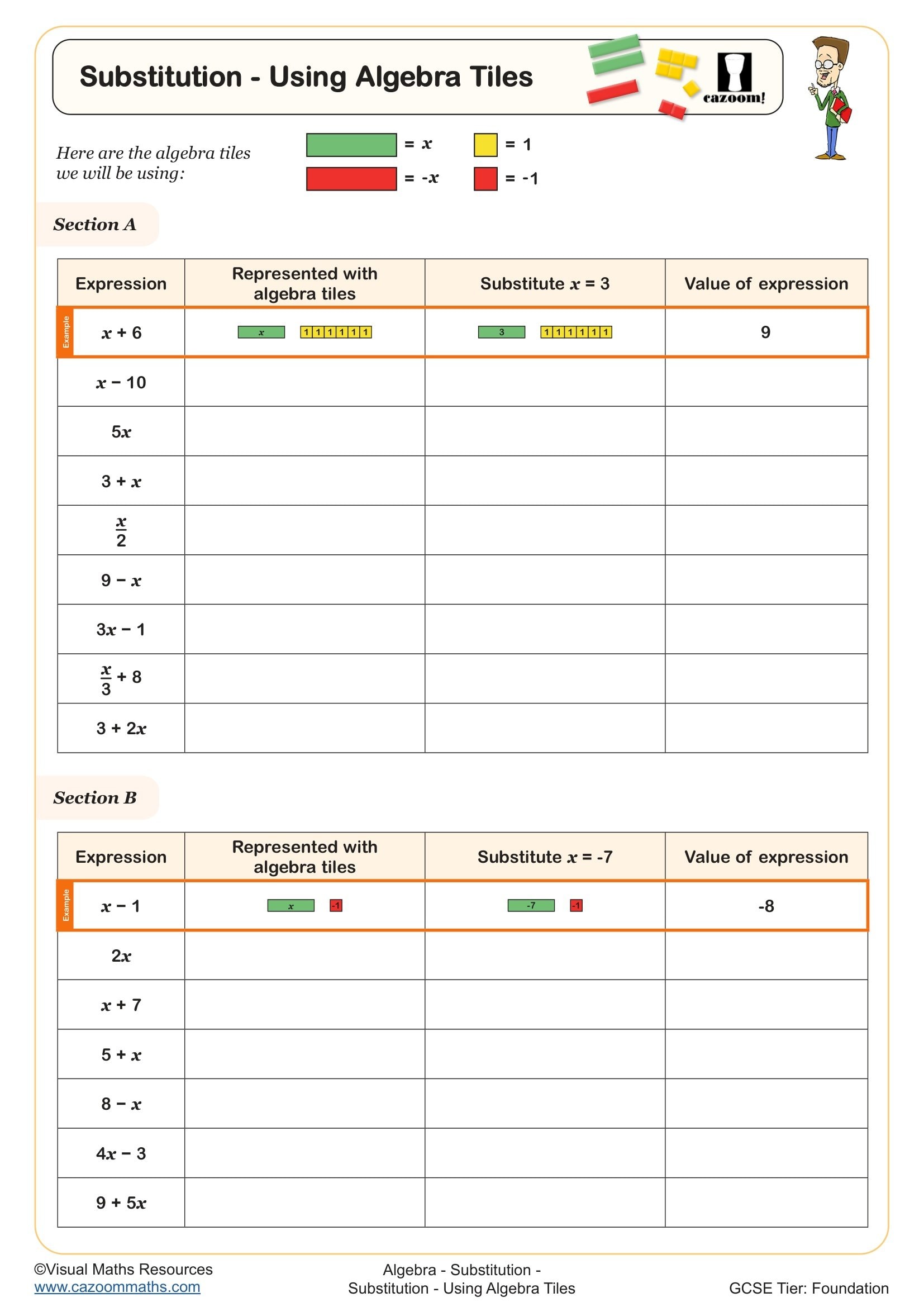
Expanding Brackets and Simplifying - Using Algebra Tiles
Year groups: 8, 9
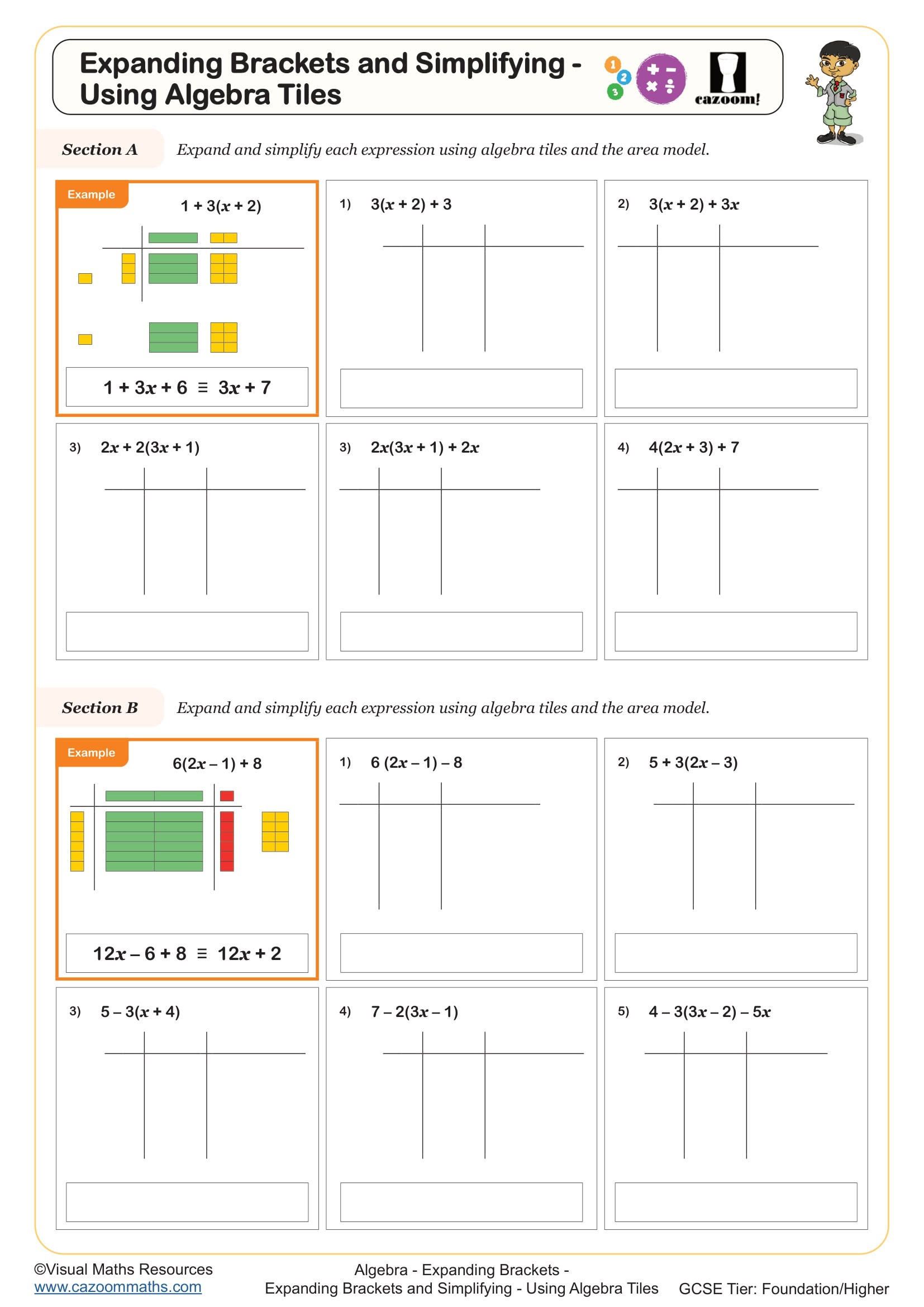
Expanding Double Brackets (A) Using the Grid Method
Year groups: 8, 9, 10
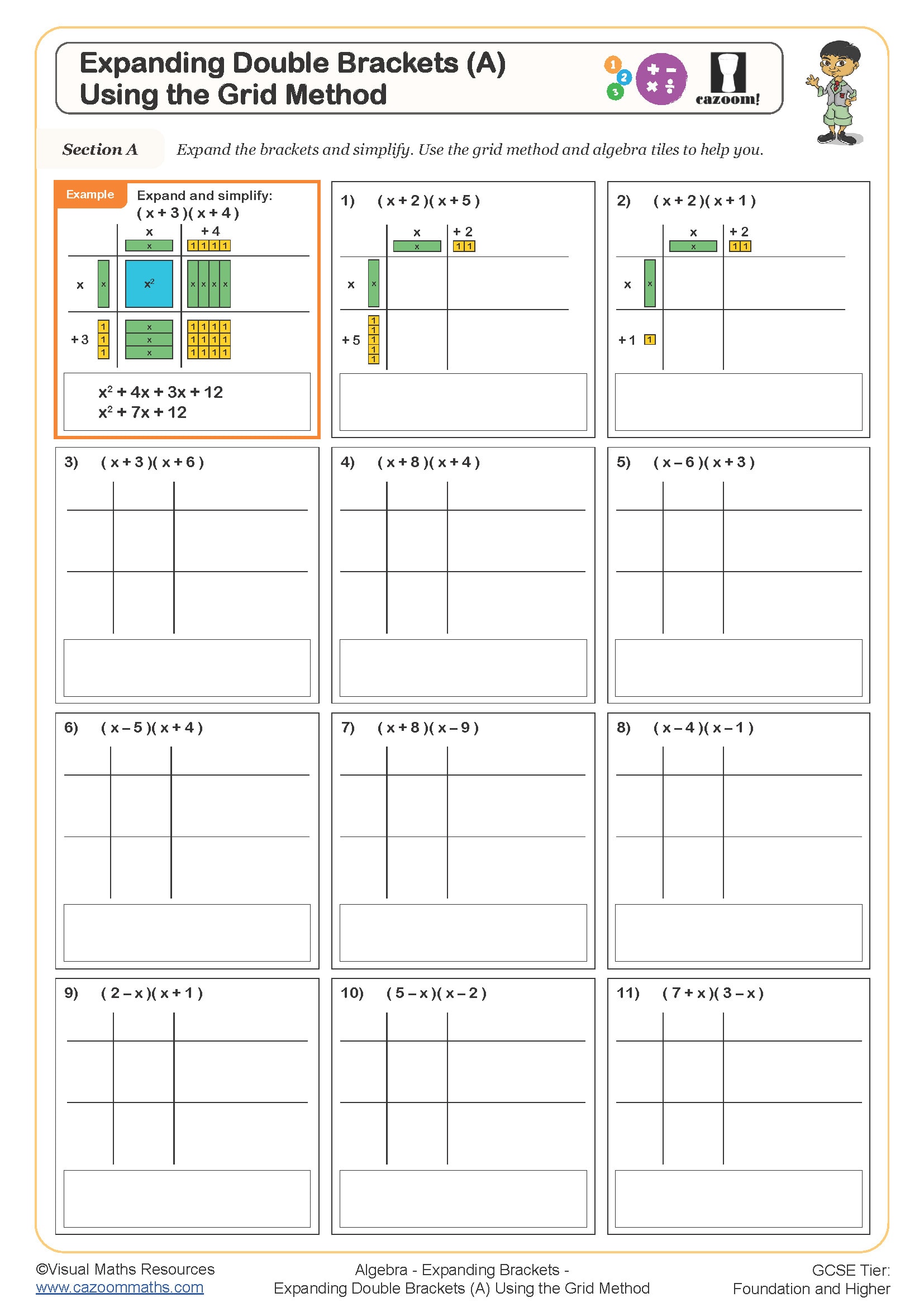
Expanding Single Brackets - Using the Grid Method
Year groups: 8, 9
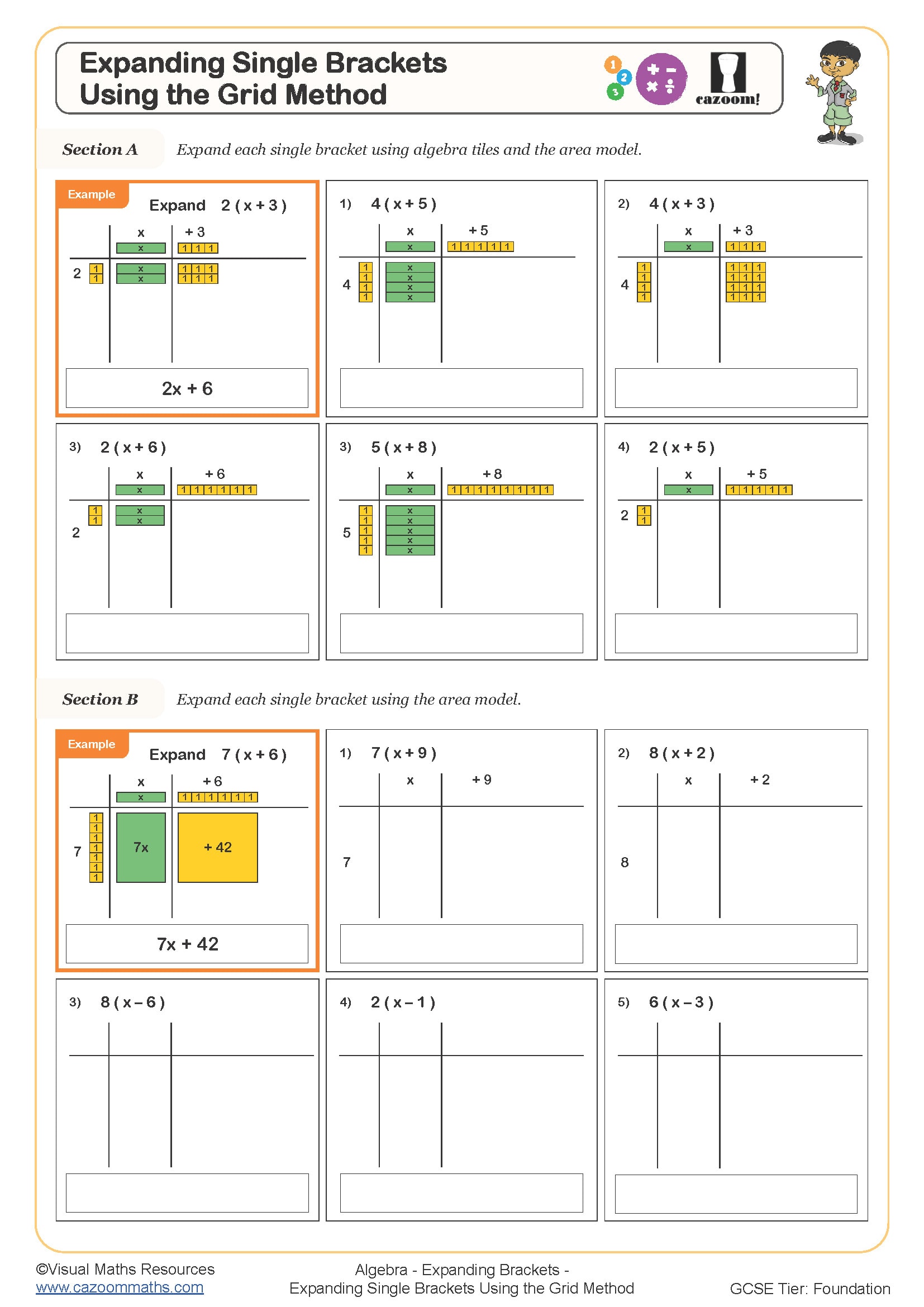
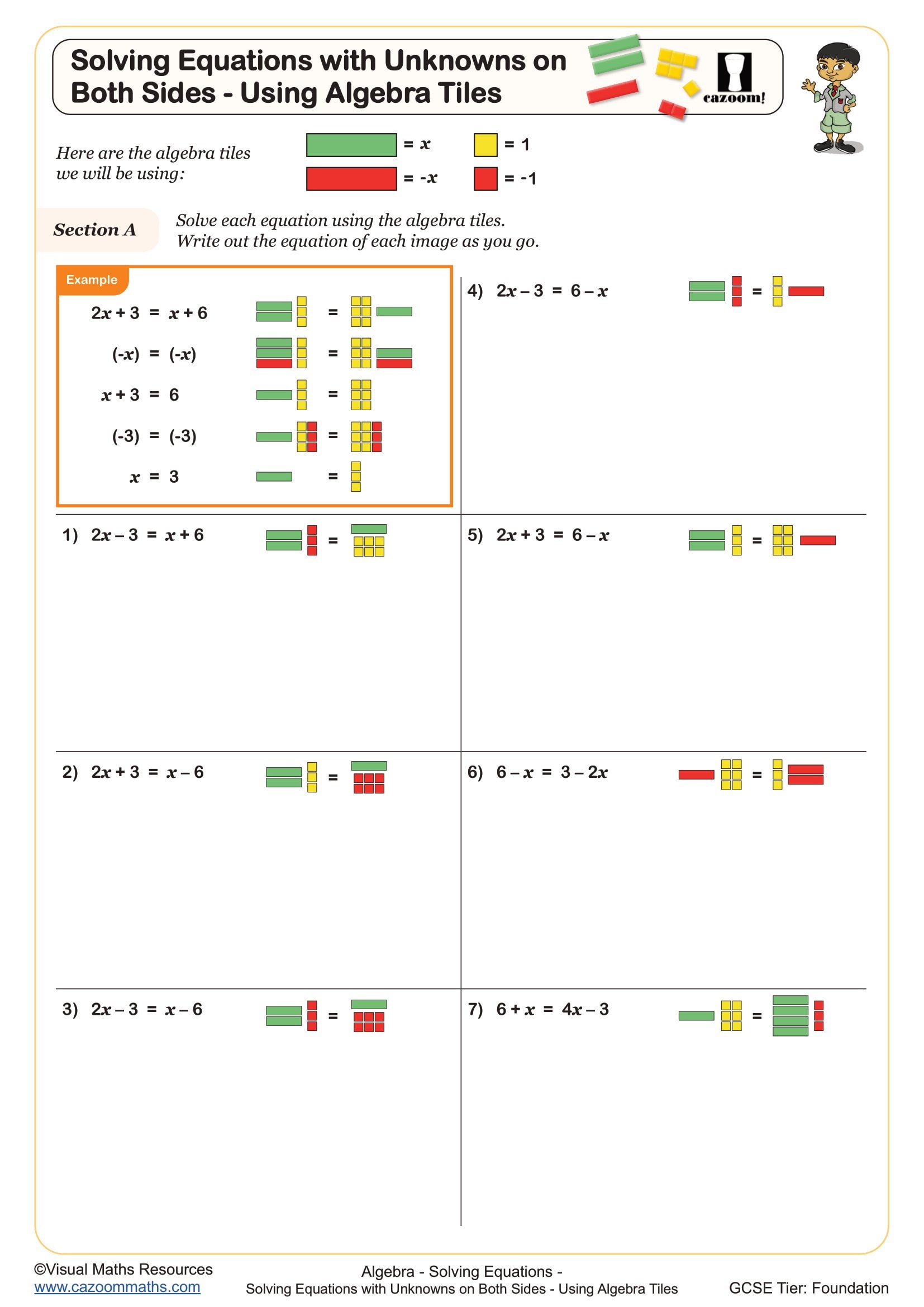
Solving Equations with Unknowns on Both Sides - Using Algebra Tiles
Year groups: 8, 9, 10
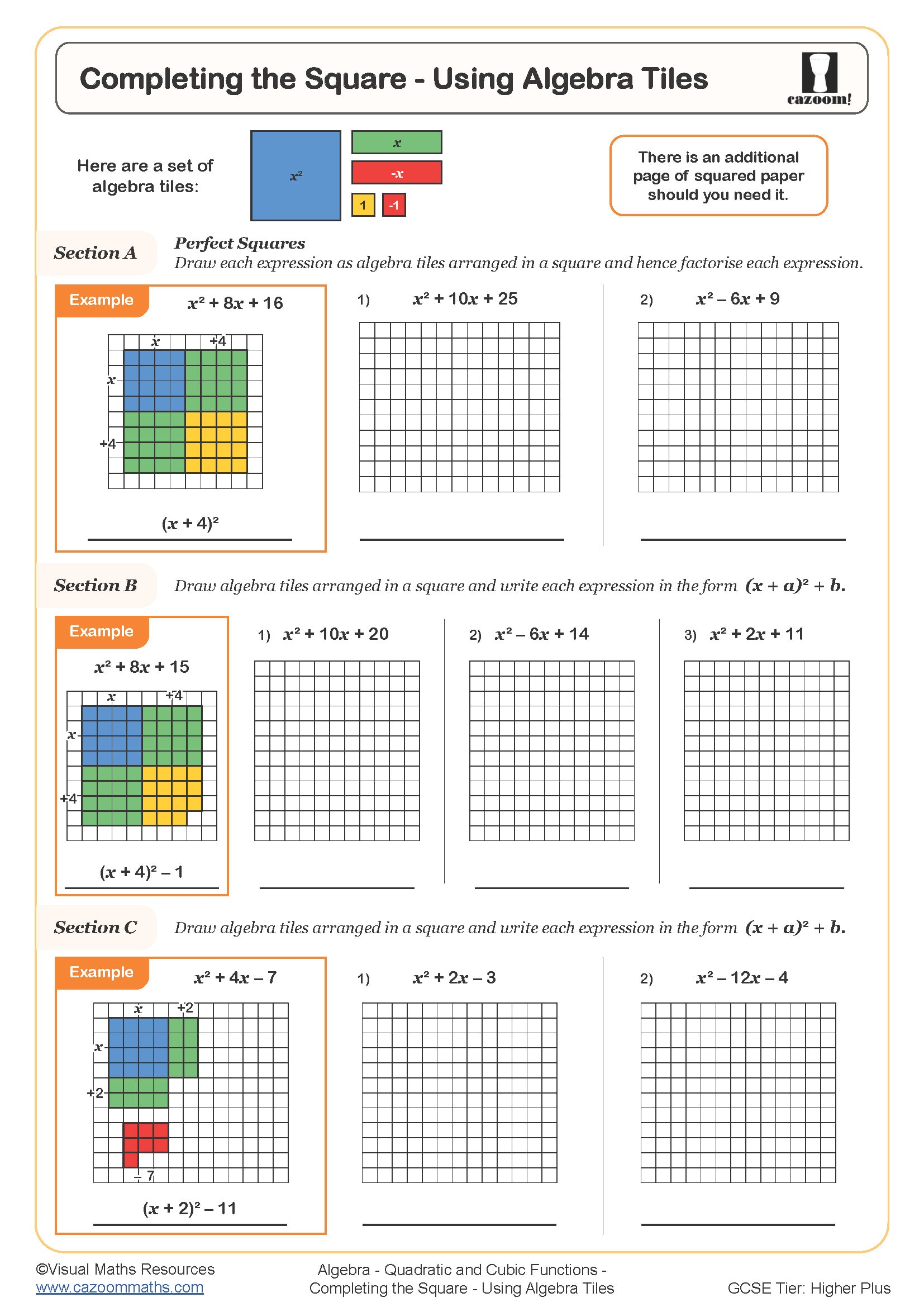
Completing the Square - Using Algebra Tiles
Year groups: 10, 11
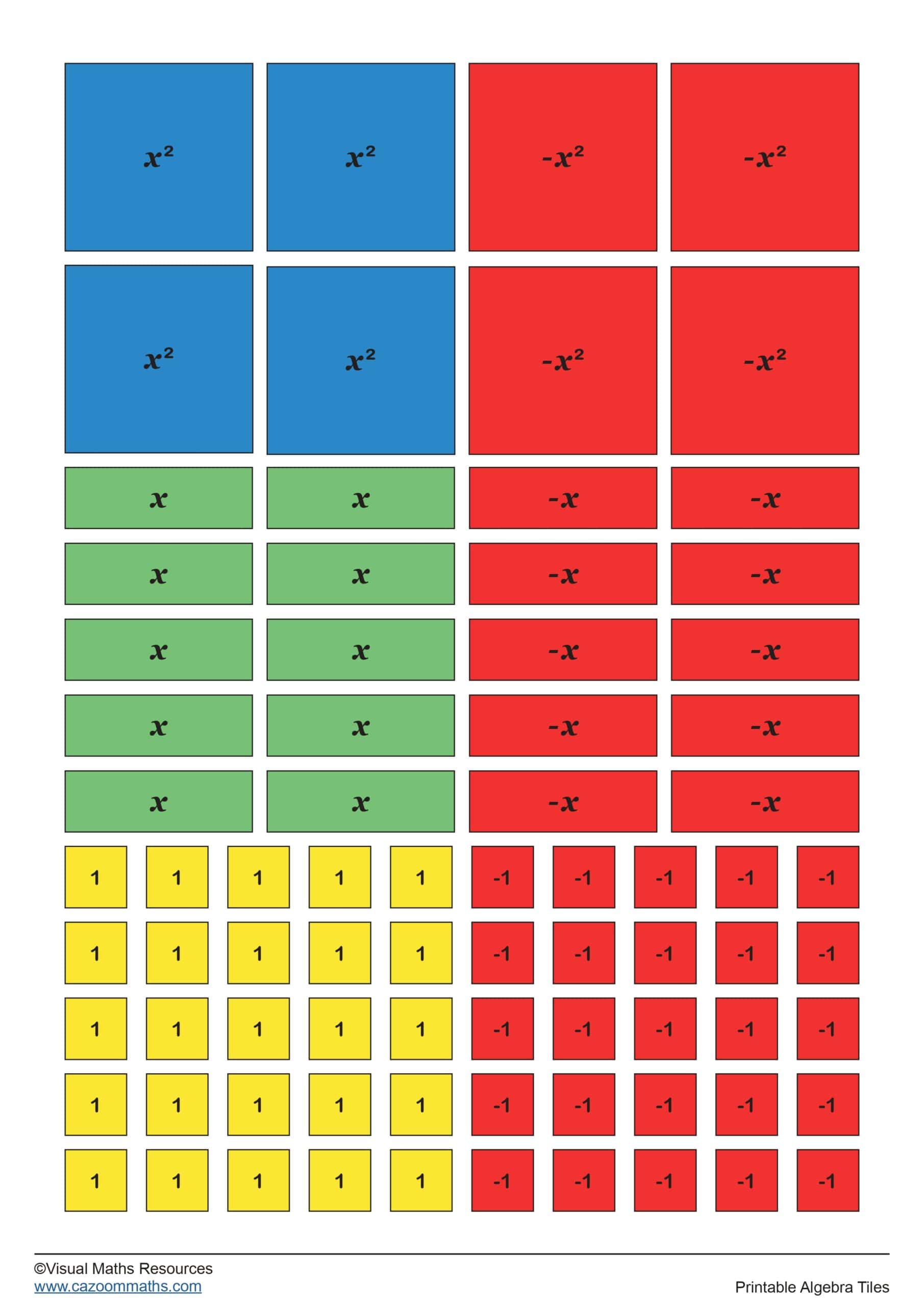
Printable Algebra Tiles
All worksheets are created by the team of experienced teachers at Cazoom Maths.
What topics do algebra tiles worksheets with answers cover?
Algebra tiles worksheets with answers typically cover simplifying expressions, solving linear equations, factorising quadratics, and multiplying binomials. The visual approach aligns with National Curriculum expectations for developing fluency in algebraic manipulation at KS3 and early KS4, where students must understand the underlying structure of algebraic expressions.
Teachers frequently observe that students initially struggle to connect the physical tiles to algebraic notation, particularly when dealing with negative terms. The answer sheets prove invaluable for helping students check their tile arrangements against correct symbolic representations, reinforcing the crucial link between visual models and mathematical notation.
Which year groups benefit most from algebra tiles manipulatives?
Year 7 and 8 students typically gain the most from algebra tiles manipulatives when first encountering algebraic concepts, though they remain valuable through Year 10 for complex topics like completing the square. The concrete-to-abstract progression supports students who need additional scaffolding before working purely with symbols and equations.
Many teachers notice that even higher-achieving Year 9 students benefit from revisiting algebra tiles when tackling quadratic factorisation. The visual representation helps students understand why certain factorisation methods work, particularly when moving from simple expressions like x² + 5x + 6 to more challenging forms involving negative coefficients or non-monic quadratics.
How do algebra tiles help with solving two-step equations?
Algebra tiles make solving two-step equations more intuitive by allowing students to physically manipulate the equation while maintaining balance. Students can see that whatever operation they perform on one side must be mirrored on the other, reinforcing the fundamental principle of equation solving through hands-on experience.
Teachers consistently report that students who previously made errors with negative coefficients or combining like terms show marked improvement after using tiles. The visual representation prevents common mistakes like forgetting to distribute negative signs or incorrectly combining unlike terms, as students must physically move and arrange the tiles according to algebraic rules.
What's the most effective way to introduce algebra tiles in lessons?
Start with concrete manipulation before introducing symbolic notation, allowing students to explore patterns and relationships through hands-on discovery. Begin with simple expressions using only positive terms, gradually introducing negative tiles and more complex structures as students develop confidence with the basic concepts and connections.
Effective implementation involves pairing tile work with written recording, helping students translate between visual and symbolic representations. Teachers find that students retain concepts better when they regularly switch between manipulating physical or virtual tiles and writing algebraic expressions, creating multiple pathways to understanding that support different learning preferences and strengthen overall algebraic reasoning.