Order of Operations Worksheets
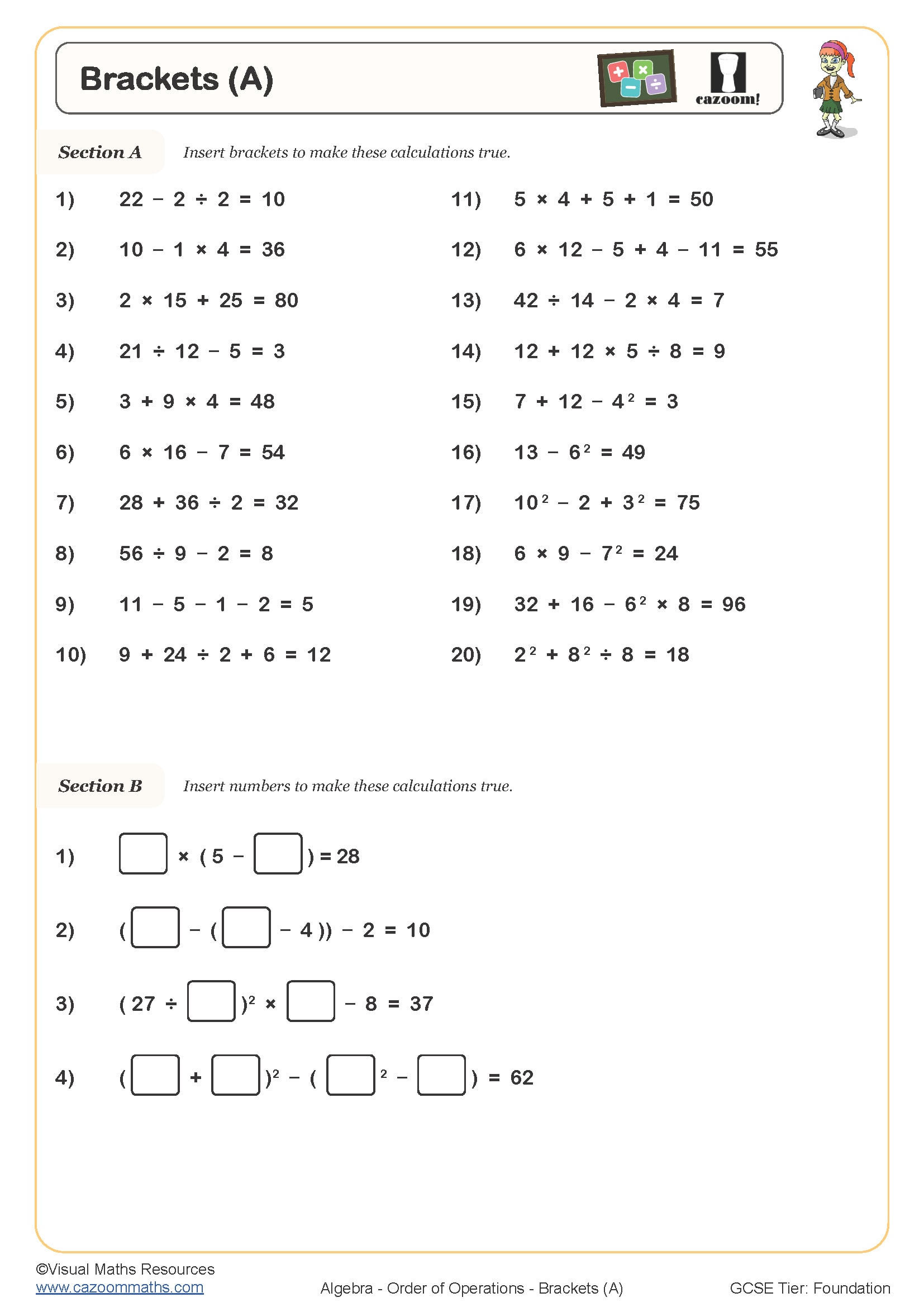
Brackets (A)
Year groups: 7, 8, 9
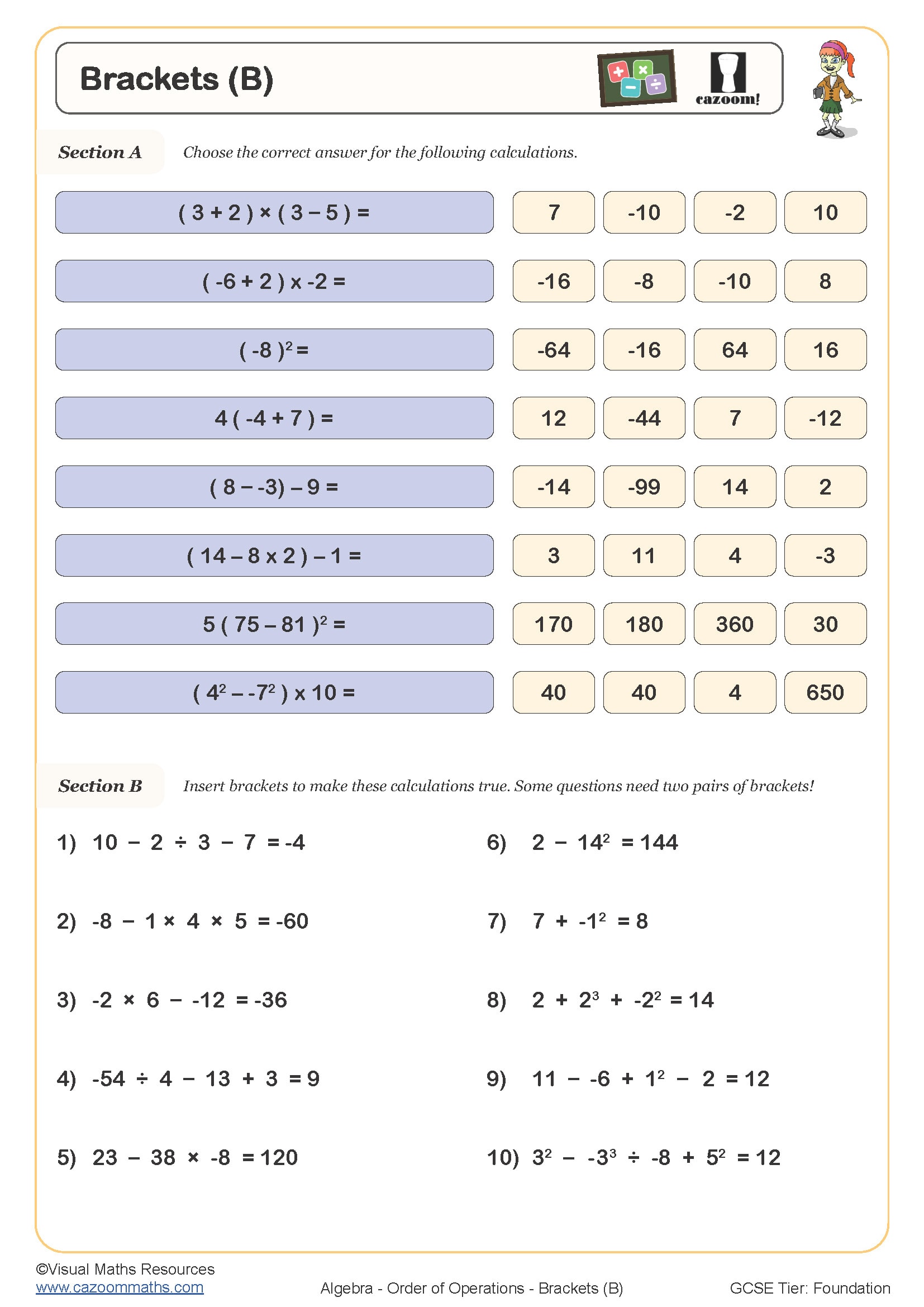
Brackets (B)
Year groups: 7, 8, 9
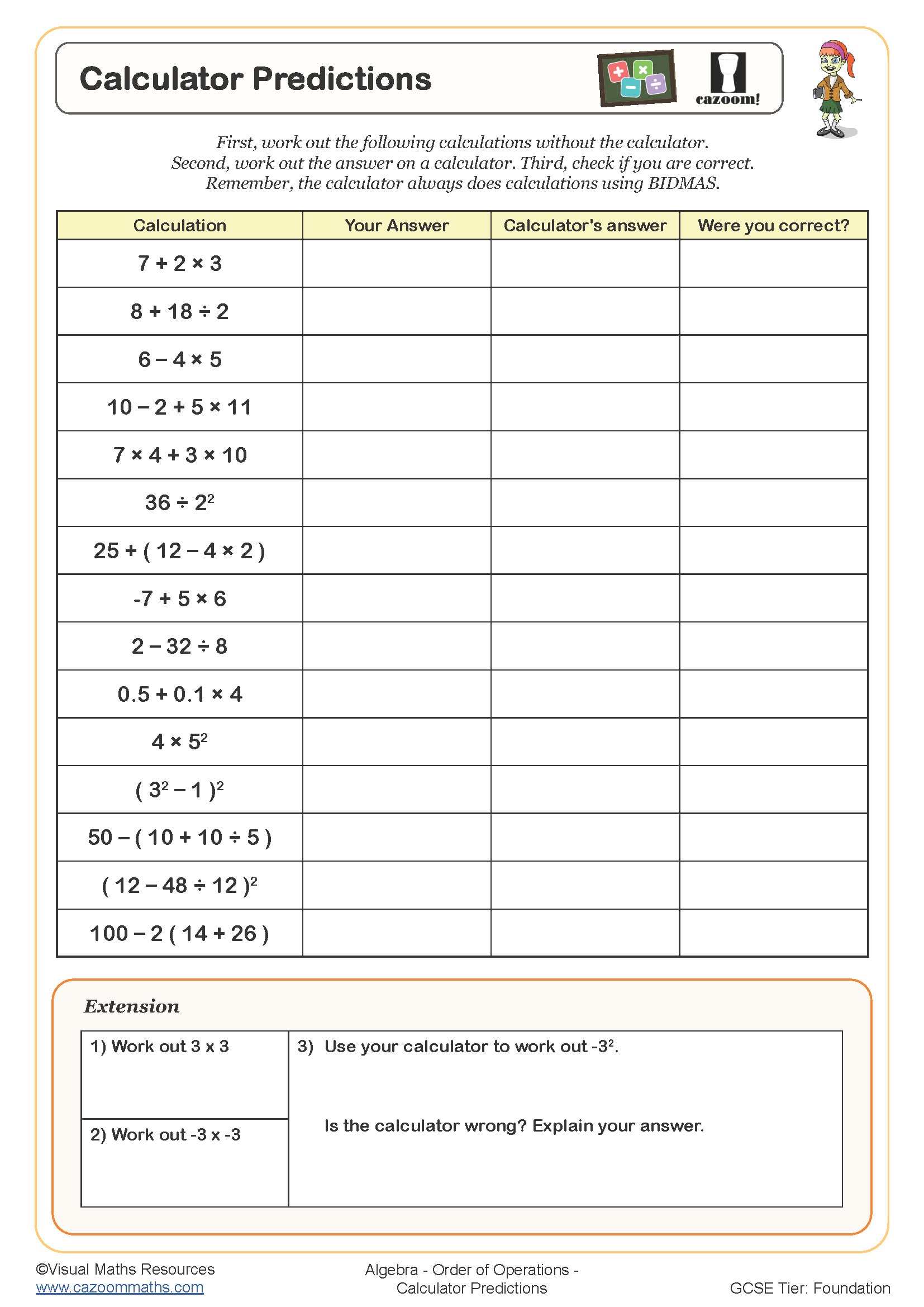
Calculator Predictions
Year groups: 7, 8
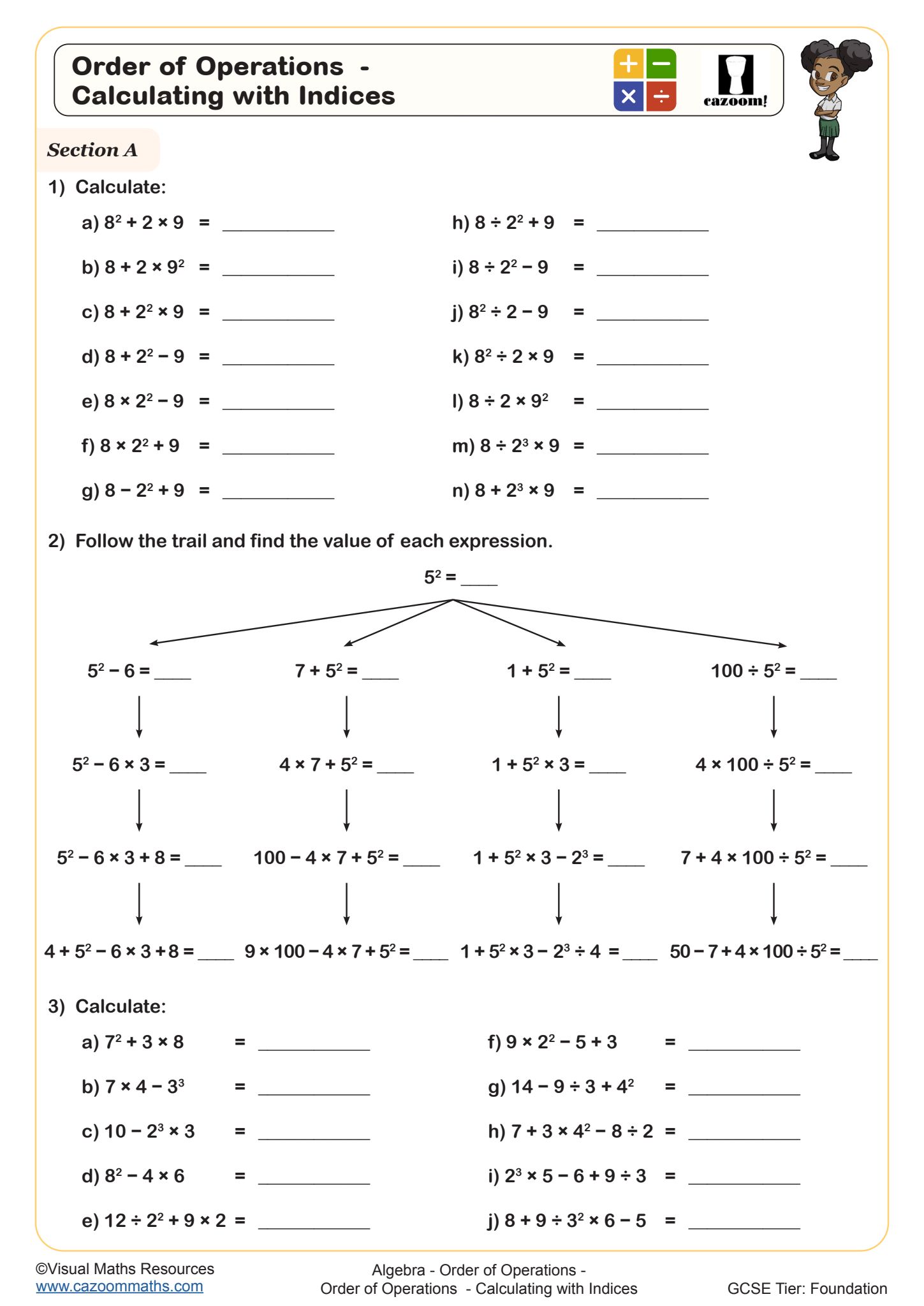
Order of Operations - Calculating with Indices
Year groups: 7, 8
Order of Operations - Addition and Subtraction
Year groups: 7
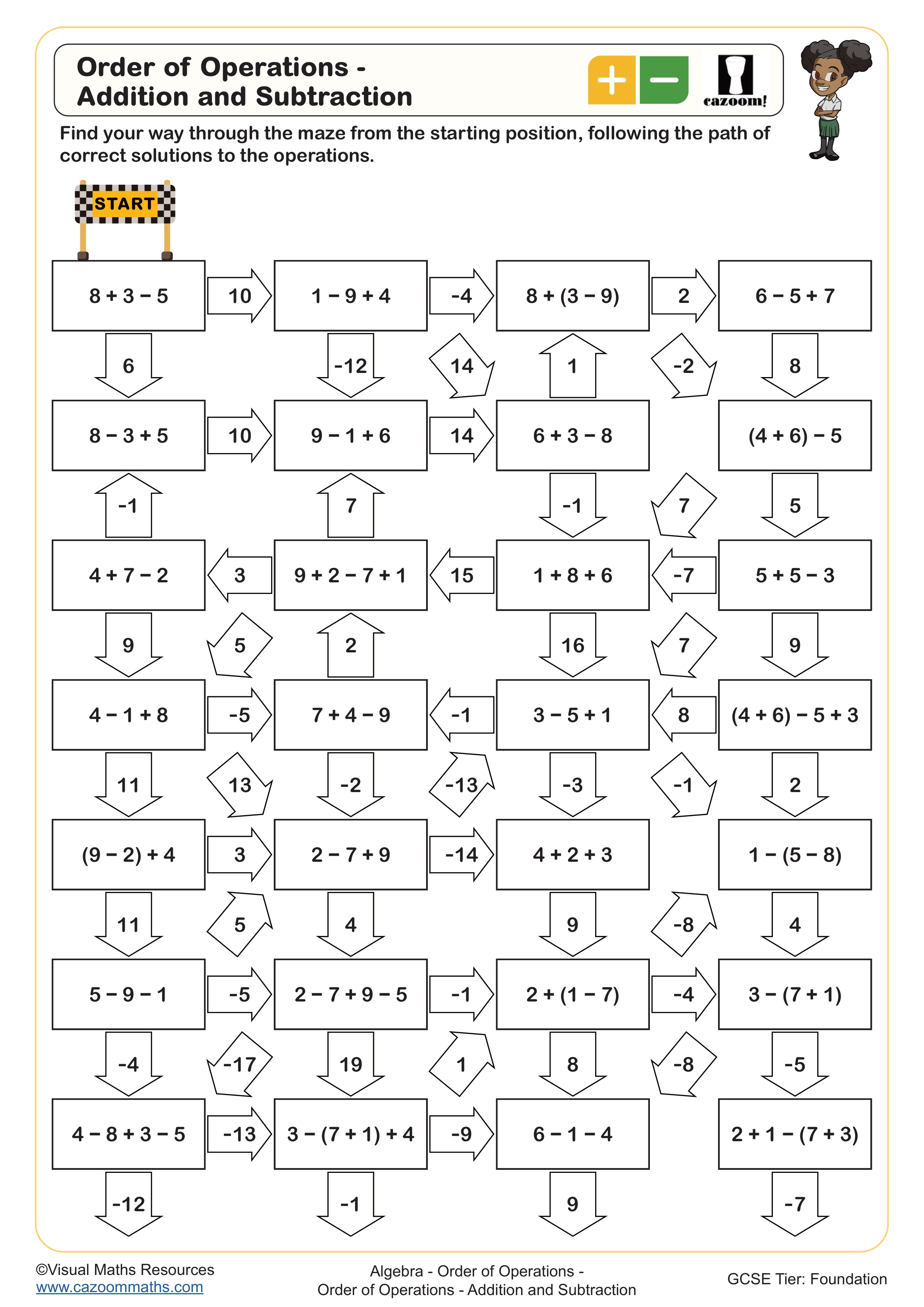
Order of Operations - Introducing Brackets and Indices
Year groups: 7, 8
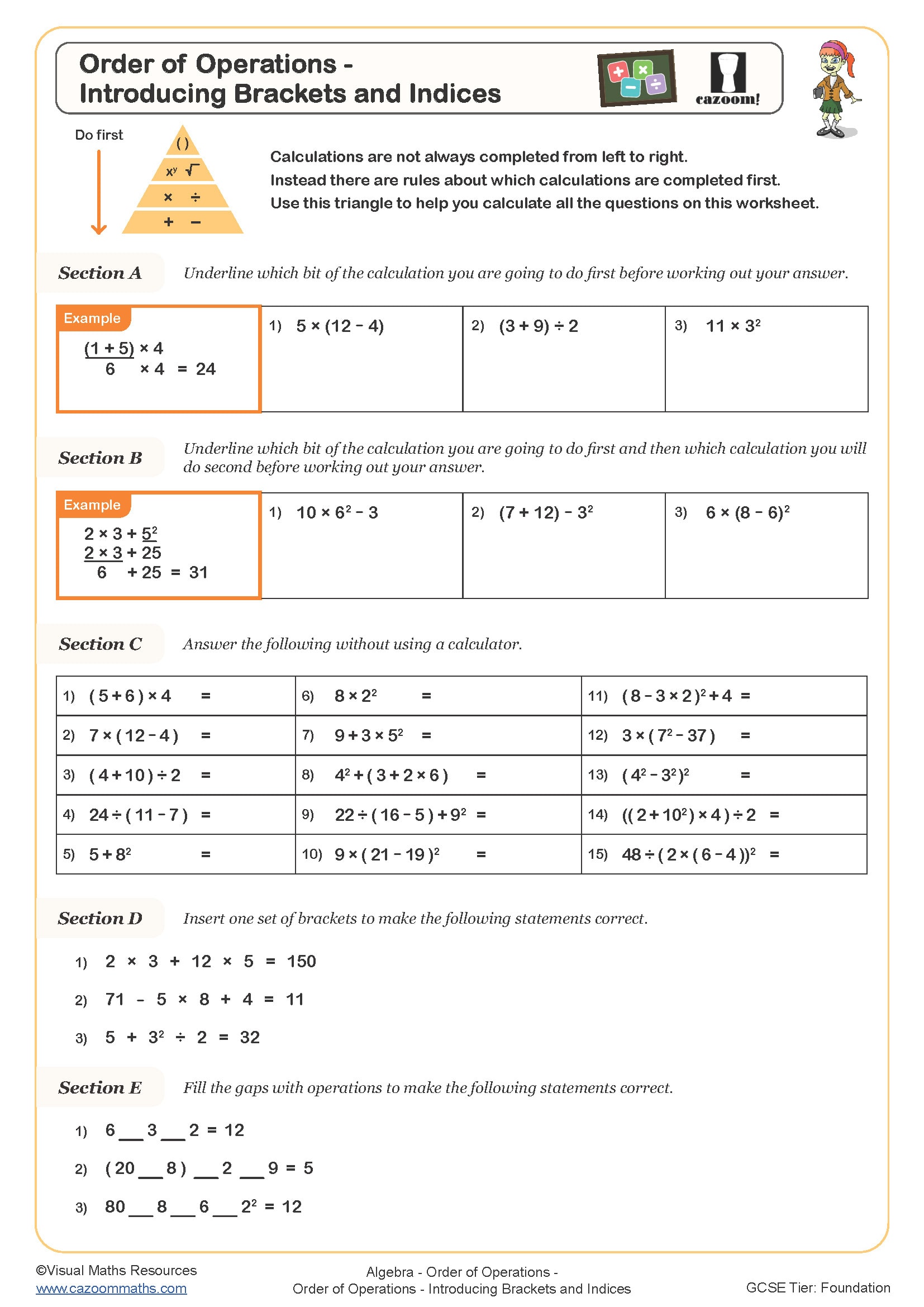
Order of Operations - Multiplication, Division, Addition and Subtraction
Year groups: 7, 8
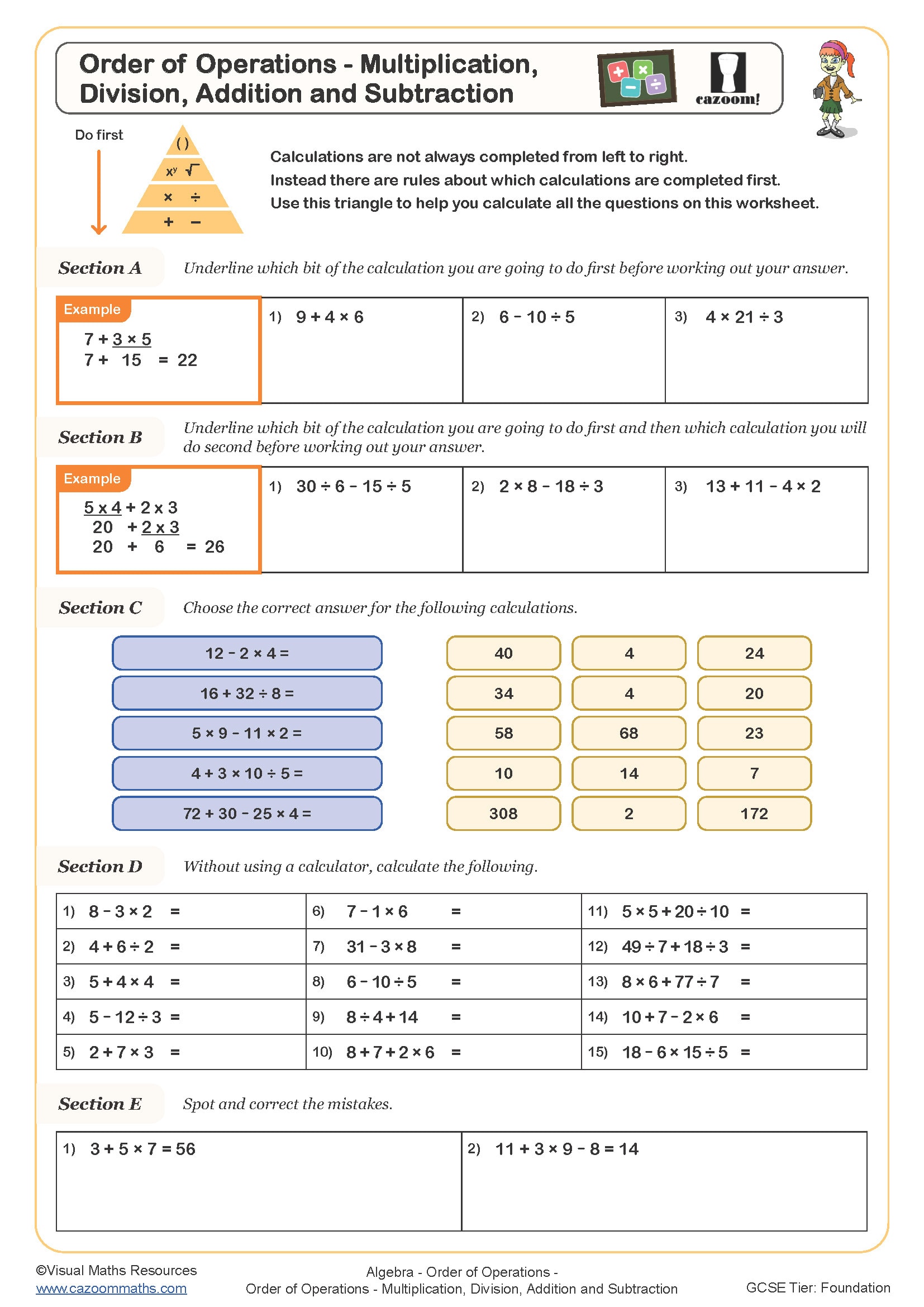
Order of Operations - Understanding Fractions as Division
Year groups: 7, 8, 9
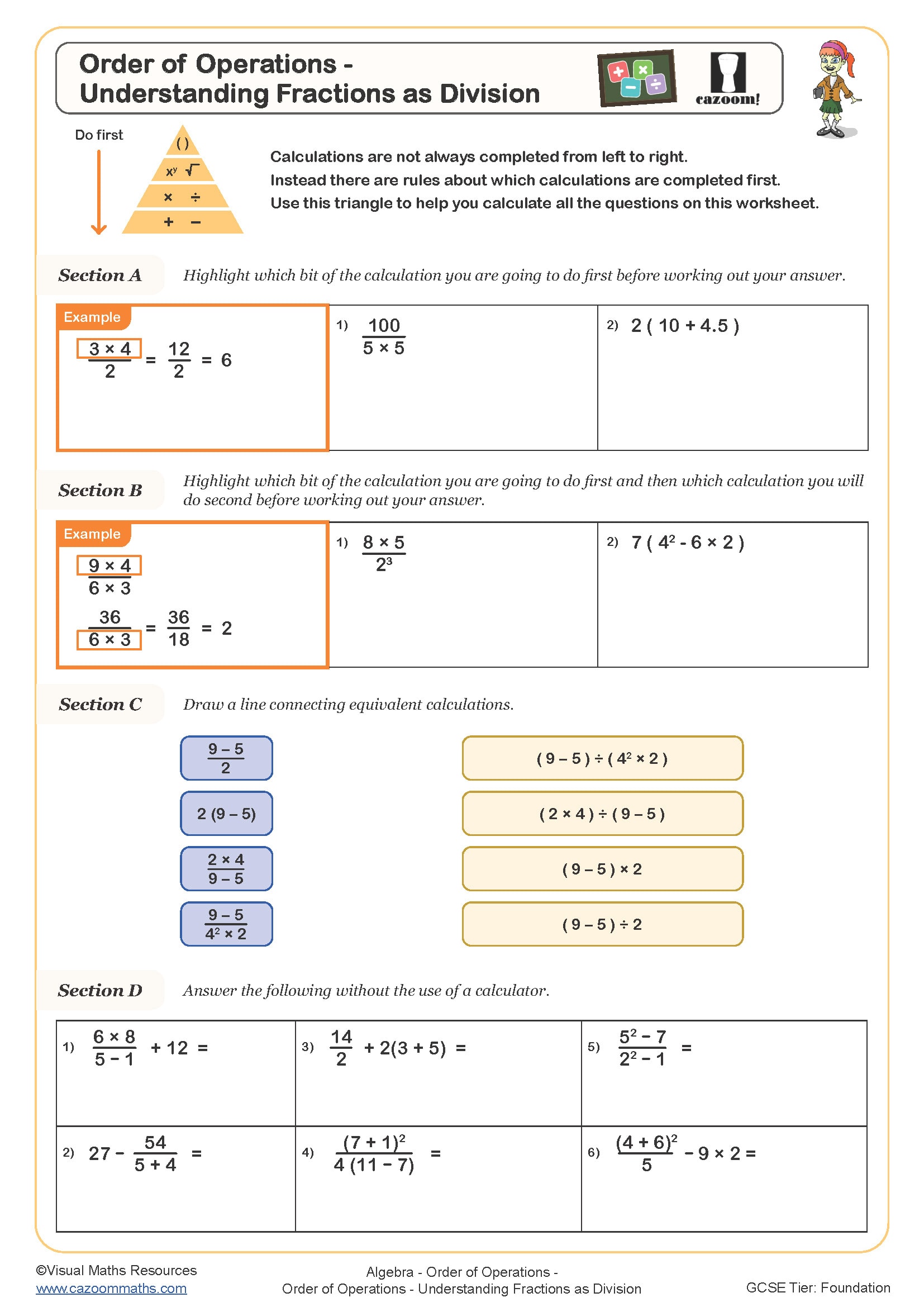
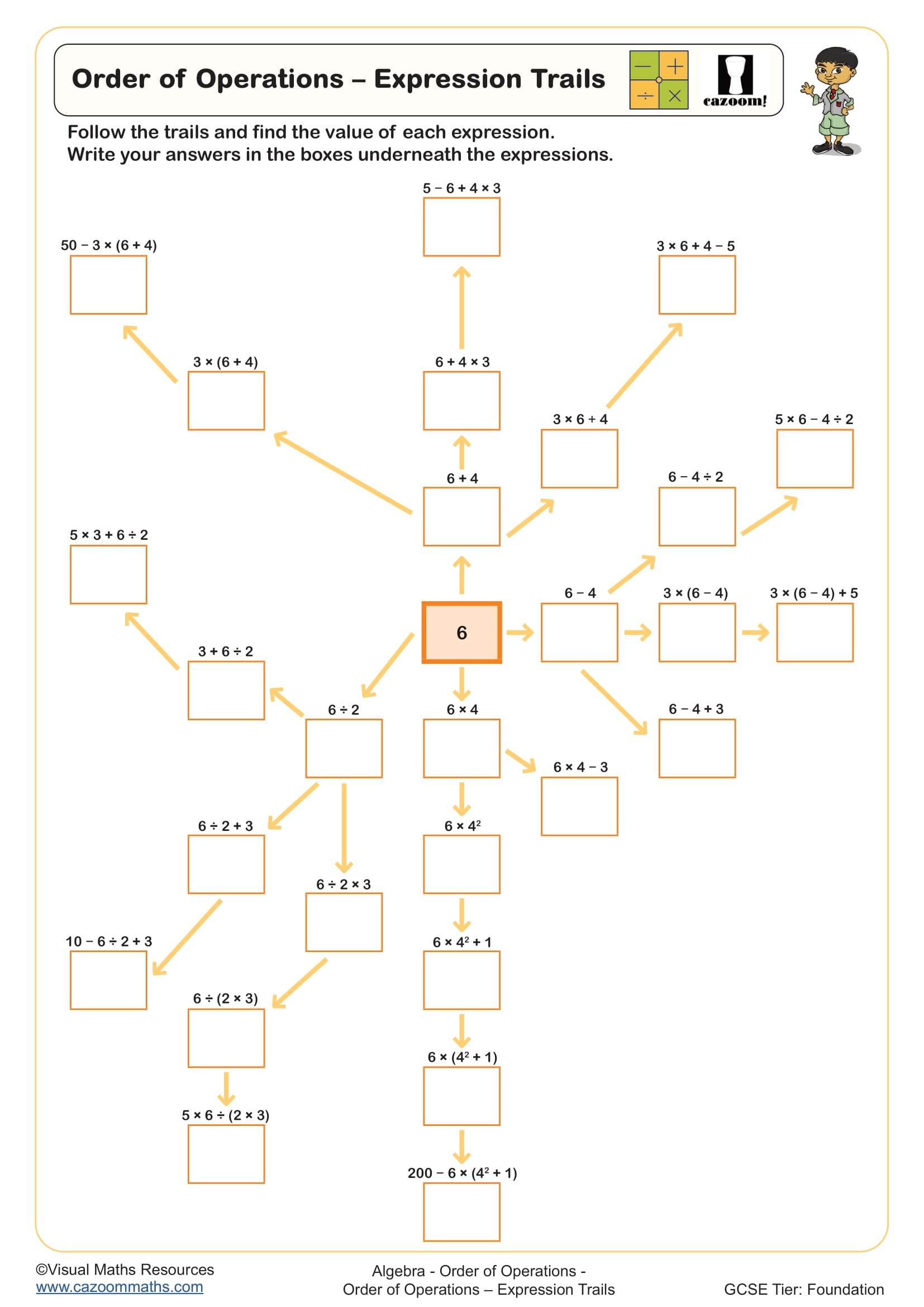
Order of Operations – Expression Trails
Year groups: 7, 8
All worksheets are created by the team of experienced teachers at Cazoom Maths.
What makes an effective BODMAS worksheet for Year 7 students?
An effective bodmas worksheet should progress from simple integer calculations through to mixed problems involving fractions, decimals and negative numbers. Year 7 students need structured practice that reinforces each stage of the order of operations hierarchy, with problems clearly showing when brackets, indices and different operations interact.
Teachers find that students make fewer errors when worksheets include visual cues like highlighted brackets or step-by-step working spaces. The most successful BODMAS exercises combine straightforward calculations with real-world contexts like calculating costs or measurements, helping students understand why the order of operations matters beyond the mathematics classroom.
How do BODMAS requirements differ between Year 6 and Year 7?
Year 6 students typically work with basic BODMAS problems involving whole numbers and simple brackets, focusing on the fundamental concept that multiplication and division come before addition and subtraction. The transition to Year 7 introduces more complex scenarios including negative numbers, fractional calculations and algebraic terms within the order of operations framework.
BIDMAS questions year 7 students encounter often include indices (powers) which weren't emphasised in primary school, plus multi-layered brackets requiring careful attention to nested operations. Teachers observe that students who mastered basic bodmas questions year 7 level often struggle initially with fraction division or negative number multiplication within larger expressions.
Why do students find BODMAS with fractions particularly challenging?
BODMAS fractions worksheets with answers reveal that students often forget to apply the order of operations when working with fractional calculations, instead tackling fraction operations in the sequence they appear. This leads to incorrect simplification of expressions like 1/2 + 3/4 × 2/3, where students might add the fractions first rather than completing the multiplication.
Experienced teachers notice that students benefit from explicitly writing out each step when handling bodmas questions with answers involving fractions. Breaking down complex expressions into clear stages helps students see that the same rules apply whether working with whole numbers, decimals or fractions, building confidence for more advanced algebraic manipulation.
How can teachers use these worksheets to address common BODMAS misconceptions?
Teachers find that presenting BODMAS questions with answers as both worked examples and independent practice helps students identify their own calculation errors. Many educators use a diagnostic approach, starting with basic bodmas worksheet pdf problems to establish which students need additional support with specific operation types before progressing to more complex bidmas worksheet exercises.
Classroom observation shows that students who regularly practise with varied question formats develop stronger problem-solving strategies. Teachers often use the answer sheets for peer marking activities, encouraging students to discuss their working methods and identify where mistakes occurred in multi-step calculations, reinforcing the systematic approach needed for GCSE success.