Factorising Worksheets
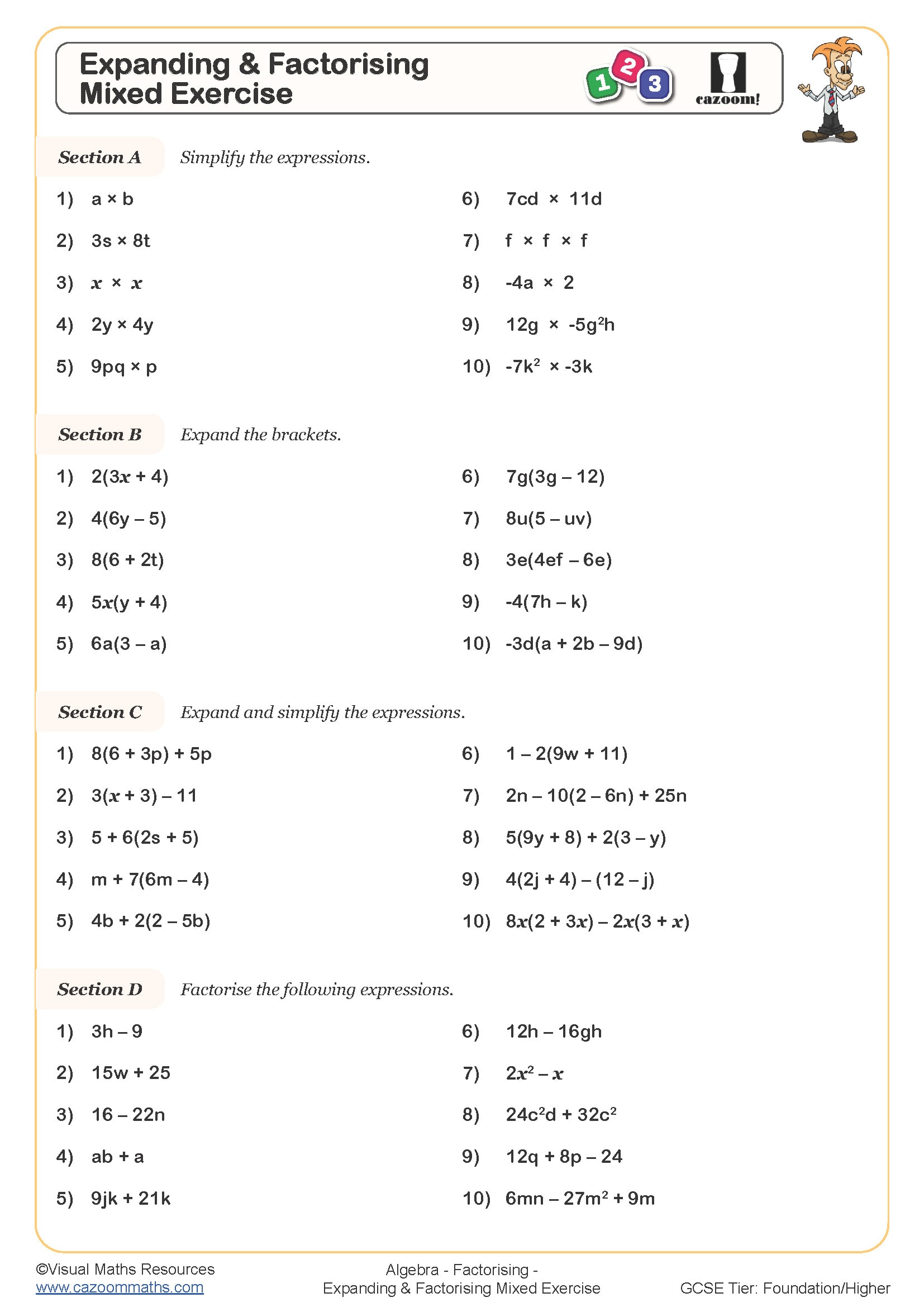
Expanding and Factorising Mixed Exercise
Year groups: 8, 9, 10
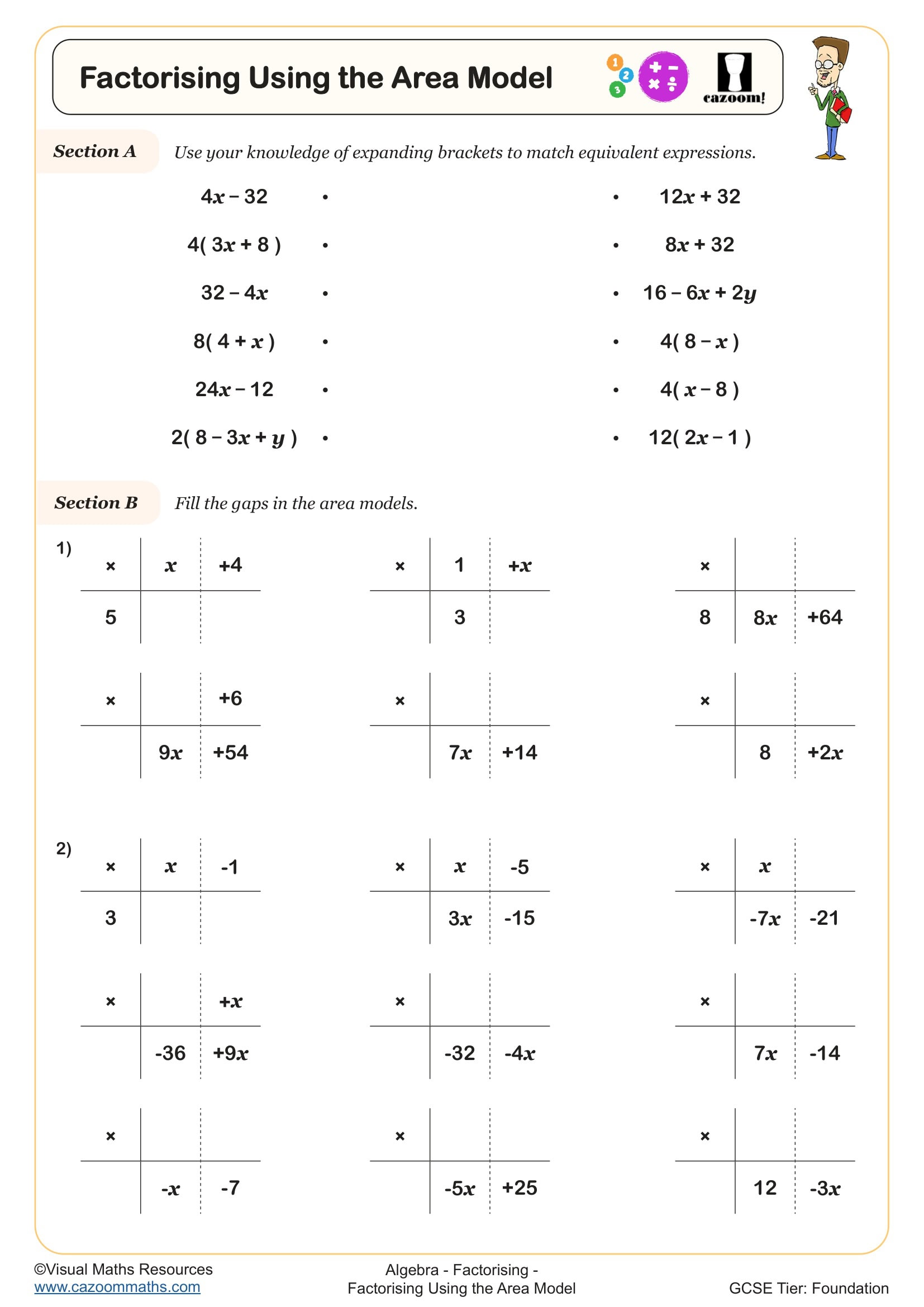
Factorising Using the Area Model
Year groups: 8, 9
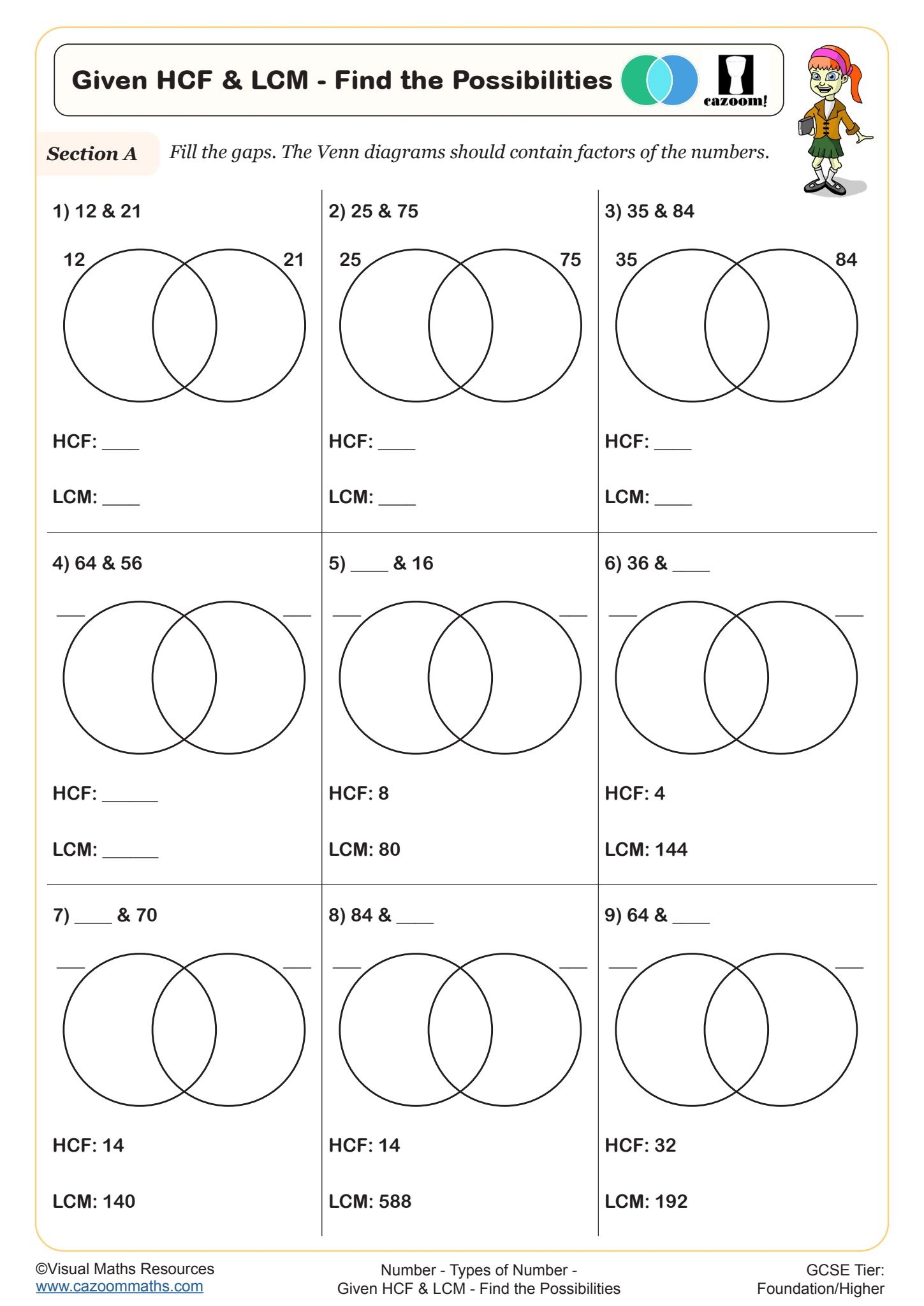
Given HCF & LCM - Find Possible Numbers
Year groups: 8, 9
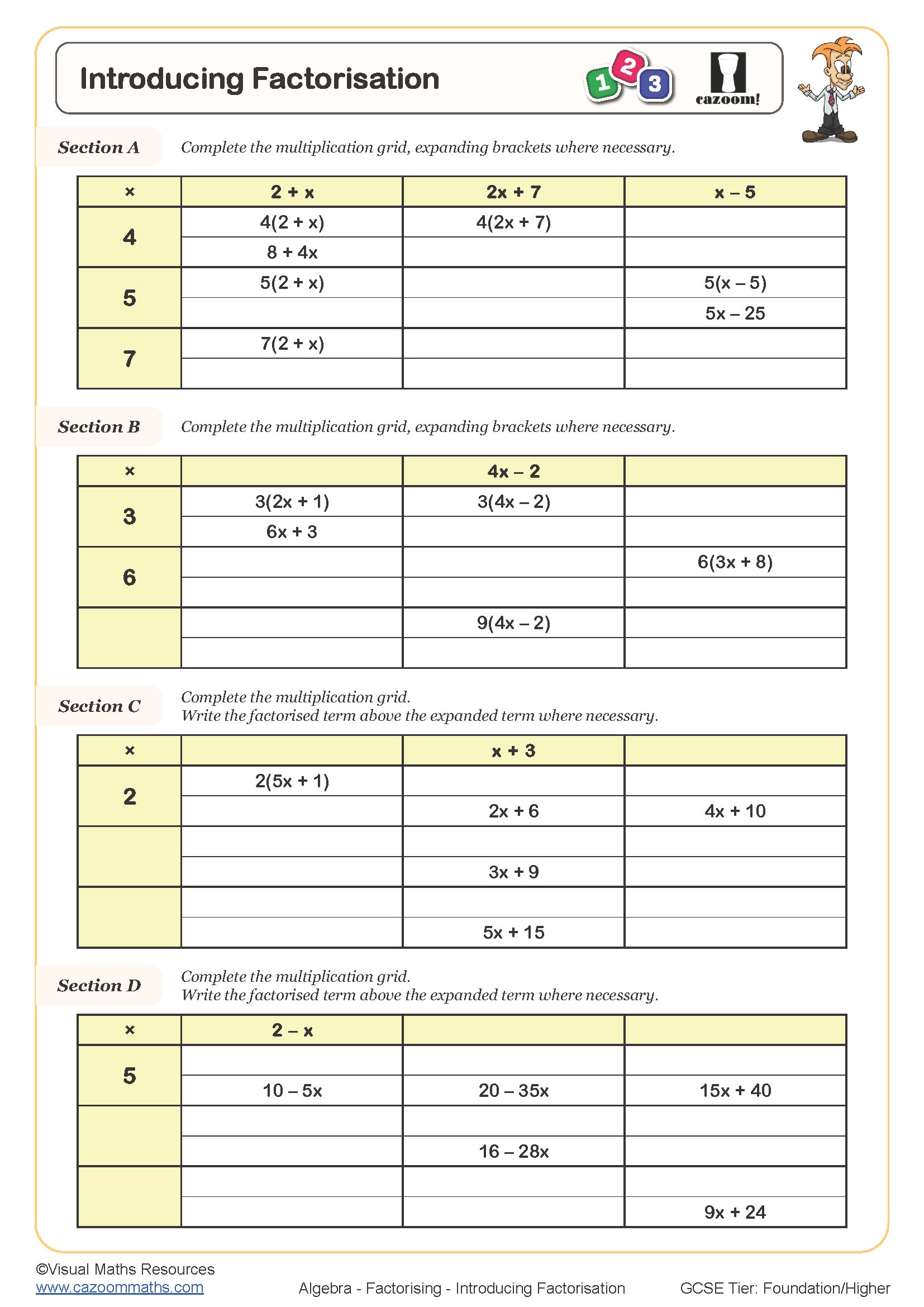
Introducing Factorisation
Year groups: 8, 9, 10
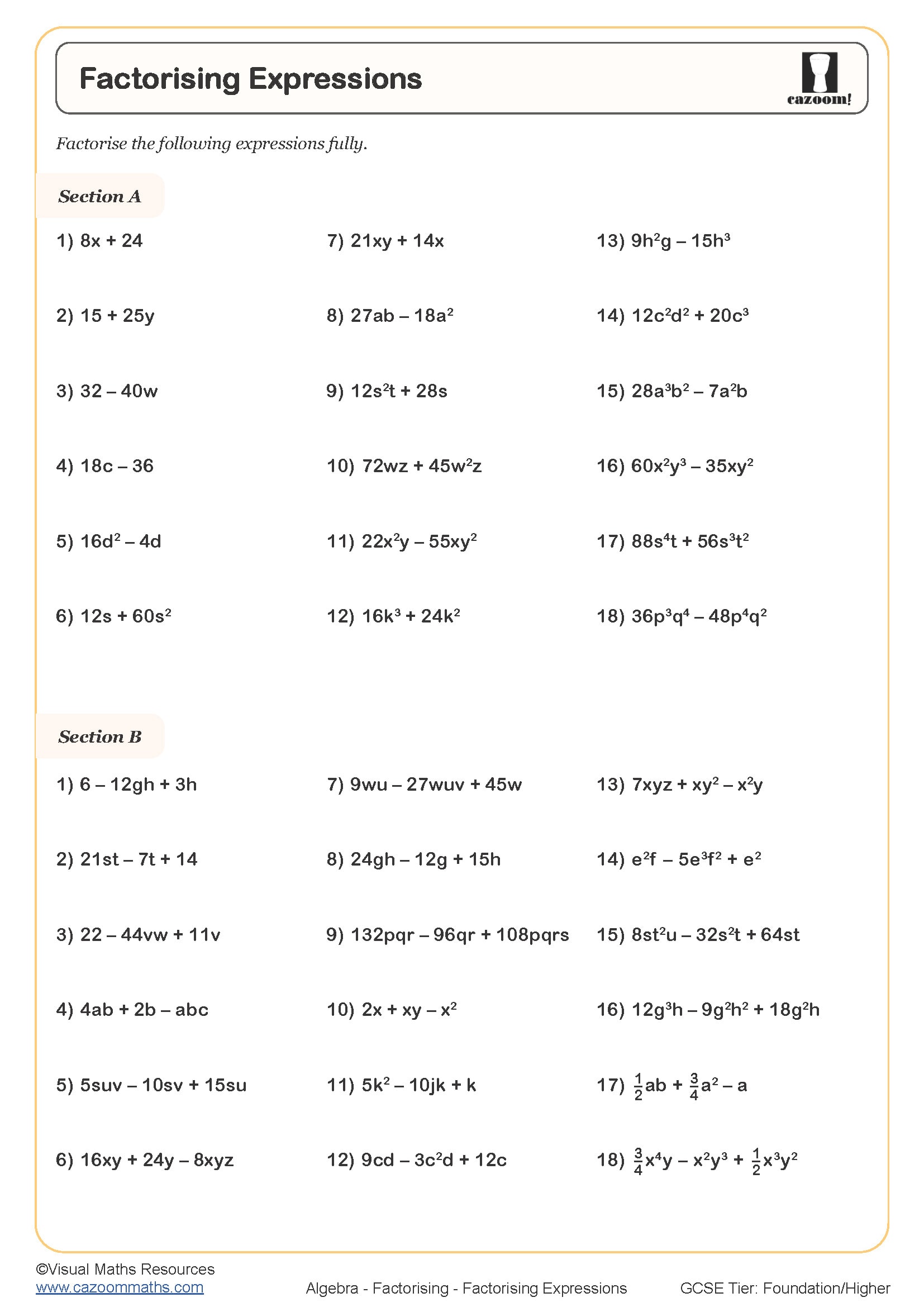
Factorising Expressions
Year groups: 9, 10, 11
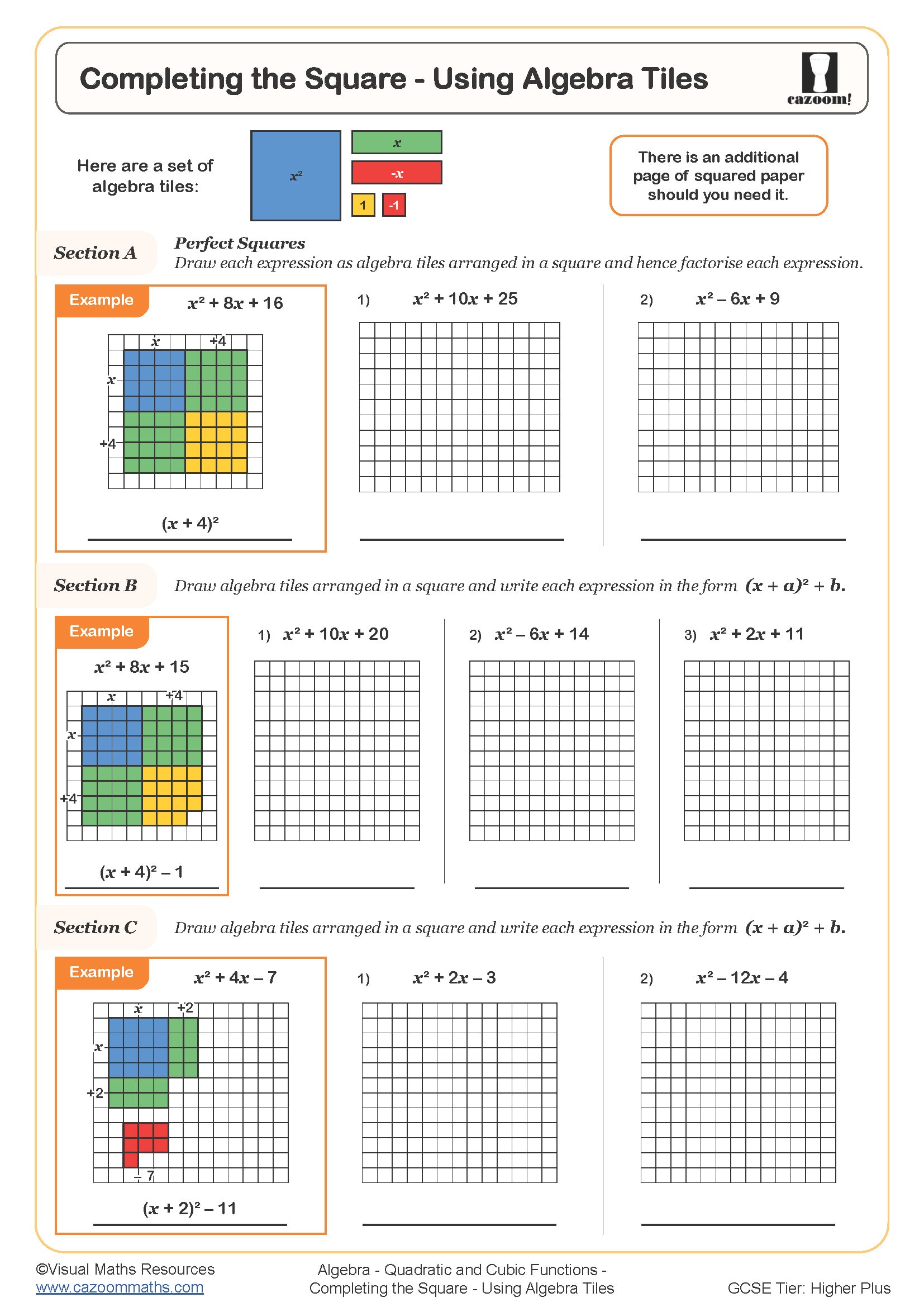
Completing the Square - Using Algebra Tiles
Year groups: 10, 11
Completing the Square (A)
Year groups: 10, 11
-Worksheet.jpg?w=3840)
Completing the Square (B)
Year groups: 10, 11
-Worksheet.jpg?w=3840)
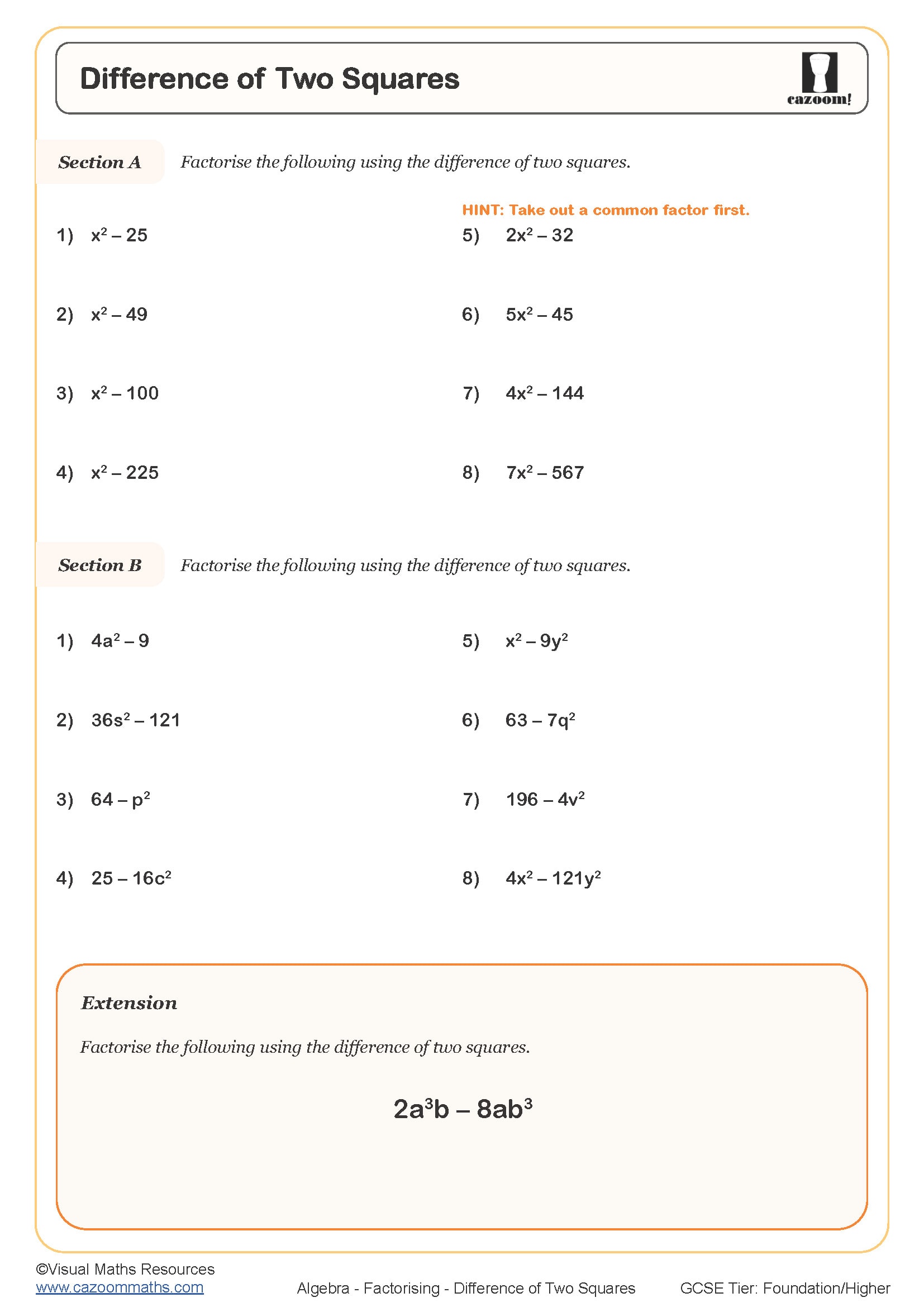
Difference of Two Squares
Year groups: 10, 11
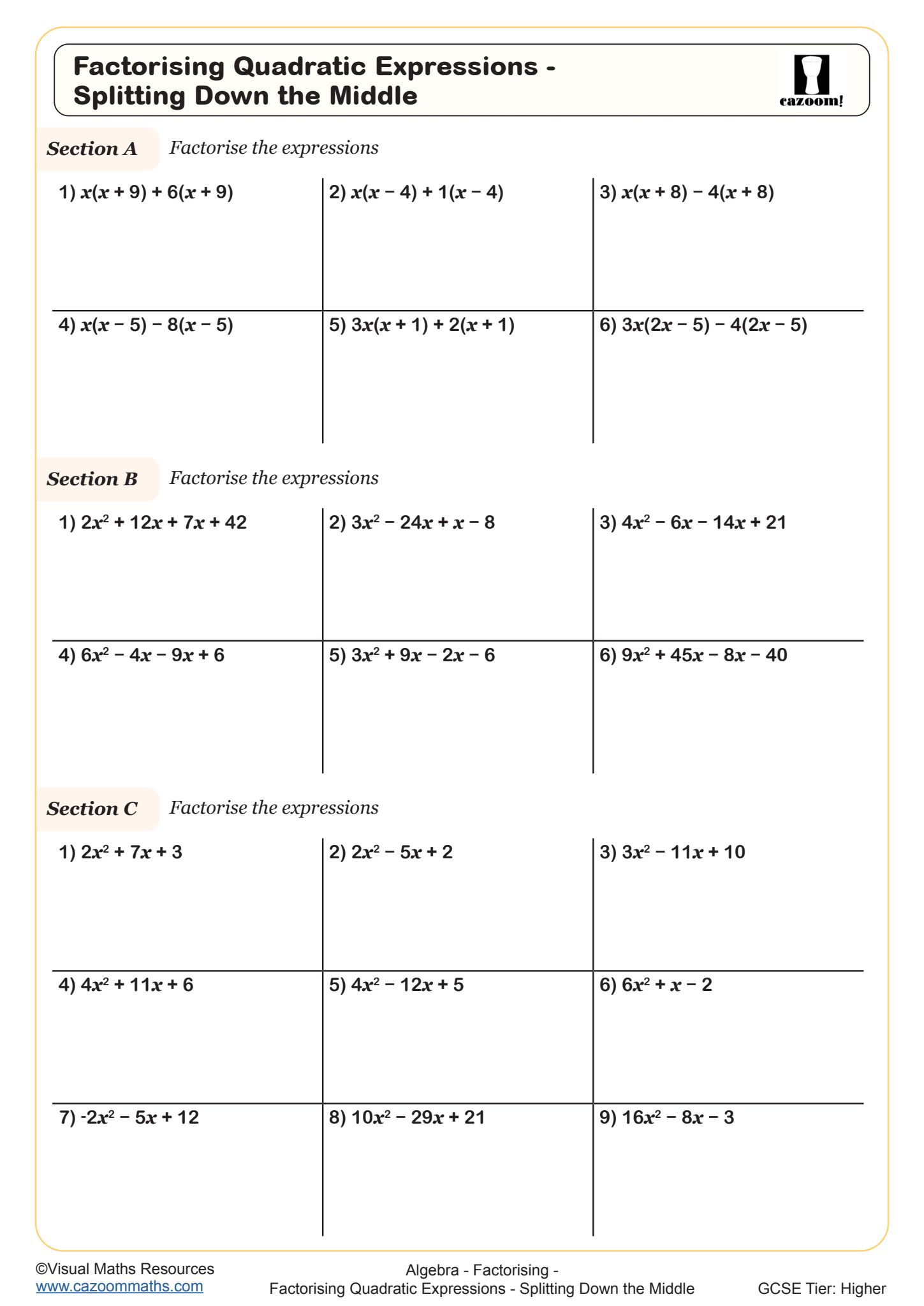
Factorising Quadratic Expressions - Splitting Down the Middle
Year groups: 10, 11
Factorising Quadratic Expressions - Using the Area Model (A)
Year groups: 10, 11
-Questions-1.jpg?w=3840)
Factorising Quadratic Expressions - Using the Area Model (B)
Year groups: 10, 11
-Worksheet.jpg?w=3840)
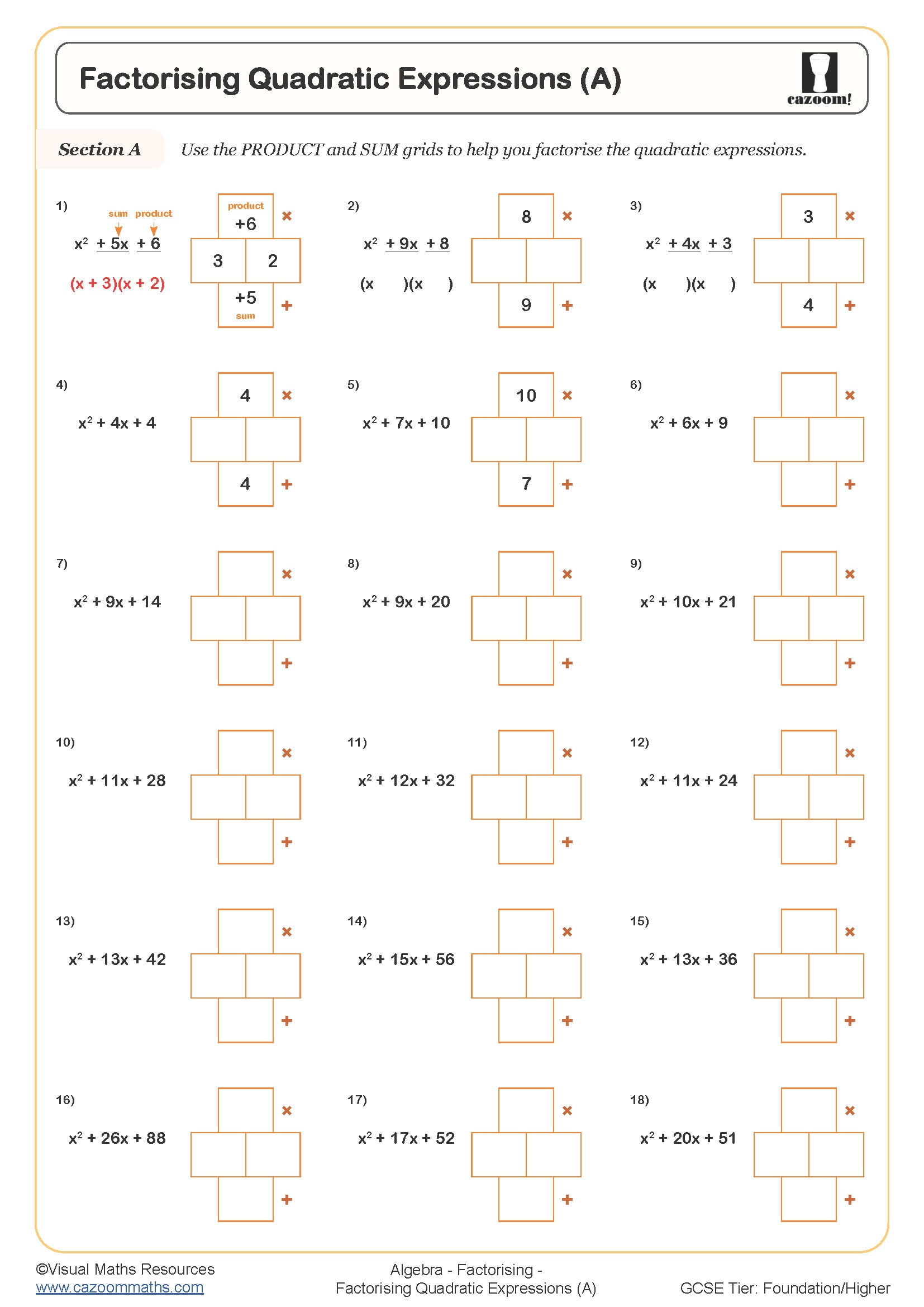
Factorising Quadratic Expressions (A)
Year groups: 10, 11
Factorising Quadratic Expressions (B)
Year groups: 10, 11
.jpg?w=3840)
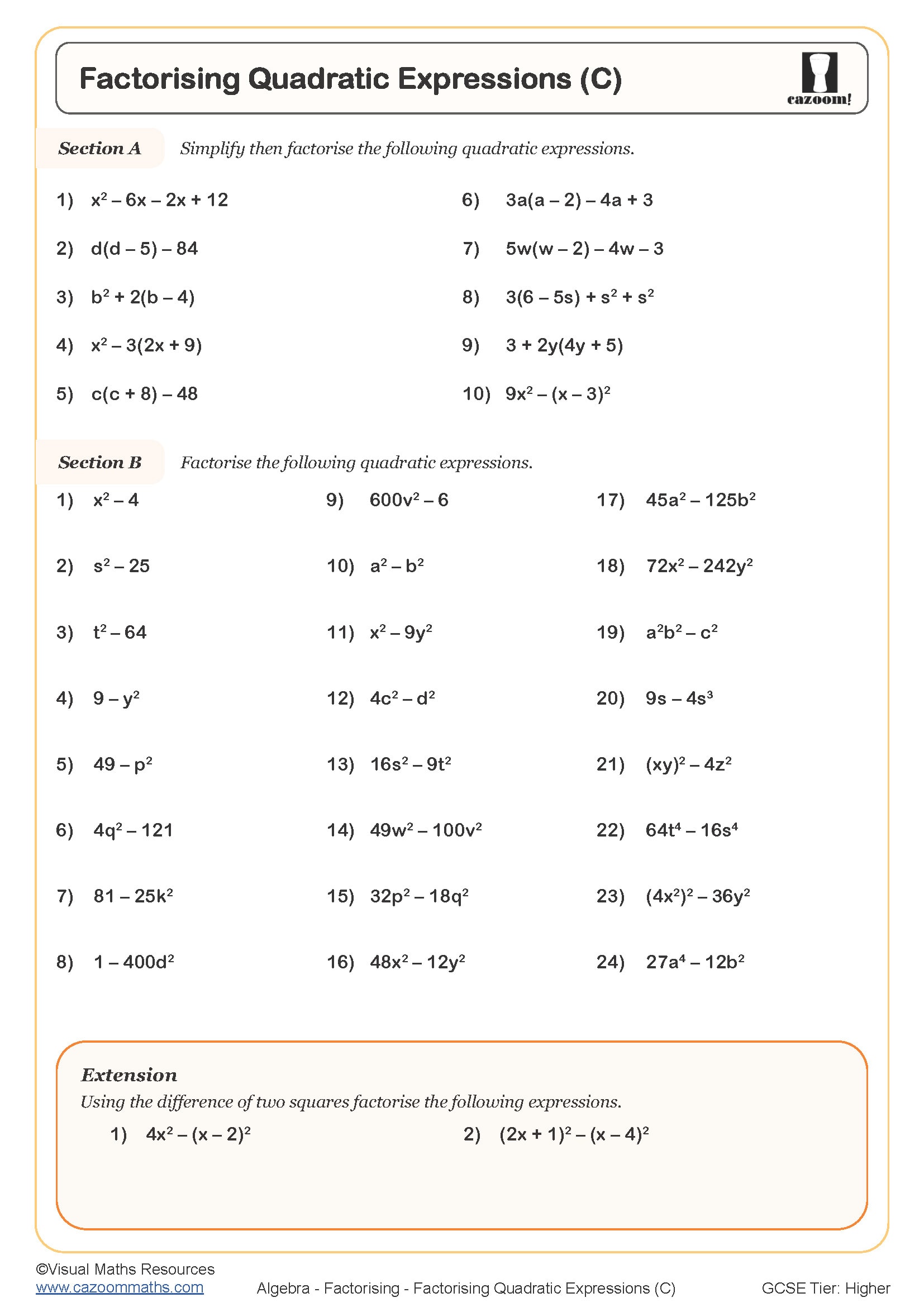
Factorising Quadratic Expressions (C)
Year groups: 10, 11
All worksheets are created by the team of experienced teachers at Cazoom Maths.
What makes factorising quadratics challenging for GCSE students?
Factorising quadratics becomes particularly demanding when students encounter expressions where the coefficient of x² exceeds 1, requiring systematic approaches rather than trial and error. Teachers frequently observe students attempting to factorise 2x² + 7x + 3 using the same mental shortcuts they've learned for x² + bx + c, leading to frustration and incorrect answers on GCSE papers.
The key breakthrough occurs when students master the systematic method of finding factor pairs that multiply to give ac (the product of the x² coefficient and constant term) while adding to give b (the middle coefficient). Regular practise with varied coefficient combinations builds the pattern recognition essential for exam success.
Which year groups should focus on different factorising techniques?
Year 8 students typically begin with factorising simple expressions by taking out common factors, progressing to single-bracket expansions and their inverse. This foundation work ensures students understand the relationship between expanding and factorising before tackling quadratic expressions in Year 9.
By Year 10, students need confidence with factorising quadratics including monic forms (where x² coefficient is 1) and non-monic quadratics. Year 11 students require fluency across all techniques including difference of two squares and factorising by grouping, as these methods appear regularly in GCSE algebra questions where marks are easily lost through poor technique.
How does the difference of two squares connect to other algebraic skills?
The difference of two squares pattern (a² - b² = (a+b)(a-b)) represents one of the most reliable factorising techniques students can master, yet teachers notice many students fail to recognise when expressions fit this form. This method becomes invaluable for solving quadratic equations and simplifying algebraic fractions at GCSE level.
Students who understand this pattern can quickly factorise expressions like 9x² - 16 or even more complex forms like 4x² - 25y², connecting their knowledge to coordinate geometry where these expressions appear in circle and hyperbola equations. The pattern also supports understanding of algebraic proof, where difference of two squares demonstrates why certain calculations work.
How can teachers use these worksheets to address common factorising errors?
Teachers find that starting each lesson with a mixture of expanding and factorising problems helps students see these as inverse operations rather than separate topics. The answer sheets enable students to self-assess their working, particularly valuable for identifying where sign errors occur in factorising quadratics.
Structuring practise sessions around specific error types proves effective - dedicating time to expressions where students commonly confuse signs, or focusing on recognising when factorising by grouping applies. Many teachers use the worksheets diagnostically, asking students to attempt various types and then addressing the most frequent misconceptions through whole-class discussion before moving to independent practise.