Factorising into a Single Bracket Worksheets
All worksheets are created by the team of experienced teachers at Cazoom Maths.
What is factorising into a single bracket?
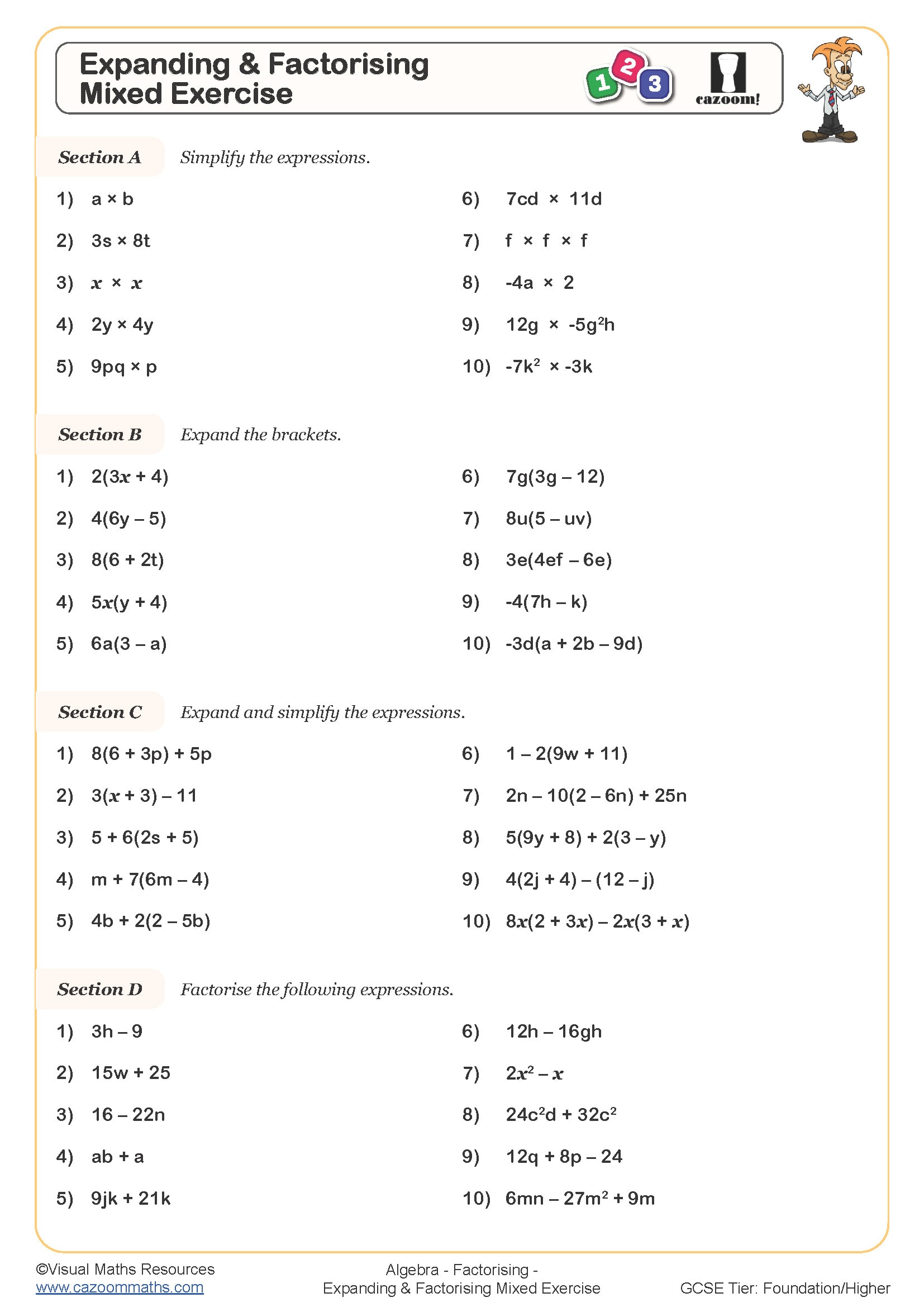
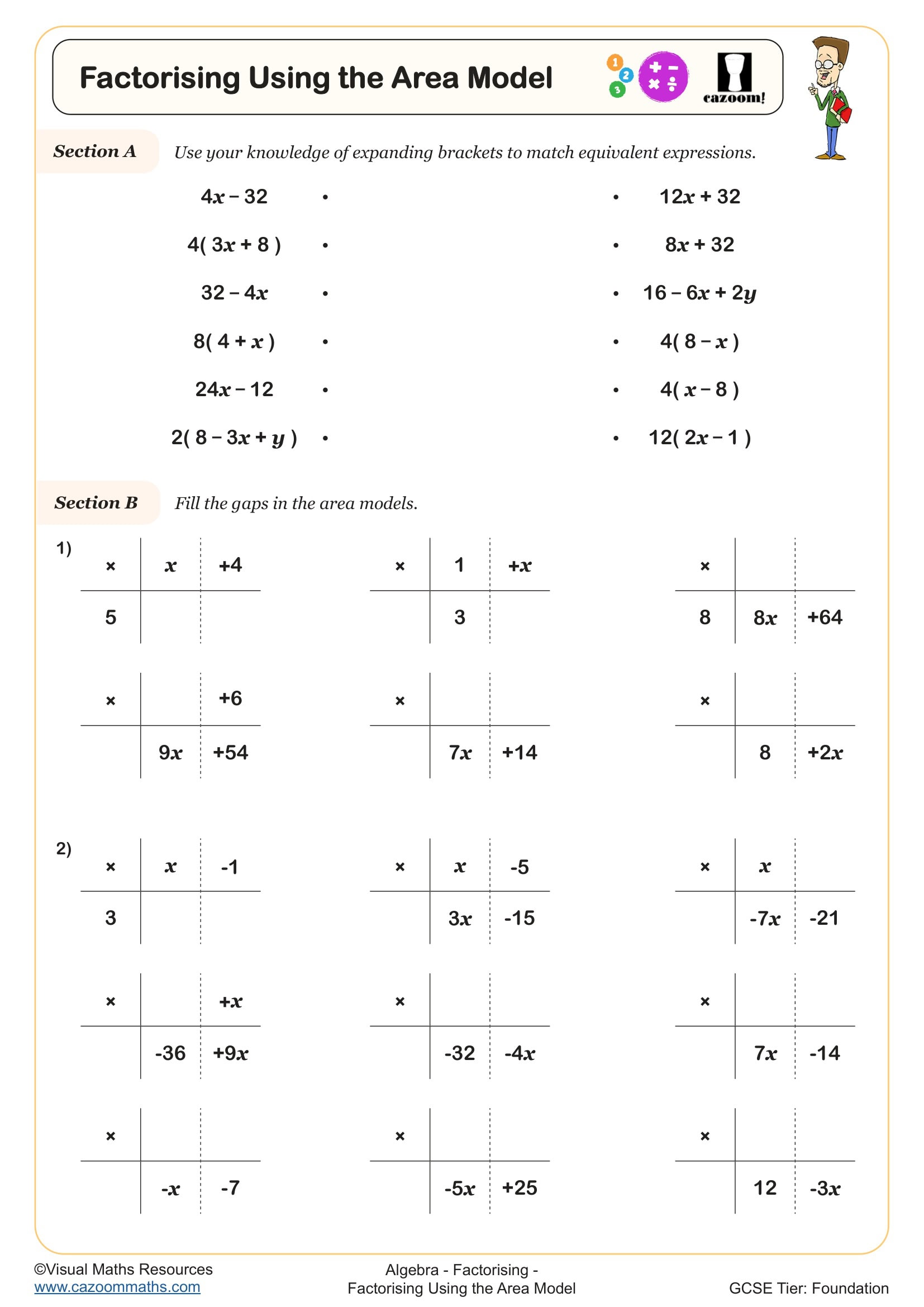
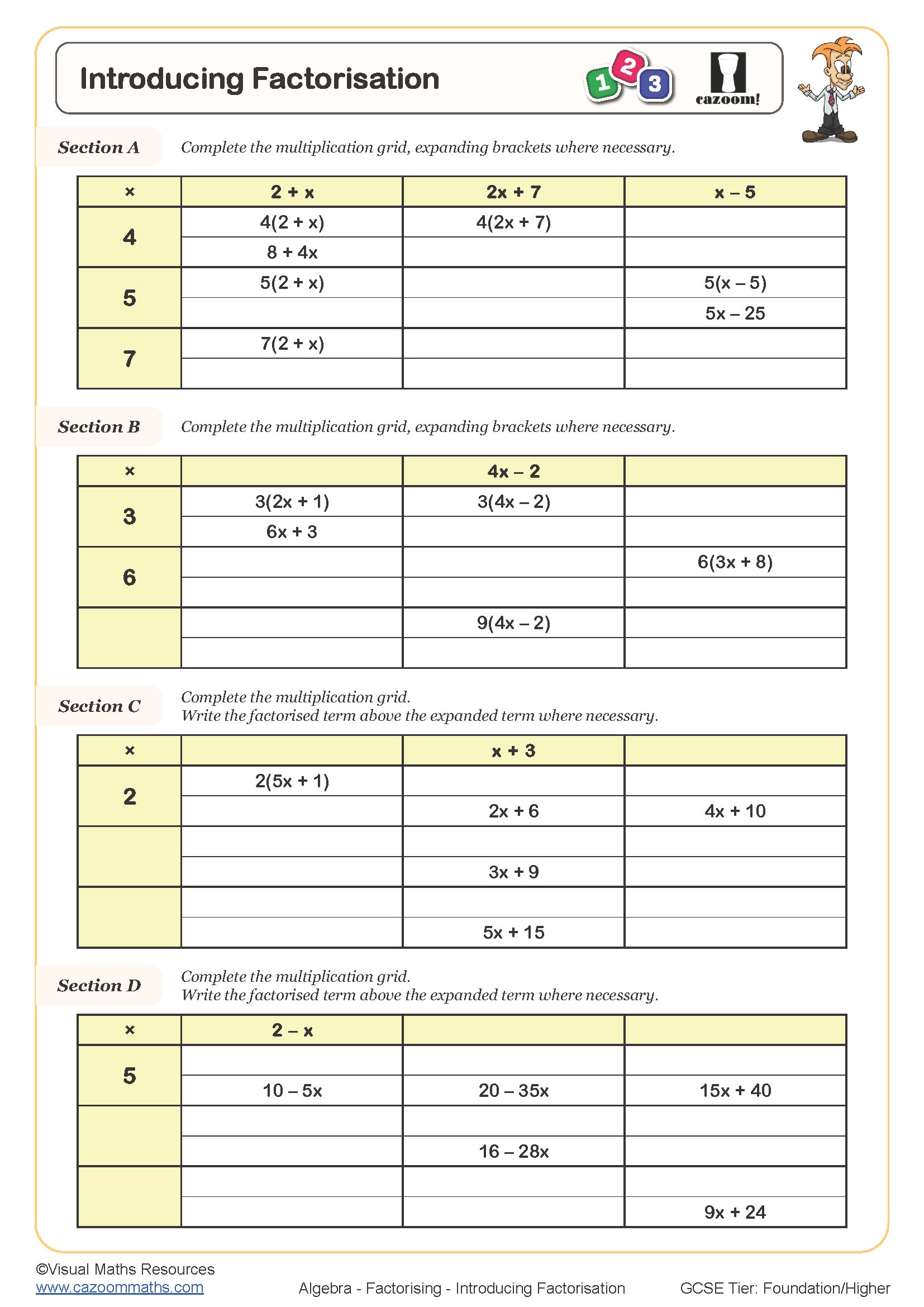
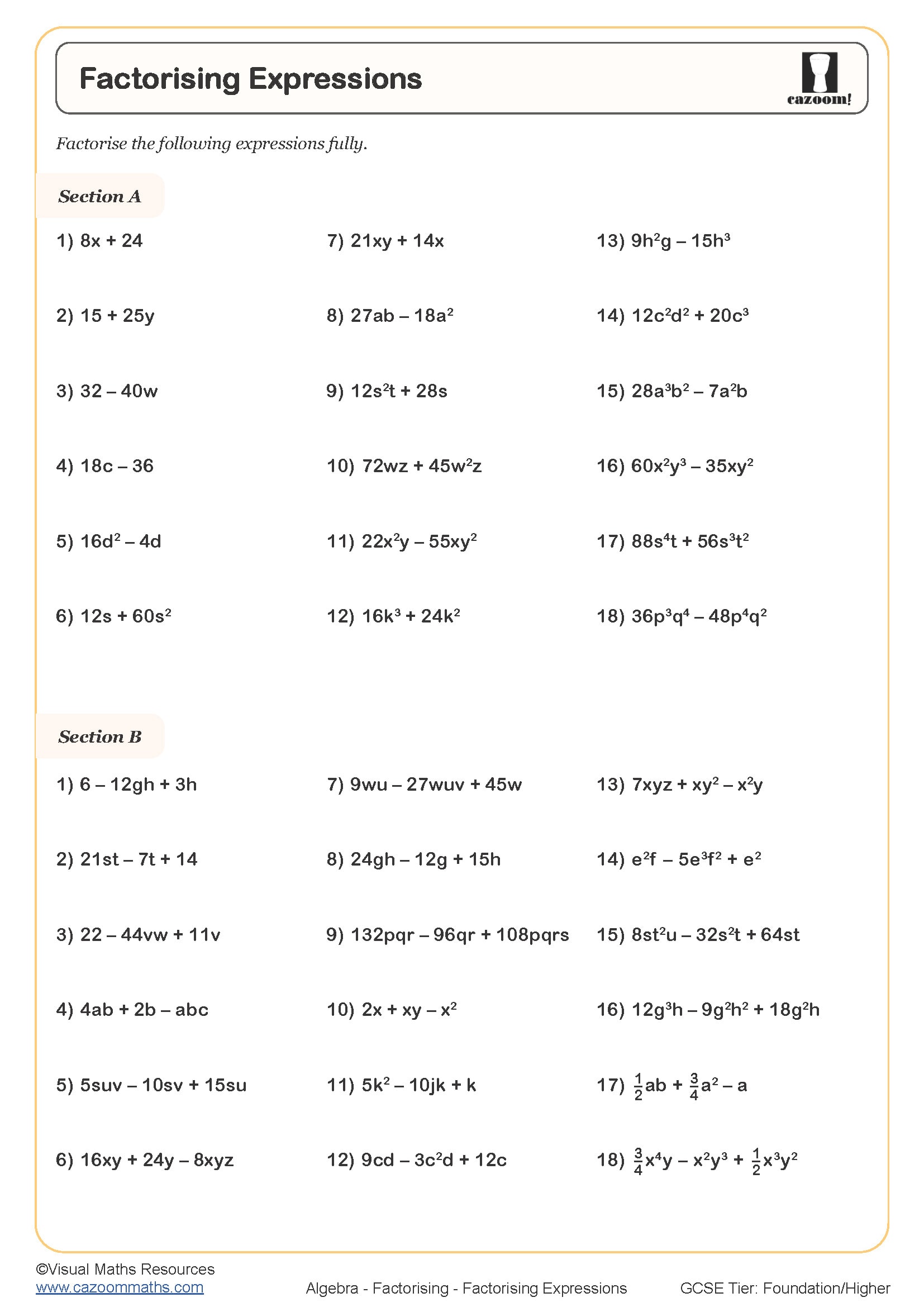
Factorising into a single bracket means identifying the highest common factor (HCF) from all terms in an algebraic expression and writing it outside brackets. For example, 3x + 6 becomes 3(x + 2) because 3 is the common factor. This process reverses expansion and is fundamental to simplifying expressions and solving equations in GCSE mathematics.
Students typically encounter this from Year 8 onwards, starting with numerical common factors before progressing to algebraic terms like x or x². Mastering this skill provides the foundation for more advanced factorising techniques including quadratics, difference of two squares, and expressions requiring two brackets. It's tested regularly in National Curriculum assessments and GCSE exam papers.
Which year groups study factorising into a single bracket?
Factorising into a single bracket appears in the curriculum from Year 8 through to Year 11, spanning both Key Stage 3 and Key Stage 4. Year 8 students typically begin with simple numerical factors, whilst Year 9 introduces algebraic common factors and increasingly complex expressions. The skill becomes more demanding as students progress.
By Years 10 and 11, students work with mixed algebraic and numerical factors, preparing for GCSE examination questions. The topic connects directly to solving equations, manipulating formulae, and simplifying fractions—all core skills assessed at foundation and higher tier. Our worksheets match this progression, providing appropriate challenge for each year group.
How do you factorise expressions with algebraic common factors?
When the highest common factor includes an algebraic term like x or y, you extract both the numerical and letter components together. For instance, 4x² + 8x factorises to 4x(x + 2) because 4x divides into both terms. Students must identify the lowest power of each variable present in all terms—here, x appears at least once everywhere.
This requires confident handling of indices and careful attention to what remains inside the brackets after factorising. Common errors include forgetting to divide all terms properly or leaving 1 outside brackets instead of the full common factor. Our worksheets provide systematic practice with varied expressions, helping students recognise patterns and avoid these mistakes through repeated exposure.
How can teachers use these factorising worksheets effectively?
Each worksheet includes complete worked solutions, allowing teachers to set independent practice whilst students check their understanding immediately. This makes them particularly effective for differentiated lessons—allocating different worksheets based on confidence levels or using them for intervention groups who need additional practice outside regular lessons.
The PDF format means worksheets print clearly for classroom distribution or can be shared digitally for homework and remote learning. Teachers often use the answer sheets for whole-class marking sessions, addressing common misconceptions by working through solutions together. The structured progression across worksheets supports lesson sequences, with each resource building complexity gradually rather than jumping difficulty levels unexpectedly.