Inequalities Worksheets
Inequalities on a Number Line
Year groups: 7, 8
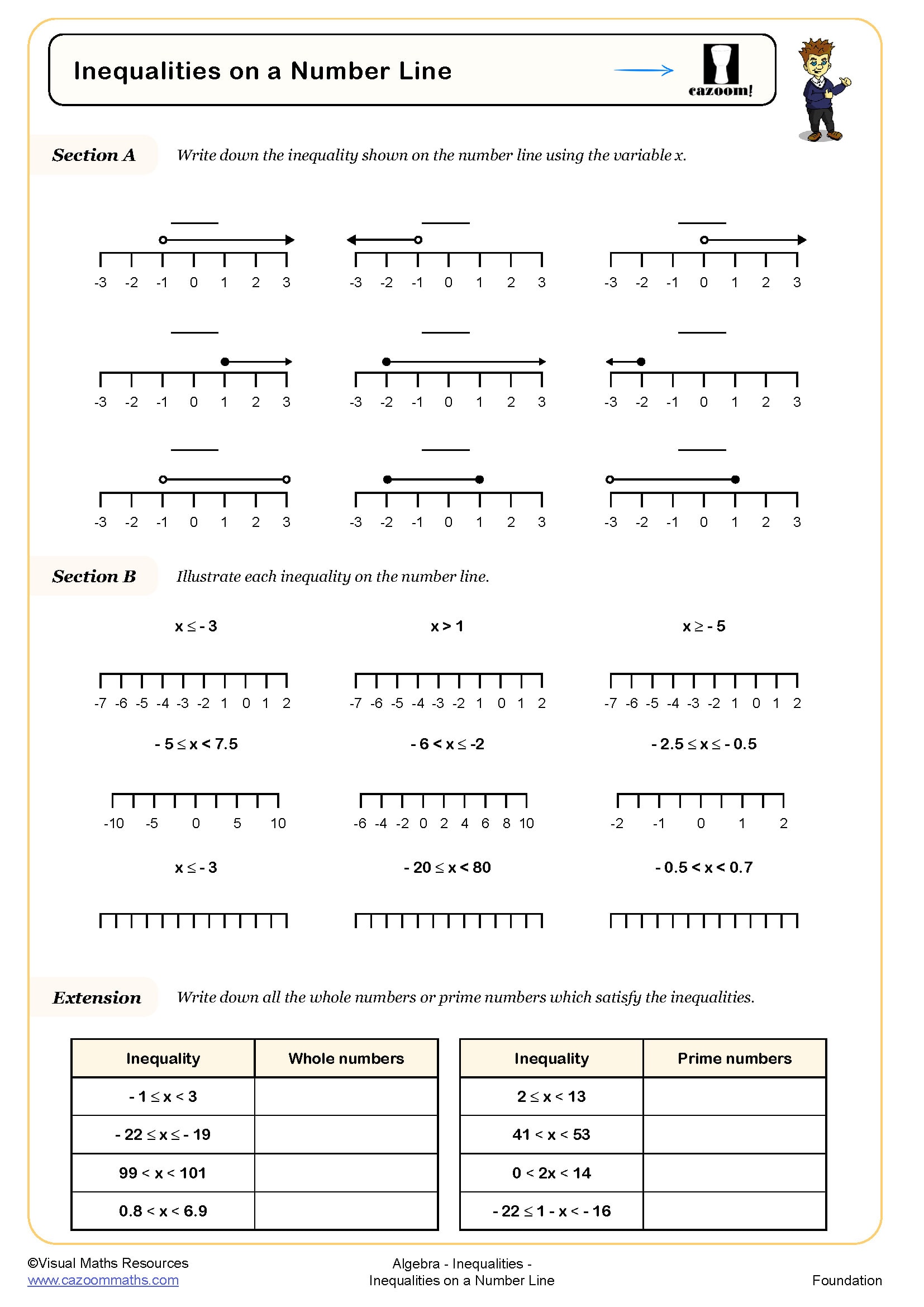
Solving Inequalities (A)
Year groups: 7, 8
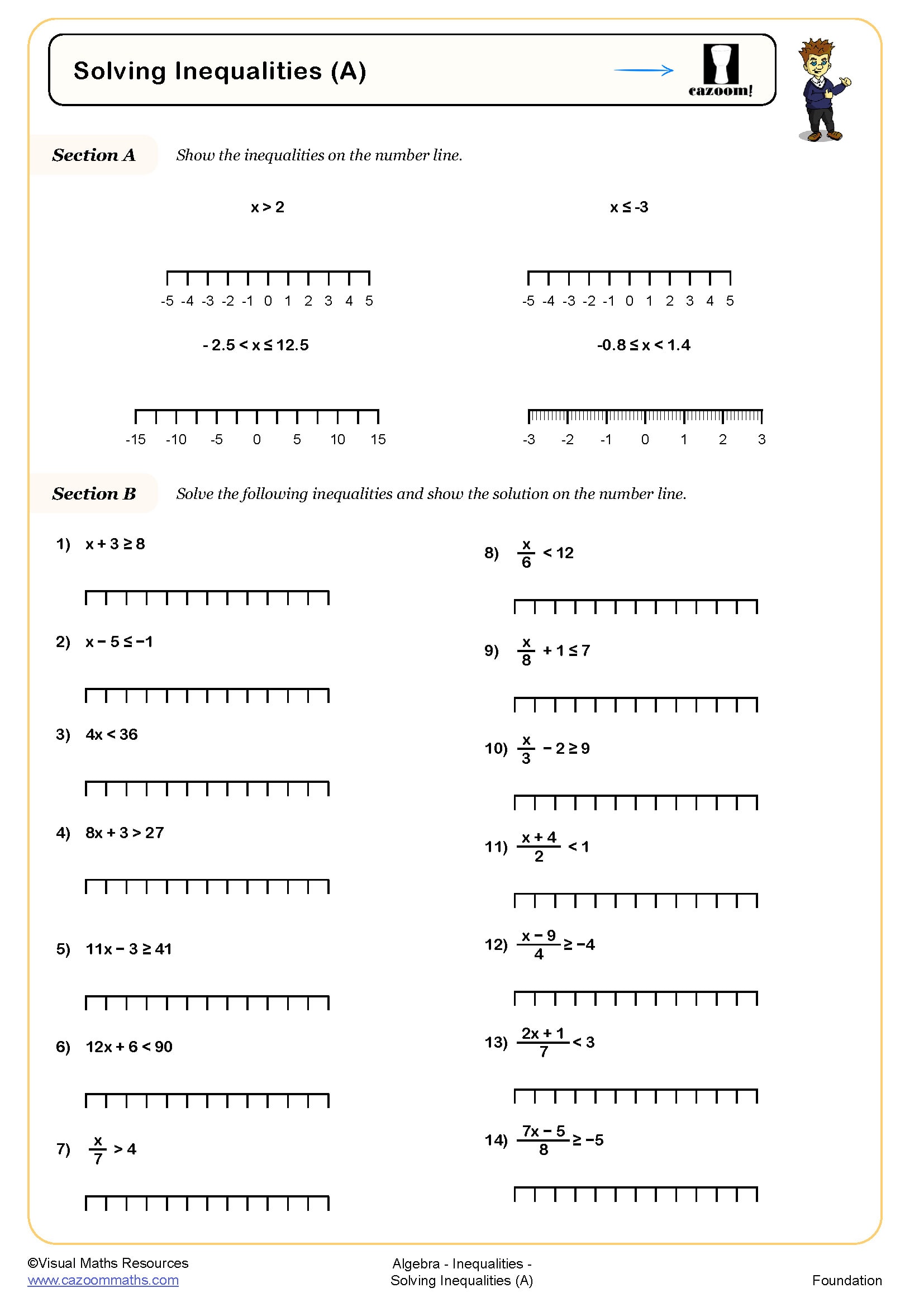
Forming and Solving Linear Inequalities
Year groups: 8, 9
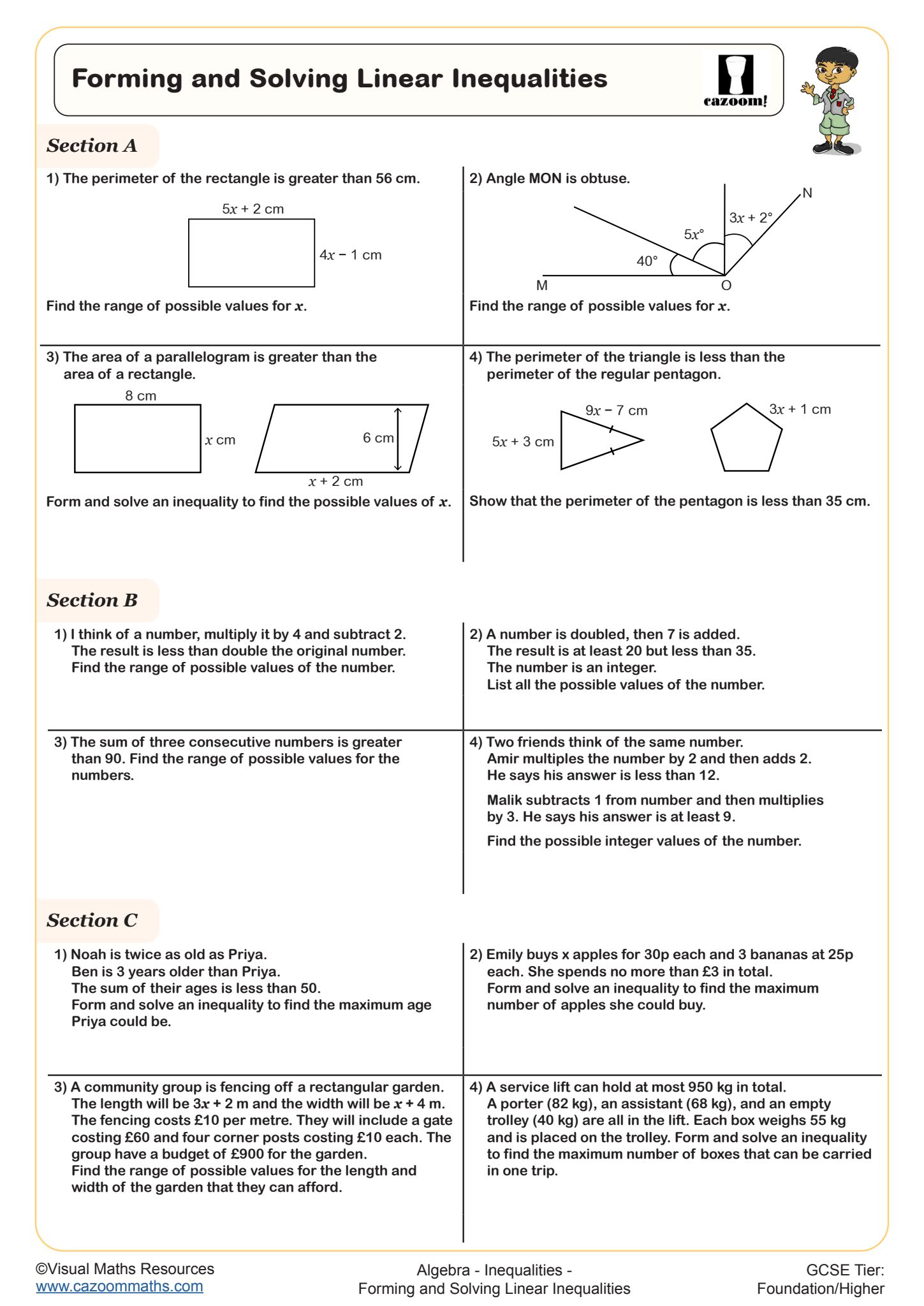
Solving Inequalities (B)
Year groups: 8, 9
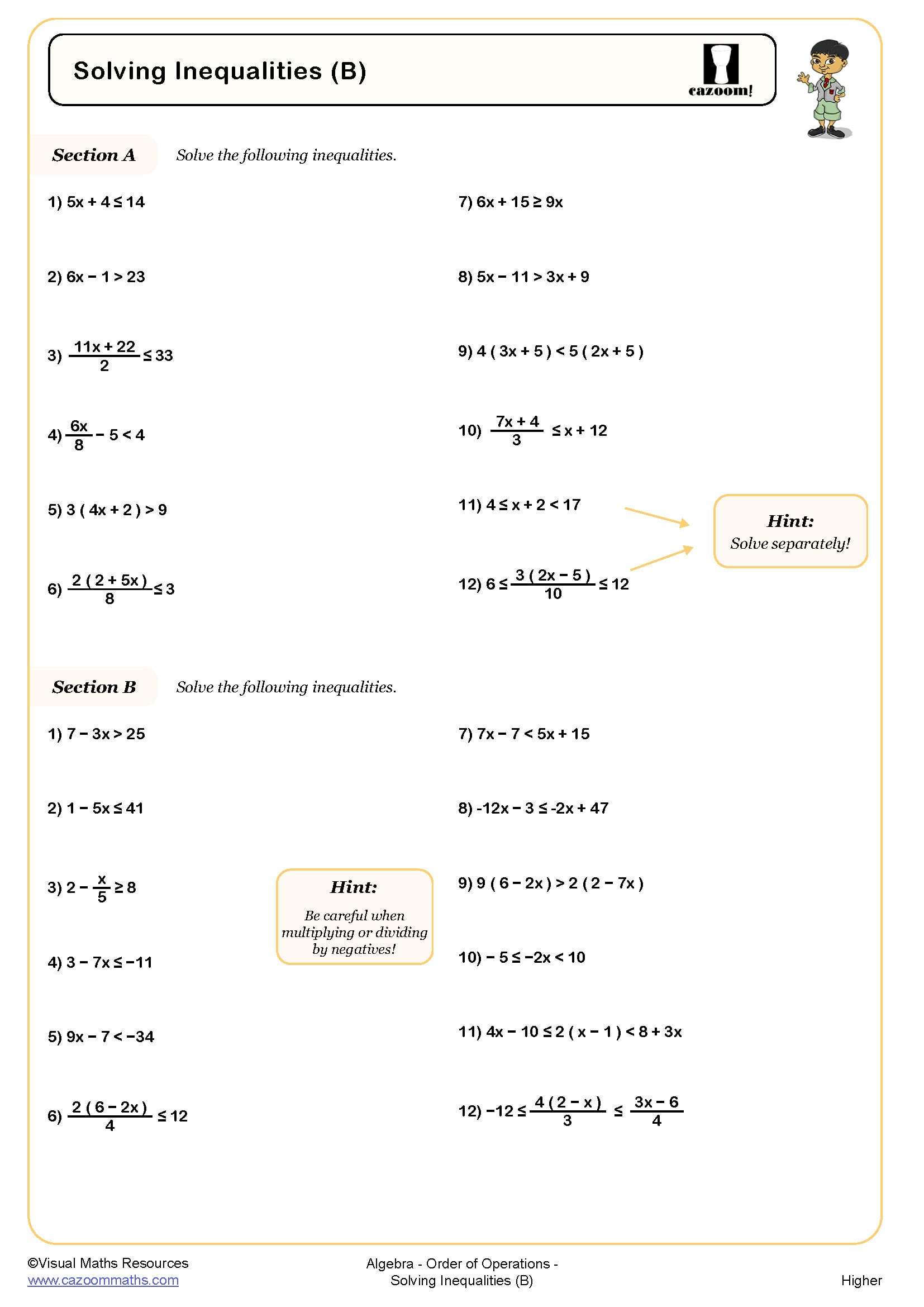
Solving Inequalities with Two Inequality Signs
Year groups: 8, 9
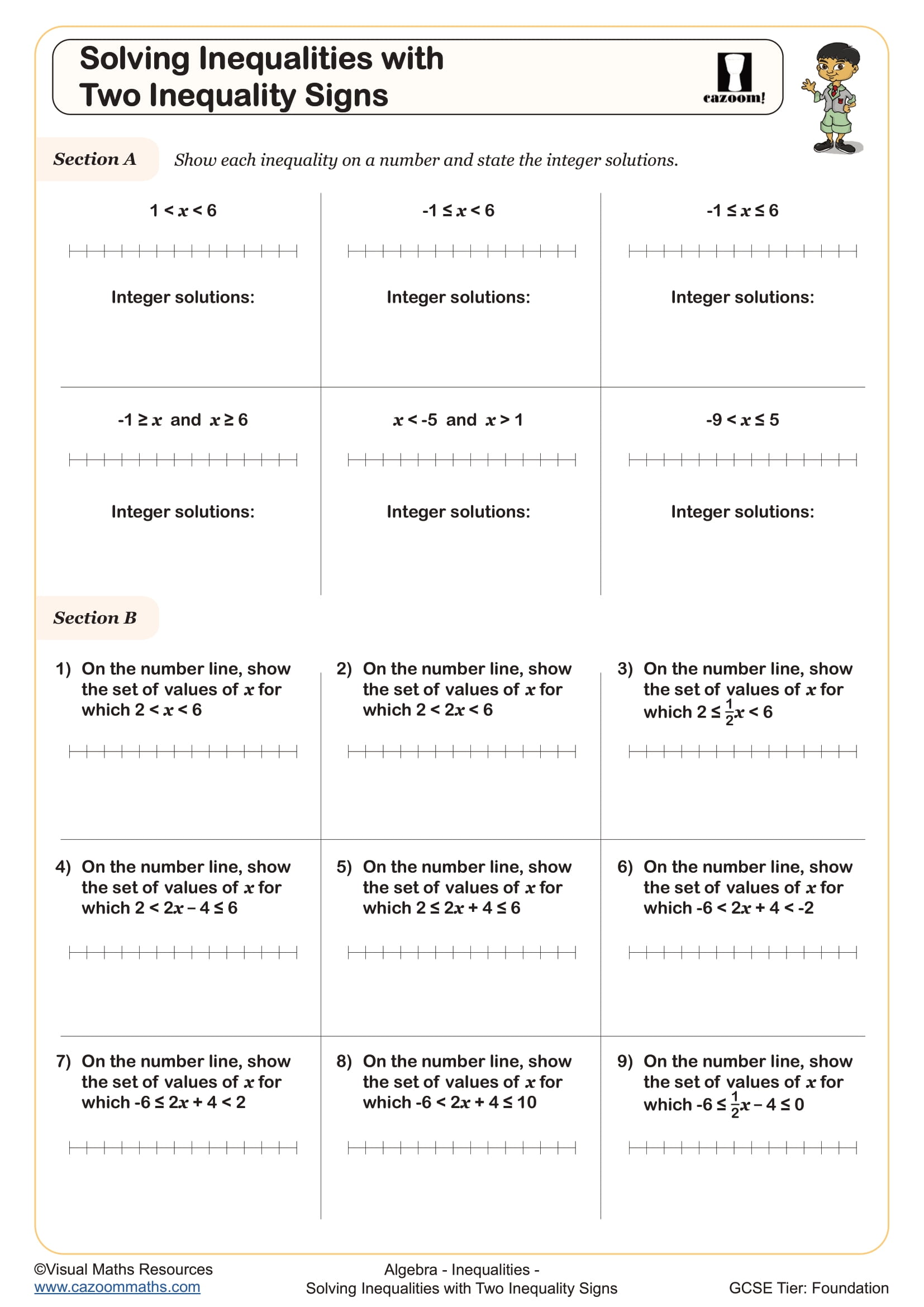
Graphing Inequalities (A)
Year groups: 10, 11
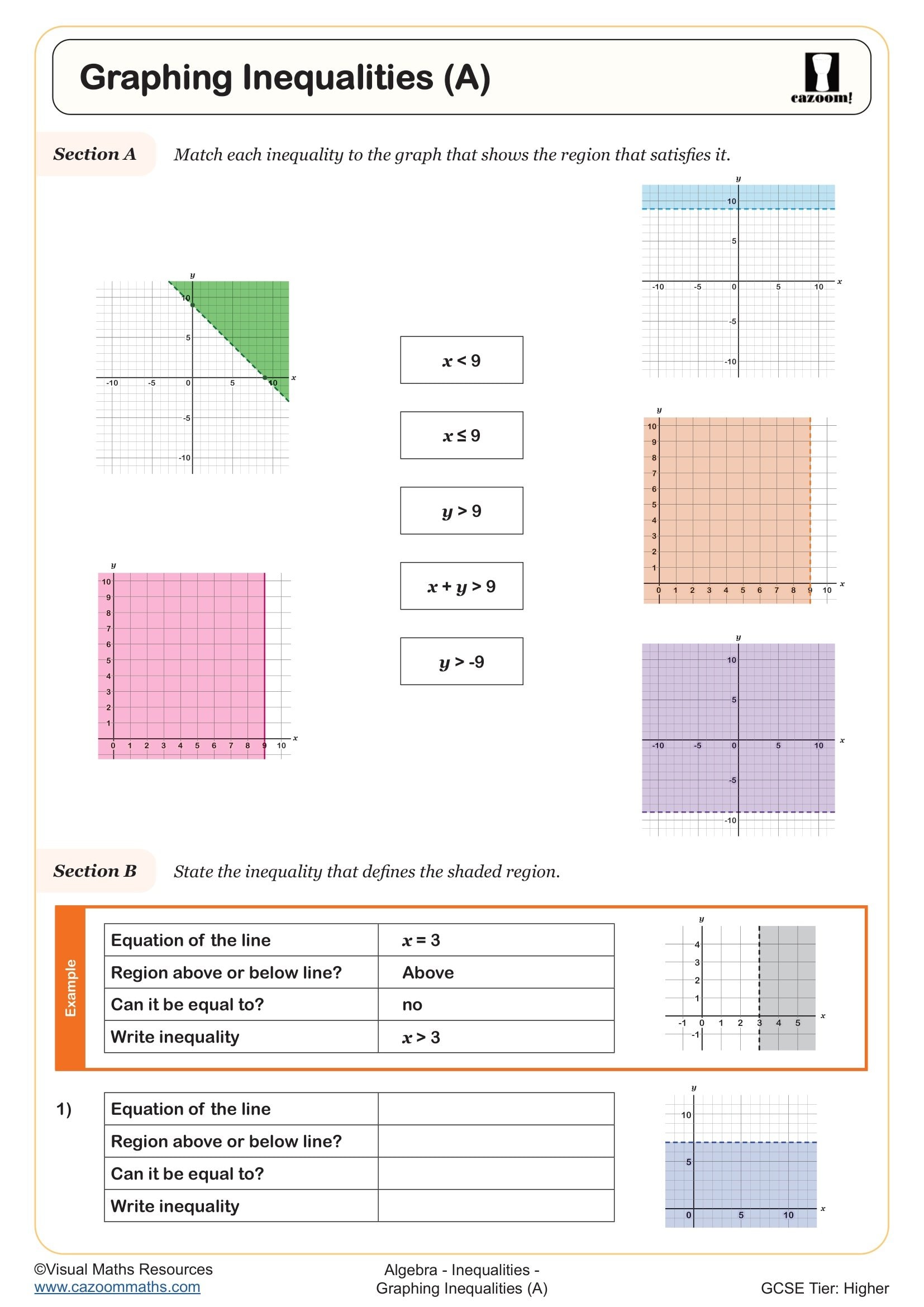
Graphing Inequalities (B)
Year groups: 10, 11
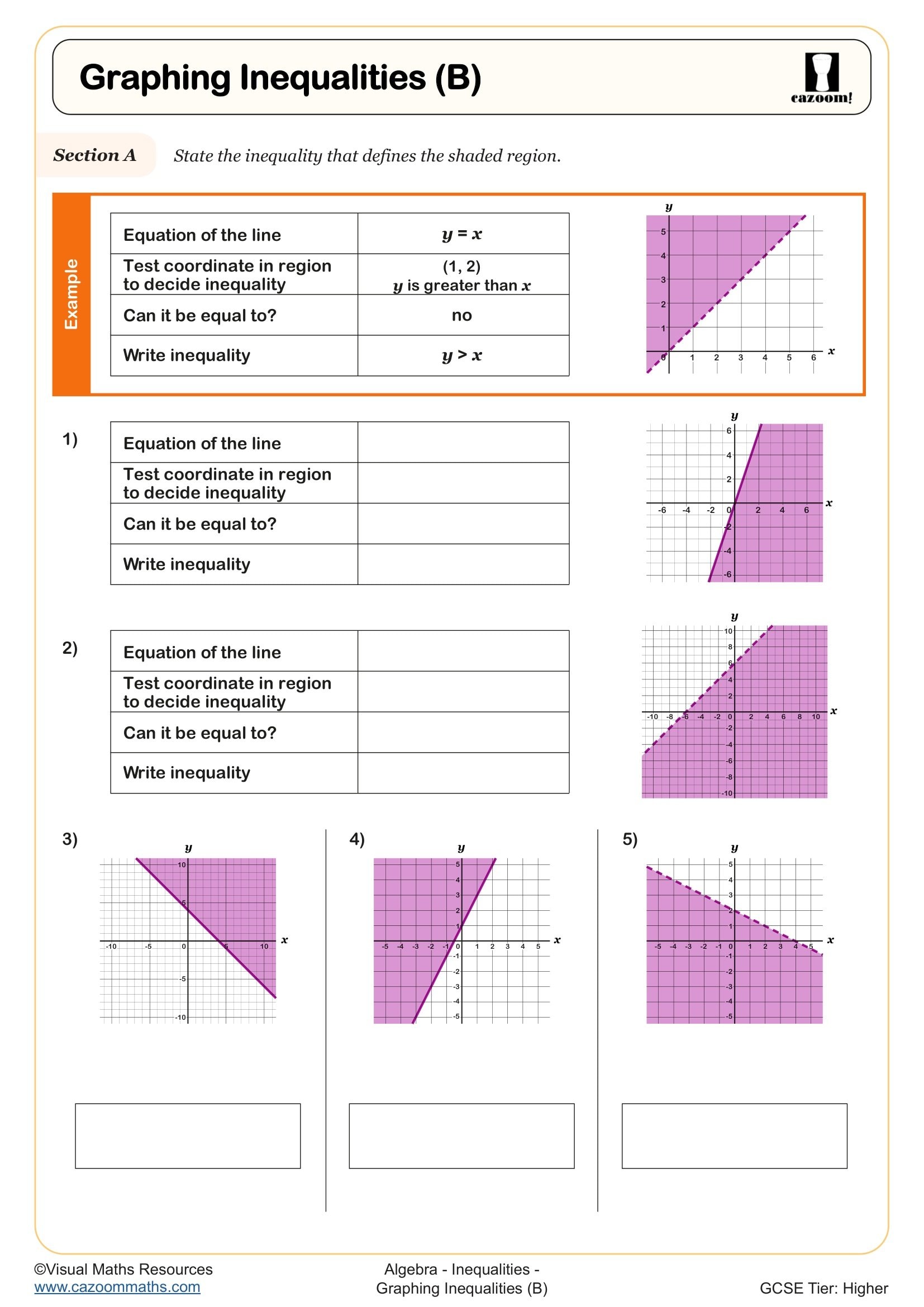
Graphing Inequalities (C)
Year groups: 10, 11
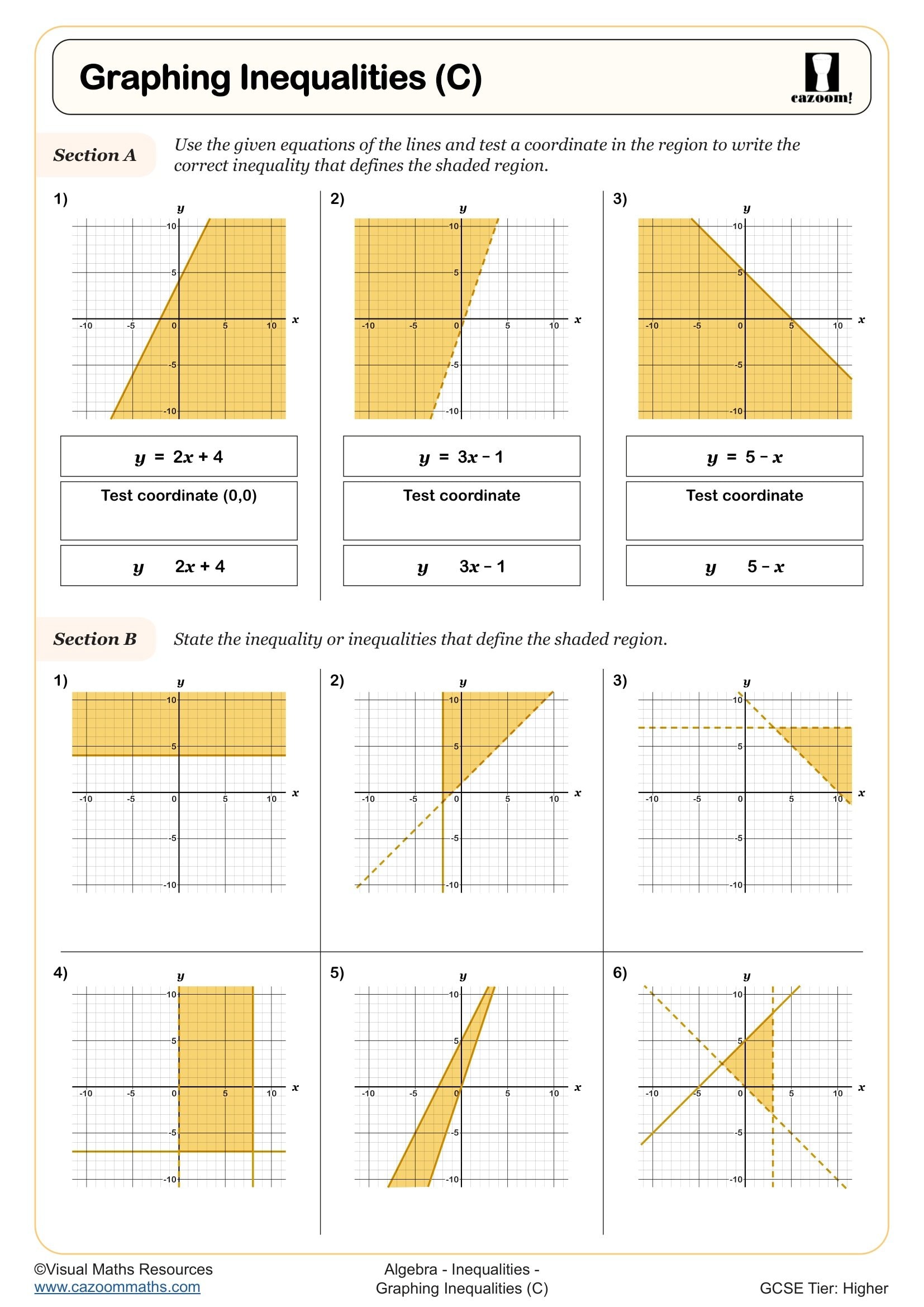
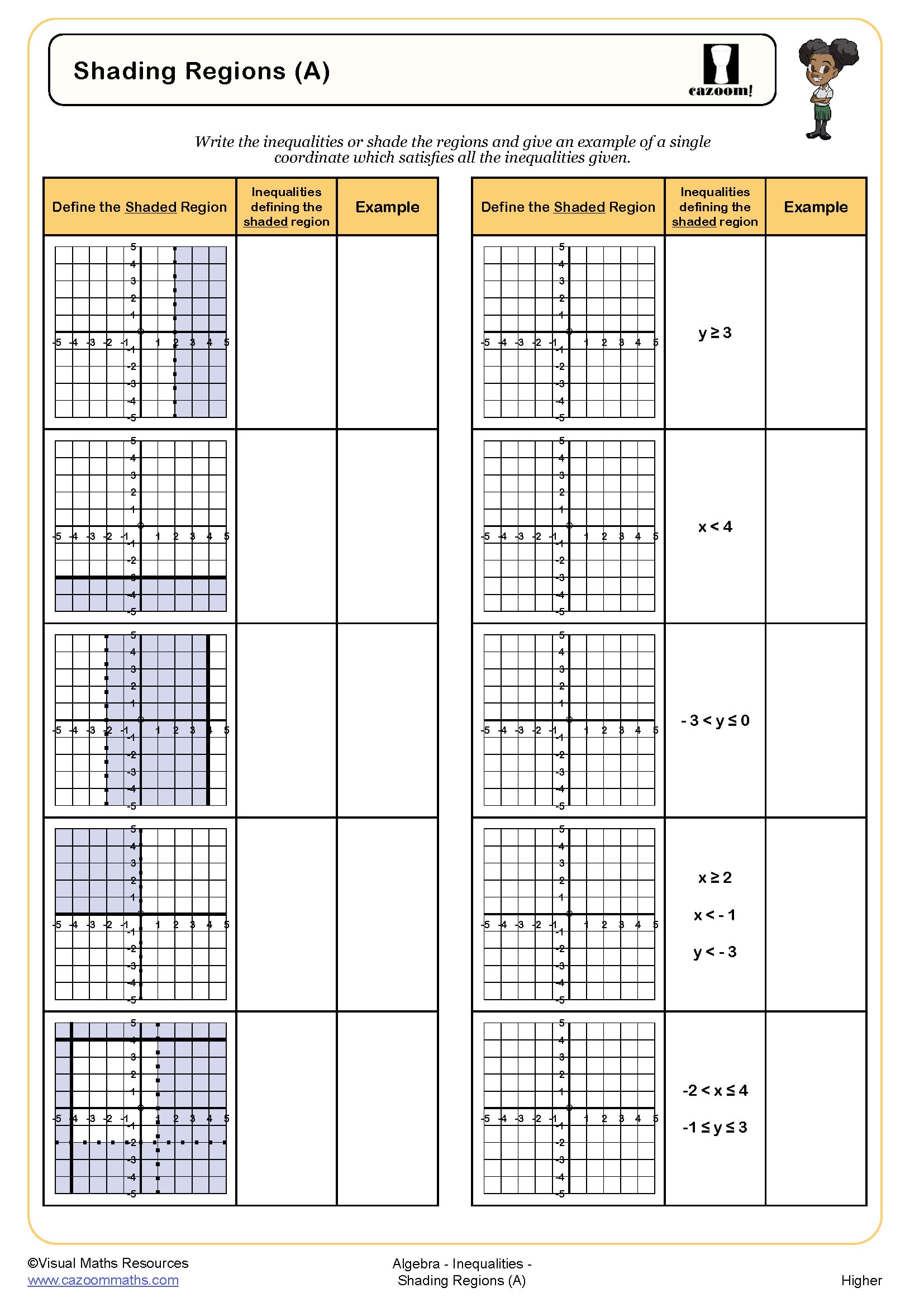
Shading Regions (A)
Year groups: 10, 11
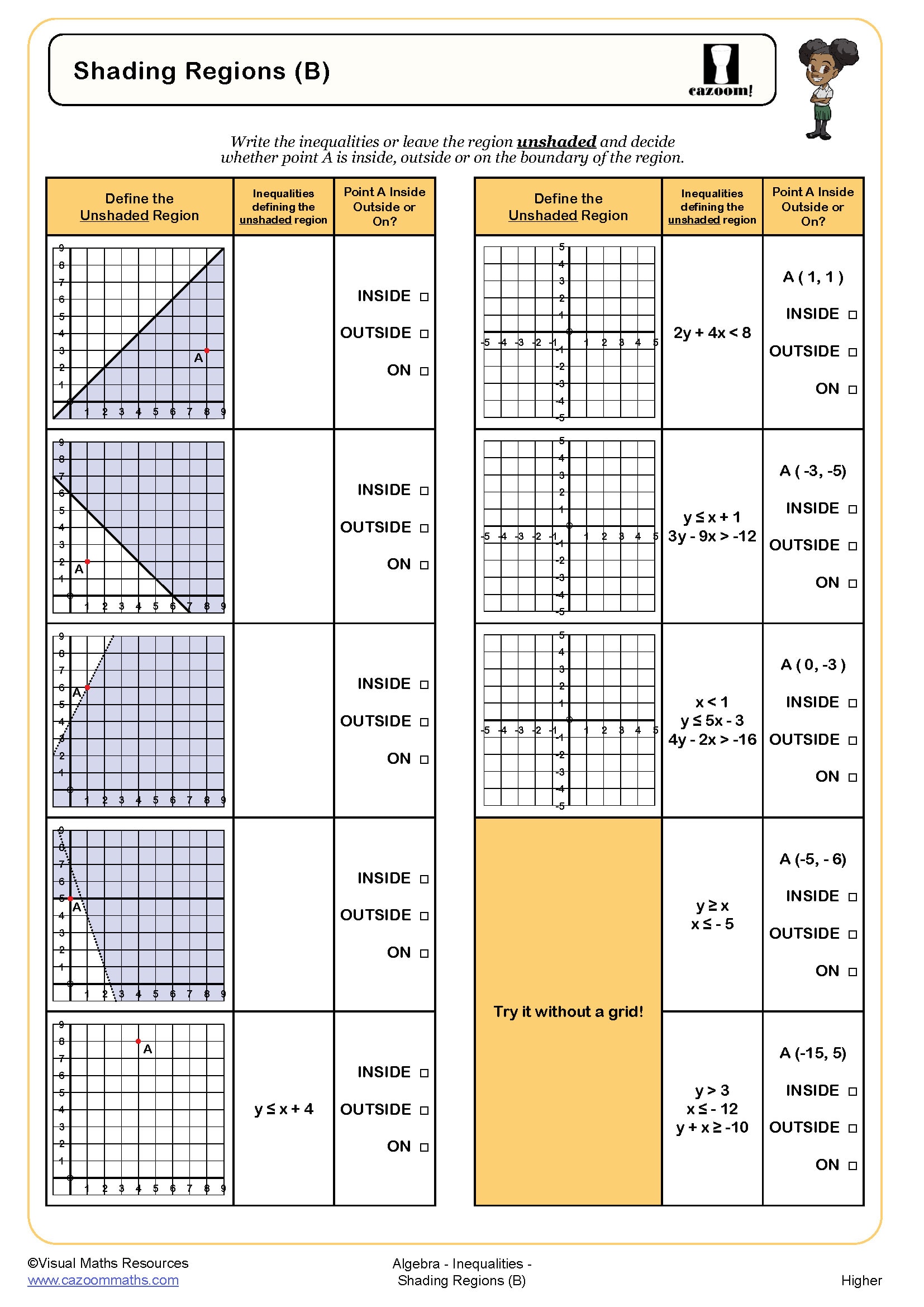
Shading Regions (B)
Year groups: 10, 11
Solving Quadratic Inequalities (A) - without sketching
Year groups: 10, 11
-without-sketching-Questions.jpg?w=3840)
Solving Quadratic Inequalities (B)
Year groups: 10, 11
-Worksheet.jpg?w=3840)
Solving Quadratic Inequalities (C) - satisfying two inequalities
Year groups: 10, 11
-satisfying-two-inequalities-Worksheet.jpg?w=3840)
All worksheets are created by the team of experienced teachers at Cazoom Maths.
What makes a good solving inequalities worksheet for KS3 and KS4 students?
A quality solving inequalities worksheet should progress systematically from simple one-step problems to complex multi-step inequalities, ensuring students understand what an inequality in maths represents before tackling algebraic manipulation. The National Curriculum requires students to solve linear inequalities in one variable by Year 9, making structured practise focused.
Teachers notice that worksheets work best when they separate different inequality types clearly - starting with addition and subtraction, then moving to multiplication and division scenarios. Many students initially treat inequality symbols like equals signs, so effective worksheets emphasise the critical difference and include plenty of examples where the inequality direction changes during division by negative coefficients.
Which year groups should use inequality worksheets and how does the topic progress?
Inequality concepts typically begin in Year 7 with simple number line representations, advancing to algebraic inequalities in Years 8 and 9 as part of the KS3 algebra curriculum. By Year 10, students encounter inequalities within GCSE contexts, including quadratic inequalities and systems of linear inequalities for higher tier students.
Maths departments often find that students struggle with the transition from numerical inequalities to algebraic ones around Year 8. Teachers report success when students practise graphing solutions on number lines before attempting purely algebraic methods, as the visual representation helps consolidate understanding of solution sets and ranges rather than single values.
How should students approach solving linear inequalities worksheet problems?
Students should follow the same algebraic manipulation rules as equations, with one crucial exception - reversing the inequality sign when multiplying or dividing both sides by a negative number. This solving linear inequalities worksheet principle becomes automatic through consistent practise across varied problem types.
Classroom experience shows that students benefit from writing out each step explicitly rather than attempting mental shortcuts. Teachers observe that the most common error occurs when students correctly identify they need to divide by a negative coefficient but forget to flip the inequality symbol, leading to solutions that represent the opposite set of values from the correct answer.
How can teachers use these inequality worksheets most effectively in lessons?
Teachers achieve best results by using these worksheets as guided practise after demonstrating key concepts, rather than for initial instruction. The inequality maths definition needs explicit teaching before students attempt independent work, as many assume inequality symbols work identically to equals signs across all operations.
Maths teachers report that students benefit from working through the first few problems collaboratively, discussing why certain steps require sign reversal whilst others don't. Having answer sheets readily available allows for immediate feedback during lessons, helping students identify and correct misconceptions before they become embedded. The worksheets work particularly well for homework consolidation and revision sessions before assessments.