Linear Functions Worksheets
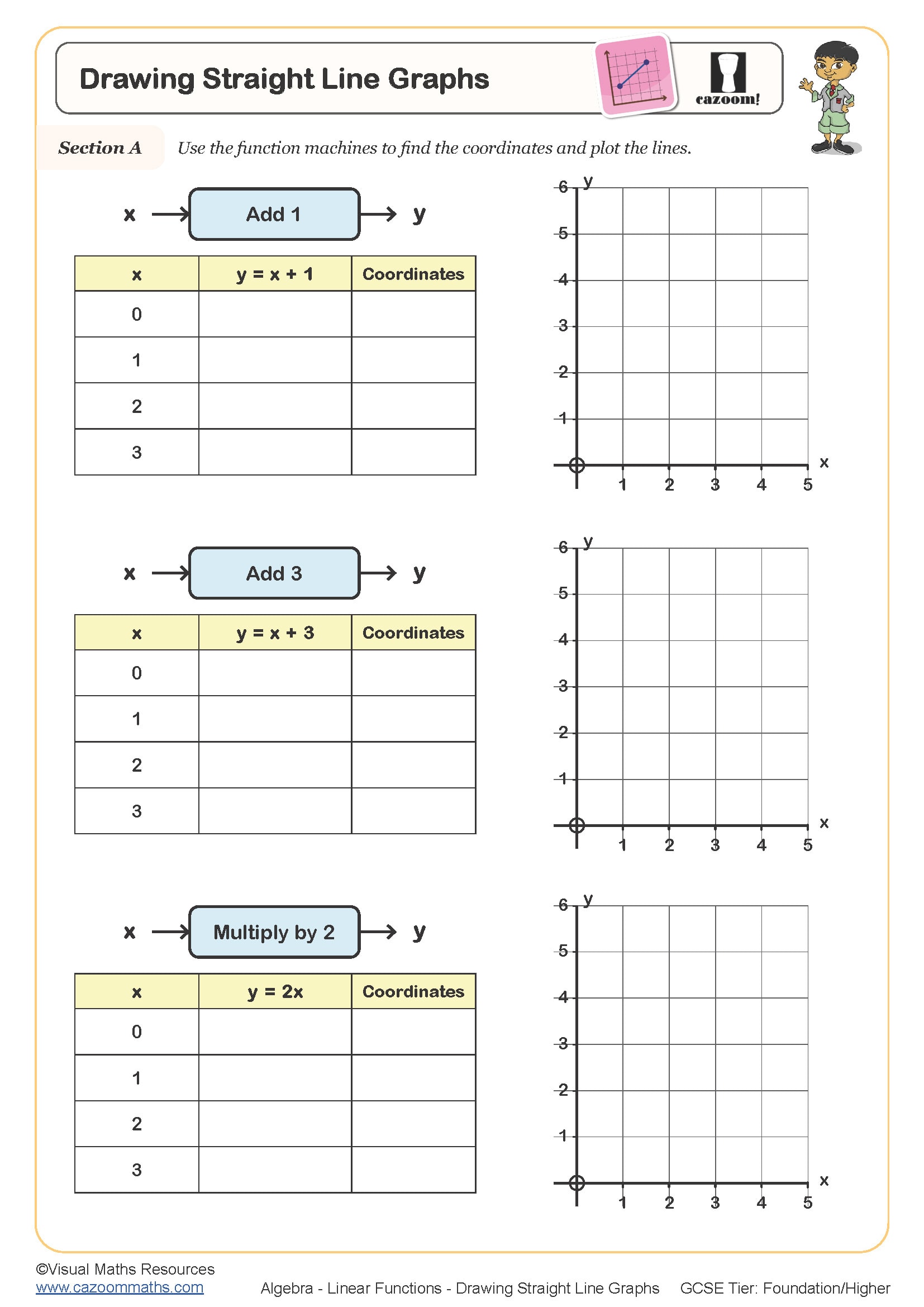
Drawing Straight Line Graphs
Year groups: 7, 8, 9
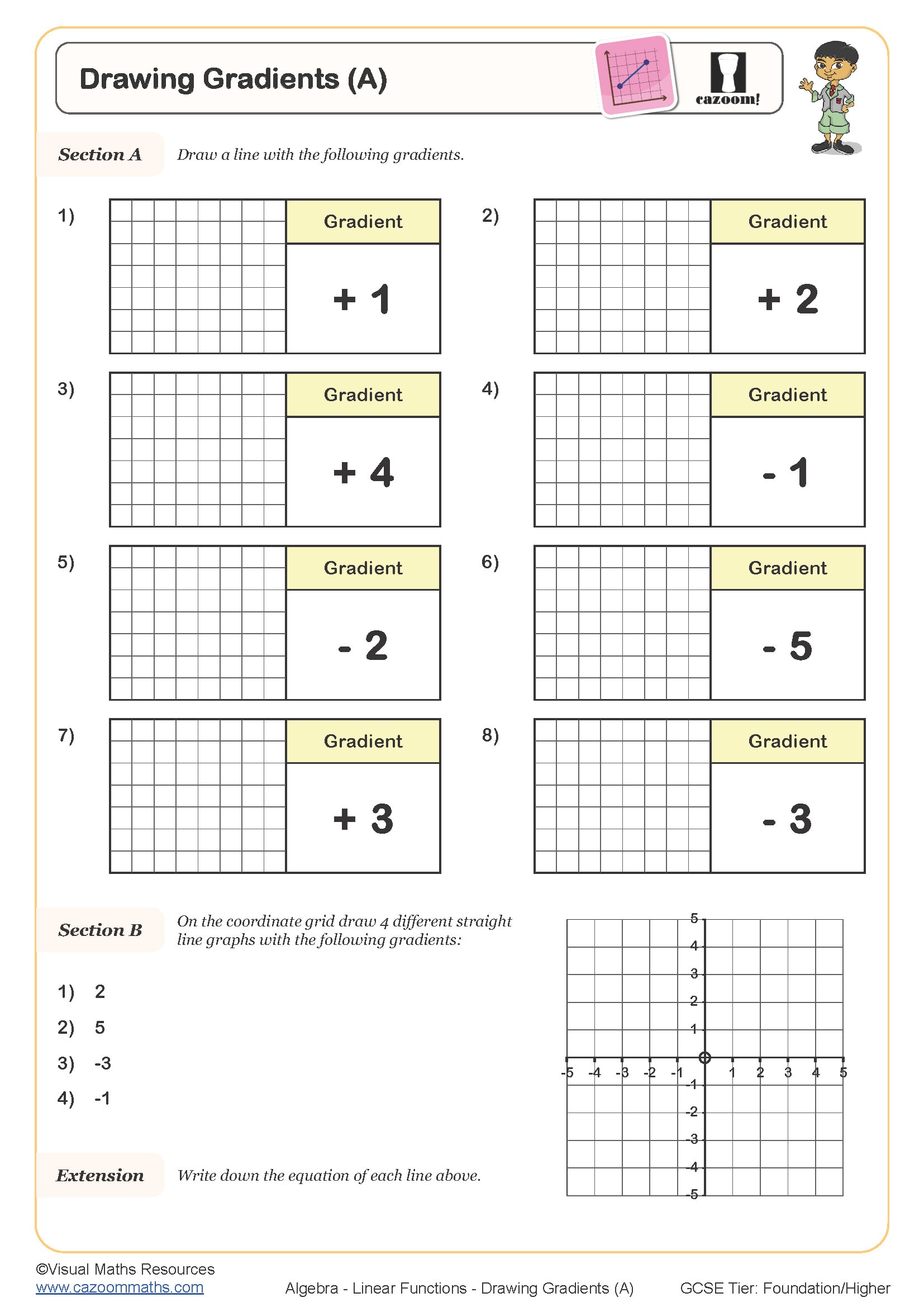
Drawing Gradients (A)
Year groups: 8, 9, 10
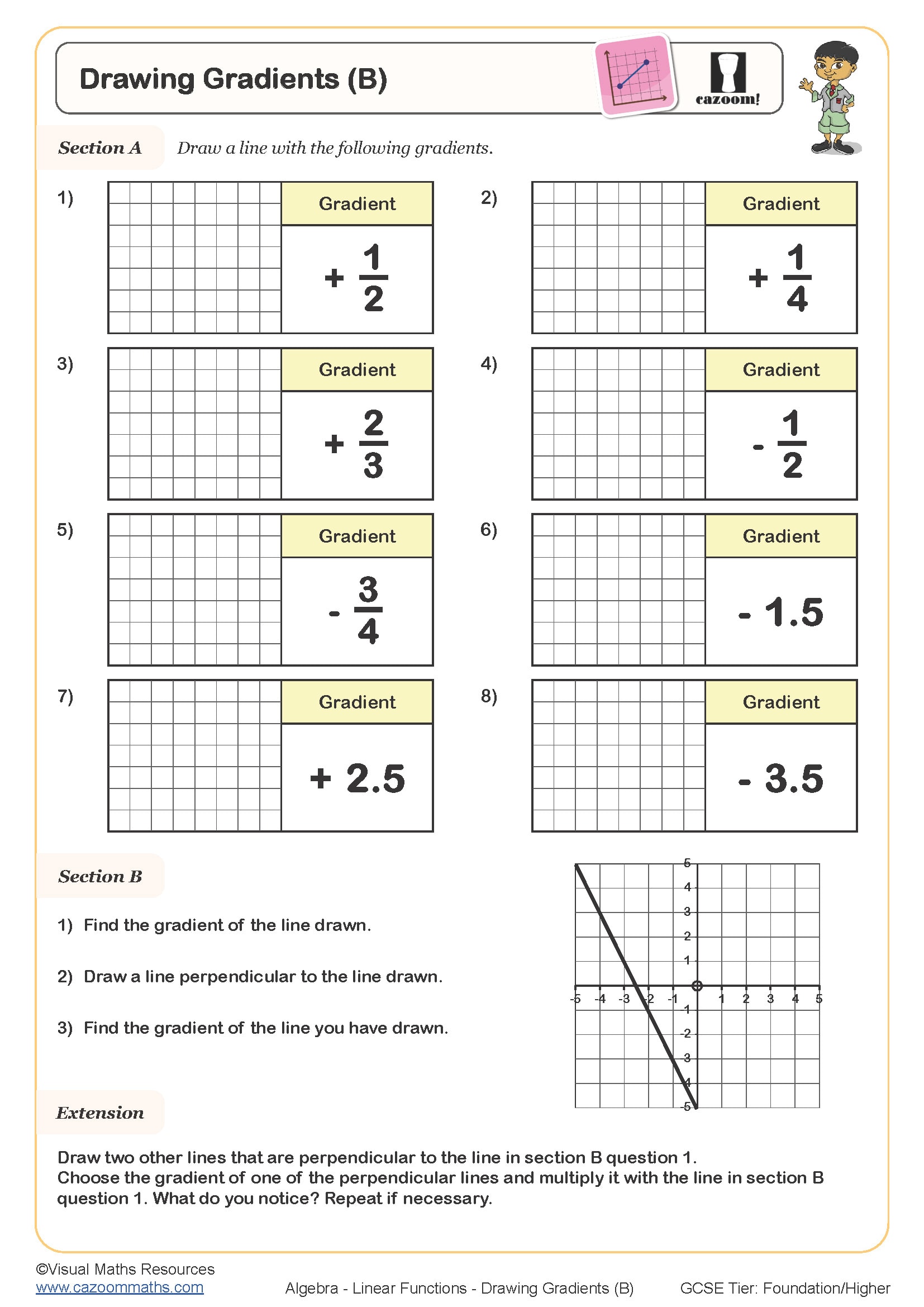
Drawing Gradients (B)
Year groups: 8, 9, 10
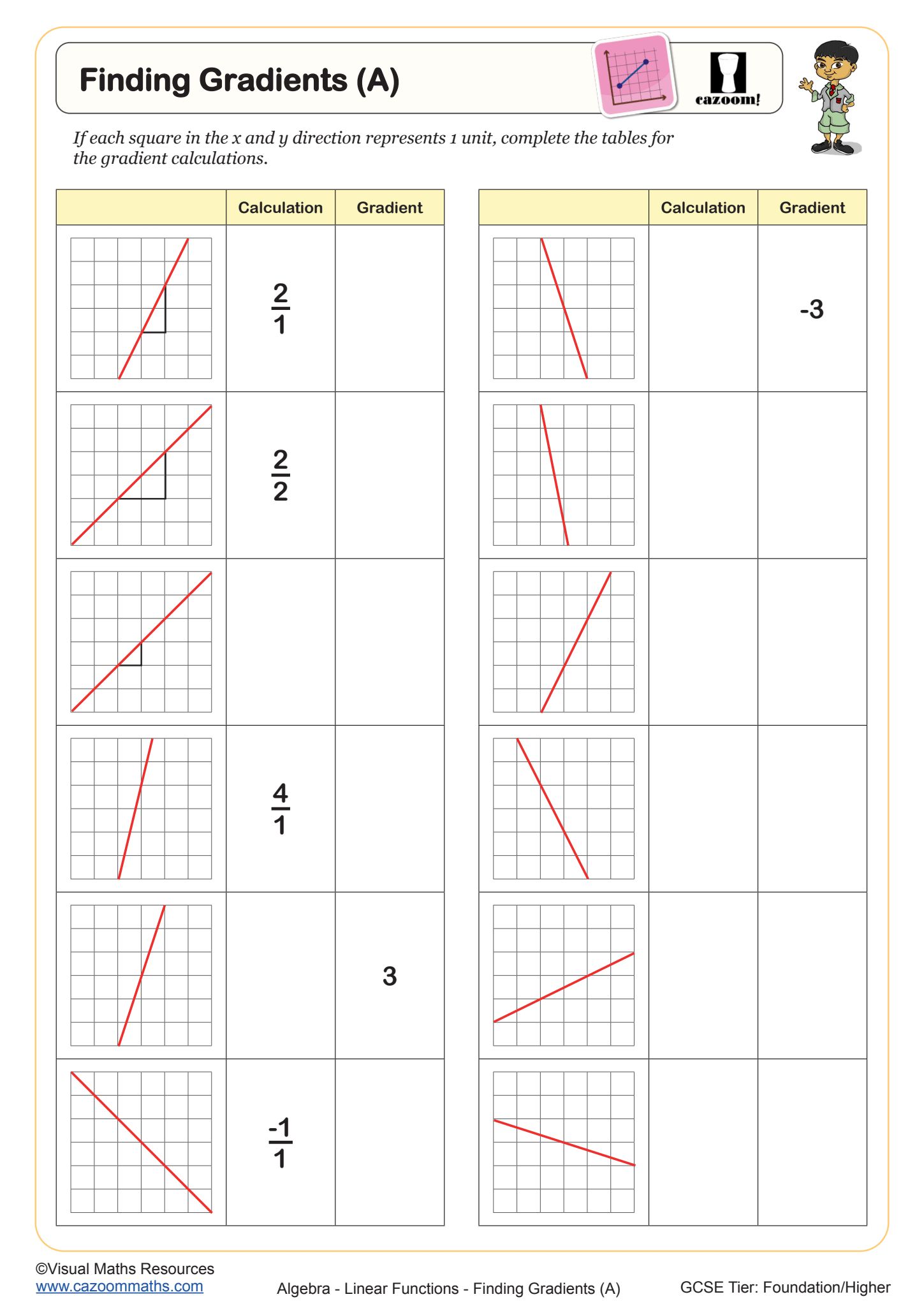
Finding Gradients (A)
Year groups: 8, 9, 10
Finding Gradients (B)
Year groups: 8, 9, 10
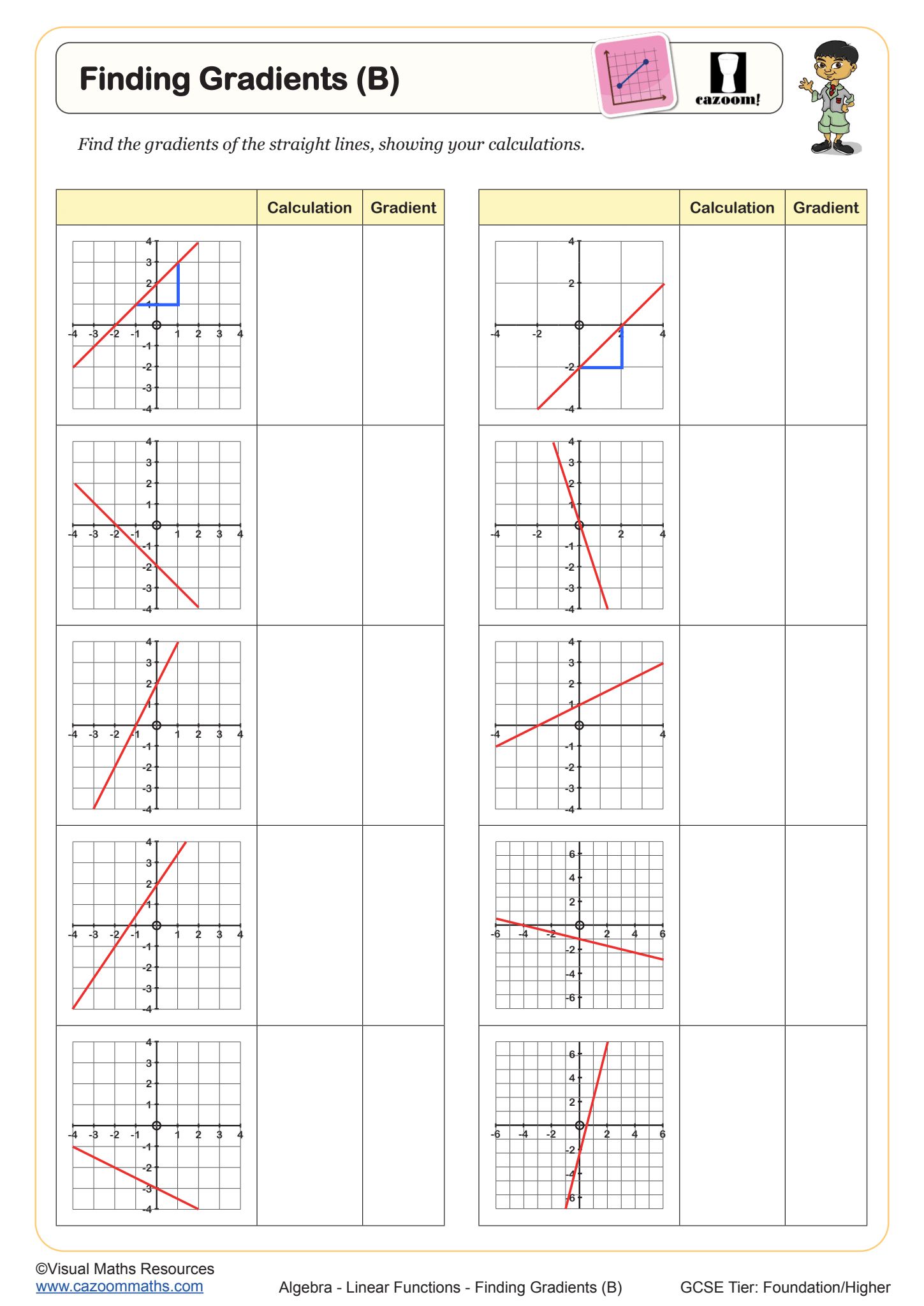
Finding Gradients (C)
Year groups: 8, 9, 10
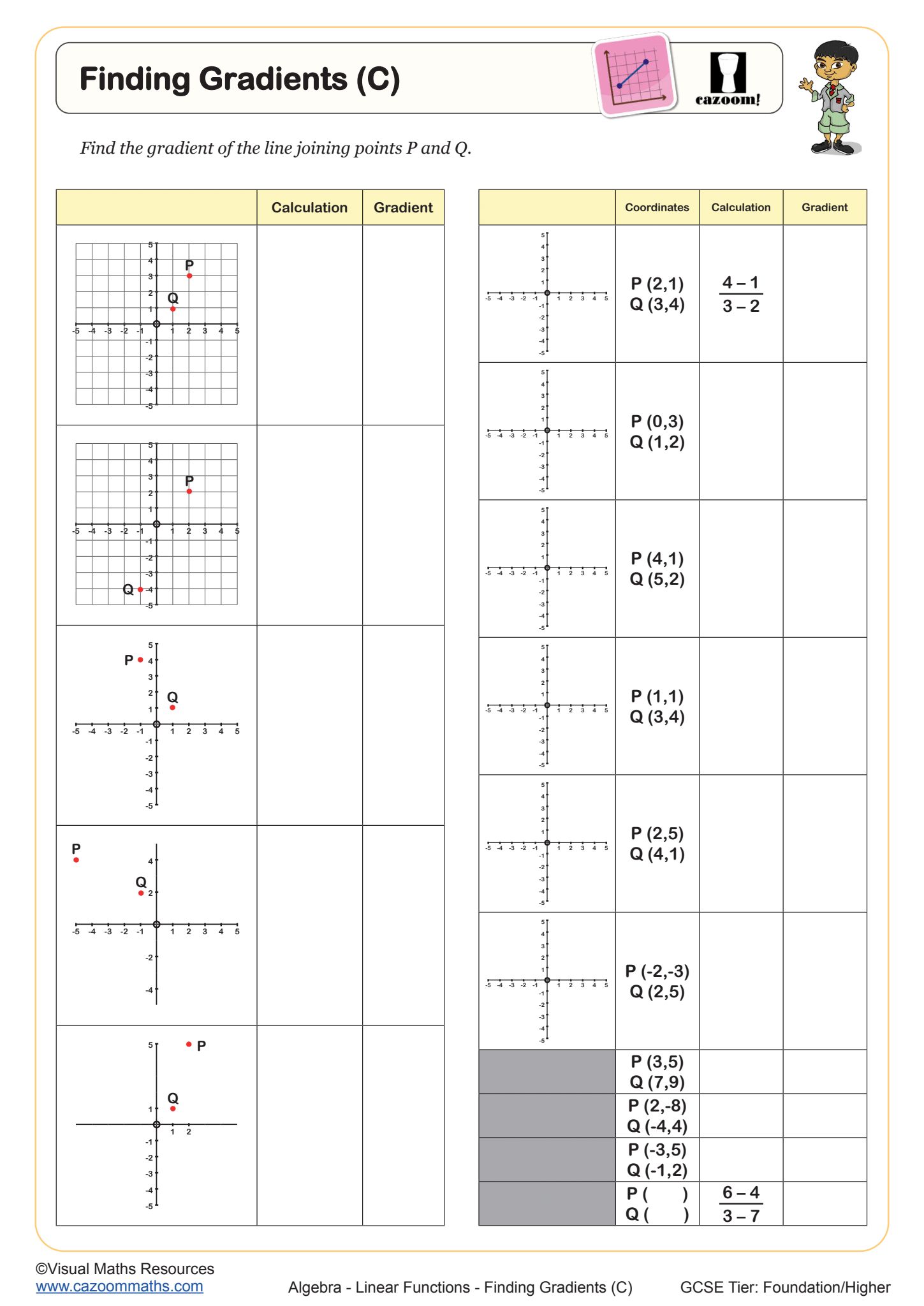
Finding the Intercepts
Year groups: 8, 9
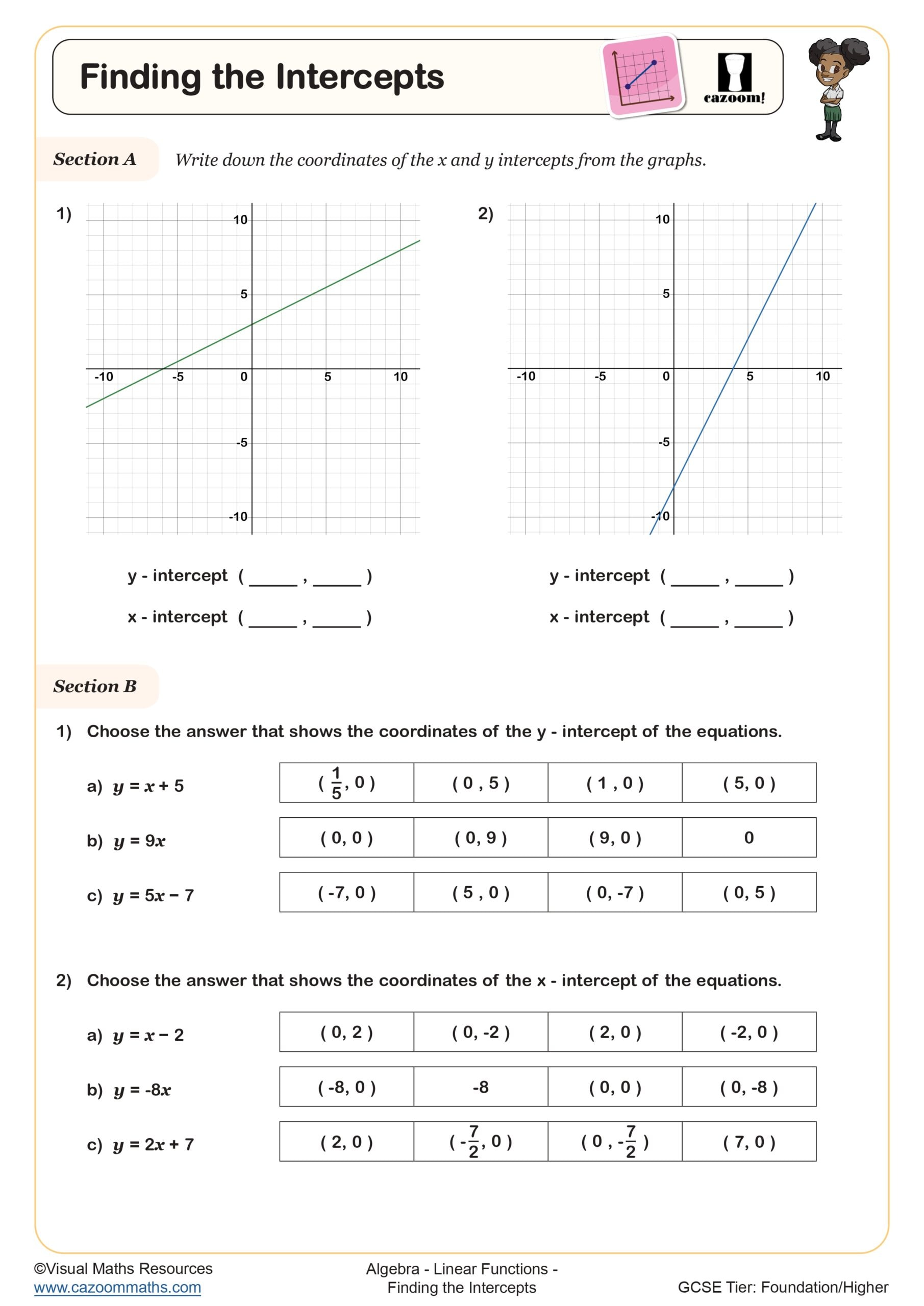
Investigating Straight Line Graphs
Year groups: 8, 9
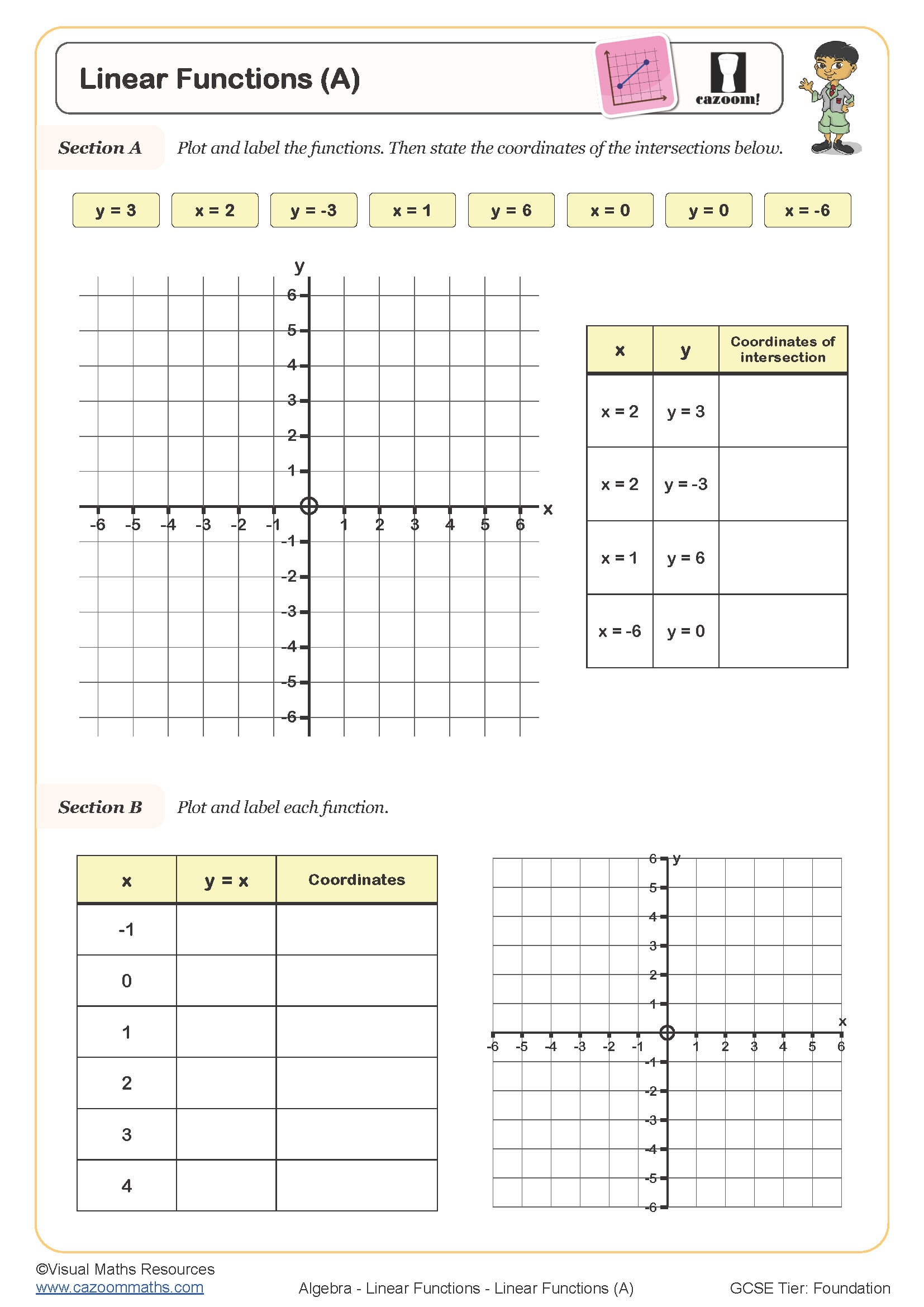
Linear Functions (A)
Year groups: 8, 9
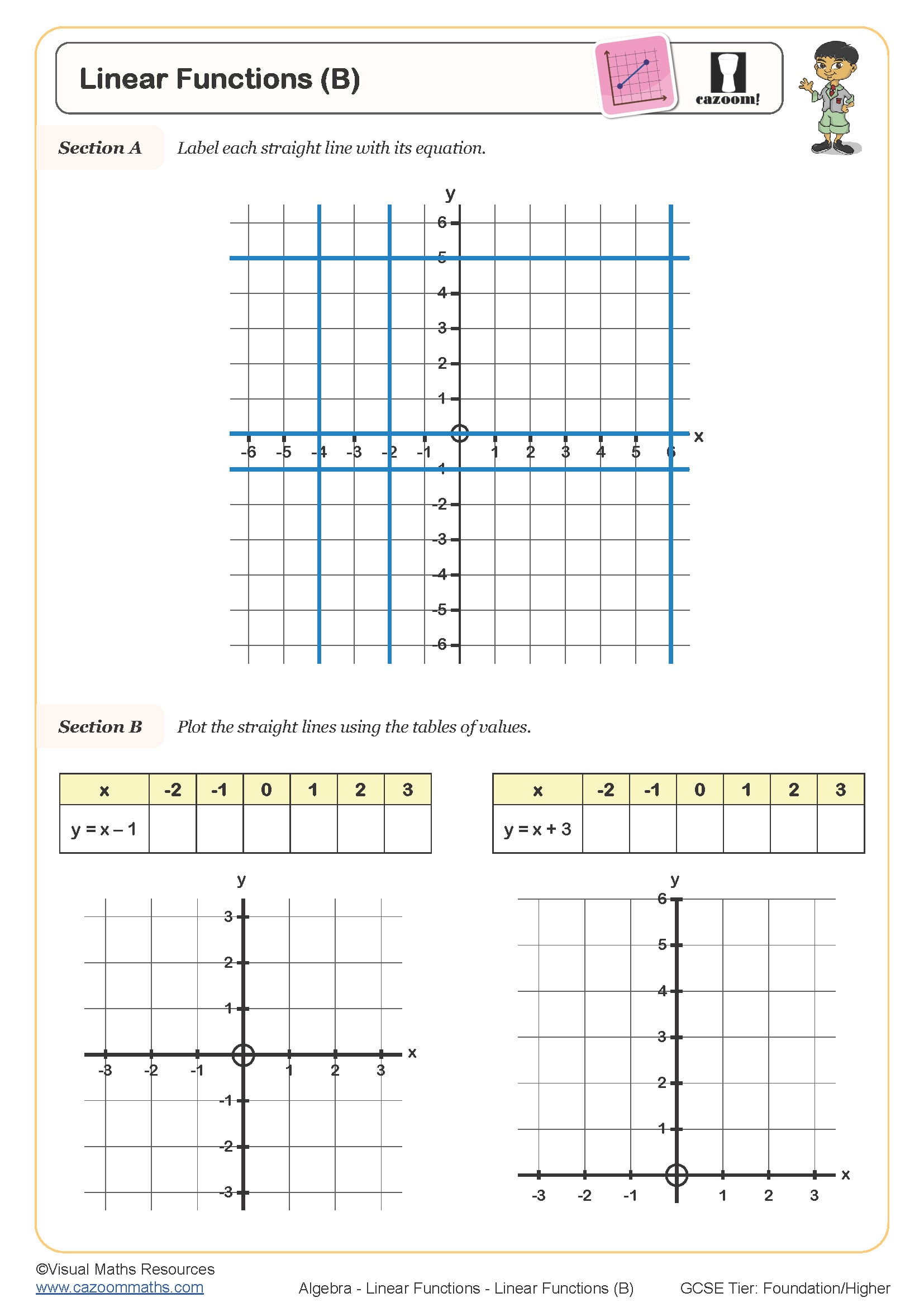
Linear Functions (B)
Year groups: 8, 9, 10
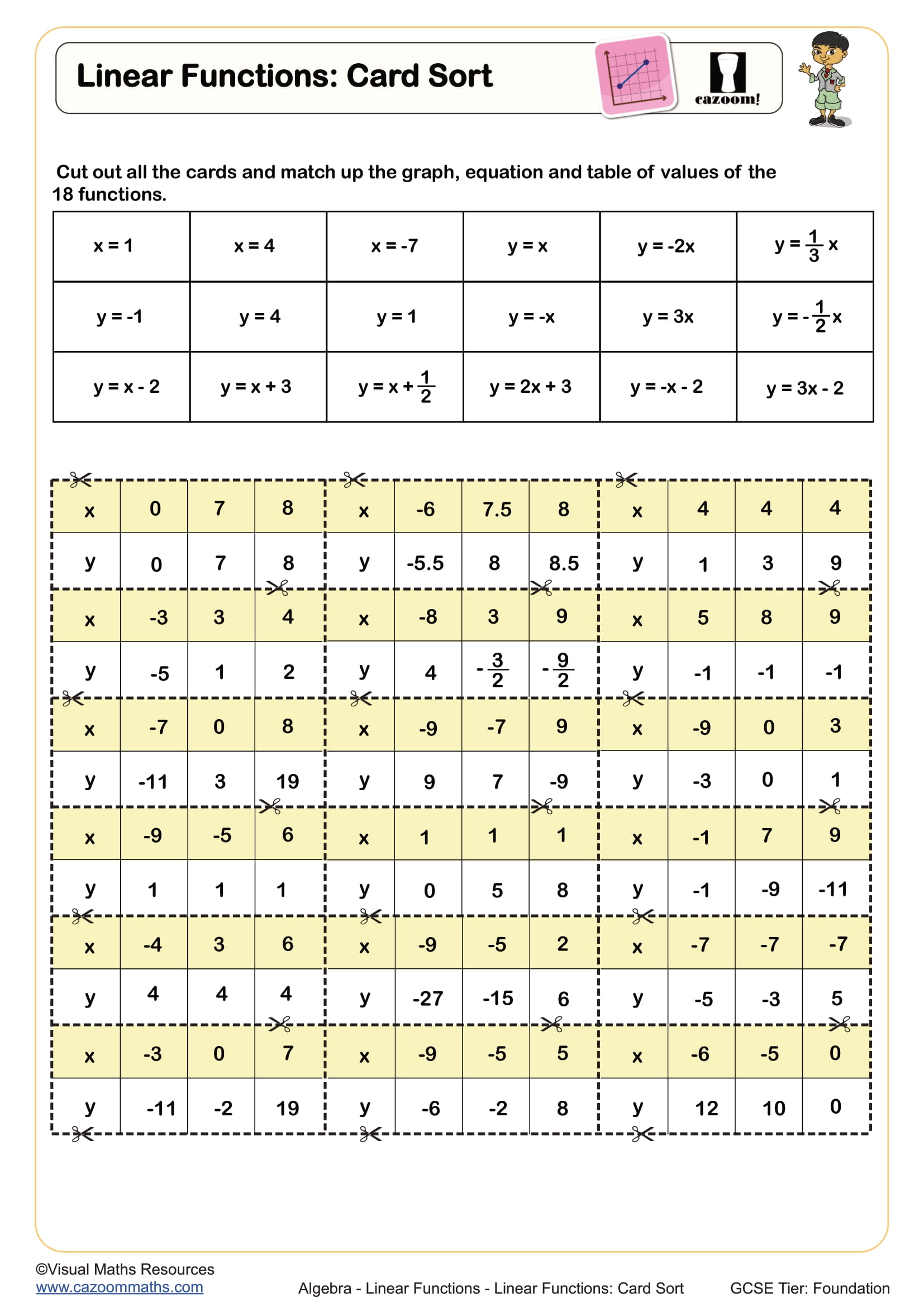
Linear Functions: Card Sort
Year groups: 8, 9
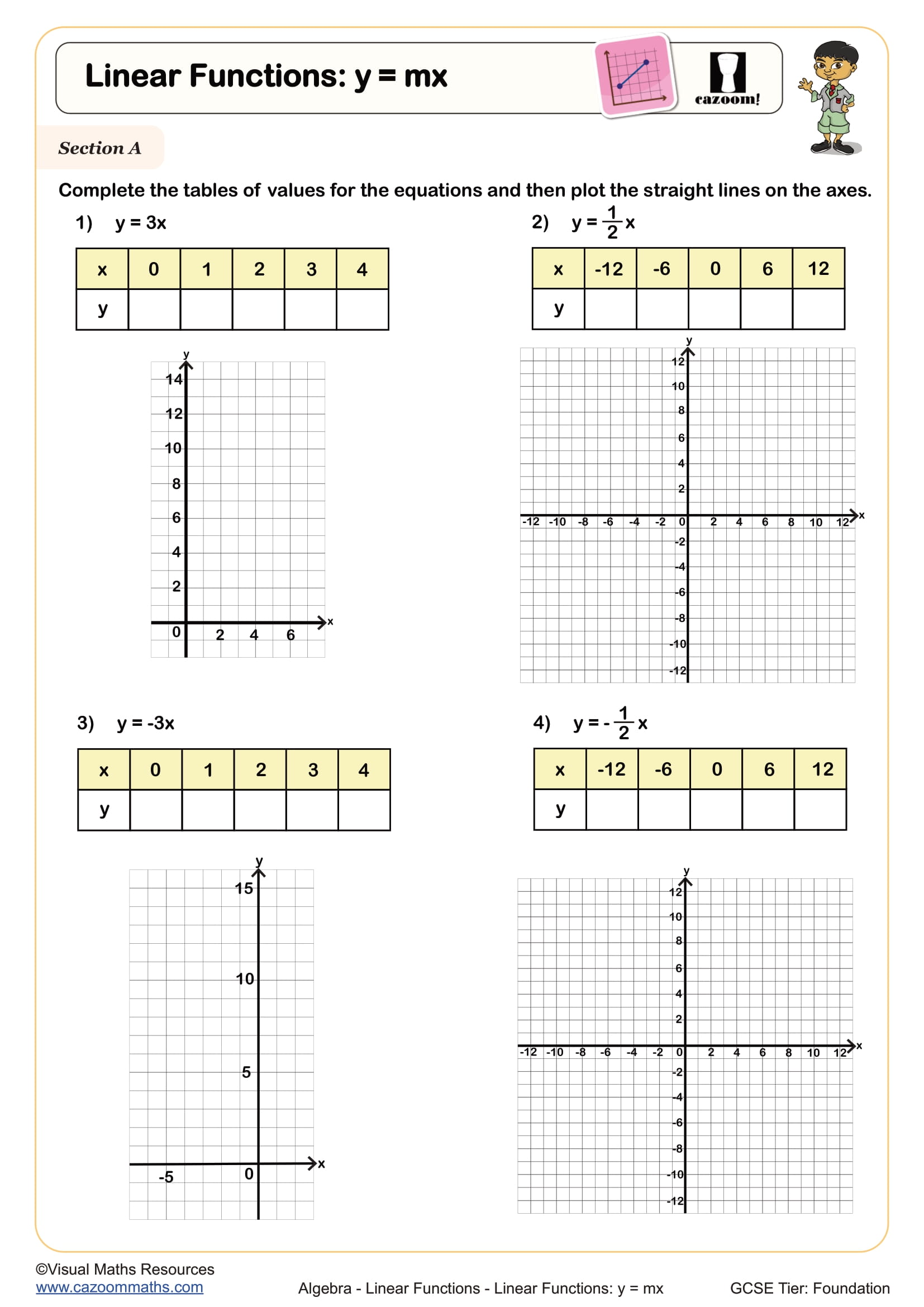
Linear Functions: y = mx
Year groups: 8, 9
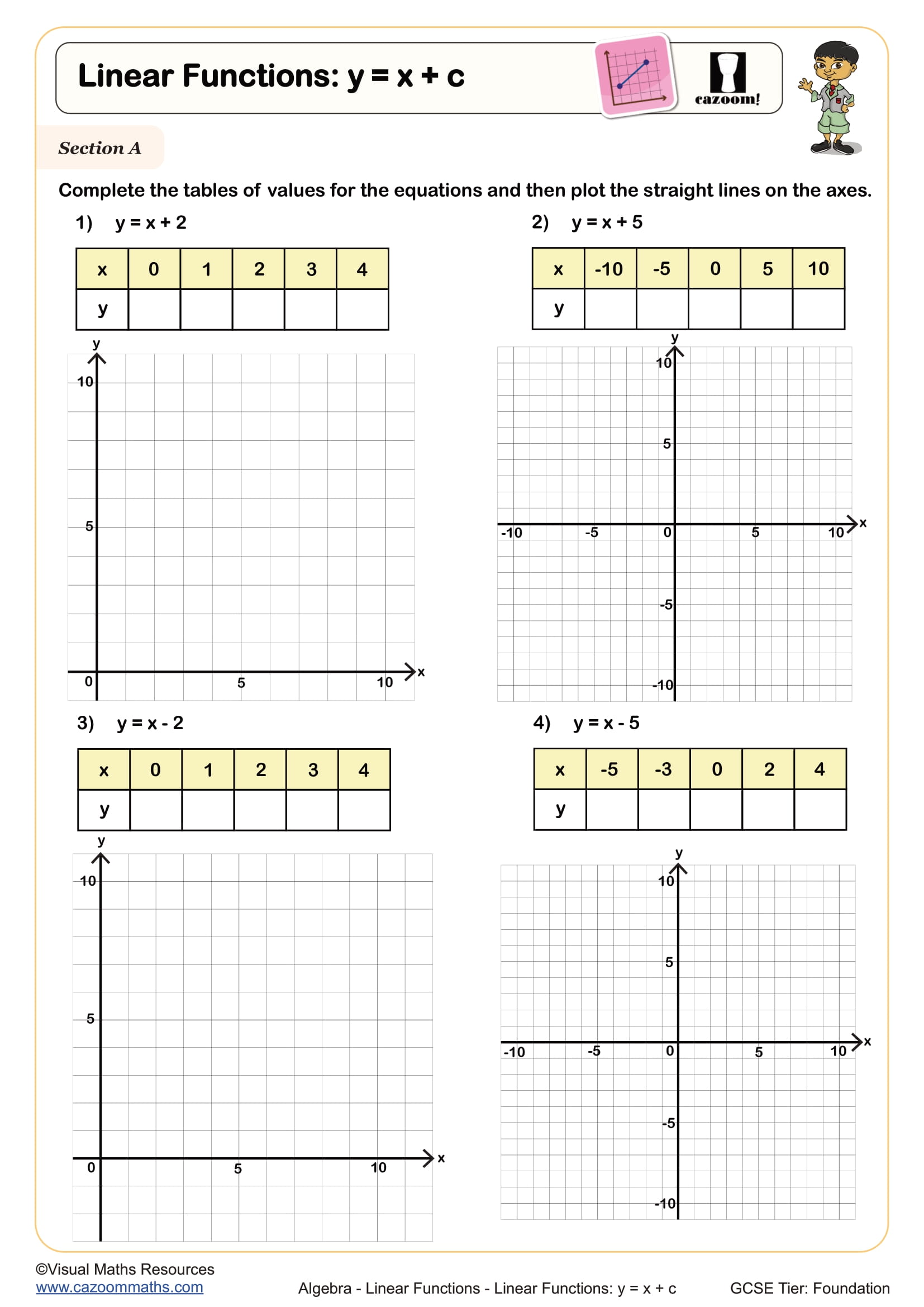
Linear Functions: y = x + c
Year groups: 8, 9
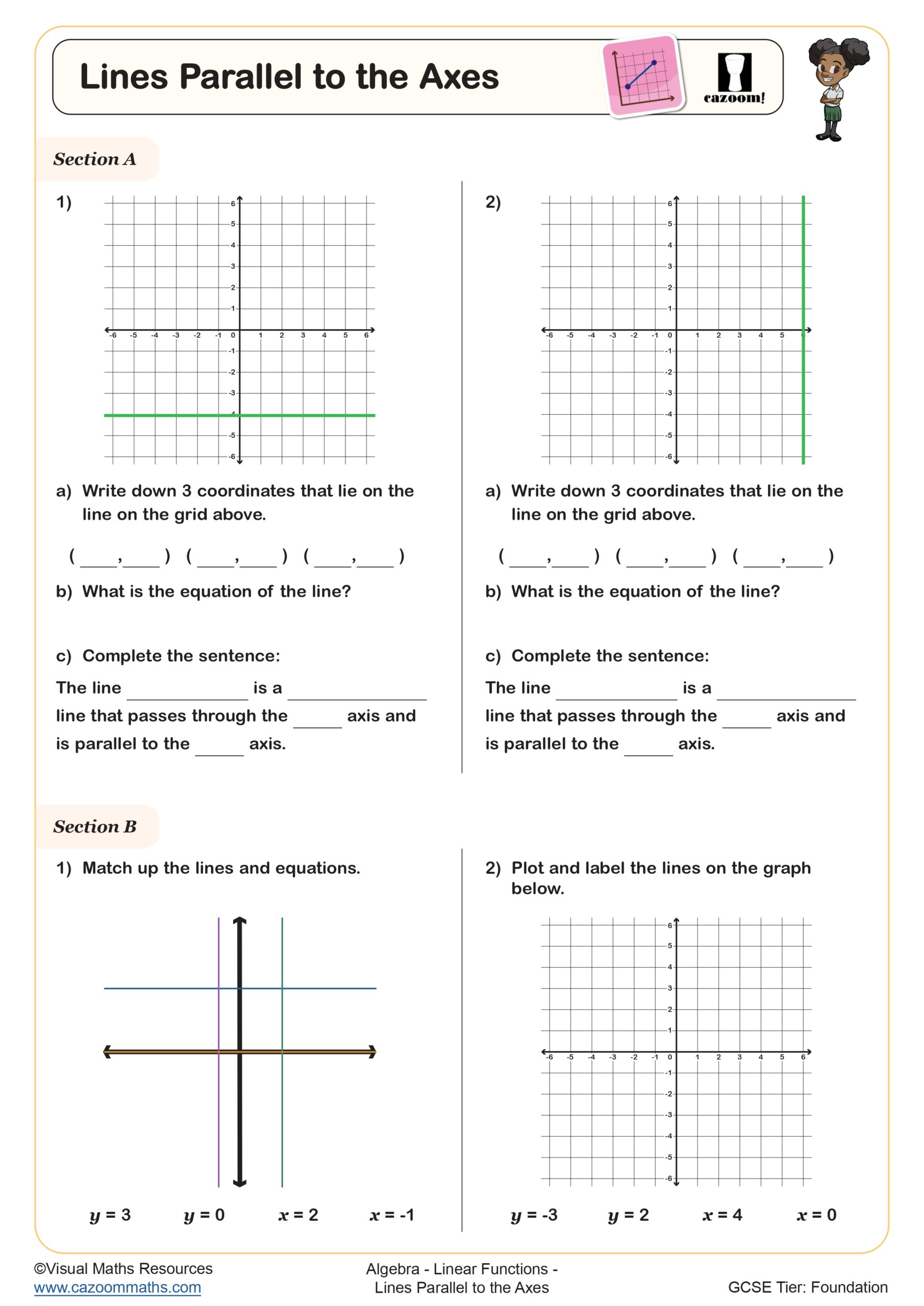
Lines Parallel to the Axes
Year groups: 8, 9
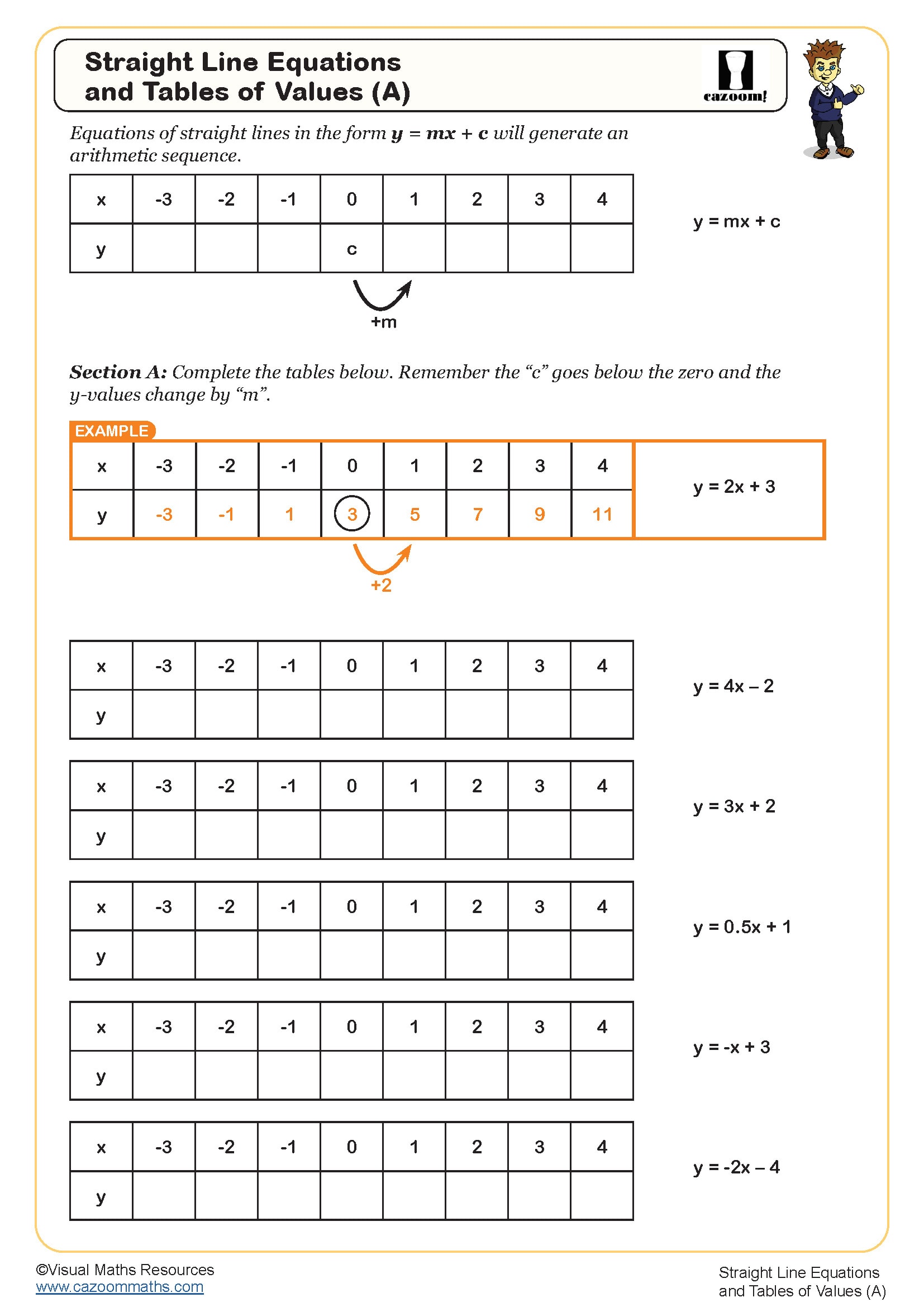
Straight Line Equations and Tables of Values (A)
Year groups: 8, 9
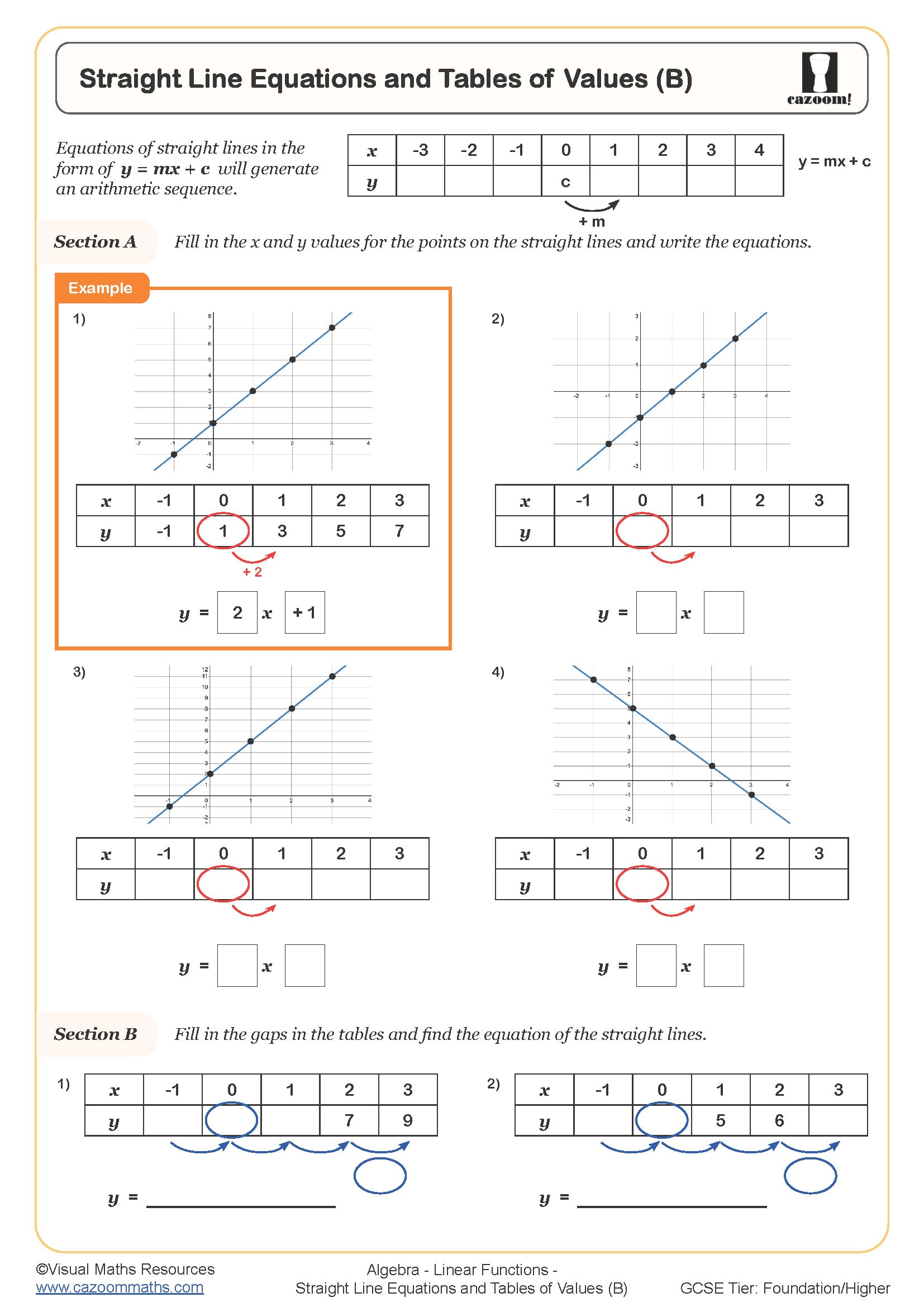
Straight Line Equations and Tables of Values (B)
Year groups: 8, 9
Crack the Code - Straight Line Graphs
Year groups: 9, 10
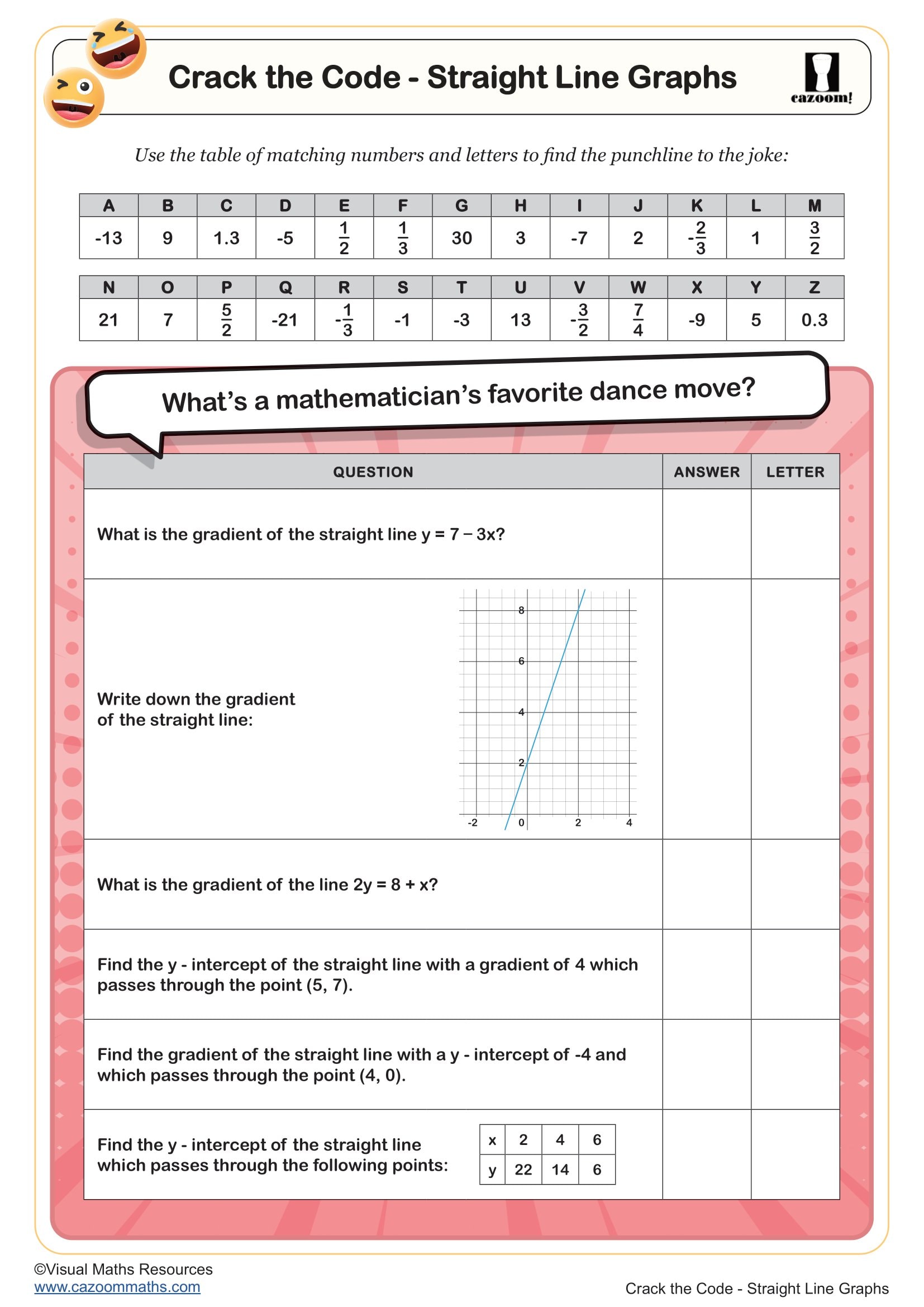
Does the Point Lie on the Line?
Year groups: 9, 10, 11
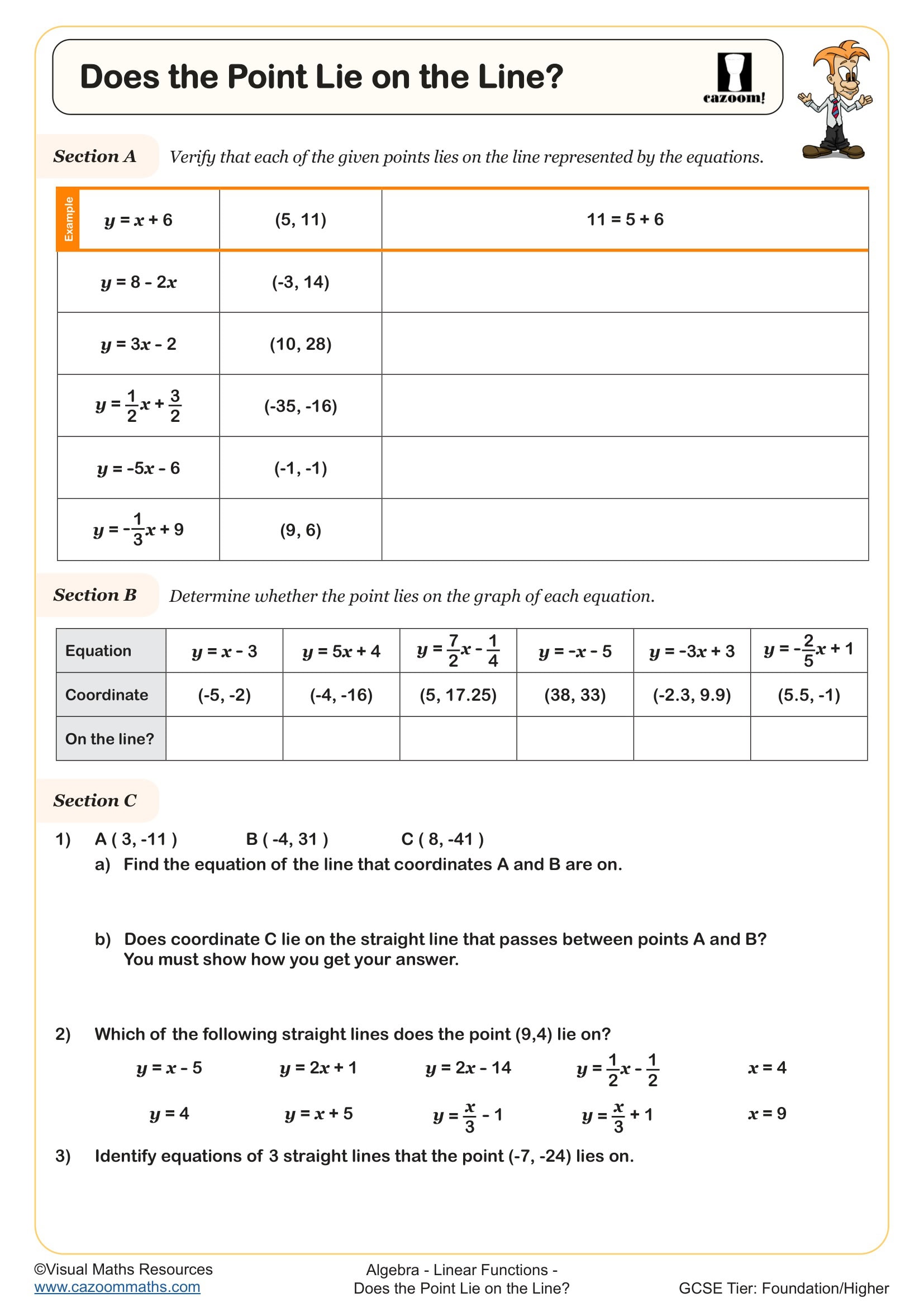
Finding the Equation of the Line (A)
Year groups: 9, 10, 11
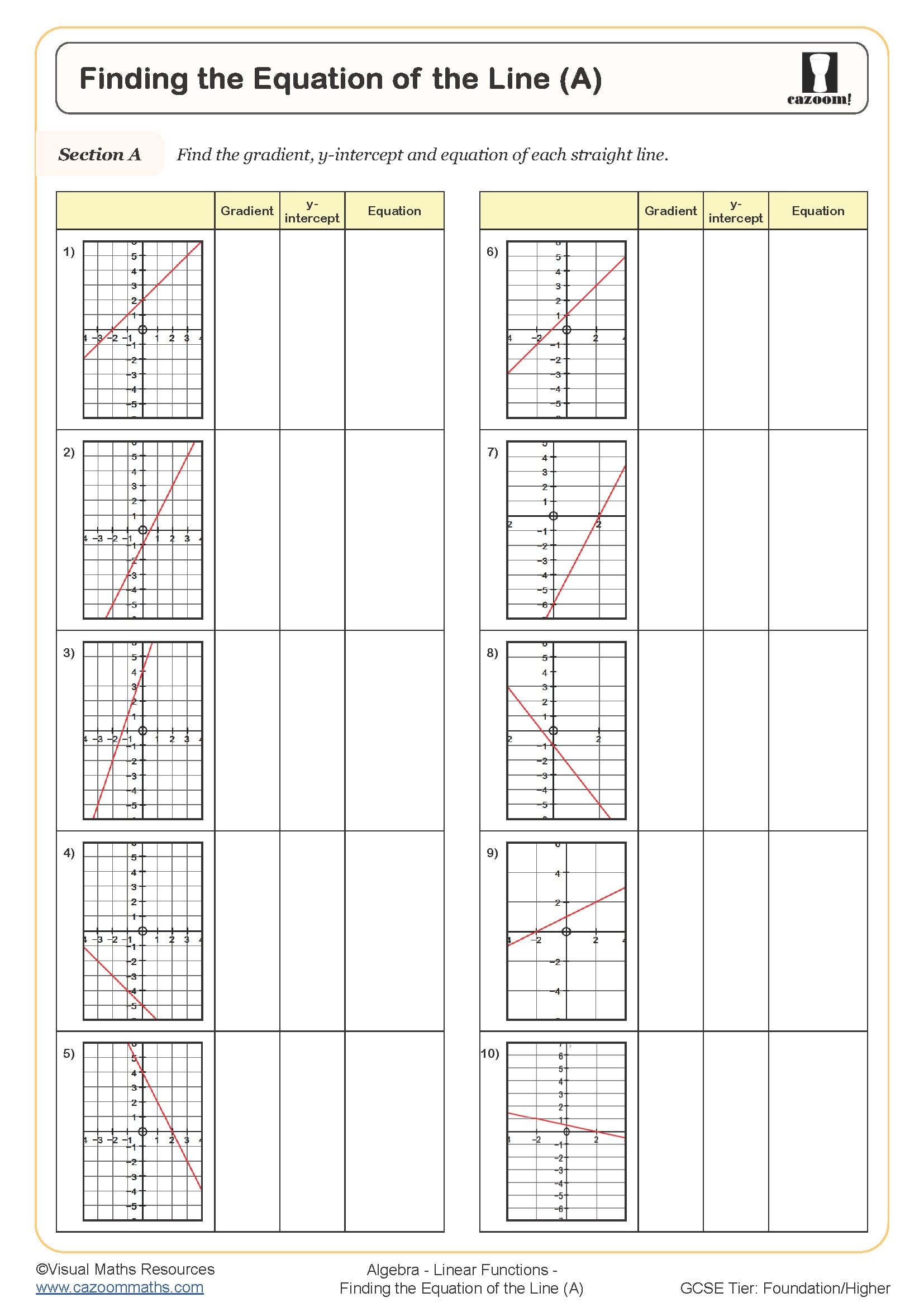
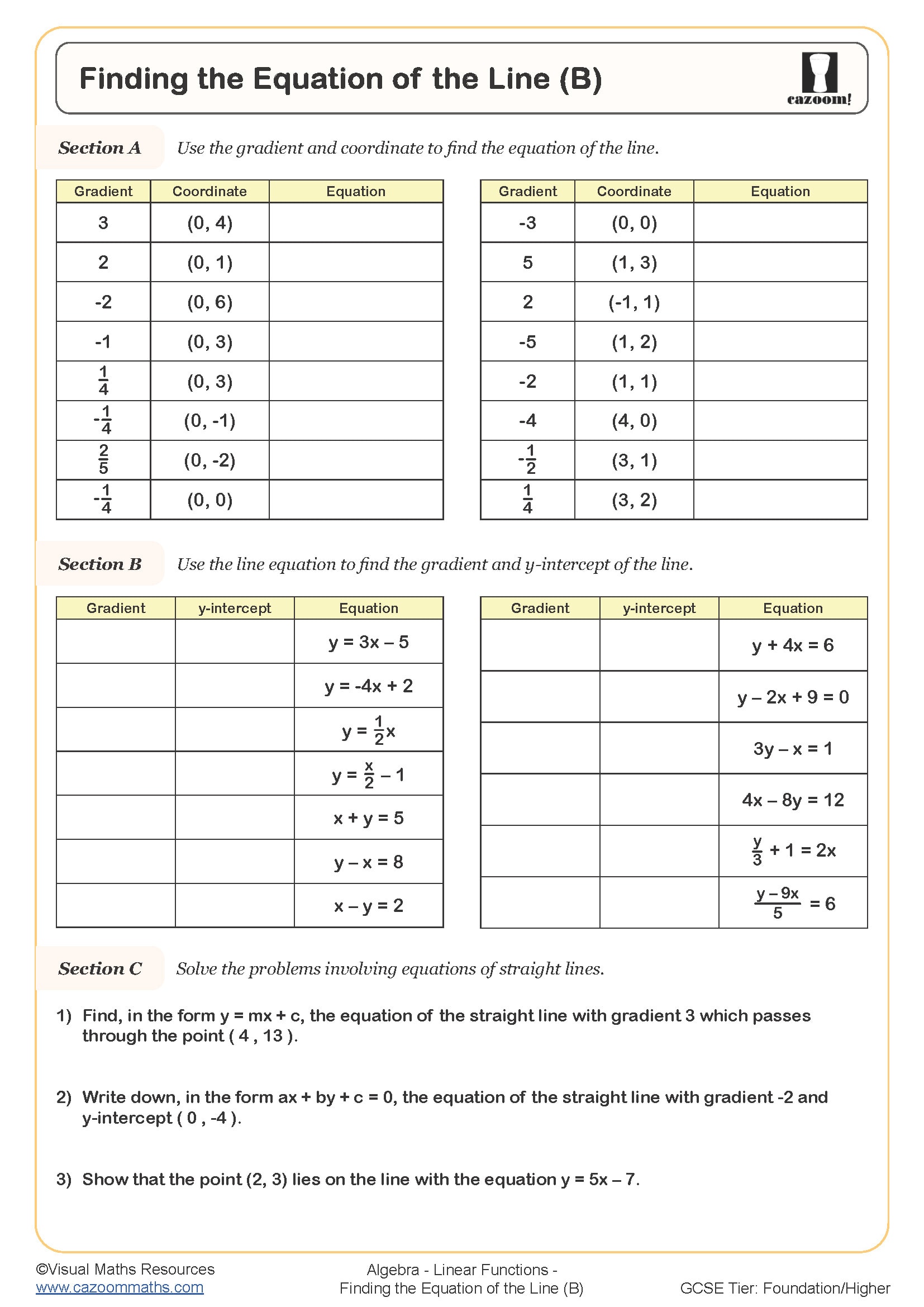
Finding the Equation of the Line (B)
Year groups: 9, 10, 11
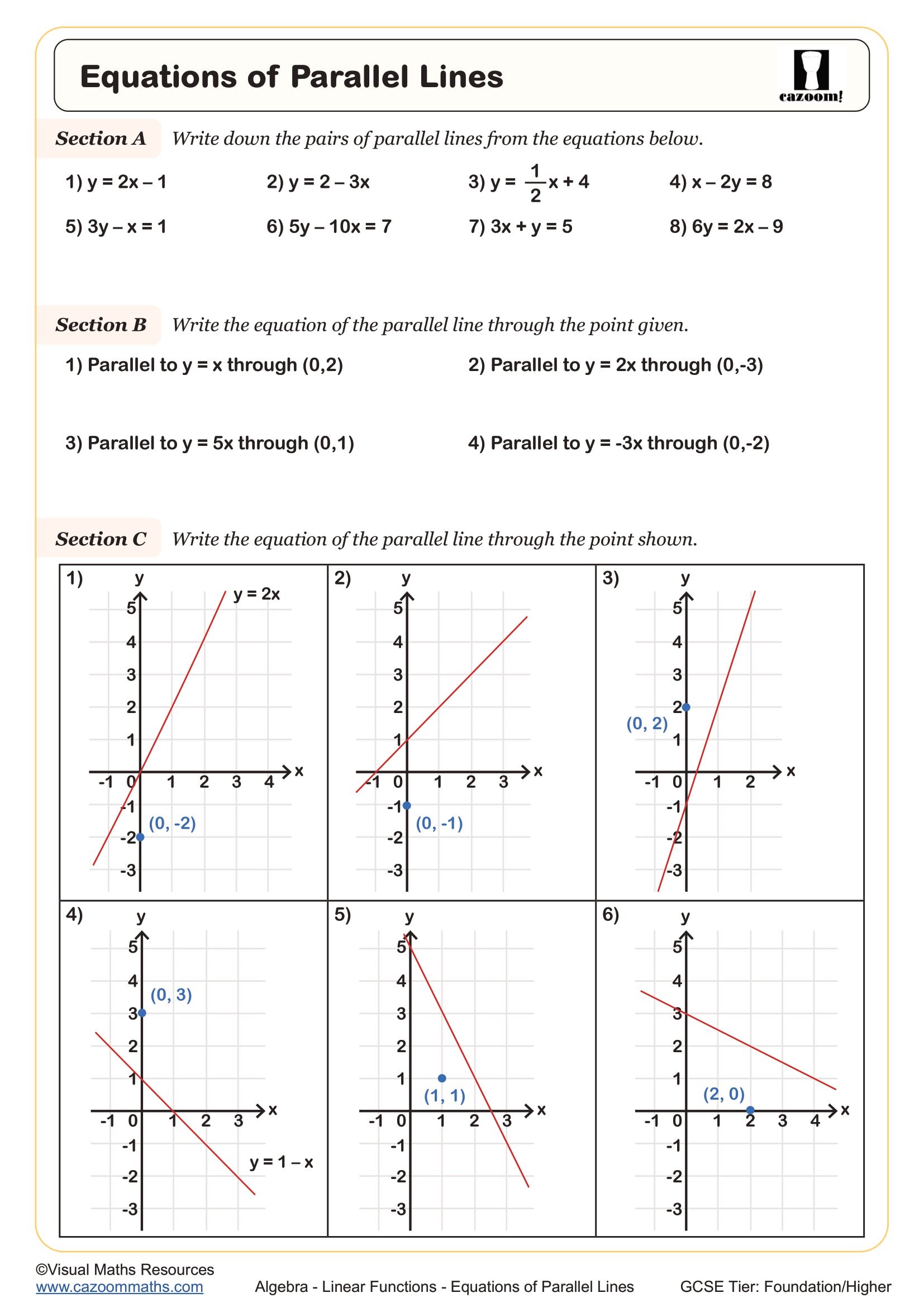
Equations of Parallel Lines
Year groups: 10, 11
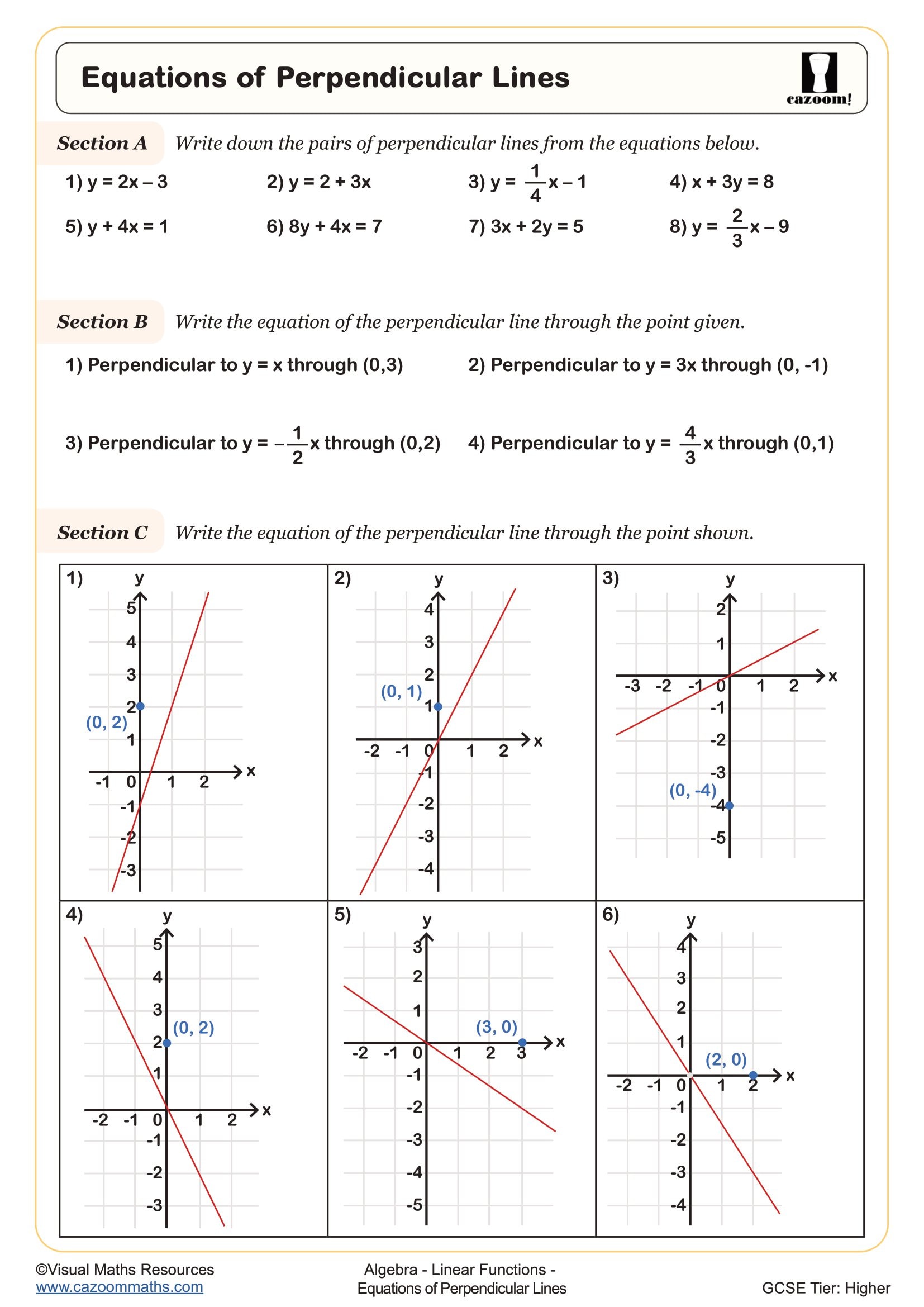
Equations of Perpendicular Lines
Year groups: 10, 11
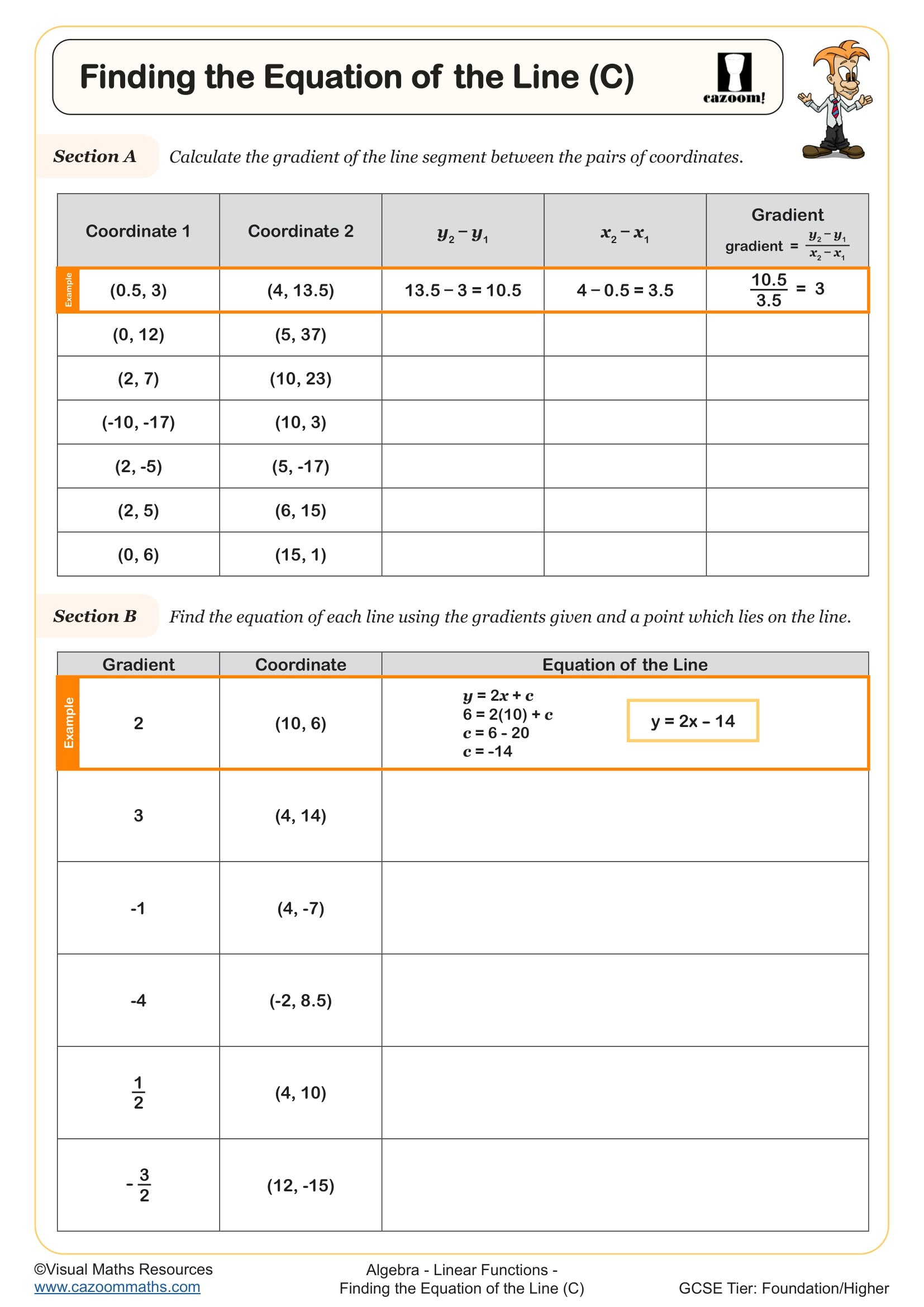
Finding the Equation of the Line (C)
Year groups: 10, 11
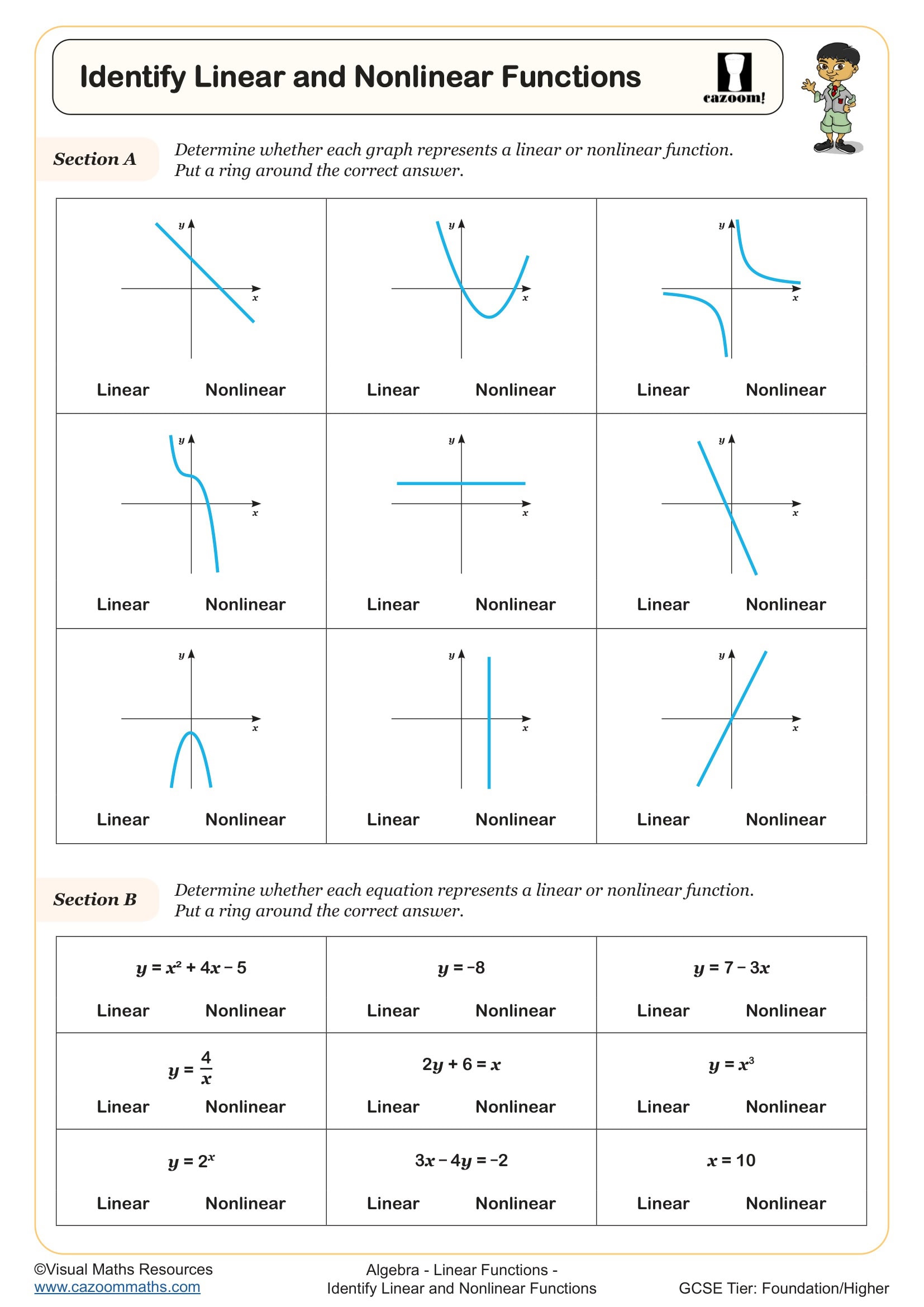
Identify Linear and Non Linear Functions
Year groups: 10, 11
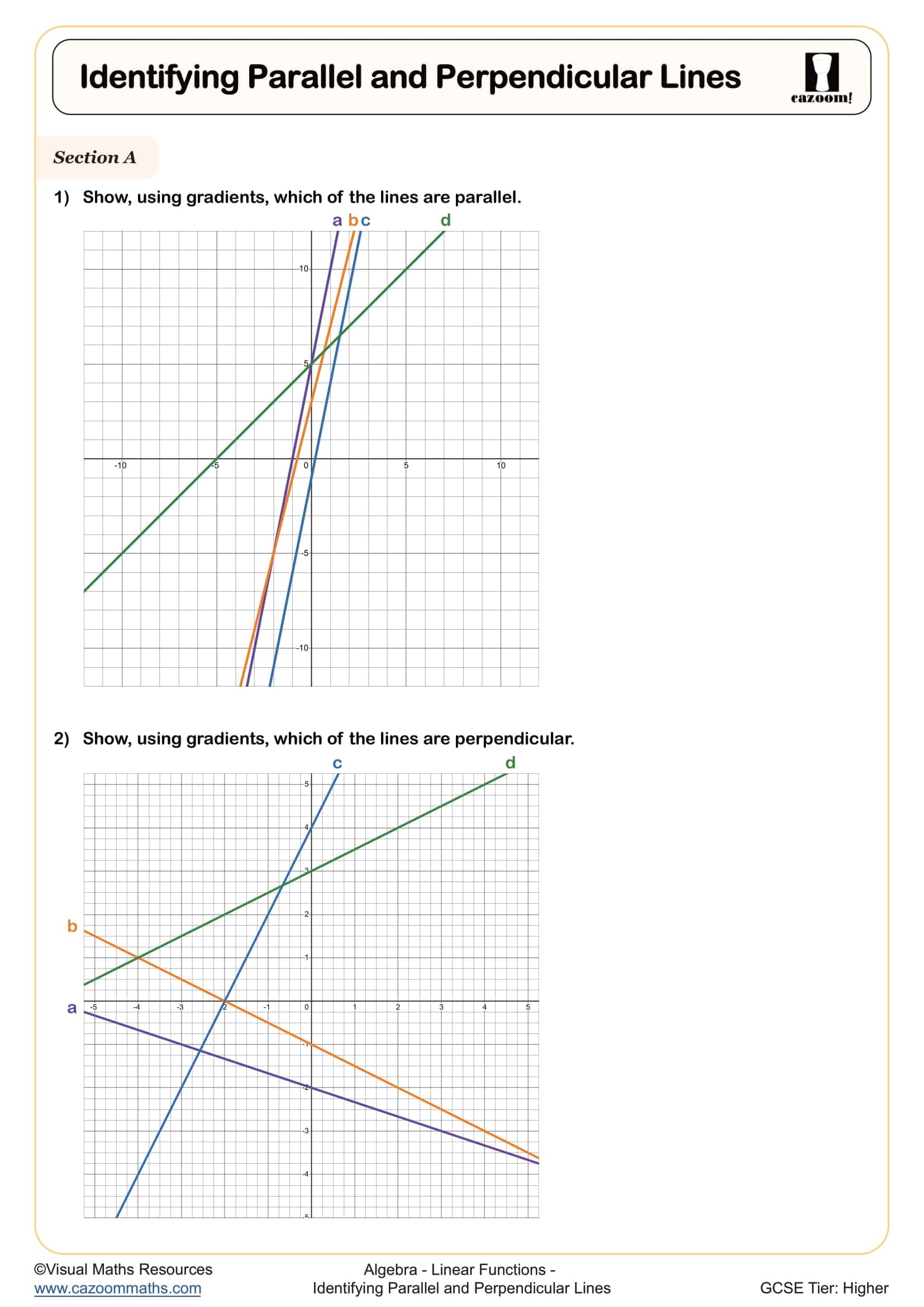
Identifying Parallel and Perpendicular Lines
Year groups: 10, 11
All worksheets are created by the team of experienced teachers at Cazoom Maths.
What makes an effective linear graph worksheet for secondary students?
An effective linear graph worksheet should balance coordinate plotting practice with conceptual understanding of straight line relationships. Students need structured progression from plotting points using tables of values through to sketching graphs from equations like y = 2x + 3.
Teachers frequently observe that students rush the plotting stage, leading to incorrectly drawn lines that affect all subsequent calculations. The most successful plotting linear graphs worksheet activities include grid references and encourage students to check their work by substituting coordinates back into the original equation.
Which year groups benefit most from linear function worksheet practice?
Linear function worksheets work effectively from Year 7 through to Year 11, though the complexity varies significantly. Year 7 students typically start with simple relationships like y = x + 2, whilst Year 9 onwards tackle more complex forms including rearranging to y = mx + c format.
Maths teachers notice that students who struggle with linear graphs in Year 8 often lack confidence with negative numbers and basic coordinate geometry. Regular practice with a straight line graphs worksheet helps consolidate these foundational skills before progressing to simultaneous equations and more advanced algebraic concepts.
How should students approach finding gradients from linear graphs?
Students should learn the systematic 'rise over run' method, selecting two clear points on their plotted line and calculating the vertical change divided by horizontal change. Many linear graph worksheet exercises emphasise this step-by-step approach rather than relying on intuitive gradient recognition.
Classroom experience shows that students often select poorly-chosen points, particularly those that don't lie exactly on grid intersections. Teachers recommend encouraging students to extend their lines and choose points with integer coordinates, making the gradient calculation more straightforward and reducing arithmetic errors that can undermine confidence.
What's the best way to use these worksheets for exam preparation?
These plotting straight line graphs worksheet resources work most effectively when combined with regular mini-assessments and peer marking using the provided answer sheets. Students benefit from attempting questions without calculators initially, then checking their graphical work algebraically.
Successful teachers often set these as low-stakes homework followed by brief starter activities reviewing common errors. The linear graph worksheet PDF format allows easy printing for revision folders, and students can reattempt questions where they've made mistakes, building the fluency needed for GCSE success where graph work appears across multiple paper sections.