Linear Sequences Worksheets
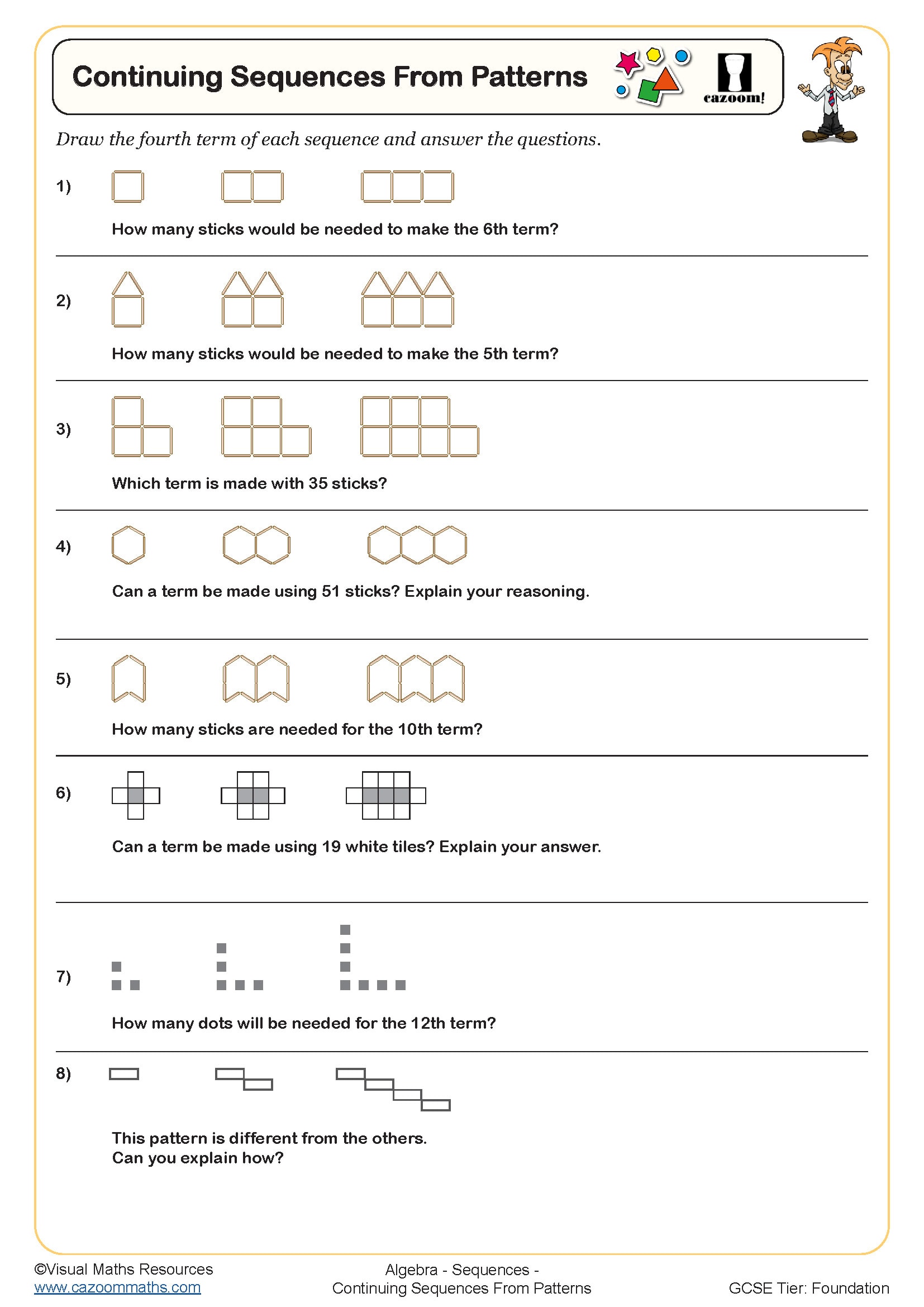
Continuing Sequences from Patterns
Year groups: 7
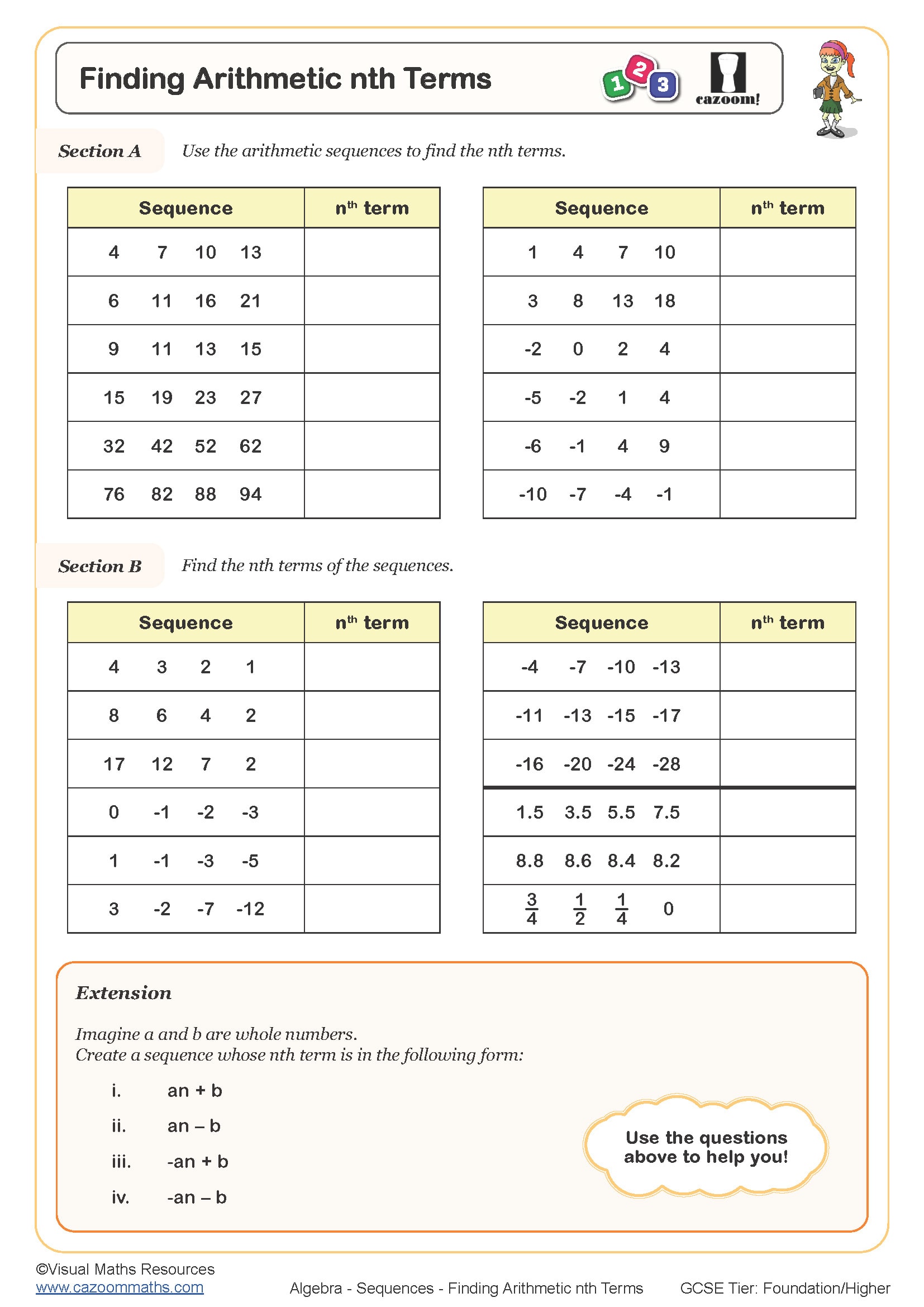
Finding Arithmetic nth Terms Worksheet
Year groups: 7, 8
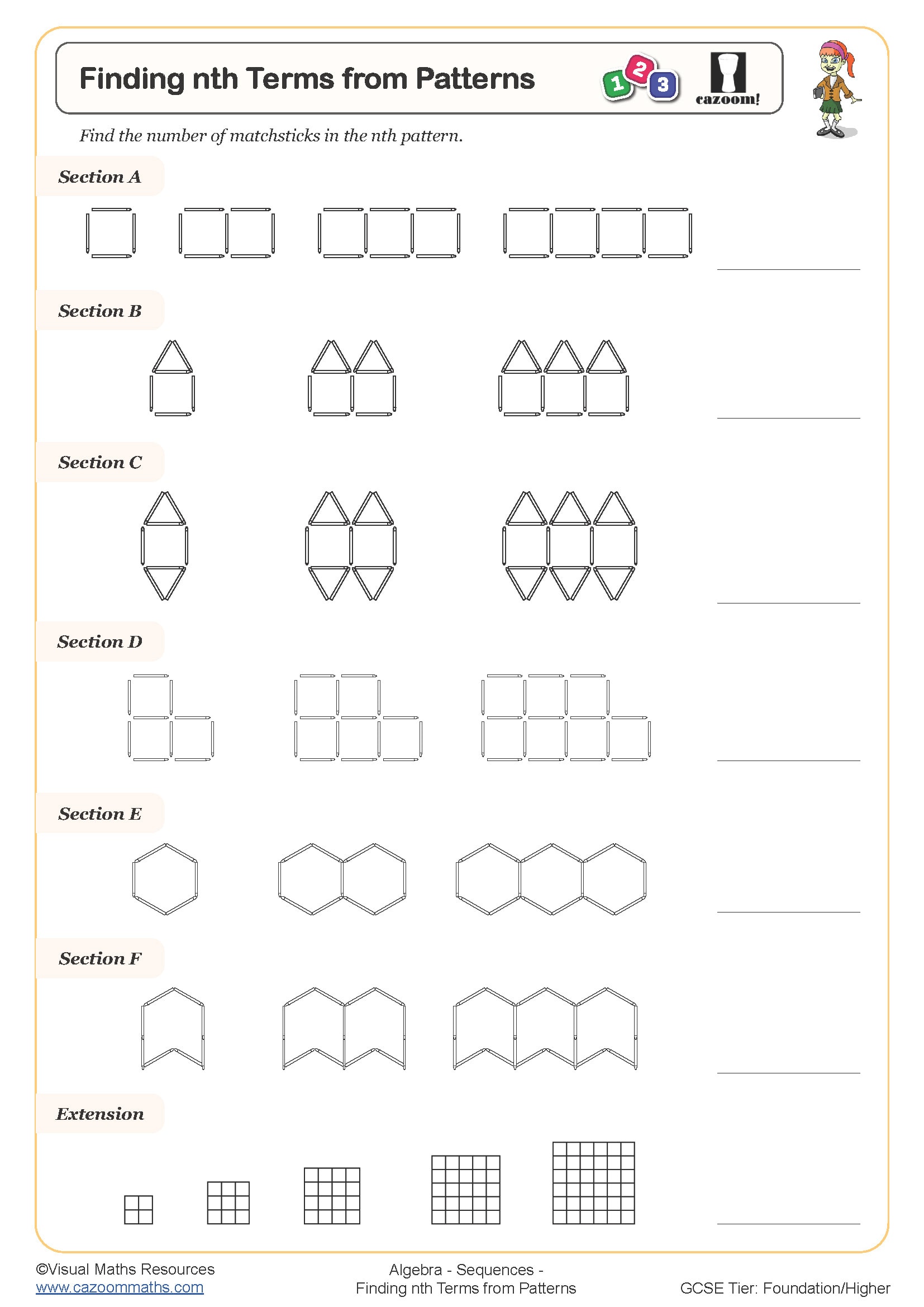
Finding nth Terms from Patterns
Year groups: 7, 8
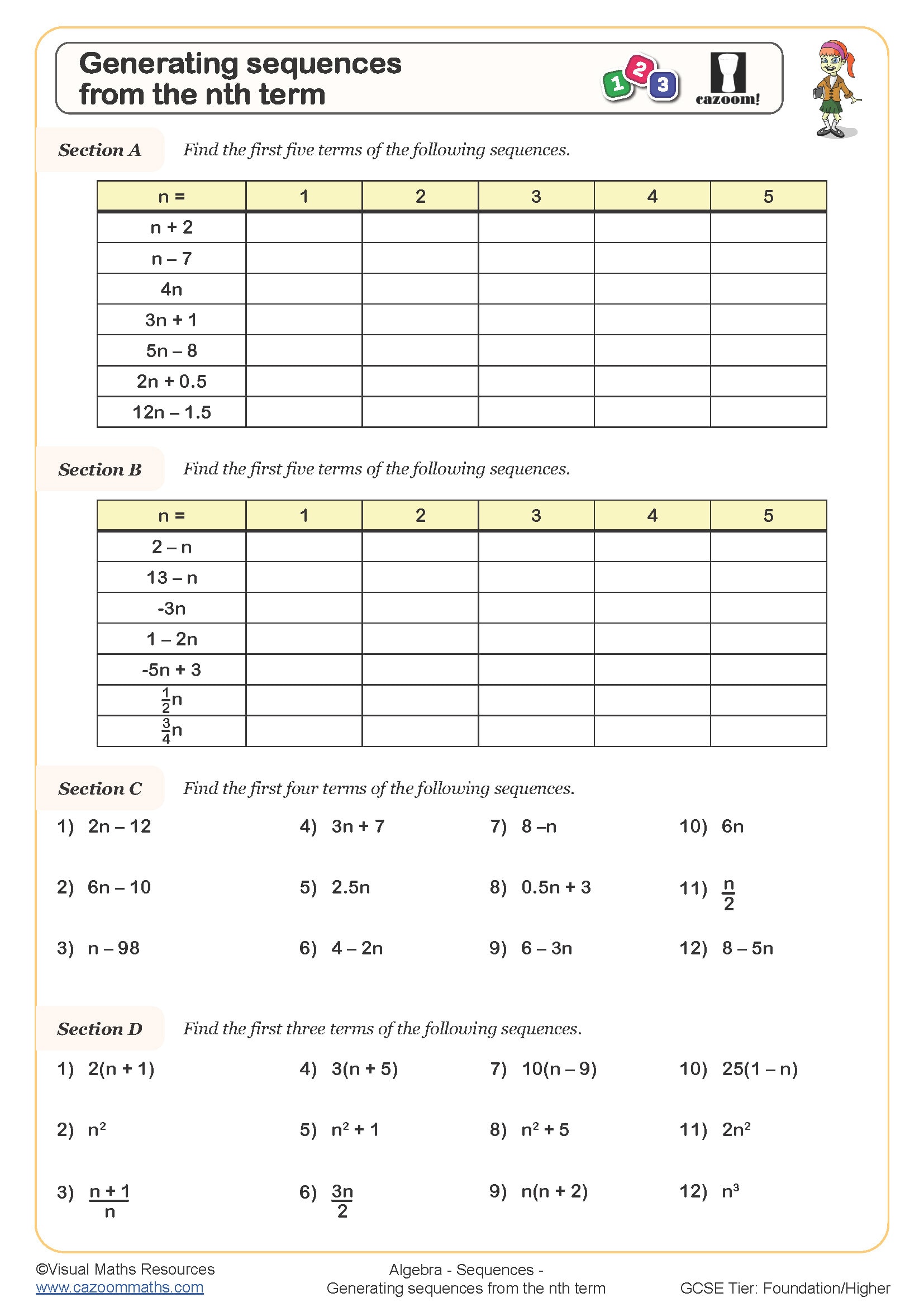
Generating Sequences from the Nth Term
Year groups: 7, 8
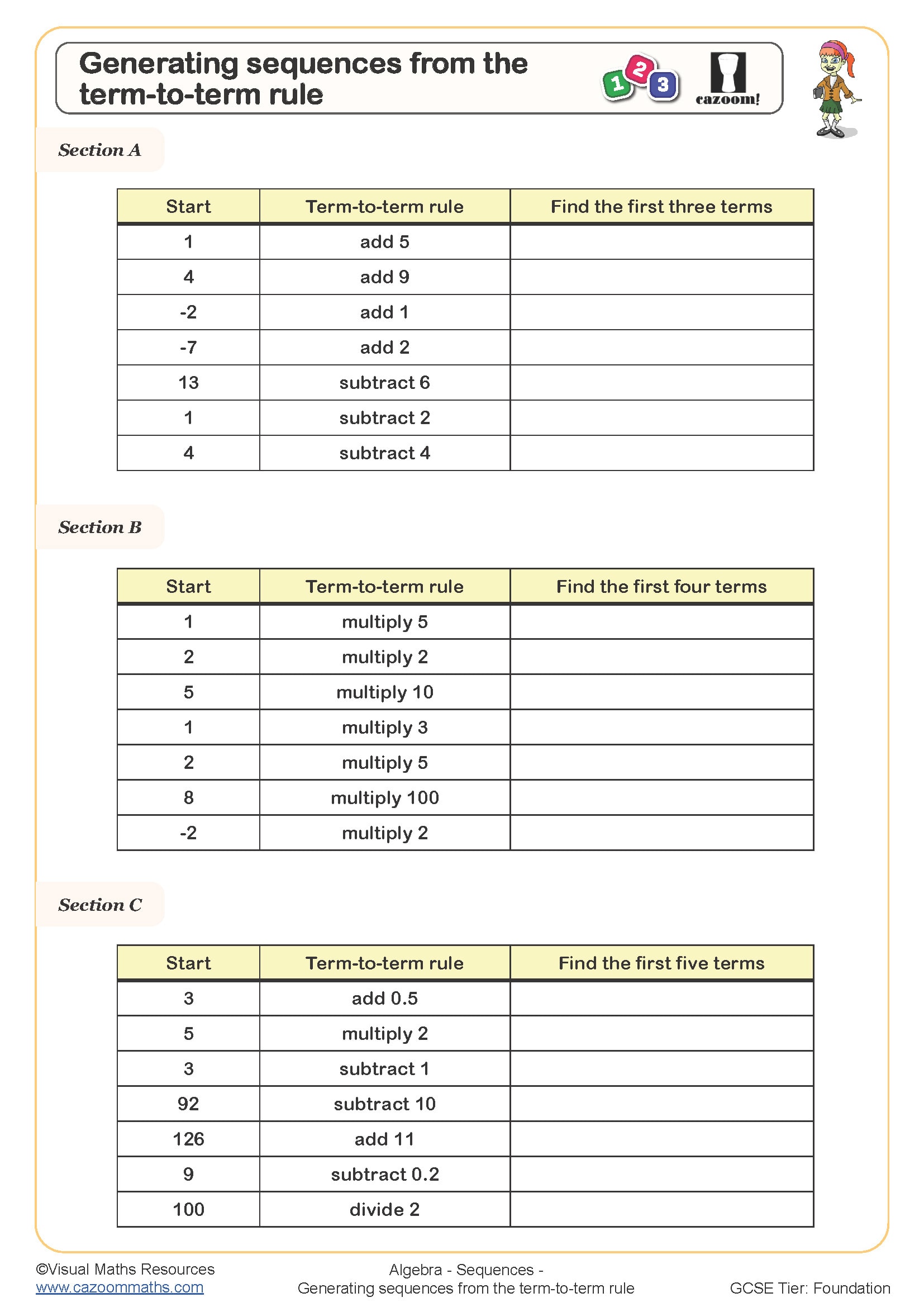
Generating Sequences from the Term to Term Rule
Year groups: 7, 8
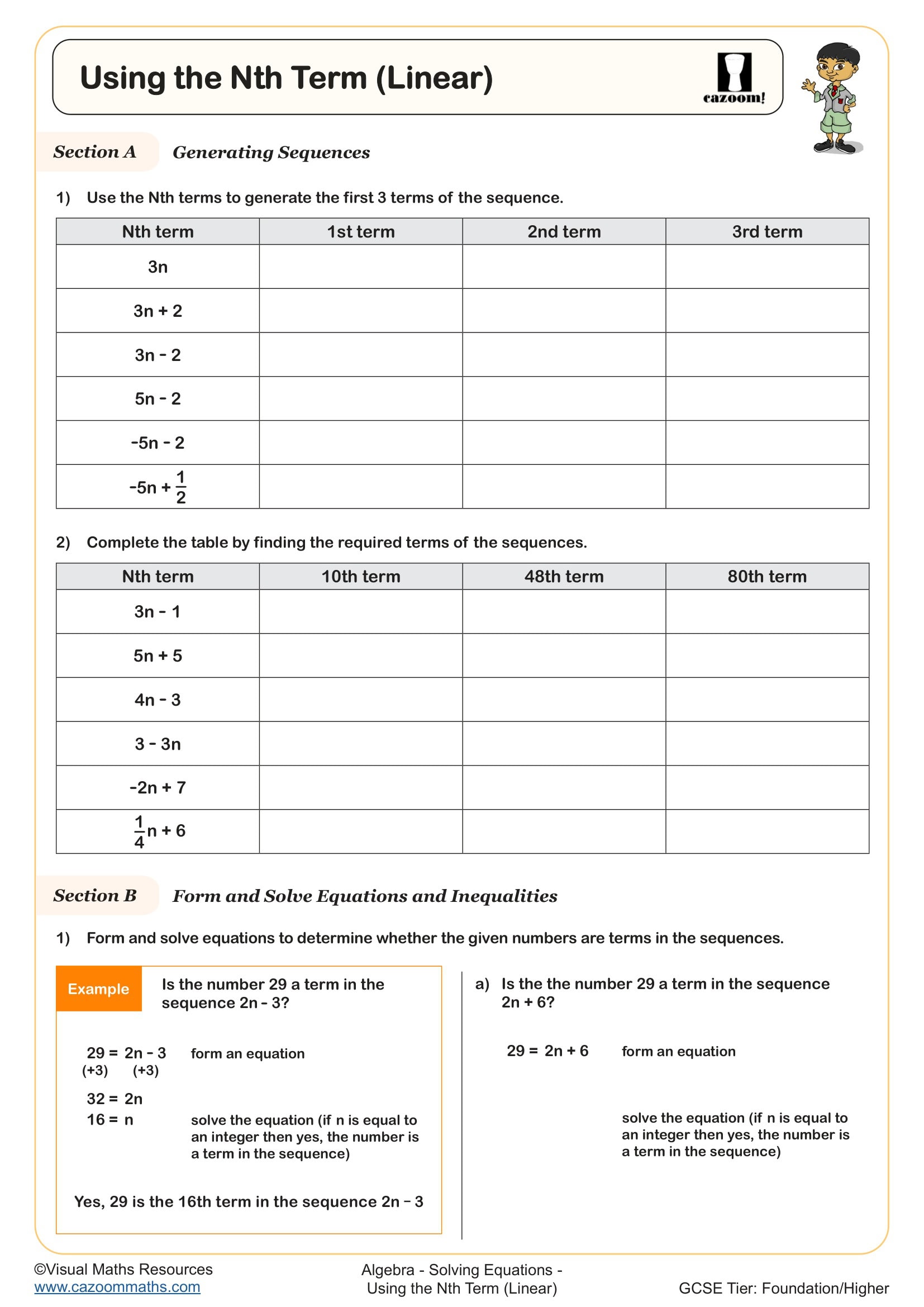
Using the Nth Term (Linear)
Year groups: 8, 9
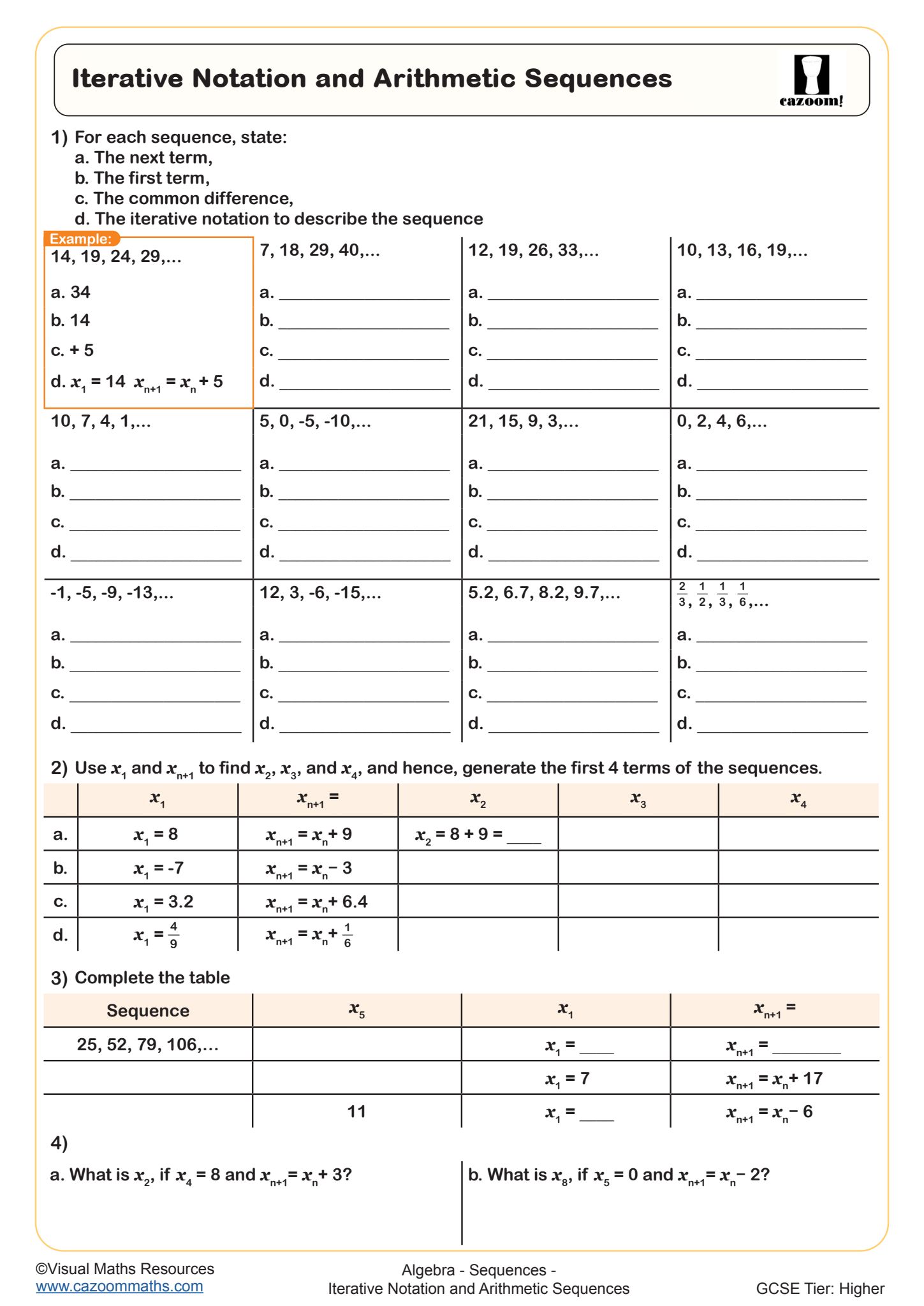
Iterative Notation and Arithmetic Sequences
Year groups: 10, 11
All worksheets are created by the team of experienced teachers at Cazoom Maths.
What makes a good linear sequences worksheet for KS3 and KS4 students?
A quality linear sequences worksheet balances pattern recognition with algebraic formula development, typically starting with simple arithmetic sequences before progressing to nth term derivation. The National Curriculum requires students to express general terms using position-to-term rules, making this topic crucial for algebra foundations across both key stages.
Teachers report that students often confuse the position number with the actual term value, particularly when sequences don't start from position 1. Effective worksheets address this by including sequences that begin at different positions and requiring students to clearly distinguish between term position and term value throughout their working.
Which year groups should use linear sequences worksheets?
Linear sequences typically appear in Year 7 as pattern recognition activities, developing into formal nth term work during Years 8 and 9. By GCSE level, students must confidently manipulate linear sequence formulas and apply them to real-world contexts, making early foundation work core for later success.
The progression moves from simple addition patterns in KS3 towards more complex applications in KS4, including sequences with negative common differences and those starting from non-standard positions. Teachers find that students who master basic linear patterns early show significantly better performance in quadratic sequences and other advanced algebra topics later.
How do students learn to find the nth term of a sequence effectively?
Finding the nth term of a sequence requires students to identify the common difference, then construct the formula an + b where 'a' represents the common difference and 'b' adjusts for the starting position. This systematic approach prevents the common error of simply adding the common difference without considering position adjustments.
Many students initially write formulas like '3n' for sequences such as 5, 8, 11, 14, forgetting that 3×1 = 3, not 5. Teachers emphasise checking formulas by substituting n = 1 back into their expression, helping students recognise when position adjustments are needed to match the actual sequence terms.
How can teachers use these linear sequences worksheets most effectively in lessons?
Teachers find success using linear sequences worksheets as starter activities to reinforce previous learning, followed by guided practice where students work through examples together before attempting independent problems. The answer sheets enable quick self-assessment, allowing teachers to focus support on students showing specific misconceptions rather than general marking.
Many educators use these materials for differentiated homework assignments, with foundation students focusing on pattern continuation while higher-ability students tackle formula derivation and real-world applications. The consistent format across worksheets helps students develop confidence with the topic structure, reducing cognitive load and allowing focus on mathematical reasoning.