Multiplying Algebraic Terms Worksheets
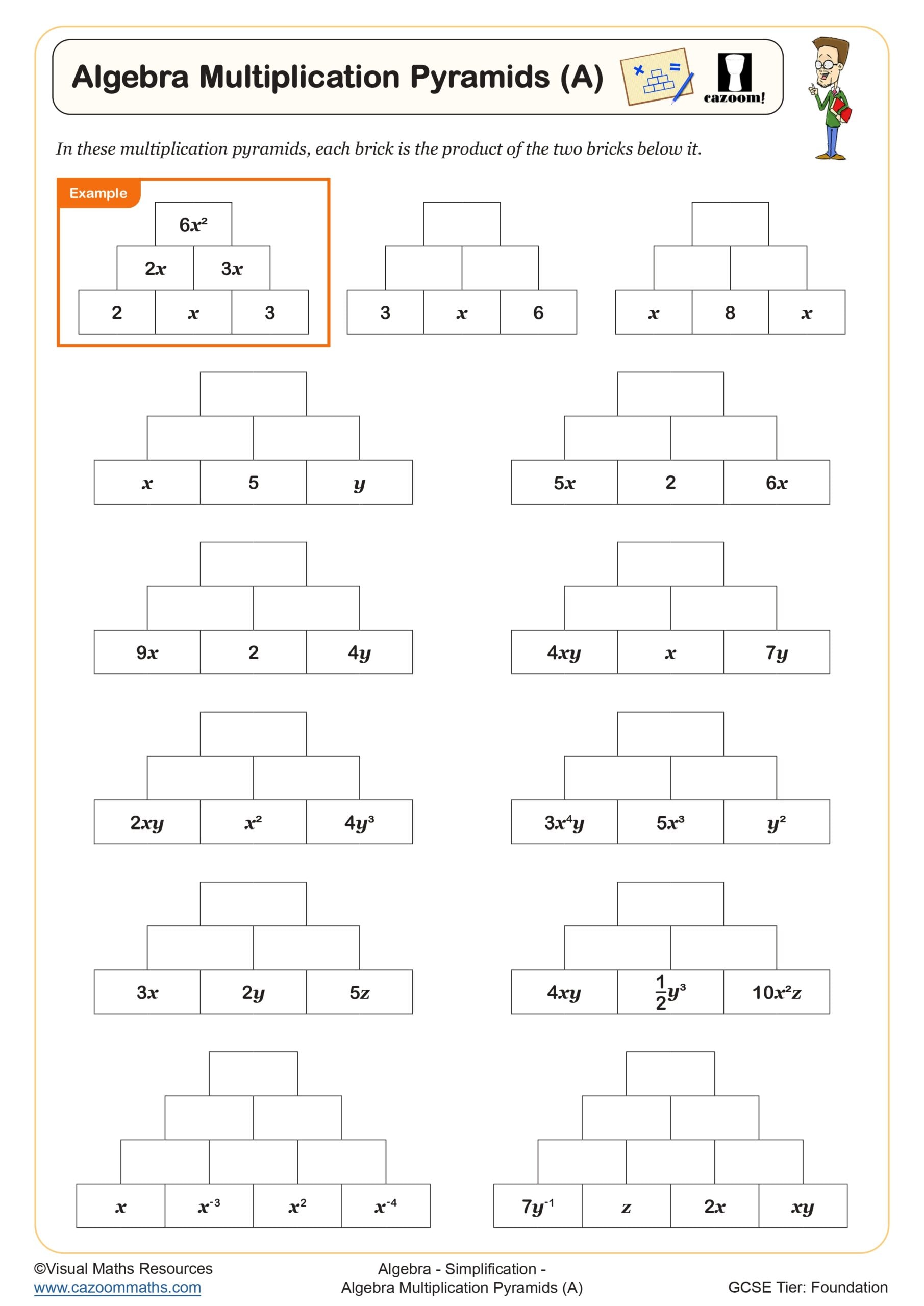
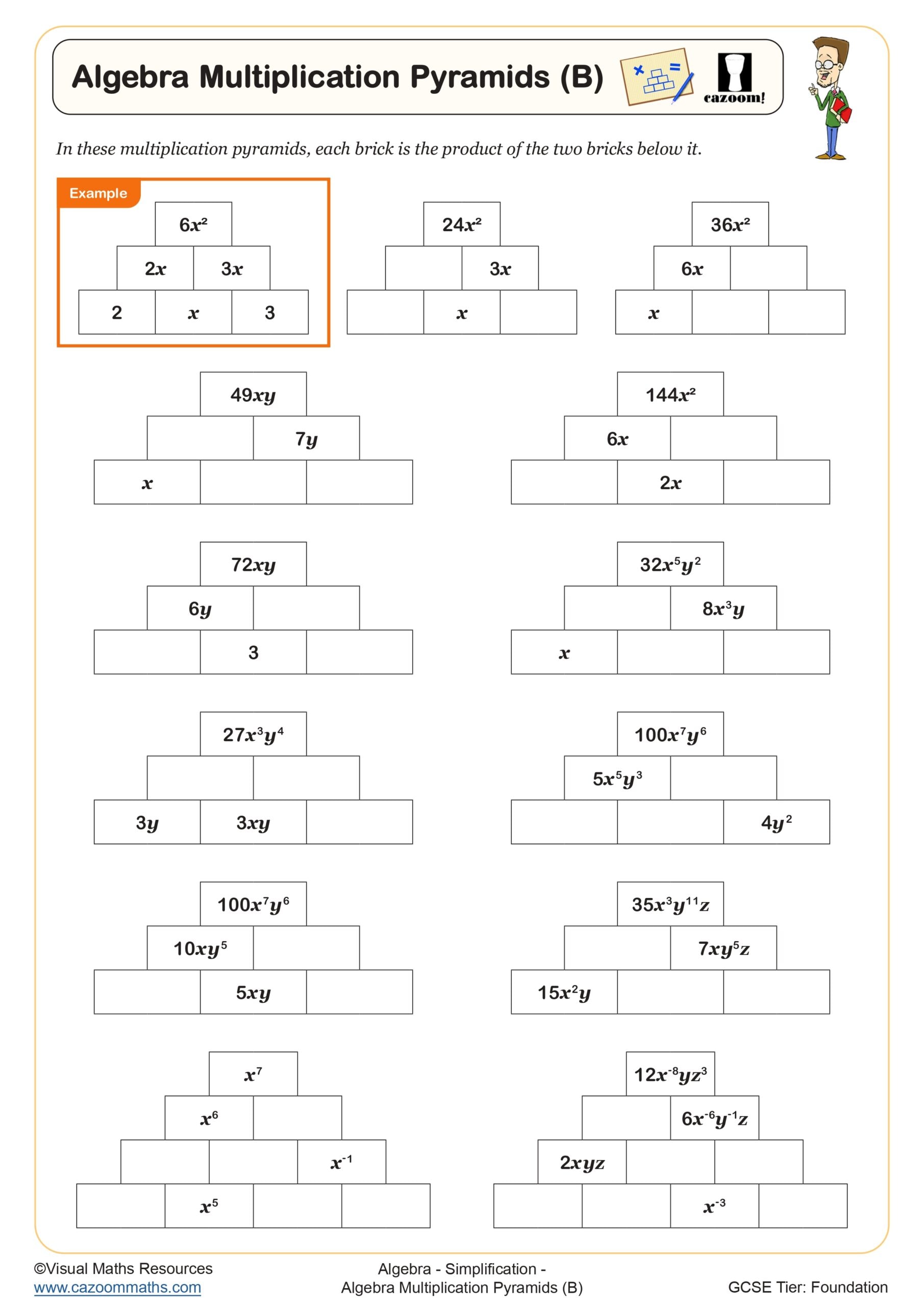
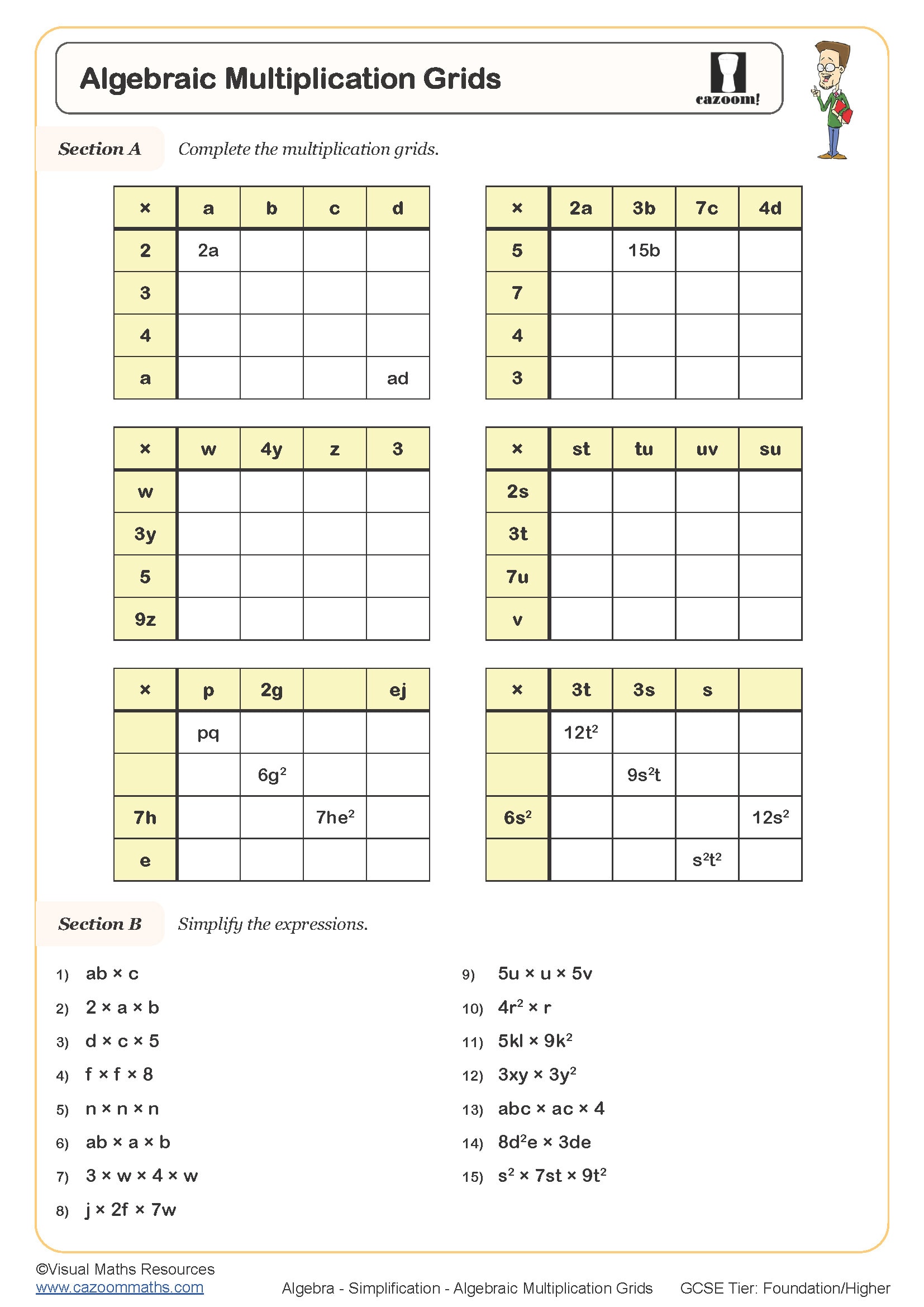
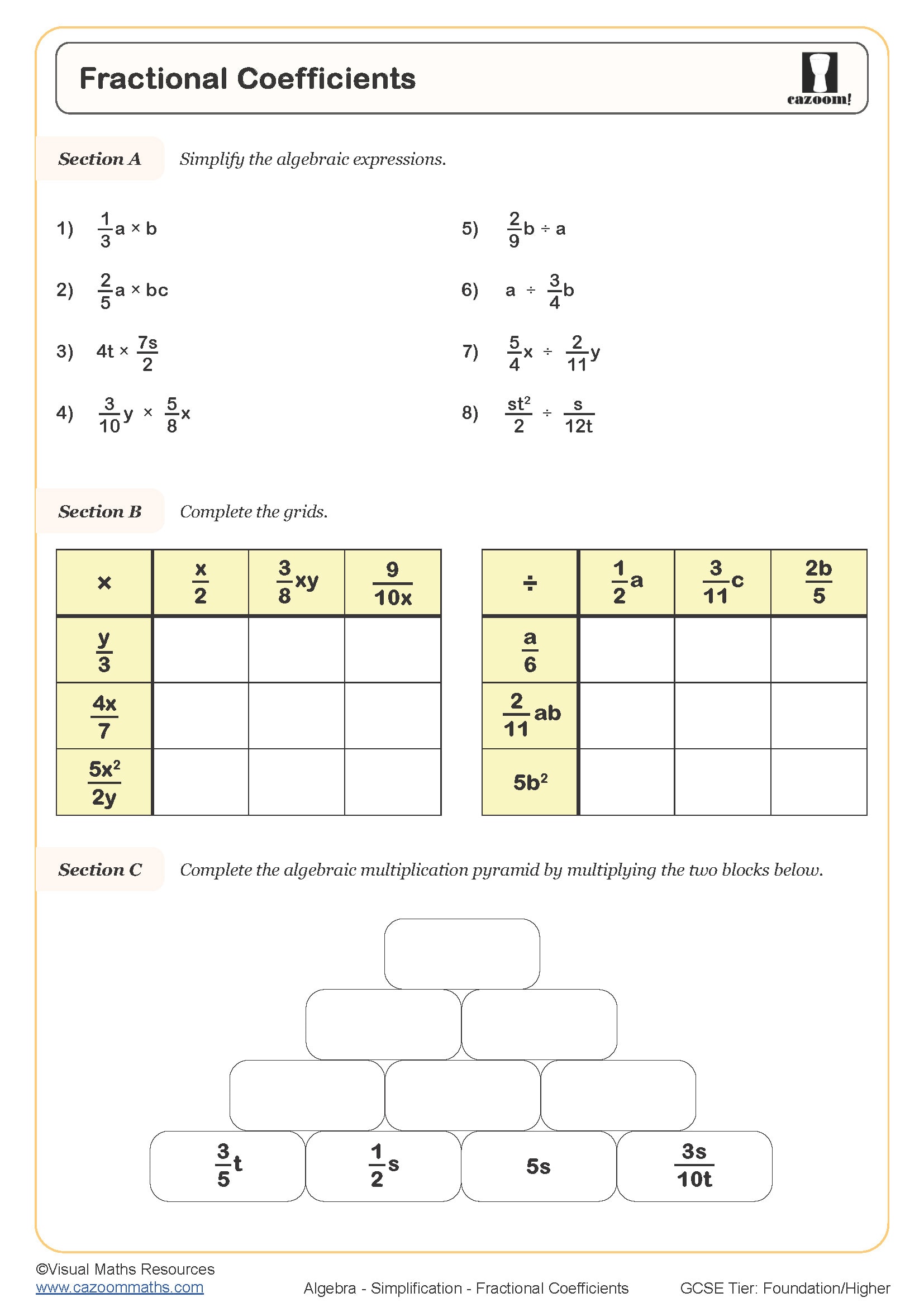
All worksheets are created by the team of experienced teachers at Cazoom Maths.
What does multiplying algebraic terms involve?
Multiplying algebraic terms requires students to combine coefficients (the numbers) and variables (the letters) correctly. When multiplying terms like 3x × 4y, you multiply the numbers together (3 × 4 = 12) and combine the variables (xy), giving 12xy. When the same variable appears in both terms, such as x² × x³, students apply the index laws by adding the powers to get x⁵.
This foundational algebra skill extends to more challenging problems involving negative coefficients, fractional multipliers, and expressions with multiple variables. Mastering these techniques is essential for simplifying algebraic expressions, expanding brackets, and solving equations throughout GCSE mathematics. Our worksheets provide progressive practice that develops both procedural fluency and conceptual understanding of why these rules work.
Which year groups study multiplying algebraic terms?
Multiplying algebraic terms is introduced during Key Stage 3, typically beginning in Year 7 when students first encounter algebraic notation and simple term manipulation. At this stage, pupils learn to multiply straightforward expressions with single variables and positive coefficients. The complexity increases through Year 8, where negative numbers and multiple variables are incorporated into problems.
By Year 9, students confidently multiply more complex algebraic terms involving indices, fractional coefficients, and combinations of several variables. This progression ensures learners build solid foundations before moving to GCSE content such as expanding double brackets and algebraic fractions. Our collection includes worksheets tailored to each year group, ensuring appropriate challenge levels throughout KS3.
How do you multiply terms with indices?
When multiplying terms with indices that have the same base, you add the powers together. For example, a³ × a⁴ = a⁷ because you're multiplying three as by four as, giving seven as in total. This rule applies whether the indices are positive or negative: x² × x⁻¹ = x¹ or simply x.
Students must also remember to multiply any coefficients separately. So 2x³ × 5x² requires multiplying 2 × 5 = 10, then multiplying x³ × x² = x⁵, giving the final answer 10x⁵. When different variables appear, such as 3a²b × 4ab³, you group like terms: multiply coefficients (3 × 4 = 12), combine a terms (a² × a = a³), and combine b terms (b × b³ = b⁴) to get 12a³b⁴.
What's included with the multiplying algebraic terms worksheets?
Every worksheet in this collection comes with a complete answer sheet showing full solutions to all questions. This allows teachers to mark work efficiently and enables students to check their understanding or work independently during revision sessions. The worksheets are provided as downloadable PDFs, ready to print for classroom use or to set as homework.
Questions are structured to develop confidence progressively, starting with straightforward multiplications and building towards more complex multi-step problems. Each resource focuses specifically on multiplying algebraic terms rather than mixing multiple topics, ensuring concentrated practice on this crucial skill. The clear layout and varied question styles keep students engaged while reinforcing the techniques needed for success in KS3 algebra and beyond.