Sequences Worksheets
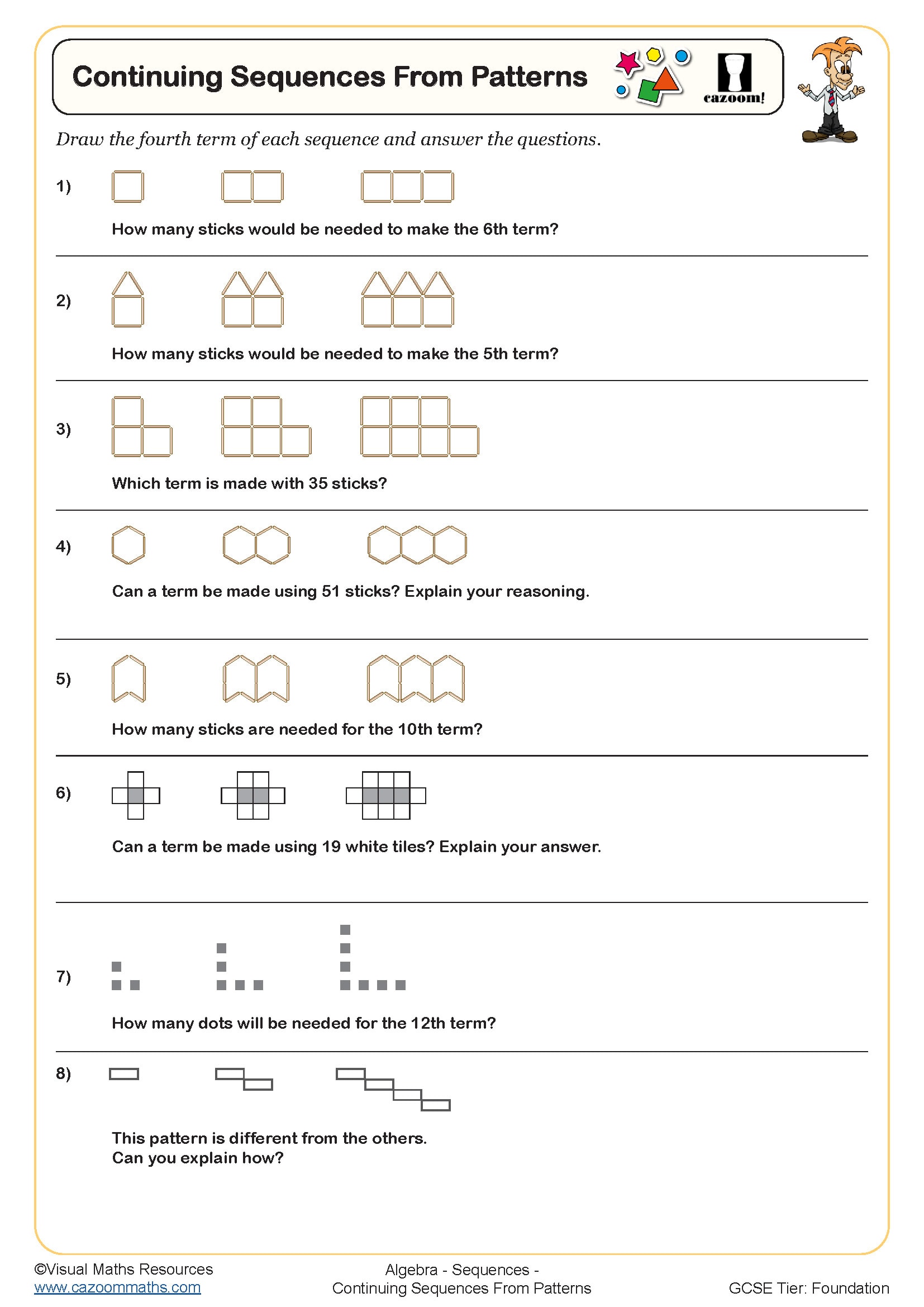
Continuing Sequences from Patterns
Year groups: 7
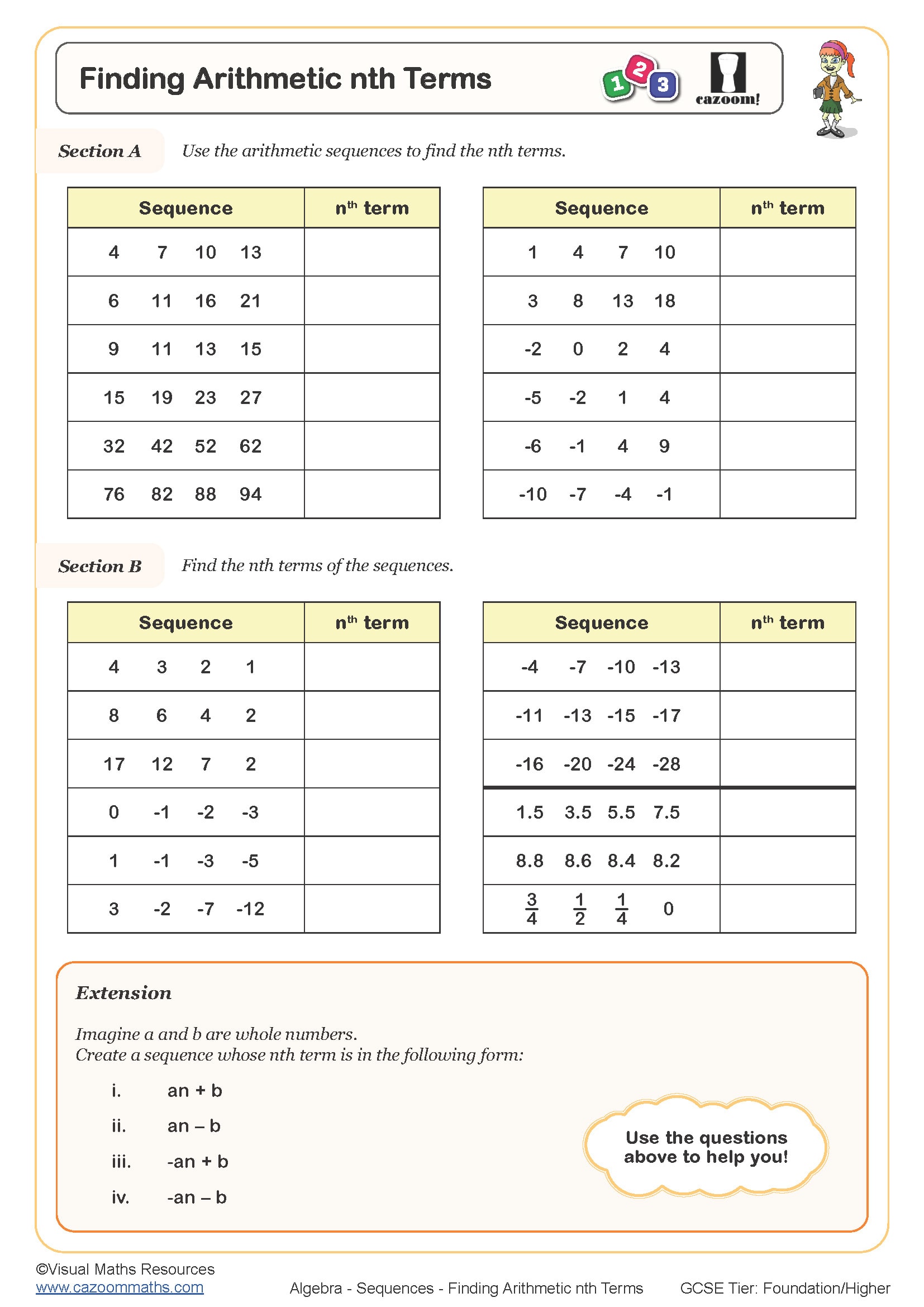
Finding Arithmetic nth Terms Worksheet
Year groups: 7, 8
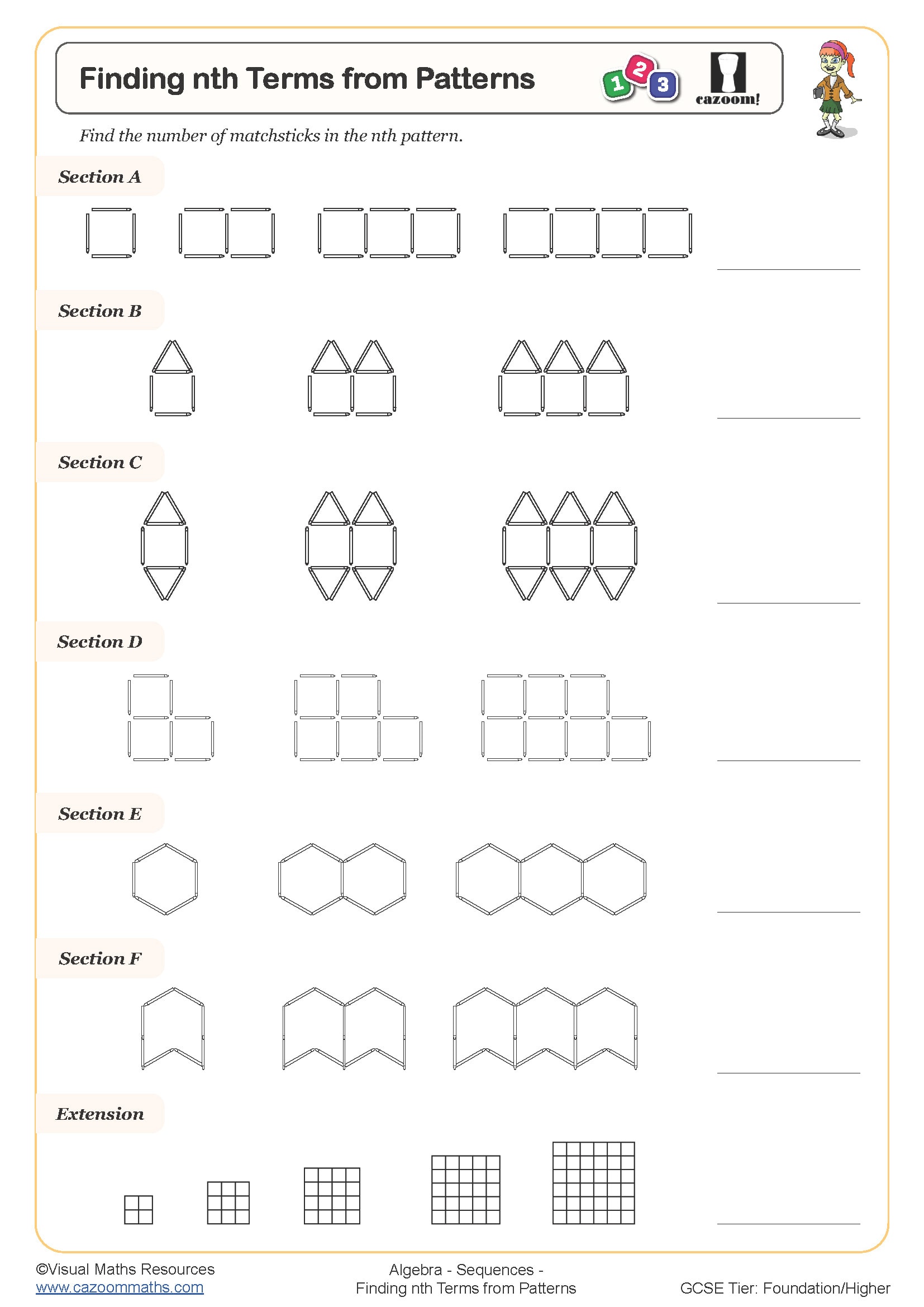
Finding nth Terms from Patterns
Year groups: 7, 8
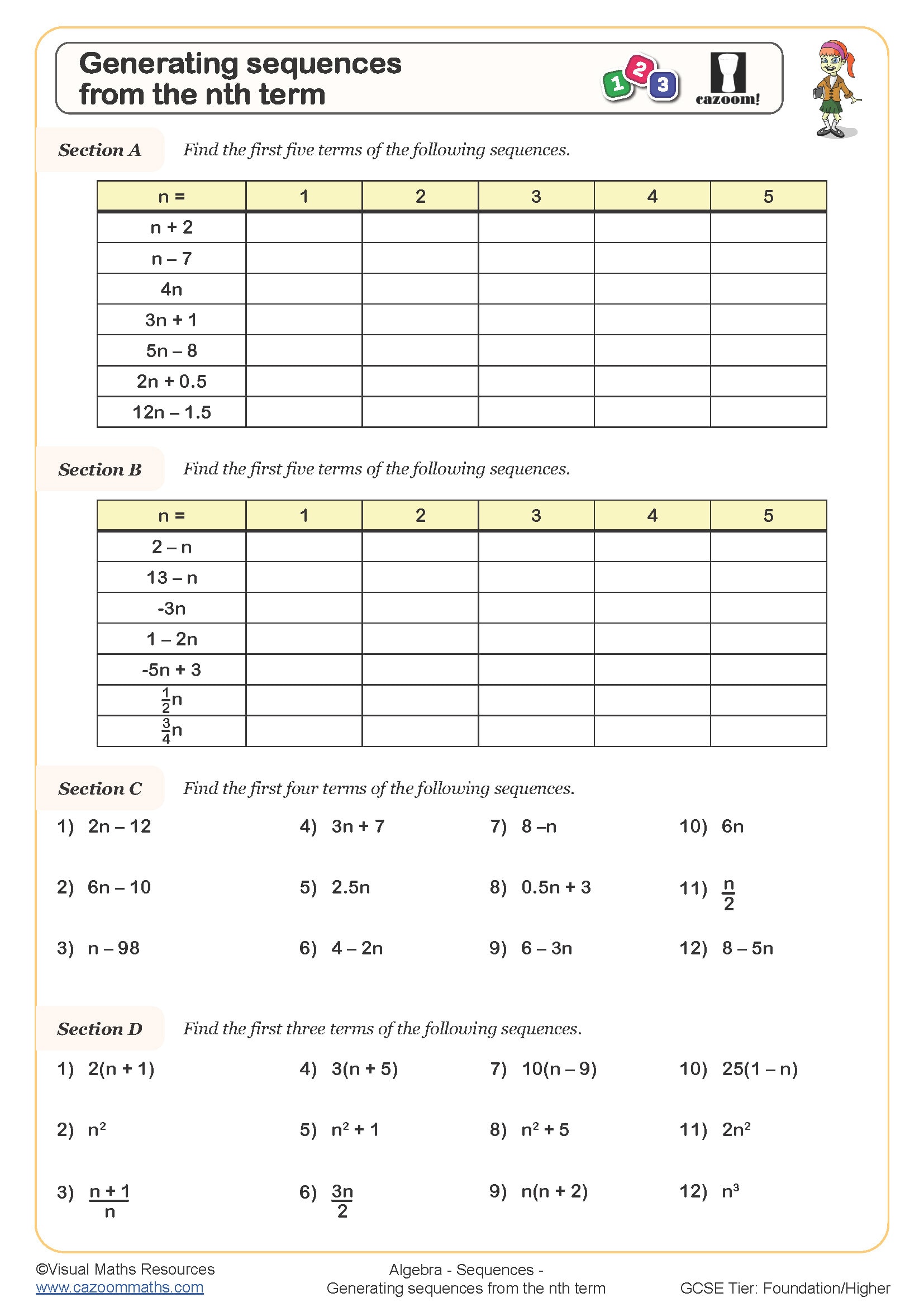
Generating Sequences from the Nth Term
Year groups: 7, 8
Generating Sequences from the Term to Term Rule
Year groups: 7, 8
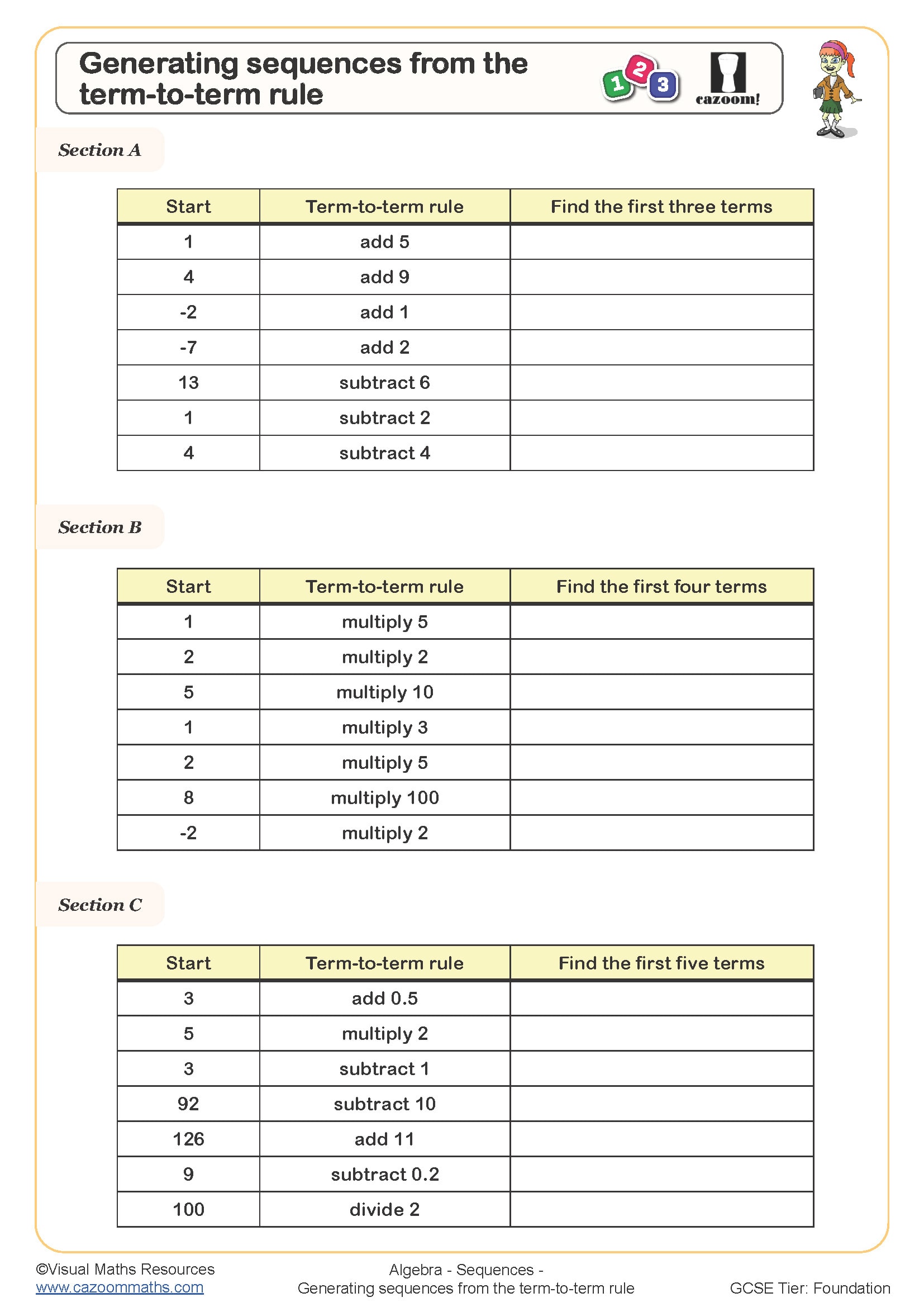
Using the Nth Term (Linear)
Year groups: 8, 9
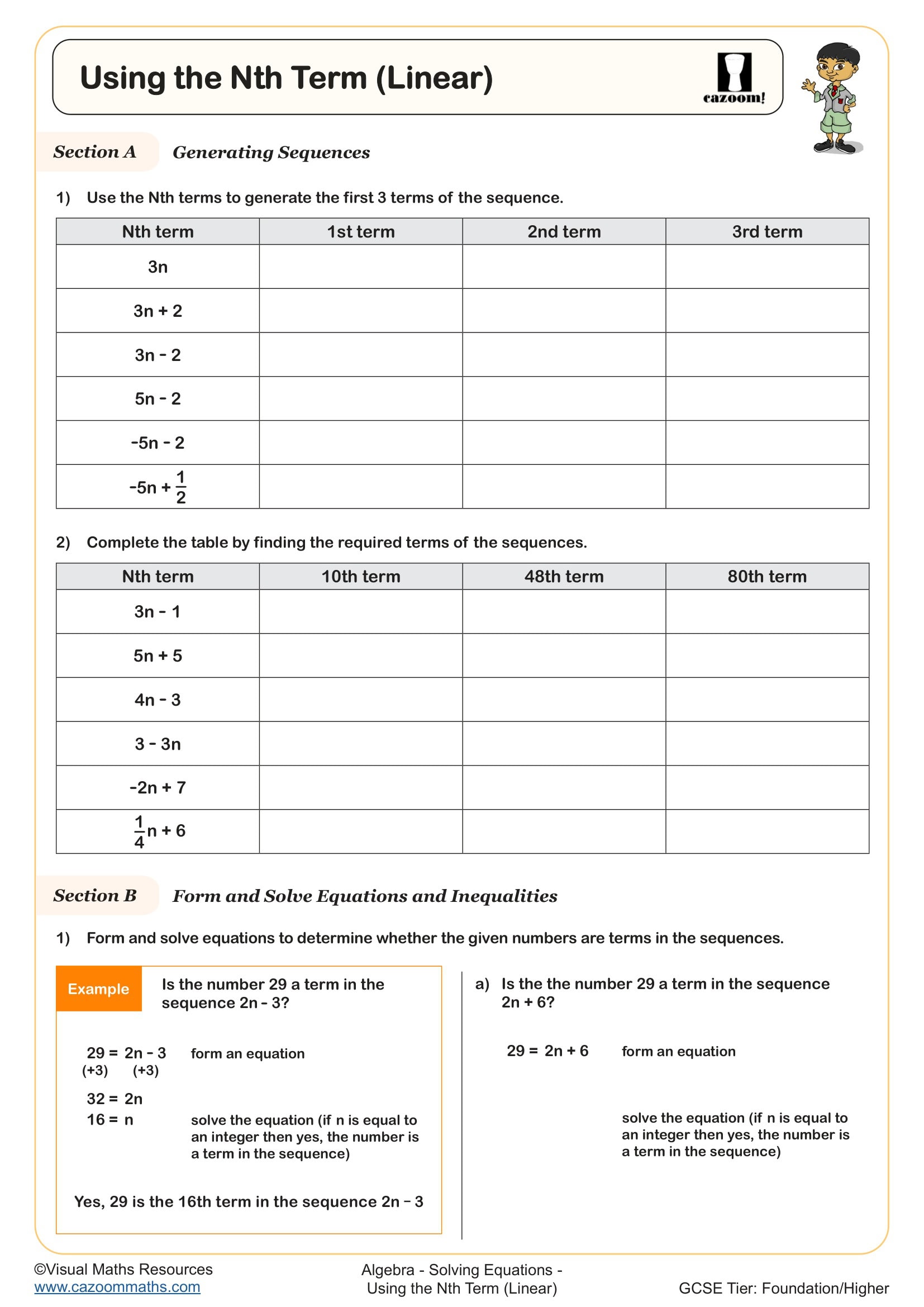
Geometric Sequences (A)
Year groups: 9, 10
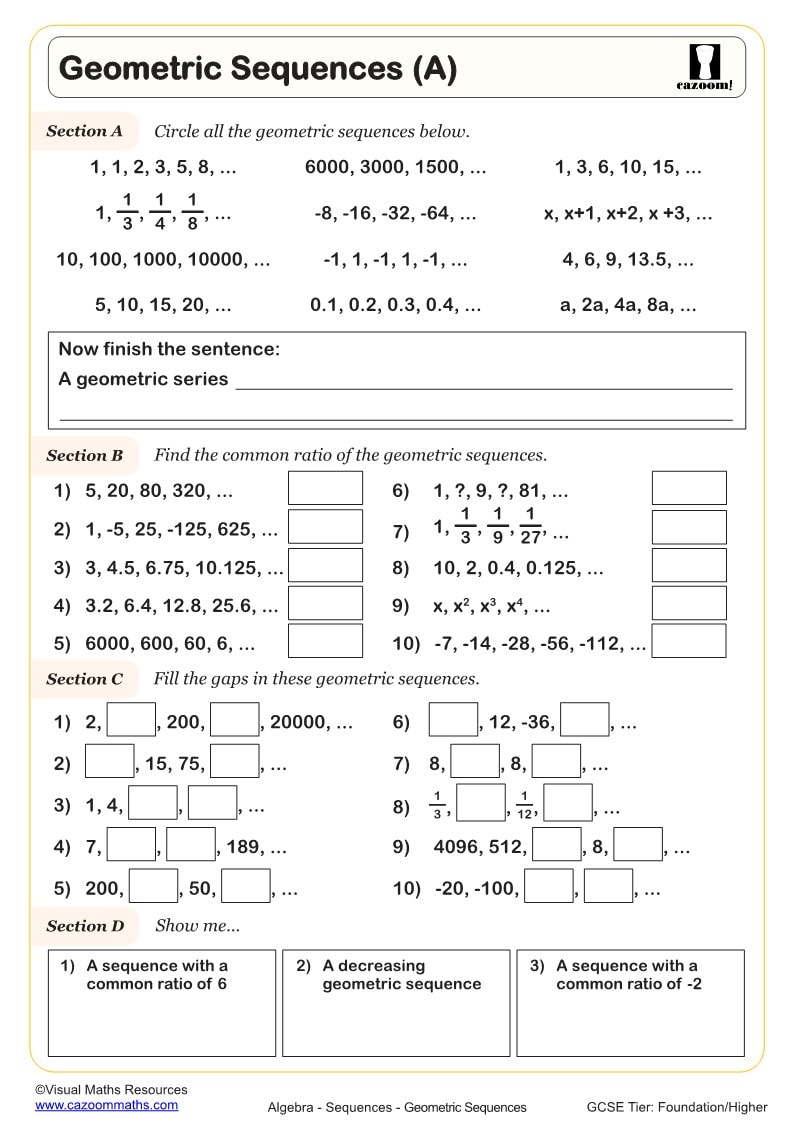
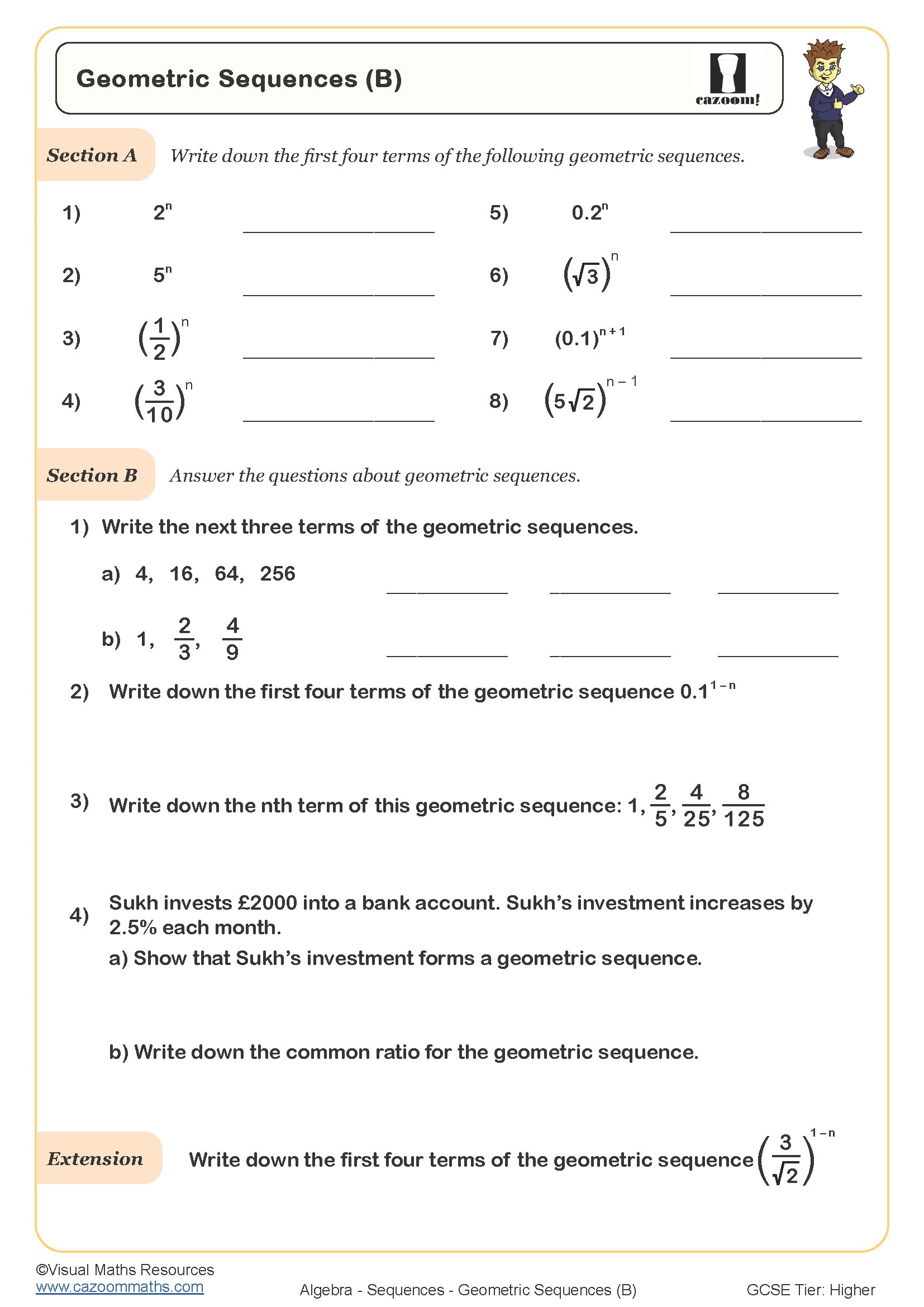
Geometric Sequences (B)
Year groups: 9, 10
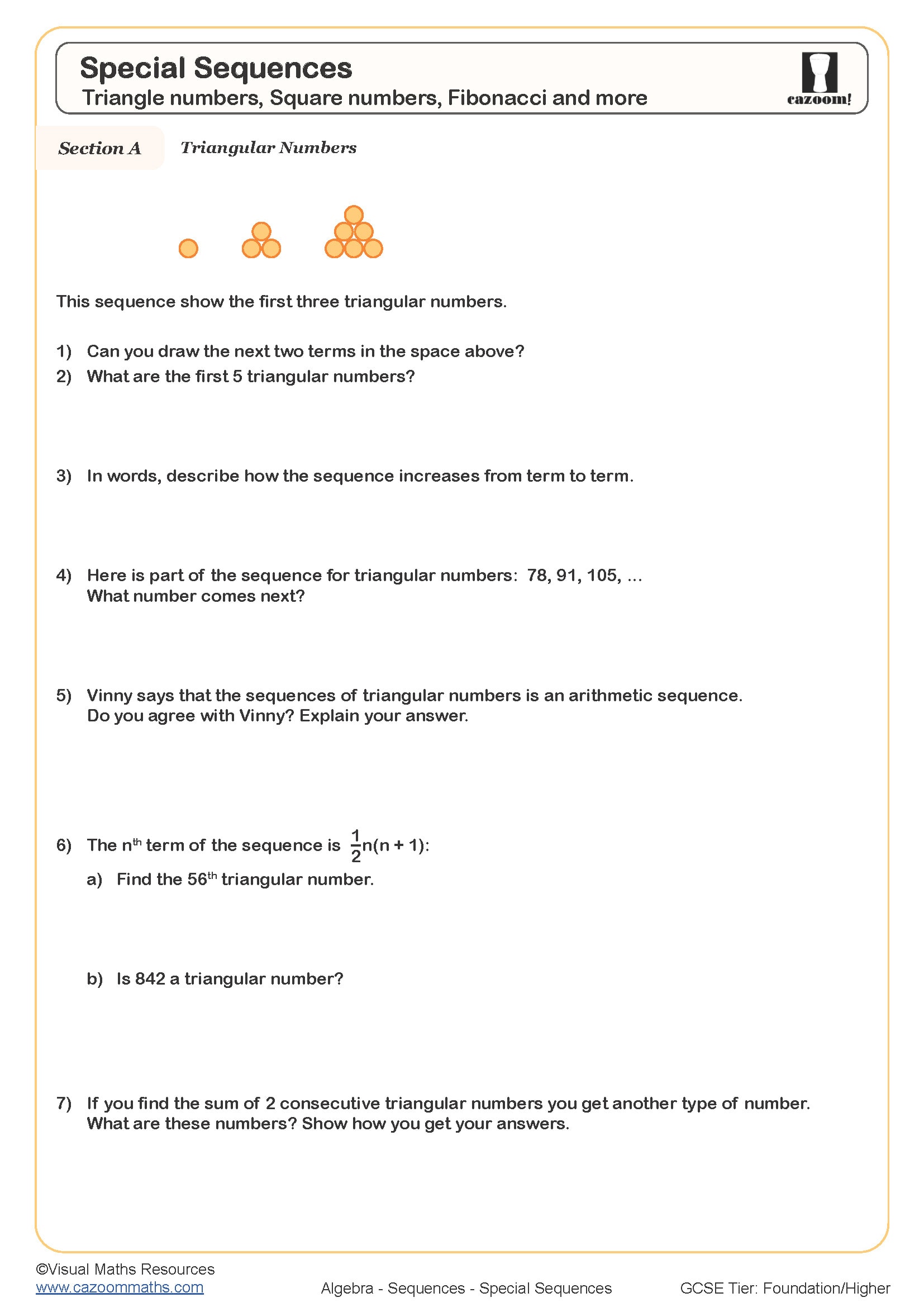
Special Sequences
Year groups: 9, 10
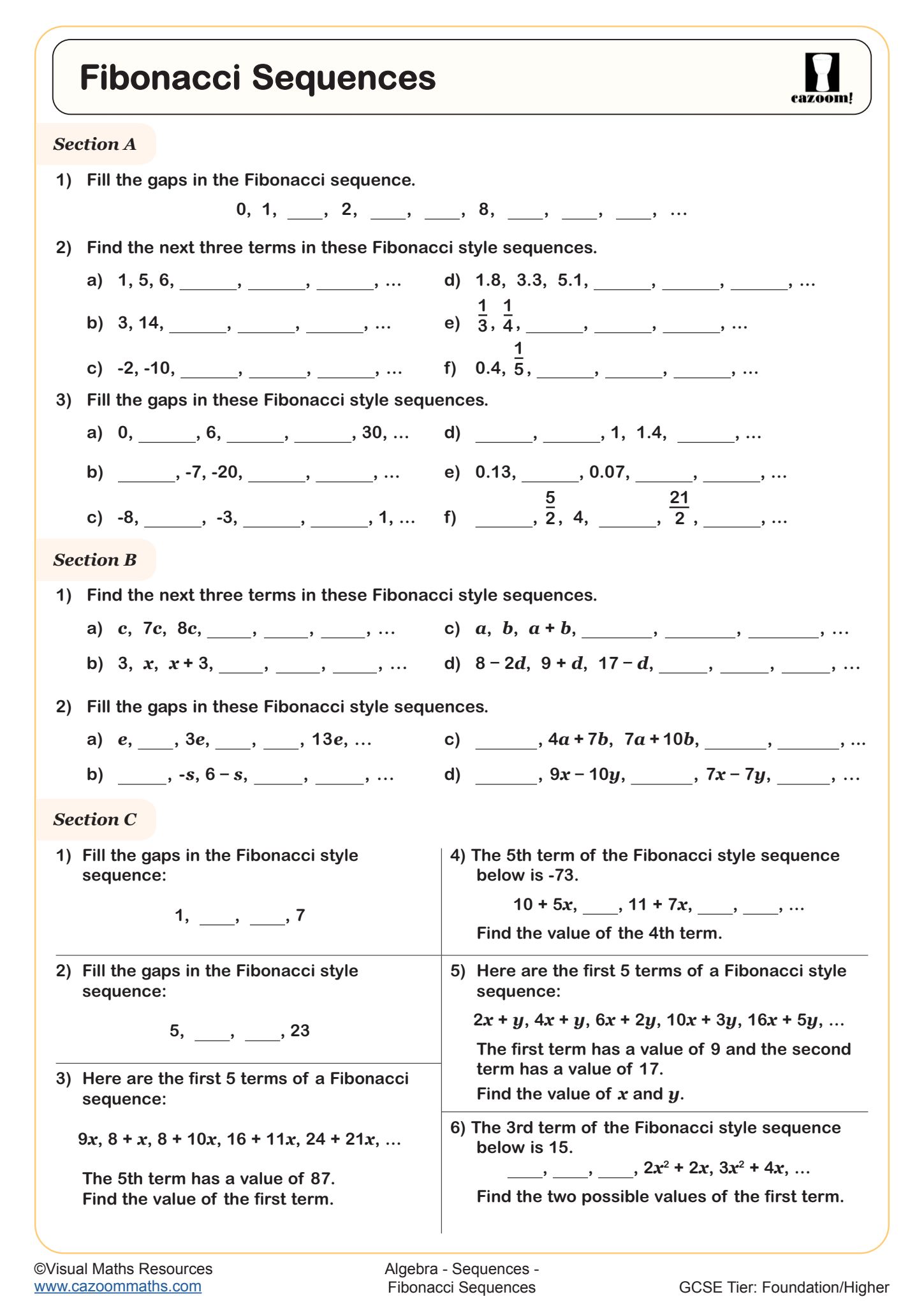
Fibonacci Sequences
Year groups: 10, 11
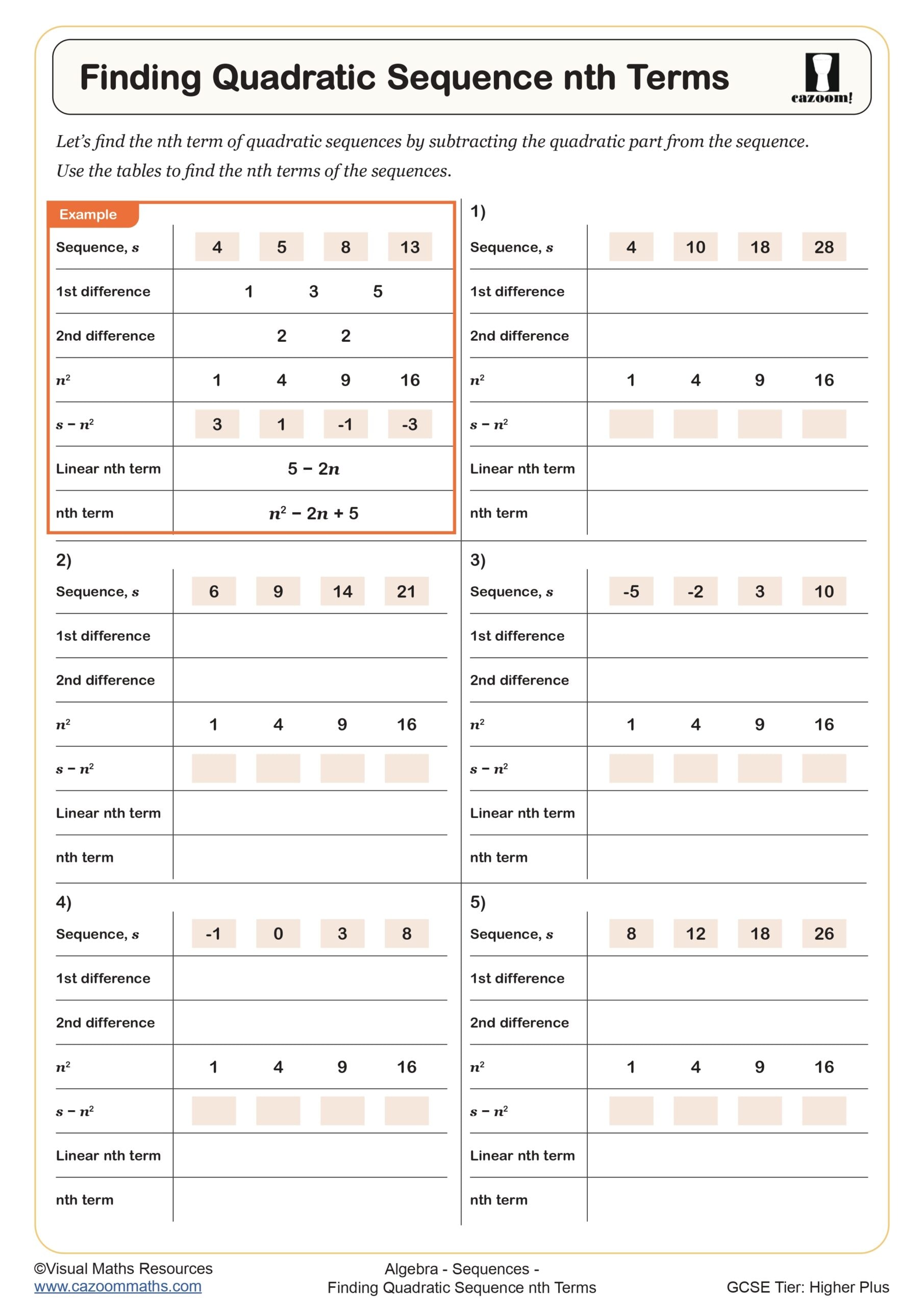
Finding Quadratic Sequence nth Terms
Year groups: 10, 11
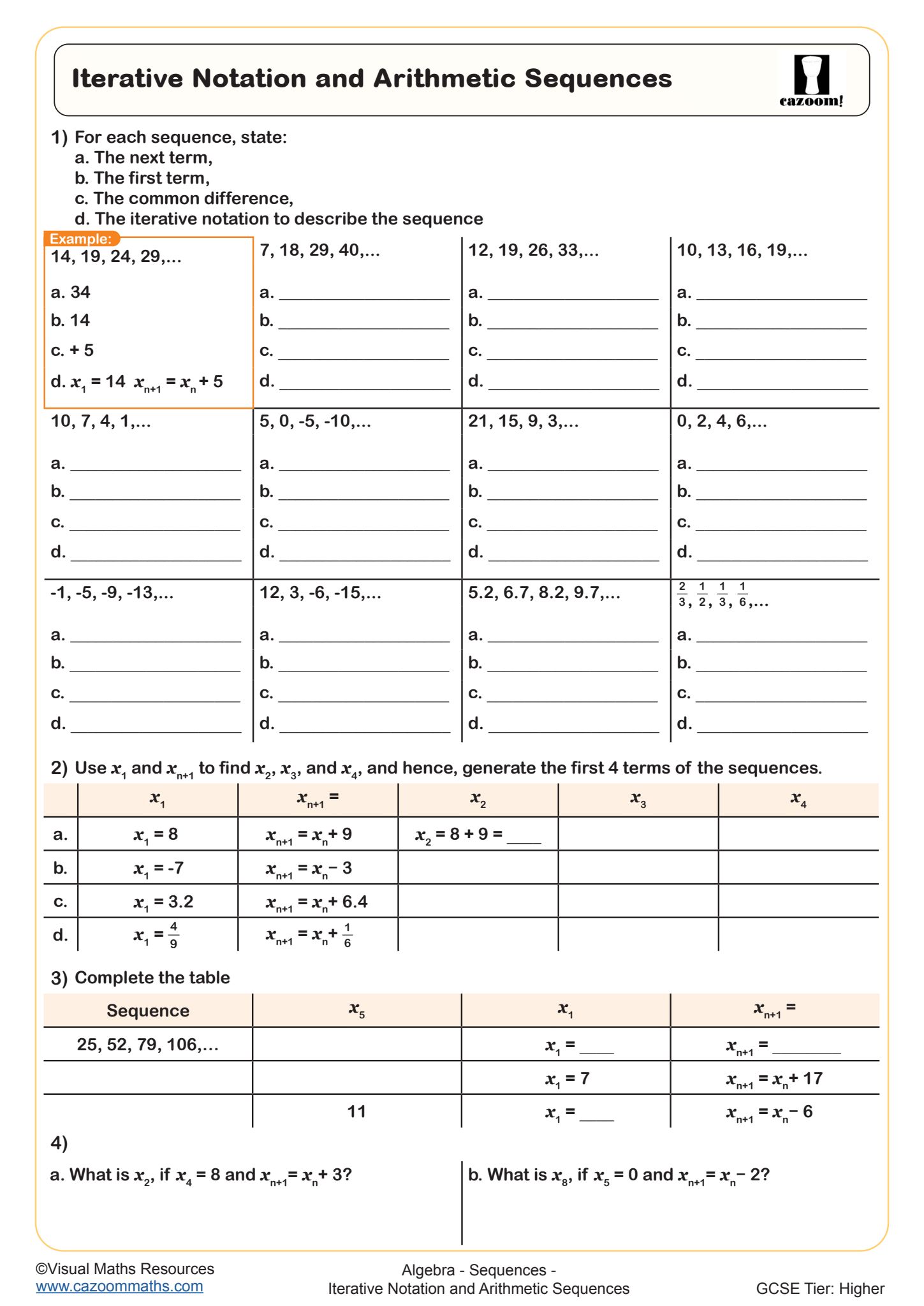
Iterative Notation and Arithmetic Sequences
Year groups: 10, 11
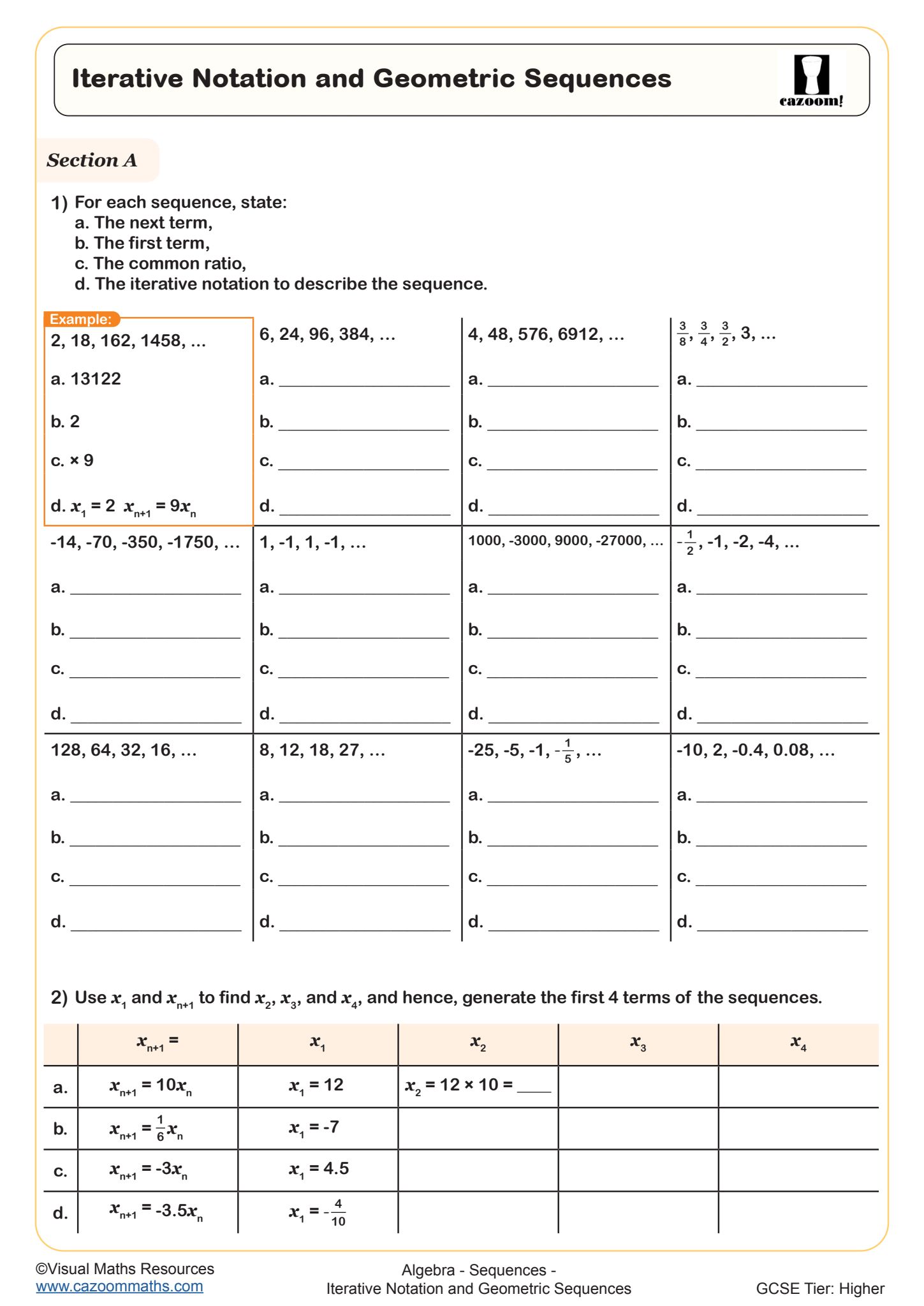
Iterative Notation and Geometric Sequences
Year groups: 10, 11
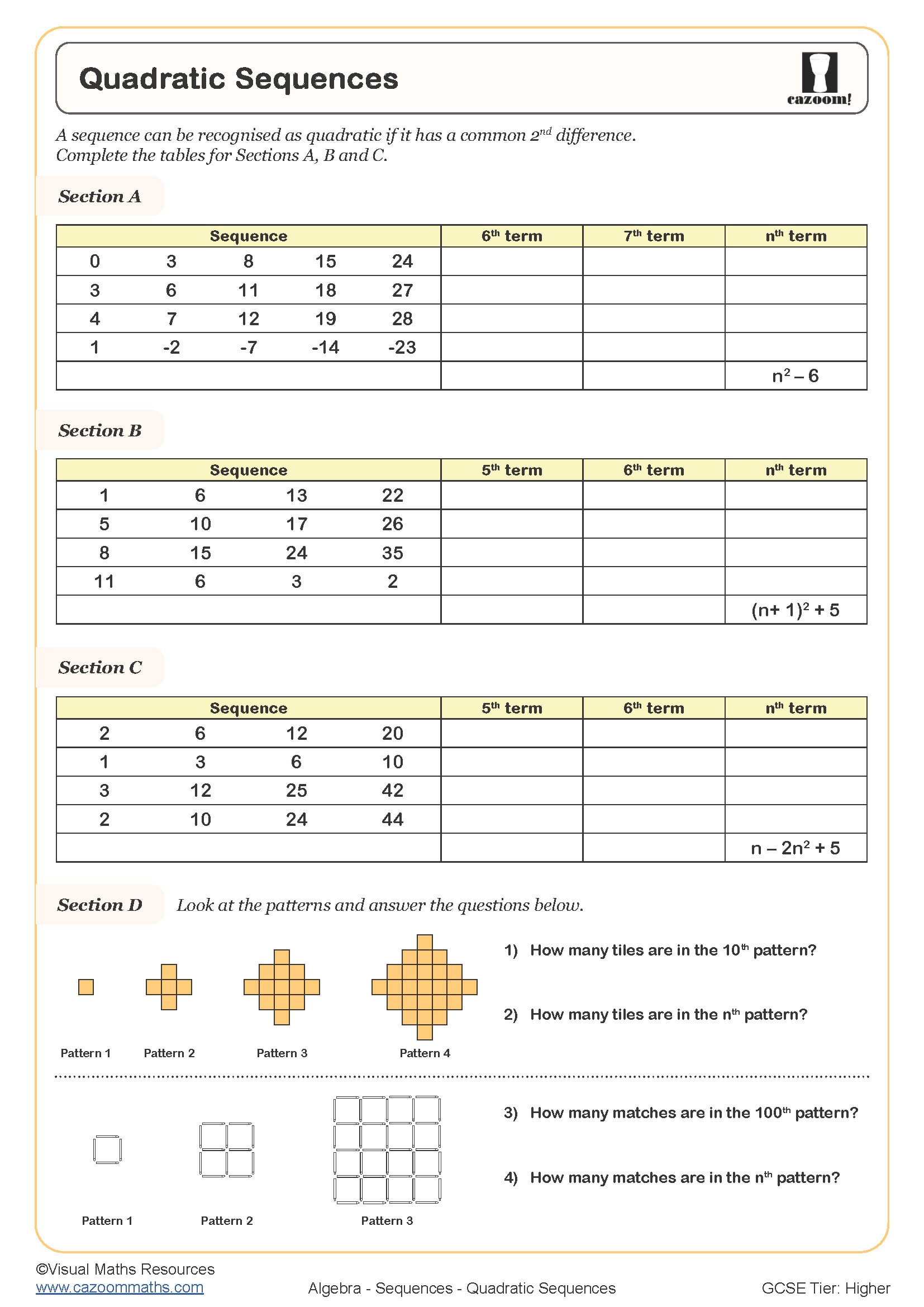
Quadratic Sequences
Year groups: 10, 11
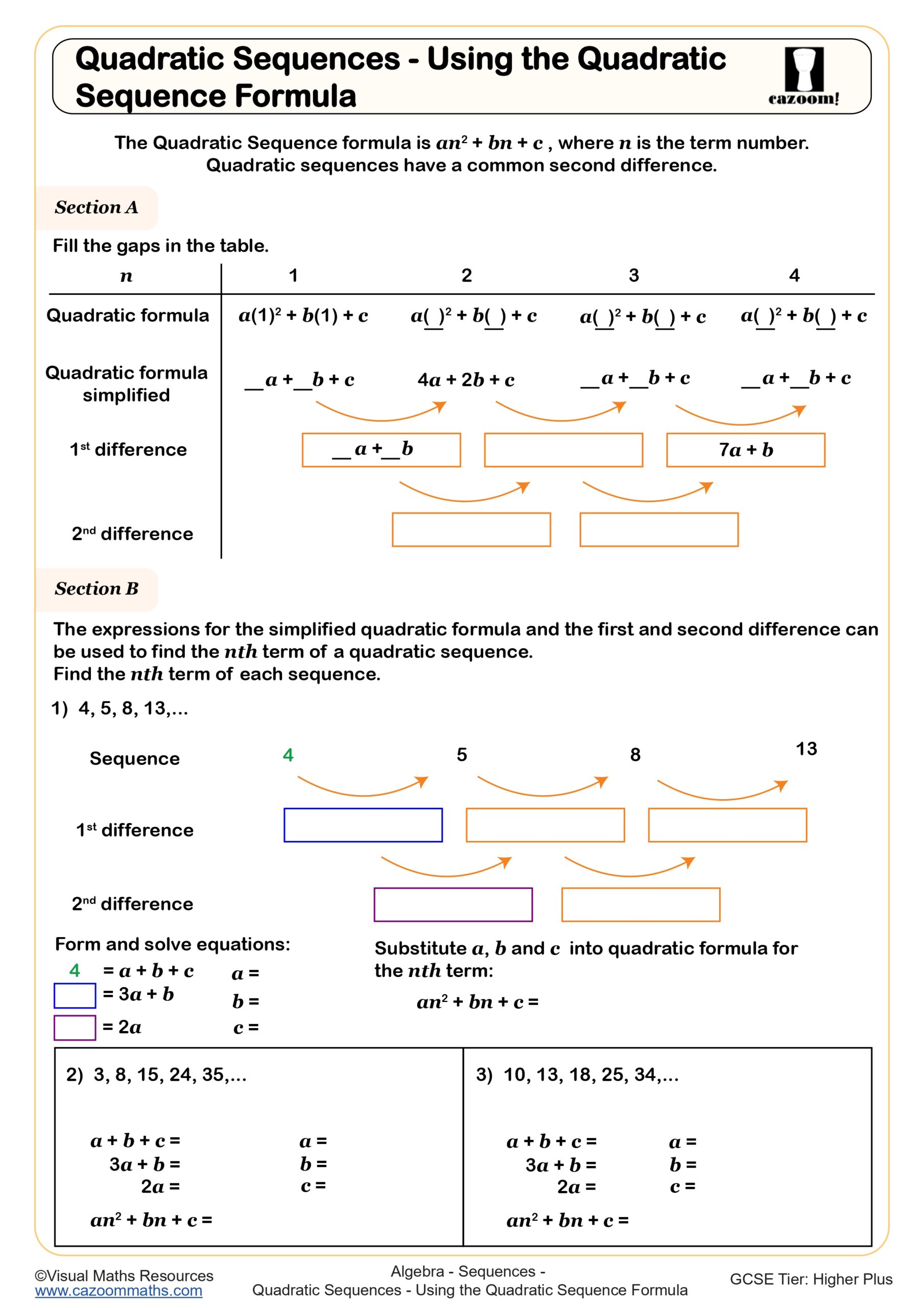
Quadratic Sequences - Using the Quadratic Sequence Formula
Year groups: 10, 11
All worksheets are created by the team of experienced teachers at Cazoom Maths.
What makes a good arithmetic sequence worksheet?
A quality arithmetic sequence worksheet should provide varied practice with finding common differences, calculating missing terms, and deriving the nth term formula. Students need exposure to sequences with positive and negative common differences, including those starting from different positions to avoid the misconception that all sequences begin with the first term.
Teachers notice students often confuse the common difference with the coefficient in the nth term formula. Effective worksheets include sequences where the common difference is 3 but the nth term is 3n + 2, helping students understand why the constant term adjusts based on the sequence's starting position relative to the term number.
Which year groups use sequences worksheets?
Sequences worksheets span from Year 7 through Year 11, with complexity building systematically. KS3 students begin with simple arithmetic and geometric patterns, progressing to linear nth term expressions. The National Curriculum expects Year 8 students to generate sequences from nth term rules and find simple nth term formulae.
KS4 sequences worksheets extend to quadratic sequences and Fibonacci-type patterns, essential for GCSE success. Year 10 and 11 students must confidently handle sequences in context, such as matchstick patterns or financial calculations. Teachers find that regular practice across these year groups prevents students from treating sequences as isolated topics rather than fundamental algebraic thinking.
How do quadratic sequences differ from linear sequences?
Quadratic sequences have second differences that remain constant, whilst linear sequences have constant first differences. Students initially struggle to recognise this distinction, often attempting to apply linear nth term methods to quadratic patterns. The nth term for quadratic sequences takes the form an² + bn + c, requiring students to work systematically through difference tables.
Teachers observe that students frequently forget to check second differences when first differences aren't constant. Effective practice includes sequences like 3, 8, 15, 24, 35 where students must recognise the pattern involves squared terms. The ability to distinguish sequence types becomes crucial for GCSE questions that mix different sequence families within single problems.
How should teachers use sequences worksheets in lessons?
Sequences worksheets work best when integrated with practical pattern-building activities using concrete materials or visual representations. Teachers often begin lessons with physical patterns before moving to numerical sequences, helping students connect abstract nth term expressions to tangible arrangements. The worksheets then consolidate understanding through targeted practice.
Using answer sheets strategically allows for immediate feedback during guided practice or enables students to self-assess homework attempts. Many teachers find that displaying worked solutions helps students identify where their method diverged from the correct approach, particularly when deriving nth term formulae. Regular low-stakes practice using these resources builds the automaticity students need for more complex algebraic problem-solving.