Simplifying Algebraic Fractions Worksheets
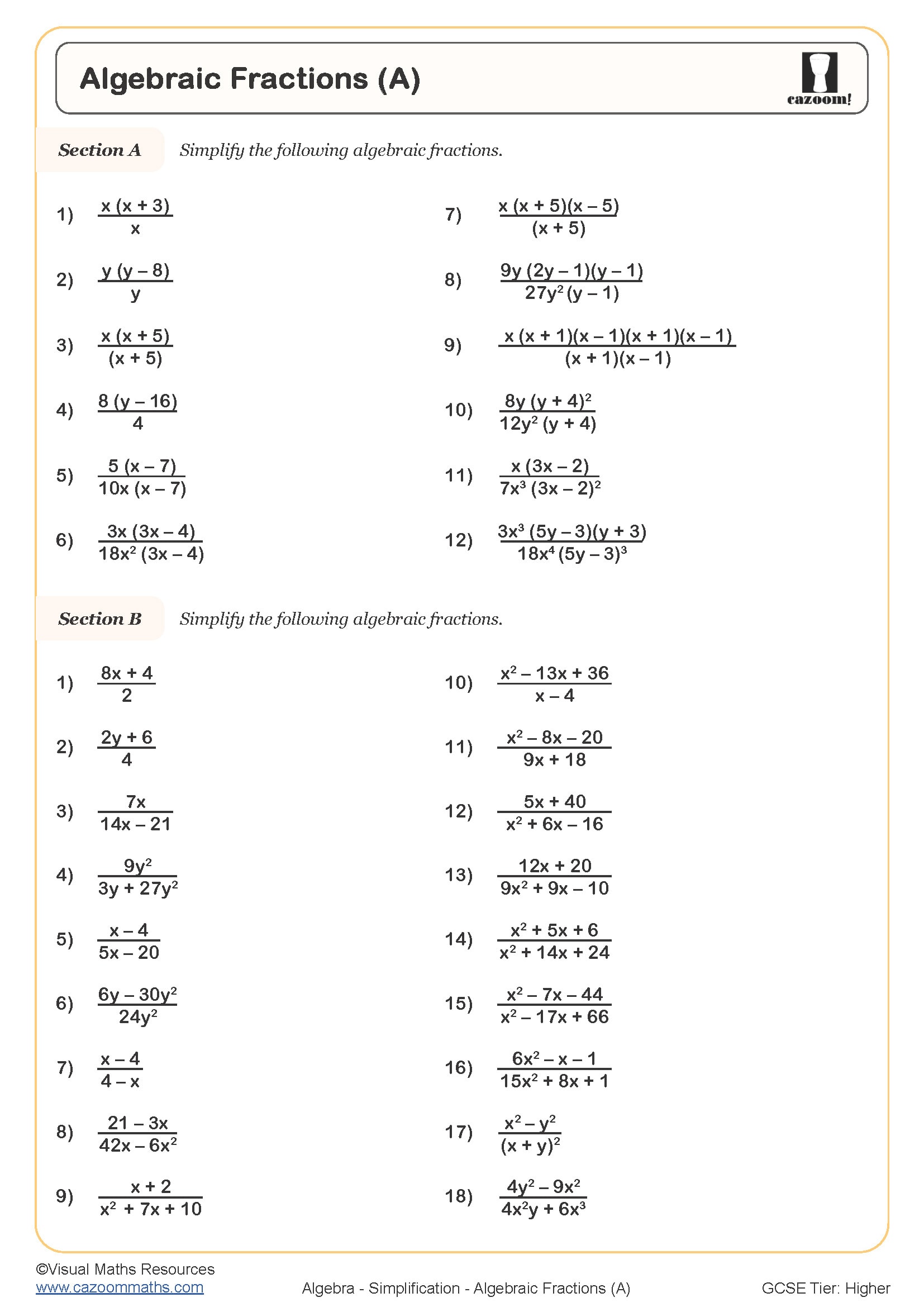
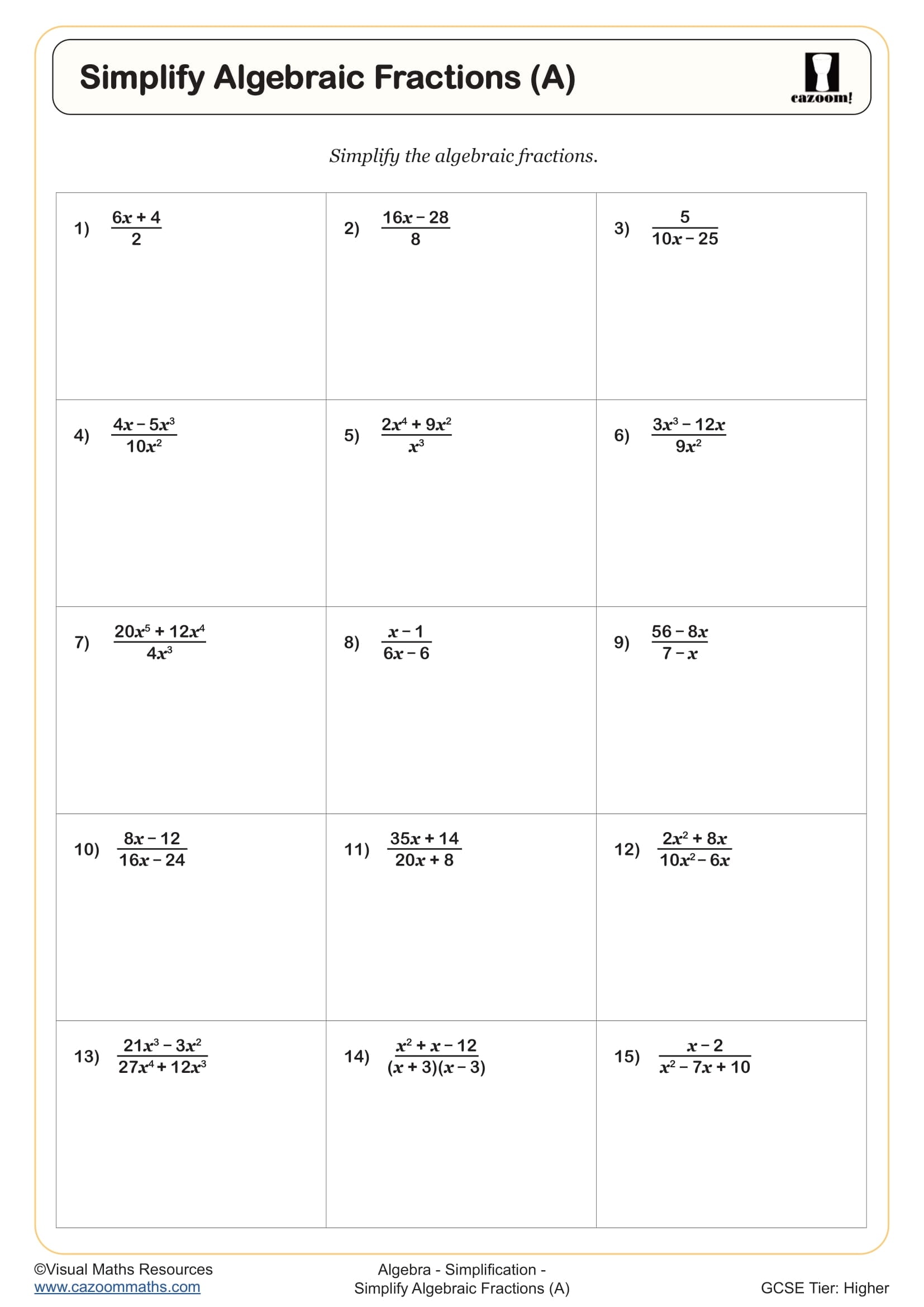
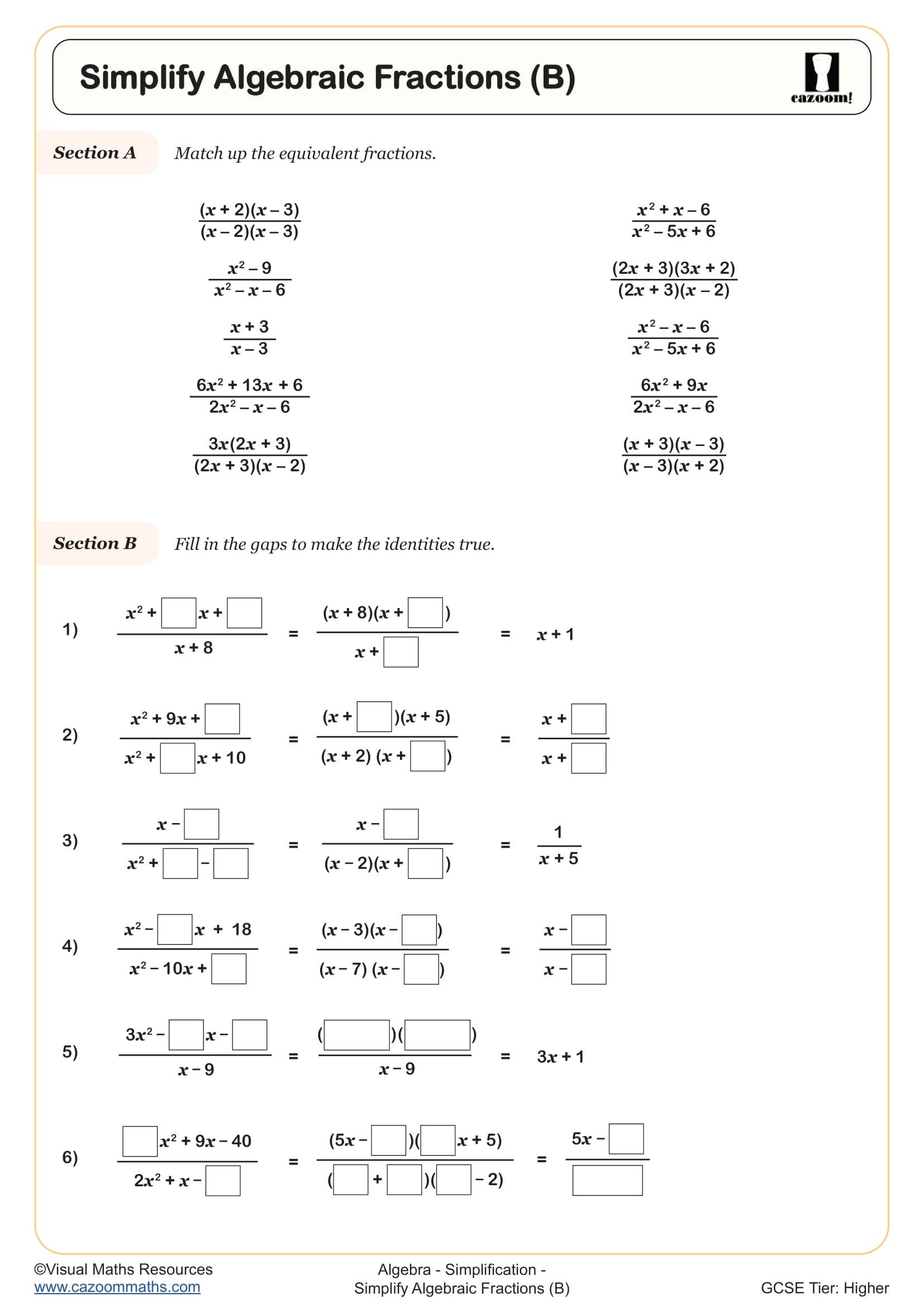
All worksheets are created by the team of experienced teachers at Cazoom Maths.
What Does Simplifying Algebraic Fractions Involve?
Simplifying algebraic fractions requires students to factorise both the numerator and denominator, then cancel common factors. This builds directly on prior knowledge of factorising algebraic expressions and numerical fraction work. Students begin by identifying common numerical factors, then progress to recognising shared algebraic terms like x or y, before tackling more complex factorisations involving brackets and quadratic expressions.
The skill is fundamental for GCSE success, appearing frequently in algebra questions, equations, and problem-solving contexts. Students must understand that simplifying doesn't change the fraction's value—it creates an equivalent expression in its simplest form. Mastery requires systematic working, checking each step carefully, and recognising when a fraction cannot be simplified further.
Which Year Groups Study Simplifying Algebraic Fractions?
This topic appears in the National Curriculum for Year 9, Year 10, and Year 11 students, spanning both Key Stage 3 and Key Stage 4. Students typically encounter basic simplification of algebraic fractions during Year 9, where they learn to cancel simple common factors. The complexity increases significantly as they progress, with Year 10 and 11 students working with quadratic expressions and difference of two squares.
At GCSE level, simplifying algebraic fractions is assessed across both Foundation and Higher tiers, though Higher tier papers include more complex factorisations. The skill connects to numerous other algebraic topics including solving equations, manipulating formulae, and rational expressions, making thorough practice essential for examination success.
How Do Students Factorise Before Simplifying?
Factorising is the crucial first step in simplifying algebraic fractions. Students must factorise both numerator and denominator completely before attempting to cancel common factors. This might involve taking out common numerical factors, identifying common algebraic terms, or factorising quadratic expressions into brackets. For example, (2x + 4)/(x + 2) requires factorising the numerator to 2(x + 2) before cancelling.
Common errors include attempting to cancel terms rather than factors, or incorrectly cancelling individual terms within brackets. Our worksheets provide systematic practice in recognising factorisable expressions, applying appropriate techniques, and checking that all common factors have been identified. This methodical approach ensures students develop accuracy and confidence when simplifying increasingly complex algebraic fractions.
What's Included With These Worksheets?
Every simplifying algebraic fractions worksheet downloads as a PDF with complete answer sheets included. This allows students to work through problems independently and check their solutions immediately, reinforcing correct methods and identifying misconceptions quickly. Teachers can use the answer sheets for efficient marking or set worksheets as homework with confidence that students can self-assess their understanding.
The worksheets are structured to build skills progressively, starting with straightforward cancelling and advancing to complex factorisations. Each question is carefully designed to develop fluency and expose common misconceptions. The PDF format means worksheets can be printed for classroom use, set as cover work, or shared digitally for home learning, providing flexible resources that adapt to different teaching contexts.