Solving Equations Worksheets
Forming and Solving Linear Equations: a𝑥 = b and 𝑥/a = b
Year groups: 7, 8
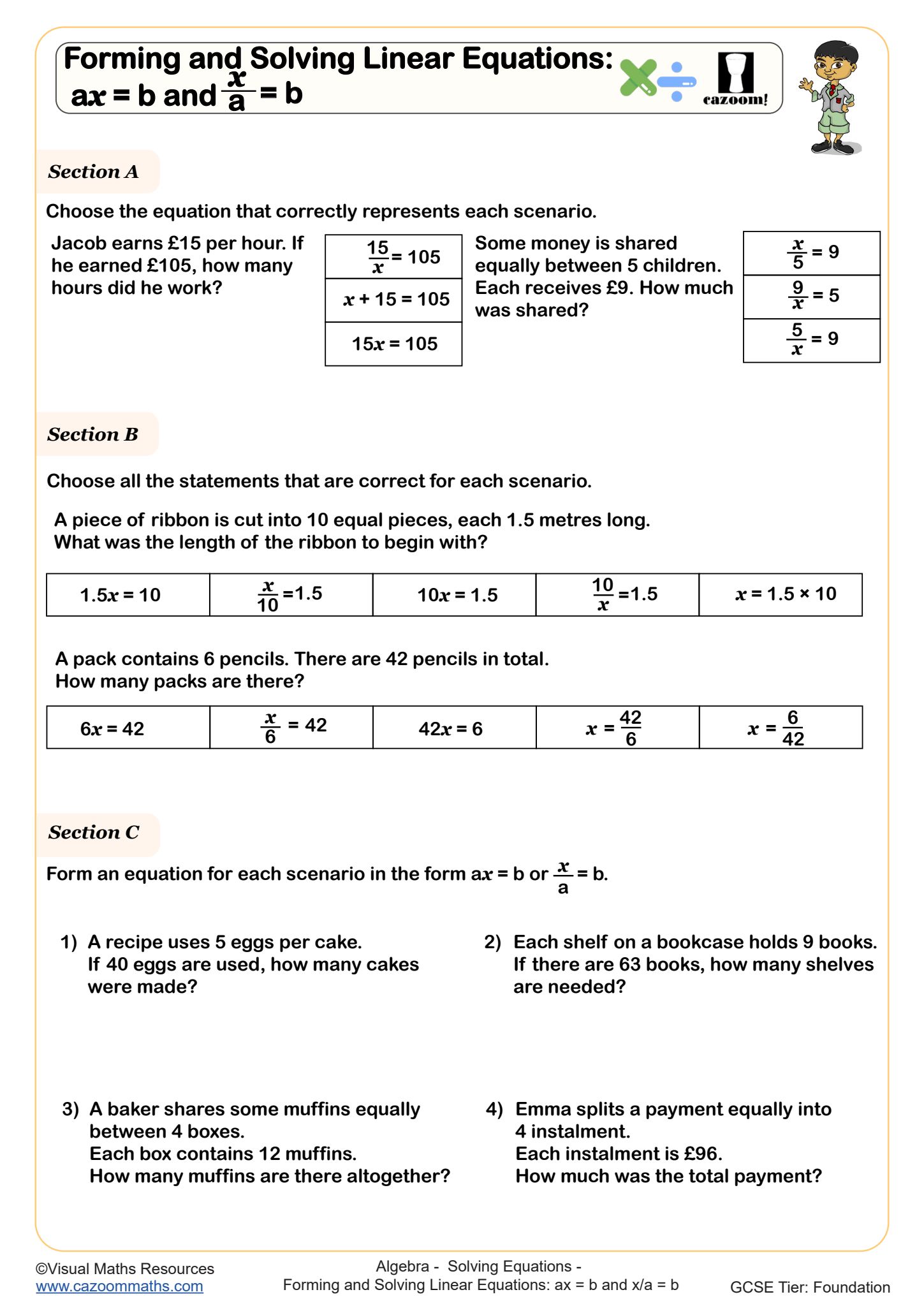
Forming and Solving Linear Equations: x + a = b and x - a = b
Year groups: 7, 8
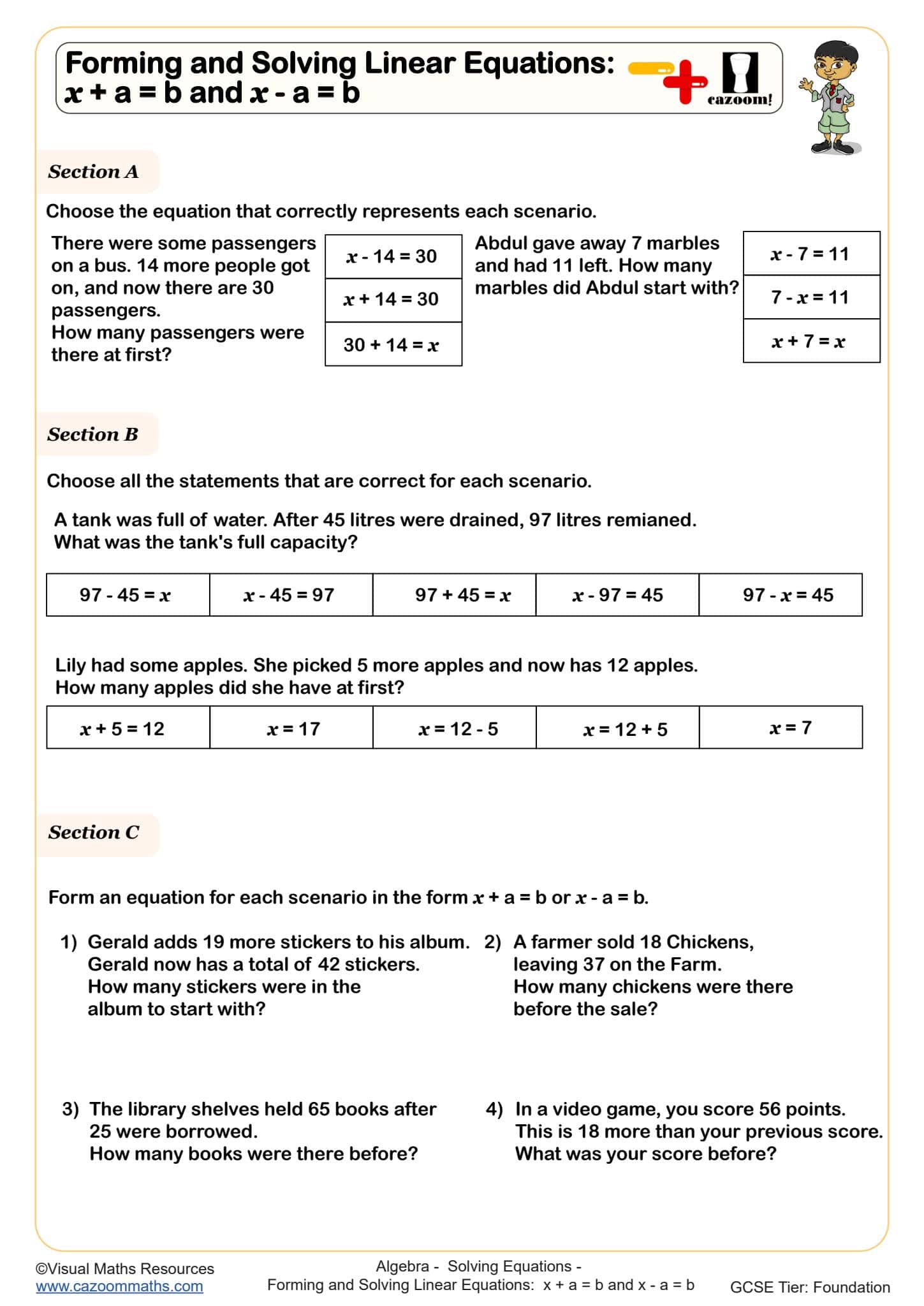
Manipulating Equations
Year groups: 7, 8
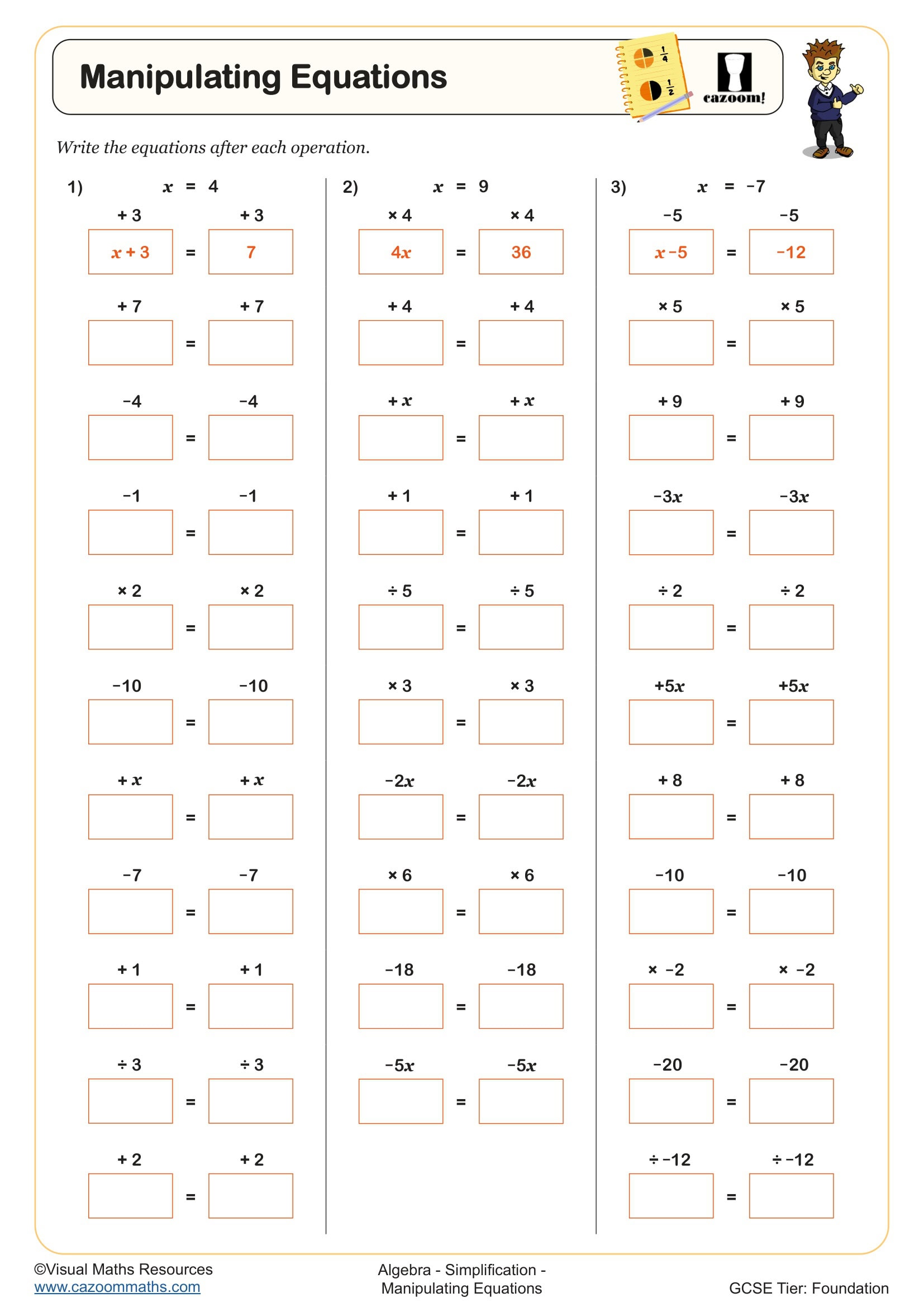
Solving Equations with Algebraic Perimeters
Year groups: 7, 8
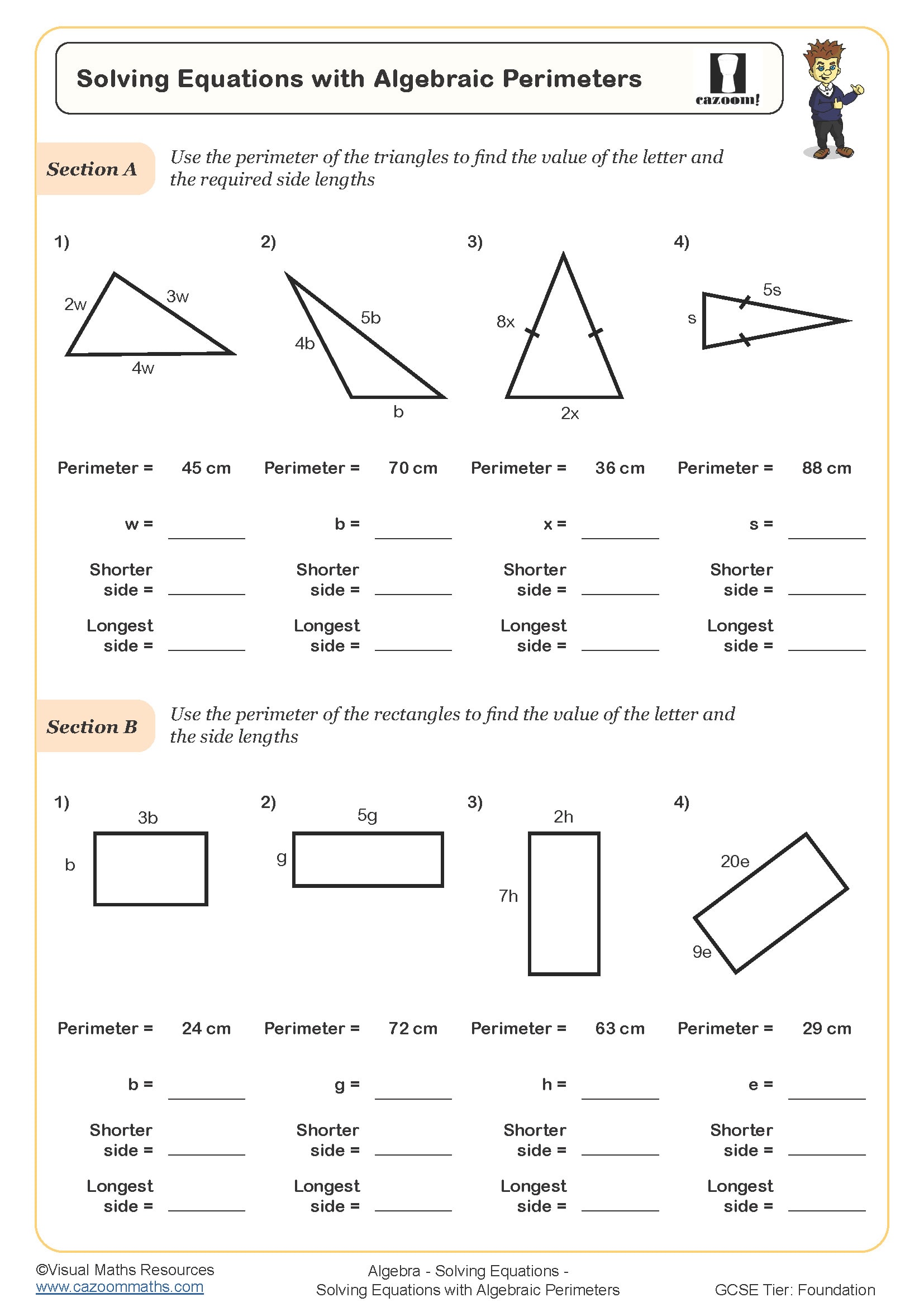
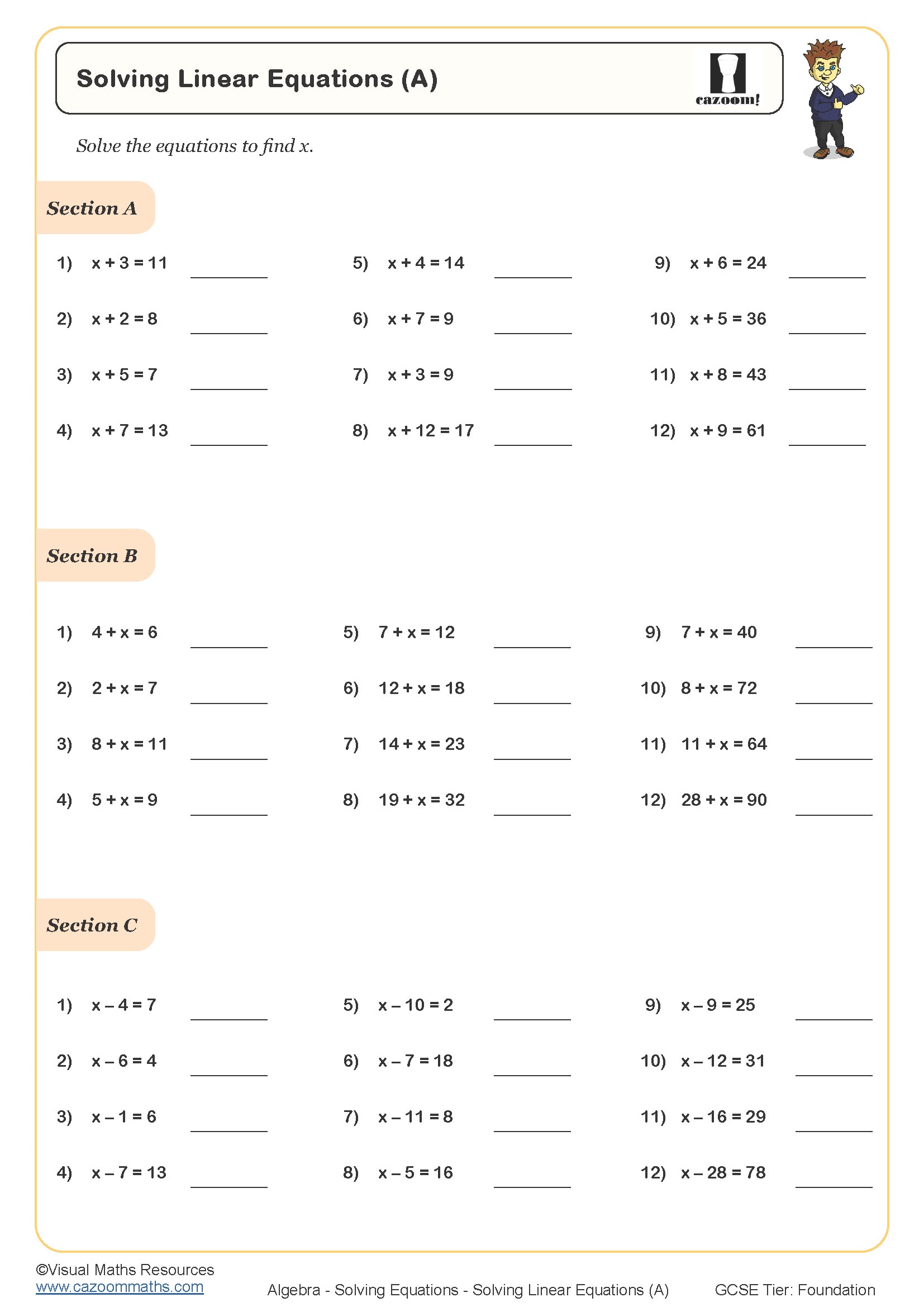
Solving Linear Equations (A)
Year groups: 7, 8
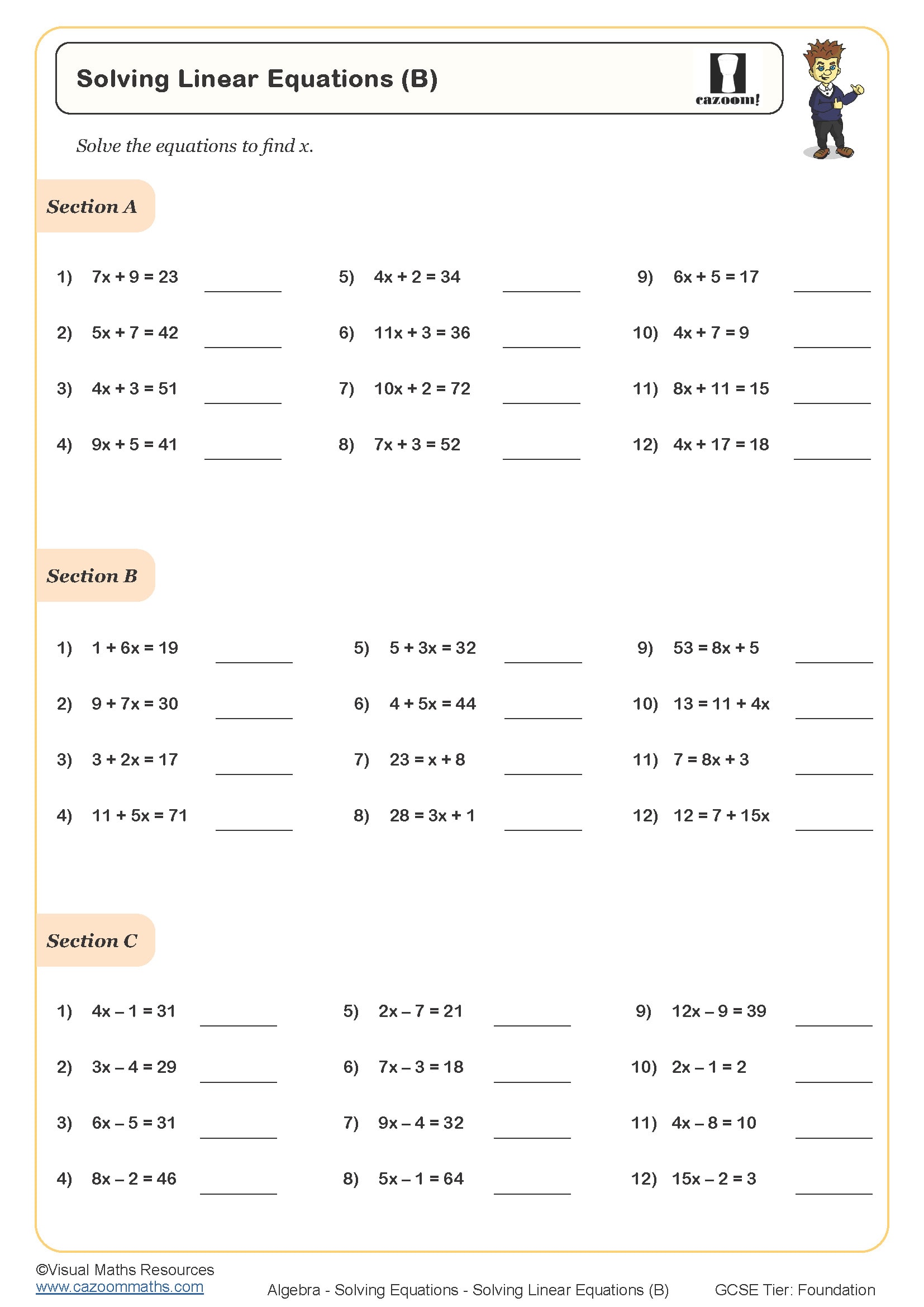
Solving Linear Equations (B)
Year groups: 7, 8
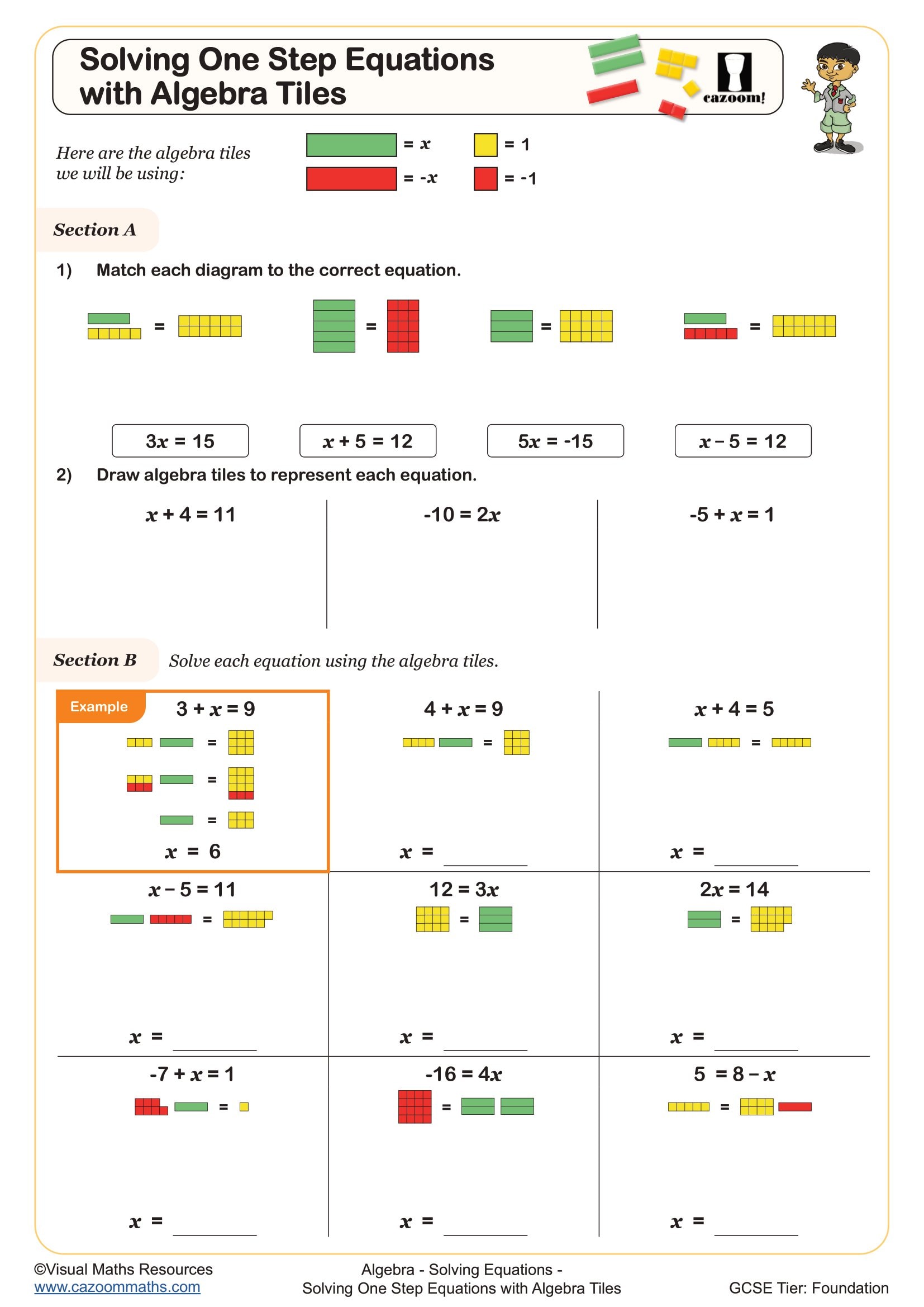
Solving One Step Equations with Algebra Tiles
Year groups: 7, 8
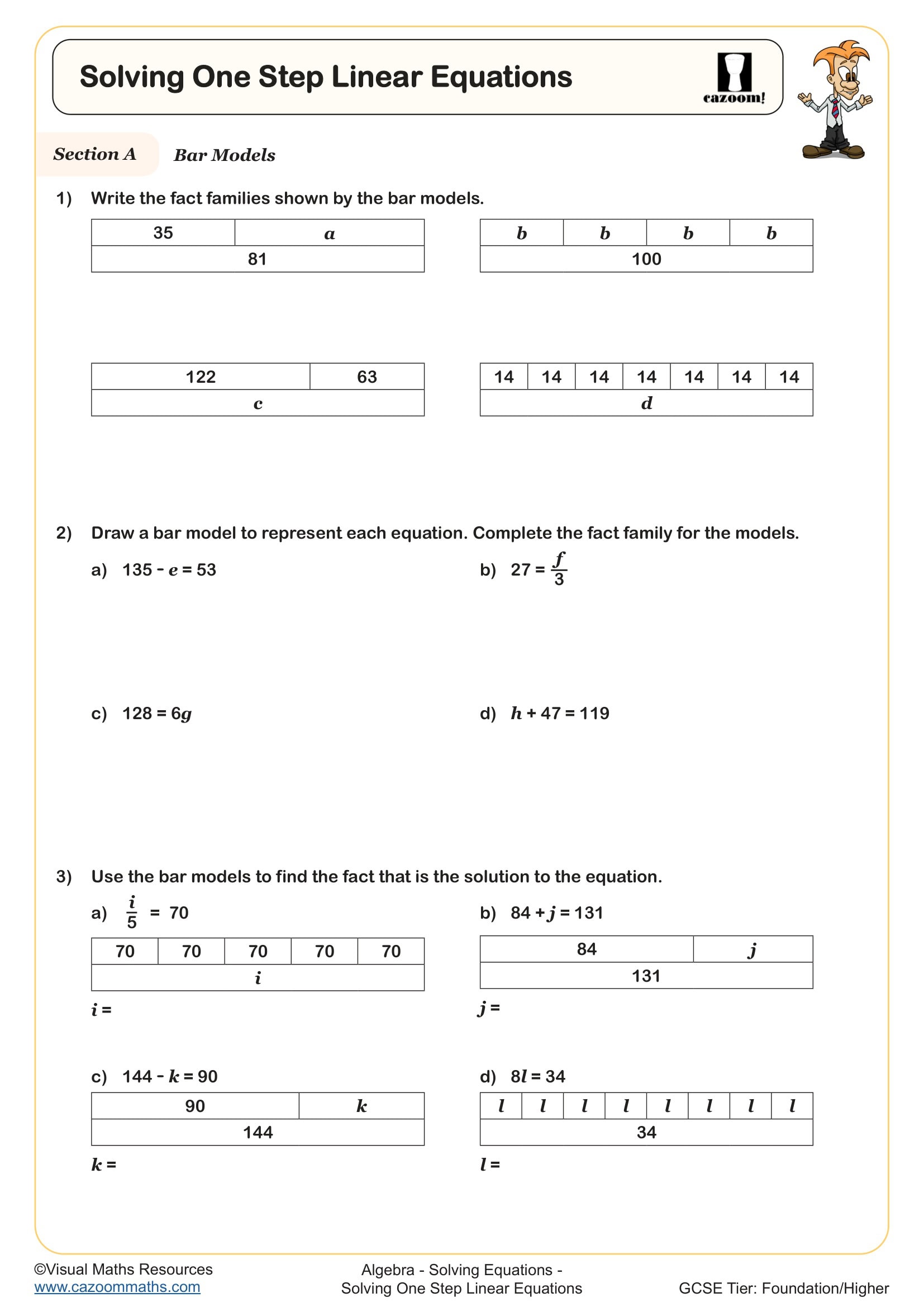
Solving One Step Linear Equations
Year groups: 7
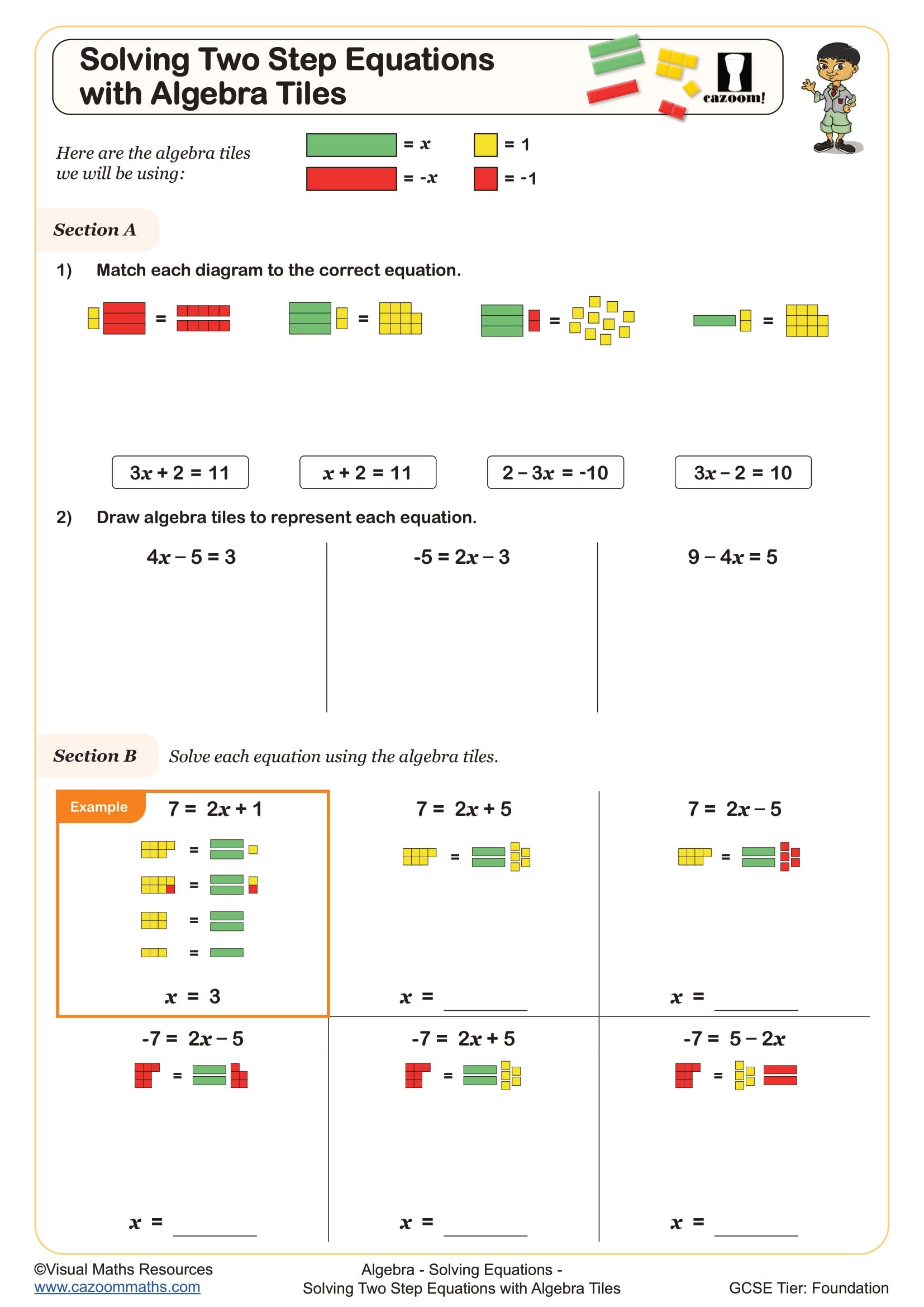
Solving Two Step Equations with Algebra Tiles
Year groups: 7, 8
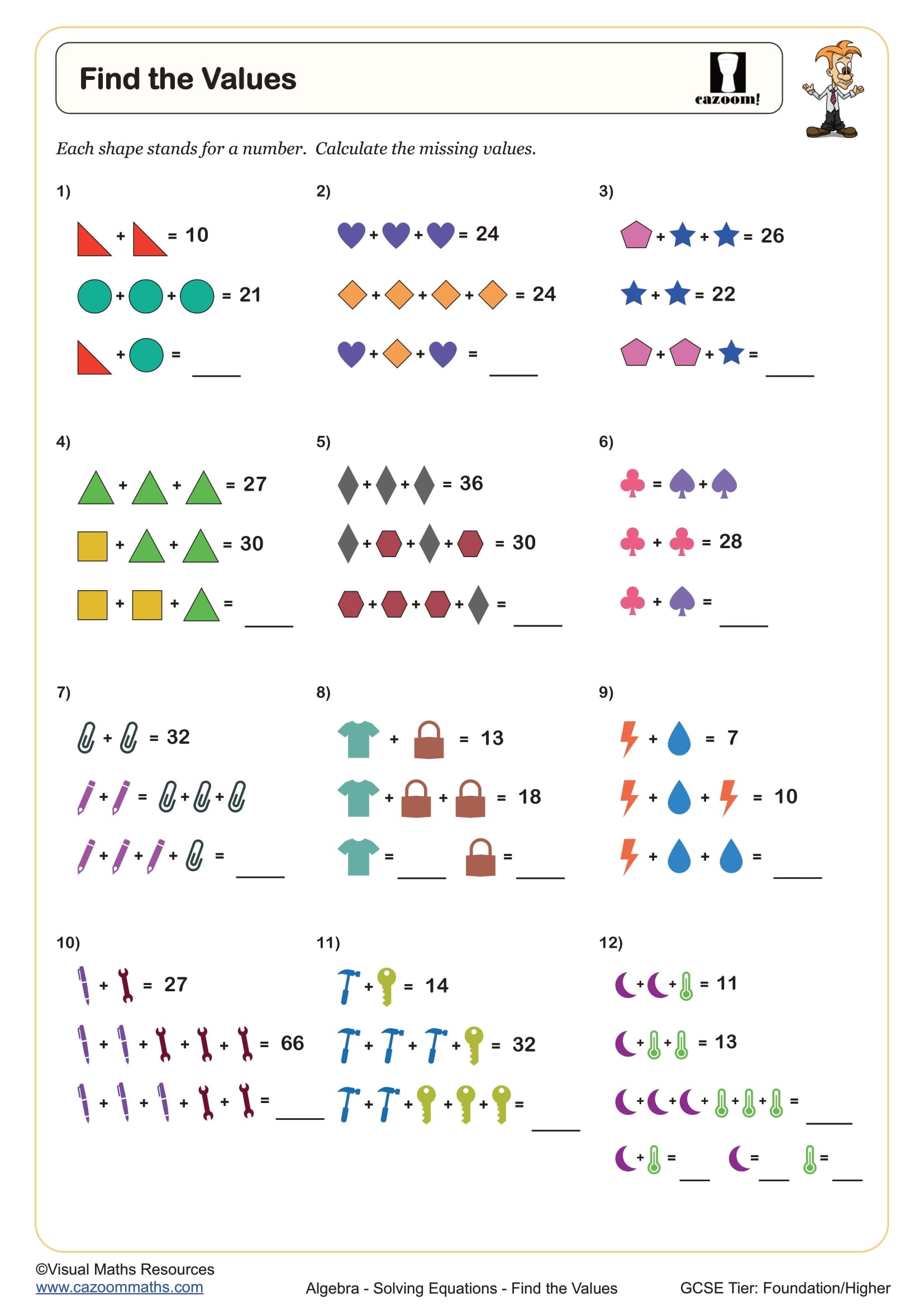
Find the Values
Year groups: 8, 9
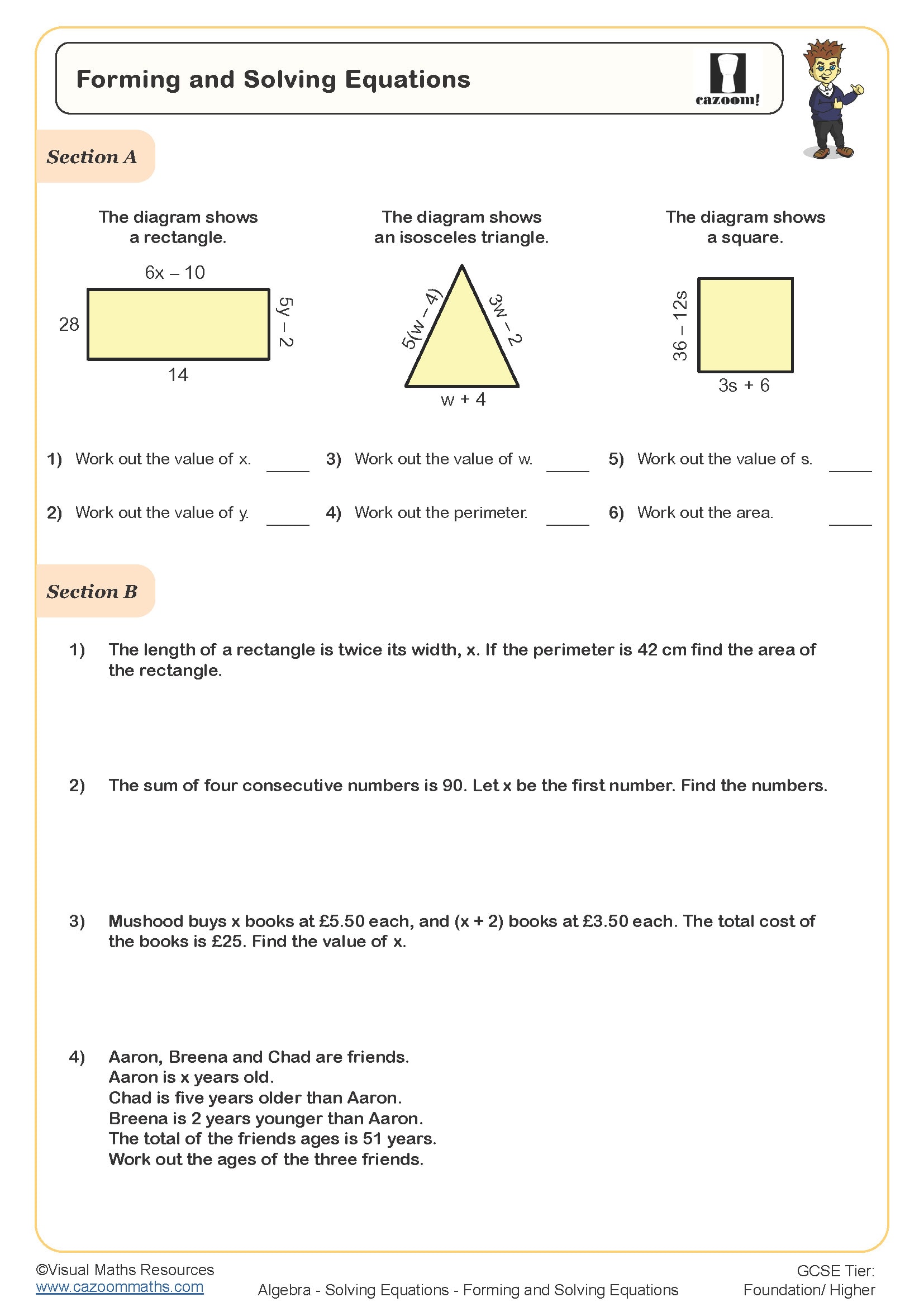
Forming and Solving Equations
Year groups: 8, 9
Forming and Solving Equations Involving Angles (A)
Year groups: 8, 9
-Worksheet.jpg?w=3840)
Forming and Solving Equations Involving Angles (B)
Year groups: 8, 9
-Worksheet.jpg?w=3840)
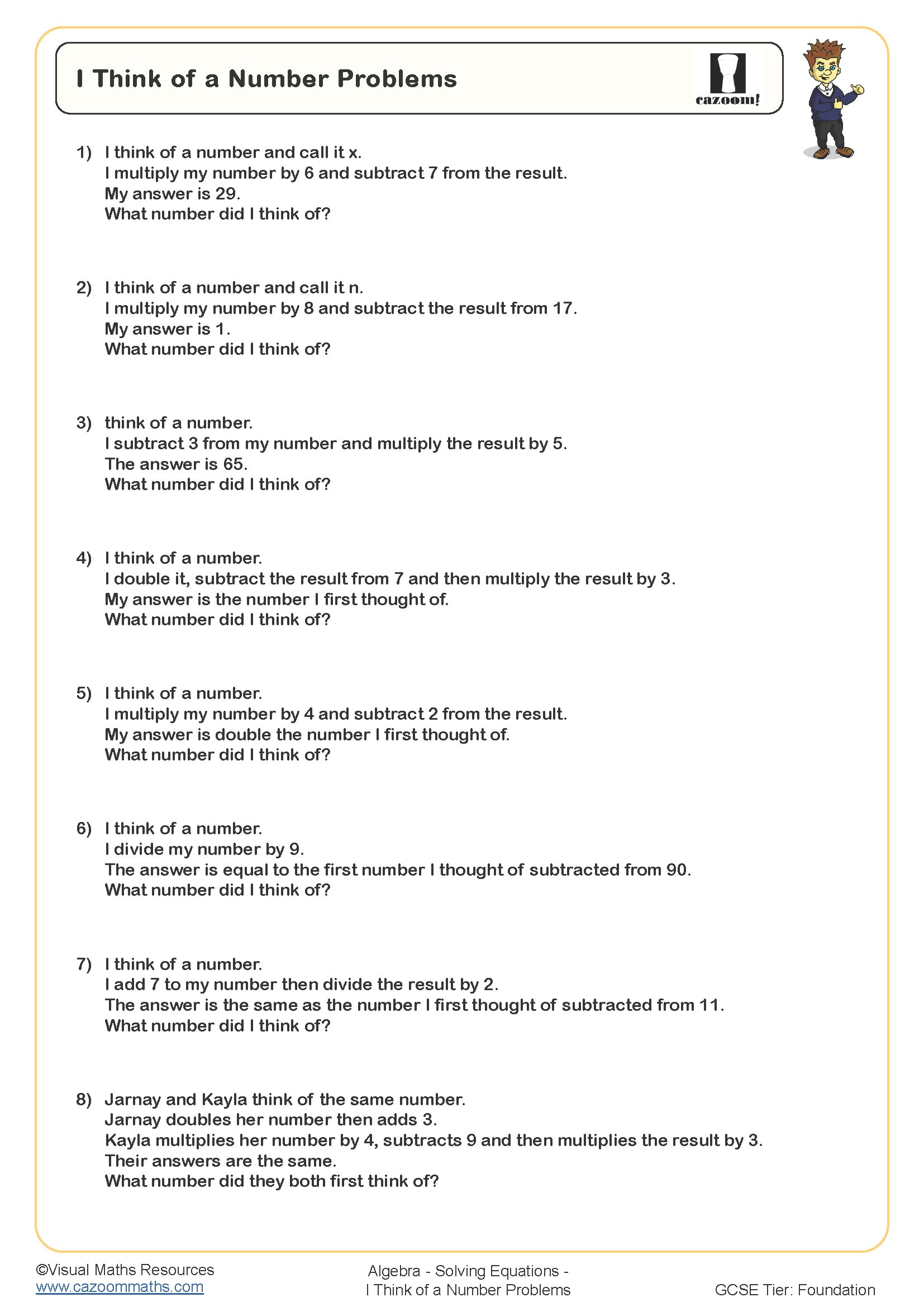
I Think of A Number Problems
Year groups: 8, 9
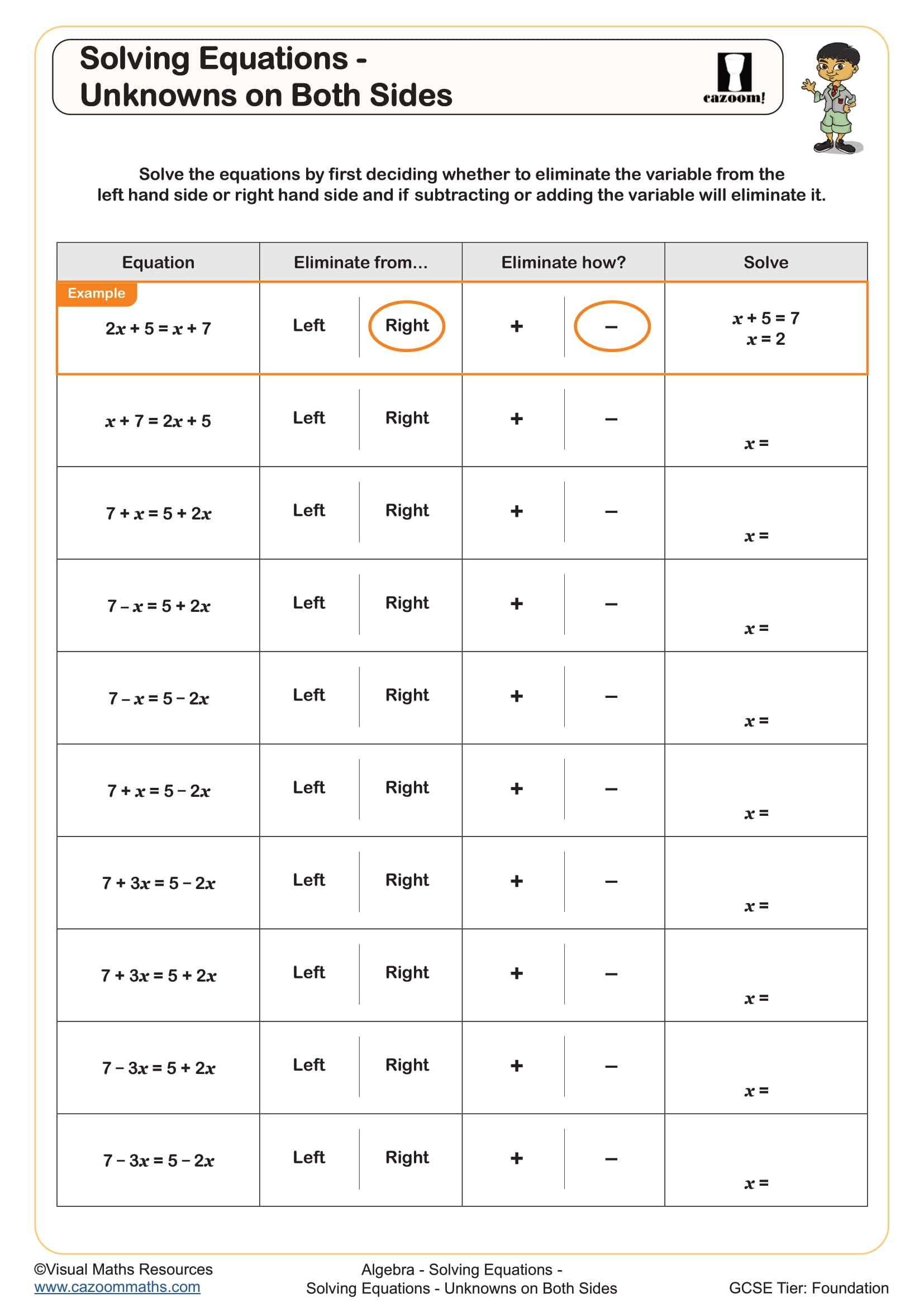
Solving Equations - Unknowns on Both Sides
Year groups: 8, 9
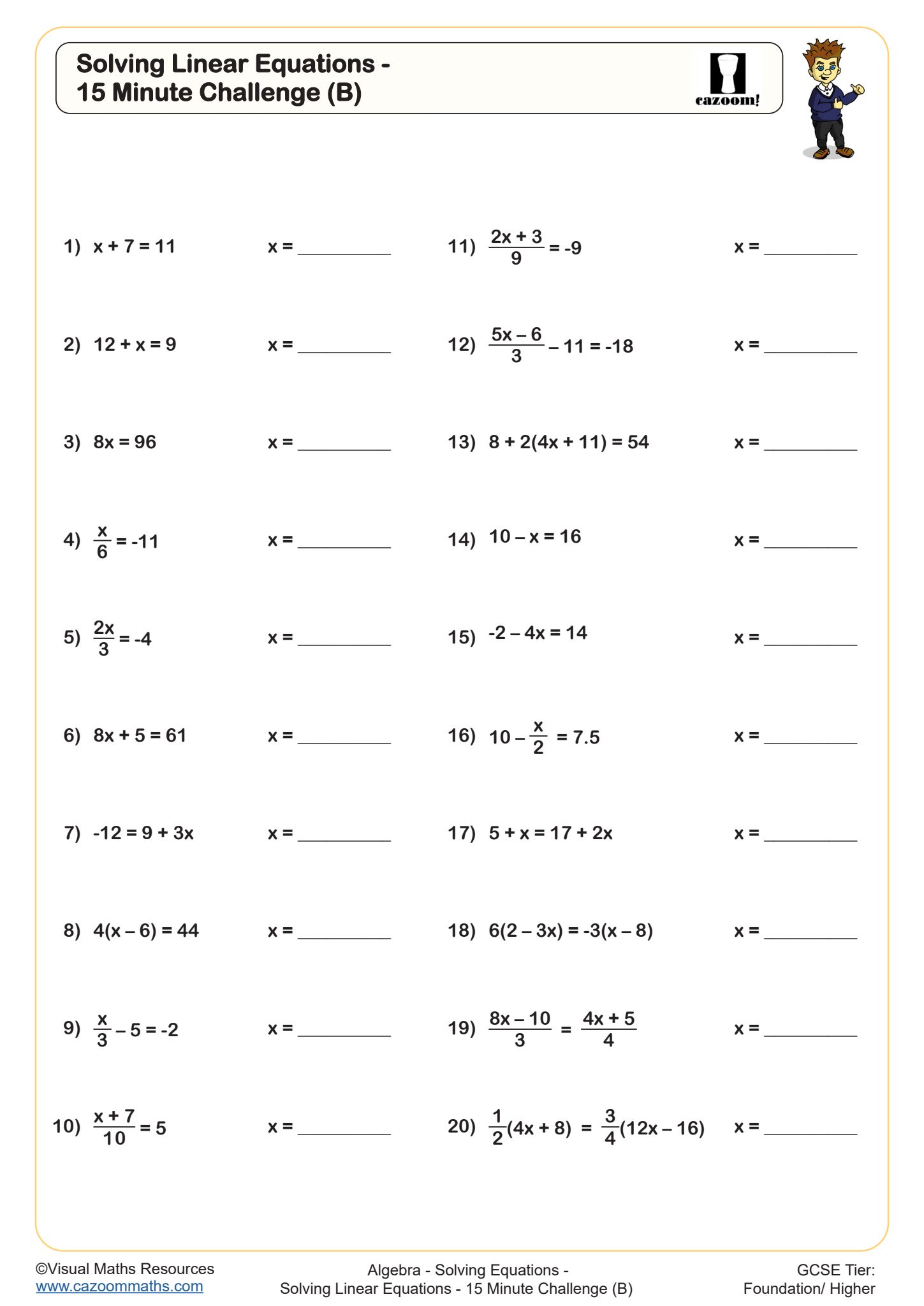
Solving Equations 15 Minute Challenge (B)
Year groups: 8, 9
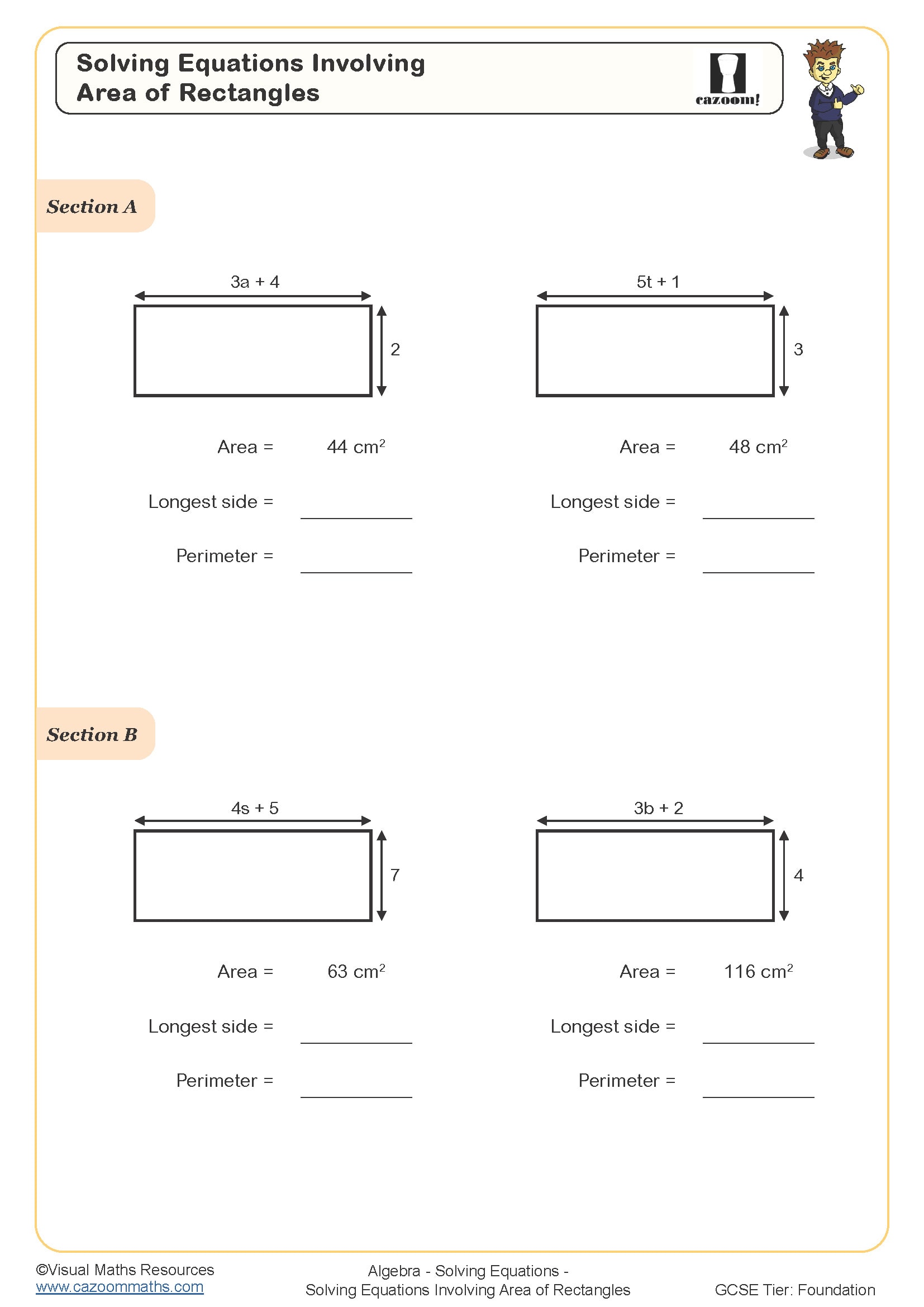
Solving Equations Involving Area of Rectangles
Year groups: 8, 9
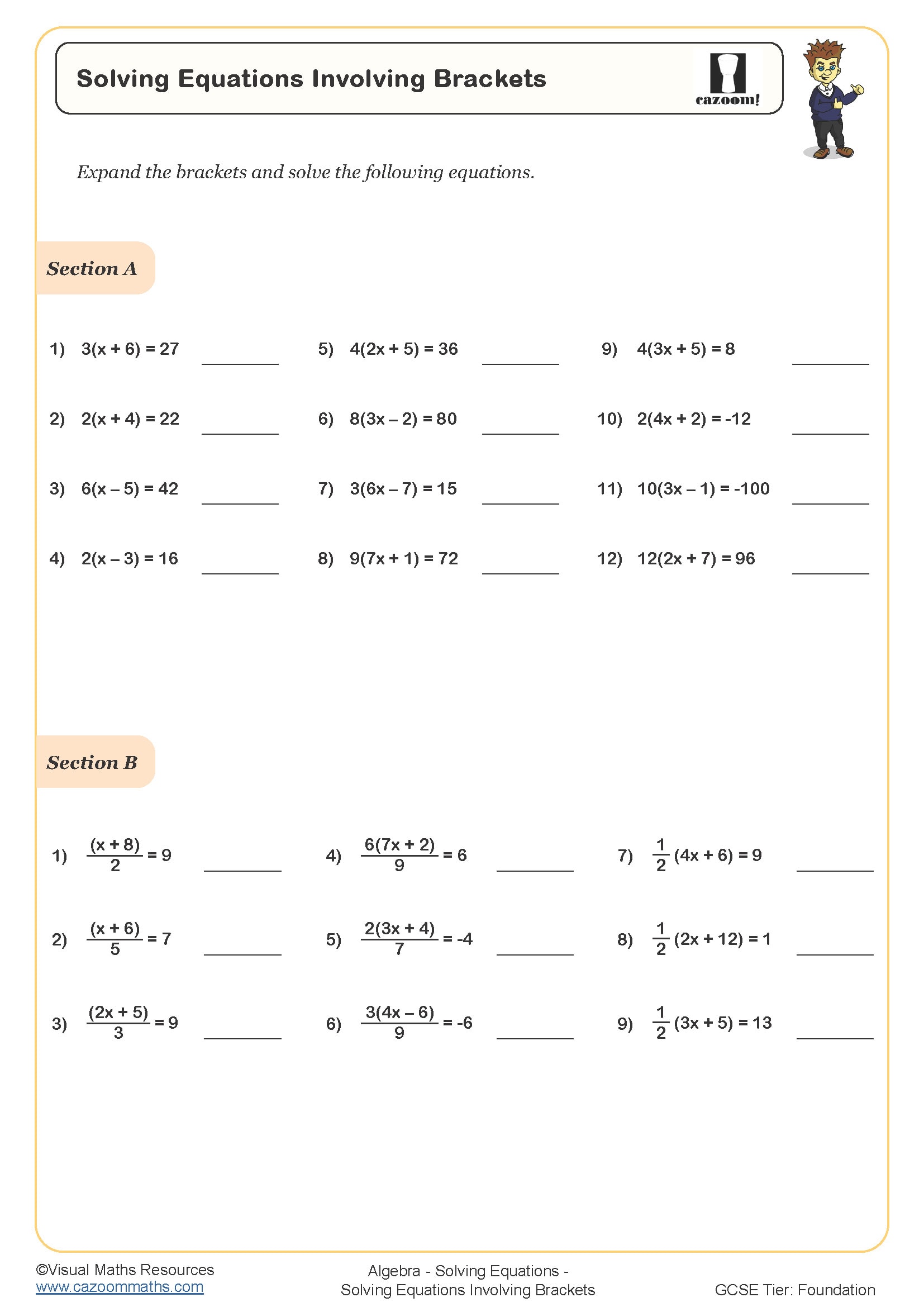
Solving Equations Involving Brackets
Year groups: 8, 9
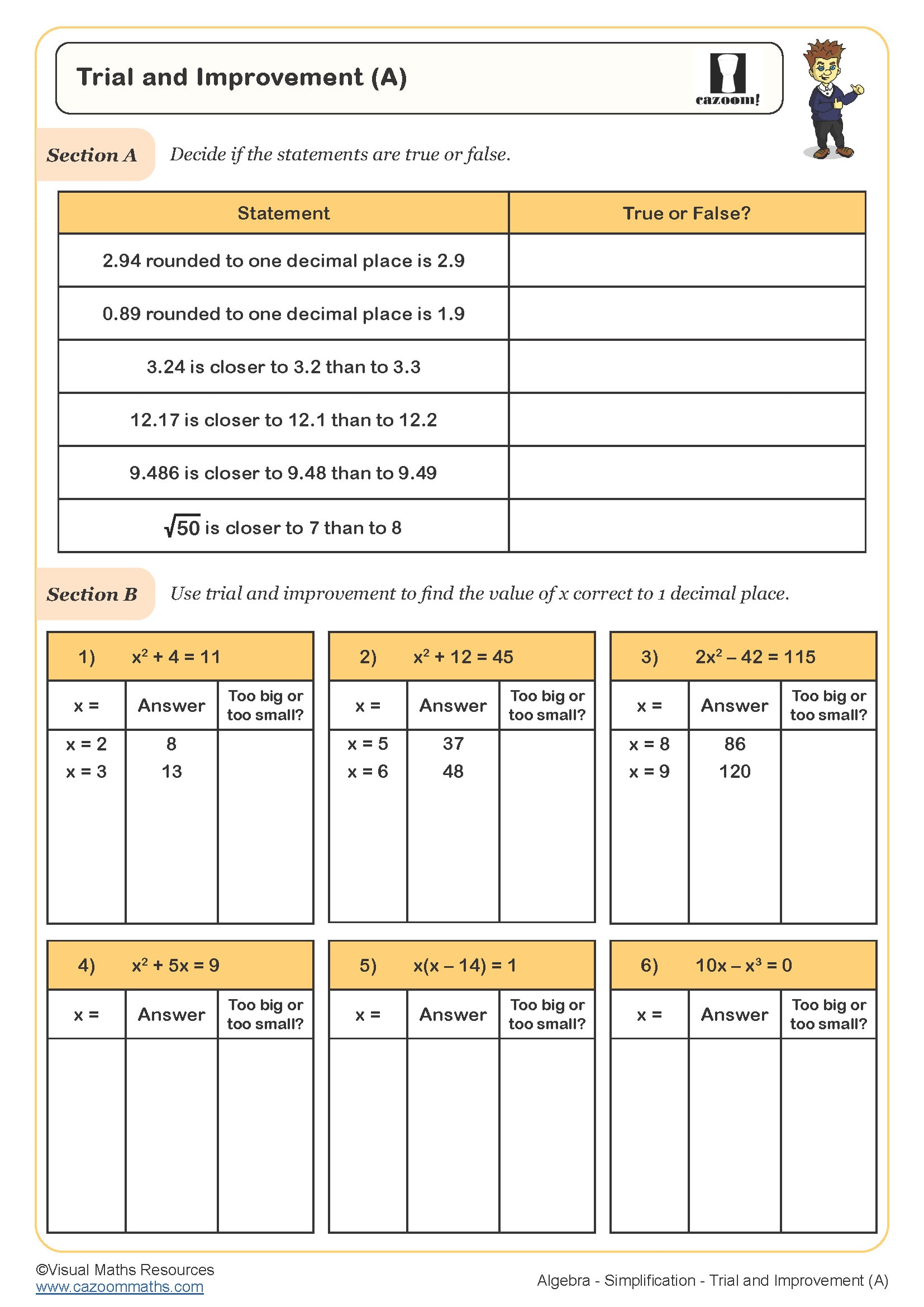
Solving Equations Involving Fractions
Year groups: 8, 9
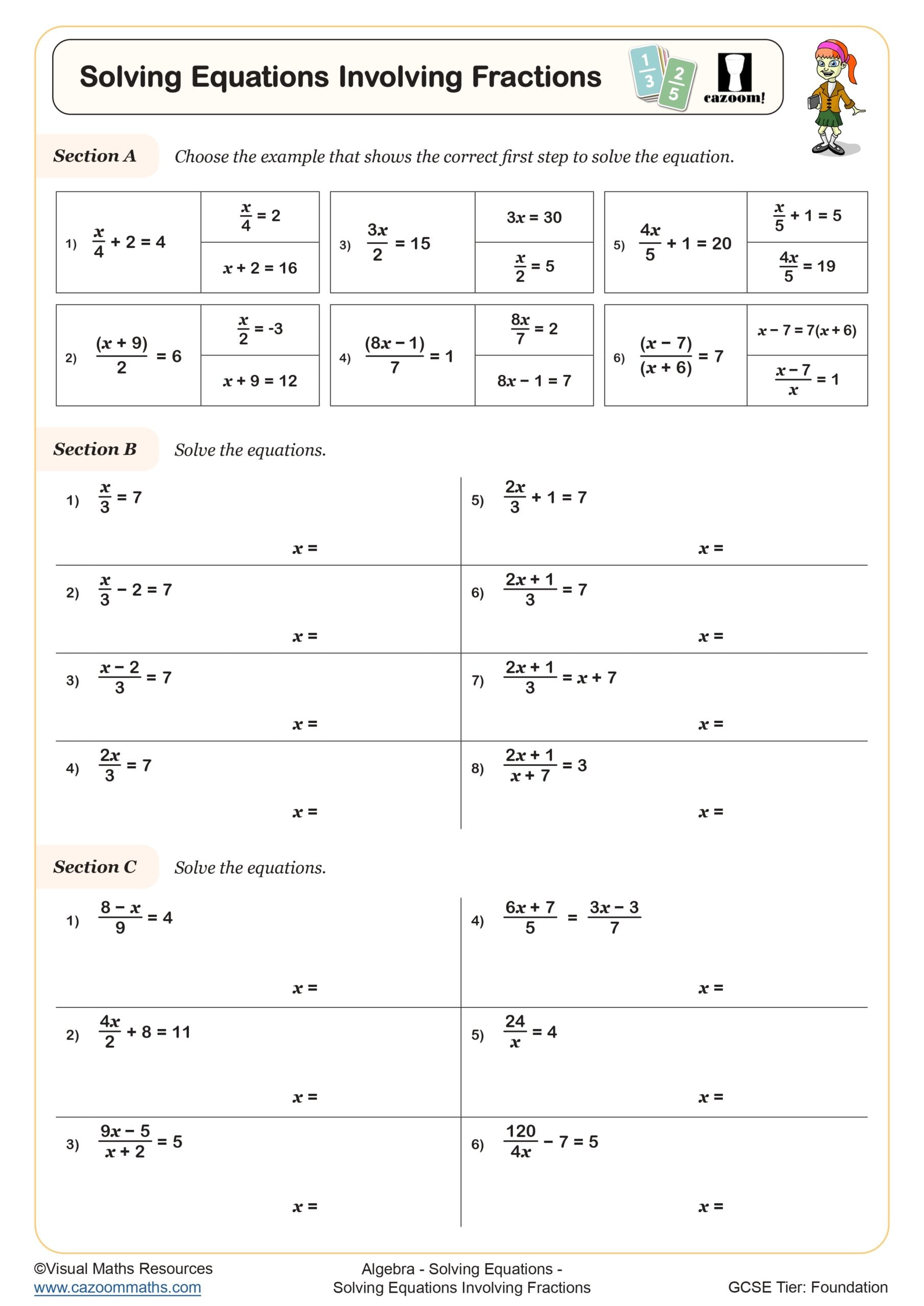
Solving Equations with Unknowns on Both Sides - Using Algebra Tiles
Year groups: 8, 9, 10
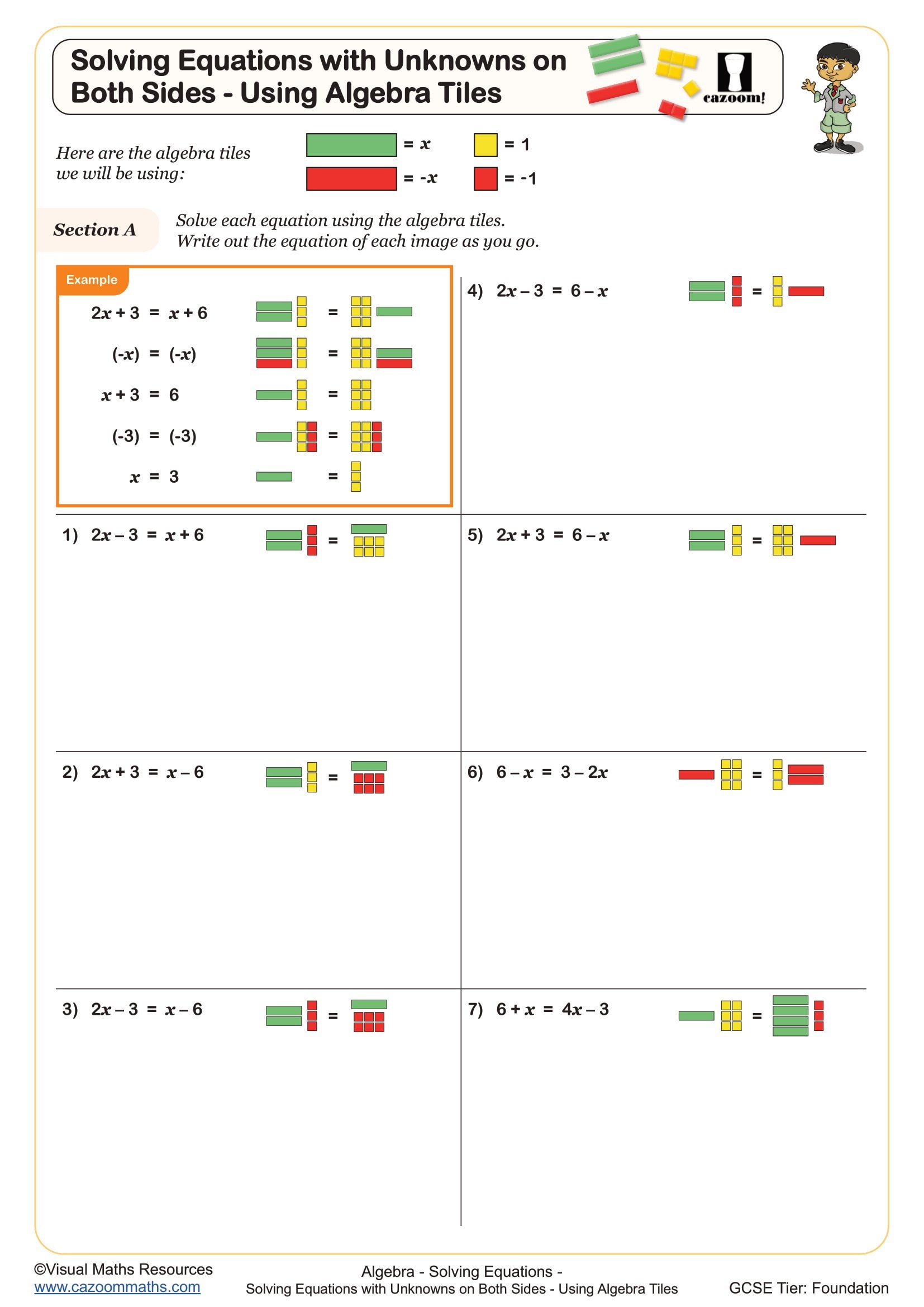
Solving Linear Equations (C)
Year groups: 8, 9
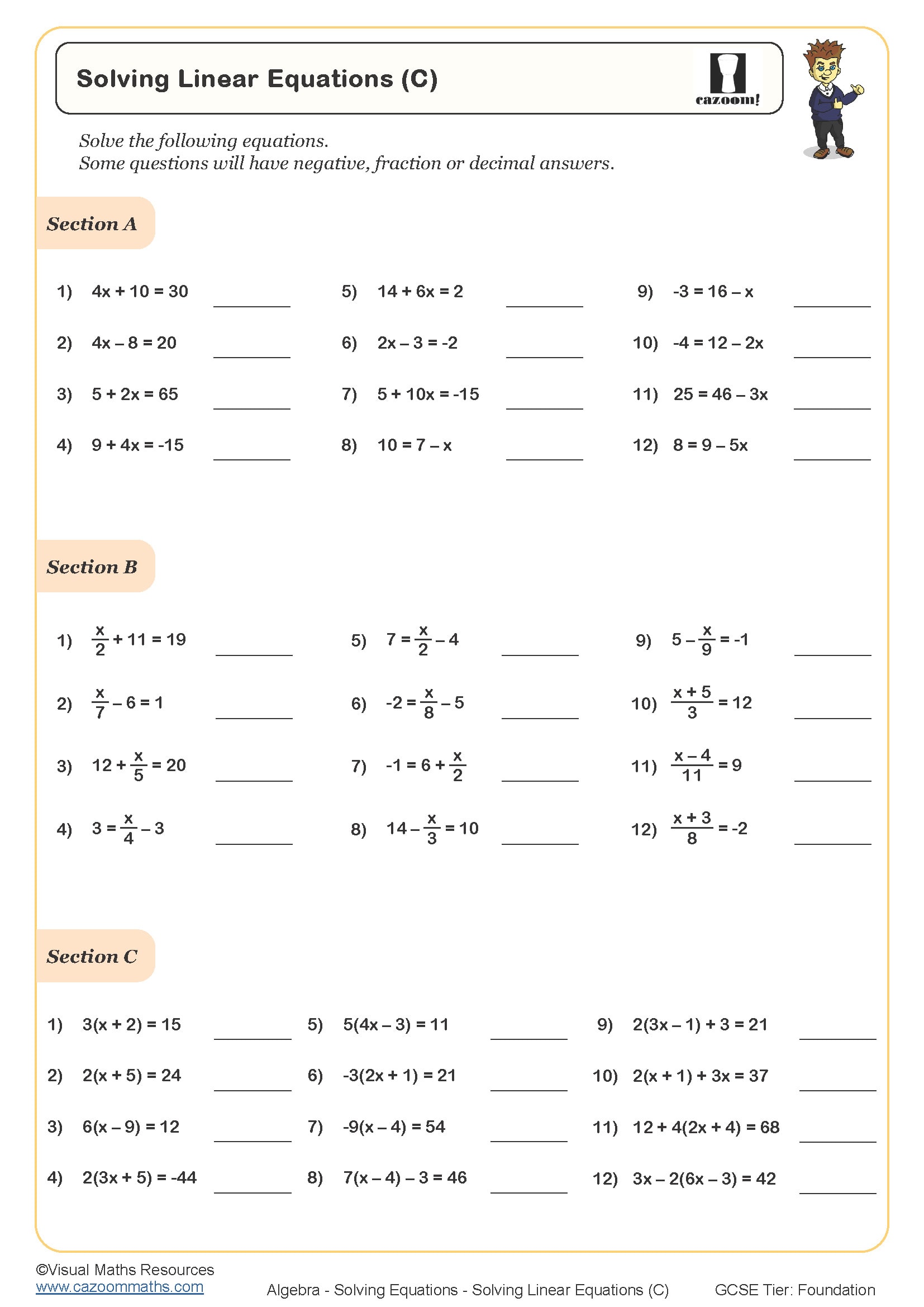
Trial and Improvement (A)
Year groups: 8, 9
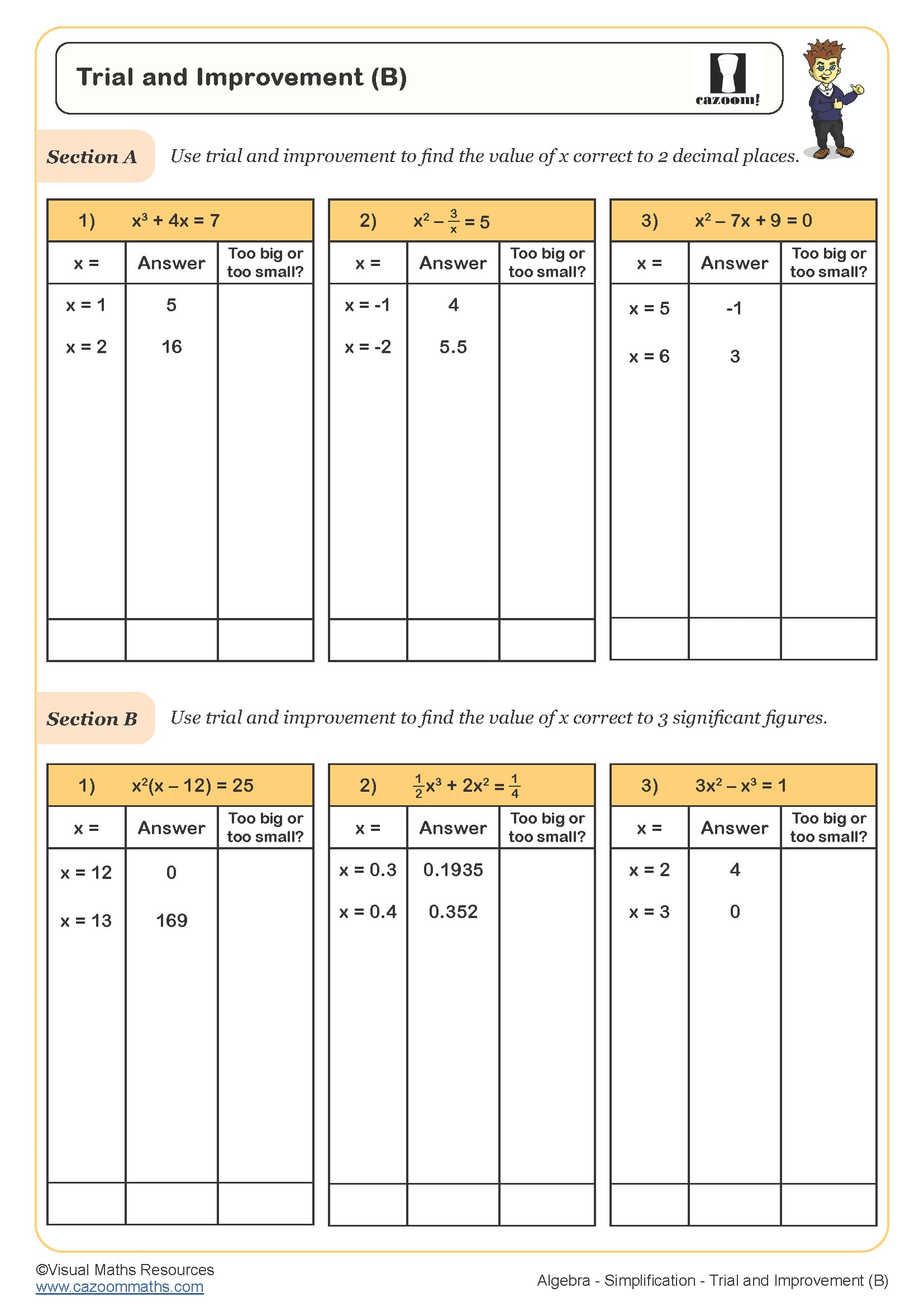
Trial and Improvement (B)
Year groups: 8, 9
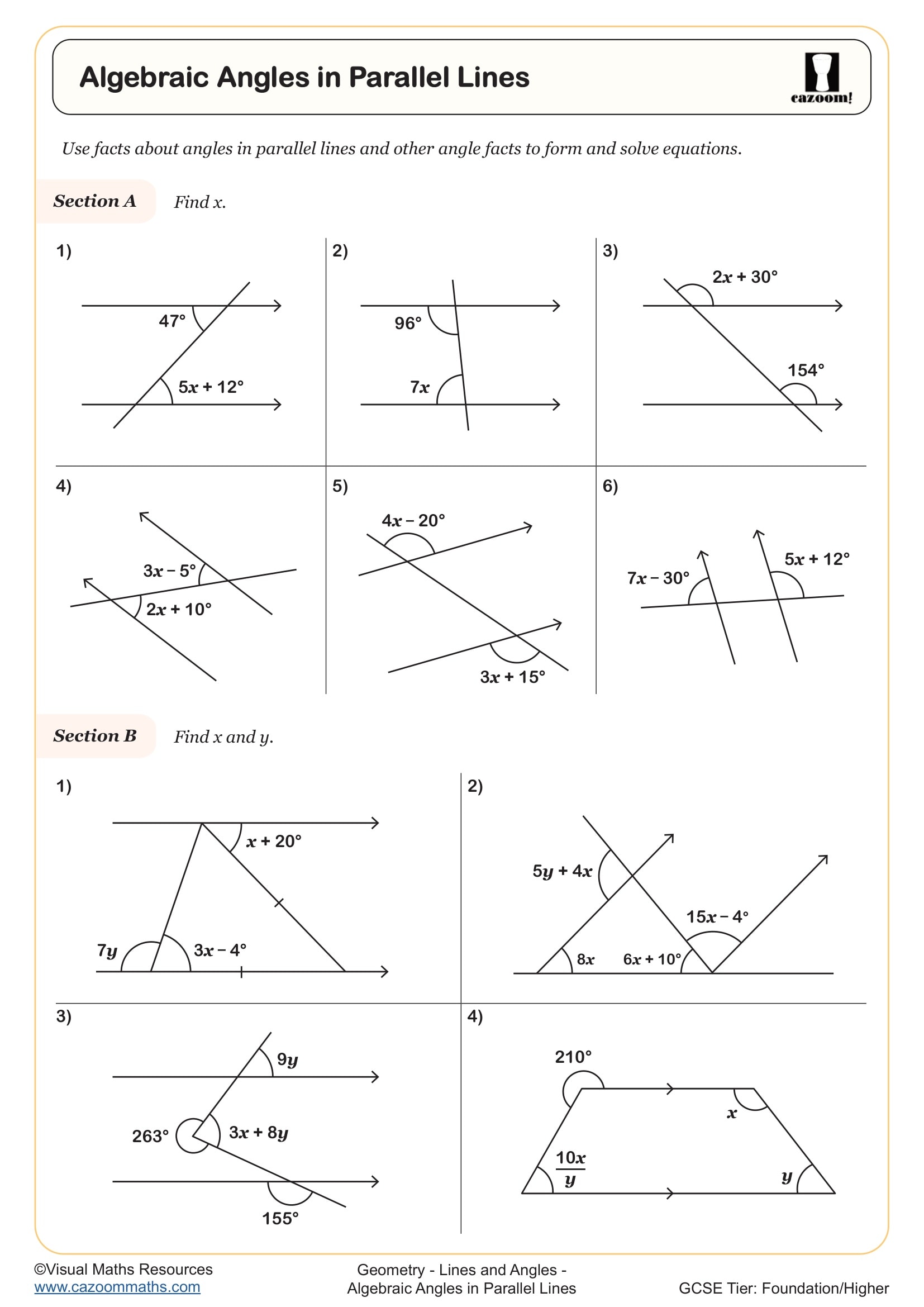
Algebraic Angles in Parallel Lines
Year groups: 9
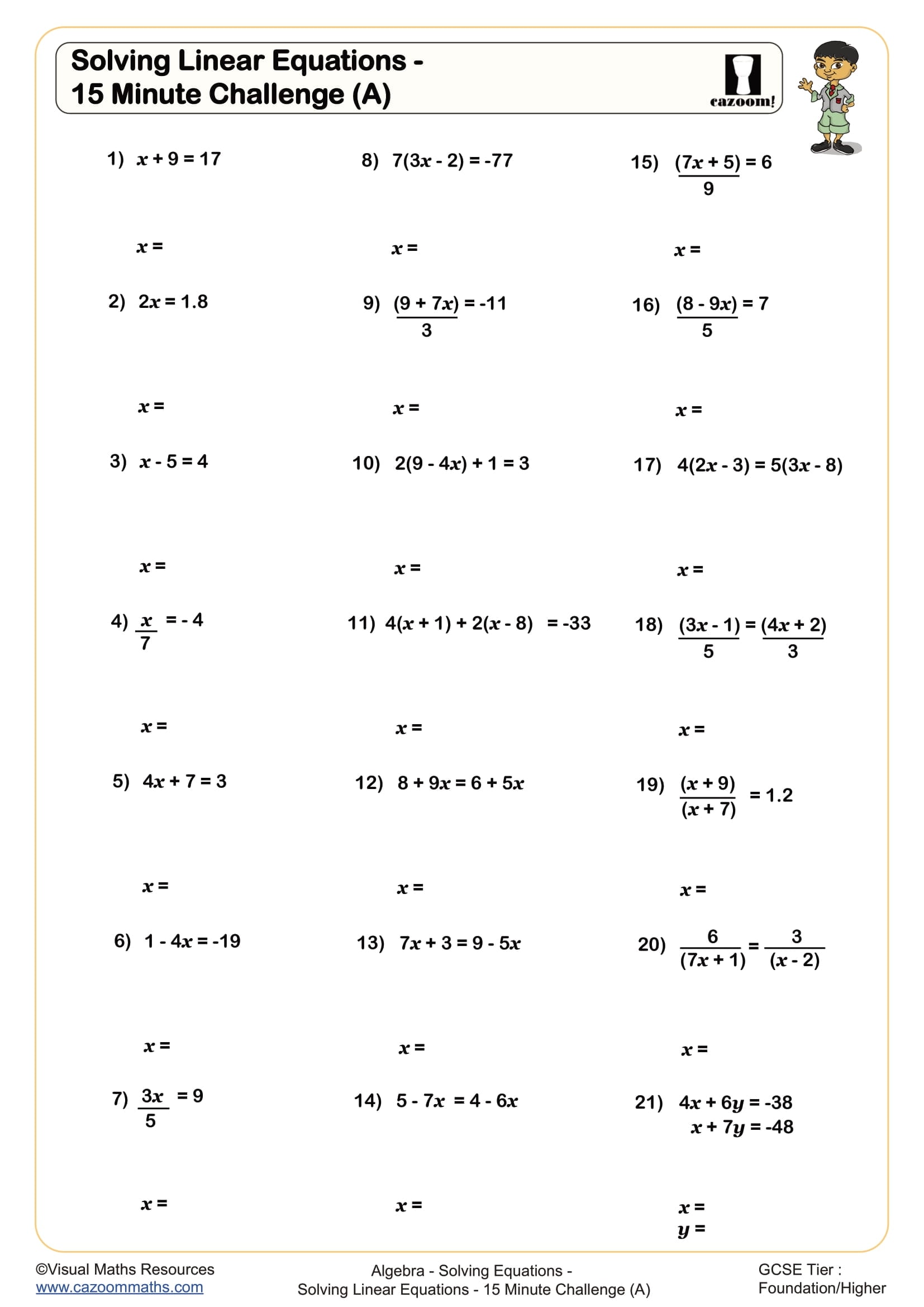
Solving Equations 15 Minute Challenge (A)
Year groups: 9, 10
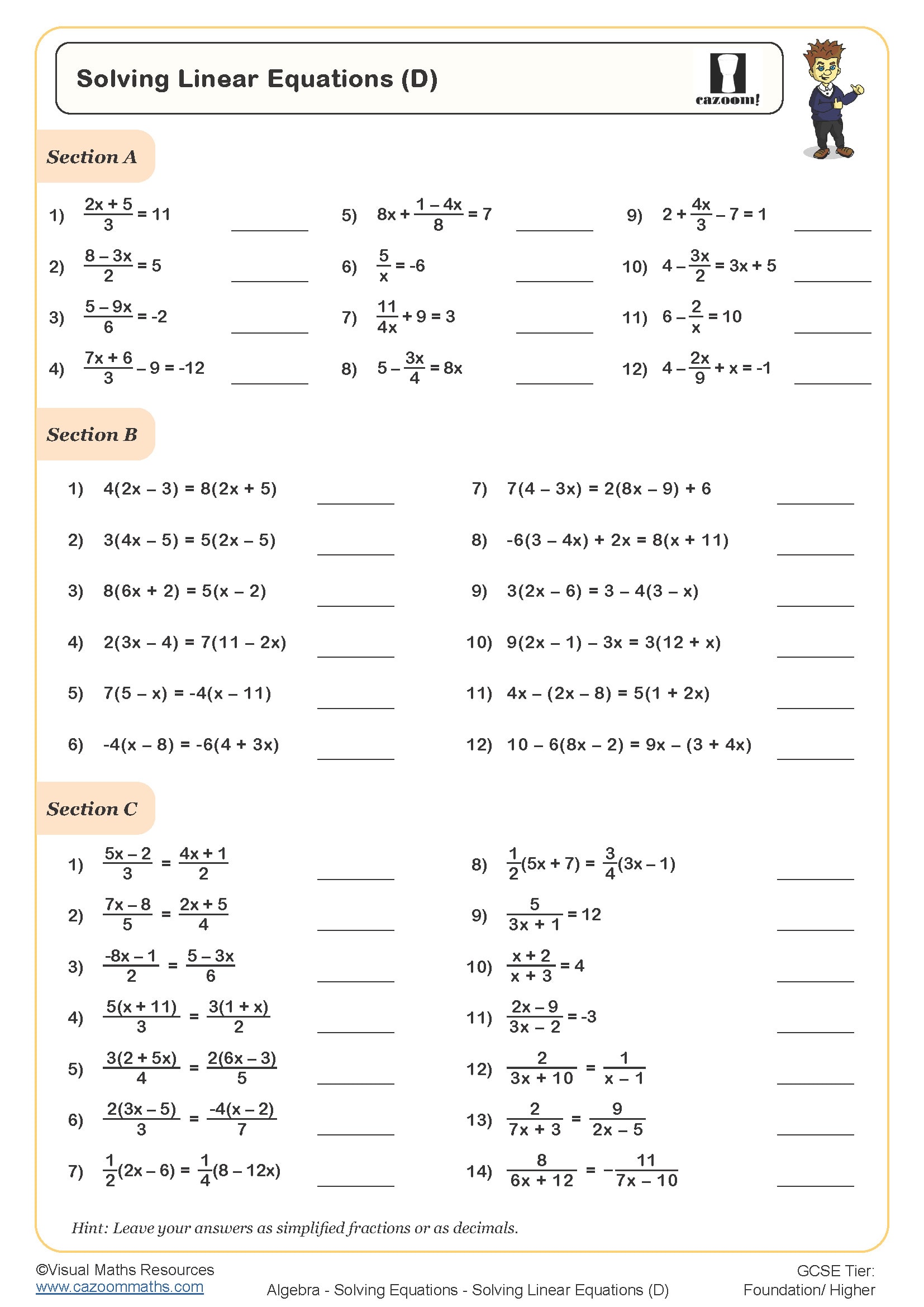
Solving Linear Equations (D)
Year groups: 9, 10
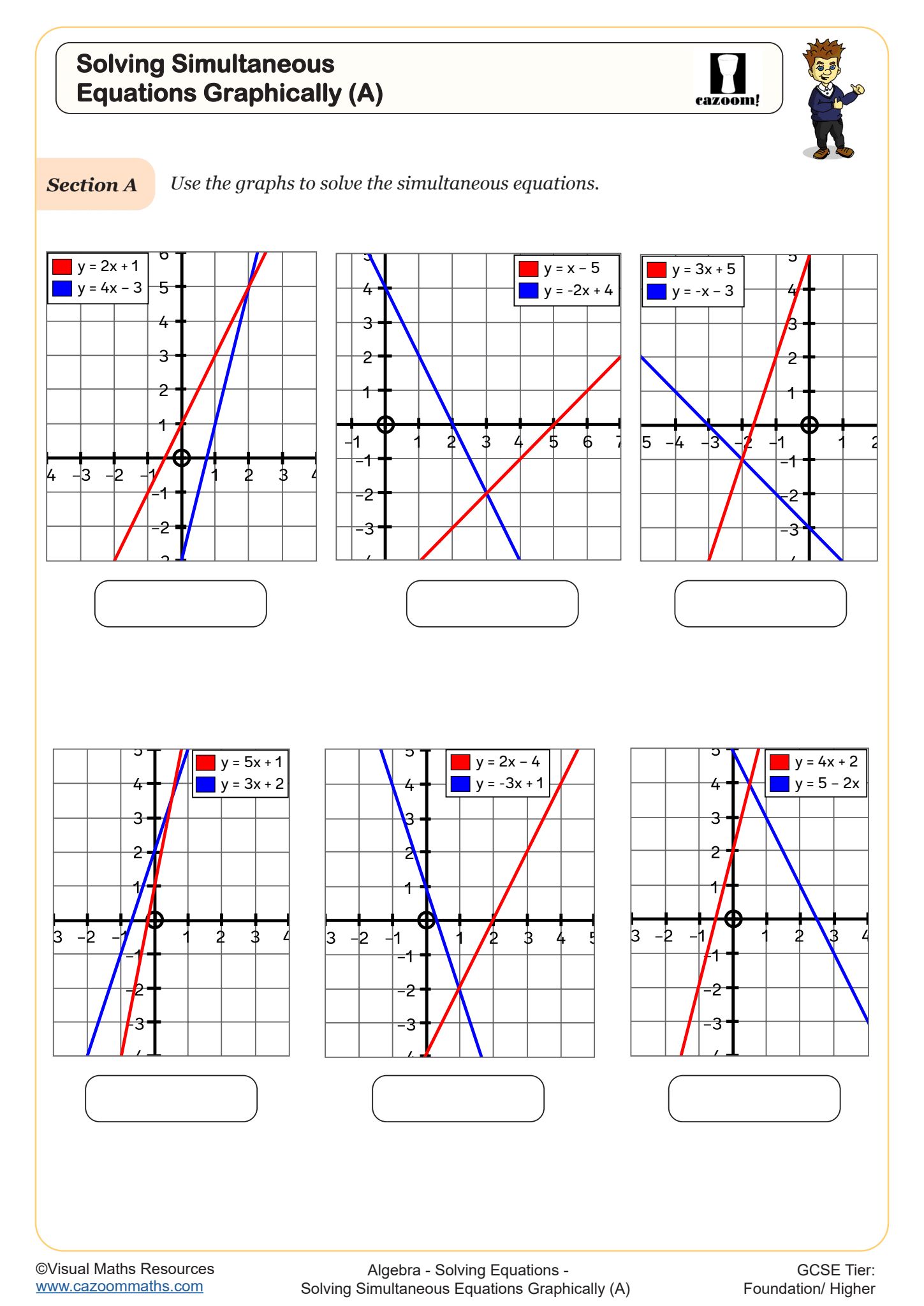
Solving Simultaneous Equations Graphically (A)
Year groups: 9, 10
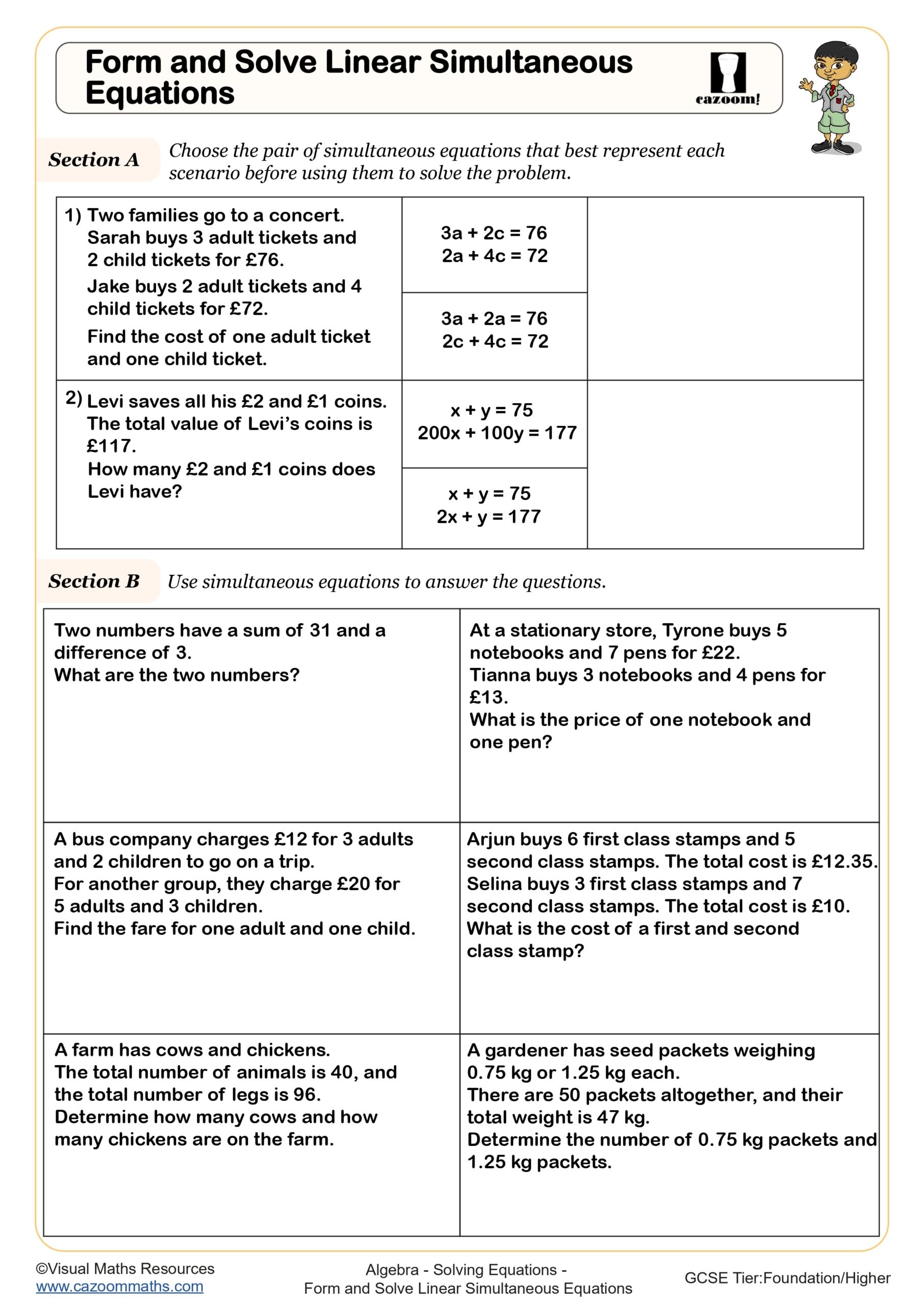
Form and Solve Linear Simultaneous Equations
Year groups: 10, 11
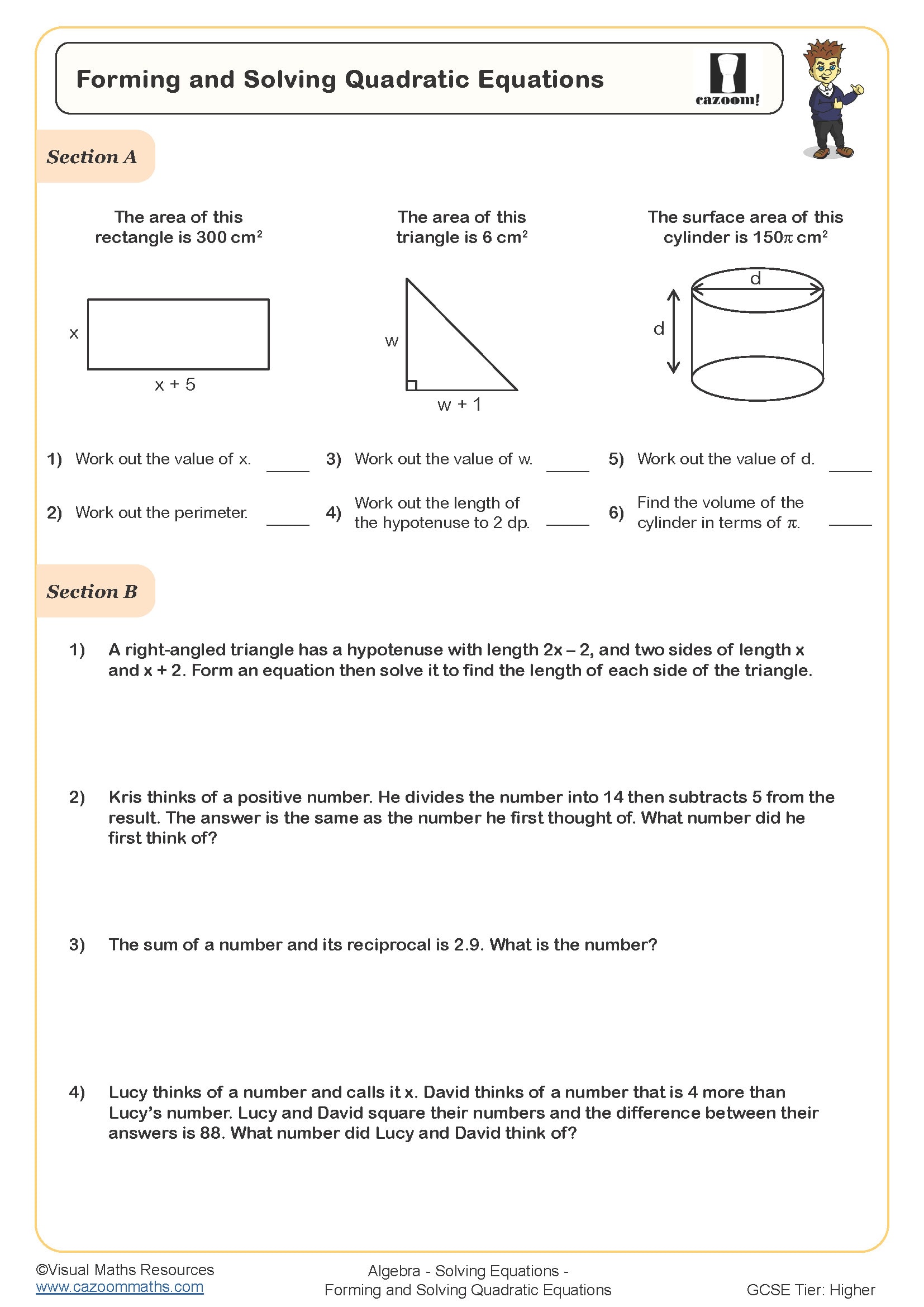
Forming and Solving Quadratic Equations
Year groups: 10, 11
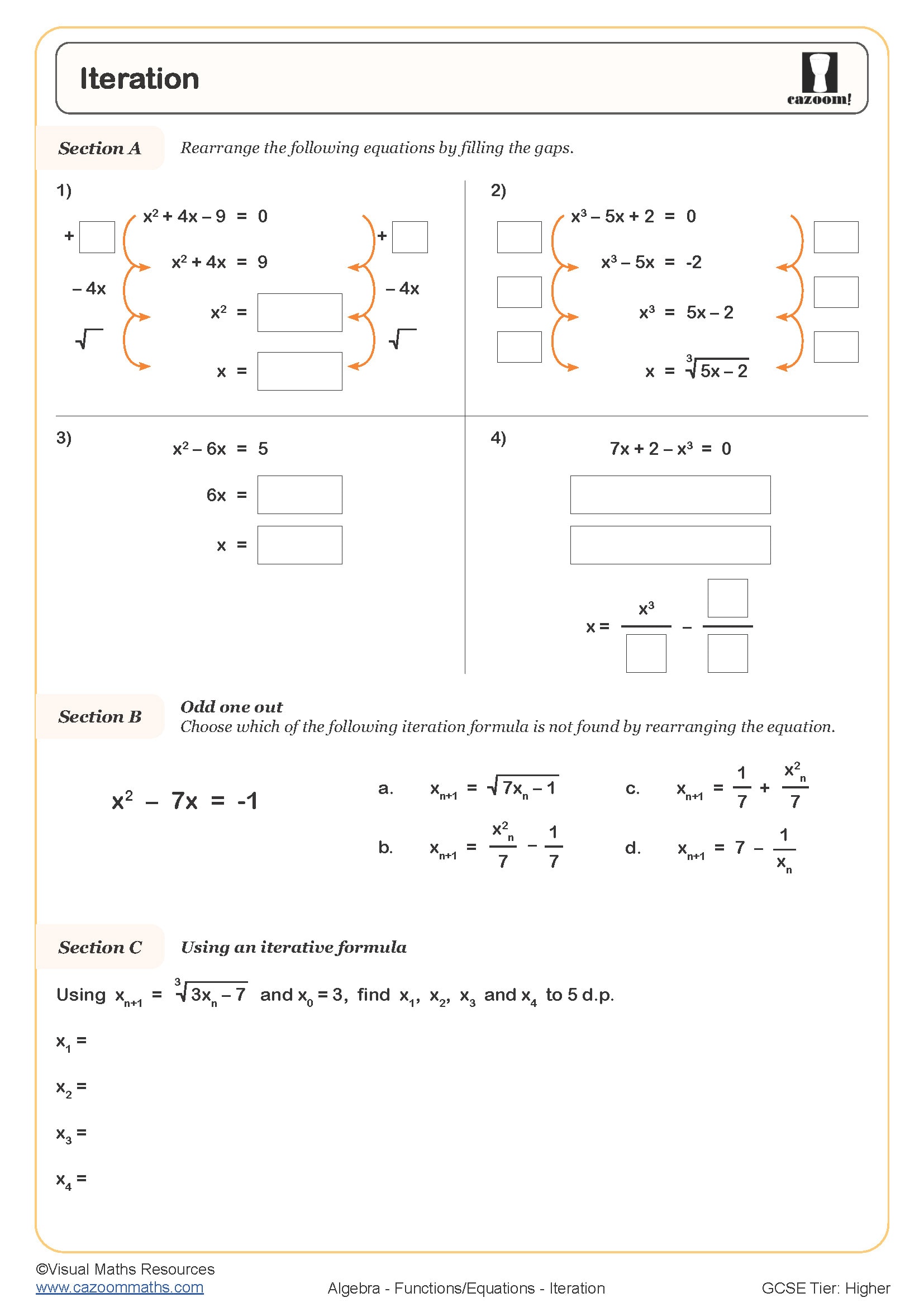
Iteration
Year groups: 10, 11
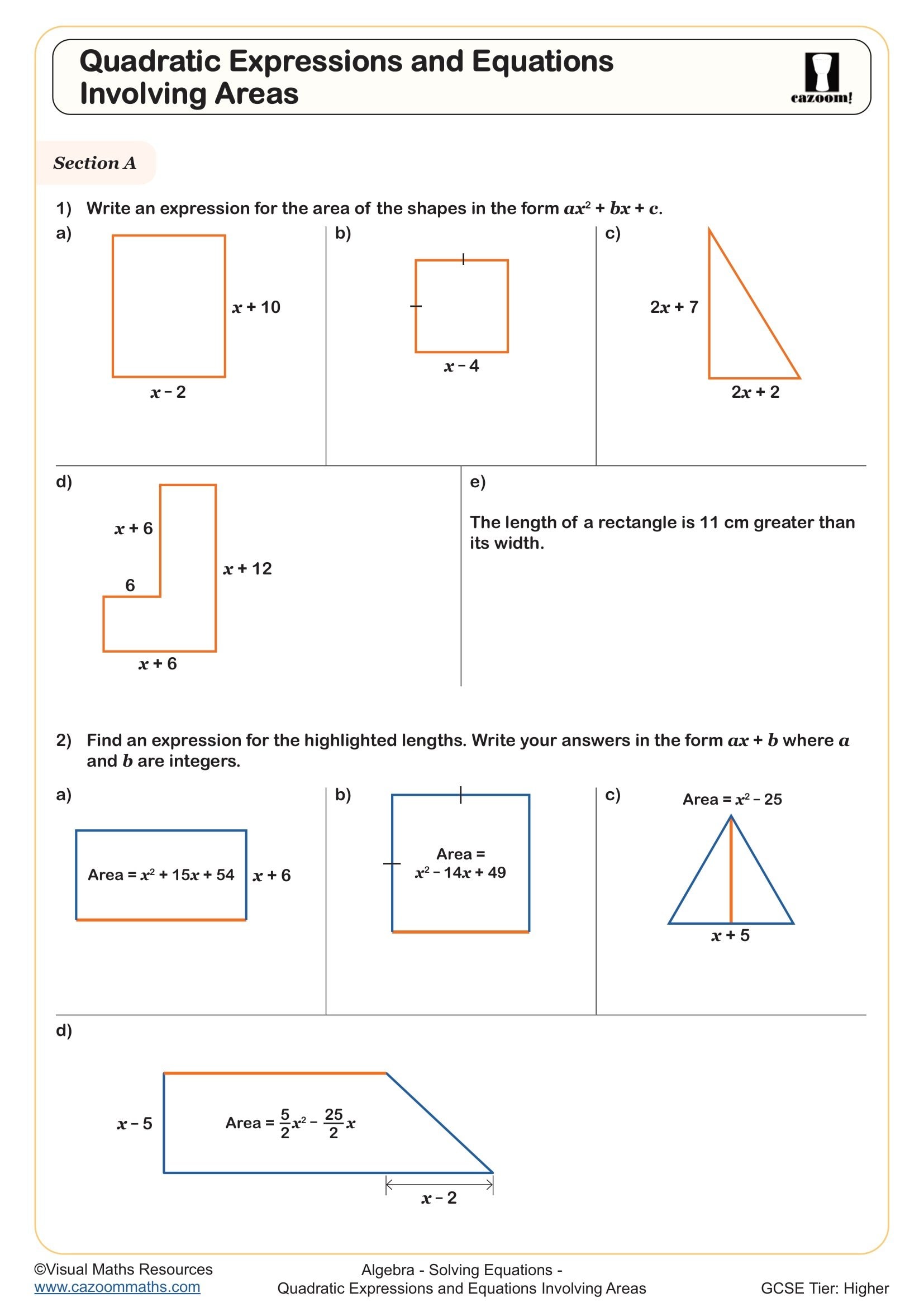
Quadratic Expressions and Equations Involving Areas
Year groups: 10, 11
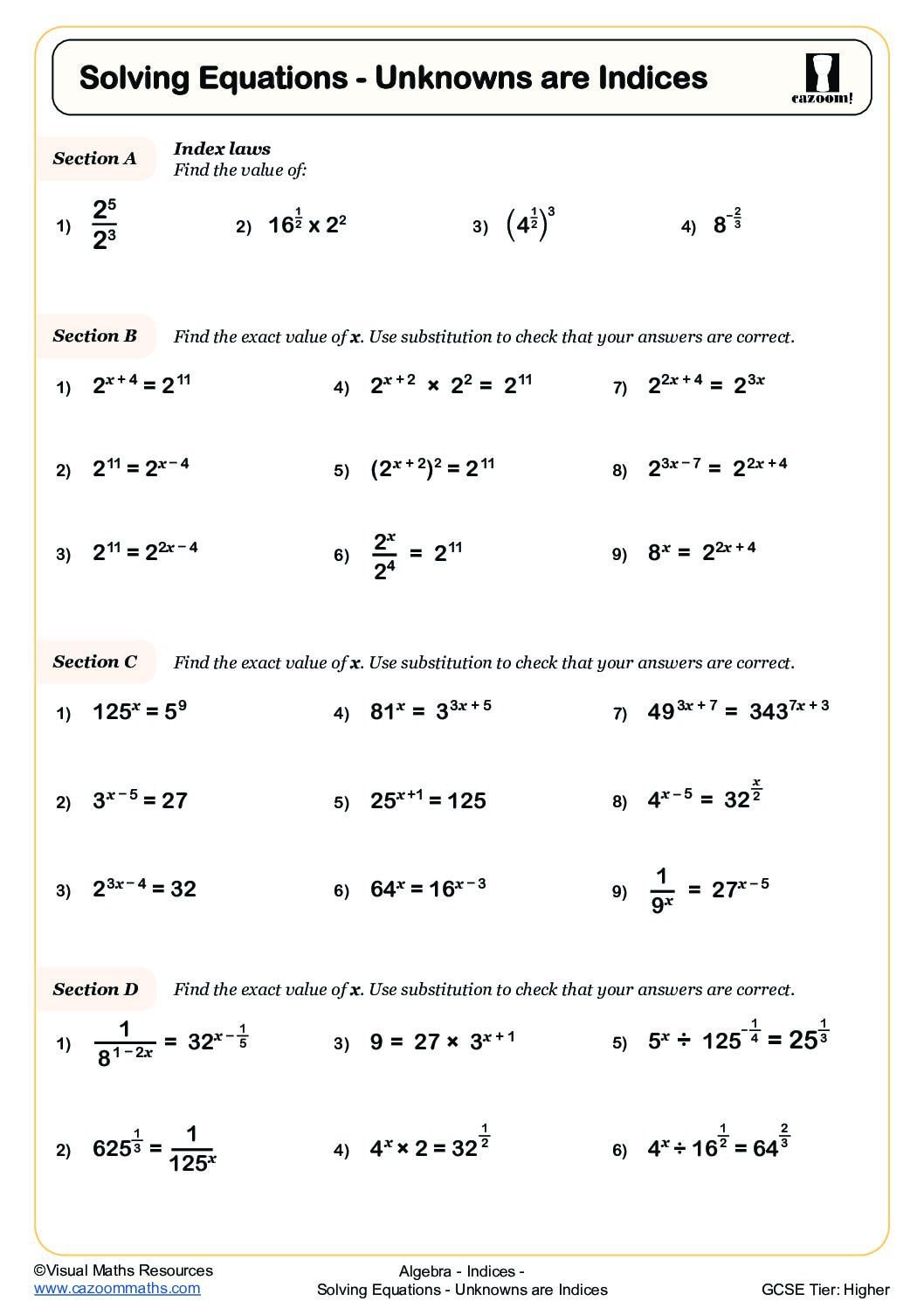
Solving Equations - Unknowns are Indices
Year groups: 10, 11
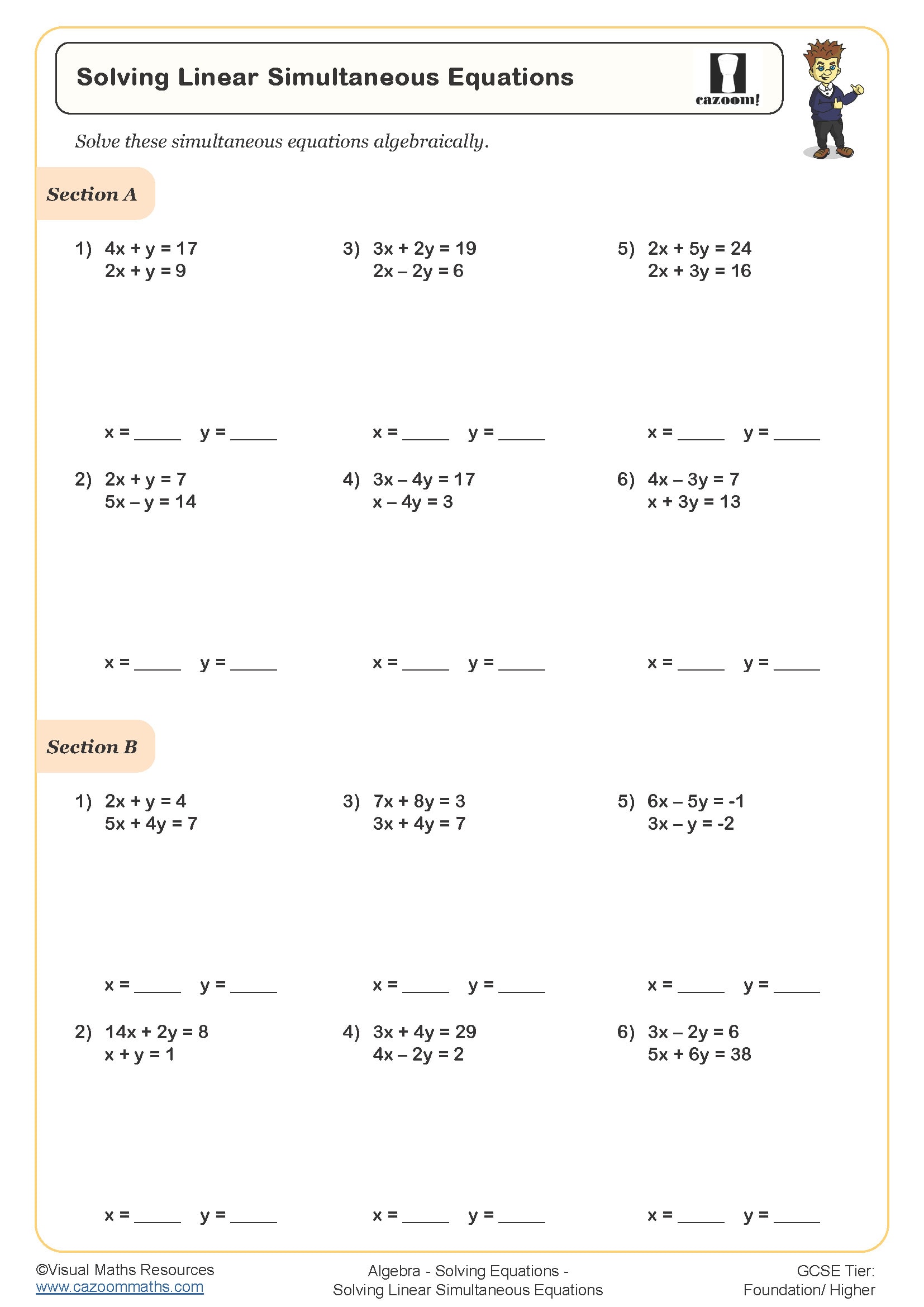
Solving Linear Simultaneous Equations
Year groups: 10, 11
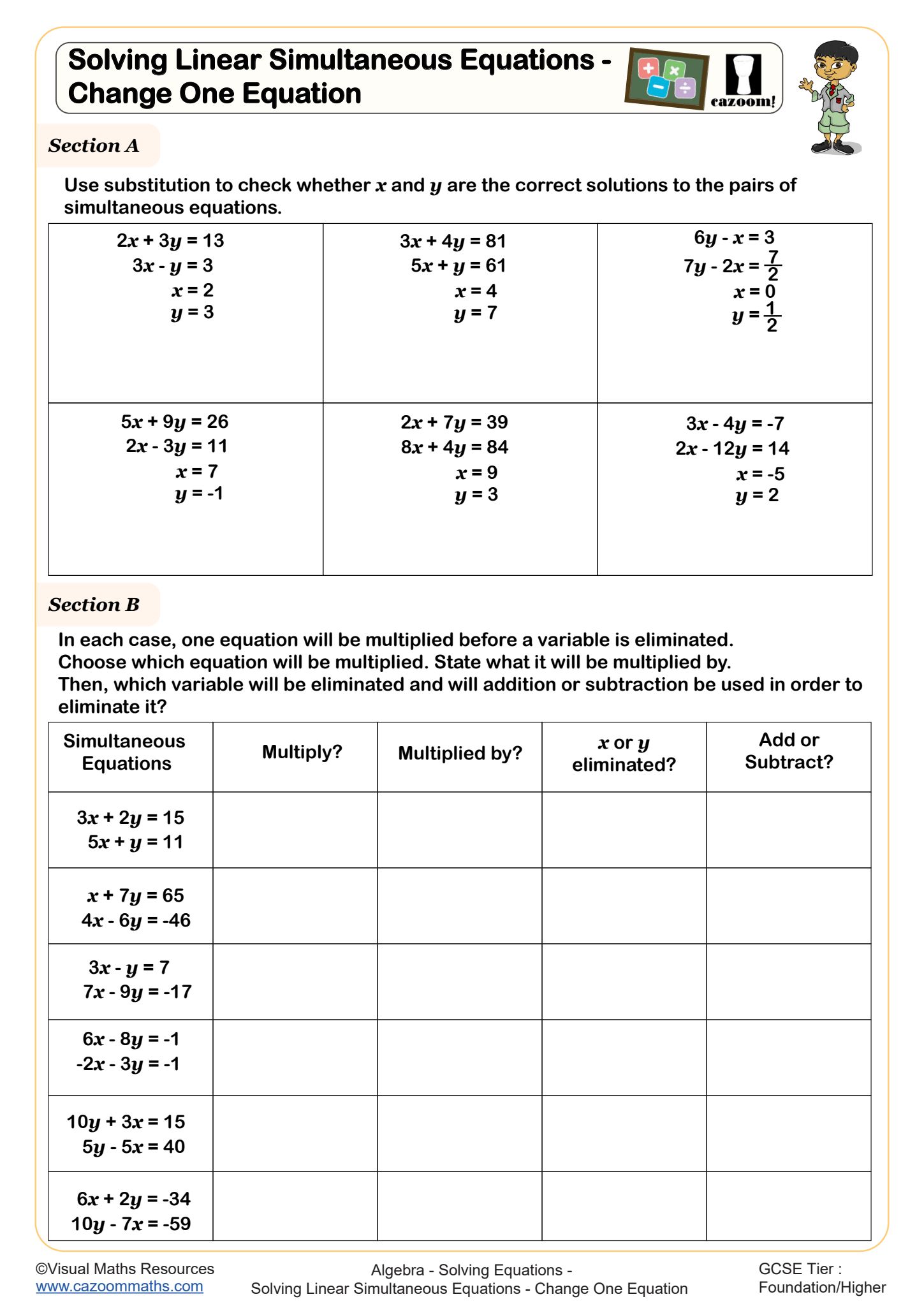
Solving Linear Simultaneous Equations - Change One Equation
Year groups: 10, 11
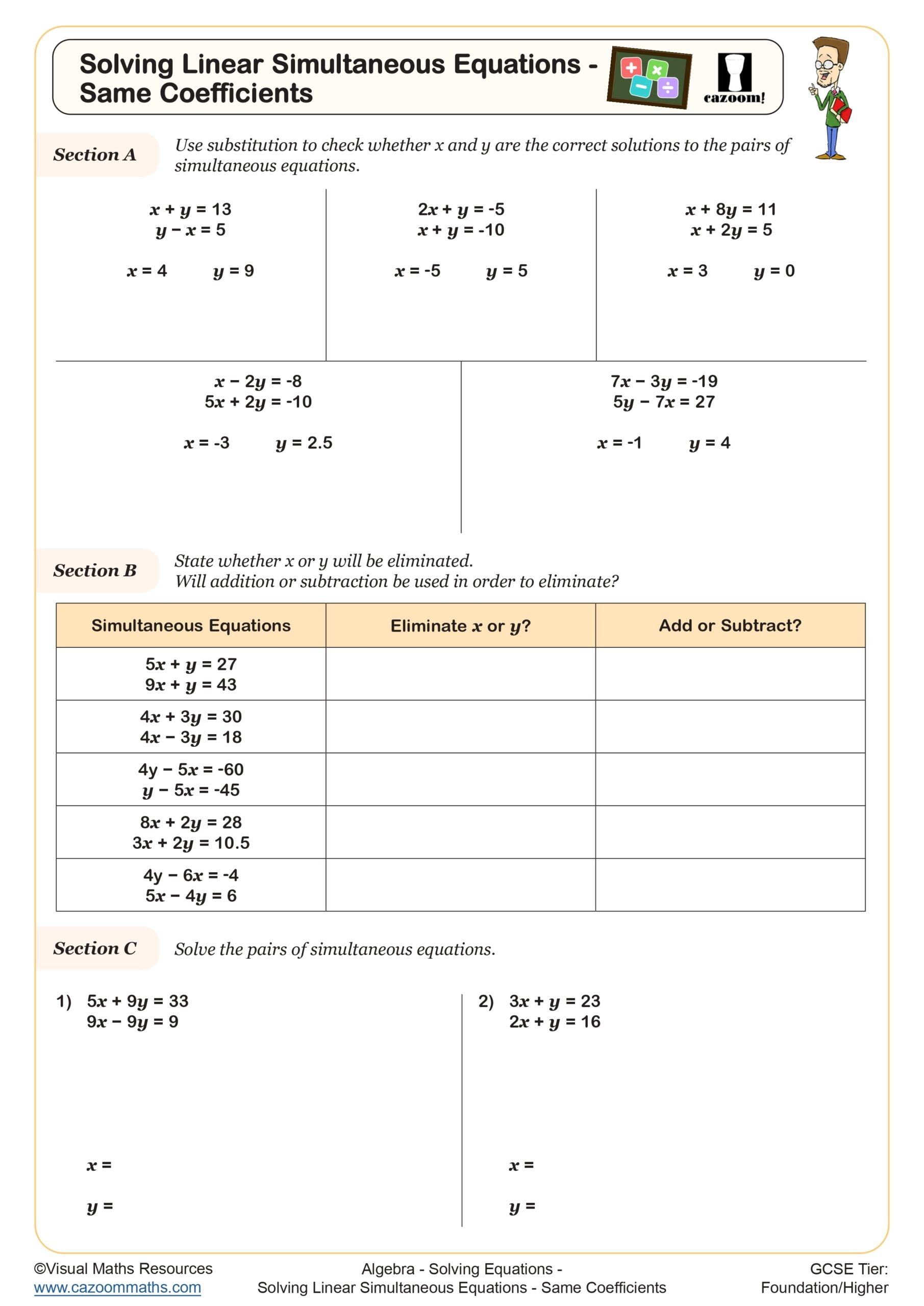
Solving Linear Simultaneous Equations - Same Coefficients
Year groups: 10, 11
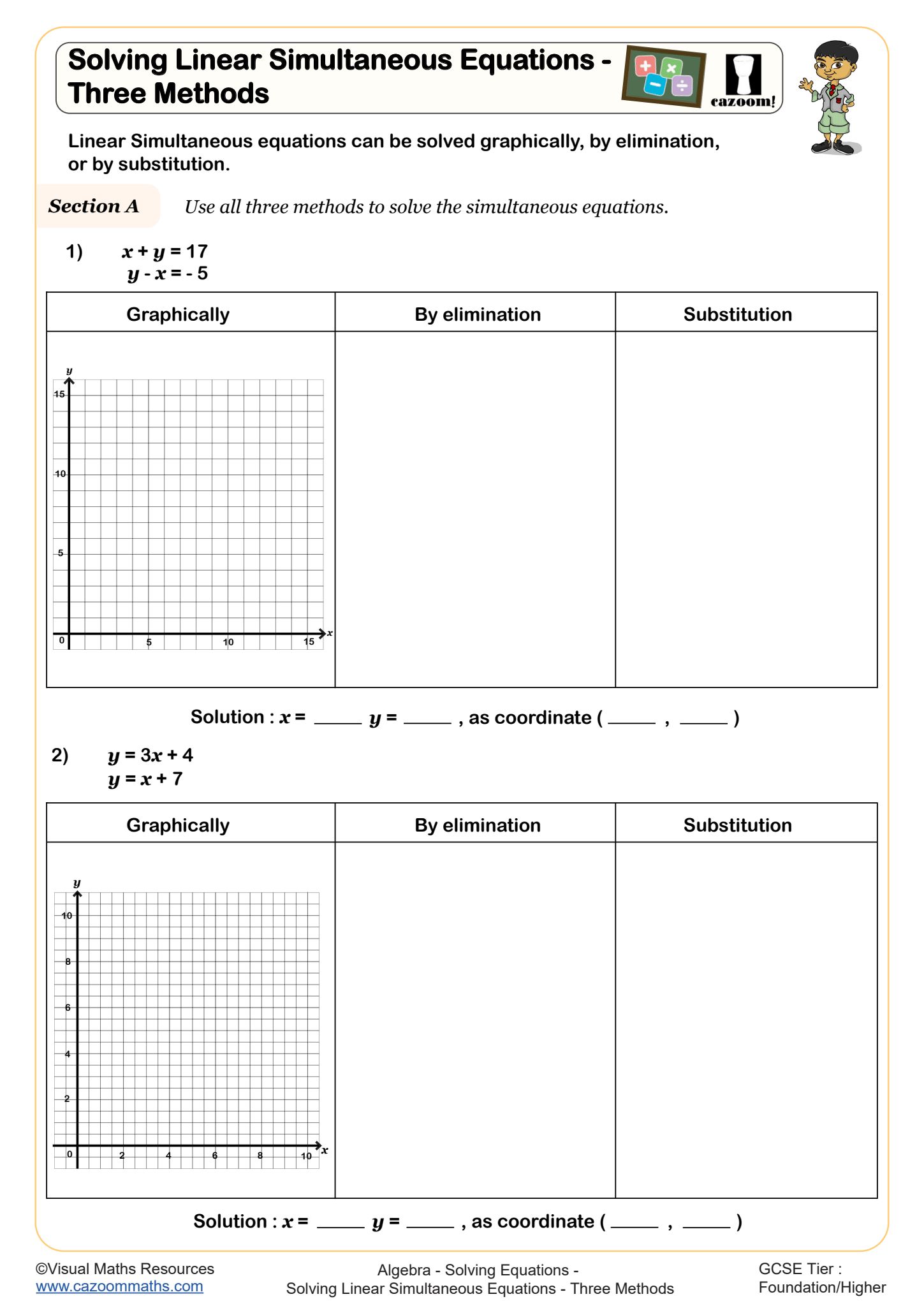
Solving Linear Simultaneous Equations - Three Methods
Year groups: 10, 11
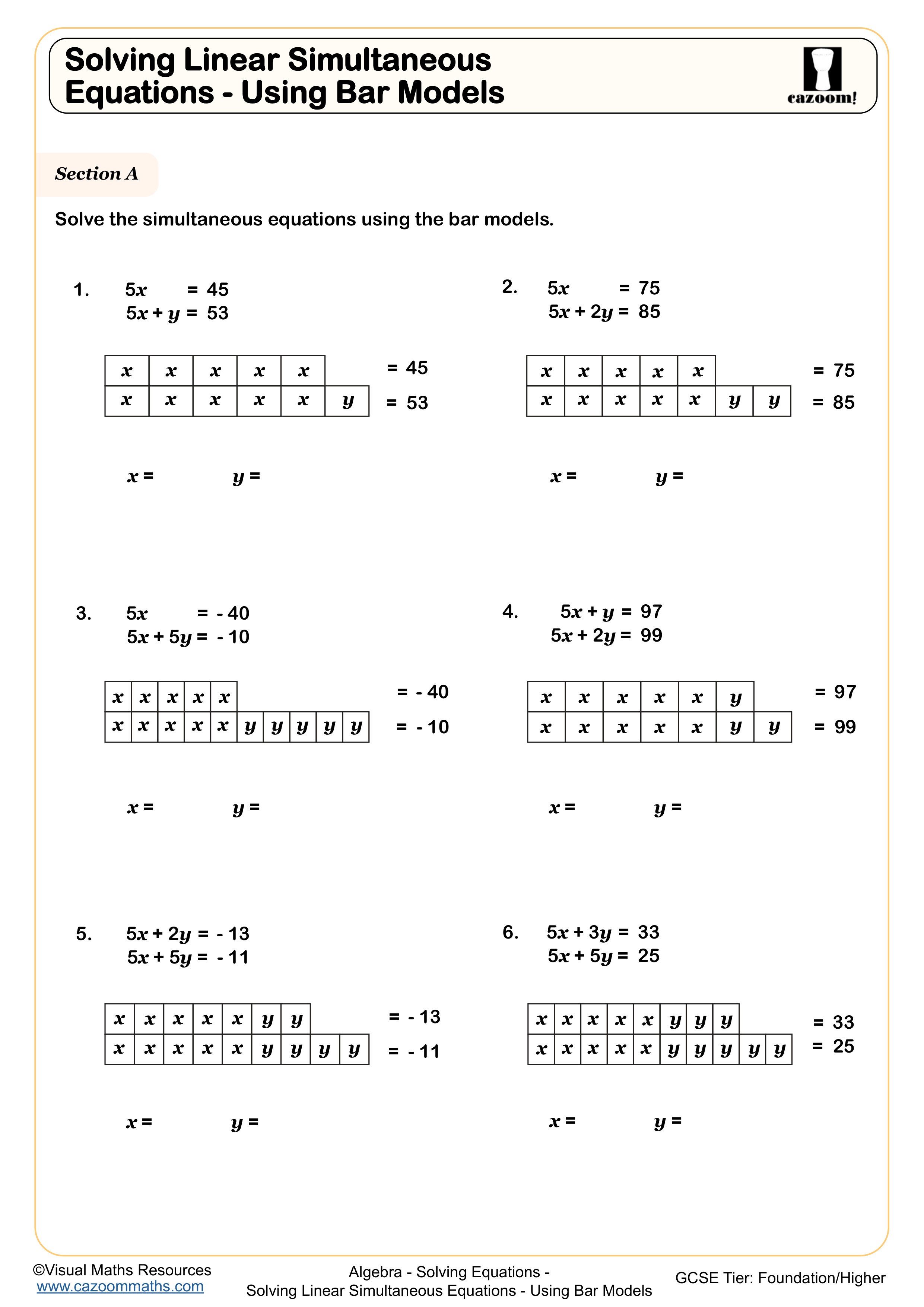
Solving Linear Simultaneous Equations - Using Bar Models
Year groups: 10, 11
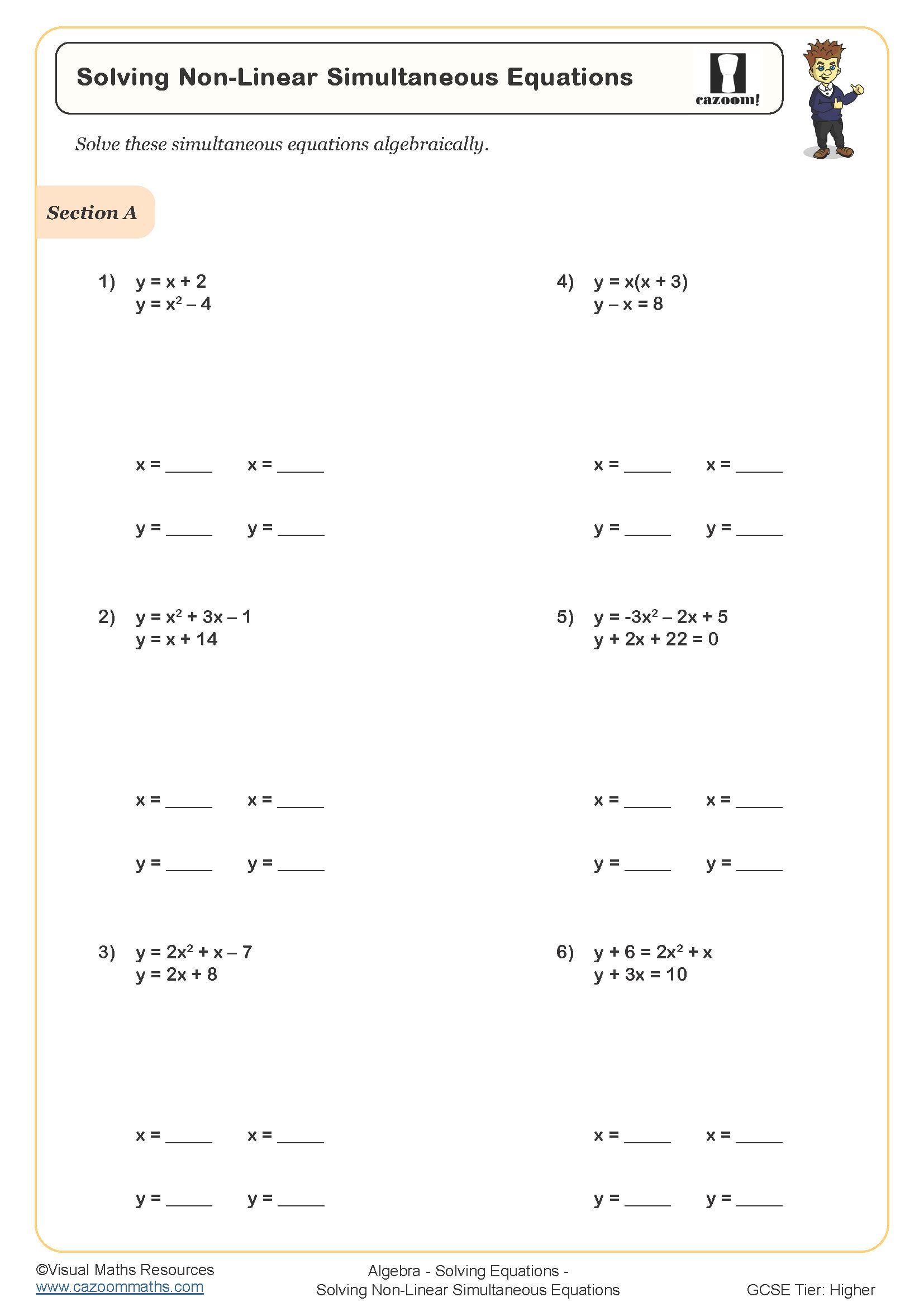
Solving Non-linear Simultaneous Equations
Year groups: 10, 11
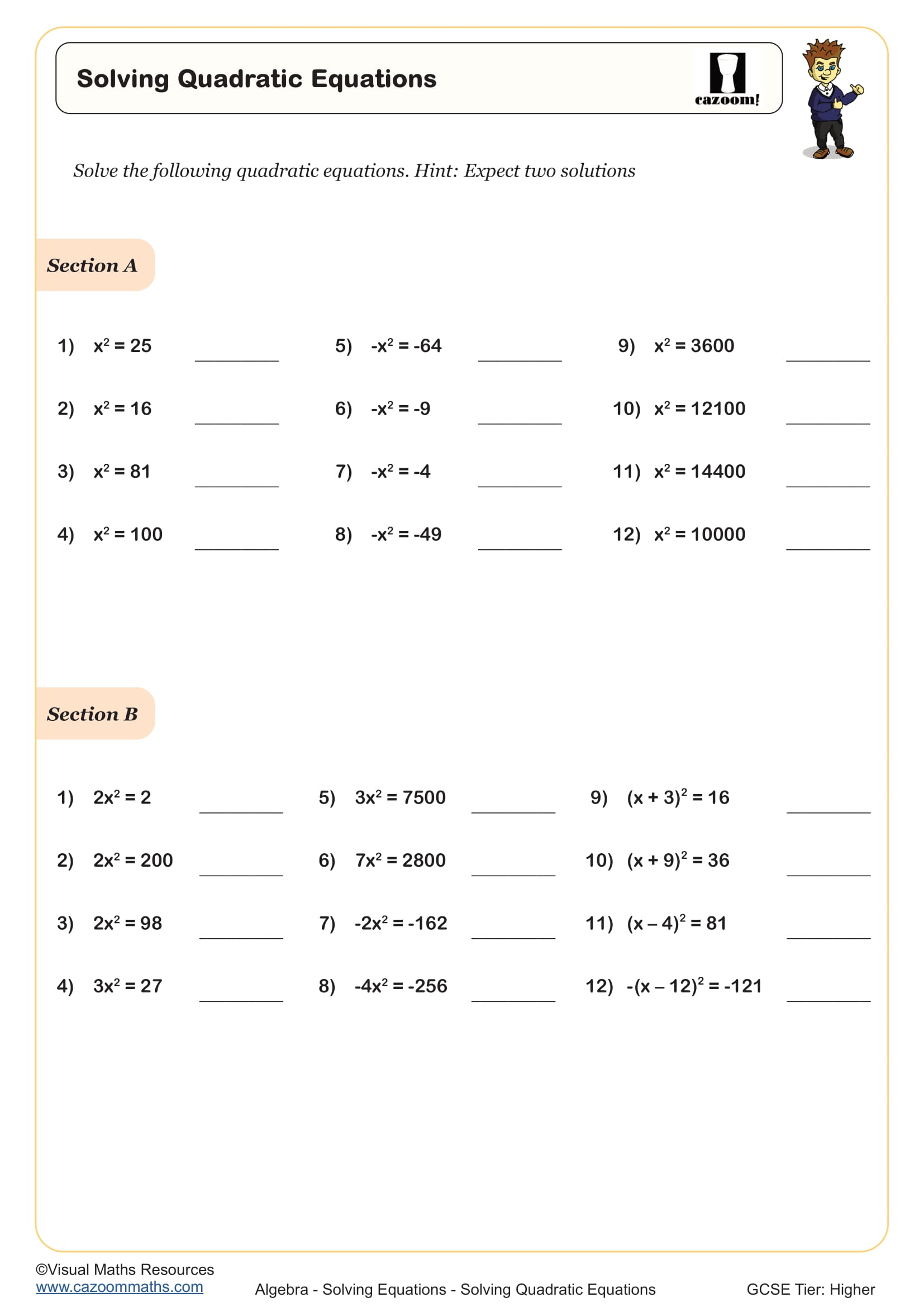
Solving Quadratic Equations
Year groups: 10, 11
Solving Quadratic Equations by Completing the Square
Year groups: 10, 11
.jpg?w=3840)
Solving Quadratic Equations by Factorising
Year groups: 10, 11
.jpg?w=3840)
Solving Quadratic Equations by Formula
Year groups: 10, 11
.jpg?w=3840)
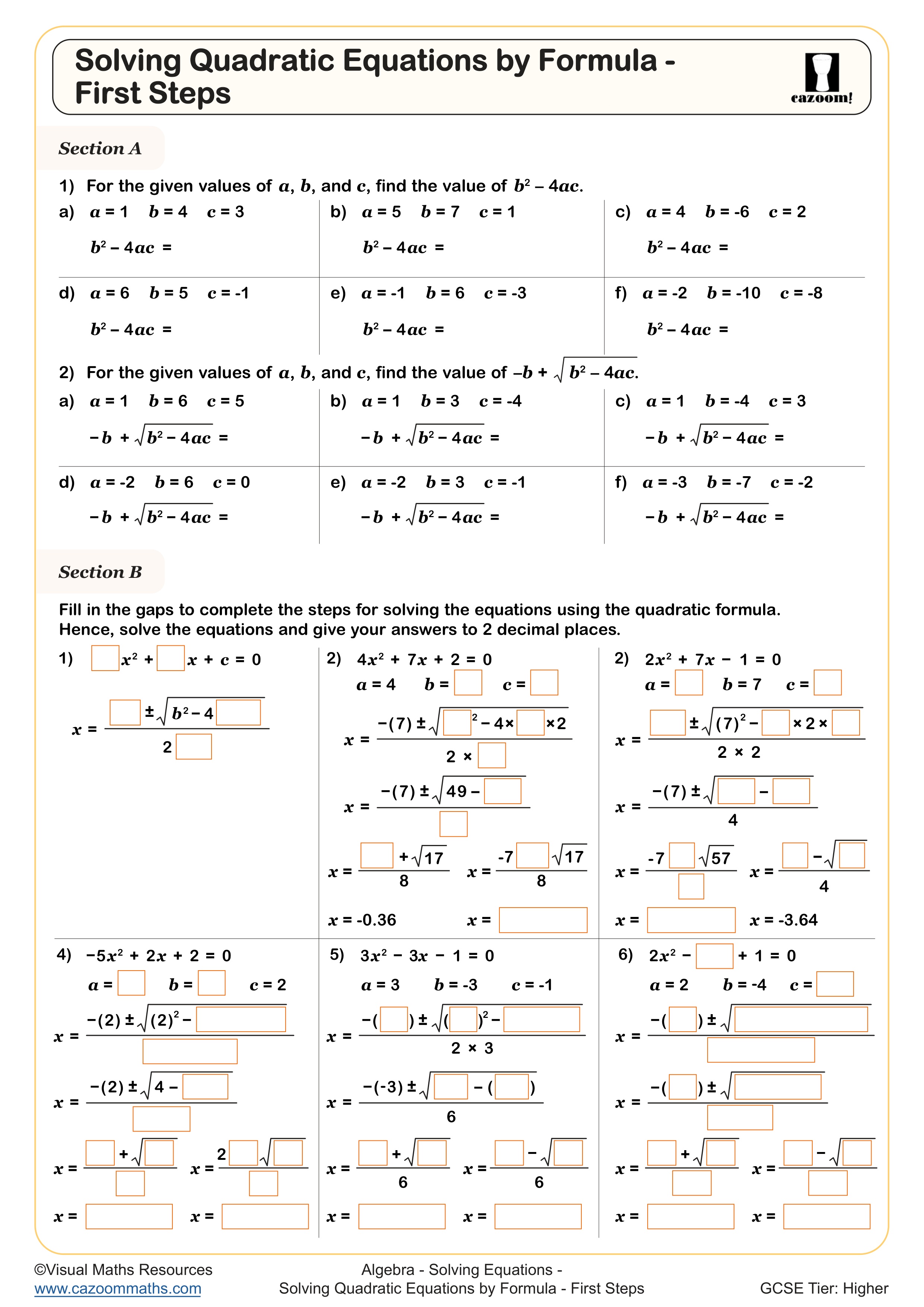
Solving Quadratic Equations by Formula - First Steps
Year groups: 10, 11
Solving Quadratic Equations by Formula (Non-Calculator)
Year groups: 10, 11
-Worksheet.jpg?w=3840)
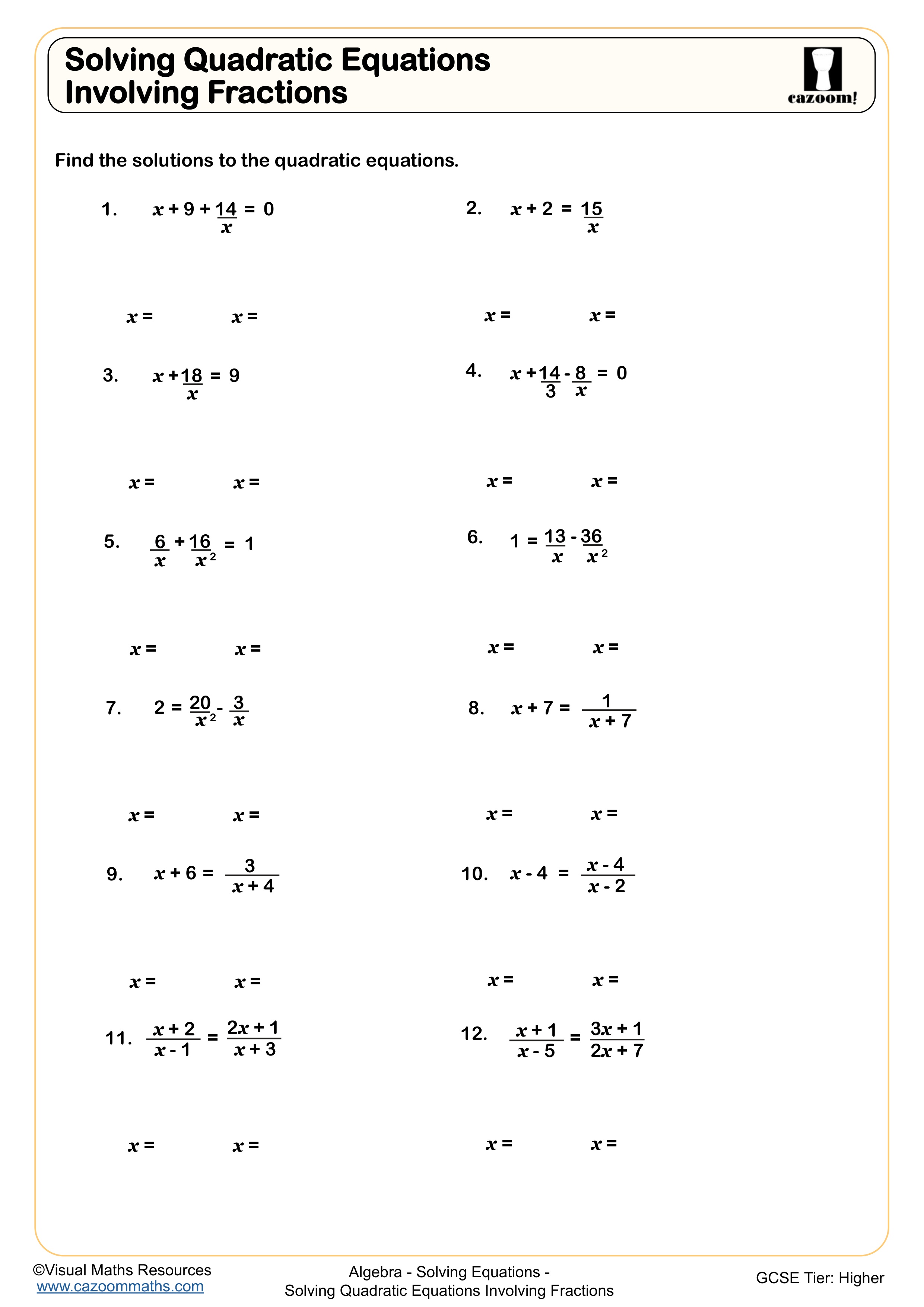
Solving Quadratic Equations Involving Fractions
Year groups: 10, 11
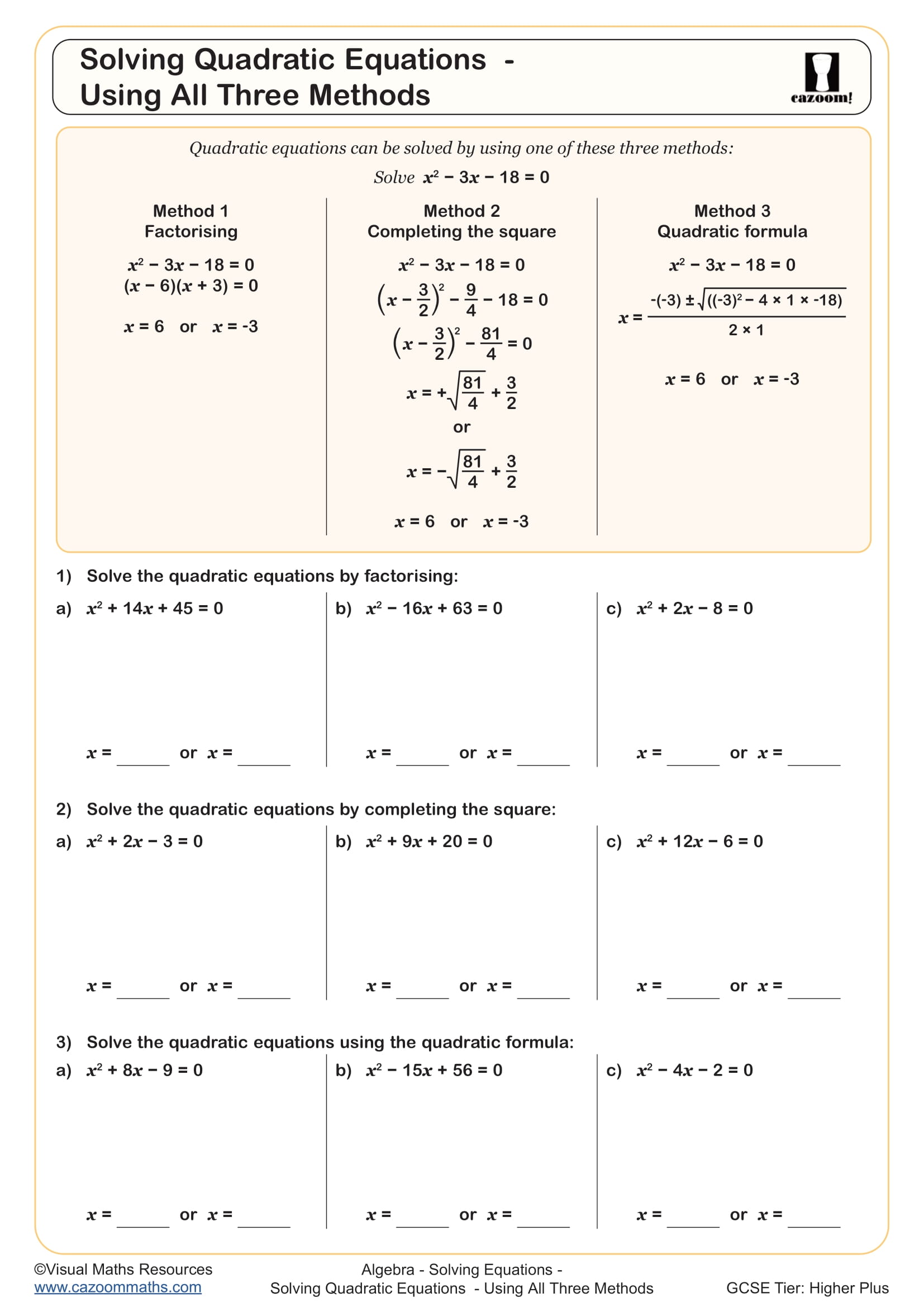
Solving Quadratic Equations Using All Three Methods
Year groups: 10, 11
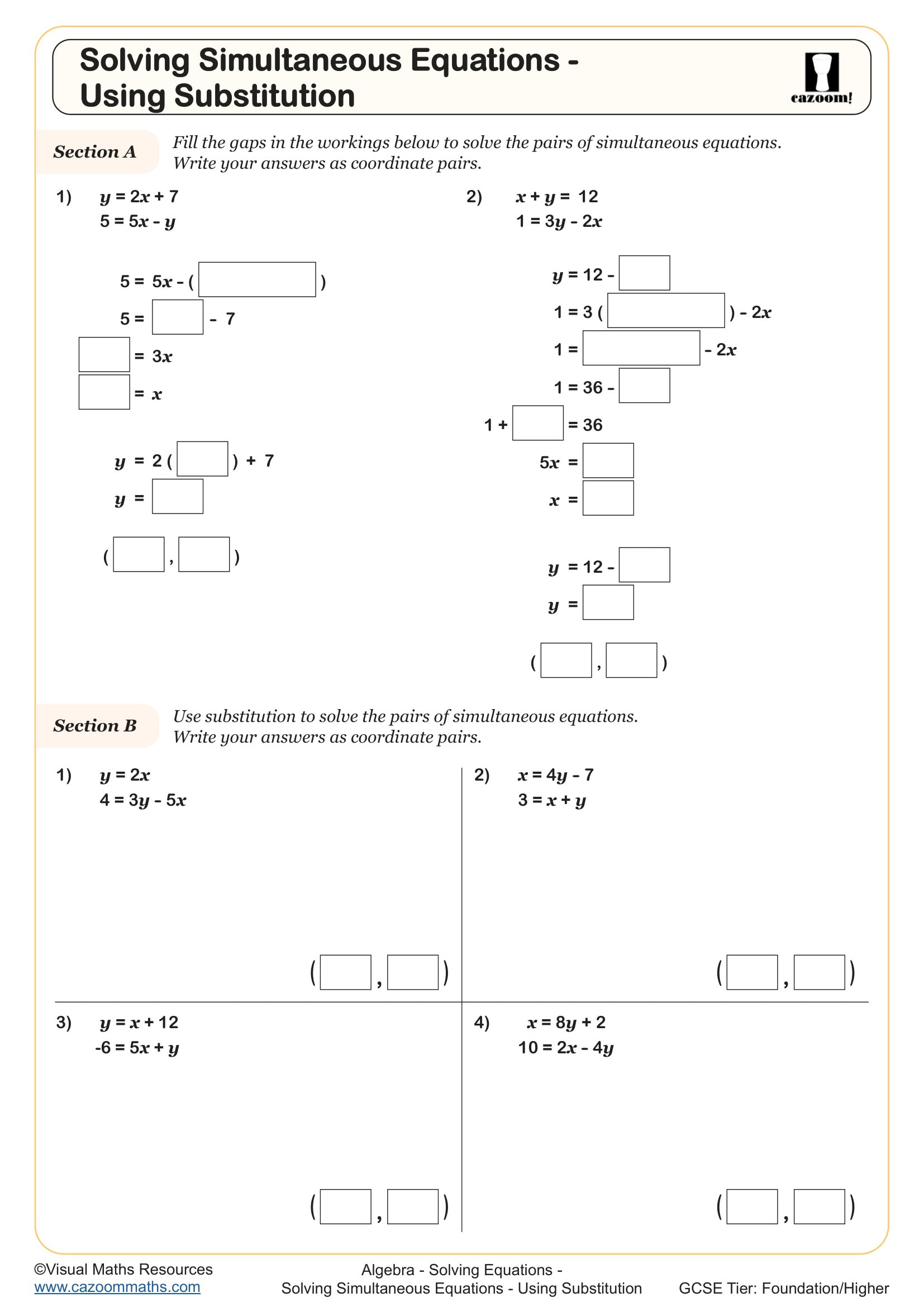
Solving Simultaneous Equations - Using Substitution
Year groups: 10, 11
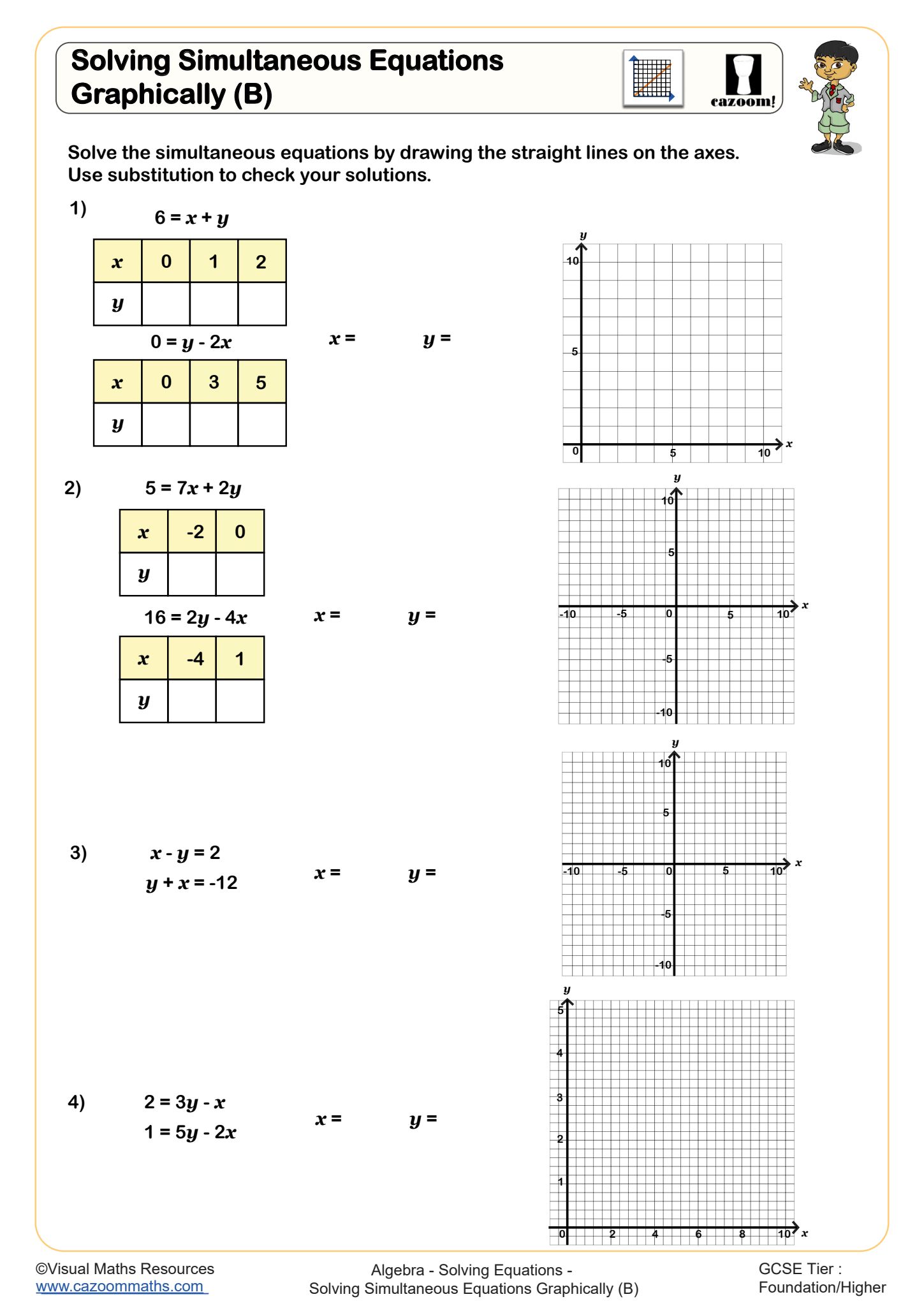
Solving Simultaneous Equations Graphically (B)
Year groups: 10, 11
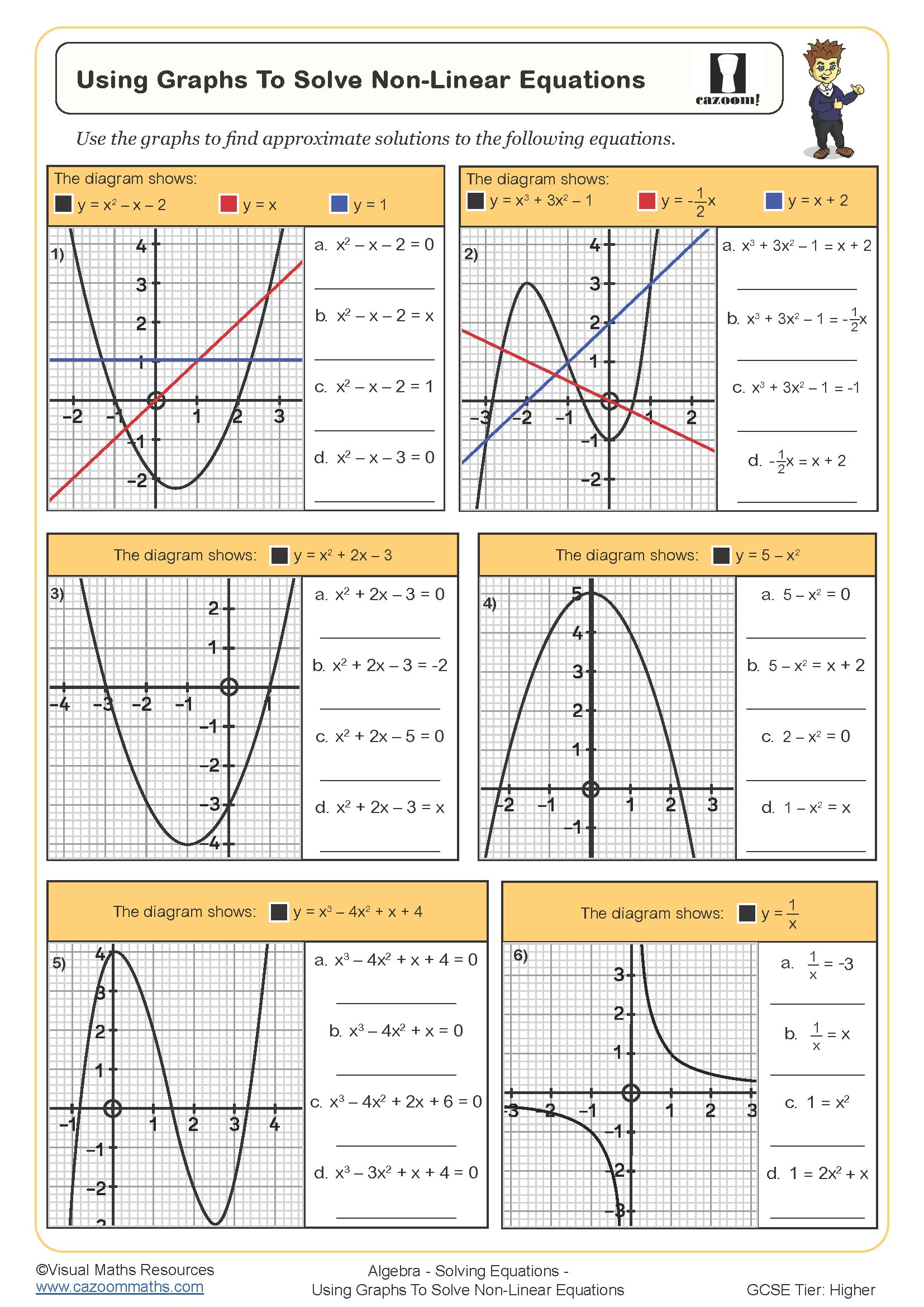
Using Graphs to Solve Non-linear Equations
Year groups: 10, 11
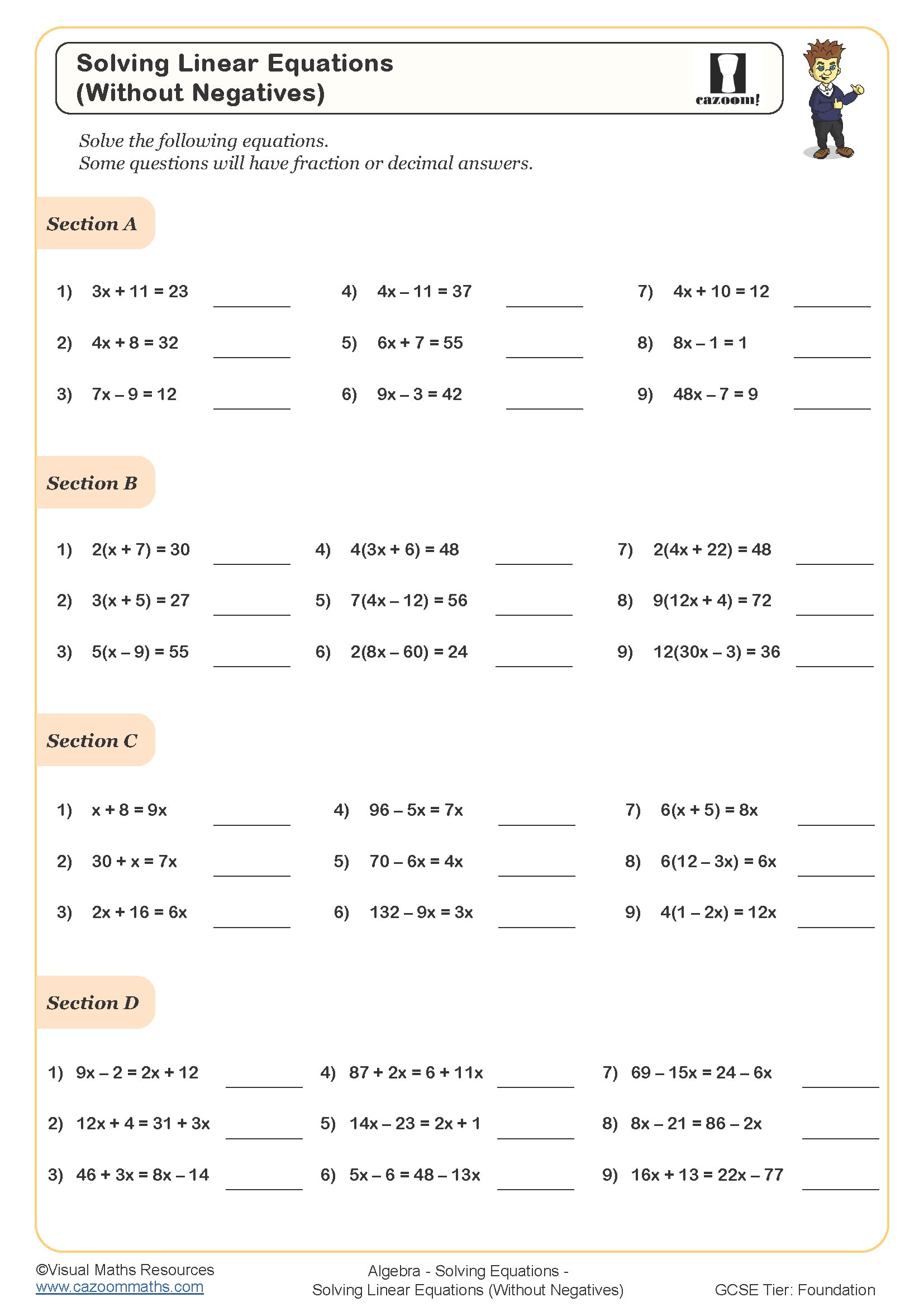
Solving Linear Equations (Without Negatives)
All worksheets are created by the team of experienced teachers at Cazoom Maths.
What makes a good linear equations worksheet for KS3 students?
A quality linear equations worksheet should progress systematically from simple one-step equations to more complex multi-step problems, allowing students to build confidence gradually. The best worksheets include a mix of positive and negative solutions, whole numbers and decimals, and plenty of practice with the fundamental principle of maintaining balance.
Teachers often observe that students make fewer errors when worksheets clearly separate different types of equations rather than mixing them randomly. Students particularly benefit from worksheets that include worked examples and show the step-by-step process, as this helps them develop the systematic approach that GCSE mark schemes expect.
Which year groups need solving equations worksheets?
Solving equations begins in Year 7 as part of the KS3 algebra curriculum, where students first encounter simple linear equations. The topic continues through Years 8 and 9, becoming increasingly sophisticated, before reaching its peak complexity at GCSE level in Years 10 and 11.
The progression is carefully structured: Year 7 focuses on basic one-step and two-step equations, Year 8 introduces brackets and negative coefficients, while Year 9 tackles equations with unknowns on both sides and fractional coefficients. By GCSE, students must confidently handle simultaneous equations, quadratics, and forming equations from worded problems.
Why do students find solving equations with brackets challenging?
Solving equations with brackets requires students to coordinate two distinct skills: expanding brackets correctly and then applying equation-solving techniques. Many students initially attempt to solve before expanding, leading to errors, or they make sign mistakes when distributing negative coefficients through brackets.
This skill connects directly to real-world problem solving in engineering and science, where equations often model relationships between variables. For instance, calculating the force needed to accelerate an object involves equations with brackets when accounting for multiple forces acting simultaneously, making this mathematical skill valuable in STEM careers.
How can teachers use these solving equations worksheets effectively?
These worksheets work best when teachers select appropriate difficulty levels that match their students' current understanding, using the answer sheets to provide immediate feedback during practice sessions. The variety available allows teachers to differentiate easily, giving struggling students more basic linear practice while challenging stronger students with simultaneous equations.
The worksheets are particularly valuable for intervention groups, homework assignments, and revision sessions before assessments. Teachers can use them diagnostically to identify specific areas where students need additional support, such as working with negative numbers or handling fractions in equations.