Solving Linear Equations Worksheets
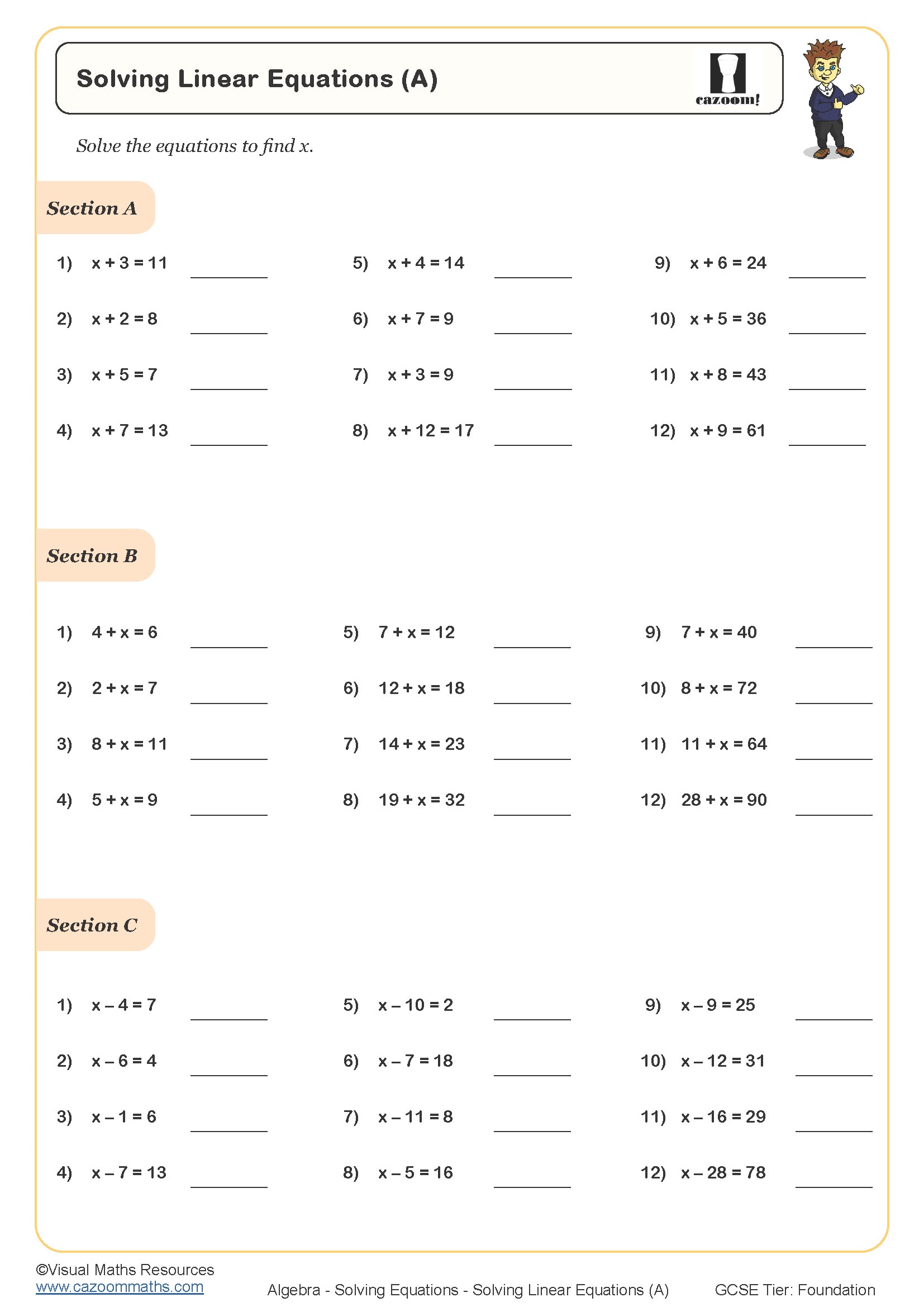
Solving Linear Equations (A)
Year groups: 7, 8
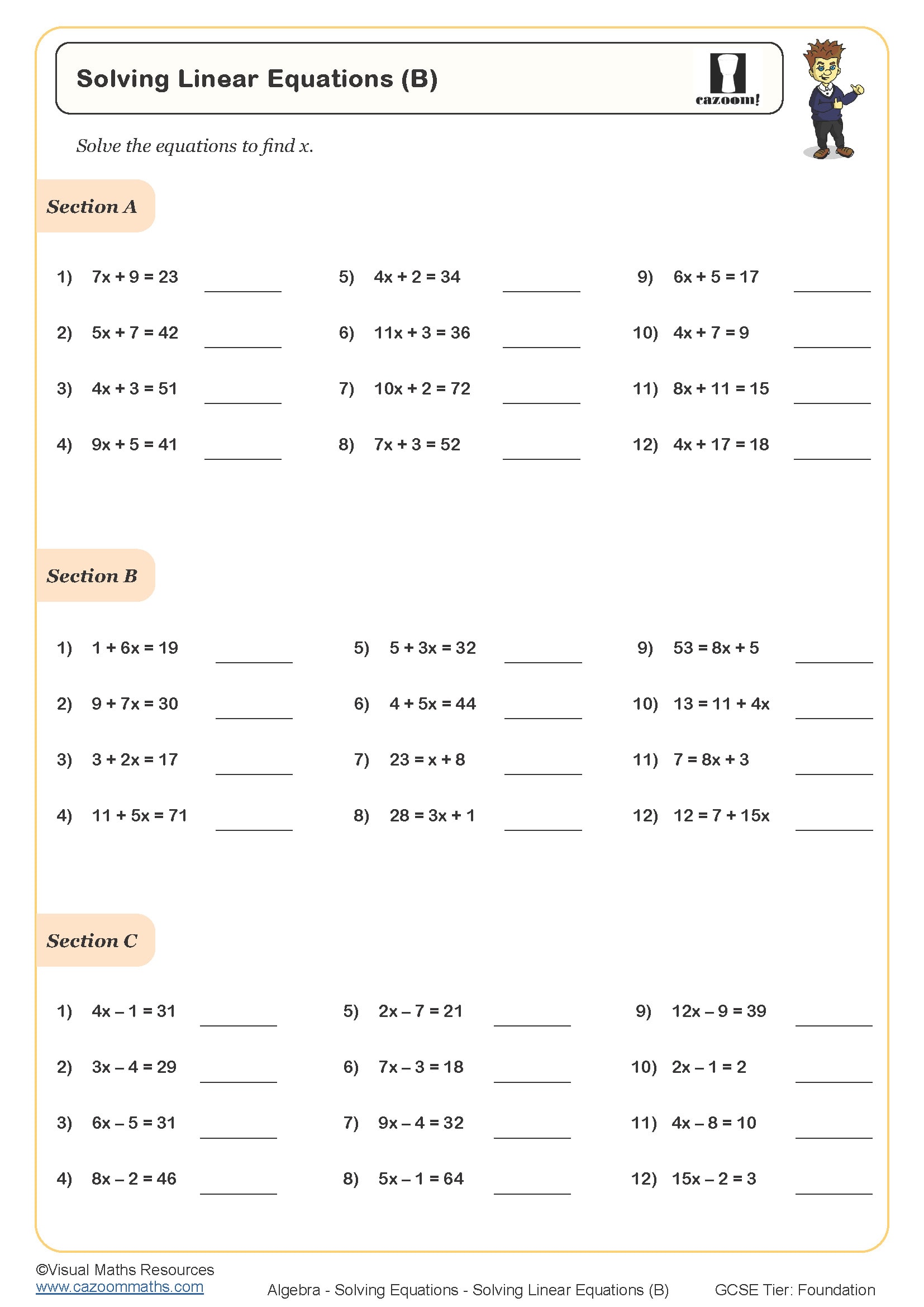
Solving Linear Equations (B)
Year groups: 7, 8
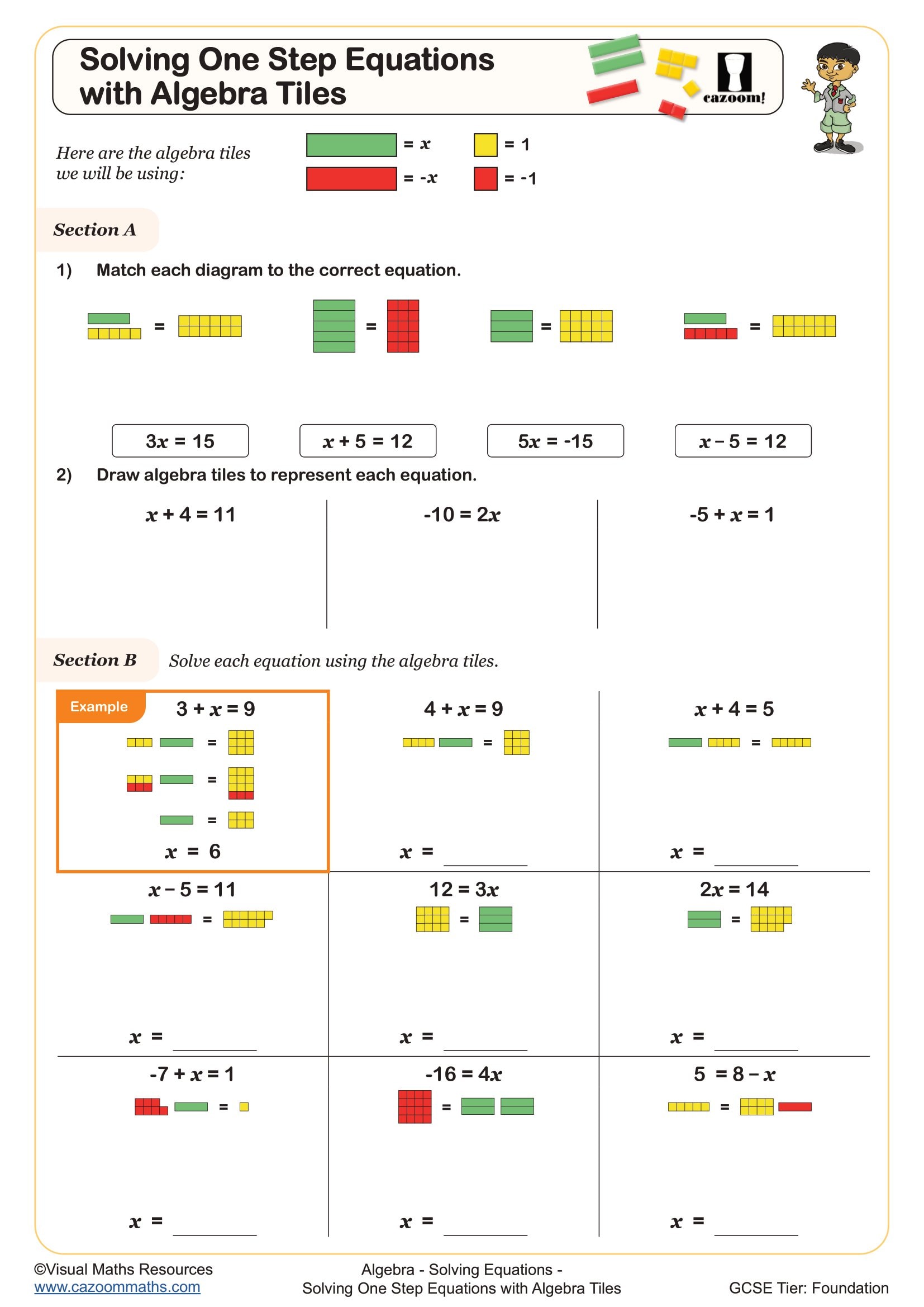
Solving One Step Equations with Algebra Tiles
Year groups: 7, 8
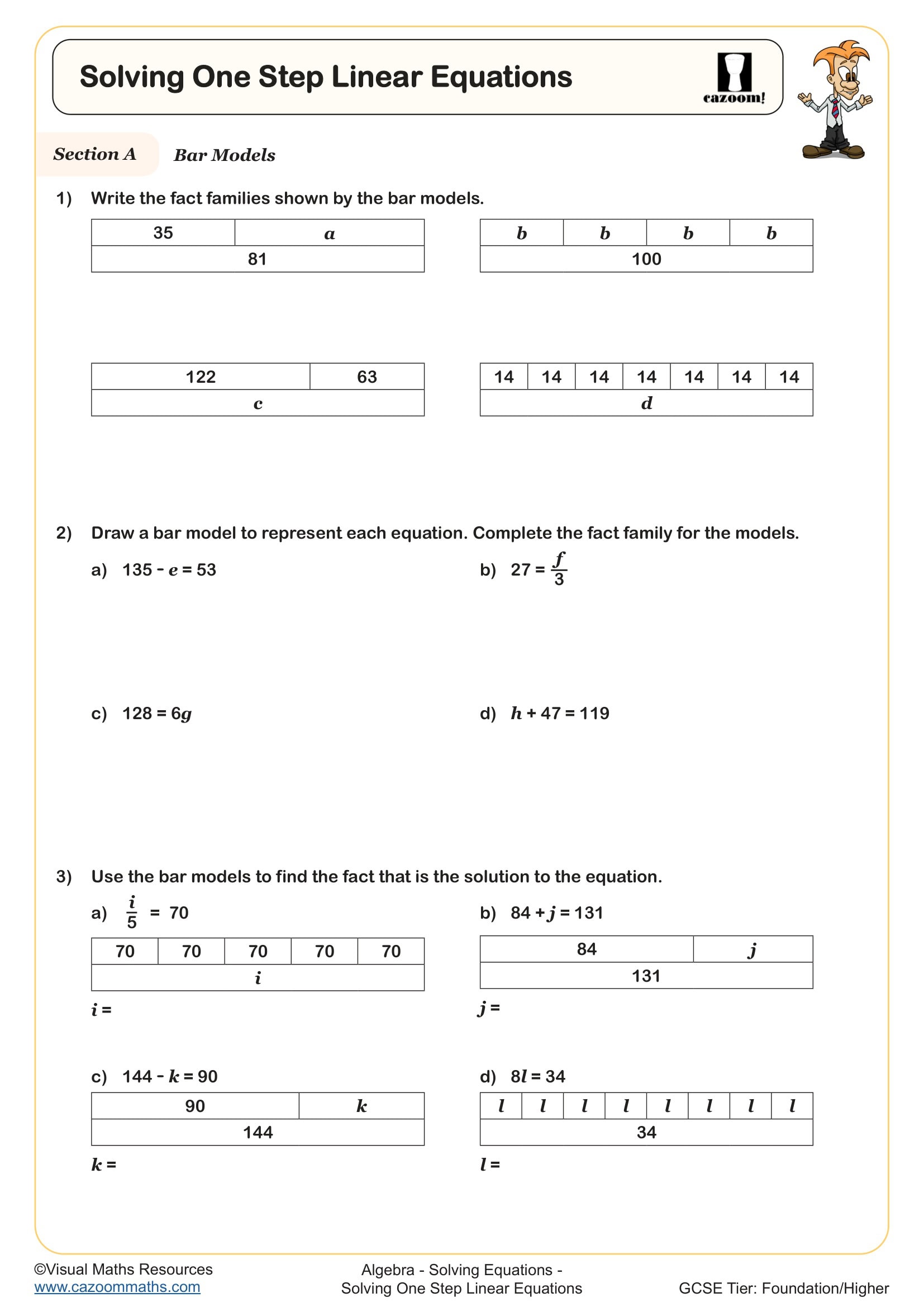
Solving One Step Linear Equations
Year groups: 7
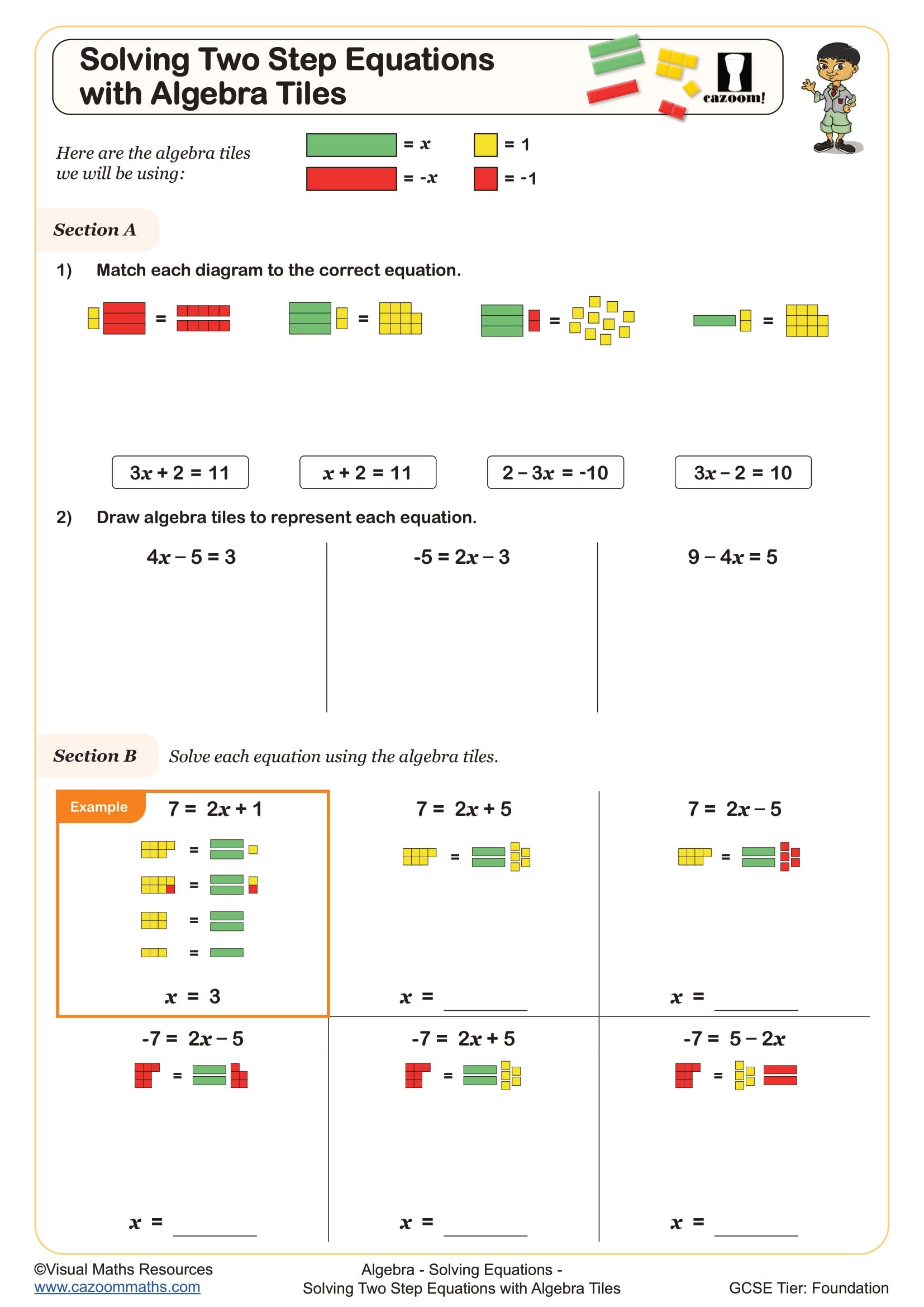
Solving Two Step Equations with Algebra Tiles
Year groups: 7, 8
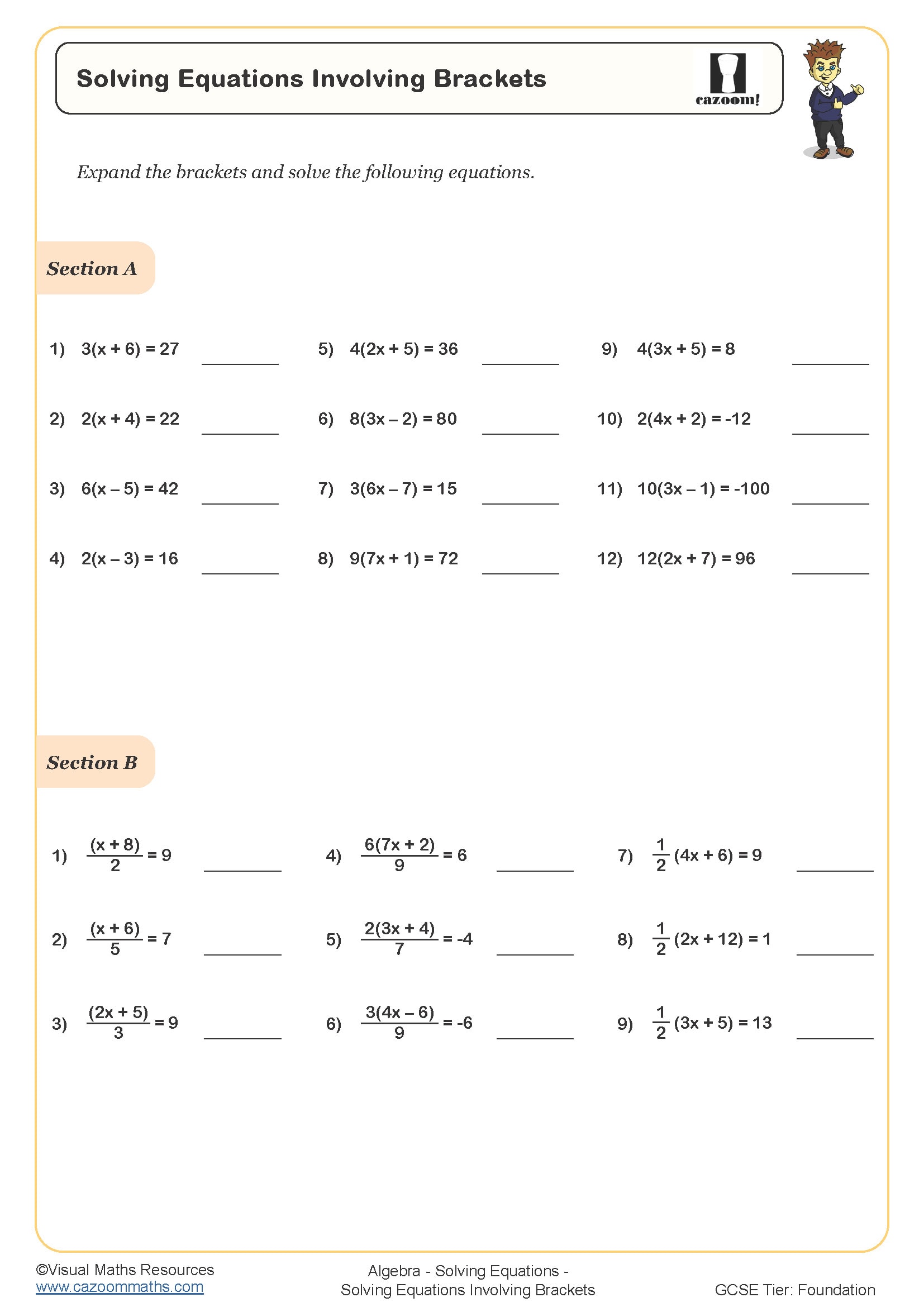
Solving Equations Involving Brackets
Year groups: 8, 9
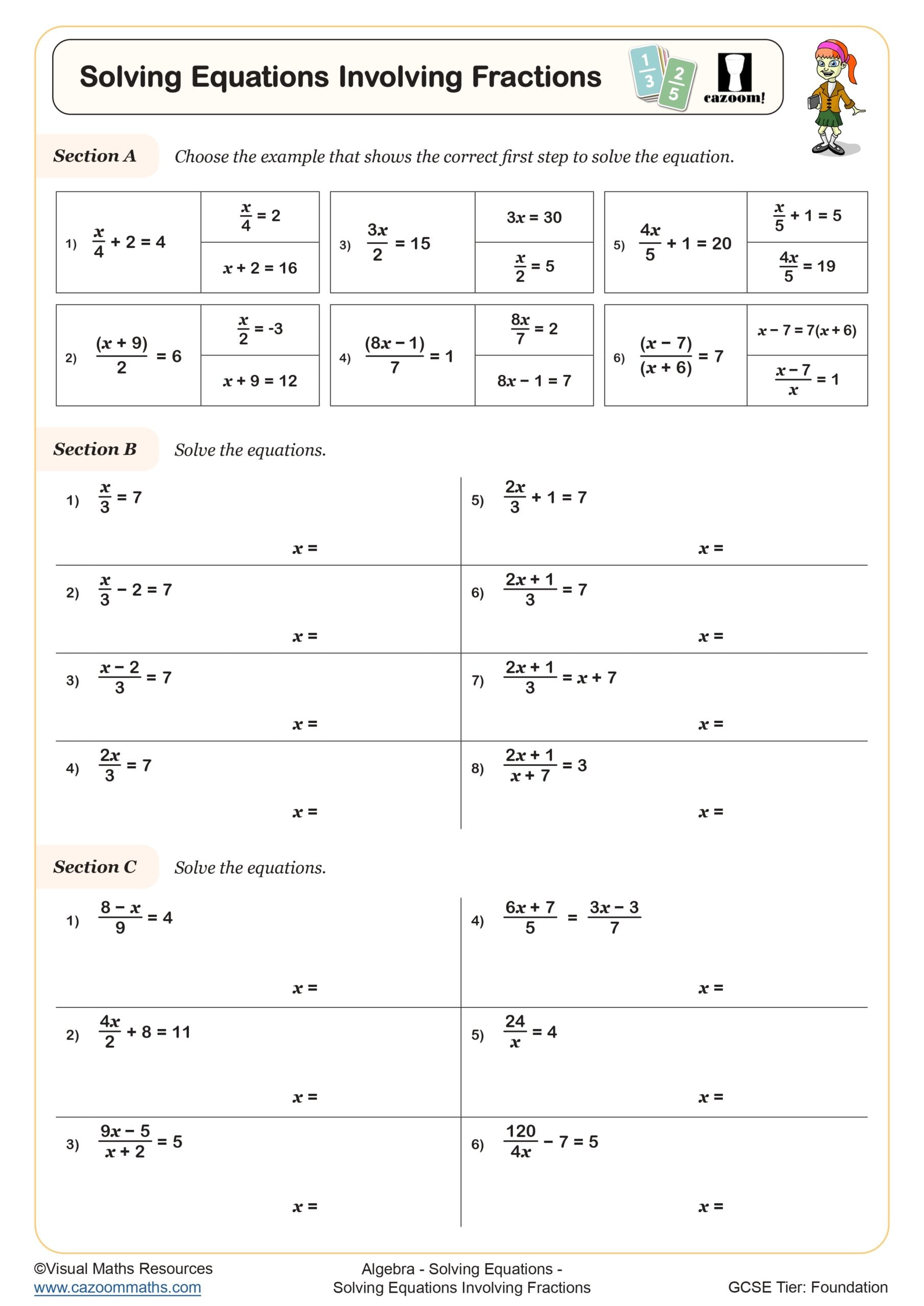
Solving Equations Involving Fractions
Year groups: 8, 9
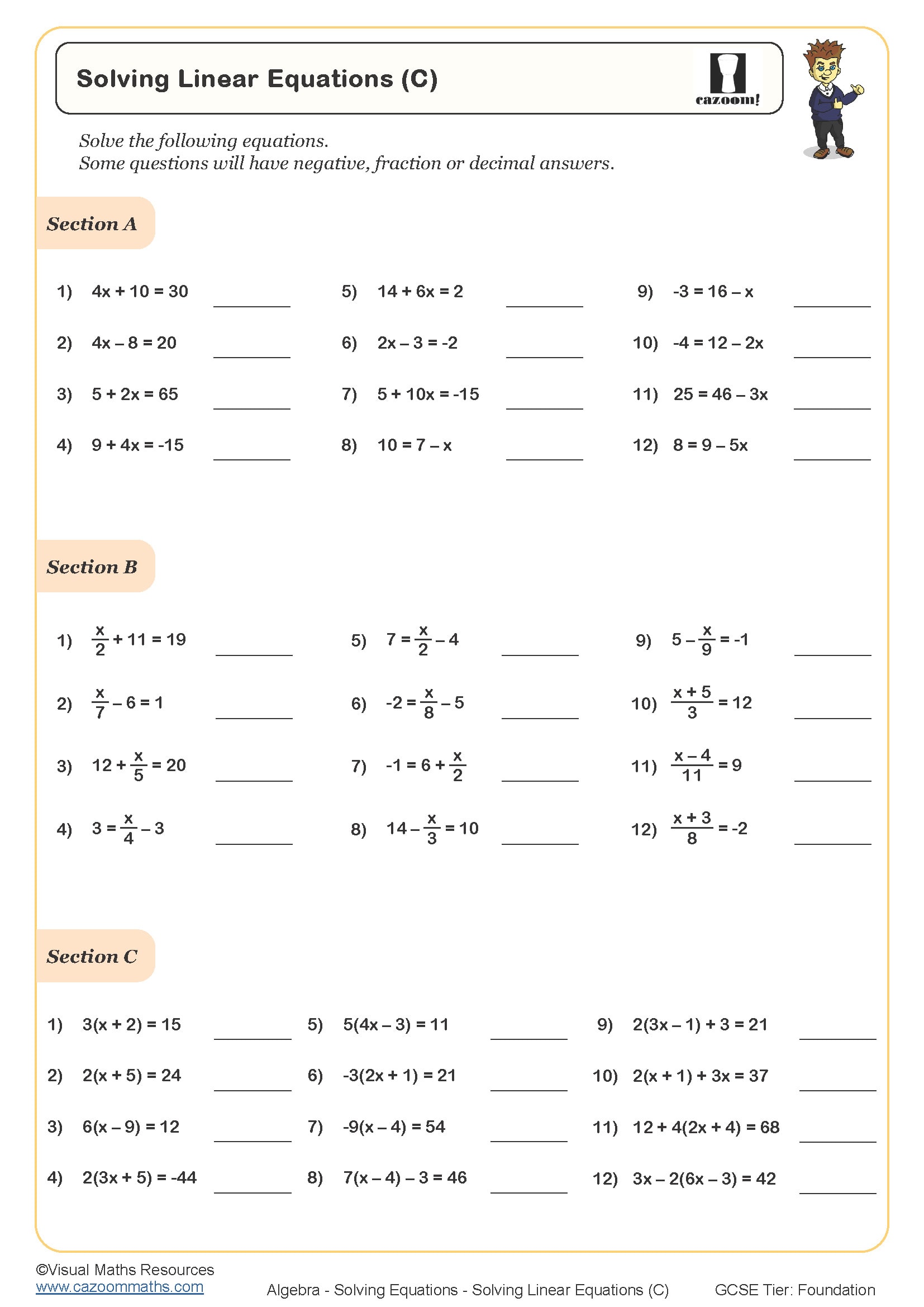
Solving Linear Equations (C)
Year groups: 8, 9
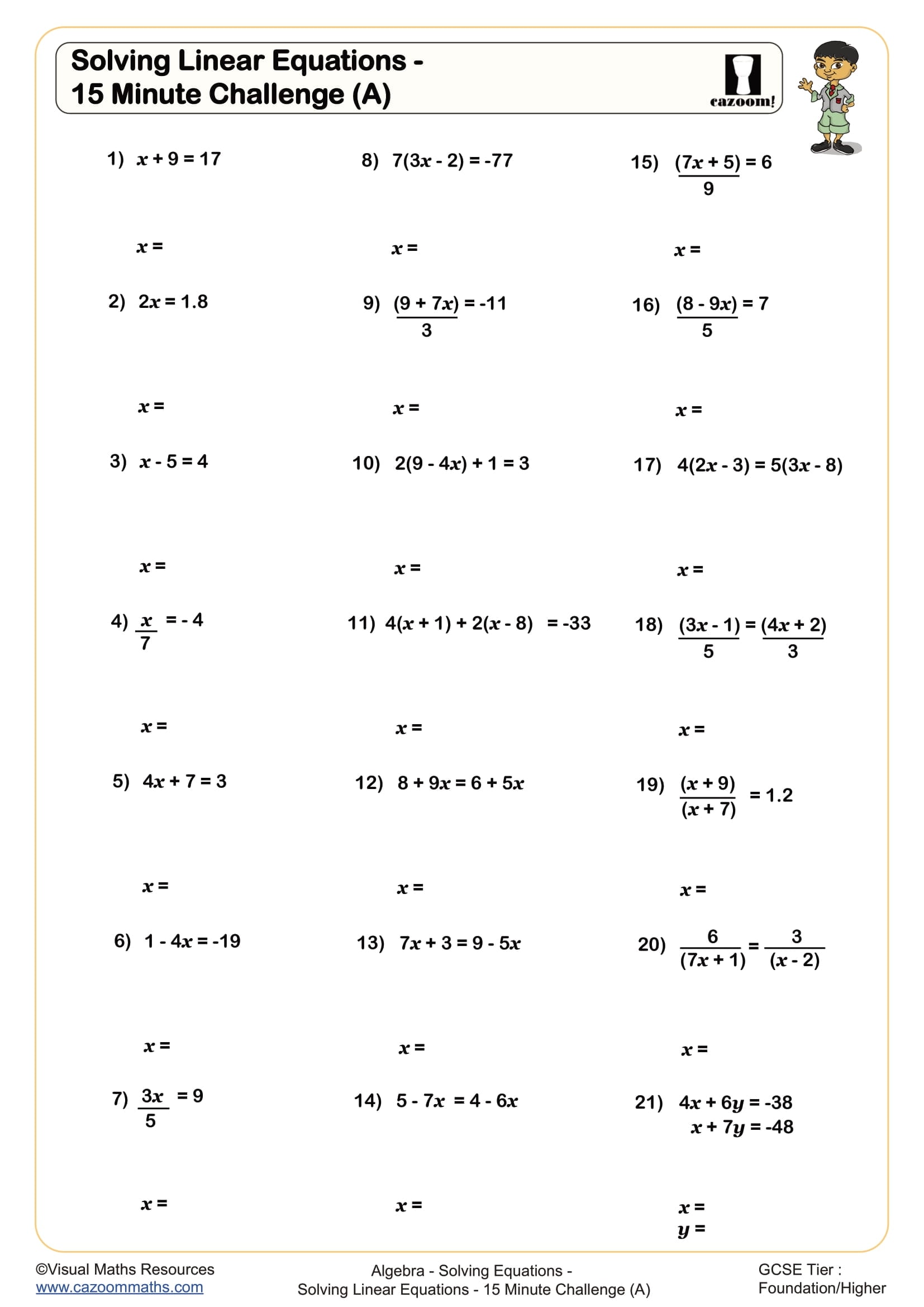
Solving Equations 15 Minute Challenge (A)
Year groups: 9, 10
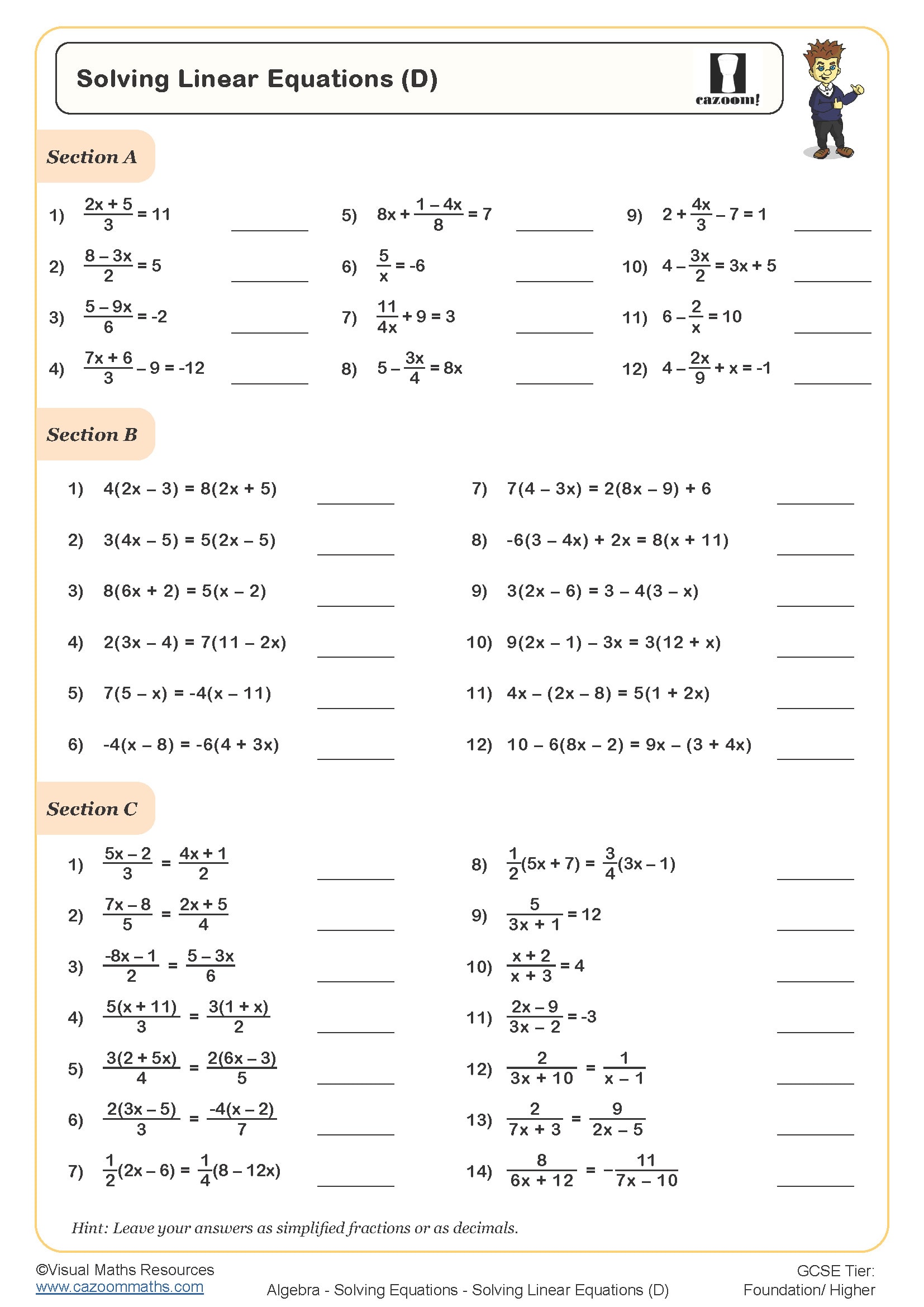
Solving Linear Equations (D)
Year groups: 9, 10
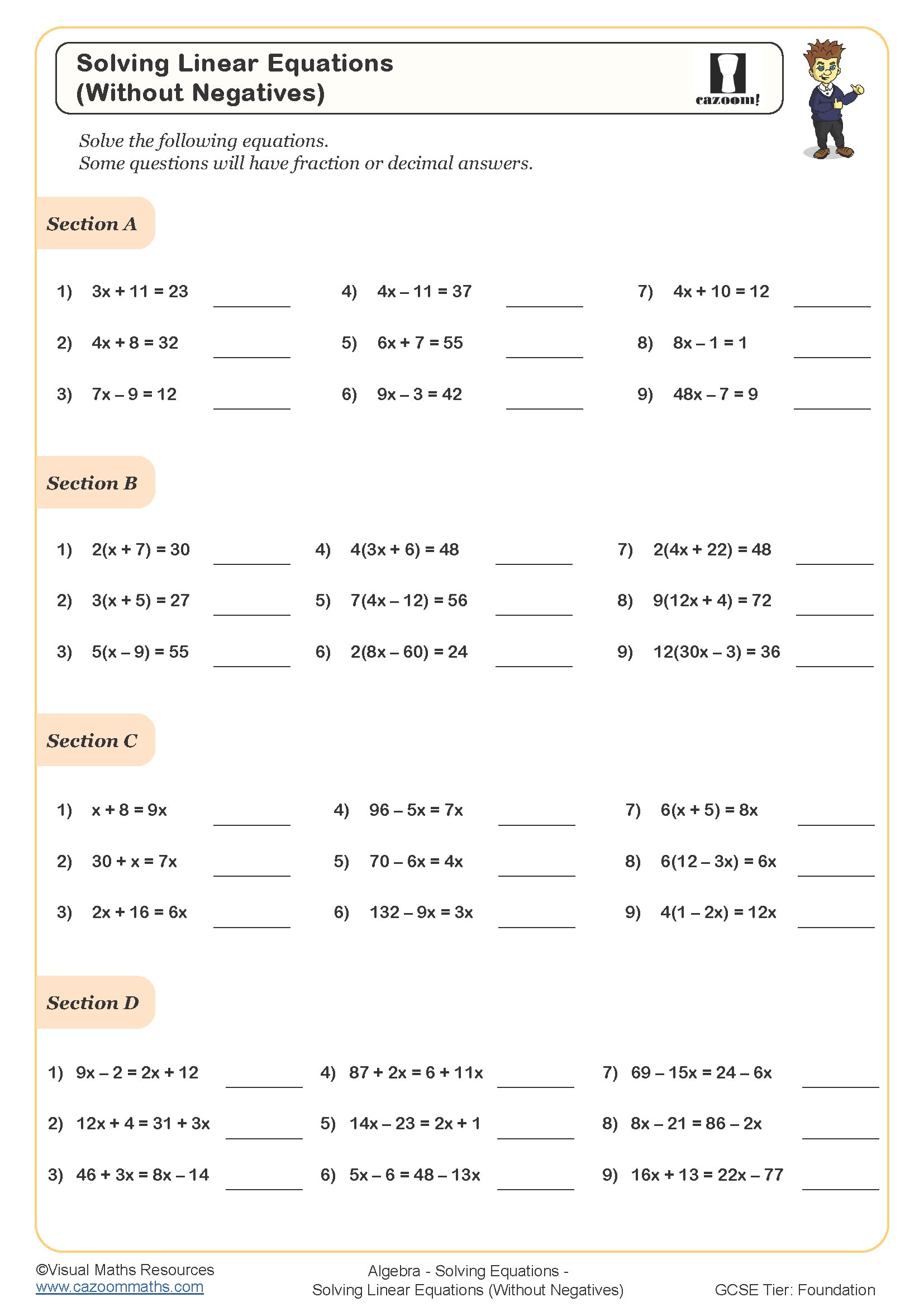
Solving Linear Equations (Without Negatives)
All worksheets are created by the team of experienced teachers at Cazoom Maths.
What makes an effective solving linear equations worksheet?
An effective solving equations worksheet provides systematic progression from basic one-step equations through to complex multi-step problems involving brackets, fractions, and negative coefficients. Teachers find that students need extensive practice with each type before progressing, particularly when transitioning from arithmetic to algebraic thinking at the start of KS4.
The most useful solving equations worksheets include varied question types that mirror GCSE exam formats, with clear space for working and step-by-step solutions. Teachers report that students benefit most when worksheets explicitly show the inverse operations needed at each stage, helping them understand the logical sequence rather than memorising procedures.
Which year groups should use linear equations worksheets?
Linear equations worksheets primarily support Year 9 and Year 10 students as they encounter formal algebraic manipulation for the first time in KS4. However, teachers often introduce simple one-step equations to more confident Year 8 students as extension work, building on their experience with inverse operations in arithmetic contexts.
Year 11 students frequently revisit these solving linear equations worksheets when preparing for GCSE examinations, particularly focusing on complex equations involving brackets and fractions. Teachers notice that even strong students benefit from regular practice to maintain fluency, as linear equation solving underpins many other algebraic topics including simultaneous equations and quadratic formula work.
How should students approach equations with brackets and fractions?
Students should expand brackets first using the distributive property, then collect like terms before isolating the variable through inverse operations. Teachers consistently observe that students make fewer errors when they write out each step clearly rather than attempting mental calculations, particularly with negative coefficients or subtraction of bracketed expressions.
For equations involving fractions, the most reliable approach involves multiplying through by the lowest common denominator to eliminate fractions entirely. Teachers find that students who skip this step often make calculation errors with fractional coefficients, whereas clearing fractions first transforms the problem into familiar integer arithmetic that students handle more confidently.
How can teachers use these worksheets most effectively in lessons?
Teachers achieve best results when they model the first few examples explicitly, emphasising the logical sequence of operations rather than mechanical procedures. Students benefit from seeing common errors worked through, particularly sign mistakes and incorrect fraction handling, before attempting independent practice with the linear equations worksheet with answers for self-checking.
Many teachers structure lessons with initial guided practice using mini-whiteboards, followed by independent work on differentiated questions, then peer checking using the provided solutions. This approach allows teachers to circulate and address misconceptions immediately while students gain confidence through immediate feedback on their working methods.