Substitution Worksheets
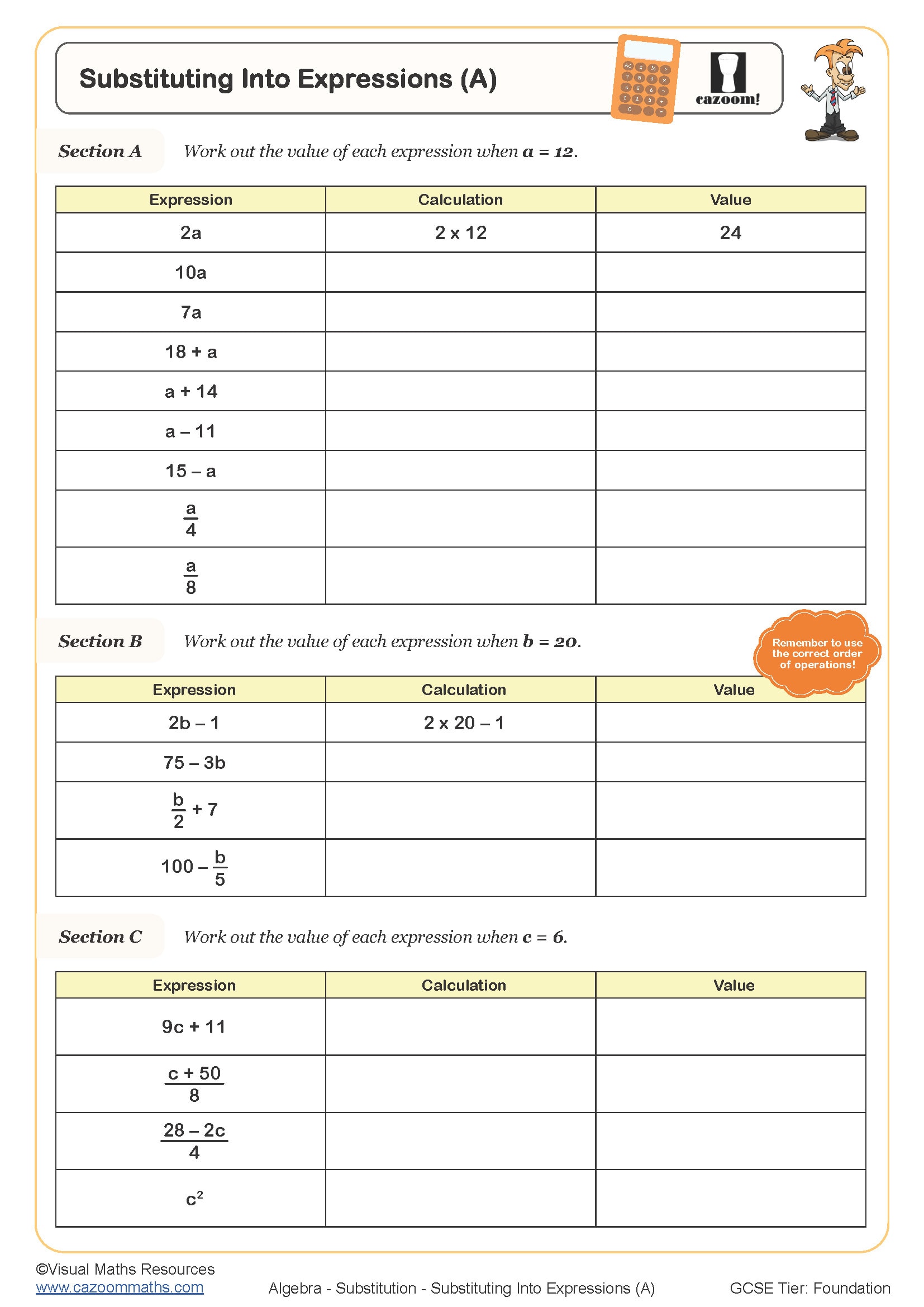
Substituting into Expressions (A)
Year groups: 7, 8, 9
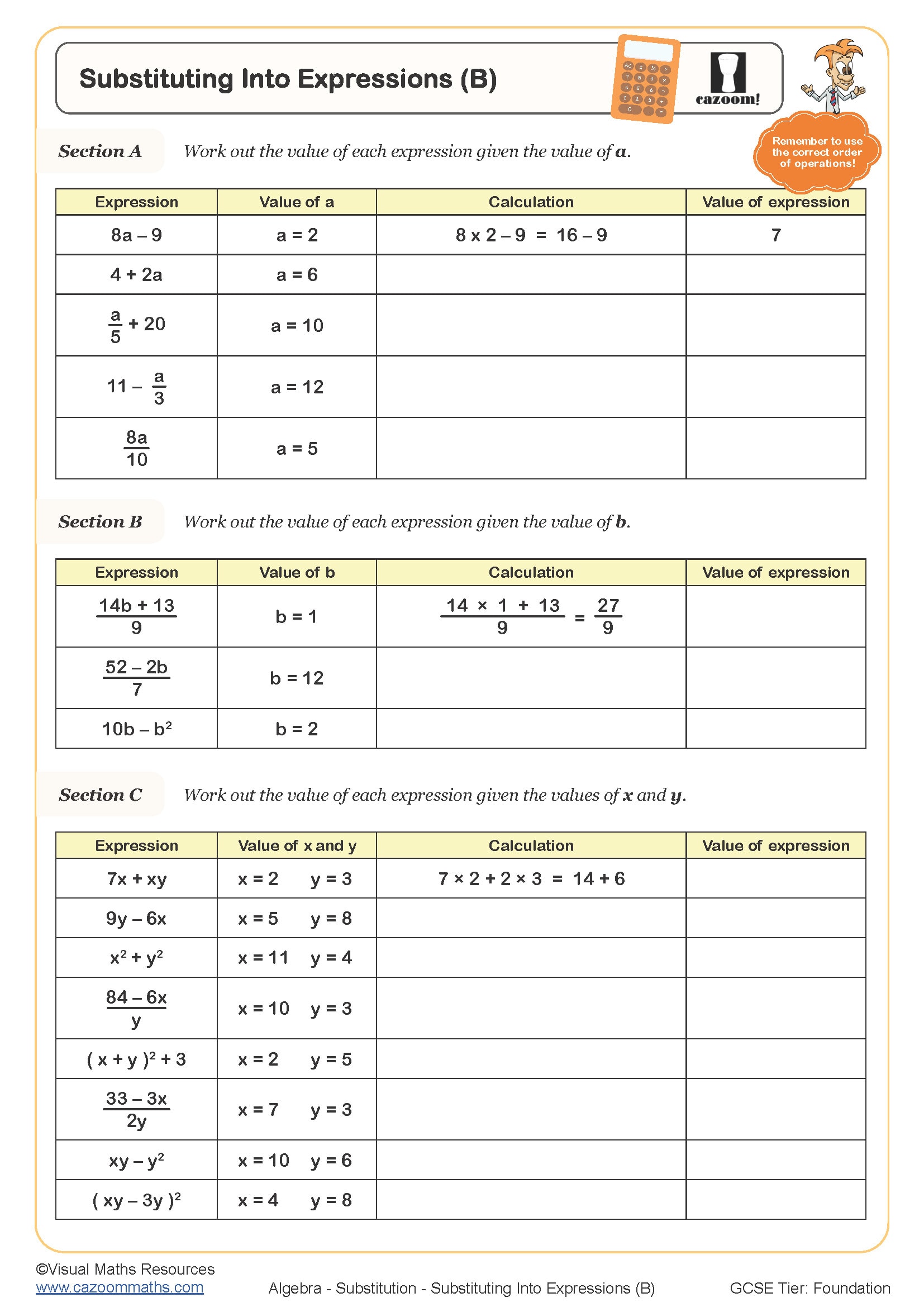
Substituting into Expressions (B)
Year groups: 7, 8, 9
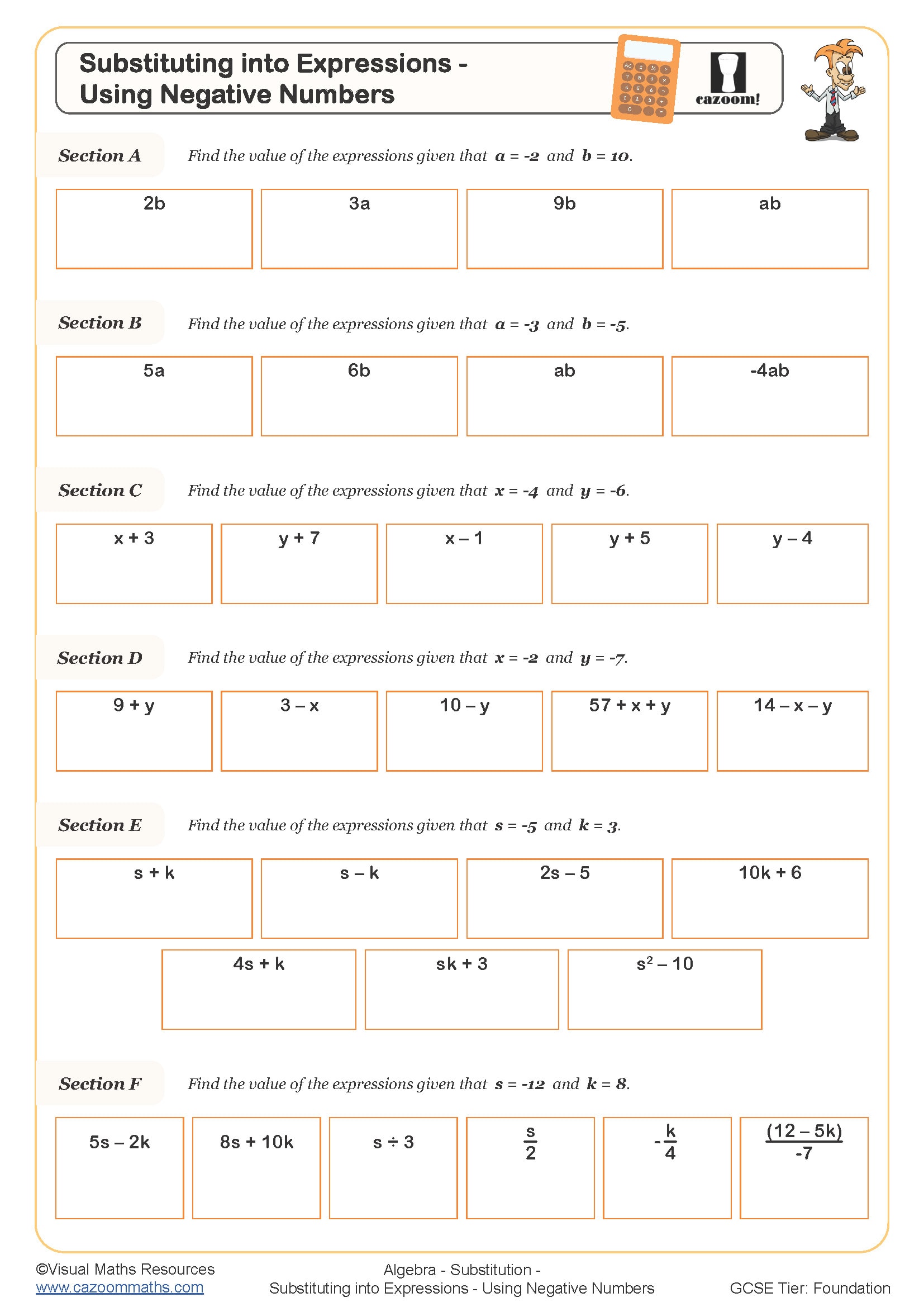
Substituting into Expressions using Negative Numbers
Year groups: 7, 8, 9
Substituting into Formulae (A) (With Clues)
Year groups: 7, 8, 9
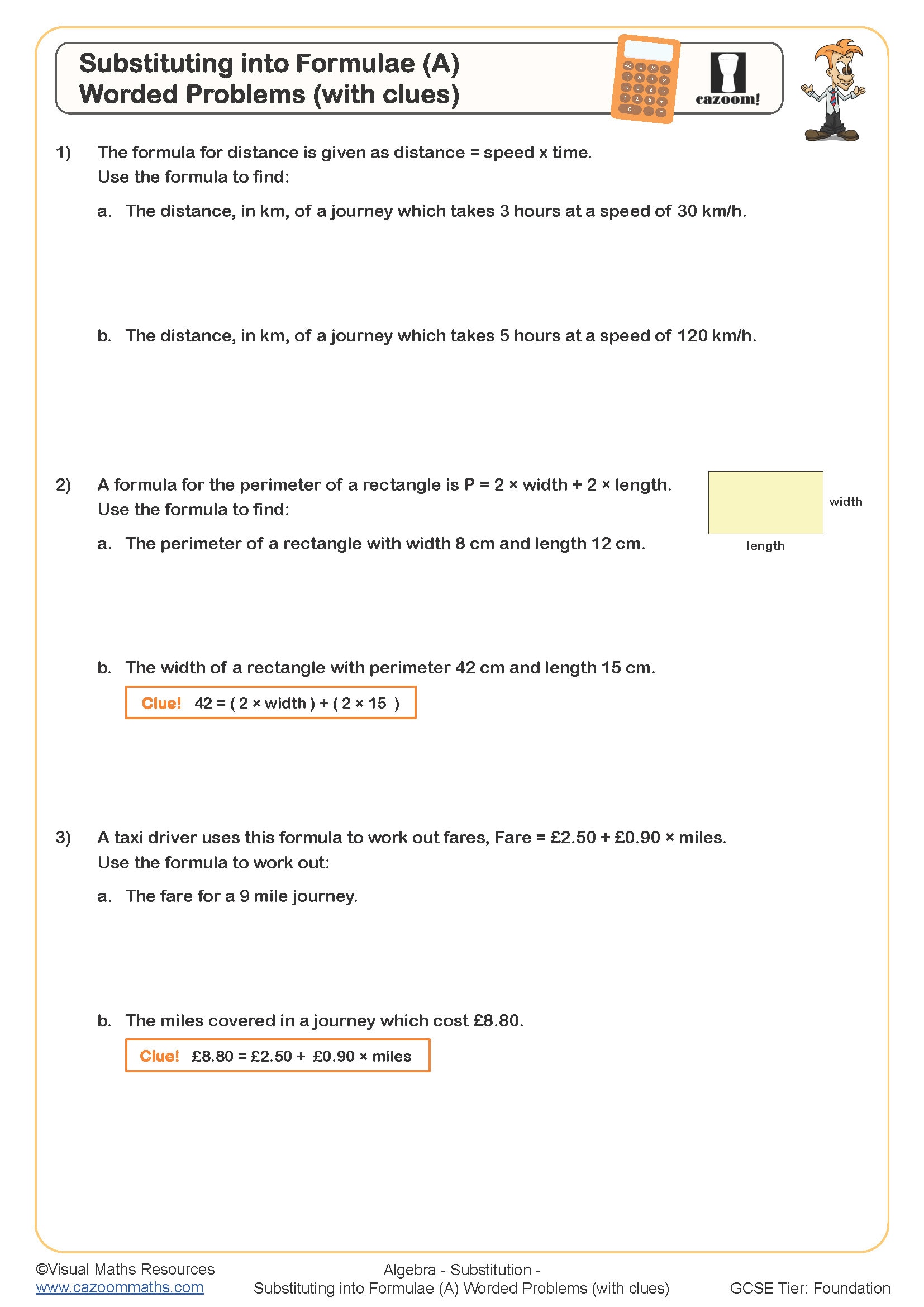
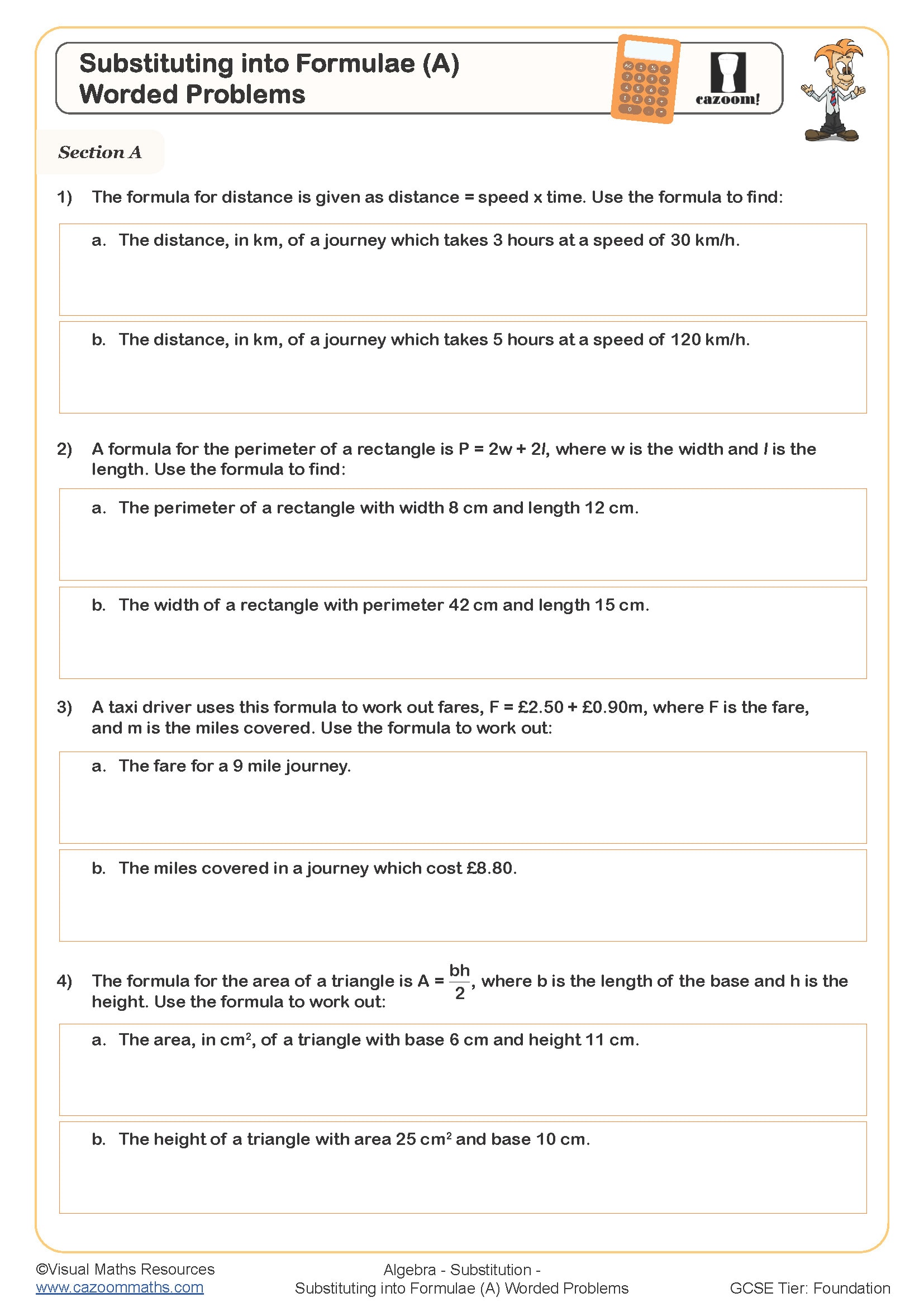
Substituting into Formulae (A) Word Problems
Year groups: 7, 8, 9
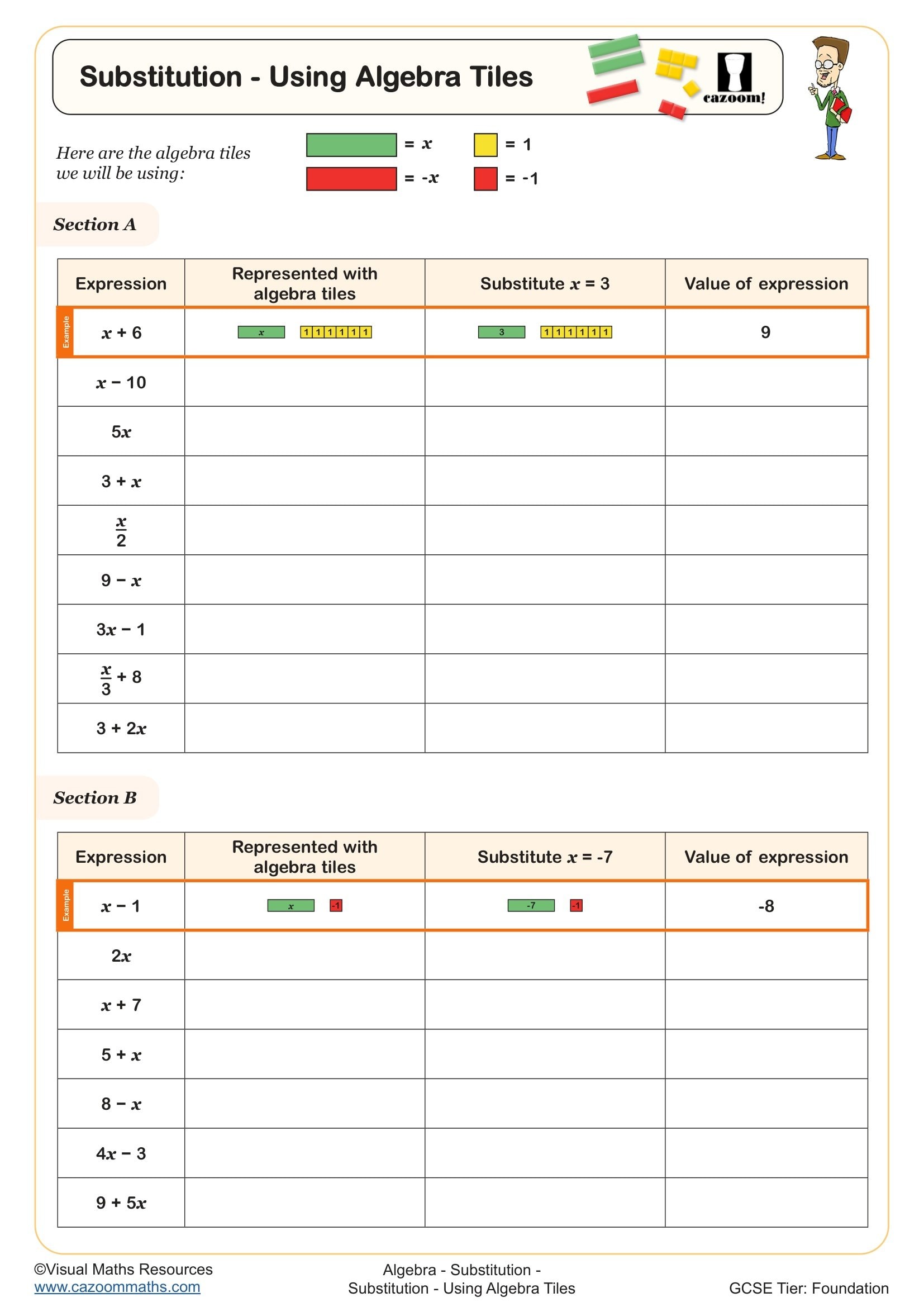
Substitution - Using Algebra Tiles
Year groups: 7, 8
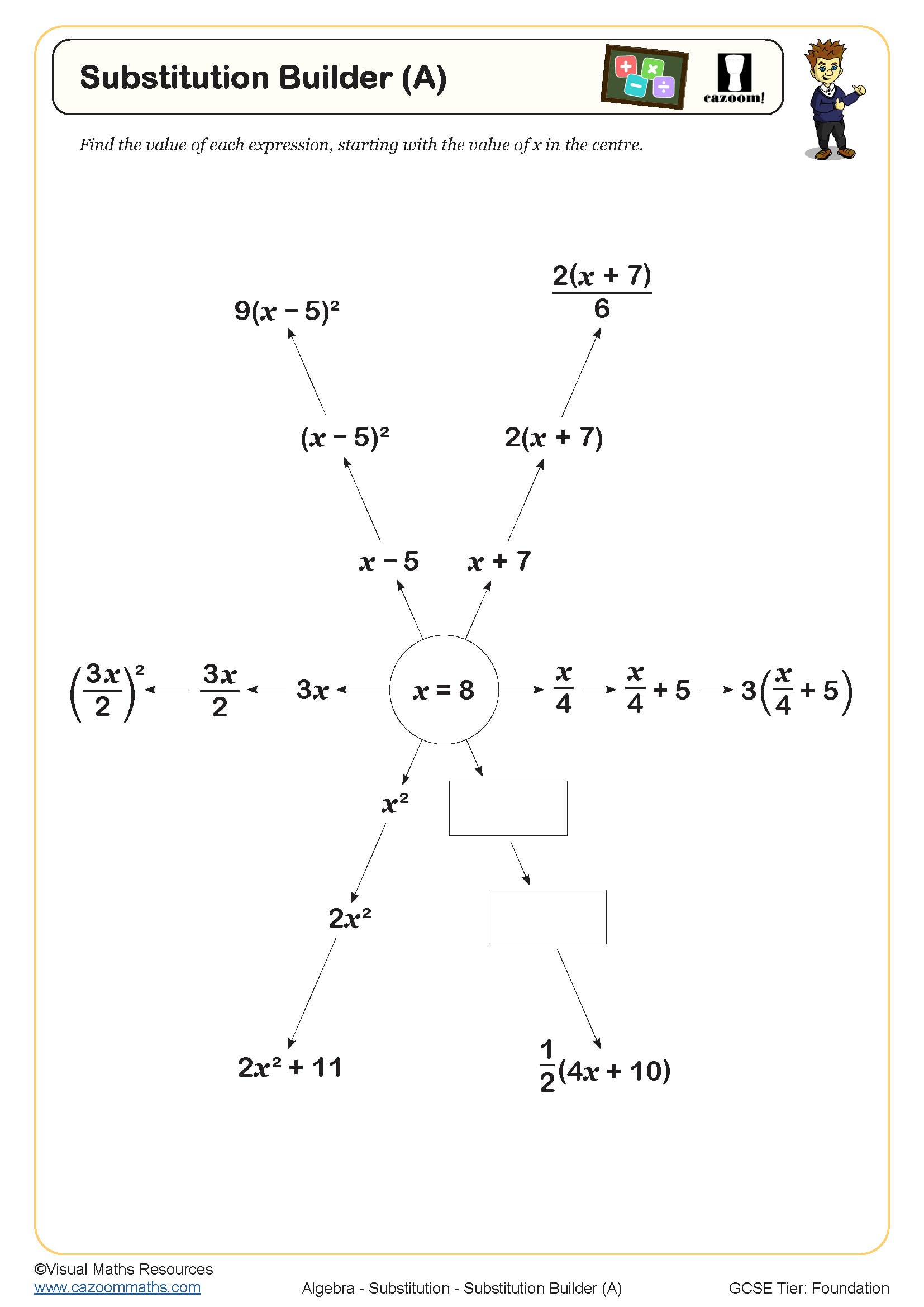
Substitution Builder (A)
Year groups: 7, 8, 9
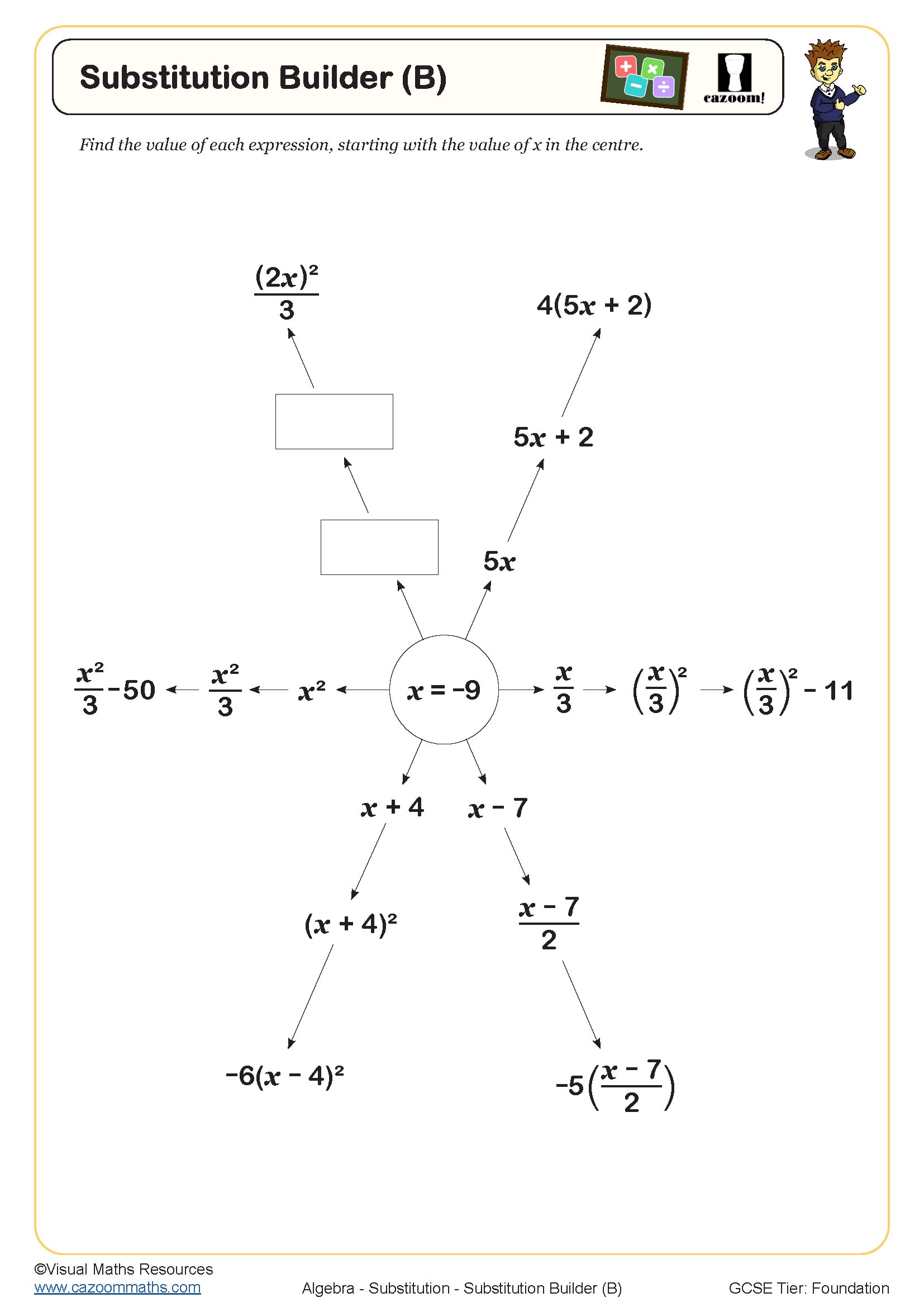
Substitution Builder (B)
Year groups: 7, 8, 9
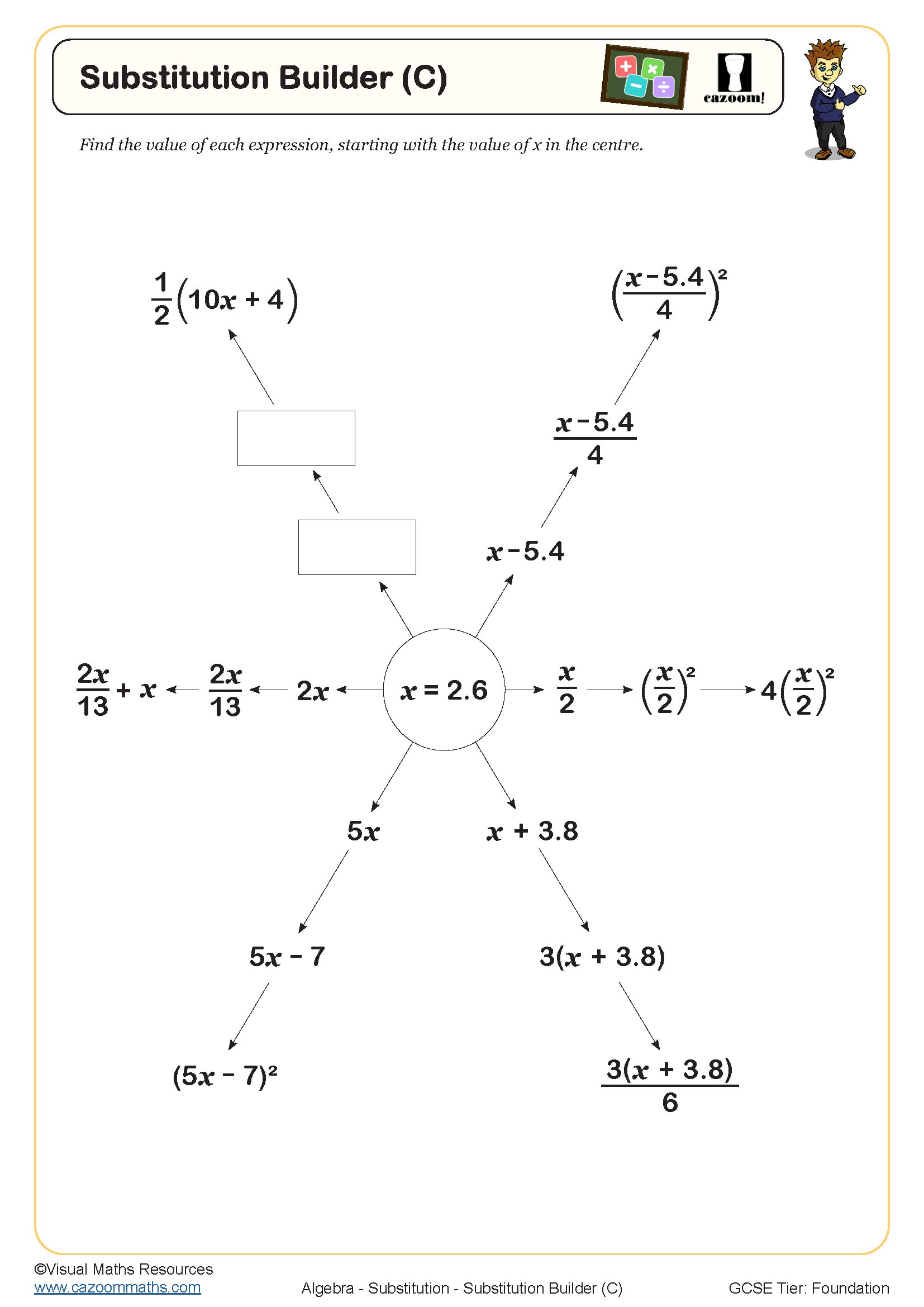
Substitution Builder (C)
Year groups: 7, 8, 9
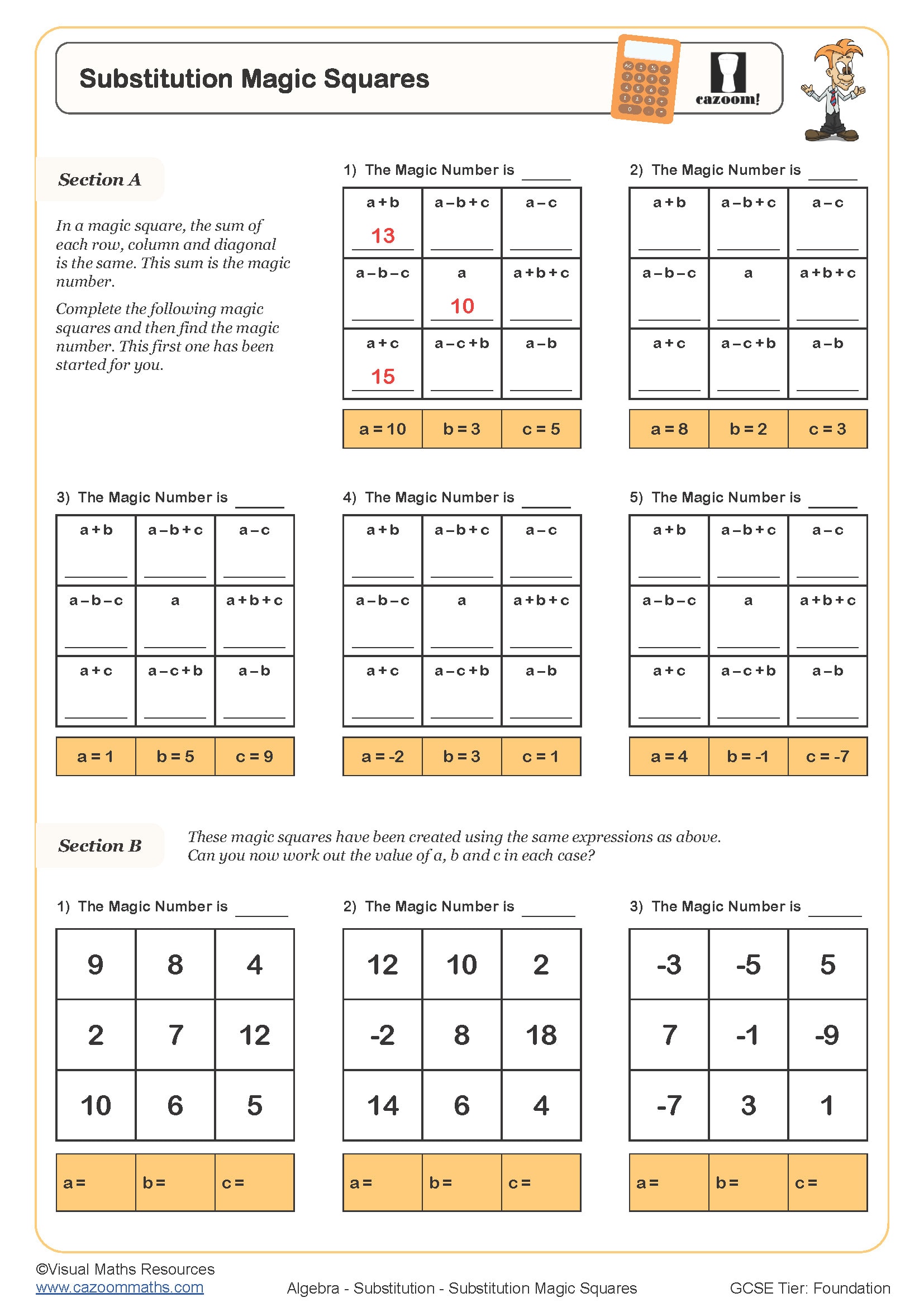
Substitution Magic Squares
Year groups: 7, 8, 9
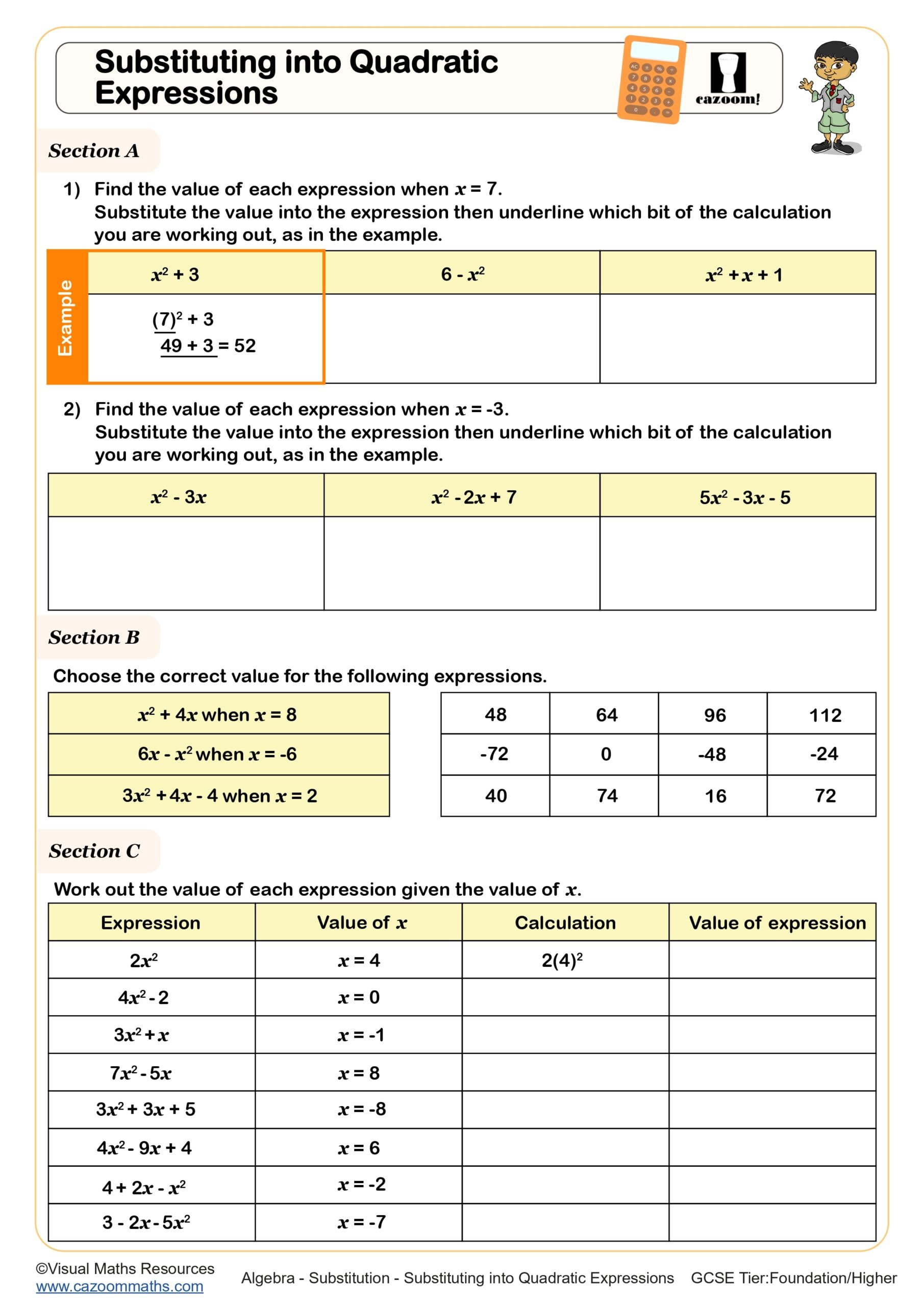
Substituting into Quadratic Expressions
Year groups: 8, 9
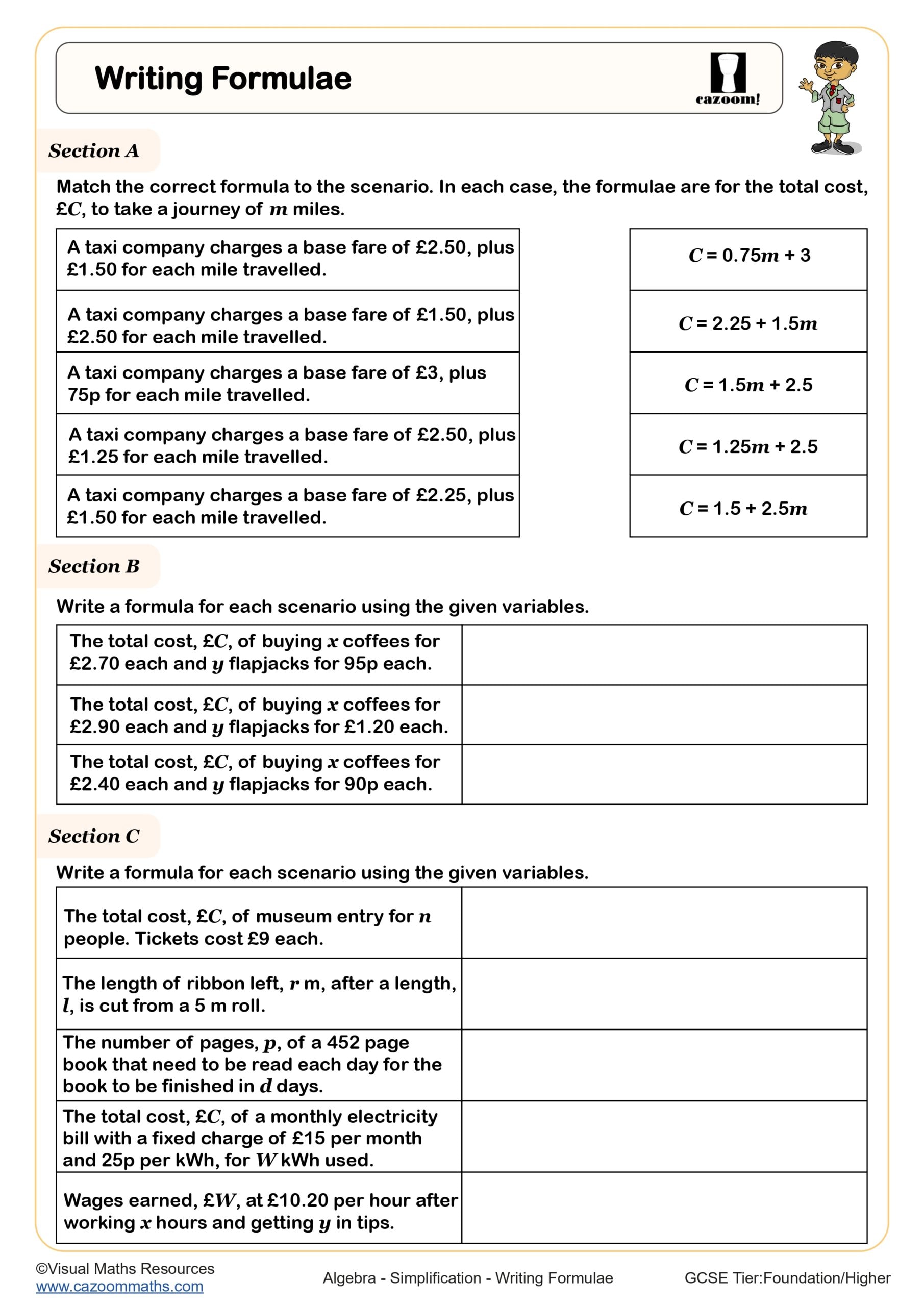
Writing Formulae
Year groups: 8, 9
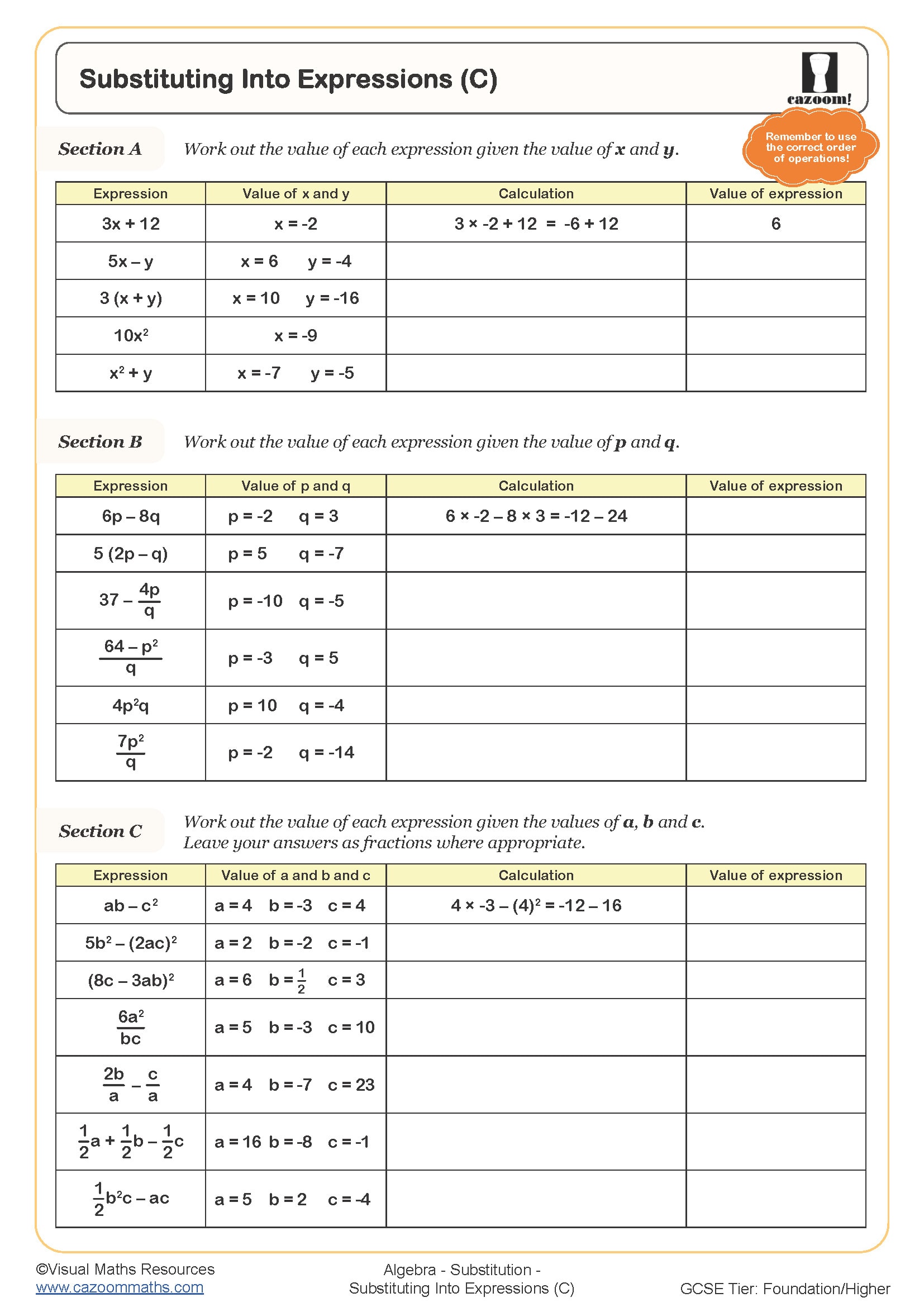
Substituting into Expressions (C)
Year groups: 9, 10, 11
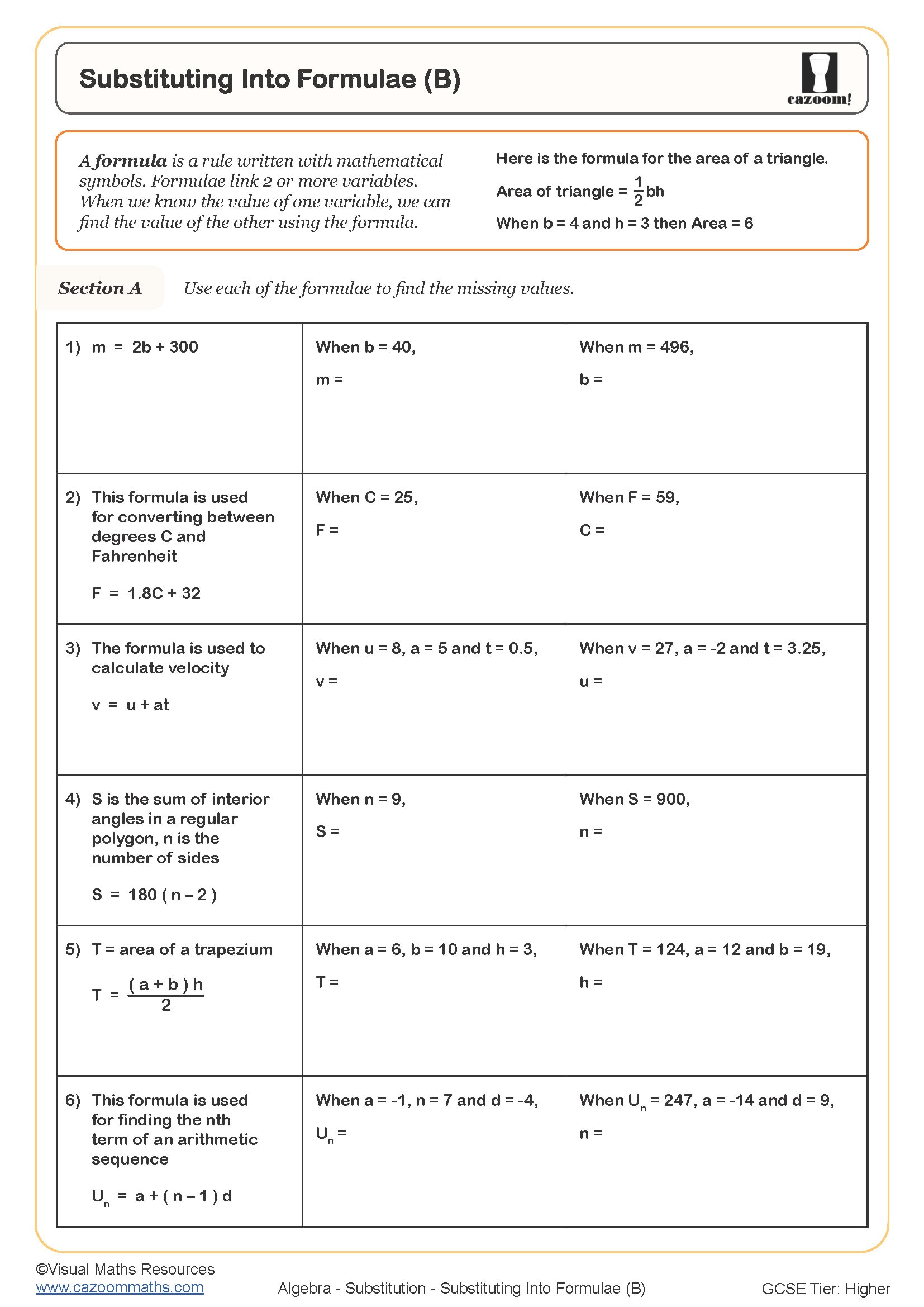
Substituting into Formulae (B)
Year groups: 9, 10, 11
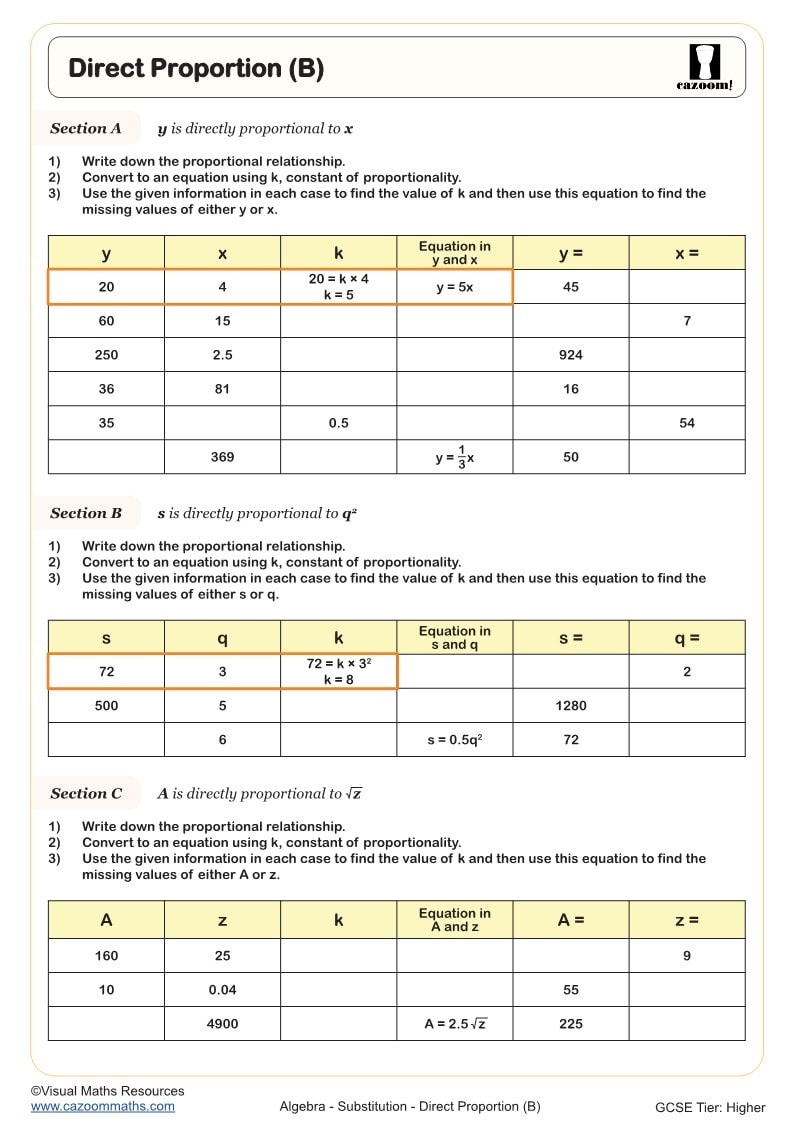
Direct Proportion B
Year groups: 10, 11
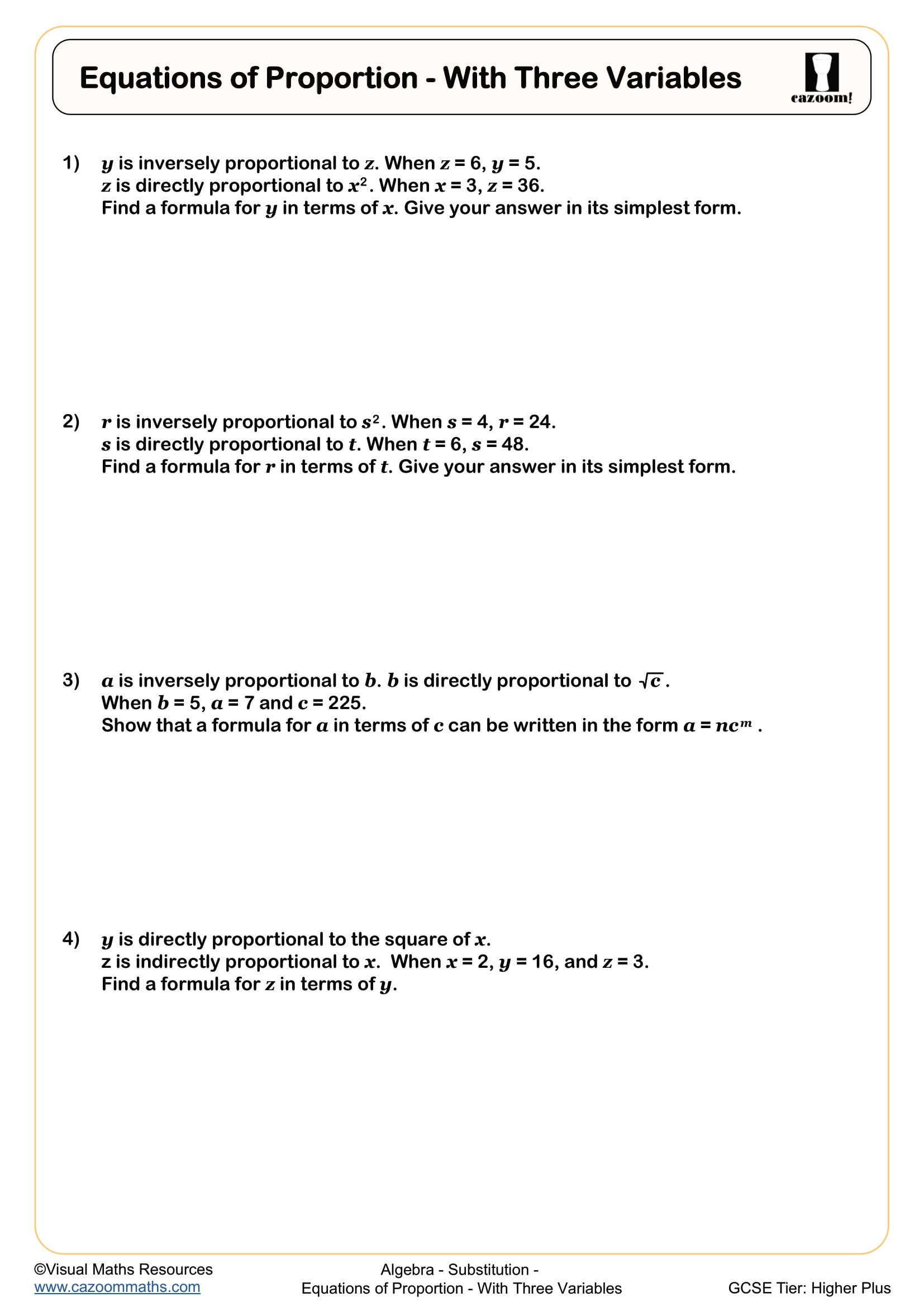
Equations of Proportion - with Three Variables
Year groups: 10, 11
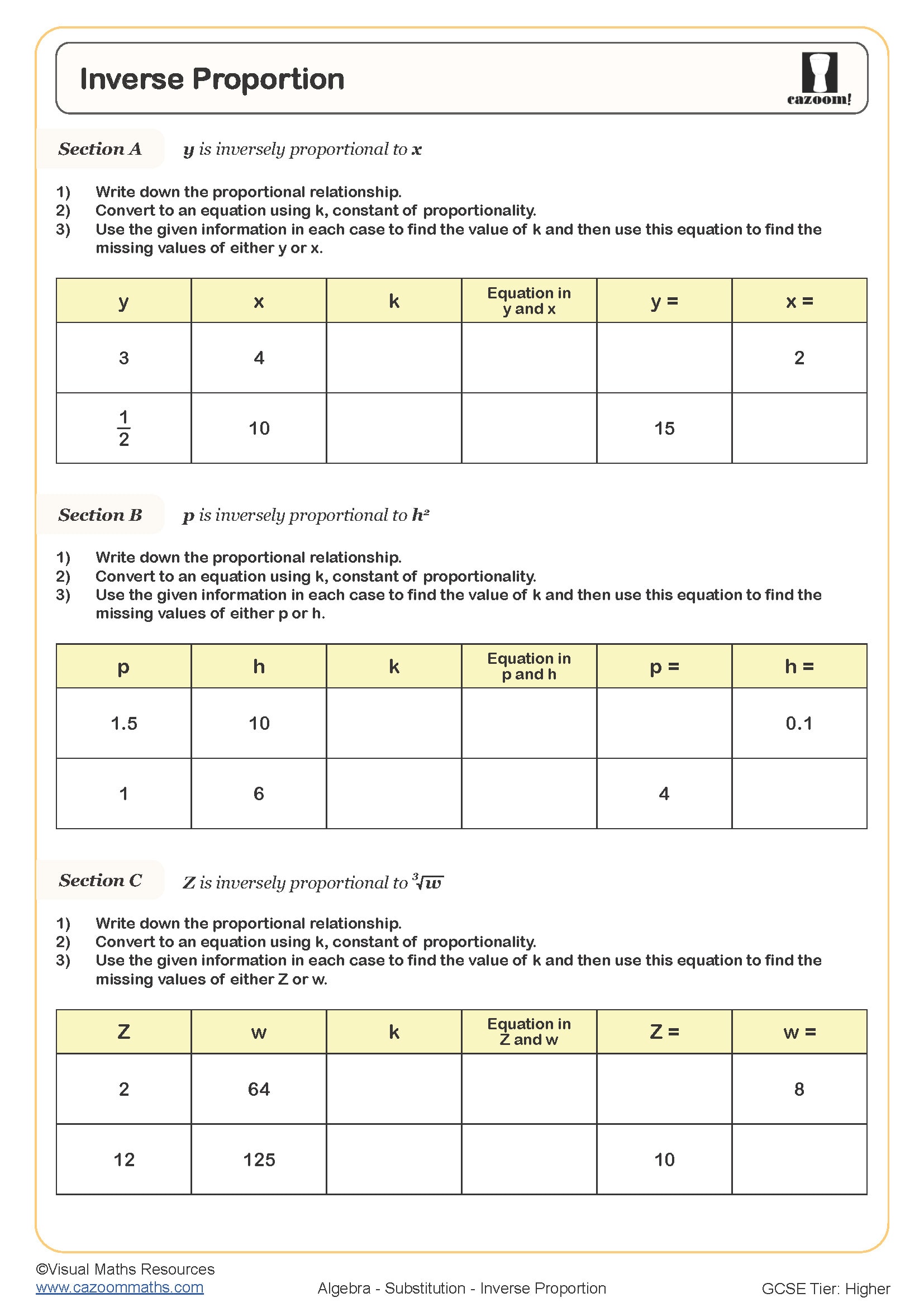
Inverse Proportion
Year groups: 10, 11
All worksheets are created by the team of experienced teachers at Cazoom Maths.
What makes an effective substitution worksheet for secondary students?
An effective substitution worksheet balances skill development with gradual complexity increase, starting with positive integers before introducing negative values and decimal substitutions. The worksheets should cover single-variable expressions like 3x + 5 before progressing to multi-variable problems such as 2a² - 3b when a = -4 and b = 2.
Teachers consistently observe that students lose marks when they fail to use brackets around negative substitutions. For instance, when substituting x = -3 into x², many write -3² instead of (-3)², leading to incorrect answers. Quality worksheets explicitly address this through varied question types and clear worked examples.
Which year groups should use substitution worksheets?
Substitution typically begins in Year 7 as part of the KS3 algebra curriculum, where students first encounter simple expressions with positive values. By Year 8, students tackle negative substitutions and expressions involving indices, while Year 9 work extends to fractional and decimal values alongside more complex algebraic manipulation.
At KS4 level, substitution becomes integral to GCSE preparation, appearing in problem-solving contexts and as preliminary steps for equation solving. Teachers find that regular substitution practise throughout Years 7-11 prevents the computational errors that often cost students marks in higher-level algebra topics and GCSE examinations.
How should students approach substitution with negative values?
Students must learn to place brackets around negative values immediately upon substitution, treating this as a non-negotiable first step. When substituting x = -2 into 3x² - 5x + 1, the expression becomes 3(-2)² - 5(-2) + 1, ensuring correct order of operations throughout the calculation.
Maths teachers frequently observe that students who skip the bracketing step make systematic errors, particularly with squared terms and multiplication by negative coefficients. Emphasising the bracket-first approach prevents the common mistake of calculating 3 × -2² as -12 instead of the correct 3 × (-2)² = 12, which significantly impacts accuracy across algebraic work.
How can teachers use substitution worksheets most effectively in lessons?
Teachers achieve best results when they model the bracketing technique explicitly before independent practise, demonstrating each substitution step aloud while writing on the board. Using mini-whiteboards for selected questions allows immediate identification of students making bracketing errors, enabling targeted intervention before misconceptions become embedded.
Many experienced teachers structure lessons with paired work on substitution worksheet pdf resources, where students check each other's bracketing before proceeding with calculations. This peer-checking approach significantly reduces careless errors while building mathematical discussion skills. The answer sheets facilitate quick verification and allow teachers to focus support on students struggling with conceptual understanding rather than basic computational mistakes.