Year 10 Expanding Brackets Worksheets
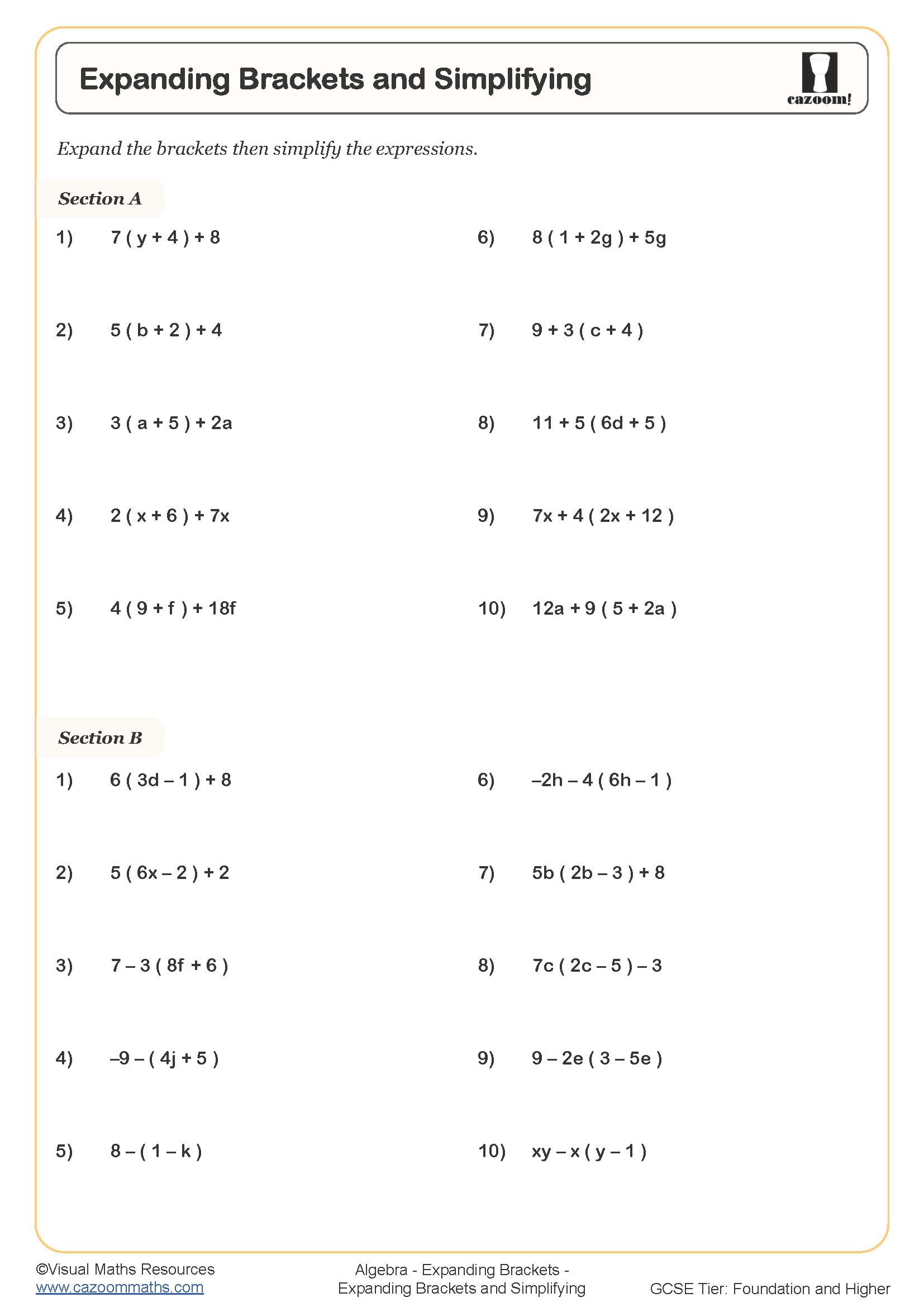
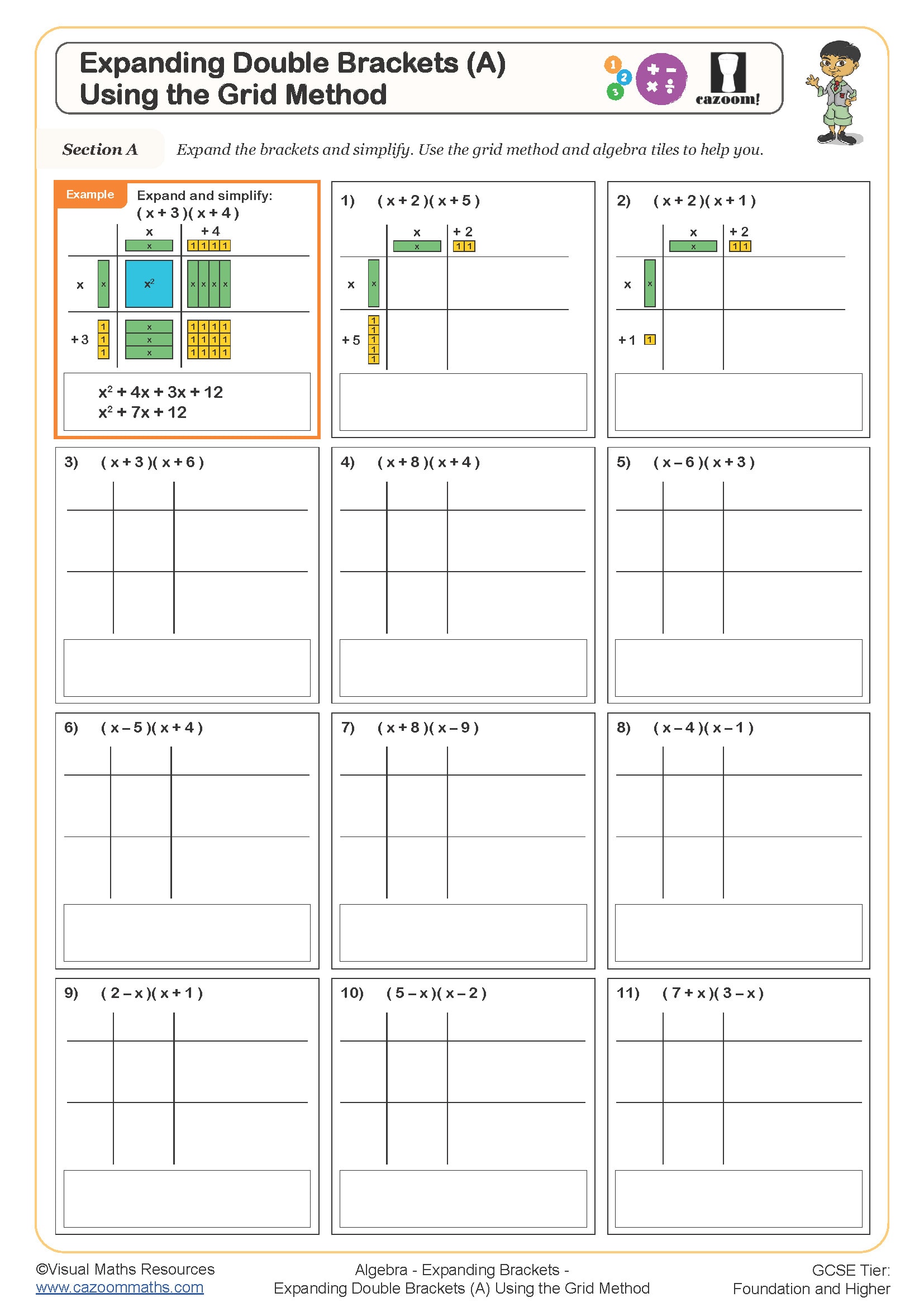
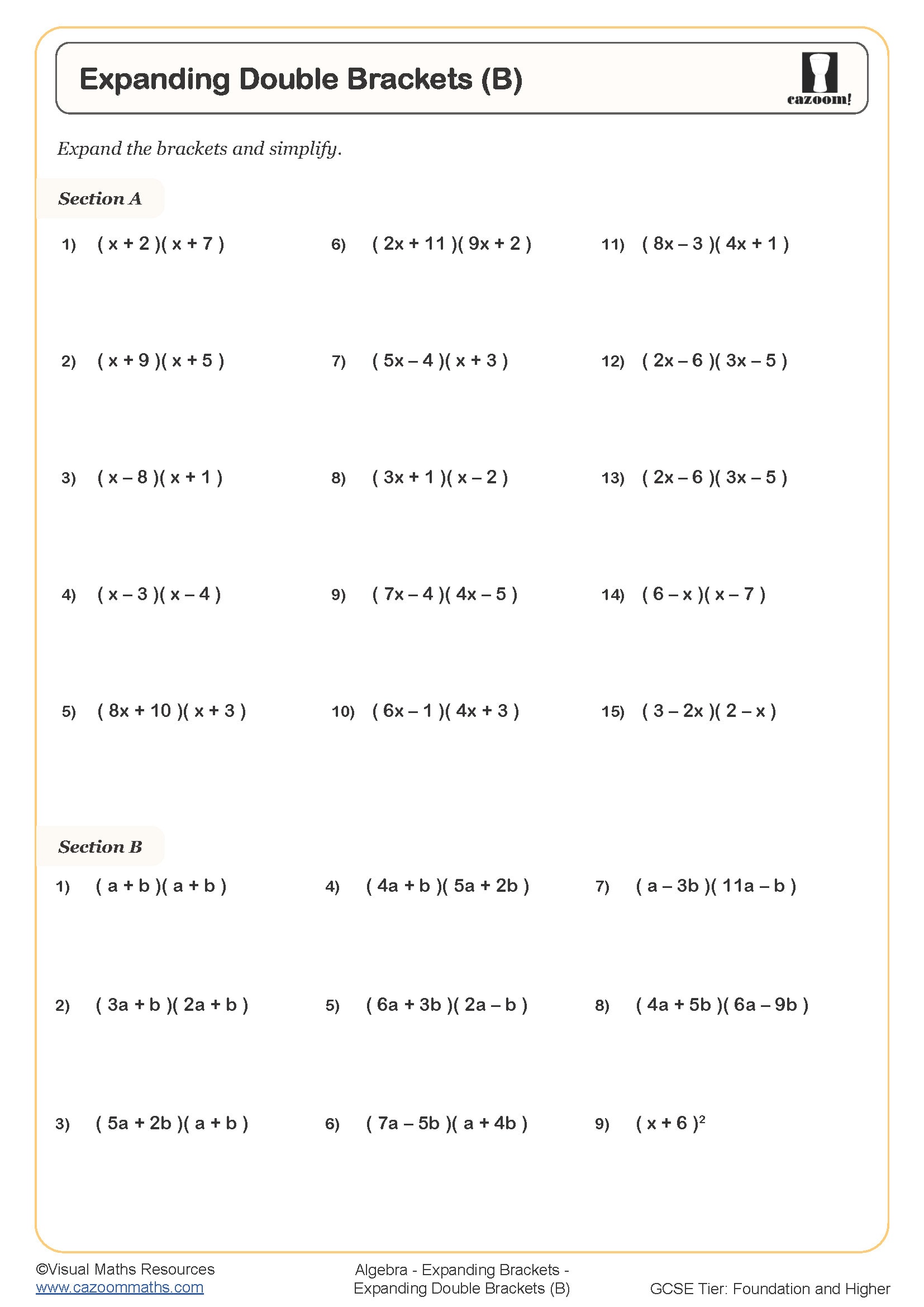
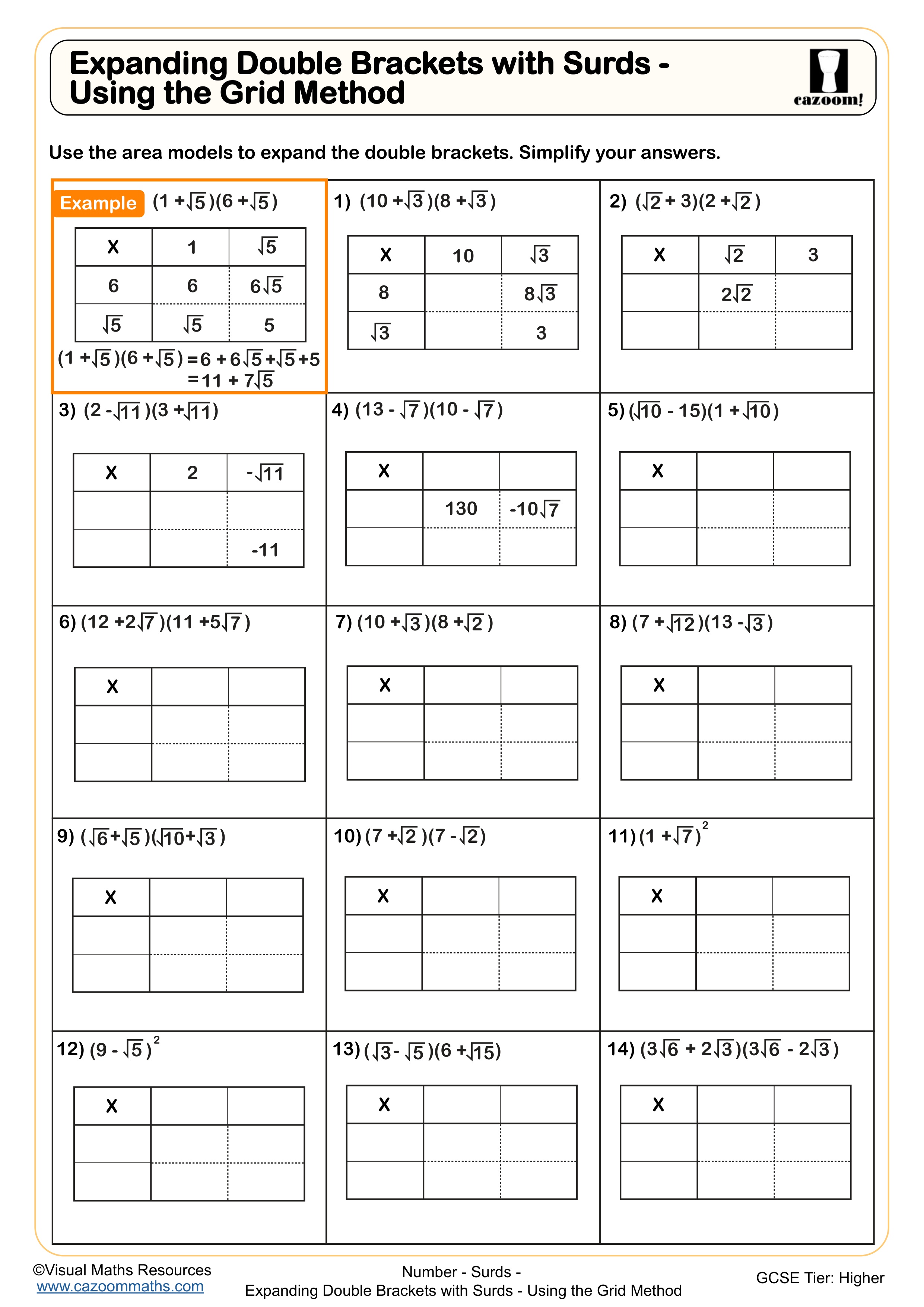
All worksheets are created by the team of experienced teachers at Cazoom Maths.
What makes an effective expanding brackets worksheet pdf for Year 10 students?
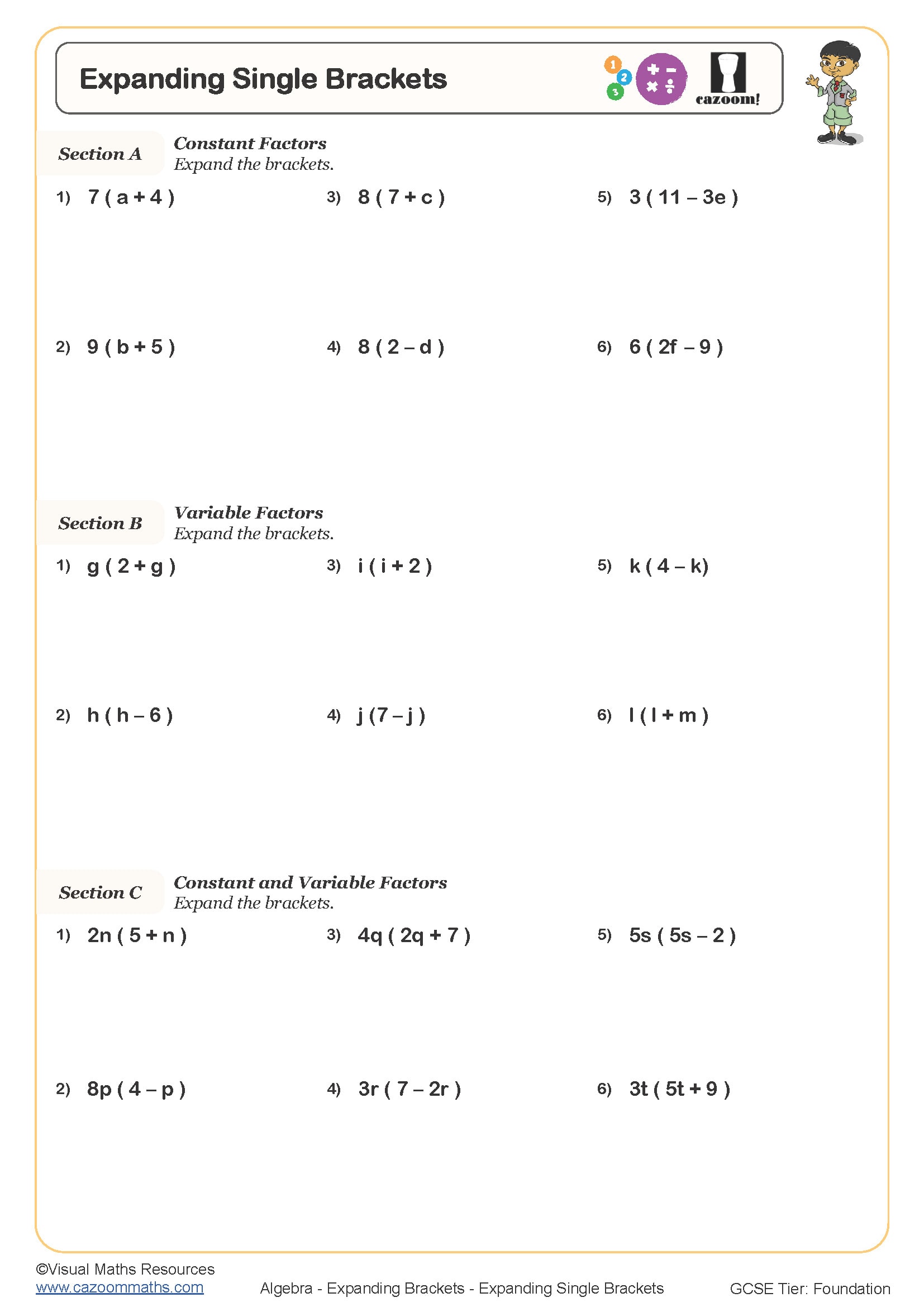
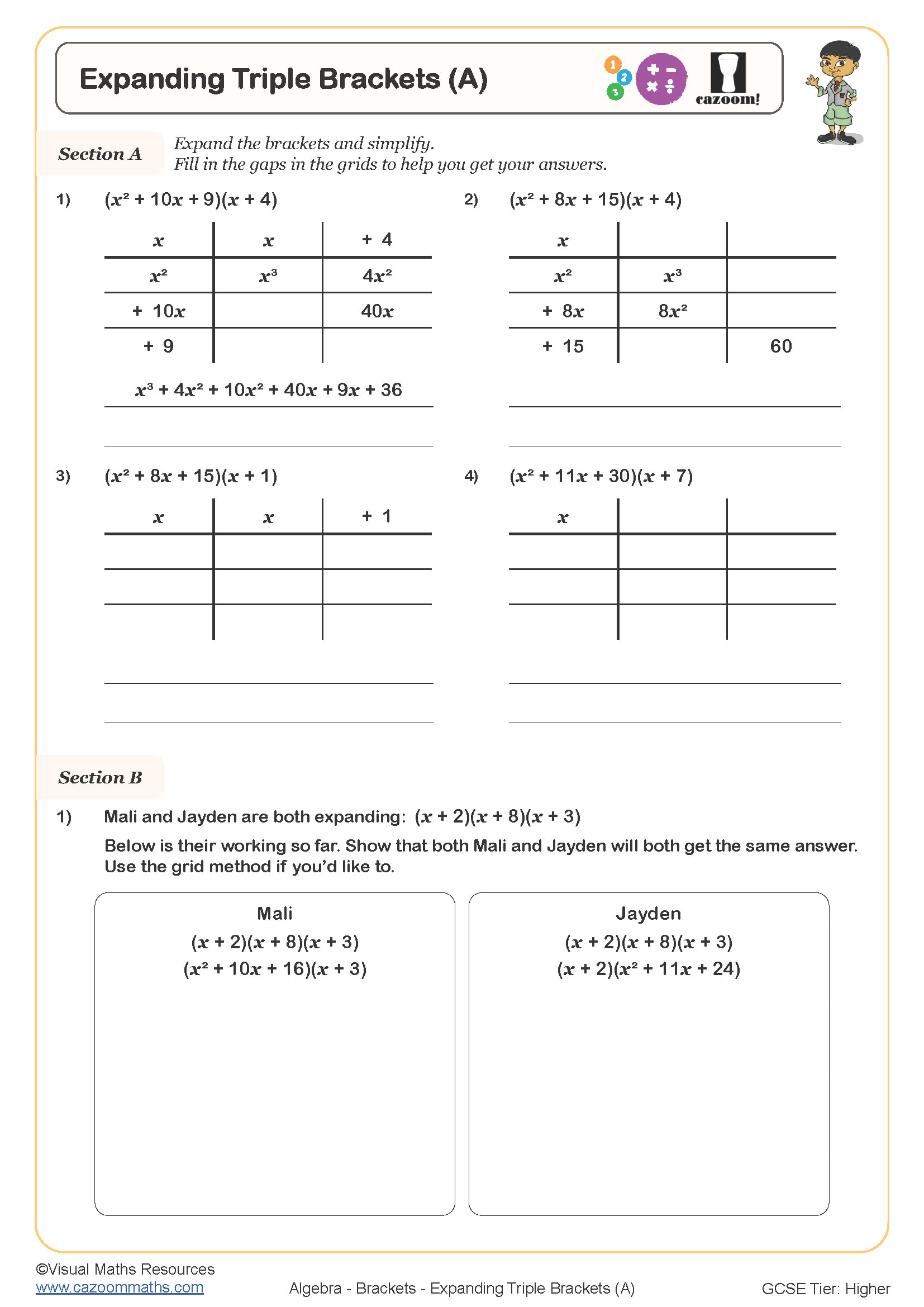
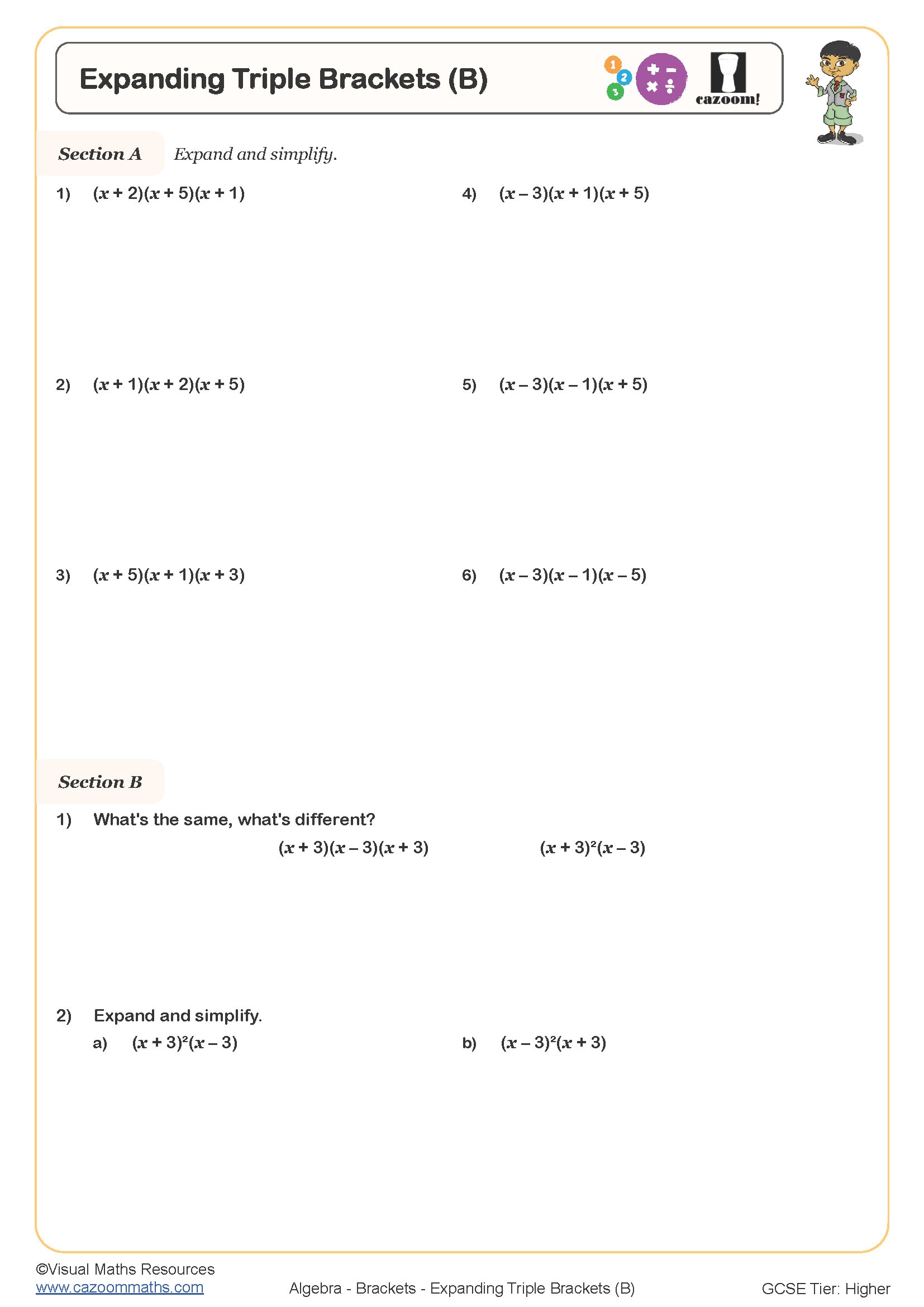
An effective expanding brackets worksheet pdf combines systematic progression from single to double bracket expansion, with clear layout and varied question types. At GCSE level, students need practice with both numerical and algebraic coefficients, negative terms, and expressions requiring subsequent simplification.
Teachers notice that students benefit most from worksheets that explicitly show the distribution step before asking for final answers. Many students rush to the simplified form without showing their working, leading to careless errors with signs. Worksheets that include expanding and simplifying brackets worksheets with answers pdf format allow immediate feedback, helping students identify where their method breaks down.
Which year groups should use expanding brackets worksheets?
Expanding brackets typically begins in Year 8 with simple single bracket problems like 3(x + 4), progressing to Year 10 where students tackle complex double brackets and nested expressions. The National Curriculum introduces bracket expansion as part of algebraic manipulation, building towards GCSE requirements.
Year 10 students often revisit earlier concepts while learning double bracket expansion using FOIL or the grid method. Teachers find that students who struggled with single brackets in Year 8 need additional consolidation before attempting (2x + 3)(x - 5) type problems. The progression from expanding brackets questions to factorising creates a complete algebraic skill set valuable for quadratic equations.
How should students approach expanding double brackets worksheet problems?
Students should use systematic methods like FOIL (First, Outside, Inside, Last) or the grid method to ensure they multiply every term. Teachers observe that students often miss the 'inside' and 'outside' terms, particularly when dealing with expressions like (x + 3)(2x - 7).
The most effective approach involves writing out each multiplication step explicitly before collecting like terms. An expanding double brackets worksheet should encourage students to show: (x + 3)(2x - 7) = x(2x) + x(-7) + 3(2x) + 3(-7) = 2x² - 7x + 6x - 21 = 2x² - x - 21. This methodical approach prevents the common error of forgetting terms or making sign mistakes.
How can teachers use expanding brackets algebra worksheet resources most effectively?
Teachers find success using expanding brackets worksheets in a three-stage approach: guided practice with worked examples, independent practice with immediate feedback, then application in mixed algebra problems. Starting lessons with common misconceptions helps students avoid typical pitfalls before attempting questions.
Many teachers use the answer sheets for peer marking activities, encouraging students to identify and discuss errors in method rather than just marking answers correct or incorrect. This approach develops mathematical communication skills while reinforcing proper algebraic notation. Incorporating real-world contexts, such as calculating areas of rectangles with algebraic dimensions, helps students understand why bracket expansion matters beyond pure mathematics.