Year 11 Factorising Worksheets
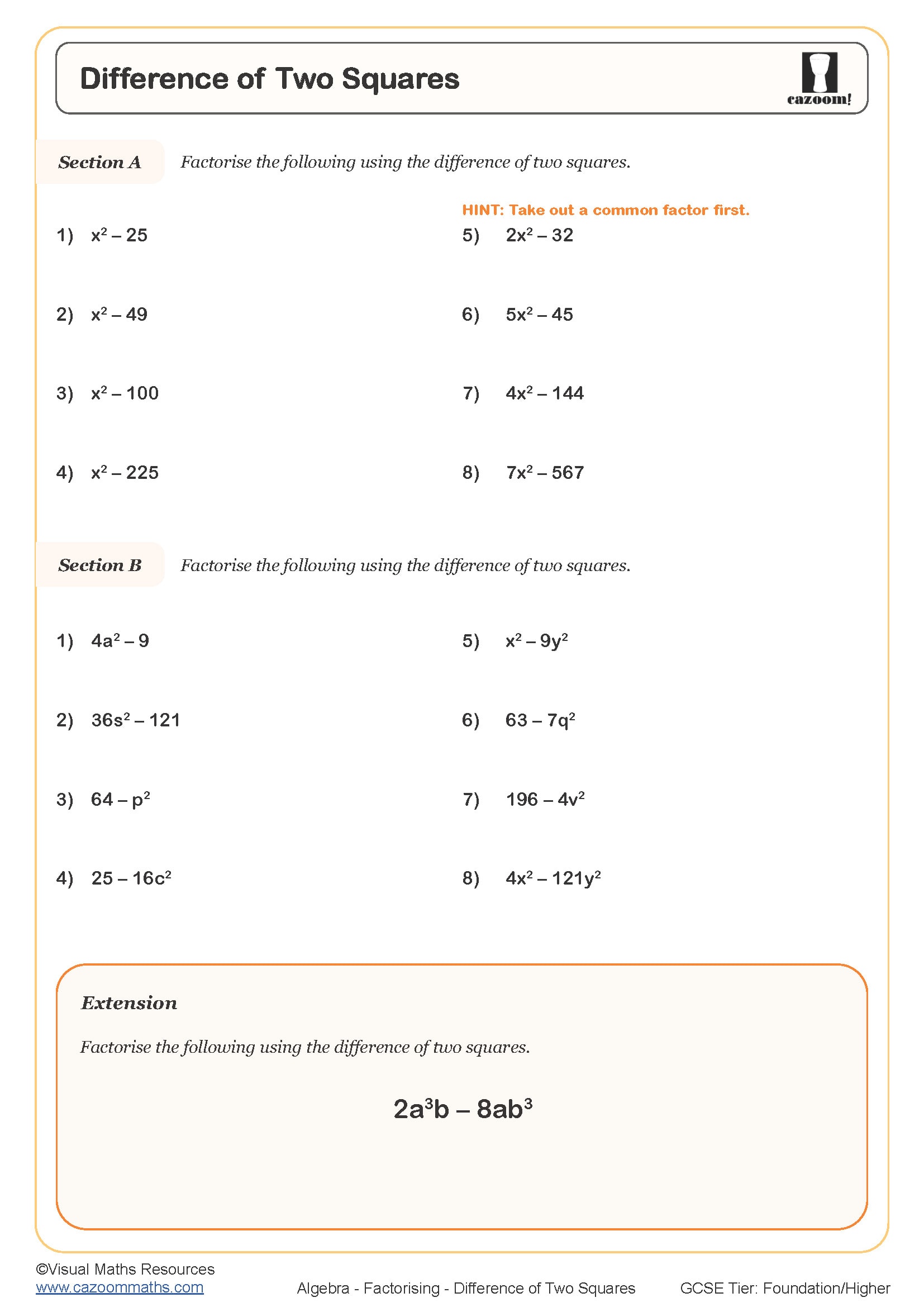
Difference of Two Squares
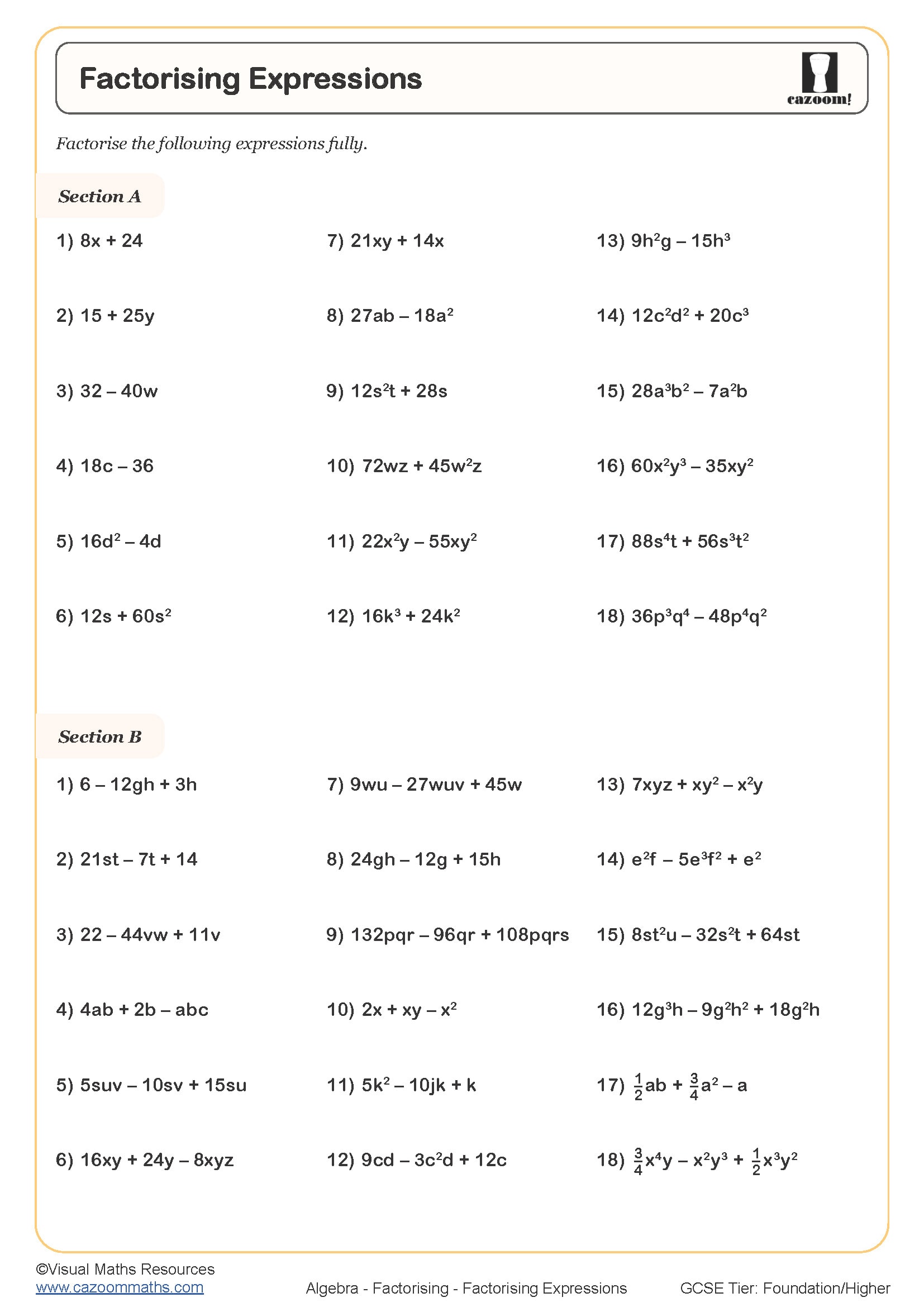
Factorising Expressions
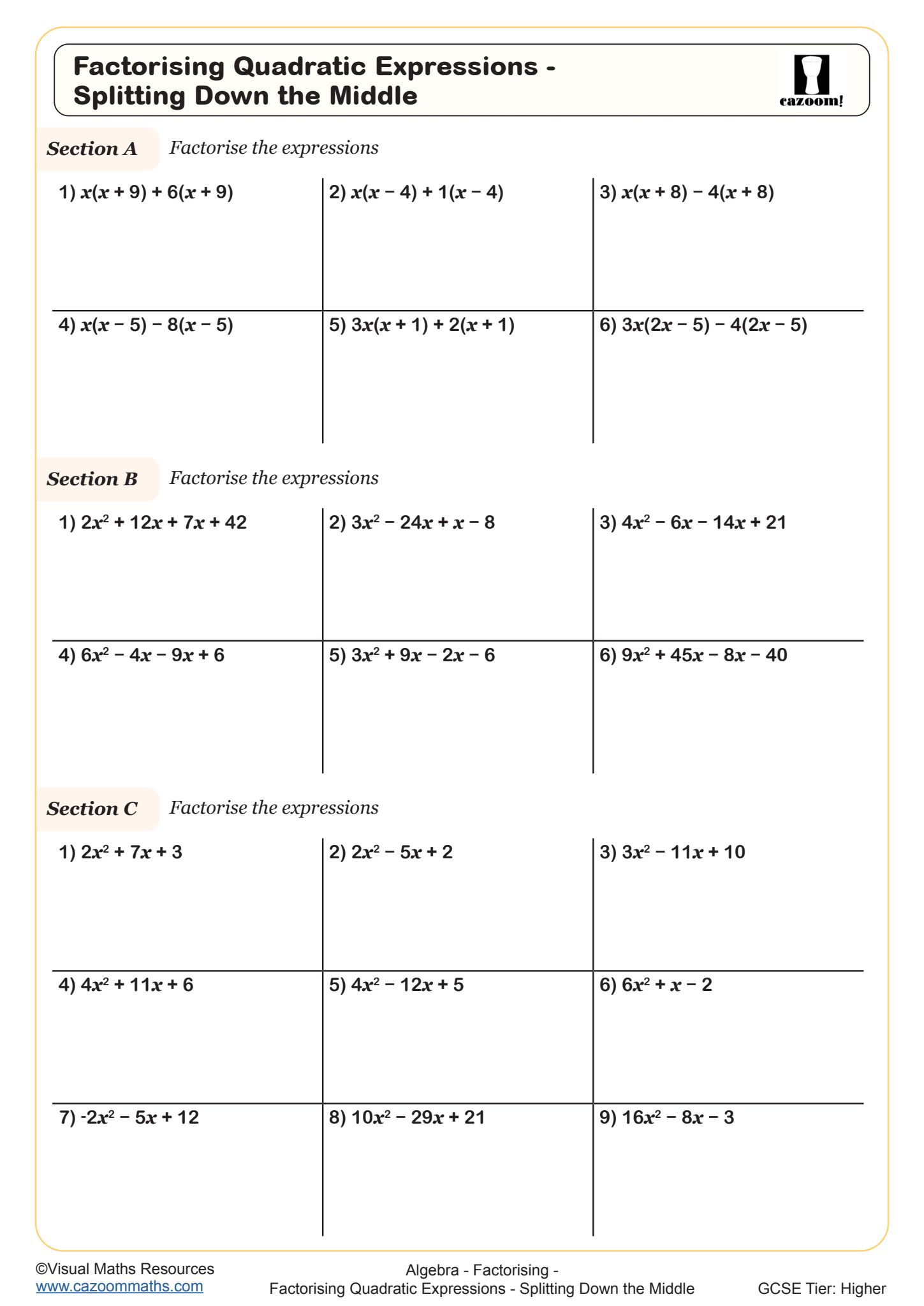
Factorising Quadratic Expressions - Splitting Down the Middle
Factorising Quadratic Expressions - Using the Area Model (A)
-Questions-1.jpg?w=3840)
Factorising Quadratic Expressions - Using the Area Model (B)
-Worksheet.jpg?w=3840)
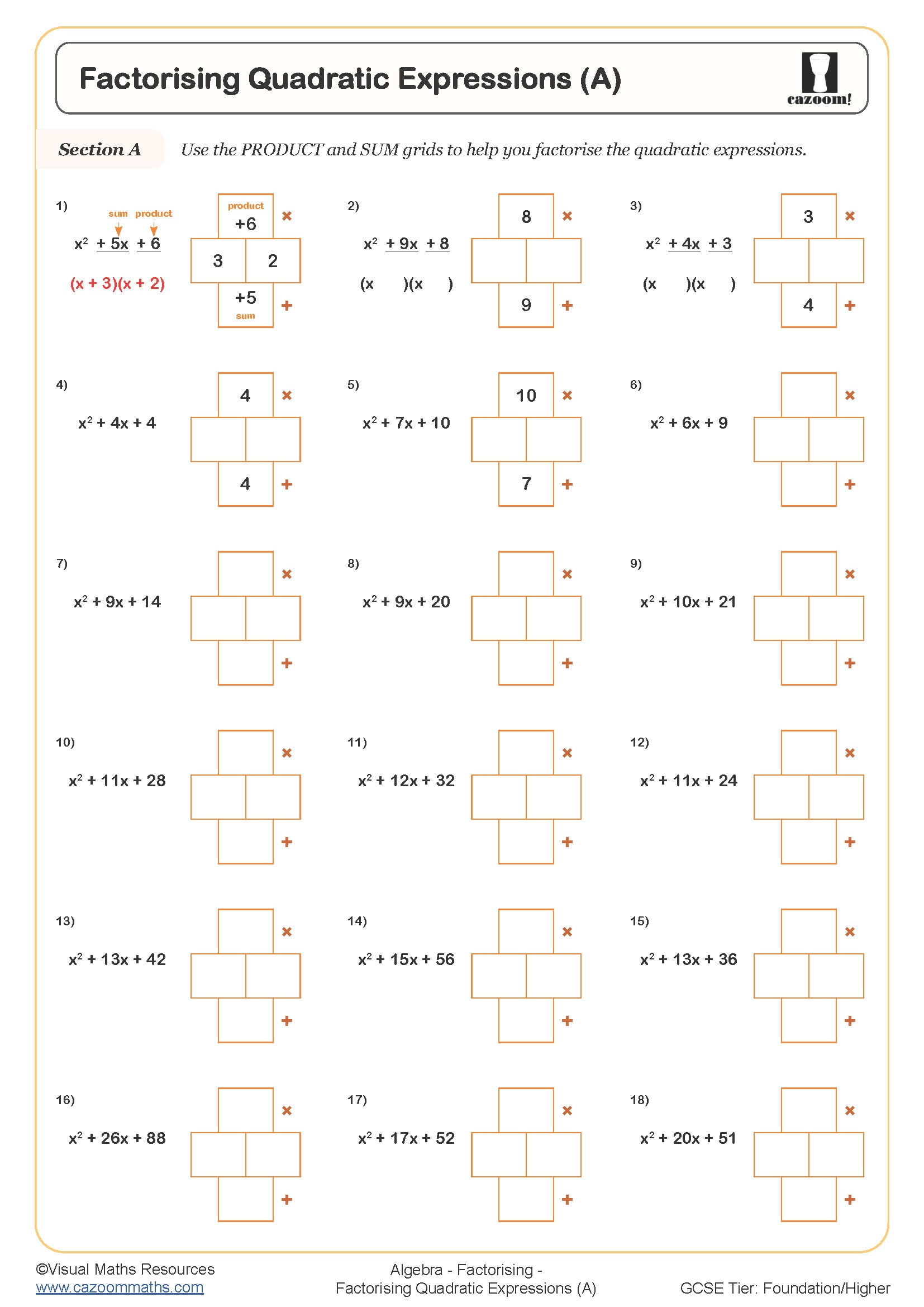
Factorising Quadratic Expressions (A)
Factorising Quadratic Expressions (B)
.jpg?w=3840)
Factorising Quadratic Expressions (C)
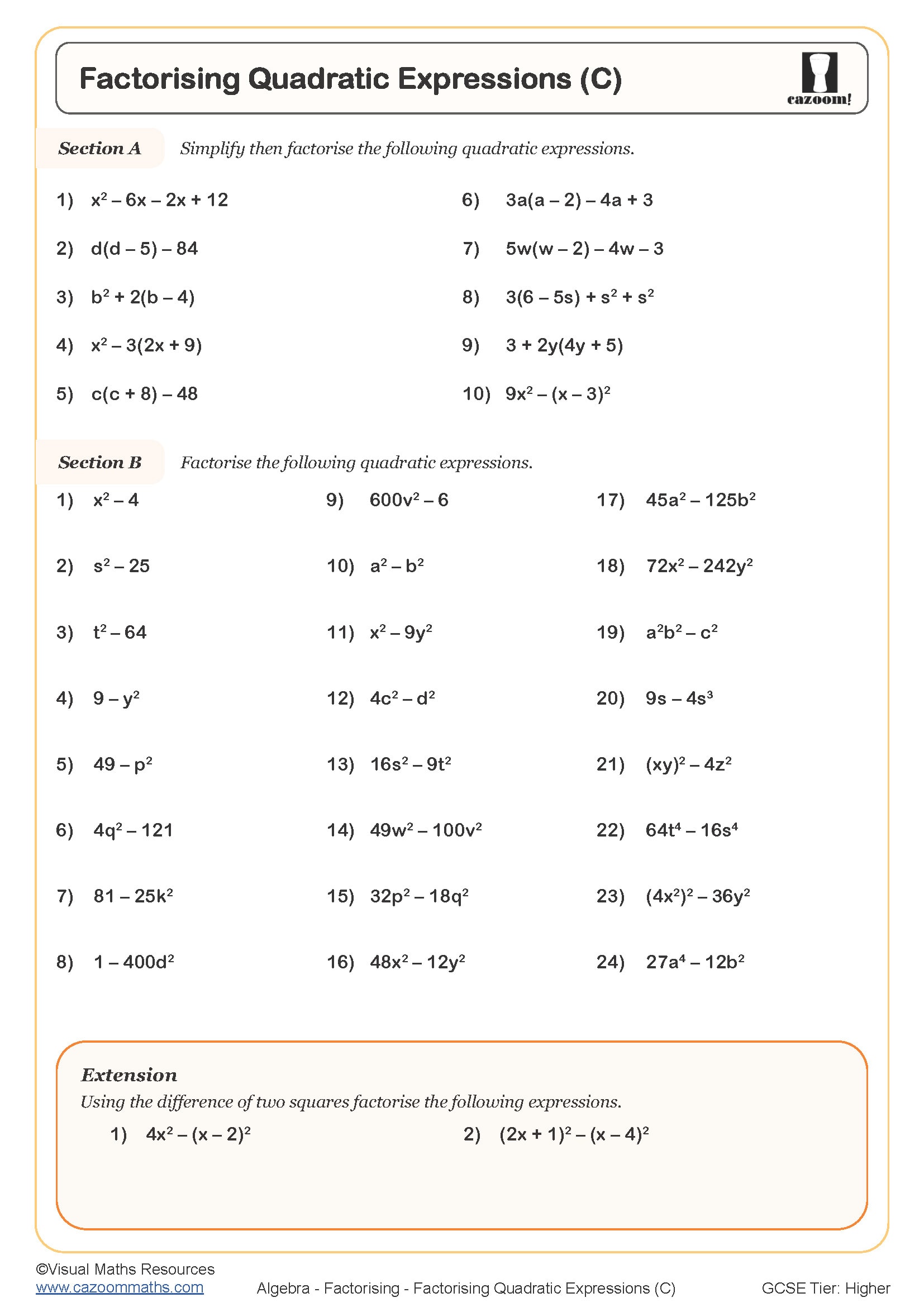
All worksheets are created by the team of experienced teachers at Cazoom Maths.
What makes a good factorising worksheet with answers for Year 11 students?
A quality factorising worksheet with answers provides structured progression through Key Stage 4 factorisation techniques, starting with extracting common factors before advancing to quadratic expressions and algebraic fractions. The questions should mirror GCSE paper formats, with clear mark allocations and space for working.
Teachers notice that students benefit most when factorisation worksheet pdf resources include step-by-step solutions rather than just final answers. This helps students identify where their method breaks down - often when they miss negative signs or fail to check their factorisation by expanding. The best worksheets also include mixed practice sections that require students to choose appropriate methods independently.
Which year groups should use these factorising worksheets?
These worksheets target Year 11 students preparing for GCSE examinations, though high-achieving Year 10 students often benefit from early exposure to advanced factorisation techniques. The content aligns with Higher tier expectations, covering methods beyond simple common factors.
Teachers frequently use these resources for Year 12 students who need to consolidate algebraic skills before tackling A-level topics like polynomial division. The progression from basic factorisation through to complex expressions provides scaffolding that supports students across different attainment levels, making them suitable for mixed-ability classes and intervention groups.
How do students approach factorising quadratic expressions effectively?
Students must first identify the structure of quadratic expressions before choosing between factorisation methods like grouping, completing the square, or recognising special forms like difference of two squares. The key lies in systematic checking - expanding their factorised form to verify accuracy.
Maths teachers observe that students frequently make sign errors when factorising expressions with negative coefficients, particularly in forms like x² - 5x + 6. The most effective approach involves teaching students to write out factor pairs systematically and check which combination produces the correct middle term. This methodical process reduces computational errors significantly.
How can teachers use these factorisation worksheets most effectively in lessons?
Teachers achieve best results by using these worksheets as guided practice after demonstrating each factorisation method, rather than as standalone homework tasks. The answer sheets enable immediate feedback during lessons, allowing teachers to address misconceptions before they become embedded.
Many teachers find success in using the worksheets for targeted intervention with students who struggle with algebraic manipulation. The systematic progression allows teachers to identify precisely where student understanding breaks down - whether in recognising factorable forms or in the mechanical processes of algebraic rearrangement. This diagnostic approach improves outcomes significantly.