Year 11 Indices Worksheets
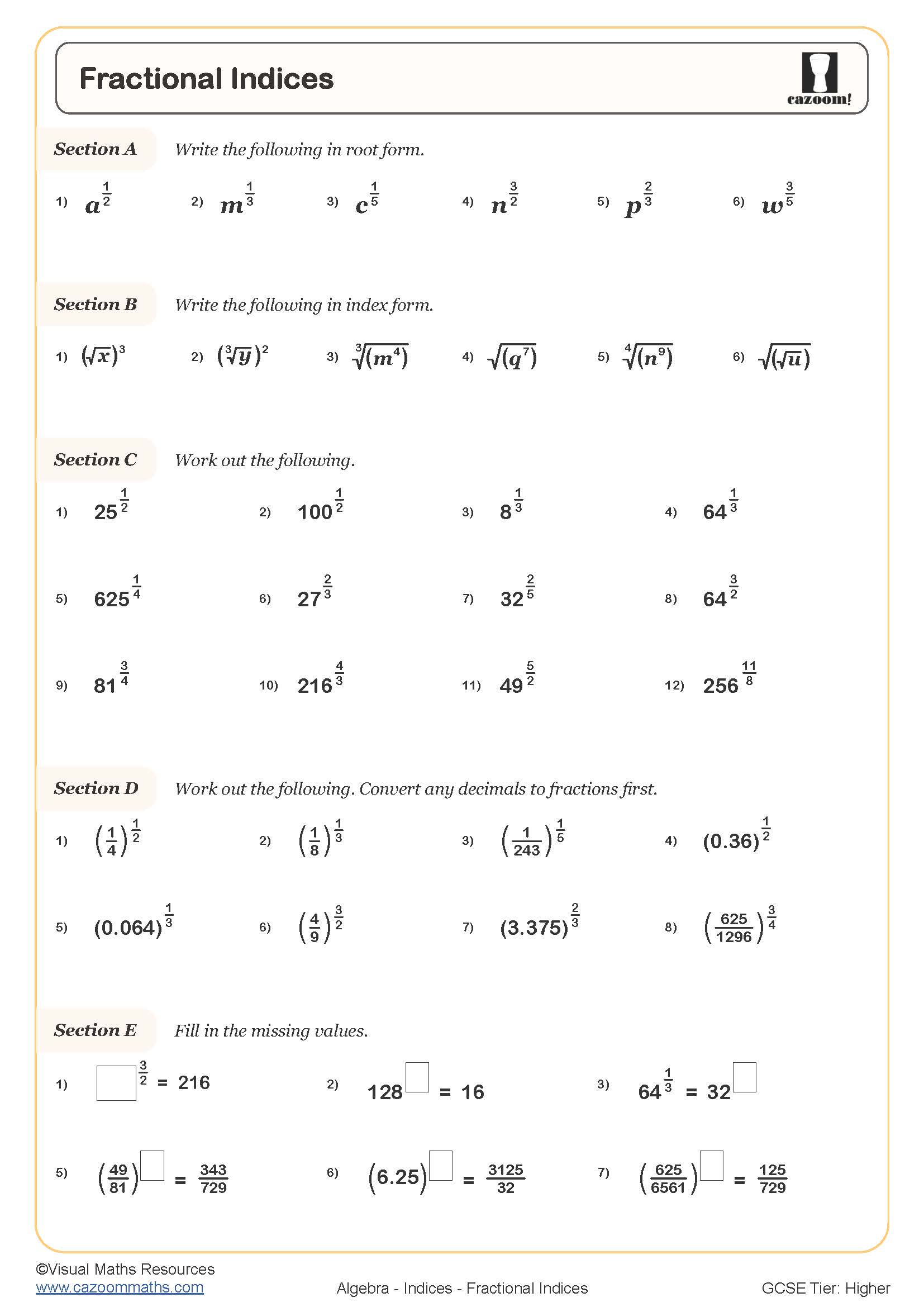
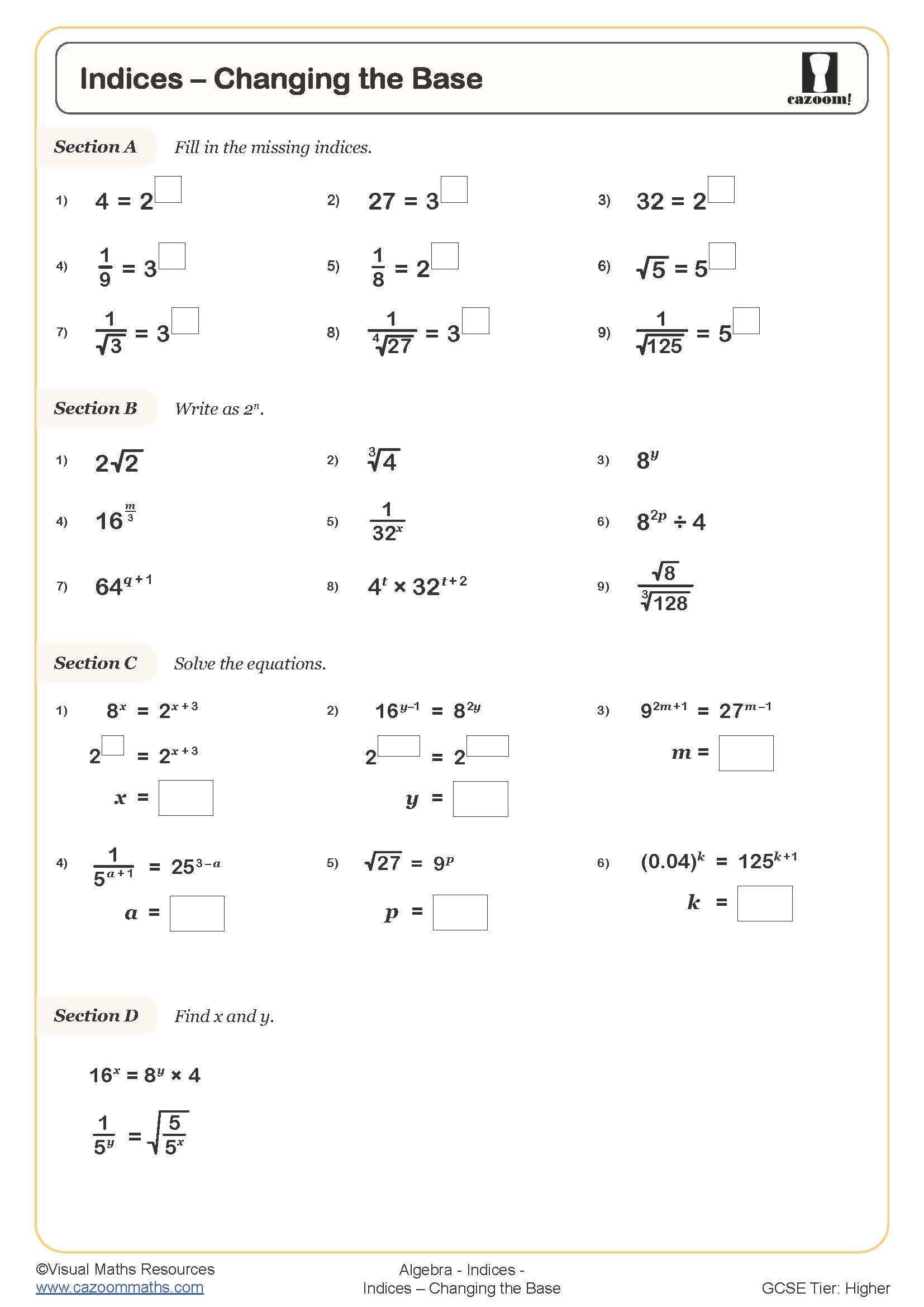
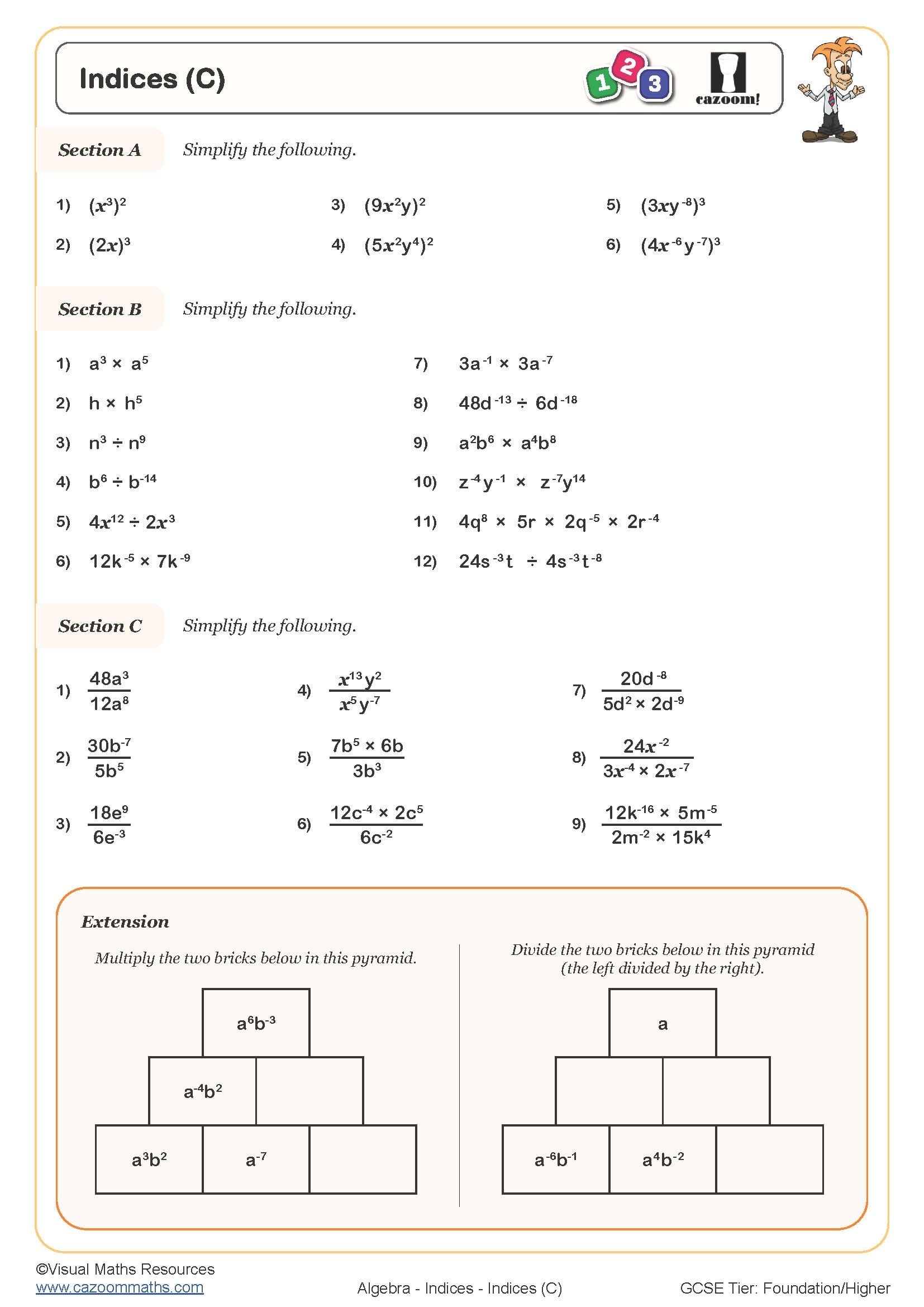
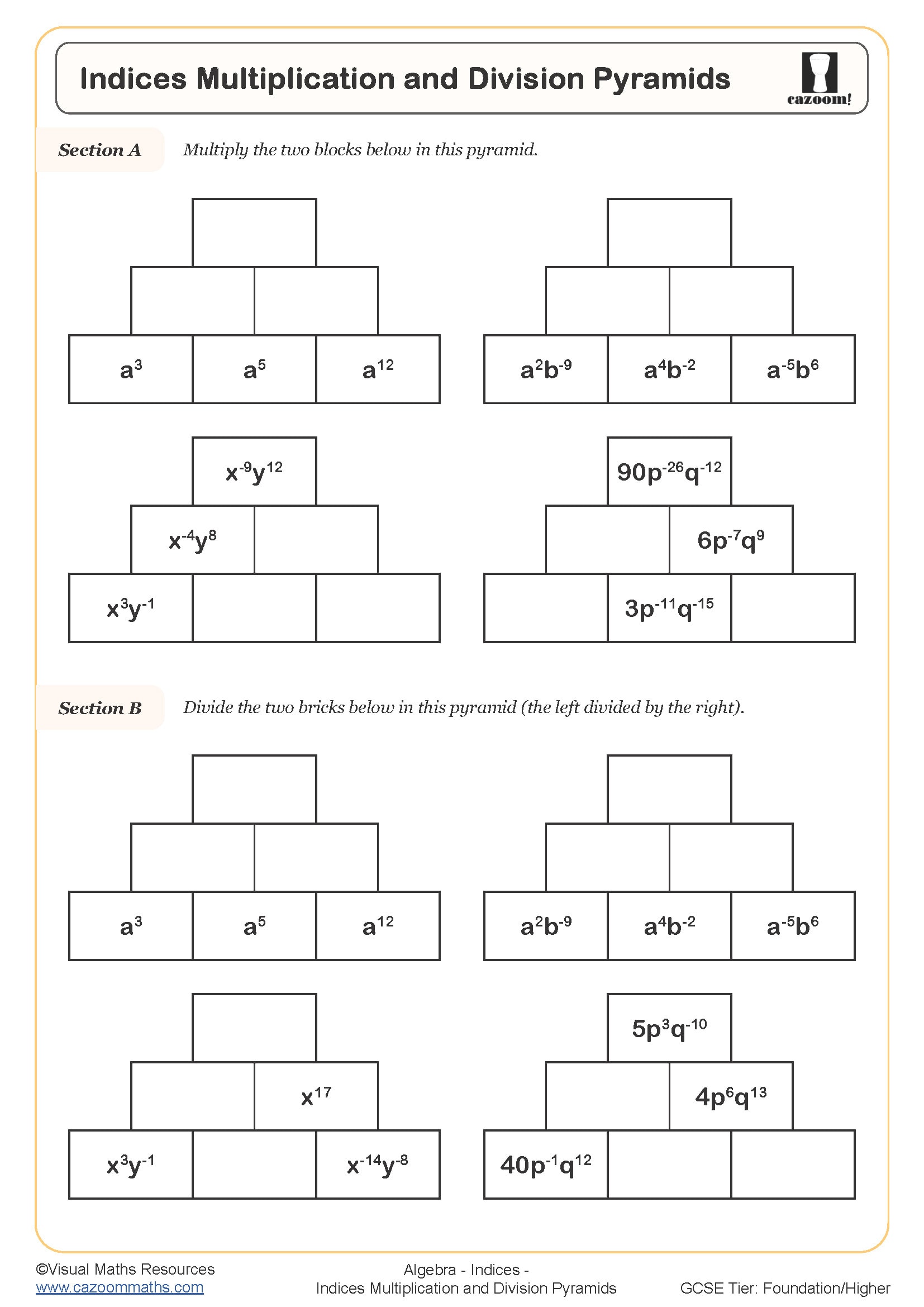
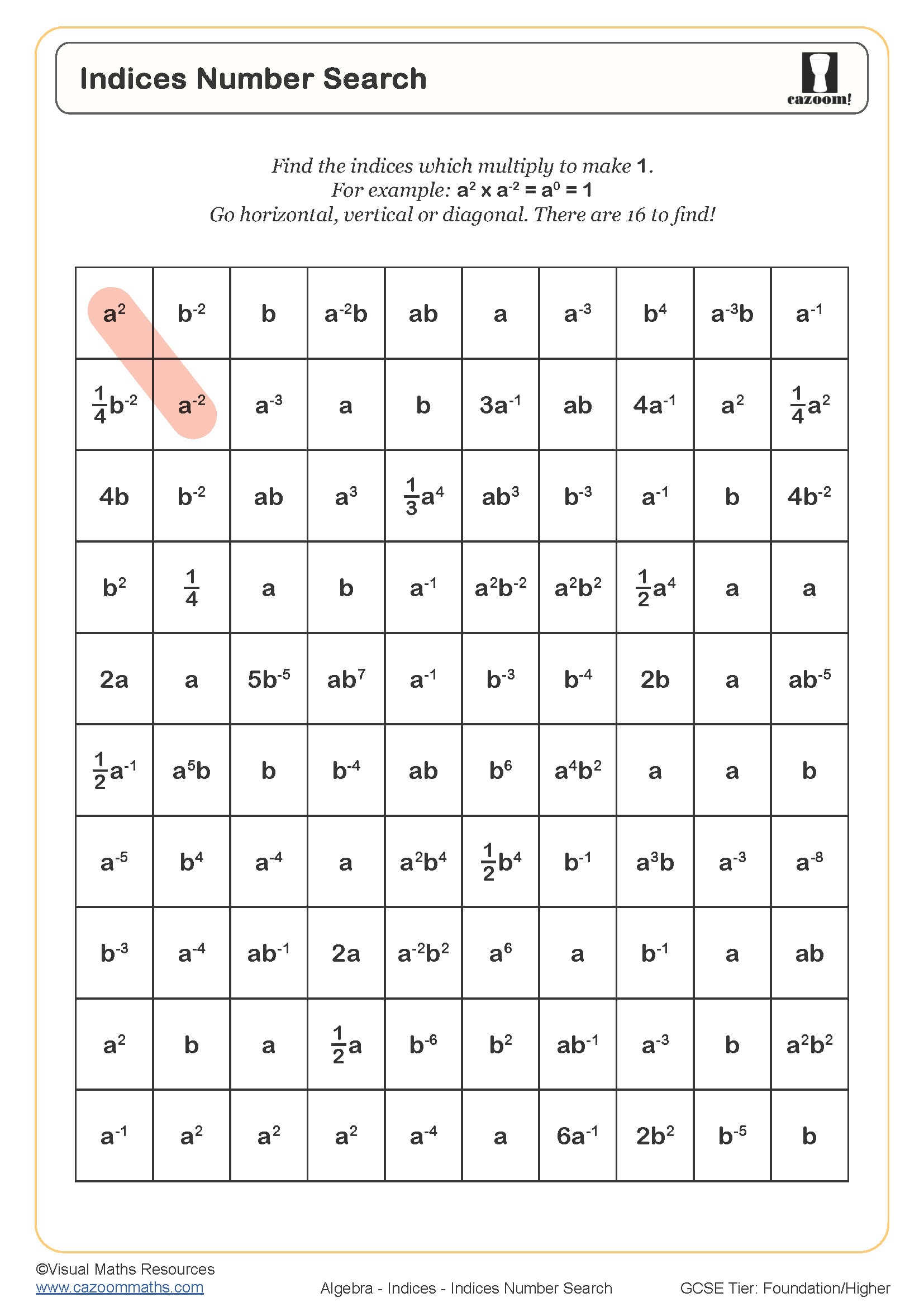
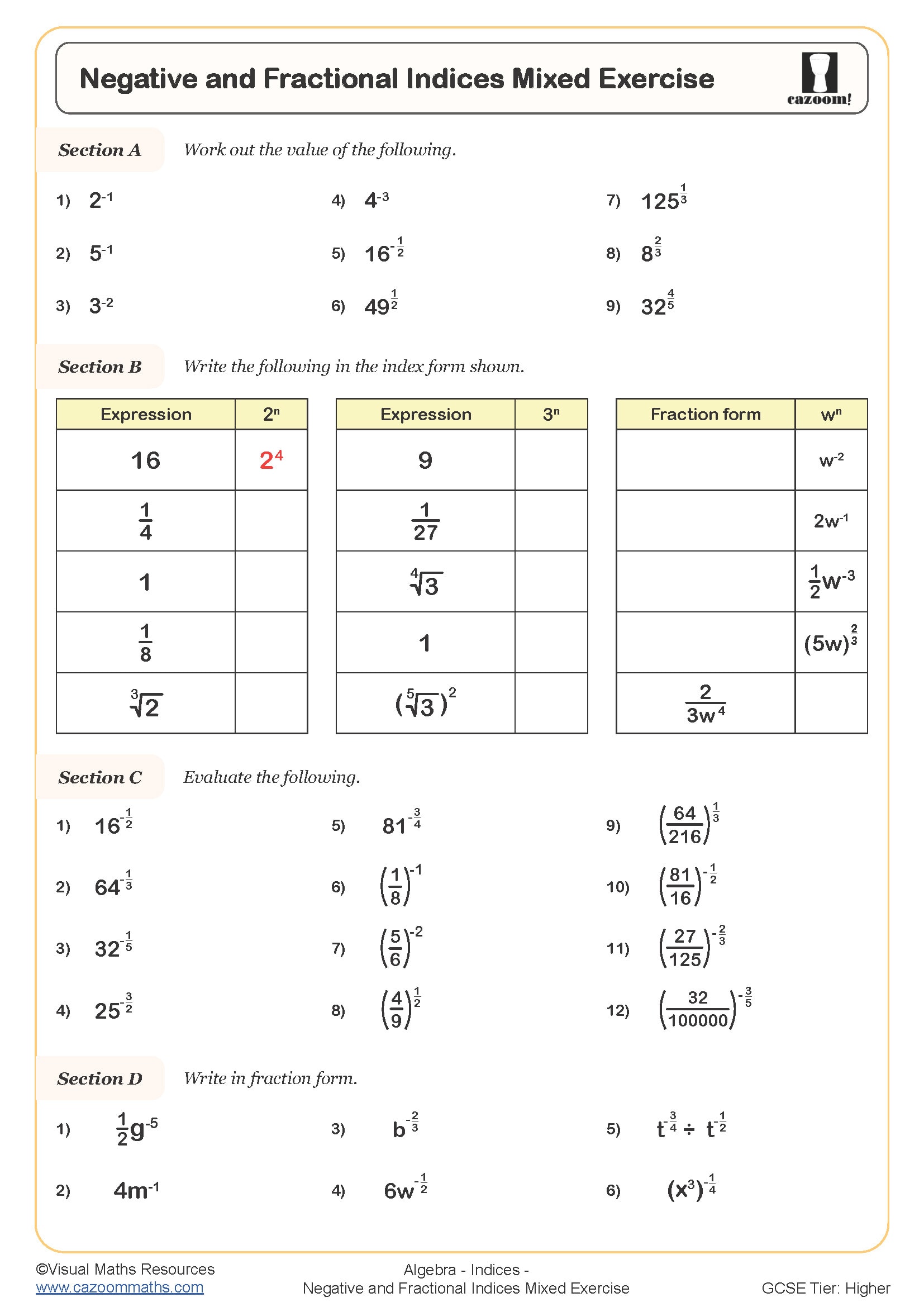
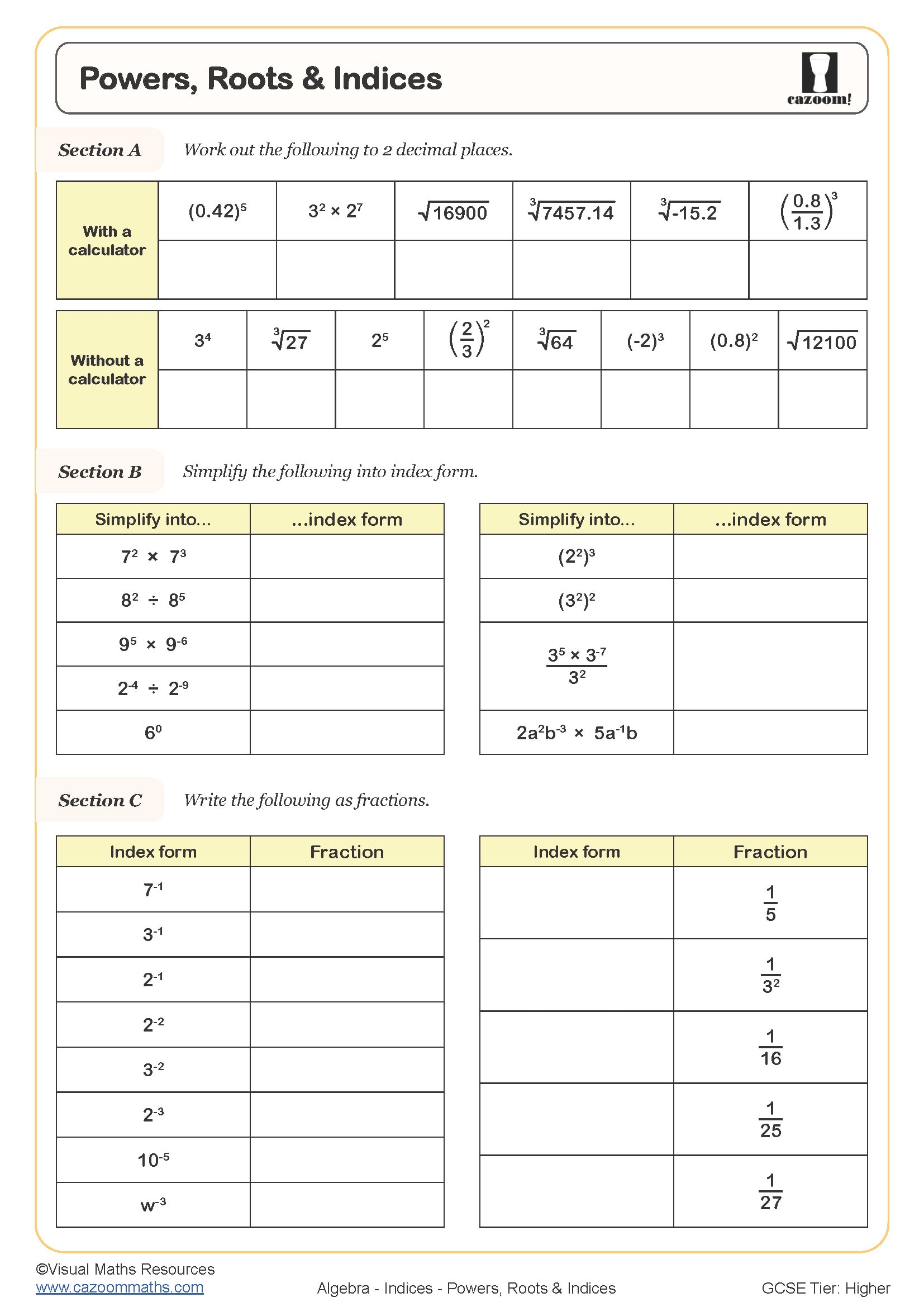
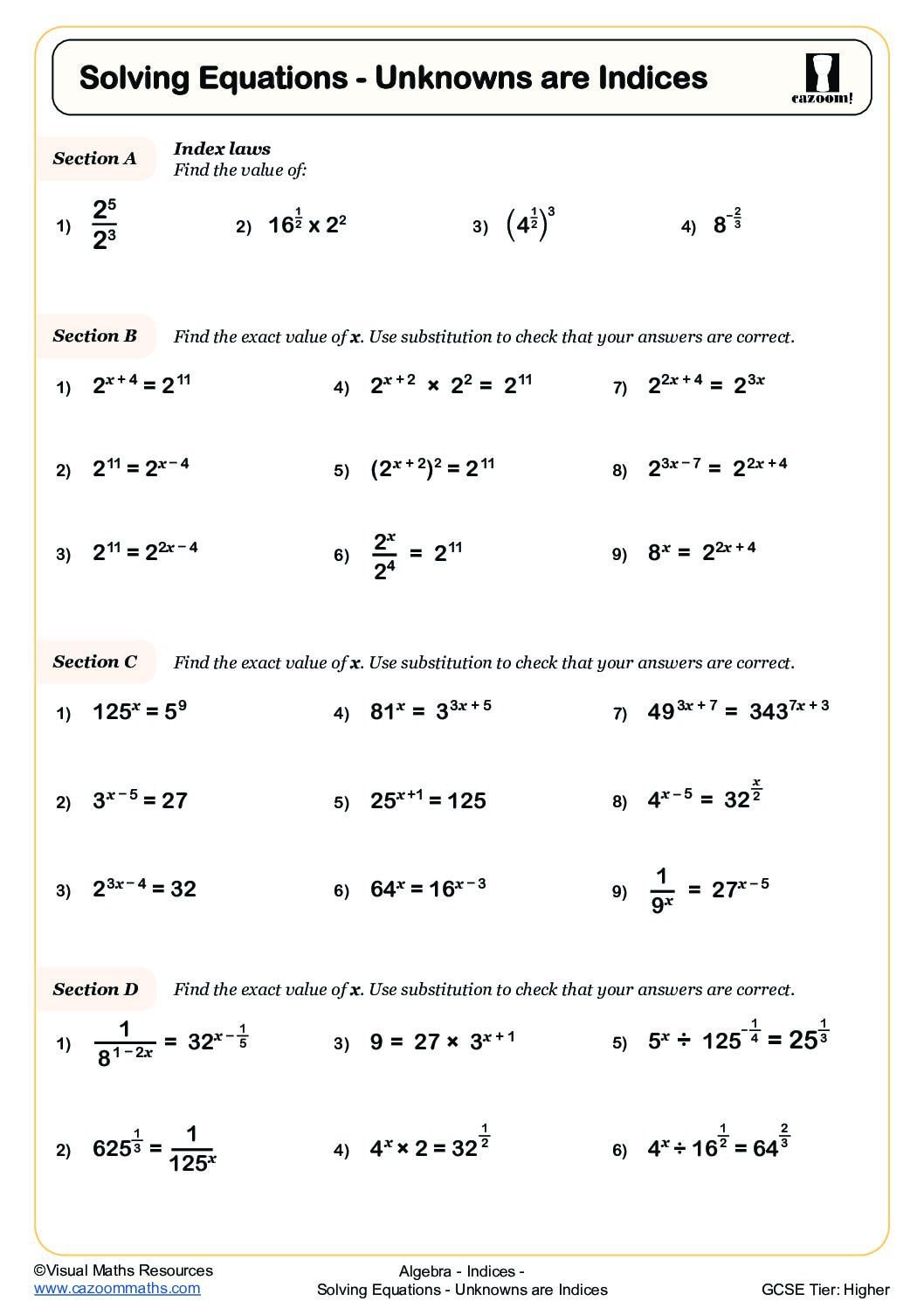
All worksheets are created by the team of experienced teachers at Cazoom Maths.
What makes a good indices worksheet for GCSE preparation?
A quality indices worksheet must systematically cover all index laws required at GCSE level, progressing from basic multiplication and division rules through to negative and fractional indices. The index laws worksheet should include varied question types, from straightforward simplification to problem-solving contexts that mirror exam expectations.
Teachers find that students often memorise rules without understanding when to apply them. Effective worksheets therefore include mixed exercises where students must identify which law applies, rather than grouping all multiplication questions together. This develops the pattern recognition skills core for tackling GCSE questions confidently.
Which year groups should use these indices worksheets?
These worksheets primarily target Year 11 students preparing for GCSE examinations, though capable Year 10 students often benefit from early exposure to strengthen their algebraic foundations. The National Curriculum introduces indices formally in Key Stage 4, building on the basic powers work from earlier years.
Teachers notice significant variation in student readiness for indices work. Some students arrive with solid understanding of square and cube numbers, whilst others need substantial reinforcement of basic concepts. The worksheet collection accommodates this range, with foundational exercises supporting students who need additional practice alongside extension material for those ready to tackle complex applications.
How do changing the base indices worksheet questions help students?
Changing the base indices worksheet questions challenge students to recognise when expressions with different bases can actually be simplified using index laws. These questions often involve rewriting numbers as powers of prime factors or expressing terms using common bases before applying standard rules.
Maths teachers frequently observe that students attempt to apply index laws incorrectly when bases differ, leading to errors like treating 2³ × 3² as 6⁵. These specialised worksheet questions develop the critical thinking needed to identify when bases must be matched first, building the deeper understanding that separates secure GCSE performance from mechanical rule-following.
How should teachers use these index law worksheet resources effectively?
Teachers achieve best results by using these index law worksheet resources as part of a structured approach that moves from guided practice to independent application. Beginning with worked examples helps establish correct method, followed by scaffolded questions where students apply single rules before tackling multi-step problems.
Classroom experience shows that immediate feedback proves crucial for indices work, as small errors compound quickly in longer calculations. The included answer sheets enable teachers to identify misconceptions early, whilst the PDF format allows for easy annotation when providing written feedback. Regular low-stakes assessment using shorter worksheet sections maintains confidence whilst building fluency.