Year 11 Rearranging Equations Worksheets
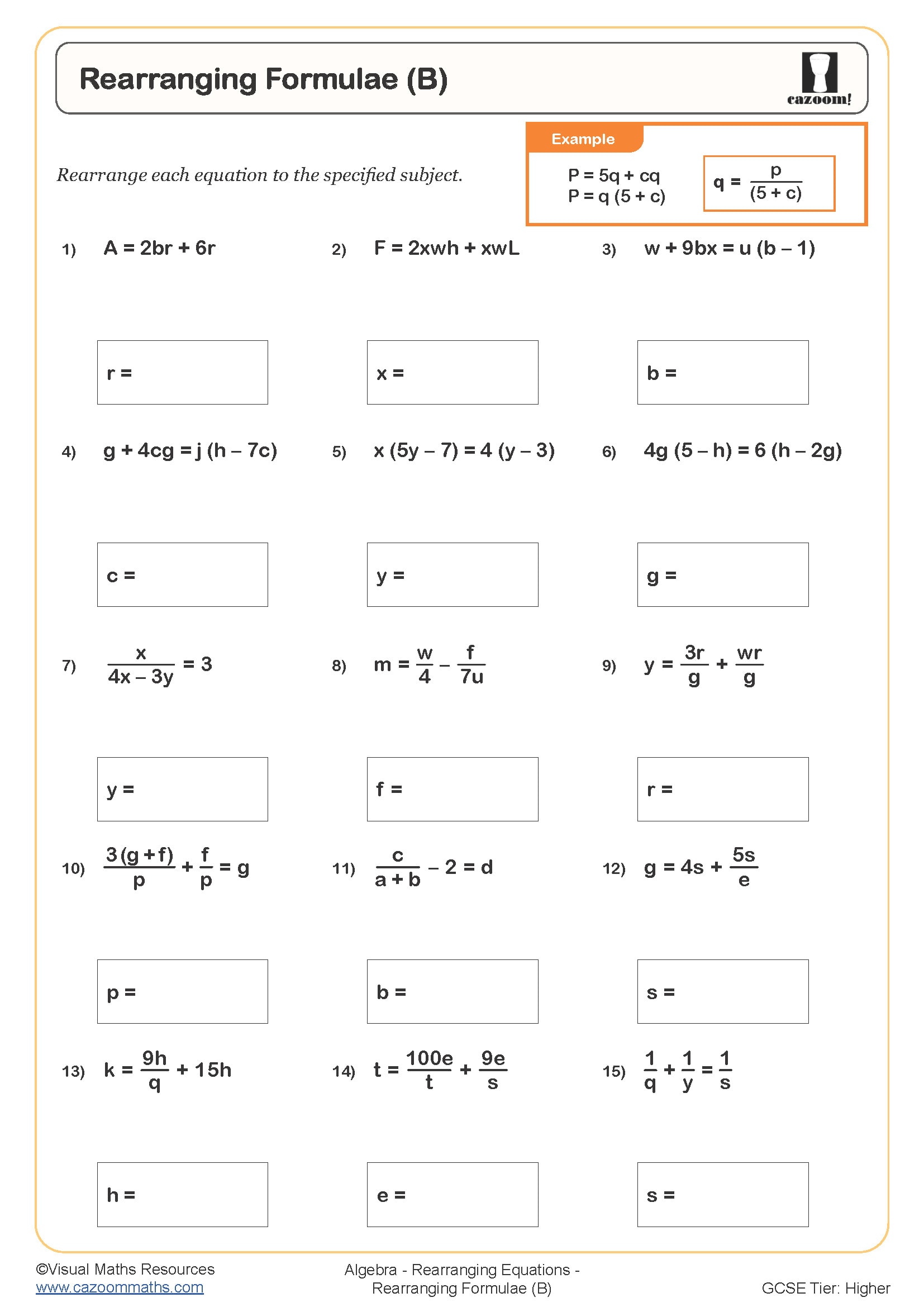
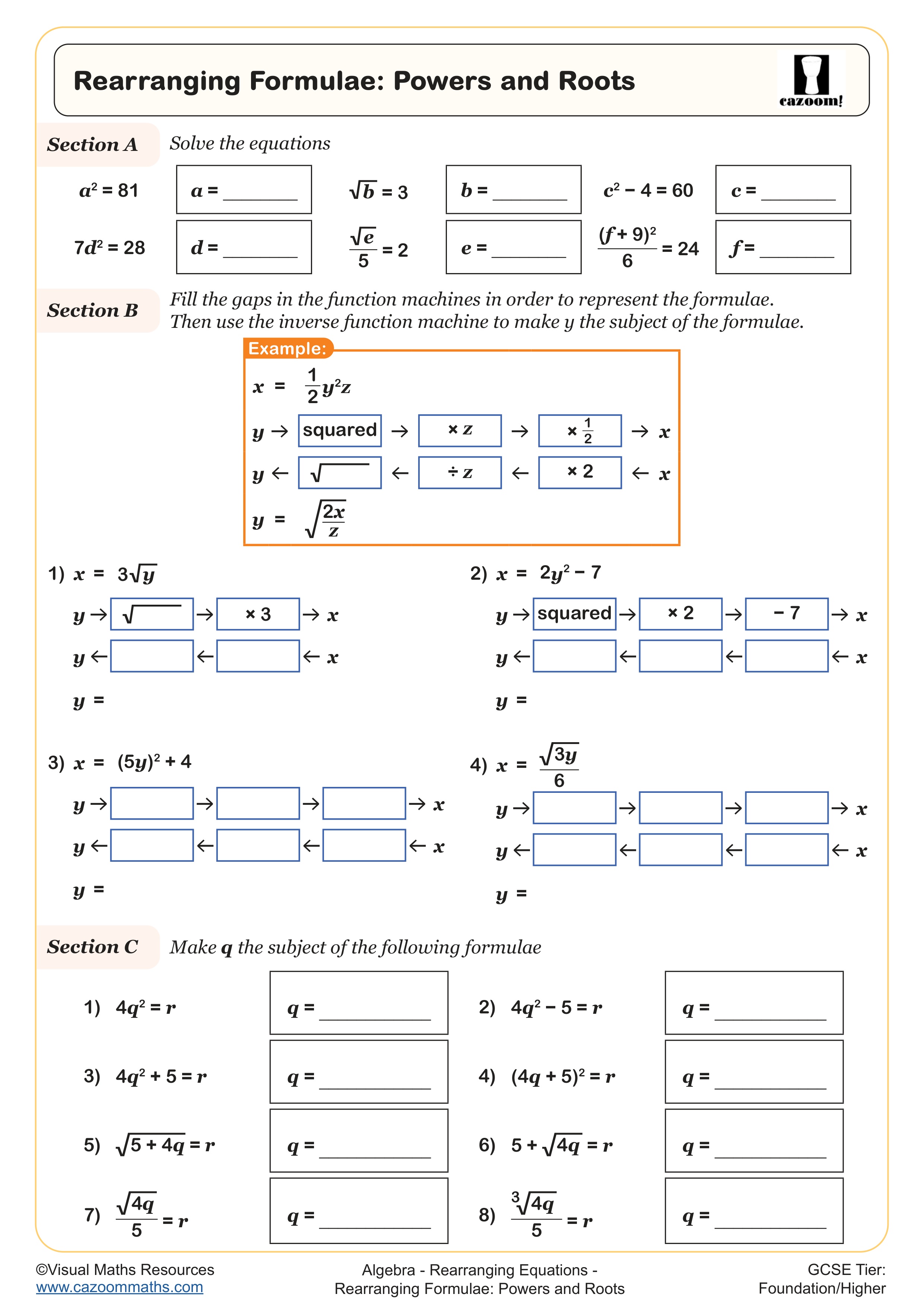
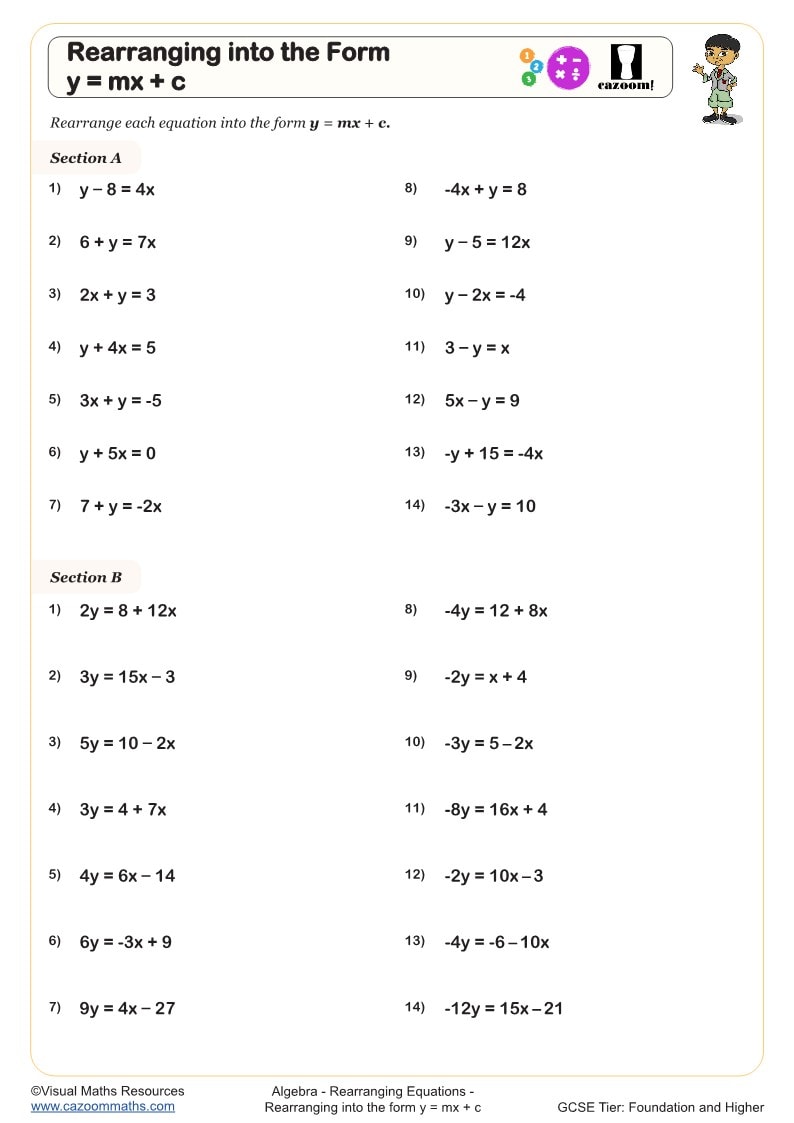
All worksheets are created by the team of experienced teachers at Cazoom Maths.
What makes an effective rearranging equations worksheet for GCSE students?
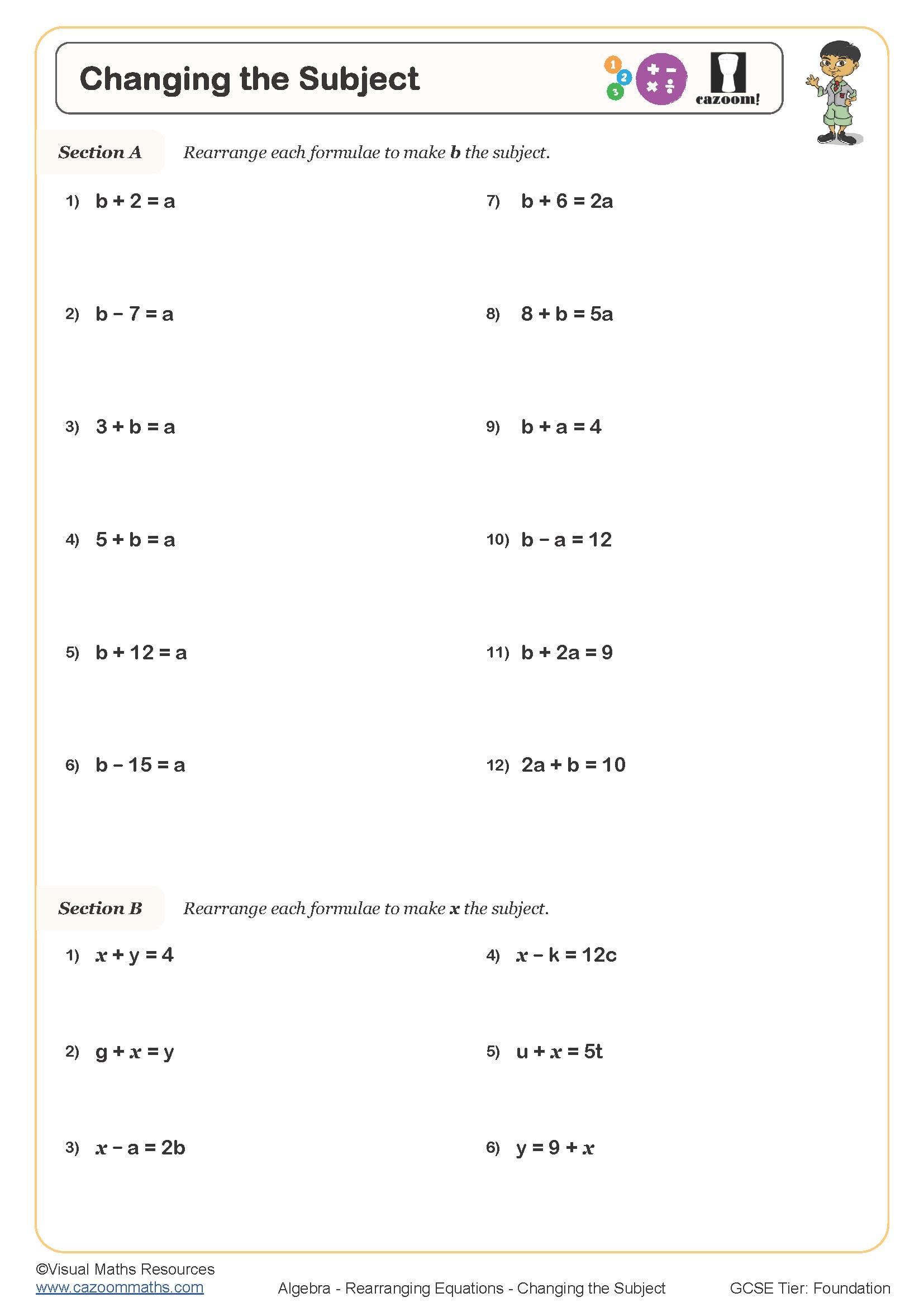
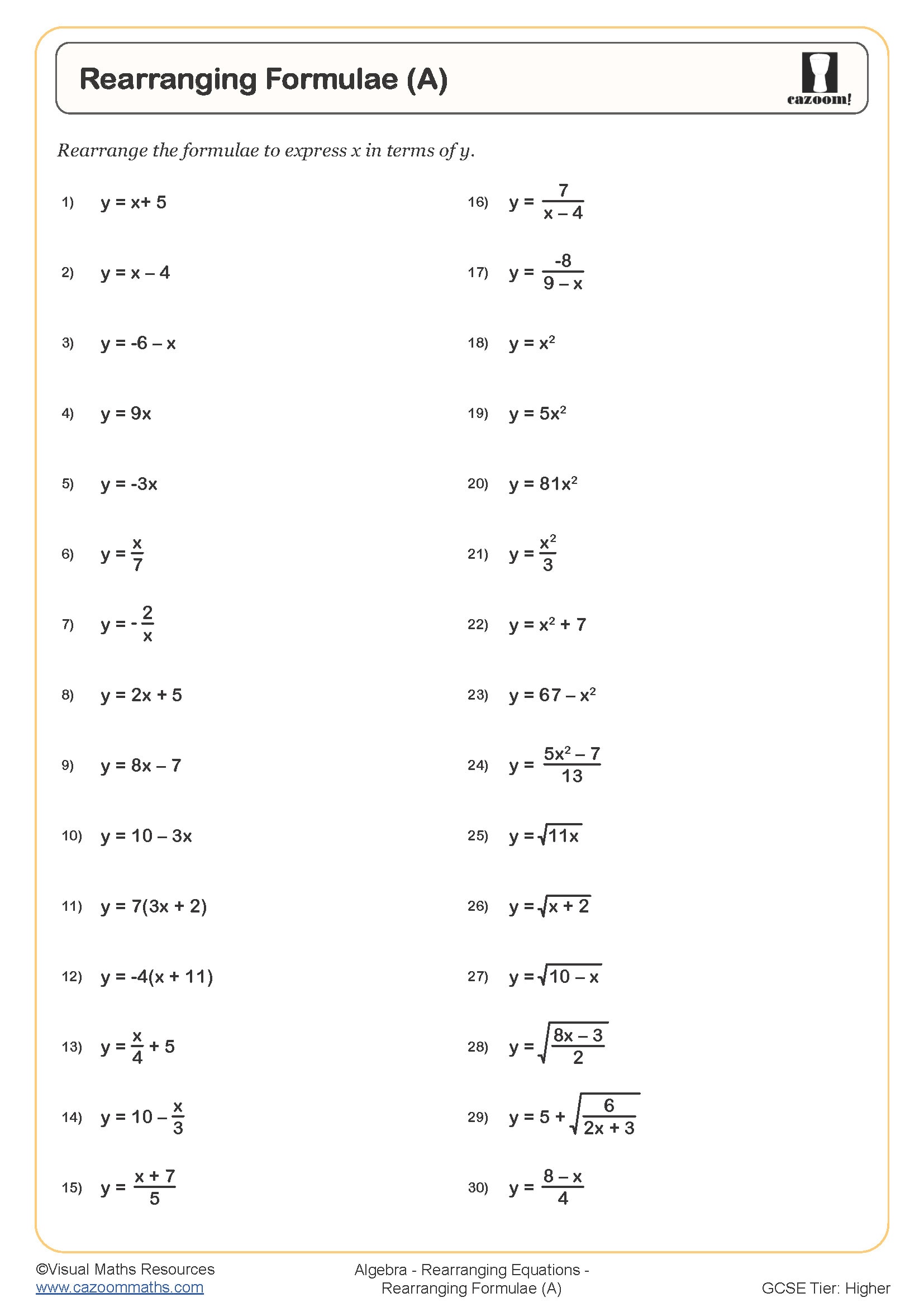
An effective rearranging equations worksheet must scaffold the complexity carefully, starting with simple linear equations before introducing fractional coefficients and multiple variables. The best worksheets include a mix of algebraic expressions and real formulae from physics, such as rearranging v = u + at to make u the subject, helping students see practical applications.
Teachers consistently observe that students make fewer errors when worksheets group similar question types together, allowing them to recognise patterns in the rearrangement process. The most successful practice sheets also include worked examples and progress from making x the subject in simple equations to tackling complex subject of the formula questions involving squared terms and reciprocals.
Which year groups should use rearranging formulae worksheets?
Rearranging formulae worksheets are primarily designed for Year 10 and Year 11 students following the GCSE mathematics curriculum, though some simpler versions suit high-ability Year 9 classes. The skill builds directly on algebraic manipulation taught in Years 8 and 9, making it core preparation for both GCSE mathematics and A-level sciences.
Maths teachers find that introducing basic formula rearrangement in Year 10 allows more time for complex examples in Year 11, particularly the challenging rearranging formulas worksheet questions that appear in GCSE higher tier papers. Physics teachers also use these resources extensively, as students need confident formula manipulation for mechanics, electricity, and waves topics throughout their GCSE science course.
How do students tackle equations with fractions and brackets when rearranging?
When rearranging equations containing fractions, students must clear denominators by multiplying both sides by the appropriate terms before isolating the required variable. Teachers notice that students often rush this step, leading to sign errors or incomplete elimination of fractions from the equation.
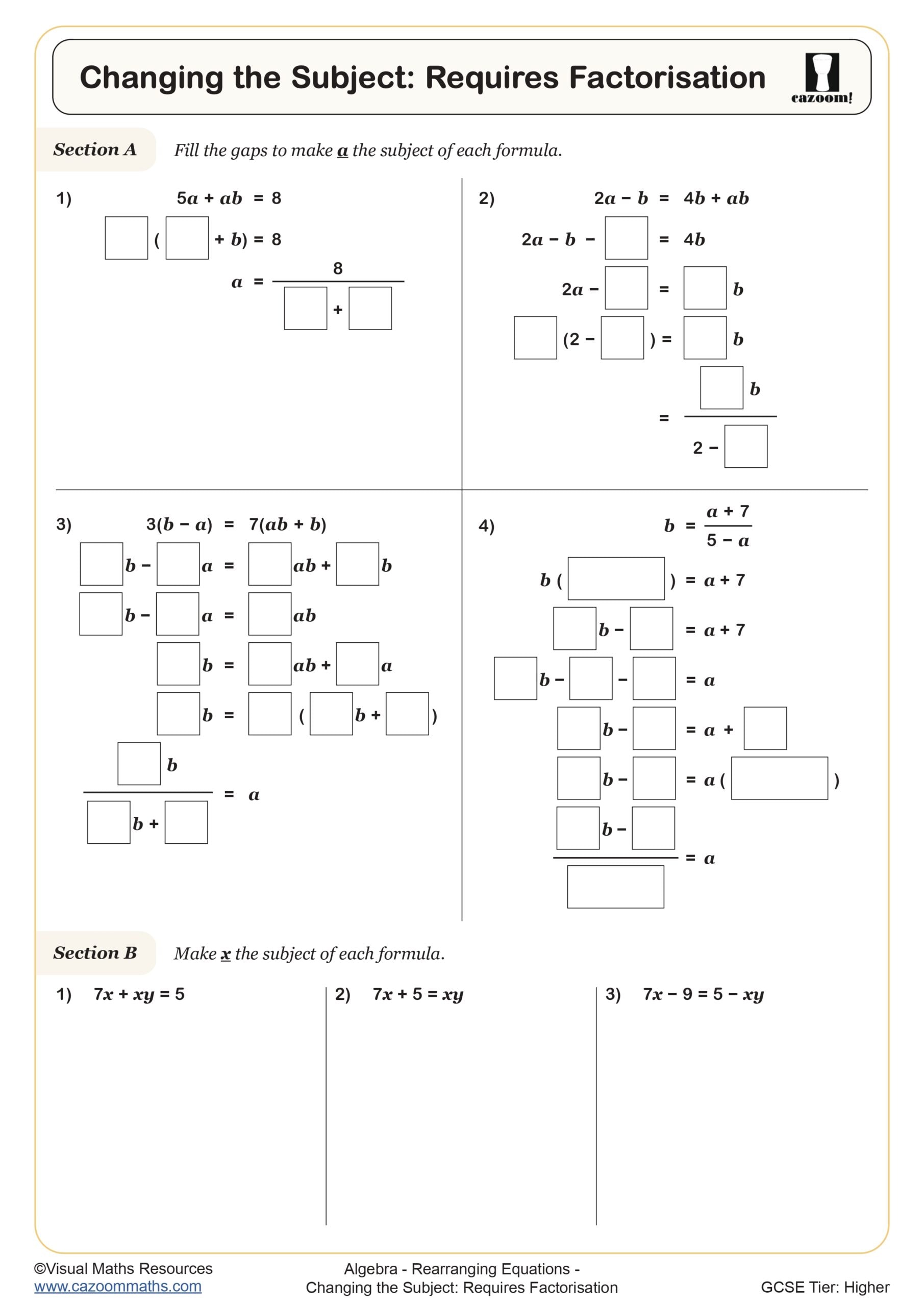
Brackets require careful expansion or factorisation depending on the target variable's position. A common error occurs when students attempt to 'cancel' terms across equals signs rather than applying proper inverse operations. Successful rearranging physics equations worksheet practice emphasises methodical approaches: multiply out brackets first, collect like terms, then isolate the subject using inverse operations in reverse order of the standard order of operations.
How can teachers use these worksheets most effectively in lessons?
Teachers achieve the best results by using these worksheets as guided practice rather than independent work initially. Starting with collaborative work on the first few questions helps students verbalise their thinking and identify errors before they become embedded habits.
The answer sheets prove invaluable for peer marking and self-assessment, allowing students to identify mistakes immediately and understand where their method diverged from the correct approach. Many teachers find that mixing algebraic and physics contexts within the same lesson helps students appreciate the universal nature of rearrangement skills, particularly when preparing for both mathematics and science GCSE examinations where these techniques feature prominently.