Year 11 Solving Equations Worksheets
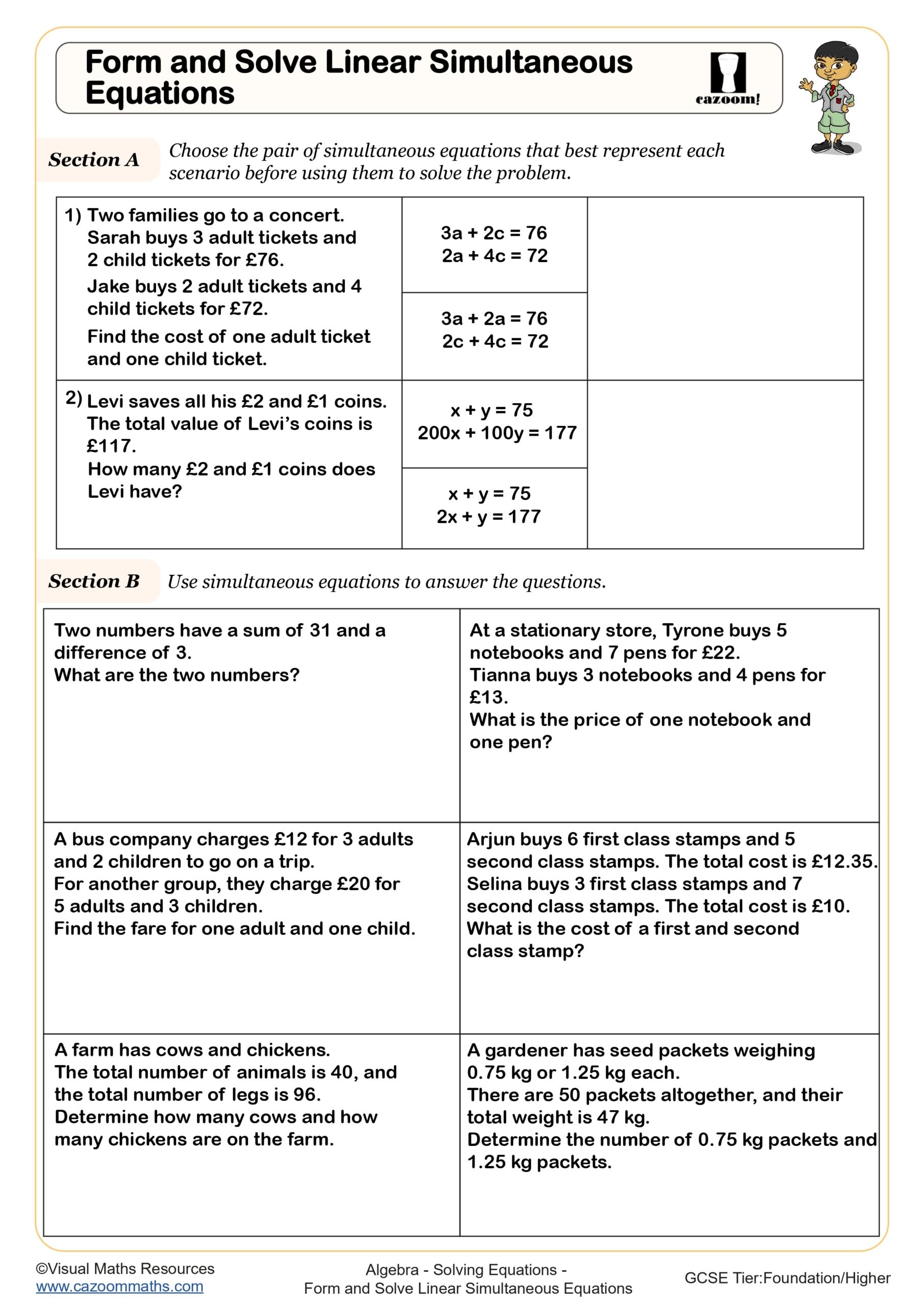
Form and Solve Linear Simultaneous Equations
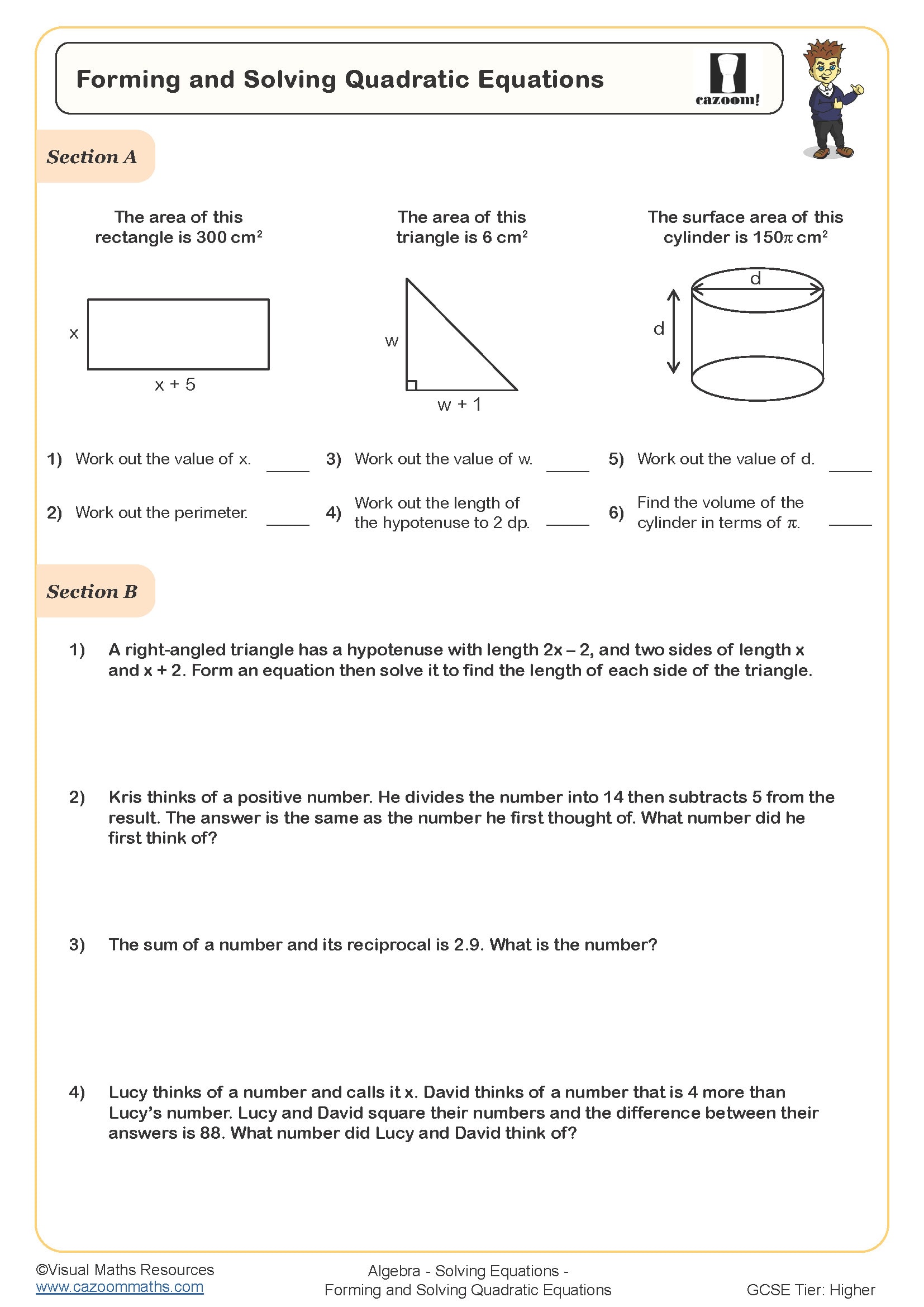
Forming and Solving Quadratic Equations
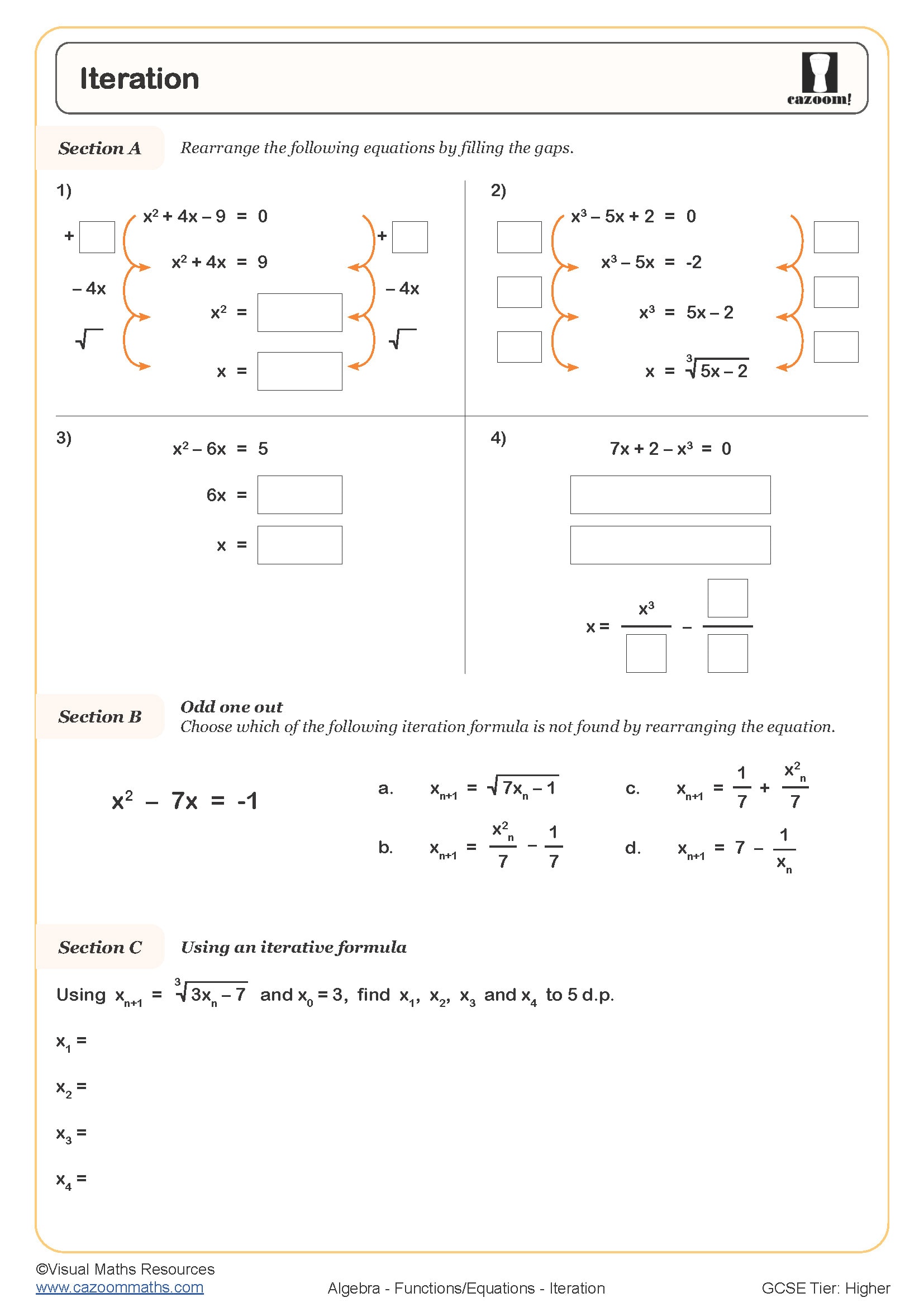
Iteration
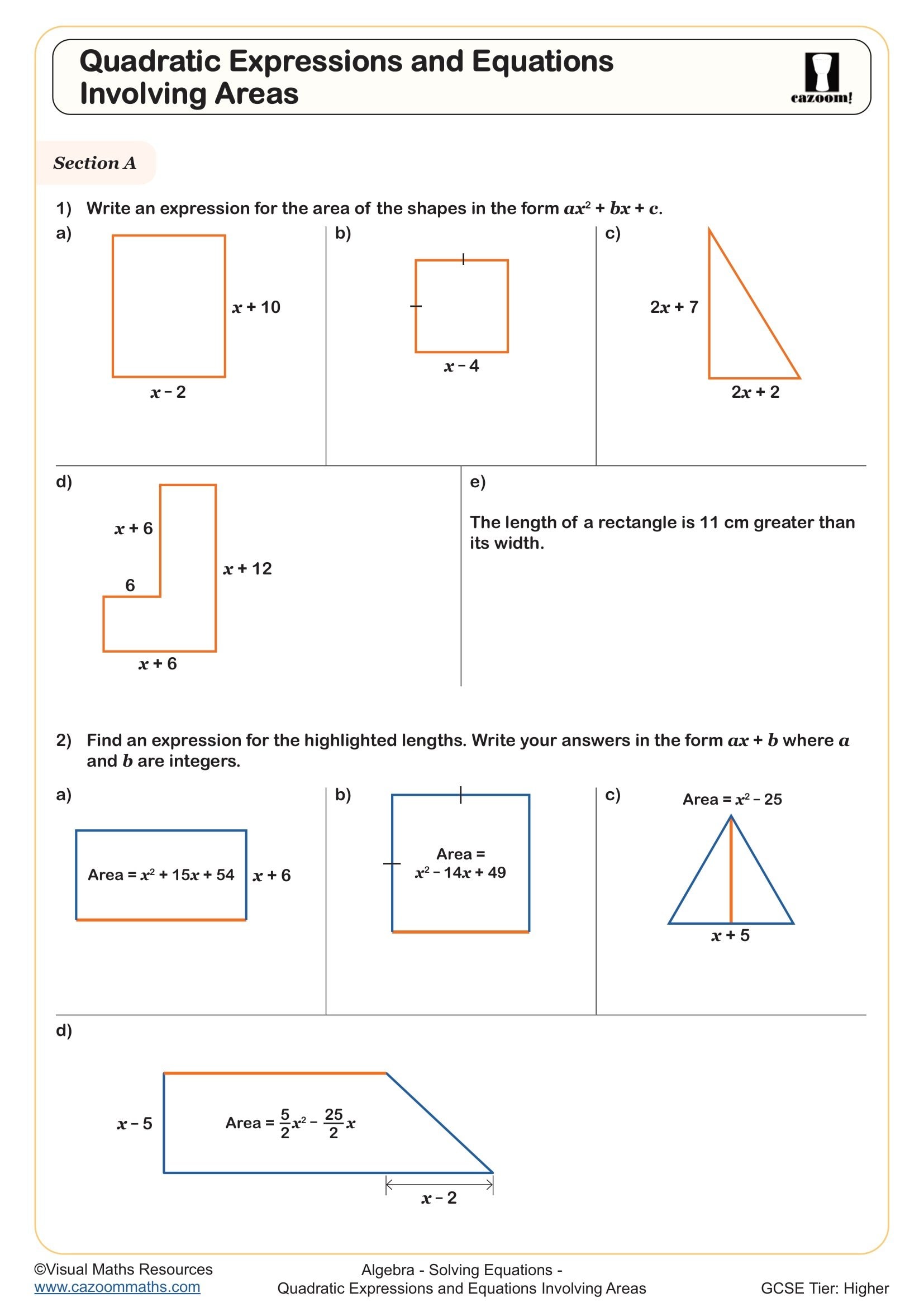
Quadratic Expressions and Equations Involving Areas
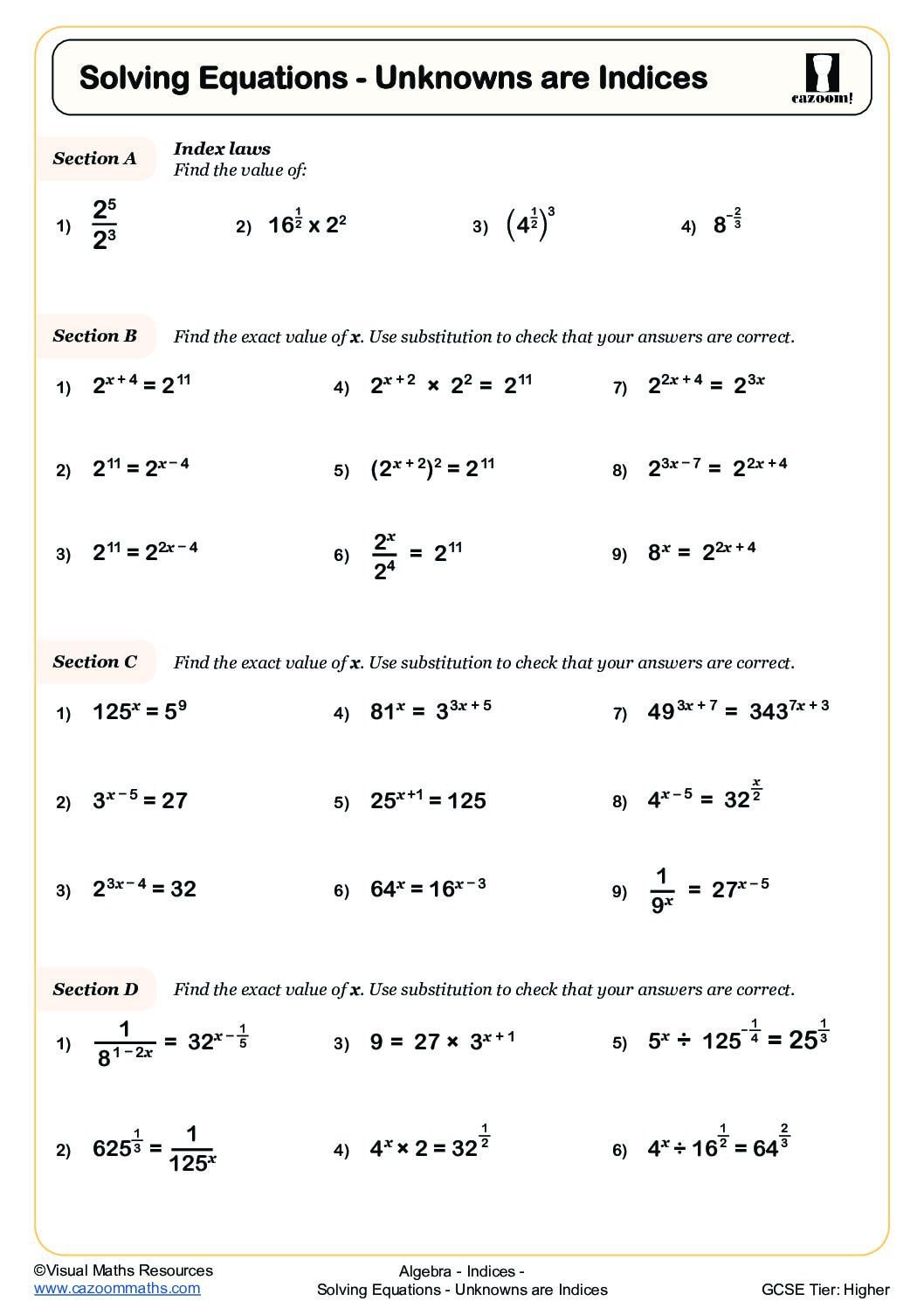
Solving Equations - Unknowns are Indices
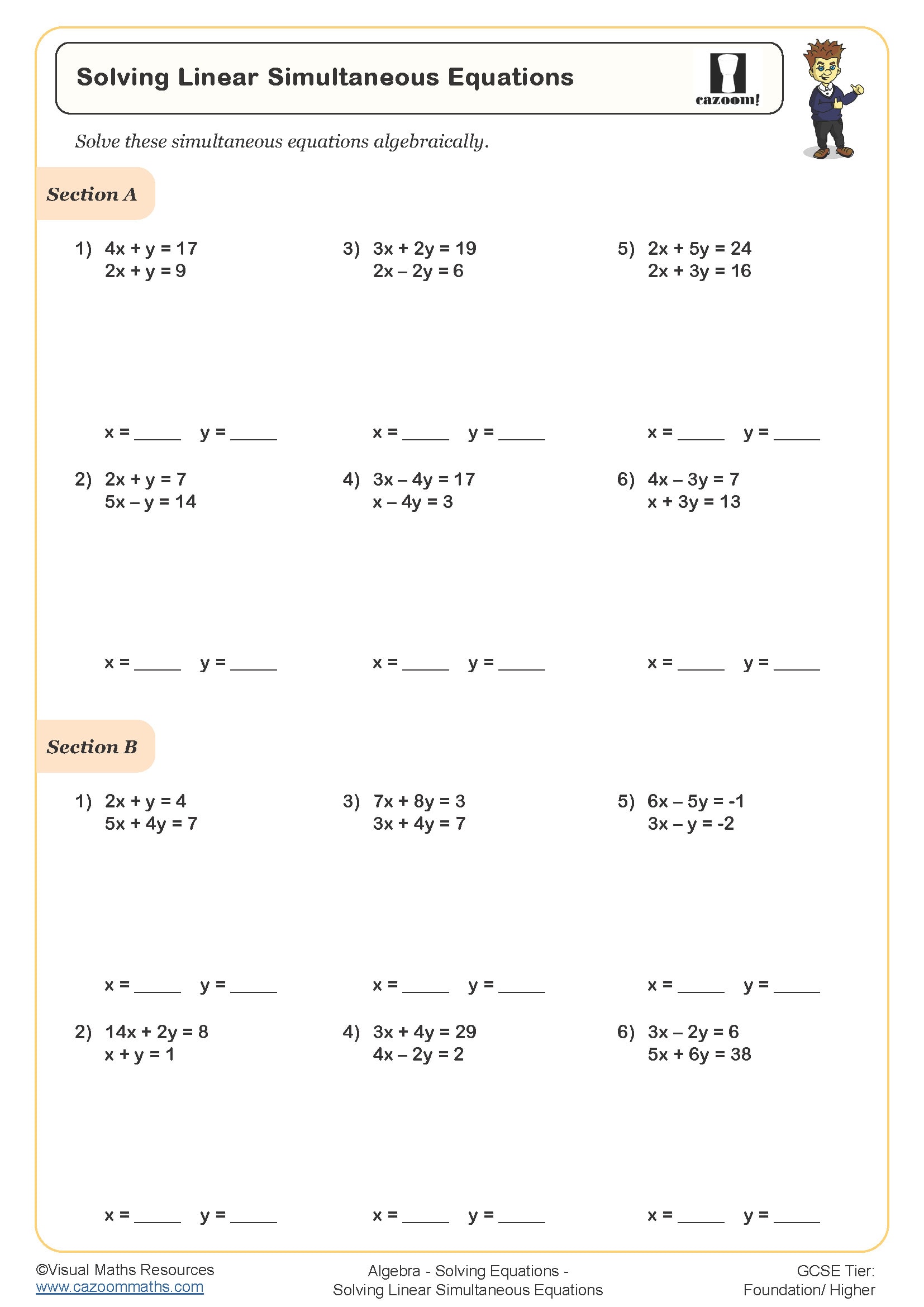
Solving Linear Simultaneous Equations
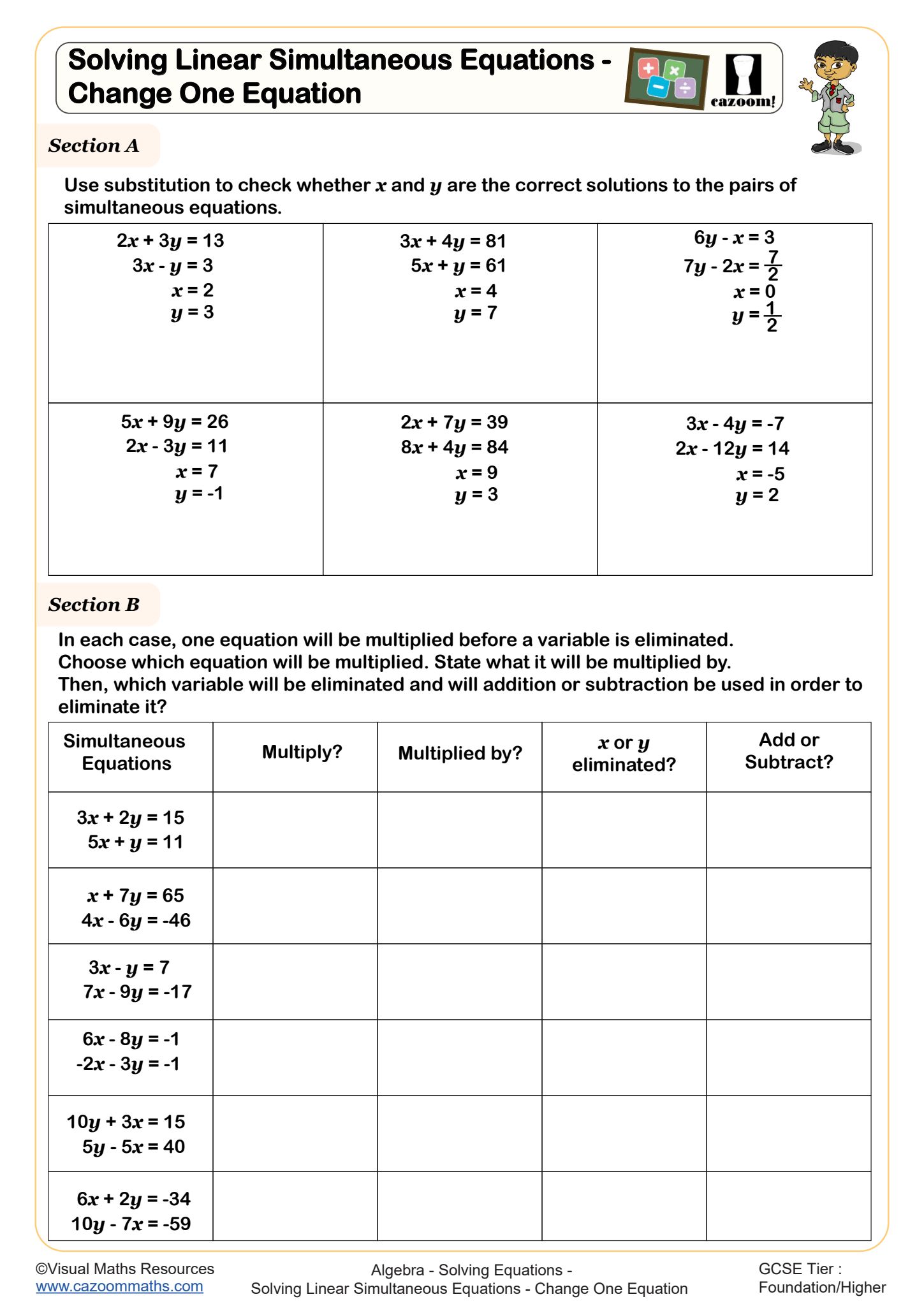
Solving Linear Simultaneous Equations - Change One Equation
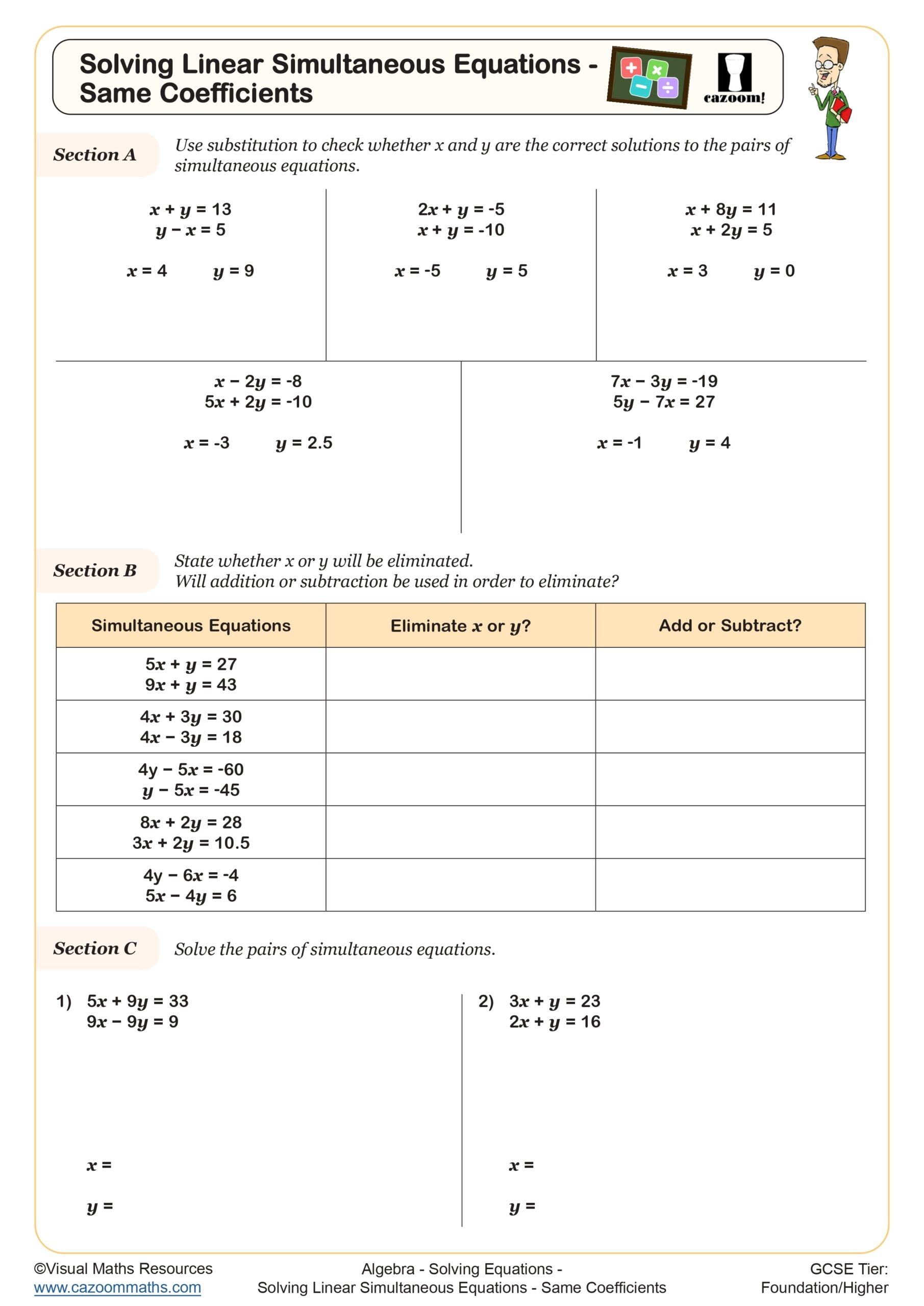
Solving Linear Simultaneous Equations - Same Coefficients
Solving Linear Simultaneous Equations - Three Methods
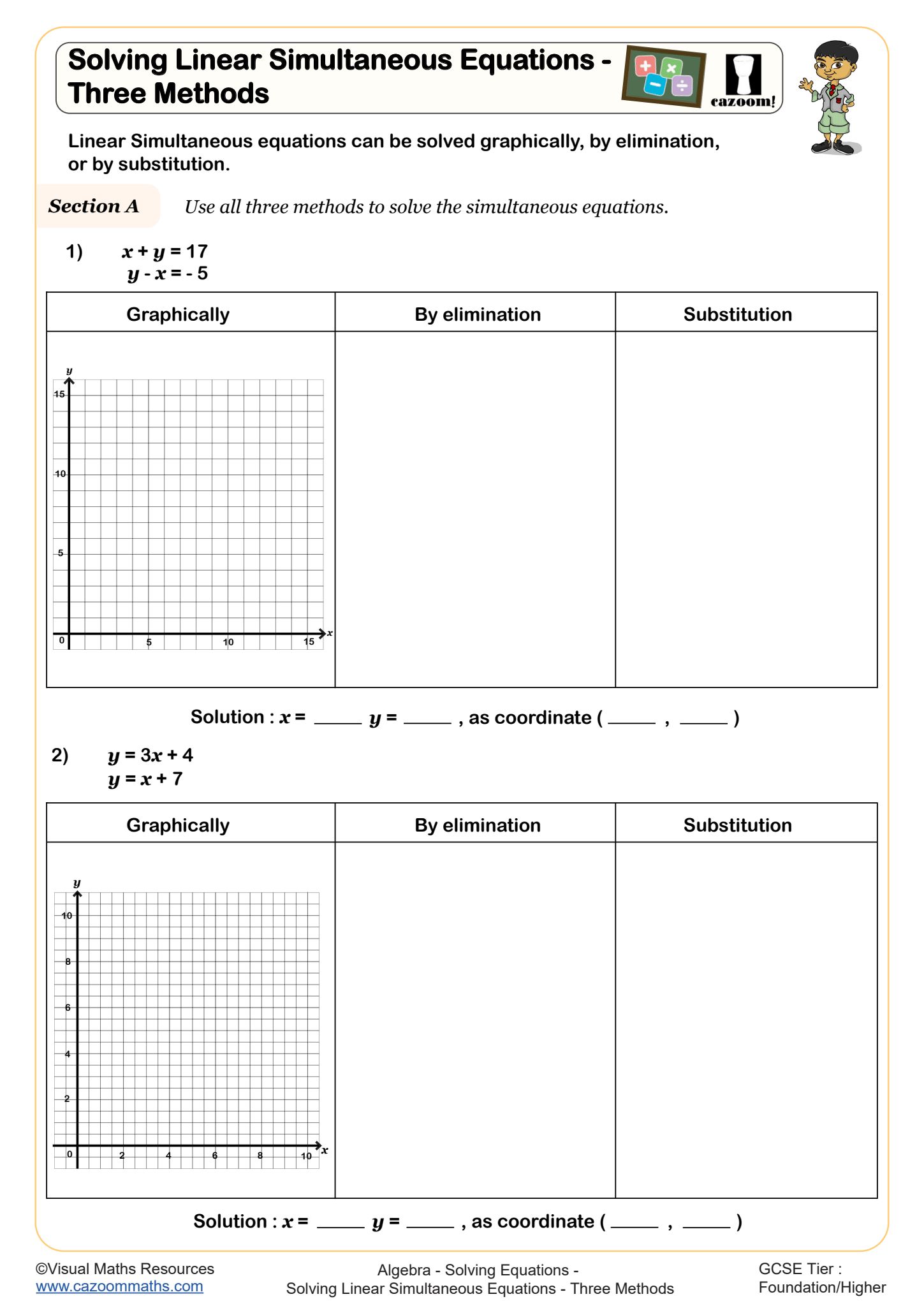
Solving Linear Simultaneous Equations - Using Bar Models
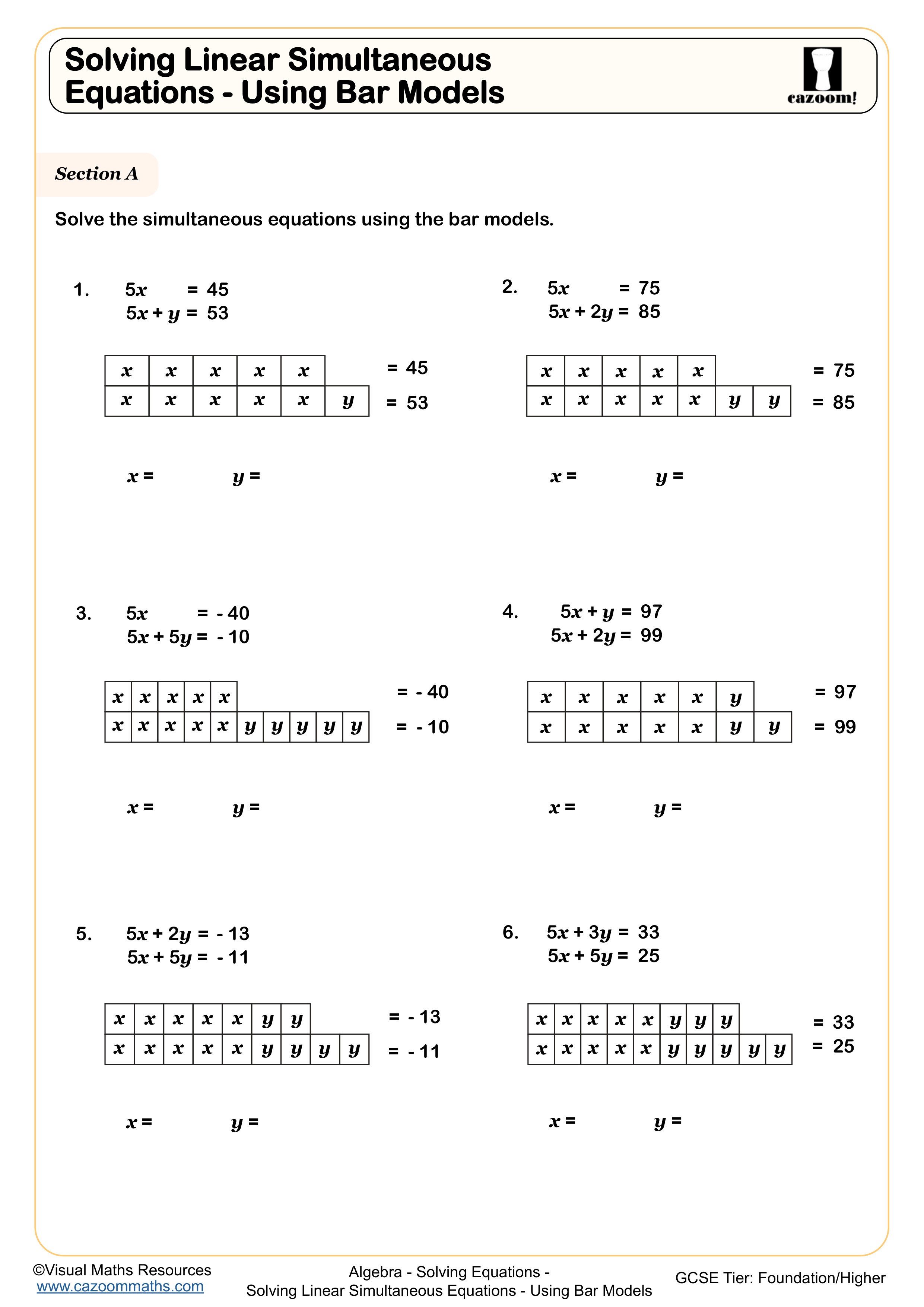
Solving Non-linear Simultaneous Equations
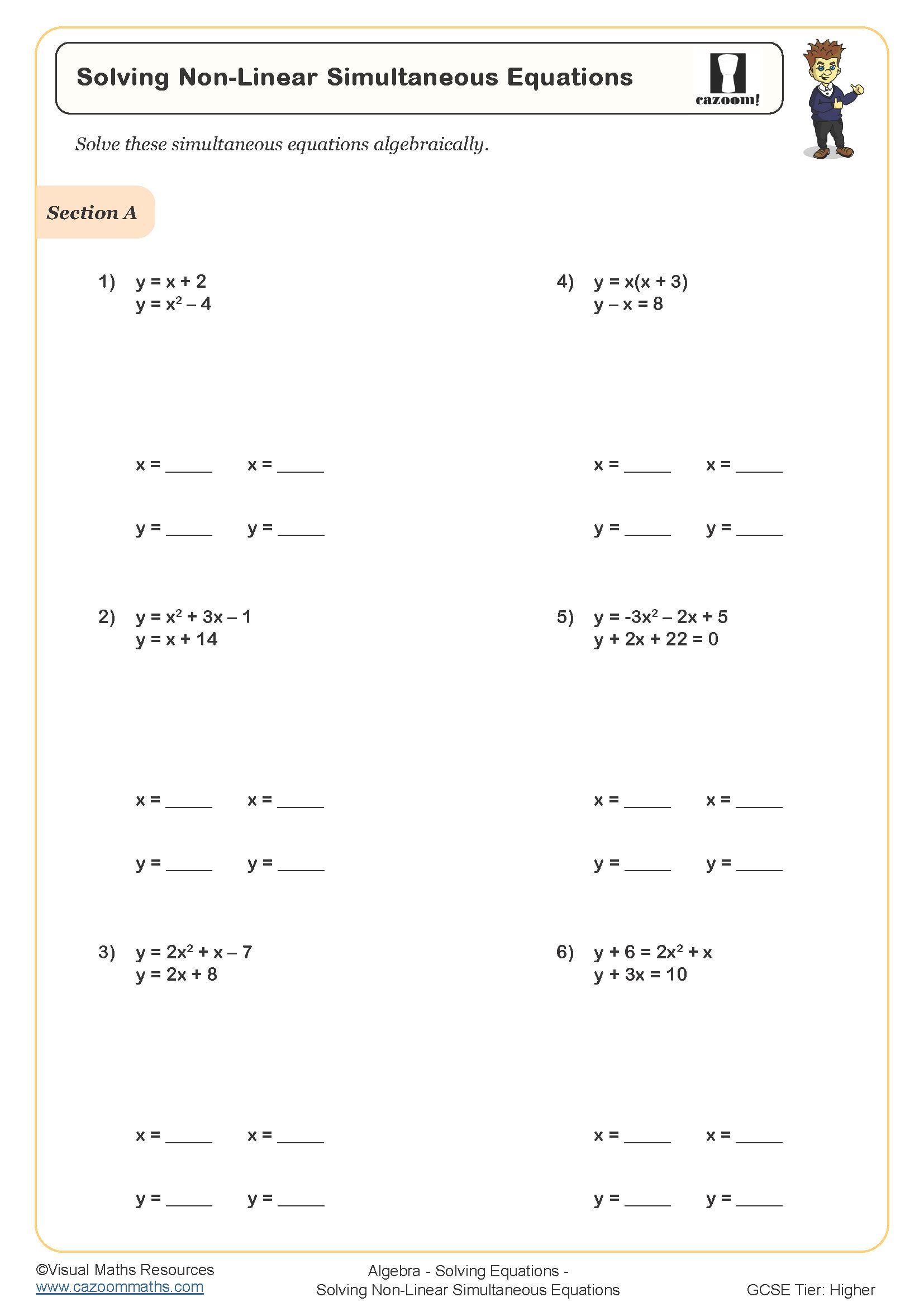
Solving Quadratic Equations
Solving Quadratic Equations by Completing the Square
.jpg?w=3840)
Solving Quadratic Equations by Factorising
.jpg?w=3840)
Solving Quadratic Equations by Formula
.jpg?w=3840)
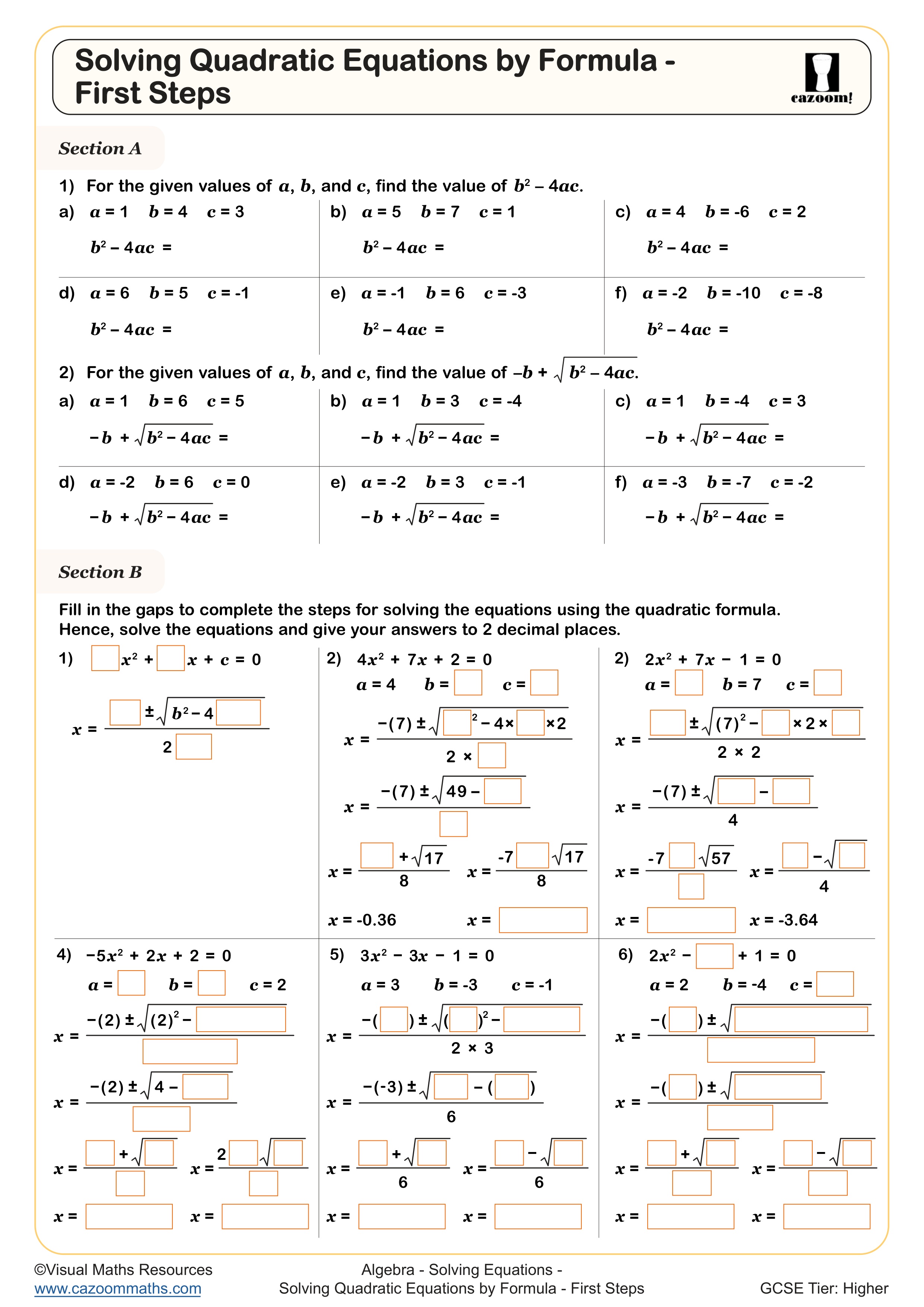
Solving Quadratic Equations by Formula - First Steps
Solving Quadratic Equations by Formula (Non-Calculator)
-Worksheet.jpg?w=3840)
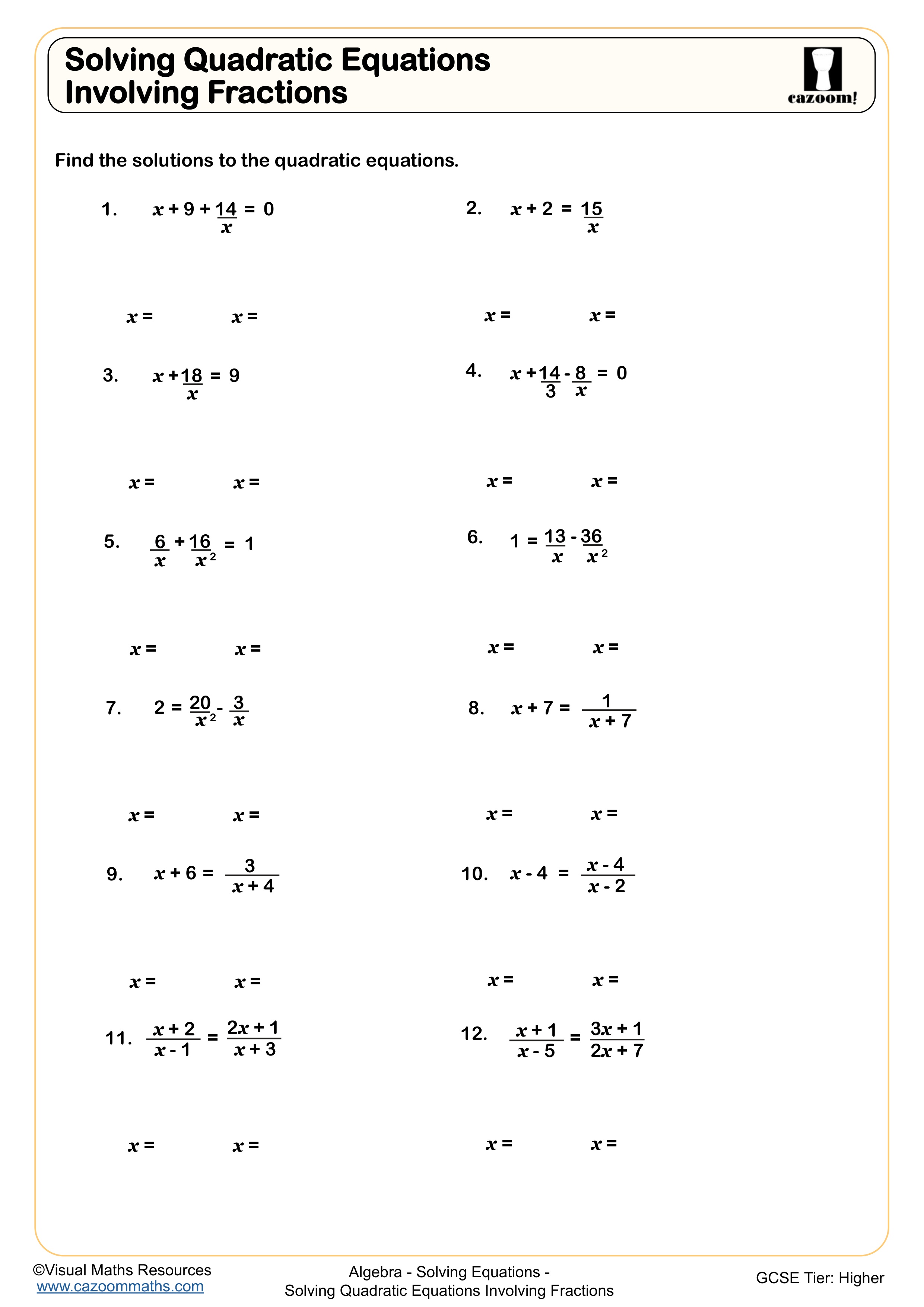
Solving Quadratic Equations Involving Fractions
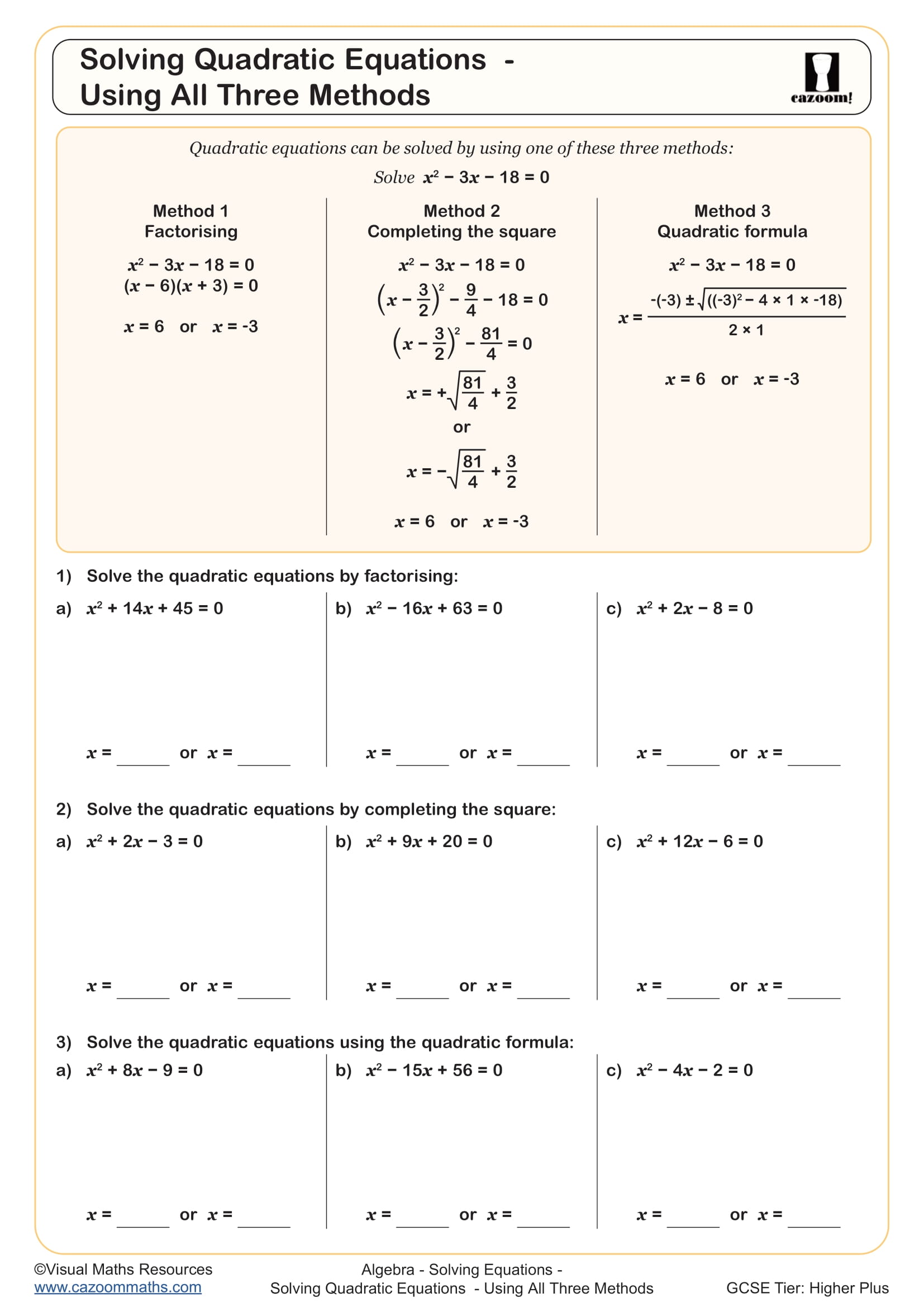
Solving Quadratic Equations Using All Three Methods
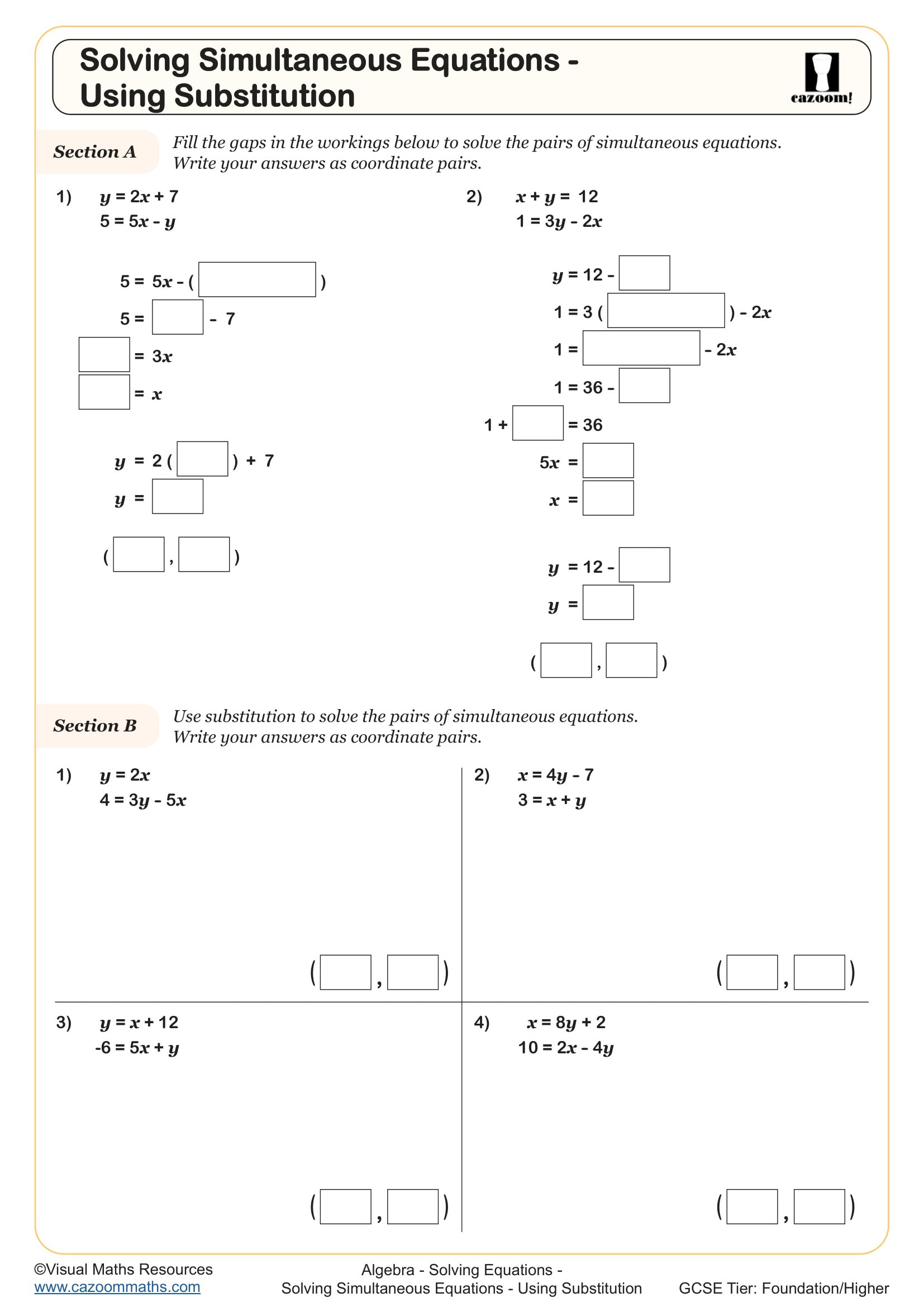
Solving Simultaneous Equations - Using Substitution
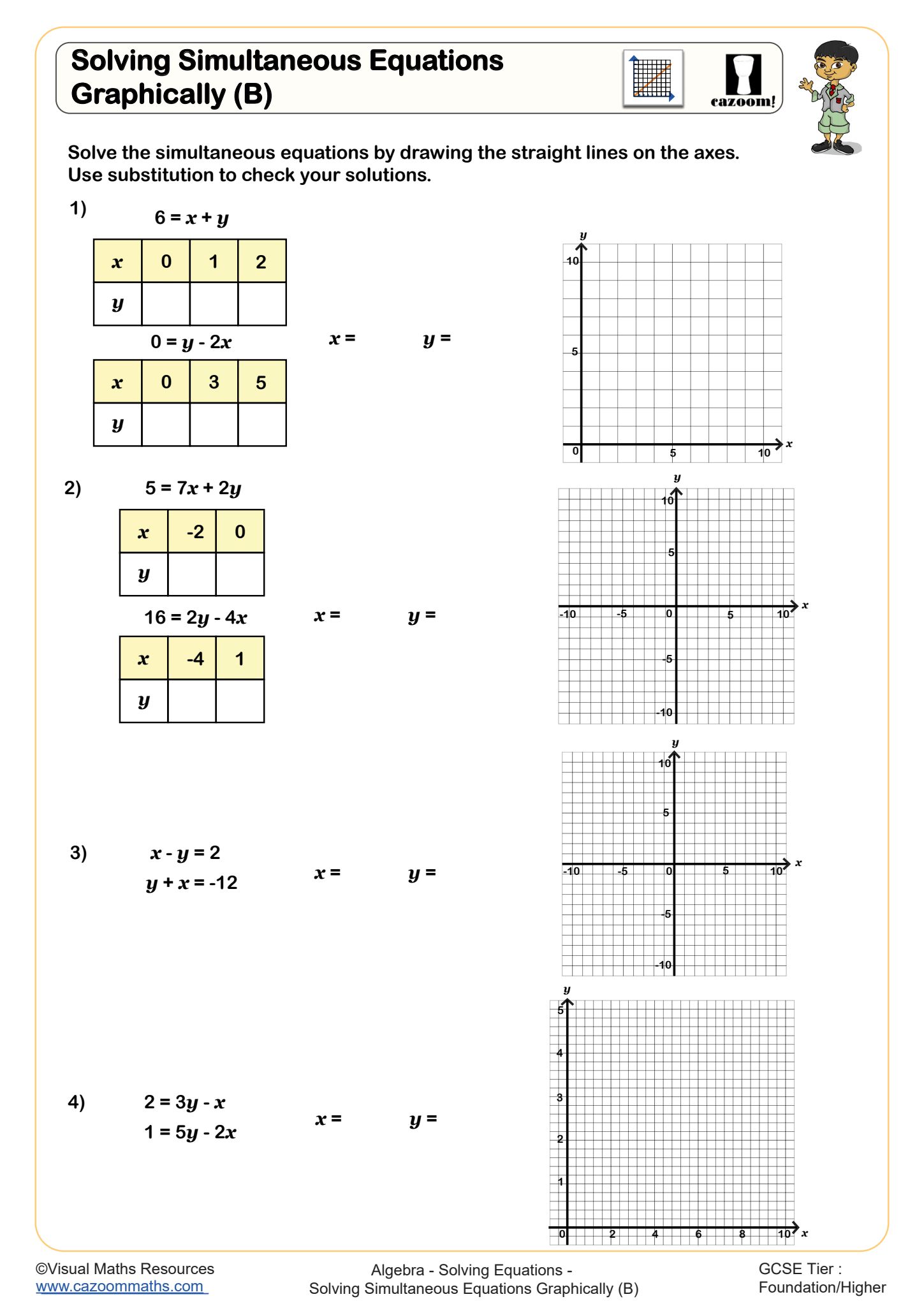
Solving Simultaneous Equations Graphically (B)
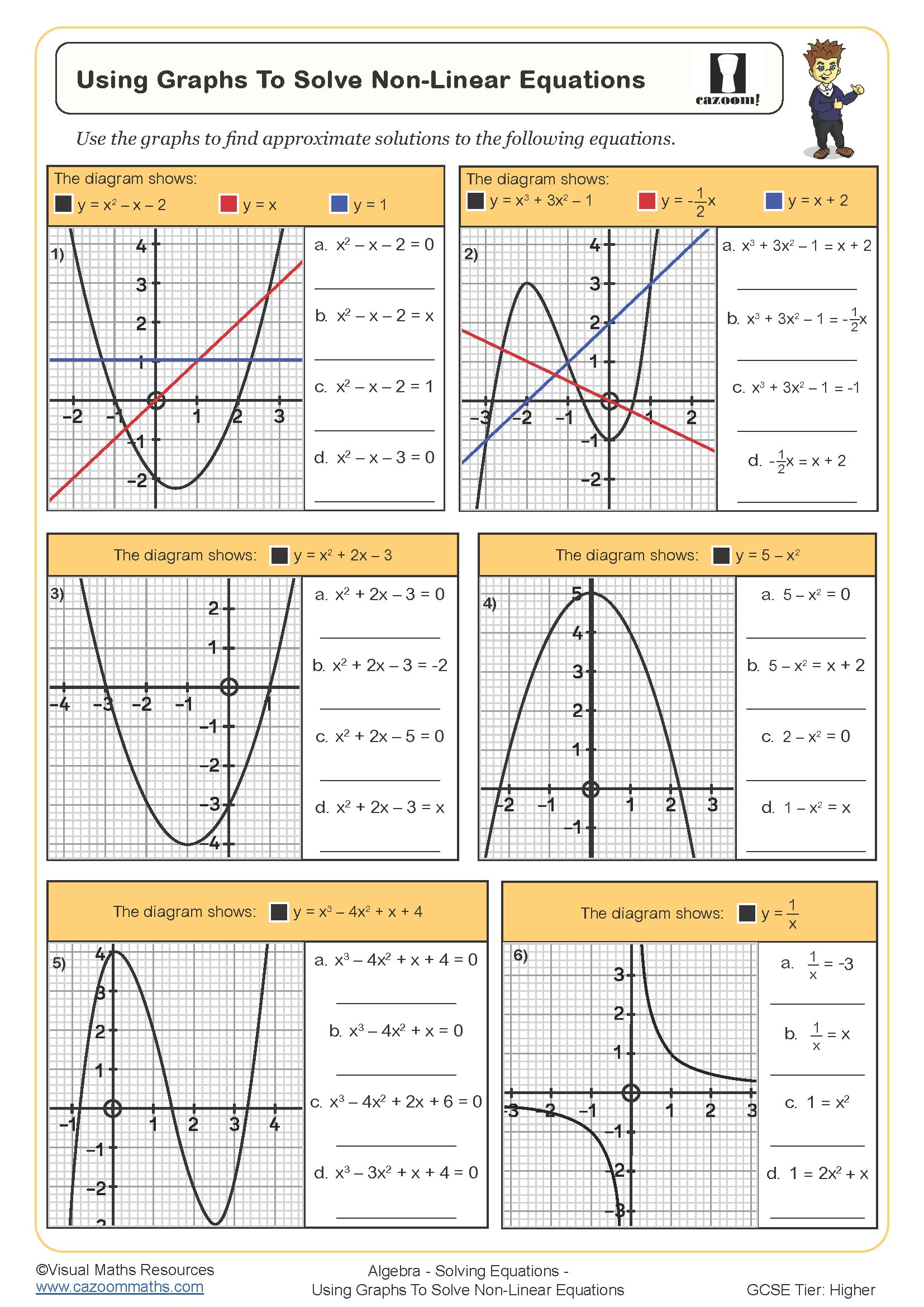
Using Graphs to Solve Non-linear Equations
All worksheets are created by the team of experienced teachers at Cazoom Maths.
What makes solving equations worksheets with answers pdf downloads effective for GCSE preparation?
PDF format worksheets with thorough answer sheets allow teachers to quickly assess student understanding while providing immediate feedback opportunities. The structured progression through different equation types mirrors GCSE exam expectations, helping students develop systematic approaches to algebraic problem-solving.
Teachers notice that students often lose marks in exams by rushing through equation solving without showing clear working steps. These worksheets emphasise proper mathematical communication, requiring students to demonstrate each manipulation clearly. This practice proves invaluable when students encounter more complex equations involving surds, logarithms, or trigonometric functions in their GCSE papers.
How do Year 11 solving equations worksheets differ from earlier key stages?
Year 11 equation solving builds significantly on KS3 foundations, introducing quadratic equations, simultaneous equations, and equations involving algebraic fractions. Students must now handle more sophisticated algebraic manipulation whilst maintaining accuracy under exam pressure.
The progression from Year 10 to Year 11 often reveals gaps in basic skills that need addressing. Teachers frequently find that students who struggled with simple linear equations in Year 9 need additional support with factor methods and completing the square. These worksheets provide the targeted practice needed to bridge these gaps before final GCSE examinations.
Why do students find simultaneous equations particularly challenging?
Simultaneous equations require students to coordinate multiple algebraic techniques whilst keeping track of two variables simultaneously. The elimination and substitution methods each demand different strategic thinking, and students often confuse when to apply each approach.
Teachers observe that many students can follow worked examples but struggle to select appropriate methods independently. Common errors include sign mistakes during elimination and incorrect substitution of expressions. Structured practice through varied problem types helps students recognise patterns and develop strategic thinking skills that transfer to exam situations.
How should teachers integrate these worksheets into their lesson planning?
Effective implementation involves using worksheets as targeted intervention tools rather than standalone activities. Teachers can assign specific sections based on diagnostic assessment results, ensuring students practise precisely the skills they need to develop.
Many teachers find success using these resources for homework consolidation after introducing new techniques in class. The answer sheets enable students to self-assess their progress, whilst teachers can quickly identify persistent misconceptions that need addressing in subsequent lessons. This approach maximises lesson time for new learning whilst ensuring adequate practice opportunities.