Year 7 Function Machines Worksheets
All worksheets are created by the team of experienced teachers at Cazoom Maths.
What makes an effective function machines worksheet for Year 7 students?
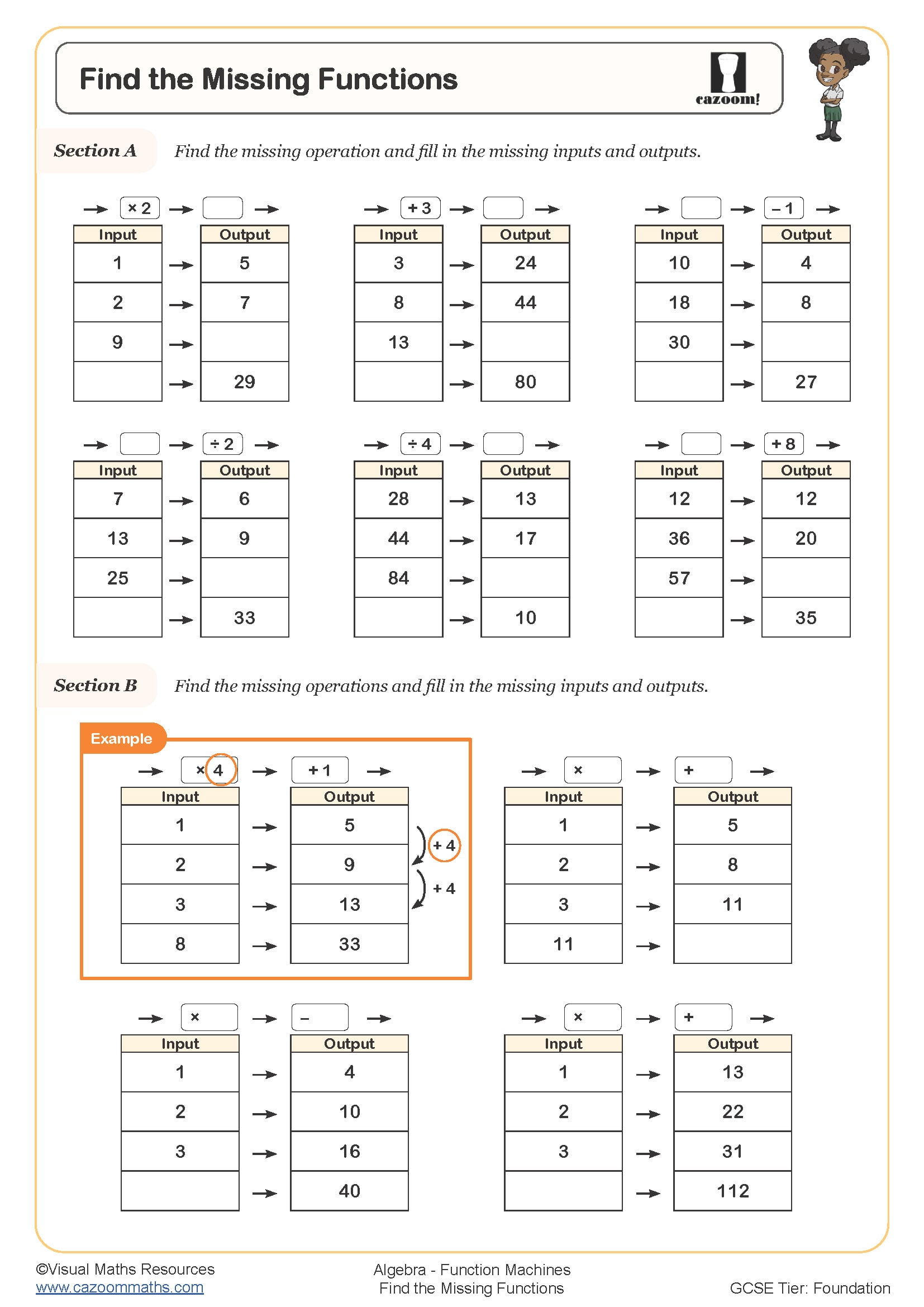
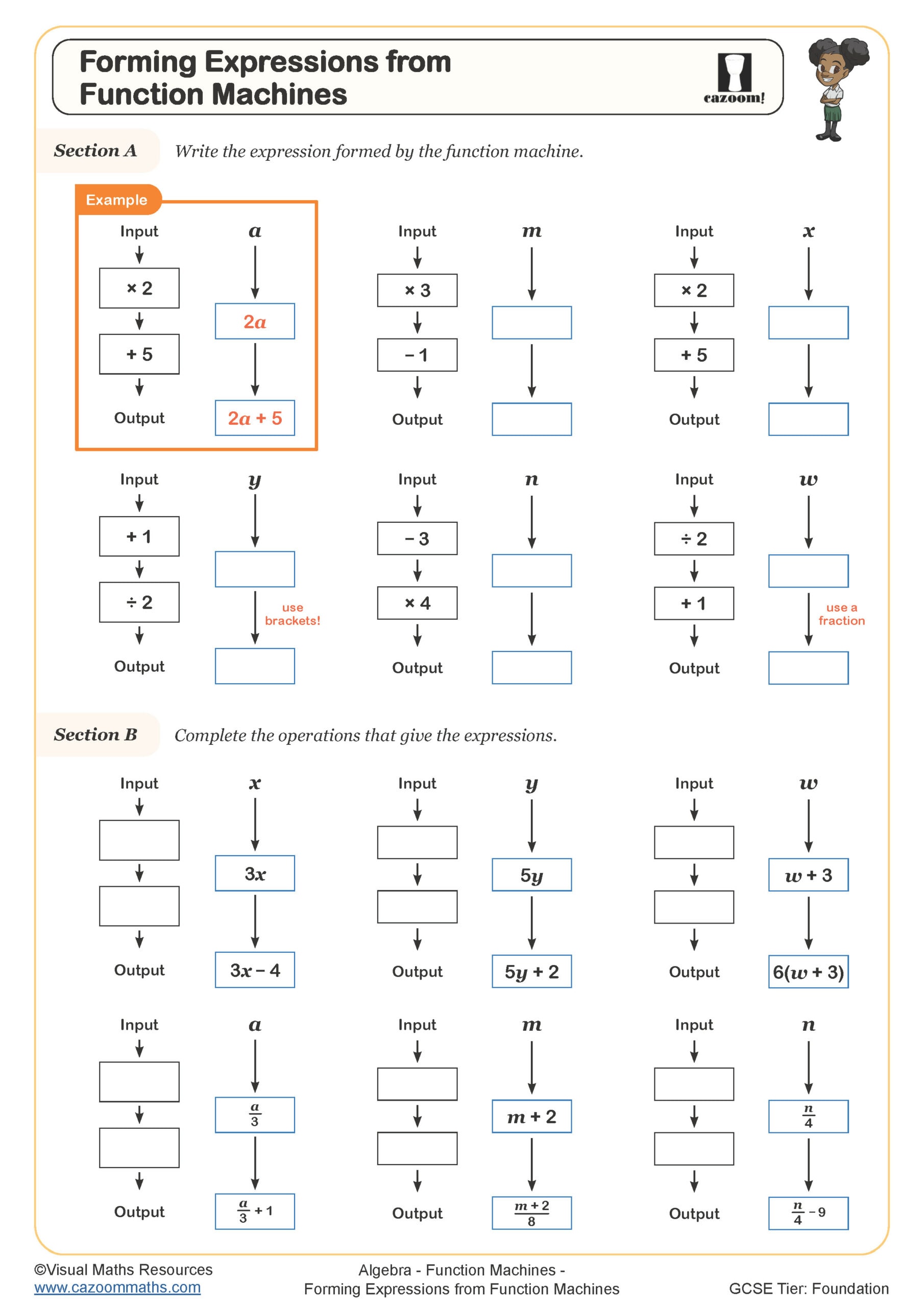
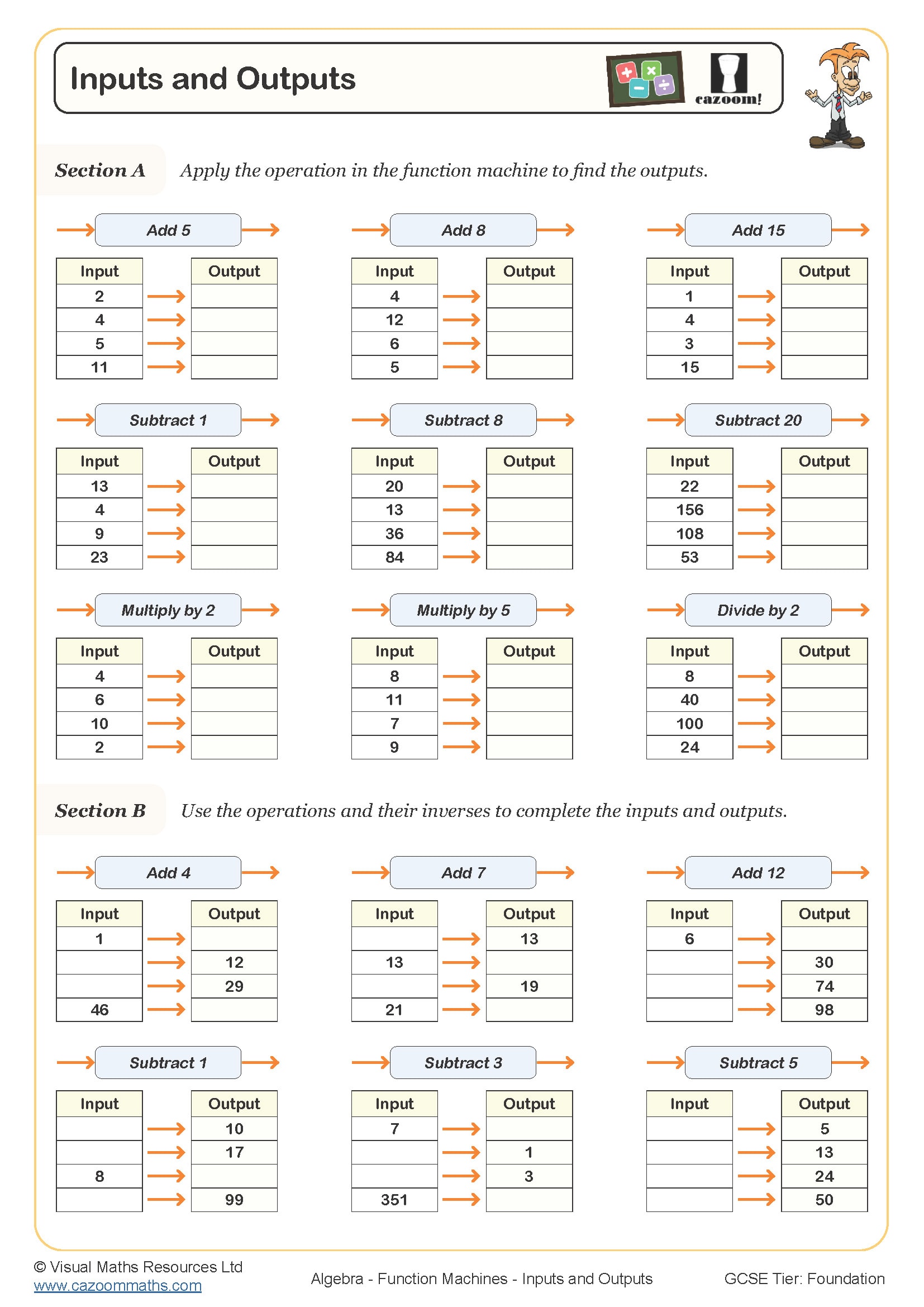
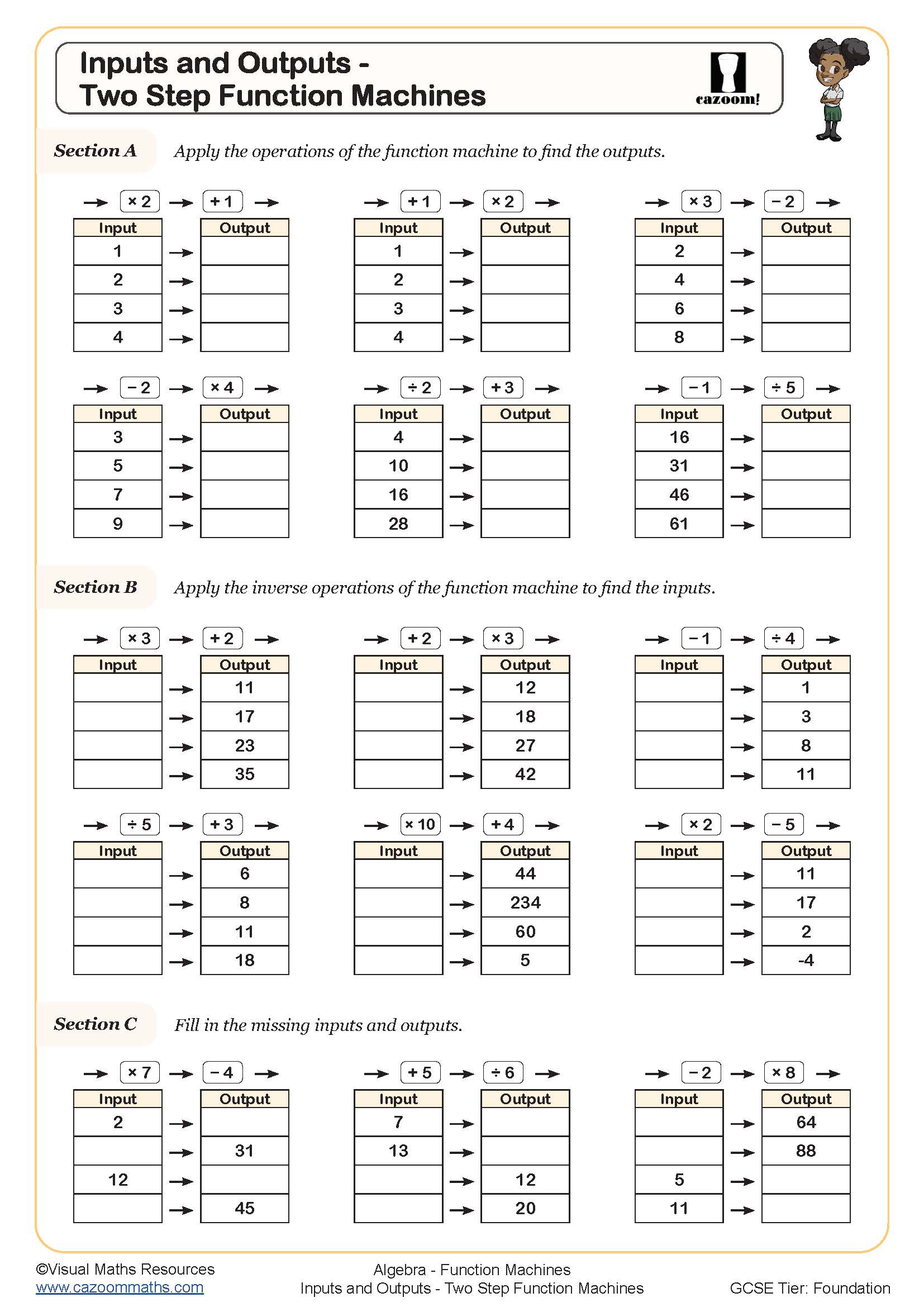
An effective function machine worksheet should start with concrete single-step operations before progressing to multi-step functions and inverse operations. The best resources include visual diagrams showing inputs, function boxes, and outputs clearly, helping students understand the transformation process. Many teachers find that worksheets mixing different question types - finding outputs, inputs, and function rules - keep students engaged whilst building thorough understanding.
Function machines worksheets work particularly well when they include real-world contexts like converting temperatures or calculating costs. Teachers report that students grasp the concept more readily when they can see practical applications, such as how a taxi fare function machine adds a fixed charge plus cost per mile.
Are function machines suitable for students below Year 7?
Function machines can be introduced to capable Year 6 students, particularly those working at greater depth in mathematics. However, Year 7 represents the formal introduction within the KS3 National Curriculum, where students develop fluency with algebraic notation and begin working with more complex multi-step functions. Teachers often use simpler function machines in Year 6 as preparation for formal algebra.
The progression typically moves from basic addition and multiplication machines in Year 6 to composite functions and algebraic expressions by Year 8. Many teachers find that students who struggle with times tables benefit from additional arithmetic practice before tackling function machine worksheets, as the computational demands can overshadow the conceptual learning.
How should teachers introduce inverse function machines?
Inverse function machines often challenge students because they require working backwards from the output to find the input. Teachers find success by starting with simple operations students can easily reverse mentally, such as 'add 5' becoming 'subtract 5'. The key insight students need is that inverse operations undo each other in reverse order.
Many students make errors with multi-step inverse functions, applying operations in the wrong order. For example, with 'multiply by 3 then add 4', they might subtract 4 then divide by 3 correctly, but some attempt to divide first. Visual function machine diagrams help students see the correct sequence, and teachers often use physical demonstrations or interactive whiteboards to reinforce the concept.
How can teachers use these worksheets to support different ability levels?
Differentiation with function machines worksheets works well through carefully selected starting points and extension activities. Lower-attaining students benefit from worksheets focusing on single-step functions with positive integers, whilst higher-attaining students can tackle multi-step functions involving negative numbers, decimals, and algebraic inputs. Teachers often provide additional scaffold sheets for students who need visual supports.
Many teachers use these worksheets for mixed-ability group work, where students tackle different complexity levels but discuss their methods together. The answer sheets prove invaluable for peer marking and self-assessment, allowing teachers to circulate and address misconceptions whilst students maintain independence in checking their solutions.