Year 7 Order of Operations Worksheets
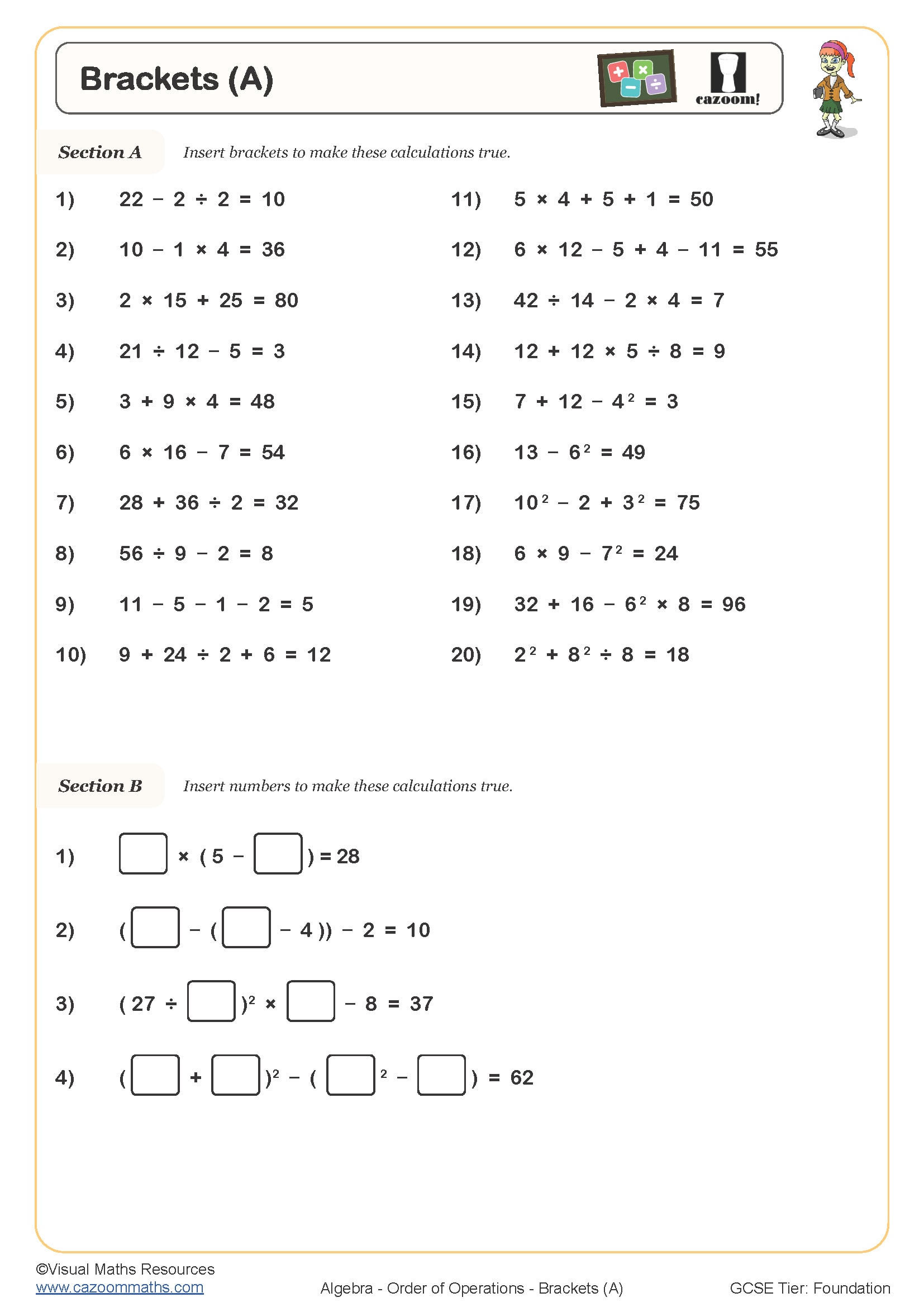
Brackets (A)
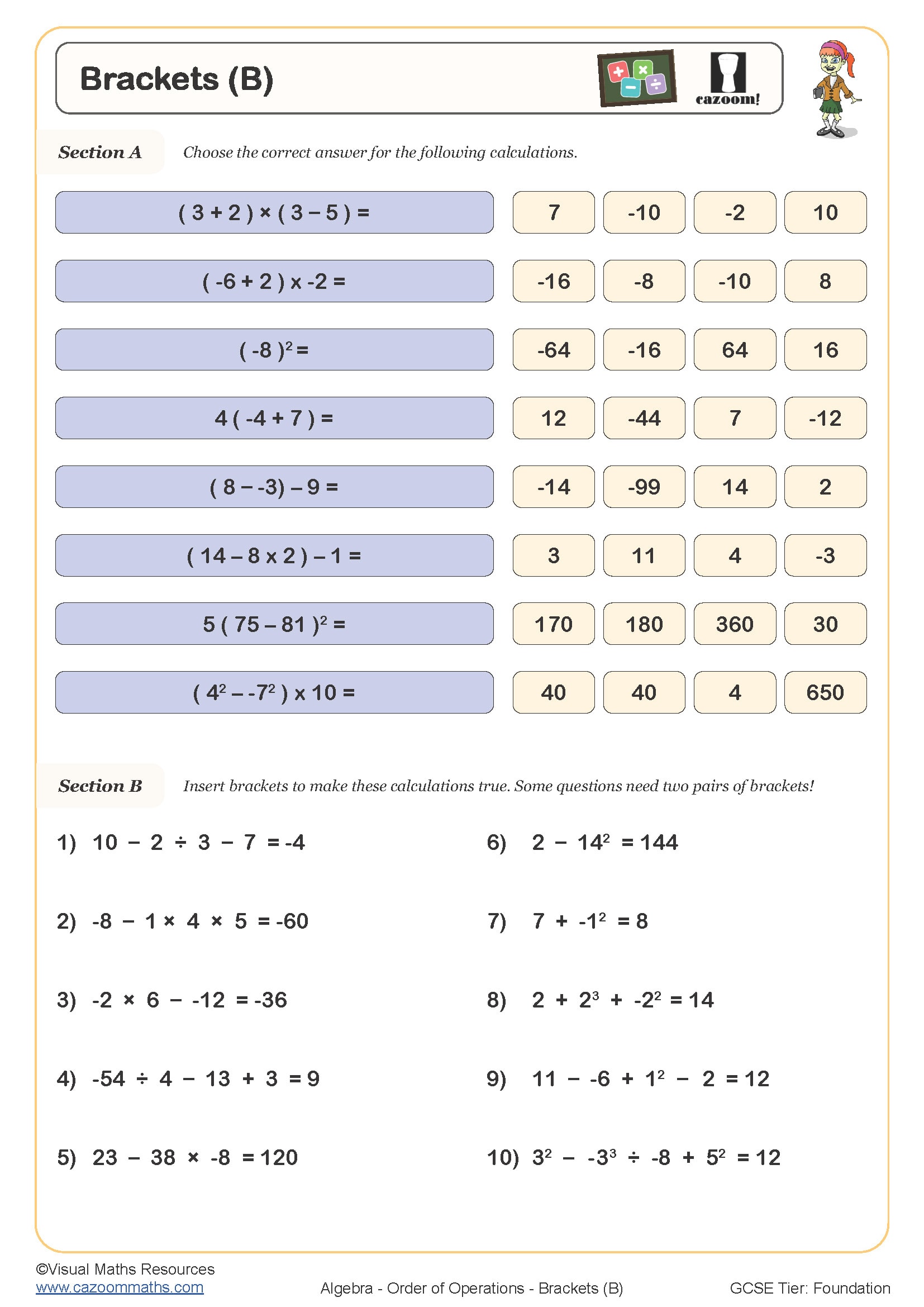
Brackets (B)
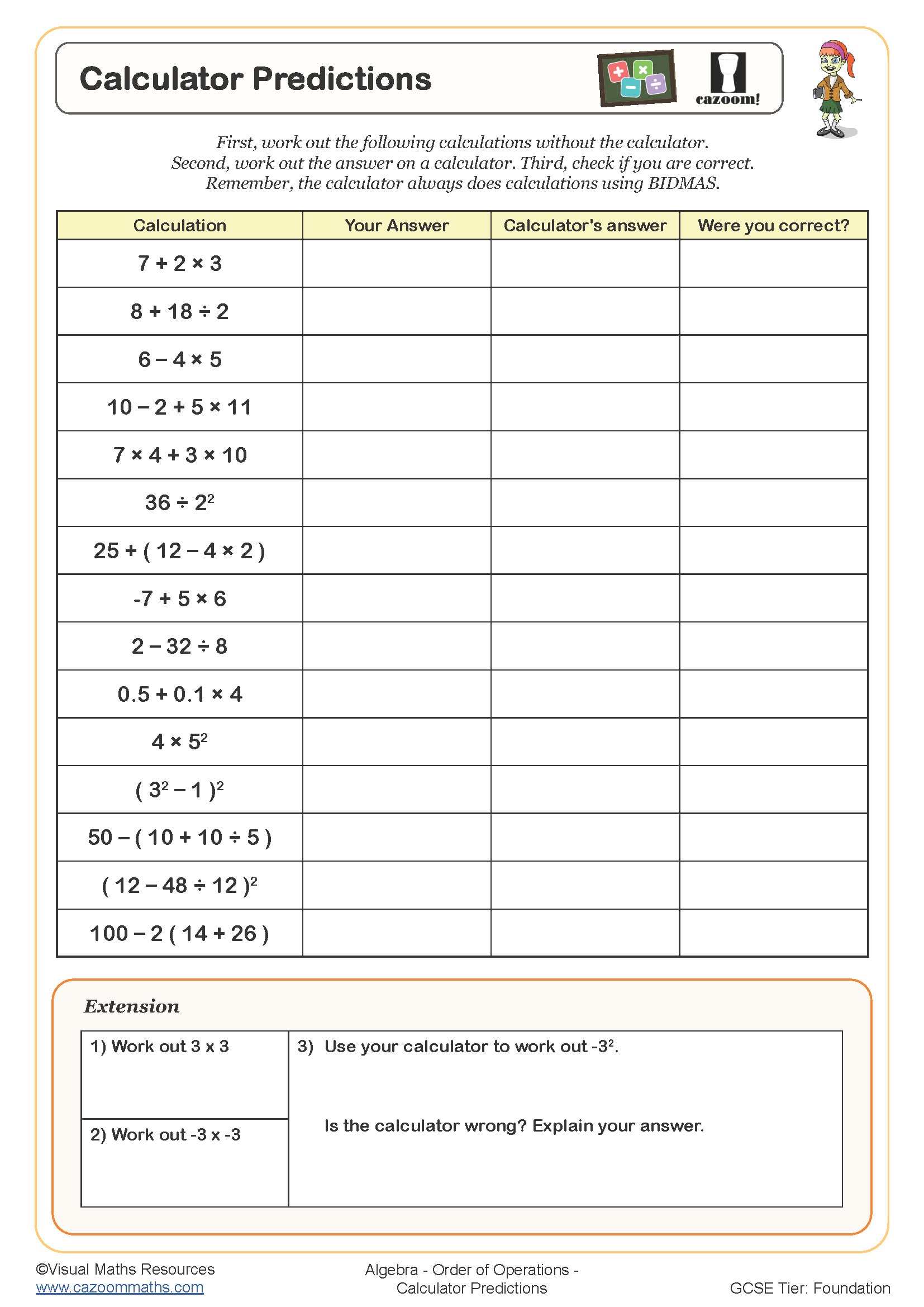
Calculator Predictions
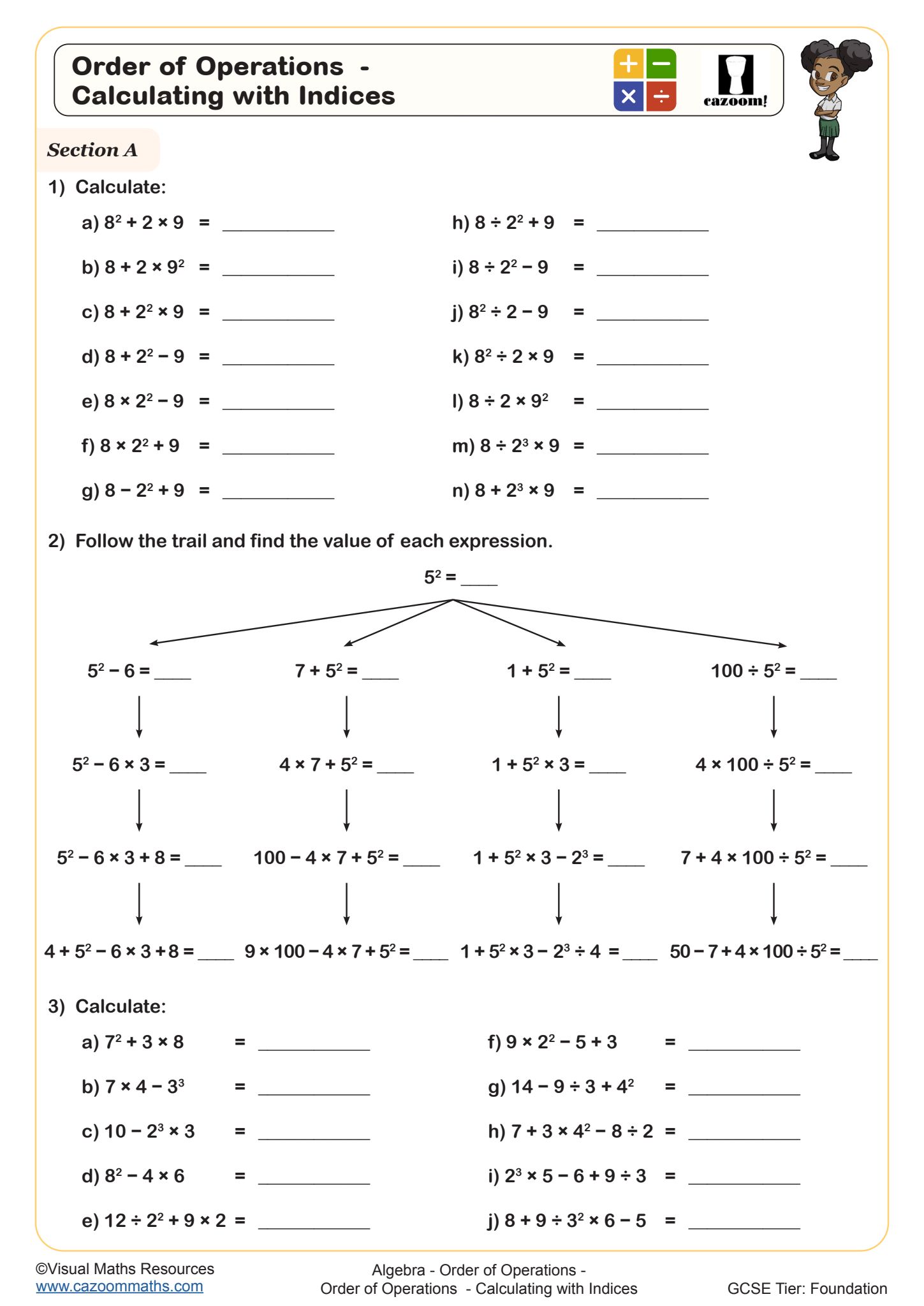
Order of Operations - Calculating with Indices
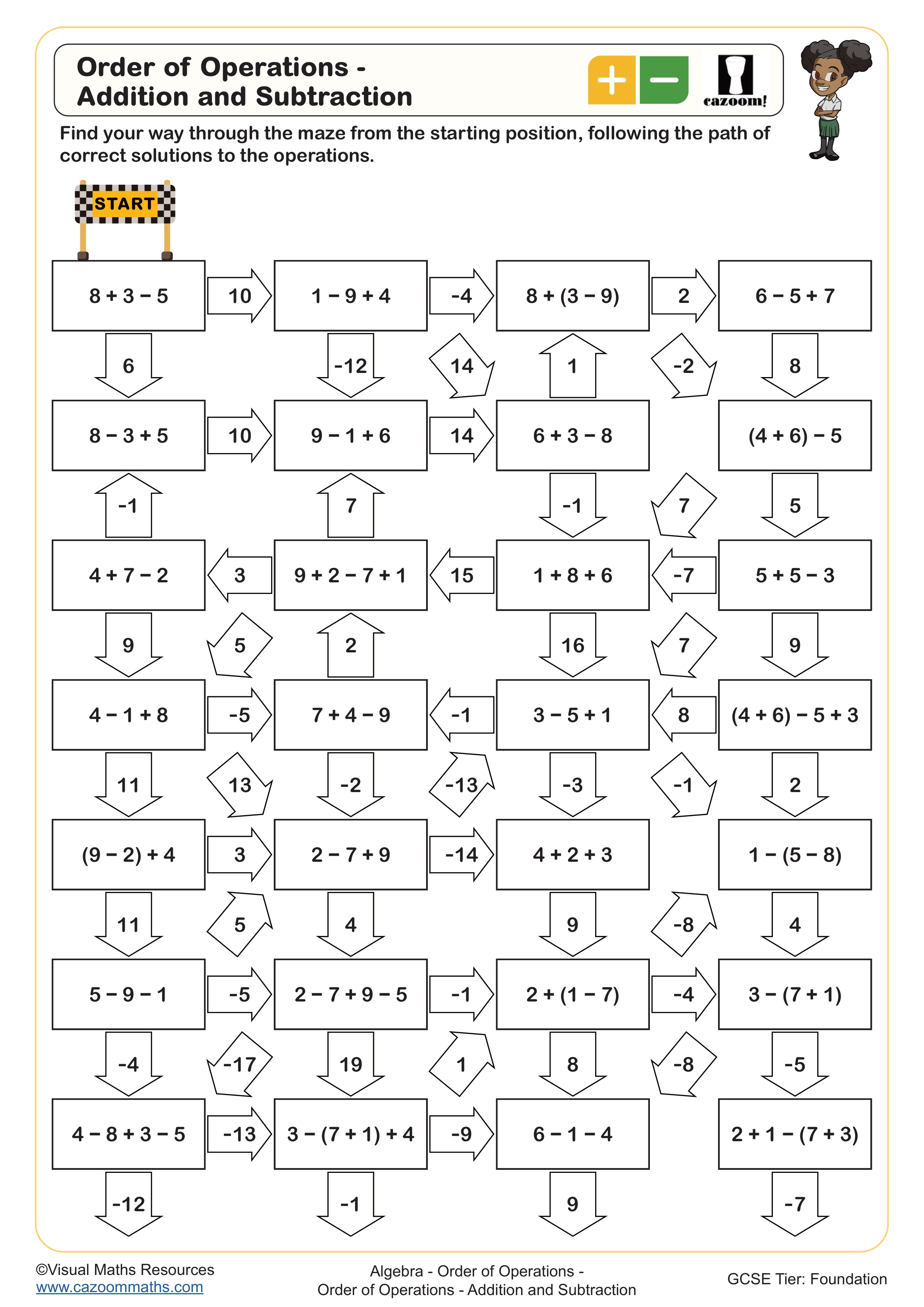
Order of Operations - Addition and Subtraction
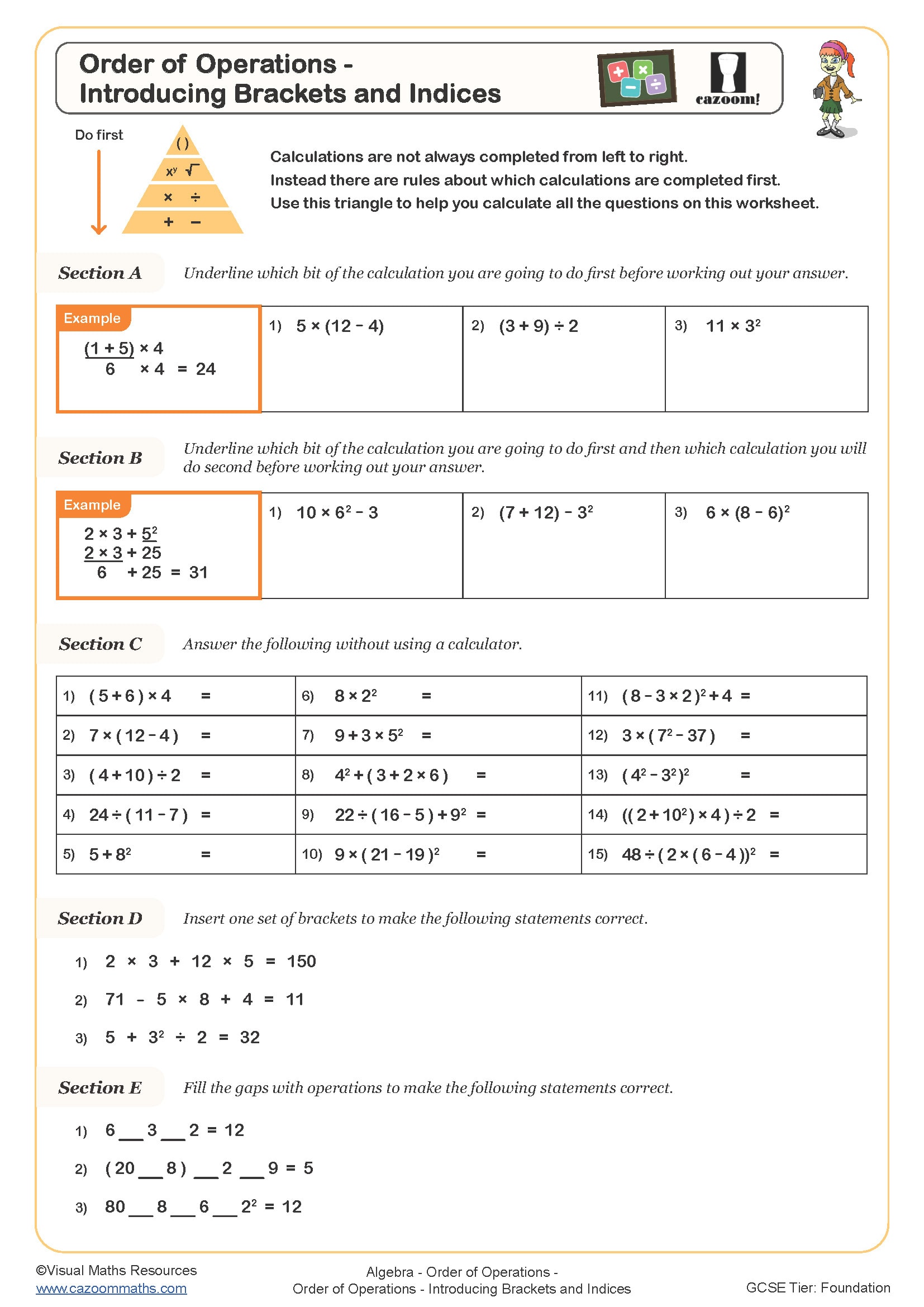
Order of Operations - Introducing Brackets and Indices
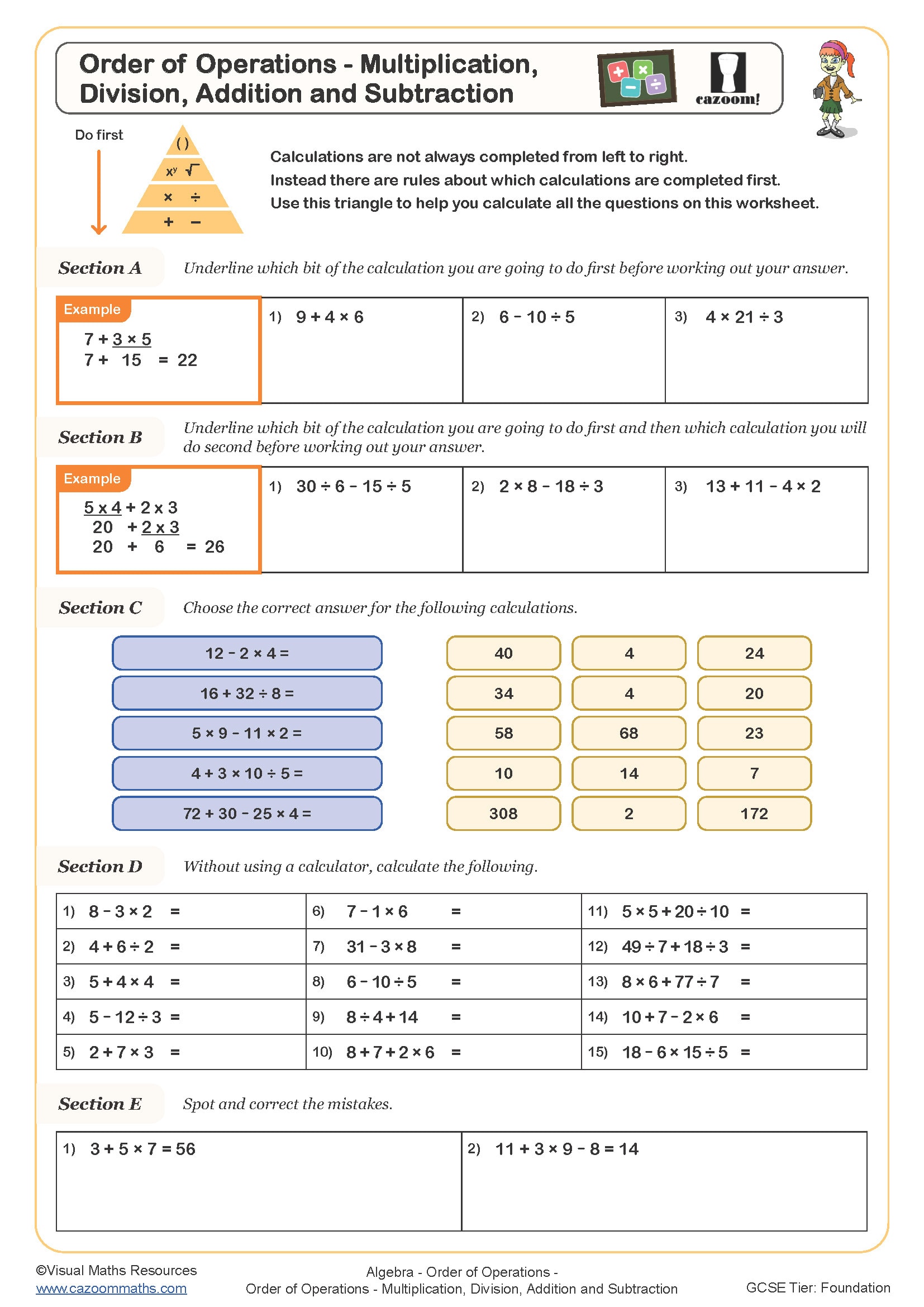
Order of Operations - Multiplication, Division, Addition and Subtraction
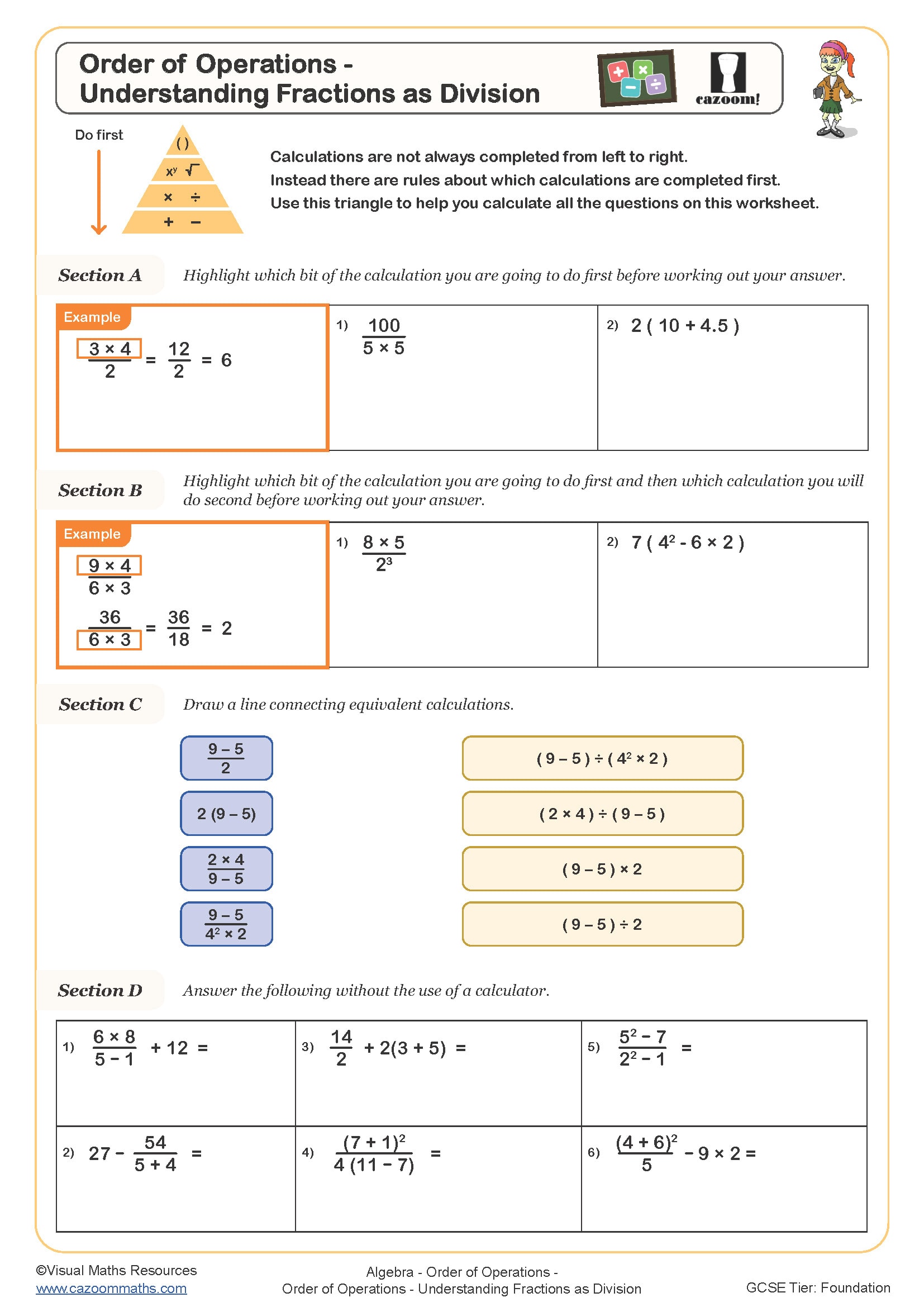
Order of Operations - Understanding Fractions as Division
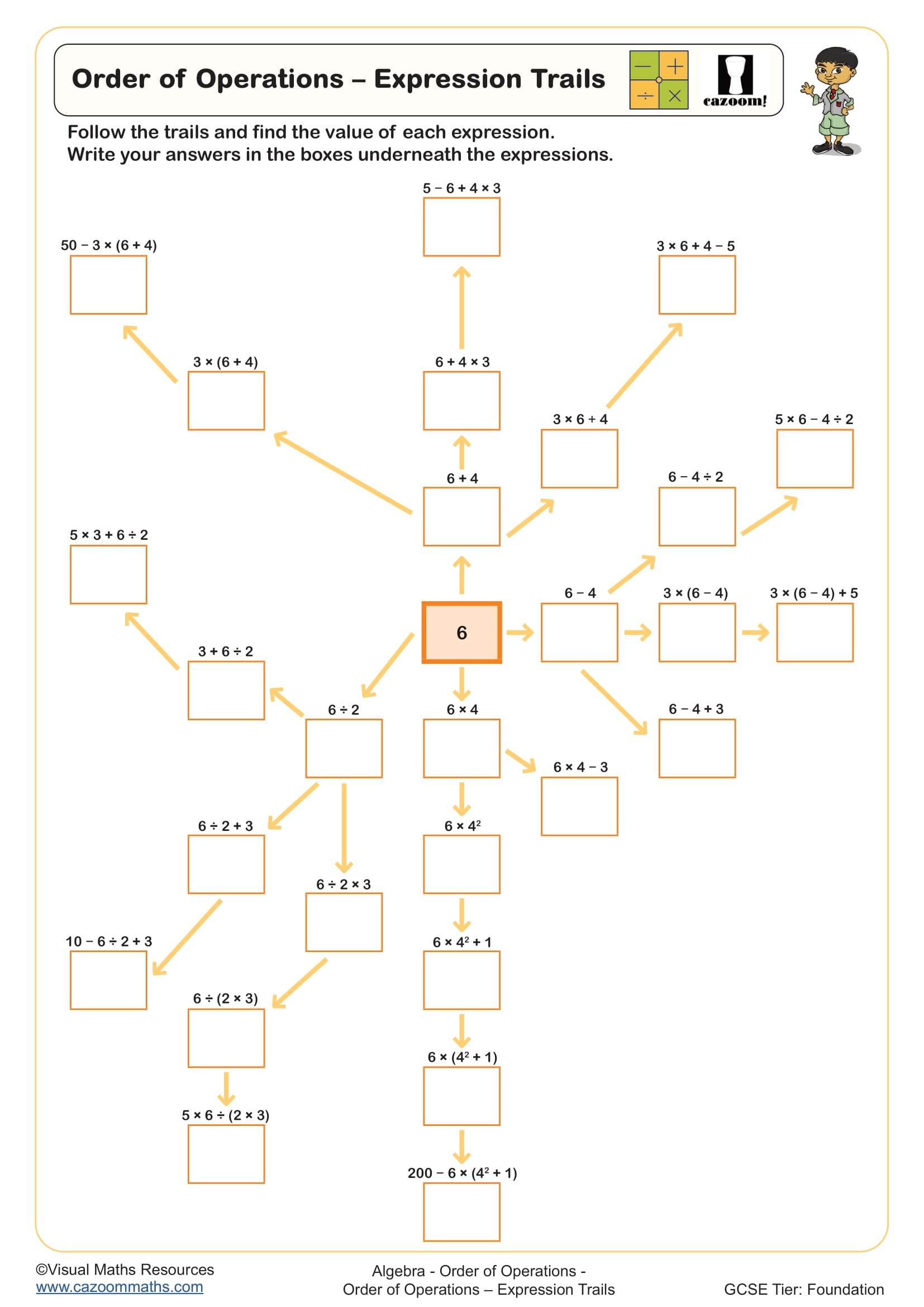
Order of Operations – Expression Trails
All worksheets are created by the team of experienced teachers at Cazoom Maths.
What should an order of operations year 7 worksheet include?
An effective order of operations year 7 worksheet should cover BODMAS applications with increasing complexity, starting with simple calculations involving brackets and operations, then progressing to expressions with indices, mixed operations, and multiple brackets. The content should align with Key Stage 3 National Curriculum requirements for algebraic manipulation and numerical fluency.
Teachers notice that students benefit most from worksheets that explicitly show the step-by-step process, particularly when expressions contain nested brackets like 3(2 + 4(5 - 2)). Many students initially attempt to work left to right, so worksheets that highlight the correct sequence help address this fundamental misconception through repeated, structured practice.
Why is order of operations particularly challenging for Year 7 students?
Year 7 students find order of operations challenging because it requires them to override their natural instinct to work sequentially from left to right. At this stage, they're transitioning from primary arithmetic where operations often appeared in simple, linear sequences to secondary algebra where hierarchical thinking becomes important.
Mathematics teachers consistently observe that students who haven't fully grasped BODMAS rules struggle significantly when introduced to algebraic expressions later in Year 7. This creates a cascade effect where simplifying expressions like 2x + 3(x - 4) becomes problematic, impacting their progress across the entire algebra curriculum throughout Key Stage 3.
How do BODMAS worksheets help with calculator skills?
BODMAS year 7 worksheets develop key calculator literacy by teaching students when and how to use brackets effectively on scientific calculators. Students learn to recognise when manual bracket entry is necessary to ensure calculations follow the correct order, particularly with expressions involving fractions and mixed operations.
Many teachers find that students who complete structured BODMAS practice perform better on calculator-allowed sections of assessments. This connects directly to real-world applications in science and engineering contexts, where incorrect order of operations in calculations can lead to significant errors in measurements, dosages, or structural calculations.
How can teachers use these worksheets most effectively in lessons?
Teachers achieve the best results by introducing each worksheet with a brief demonstration of common errors, then allowing students to work through problems independently before peer checking using the provided answer sheets. This approach helps students identify their own misconceptions and builds confidence through immediate feedback.
Experienced mathematics teachers often pair worksheet practice with mini-plenaries where students explain their working to the class, particularly focusing on expressions where the order of operations significantly changes the result. This verbal reasoning helps consolidate understanding and allows teachers to address persistent misconceptions before they become embedded in students' mathematical thinking.