Year 7 Solving Equations Worksheets
Forming and Solving Linear Equations: a𝑥 = b and 𝑥/a = b
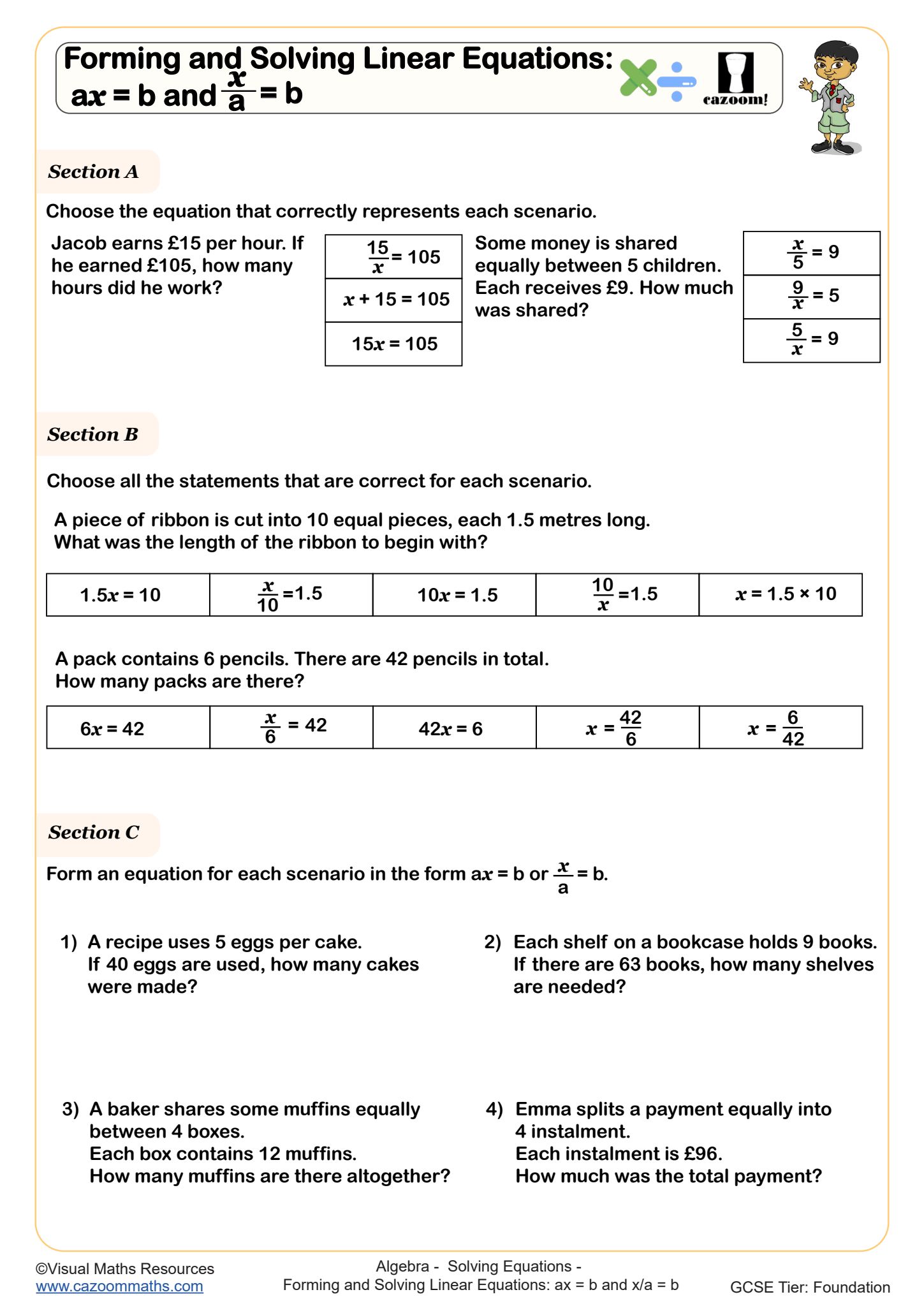
Forming and Solving Linear Equations: x + a = b and x - a = b
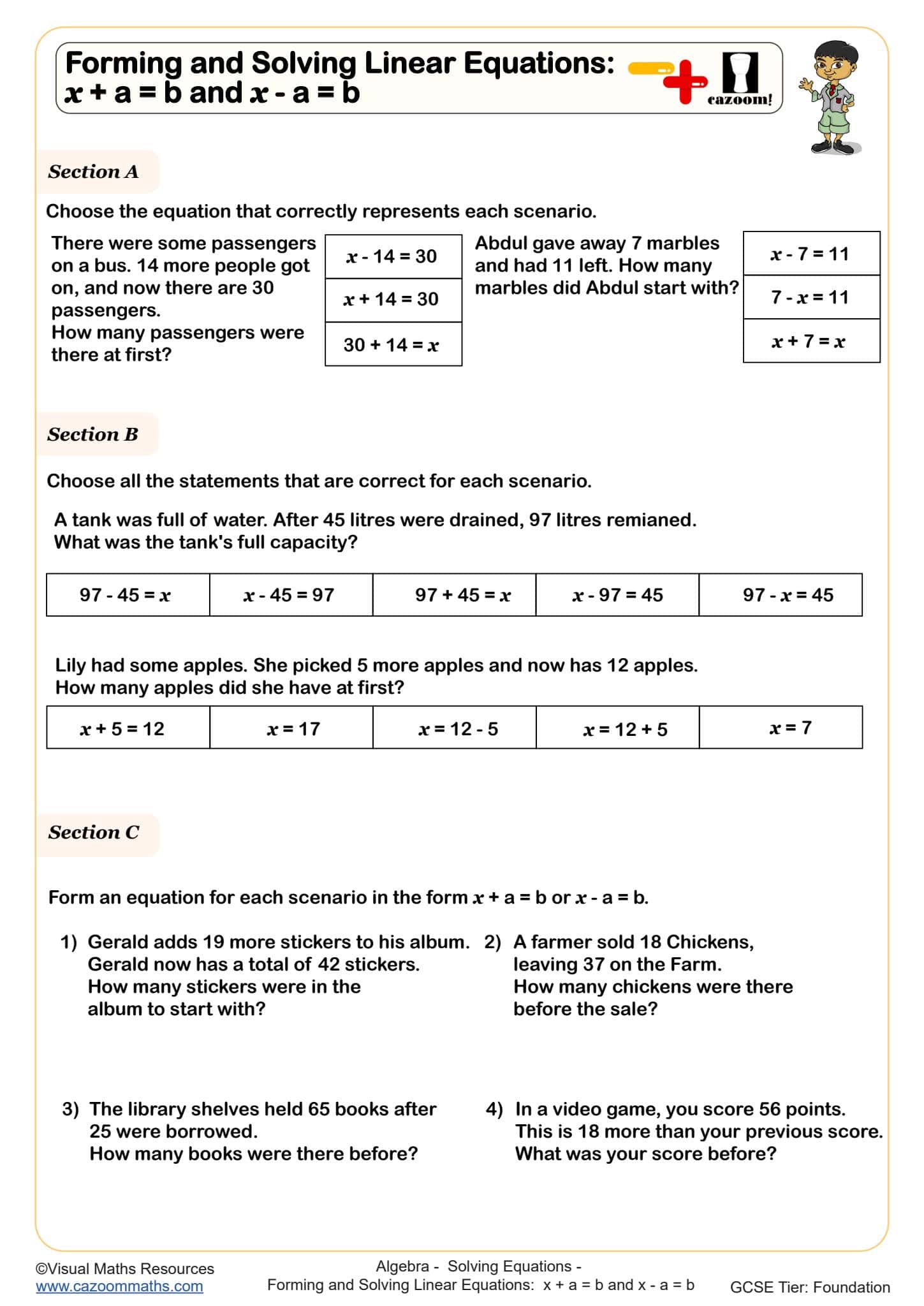
Manipulating Equations
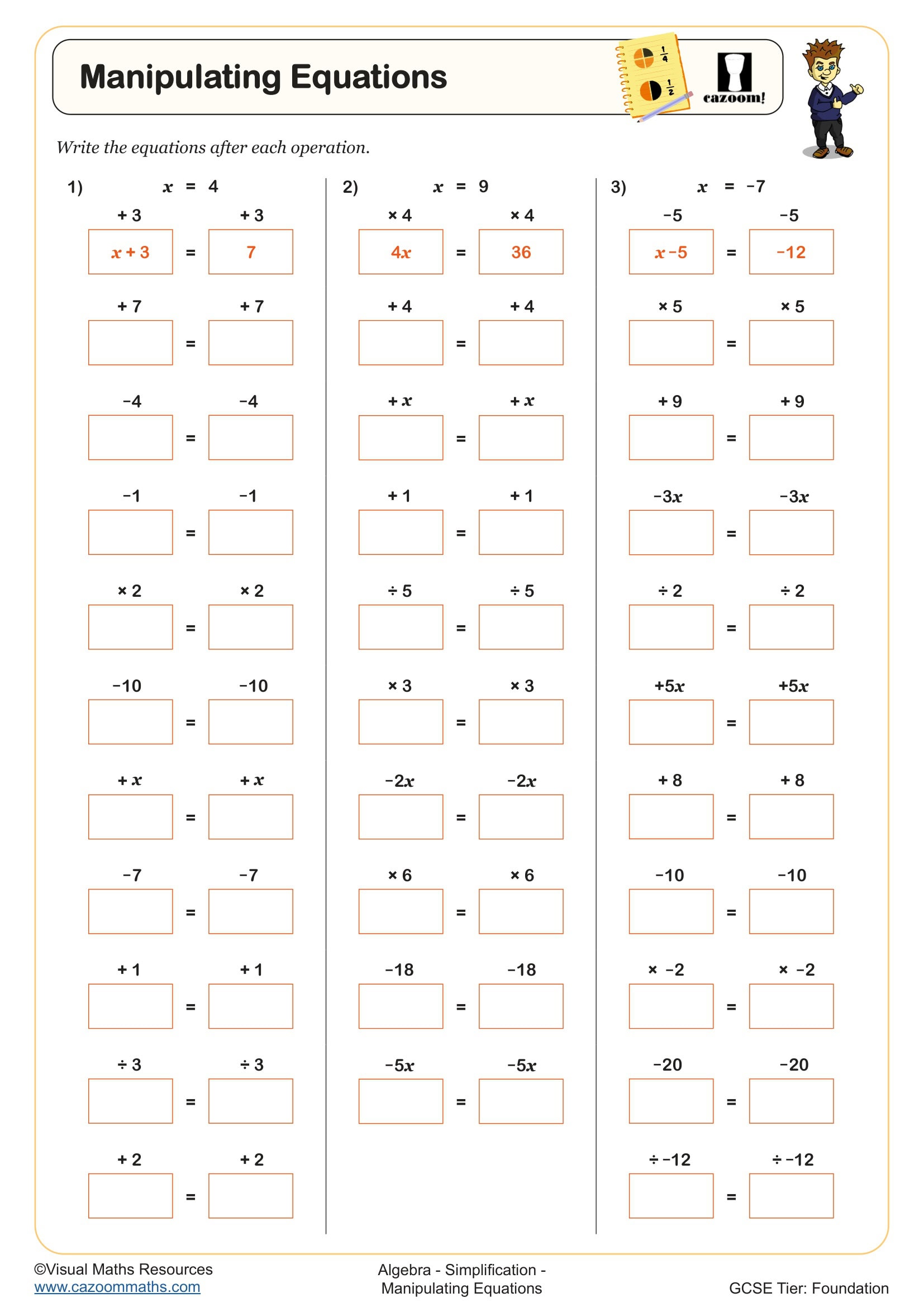
Solving Equations with Algebraic Perimeters
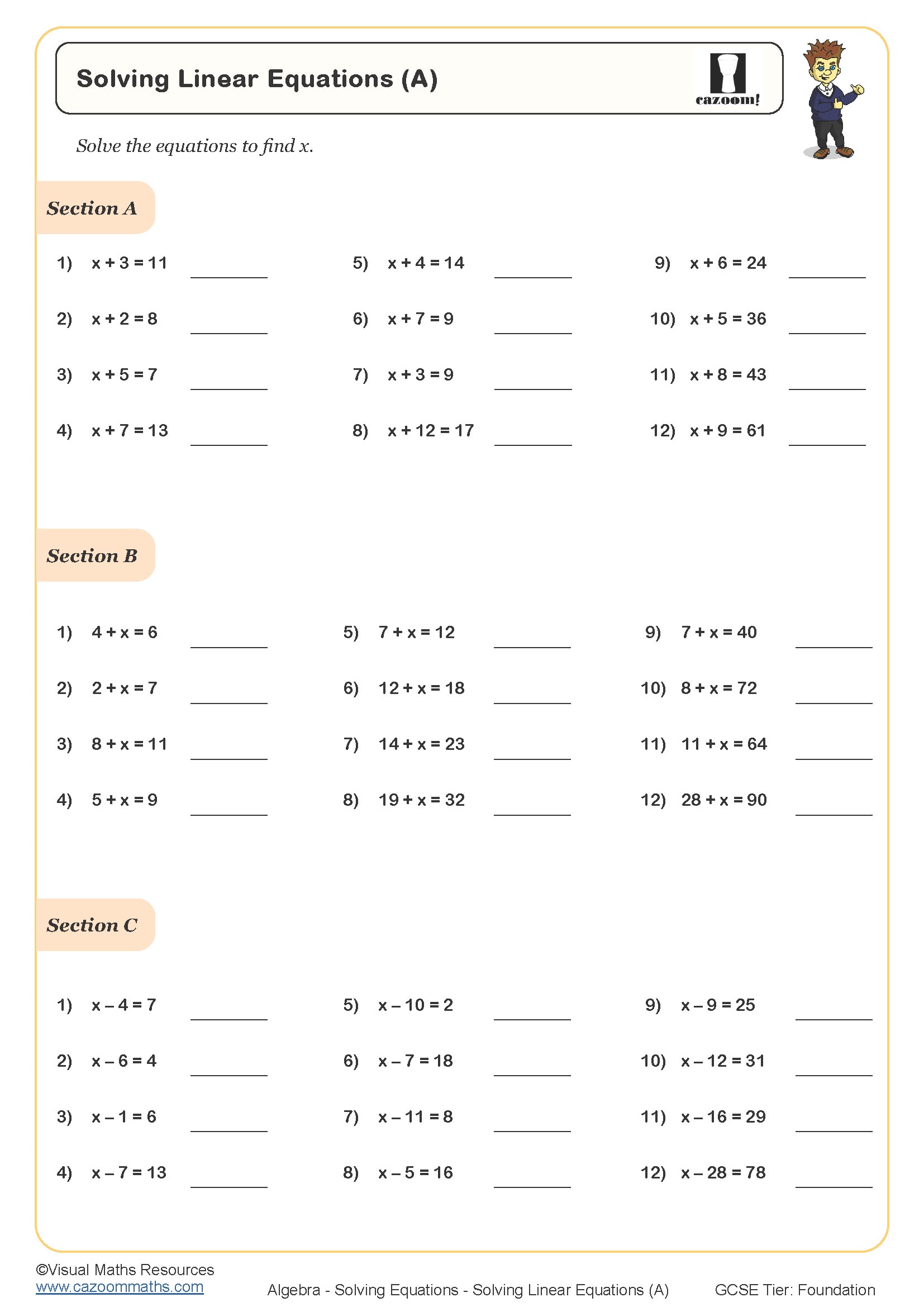
Solving Linear Equations (A)
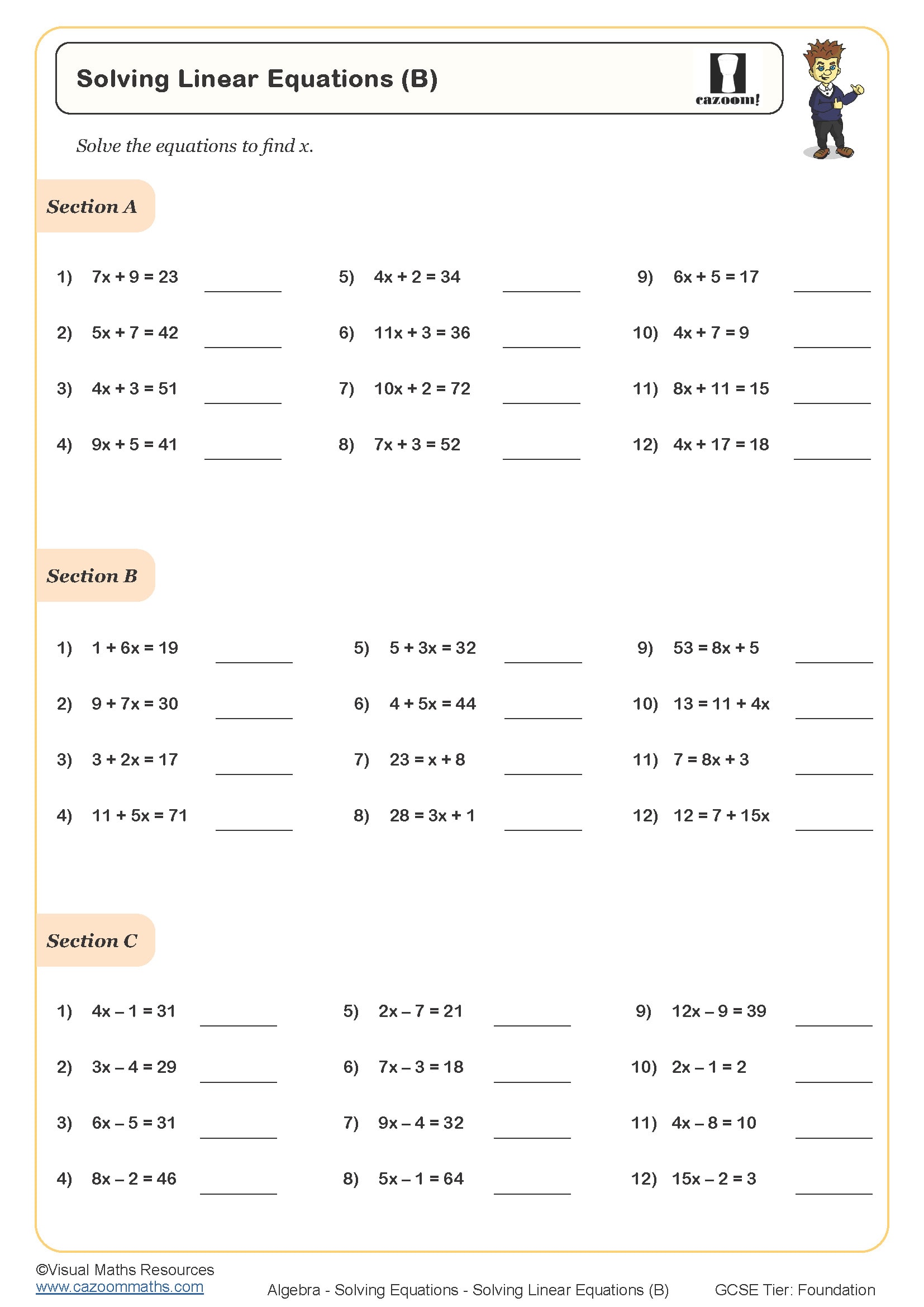
Solving Linear Equations (B)
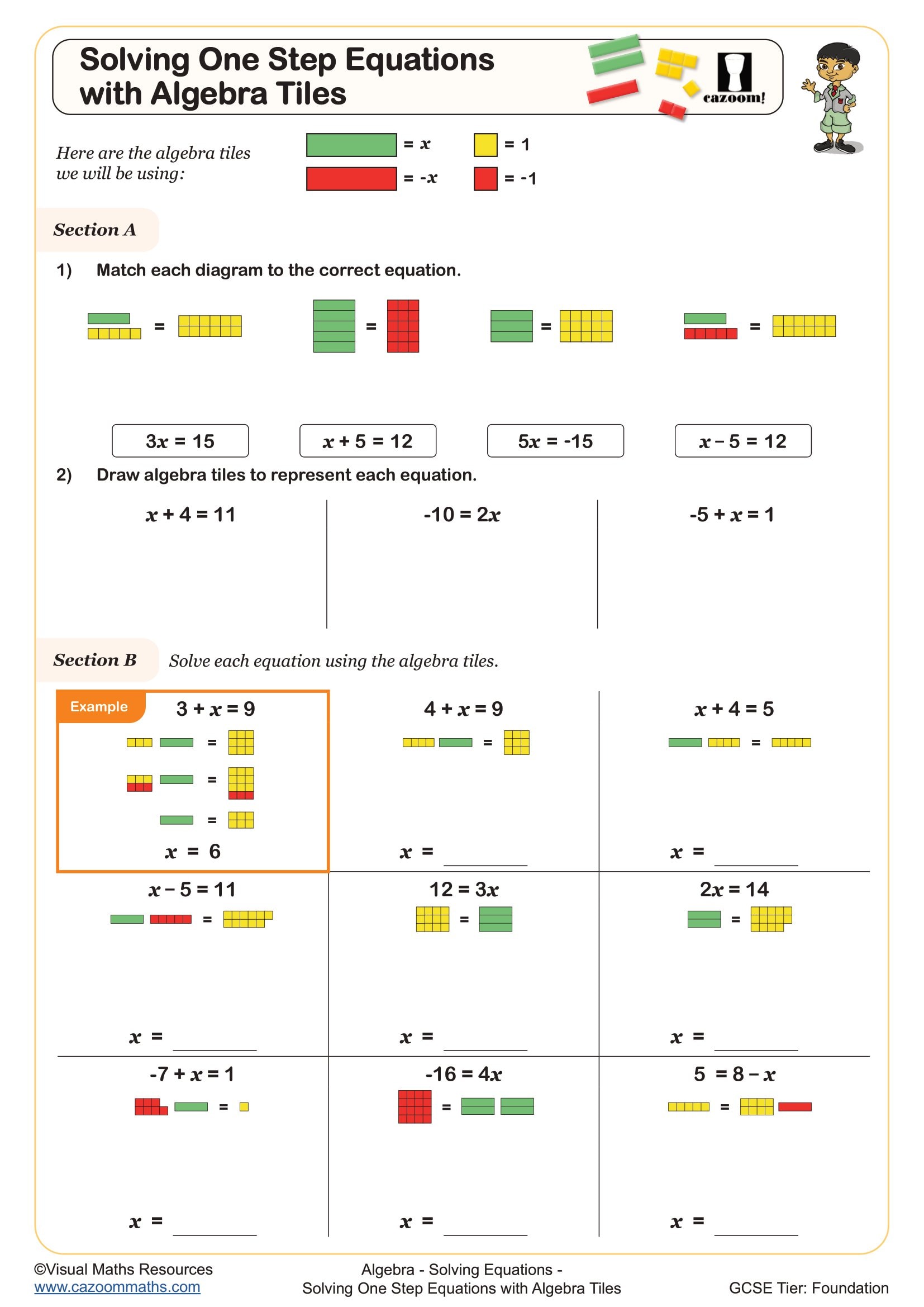
Solving One Step Equations with Algebra Tiles
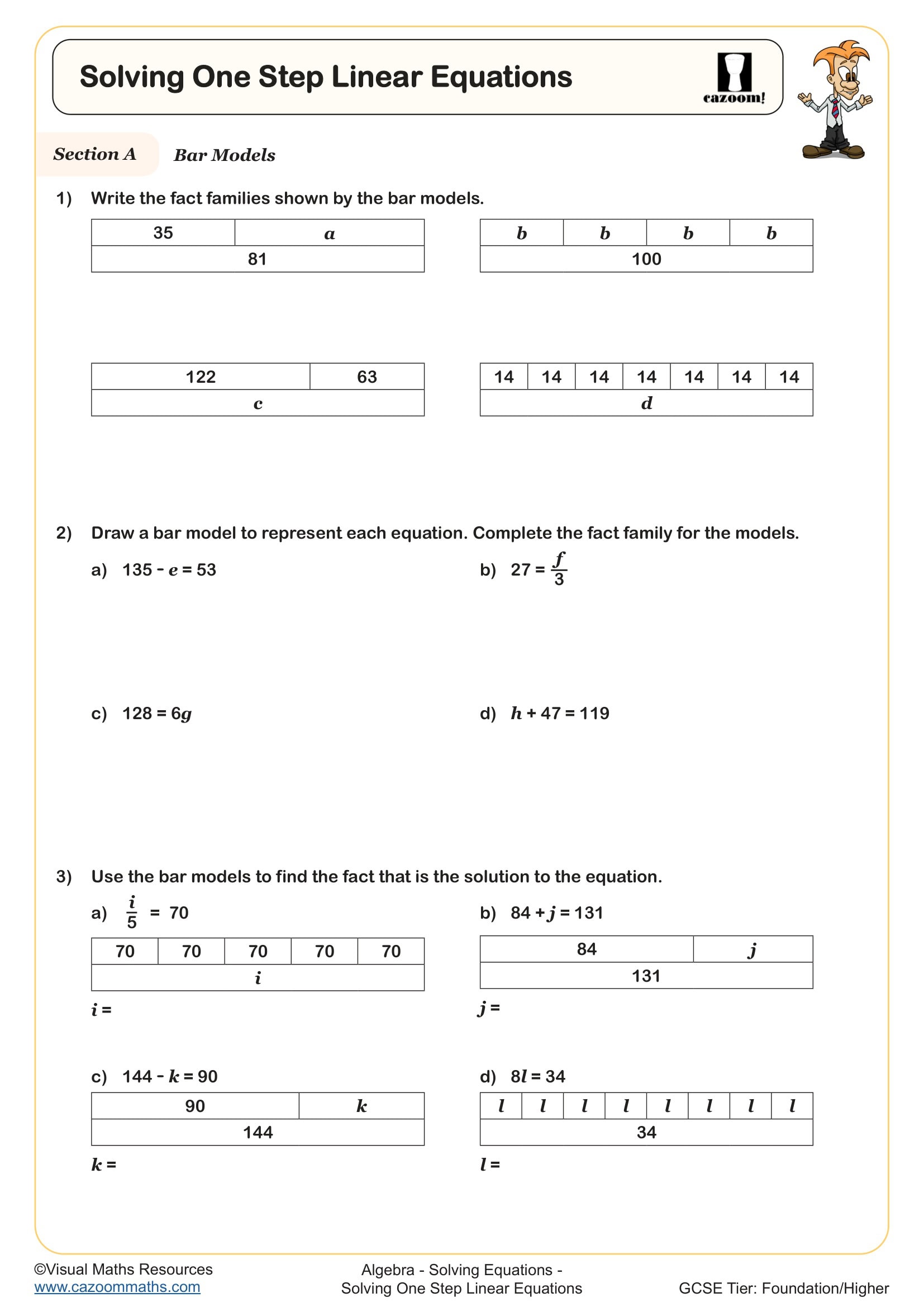
Solving One Step Linear Equations
Solving Two Step Equations with Algebra Tiles
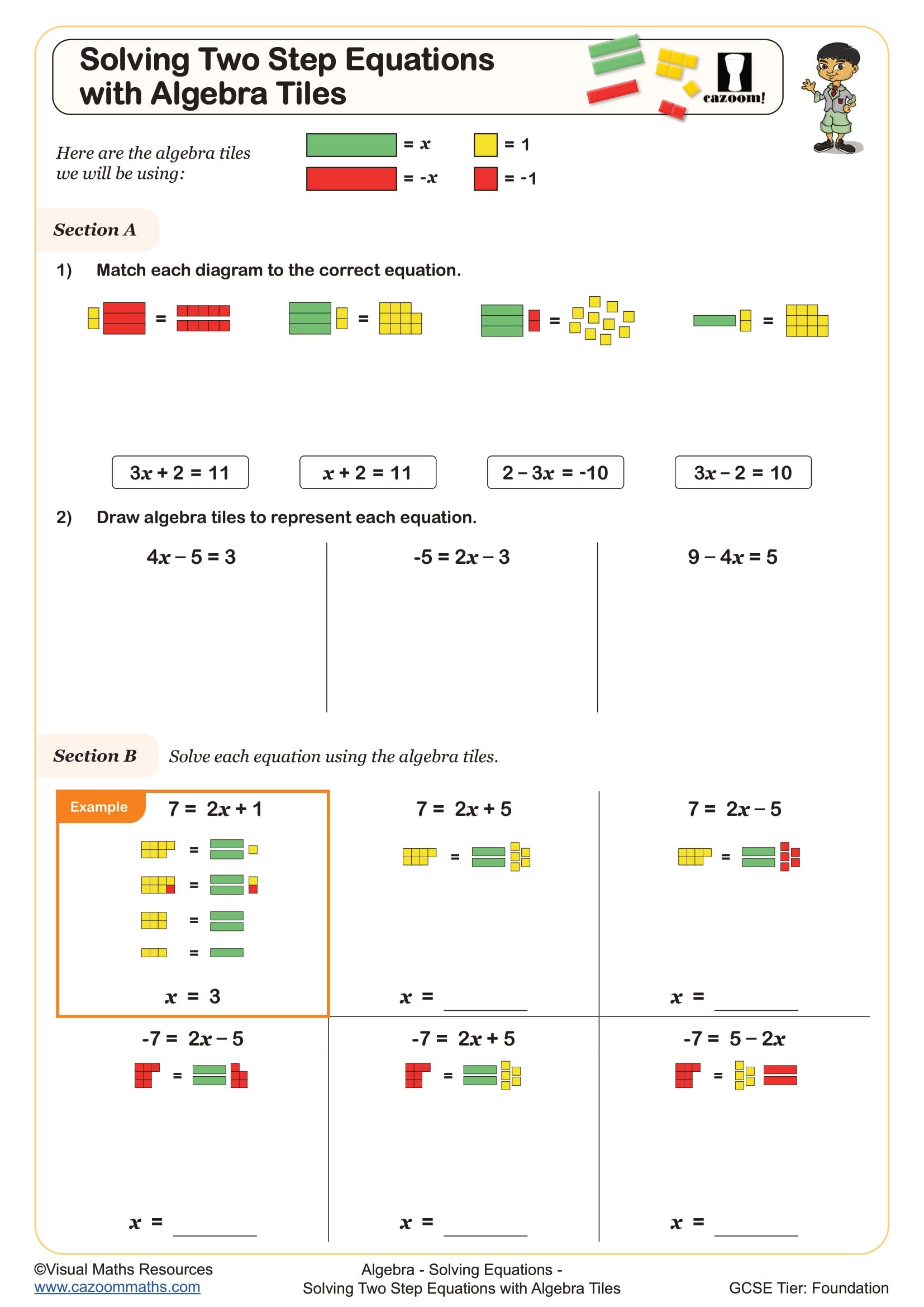
All worksheets are created by the team of experienced teachers at Cazoom Maths.
What topics are covered in year 7 algebra worksheets?
Year 7 algebra worksheets typically focus on forming and solving simple linear equations, covering one-step equations (x + 5 = 12), two-step equations (3x - 7 = 14), and equations with unknowns on both sides (2x + 3 = x + 8). Students also practise substituting values into formulae and creating algebraic expressions from word problems, aligning with National Curriculum requirements for KS3.
Teachers notice that students often confuse 'solving' with 'simplifying' at this stage. Many attempt to collect like terms when they should be isolating the variable, particularly when faced with equations like 4x + 2x = 18. This confusion highlights why structured practice through algebra year 7 worksheets proves invaluable for building procedural fluency.
How do year 7 algebra skills progress from Year 6?
The transition from Year 6 arithmetic to year 7 maths algebra represents a significant conceptual leap. Where Year 6 students work with missing numbers in calculations, Year 7 introduces formal algebraic notation and systematic equation-solving methods. Students must now understand that letters represent unknown quantities and learn the inverse operation approach to finding solutions.
Most teachers find that students initially treat algebraic equations like puzzles rather than mathematical statements. They may guess values instead of applying systematic methods. Year 7 maths worksheets pdf resources help bridge this gap by providing graduated practice that moves from concrete number problems to abstract algebraic thinking, supporting students through this crucial developmental stage.
What common mistakes do students make with algebra equations year 7?
Students frequently make sign errors when rearranging equations, particularly when moving negative terms across the equals sign. Many write 'x = 5 - 3' instead of 'x = 5 + 3' when solving 'x - 3 = 5'. Another persistent error involves attempting to 'cancel' terms that aren't being multiplied, such as trying to remove the +4 from both sides of '2x + 4 = x + 4'.
Experienced teachers also notice that students often forget to perform the same operation on both sides of equations. They might subtract 2x from the left side of '3x = 2x + 7' but forget to subtract it from the right side. Regular practice with year 7 maths worksheets algebra helps students recognise these patterns and develop more reliable problem-solving habits.
How can teachers use these algebra worksheets most effectively?
Teachers achieve best results when they model the first few problems before allowing independent practice, emphasising the 'balance' concept where equations represent scales that must remain equal. Using the complete answer sheets strategically - perhaps revealing solutions progressively or having students mark selected questions - helps maintain engagement while providing immediate feedback on misconceptions.
Many teachers structure lessons by starting with concrete examples using balance scales or physical manipulatives, then transitioning to the abstract worksheet problems. The algebra year 7 worksheet format works particularly well for differentiation, as teachers can assign different starting points based on student confidence levels, ensuring all learners access appropriate challenge while building towards the same learning objectives.