Year 8 Inequalities Worksheets
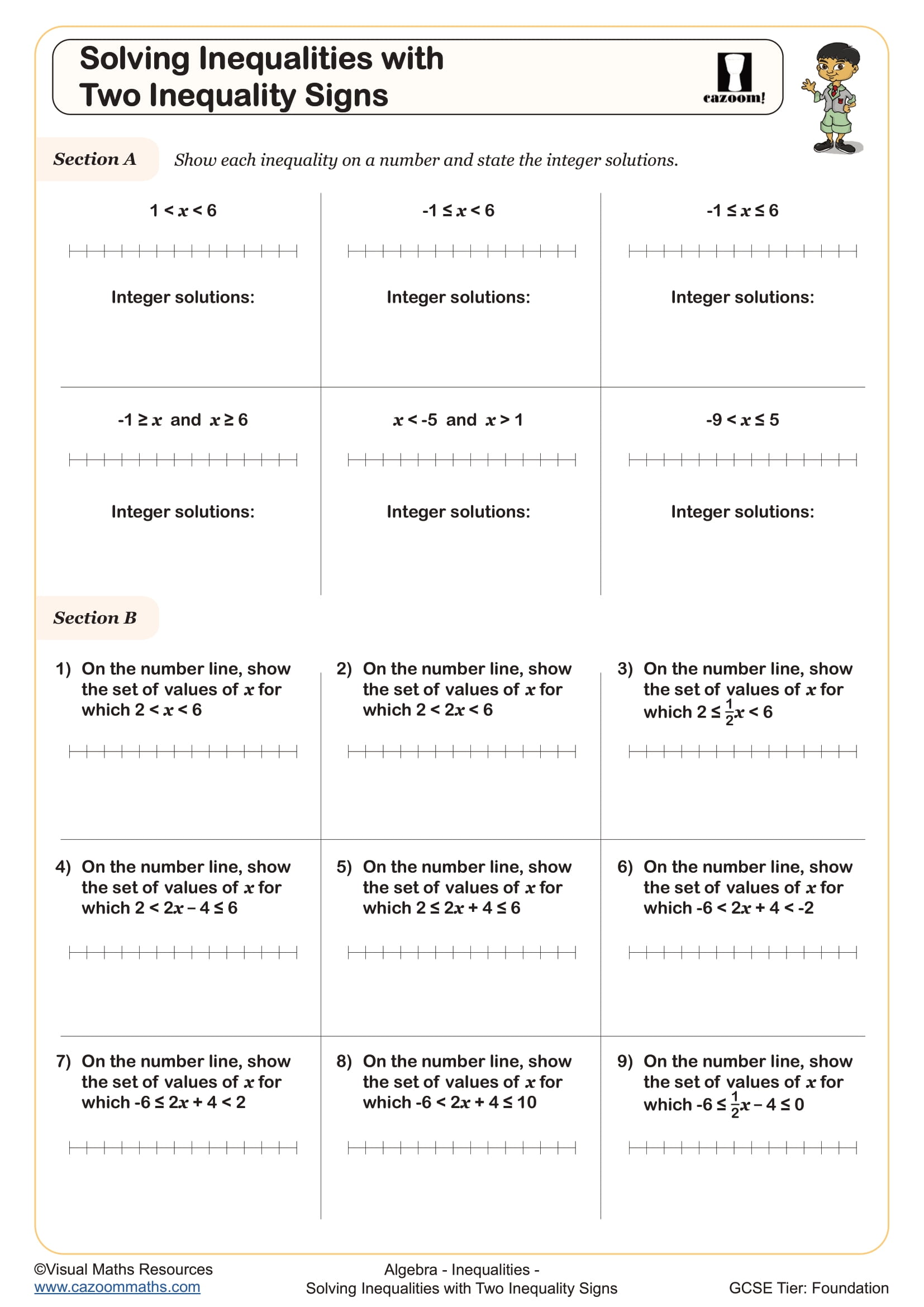
All worksheets are created by the team of experienced teachers at Cazoom Maths.
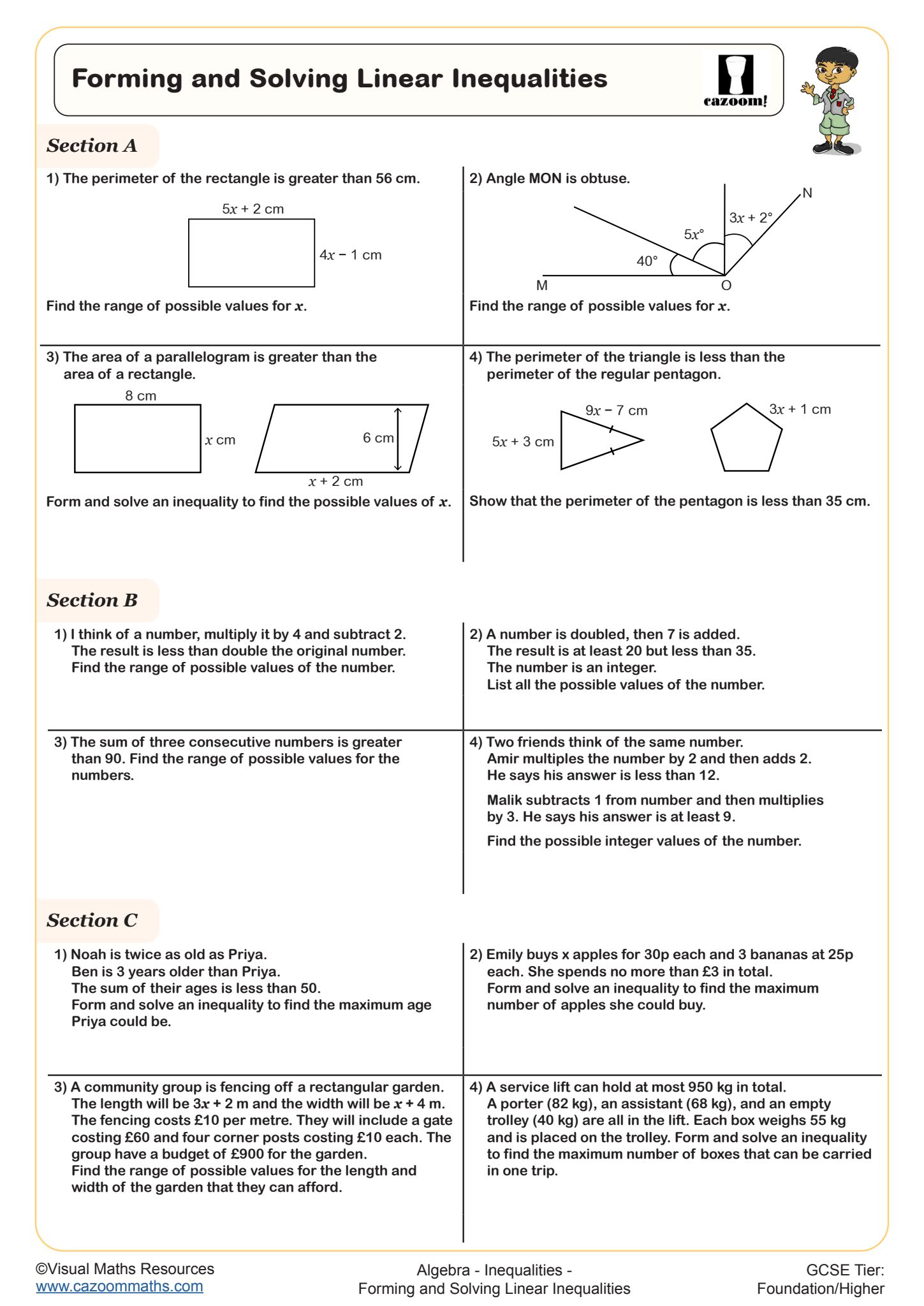
What topics are covered in a forming inequalities worksheet for Year 8?
A forming inequalities worksheet for Year 8 typically covers translating word problems into algebraic inequalities, using symbols <, >, ≤, and ≥ correctly, and understanding the relationship between quantities. Students practise identifying key phrases like 'at least', 'no more than', and 'greater than' that indicate specific inequality symbols, aligning with National Curriculum expectations for algebraic fluency.
Teachers notice that students often reverse inequality signs when dealing with negative coefficients or when rearranging expressions. Regular practice with contextual problems, such as budget constraints or minimum age requirements, helps students connect mathematical symbols to real situations whilst building confidence with algebraic manipulation techniques practical for further study.
How do inequalities year 8 worksheets differ from Year 7 content?
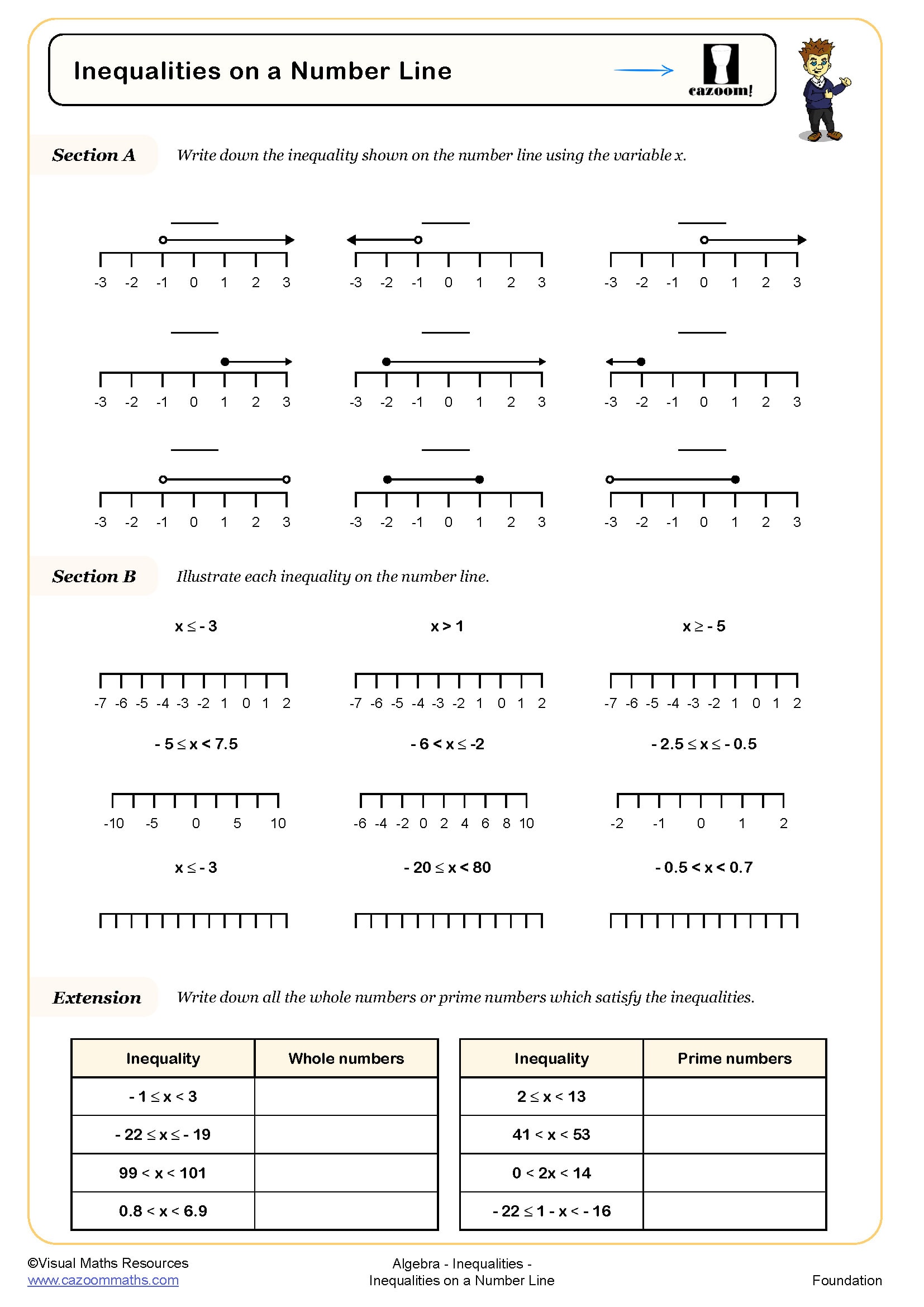
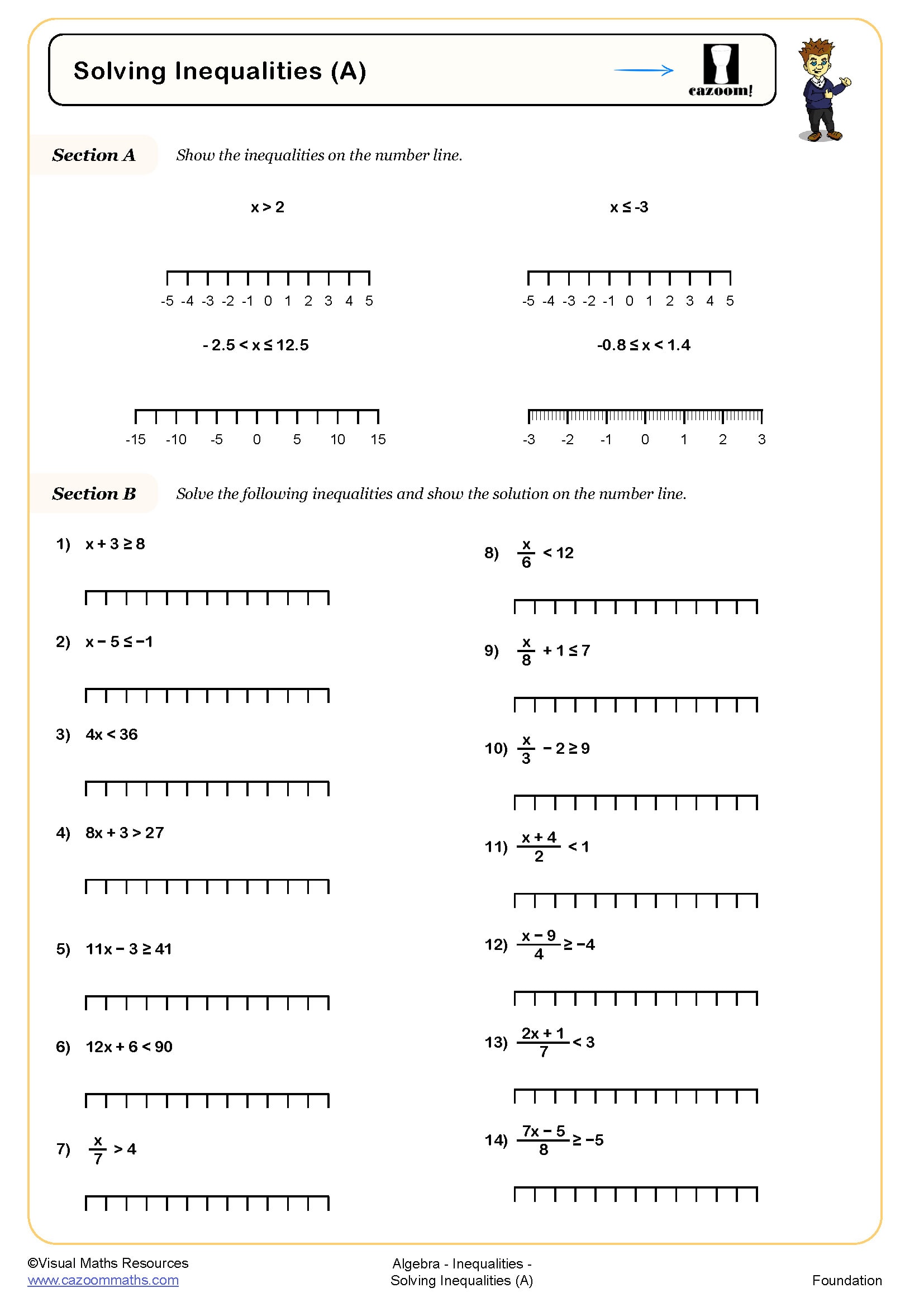
Inequalities year 8 worksheets introduce more complex algebraic manipulation compared to Year 7, where students typically focus on simple number inequalities and basic representations. Year 8 content includes solving multi-step inequalities, working with negative coefficients, and connecting inequality solutions to graphical representations on coordinate planes.
The progression reflects the spiral curriculum approach, where Year 7 establishes foundational understanding of inequality notation and simple solving techniques. Year 8 builds sophistication by incorporating algebraic skills developed throughout KS3, preparing students for the advanced inequality work they'll encounter in GCSE mathematics, including quadratic inequalities and systems of inequalities.
Why do students find solving inequalities with negative numbers challenging?
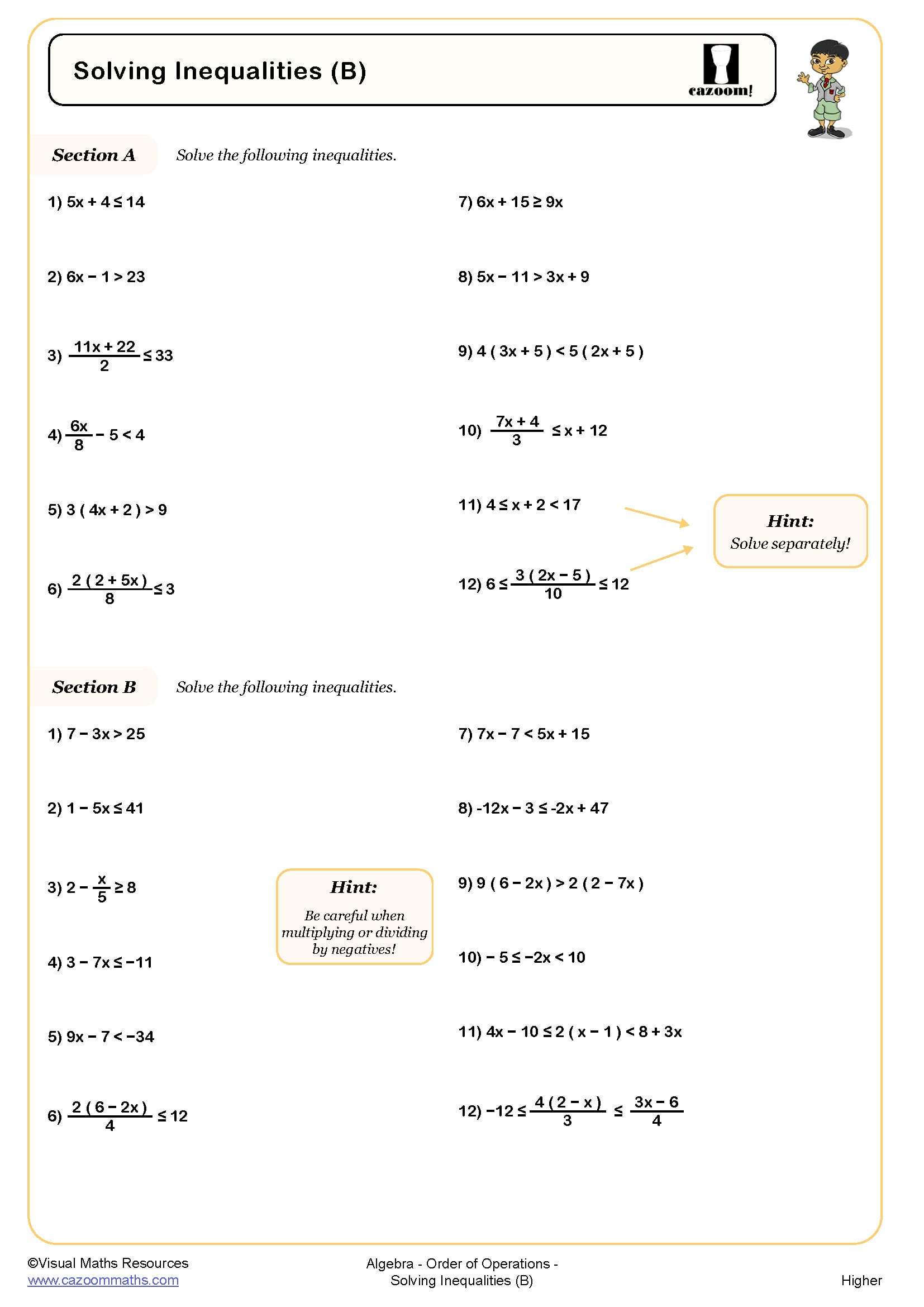
Students find solving inequalities with negative numbers challenging because the fundamental rule of reversing the inequality sign when multiplying or dividing by negative values contradicts their experience with equations. This conceptual shift requires explicit teaching and extensive practice, as students naturally apply equation-solving methods without considering the directional change.
Maths teachers report that visual representations, such as number line demonstrations and real-world temperature examples, help students grasp why the inequality direction must reverse. Systematic practice with positive and negative coefficient problems side by side allows students to internalise this rule, building the procedural fluency necessary for success in higher-level algebra.
How can teachers use these inequality worksheet resources effectively in lessons?
Teachers can maximise these inequality worksheet resources by using them strategically across different lesson phases - starter activities for retrieval practice, main tasks for skill development, and plenary exercises for assessment. The included answer sheets enable immediate feedback, allowing teachers to address misconceptions promptly and adjust instruction based on student responses.
Effective implementation involves selecting worksheets that match current learning objectives whilst considering prior knowledge gaps. Teachers often use these resources for differentiated group work, where students tackle problems matched to their confidence levels, or for homework assignments that reinforce classroom learning through independent practice.