Year 8 Solving Equations Worksheets
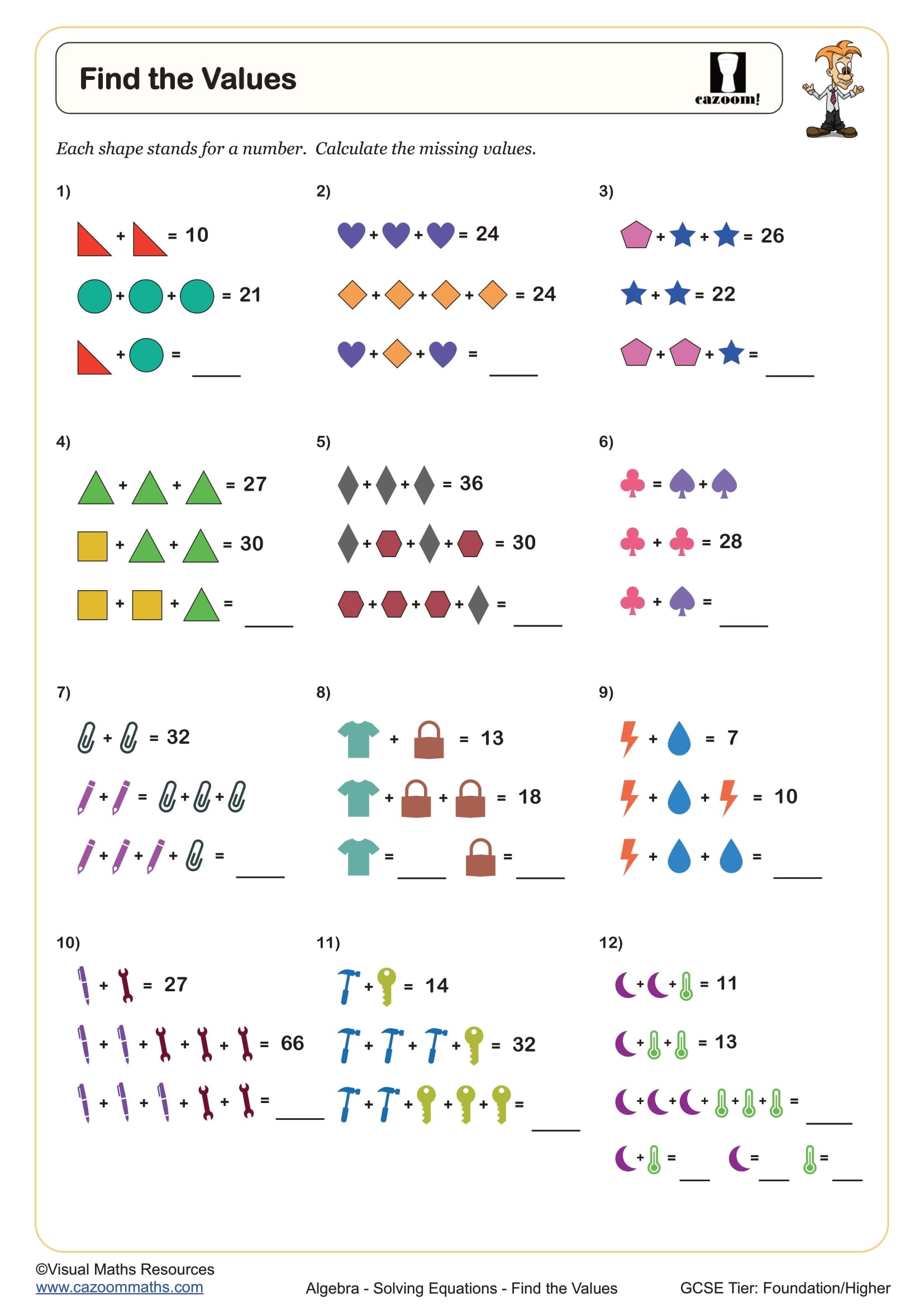
Find the Values
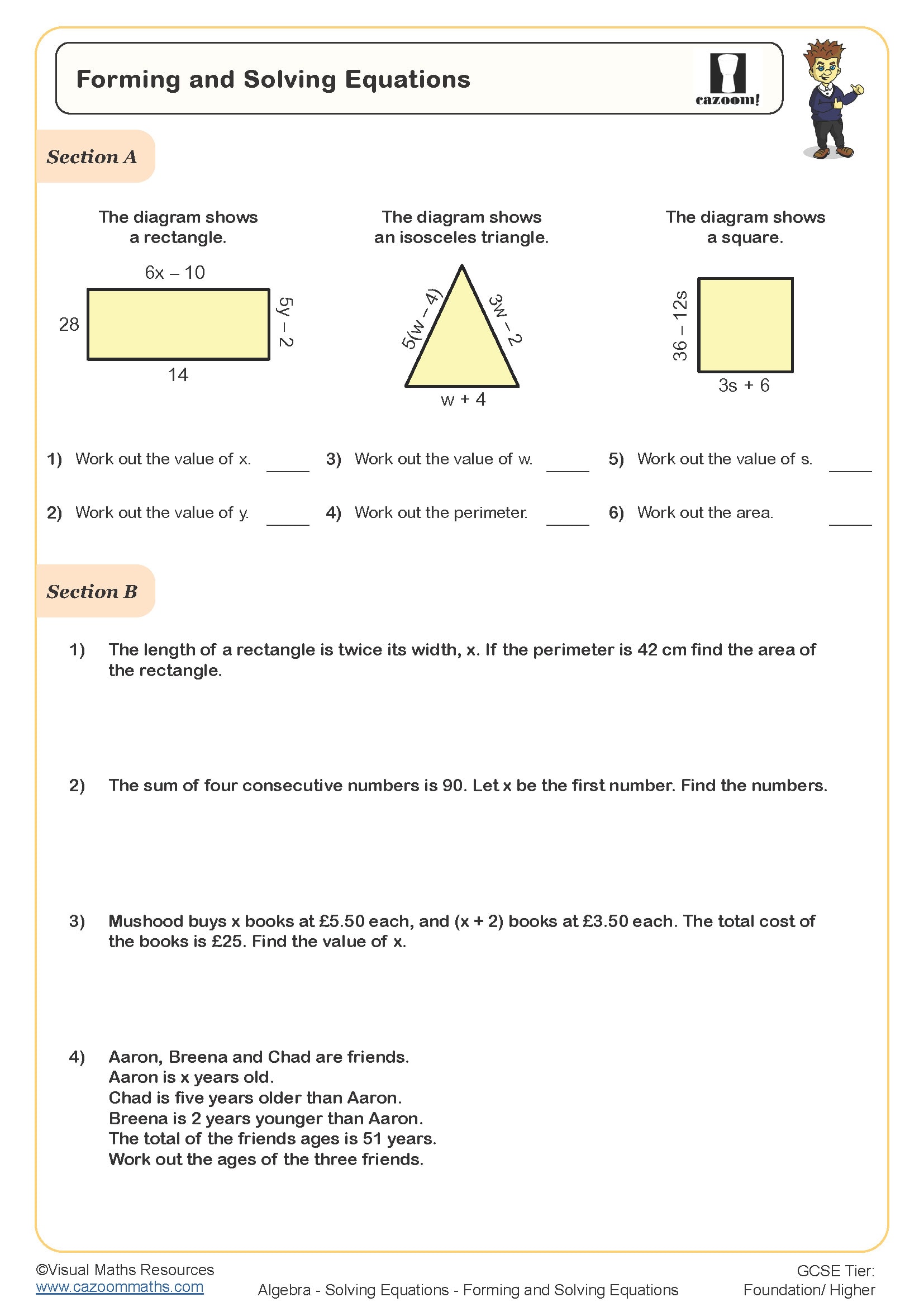
Forming and Solving Equations
Forming and Solving Equations Involving Angles (A)
-Worksheet.jpg?w=3840)
Forming and Solving Equations Involving Angles (B)
-Worksheet.jpg?w=3840)
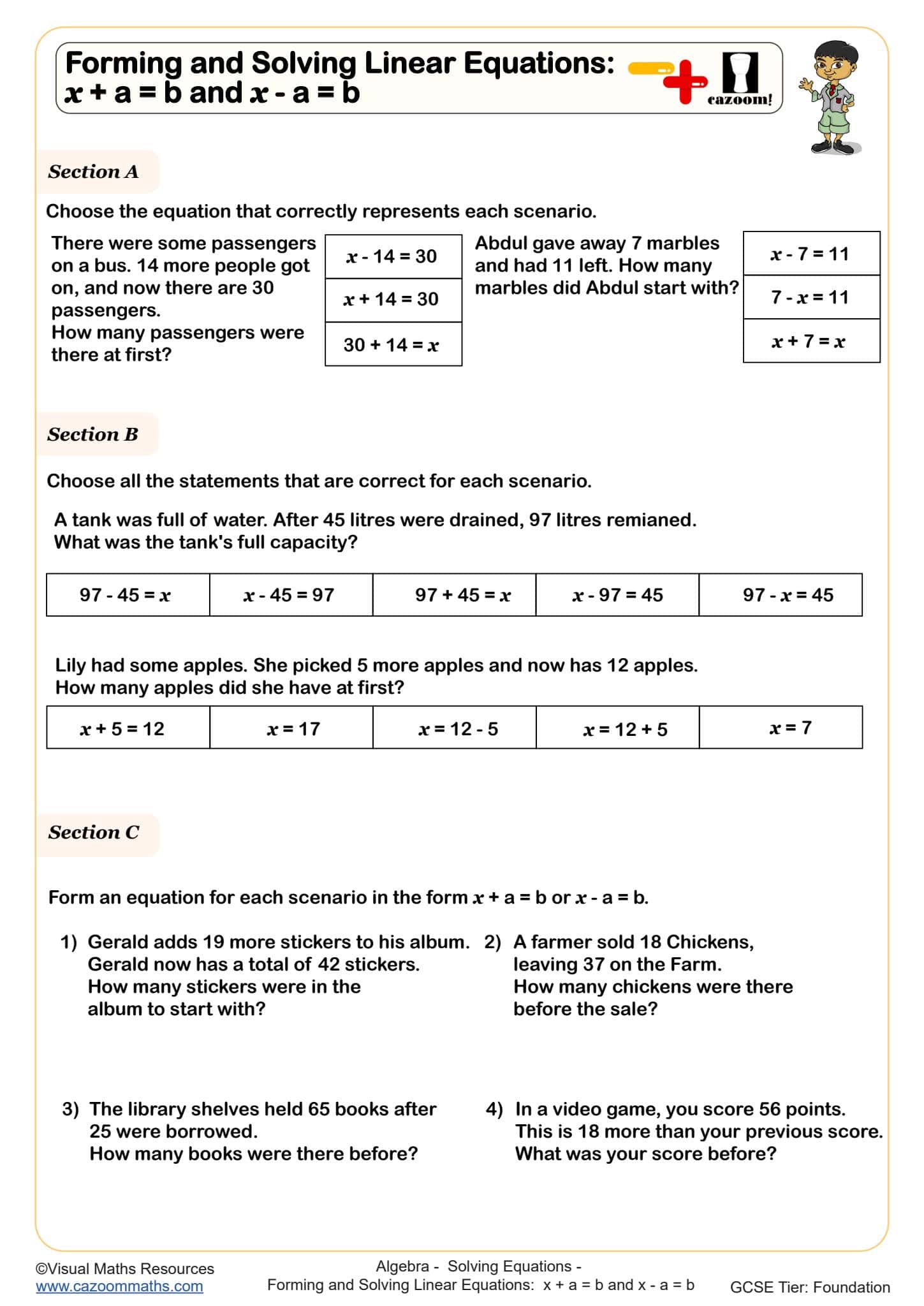
Forming and Solving Linear Equations: a𝑥 = b and 𝑥/a = b
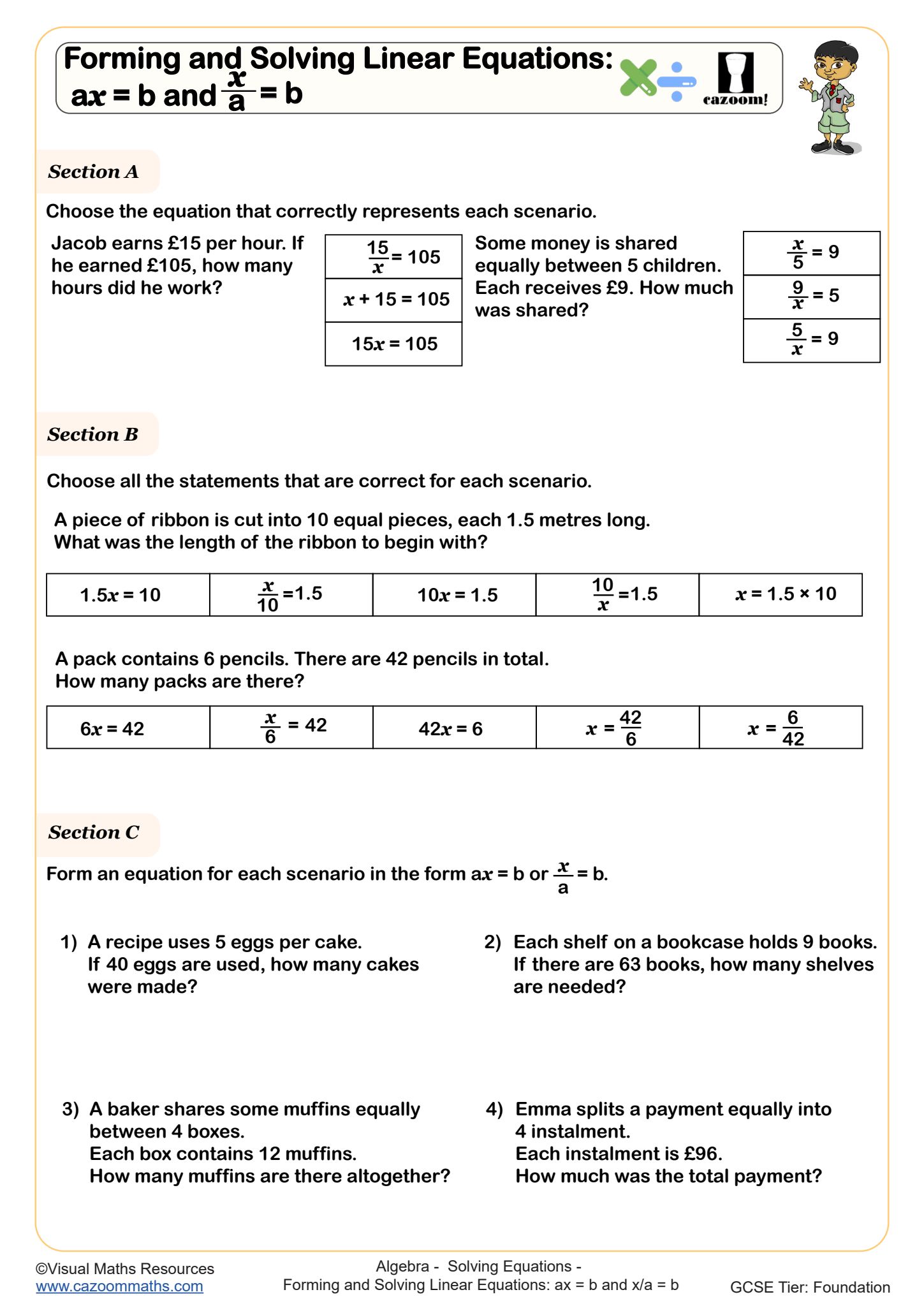
Forming and Solving Linear Equations: x + a = b and x - a = b
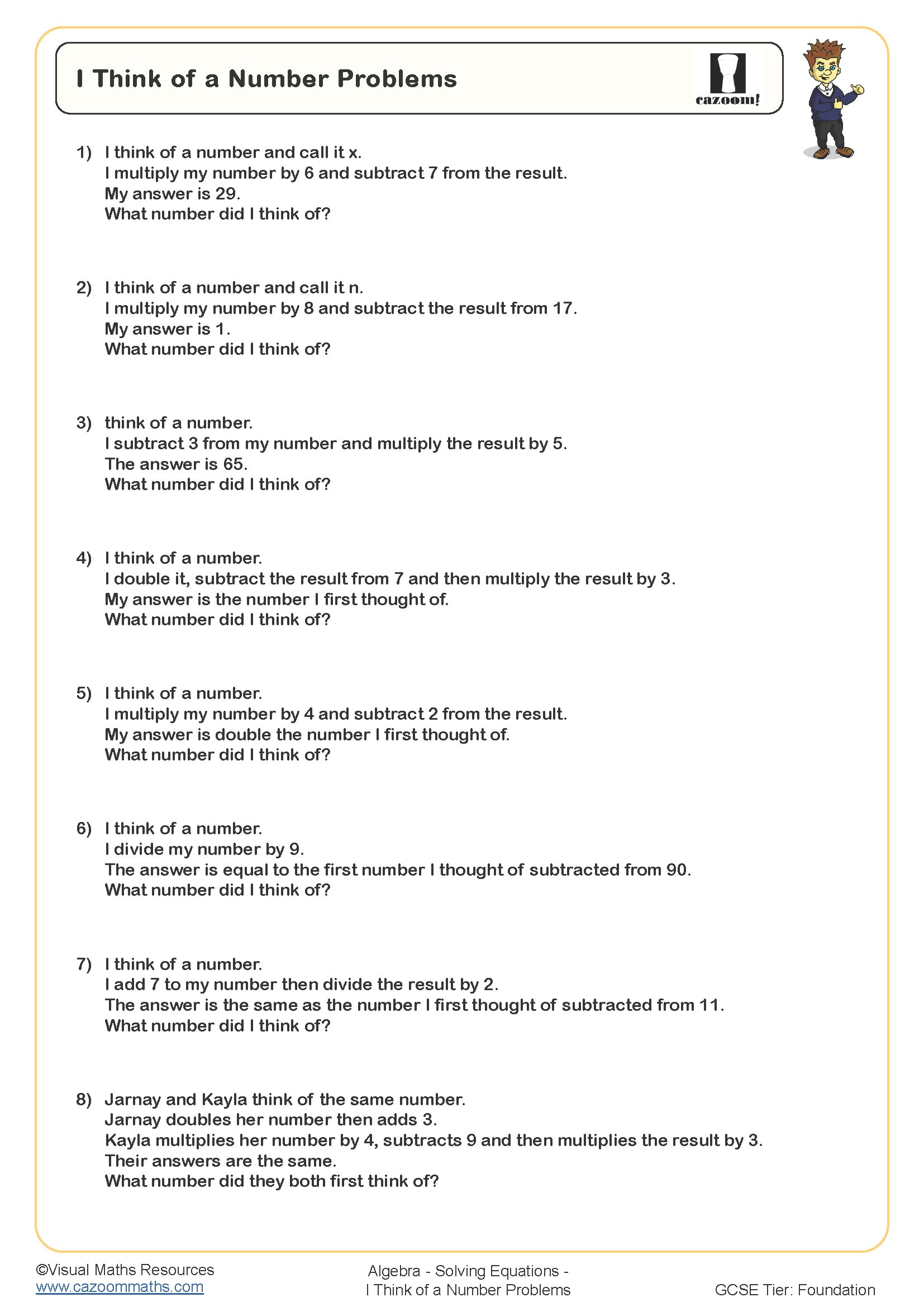
I Think of A Number Problems
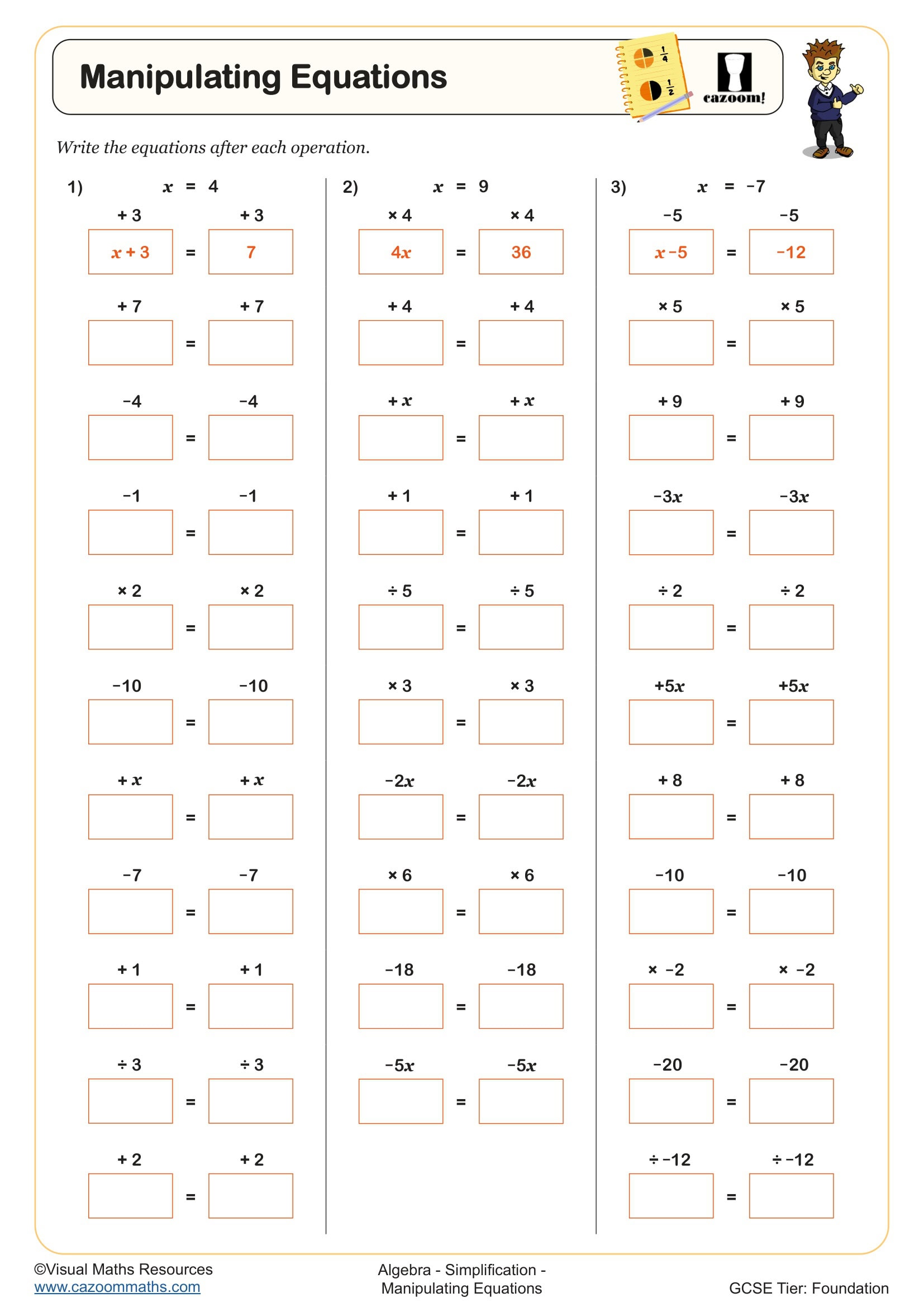
Manipulating Equations
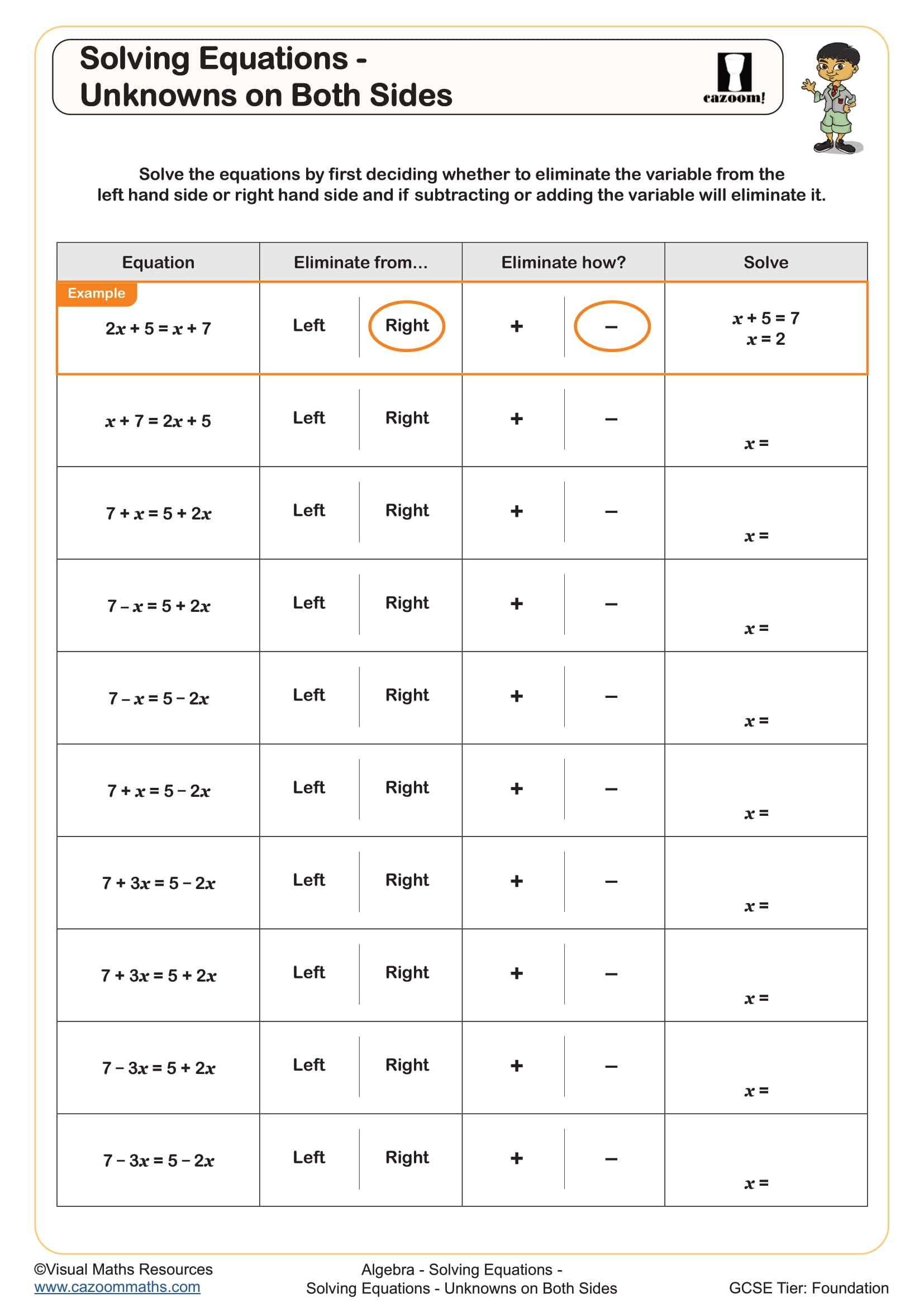
Solving Equations - Unknowns on Both Sides
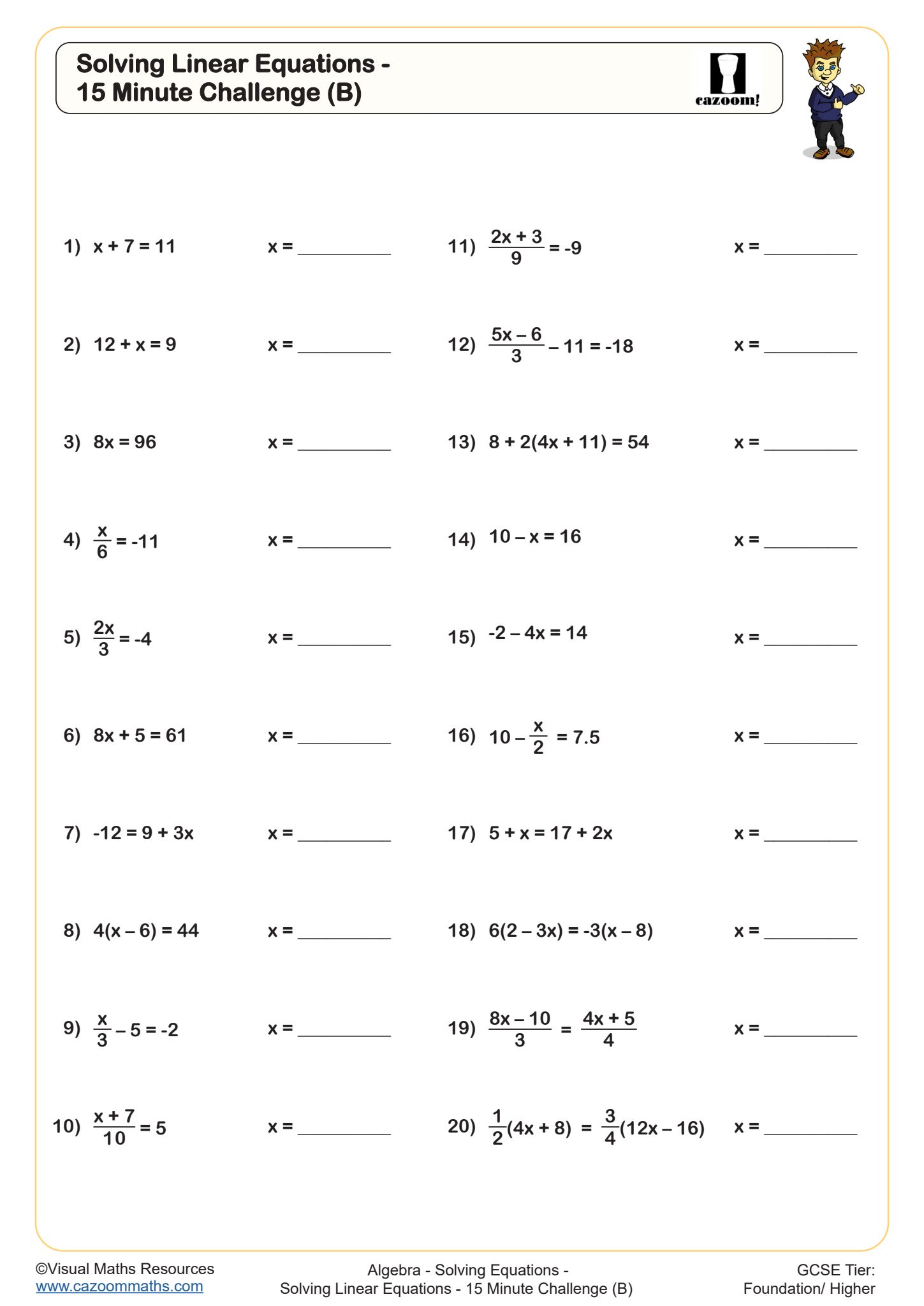
Solving Equations 15 Minute Challenge (B)
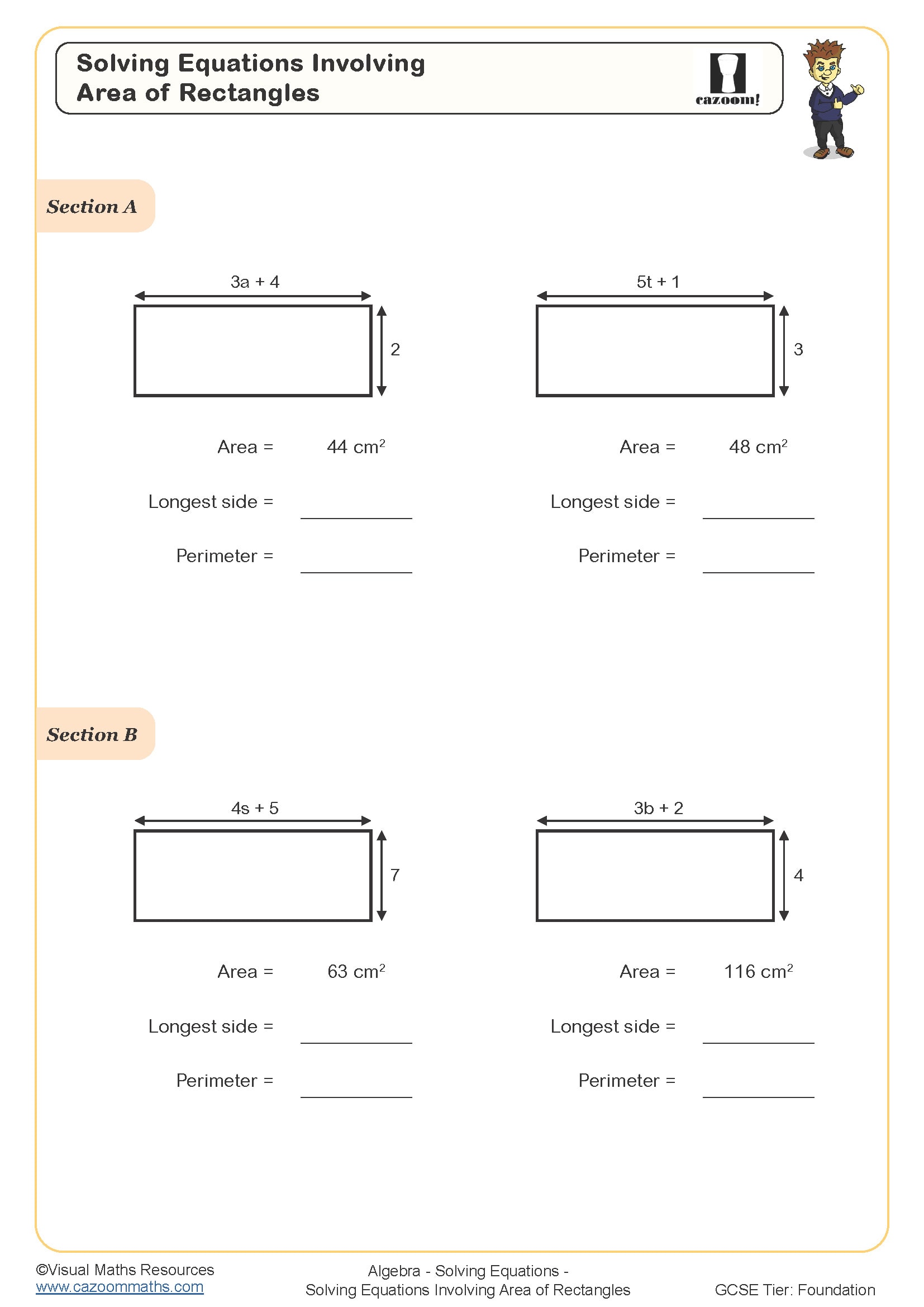
Solving Equations Involving Area of Rectangles
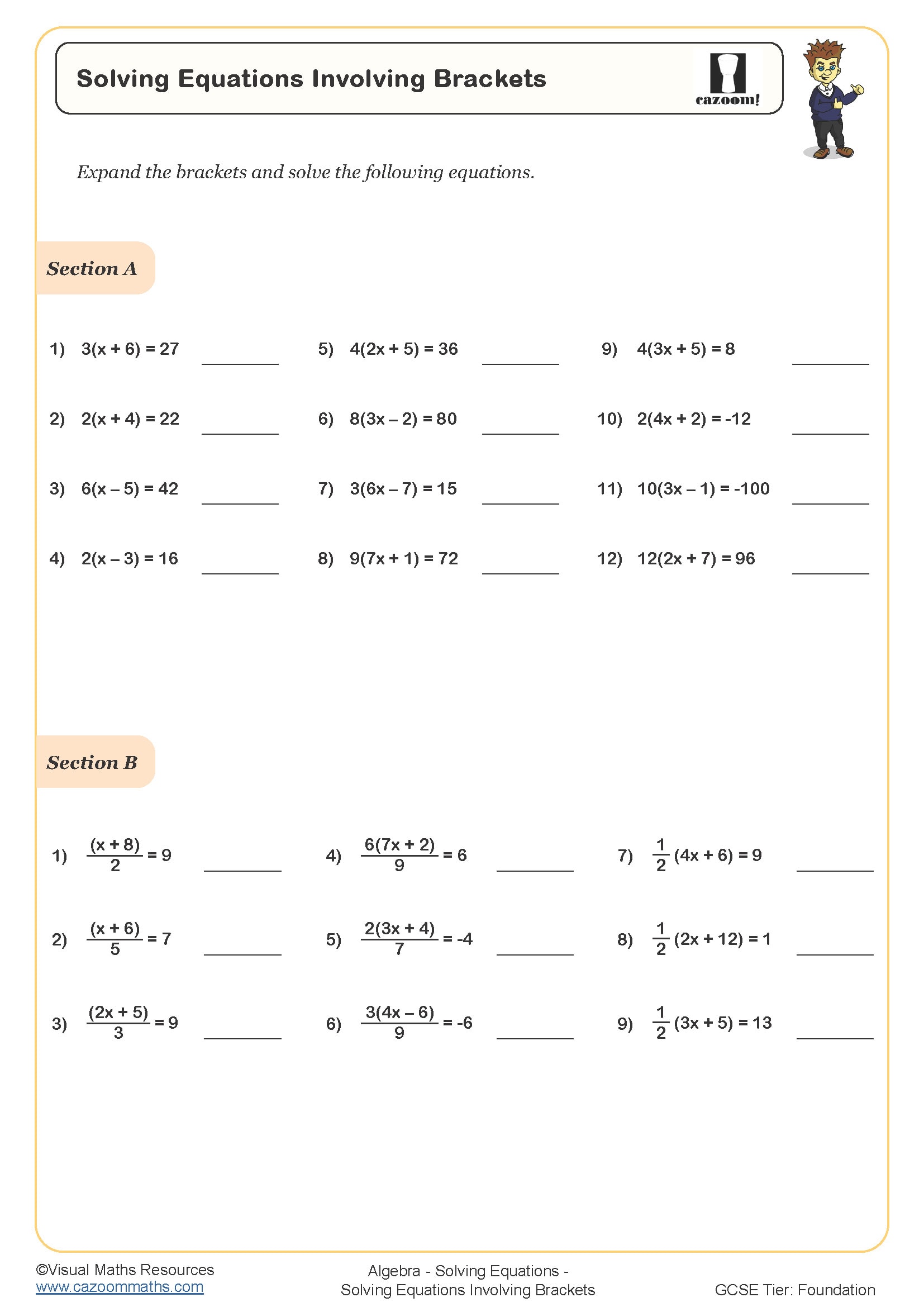
Solving Equations Involving Brackets
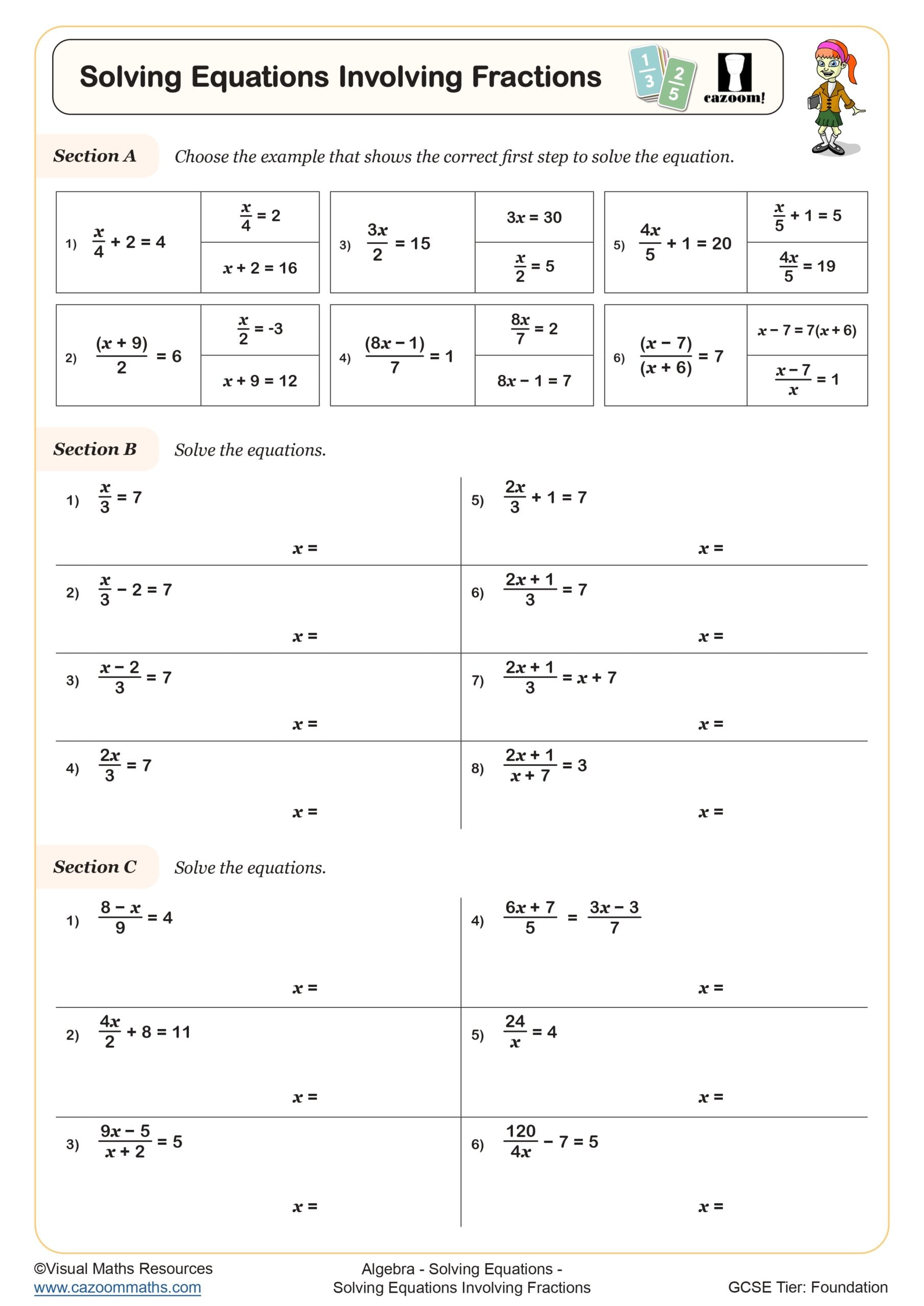
Solving Equations Involving Fractions
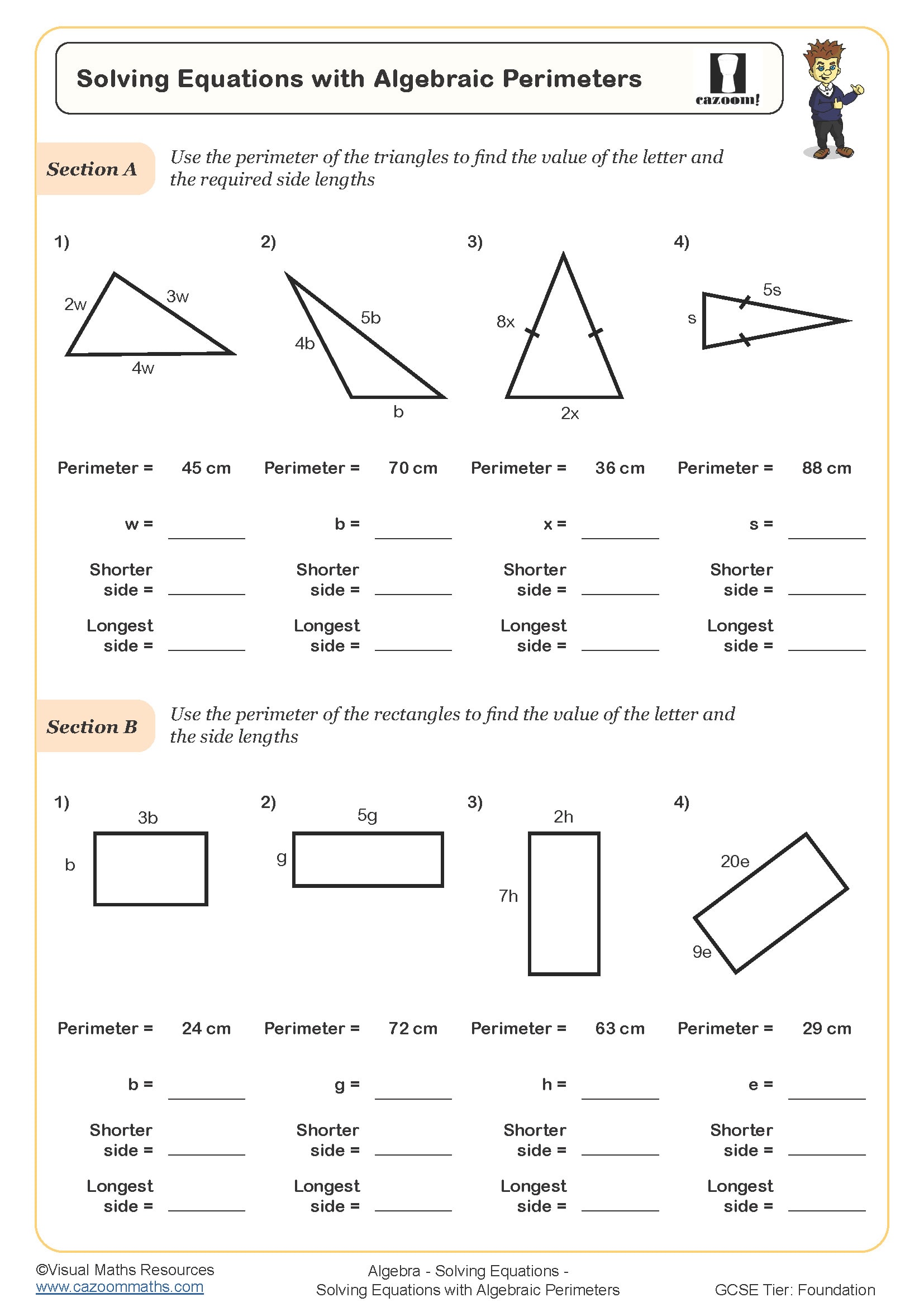
Solving Equations with Algebraic Perimeters
Solving Equations with Unknowns on Both Sides - Using Algebra Tiles
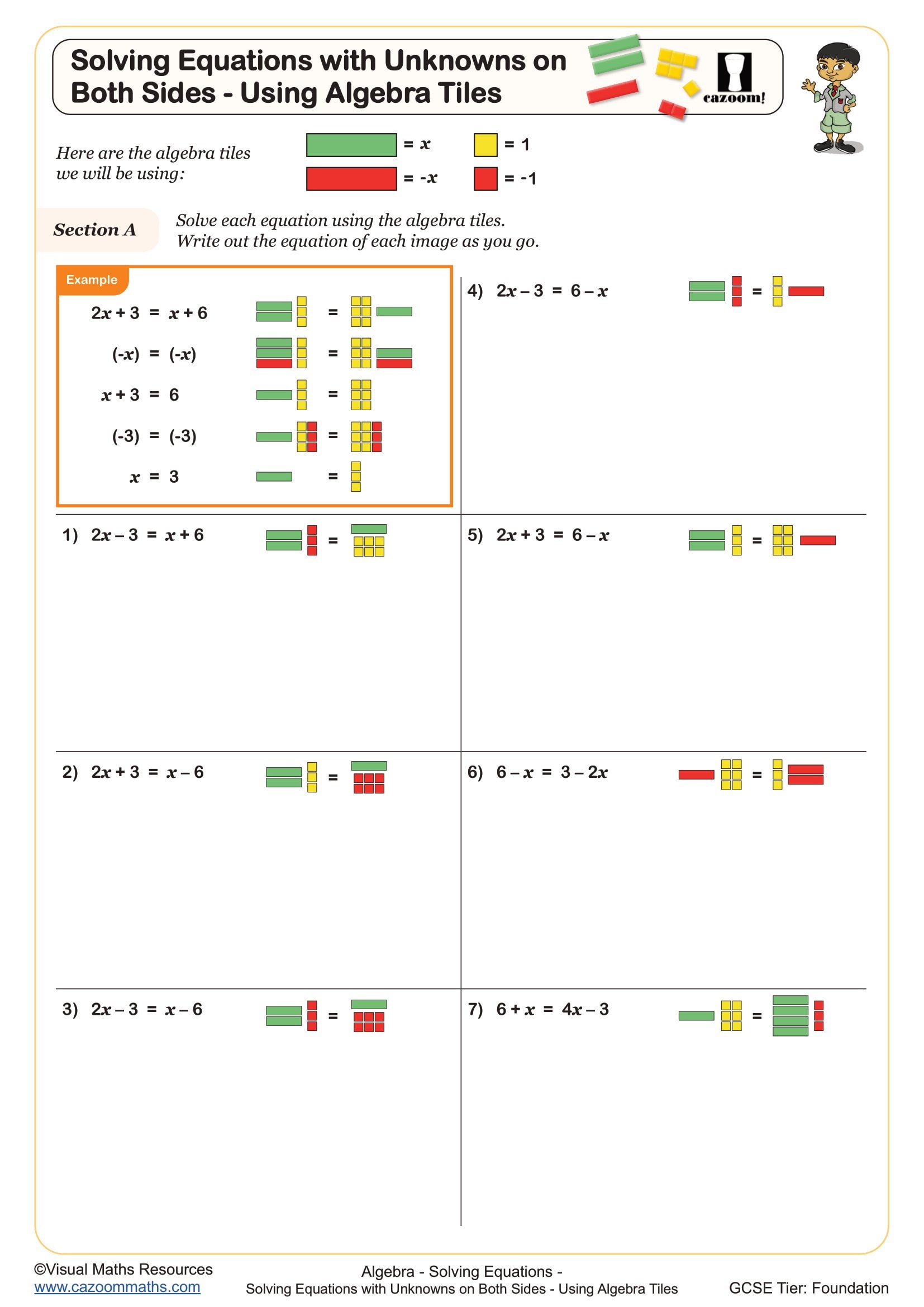
Solving Linear Equations (A)
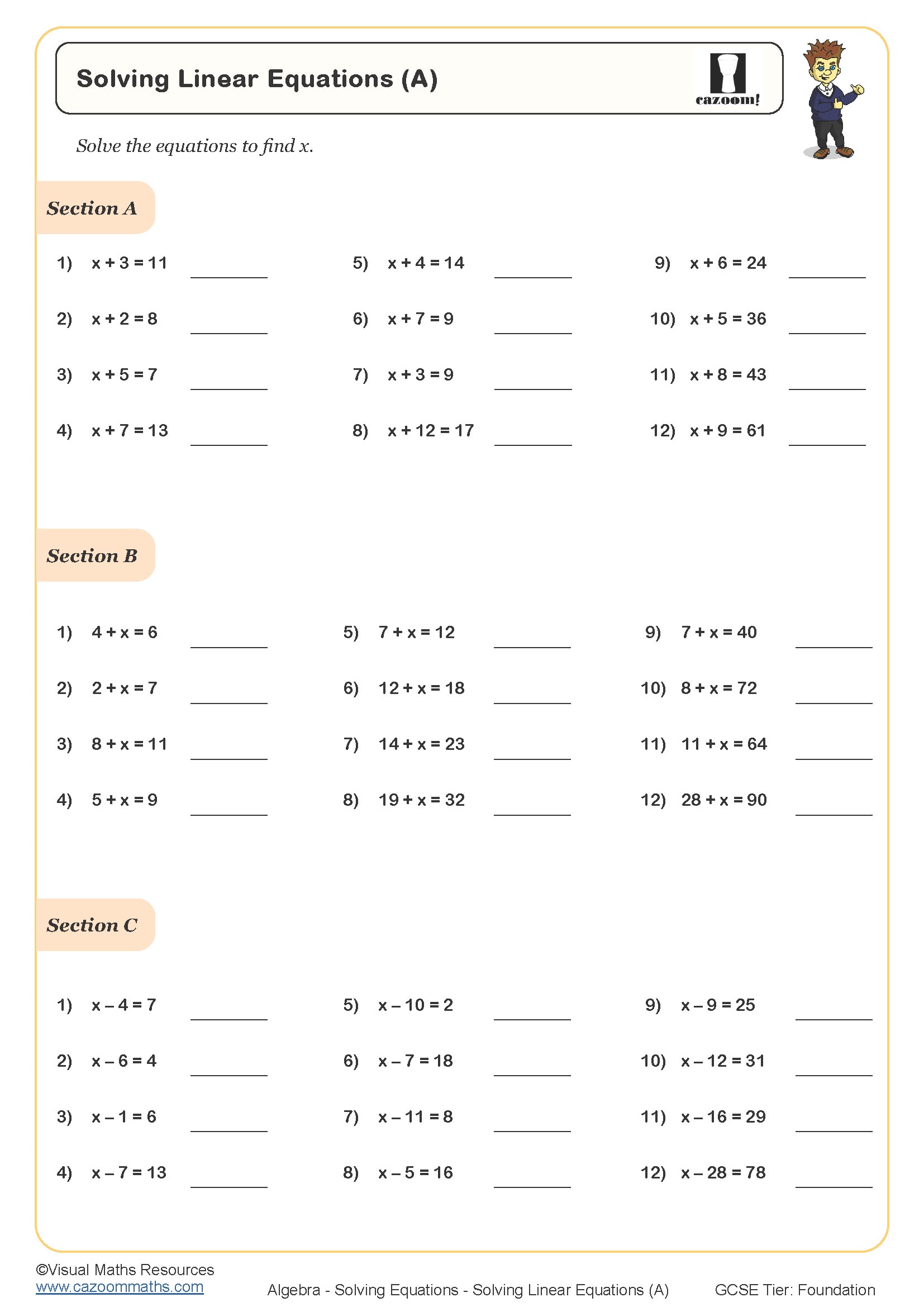
Solving Linear Equations (B)
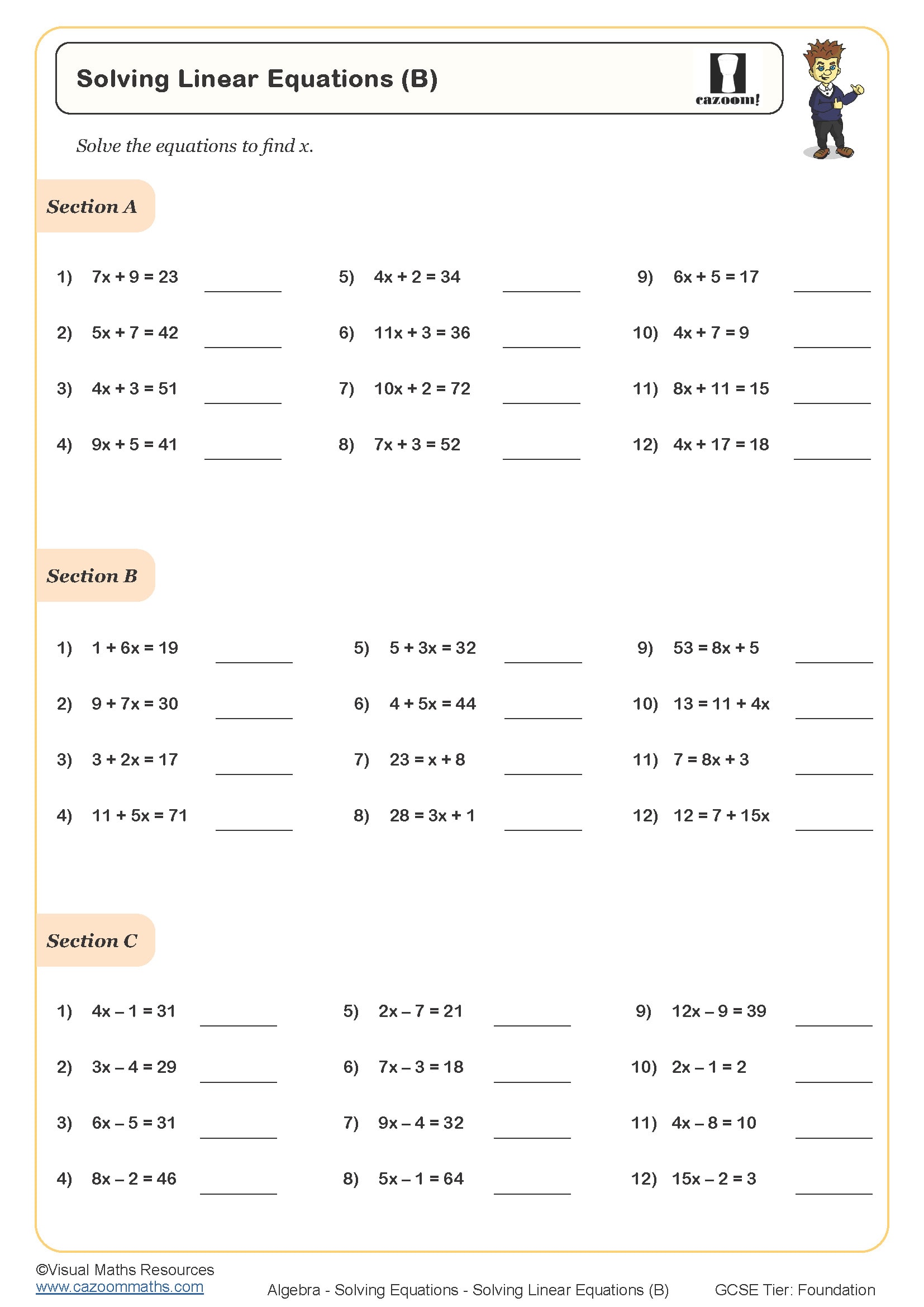
Solving Linear Equations (C)
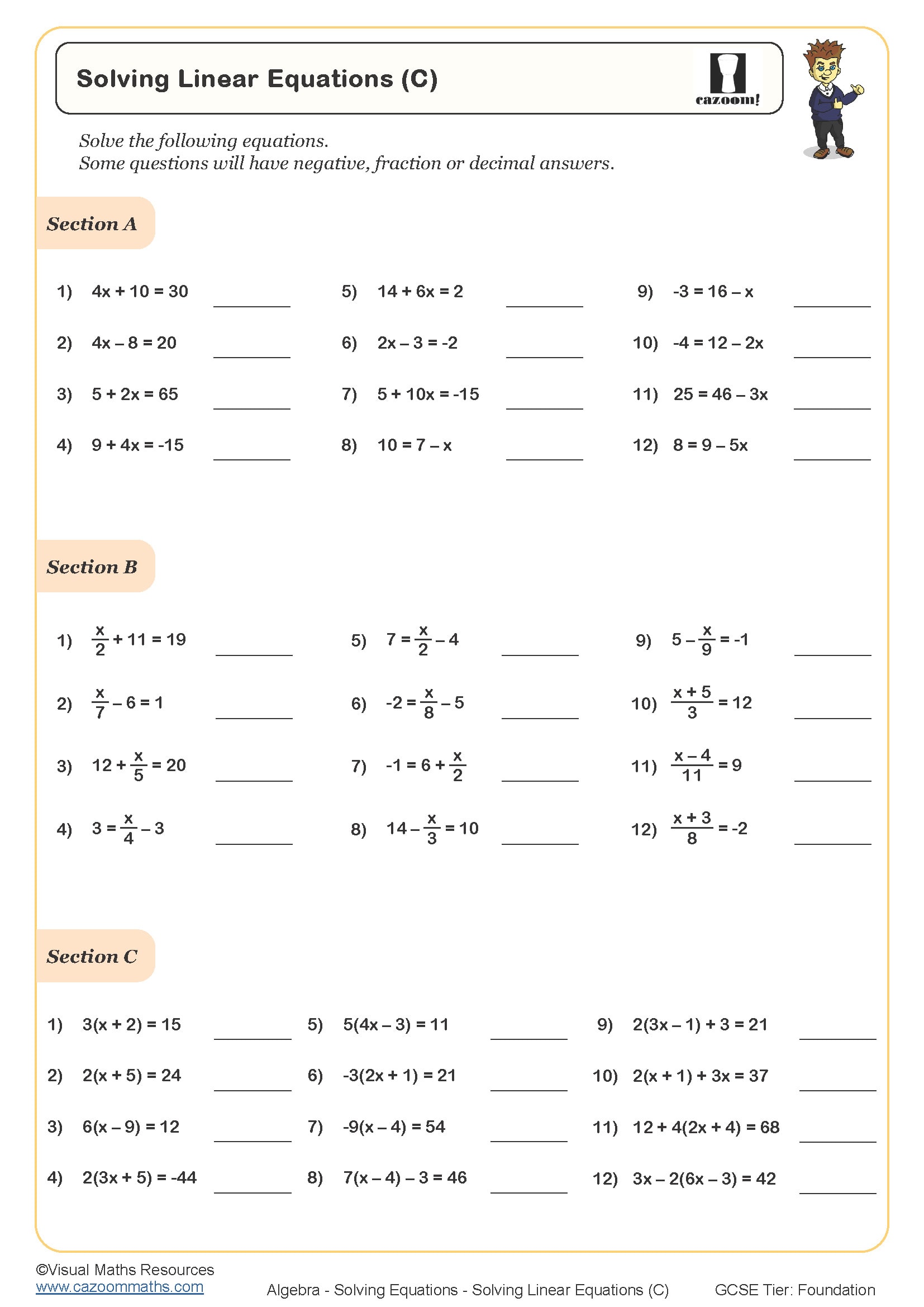
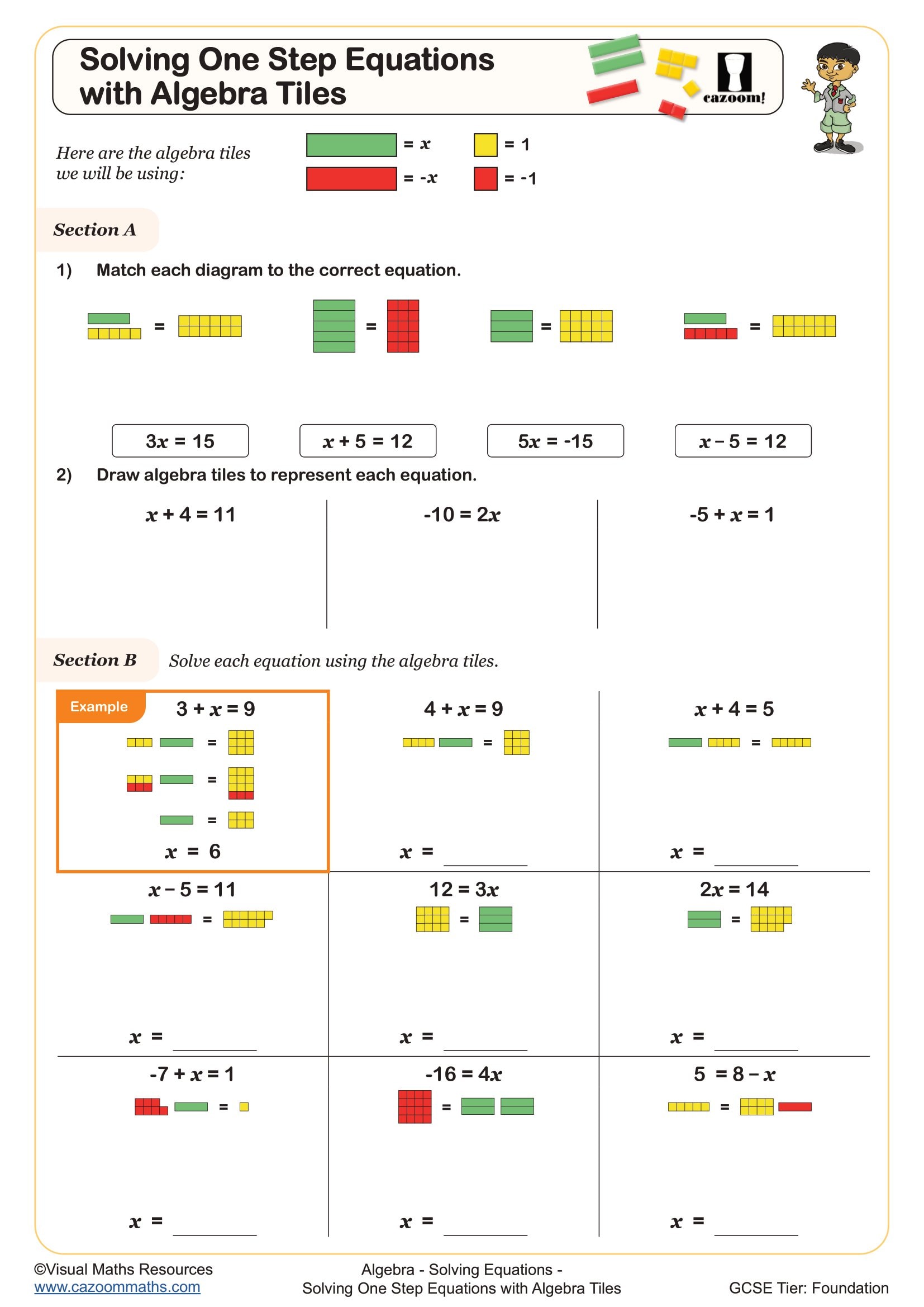
Solving One Step Equations with Algebra Tiles
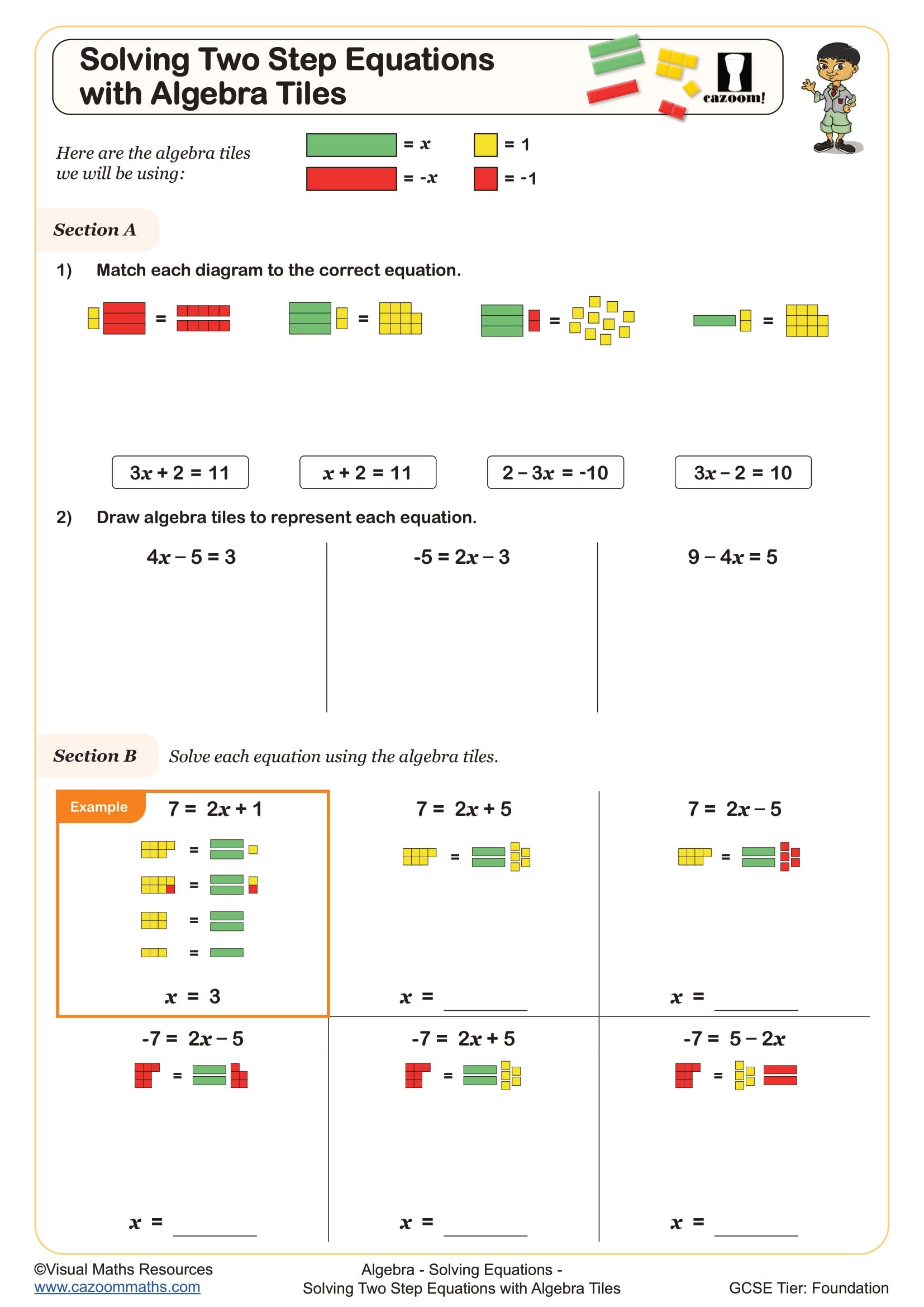
Solving Two Step Equations with Algebra Tiles
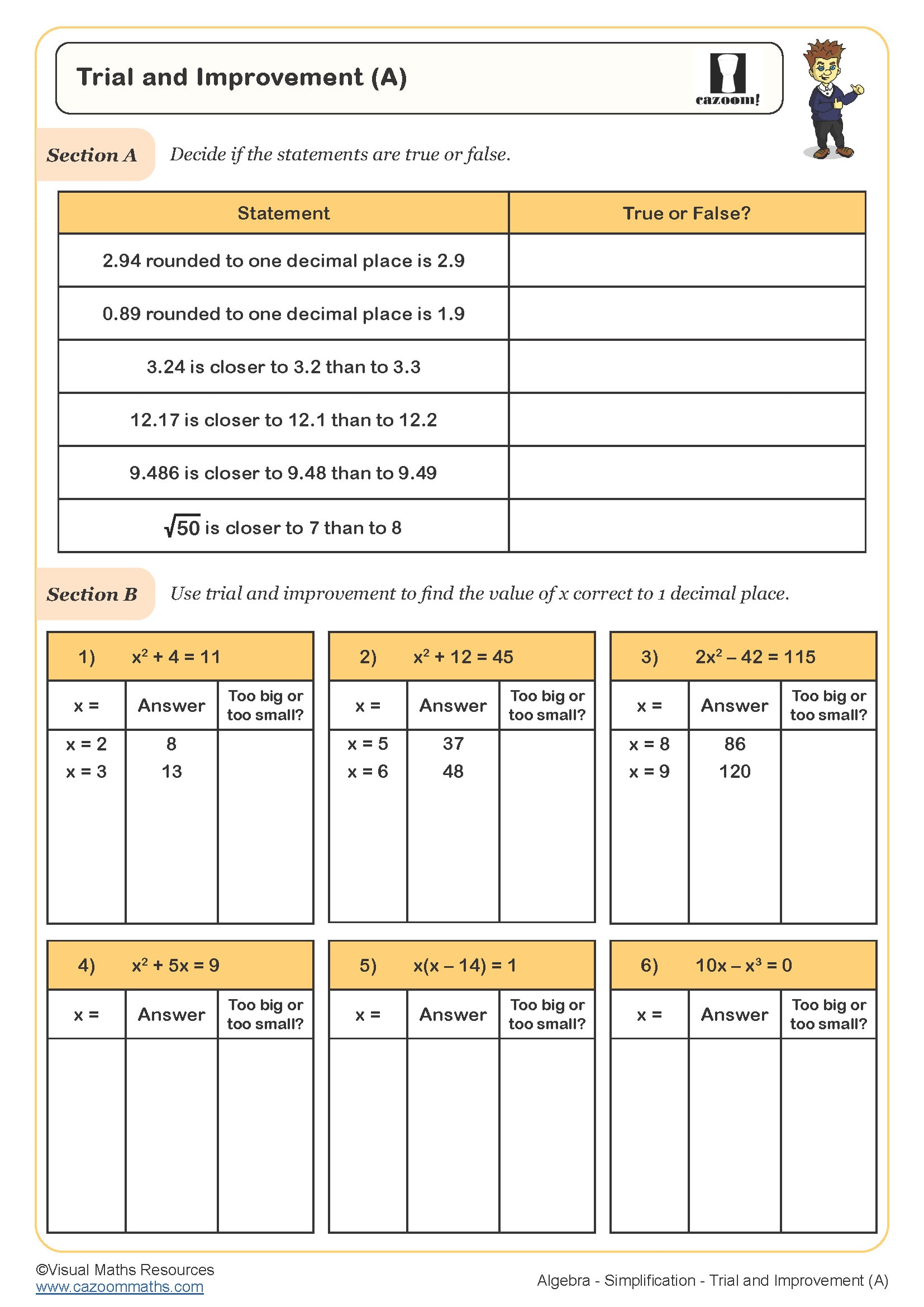
Trial and Improvement (A)
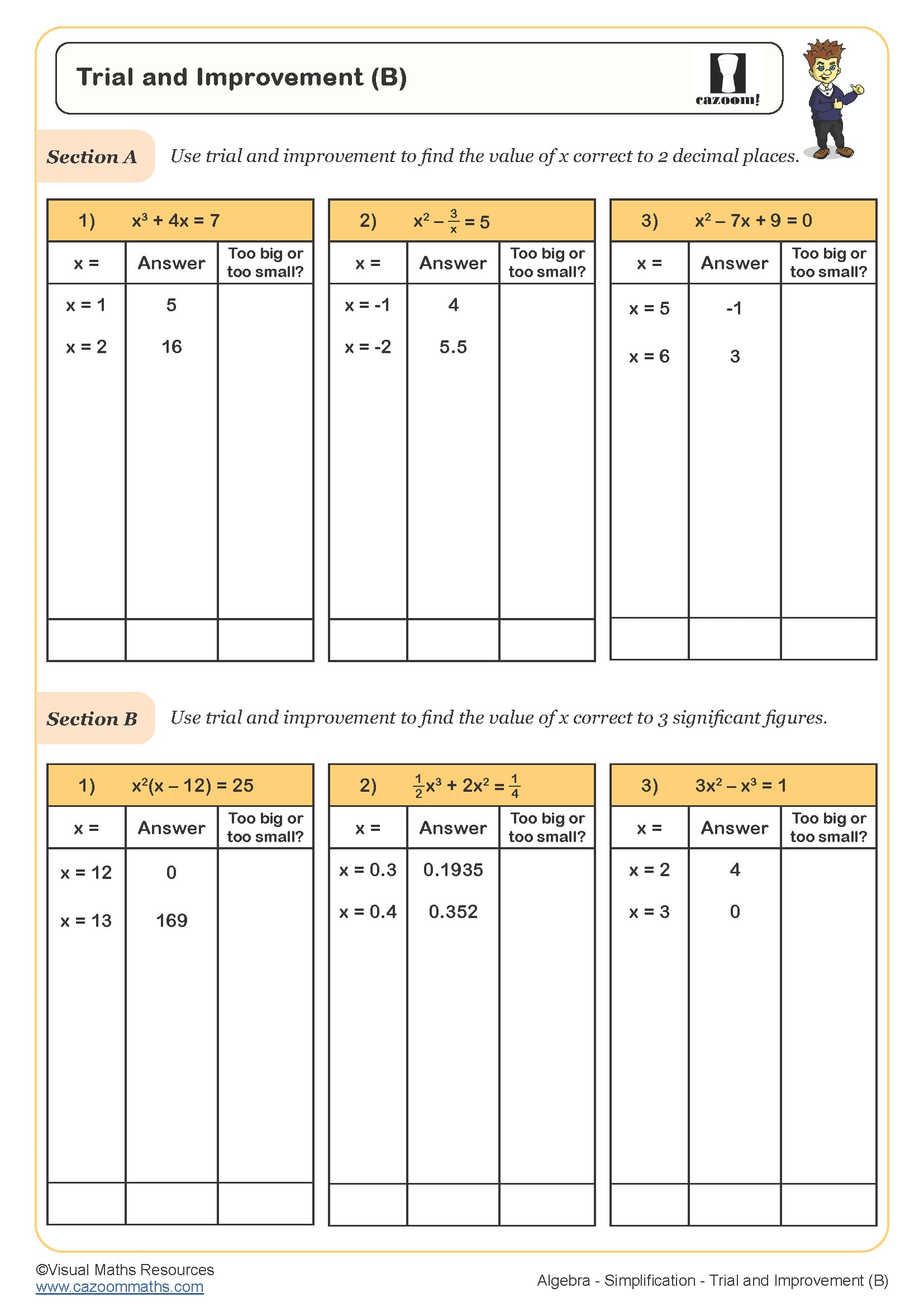
Trial and Improvement (B)
All worksheets are created by the team of experienced teachers at Cazoom Maths.
What algebra questions year 8 students should be able to solve?
Year 8 students should confidently solve one-step and two-step equations, progress to equations with brackets, and tackle problems involving fractions and negative numbers. The National Curriculum expects students at this stage to understand inverse operations and maintain algebraic balance when manipulating equations.
Teachers frequently observe that students can solve simple equations but struggle when letters appear on both sides of the equals sign. This progression from x + 5 = 12 to 3x + 4 = x + 10 represents a significant conceptual leap that requires careful scaffolding and plenty of practice through structured worksheets.
How do year 8 algebra skills progress from Year 7?
Year 8 builds significantly on Year 7 foundations, moving from simple substitution and collecting like terms to solving equations systematically. Students now encounter brackets that need expanding before solving, and equations where the unknown appears multiple times.
The jump in complexity catches many students off guard. While Year 7 focused on understanding algebraic notation, Year 8 demands procedural fluency in equation solving. Teachers often find that students who seemed confident with basic algebra suddenly struggle when multiple steps are required, highlighting the importance of regular practice with varied equation types.
Why do students find equations with brackets particularly challenging?
Equations involving brackets require students to remember the correct order of operations while maintaining algebraic balance, creating cognitive overload for many learners. Students must expand brackets correctly, collect like terms, then apply inverse operations in the right sequence.
Classroom experience shows that students often rush to 'get rid of' the brackets without thinking strategically about the most efficient approach. Some attempt to solve before expanding, while others make sign errors when distributing negative terms. Systematic practice with worksheets helps students develop the methodical approach needed for consistent success.
How can teachers use these worksheets most effectively in lessons?
These worksheets work well for starter activities, consolidation after teaching new methods, or homework tasks that reinforce classroom learning. The answer sheets enable quick marking and immediate feedback, crucial for building student confidence in algebraic procedures.
Many teachers find success using a gradual release model: demonstrating examples, working through problems collaboratively, then allowing independent practice with worksheet problems. The varied difficulty levels within each worksheet support differentiation, letting students progress at appropriate rates while maintaining engagement with achievable challenges.