Year 8 Substitution Worksheets
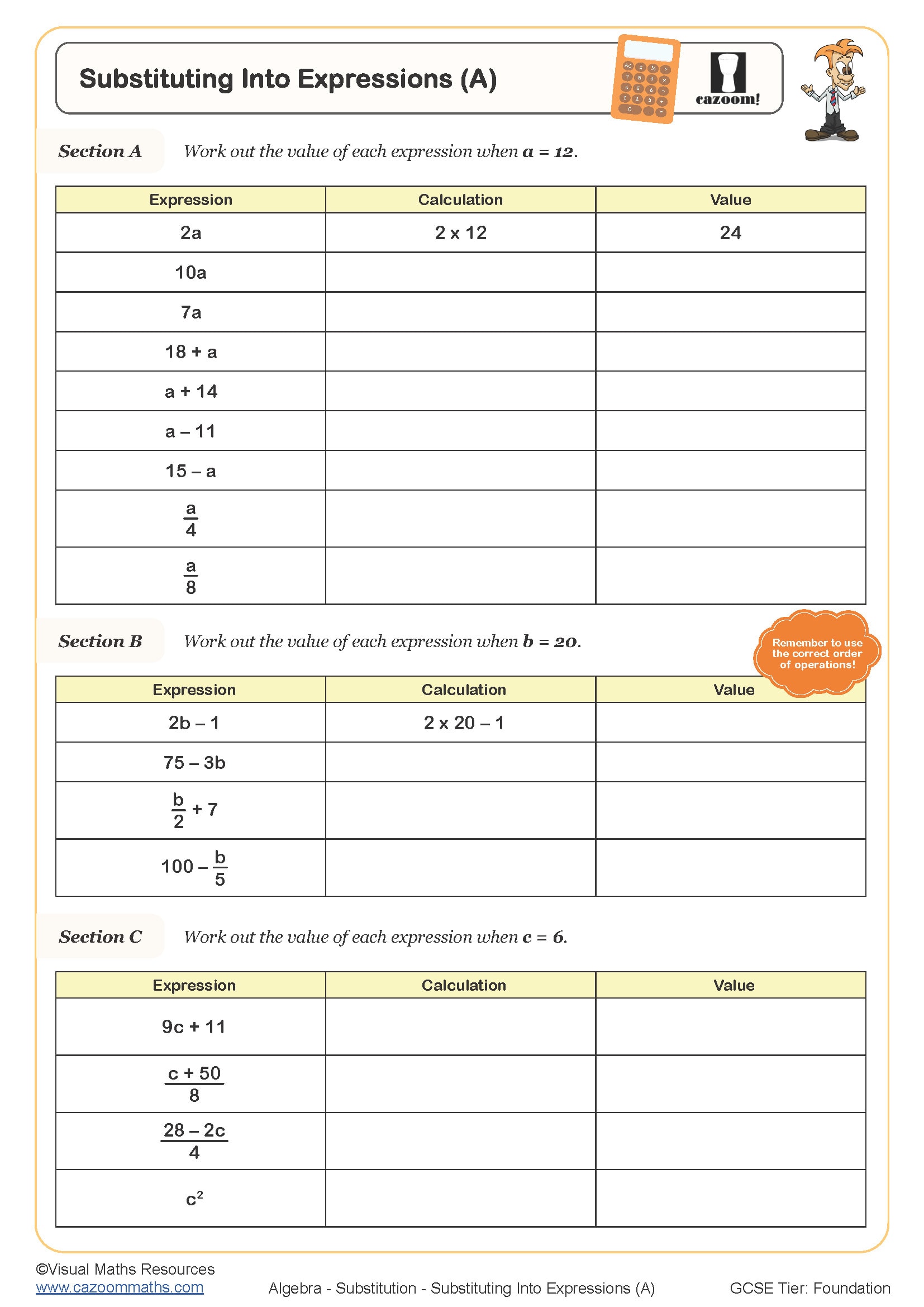
Substituting into Expressions (A)
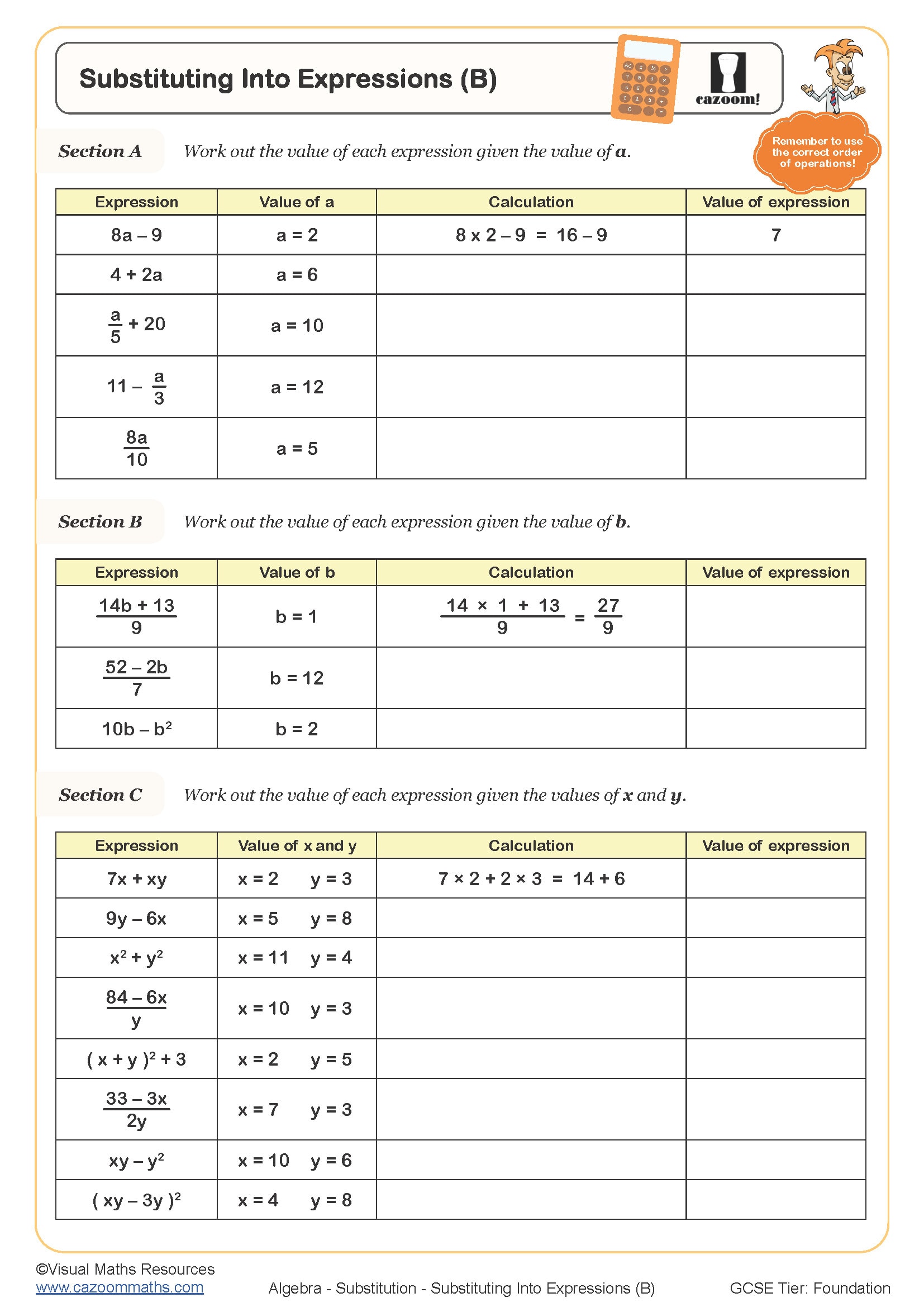
Substituting into Expressions (B)
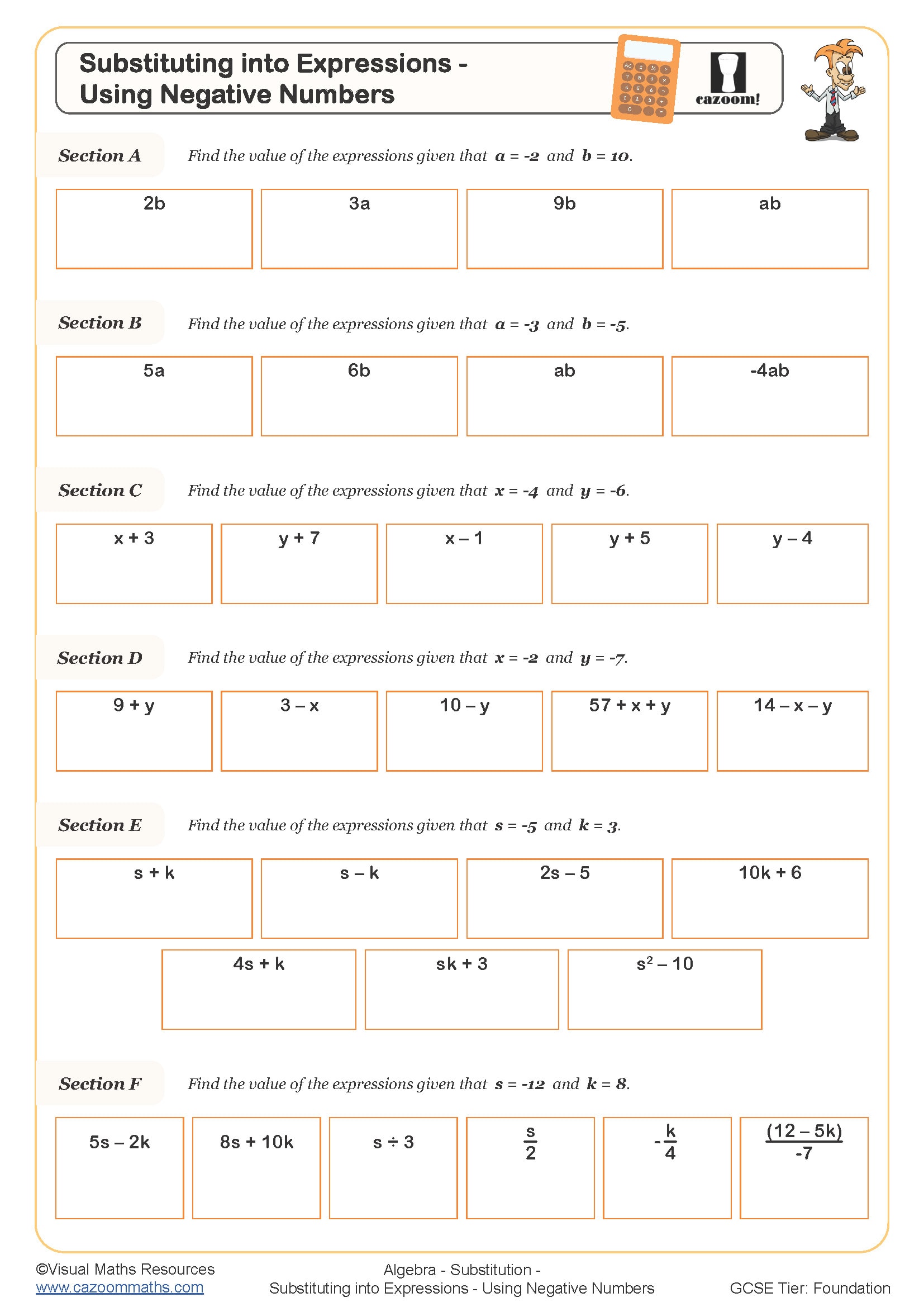
Substituting into Expressions using Negative Numbers
Substituting into Formulae (A) (With Clues)
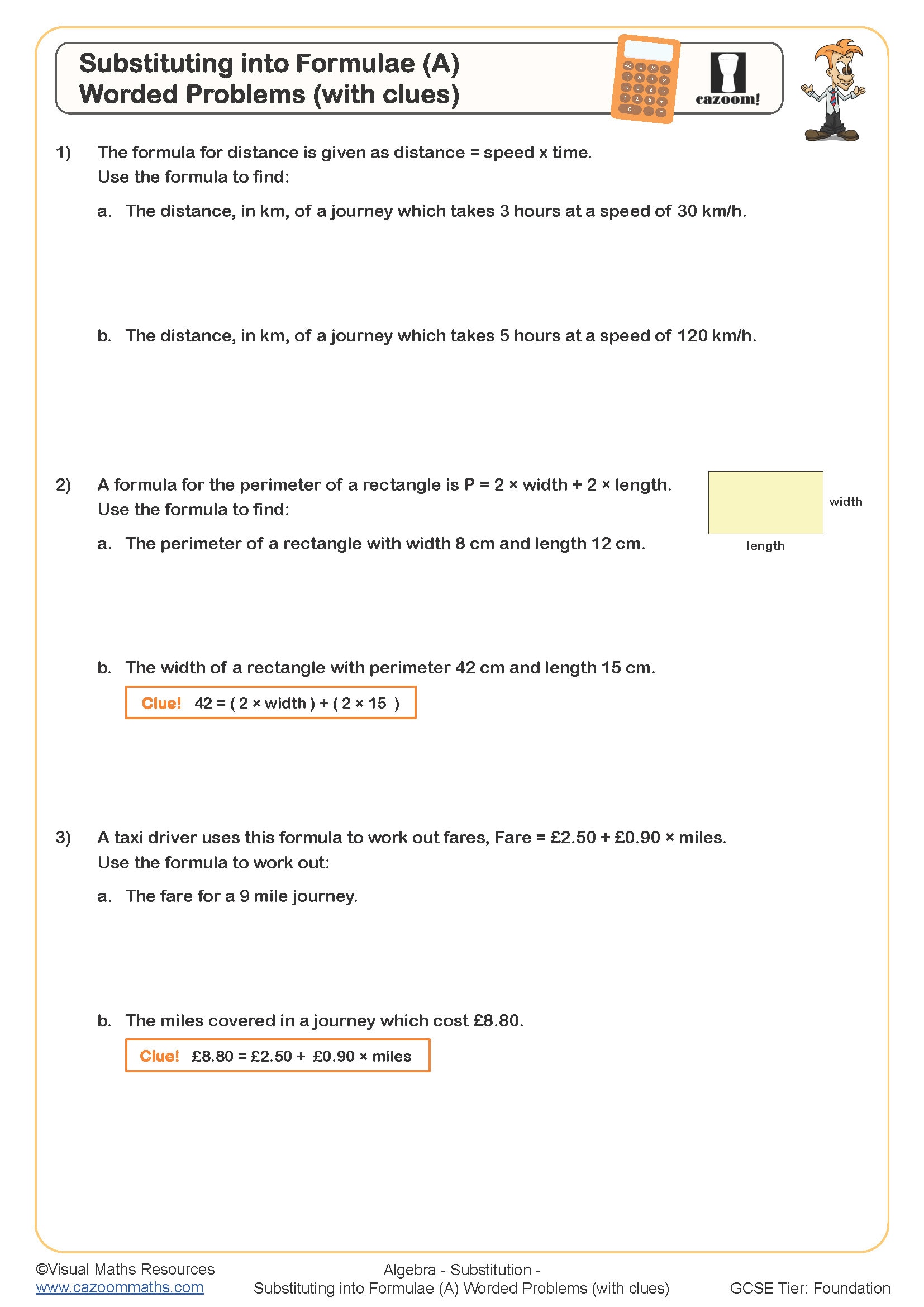
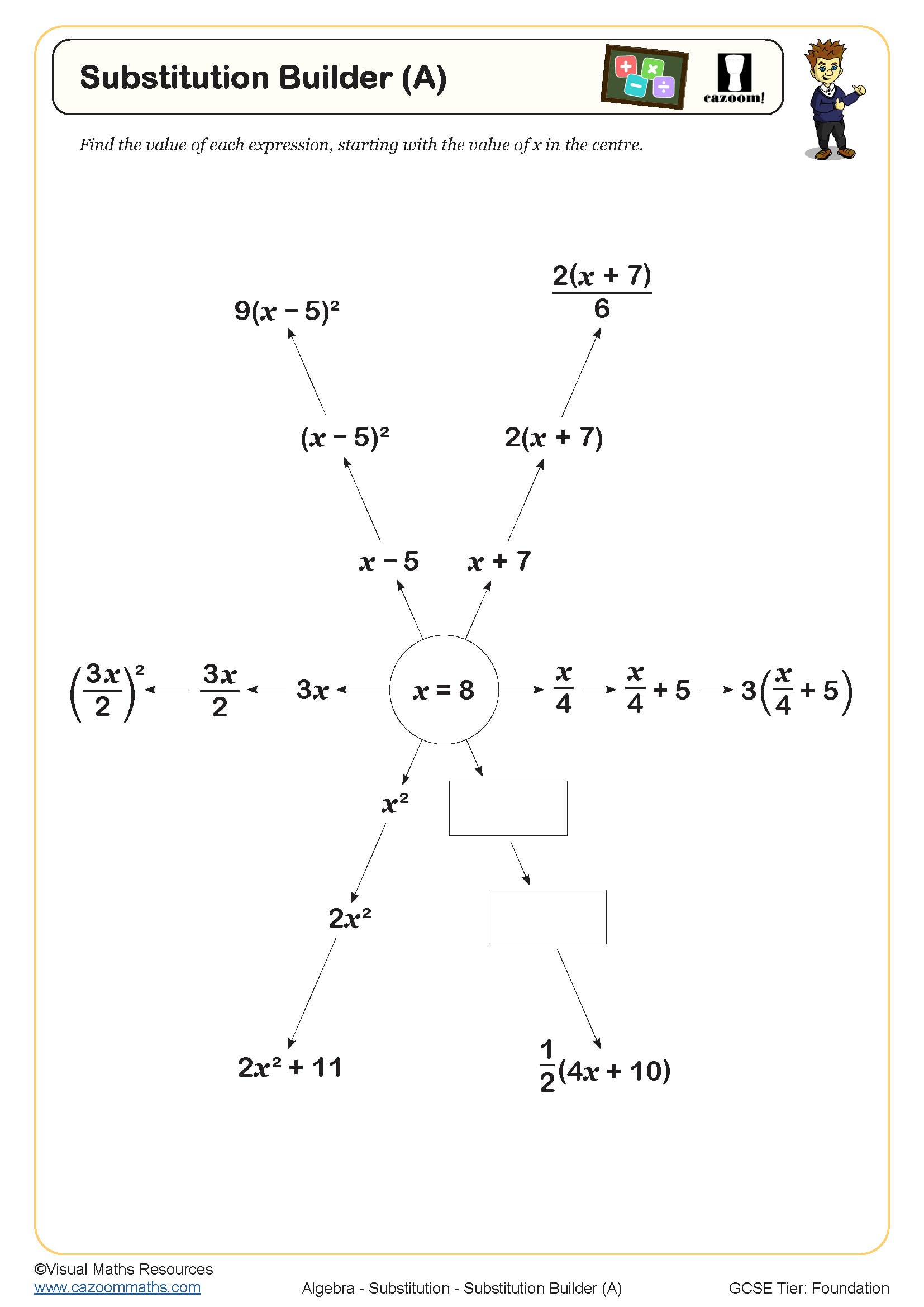
Substituting into Formulae (A) Word Problems
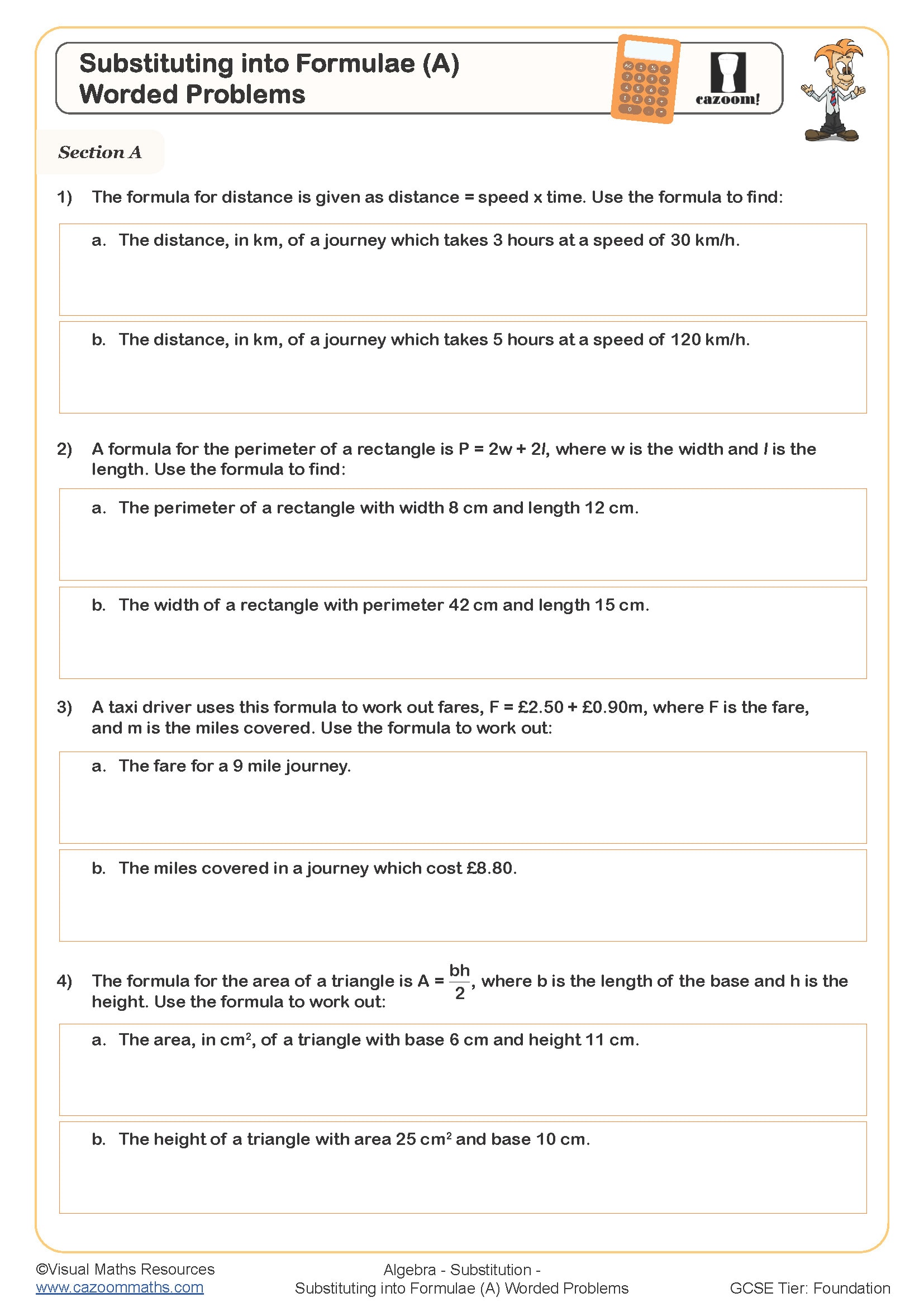
Substituting into Quadratic Expressions
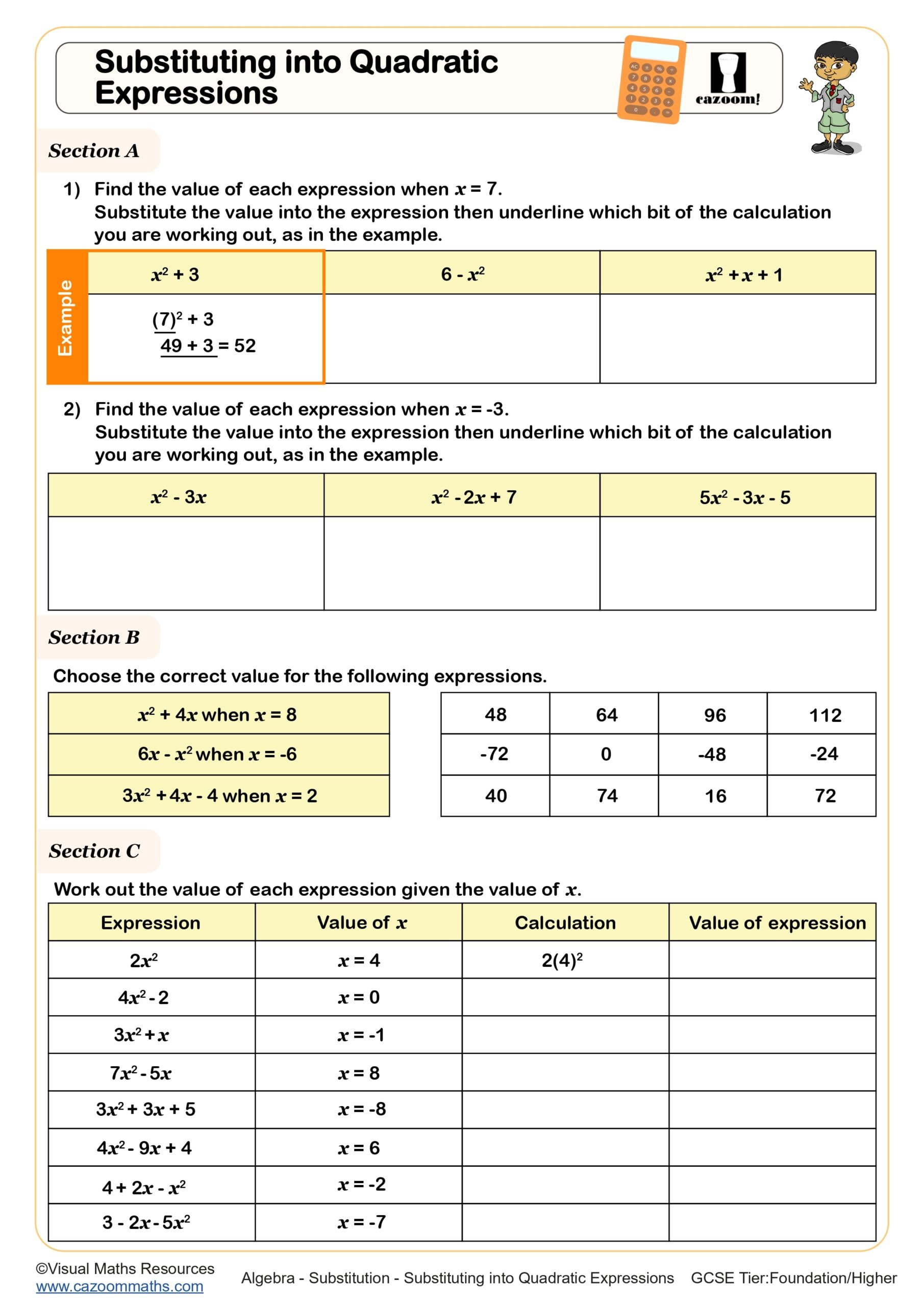
Substitution - Using Algebra Tiles
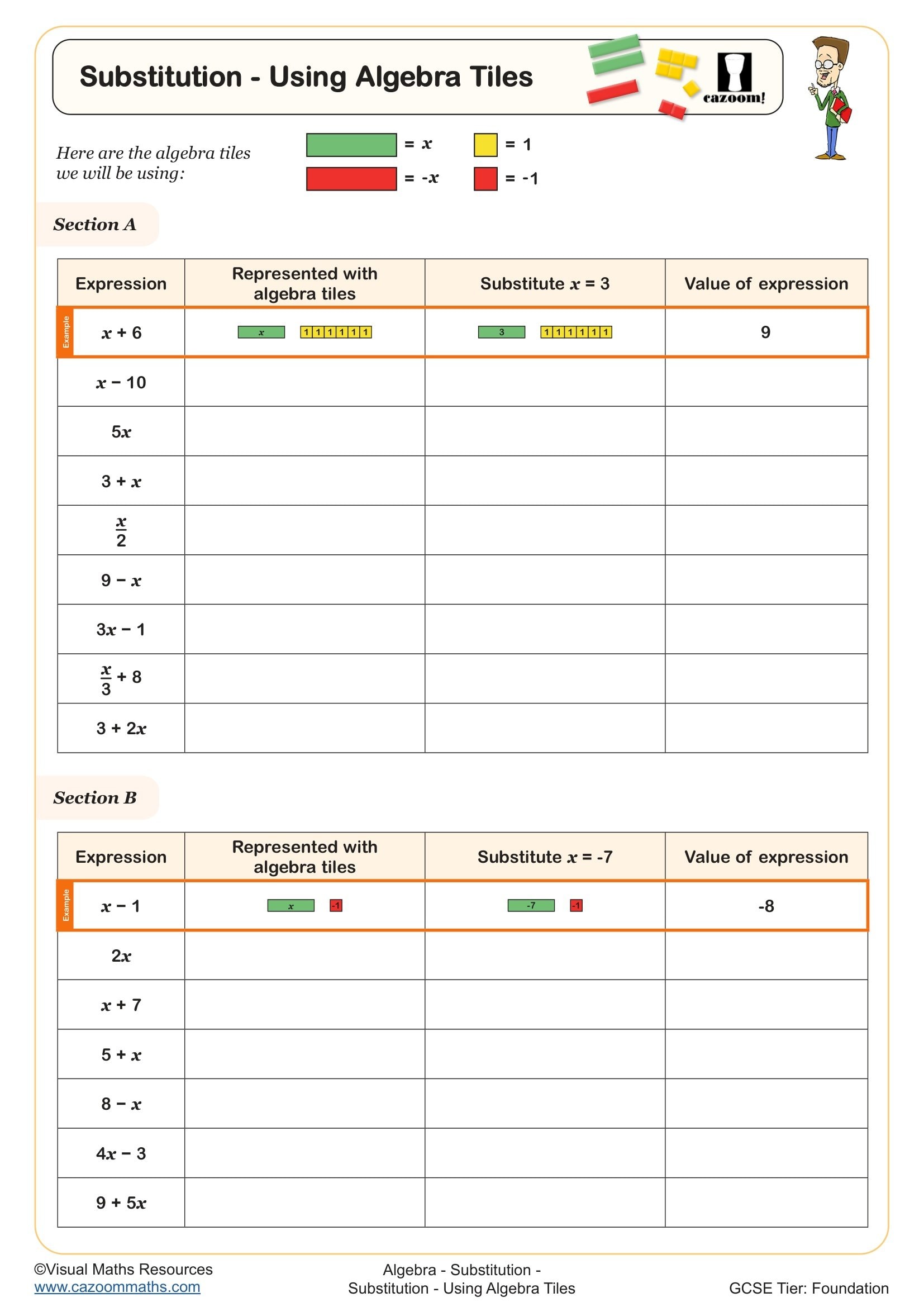
Substitution Builder (A)
Substitution Builder (B)
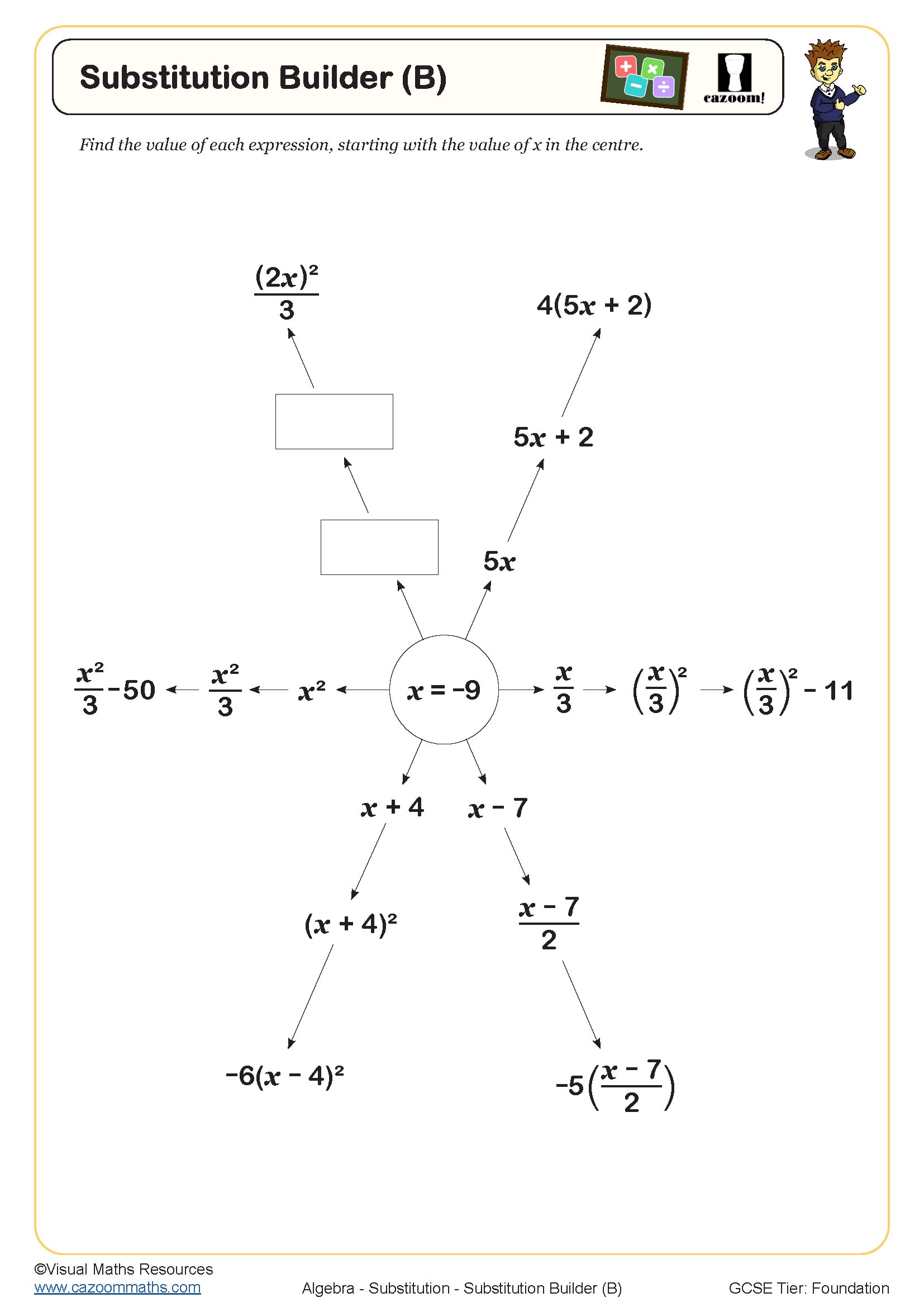
Substitution Builder (C)
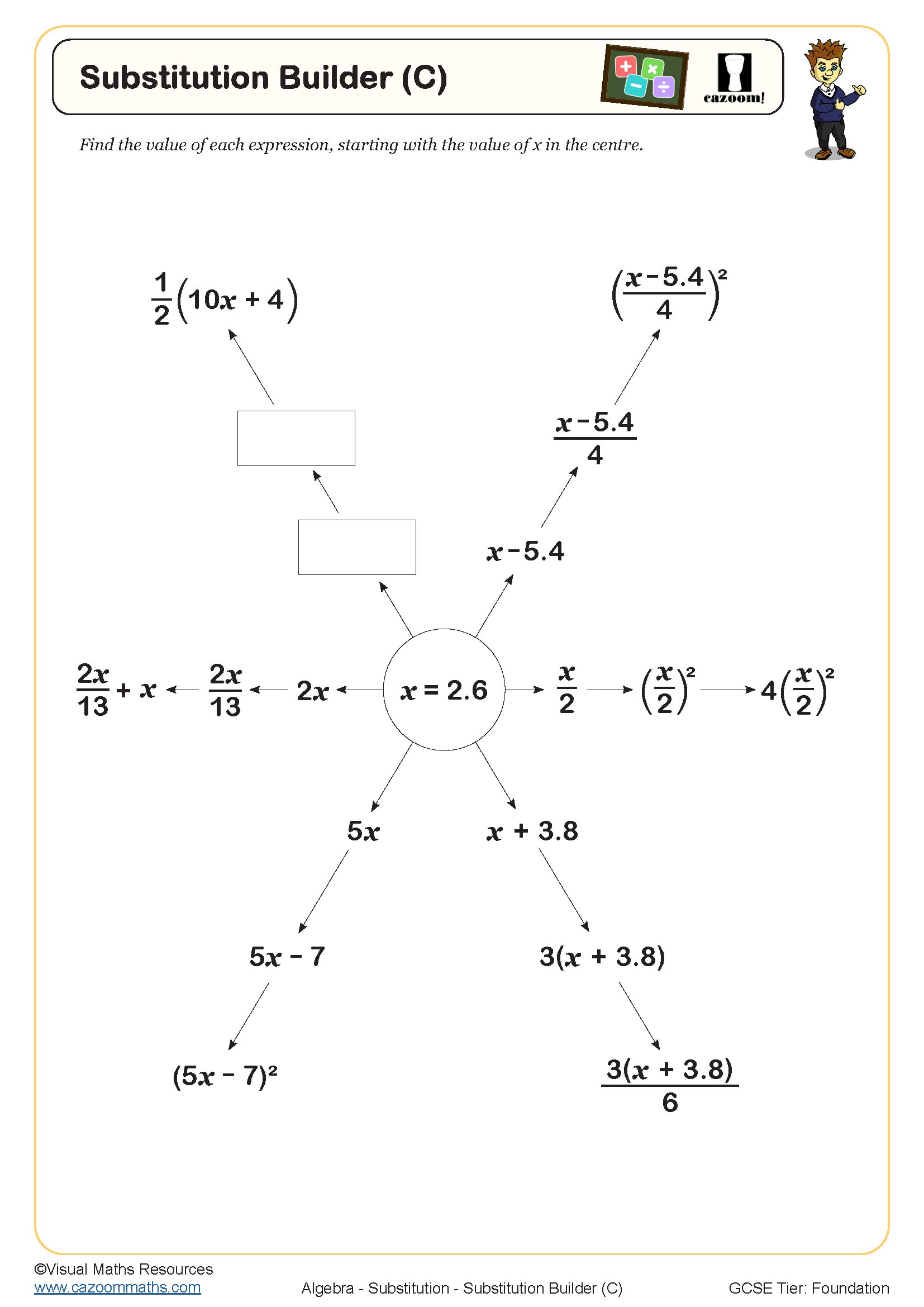
Substitution Magic Squares
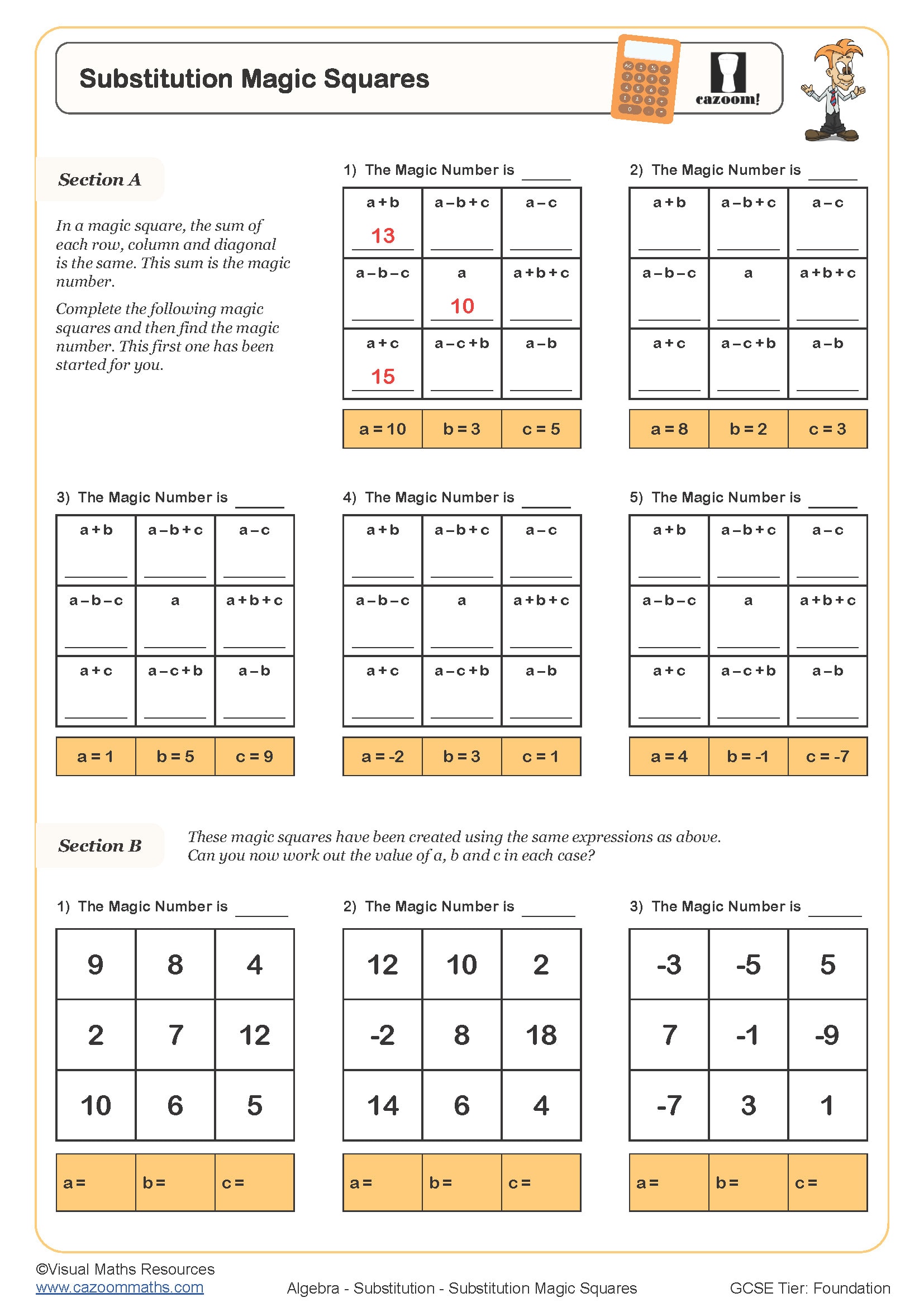
Writing Formulae
All worksheets are created by the team of experienced teachers at Cazoom Maths.
What makes an effective substitution worksheet for Year 8 students?
An effective algebra substitution worksheet Year 8 level should progress systematically from basic single-variable substitutions to more complex expressions involving multiple variables and operations. The National Curriculum expects Year 8 students to confidently substitute positive and negative integers, decimals, and fractions into algebraic expressions, building towards GCSE requirements.
Teachers find that worksheets work best when they include a mix of question types: expressions requiring careful attention to brackets, problems involving indices, and real-world contexts like formulae for area or distance. Students frequently make sign errors when substituting negative values, so effective worksheets provide plenty of practise with expressions like 3a - 2b where variables take negative values.
Which year groups benefit most from algebraic substitution worksheets?
While substitution formally appears in the Year 8 curriculum, many teachers introduce basic concepts in Year 7 to bridge numerical work with early algebraic thinking. Year 8 represents the core learning phase where students master substituting integers, decimals, and simple fractions into expressions with confidence.
Year 9 students often revisit substitution when tackling more complex algebraic manipulation and when working with formulae in geometry and science contexts. Teachers notice that students who struggle with substitution in Year 8 frequently encounter difficulties with equation solving and function work later, making solid foundations crucial for GCSE preparation.
How should students approach substitution involving negative values?
Substituting negative values causes the most confusion for students, particularly when expressions involve powers or products. Teachers recommend that students write negative values in brackets when substituting, so x = -2 becomes (-2) to avoid sign errors in calculations like x² or 3x.
Many students incorrectly calculate (-3)² as -9 rather than 9, while others struggle with expressions like -x² when x is negative. Worksheets that explicitly practise these scenarios, alongside clear worked examples showing bracket usage, help students develop reliable methods for handling negative substitutions across all algebraic contexts.
How can teachers use substitution worksheets most effectively in lessons?
Substitution worksheets work best when teachers model the first few examples explicitly, emphasising the importance of writing substituted values in brackets and following the correct order of operations. Many teachers find success in using mini-whiteboards for initial practise before moving to worksheet exercises, allowing immediate feedback and error correction.
The included answer sheets prove invaluable for peer marking activities and self-assessment. Teachers often structure lessons with guided practise using easier examples, followed by independent work on more challenging multi-step problems. This approach builds confidence while ensuring students can tackle the substitution skills required for GCSE algebra topics like solving equations and working with formulae.