Year 9 Sequences Worksheets
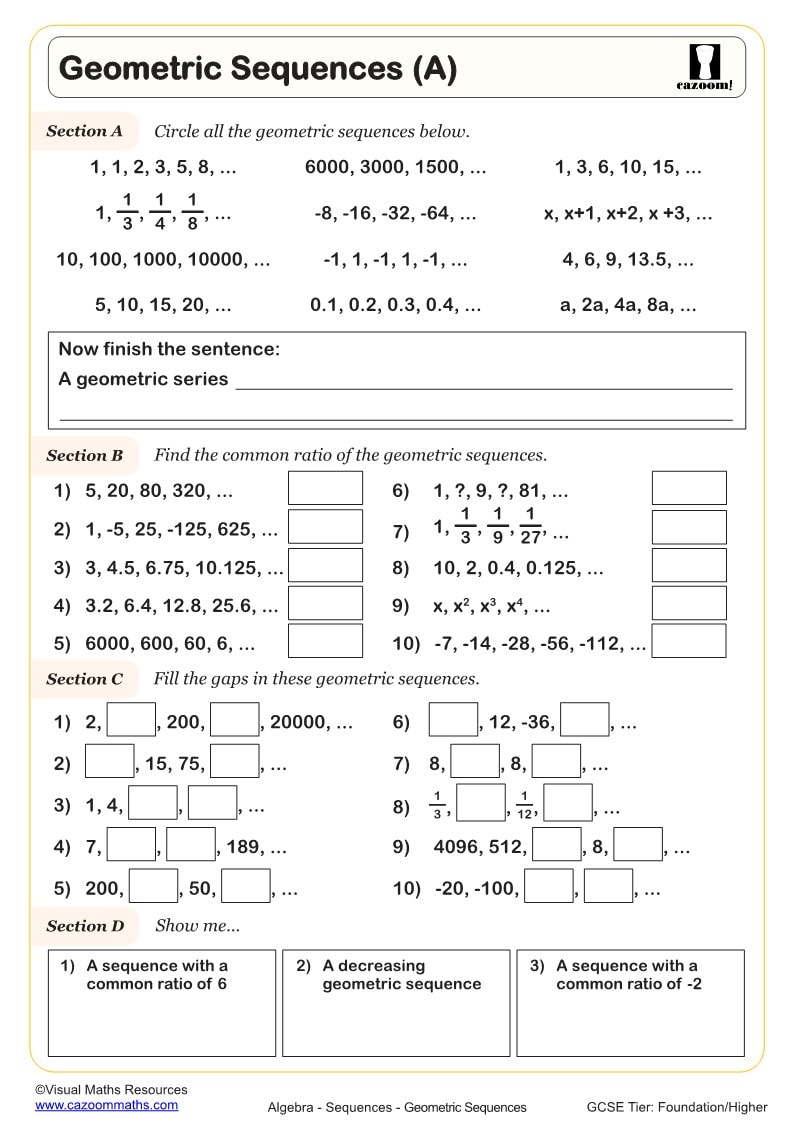
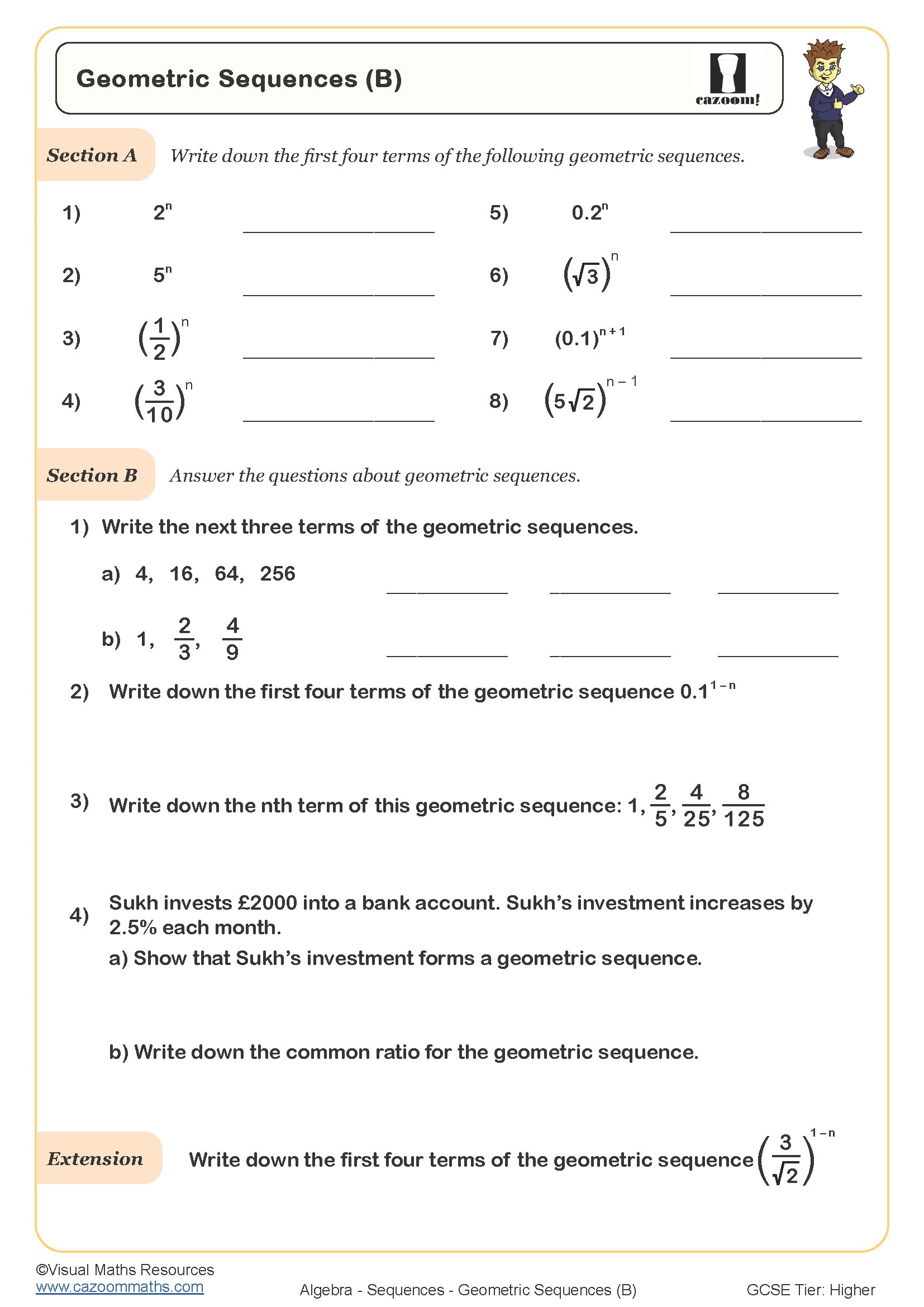
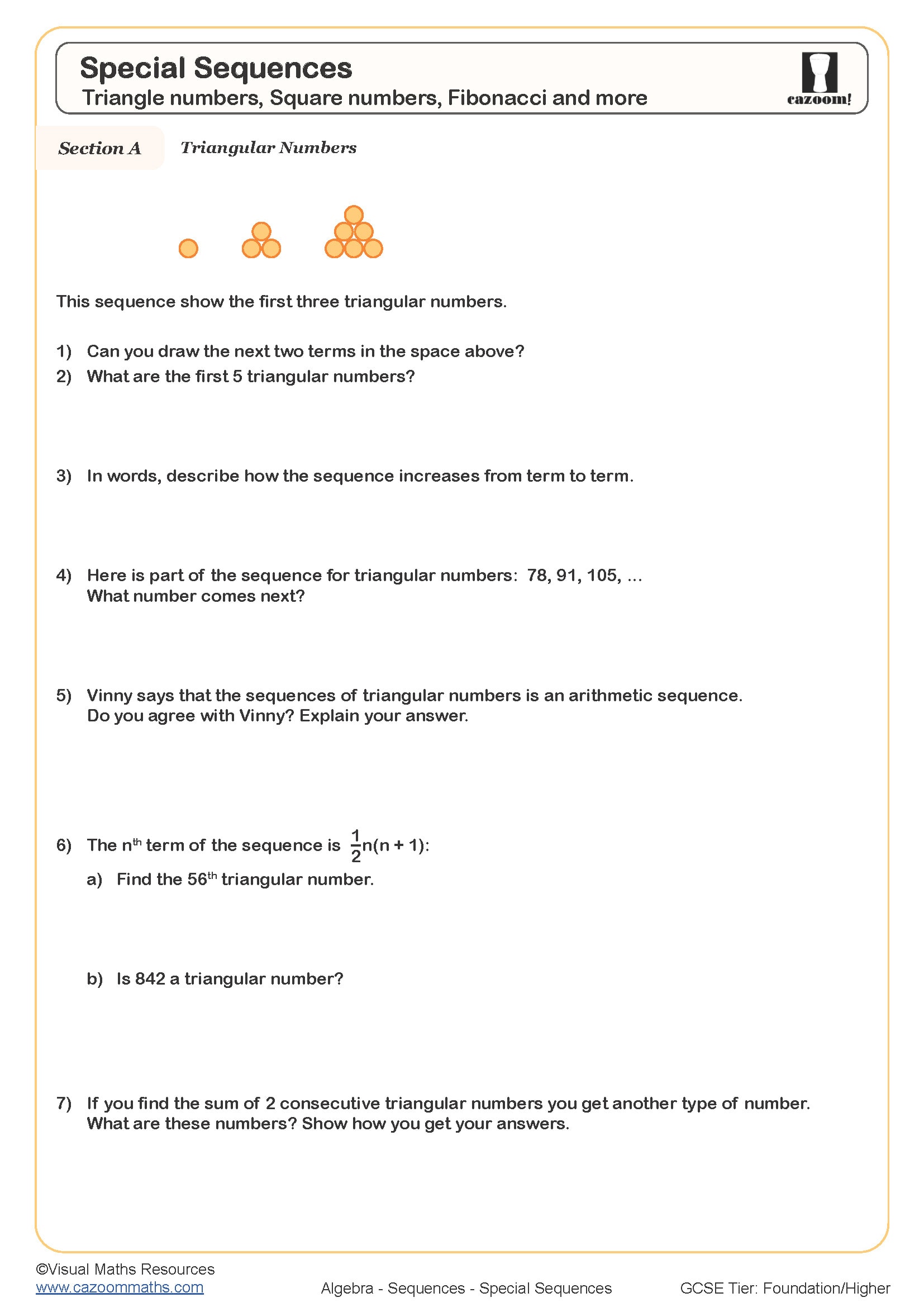
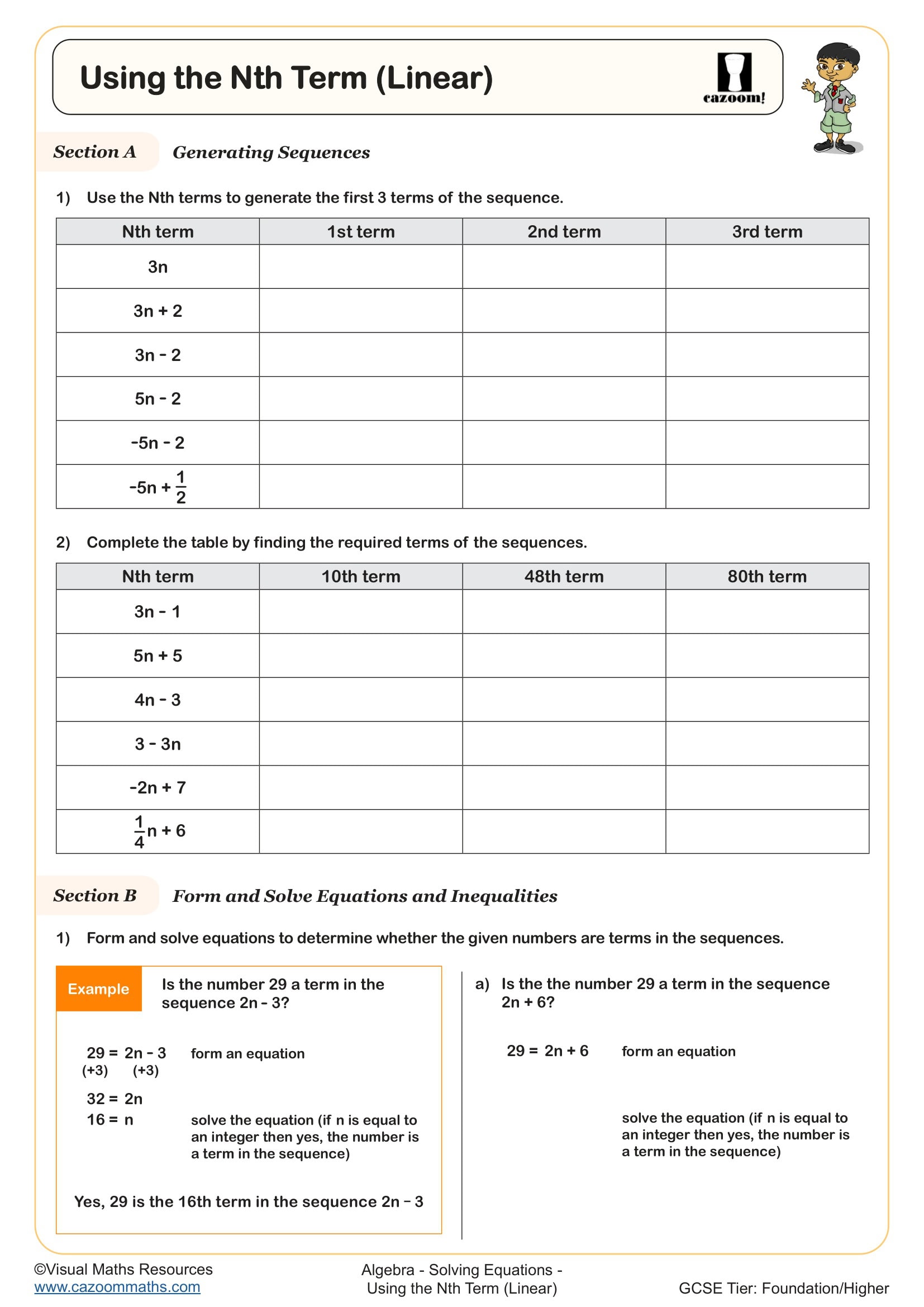
All worksheets are created by the team of experienced teachers at Cazoom Maths.
What makes a good sequences worksheet with answers pdf Year 9 level?
Effective sequences worksheets for year 9 students should progress logically from simple arithmetic sequences to more complex quadratic patterns, with clear worked examples and varied question types. The worksheets need to address Key Stage 3 curriculum expectations while building towards GCSE requirements, including finding nth terms and identifying sequence types.
Teachers find that students benefit most from worksheets that explicitly show the difference between arithmetic, geometric, and quadratic sequences. Many students initially try to apply arithmetic sequence rules to all patterns, leading to frustration when working with sequences like 1, 4, 9, 16 where the common difference changes. Quality answer sheets should include method steps, not just final answers.
Are these sequences worksheets suitable for all year 9 ability levels?
These year 9 worksheets cater to mixed ability classes through differentiated question sets that allow teachers to assign appropriate challenges. Lower ability students can focus on simple arithmetic sequences and term-to-term rules, while higher achievers tackle quadratic sequences and more complex pattern recognition tasks.
Many teachers use these resources for intervention work, particularly with students who missed foundational sequence work in earlier years. The step-by-step progression helps identify exactly where understanding breaks down, whether in basic pattern spotting or more advanced nth term formula manipulation. This diagnostic approach proves invaluable for planning targeted support.
How do these worksheets help students master quadratic sequences?
Students learn to identify quadratic sequences by calculating first and second differences, with worksheets providing systematic practice in this crucial skill. The exercises guide students through the process of recognising when first differences aren't constant, prompting them to look for patterns in second differences instead.
Teachers notice that many students initially panic when they can't find a simple arithmetic pattern. These special sequences worksheets break down the method into manageable steps, showing students how quadratic sequences like 2, 5, 10, 17 have constant second differences of 2. This structured approach builds confidence and reduces the anxiety often associated with more complex sequence types.
How can teachers use these year 9 maths worksheets with answers most effectively?
These year 9 maths worksheets with answers work best when teachers model the first few questions before allowing independent practice, particularly for quadratic sequences where the method isn't immediately obvious. The answer sheets enable peer marking activities that help students identify their own misconceptions while learning from others' approaches.
Many teachers find success using these worksheets for retrieval practice at lesson starts, revisiting sequence types covered in previous weeks. The variety within year 9 worksheets allows teachers to spiral learning effectively, mixing sequence types within single lessons to prevent students from falling into procedural patterns without understanding the underlying mathematics.