KS3 Area and Perimeter Worksheets
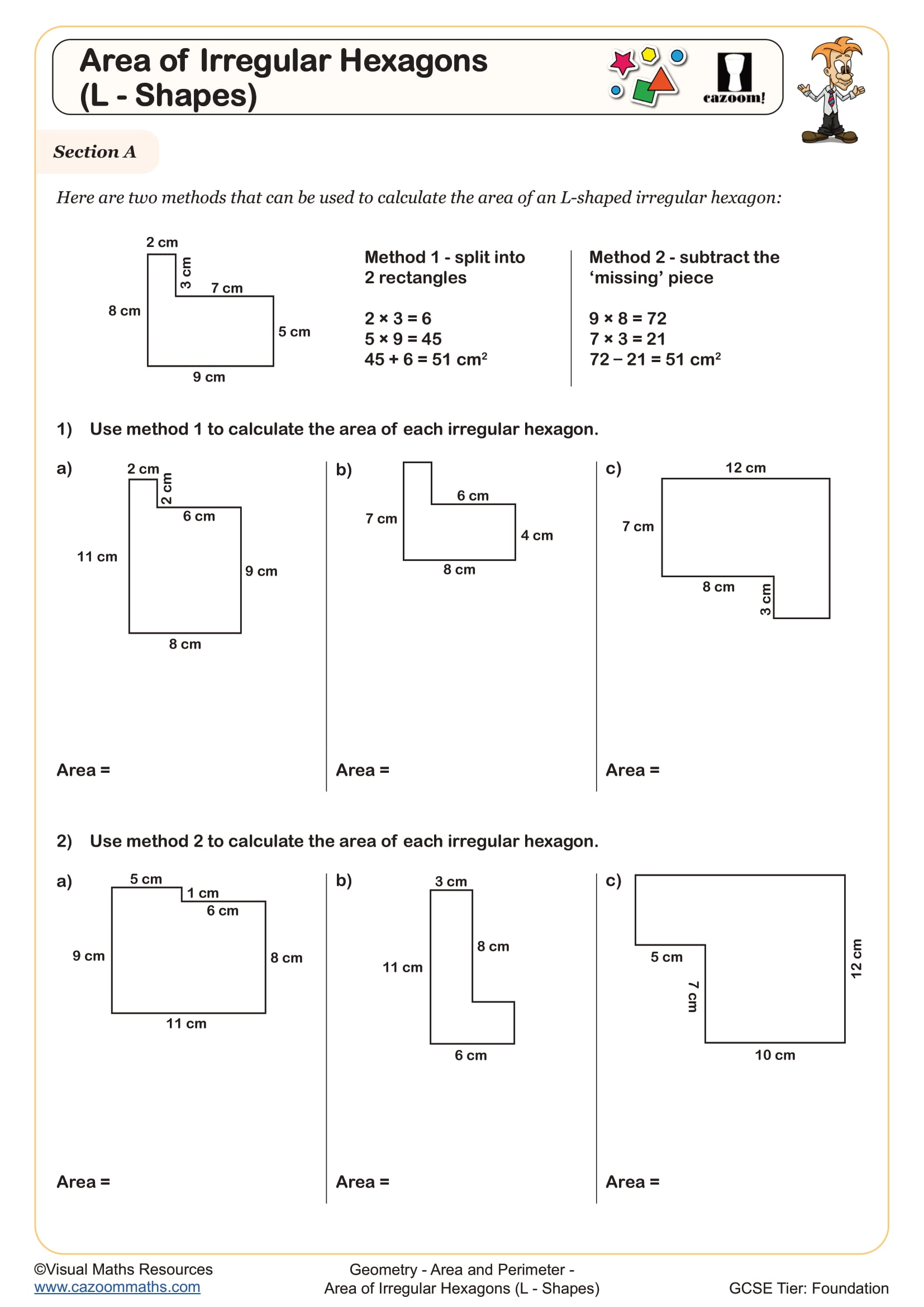
Area of Irregular Hexagons (L - Shapes)
Year groups: 7, 8
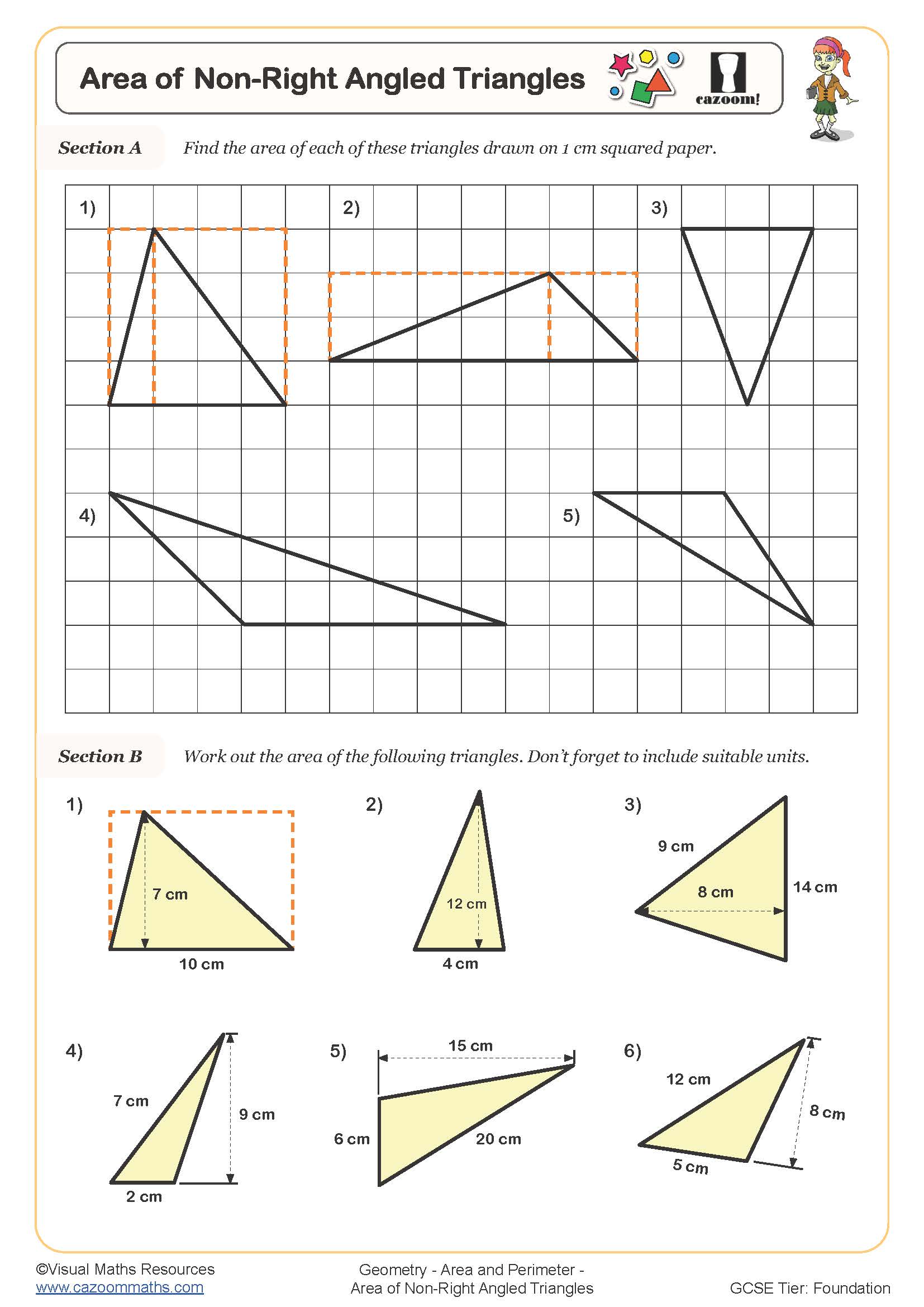
Area of Non-Right Angled Triangles
Year groups: 7, 8
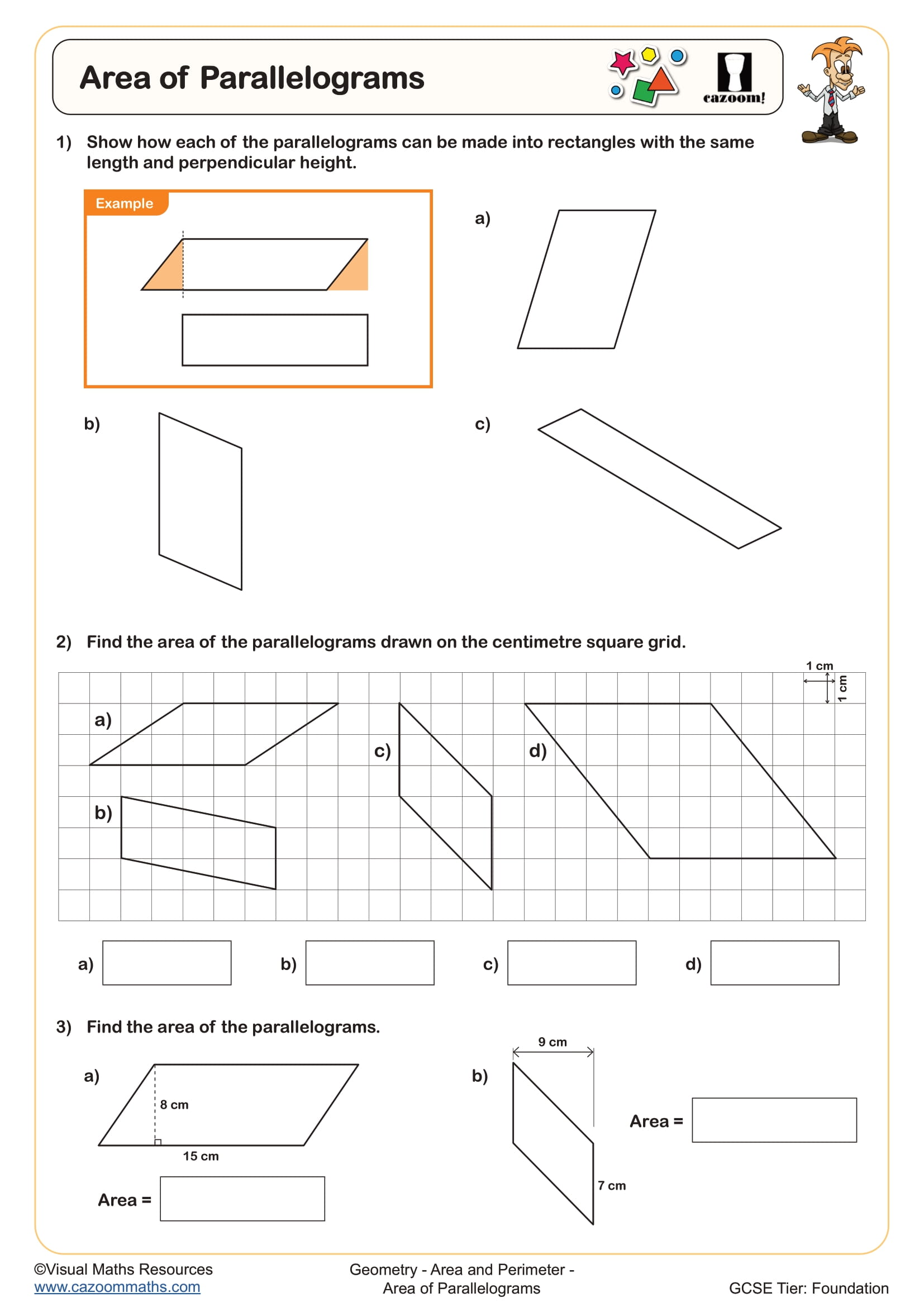
Area of Parallelograms
Year groups: 7, 8
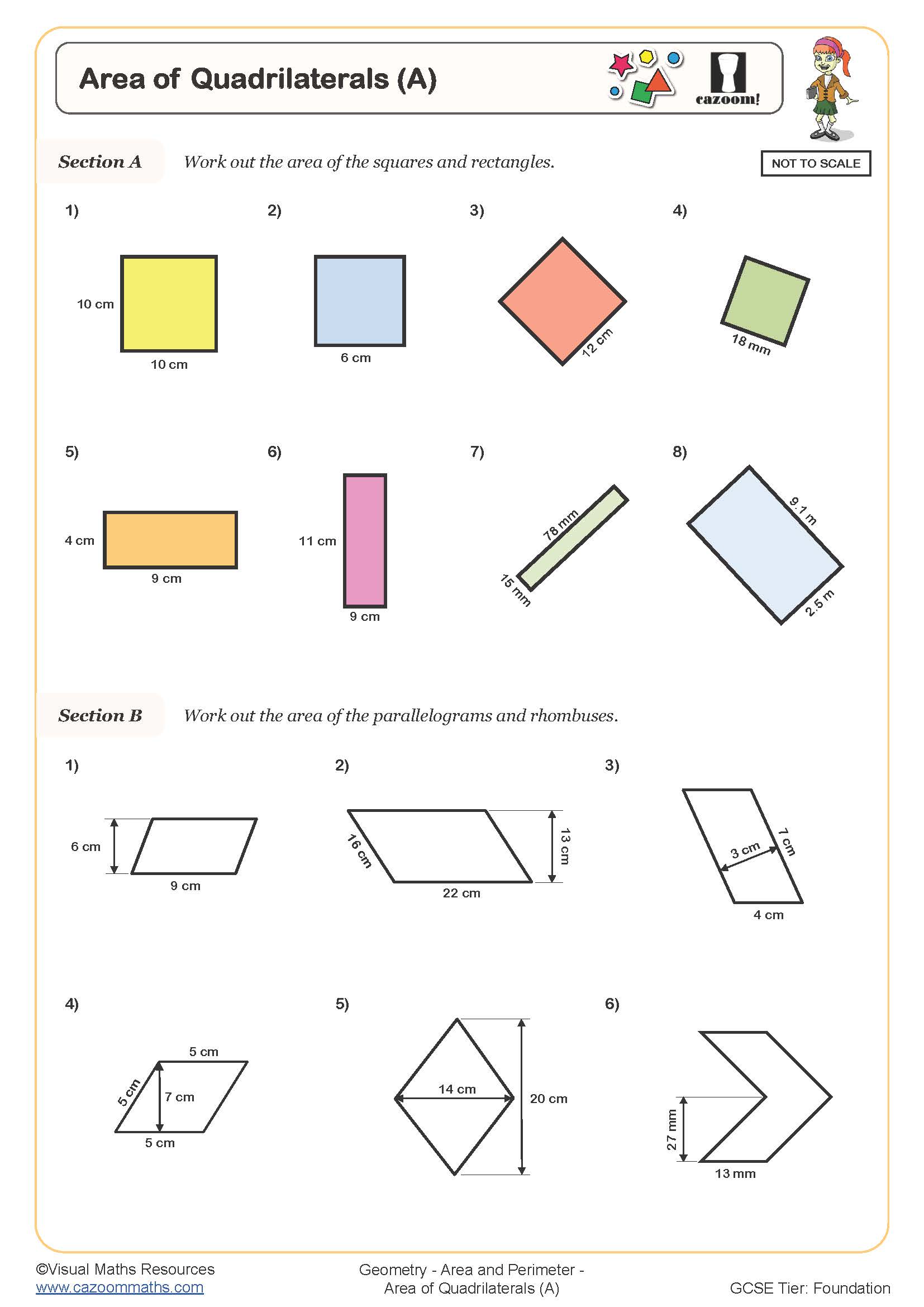
Area of Quadrilaterals (A)
Year groups: 7, 8
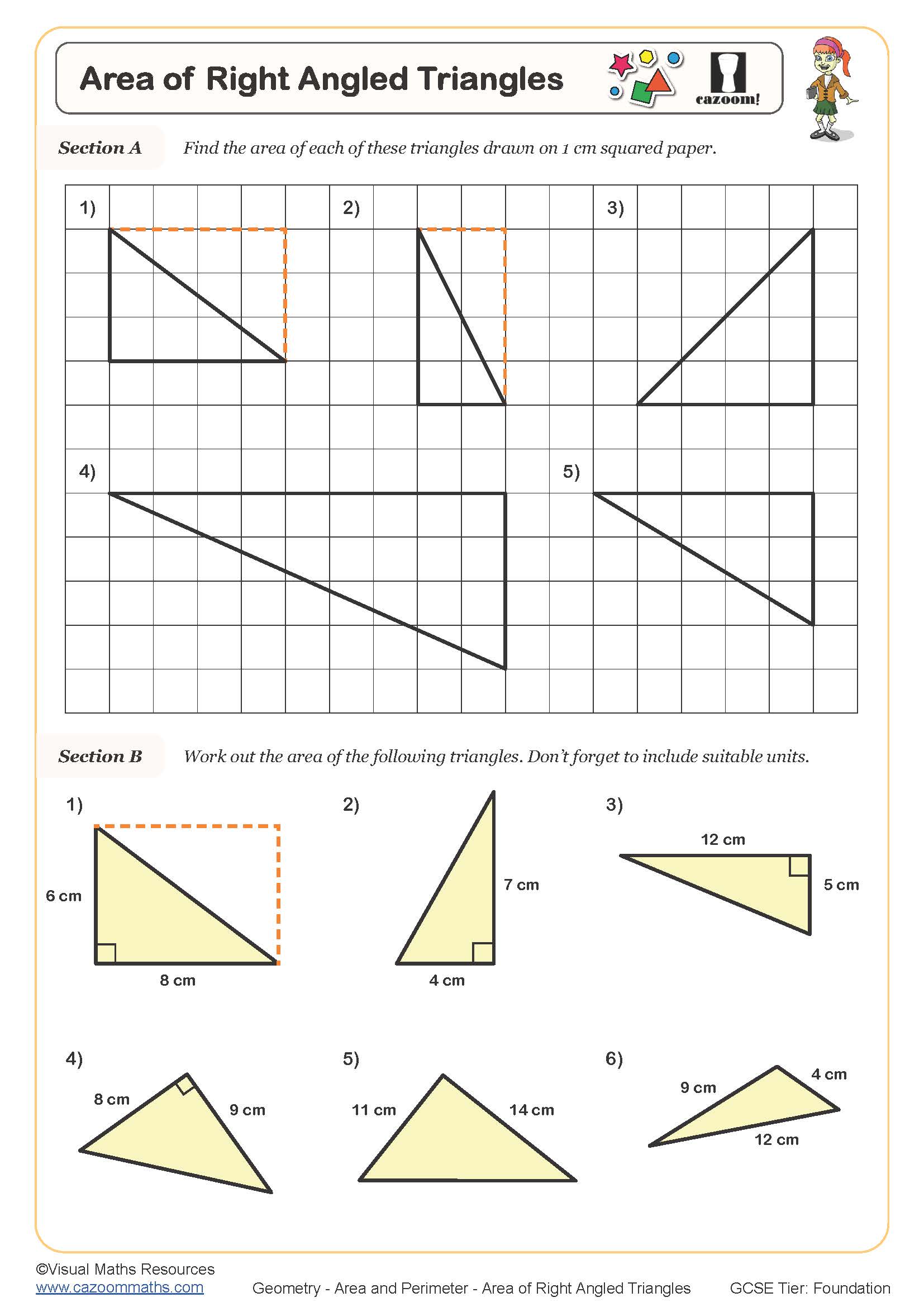
Area of Right Angled Triangles
Year groups: 7, 8
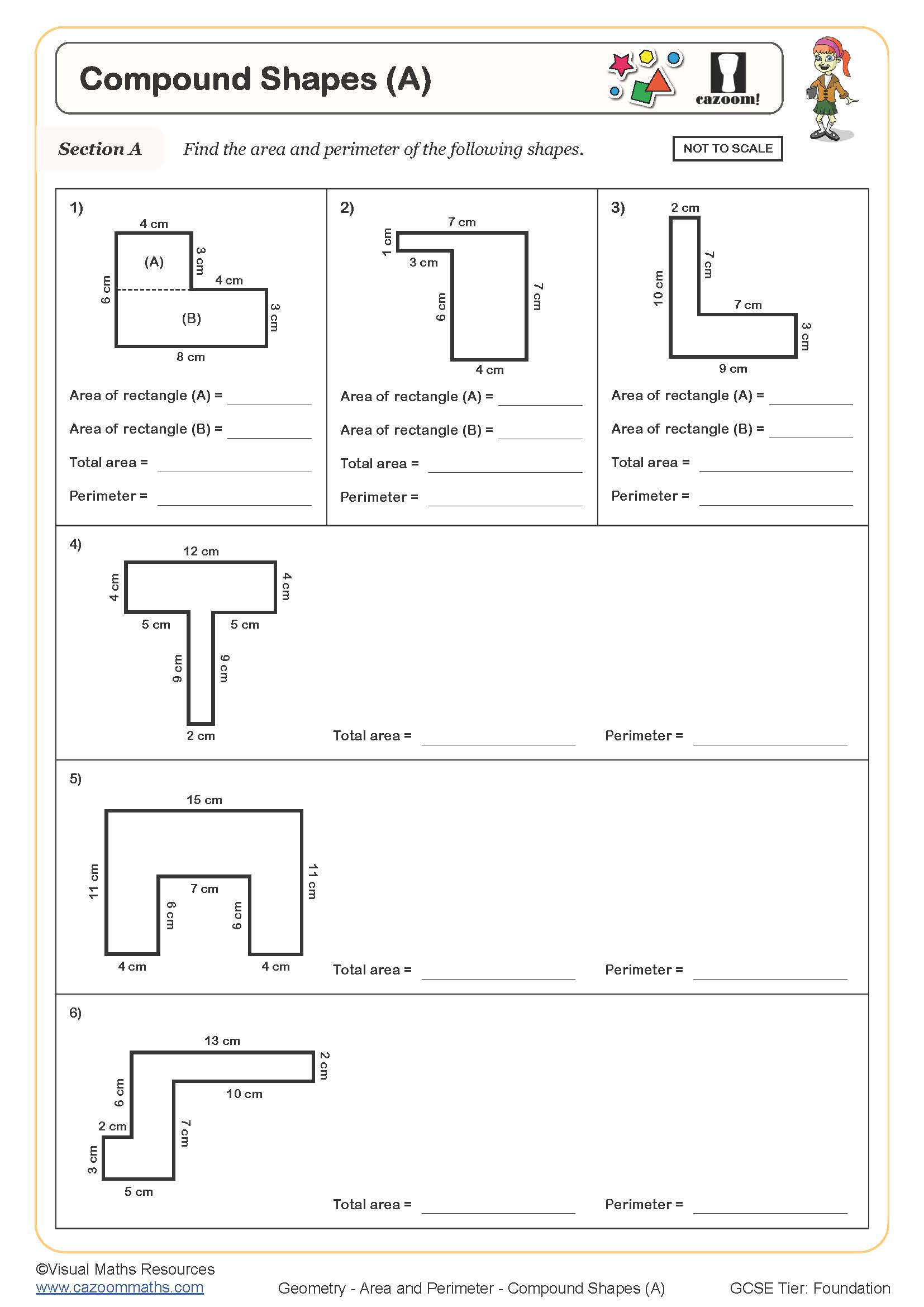
Compound Shapes (A)
Year groups: 7, 8
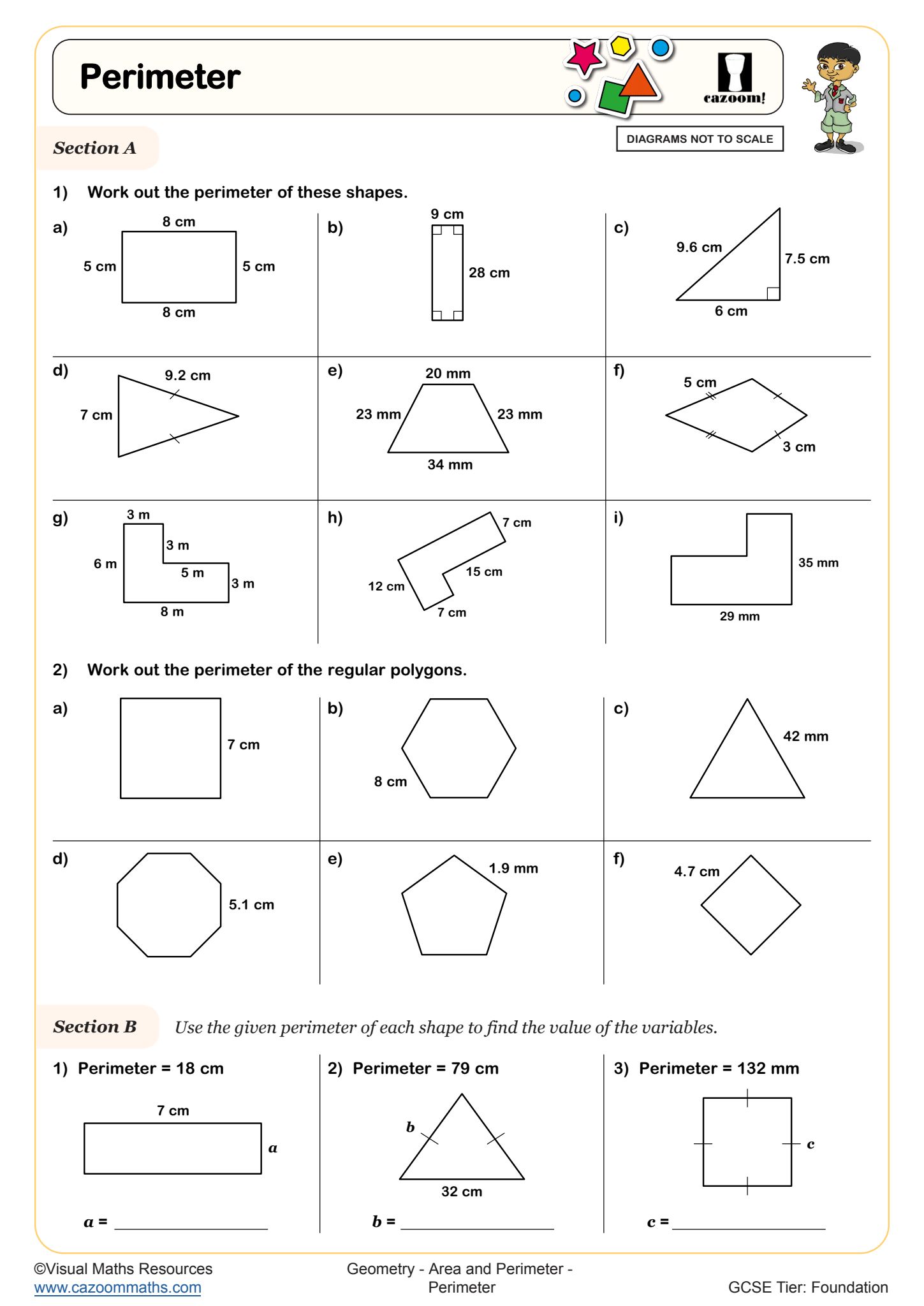
Perimeter
Year groups: 7, 8
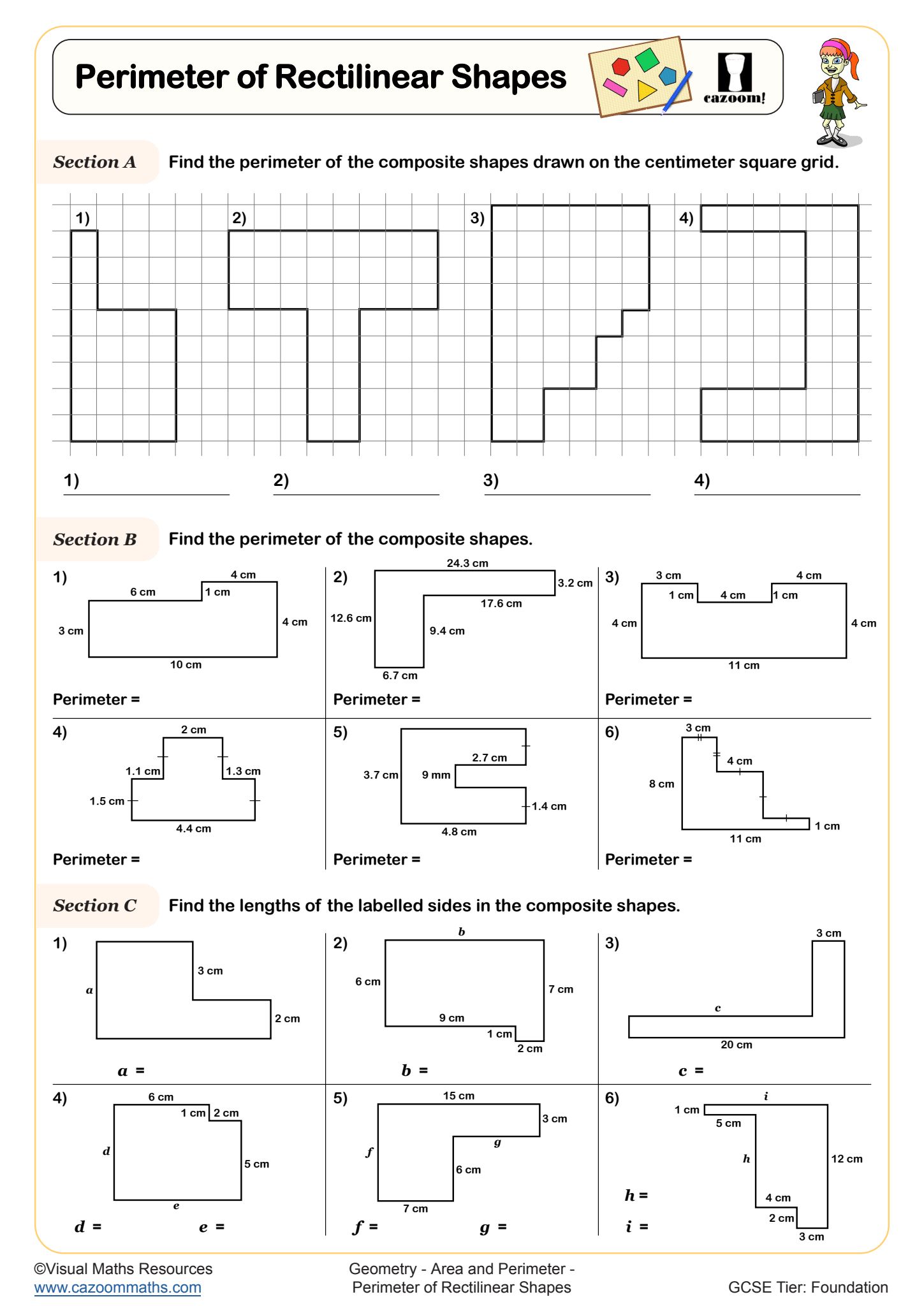
Perimeter of Rectilinear Shapes
Year groups: 7, 8
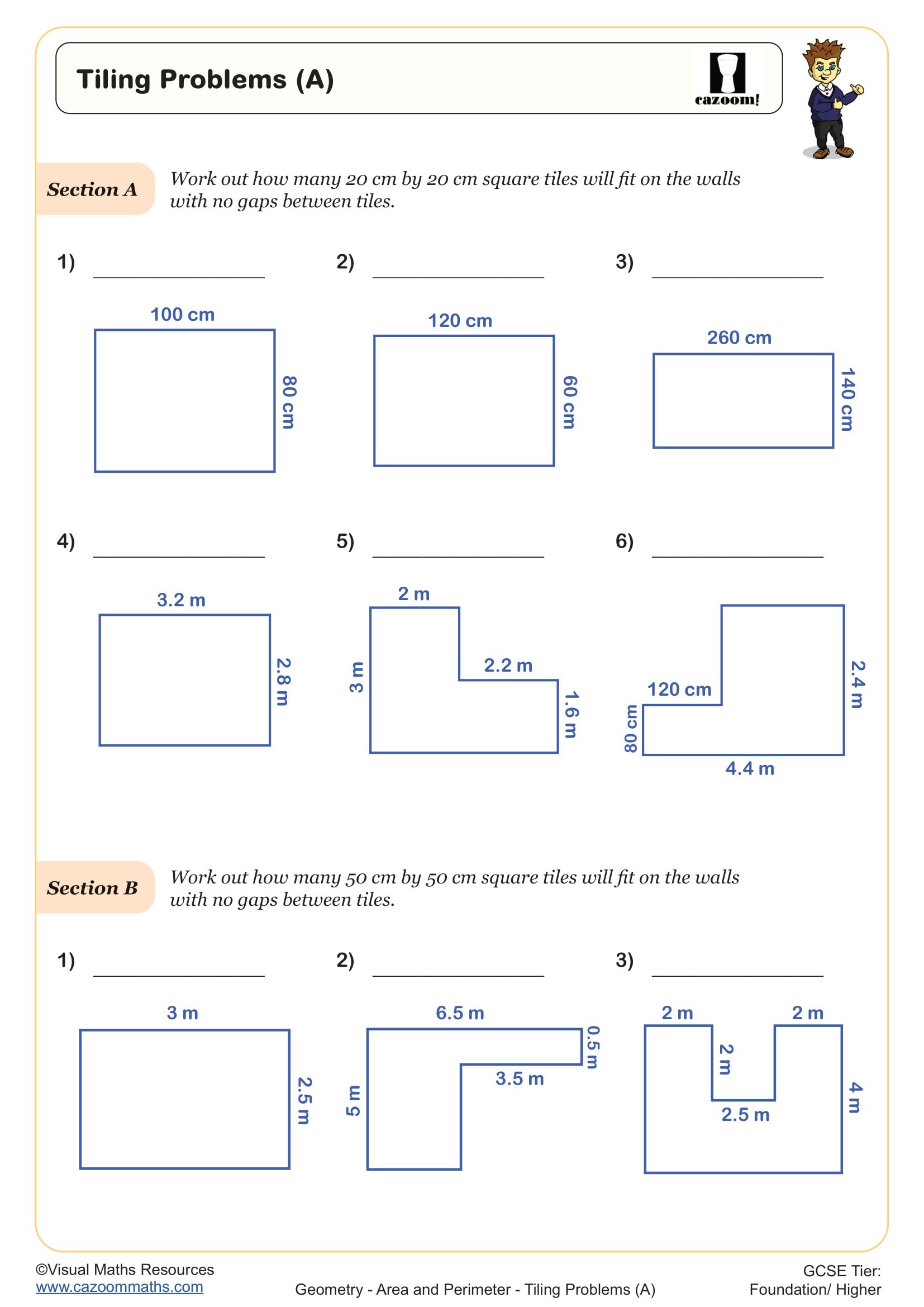
Tiling Problems (A)
Year groups: 7
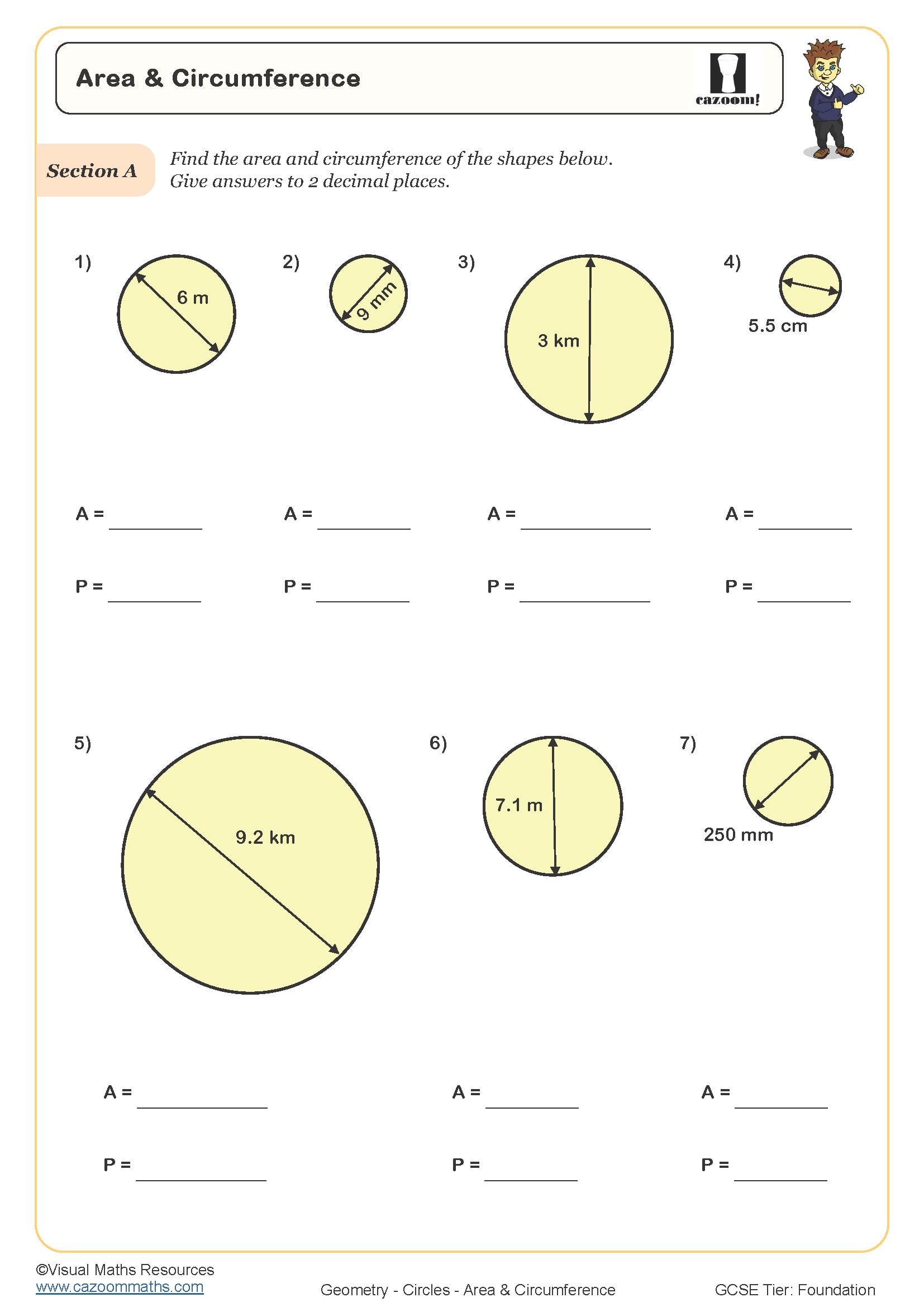
Area and Circumference
Year groups: 8, 9
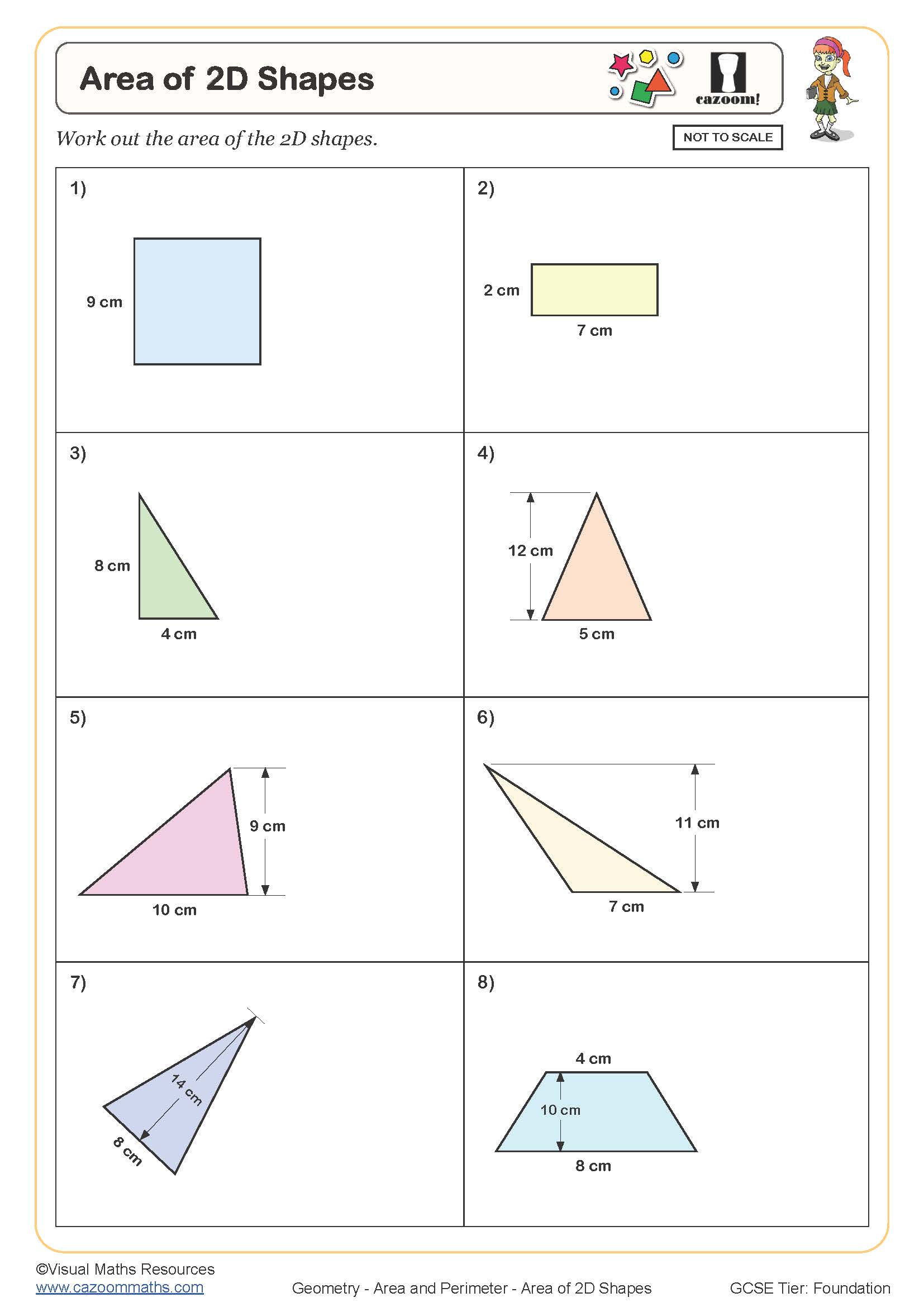
Area of 2D shapes
Year groups: 8, 9
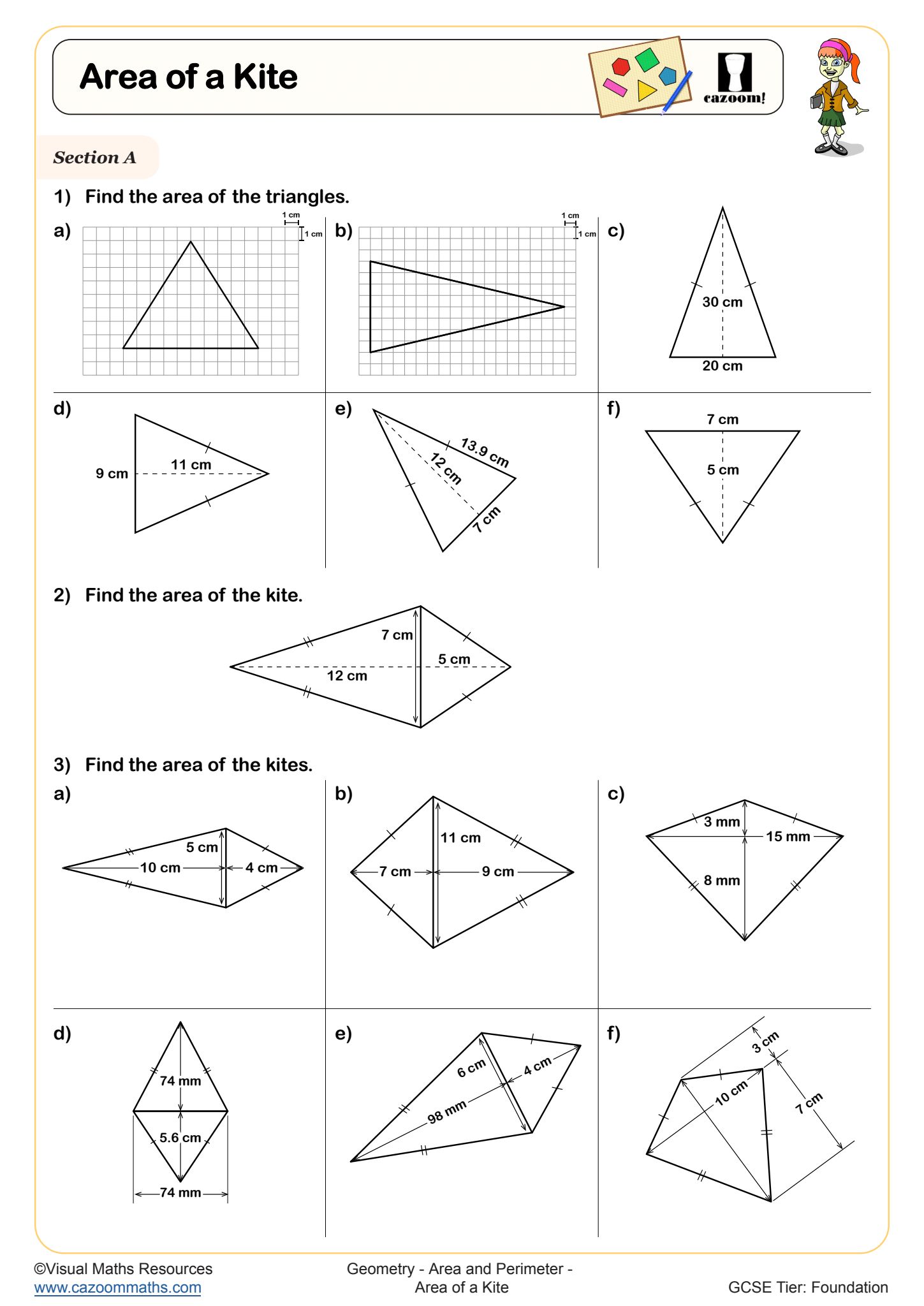
Area of a Kite
Year groups: 8, 9
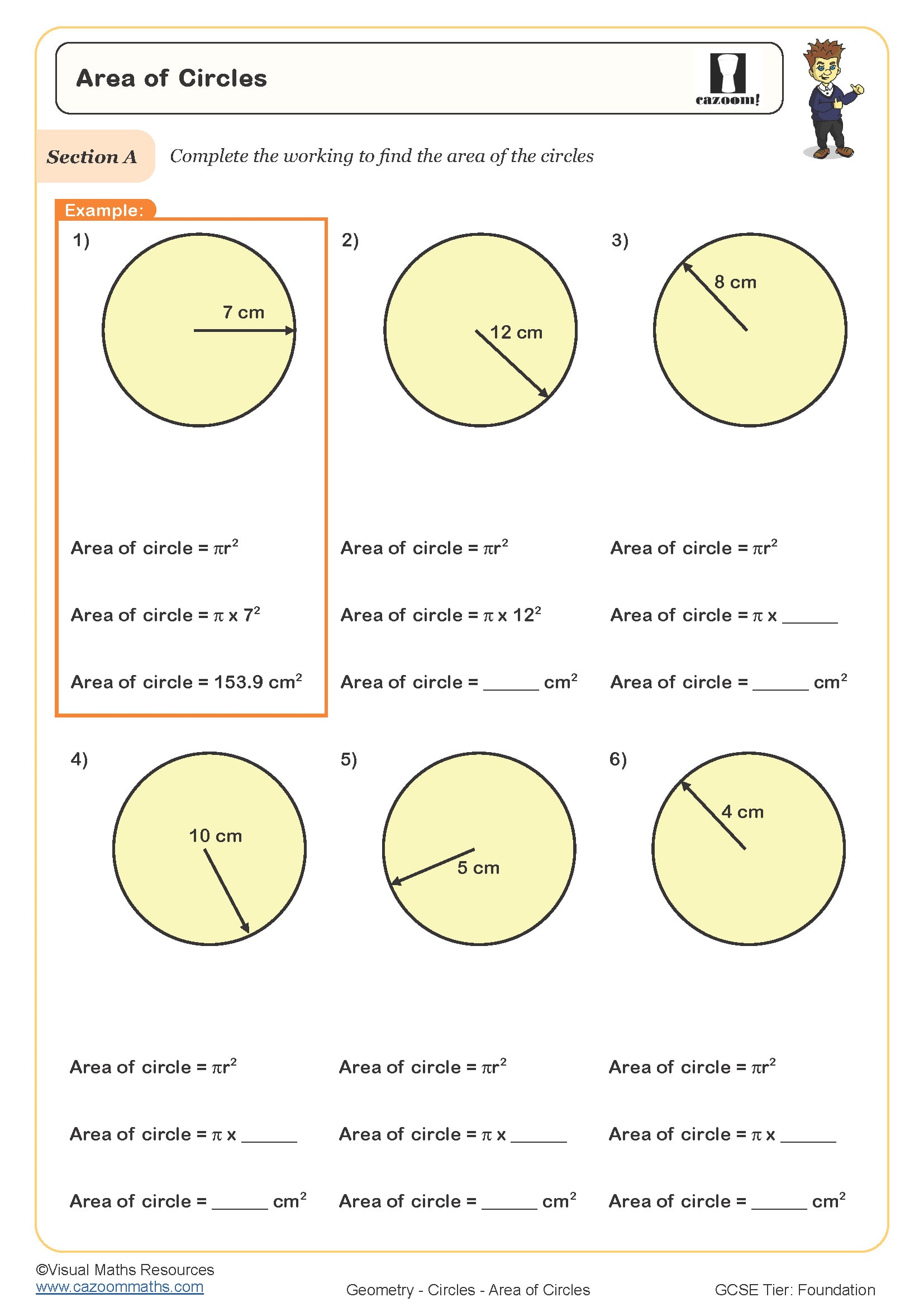
Area of Circles
Year groups: 8, 9
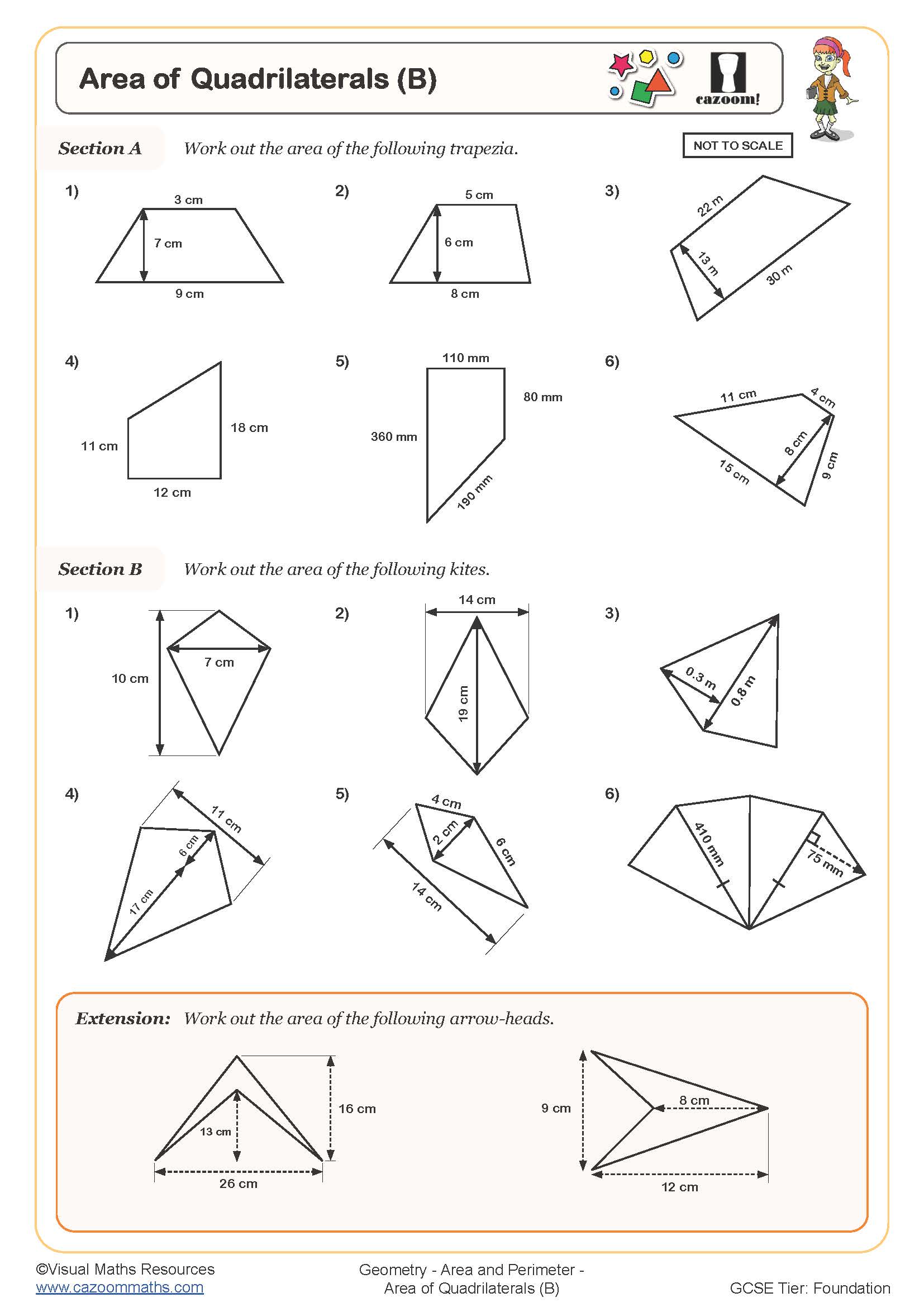
Area of Quadrilaterals (B)
Year groups: 8, 9
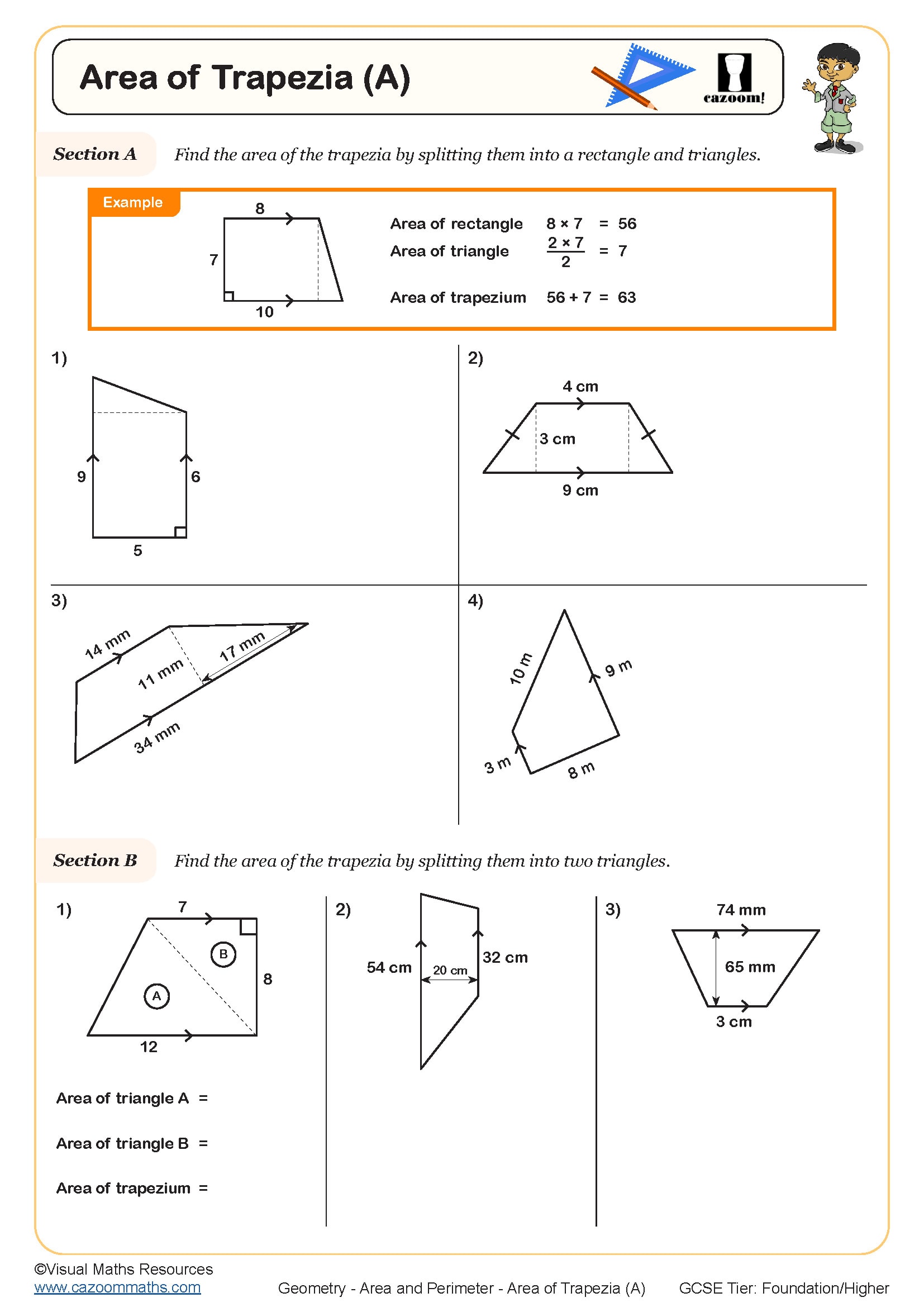
Area of Trapezia (A)
Year groups: 8, 9
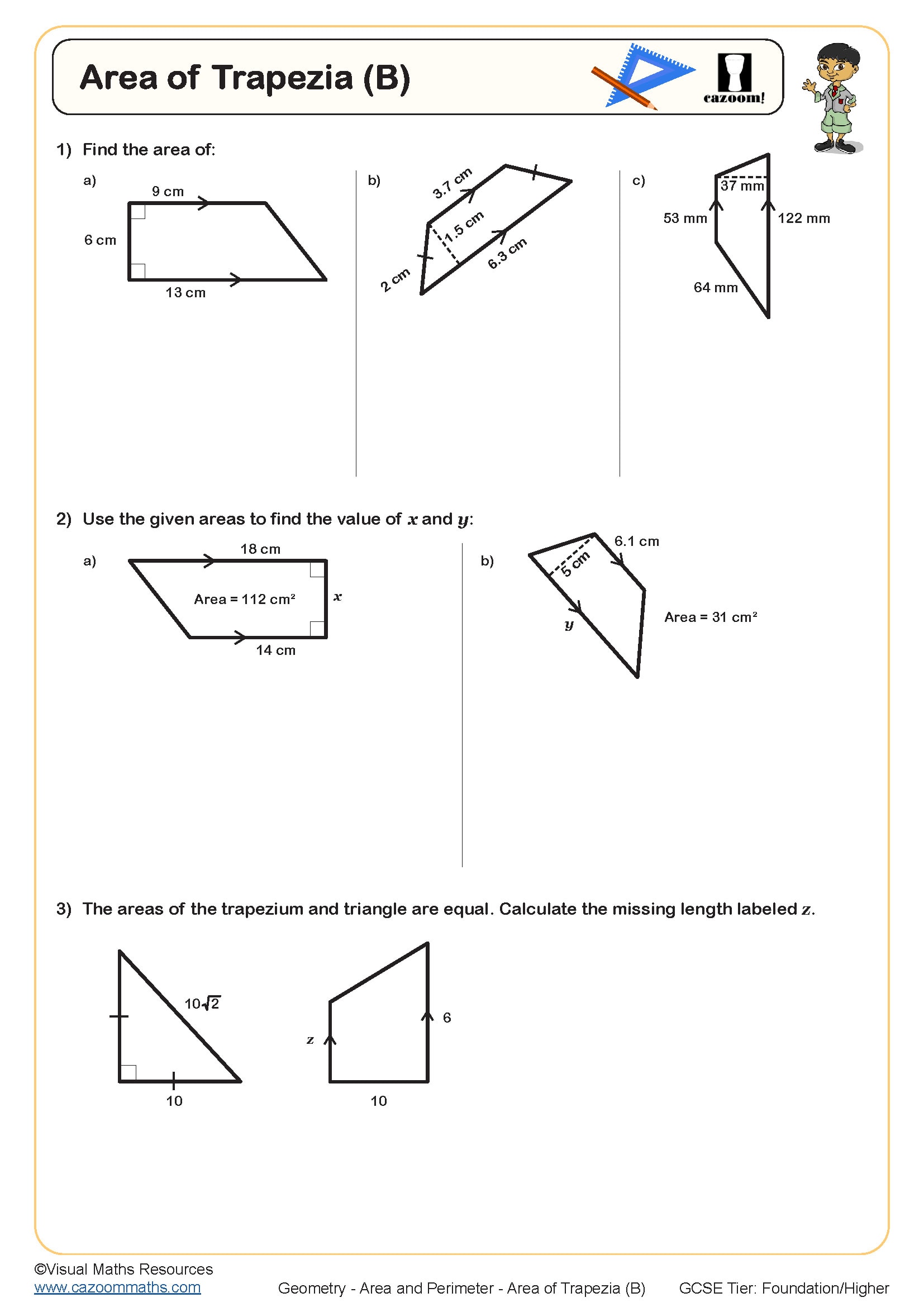
Area of Trapezia (B)
Year groups: 8, 9, 10
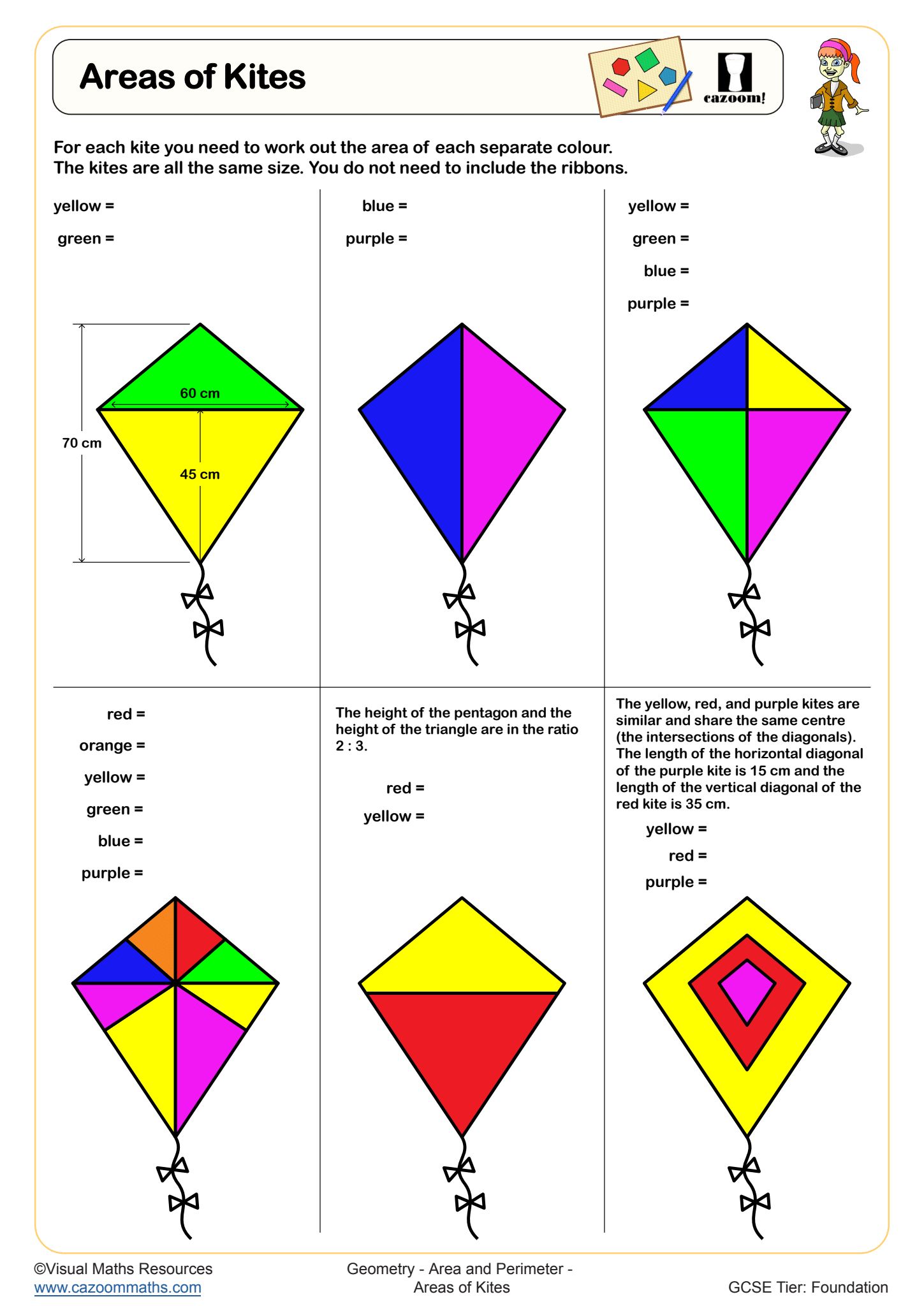
Areas of Kites
Year groups: 8, 9
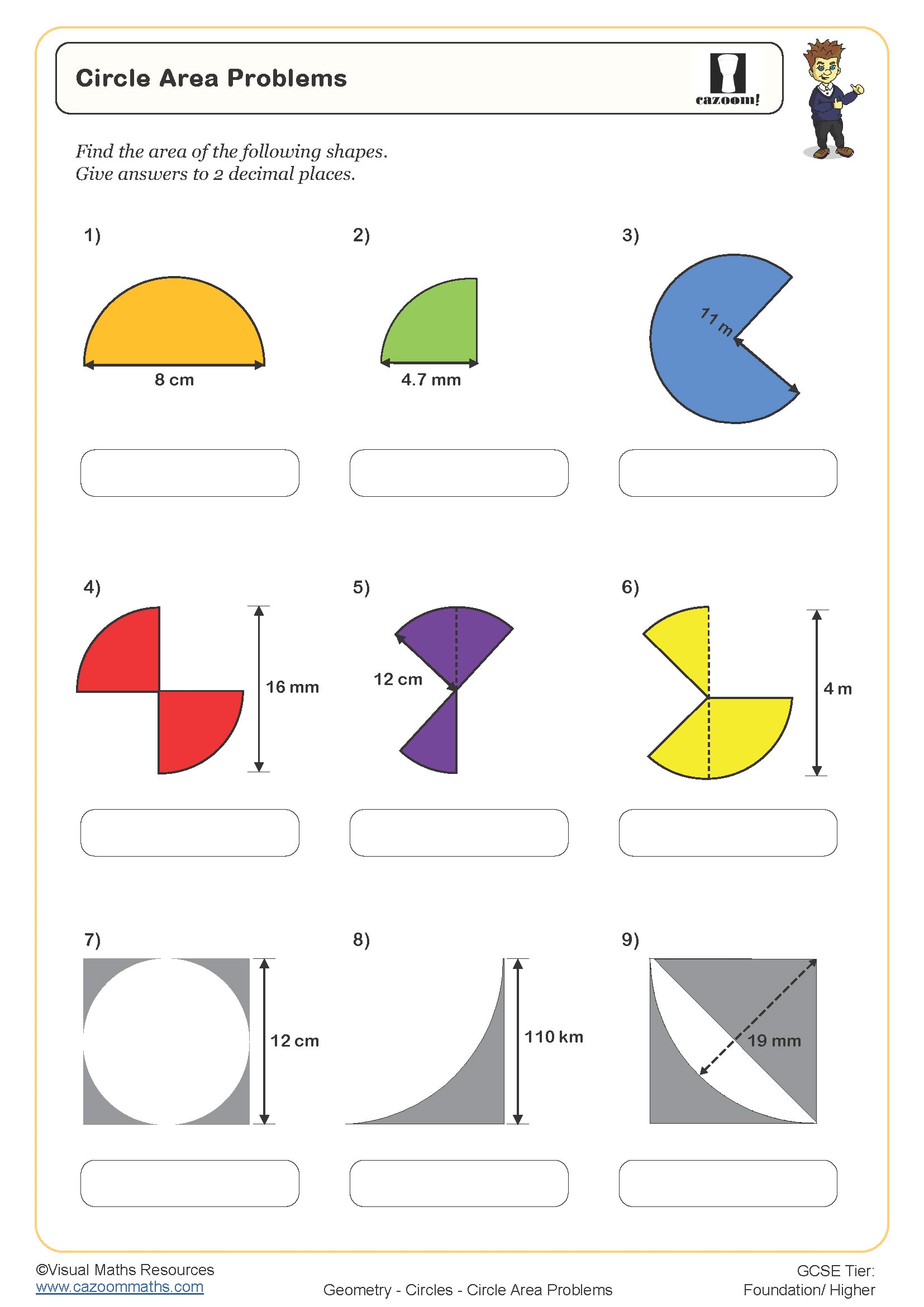
Circle Area Problems
Year groups: 8, 9
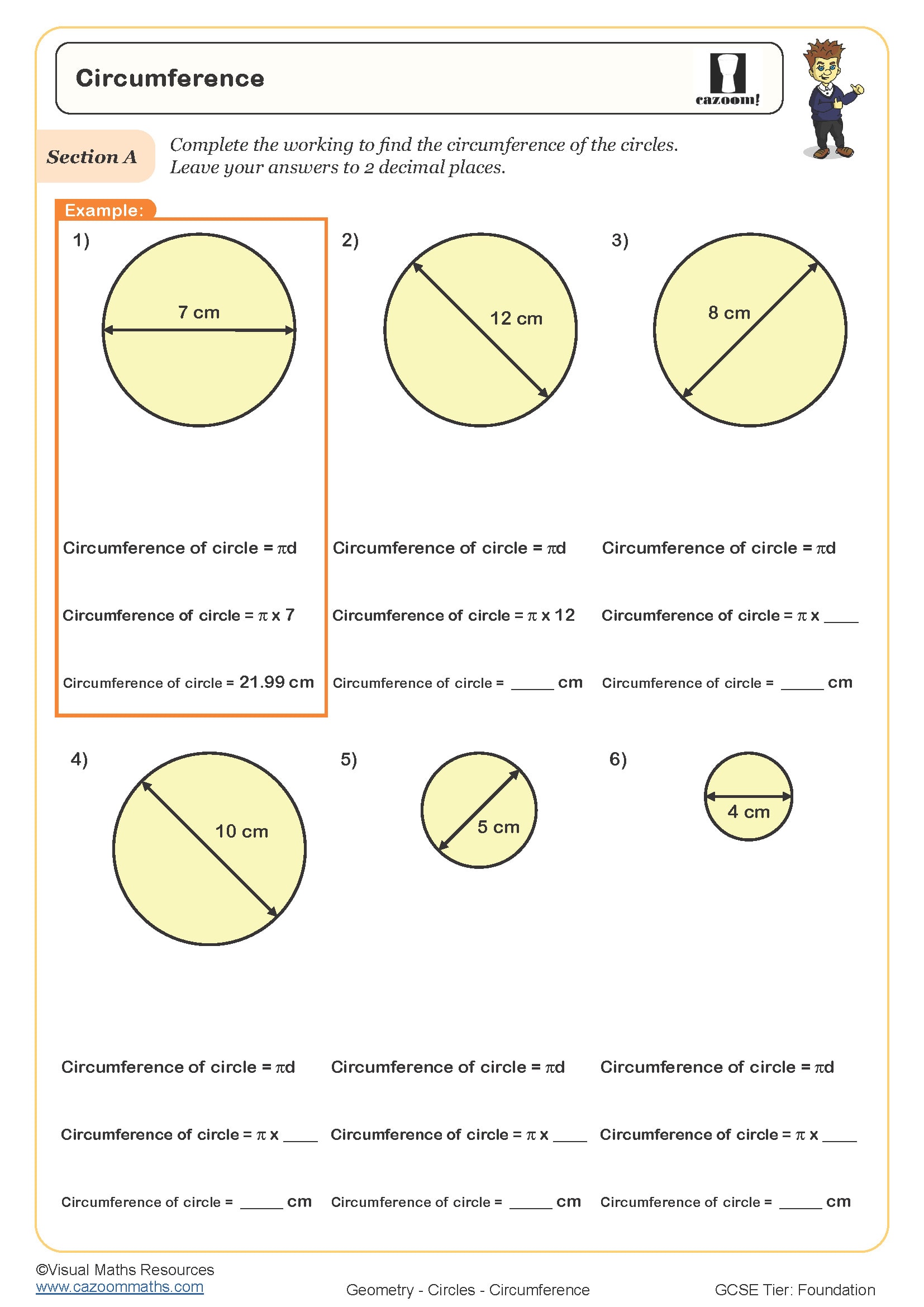
Circumference
Year groups: 8, 9
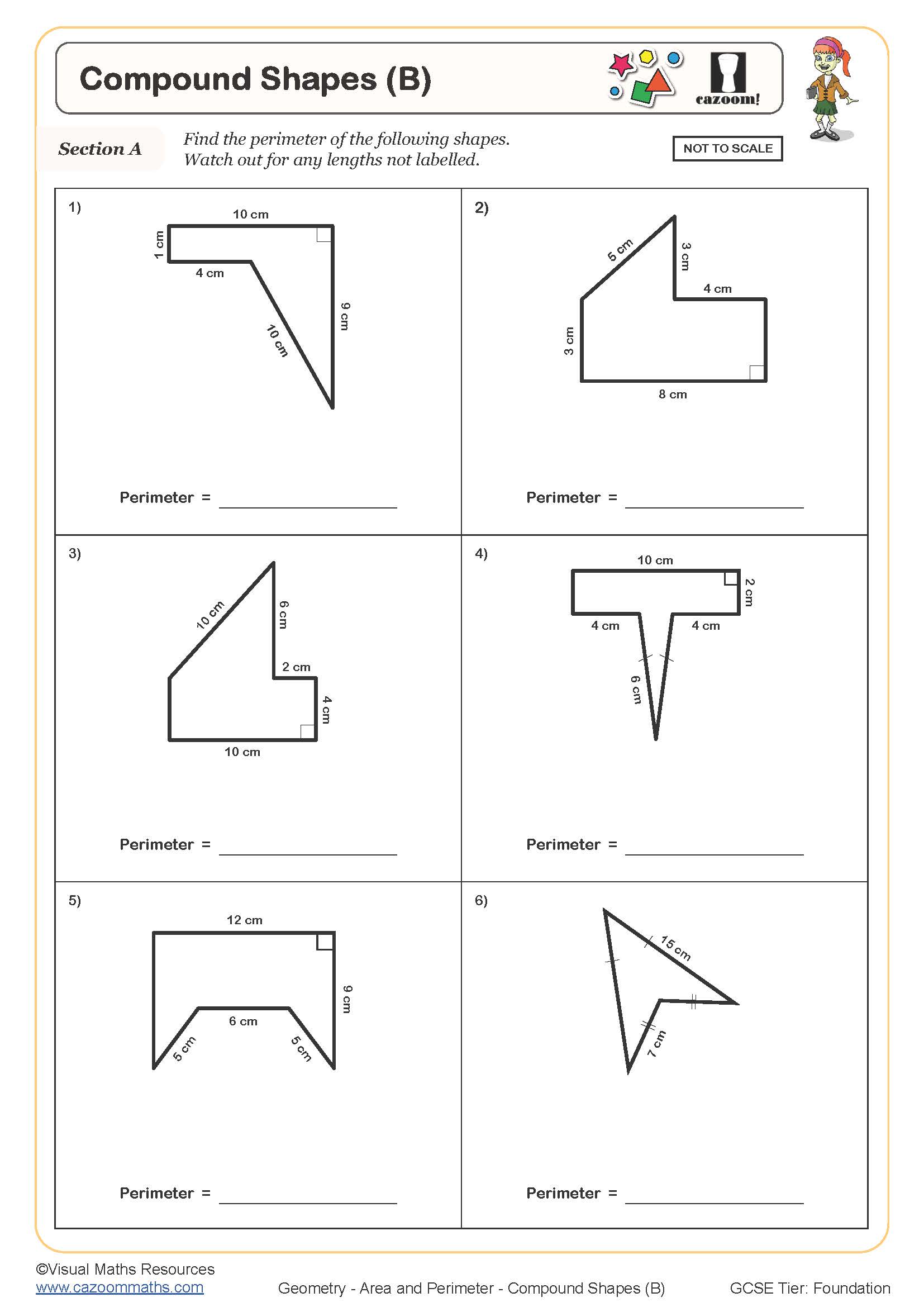
Compound Shapes (B)
Year groups: 8, 9
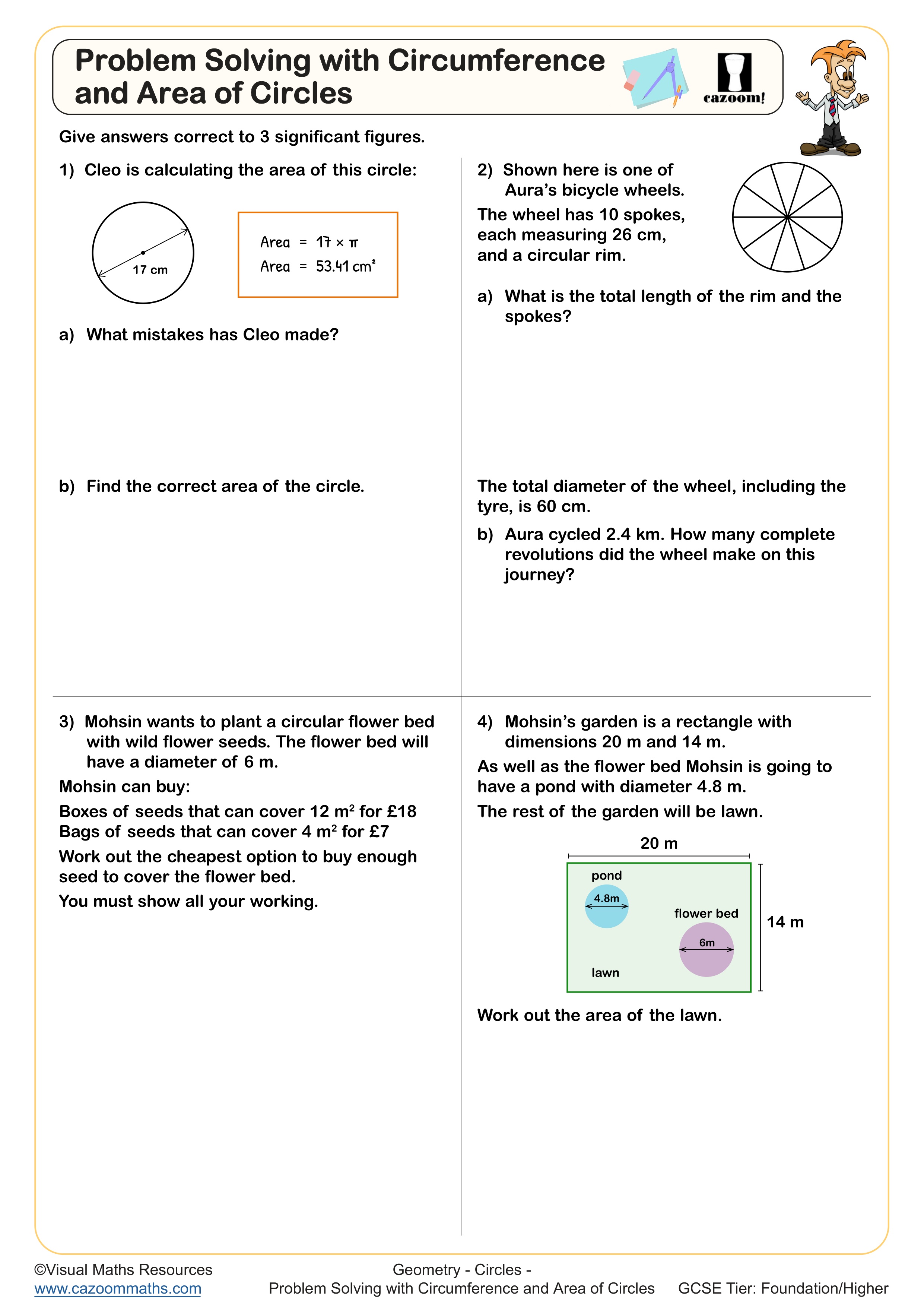
Problem Solving with Circumference and Area of Circle
Year groups: 8, 9
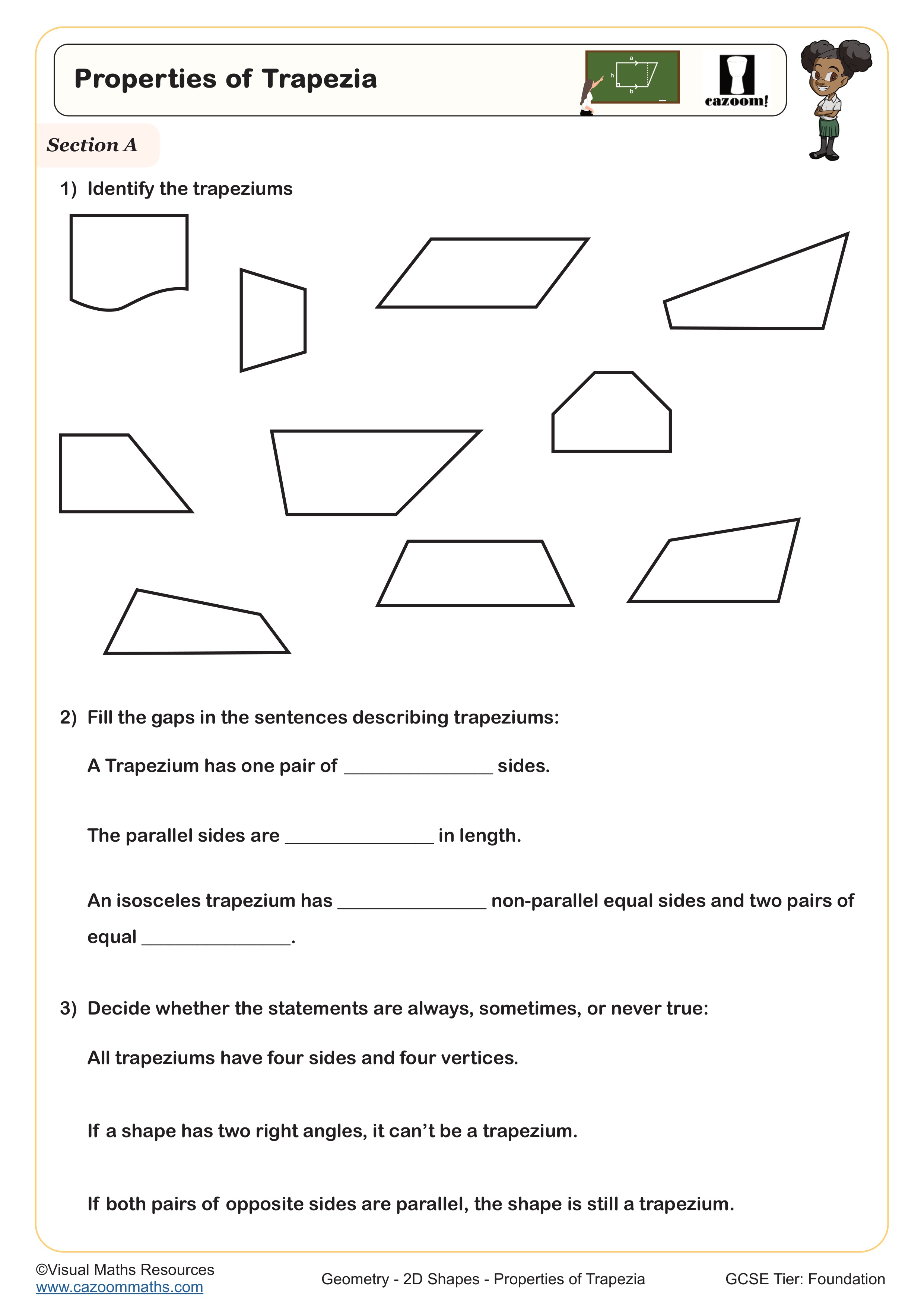
Properties of Trapezia
Year groups: 8, 9
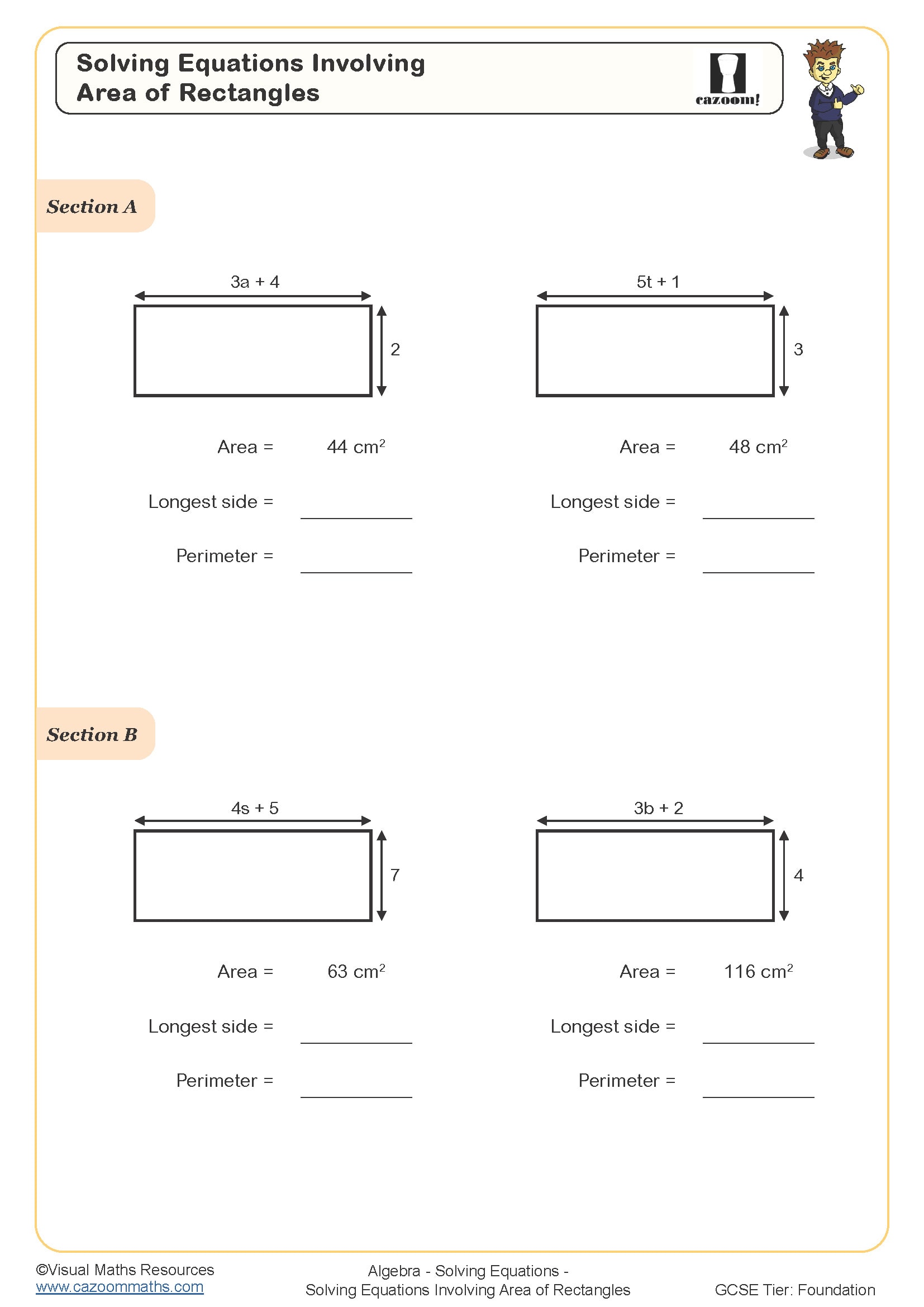
Solving Equations Involving Area of Rectangles
Year groups: 8, 9
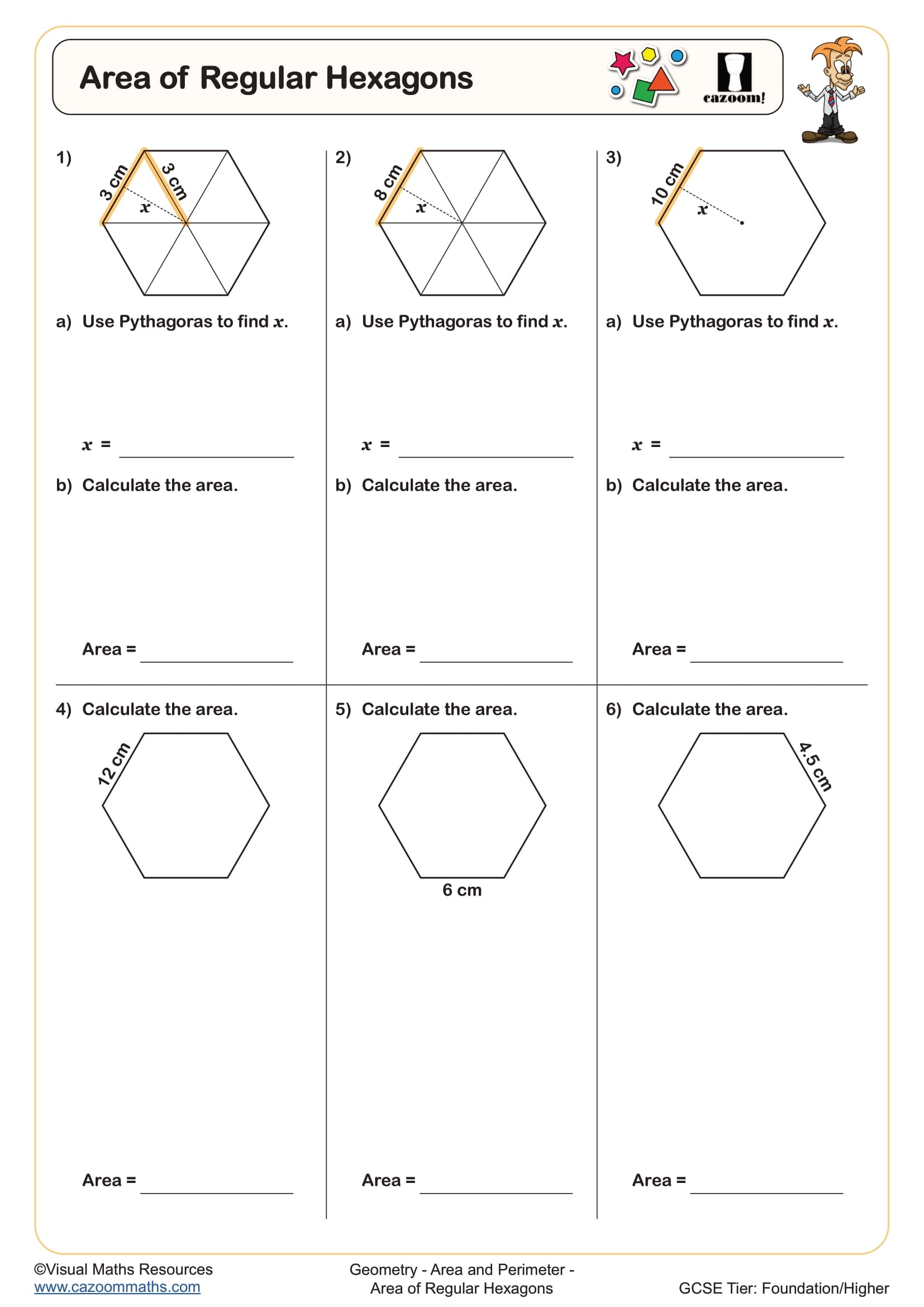
Area of Regular Hexagons
Year groups: 9, 10, 11
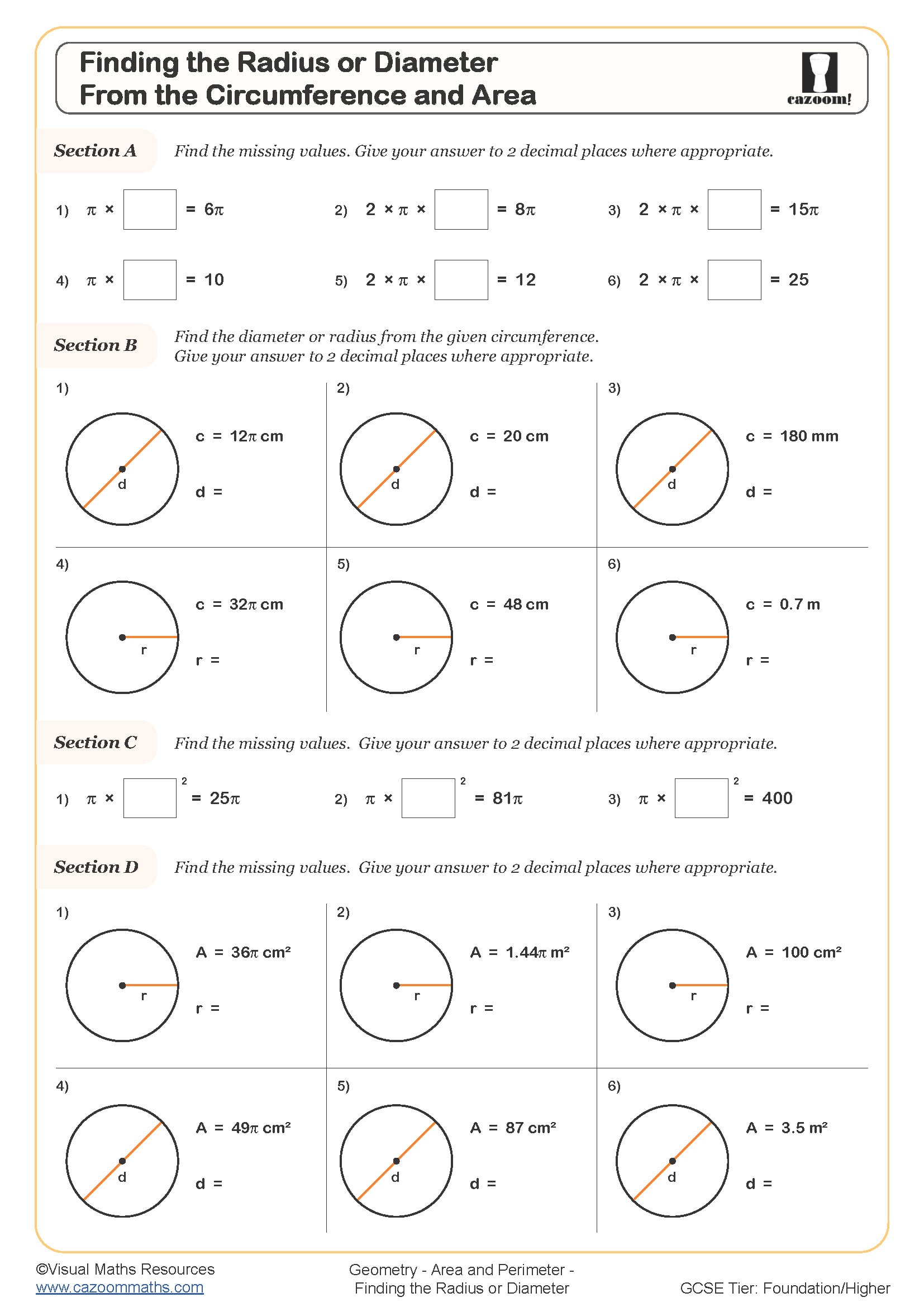
Finding the Radius or Diameter from the Circumference and Area
Year groups: 9, 10
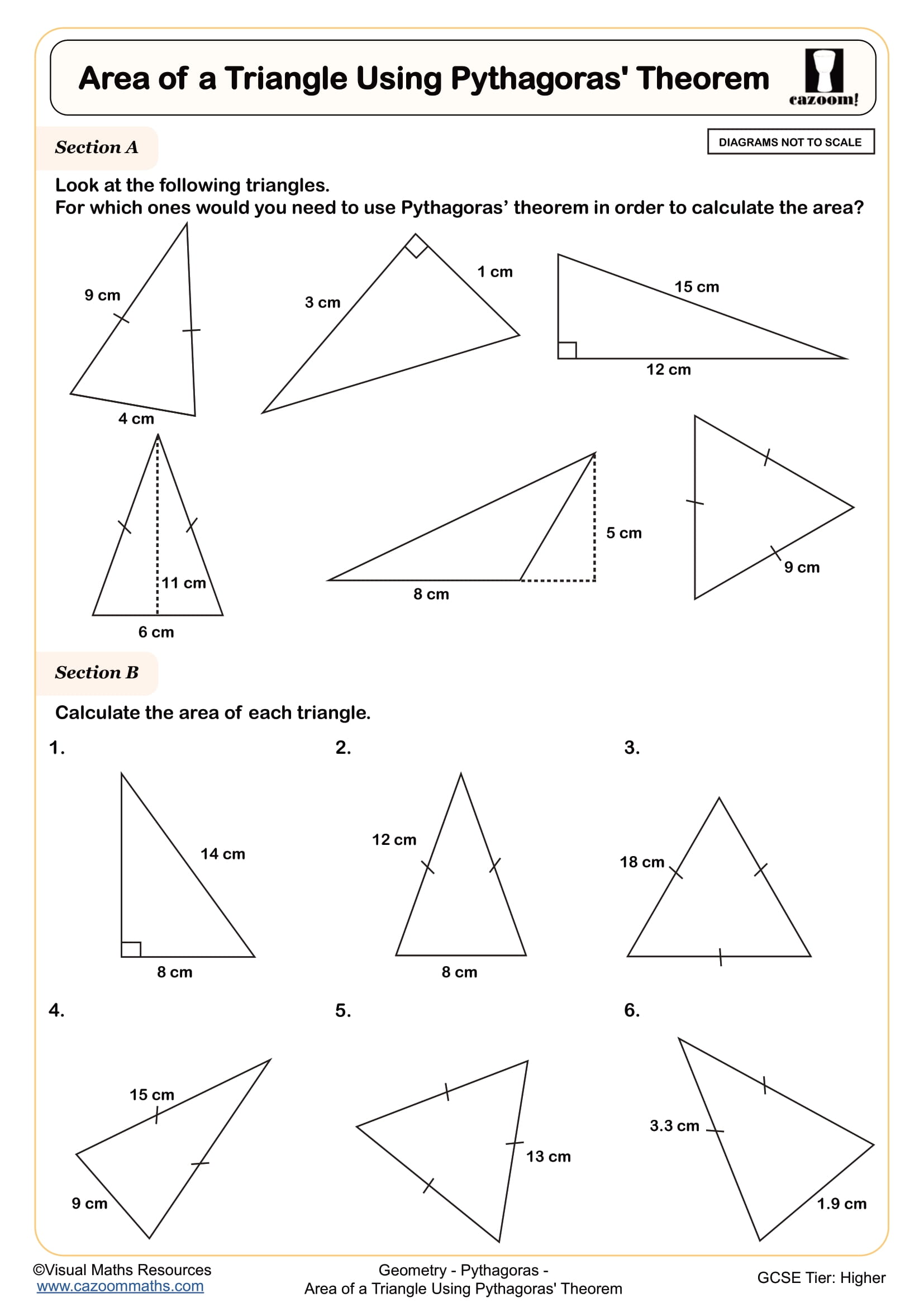
Area of a Triangle Using Pythagoras' Theorem
Year groups: 10, 11
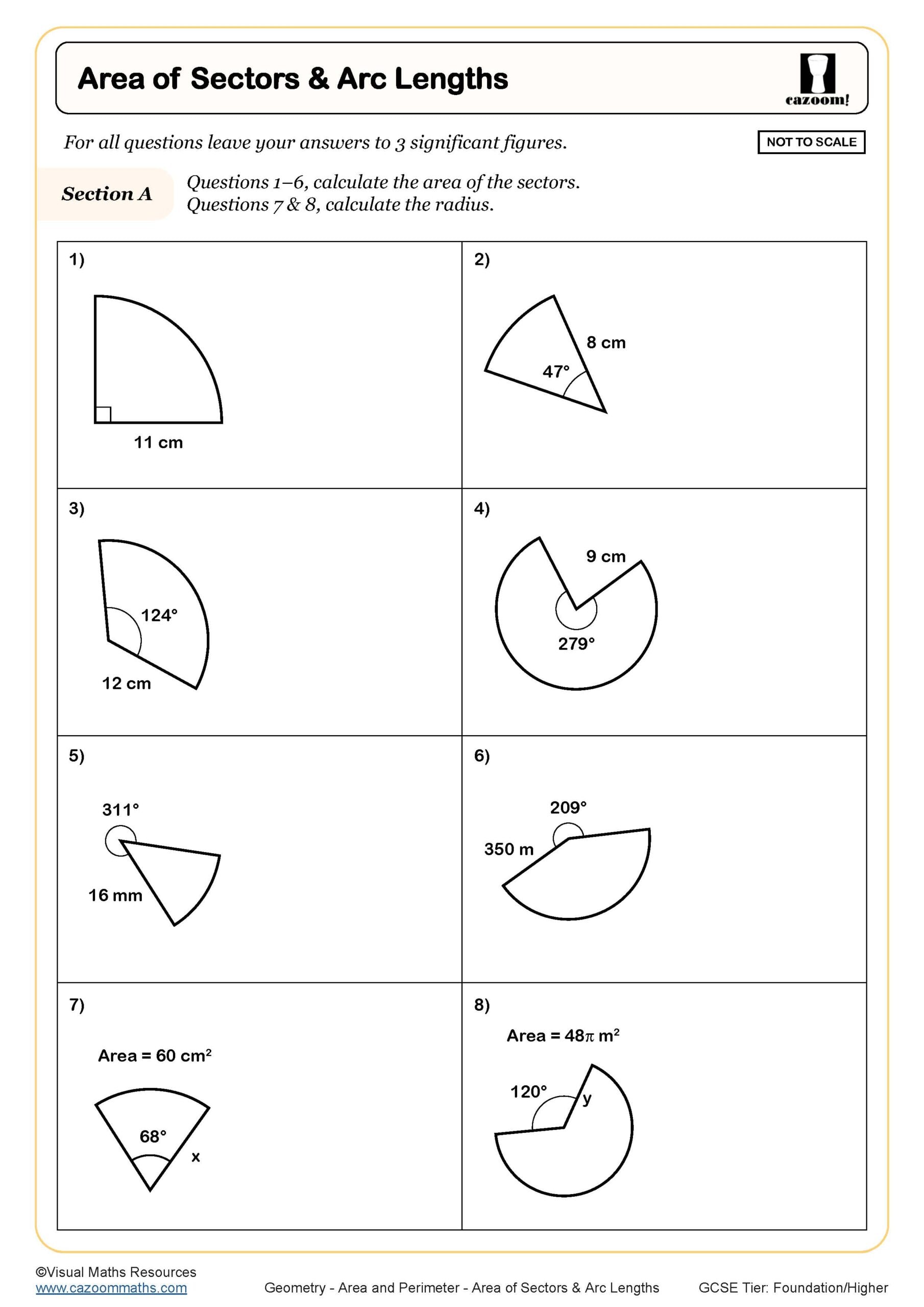
Area of Sectors and Arc Lengths
Year groups: 10, 11
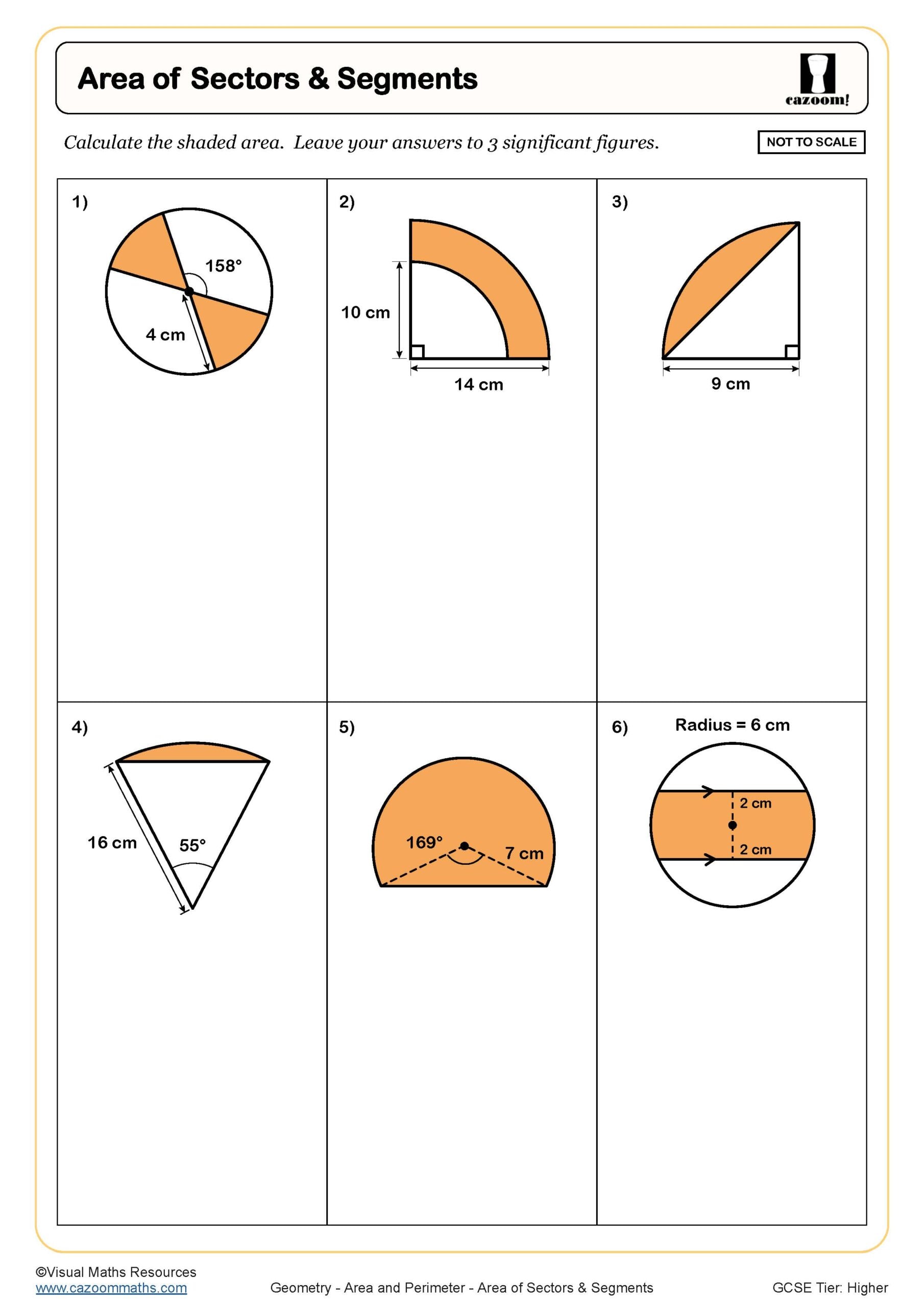
Area of Sectors and Segments
Year groups: 10, 11
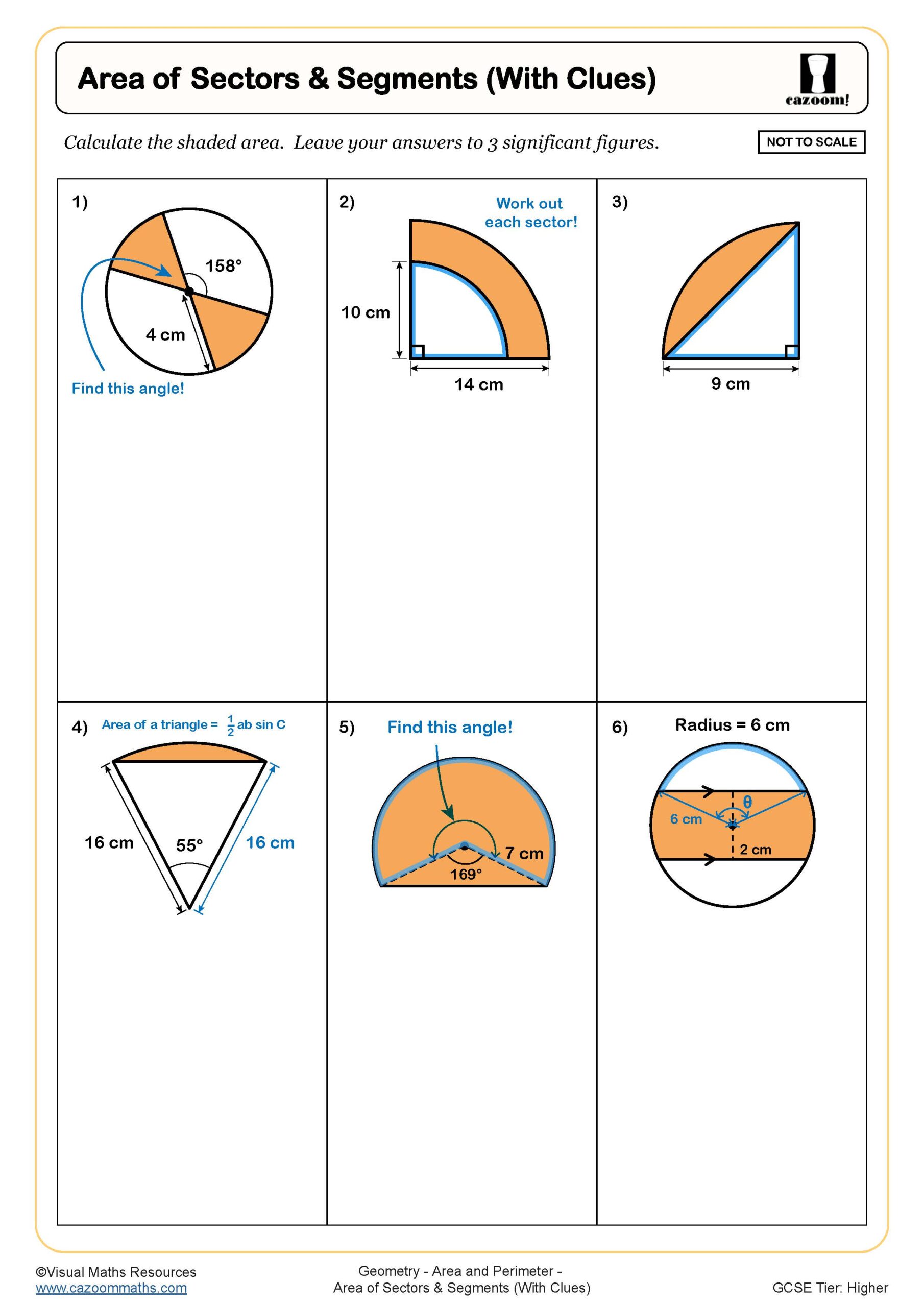
Area of Sectors and Segments (With Clues)
Year groups: 10, 11
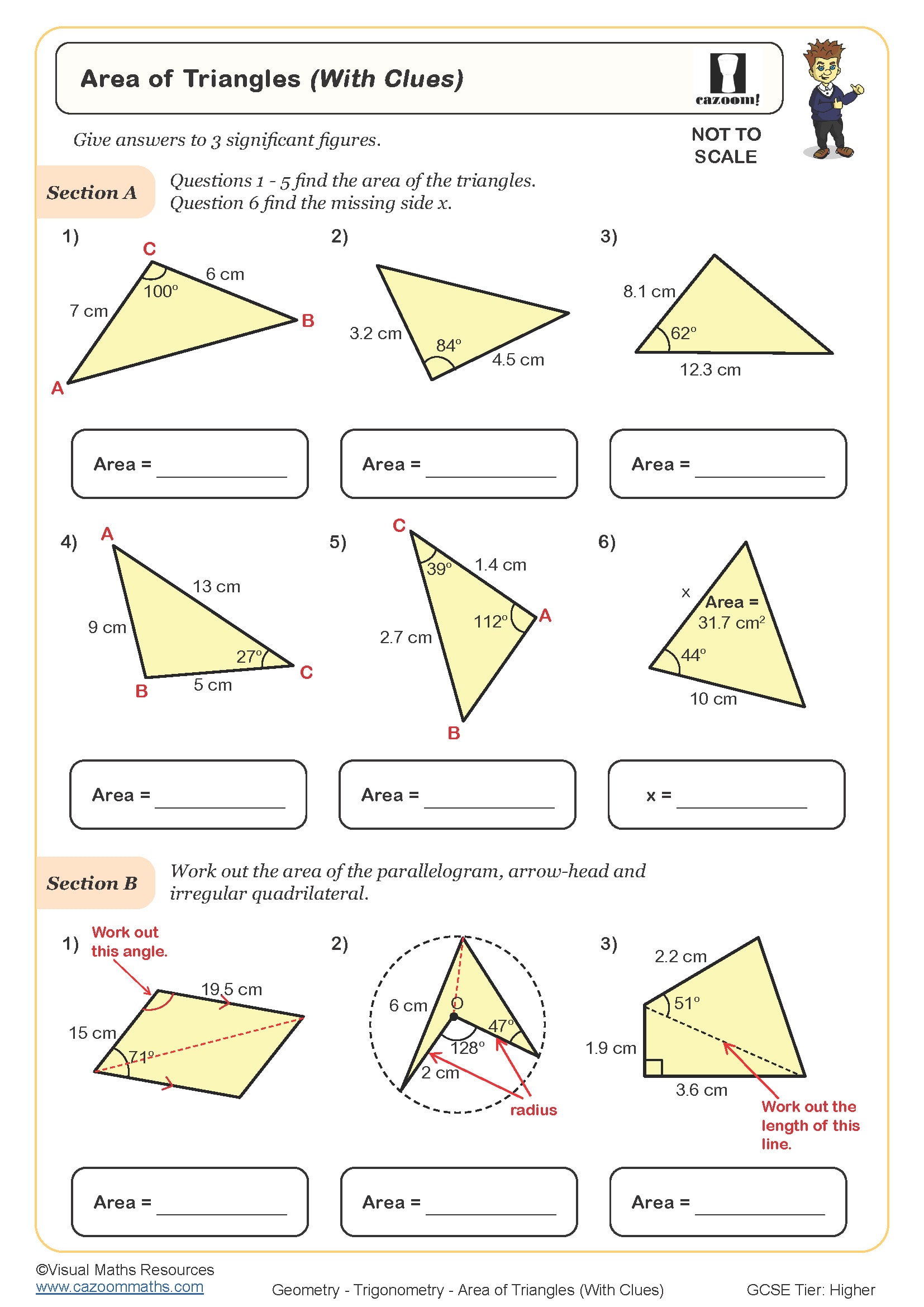
Area of Triangles (With Clues)
Year groups: 10, 11
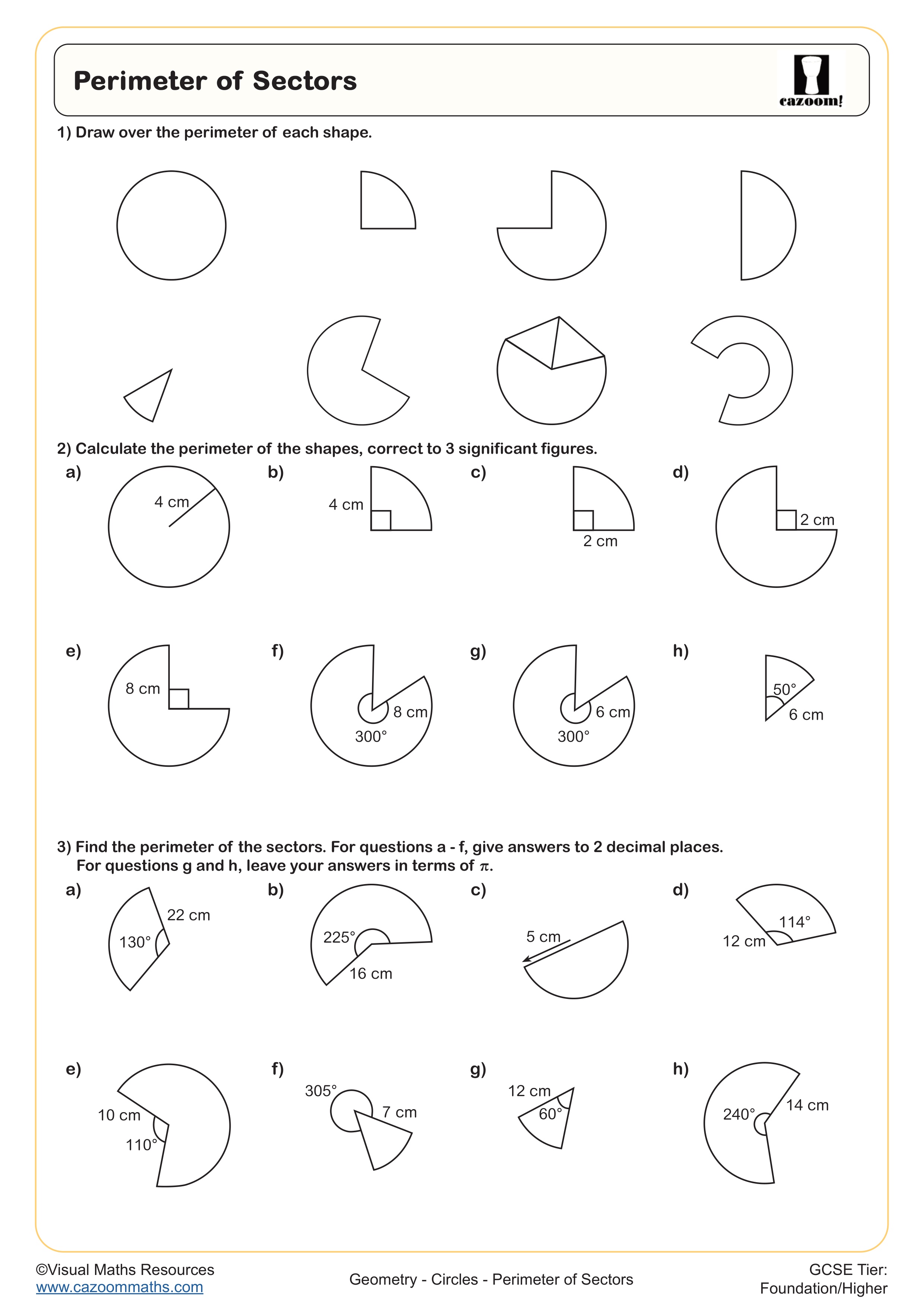
Perimeter of Sectors
Year groups: 10, 11
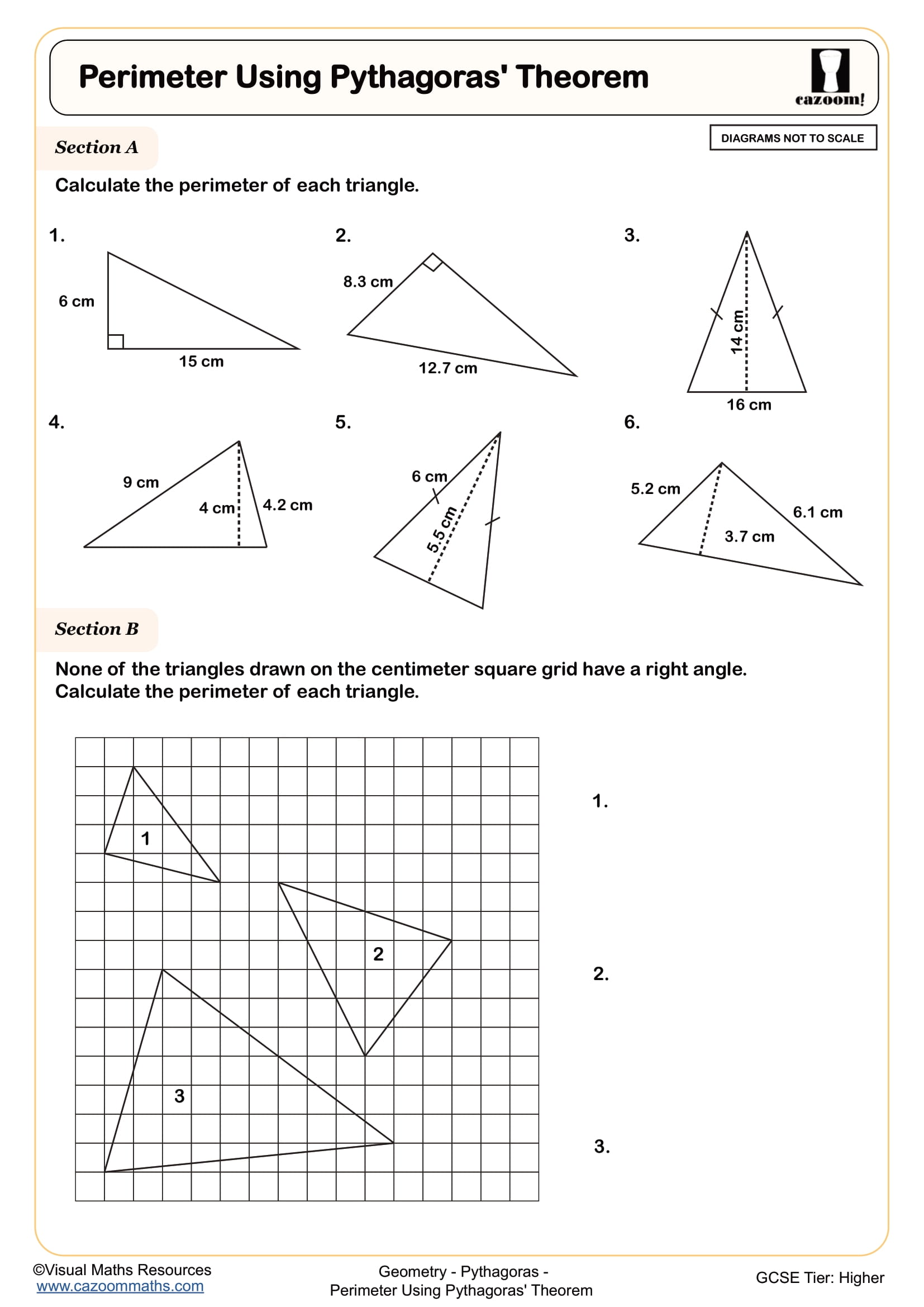
Perimeter Using Pythagoras' Theorem
Year groups: 10, 11
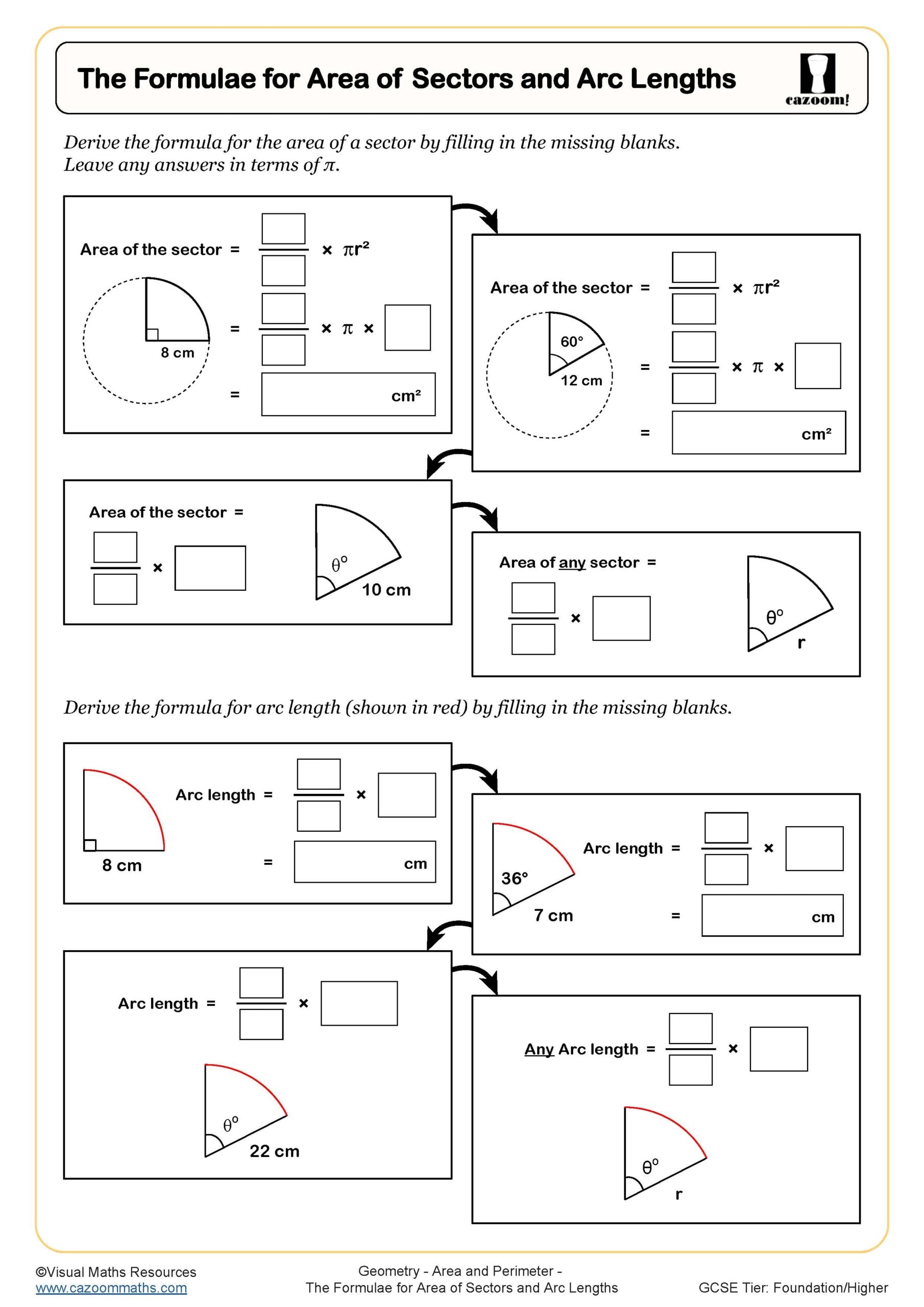
The Formulae for Area of Sectors and Arc Lengths
Year groups: 10, 11
All worksheets are created by the team of experienced teachers at Cazoom Maths.
What makes effective perimeter worksheets for secondary students?
Effective perimeter worksheets progress systematically from simple polygons to complex shapes, matching KS3 expectations for developing measurement skills. They should include mixed units to challenge students and reinforce the importance of consistent measurement units throughout calculations.
Teachers frequently observe that students struggle most with perimeter when shapes have missing side lengths that must be calculated first. Strong worksheets address this by providing shapes where students must use properties of rectangles or other polygons to find unknown dimensions before calculating the total perimeter.
Which year groups benefit most from area and perimeter practice?
Year 7 area and perimeter worksheets form the foundation, introducing basic rectangle and triangle calculations that students build upon throughout secondary school. Year 8 typically extends to compound shapes and circles, whilst Years 9-11 apply these skills to problem-solving and real-world contexts.
The beauty of this topic lies in its progression - students revisit area and perimeter concepts repeatedly with increasing complexity. Year 7 students might calculate a garden's perimeter, whilst GCSE students apply the same principles to optimisation problems or construction scenarios involving multiple geometric shapes.
How do students approach compound shapes effectively?
Compound shapes challenge students to break complex figures into recognisable rectangles, triangles, or other basic shapes. The key skill involves identifying how to partition the shape most efficiently, which often requires visualising multiple valid approaches.
Many teachers notice students rush into calculations without planning their approach first. Successful compound shape work requires students to sketch division lines, label dimensions clearly, and check their method makes geometric sense. This systematic approach prevents the common error of double-counting overlapping areas or missing sections entirely.
How can teachers maximise learning from these worksheet resources?
These worksheets work best when teachers model the thinking process first, particularly showing how to organise information and choose appropriate formulae. Students benefit from discussing their methods with peers before attempting independent practice, as verbalising their approach reveals misconceptions early.
The answer sheets serve multiple purposes beyond marking - they provide alternative solution methods and help teachers identify where students' working differs from expected approaches. Teachers often use incorrect student solutions as discussion starters, helping the class identify errors and strengthen understanding of measurement principles.