Bar Modelling Worksheets
Adding and subtracting fractions with different denominators (A)
Year groups: 7, 8
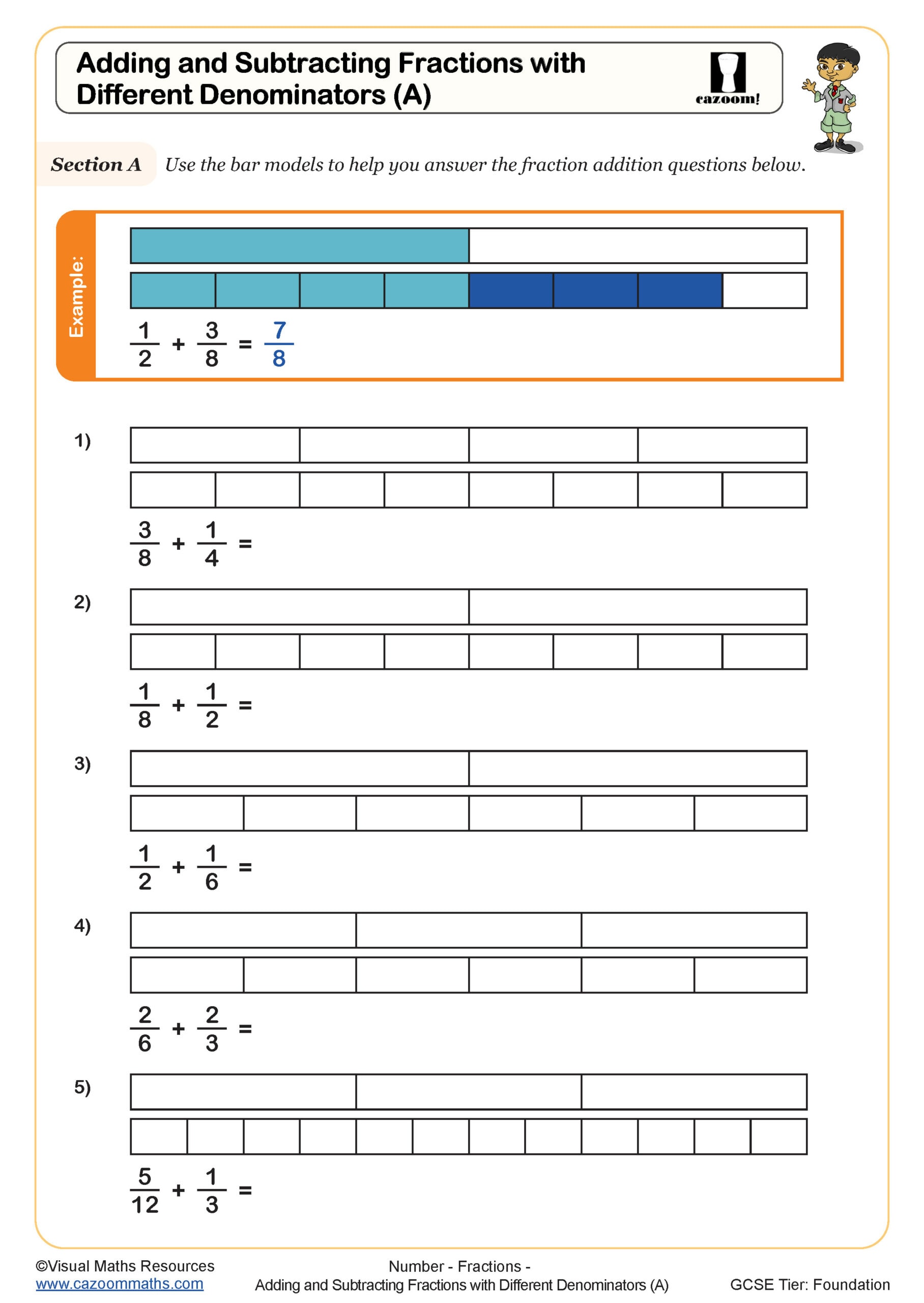
Angles Around a Point
Year groups: 7, 8
Angles in Triangles (A)
Year groups: 7, 8
-Worksheet.jpg?w=3840)
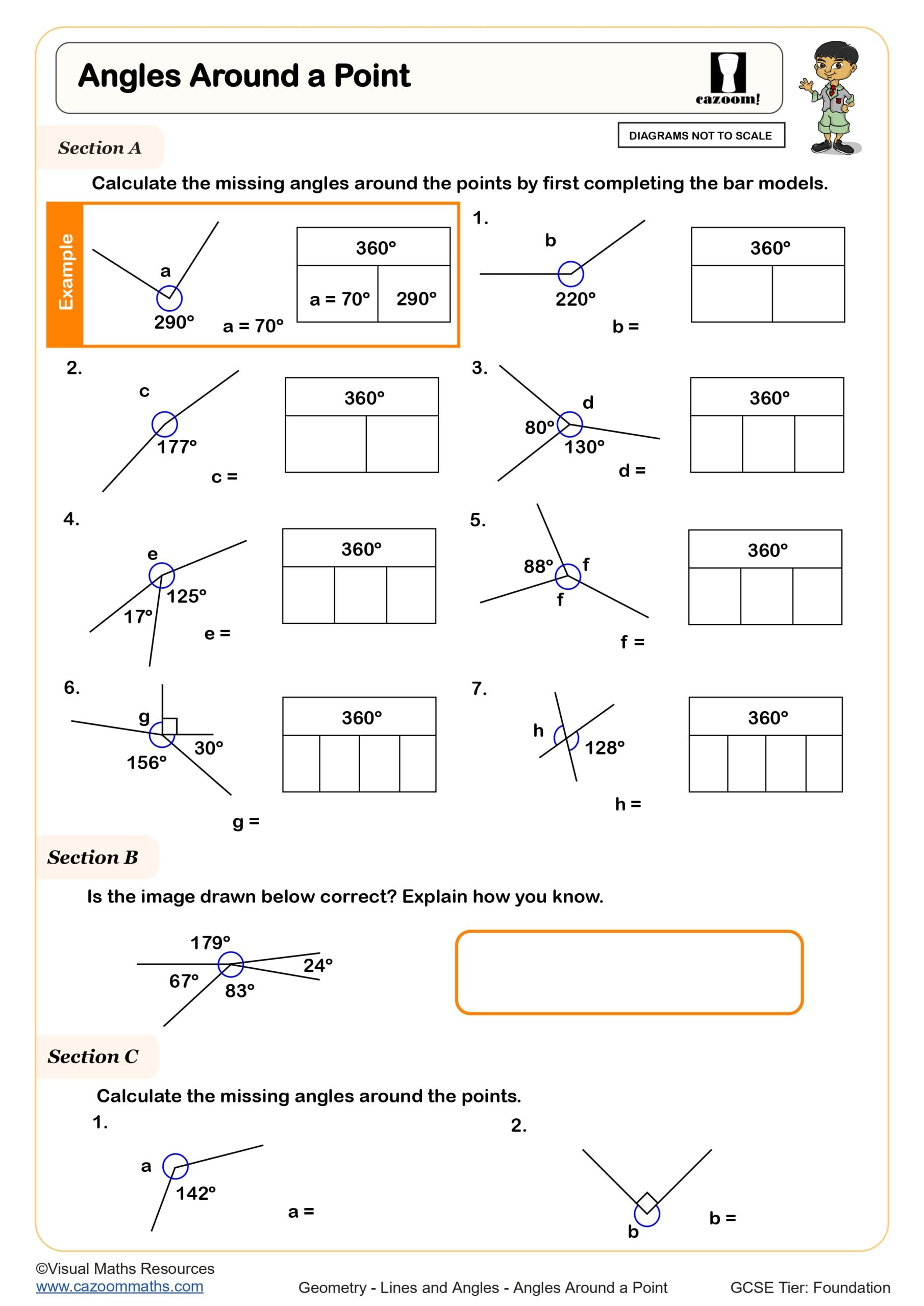
Angles on a Straight Line
Year groups: 7, 8
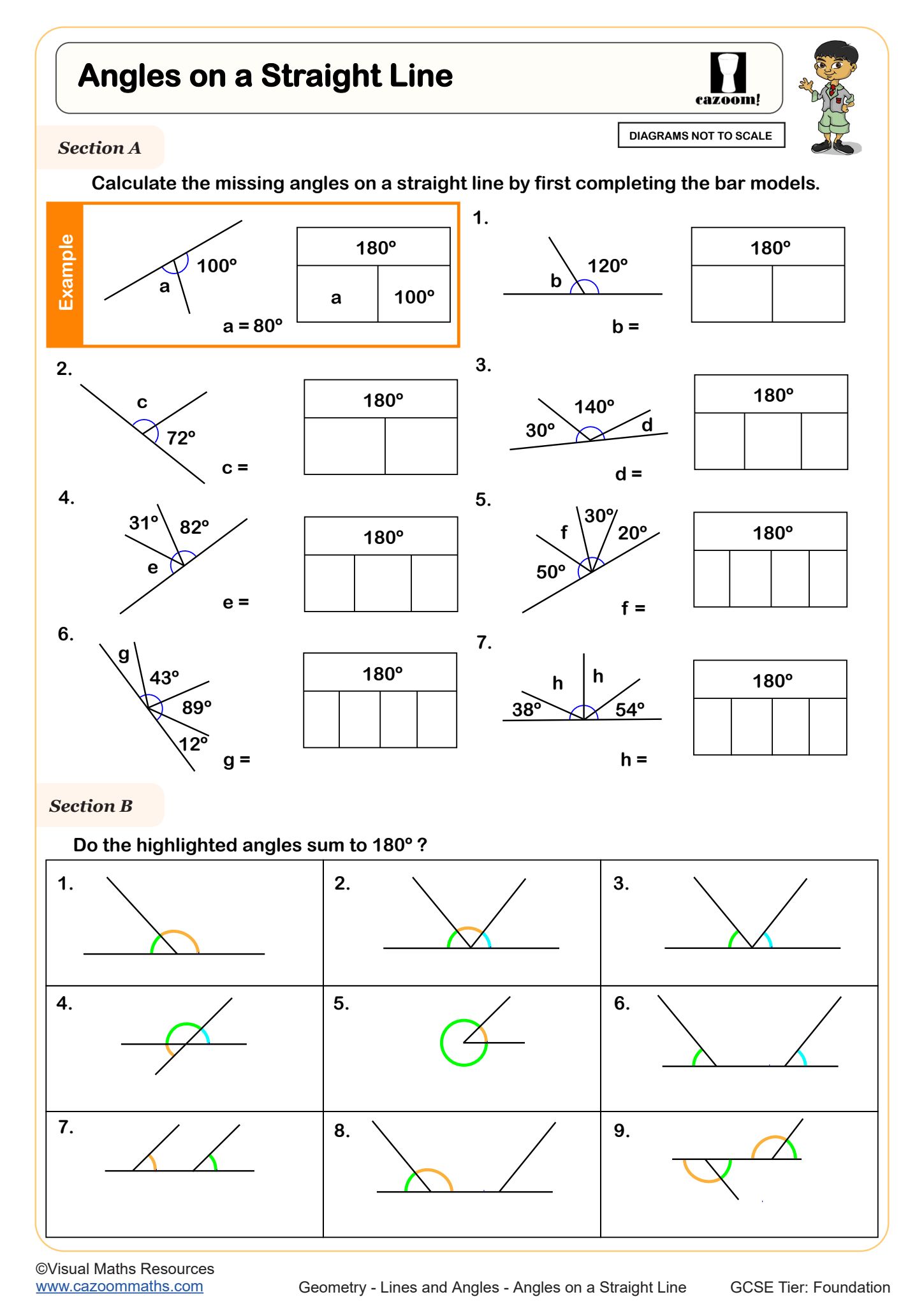
Dividing Fractions by Integers
Year groups: 7, 8
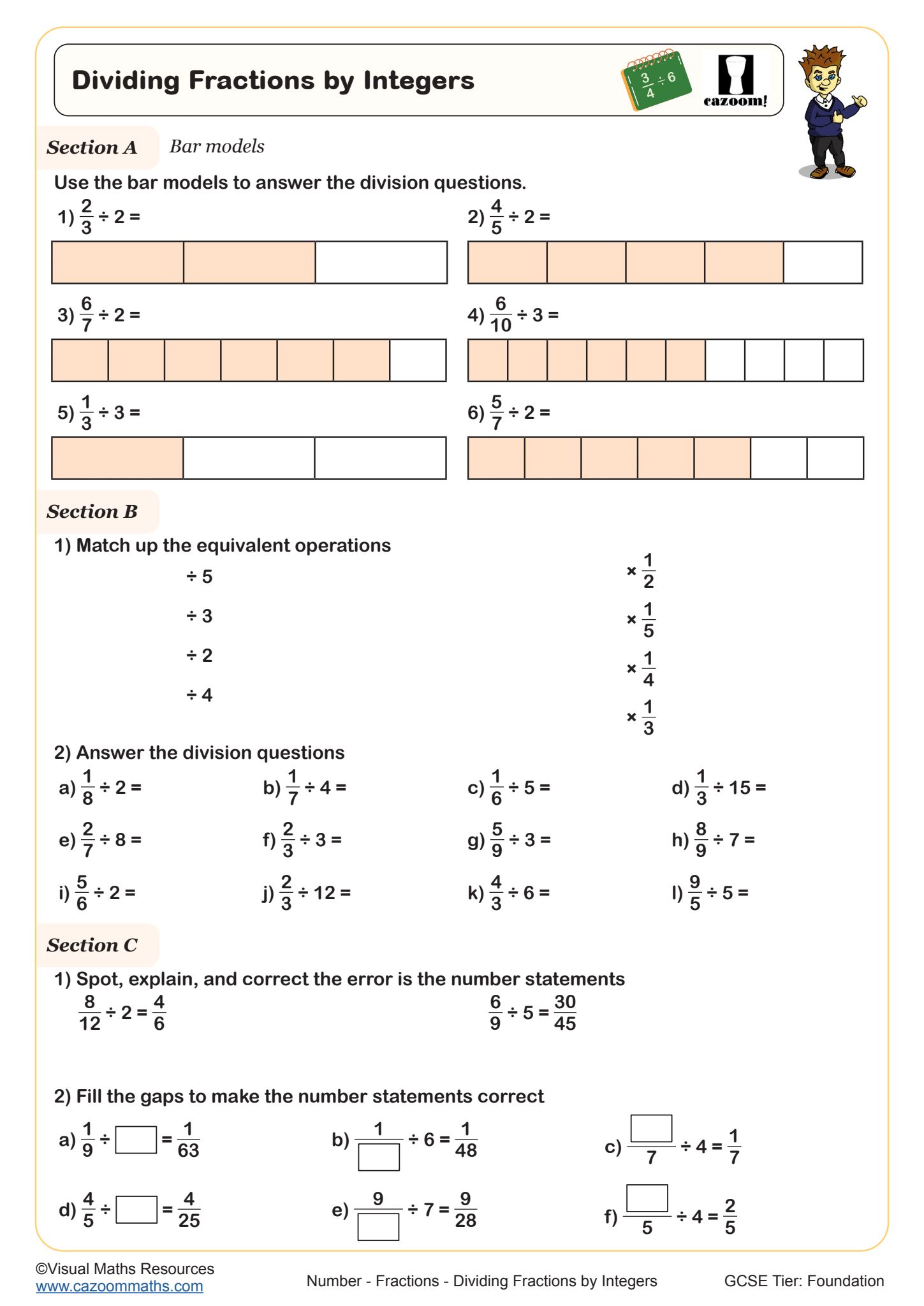
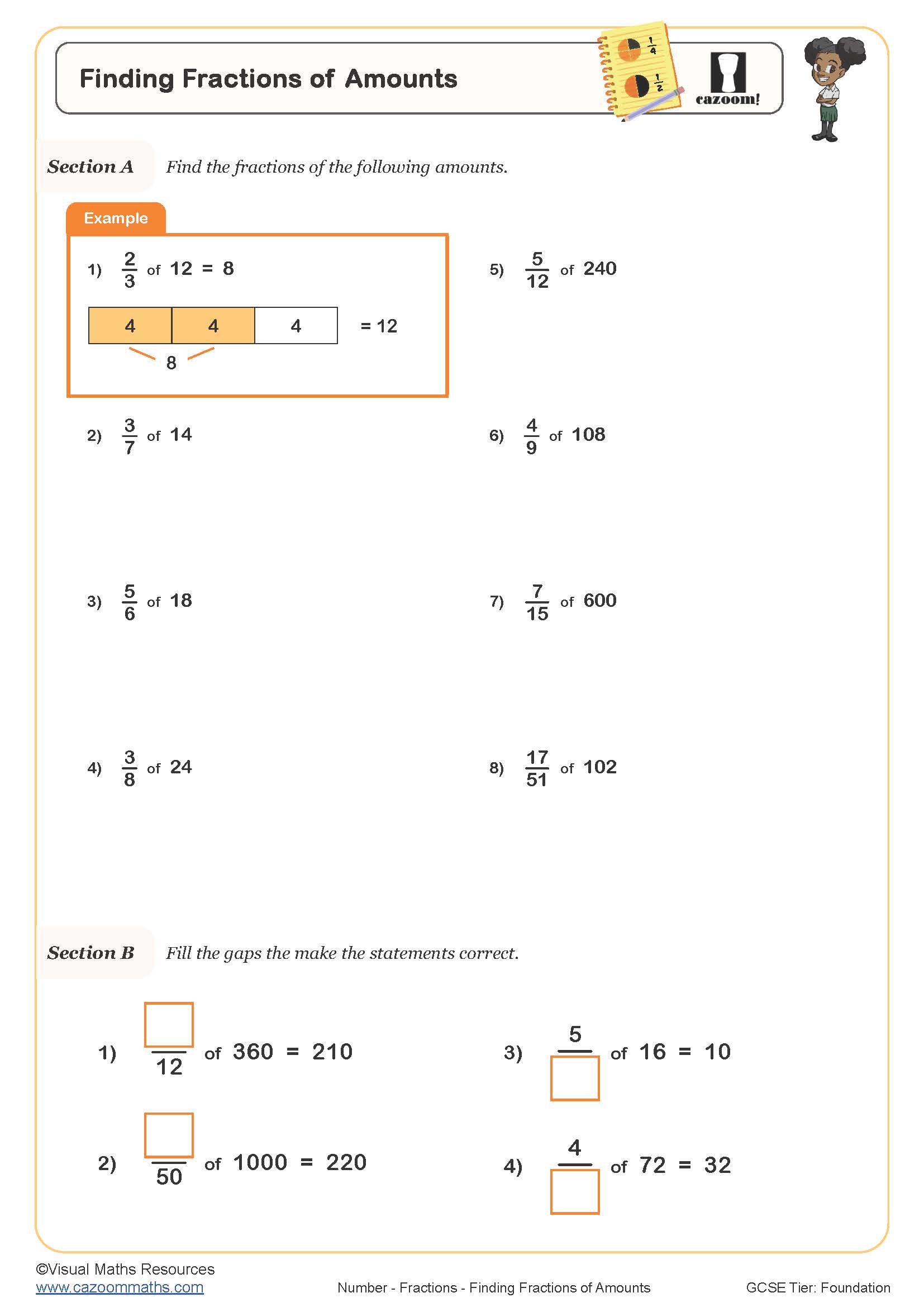
Finding Fractions of Amounts
Year groups: 7, 8
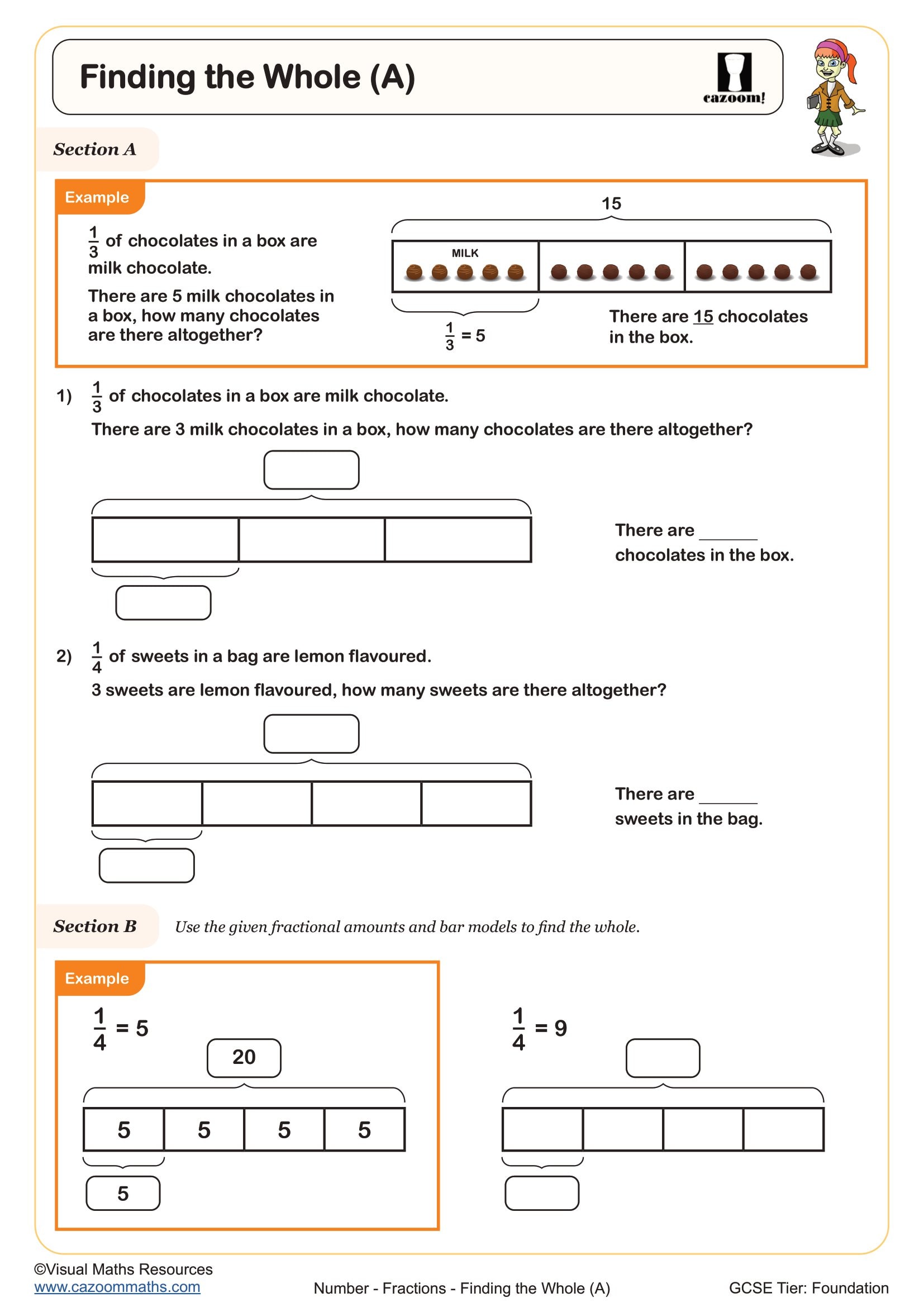
Finding the Whole (A)
Year groups: 7, 8
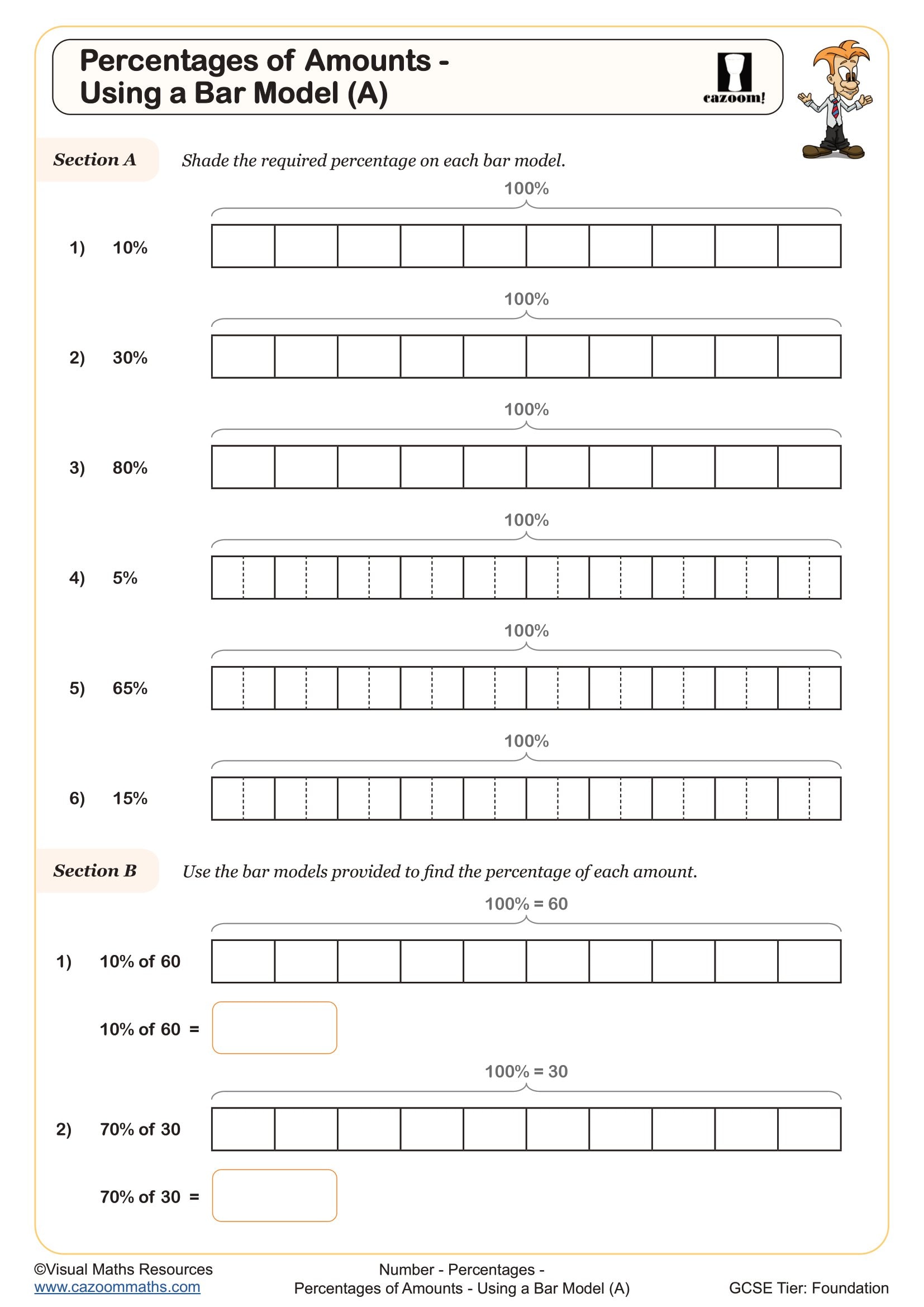
Percentages of Amounts - Using a Bar Model (A)
Year groups: 7, 8
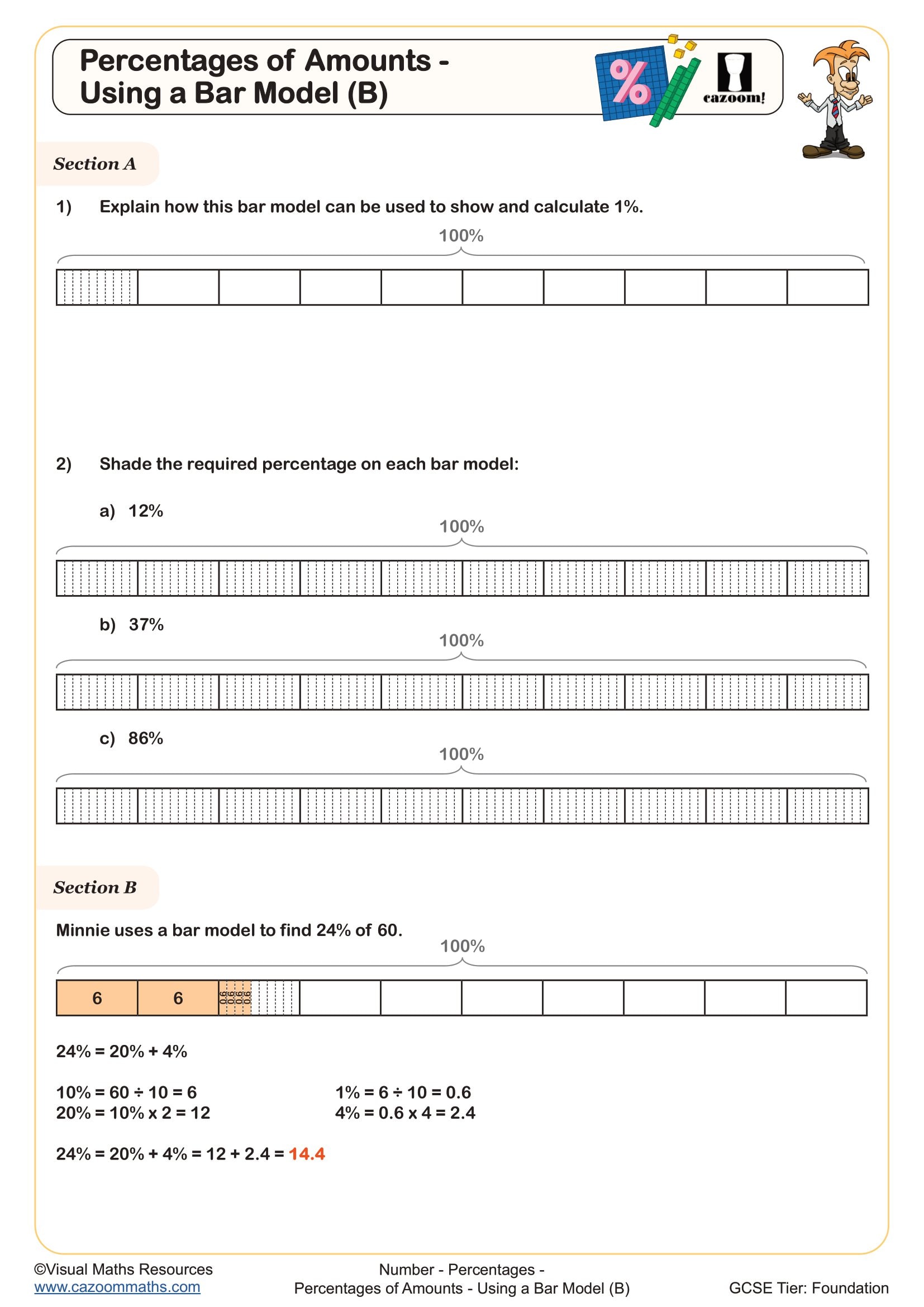
Percentages of Amounts - Using a Bar Model (B)
Year groups: 7, 8, 9
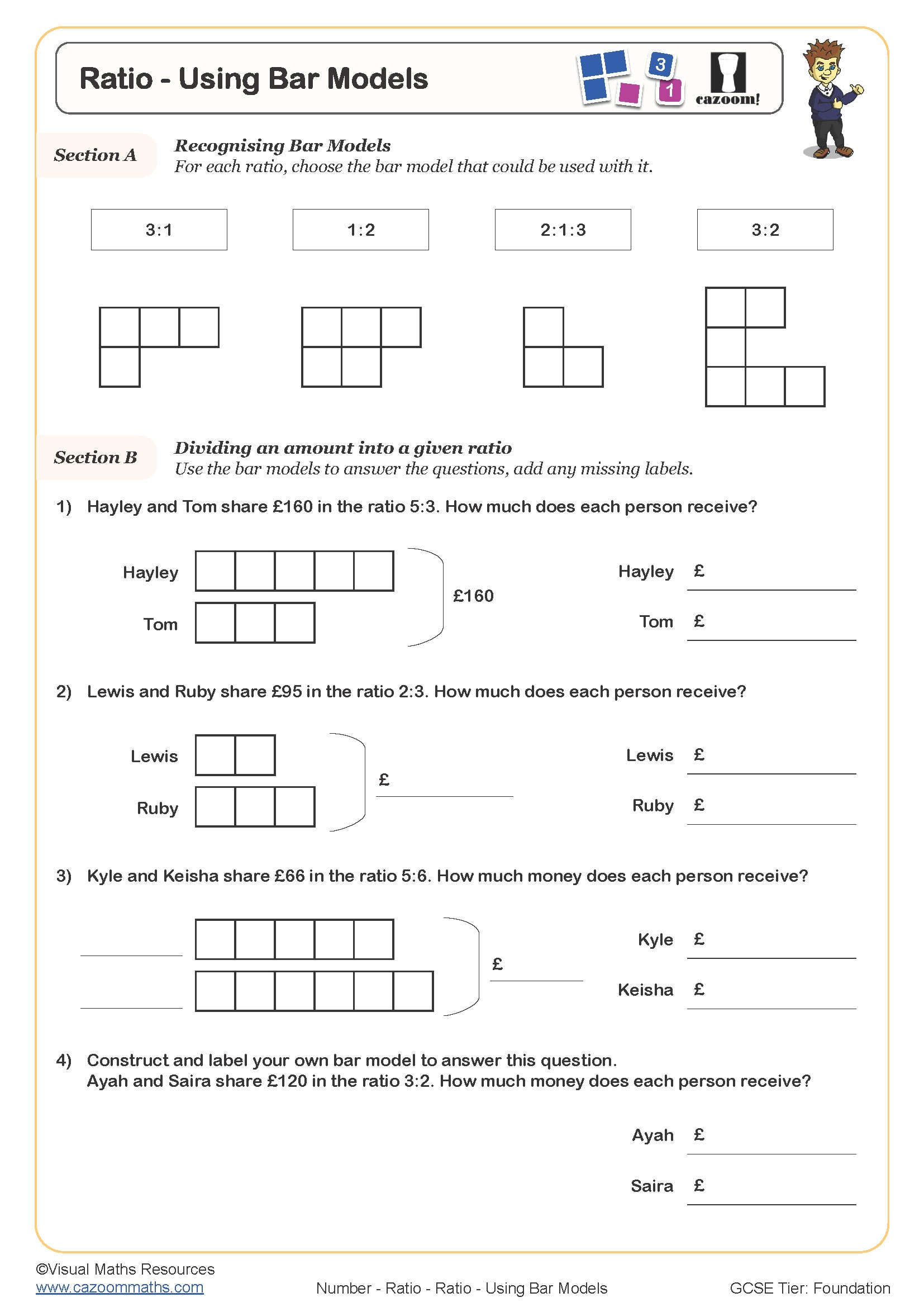
Ratio - Using Bar Models
Year groups: 7, 8
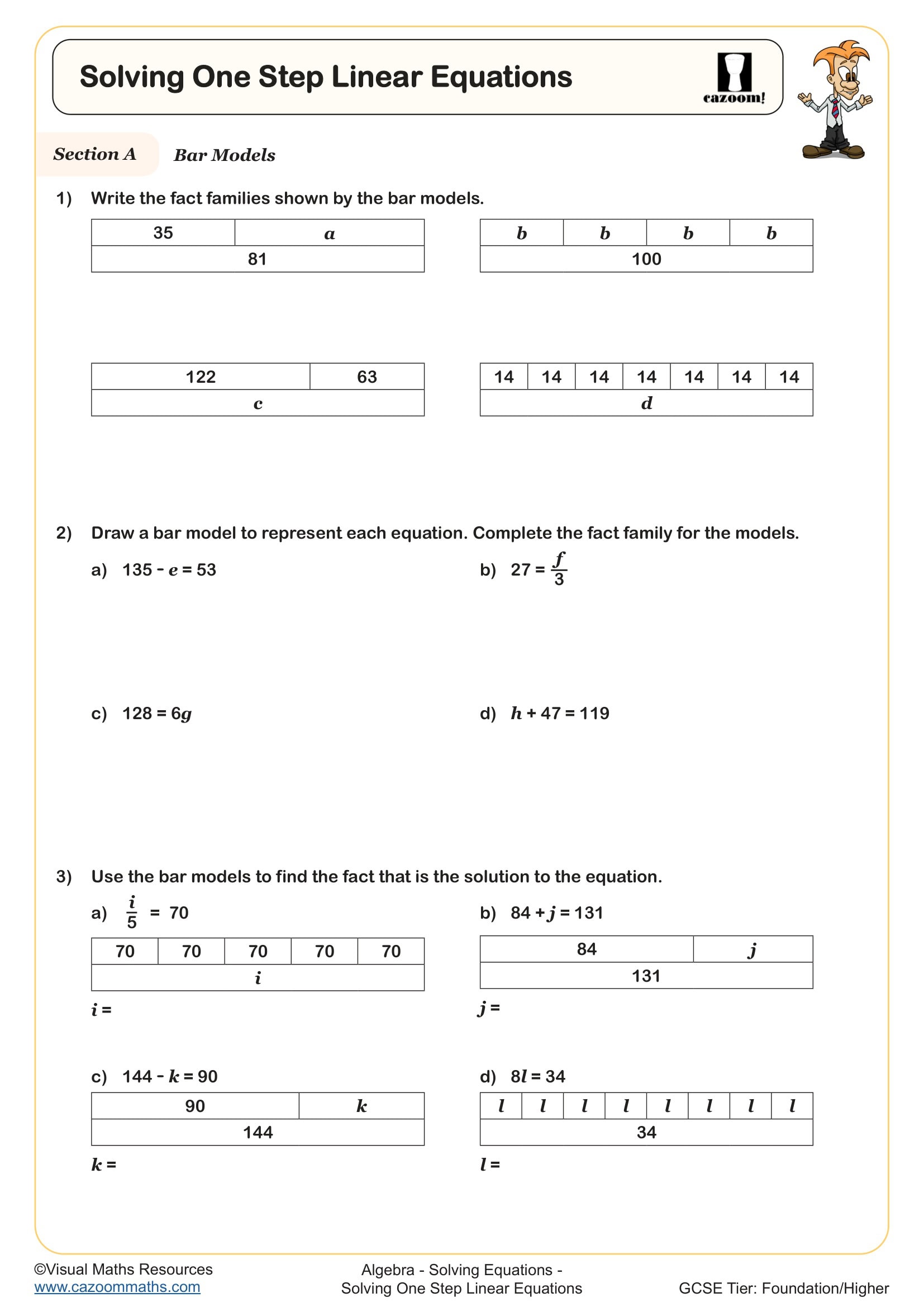
Solving One Step Linear Equations
Year groups: 7
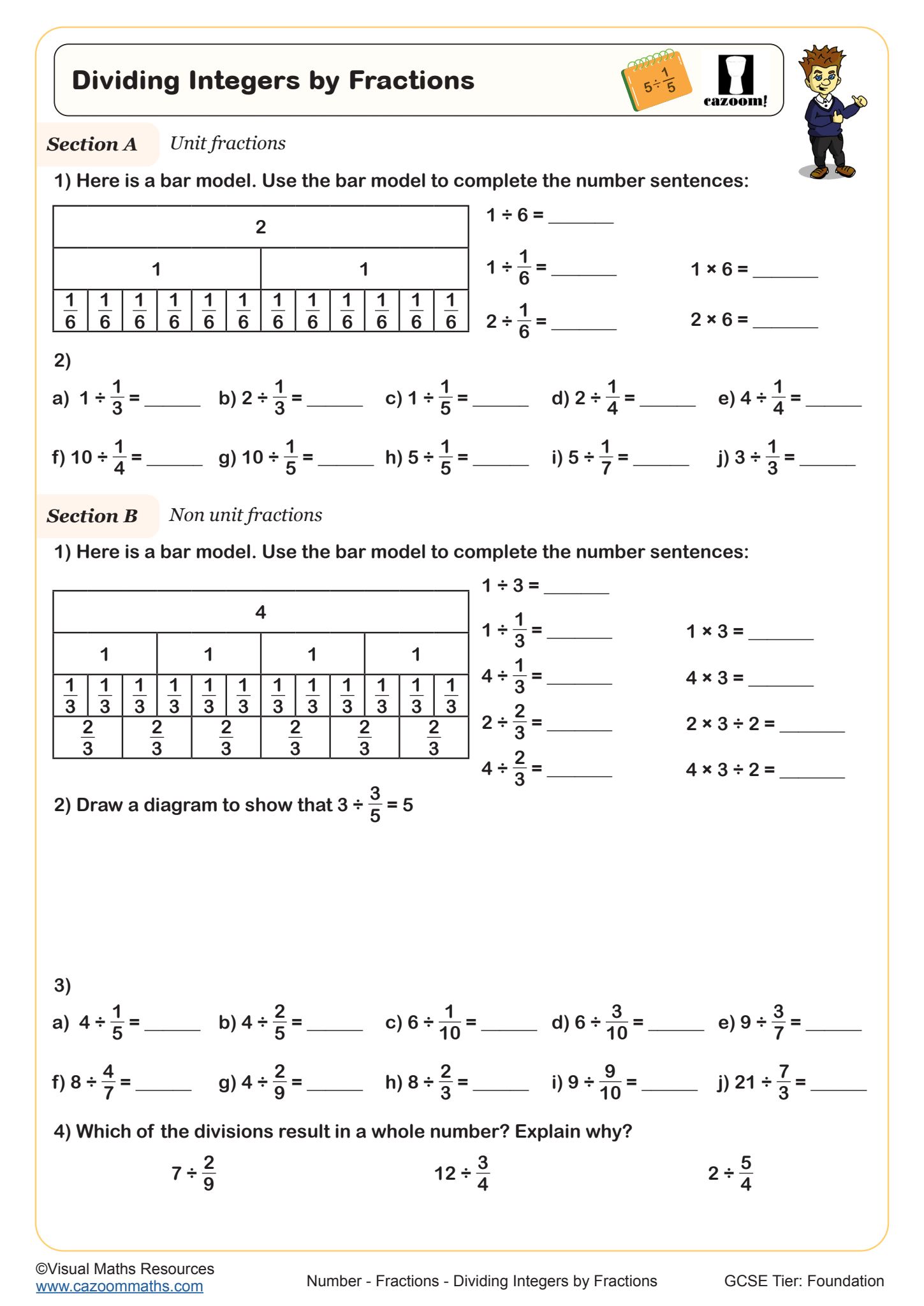
Dividing Integers by Fractions
Year groups: 8, 9
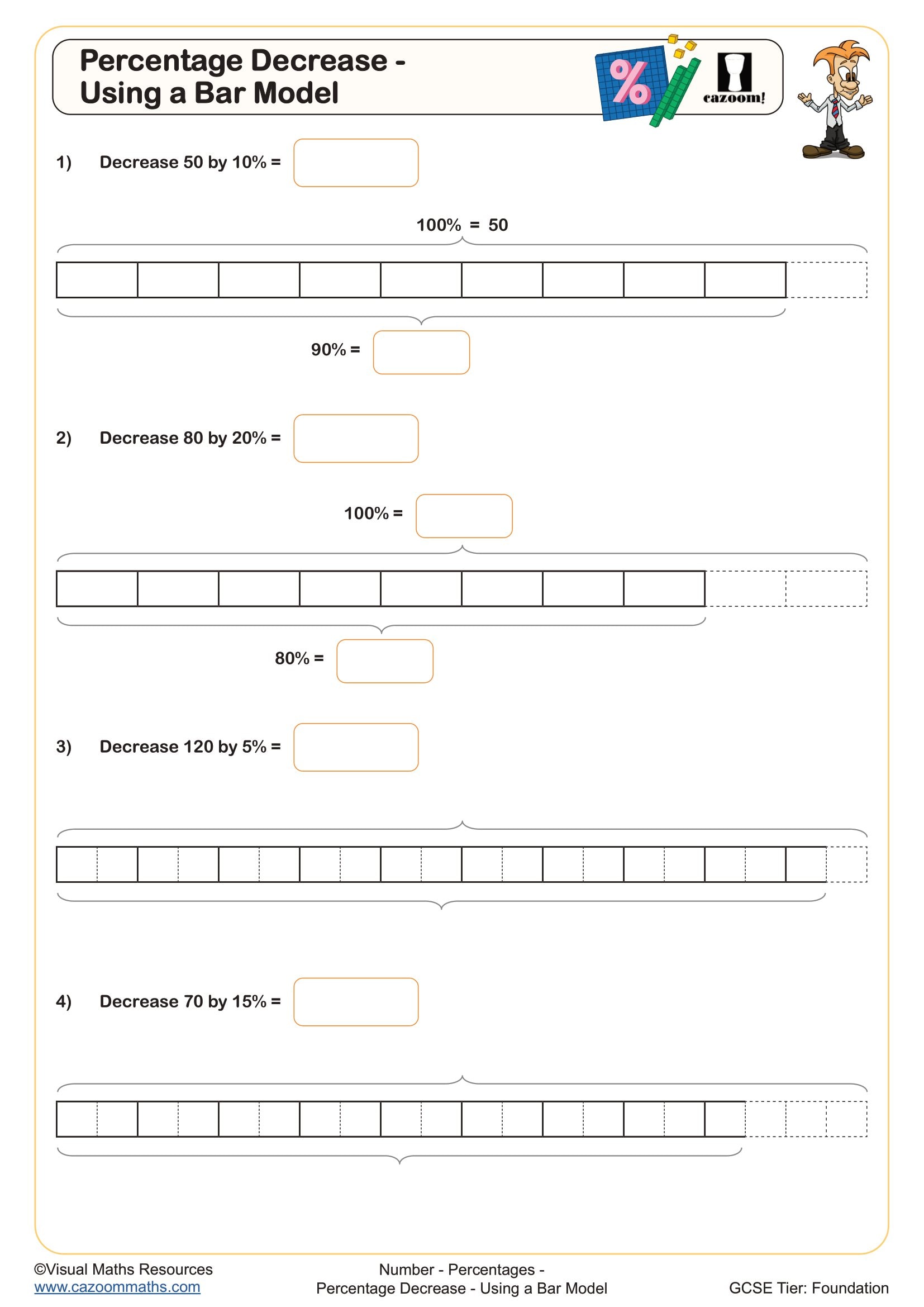
Percentage Decrease - Using a Bar Model
Year groups: 8, 9
Percentage Increase - Using a Bar Model
Year groups: 8, 9
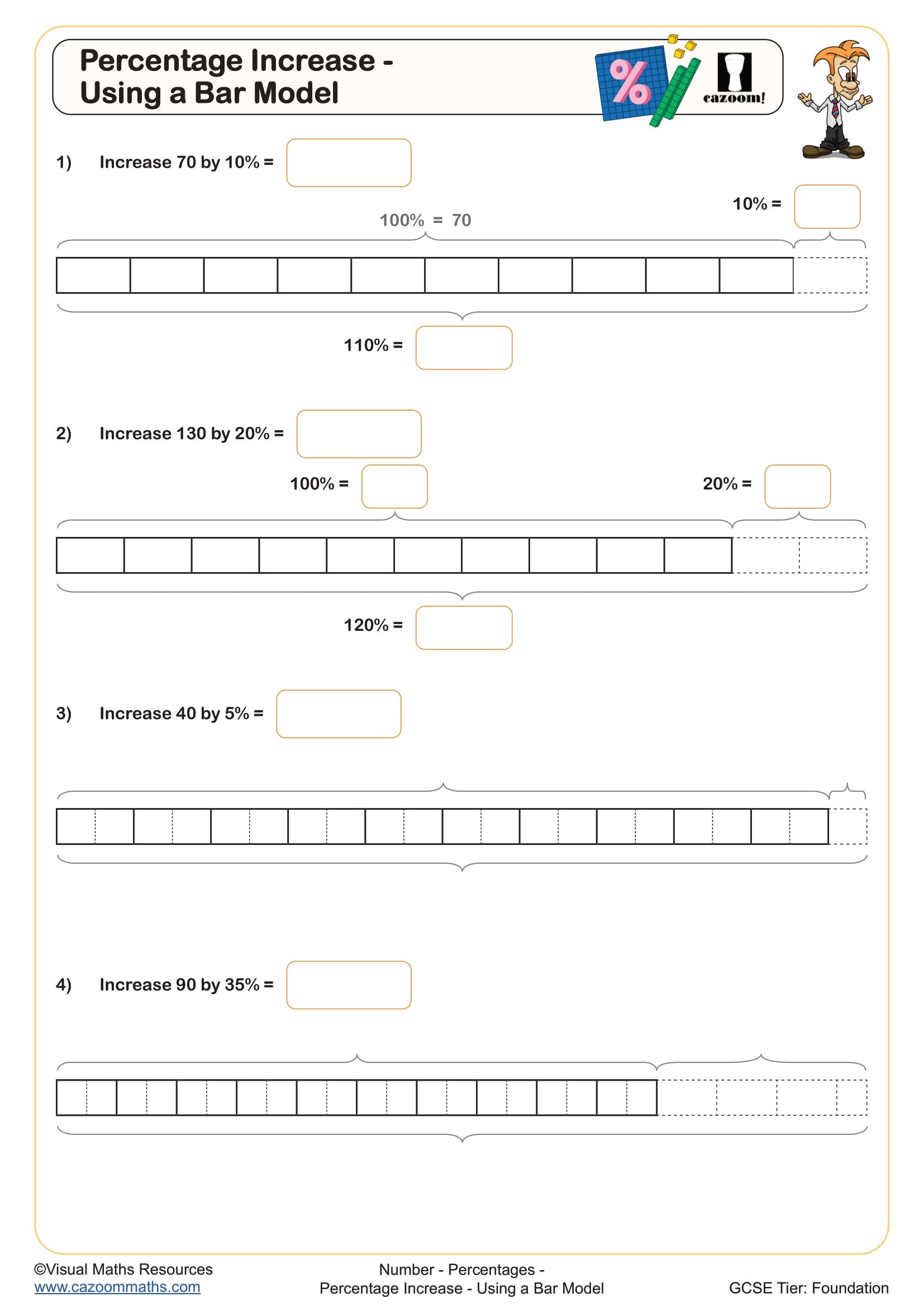
Reverse Percentages - Using a Bar Model (A)
Year groups: 9, 10
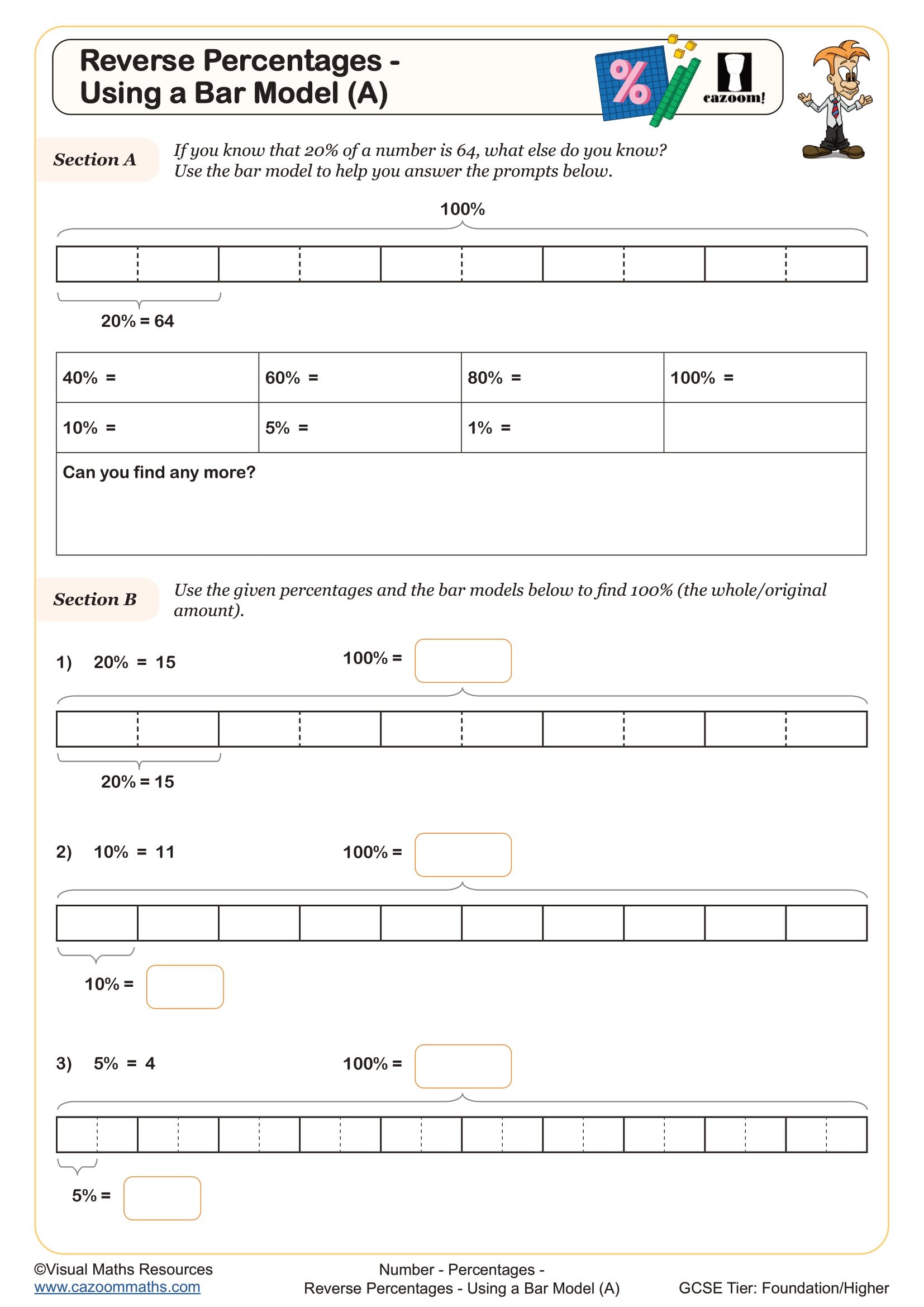
Reverse Percentages - Using a Bar Model (B)
Year groups: 9, 10
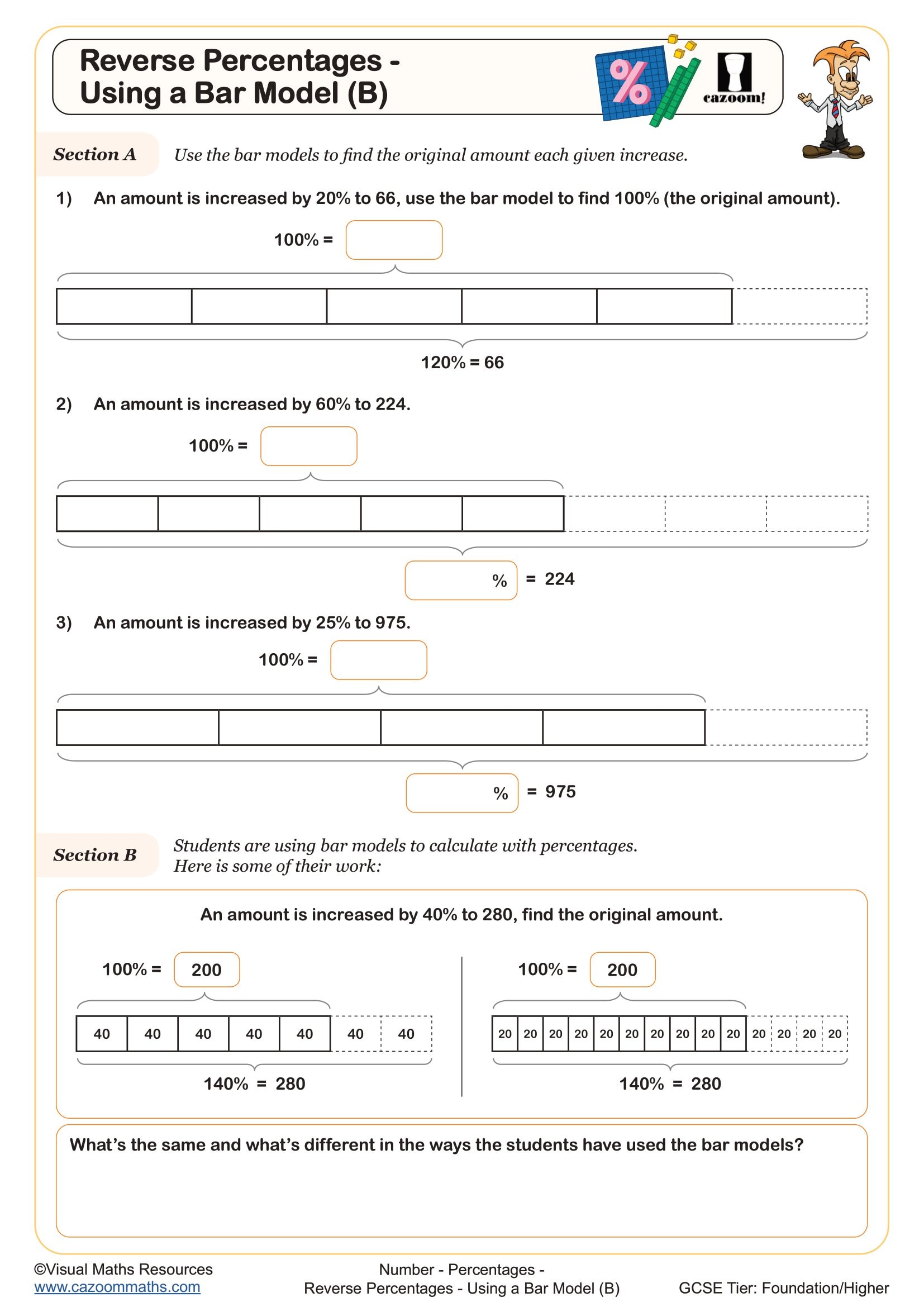
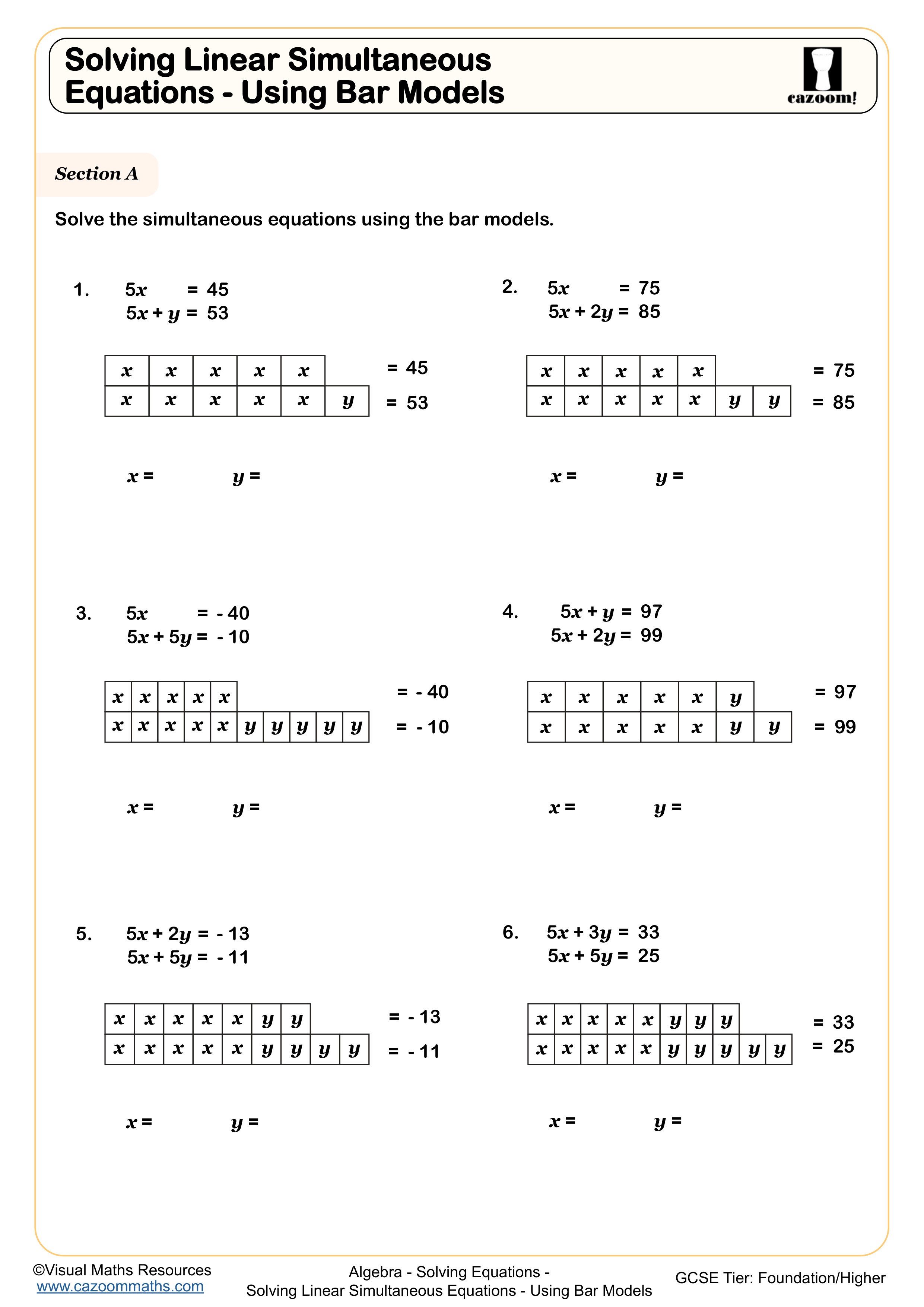
Solving Linear Simultaneous Equations - Using Bar Models
Year groups: 10, 11
All worksheets are created by the team of experienced teachers at Cazoom Maths.
What types of problems are covered in bar model worksheets?
Bar model worksheet collections typically include ratio problems, fraction calculations, percentage questions, and algebraic equation solving. At Key Stage 1, students use simple bar models for addition and subtraction, whilst Key Stage 3 and 4 students tackle more complex scenarios involving multiple operations and unknown quantities.
Teachers frequently observe that students initially struggle to identify which quantity should form the longest bar, particularly in comparison problems. Bar model word problems worksheets pdf formats allow teachers to project examples and work through the drawing process step-by-step, helping students understand how to translate written information into visual representations before attempting calculations.
Which year groups benefit most from bar model approaches?
Bar modelling proves effective across all secondary year groups, though the complexity varies significantly. Year 7 students often use bar models to understand ratio and proportion, whilst Years 10 and 11 apply them to solve linear equations and percentage change problems for GCSE preparation.
Many teachers find that introducing bar models to Year 7 classes creates a solid foundation for algebraic thinking later. Students who master bar model questions early often show greater confidence when tackling formal algebra, as they already understand the concept of representing unknown quantities visually. The method bridges the gap between arithmetic and algebraic reasoning effectively.
How do bar model fractions worksheets help with understanding?
Bar model fractions worksheets allow students to see fraction operations as parts of wholes, making abstract fraction arithmetic more concrete. Students draw bars divided into equal sections, clearly showing how fractions combine, subtract, or relate to each other proportionally.
Teachers notice that students often confuse which fraction represents the whole when working with bar models initially. The visual representation helps clarify this confusion, particularly in problems where students must find fractions of amounts. Once students can accurately identify and draw the whole, they typically show marked improvement in fraction problem-solving across different contexts.
How can teachers use these worksheets most effectively in lessons?
Teachers achieve best results by demonstrating bar model construction using worked examples before students attempt independent practice. Starting with concrete manipulatives or digital bar models helps students understand the concept before moving to pencil-and-paper drawings.
Many mathematics departments find that displaying answer sheets alongside student work encourages self-assessment and peer discussion about different approaches. The PDF format allows teachers to annotate digital copies during whole-class feedback, highlighting common errors and celebrating successful problem-solving strategies. Regular practice with varied question types builds student confidence and fluency gradually.