Bearings Scale and Loci GCSE Worksheets
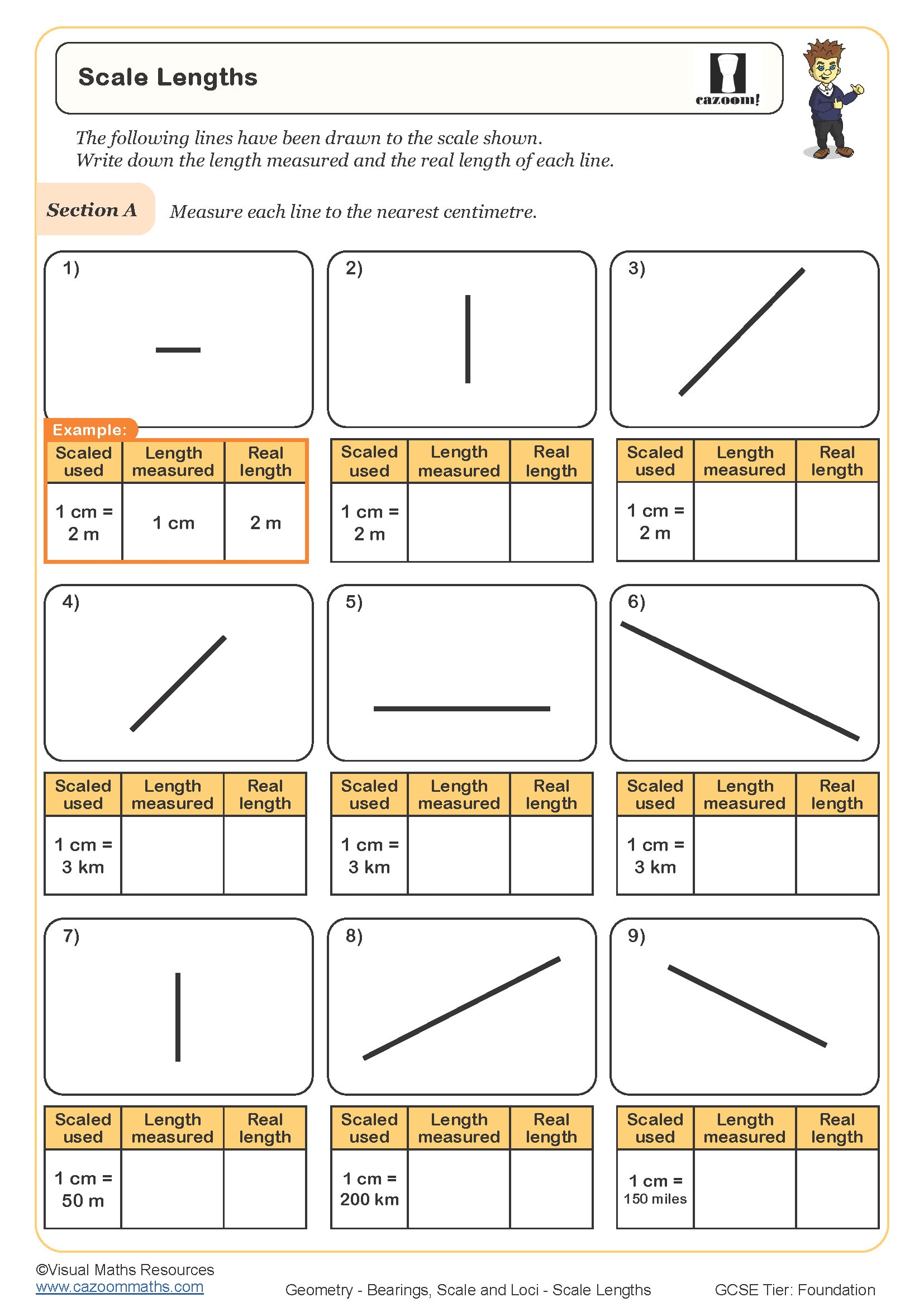
Scale Lengths
Year groups: 7, 8
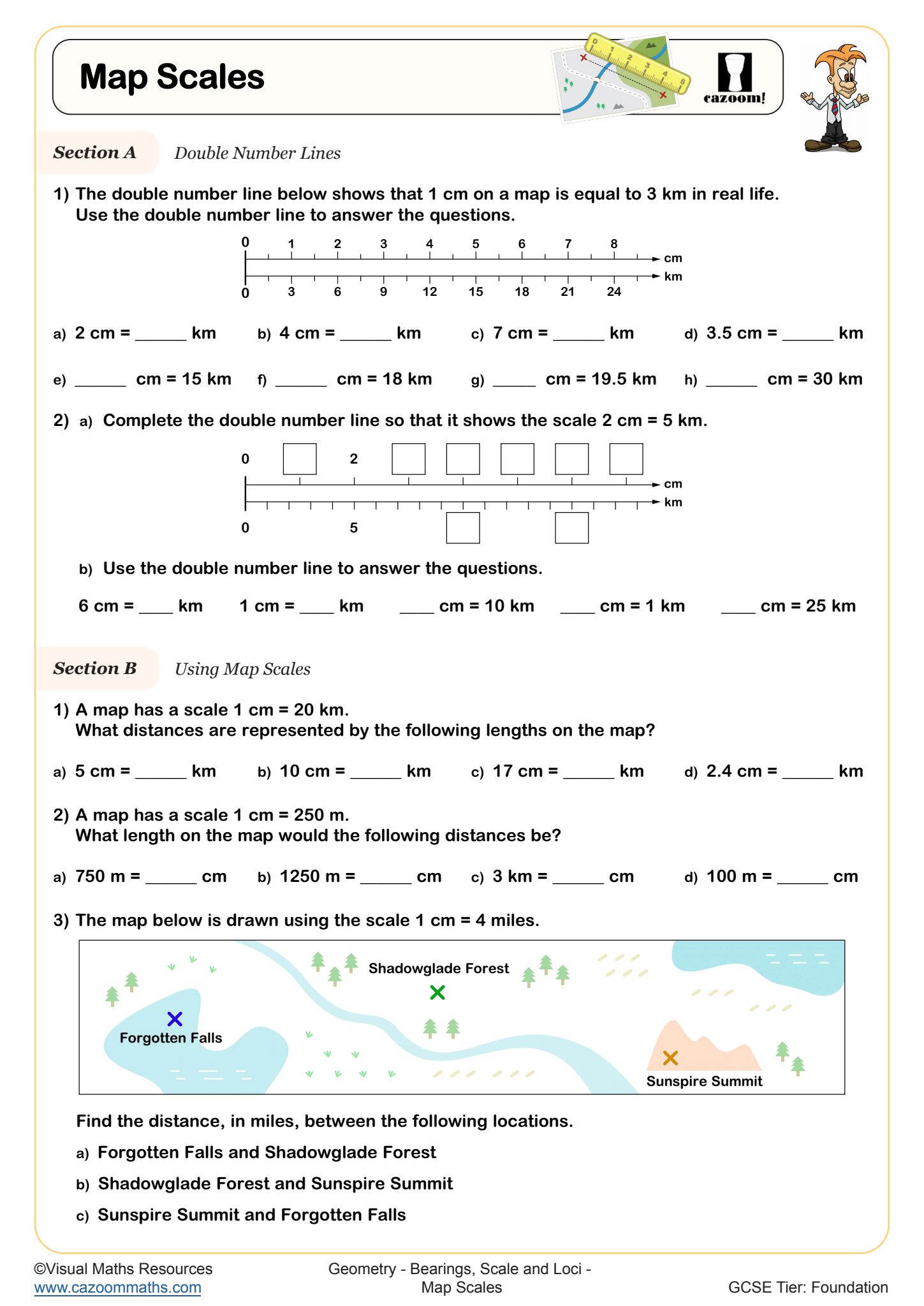
Map Scales
Year groups: 8, 9
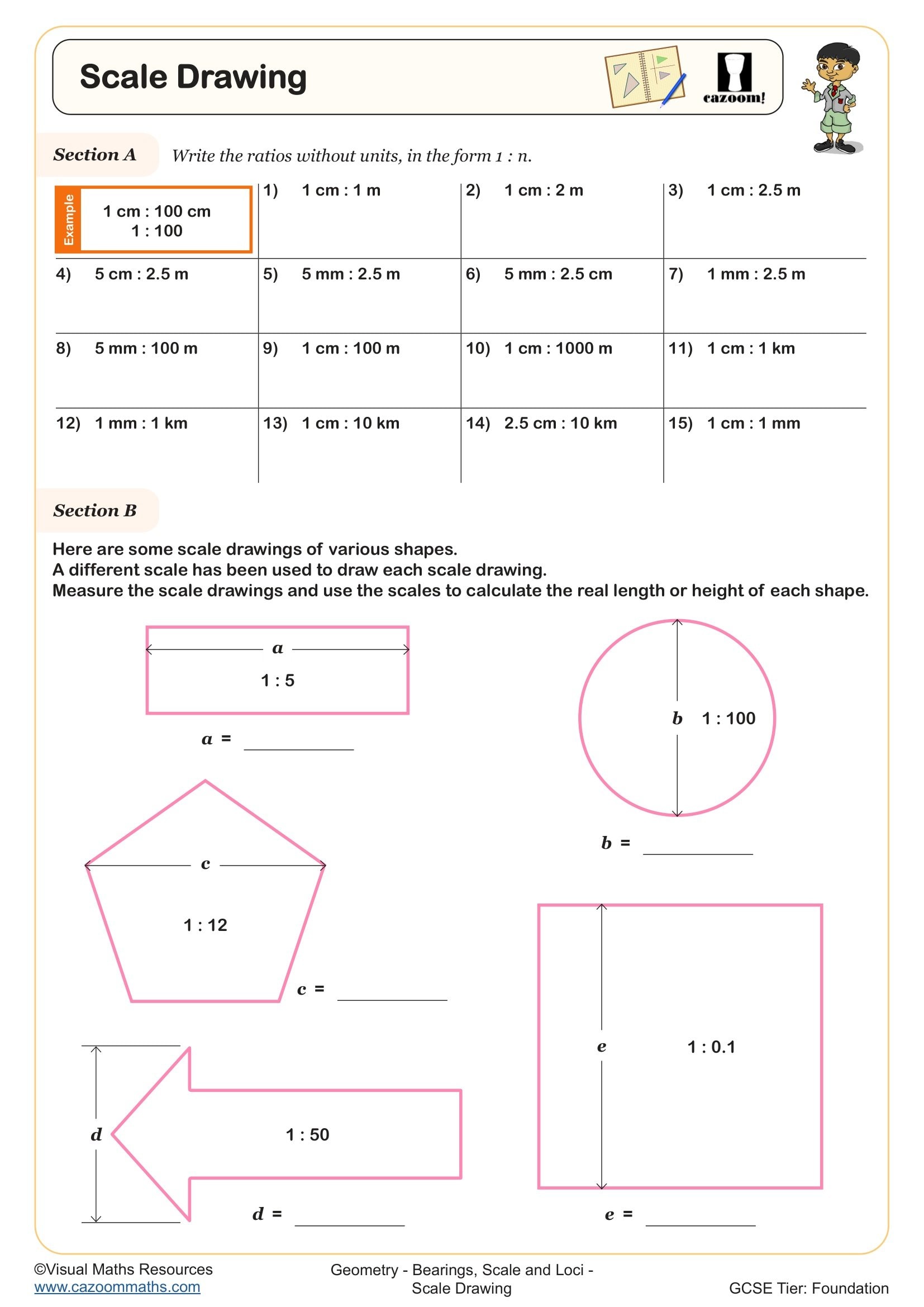
Scale Drawing
Year groups: 8, 9
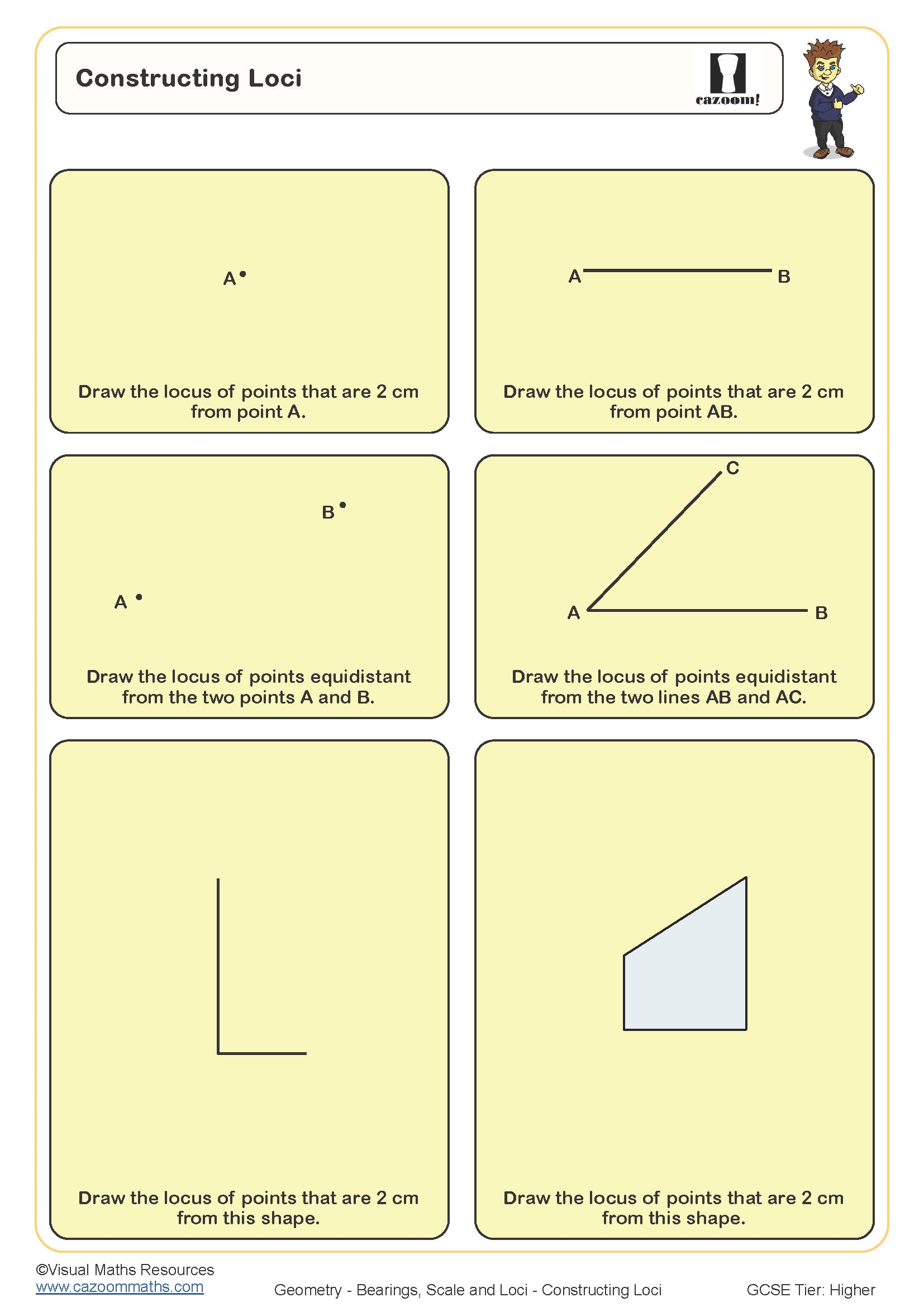
Constructing Loci
Year groups: 9, 10
Loci Problems
Year groups: 9, 10
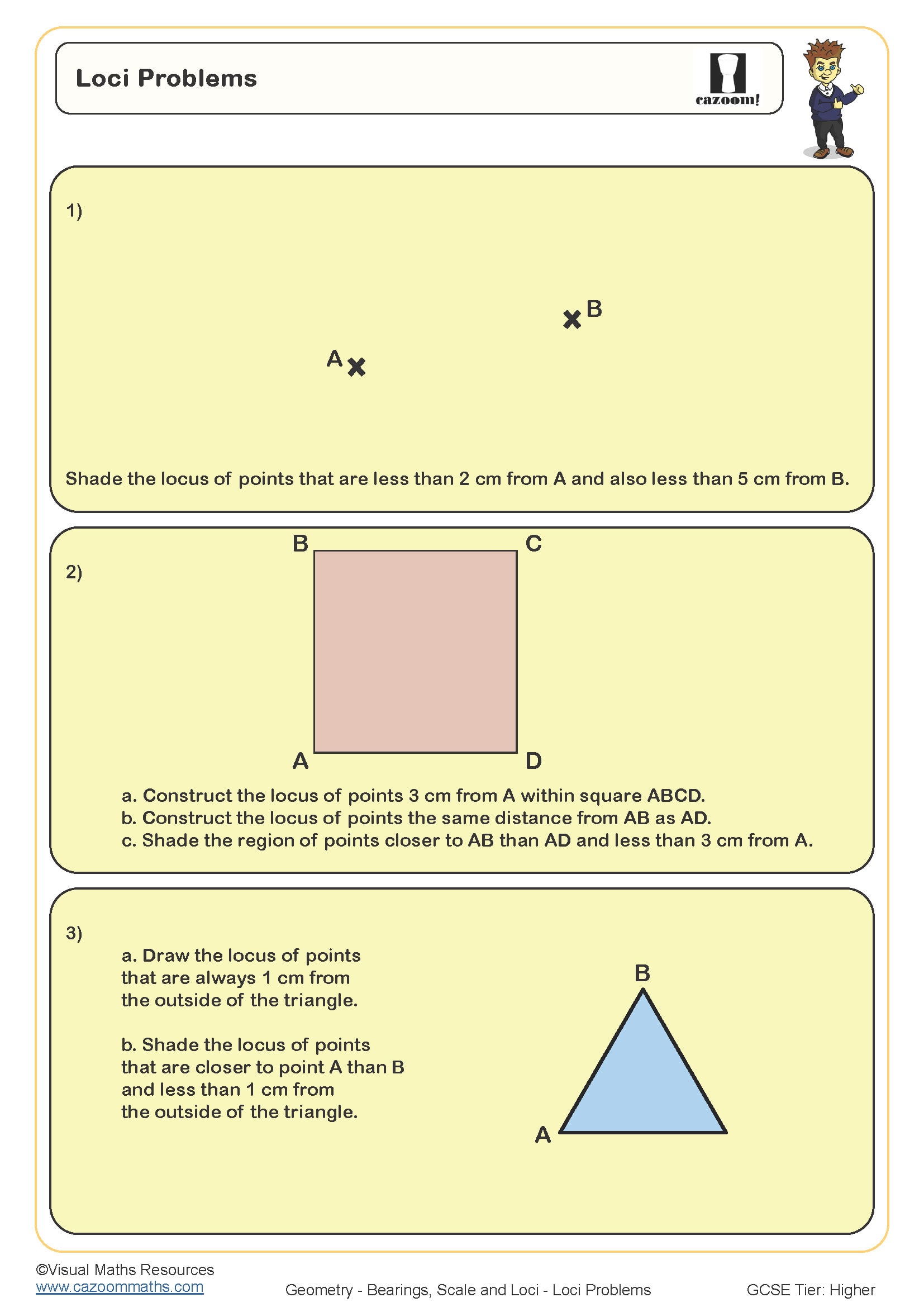
Bearings and Scale Word Problems
Year groups: 10, 11
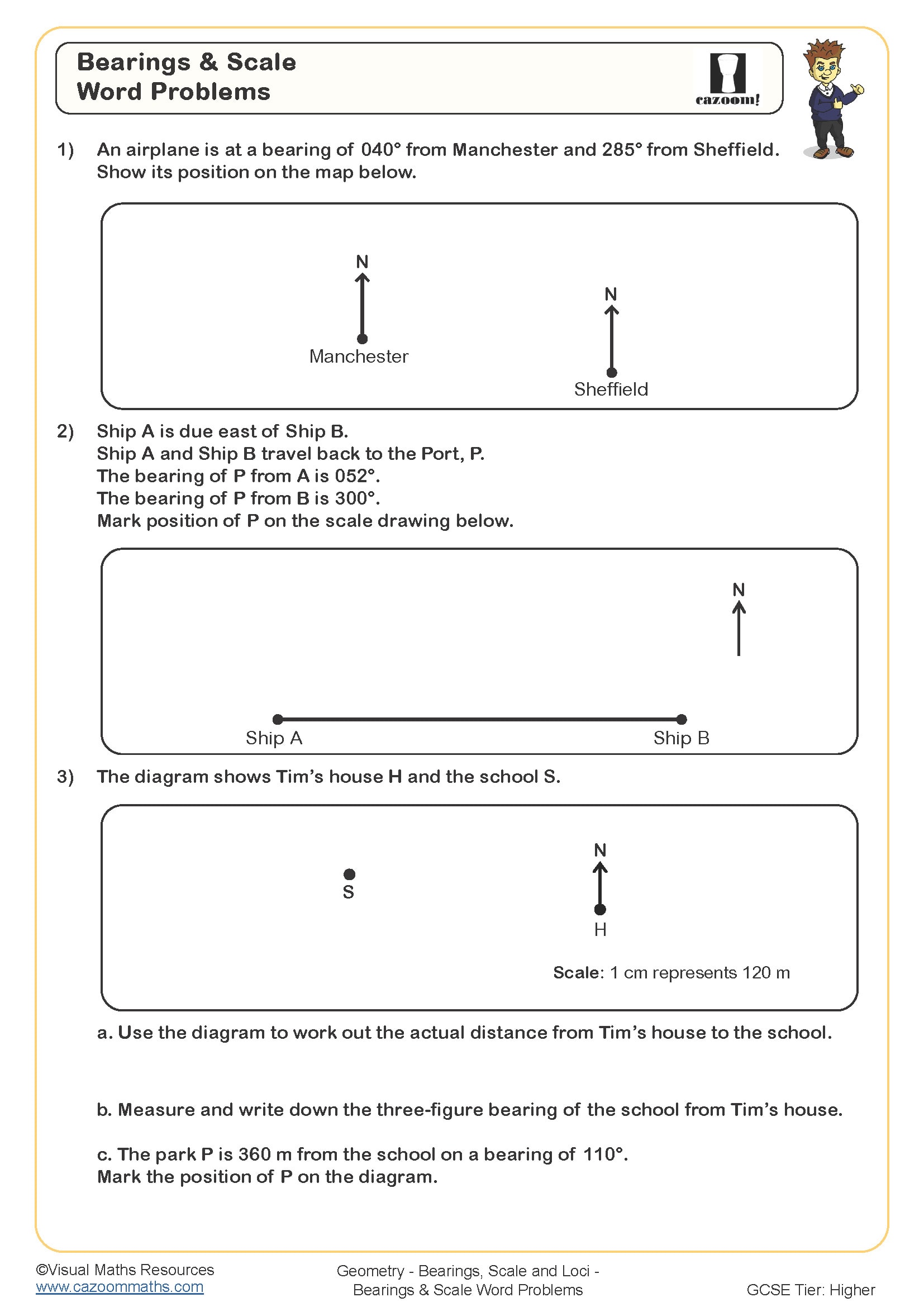
Calculating Bearings - with Angles in Parallel Lines
Year groups: 10, 11
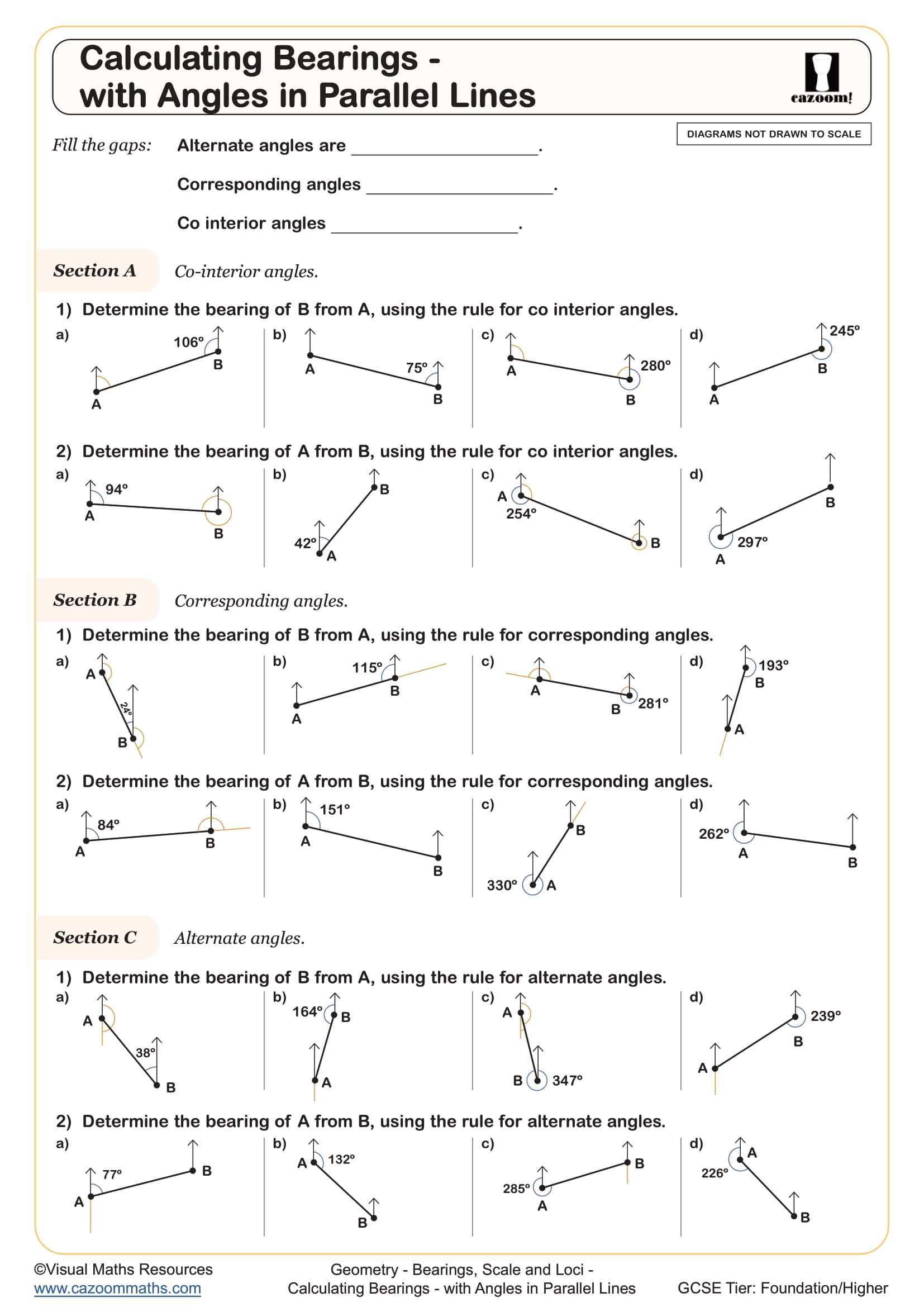
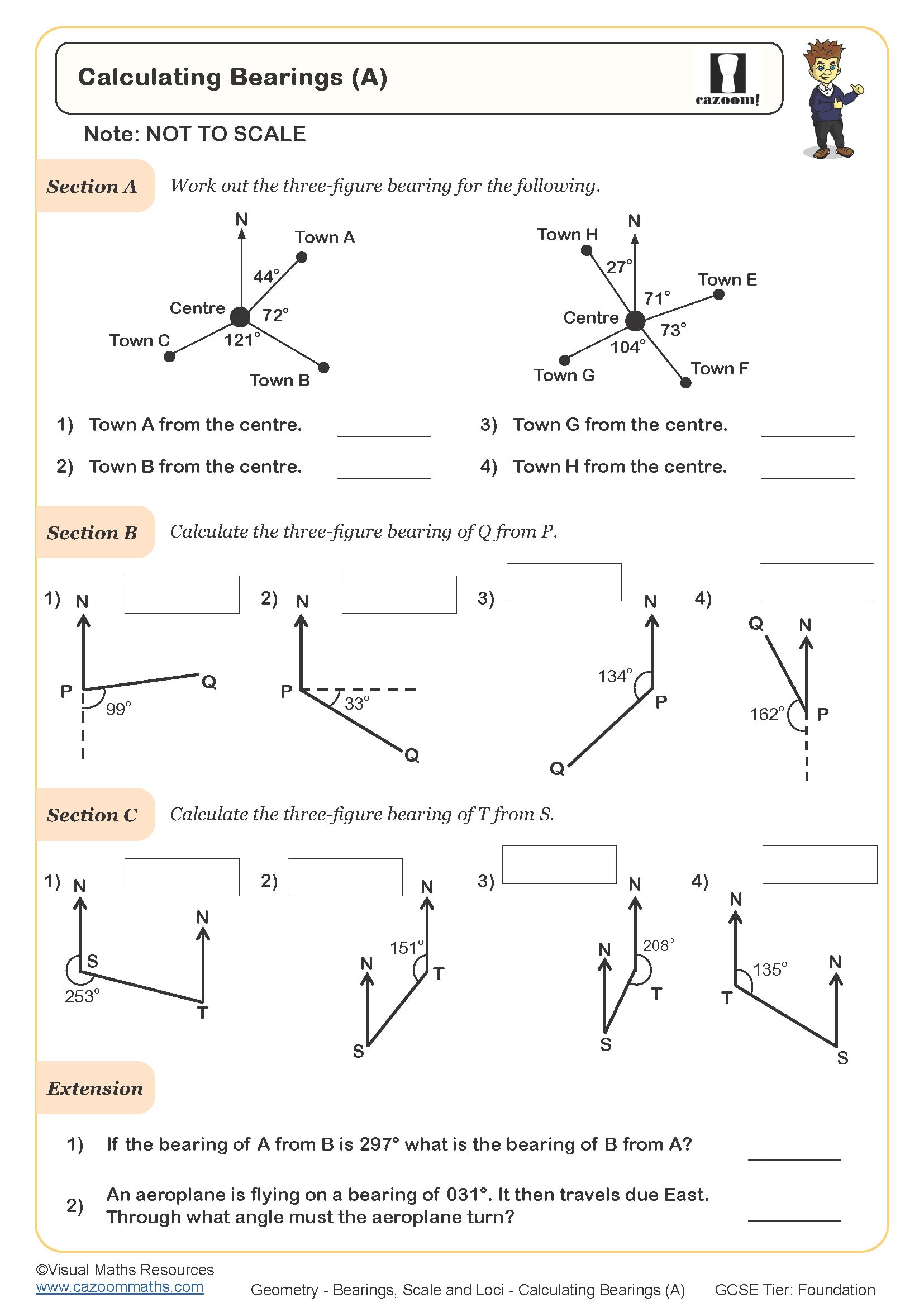
Calculating Bearings (A)
Year groups: 10, 11
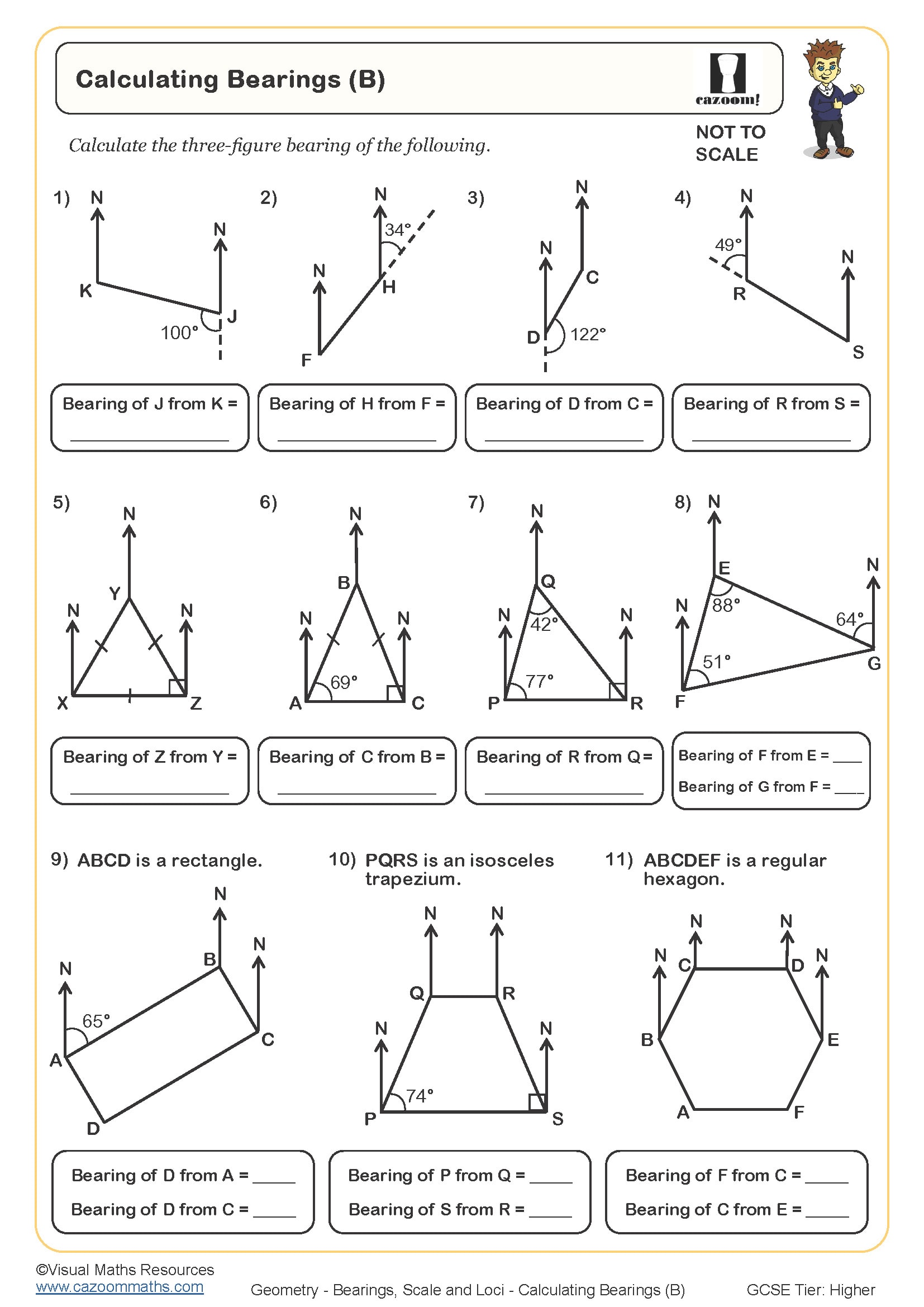
Calculating Bearings (B)
Year groups: 10, 11
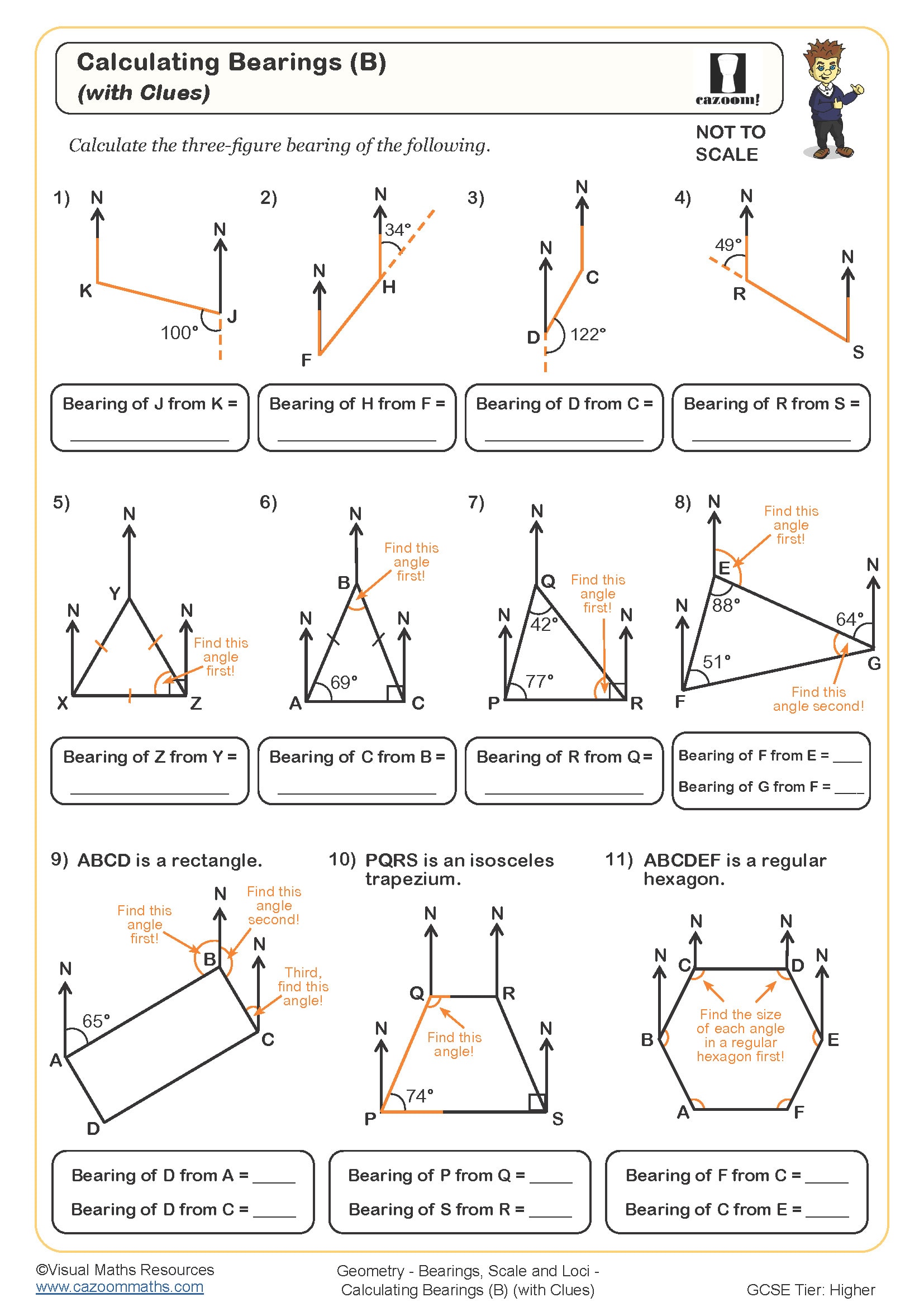
Calculating Bearings (B) (With Clues)
Year groups: 10, 11
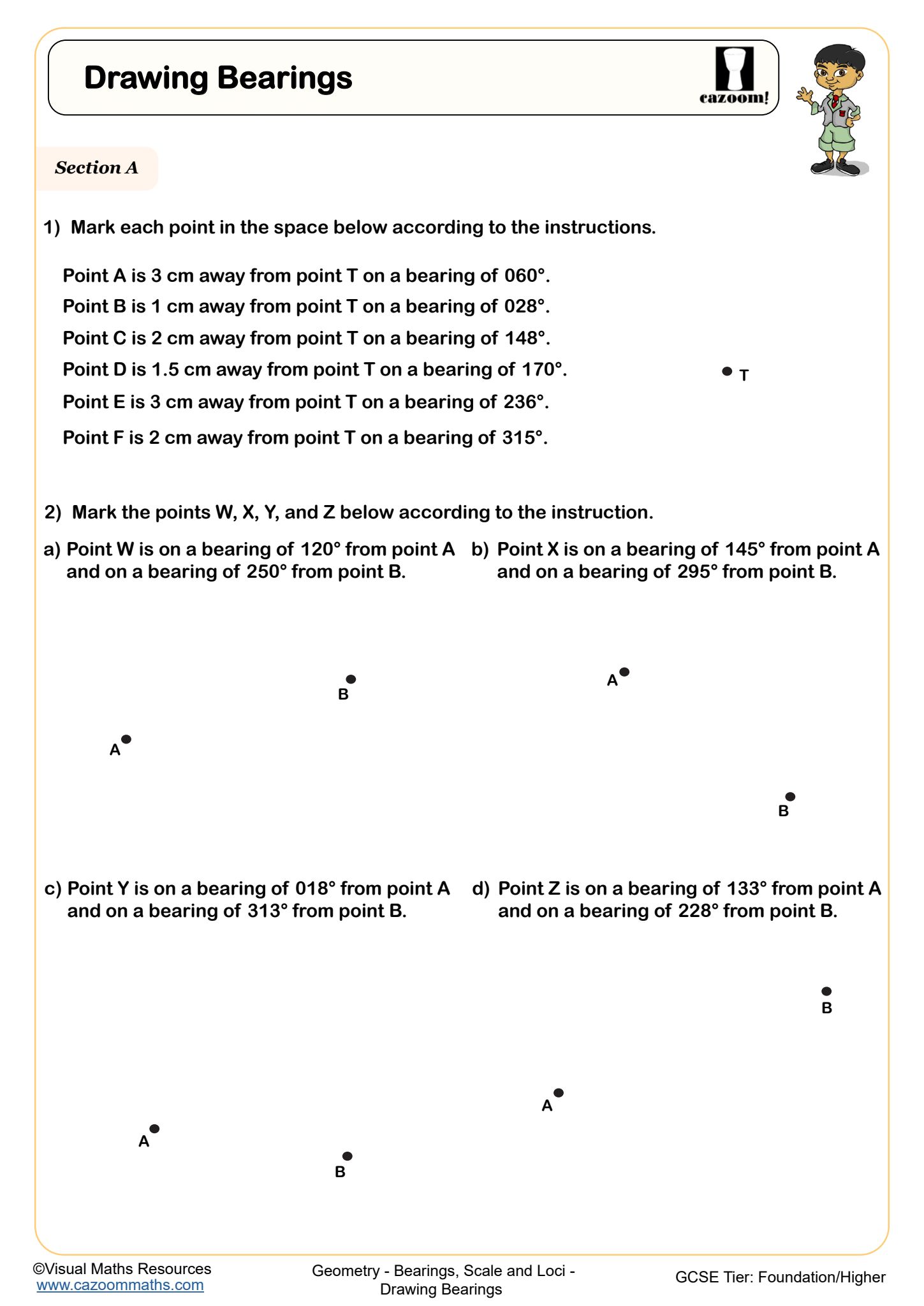
Drawing Bearings
Year groups: 10, 11
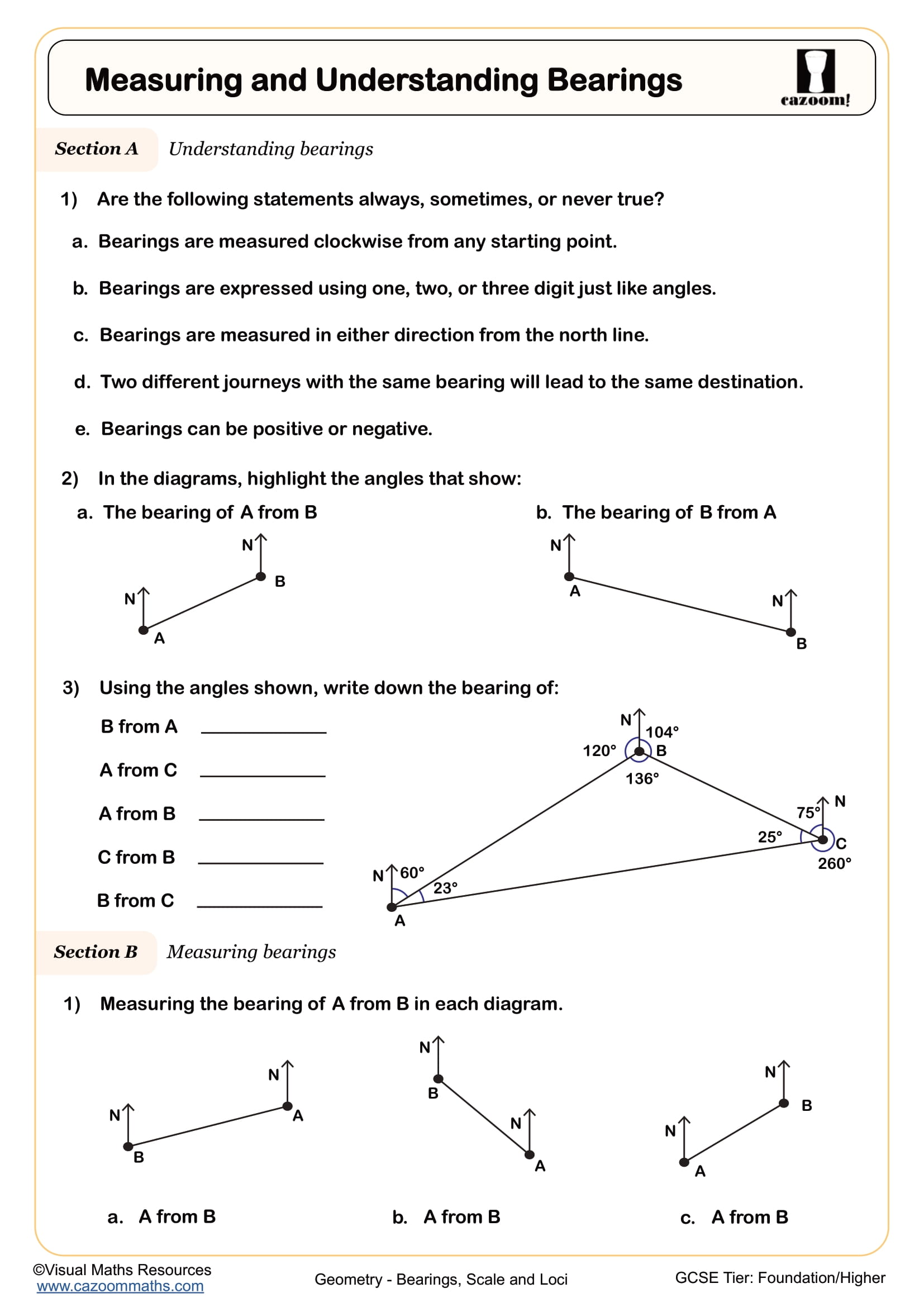
Measuring and Understanding Bearings
Year groups: 10, 11
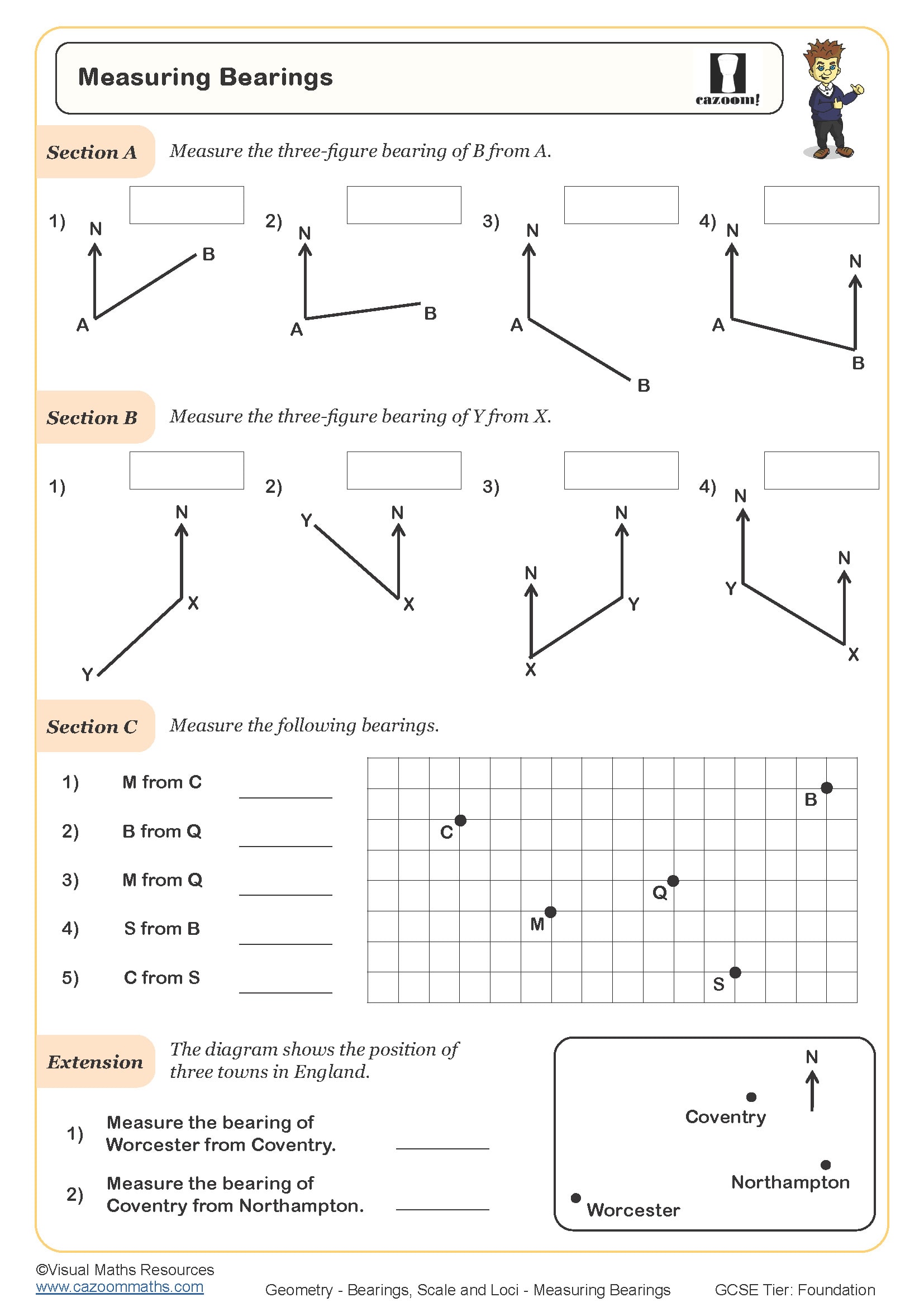
Measuring Bearings
Year groups: 10, 11
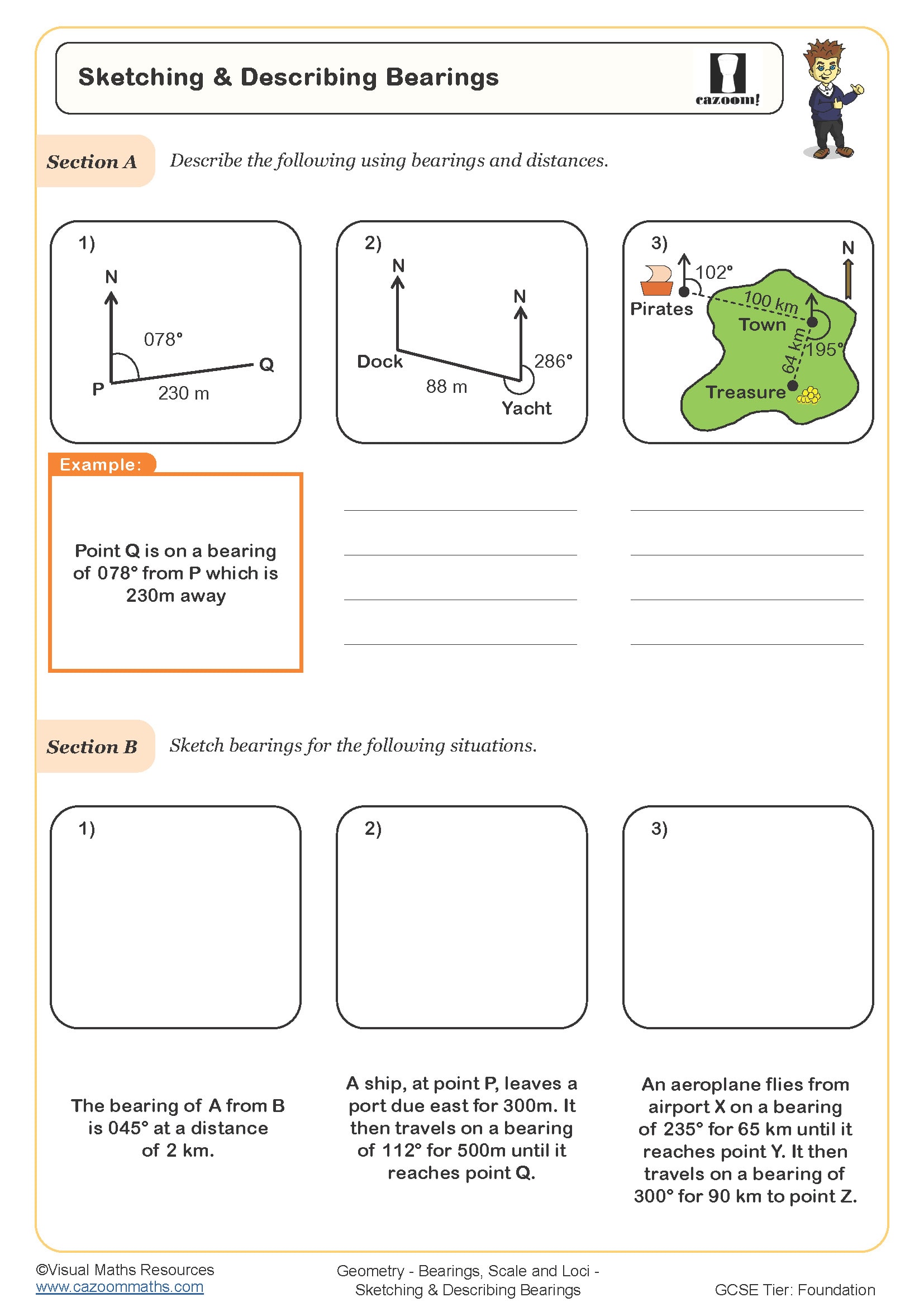
Sketching and Describing Bearings
Year groups: 10, 11
All worksheets are created by the team of experienced teachers at Cazoom Maths.
What skills do students develop with a bearings worksheet?
A bearings maths worksheet develops students' ability to measure and draw three-figure bearings accurately, interpret scale drawings, and apply coordinate geometry in practical contexts. These skills align with KS3 and KS4 geometry requirements, building towards GCSE problem-solving questions that combine bearings with distance calculations and loci.
Teachers notice that students who master drawing bearings worksheet activities show improved spatial awareness across other mathematical topics. The precision required when measuring bearings worksheet tasks transfers effectively to work with angles, transformations, and trigonometry, making these foundational skills particularly valuable for students progressing to A-level Mathematics.
Which year groups should use bearings and scale drawings worksheets?
Bearings typically appear in Year 8 as part of KS3 geometry, with students learning basic three-figure bearing notation and simple measurements. The topic develops through Years 9-11, incorporating scale drawings, coordinate geometry applications, and complex multi-step problems that feature in GCSE examinations.
Experienced teachers often introduce bearing worksheet activities alongside compass work in geography lessons, creating cross-curricular connections that help students understand real-world applications. By Year 11, students should confidently tackle examination questions combining bearings with trigonometry, Pythagoras' theorem, and loci work, demonstrating the progressive complexity of this topic.
How do scale drawings connect with bearings in these worksheets?
Scale drawings provide the visual framework for bearings problems, allowing students to represent real distances and directions on paper. The combination teaches students to interpret maps, architectural plans, and navigation charts whilst applying mathematical precision to practical scenarios.
Teachers observe that students often struggle with scale conversion when working between actual distances and drawing measurements. A common error involves mixing units or applying scales incorrectly when calculating real-world distances from bearing diagrams. Structured practice with these combined concepts helps students develop the systematic approach needed for GCSE problem-solving questions.
How can teachers use these worksheets most effectively in lessons?
Teachers achieve best results by beginning lessons with practical compass activities before moving to worksheet exercises, helping students understand the physical basis of bearing measurements. Pairing students during initial practice allows peer discussion of common errors, particularly the north reference point convention.
Many teachers use the answer sheets to create model solutions on the board, demonstrating proper notation and measurement techniques. This approach works particularly well for drawing bearings worksheet activities where visual accuracy matters. Regular mini-assessments using worksheet questions help identify students who need additional support with angle measurement or scale interpretation before progressing to more complex problems.