Using a Calculator Worksheets
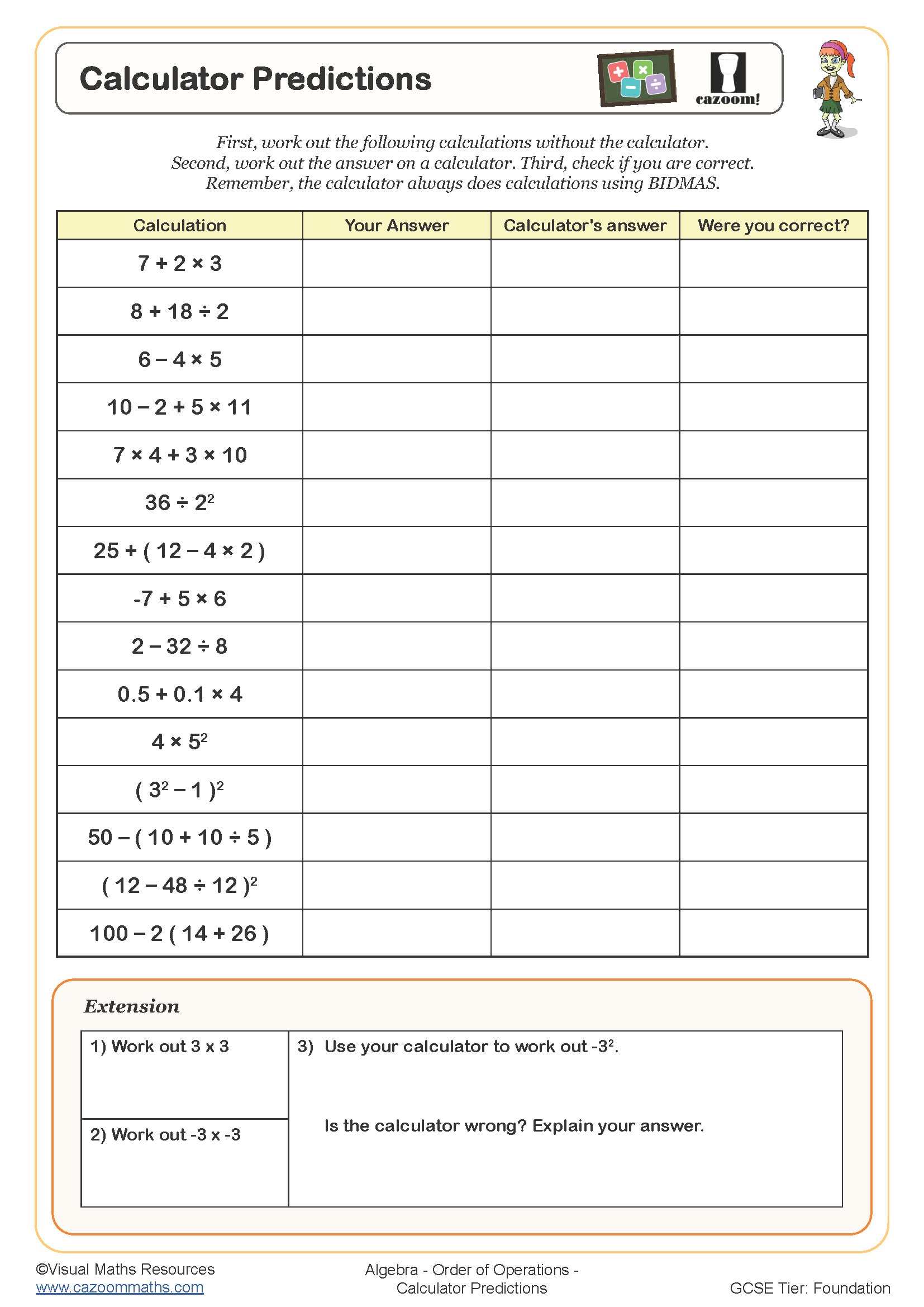
Calculator Predictions
Year groups: 7, 8
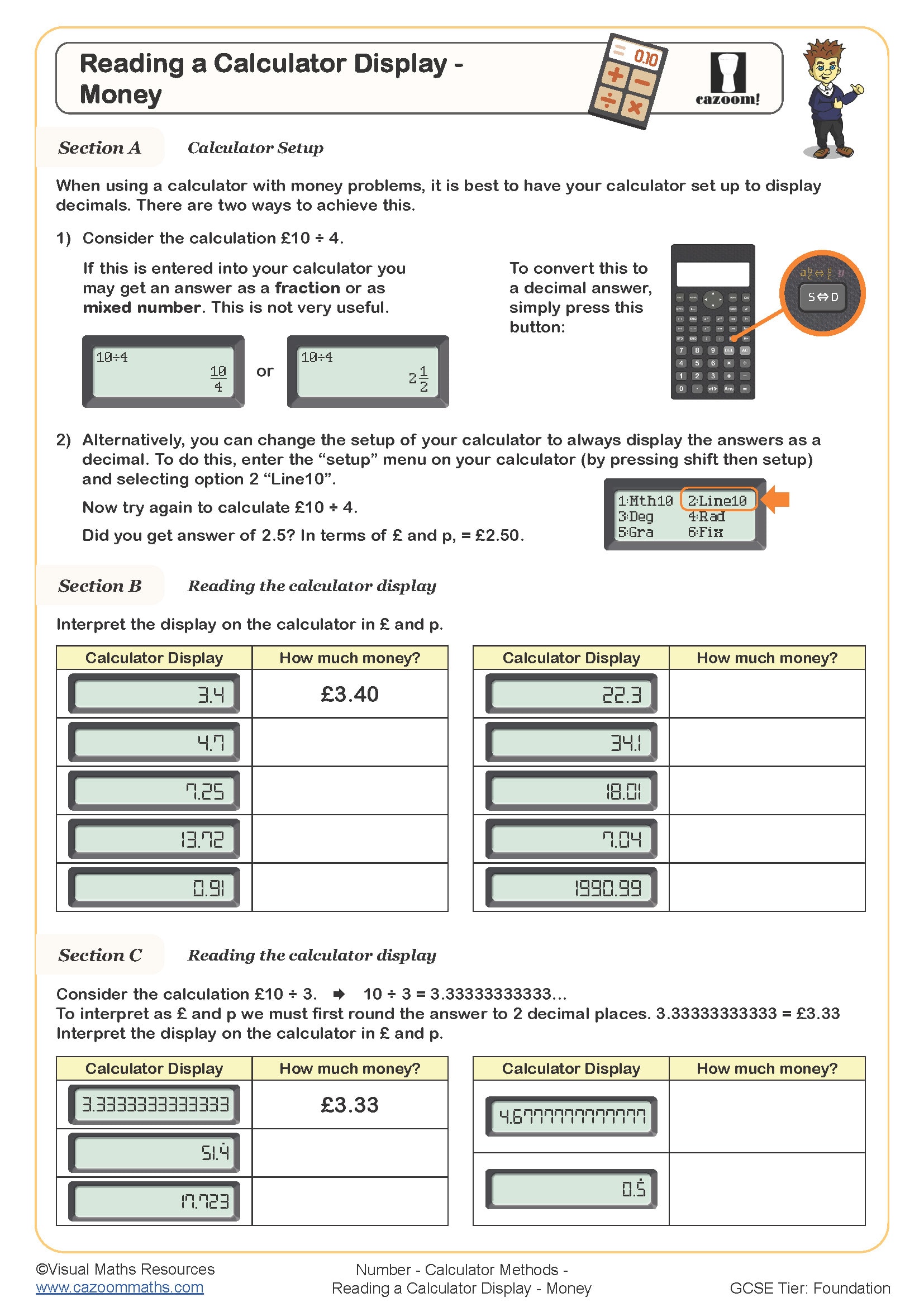
Reading a Calculator Display - Money
Year groups: 7
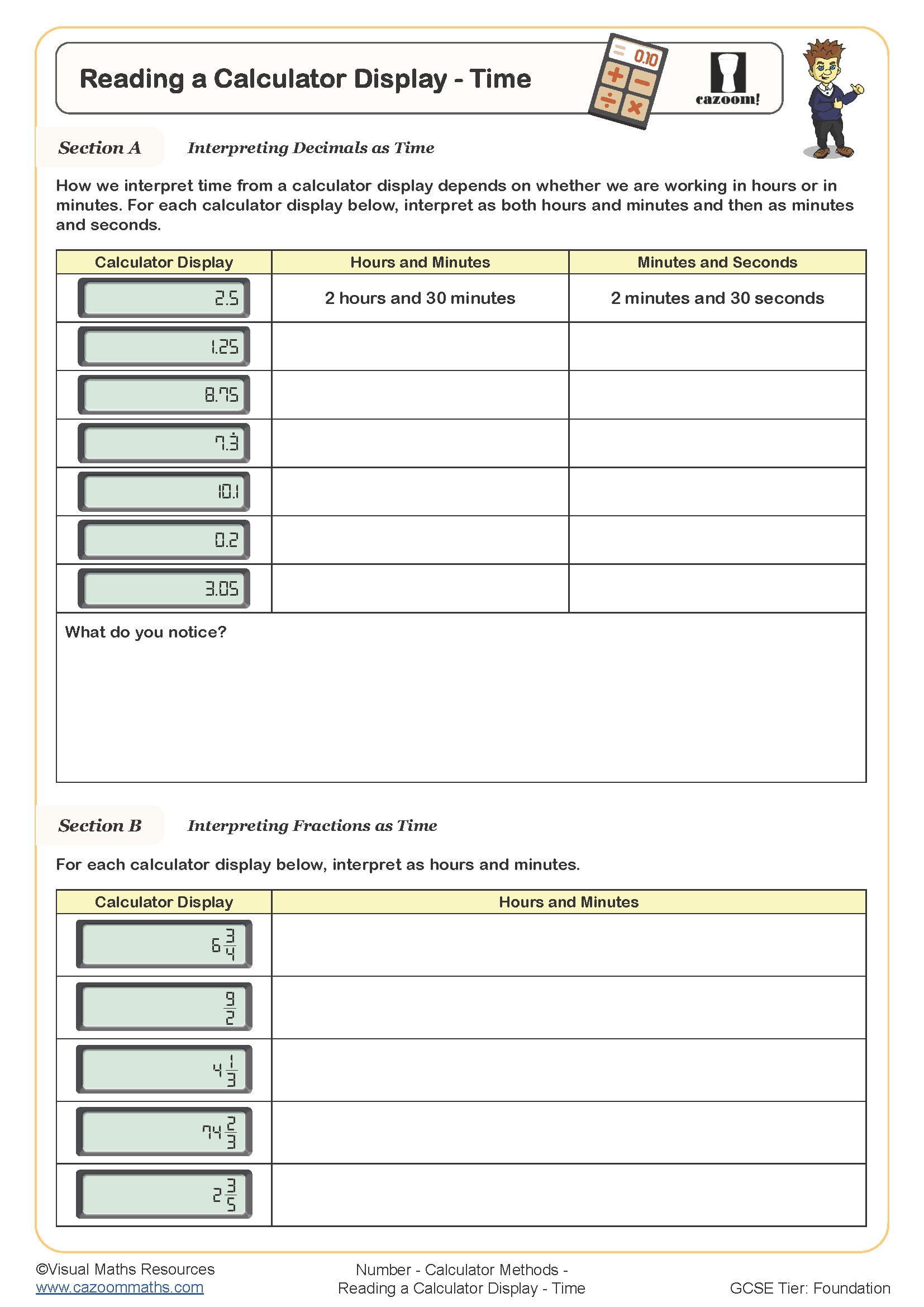
Reading a Calculator Display - Time
Year groups: 7
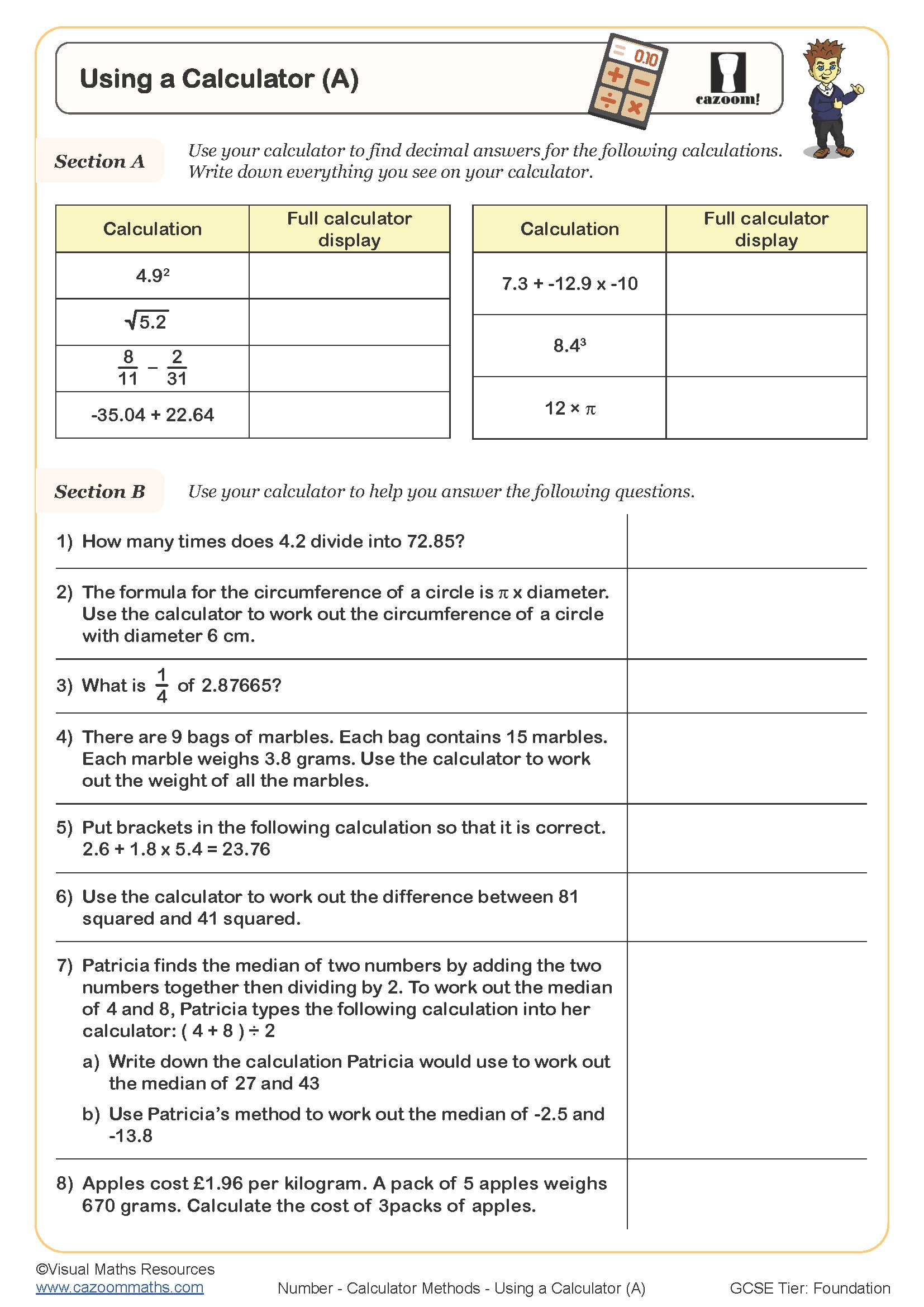
Using a Calculator (A)
Year groups: 7, 8
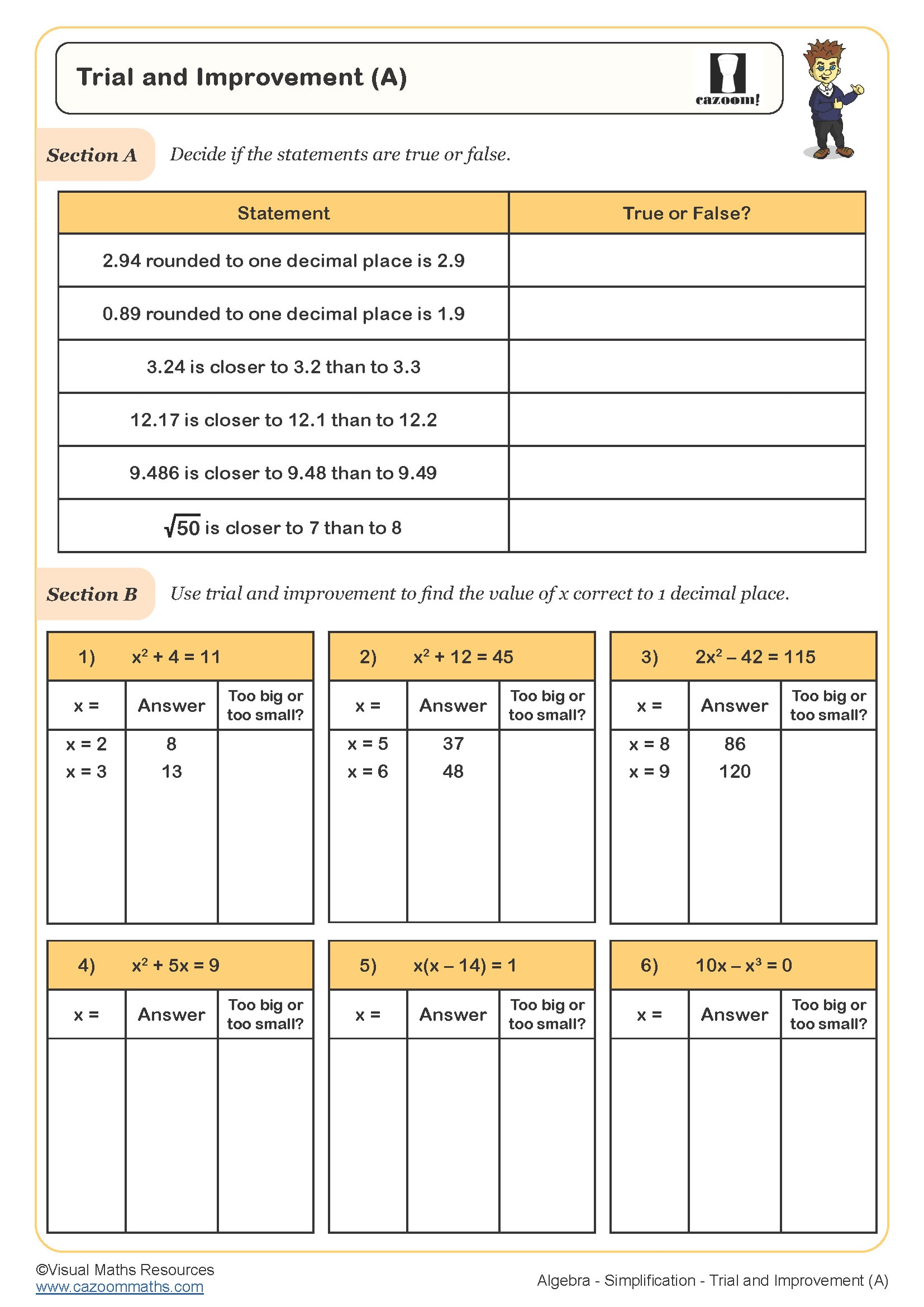
Trial and Improvement (A)
Year groups: 8, 9
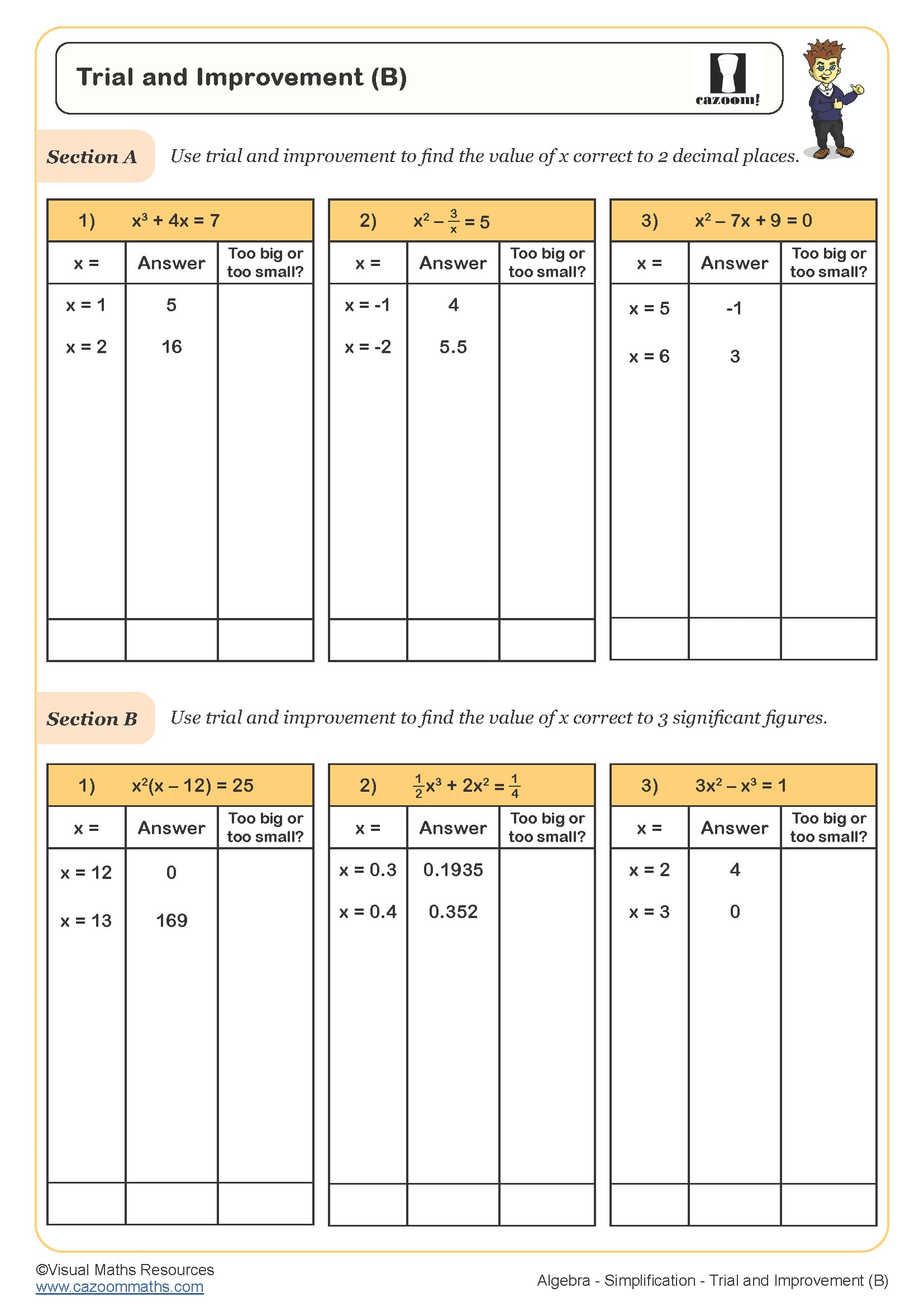
Trial and Improvement (B)
Year groups: 8, 9
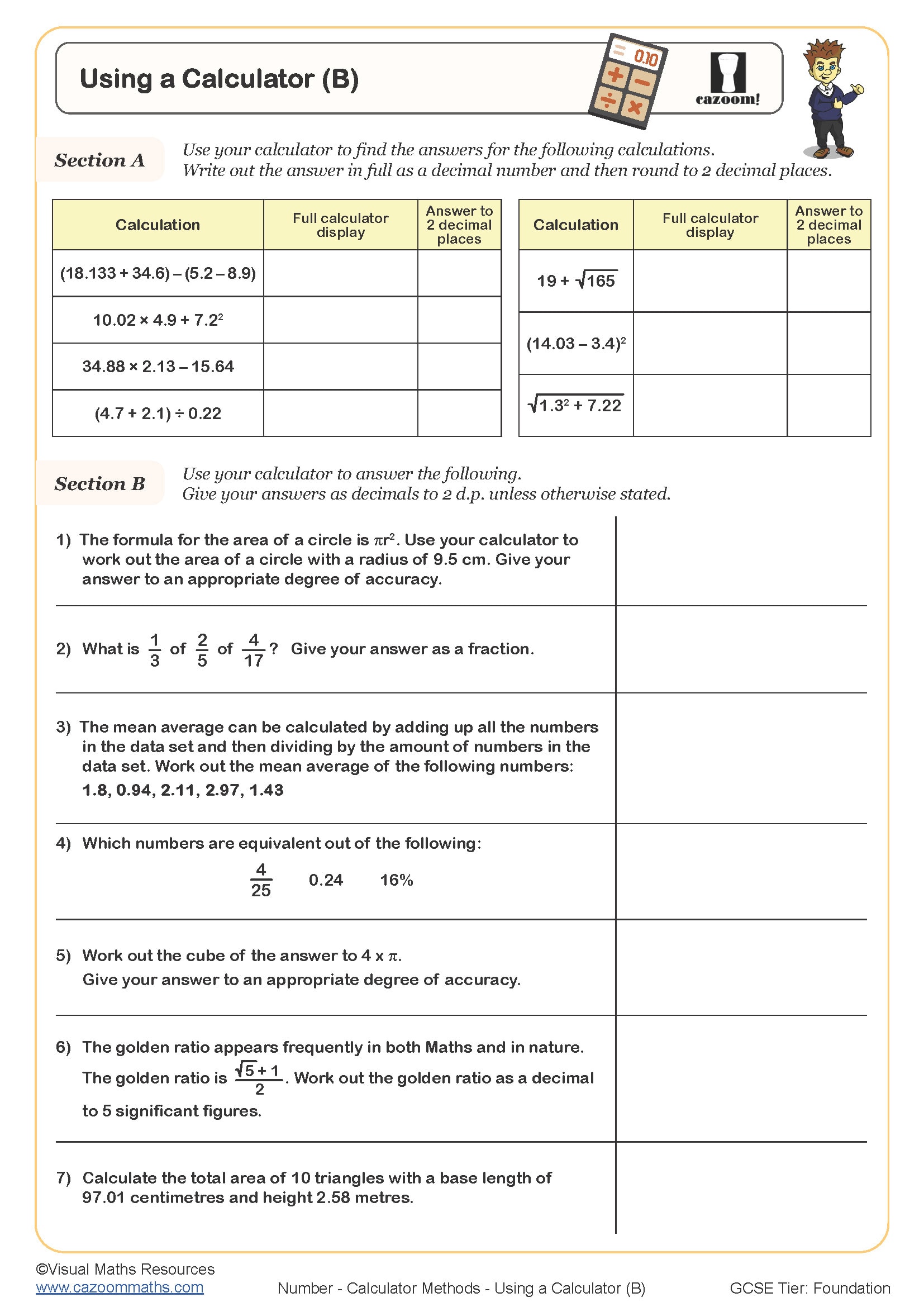
Using a Calculator (B)
Year groups: 8, 9
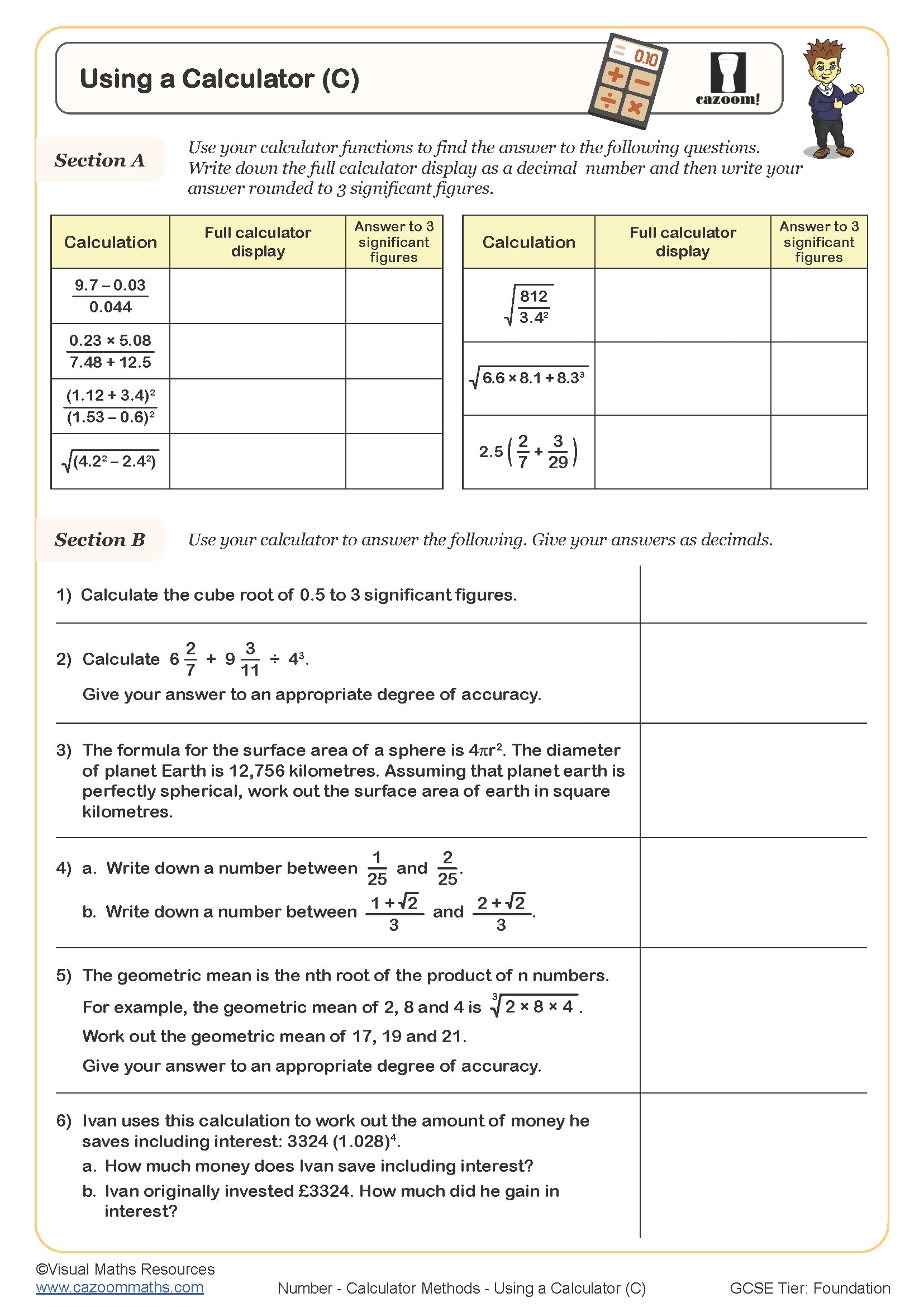
Using a Calculator (C)
Year groups: 8, 9, 10
All worksheets are created by the team of experienced teachers at Cazoom Maths.
What should students focus on with calculator practice worksheets?
Calculator practice should emphasise accuracy in entering complex calculations and developing strategies for checking answers make sense. Students need systematic practice with bracket notation, memory functions, and statistical operations that appear frequently in GCSE mathematics and science examinations.
Teachers frequently notice that students rush through calculator work without estimating first, leading to errors like confusing degrees and radians or misplacing decimal points. A calculator skills worksheet that combines estimation with exact calculation helps students develop the dual approach needed for examination success.
Which year groups benefit most from structured calculator work?
Year 7 students typically begin with basic four-operation calculations before progressing to percentage and fraction conversions. By Year 9, students should be confident with memory functions, statistical calculations, and scientific notation that support their work across mathematics and science subjects.
Year 10 and 11 students require focused practice with examination-style calculator questions, particularly those involving trigonometry, logarithms, and complex statistical analysis. Using a calculator worksheet that mirrors examination conditions helps students manage time pressure whilst maintaining accuracy in their final GCSE preparations.
How do teachers address common calculator errors in the classroom?
Memory function errors occur frequently when students forget to clear previous calculations or mix up storage and recall operations. Teachers find that explicit teaching of the M+, M-, and MRC functions prevents these mistakes, particularly in multi-step percentage and compound interest problems.
Bracket errors represent another significant challenge, especially with nested calculations in quadratic formula work or statistical variance calculations. A calculation practice sheet that specifically targets bracket notation helps students understand when calculator logic differs from written mathematical convention, particularly with implied multiplication and division operations.
What makes calculator practice worksheets effective for revision?
Effective calculator practice worksheets pdf resources combine procedural fluency with problem-solving applications, ensuring students can transfer their calculator skills to unfamiliar contexts. The inclusion of estimation boxes encourages students to predict reasonable answers before calculating, developing critical numerical reasoning skills.
Answer sheets with worked solutions prove invaluable for independent study, allowing students to identify specific errors in their calculation sequences. Teachers report that students who regularly practise with structured calculator work show improved confidence in examination conditions and make fewer careless errors under time pressure.