KS3 and KS4 Circle Worksheets
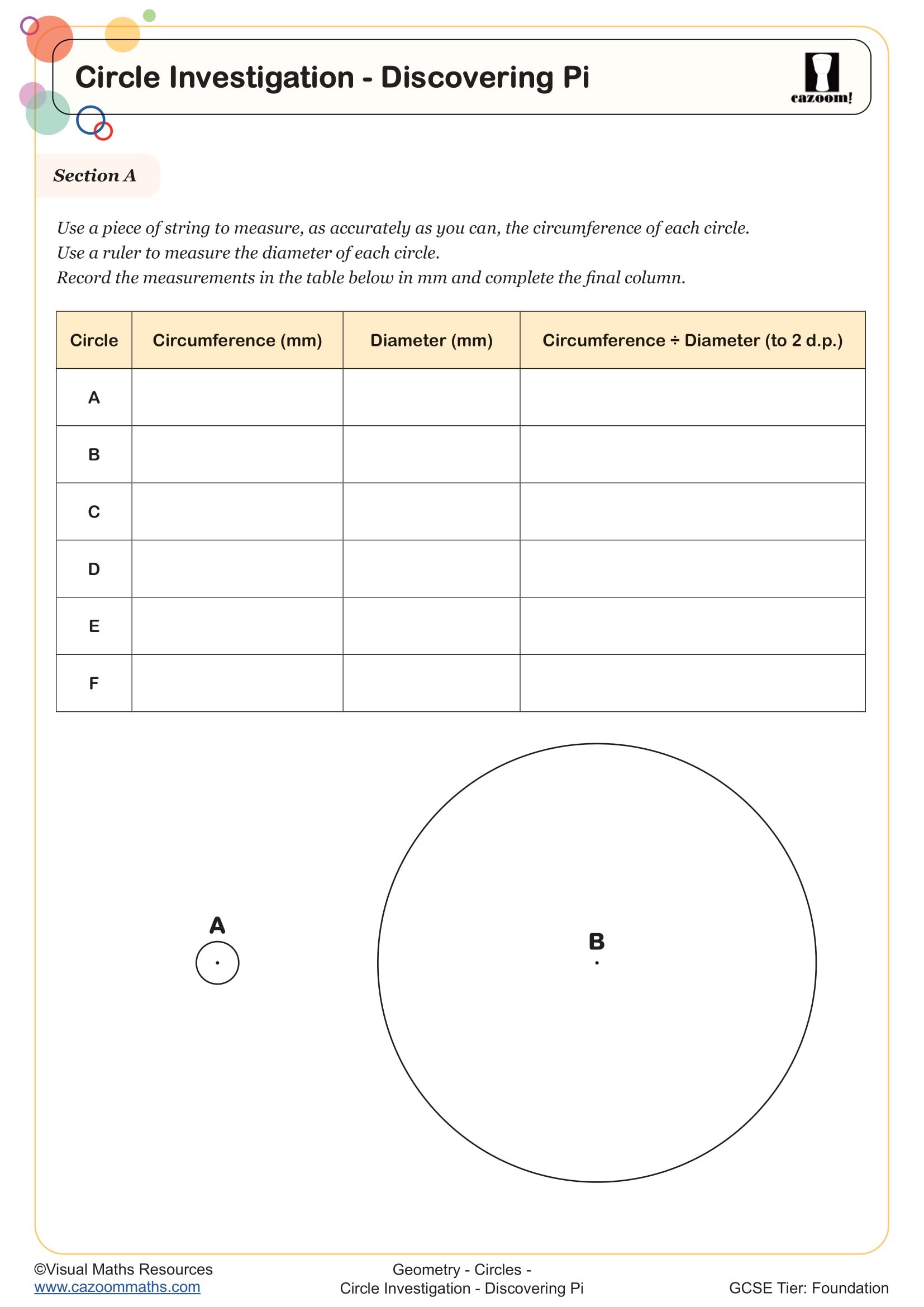
Circle Investigation - Discovering Pi
Year groups: 7, 8
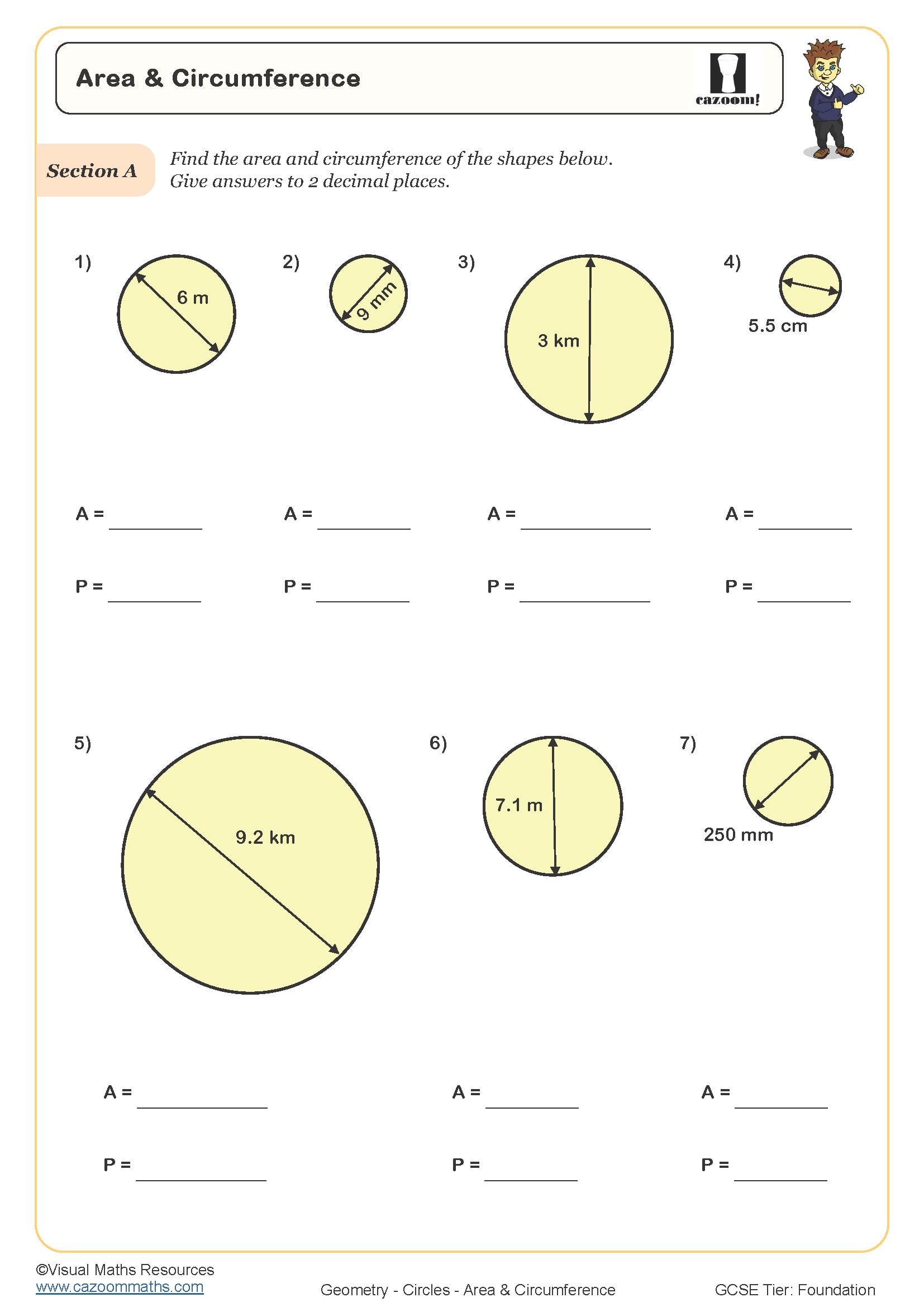
Area and Circumference
Year groups: 8, 9
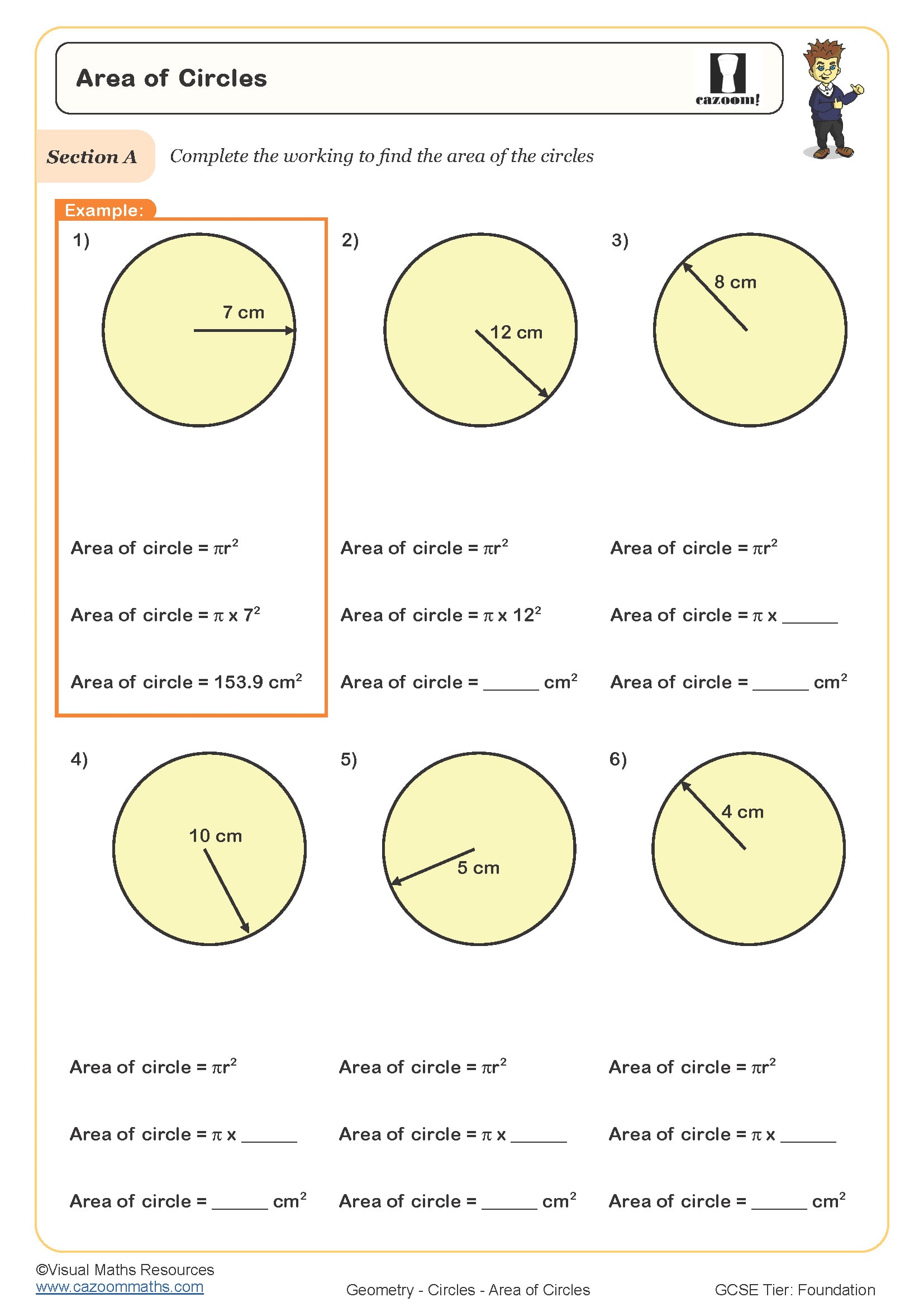
Area of Circles
Year groups: 8, 9
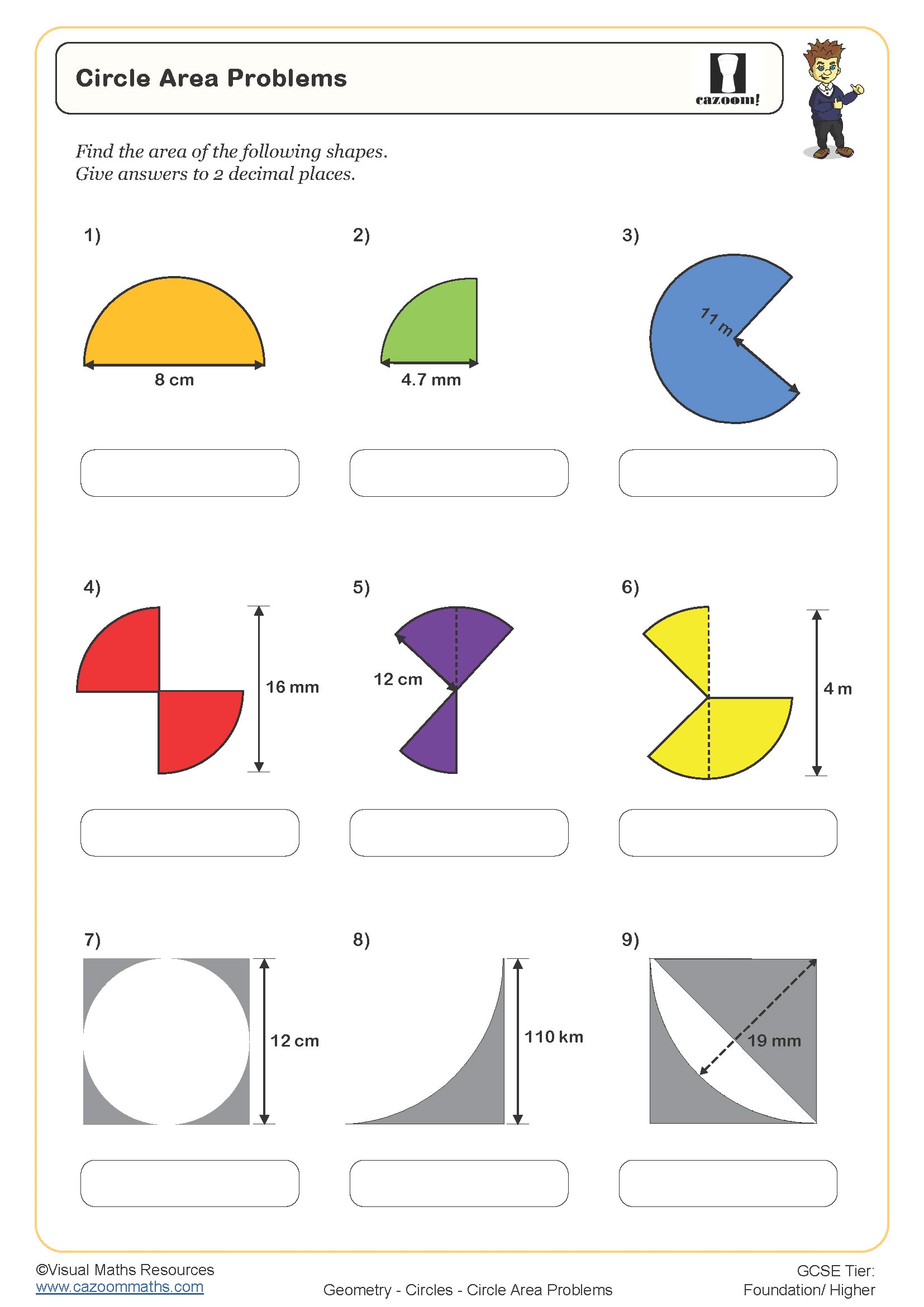
Circle Area Problems
Year groups: 8, 9
Circumference
Year groups: 8, 9
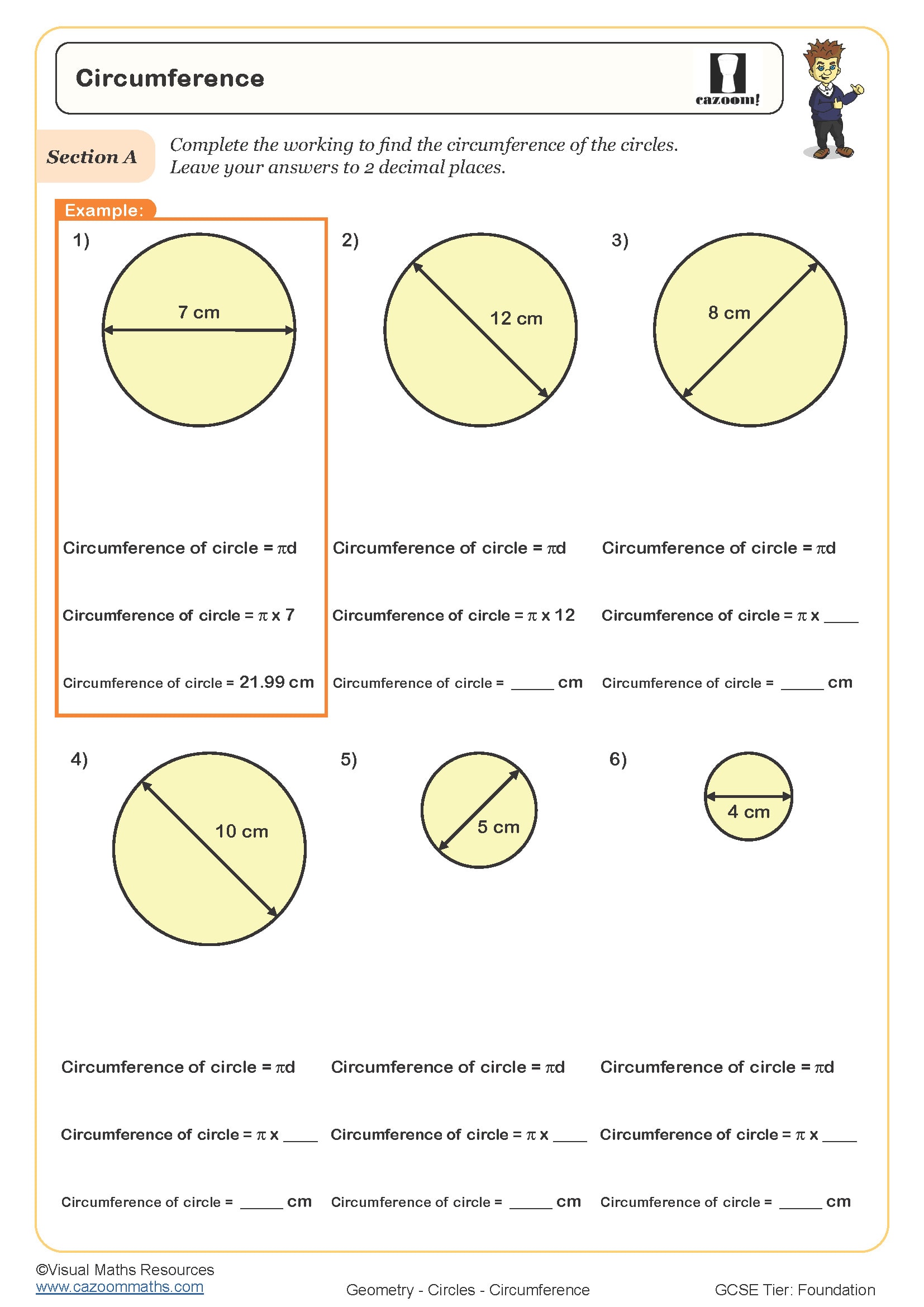
In Terms of Pi (A)
Year groups: 8, 9
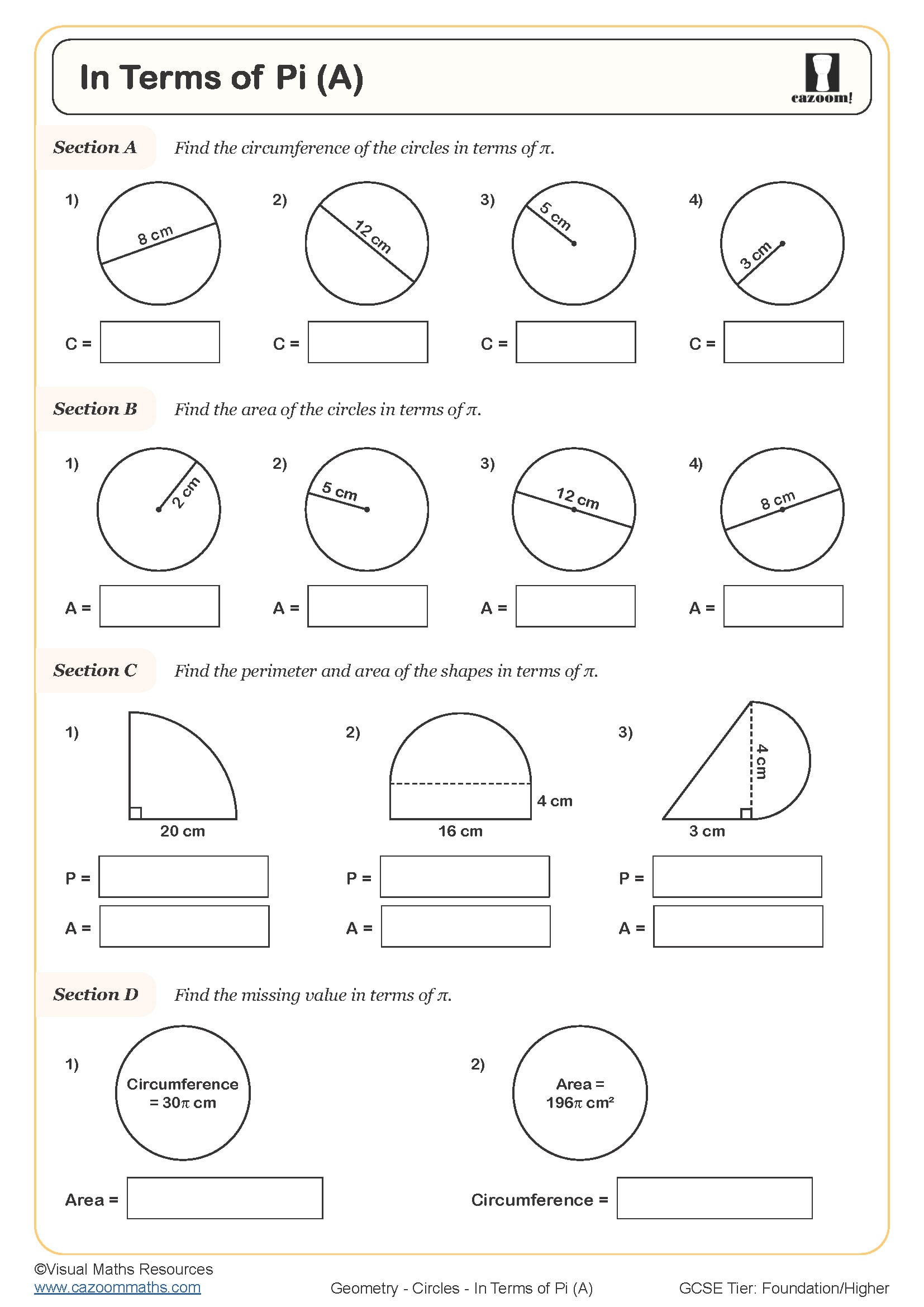
Parts of a Circle
Year groups: 8, 9
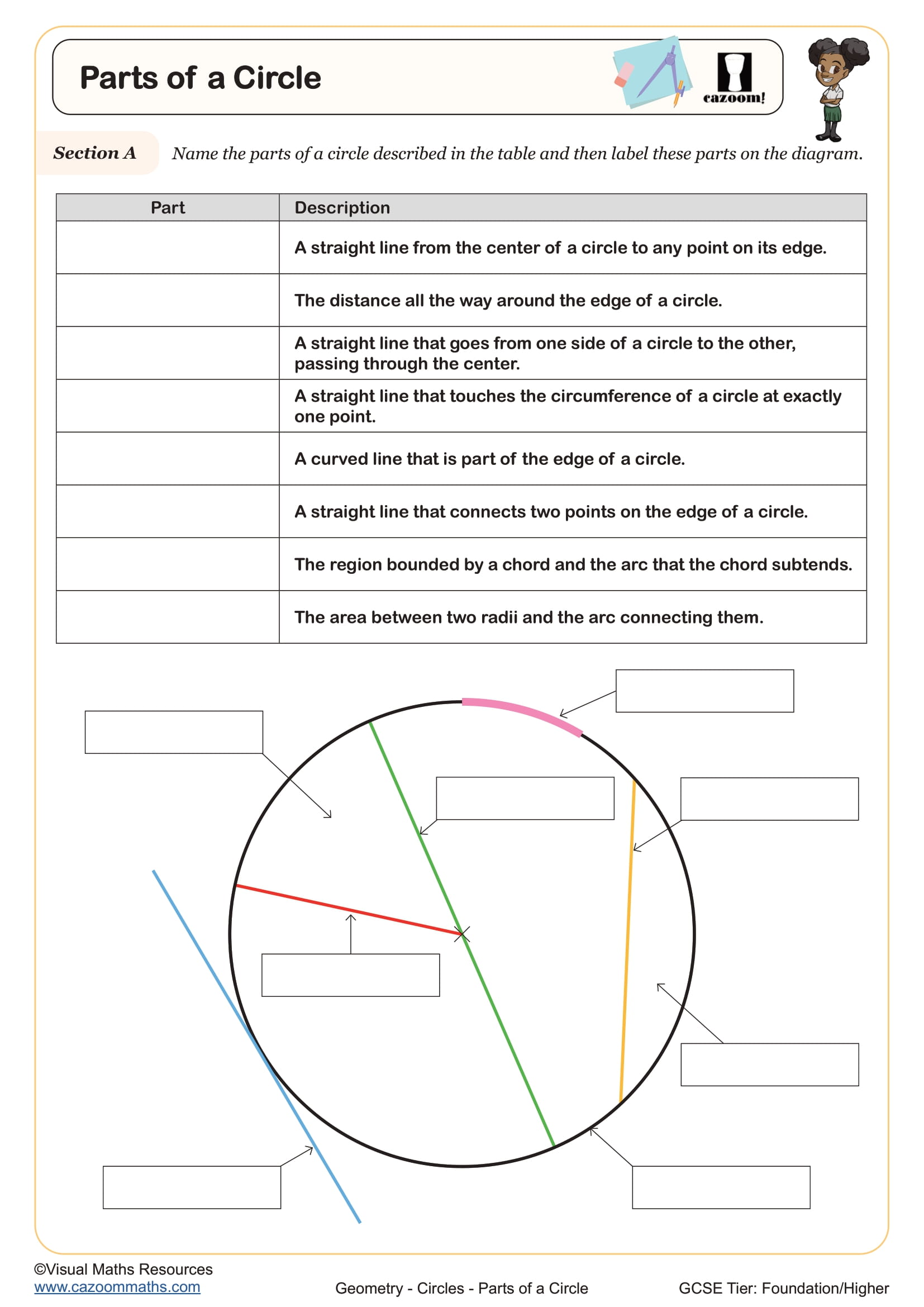
Problem Solving with Circumference and Area of Circle
Year groups: 8, 9
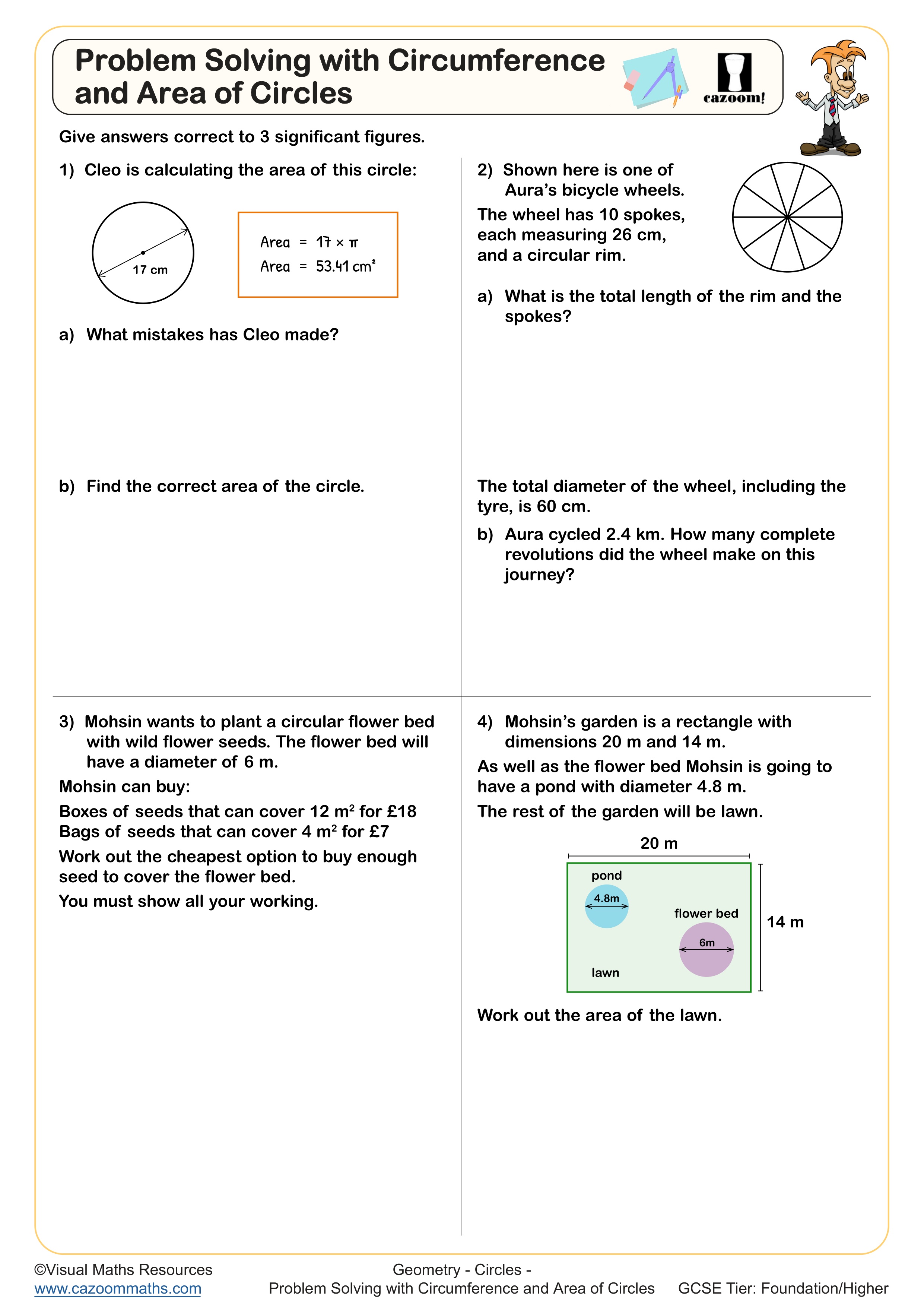
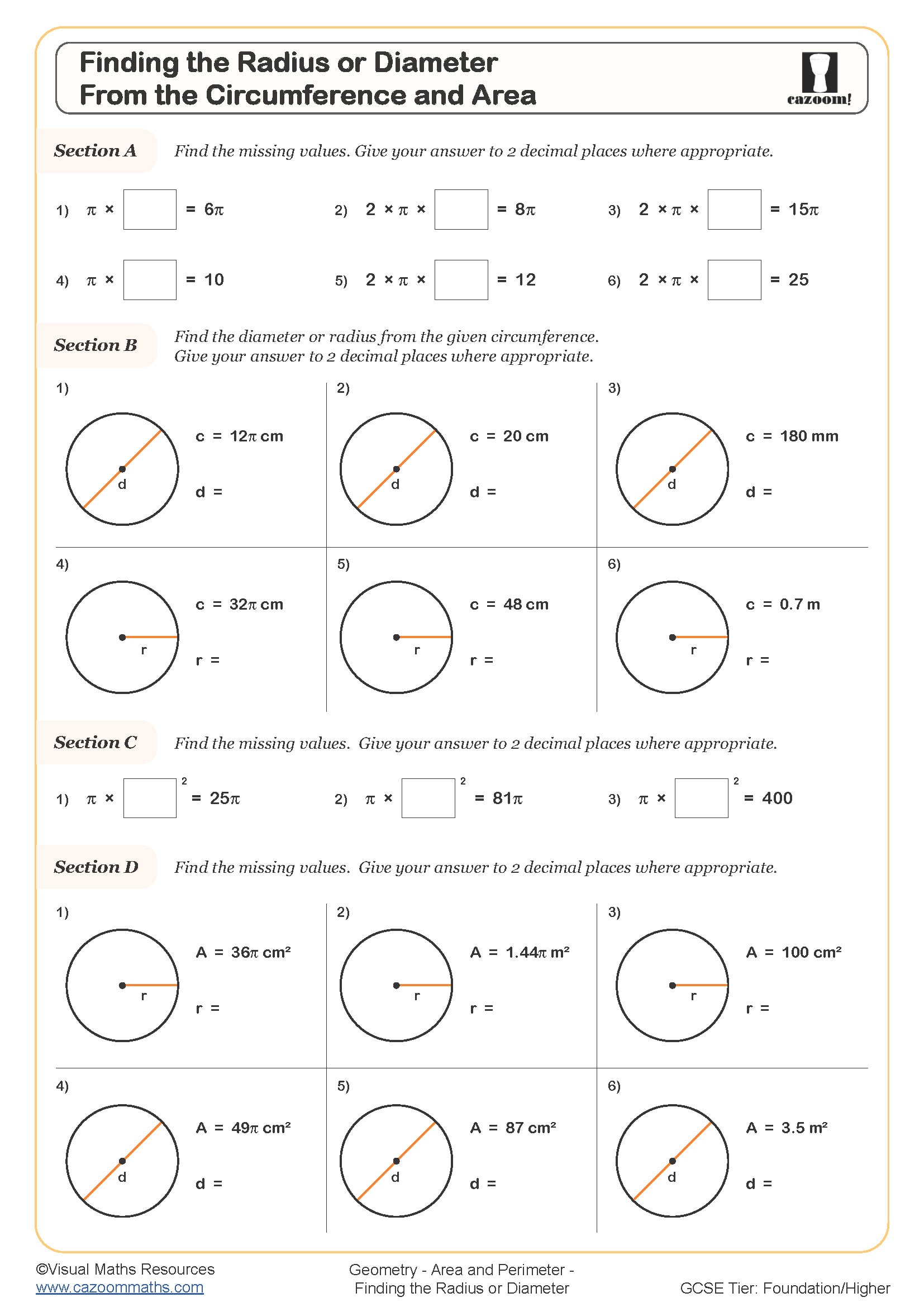
Finding the Radius or Diameter from the Circumference and Area
Year groups: 9, 10
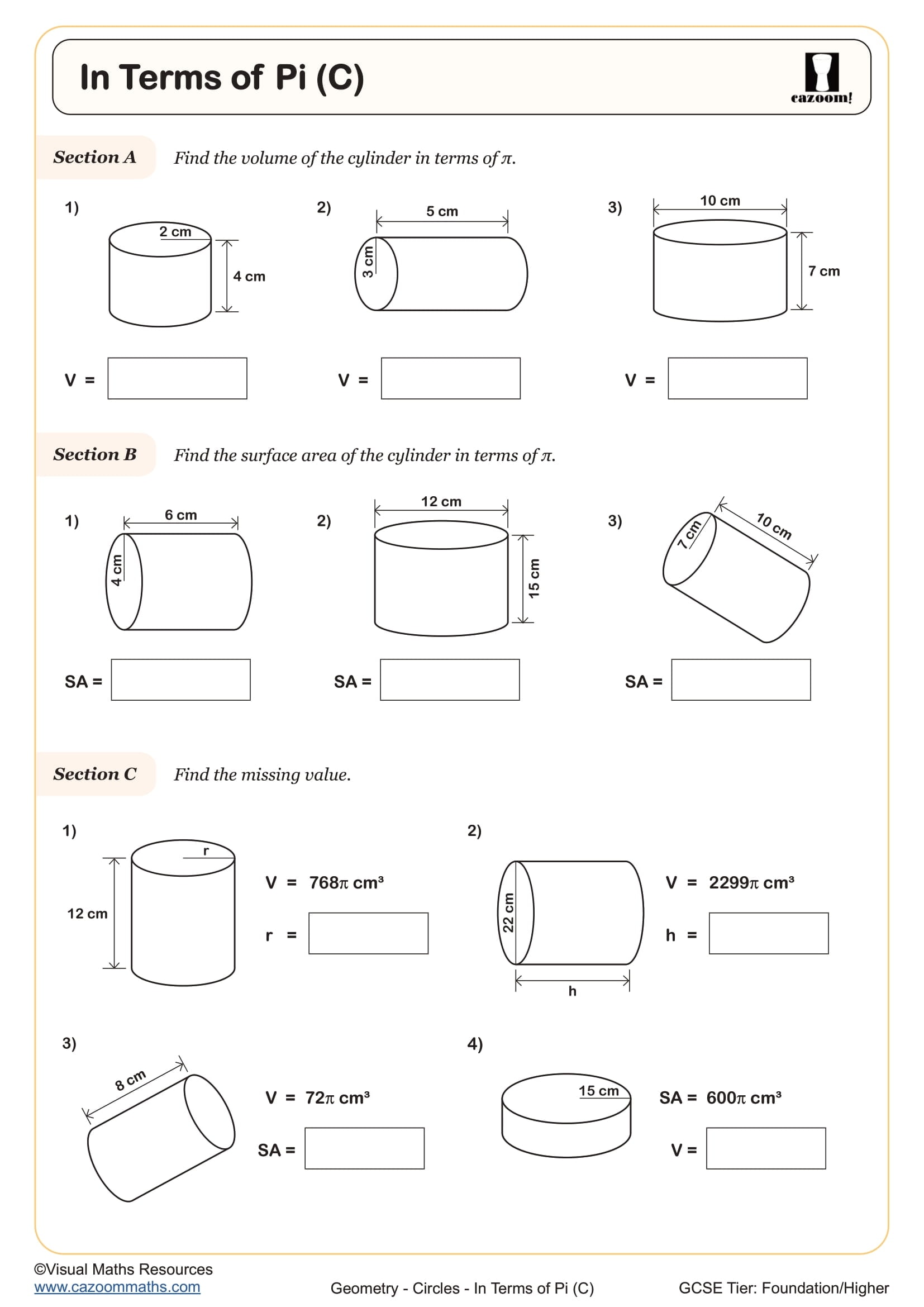
In Terms of Pi (C)
Year groups: 9, 10
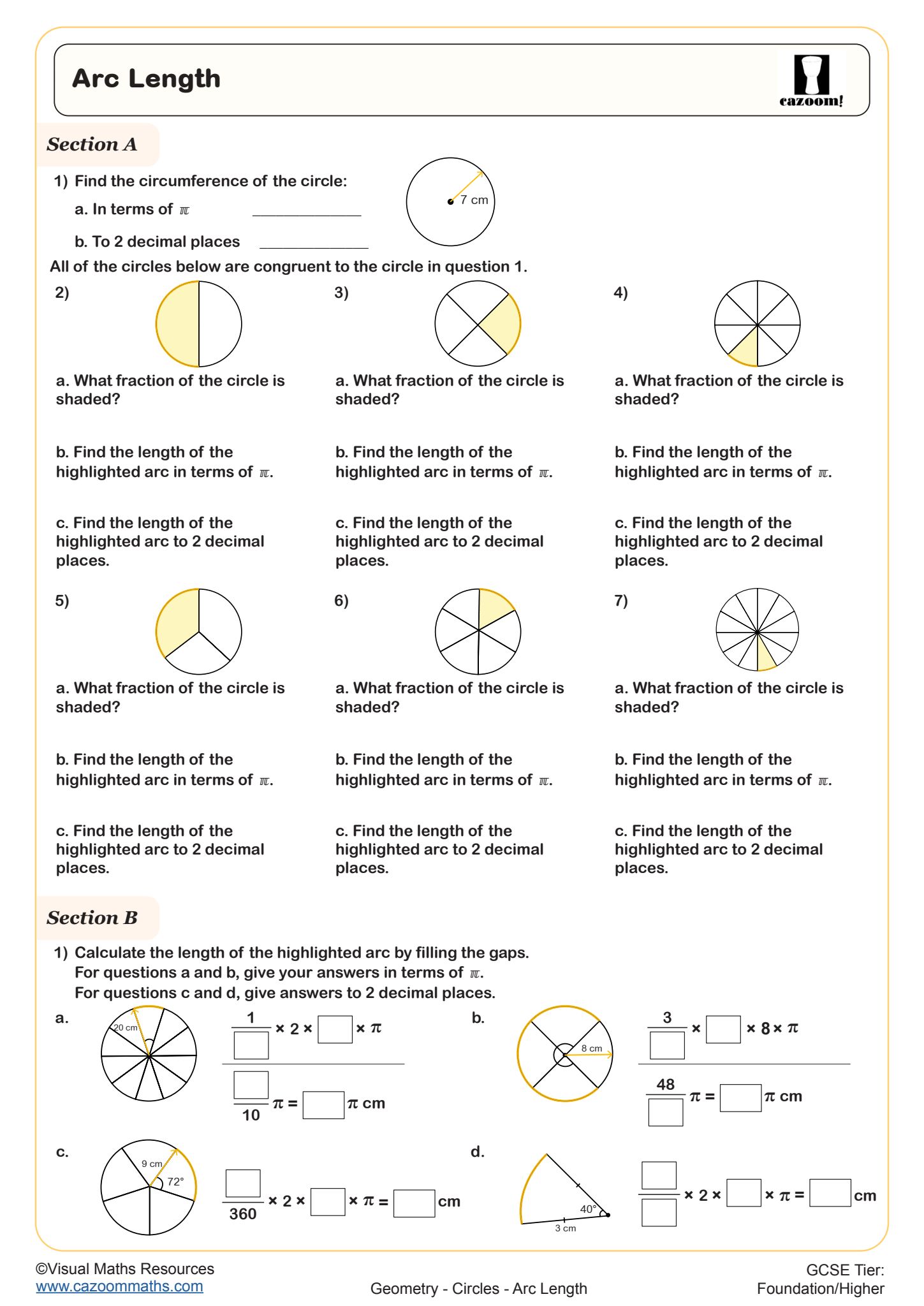
Arc Length
Year groups: 10, 11
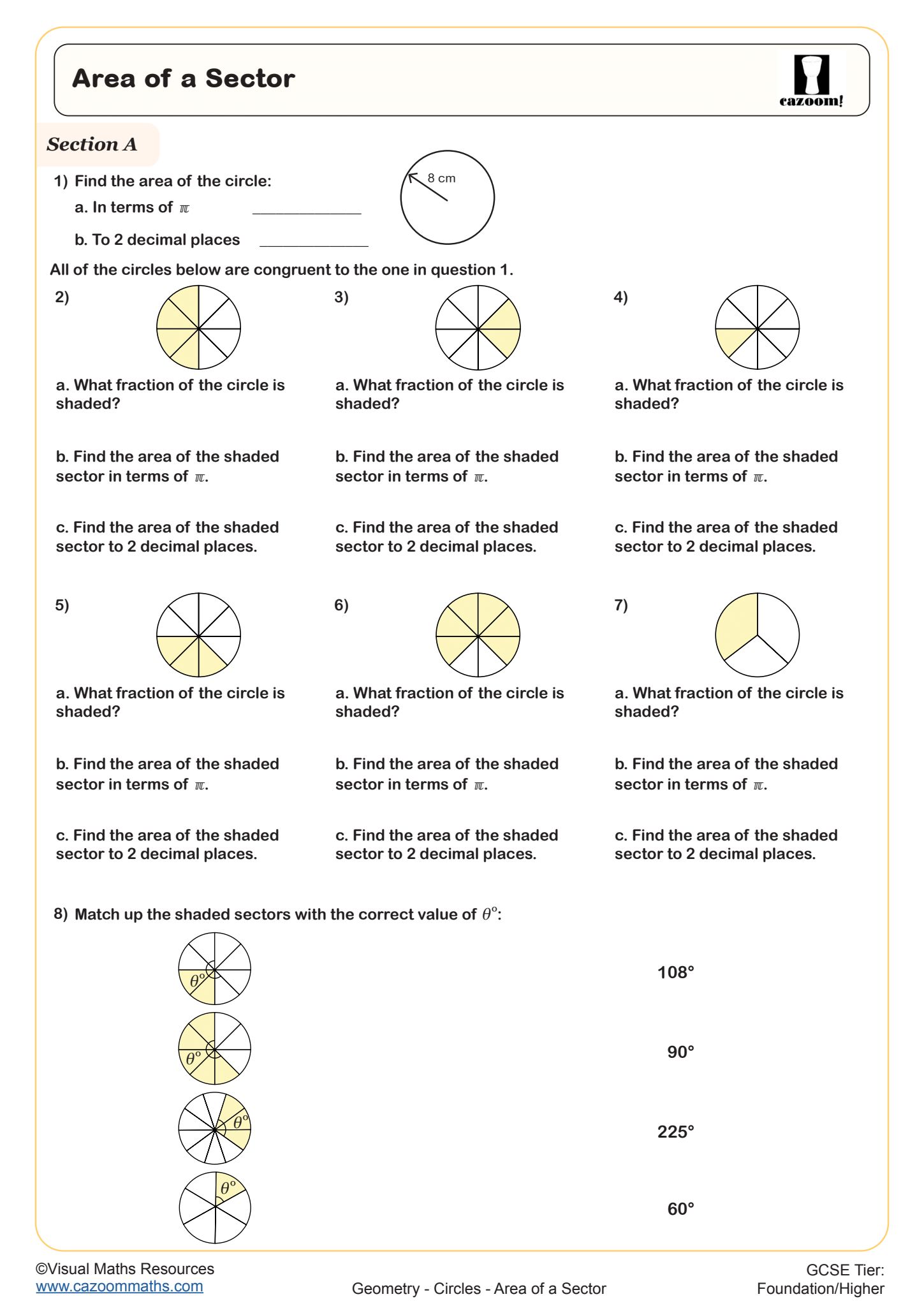
Area of a Sector
Year groups: 10, 11
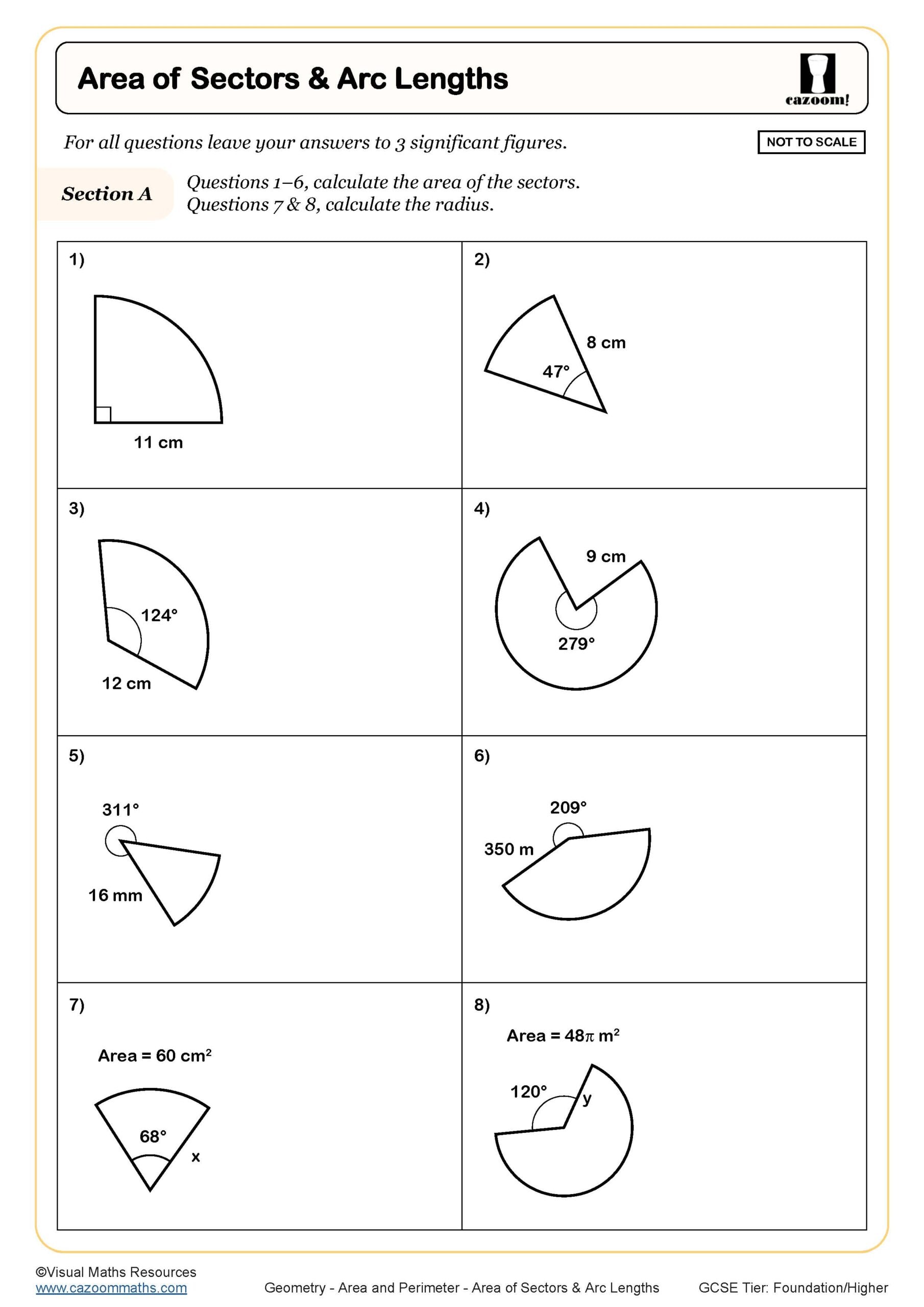
Area of Sectors and Arc Lengths
Year groups: 10, 11
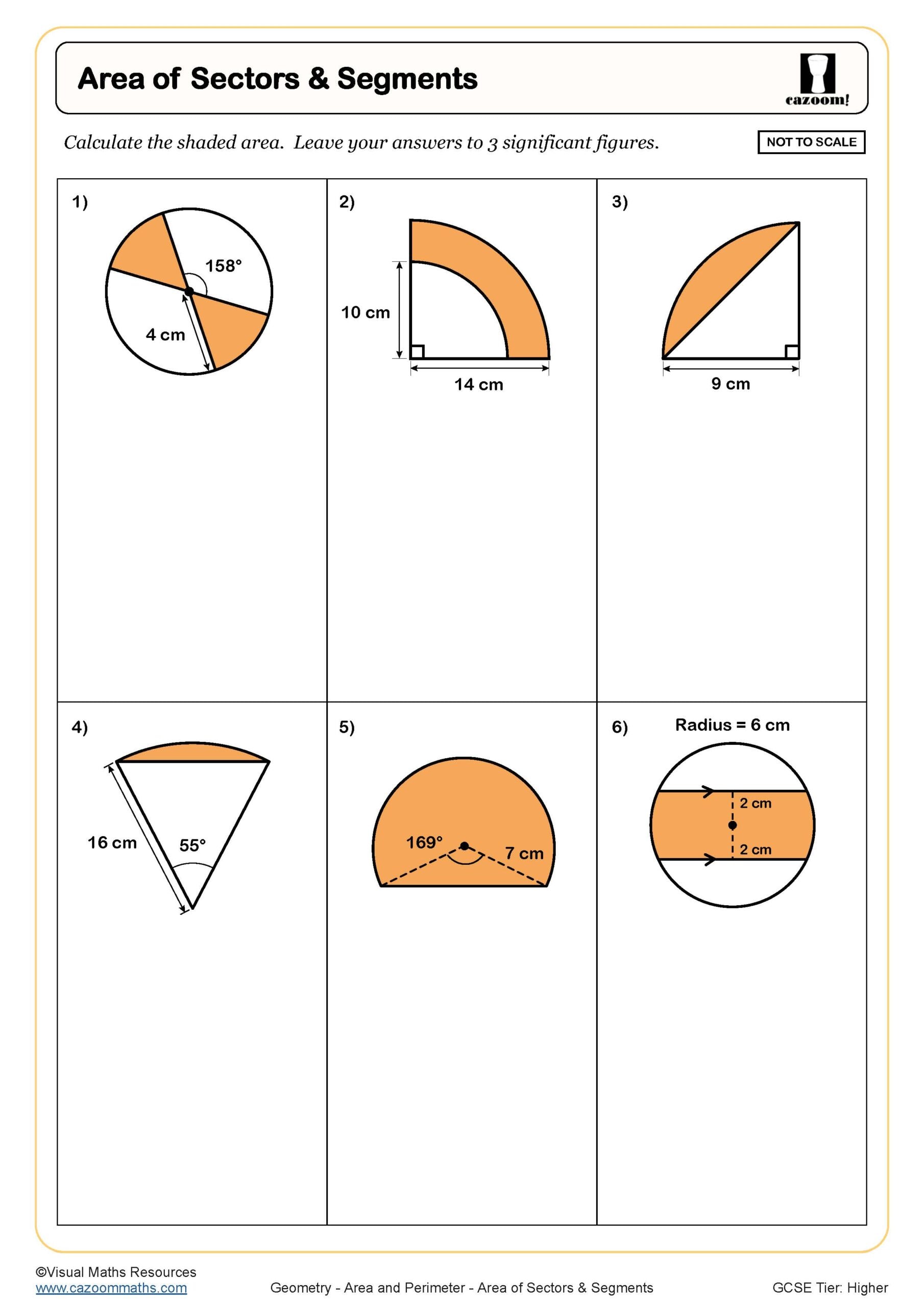
Area of Sectors and Segments
Year groups: 10, 11
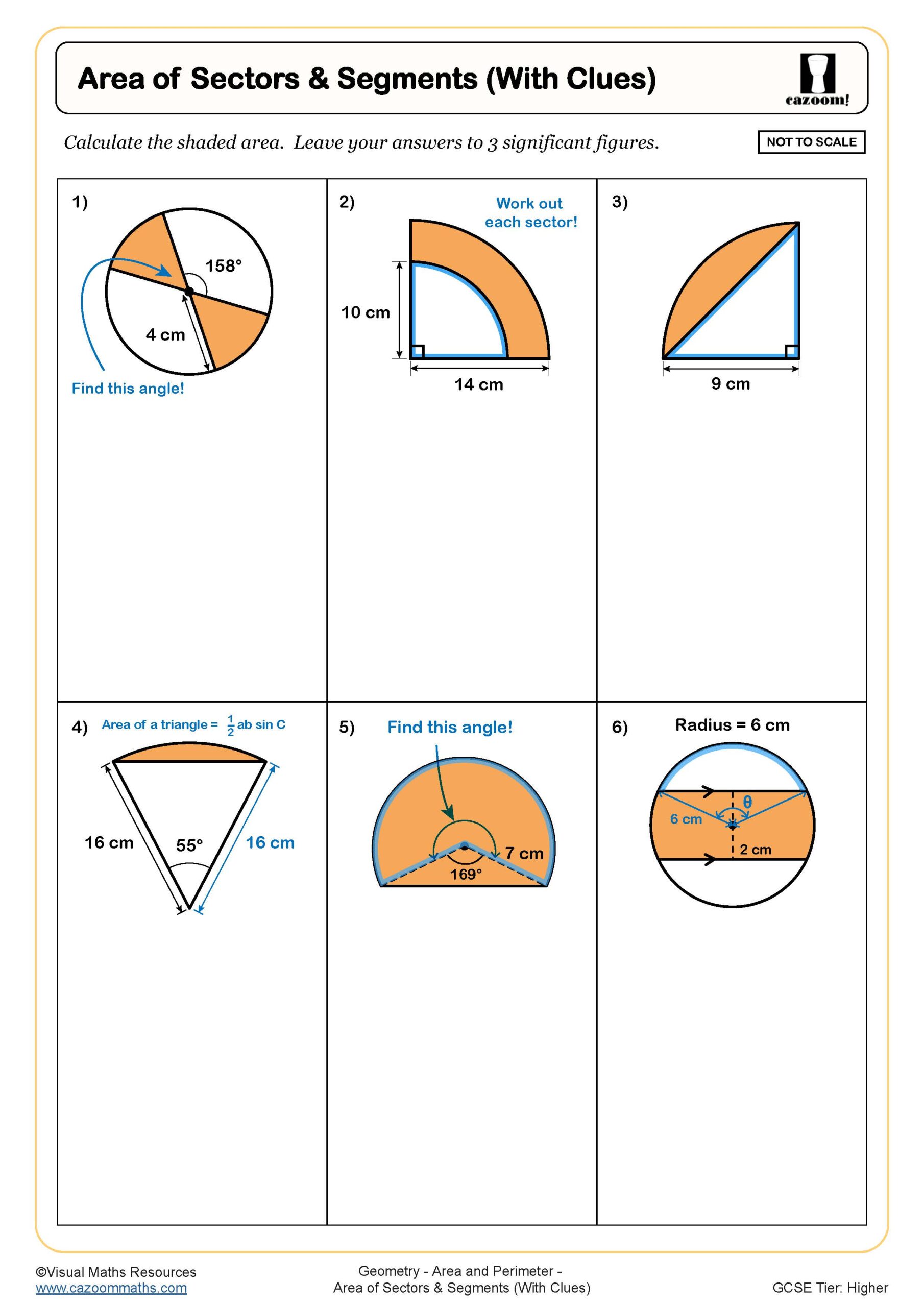
Area of Sectors and Segments (With Clues)
Year groups: 10, 11
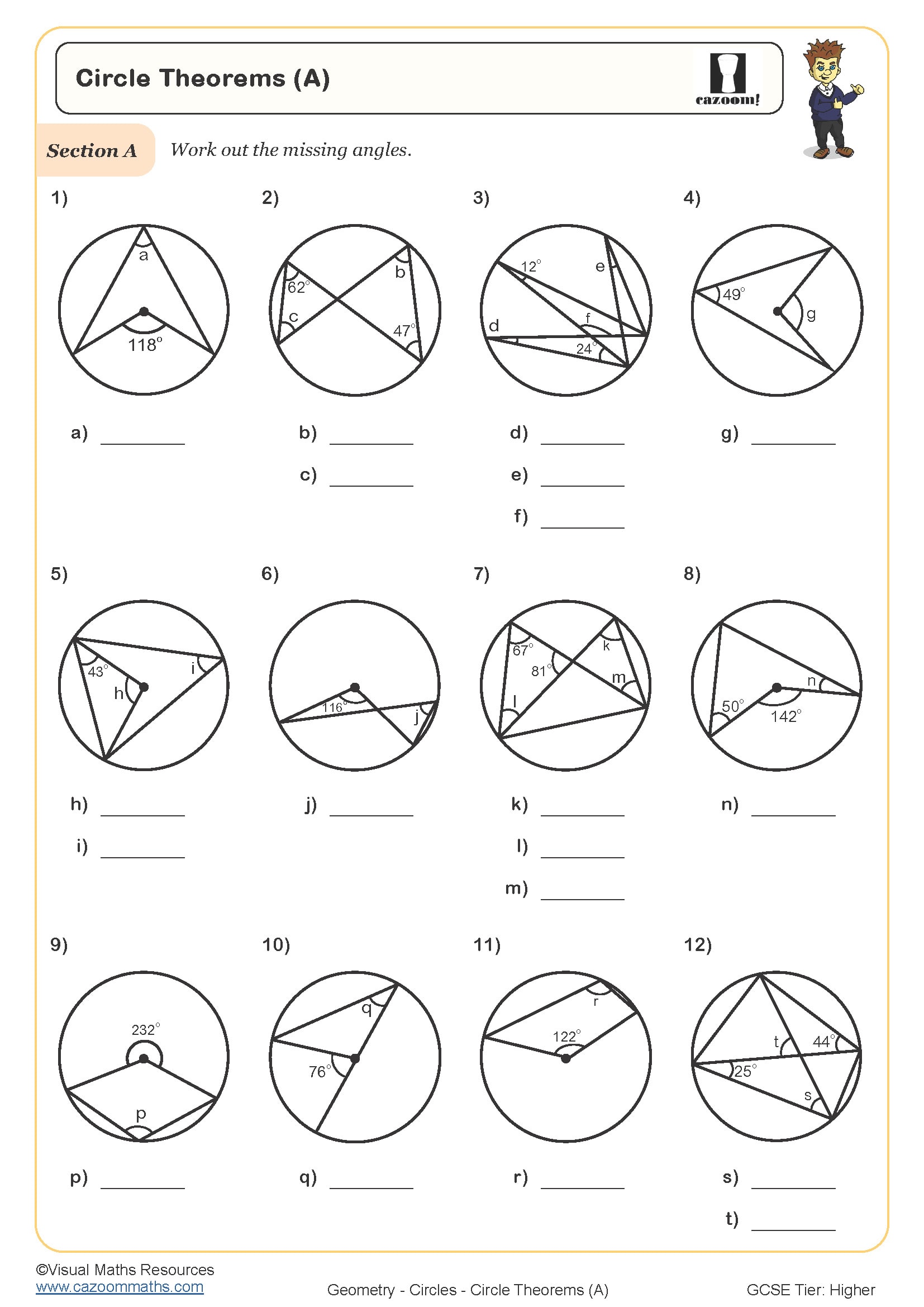
Circle Theorems (A)
Year groups: 10, 11
Circle Theorems (B)
Year groups: 10, 11
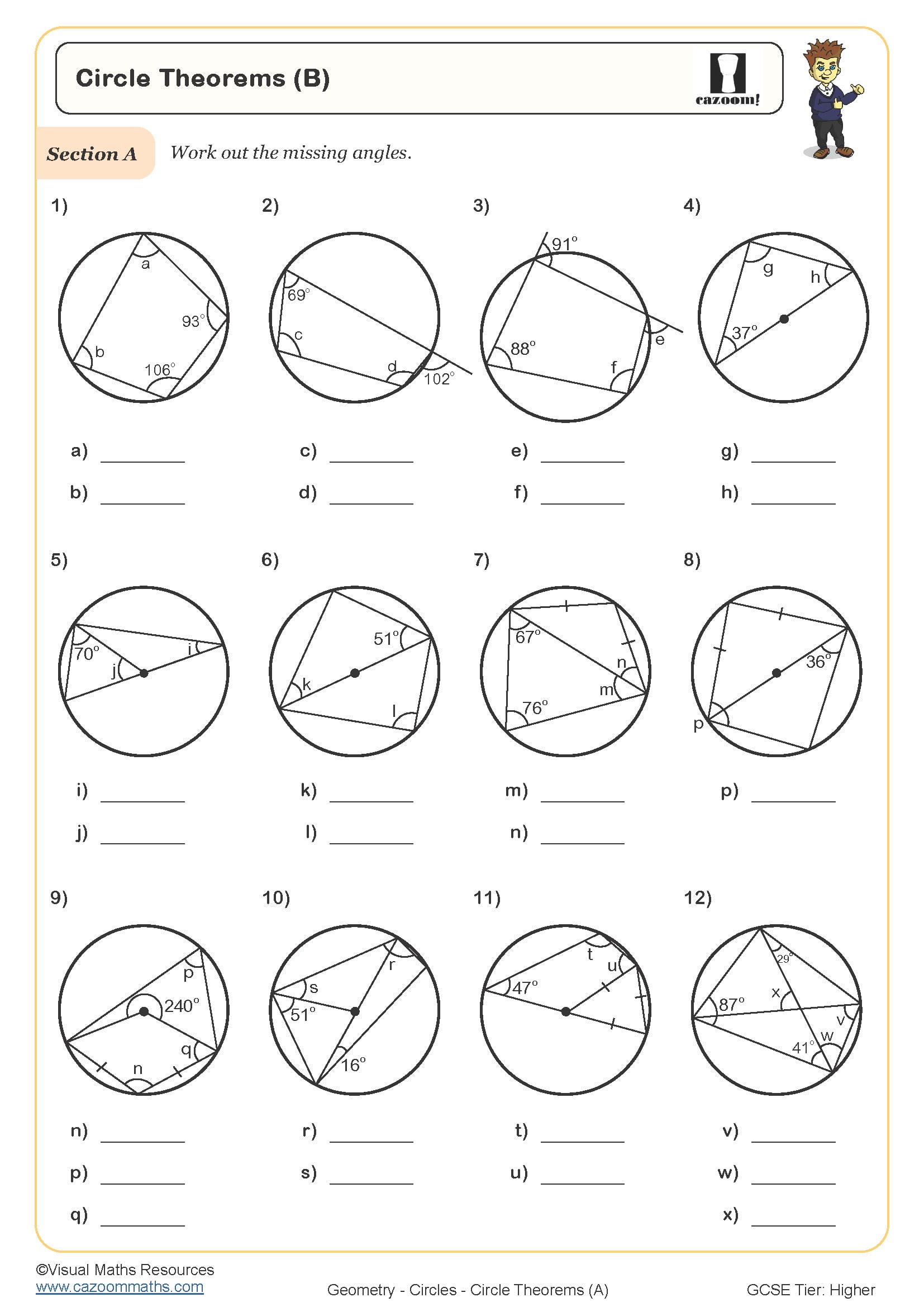
Circle Theorems (C)
Year groups: 10, 11
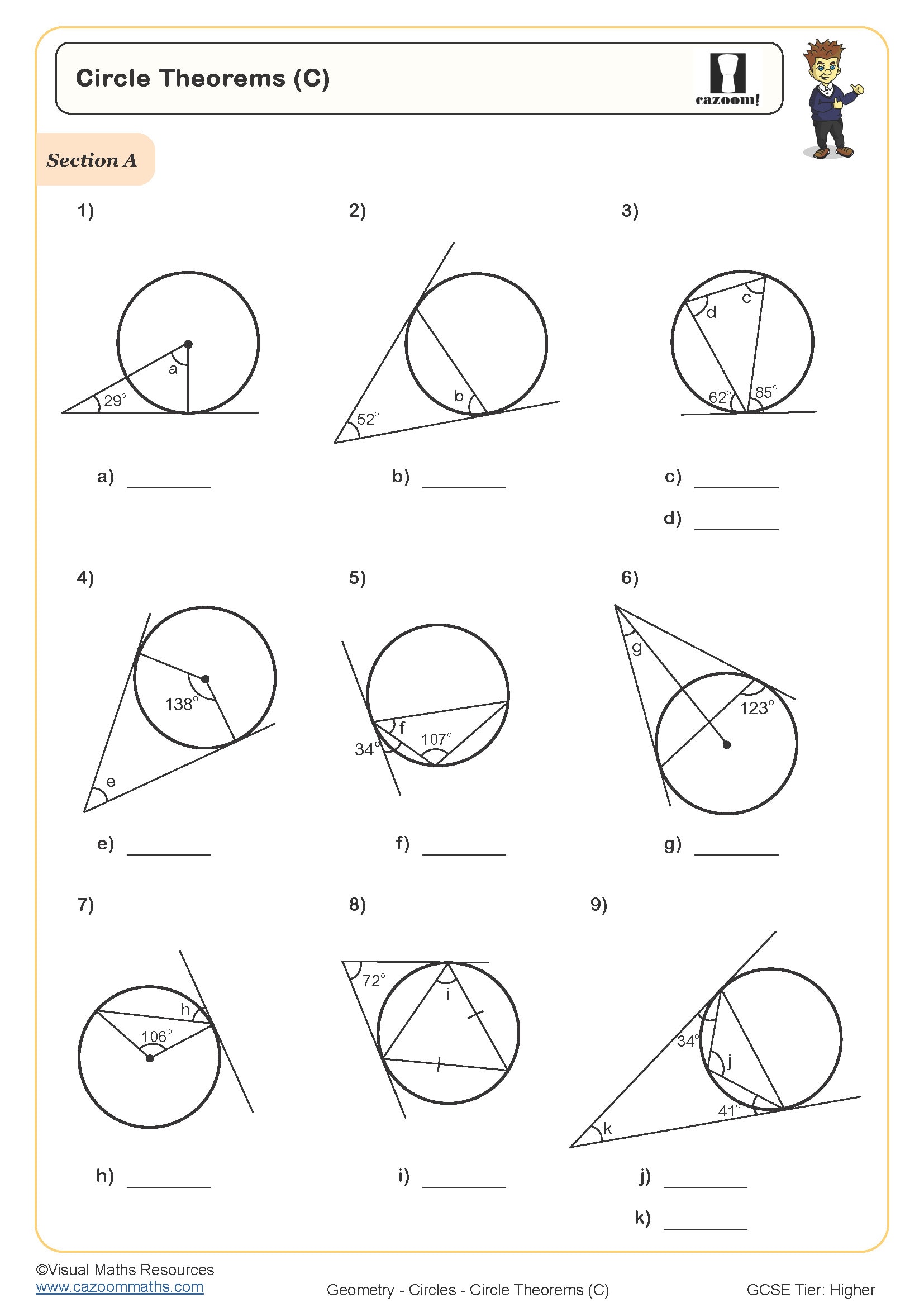
Circle Theorems: Angle at Center Twice the Angle at Circumference
Year groups: 10, 11
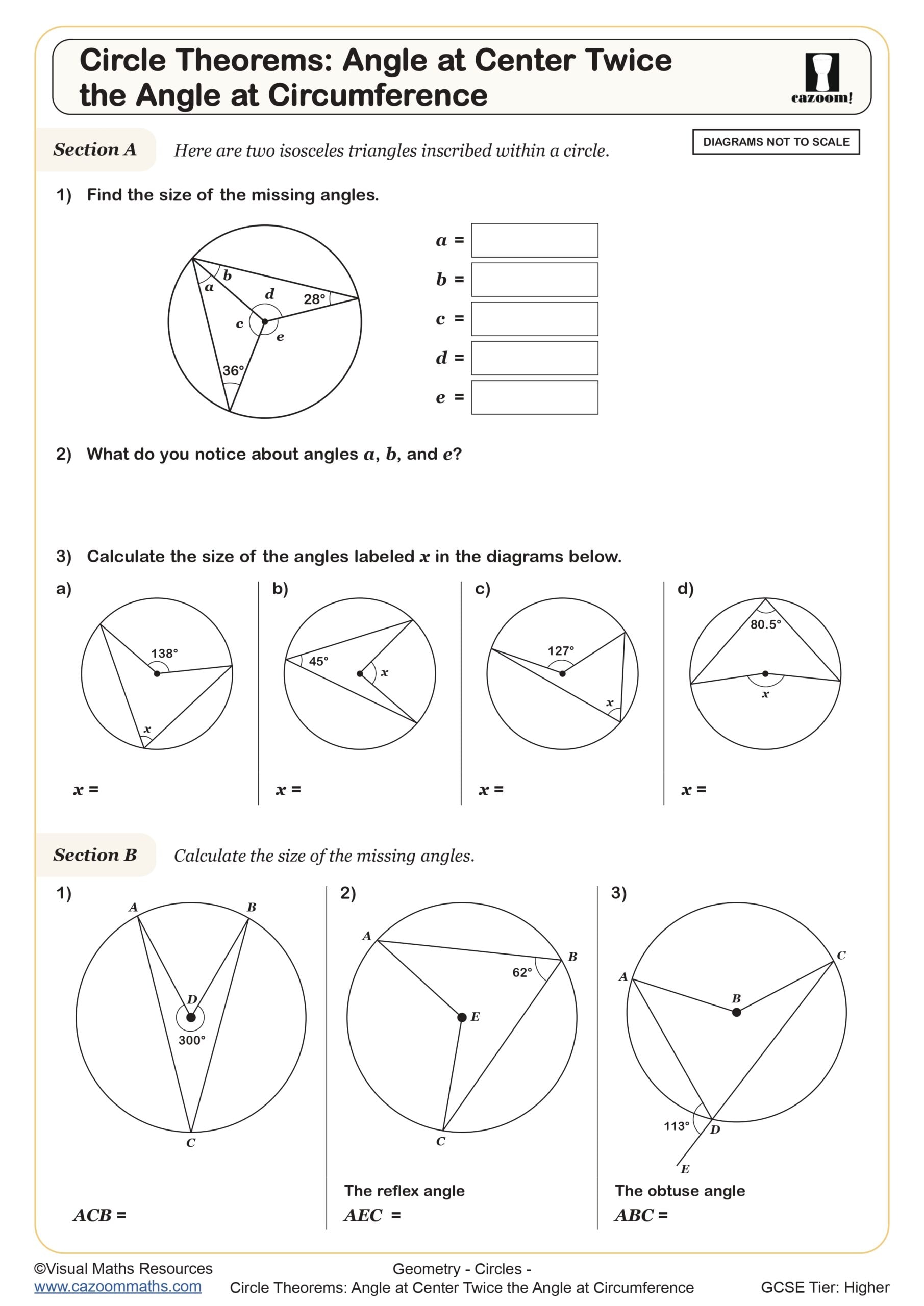
Circle Theorems: Angle Notation
Year groups: 10, 11
Circle Theorems: Cyclic Quadrilaterals
Year groups: 10, 11
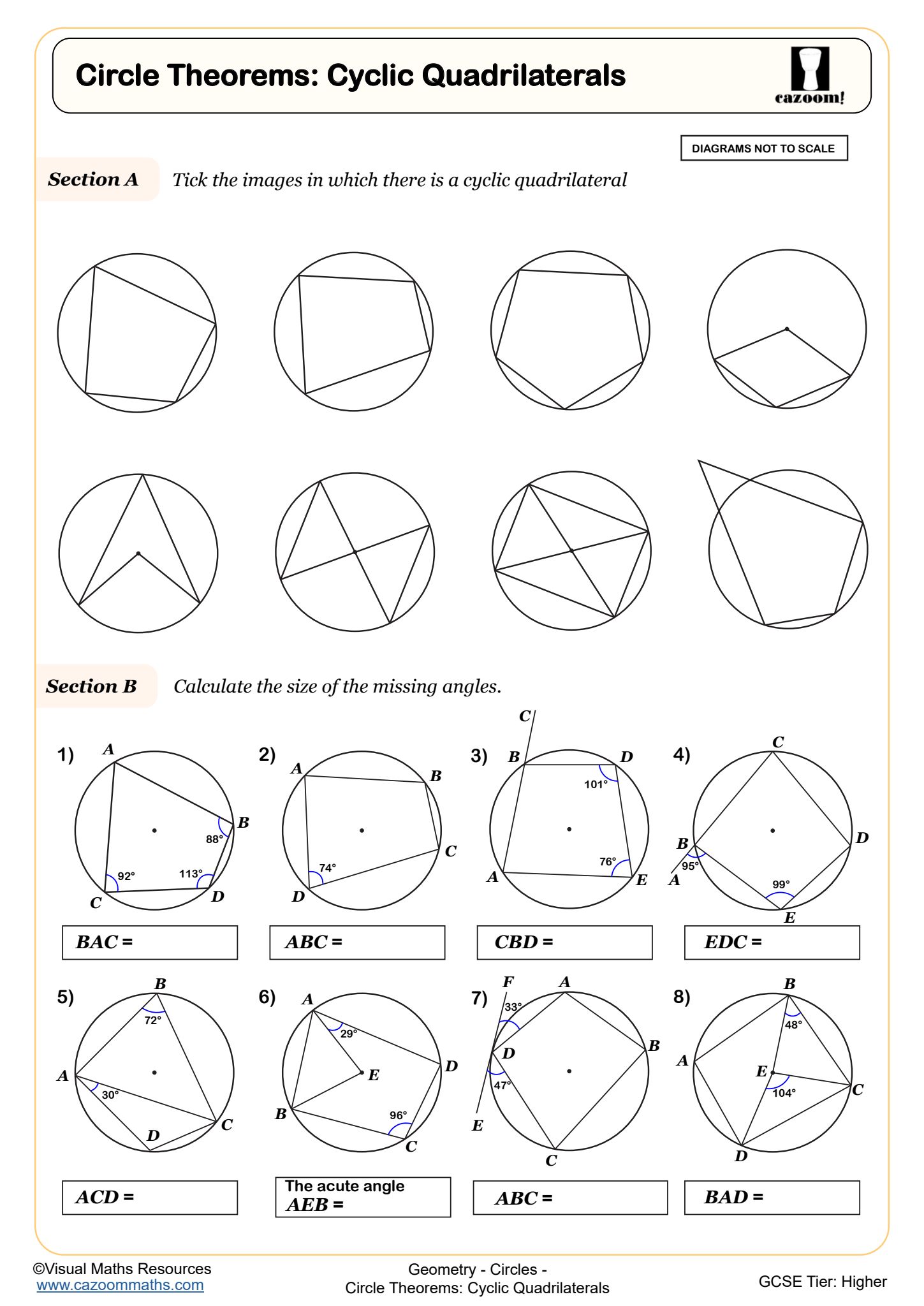
Circle Theorems: Triangles in Circles
Year groups: 10, 11
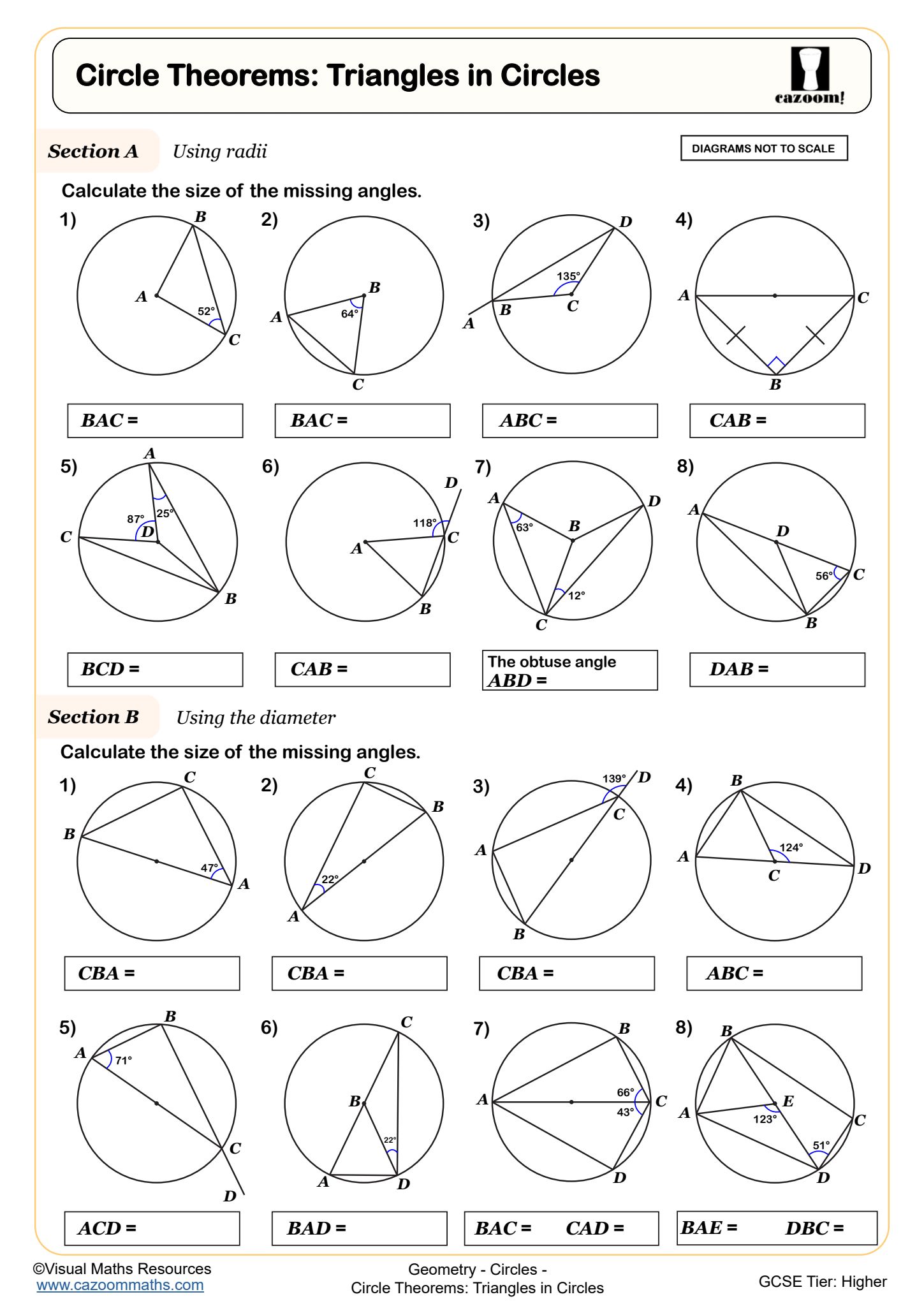
In Terms of Pi (B)
Year groups: 10, 11
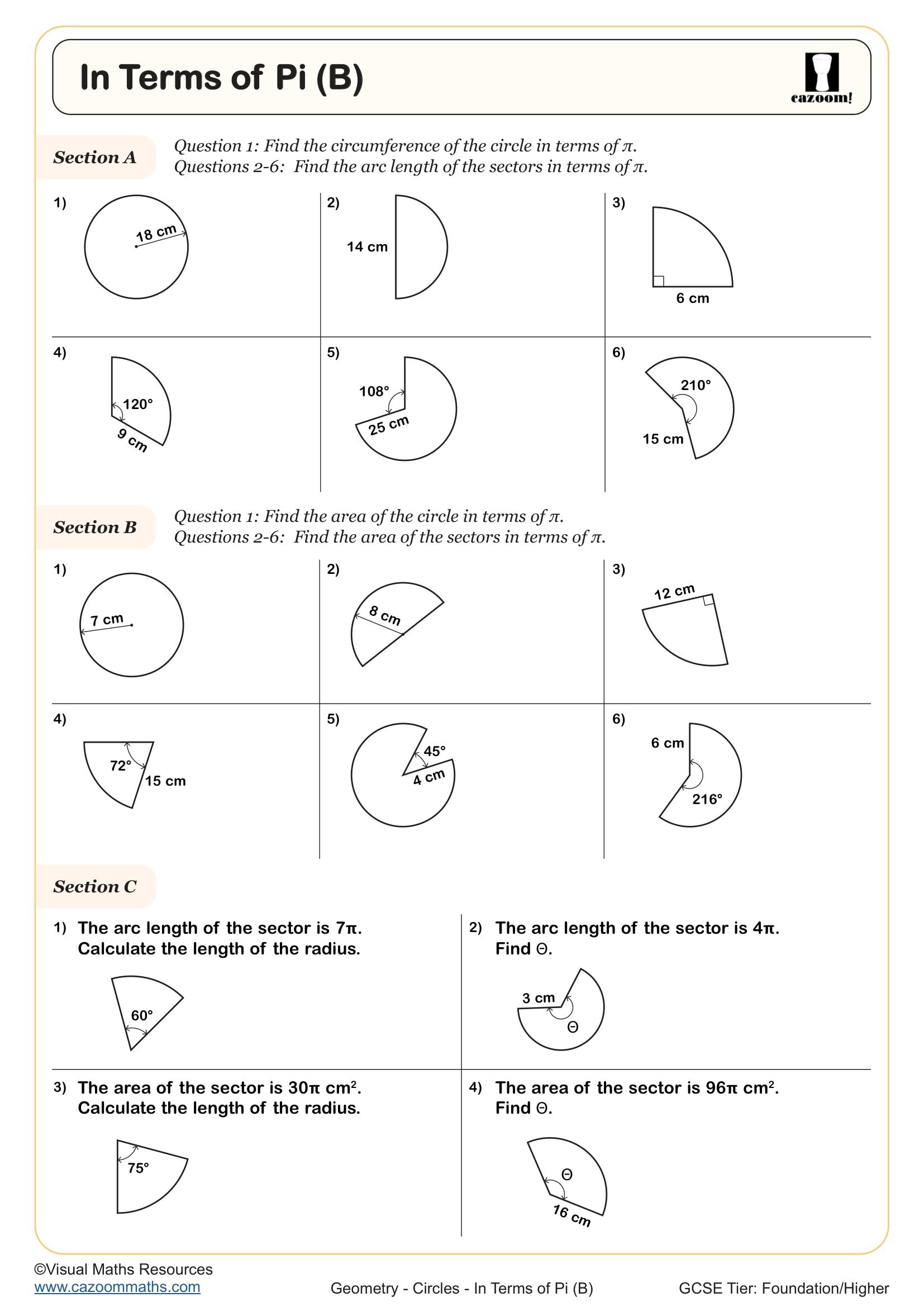
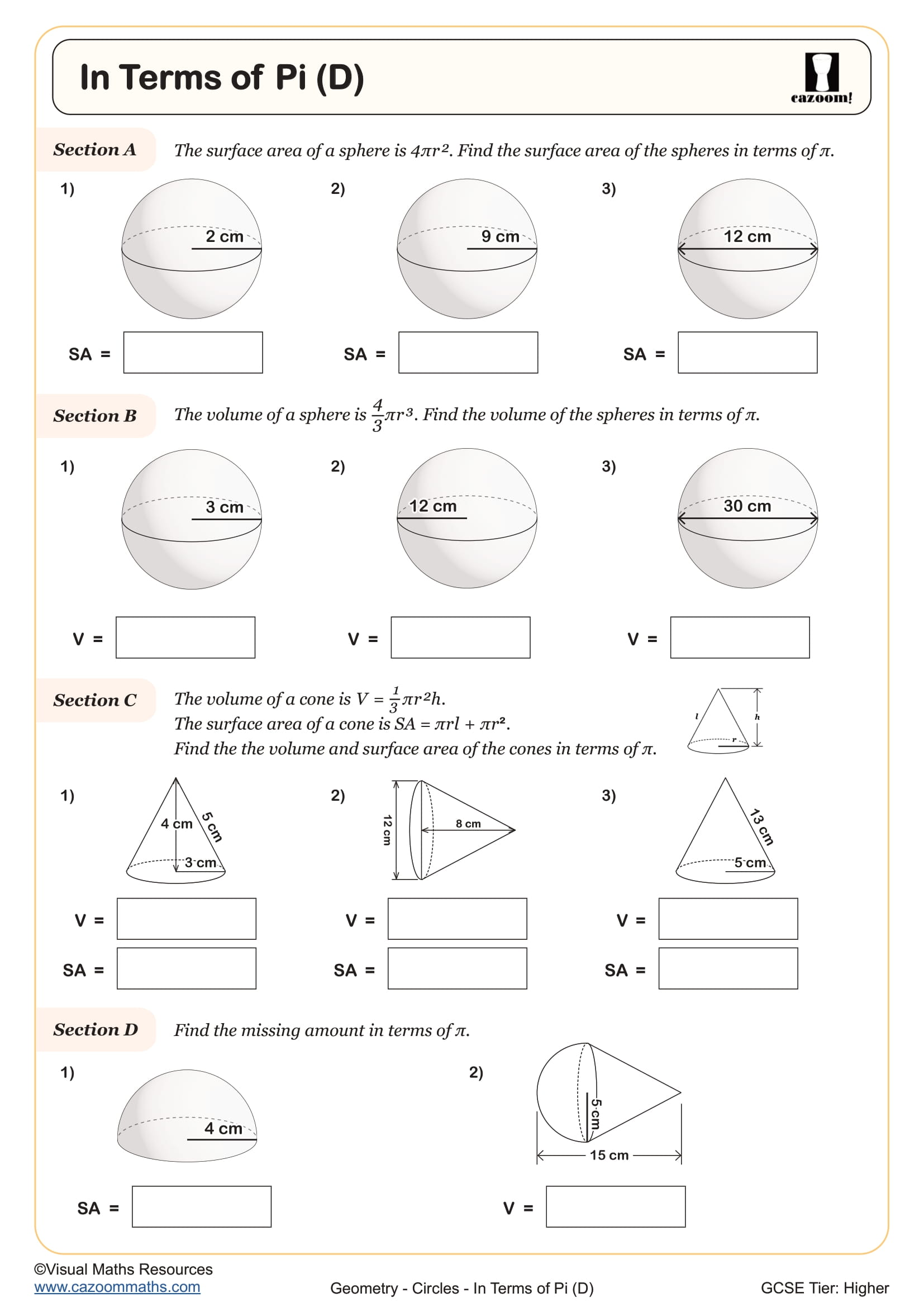
In Terms of Pi (D)
Year groups: 10, 11
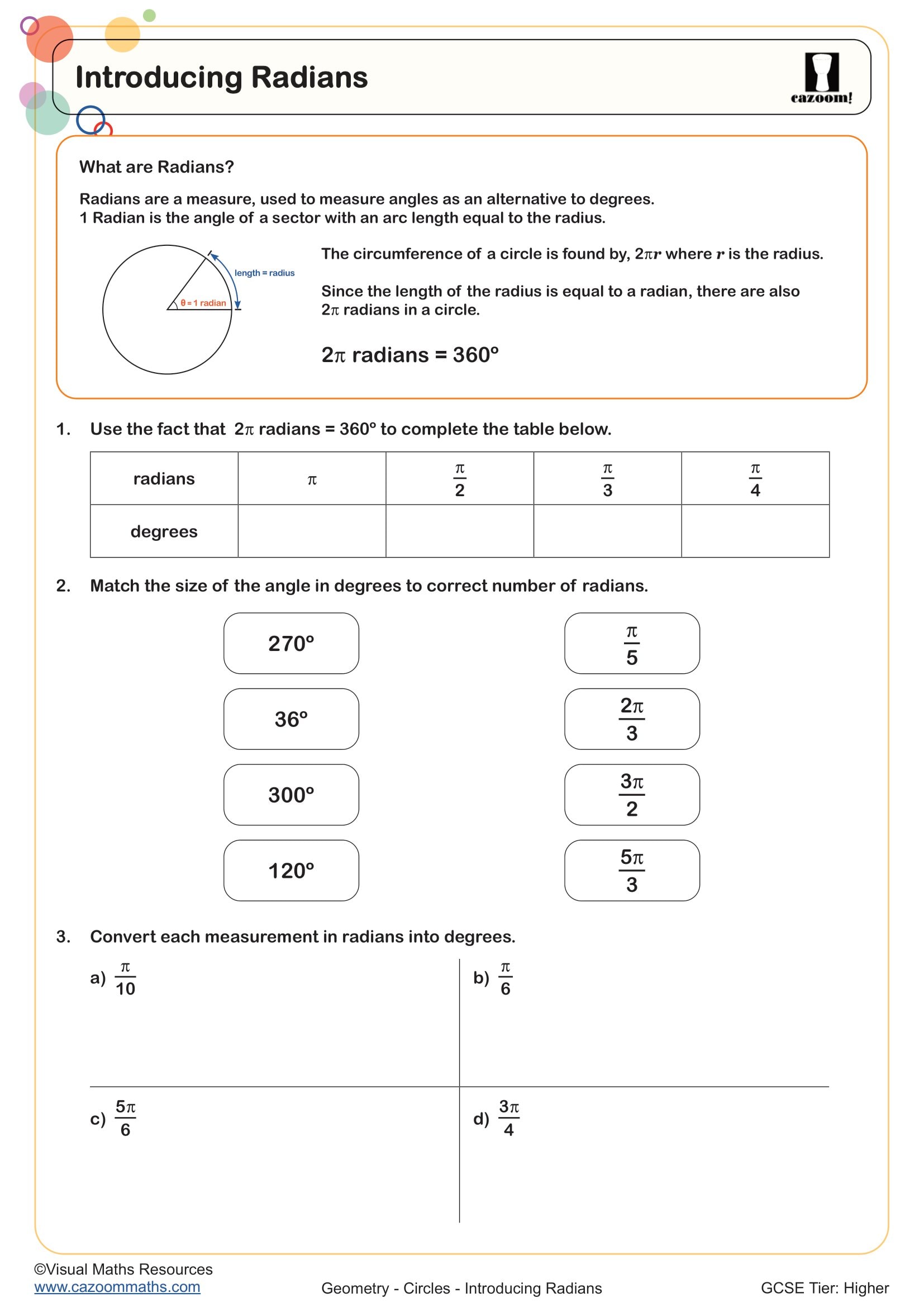
Introducing Radians
Year groups: 10, 11
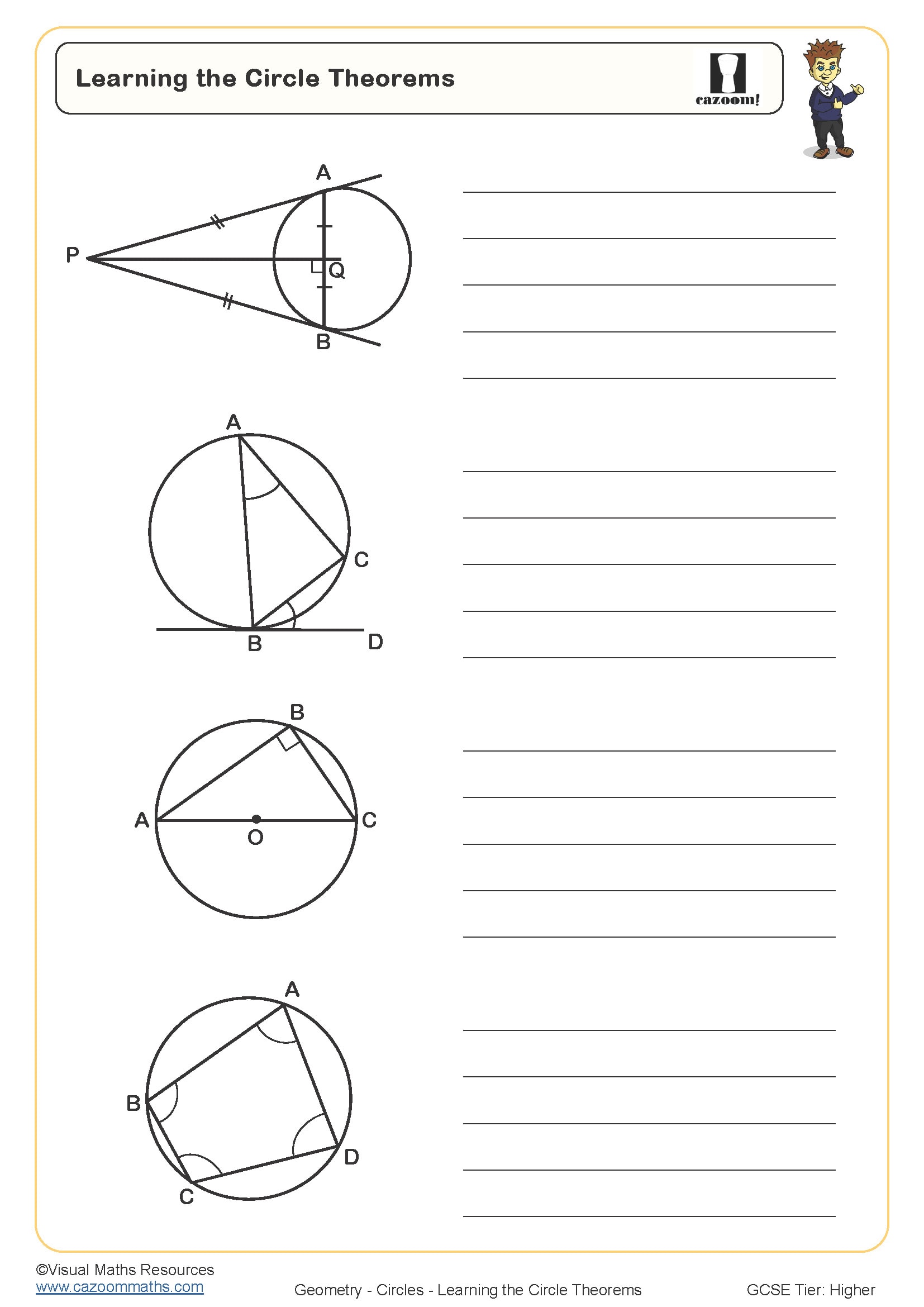
Learning the Circle Theorems
Year groups: 10, 11
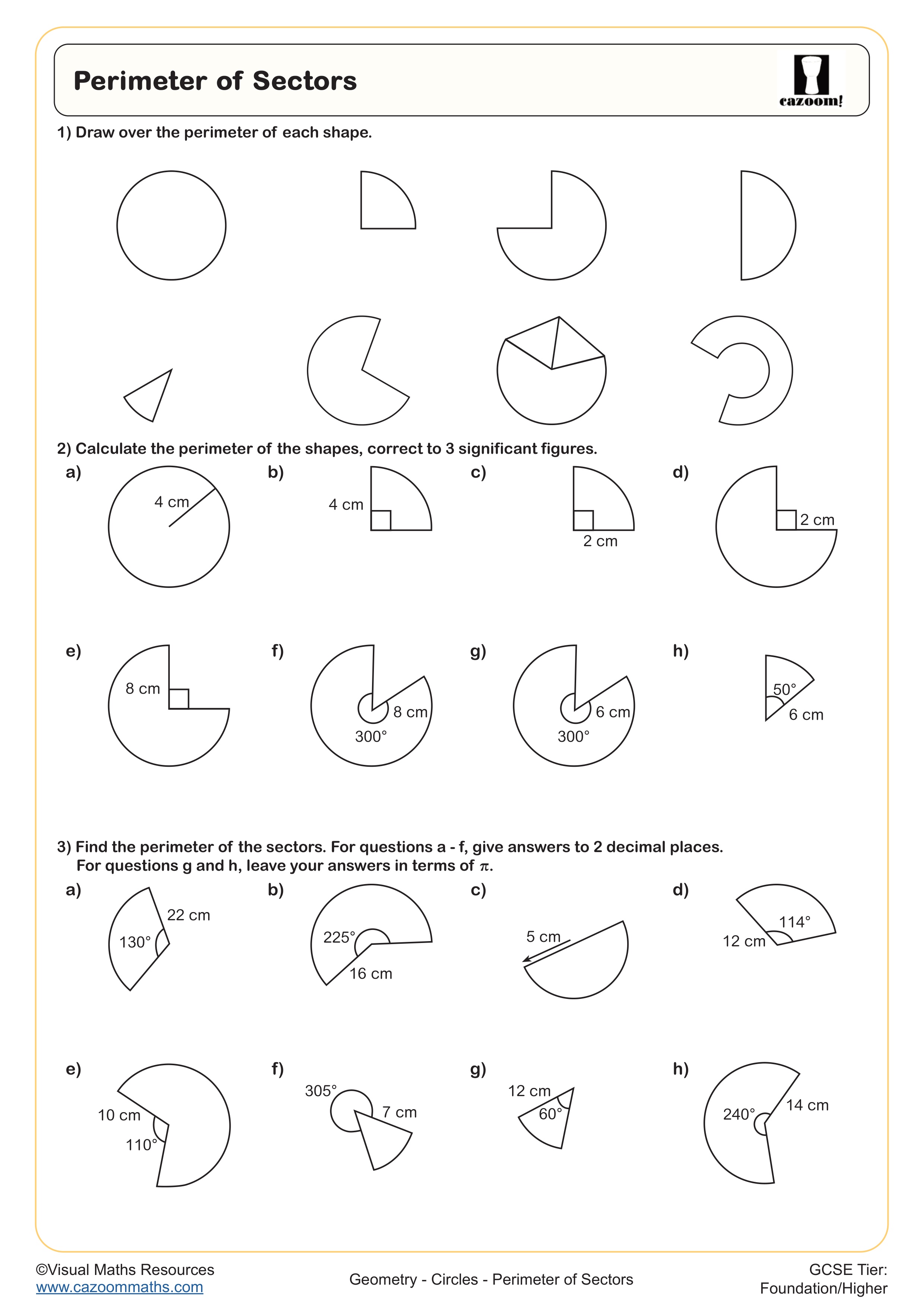
Perimeter of Sectors
Year groups: 10, 11
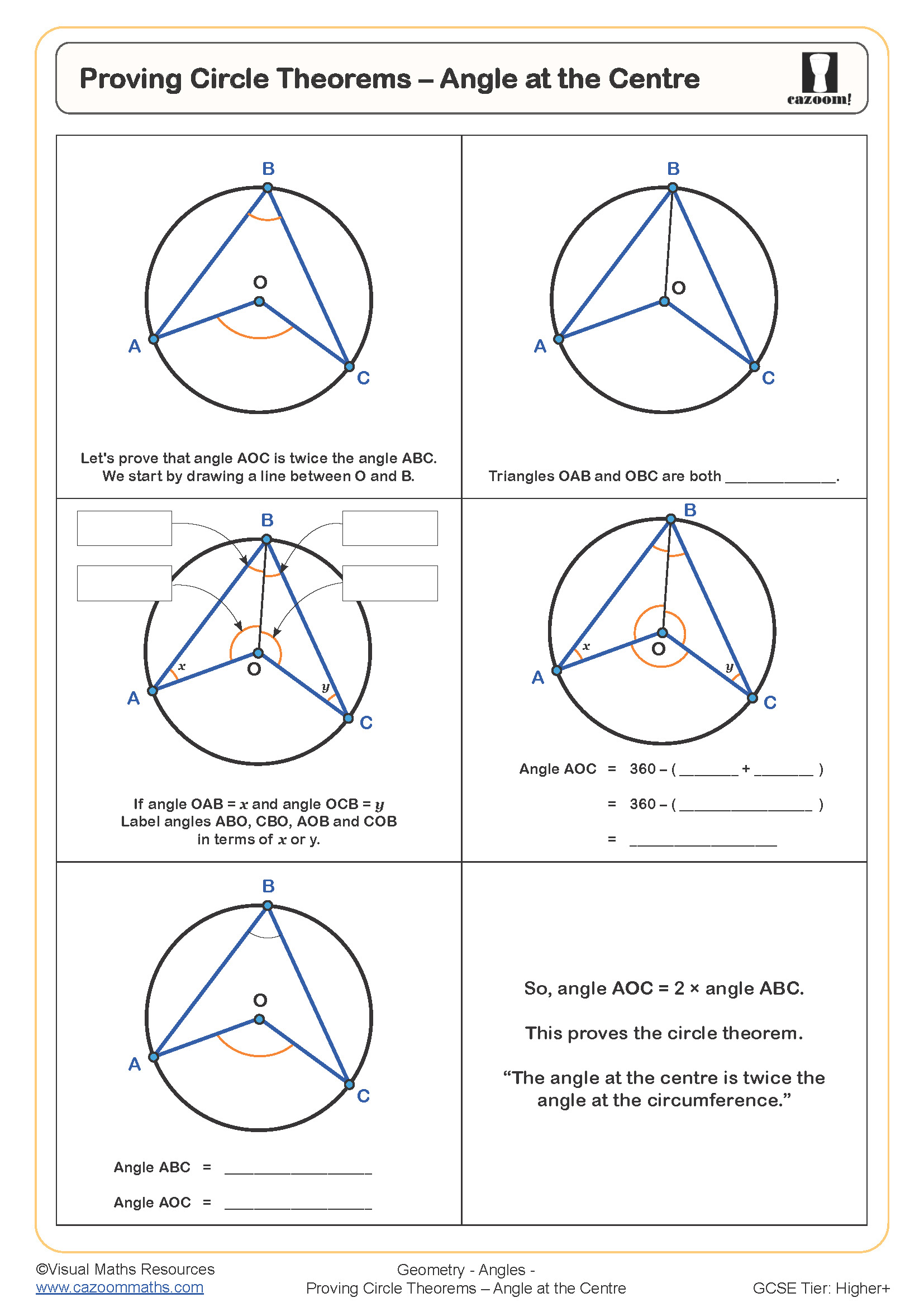
Proving Circle Theorems - Angle at the Centre
Year groups: 10, 11
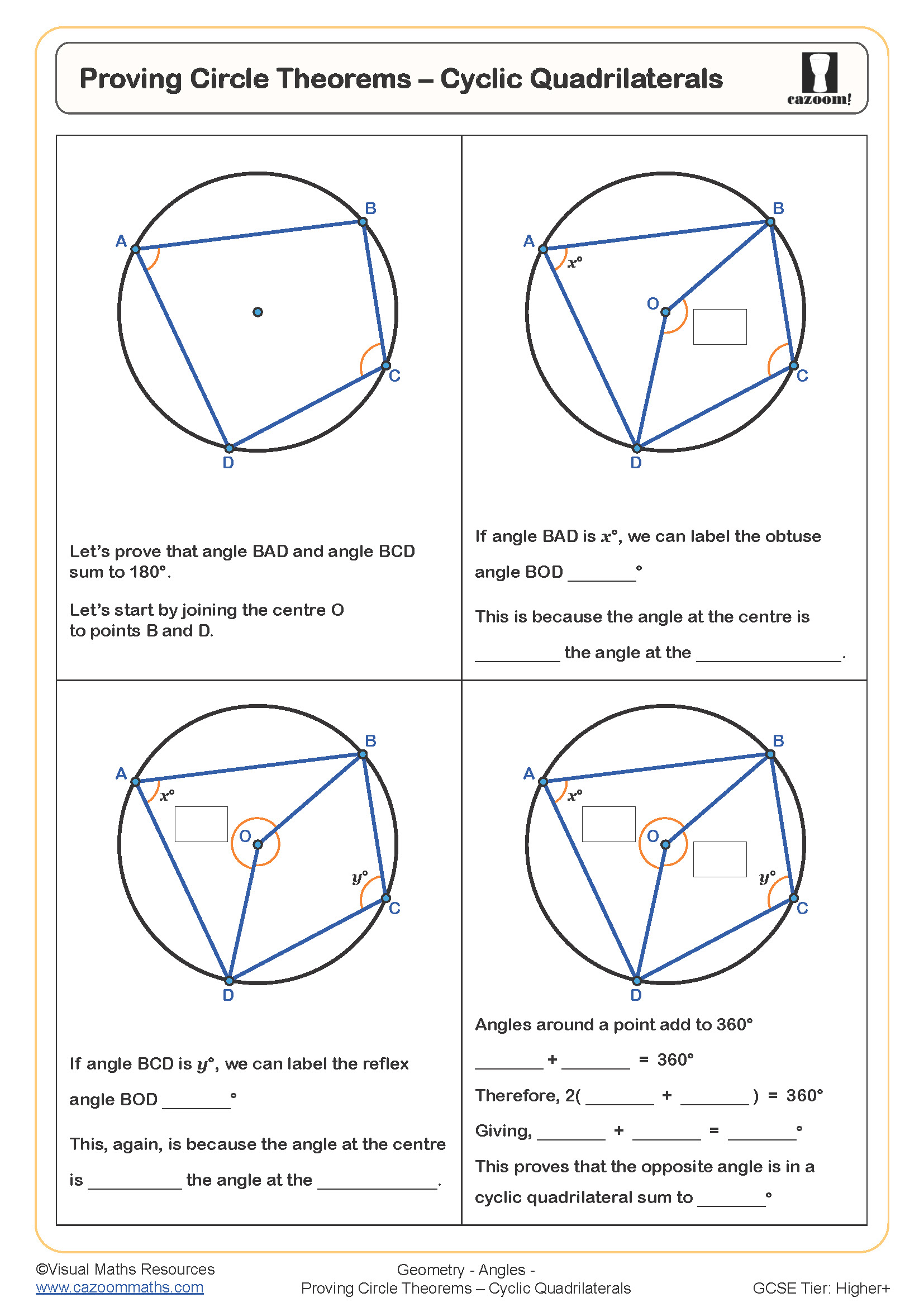
Proving Circle Theorems - Cyclic Quadrilaterals
Year groups: 10, 11
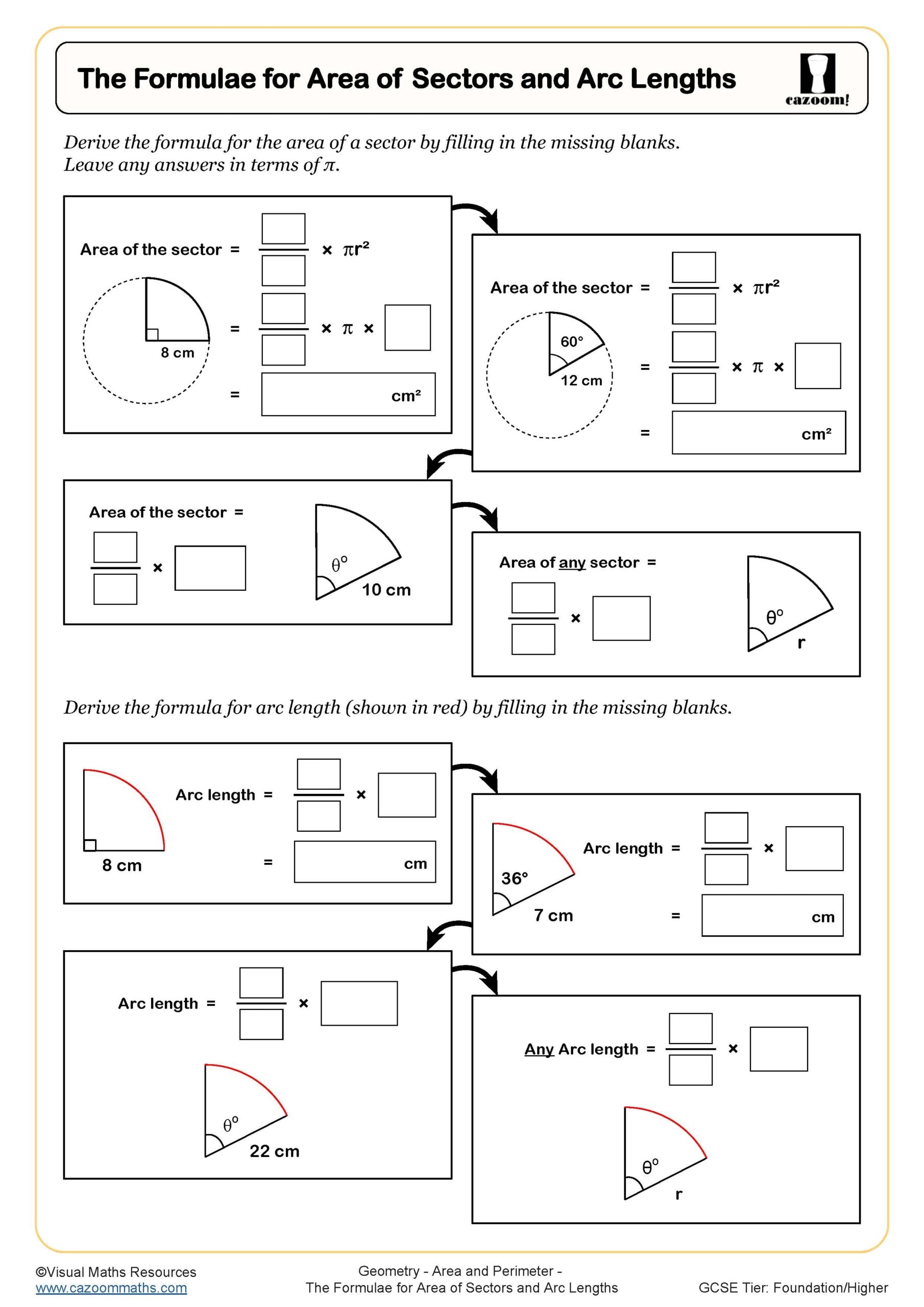
The Formulae for Area of Sectors and Arc Lengths
Year groups: 10, 11
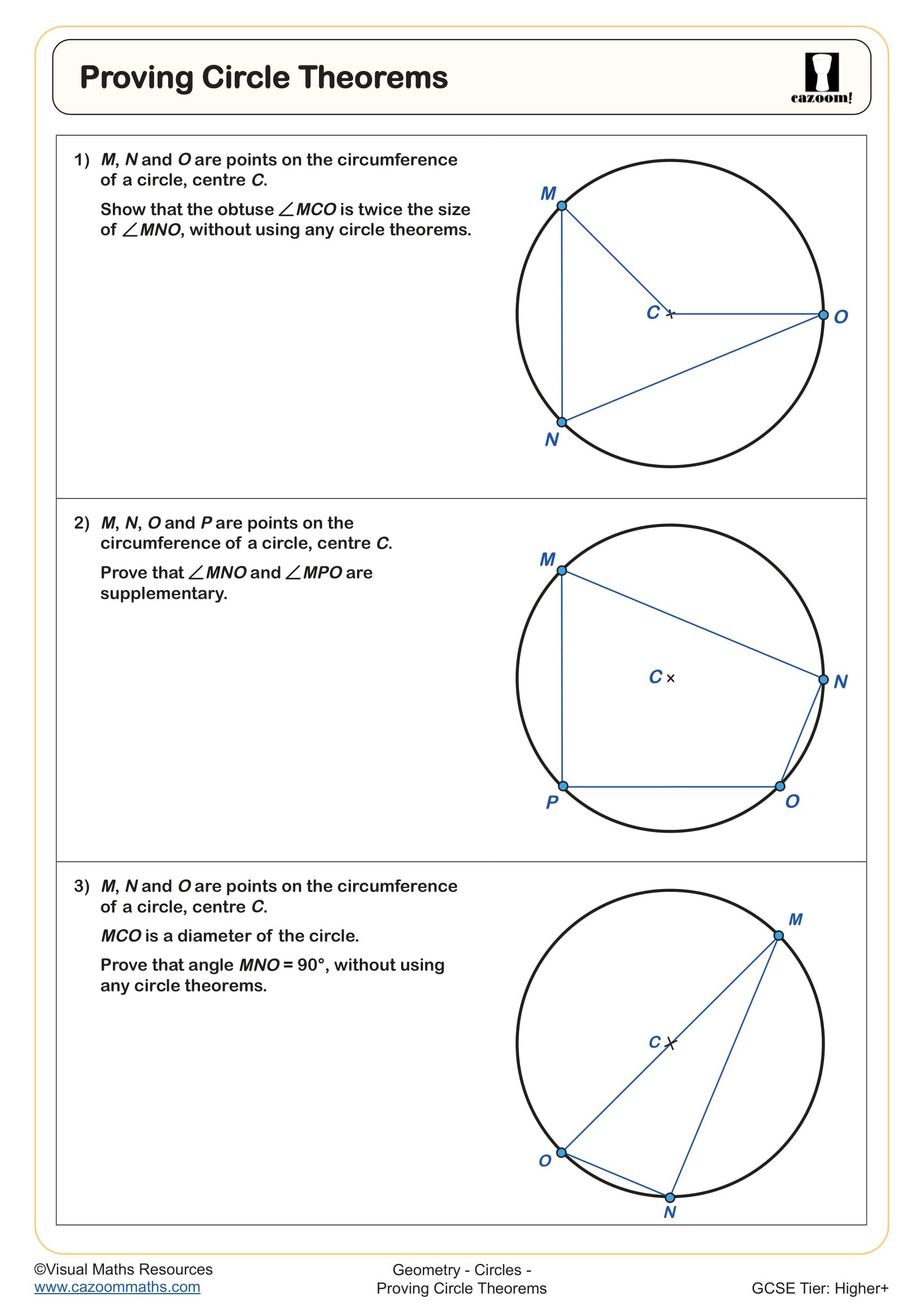
Proving Circle Theorems
Year groups: 11
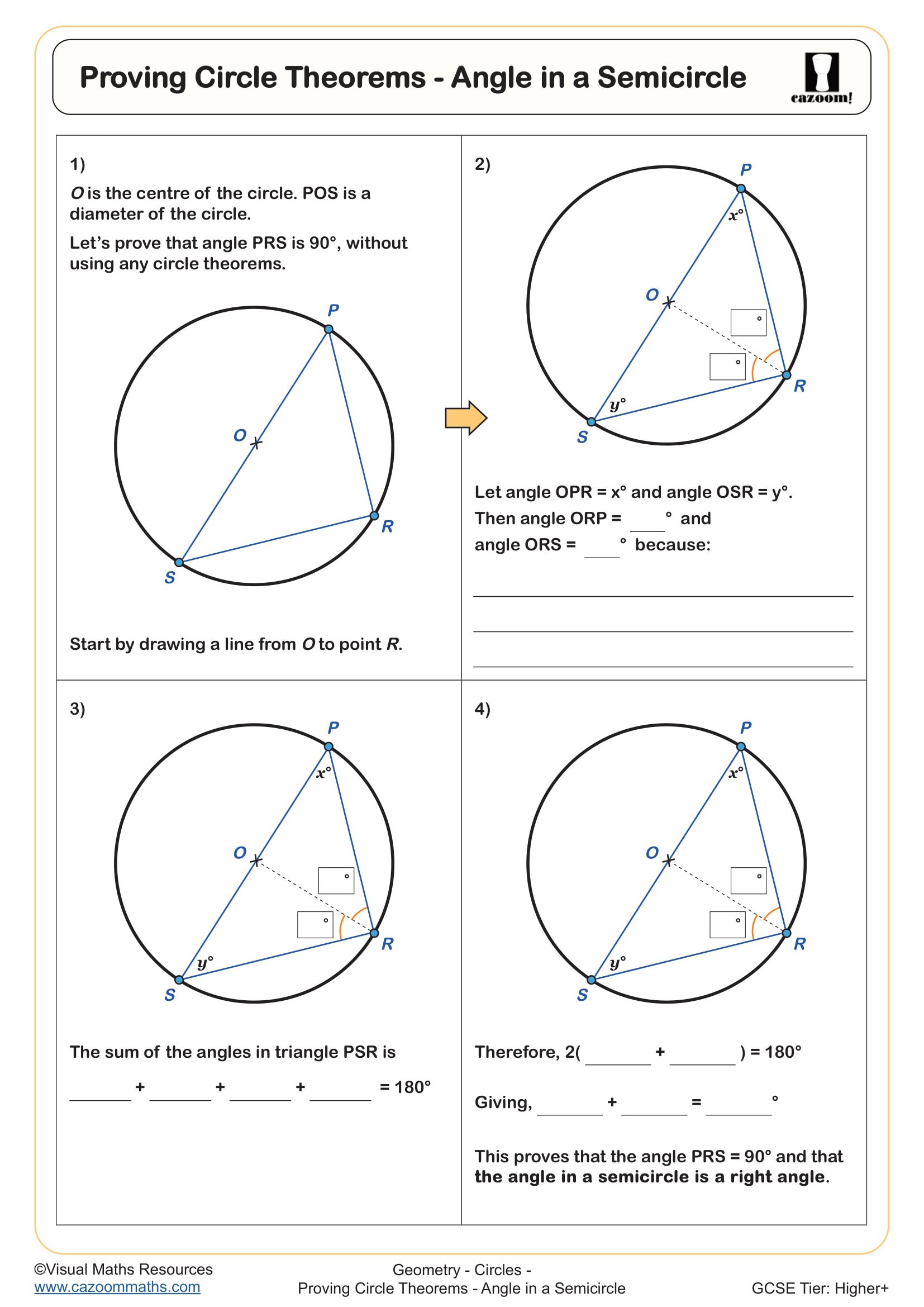
Proving Circle Theorems - Angle in a Semicircle
Year groups: 11
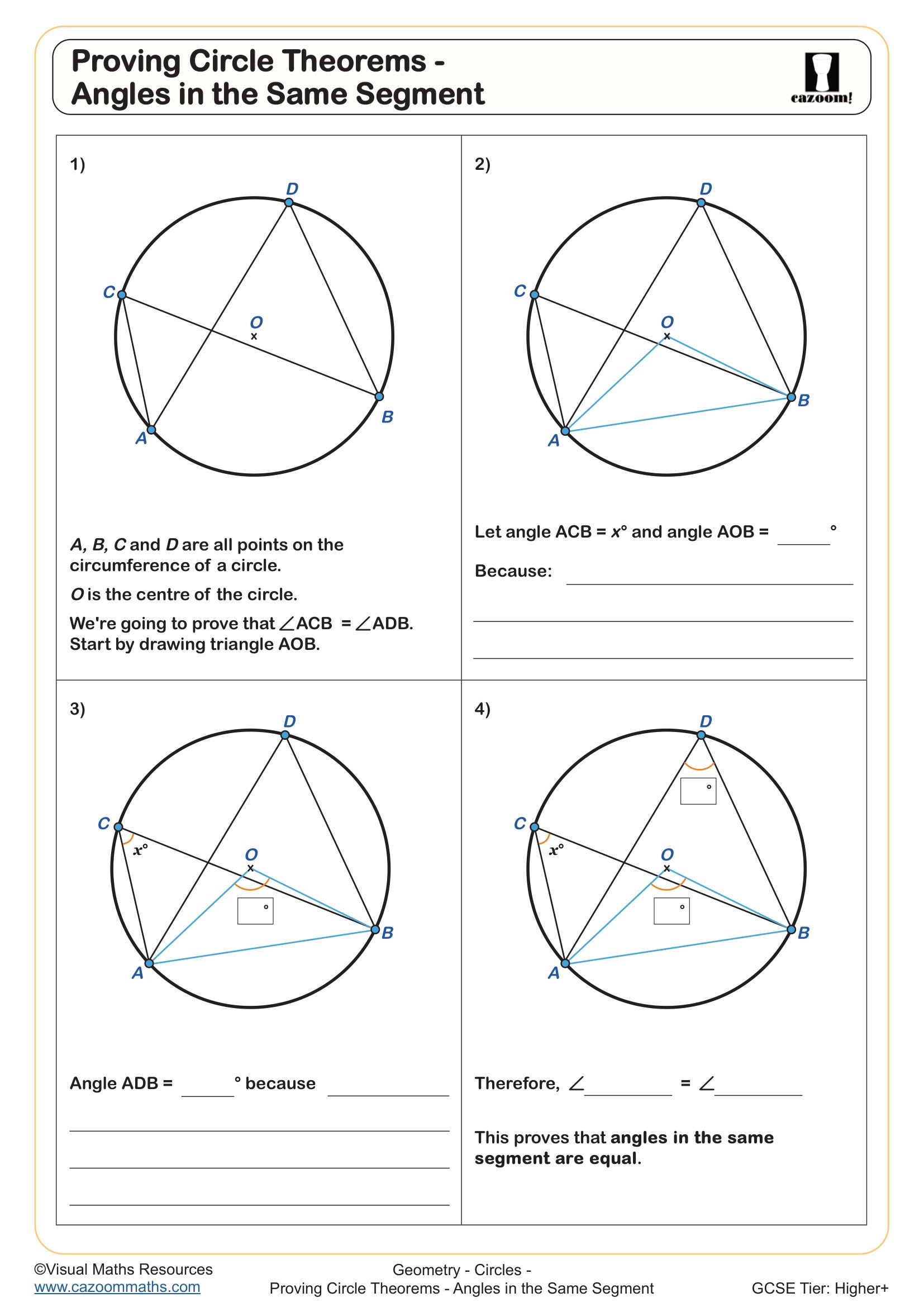
Proving Circle Theorems - Angles in the Same Segment
Year groups: 11
All worksheets are created by the team of experienced teachers at Cazoom Maths.
What makes an effective circle theorems worksheet for GCSE preparation?
An effective circle theorems worksheet should progress systematically through the eight key theorems students need for GCSE, starting with angle in a semicircle before moving to more complex applications like alternate segment theorem. The worksheet needs clear diagrams where students can identify given information and apply theorems logically.
Teachers frequently notice that students memorise theorem statements but struggle to recognise when to apply them. The most effective worksheets include mixed problems where students must first identify which theorem applies, then execute the calculation, mirroring how these concepts appear in GCSE examinations.
Which year groups should use these circle worksheets?
Circle worksheets typically begin in Year 7 with basic circumference and area calculations, building the foundation for more advanced work. Students encounter circle theorems properly in Year 9 or 10, though some schools introduce simpler theorems like angle in a semicircle during Year 8 depending on their scheme of work.
The progression matters significantly because students need confidence with basic circle calculations before tackling theorem applications. Teachers often find that students who rush into circle theorems without solid area and circumference skills struggle with the problem-solving aspects that combine multiple concepts.
How should students approach arc length and sector area problems?
Arc length and sector area problems require students to understand the relationship between angles and proportions of the full circle. The key insight is recognising that these calculations use the same principle: finding what fraction of 360° the given angle represents, then applying this fraction to circumference or area.
Teachers commonly observe students mixing up the formulas or forgetting to convert between radians and degrees. Successful students learn to check their answers by considering whether the arc length seems reasonable compared to the full circumference, or whether the sector area makes sense as a fraction of the complete circle area.
How can teachers use these circle worksheets most effectively in lessons?
Teachers find these worksheets work best when used strategically rather than as standalone exercises. Starting with a brief recap of relevant formulas or theorems, then working through the first few problems together helps students understand the approach before attempting independent work.
The answer sheets prove particularly valuable for peer marking activities, where students can identify and discuss common errors immediately. Many teachers use the worksheets diagnostically, noting which question types cause difficulty to inform their next lesson planning and identify students who need additional support with specific circle concepts.
Circles in Real Life
Cazoom Maths Worksheets will teach your child understand the relevance of circles in everyday life, from circular buildings and roundabouts to artistic creations and engineering marvels! Understanding circle theorems equips your child or pupil with essential problem-solving abilities related to this concept and its practical applications.
Explore our engaging circle worksheets, designed to foster a deeper understanding of circle concepts. With a focus on mastering circle theorems, your child or pupil can confidently tackle challenges and excel academically.