KS3 and KS4 Construction Worksheets
All worksheets are created by the team of experienced teachers at Cazoom Maths.
What makes construction in mathematics PDF worksheets effective for teaching geometric skills?
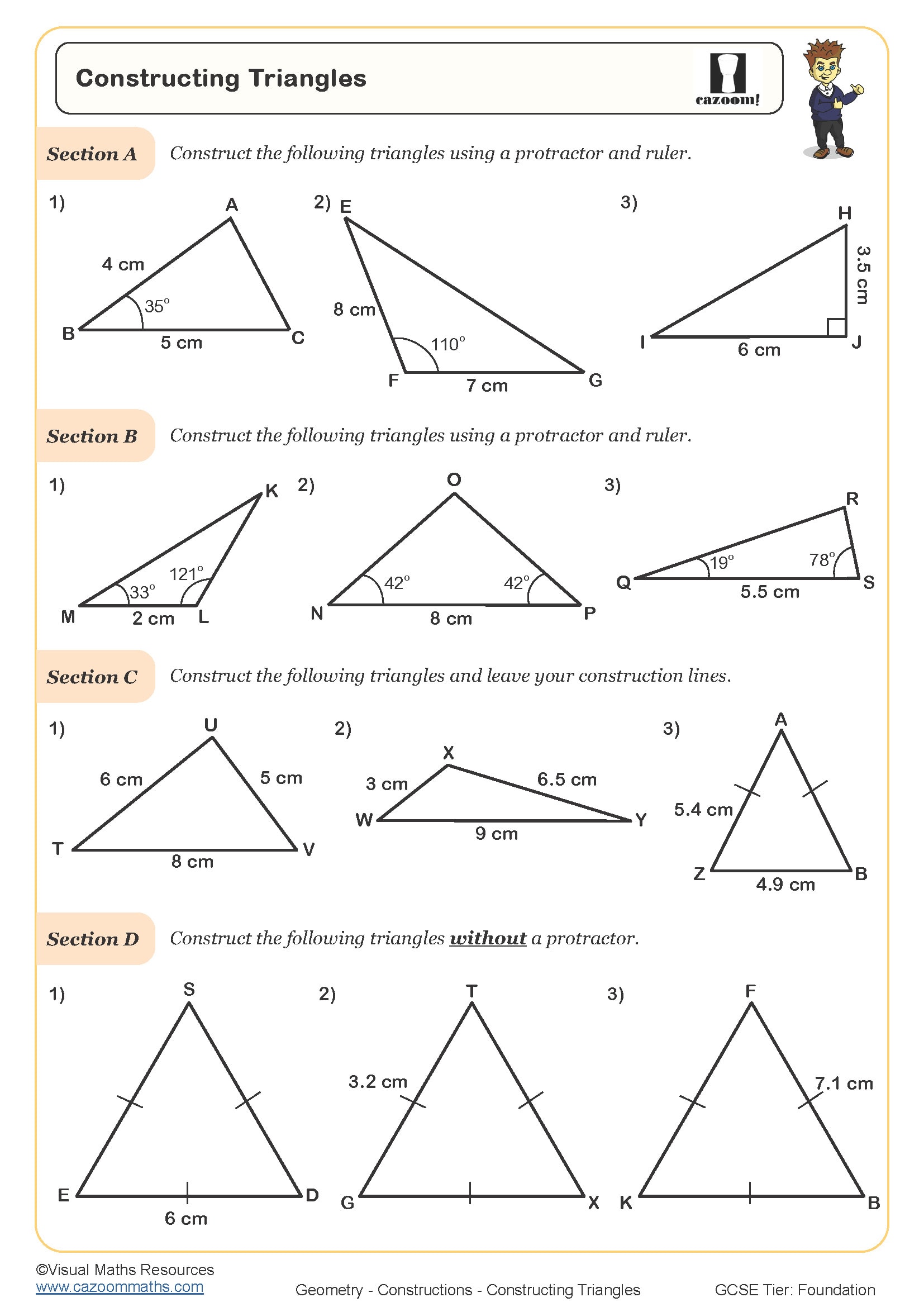
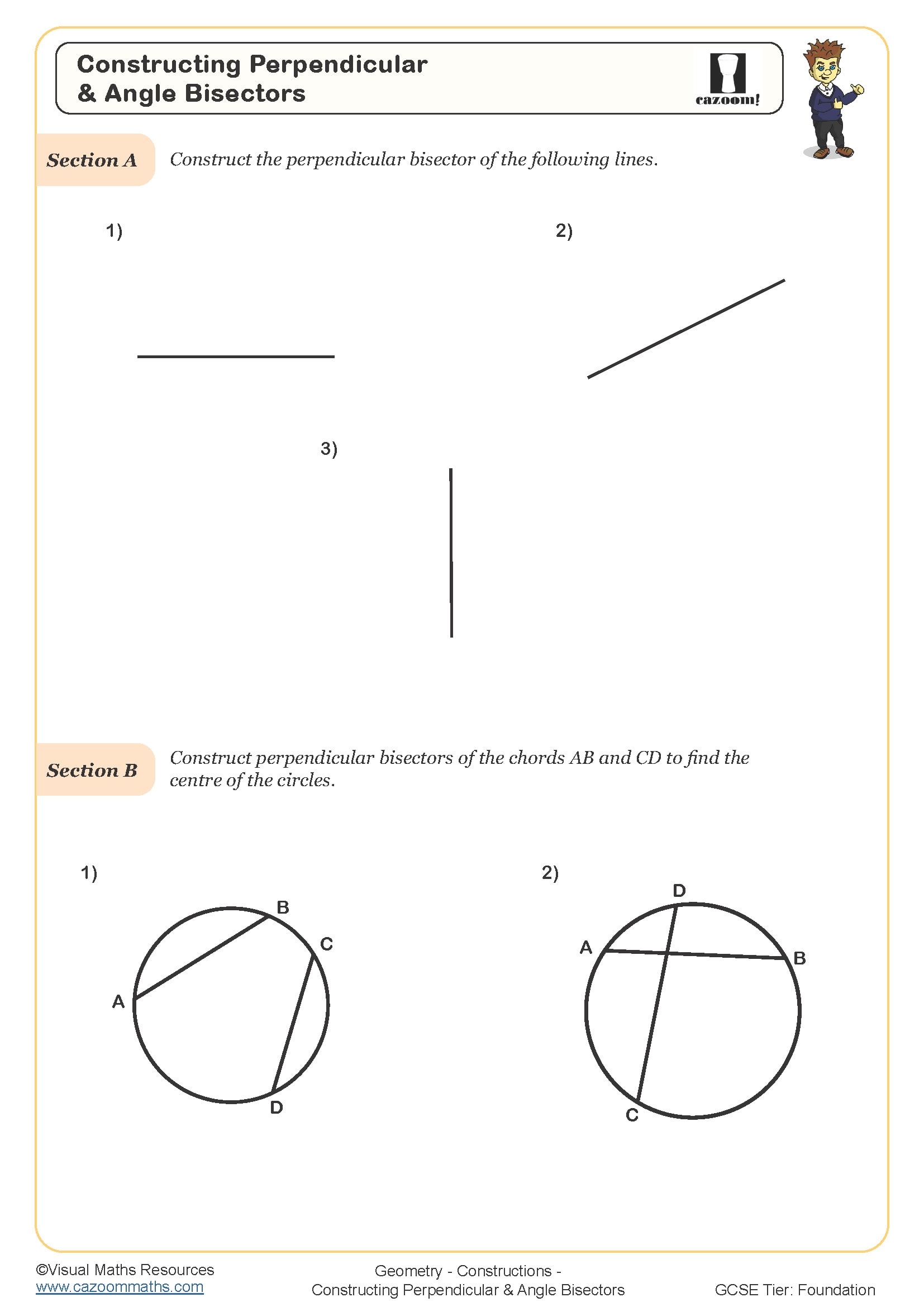
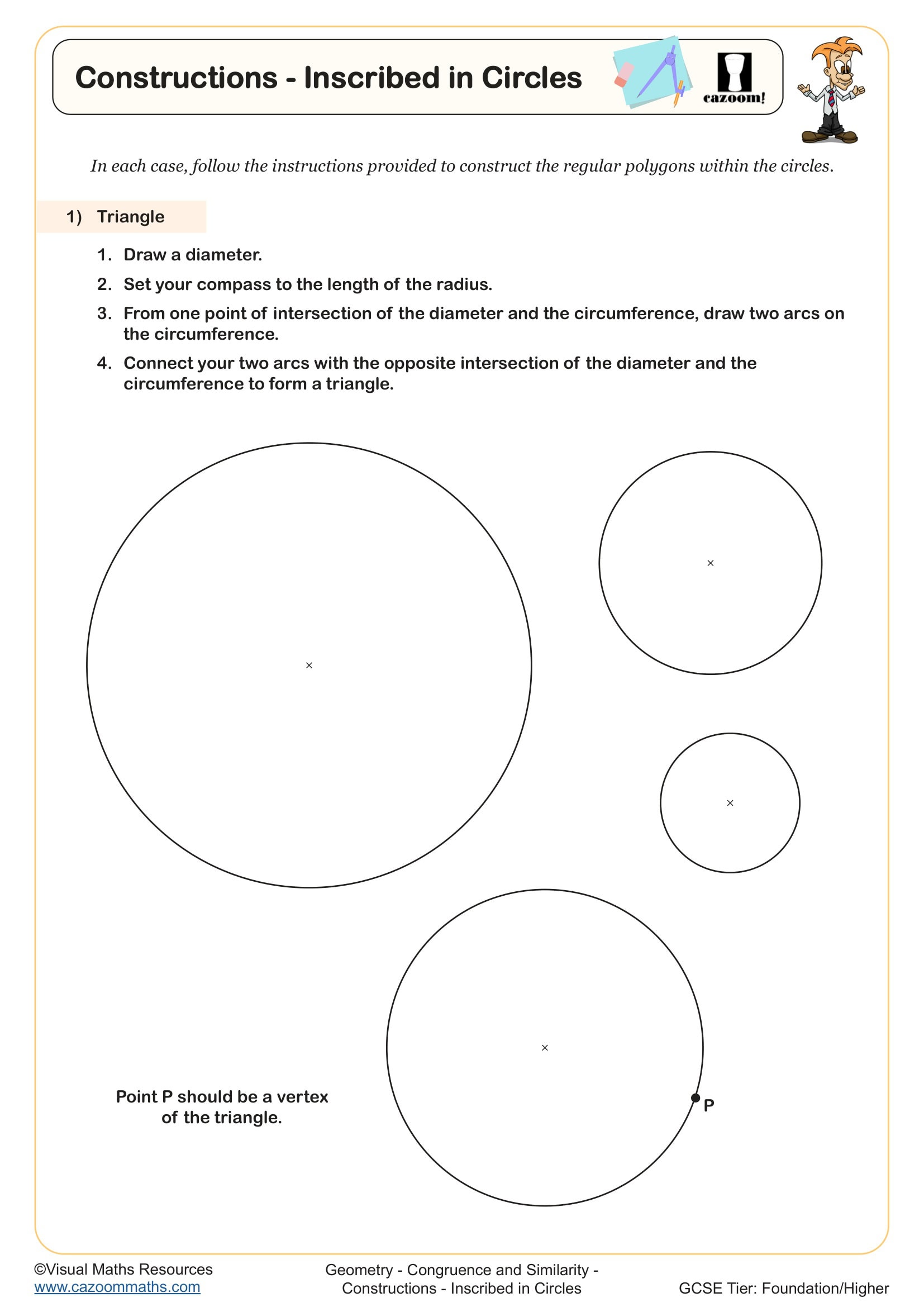
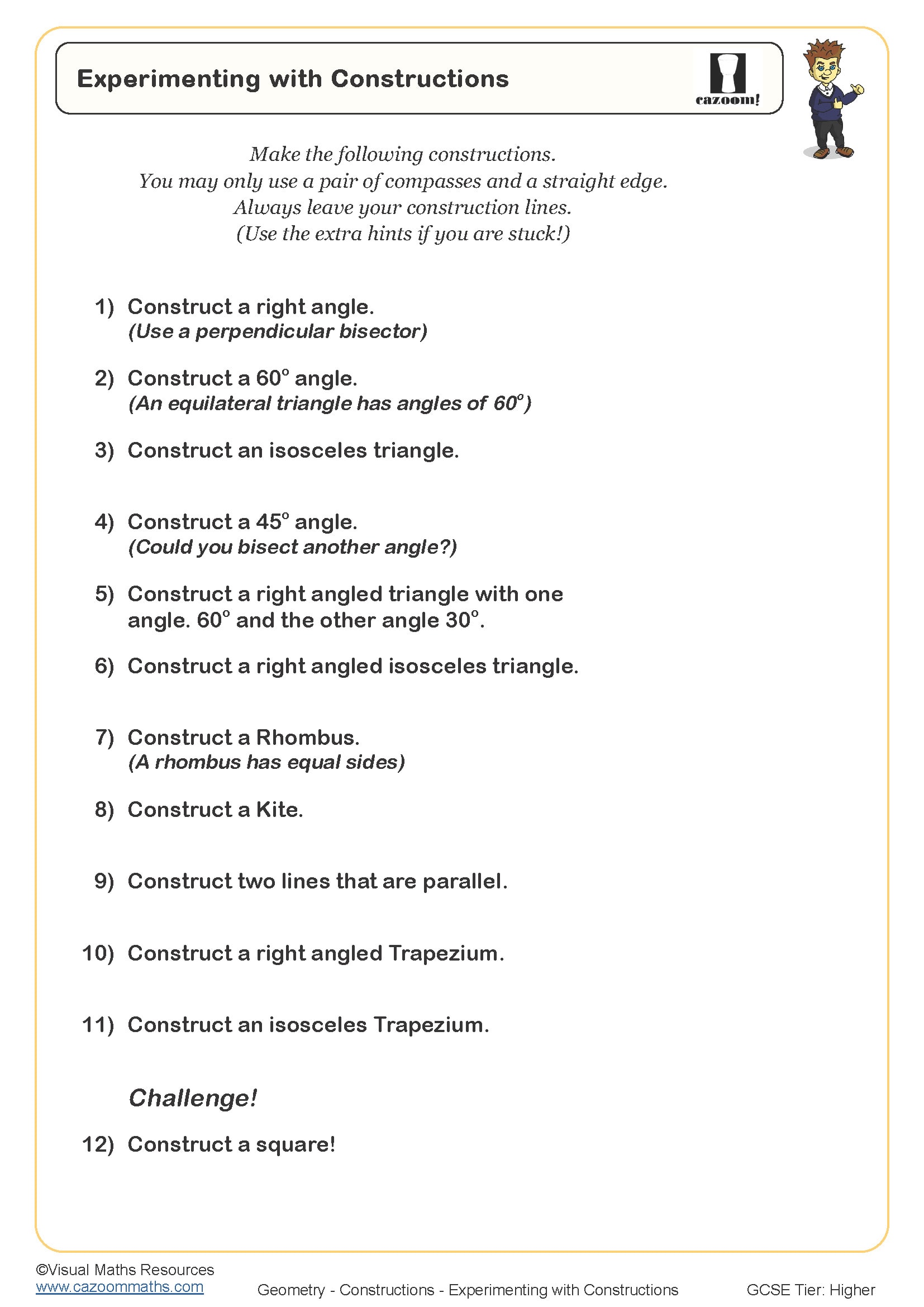
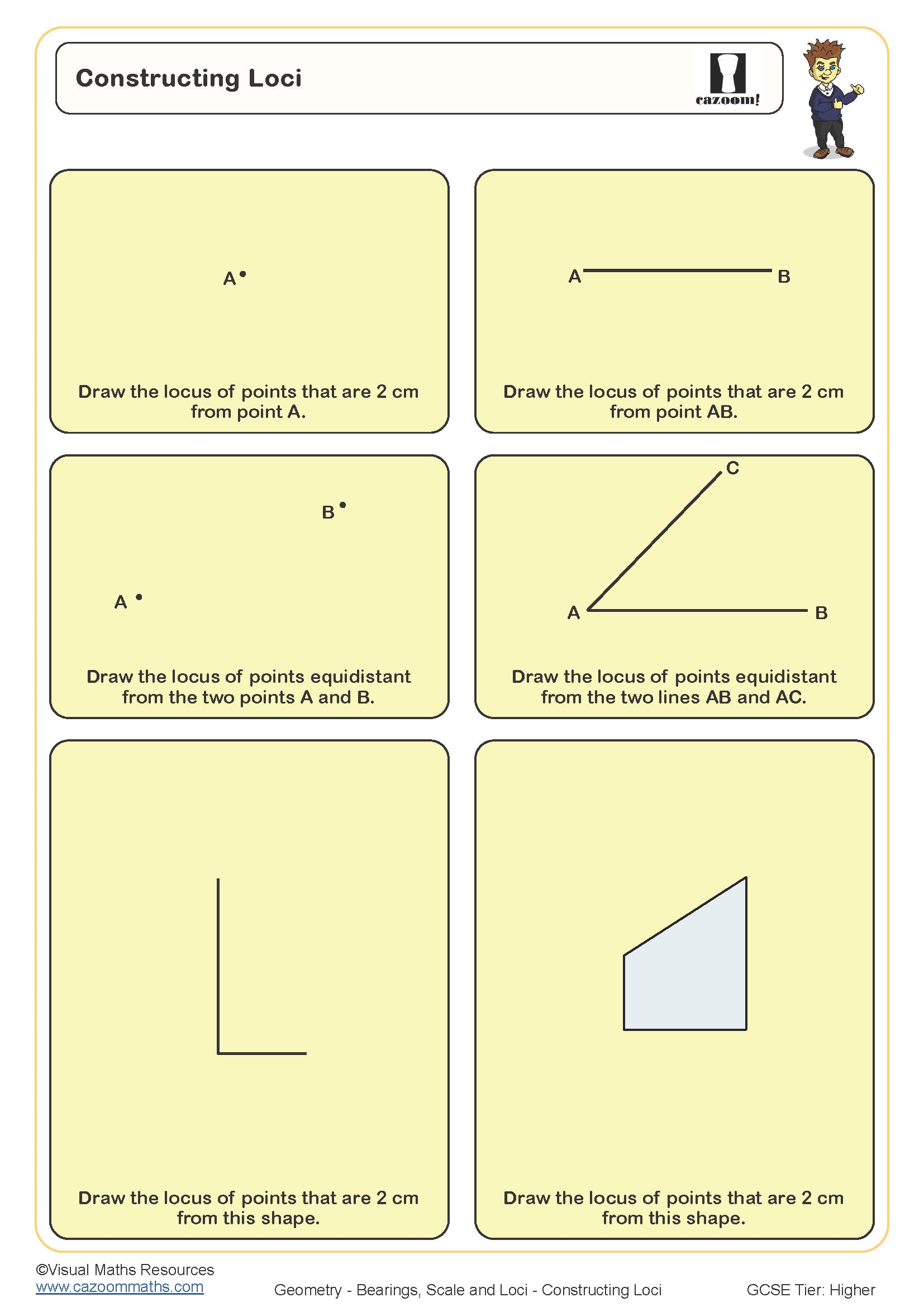
Construction in mathematics PDF worksheets provide structured practice that develops both technical skills and mathematical reasoning. The National Curriculum requires students to construct triangles, bisect angles, and create perpendicular bisectors using only compass and straightedge, building understanding of geometric relationships through hands-on experience.
Teachers notice that students who practise constructions regularly develop better spatial awareness and measurement skills. The step-by-step nature of construction problems helps pupils understand why geometric properties work, rather than simply memorising formulas. PDF format ensures consistent quality when printing, maintaining the precision essential for accurate compass work and allowing teachers to distribute resources easily across different classes.
Which year groups benefit most from constructions worksheets?
Constructions worksheets serve students from Year 7 through Year 11, with complexity increasing appropriately for each stage. Key Stage 3 pupils focus on basic compass techniques and simple triangle constructions, while GCSE students tackle more complex loci problems and scale drawings that appear regularly in examination questions.
The progression allows teachers to build confidence systematically, starting with fundamental skills like drawing circles and measuring angles accurately. Year 10 and 11 students particularly benefit from construction practice as these topics frequently appear in GCSE higher tier papers, often combined with other geometric concepts like similarity and trigonometry.
How do loci worksheets help students understand moving point problems?
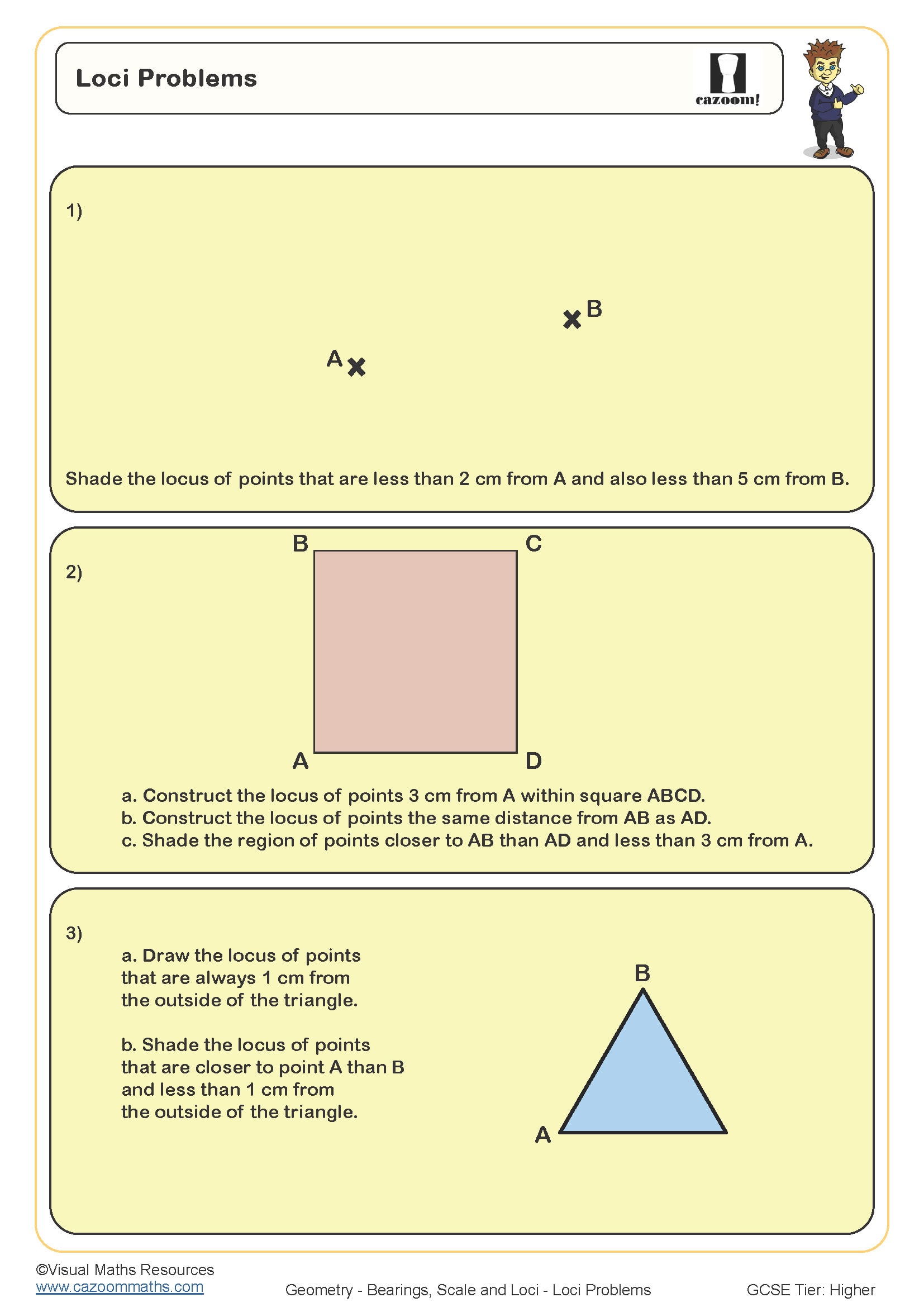
Loci worksheets develop students' ability to visualise and construct the path of points satisfying specific conditions, a concept many find initially challenging. These problems require pupils to combine construction skills with logical reasoning, determining where points equidistant from two lines or within specific distances from fixed points will lie.
Mathematics teachers report that students often struggle to translate written loci conditions into geometric constructions. Structured practice helps pupils recognise common patterns, such as perpendicular bisectors representing points equidistant from two fixed points. This understanding proves valuable in GCSE examinations, where loci questions often carry several marks and require both accurate construction and clear mathematical justification.
How can teachers use these worksheets to improve students' construction accuracy?
Teachers find that demonstrating proper compass technique before distributing worksheets significantly improves student outcomes. Emphasising light pencil lines, maintaining compass width, and checking measurements helps pupils develop the precision these problems demand. The included answer sheets allow immediate feedback on both method and accuracy.
Classroom observation shows that students benefit from working through mathematics construction questions and answers in pairs initially, comparing techniques and identifying errors together. This collaborative approach helps pupils recognise common mistakes like changing compass settings mid-construction or failing to show construction arcs clearly. Regular practice with these structured resources builds the confidence students need for examination success.