KS3 and KS4 Coordinates Worksheets
3D Coordinates
Year groups: 7, 8
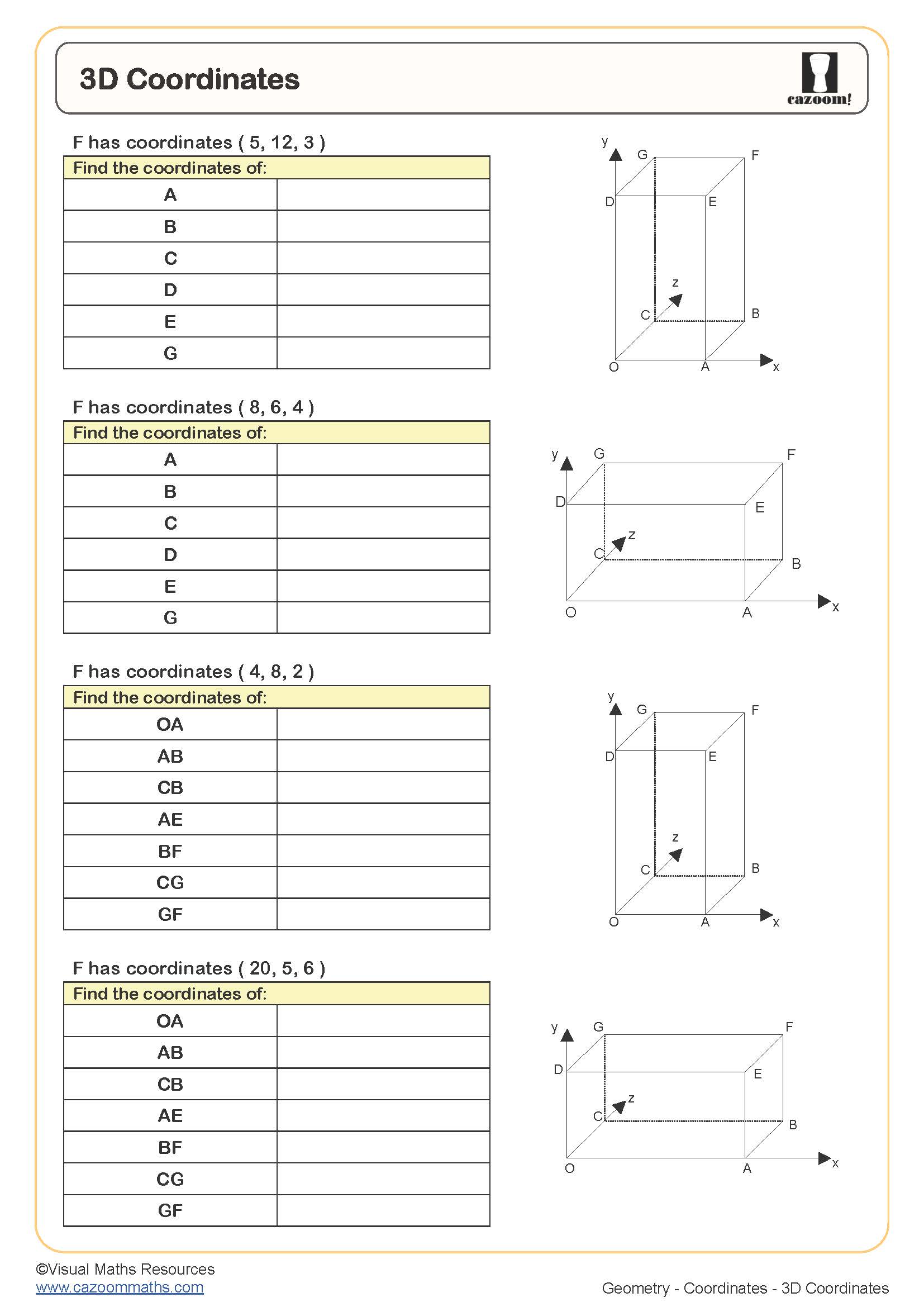
Co-ordinates in All 4 Quadrants
Year groups: 7, 8
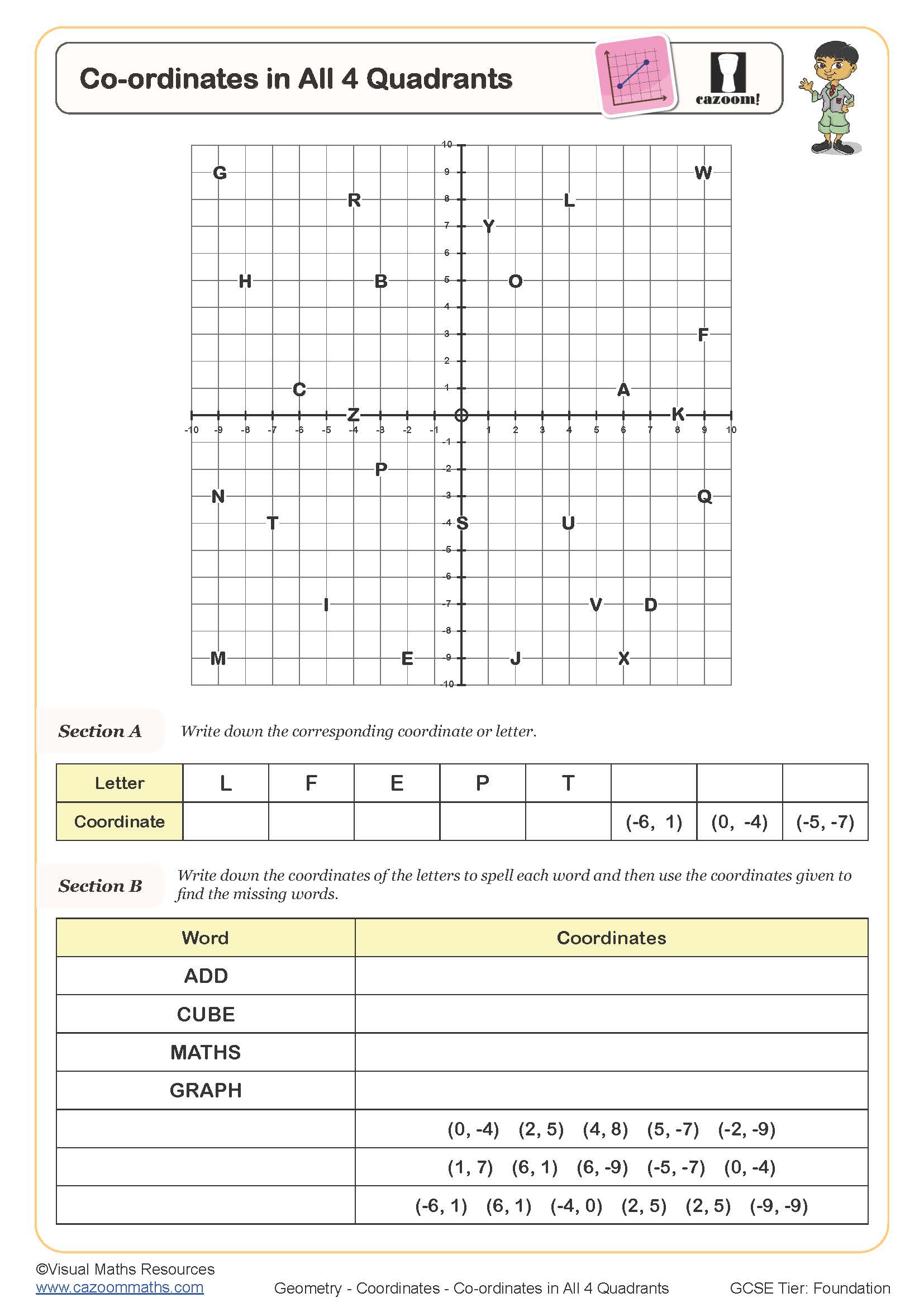
Coordinate Emojis
Year groups: 7, 8
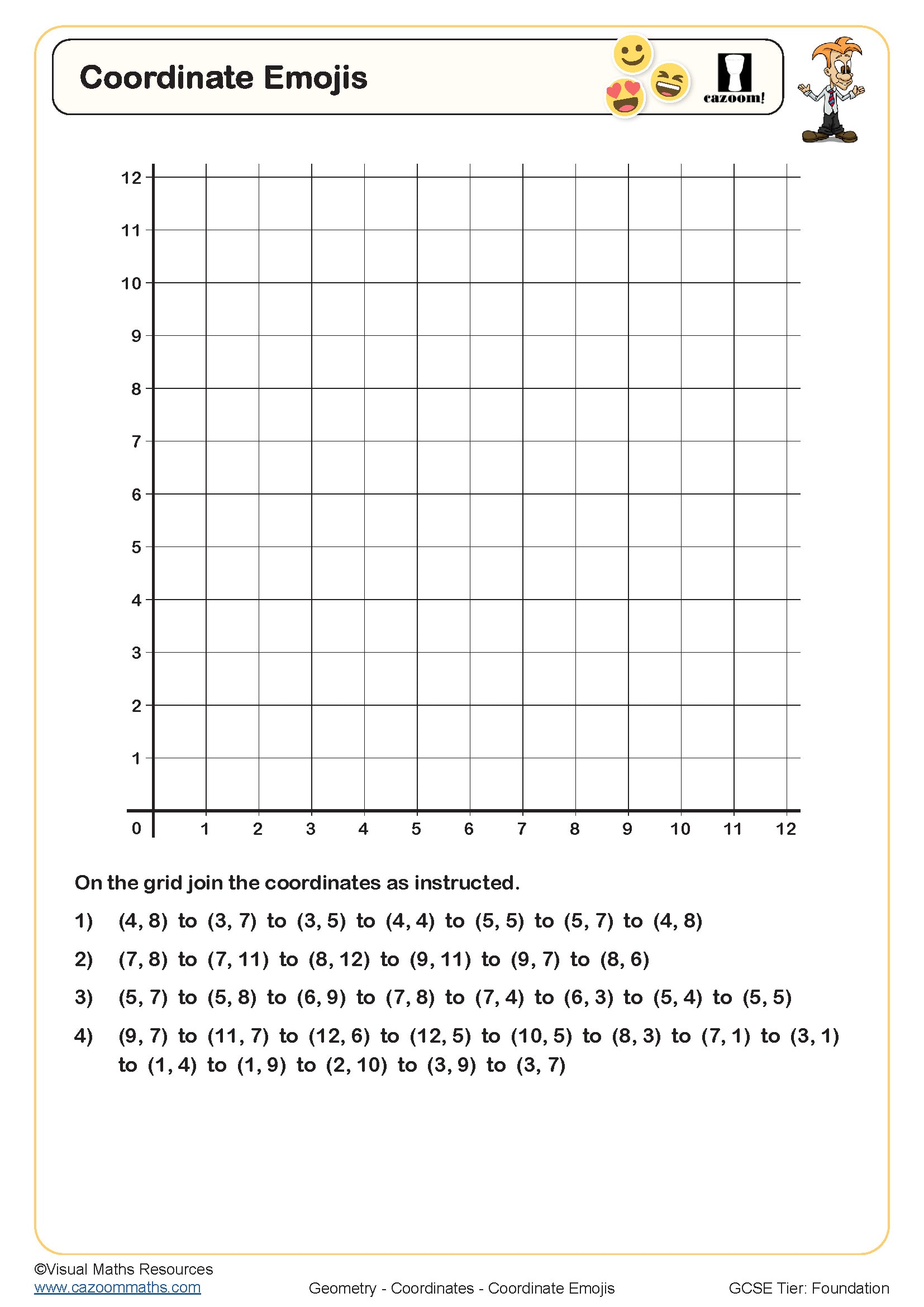
Coordinate Shapes
Year groups: 7, 8
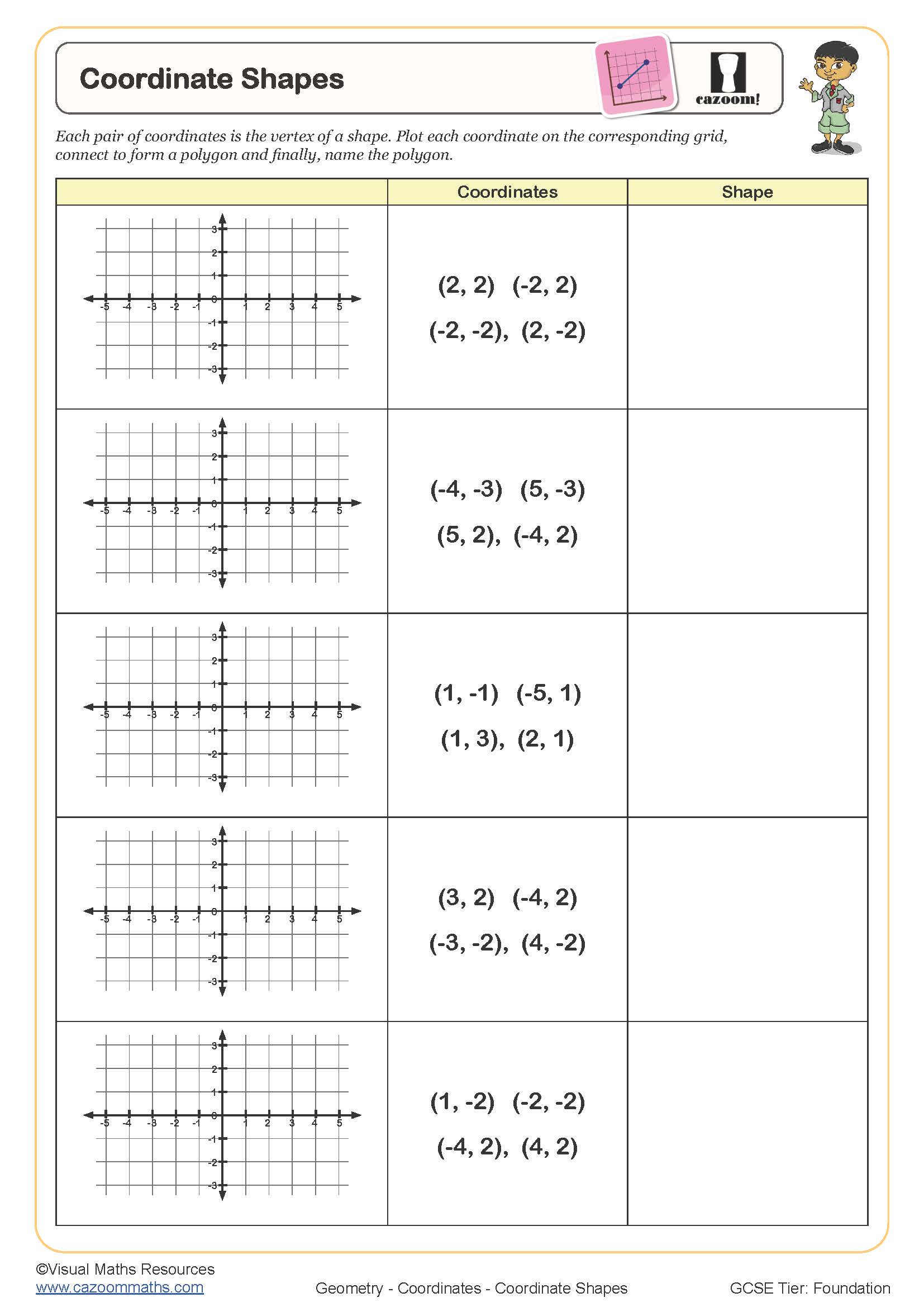
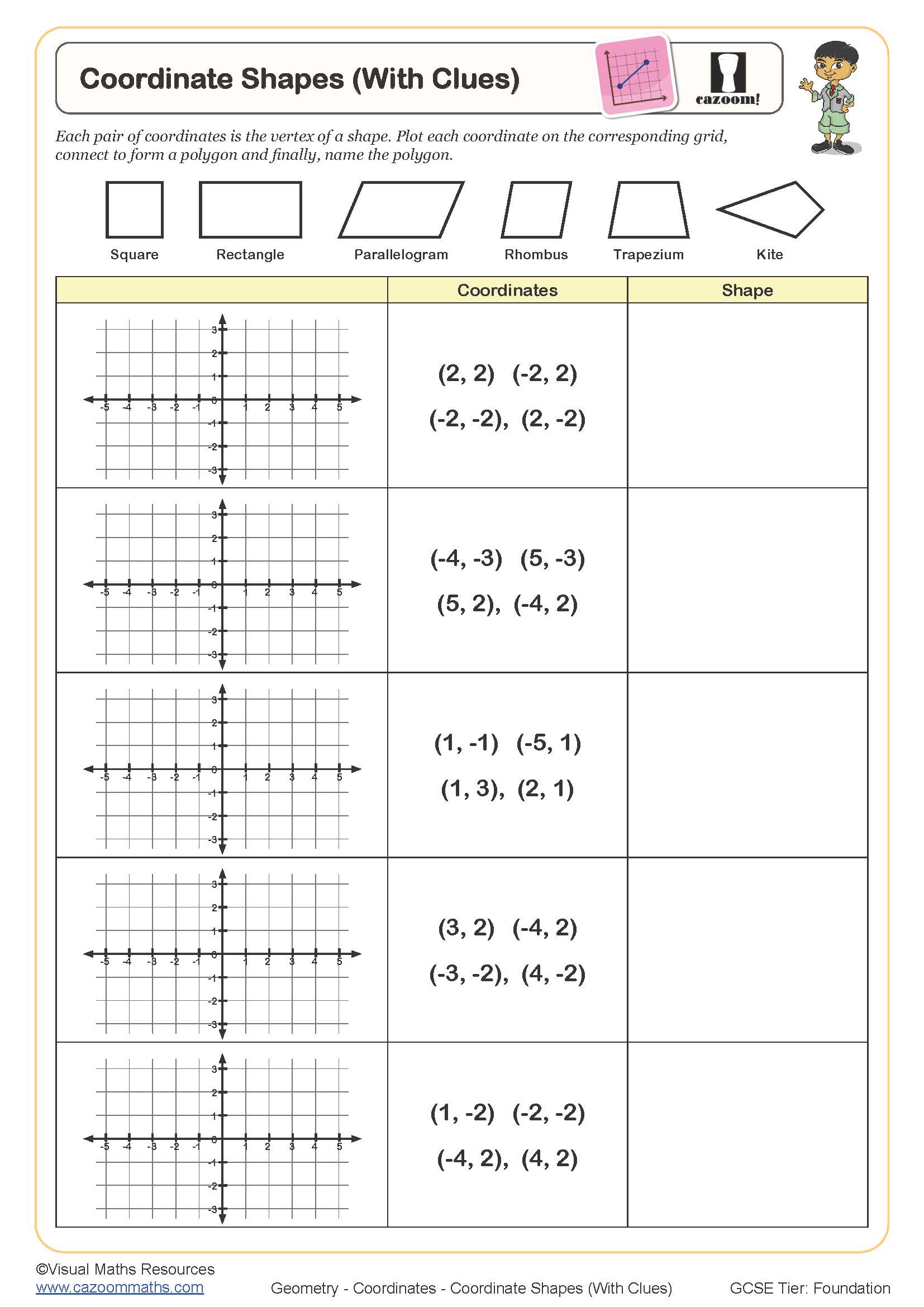
Coordinate Shapes (With Clues)
Year groups: 7, 8
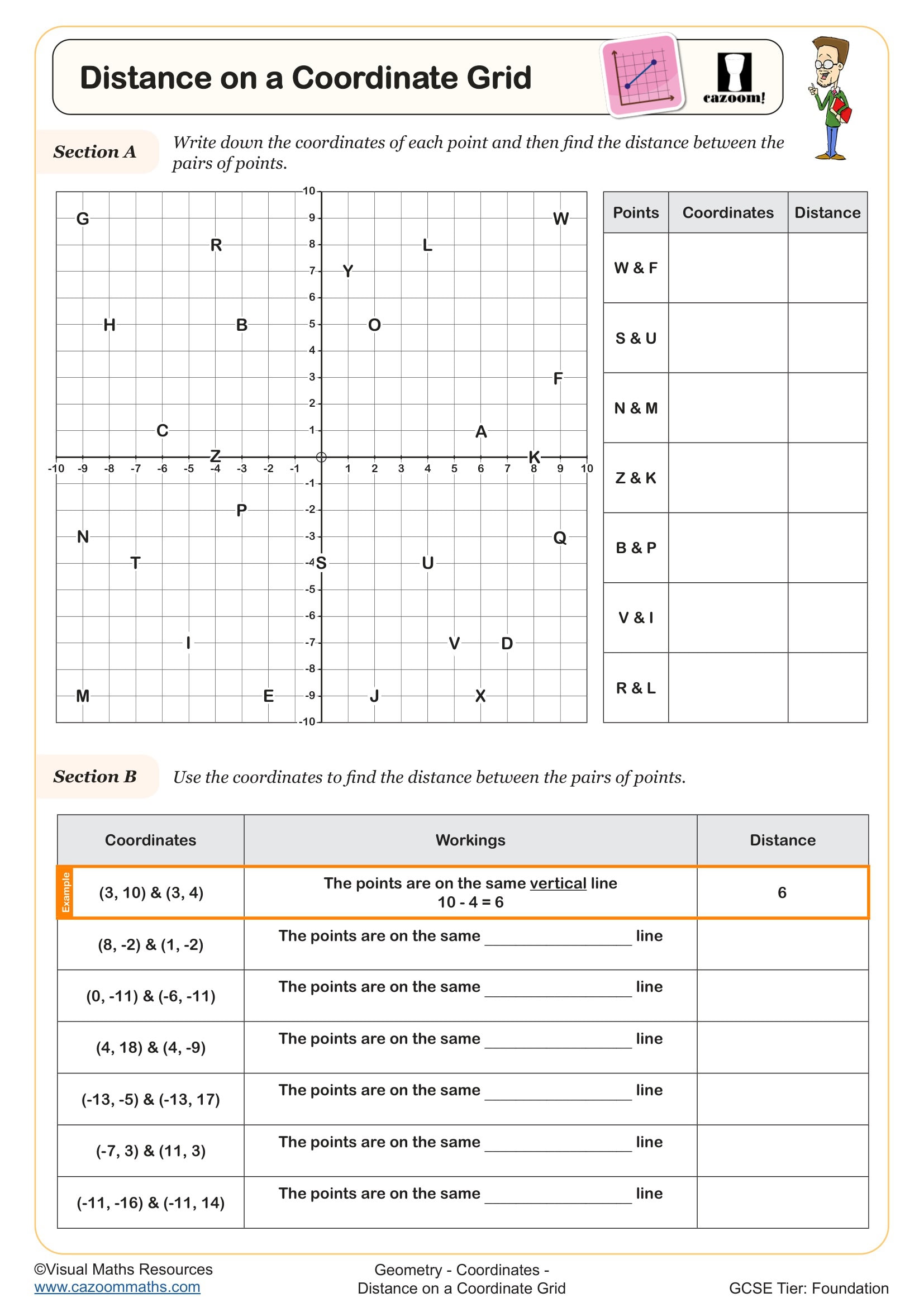
Distance on a Coordinate Grid
Year groups: 7, 8
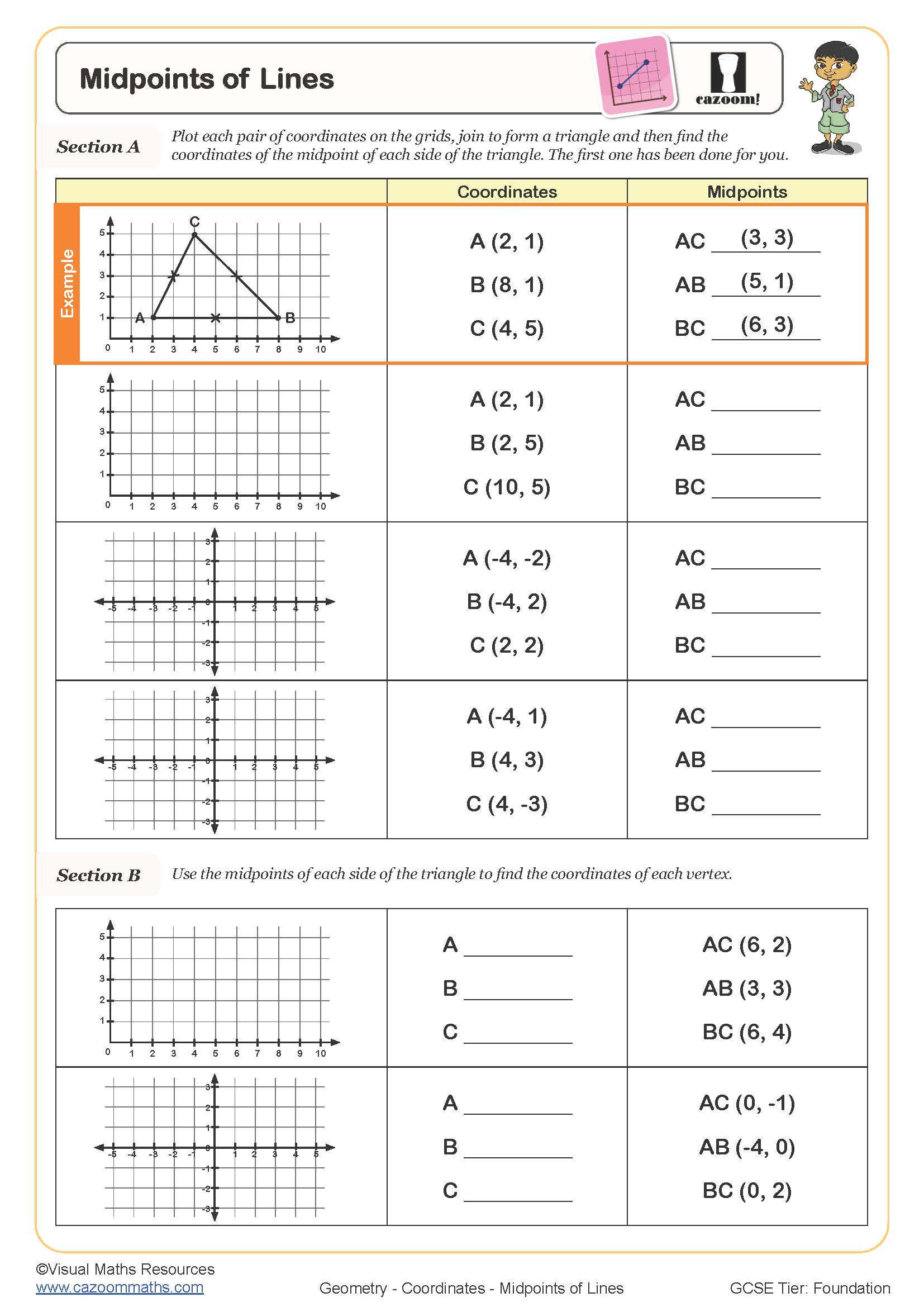
Midpoints of Lines
Year groups: 7, 8
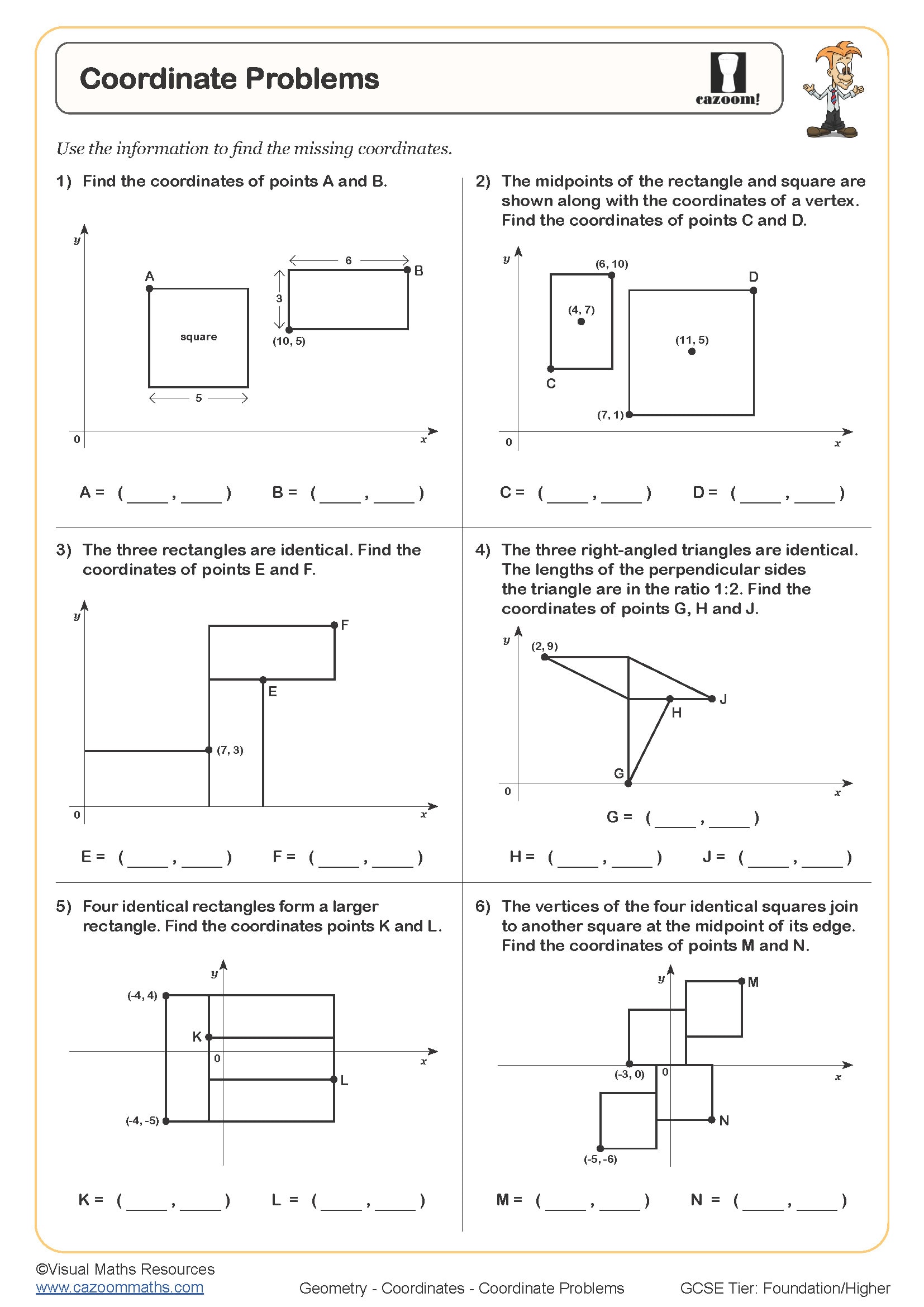
Coordinate Problems
Year groups: 8, 9
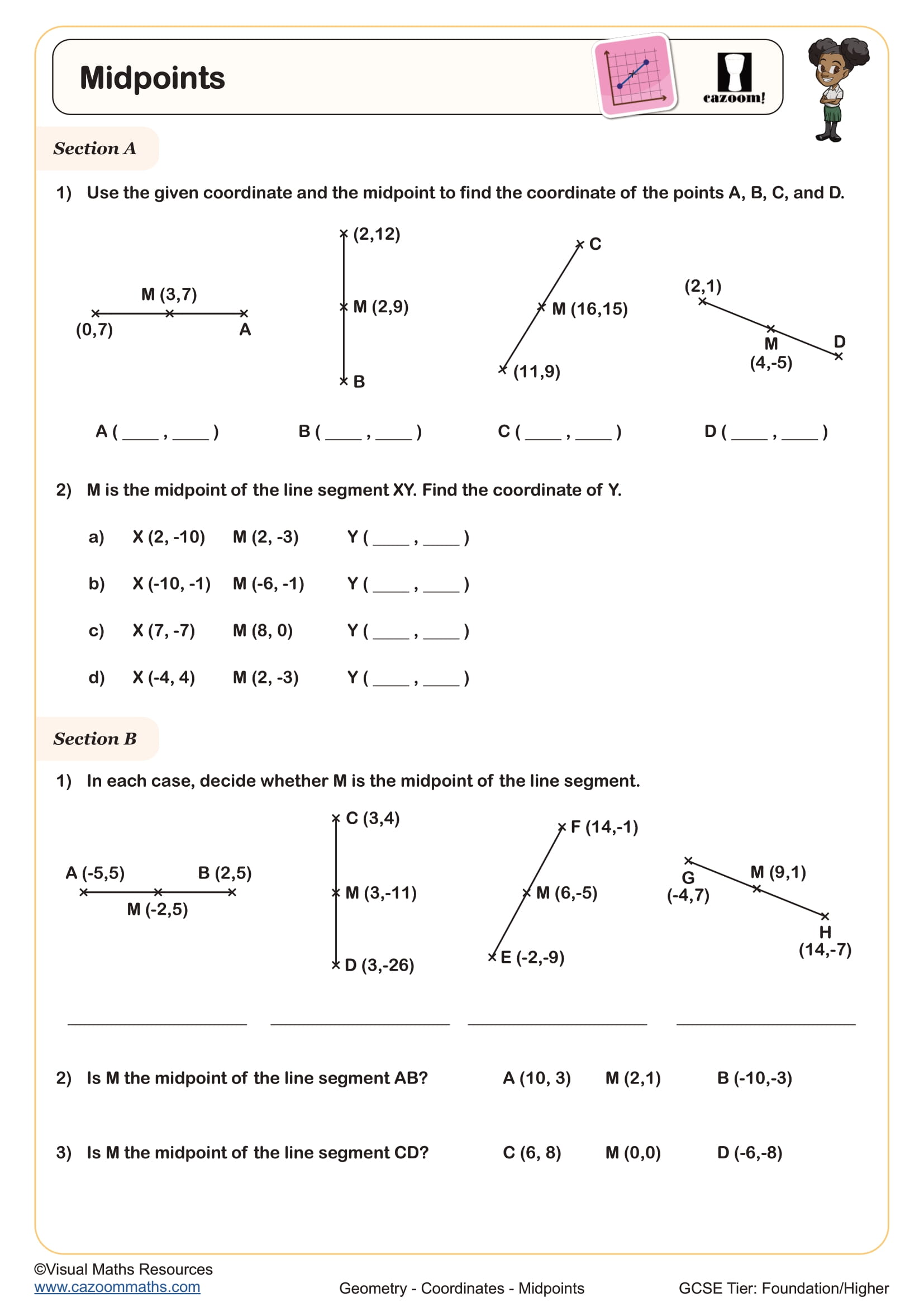
Midpoints
Year groups: 8, 9
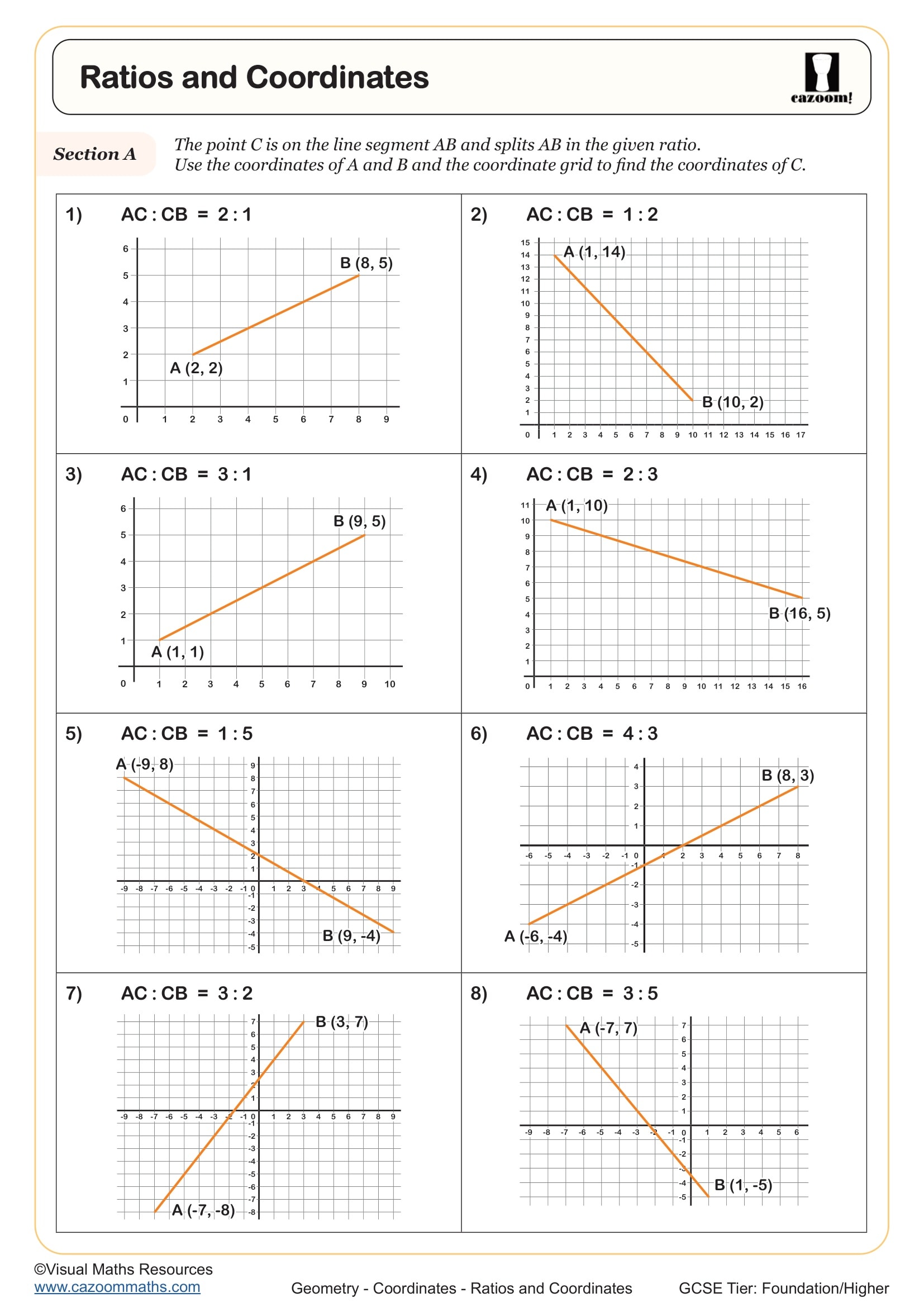
Ratios and Coordinates
Year groups: 10, 11
All worksheets are created by the team of experienced teachers at Cazoom Maths.
What should students practise with coordinates worksheet activities?
Students should begin with basic plotting of positive coordinates before progressing to all four quadrants, as required by the KS3 National Curriculum. Coordinate worksheets typically cover reading coordinates, plotting points accurately, and understanding the relationship between algebraic and graphical representations.
Teachers notice that students often reverse x and y coordinates when plotting, writing (3,5) but plotting the point at (5,3). Regular practise with coordinate sheet exercises helps students develop the muscle memory of moving horizontally first, then vertically, reinforcing the 'along the corridor, up the stairs' teaching method.
Which year groups use coordinates worksheets most effectively?
Year 7 students typically start with positive coordinates in the first quadrant, while Year 8 extends to all four quadrants including negative values. By Year 9 and beyond, coordinates work supports algebraic concepts like linear graphs and transformations as part of GCSE preparation.
Progression shows students moving from simple plotting activities to applying coordinate geometry in problem-solving contexts. Teachers find that regular spacing of coordinates practise throughout KS3 prevents the gaps that often appear when students encounter coordinate-based GCSE questions involving midpoints, gradients, and geometric transformations.
How do coordinates worksheets support transformation work?
Coordinate geometry provides the foundation for understanding reflections, rotations, and translations on the coordinate plane. Students use coordinates to describe transformations precisely, identifying how points move under different transformations and recognising patterns in coordinate changes.
Teachers observe that students who are confident with basic coordinate plotting find transformation work much more accessible. When reflecting in the line y = x, for example, students can verify their work by checking that coordinates have swapped positions, turning (2,5) into (5,2), making the abstract concept concrete through coordinate evidence.
How can teachers use these coordinates worksheets effectively in lessons?
Teachers can differentiate coordinate work by starting reluctant learners with smaller grids and positive coordinates only, gradually building confidence before introducing negative values. The answer sheets allow for peer marking activities where students check each other's plotting accuracy.
Many teachers use coordinate worksheets as starter activities to maintain fluency, or as homework tasks that parents can easily support at home. The visual nature of coordinate work makes it accessible for students who struggle with purely algebraic concepts, providing a bridge between numerical and graphical mathematics that supports broader mathematical understanding.