Decimals Worksheets
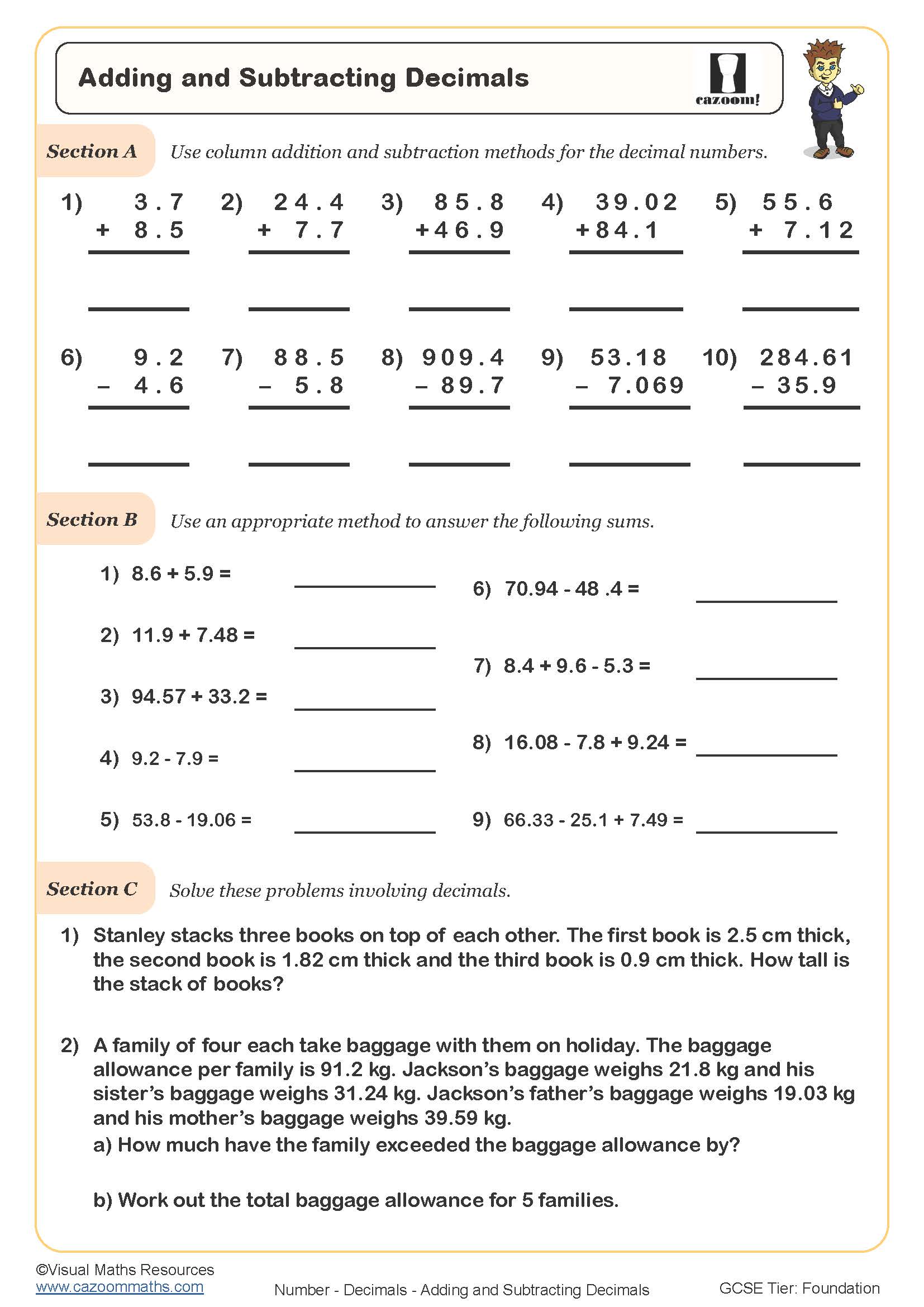
Adding and Subtracting Decimals
Year groups: 7, 8
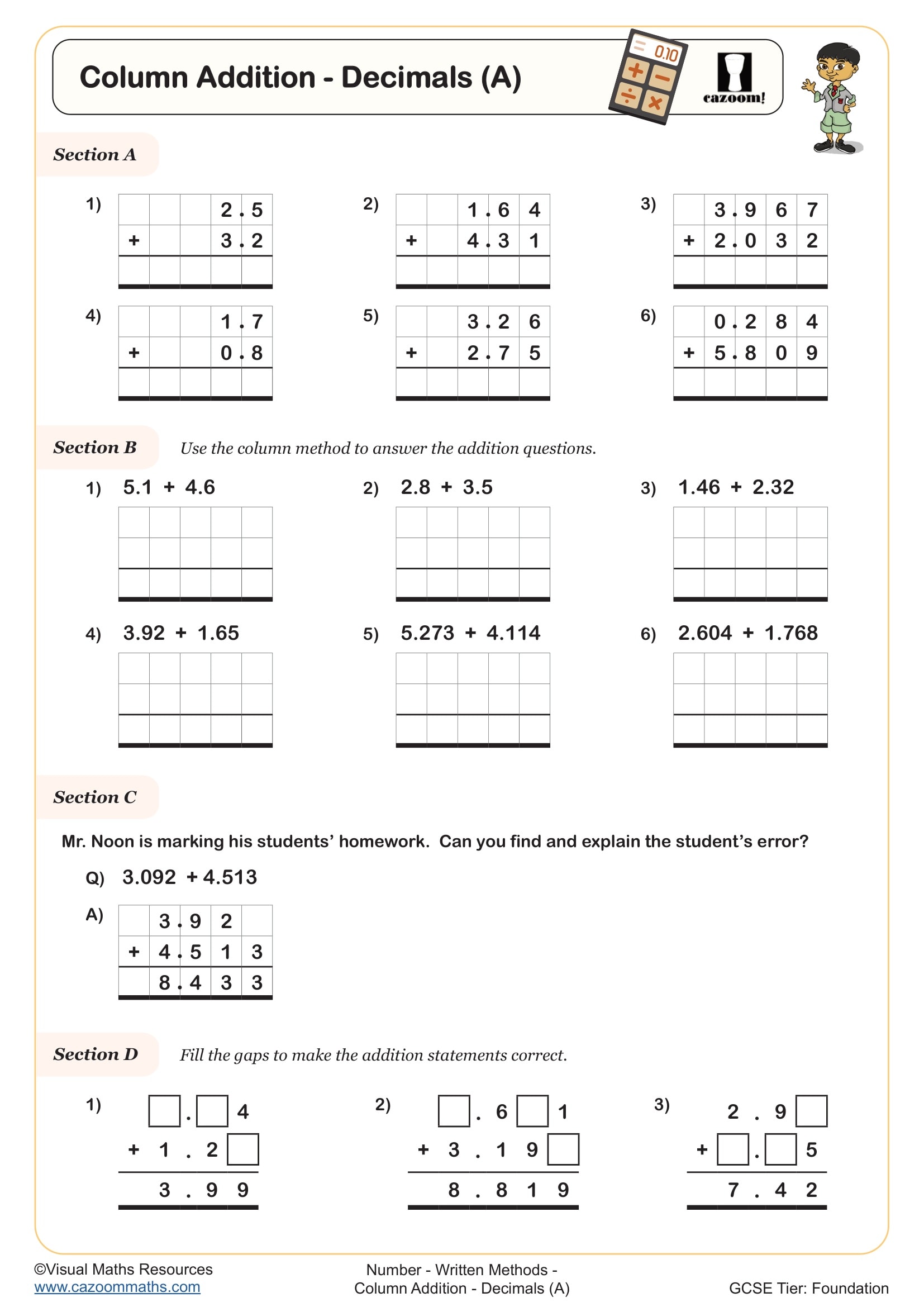
Column Addition - Decimals (A)
Year groups: 7, 8
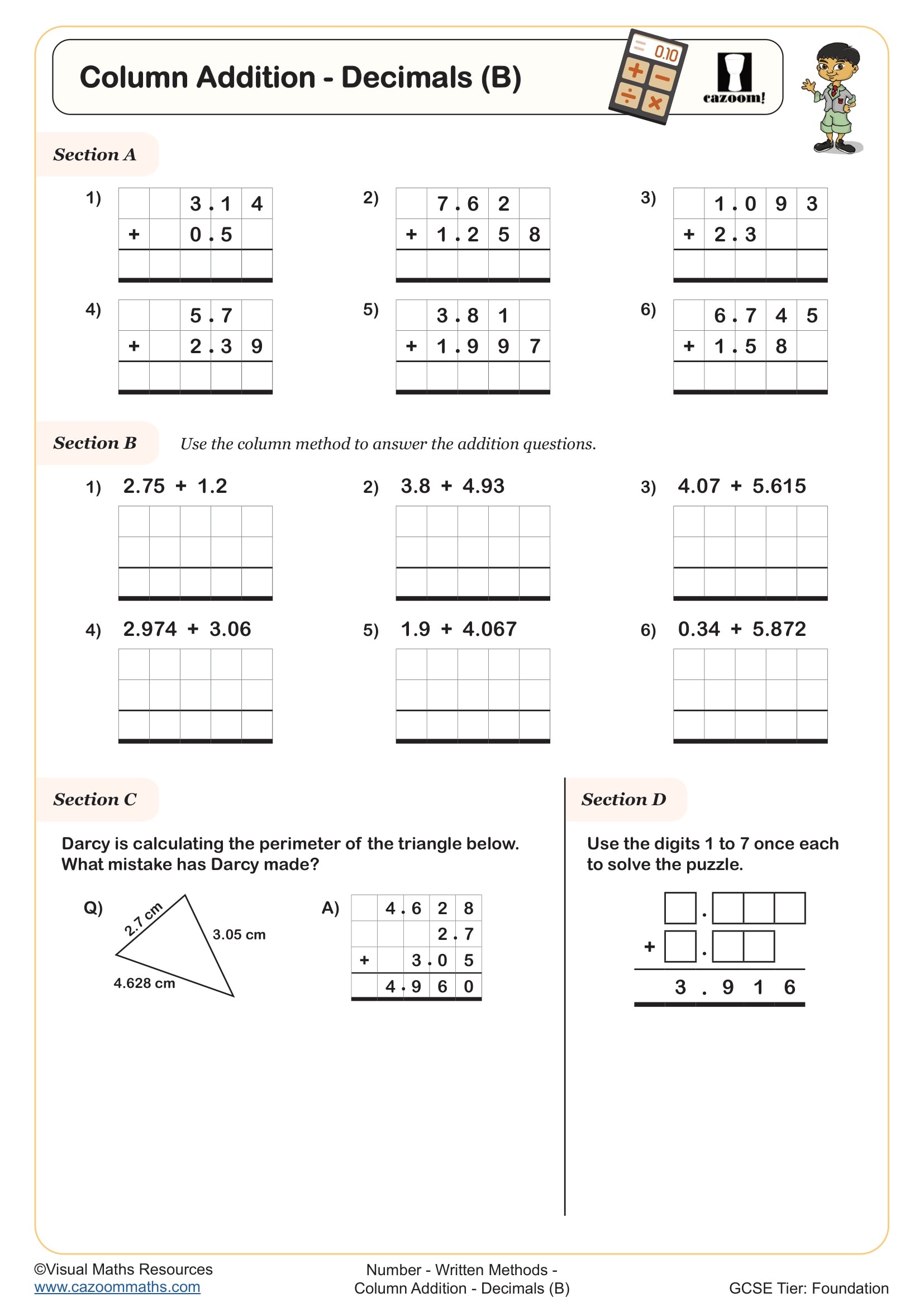
Column Addition - Decimals (B)
Year groups: 7, 8
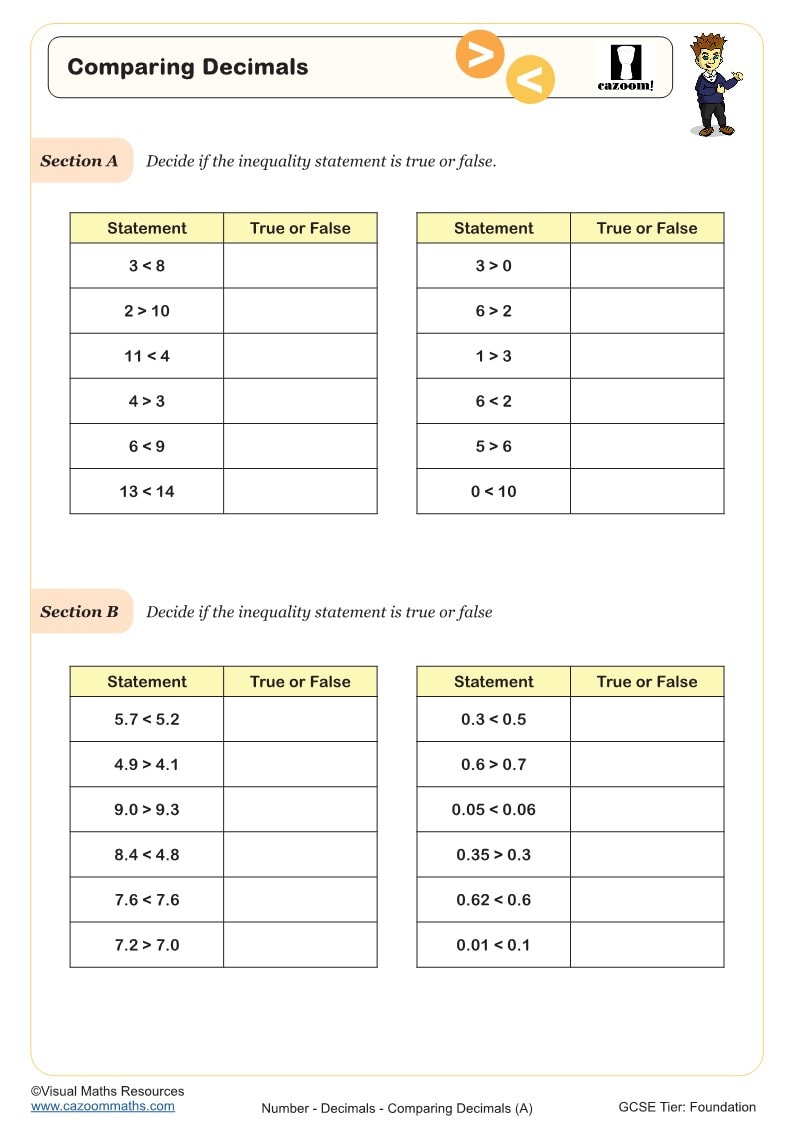
Comparing Decimals
Year groups: 7, 8
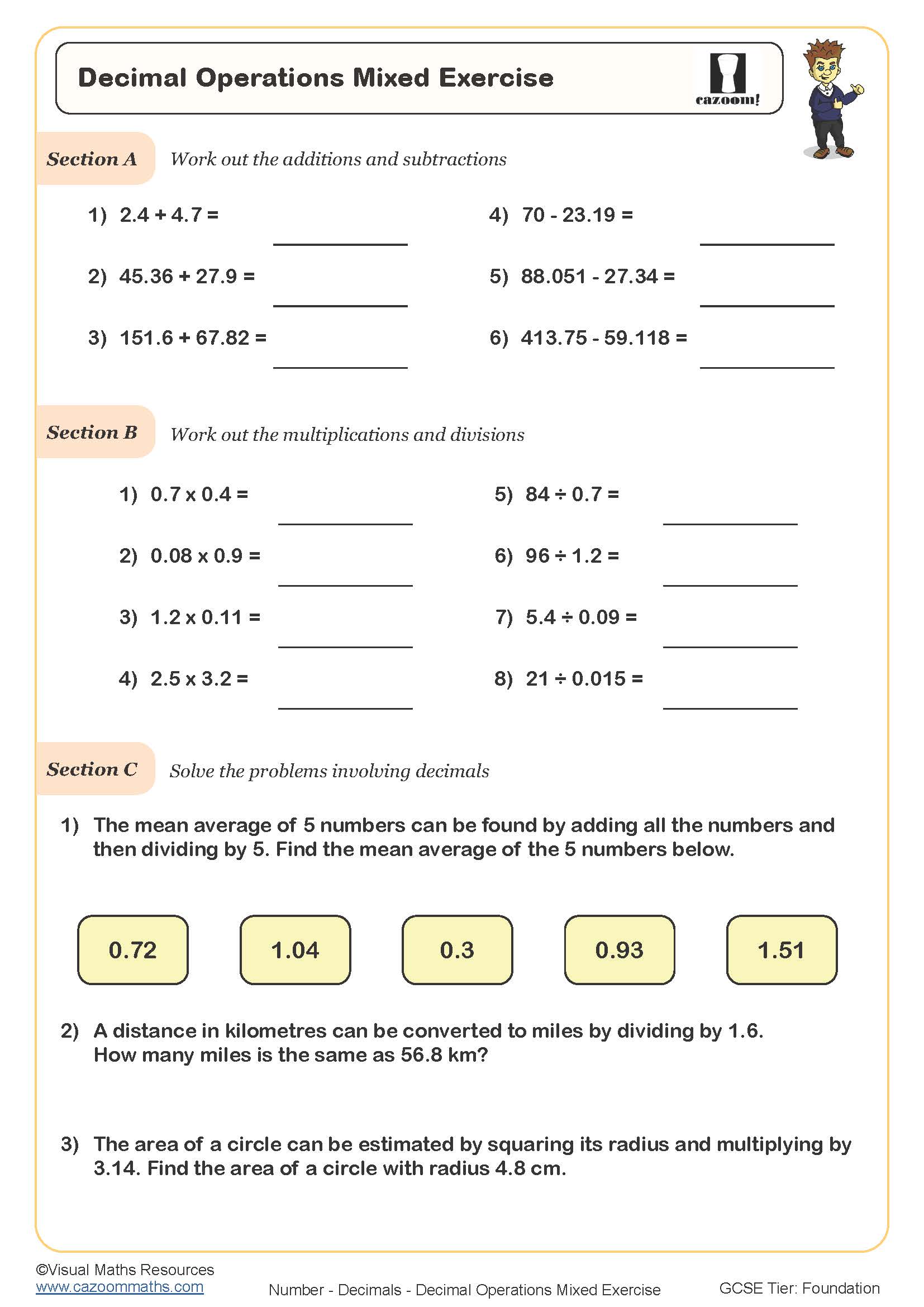
Decimal Operations Mixed Exercise
Year groups: 7, 8
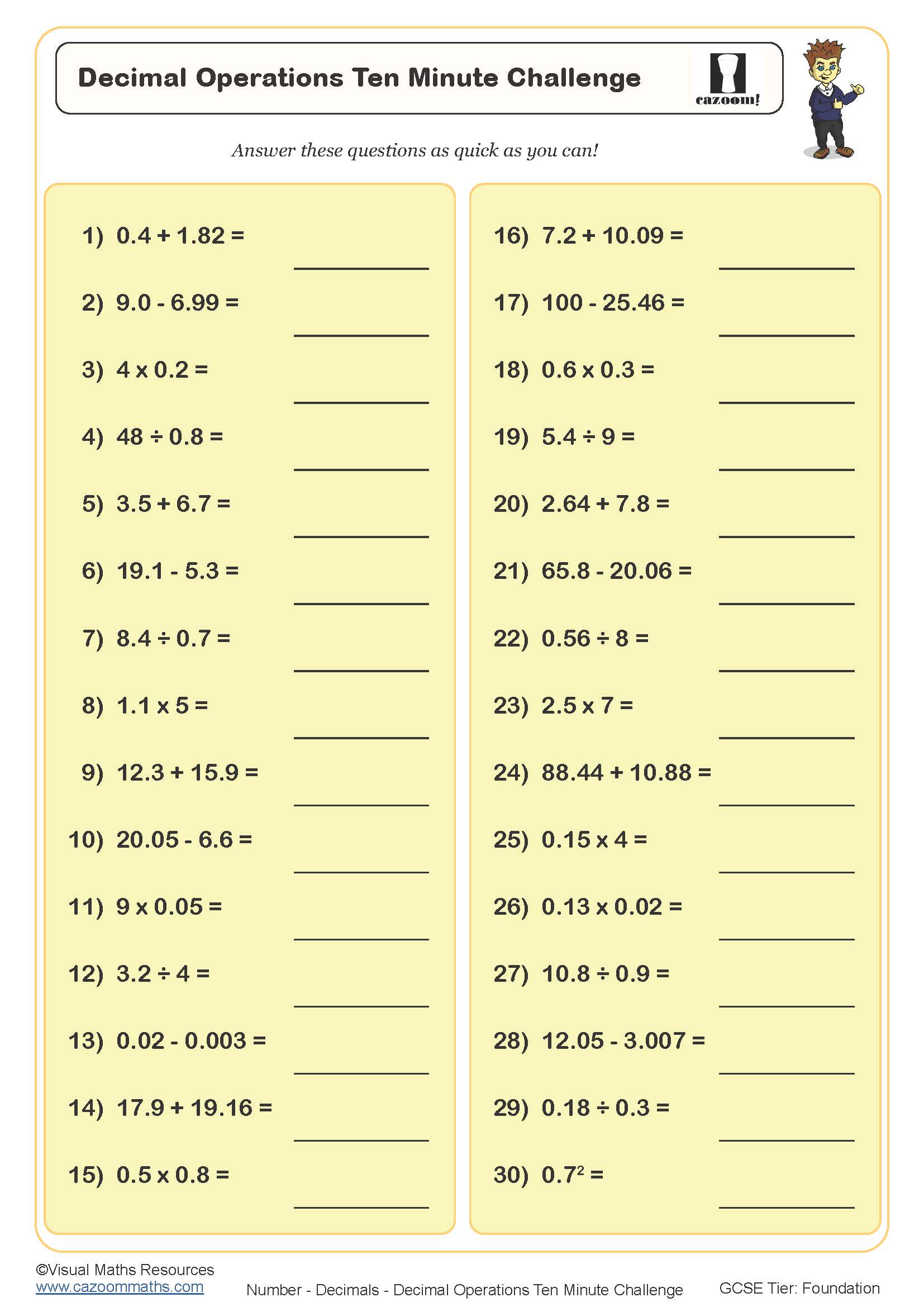
Decimal Operations Ten Minute Challenge
Year groups: 7, 8
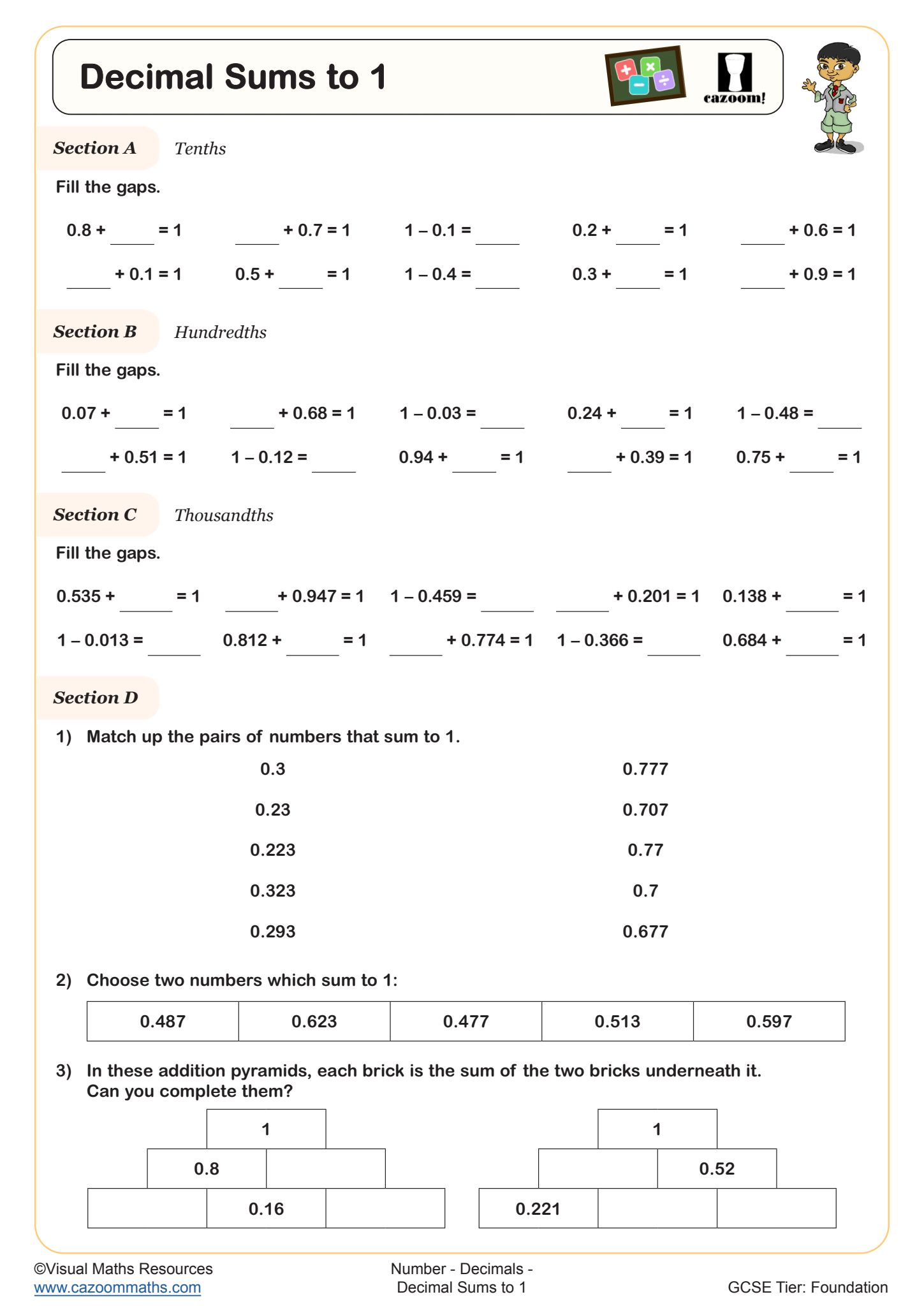
Decimal Sums to 1
Year groups: 7
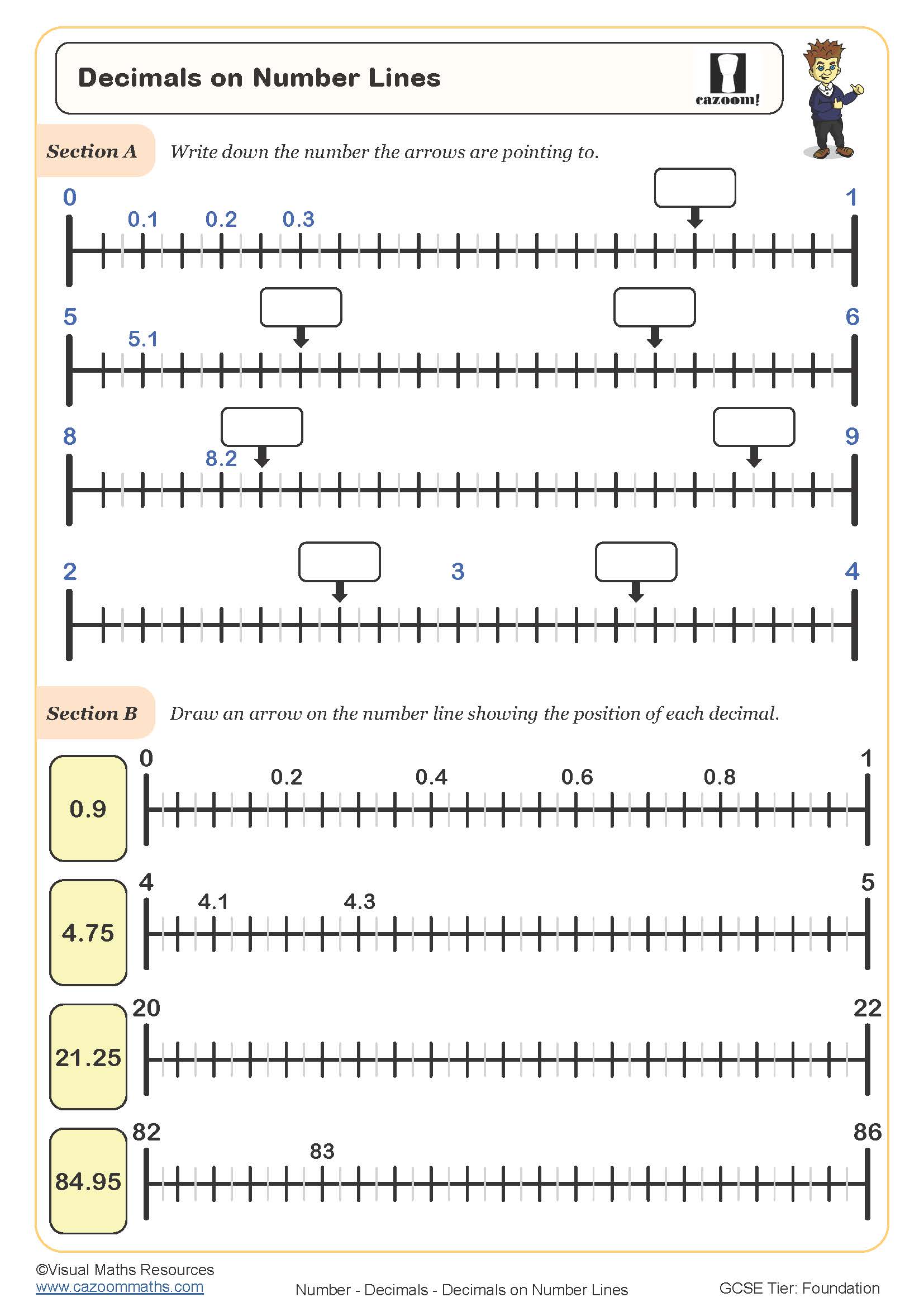
Decimals on Number Lines
Year groups: 7, 8
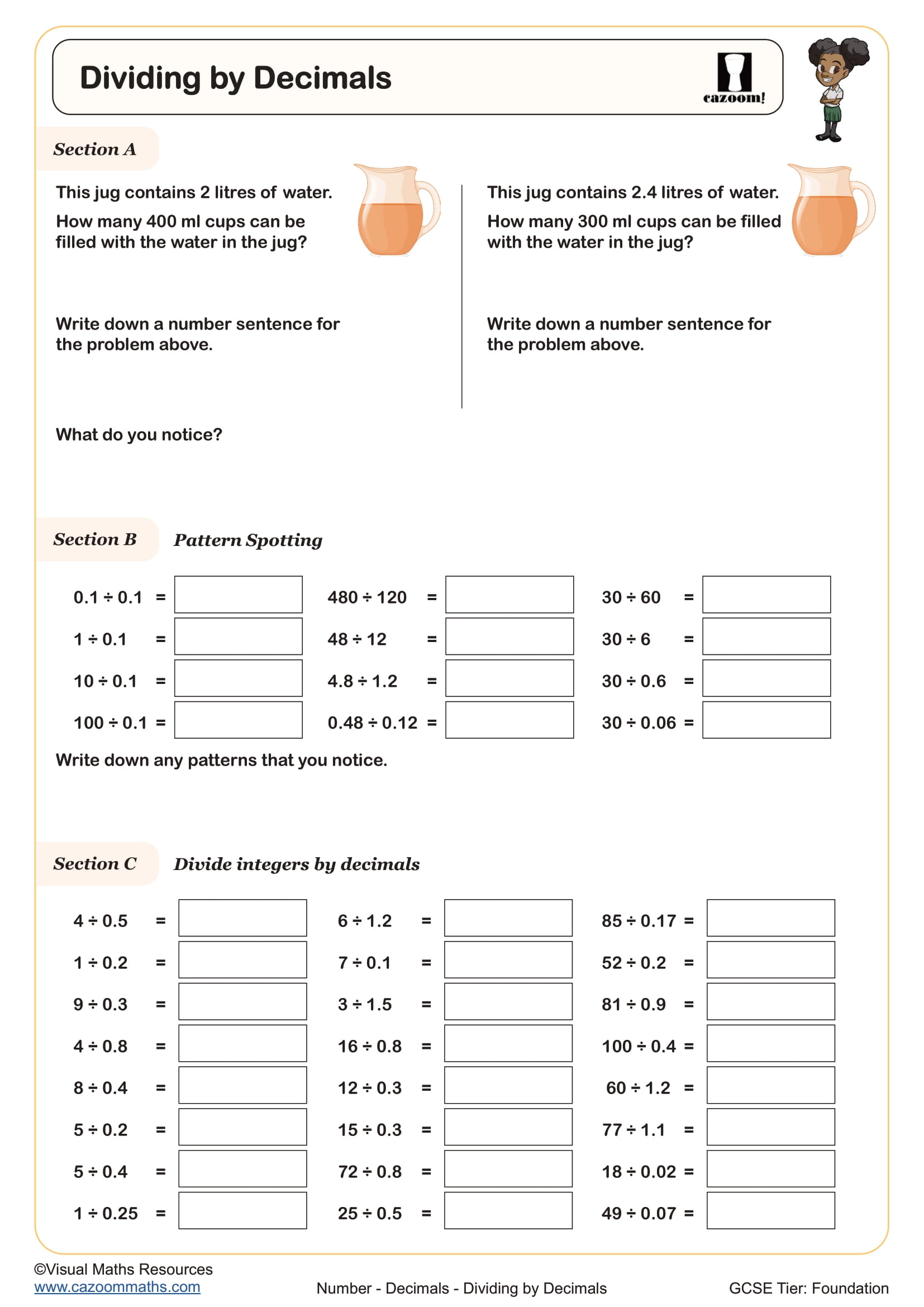
Dividing by Decimals
Year groups: 7, 8
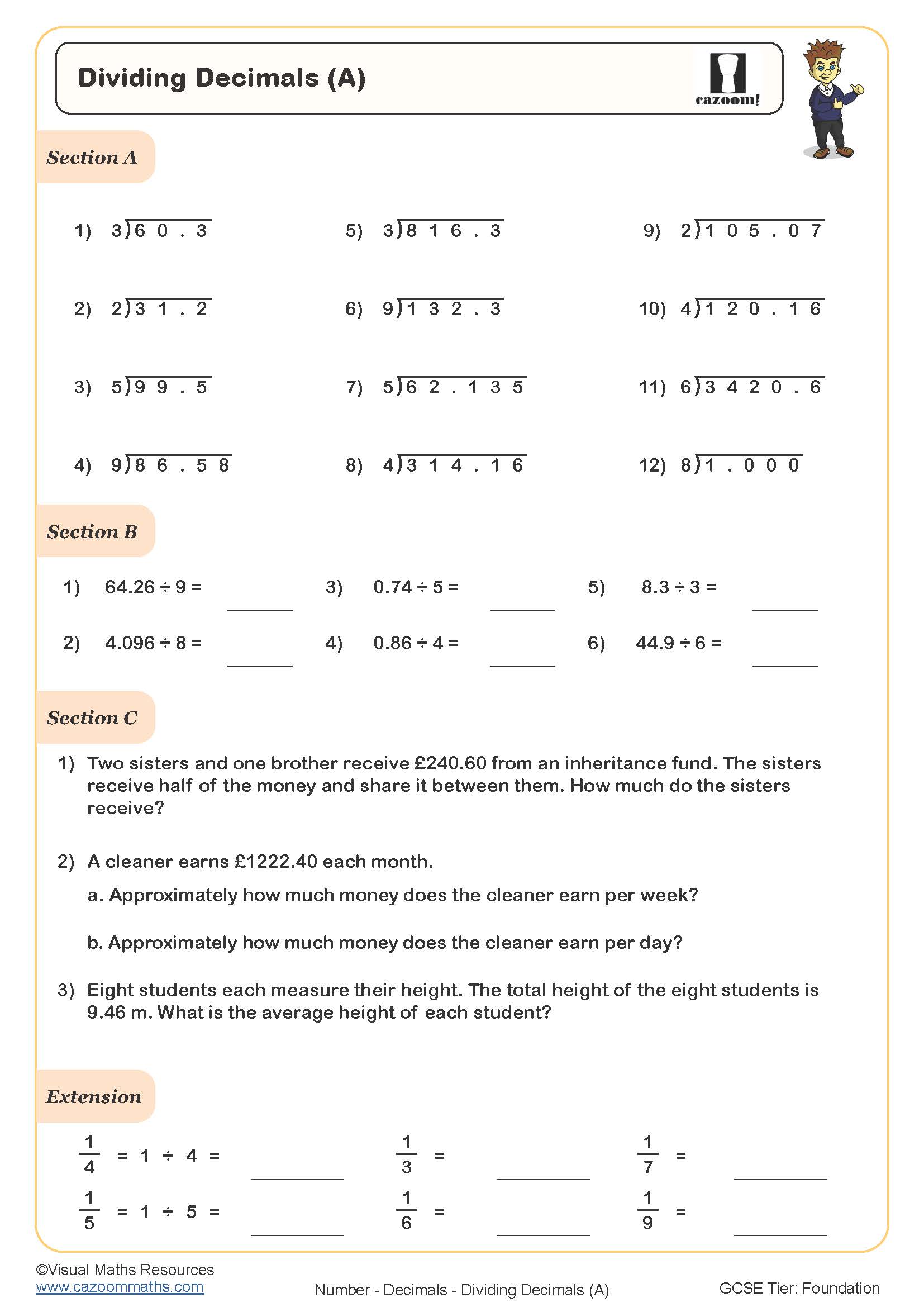
Dividing Decimals (A)
Year groups: 7, 8
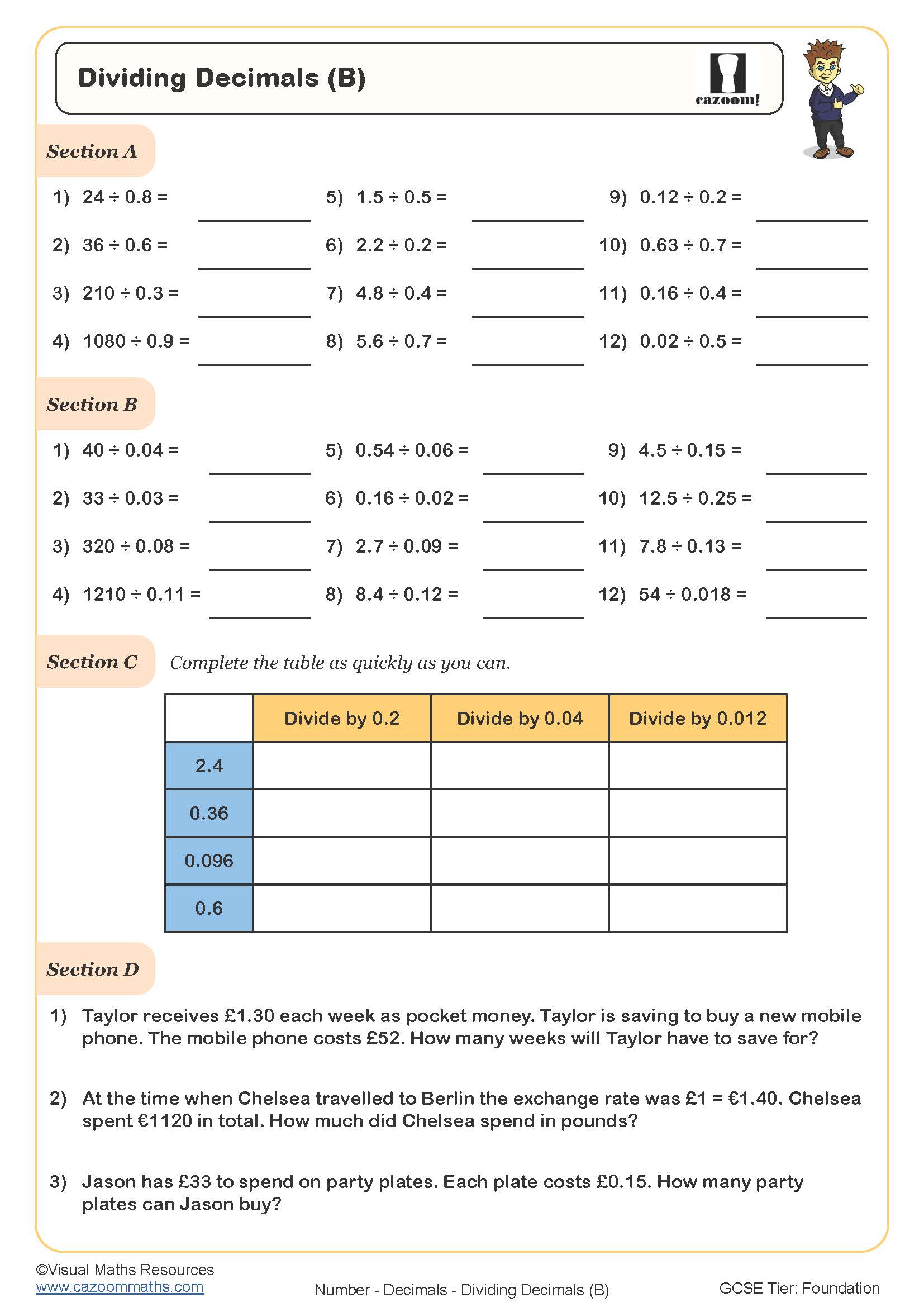
Dividing Decimals (B)
Year groups: 7, 8
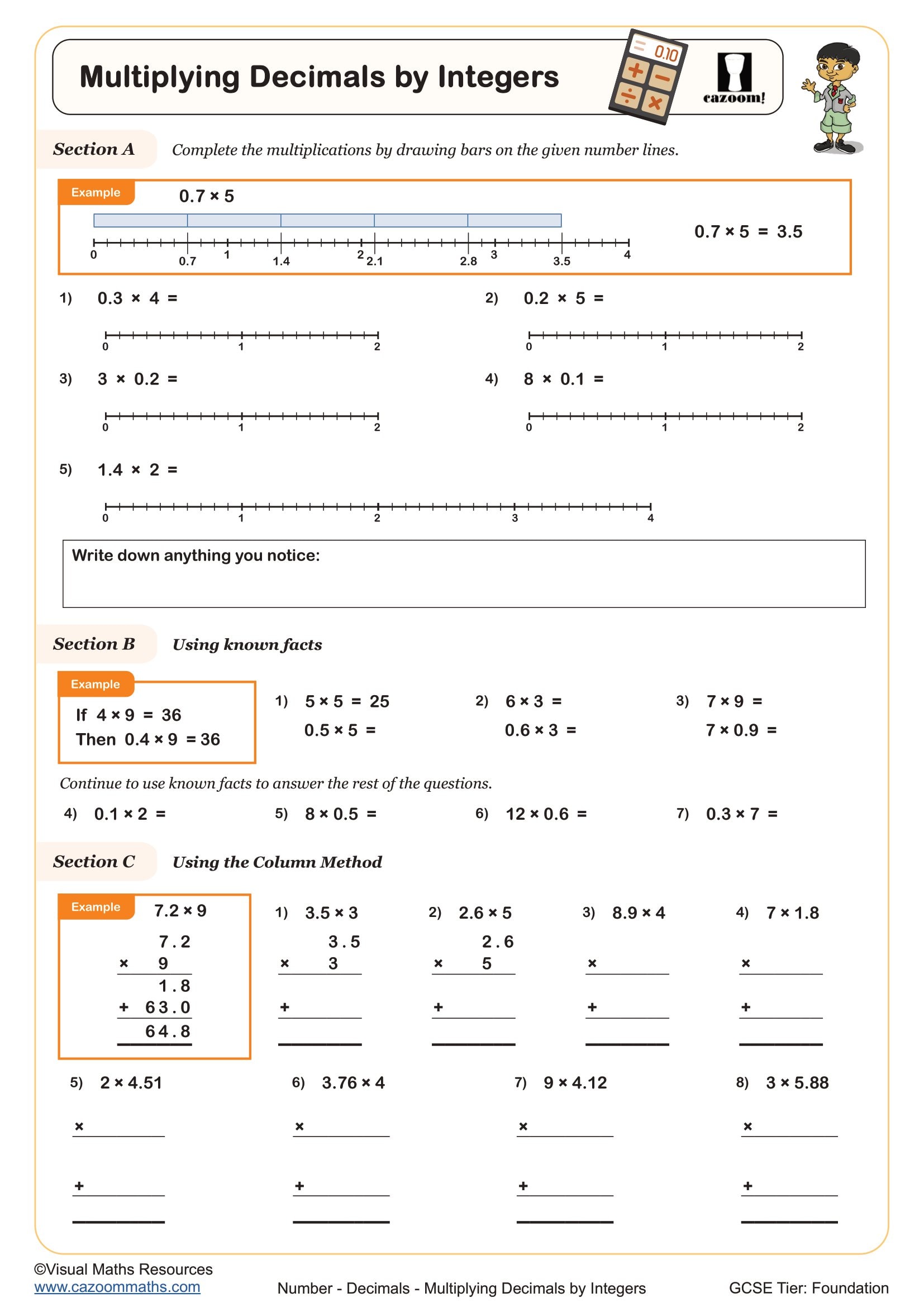
Multiply Decimals by Integers
Year groups: 7
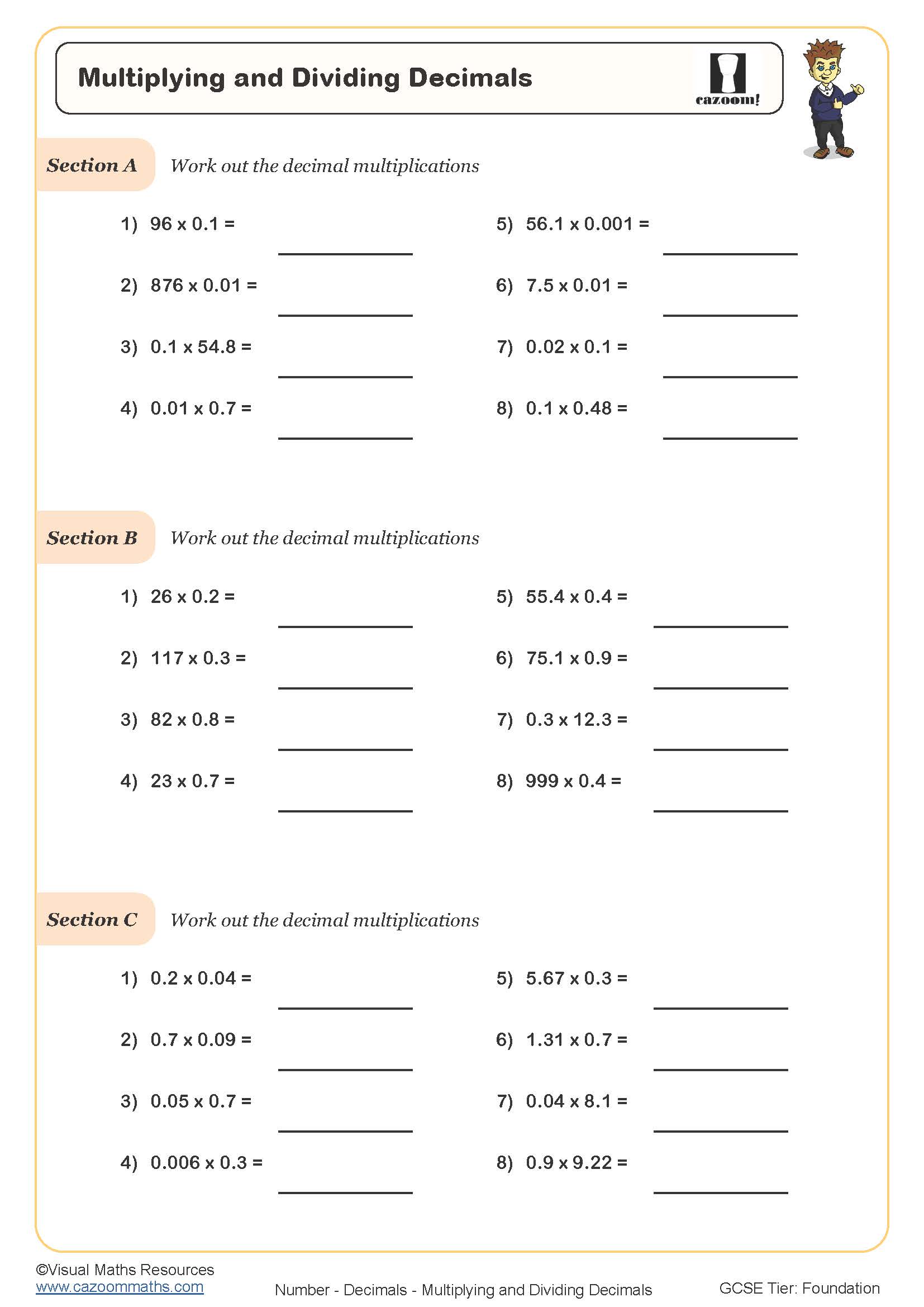
Multiplying and Dividing Decimals
Year groups: 7, 8
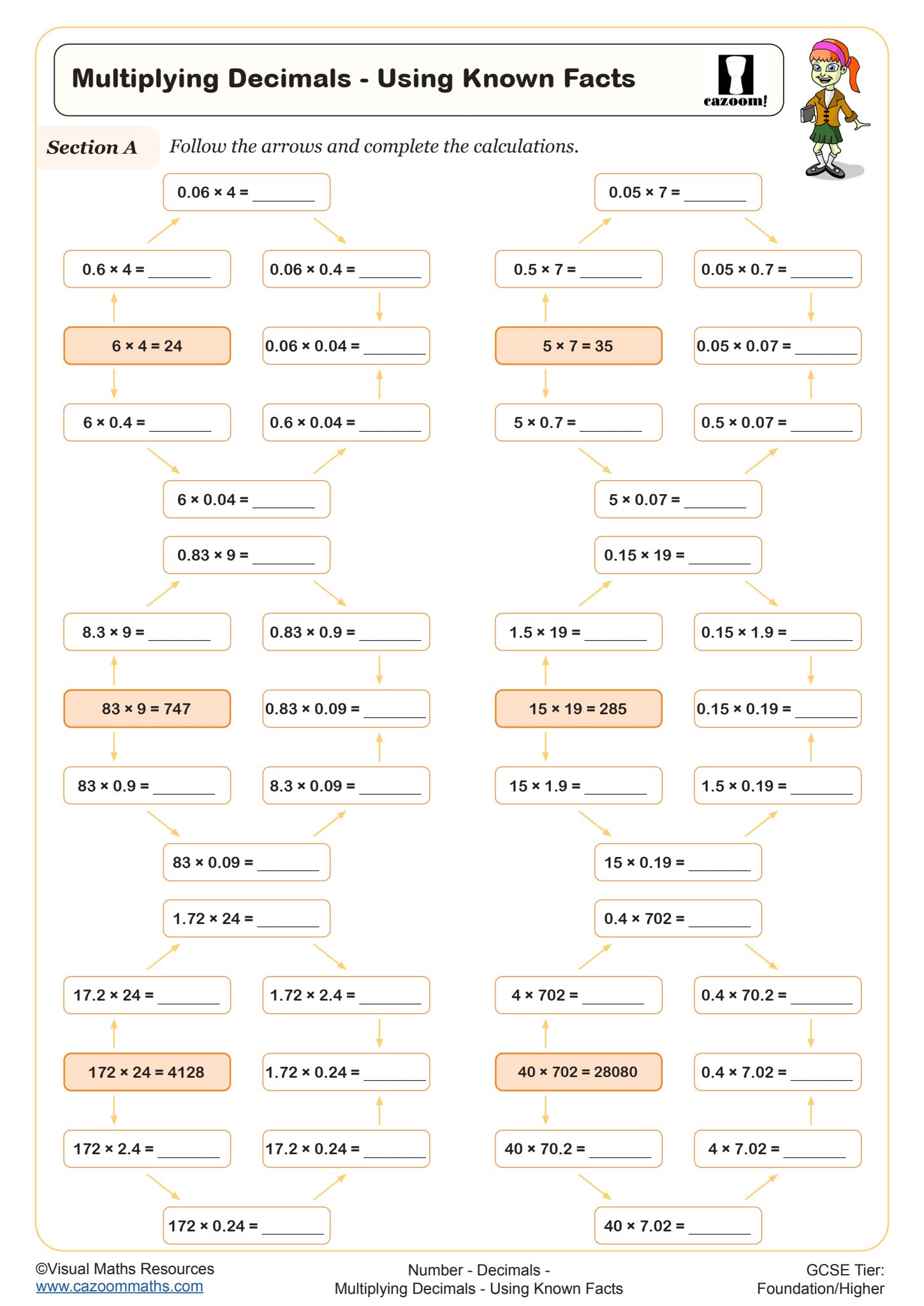
Multiplying Decimals - Using Known Facts
Year groups: 7, 8
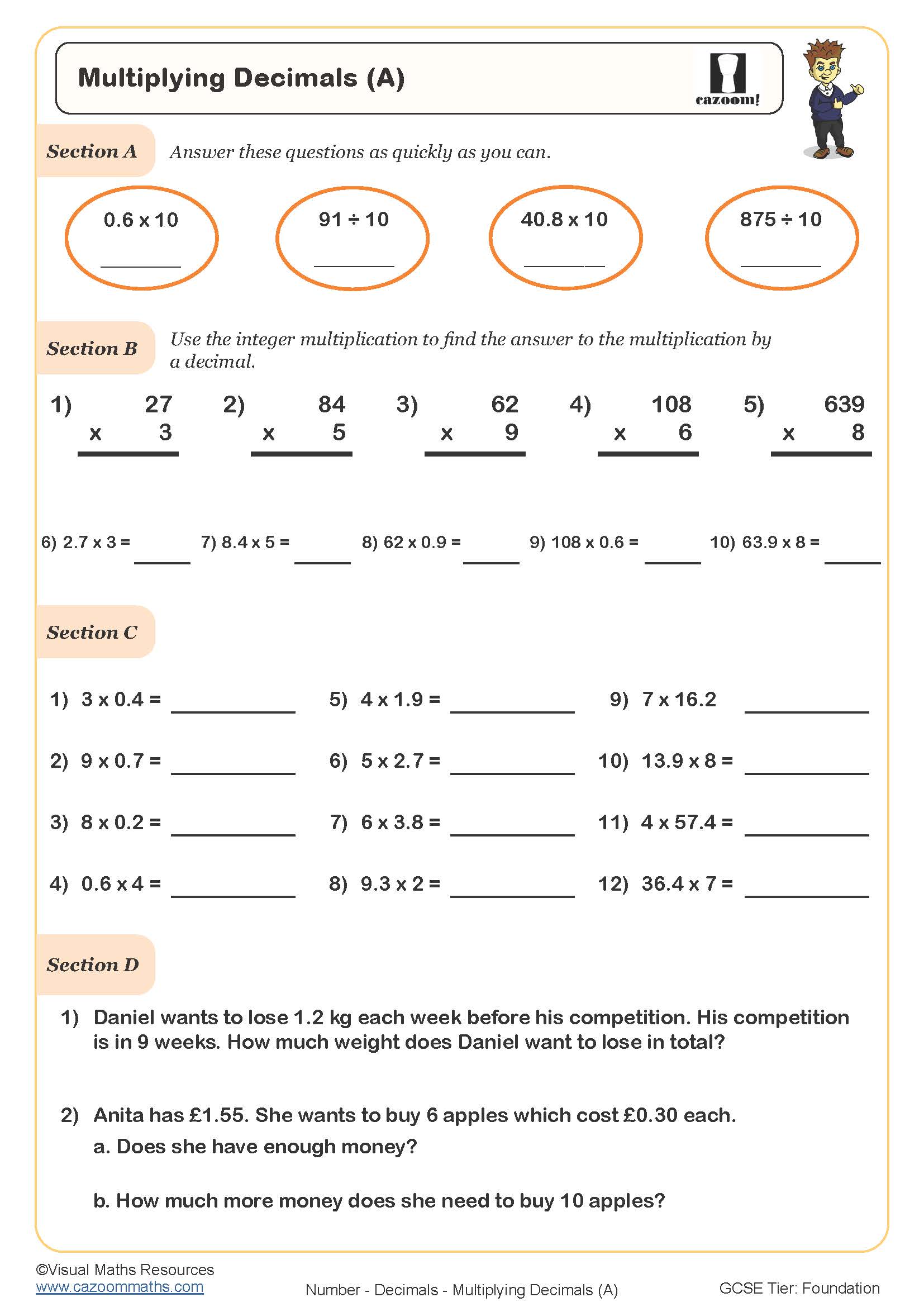
Multiplying Decimals (A)
Year groups: 7, 8
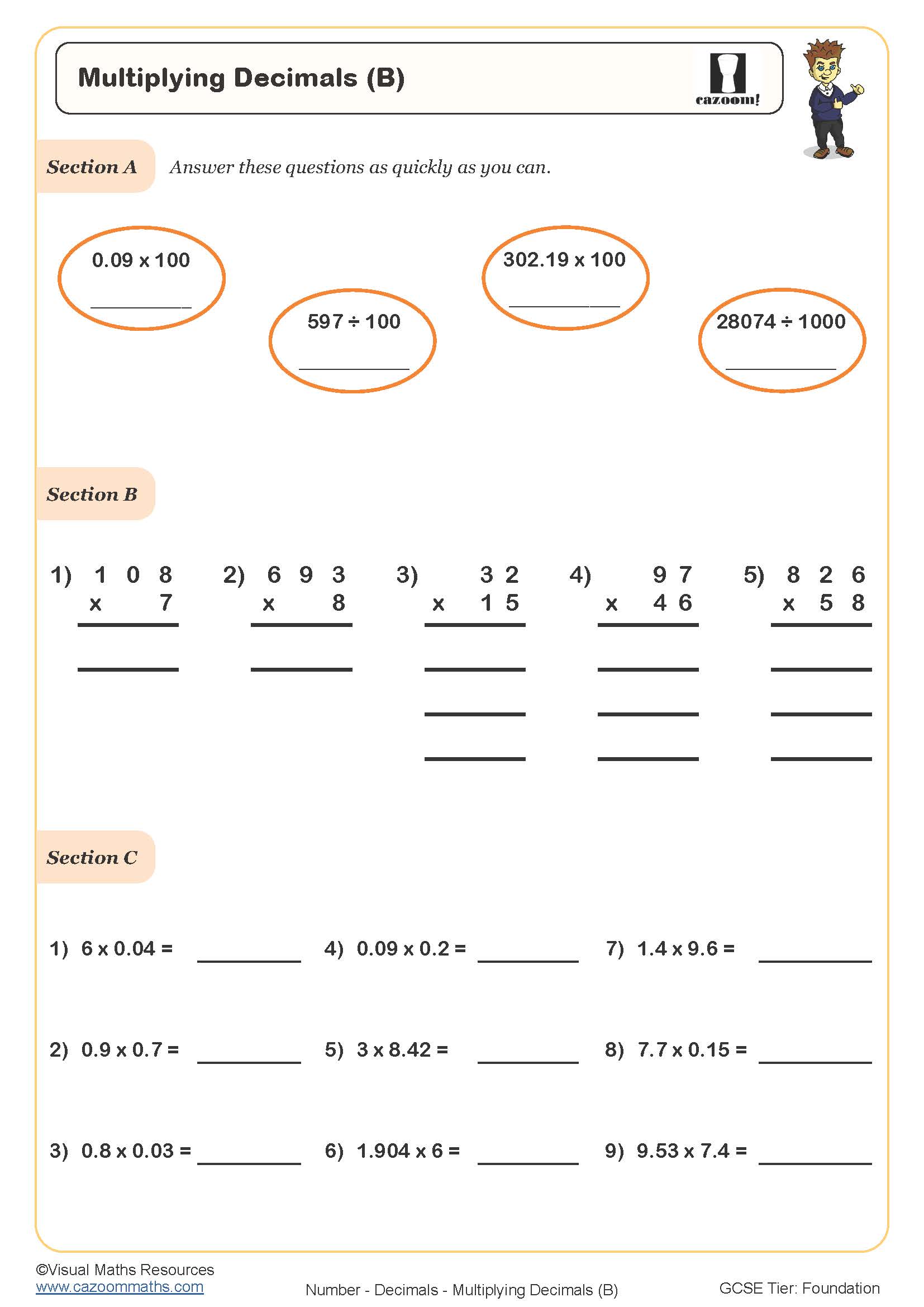
Multiplying Decimals (B)
Year groups: 7, 8
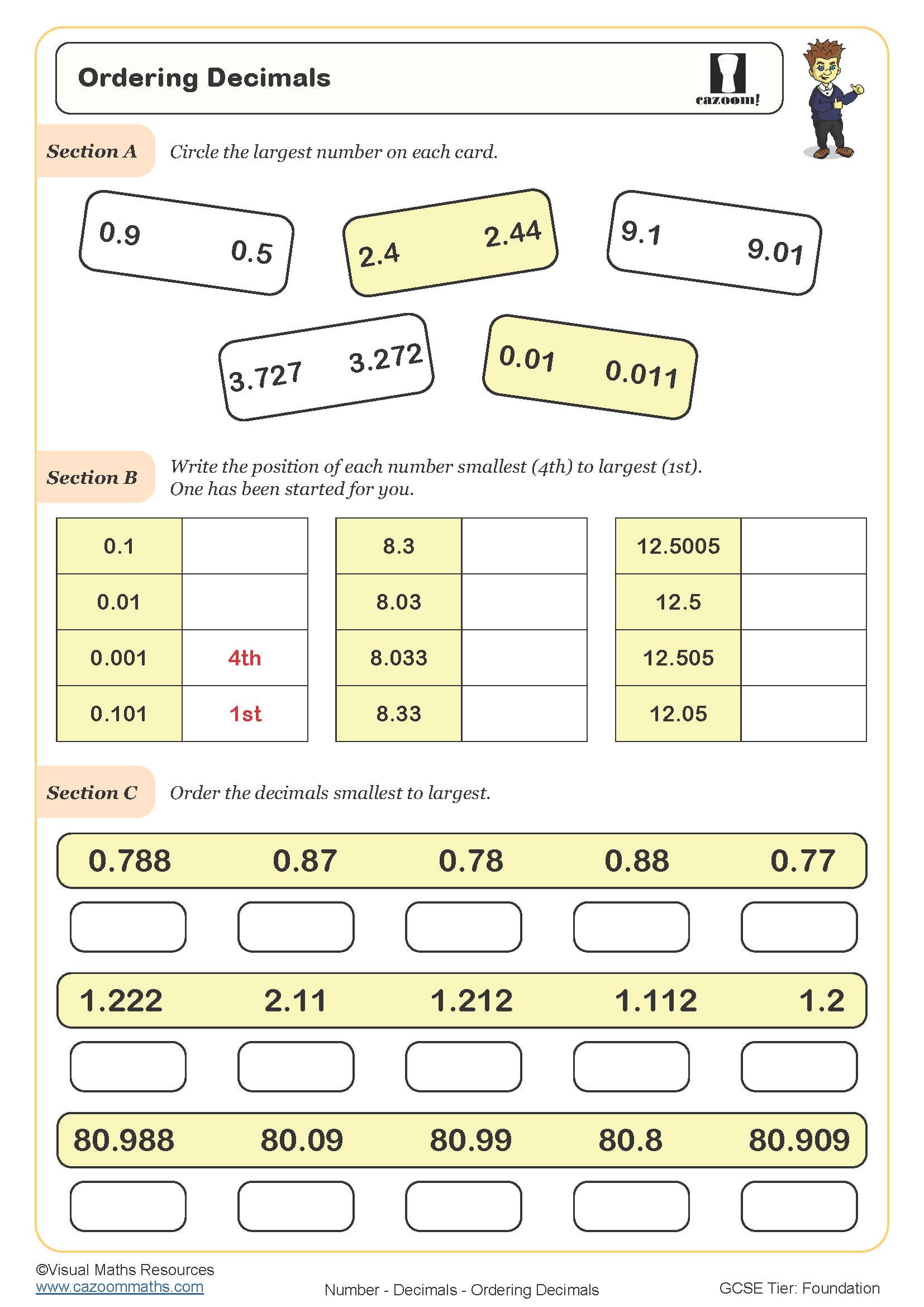
Ordering Decimals
Year groups: 7, 8
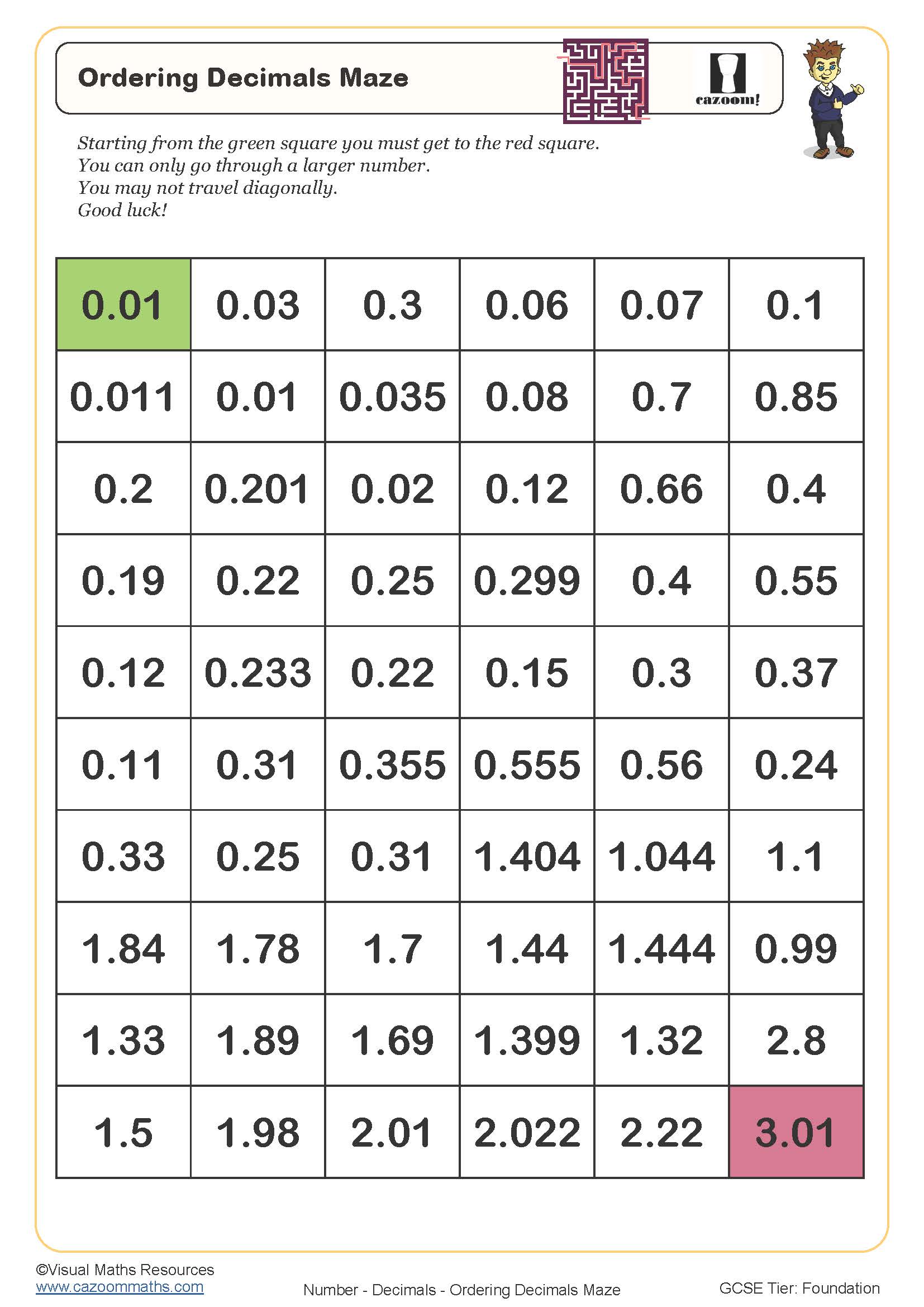
Ordering Decimals Maze
Year groups: 7, 8
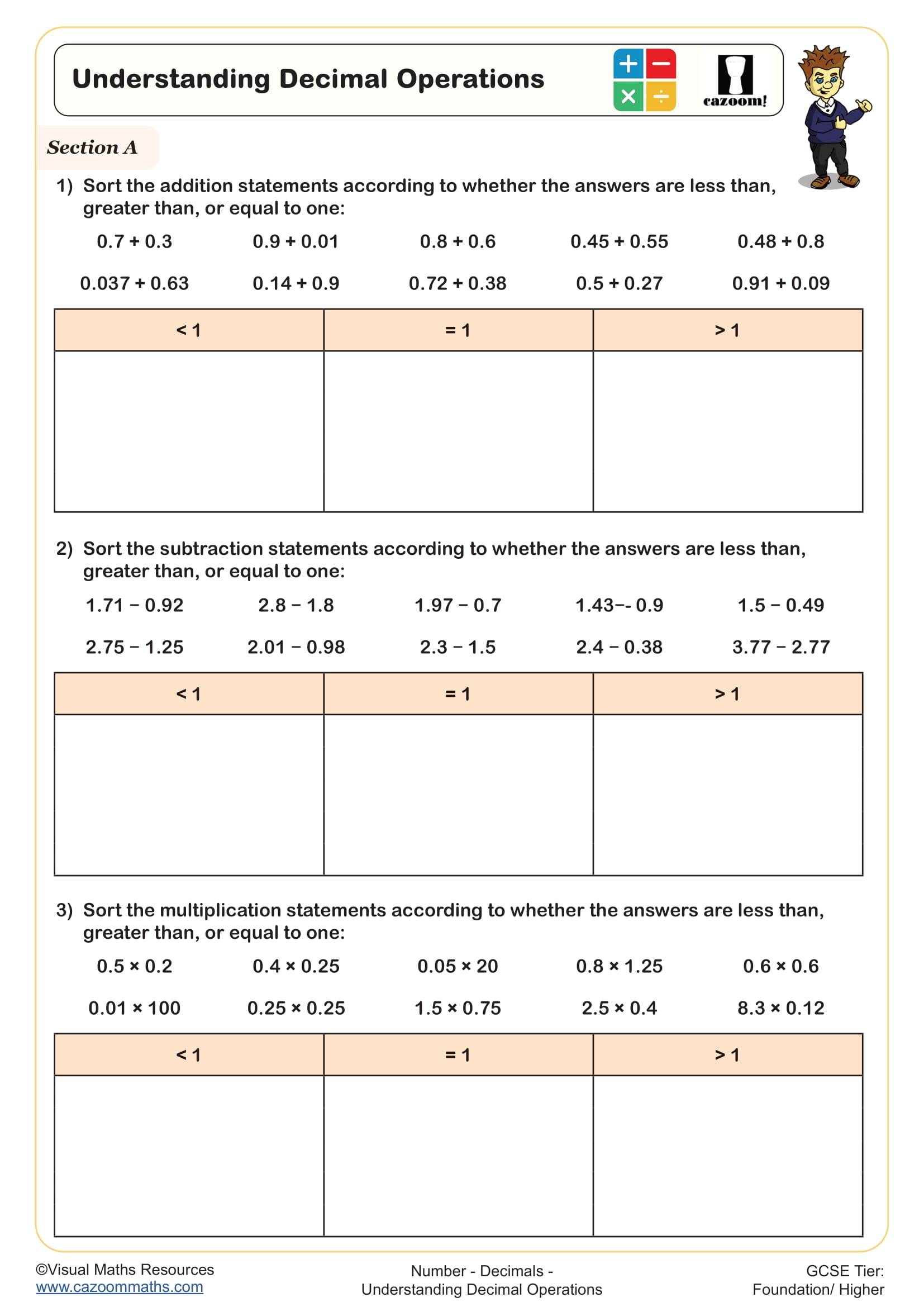
Understanding Decimal Operations
Year groups: 7, 8
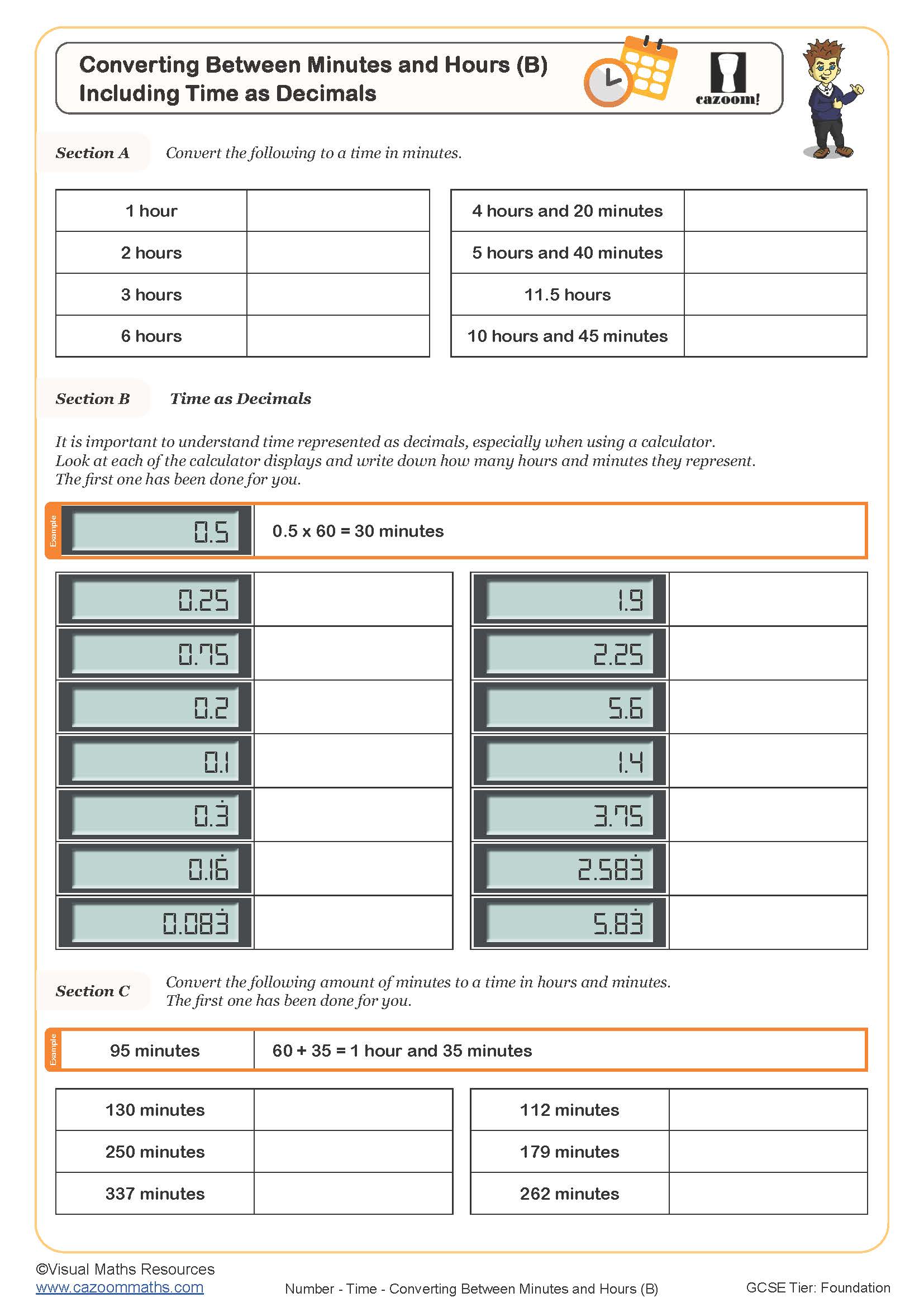
Converting Between Minutes and Hours (B)
Year groups: 8, 9
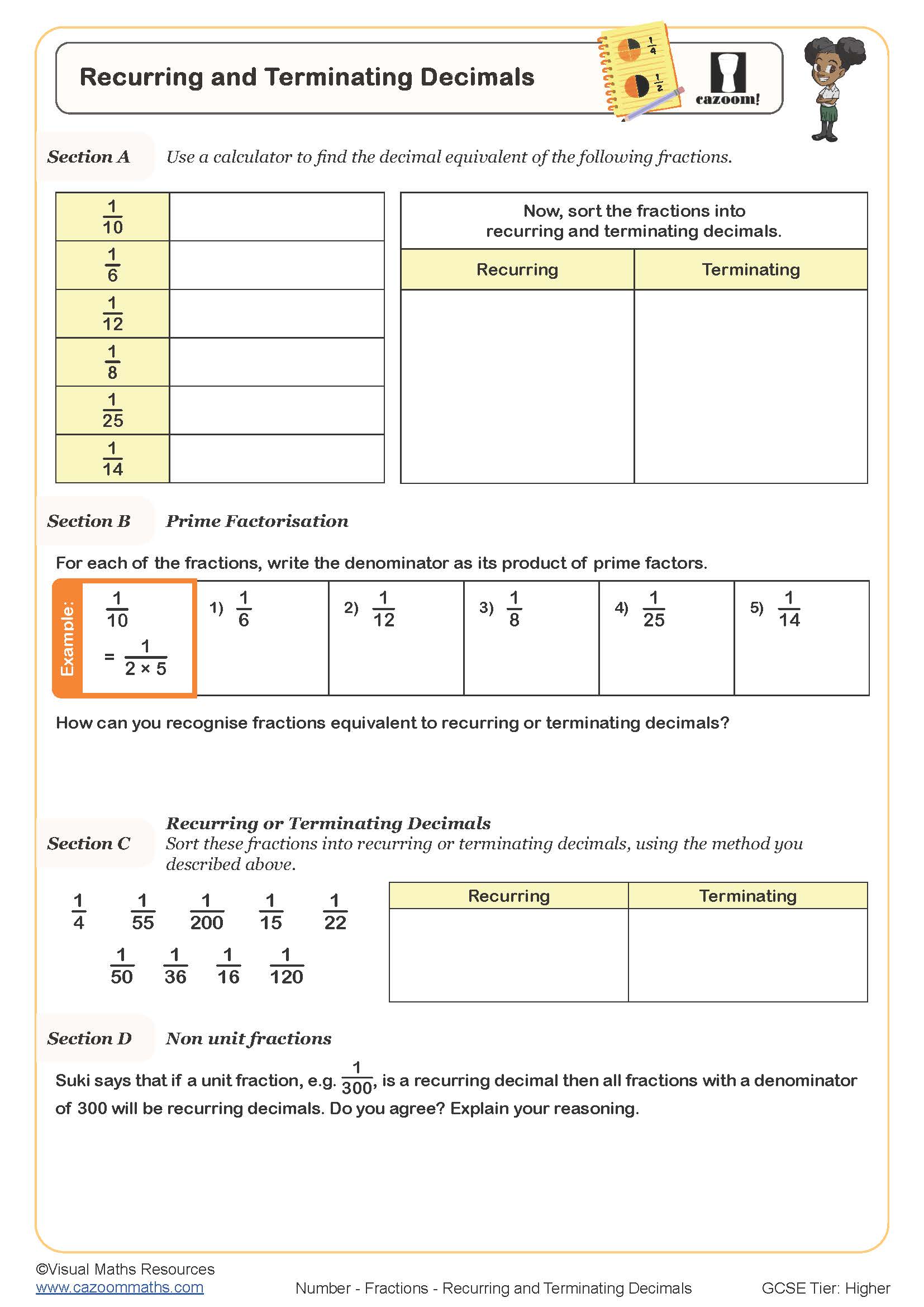
Recurring and Terminating Decimals
Year groups: 9, 10
All worksheets are created by the team of experienced teachers at Cazoom Maths.
What topics do these decimals worksheets cover?
The decimals worksheets cover all National Curriculum requirements from Year 7 through to GCSE level, including basic place value, ordering decimals, and the four operations with decimal numbers. Students also practise converting between decimals and fractions, rounding to specified decimal places, and applying decimal skills to measurement and money problems.
Teachers frequently observe that students lose marks in GCSE exams by misaligning decimal points during multiplication and division. These decimal sheets specifically address this issue through carefully structured practice that reinforces column method techniques and helps students recognise when answers are unreasonable.
Which year groups should use these decimal worksheets?
The collection spans from Year 7 introductory work through to Year 11 GCSE preparation, with clear progression through decimal concepts. Lower ability Year 7 students begin with place value and simple addition, whilst higher ability students tackle complex multi-step problems involving decimal calculations in context.
Many teachers find that Year 9 students benefit from revisiting decimal fundamentals before progressing to more advanced topics like standard form. The worksheets allow teachers to quickly identify and address gaps in decimal understanding that often emerge when students encounter recurring decimals or attempt calculator-free GCSE questions.
How do these worksheets help with decimal multiplication and division?
The decimal multiplication and division worksheets systematically build understanding through visual methods before progressing to formal algorithms. Students learn to estimate answers first, helping them spot errors when decimal points are misplaced during calculations.
Classroom experience shows that students often multiply by powers of ten incorrectly, moving decimal points the wrong direction. These worksheets include specific practice on this skill alongside step-by-step multiplication and division methods. The progression helps students understand why multiplying by 0.1 gives the same result as dividing by 10, building conceptual understanding alongside procedural fluency.
How can teachers use these decimal worksheets most effectively?
Teachers report best results when using these worksheets for targeted intervention rather than blanket homework tasks. The answer sheets enable students to self-assess and identify specific areas needing additional support, making them valuable for independent learning or small group work.
Many teachers use the decimal worksheets as diagnostic tools at the start of topics, quickly identifying which students need support with basic skills before progressing to more complex work. The PDF format allows teachers to project selected questions for whole-class discussion or print specific sections for differentiated tasks within the same lesson.