Emoji Day Worksheets
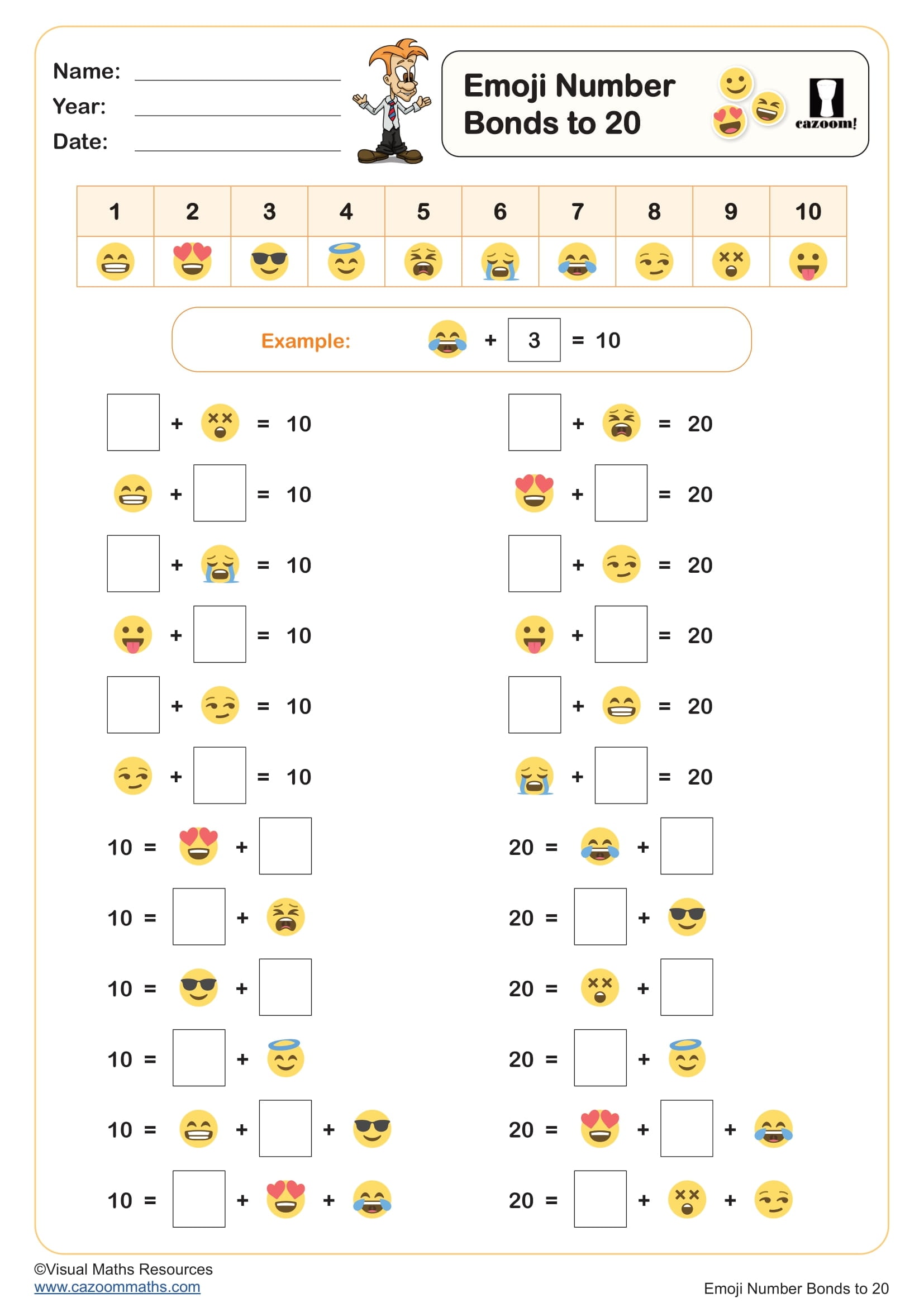
Emoji Number Bonds to 20
Year groups: 1
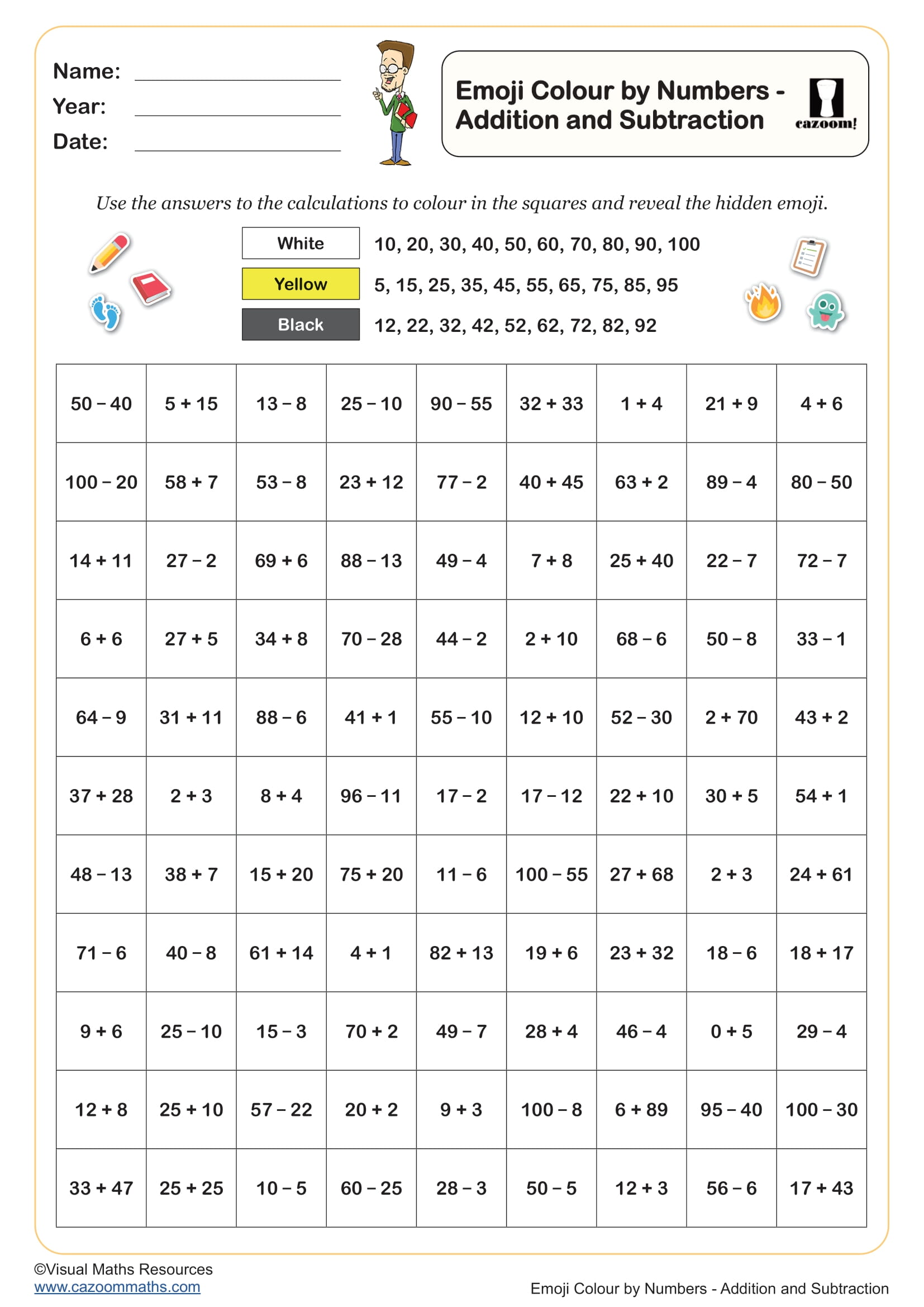
Emoji Colour by Numbers - Addition and Subtraction
Year groups: 2
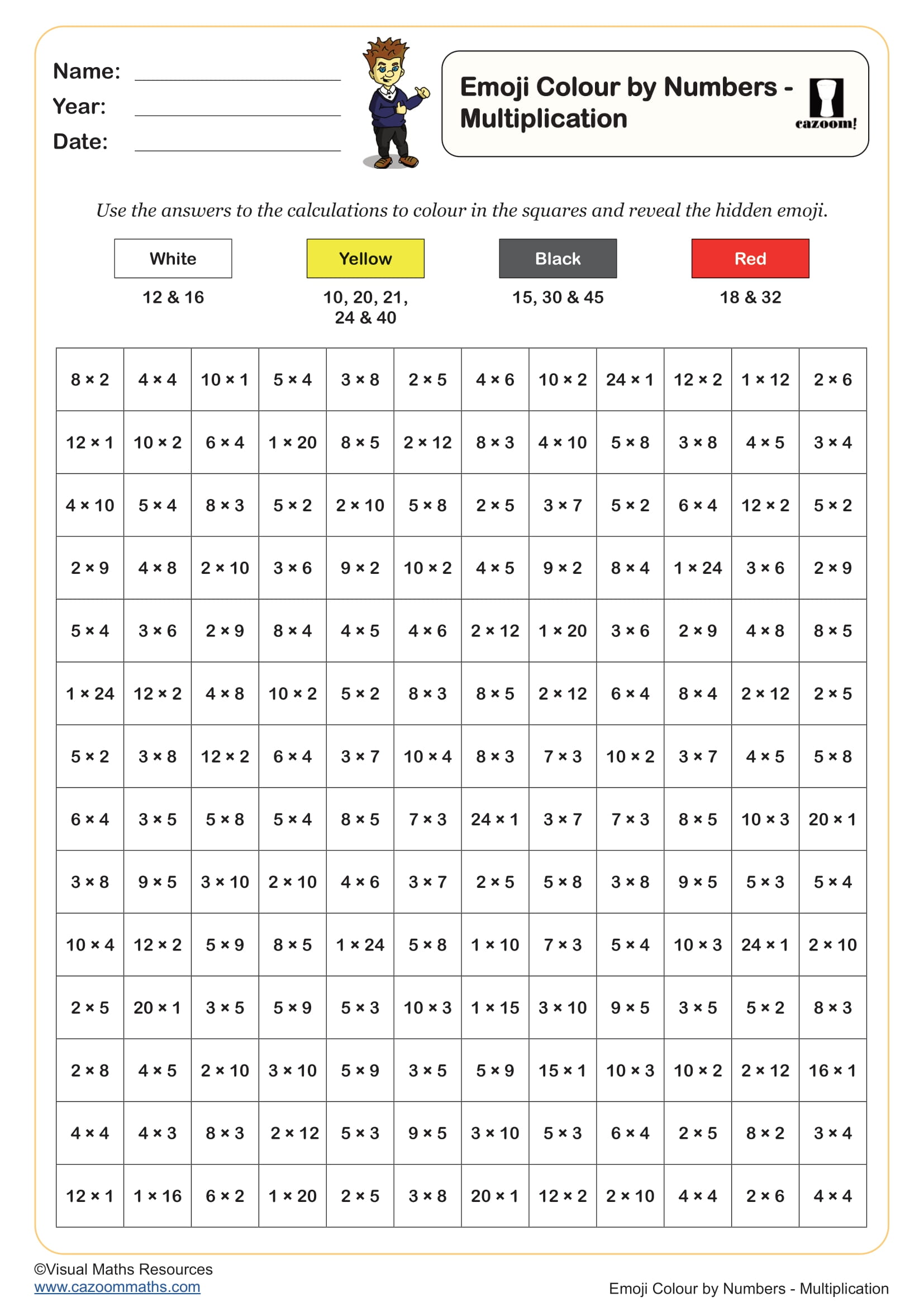
Emoji Colour by Numbers - Multiplication
Year groups: 3
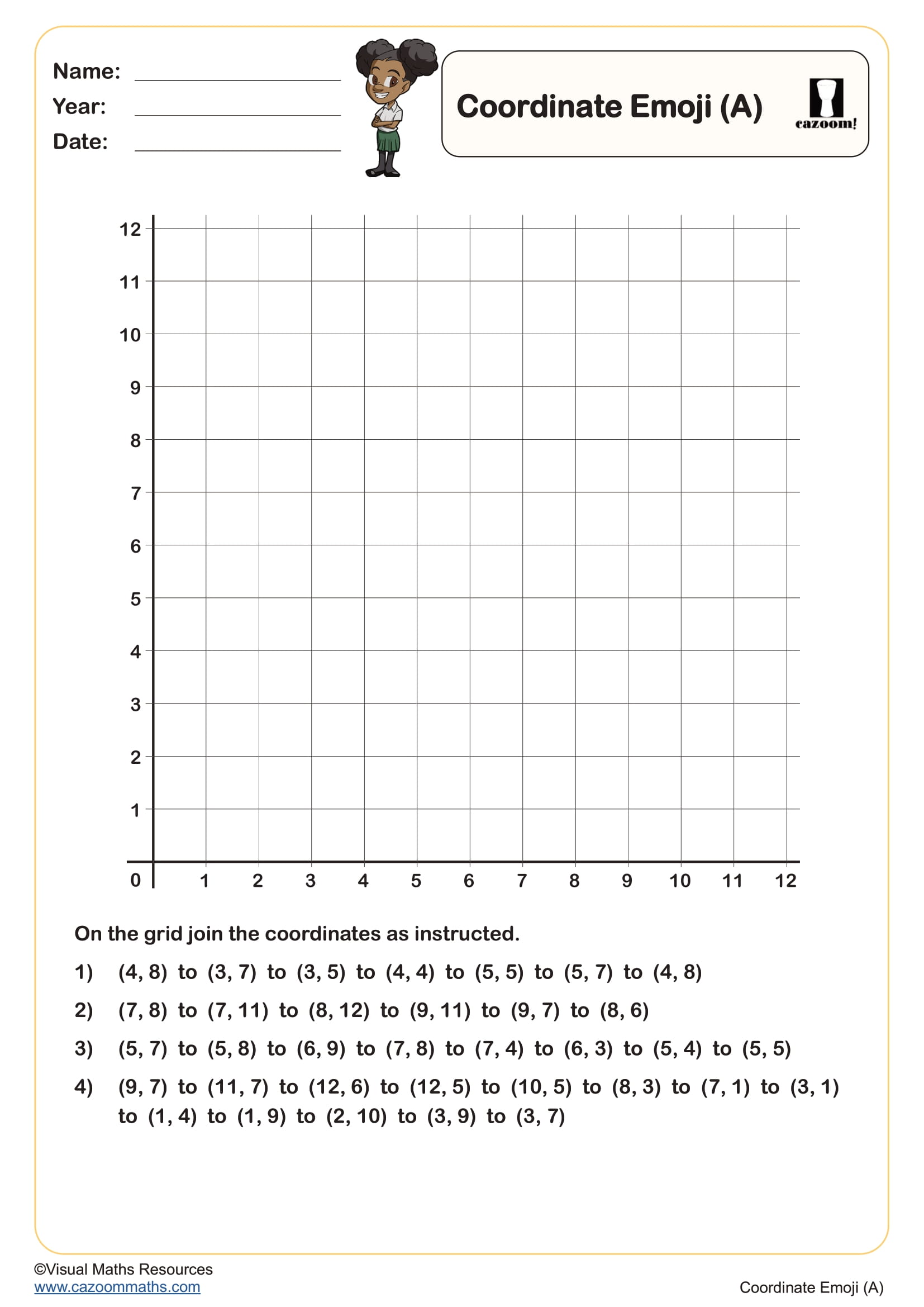
Coordinate Emoji (A)
Year groups: 4, 5, 6, 7
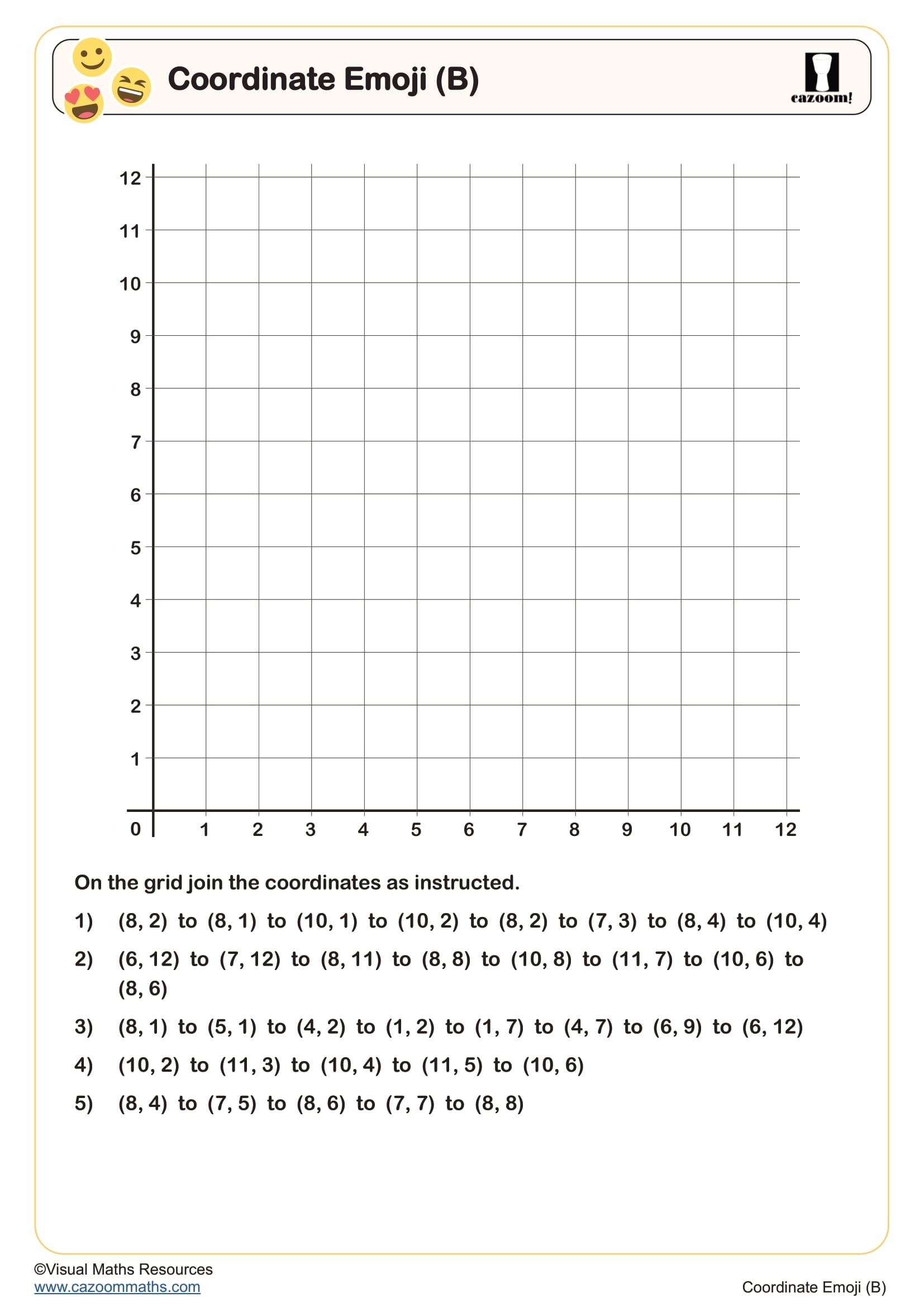
Coordinate Emoji (B)
Year groups: 4, 5, 6, 7
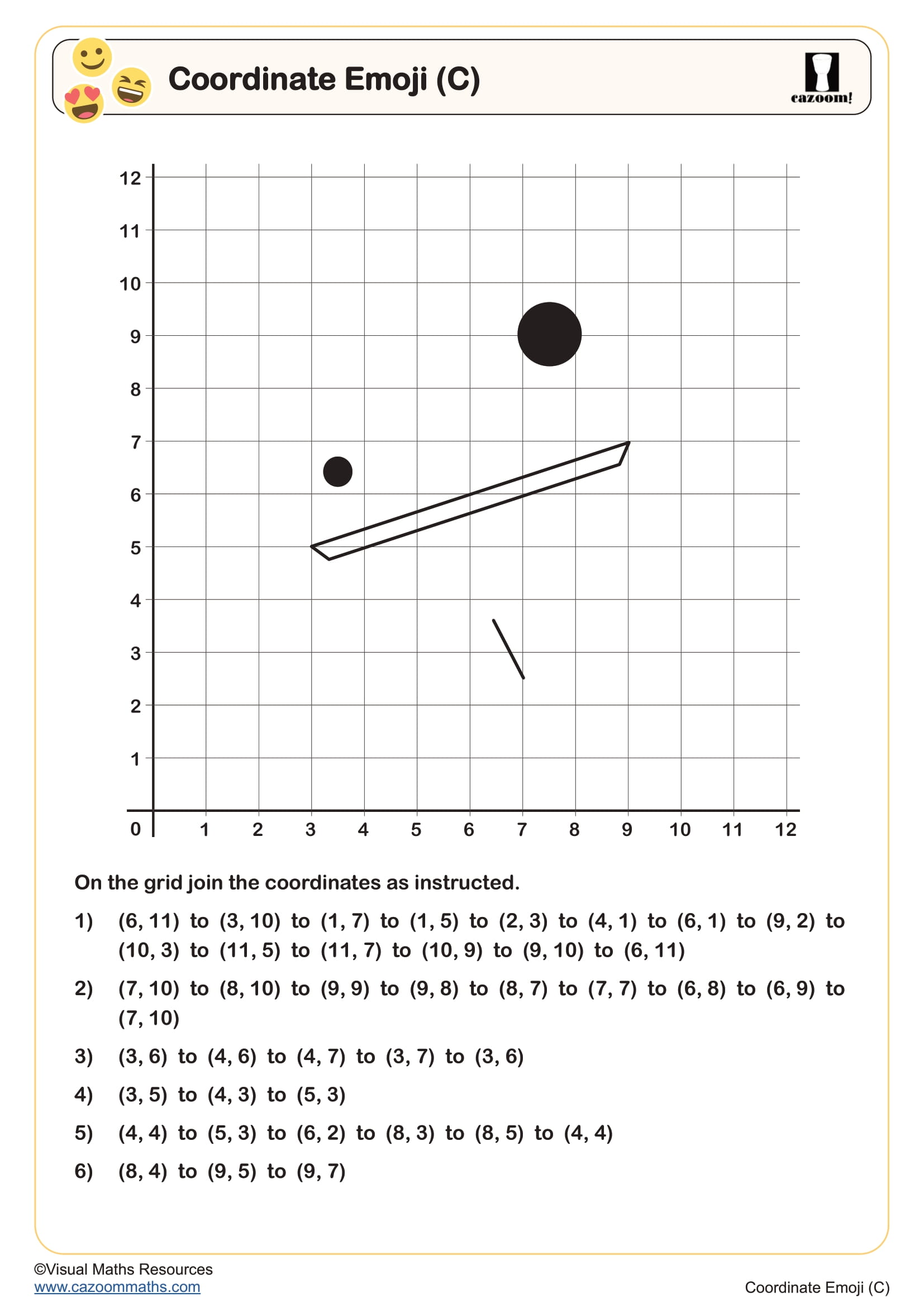
Coordinate Emoji (C)
Year groups: 4, 5, 6, 7
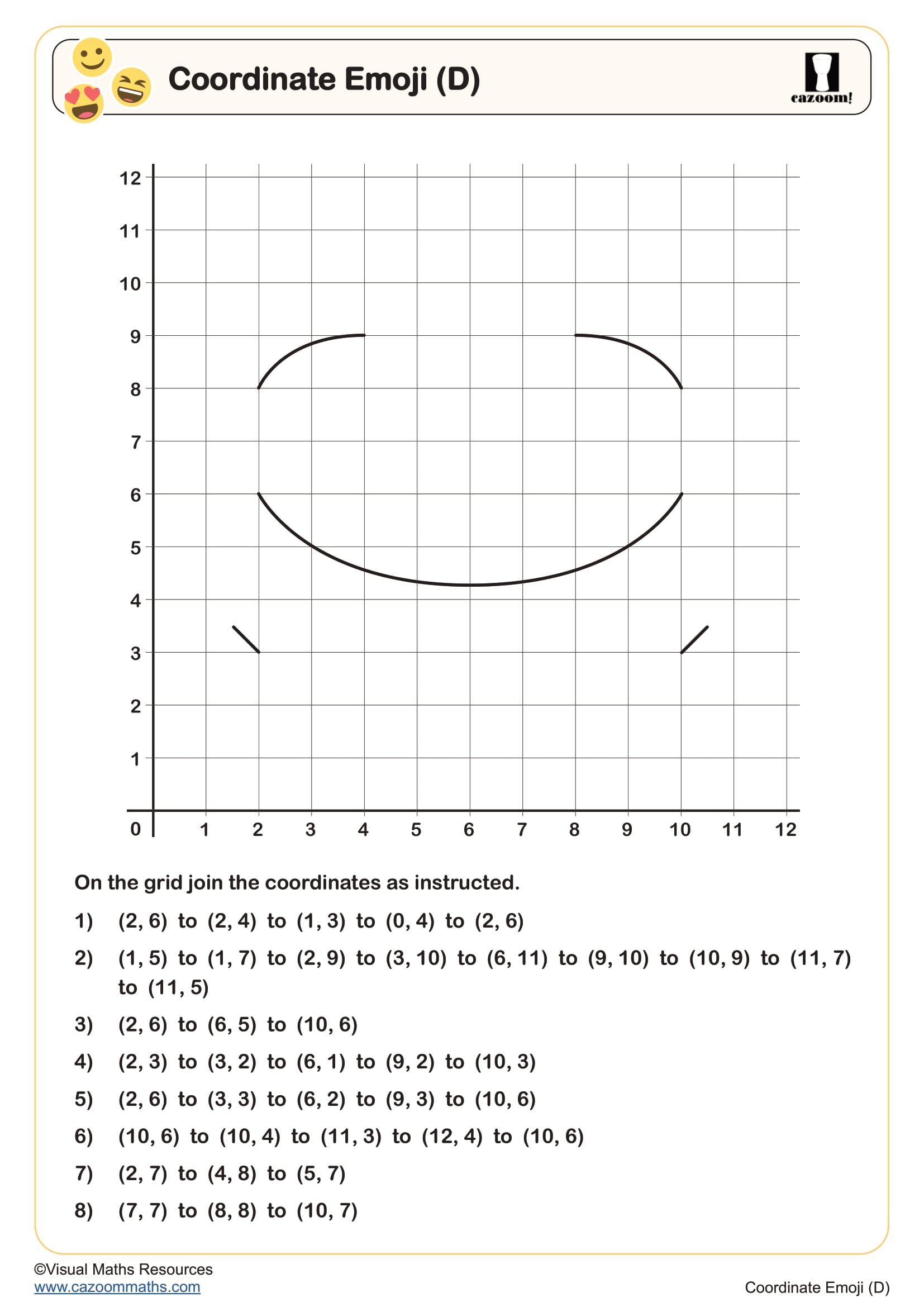
Coordinate Emoji (D)
Year groups: 4, 5, 6, 7
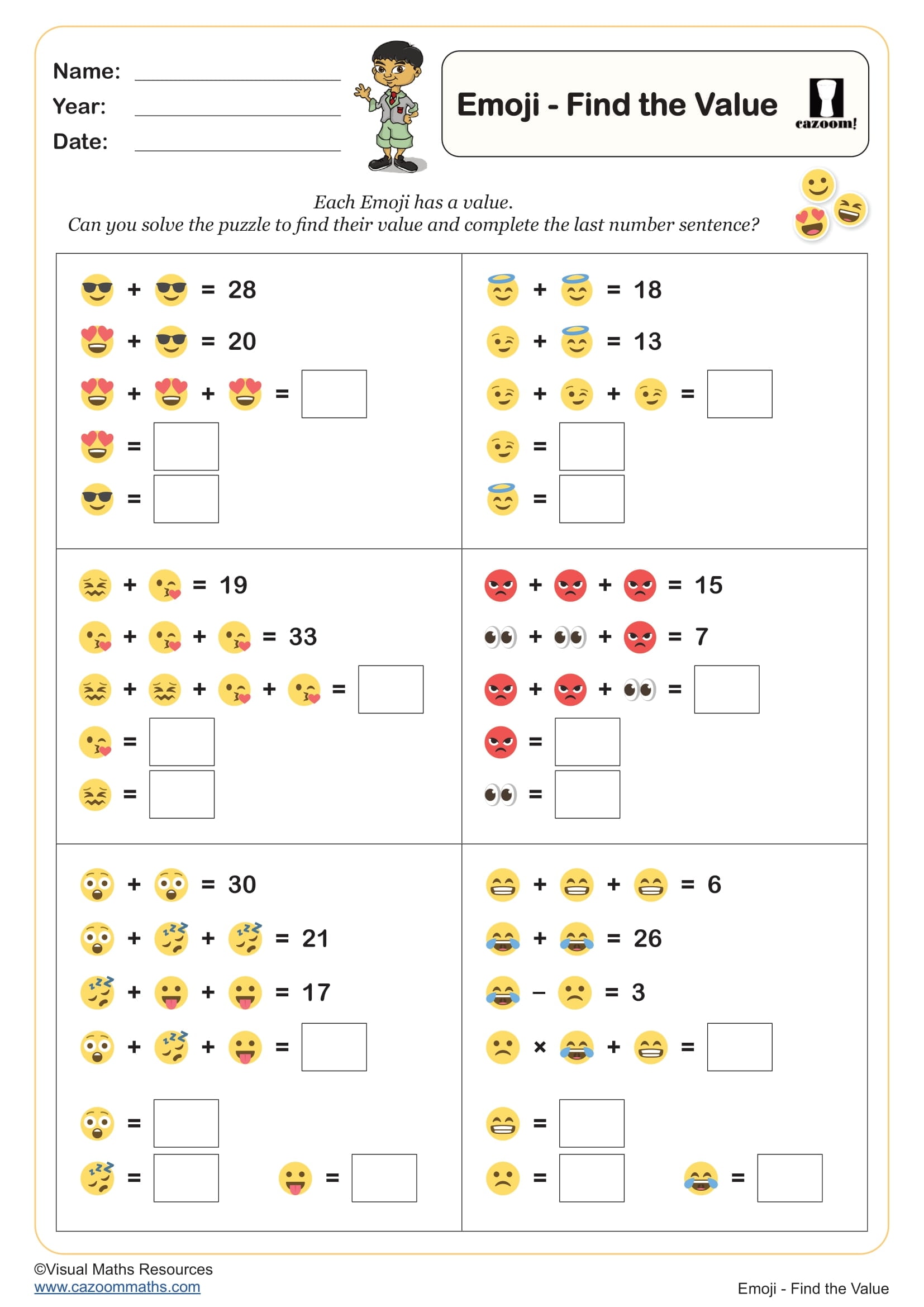
Emoji - Find the Value
Year groups: 6, 7
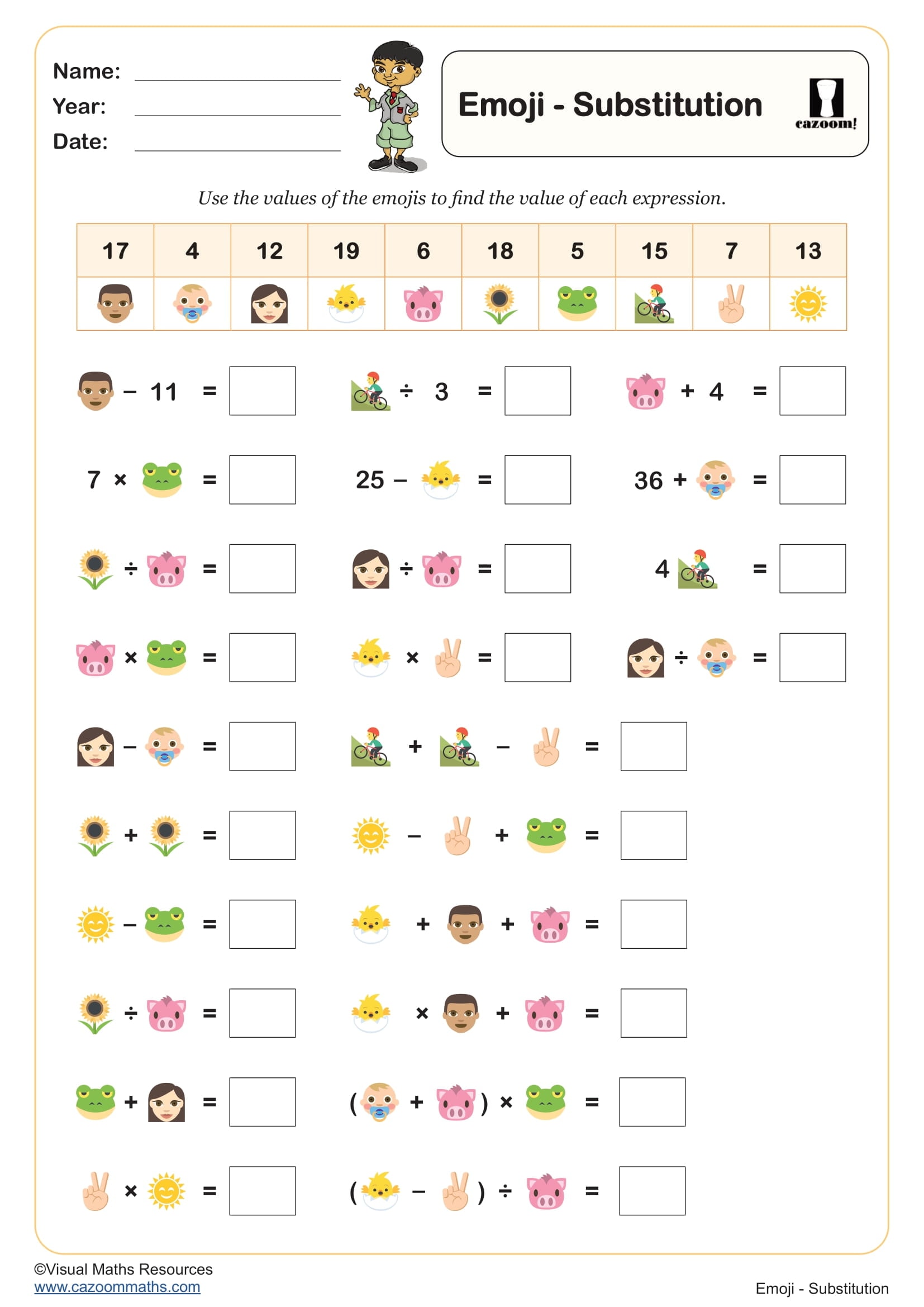
Emoji - Substitution
Year groups: 6, 7
All worksheets are created by the team of experienced teachers at Cazoom Maths.
What skills do emoji worksheet activities develop in maths lessons?
Emoji maths worksheets develop important pre-algebraic thinking by teaching students to work with unknown values represented by symbols. They strengthen logical reasoning, pattern recognition, and systematic problem-solving approaches that form the foundation for formal algebra in later key stages. Students practise addition, subtraction, multiplication, and division whilst learning to work backwards from given totals.
Teachers notice that pupils often attempt to guess values randomly rather than using systematic elimination methods. The most effective approach involves teaching students to look for the simplest equation first, solve for one emoji's value, then substitute that known value into more complex equations. This methodical approach mirrors algebraic problem-solving techniques introduced in Key Stage 3.
Which year groups can use emoji maths worksheets effectively?
Key Stage 1 pupils work with simple addition emoji problems using numbers within 20, whilst Key Stage 2 students tackle more complex multi-step equations involving larger numbers and all four operations. Year 6 pupils particularly benefit from these activities as preparation for the algebraic concepts they'll encounter in secondary mathematics. Key Stage 3 students use emoji problems to reinforce substitution methods before progressing to letter-based algebra.
The progression from concrete emoji symbols to abstract algebraic notation helps bridge the gap many students find challenging when formal algebra is introduced. Teachers report that students who have worked extensively with emoji maths show greater confidence when encountering algebraic equations, as they've already developed the logical thinking patterns required for systematic problem-solving.
How do addition emoji problems help students understand equation solving?
Addition emoji worksheets teach students to recognise when they have sufficient information to find unknown values, developing the logical reasoning needed for algebraic thinking. Students learn to identify which equation in a system provides the clearest starting point, often beginning with problems where two identical emojis equal a known total. This builds understanding of how mathematical relationships work within equation systems.
Many pupils initially focus only on the final answer rather than understanding the process of elimination and substitution. Teachers find success when they encourage students to show their working step-by-step, demonstrating how finding one emoji's value unlocks the solution to remaining unknowns. This systematic approach directly prepares students for formal algebraic methods taught in secondary mathematics.
How can teachers use emojis worksheet resources most effectively in lessons?
Teachers achieve best results by starting with collaborative problem-solving, allowing students to discuss strategies before attempting individual solutions. Displaying emoji problems on the board encourages mathematical discussion about different solution approaches, whilst individual worksheets provide practice in systematic working. The visual appeal of emoji symbols maintains engagement longer than traditional algebraic notation for younger learners.
Building connections between emoji problems and real-world contexts enhances understanding. Teachers might relate emoji values to prices in a shop or points in a game, demonstrating how unknown quantities appear throughout daily life. Regular use of these worksheet emoji activities builds mathematical confidence whilst developing the logical thinking patterns key for success in formal algebra and problem-solving across the mathematics curriculum.