Fractions Worksheets
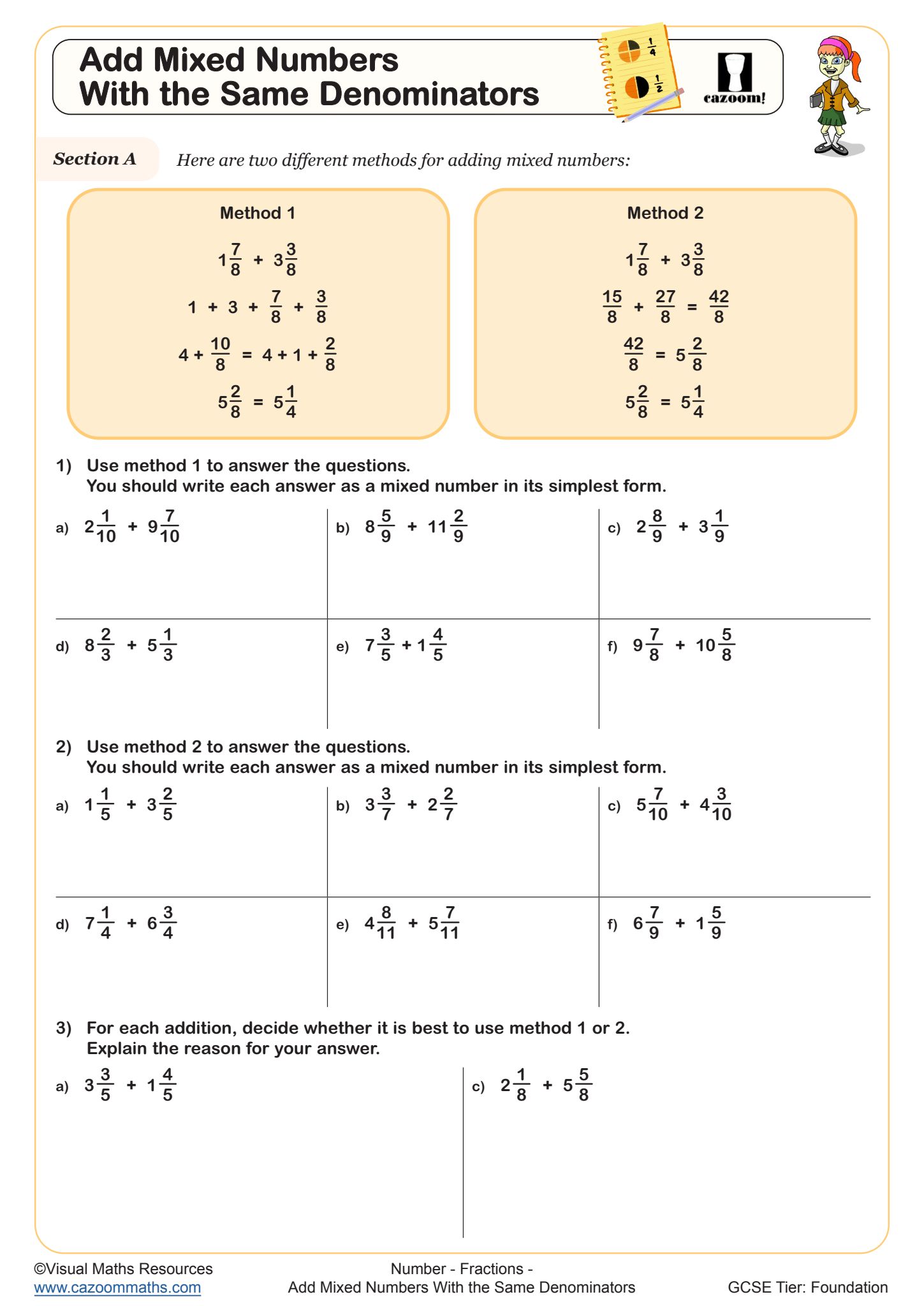
Add Mixed Numbers with the Same Denominator
Year groups: 7, 8
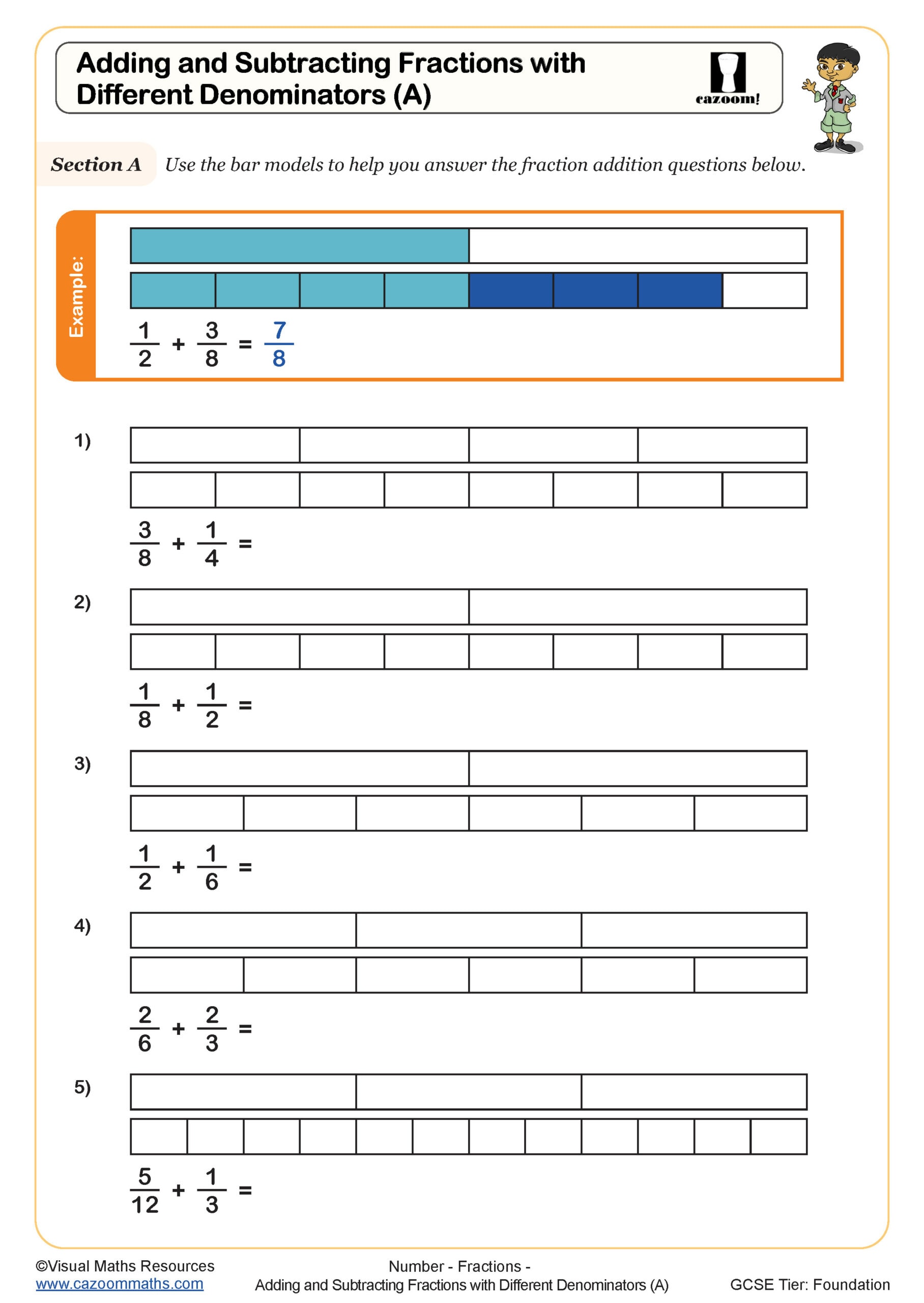
Adding and subtracting fractions with different denominators (A)
Year groups: 7, 8
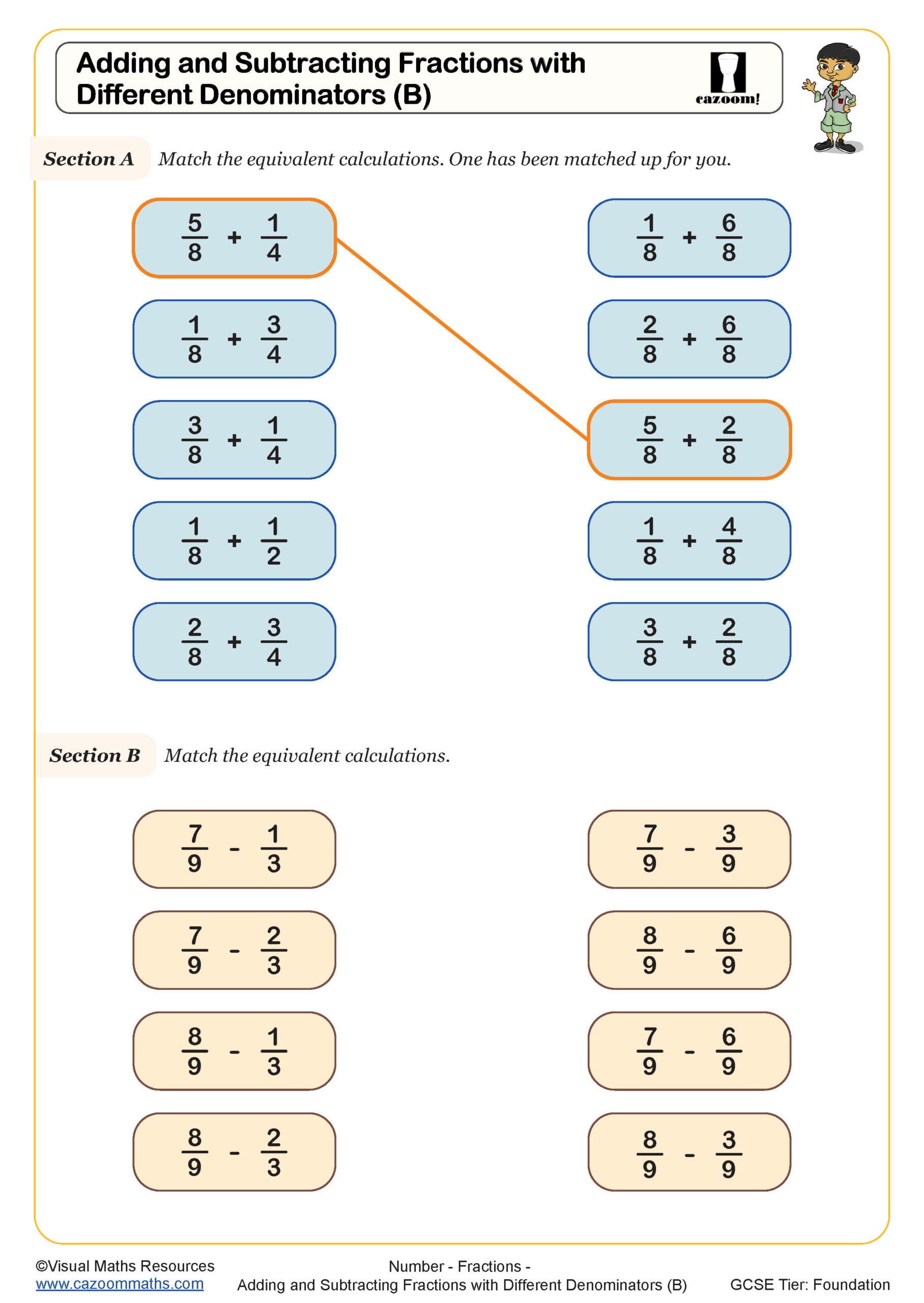
Adding and subtracting fractions with different denominators (B)
Year groups: 7, 8
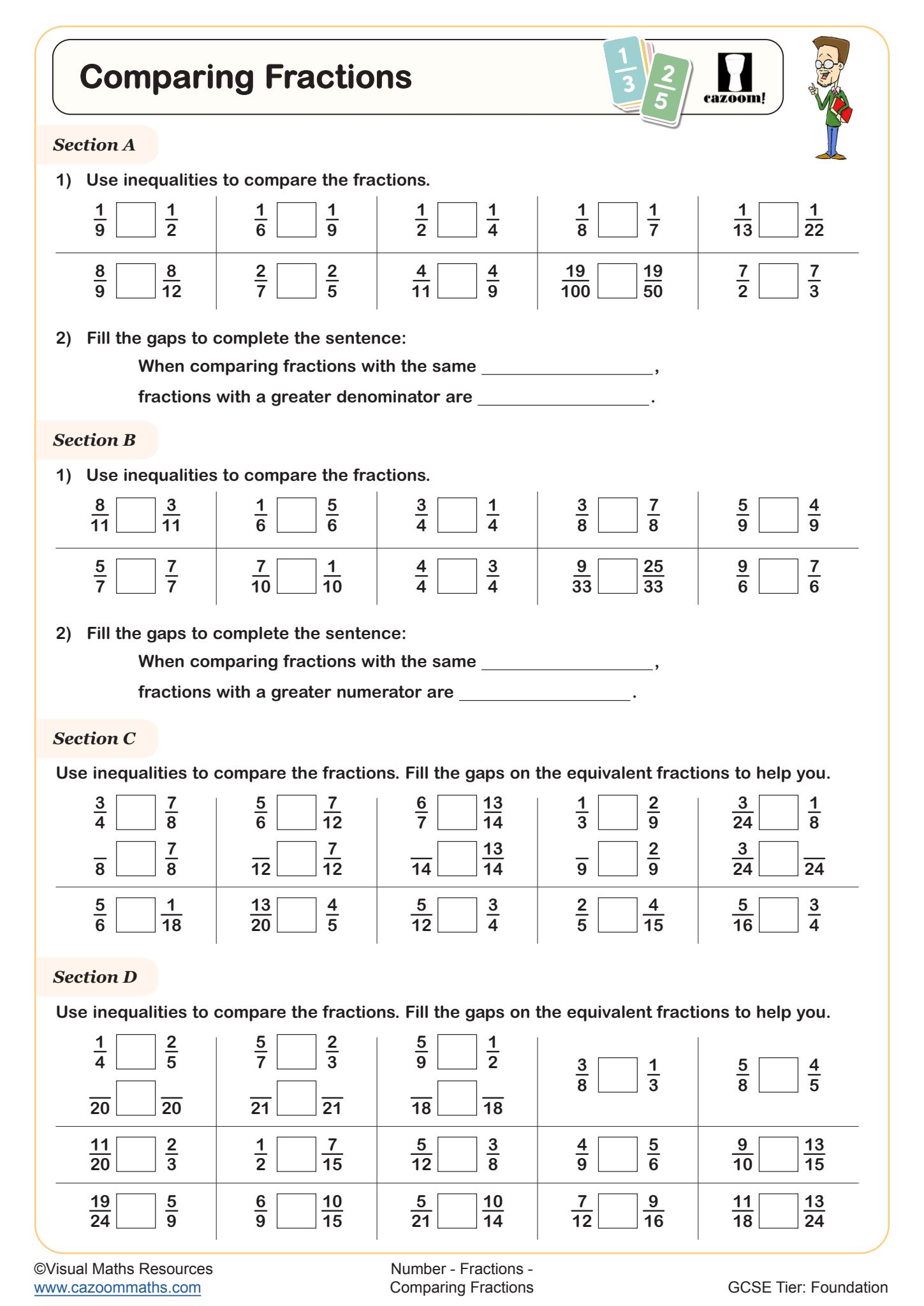
Comparing Fractions
Year groups: 7
Converting Between Minutes and Hours (A)
Year groups: 7, 8
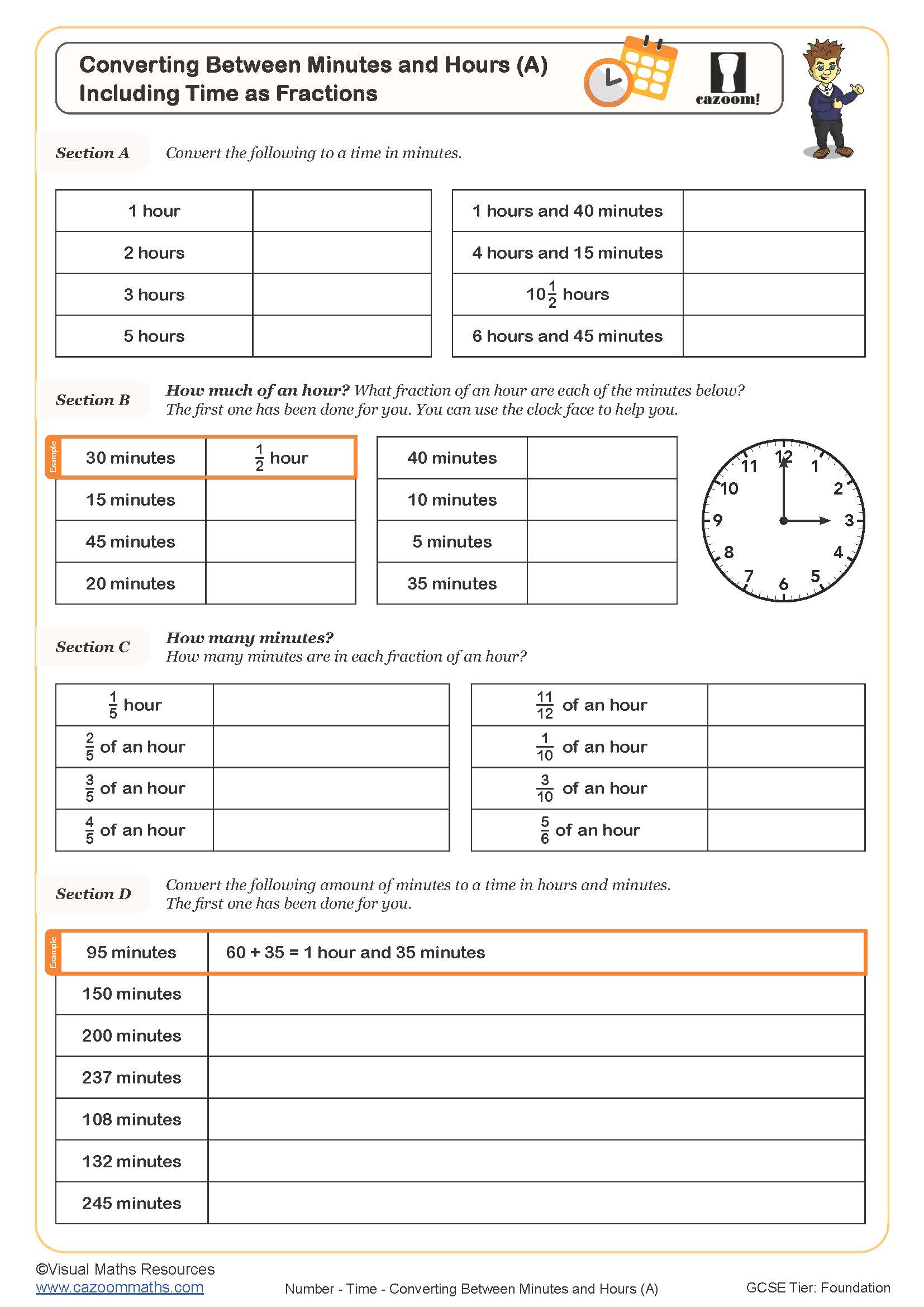
Dividing Fractions by Integers
Year groups: 7, 8
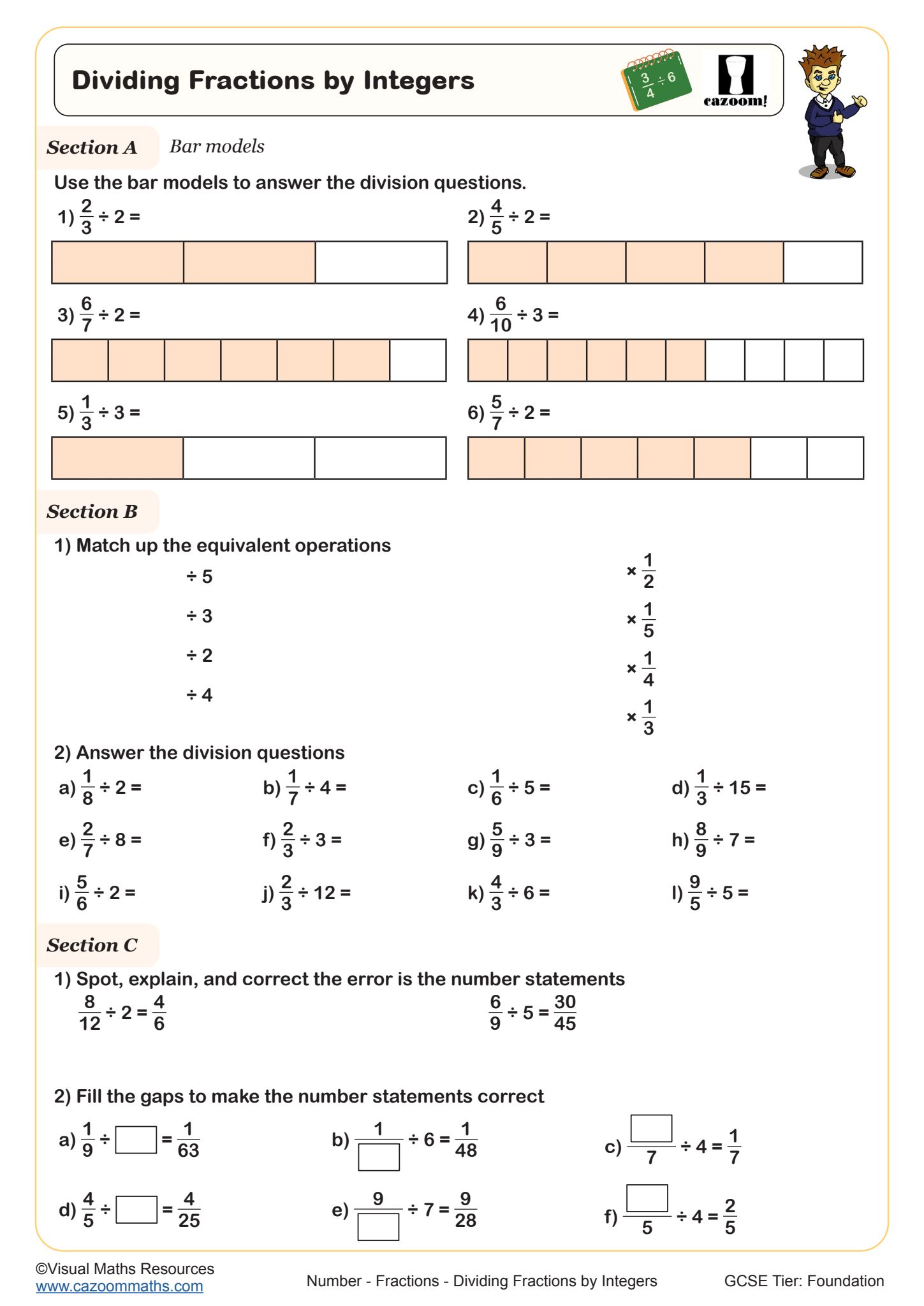
Finding Fractions of Amounts
Year groups: 7, 8
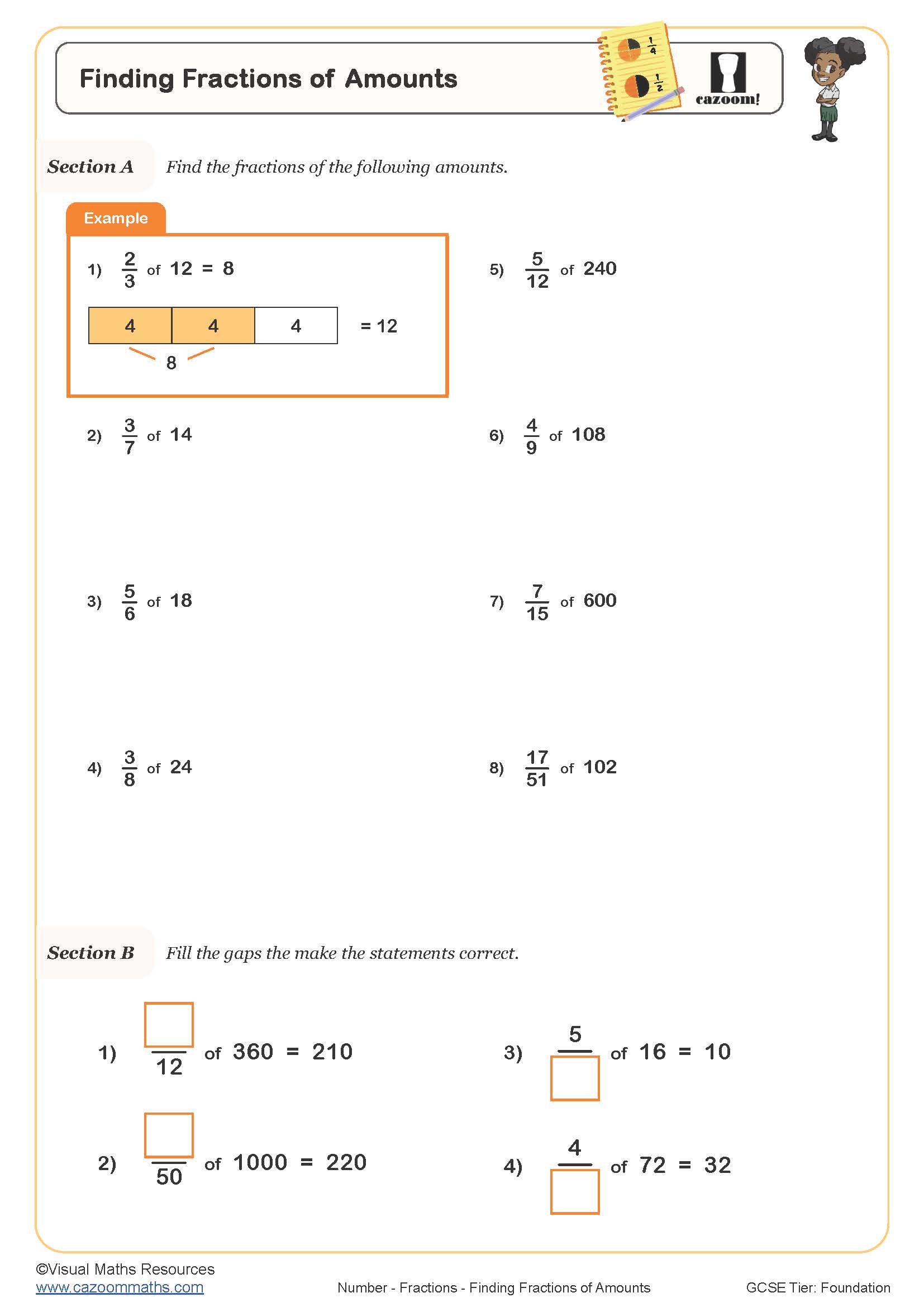
Finding the Whole (A)
Year groups: 7, 8
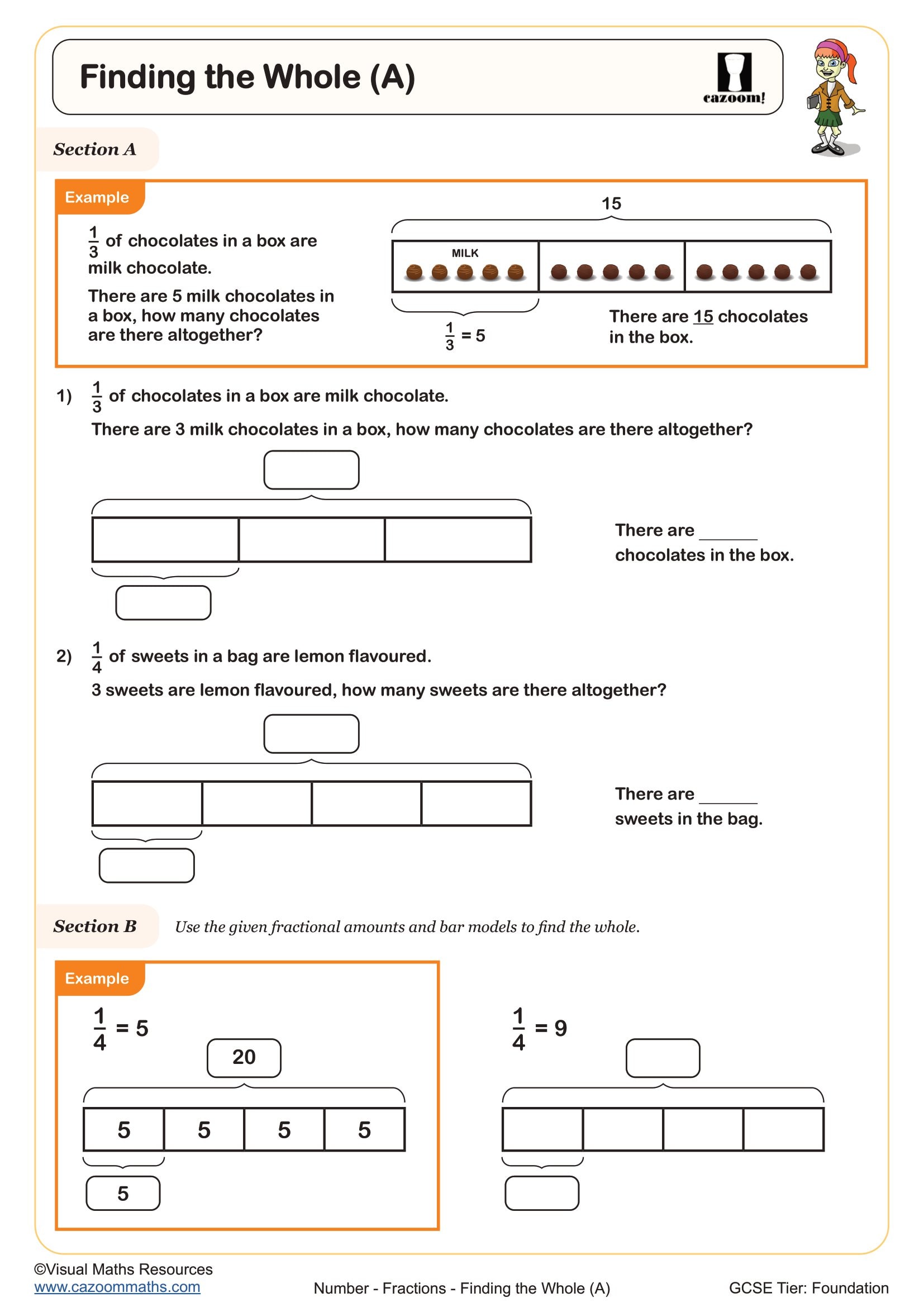
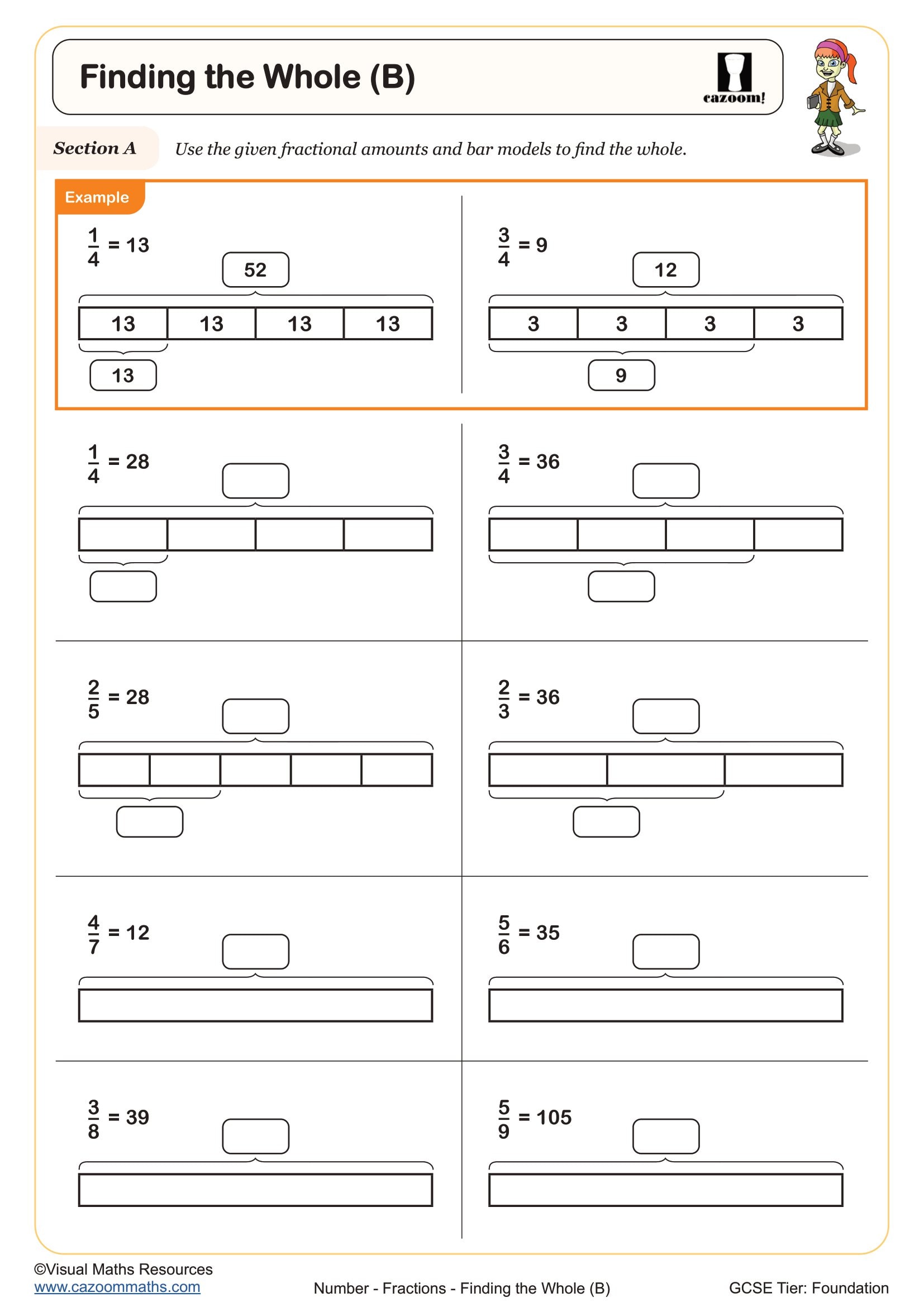
Finding the Whole (B)
Year groups: 7, 8
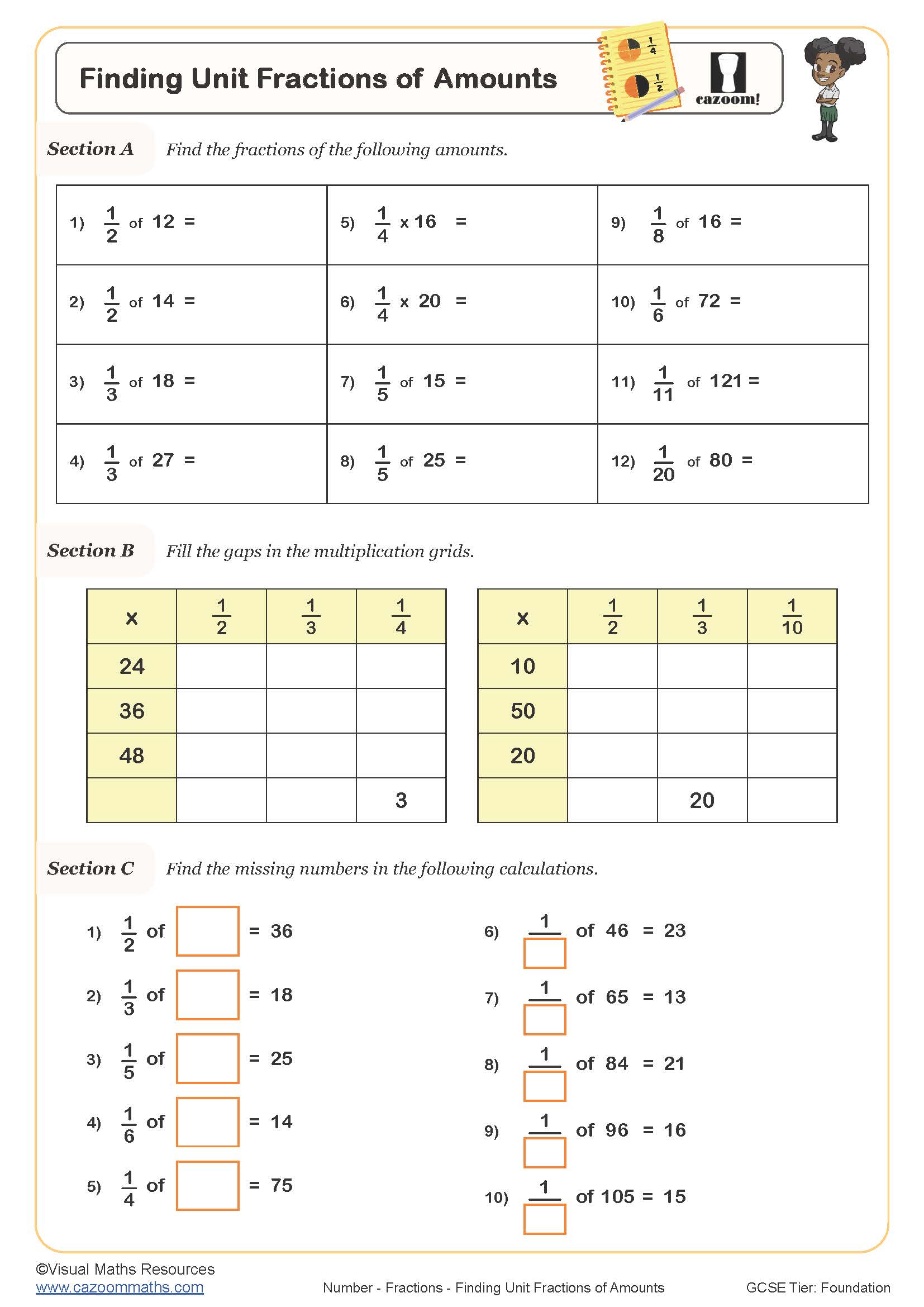
Finding Unit Fractions of Amounts
Year groups: 7, 8
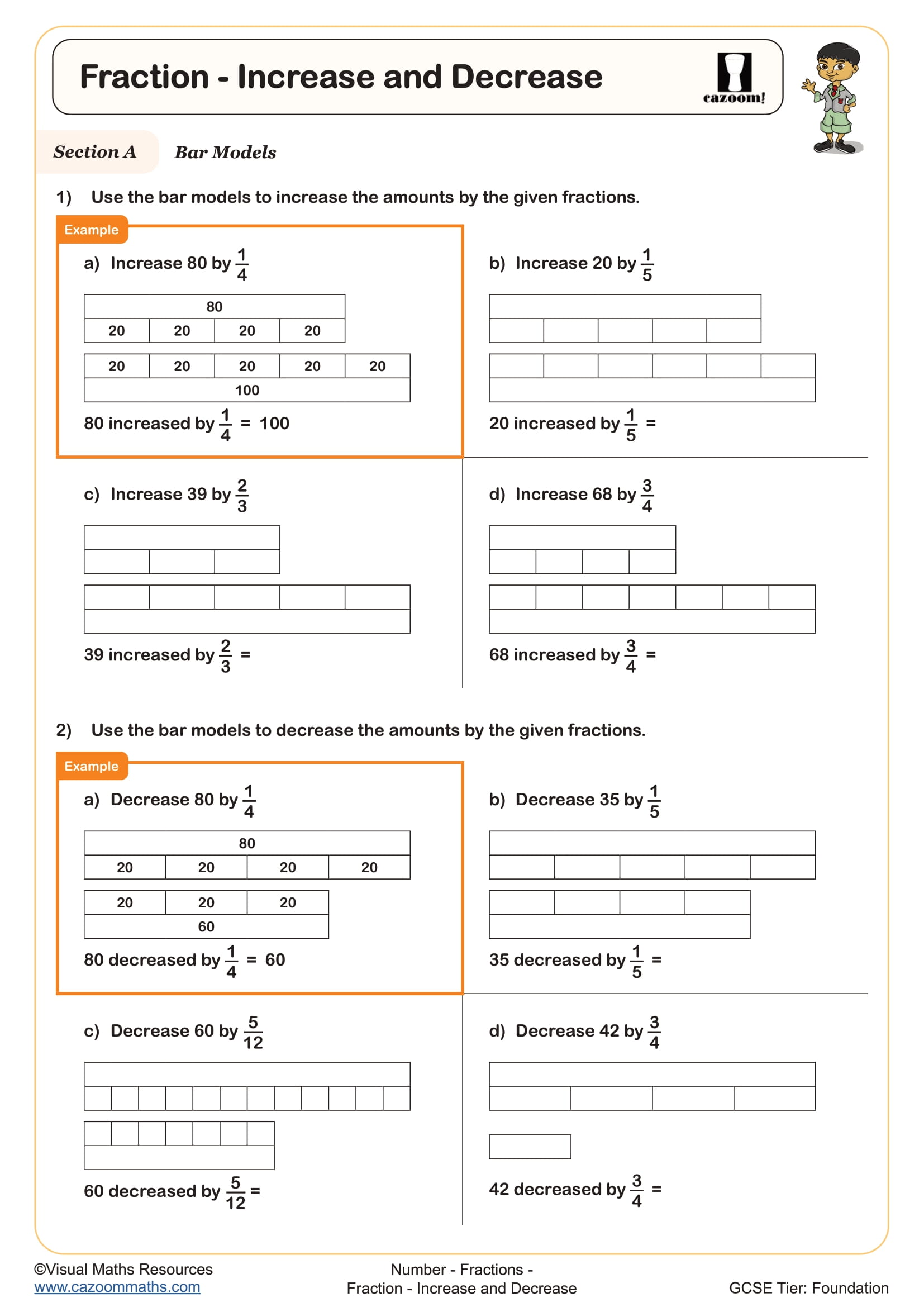
Fraction - Increase and Decrease
Year groups: 7, 8, 9
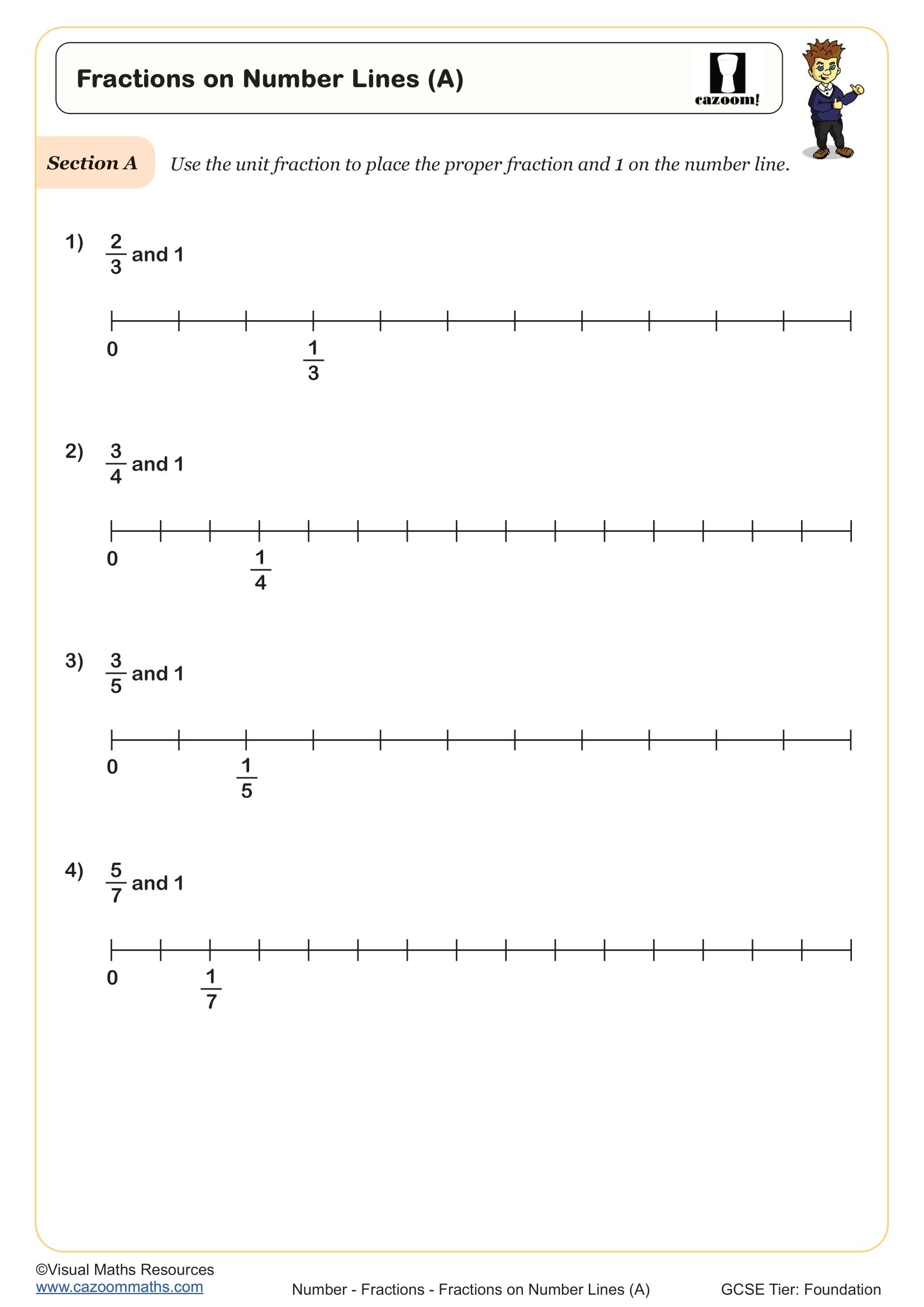
Fractions on Number Lines (A)
Year groups: 7
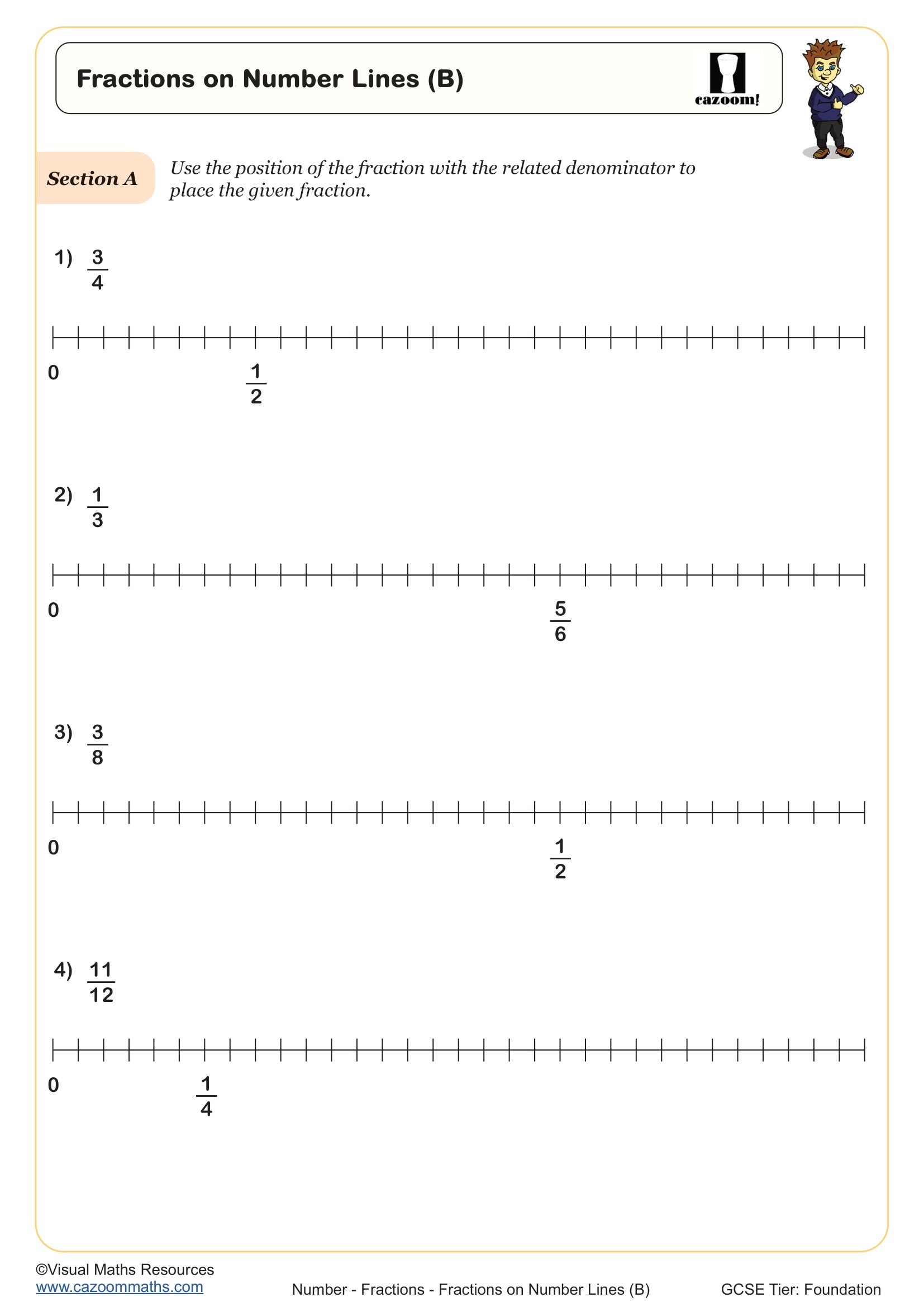
Fractions on Number Lines (B)
Year groups: 7
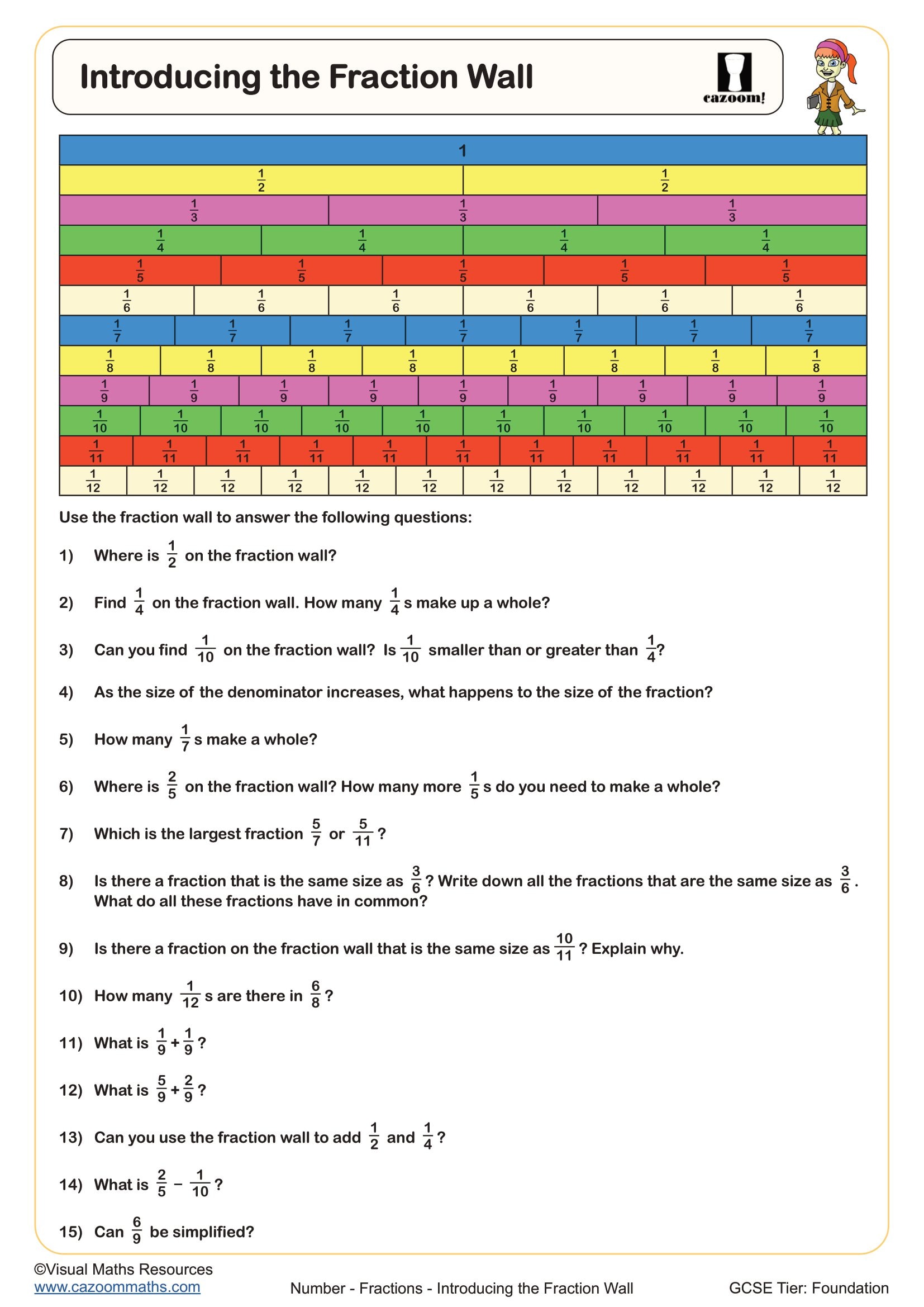
Introducing the Fraction Wall
Year groups: 7, 8
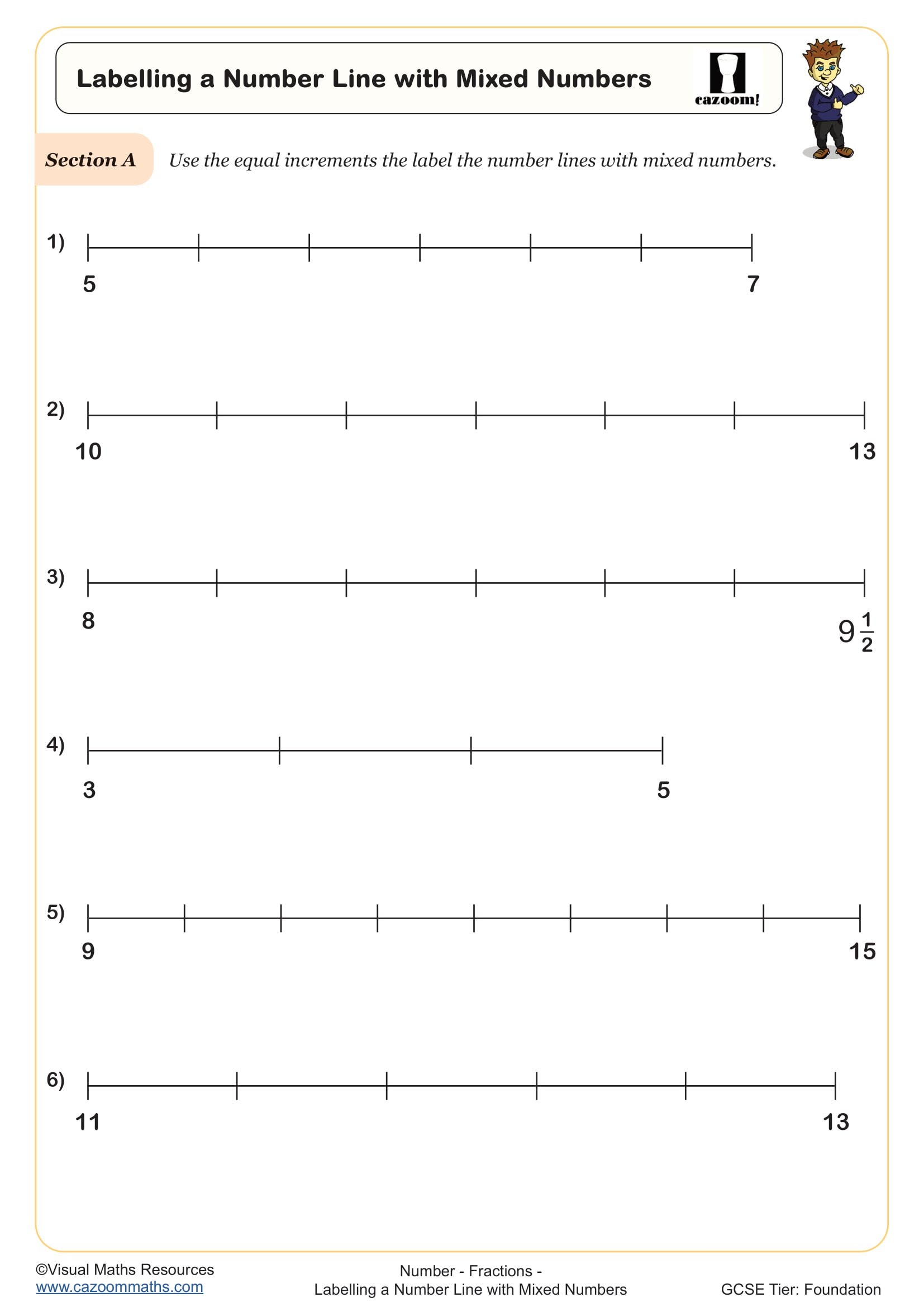
Labelling a Number Line with Mixed Numbers
Year groups: 7, 8
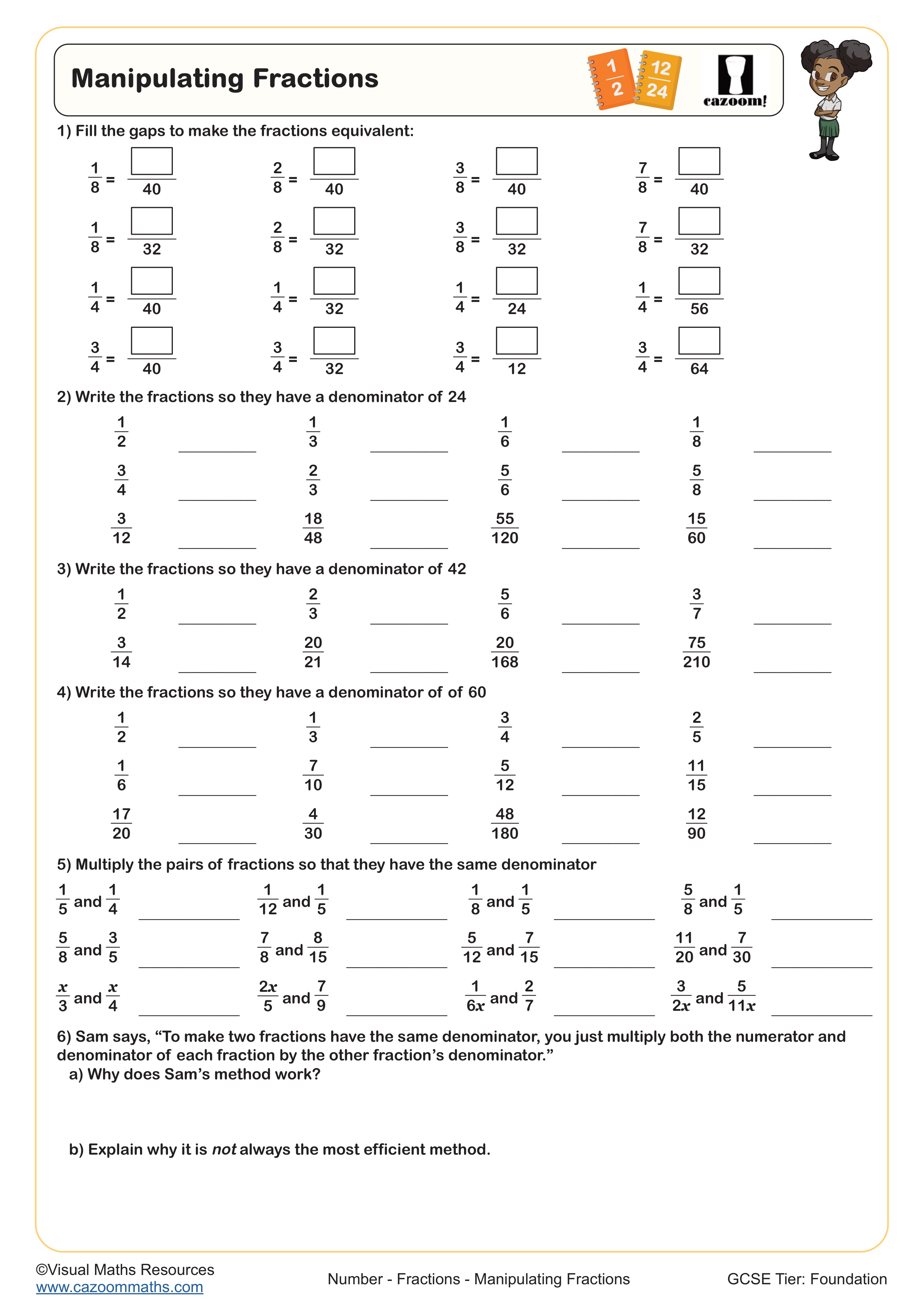
Manipulating Fractions
Year groups: 7, 8
Mixed Numbers and Improper Fractions (A)
Year groups: 7, 8
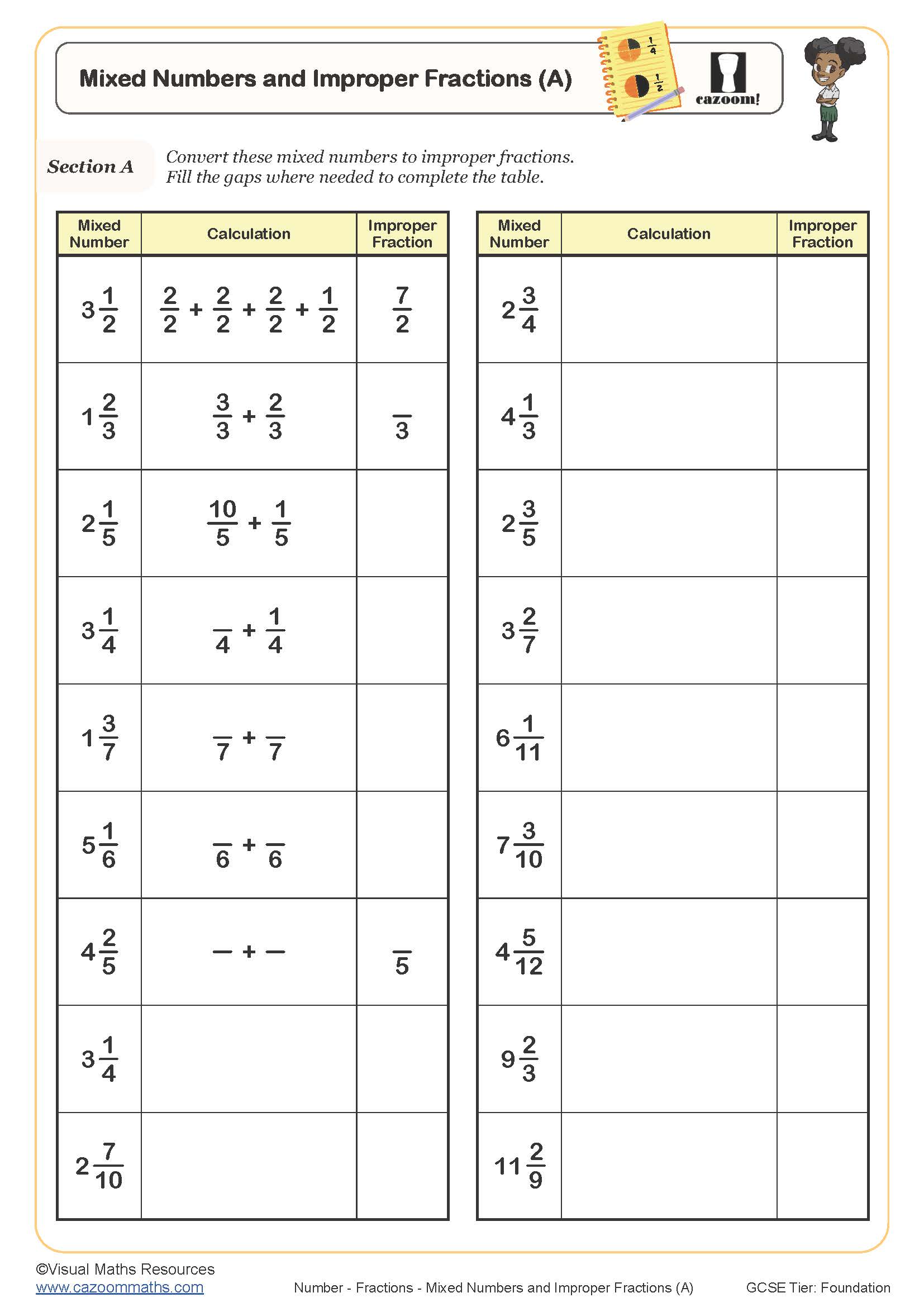
Mixed Numbers and Improper Fractions (B)
Year groups: 7, 8
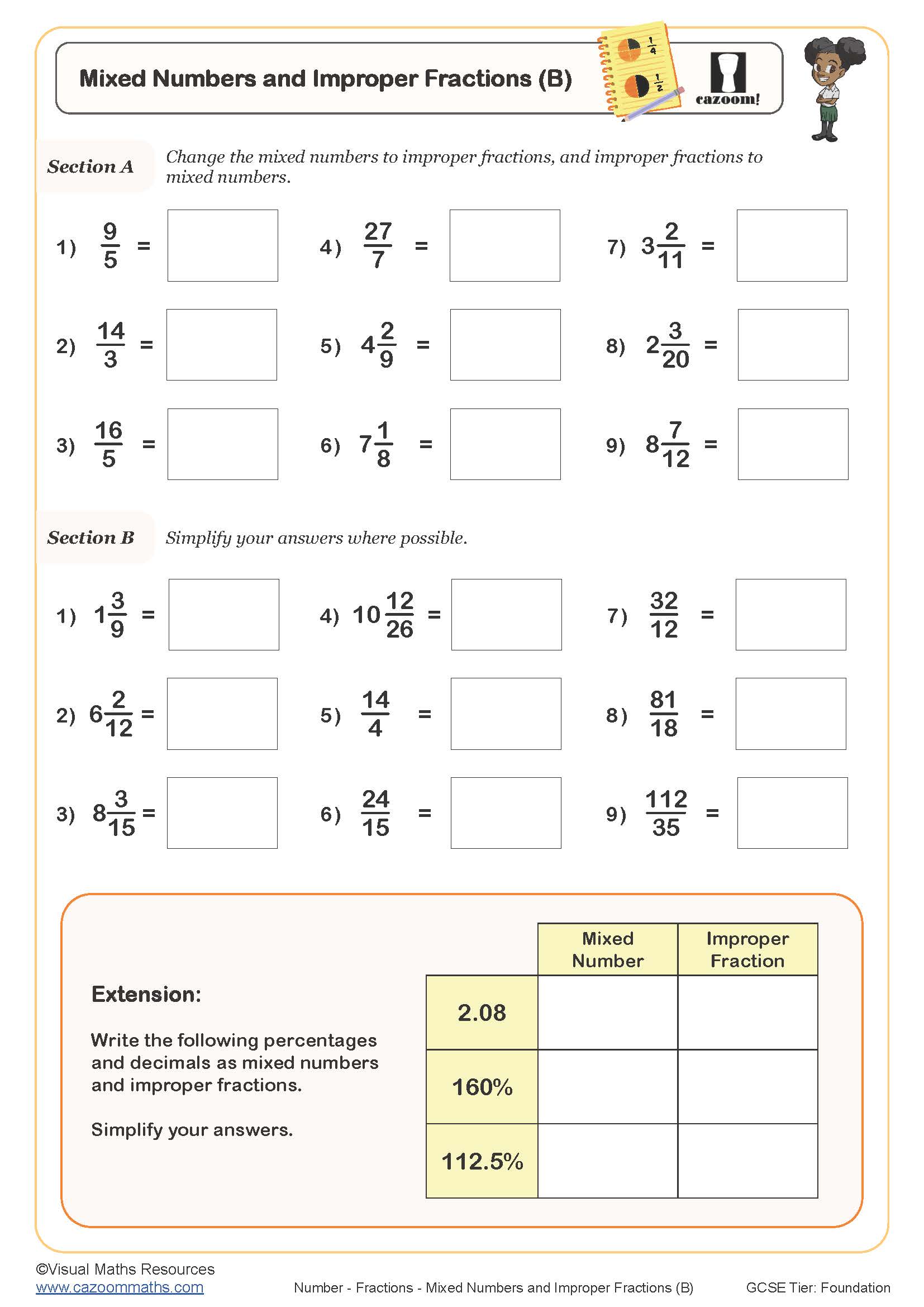
One Number as a Fraction of Another (A)
Year groups: 7, 8
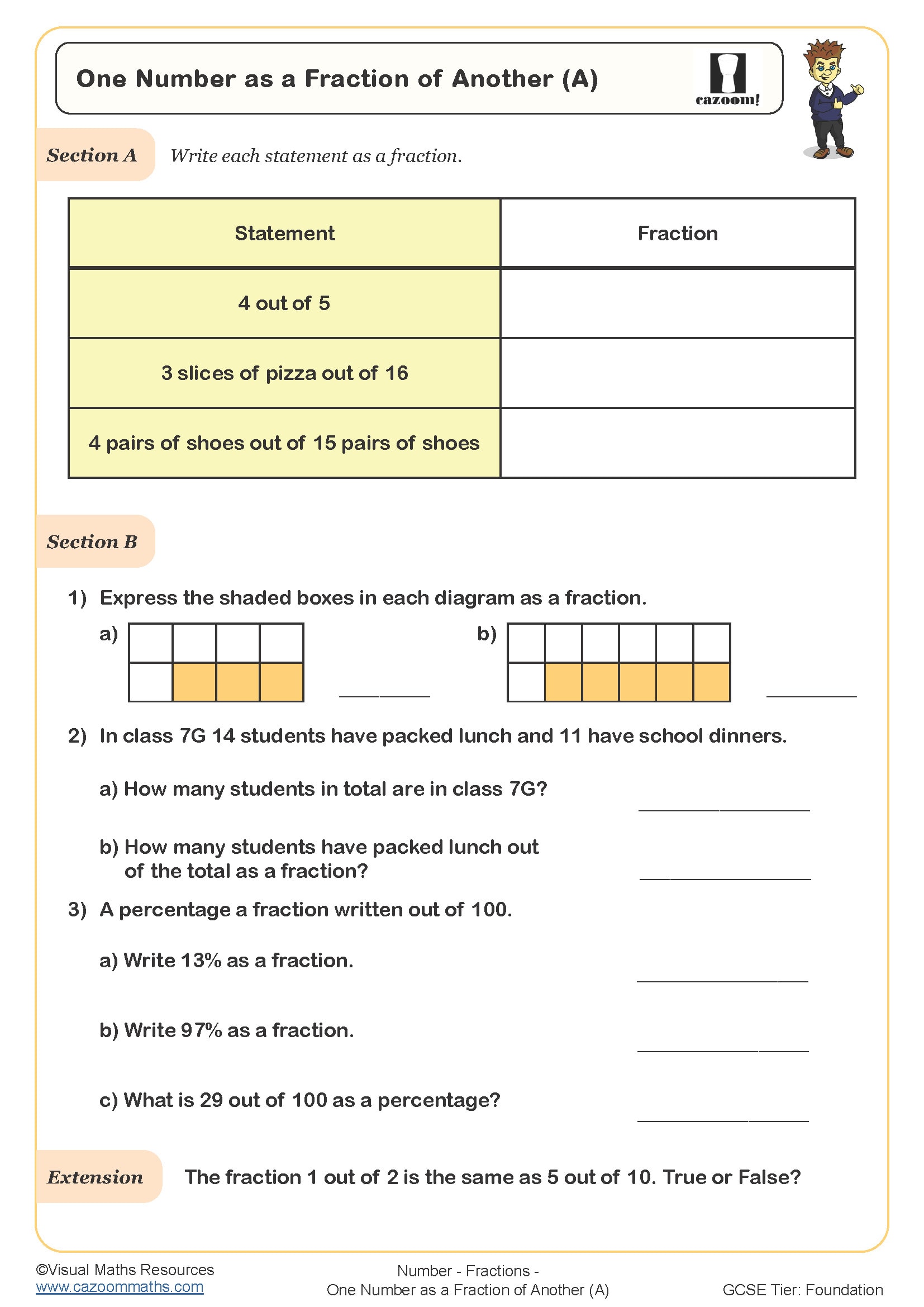
One Number as a Fraction of Another (B)
Year groups: 7, 8
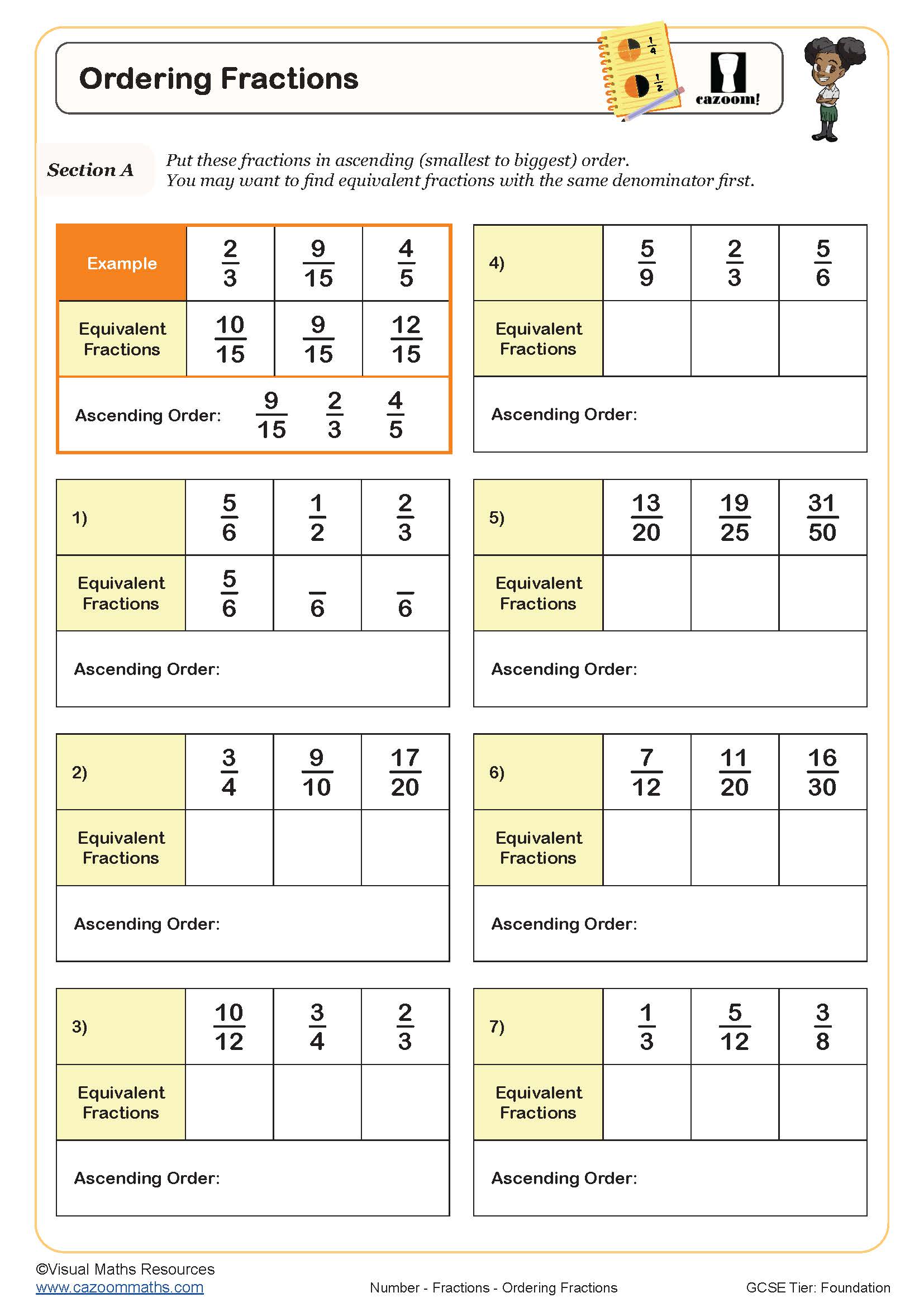
Ordering Fractions
Year groups: 7, 8, 9
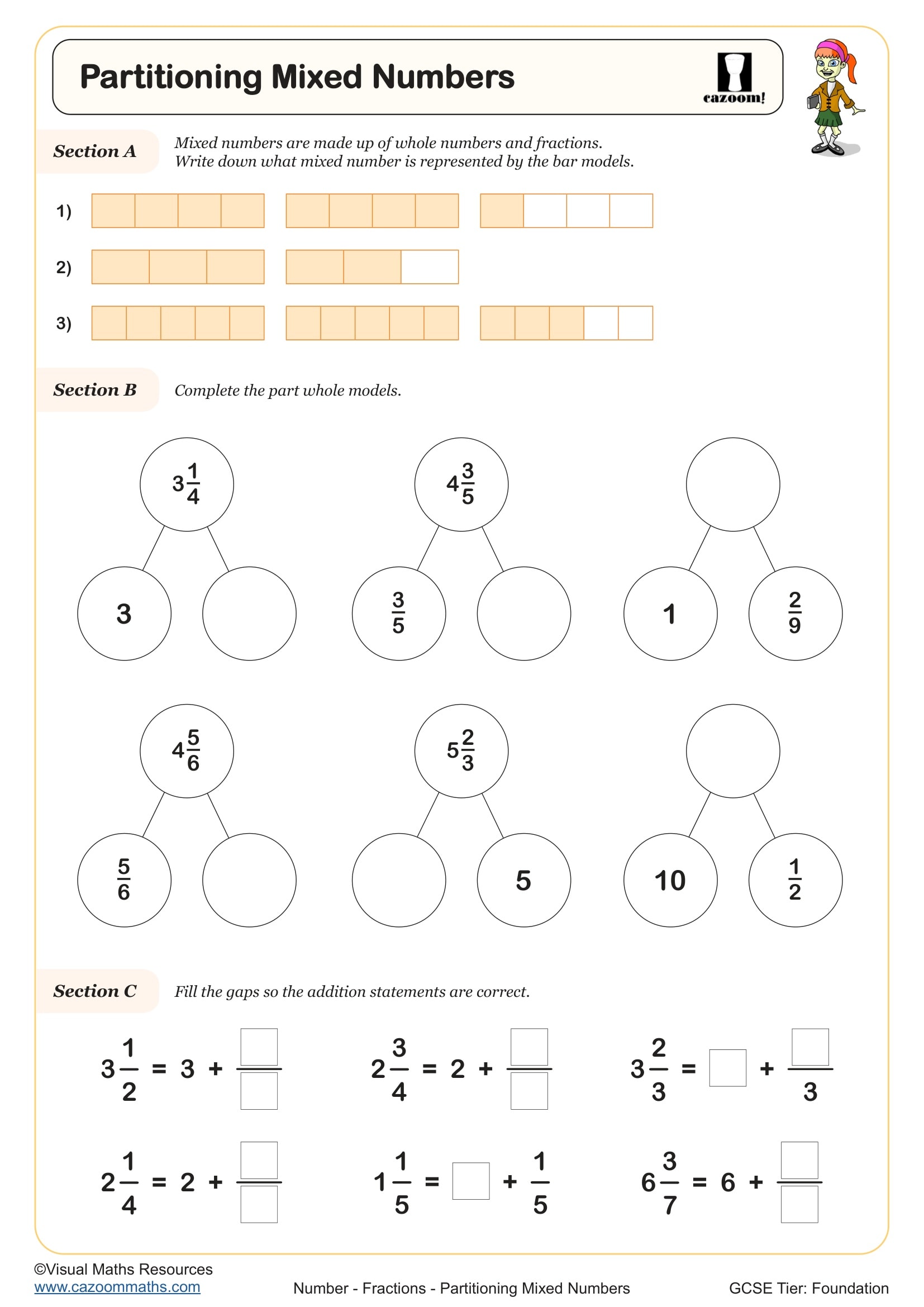
Partitioning Mixed Numbers
Year groups: 7, 8
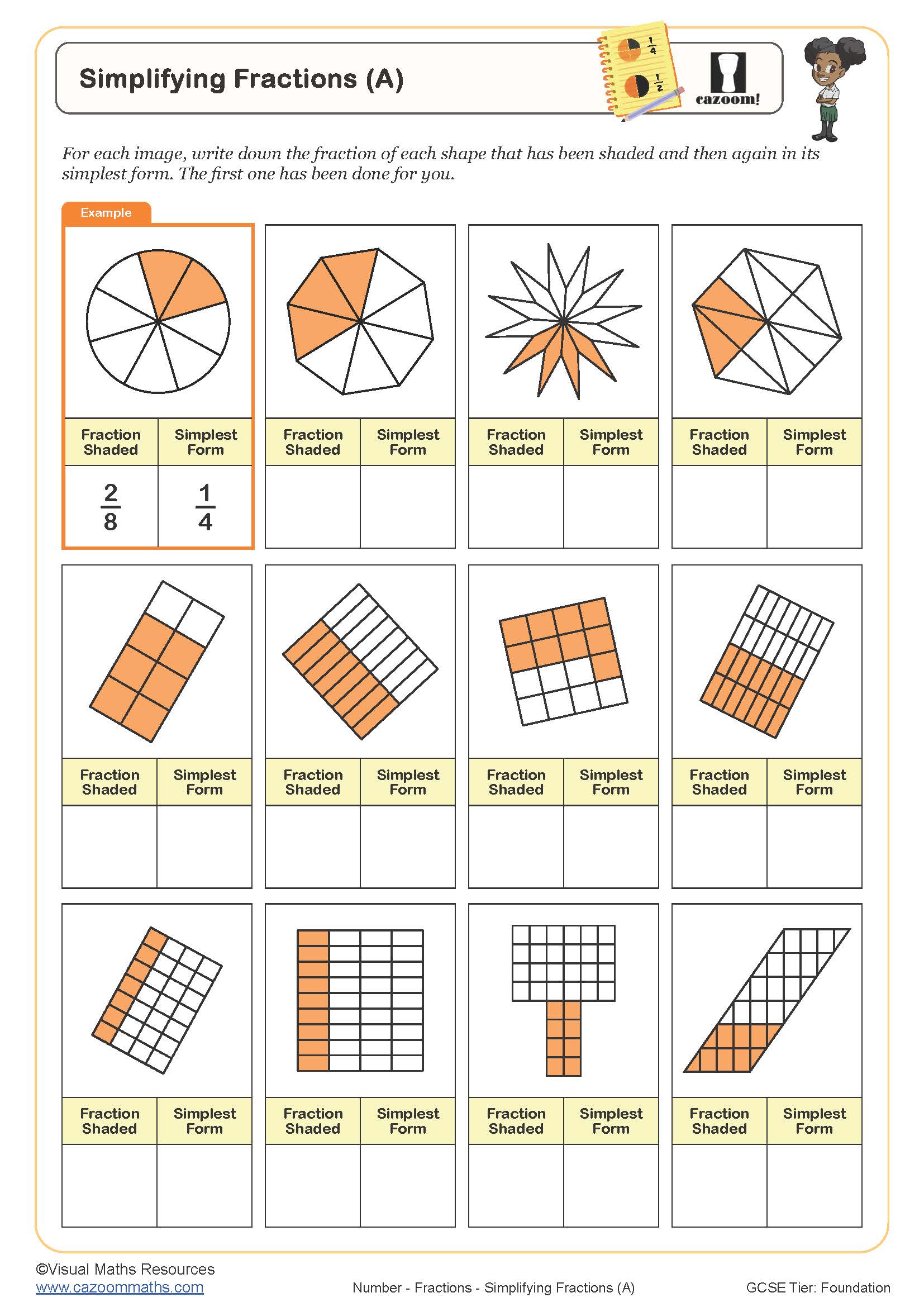
Simplifying fractions (A)
Year groups: 7, 8
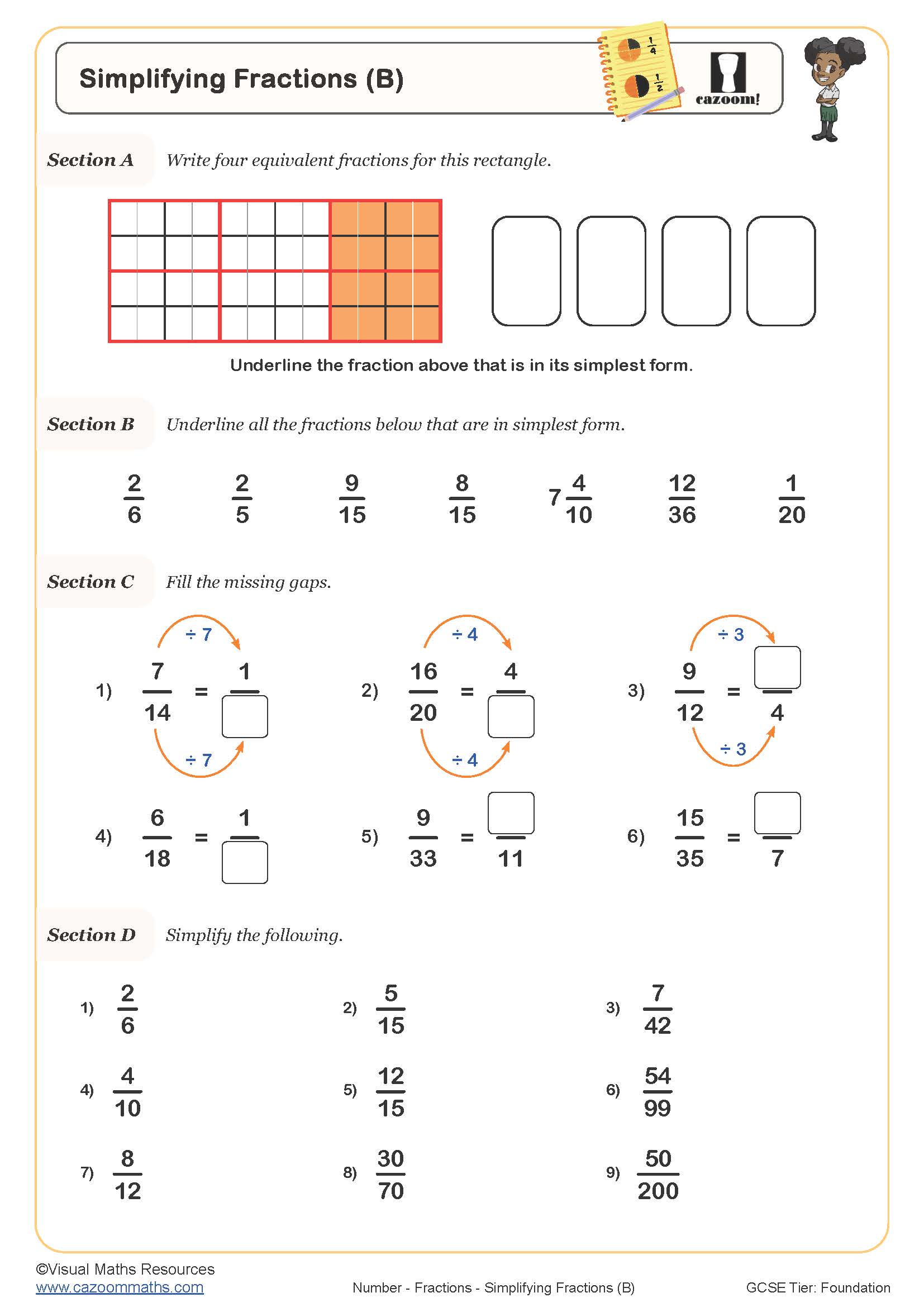
Simplifying Fractions (B)
Year groups: 7, 8
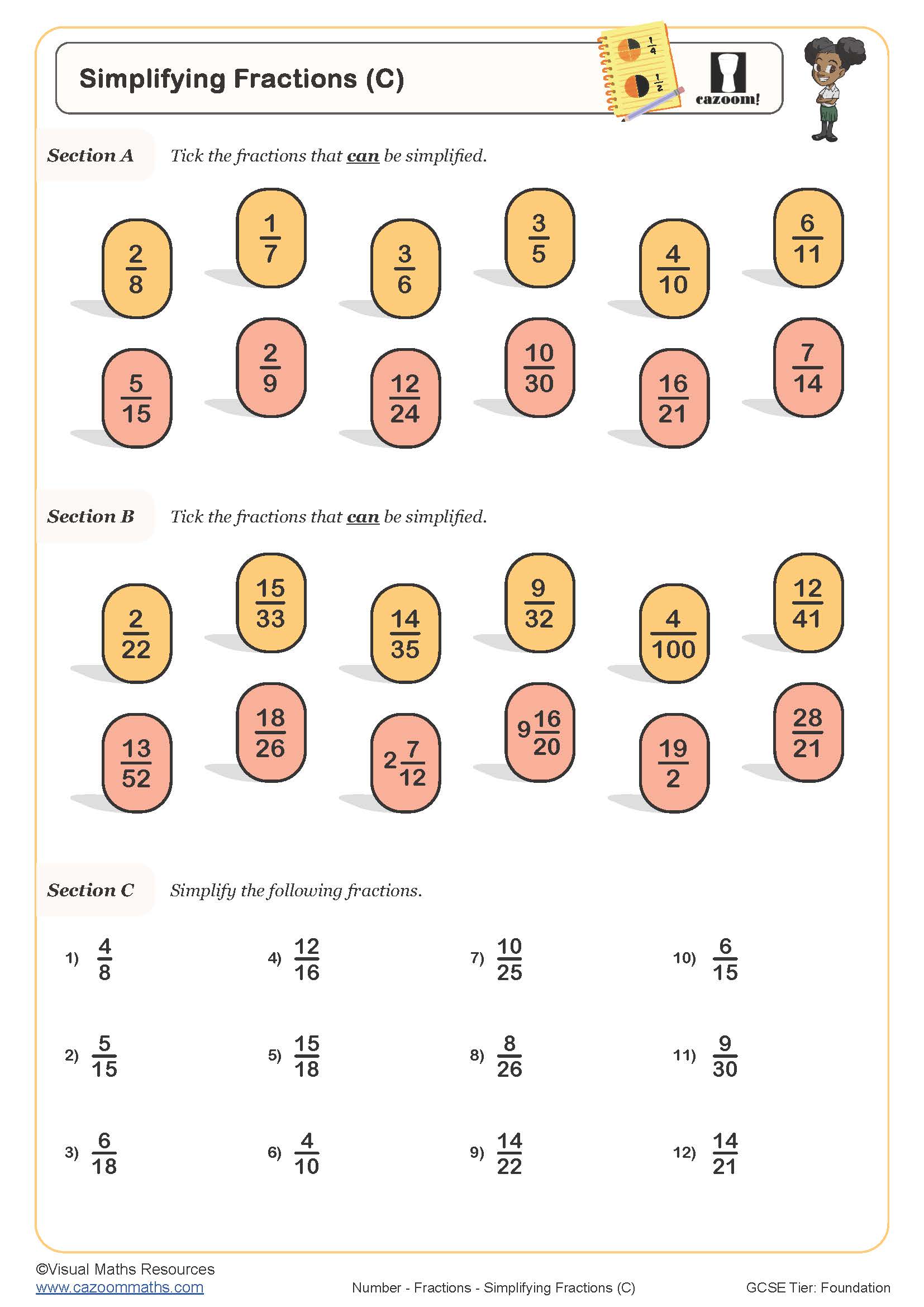
Simplifying Fractions (C)
Year groups: 7, 8
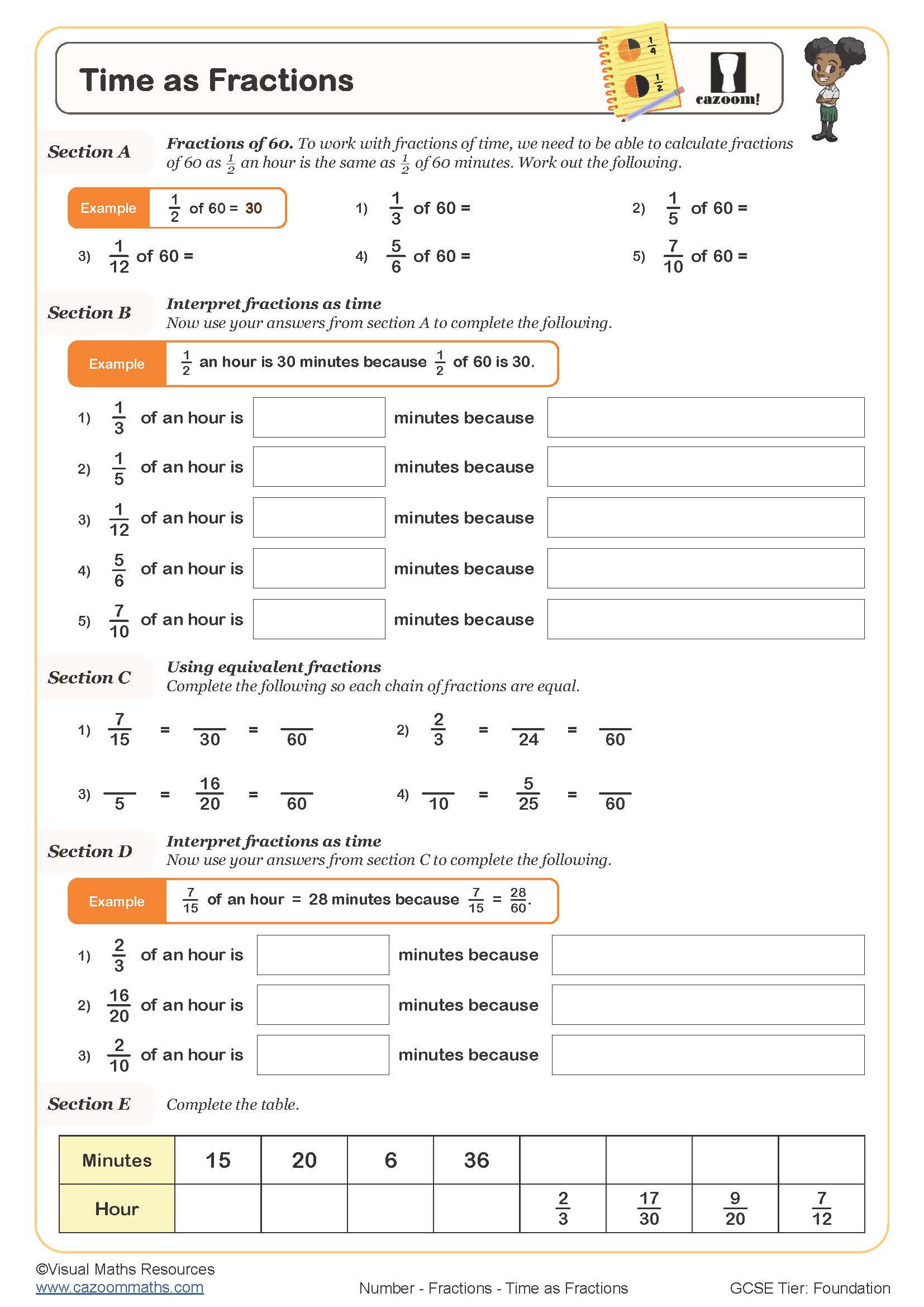
Time as Fractions
Year groups: 7, 8
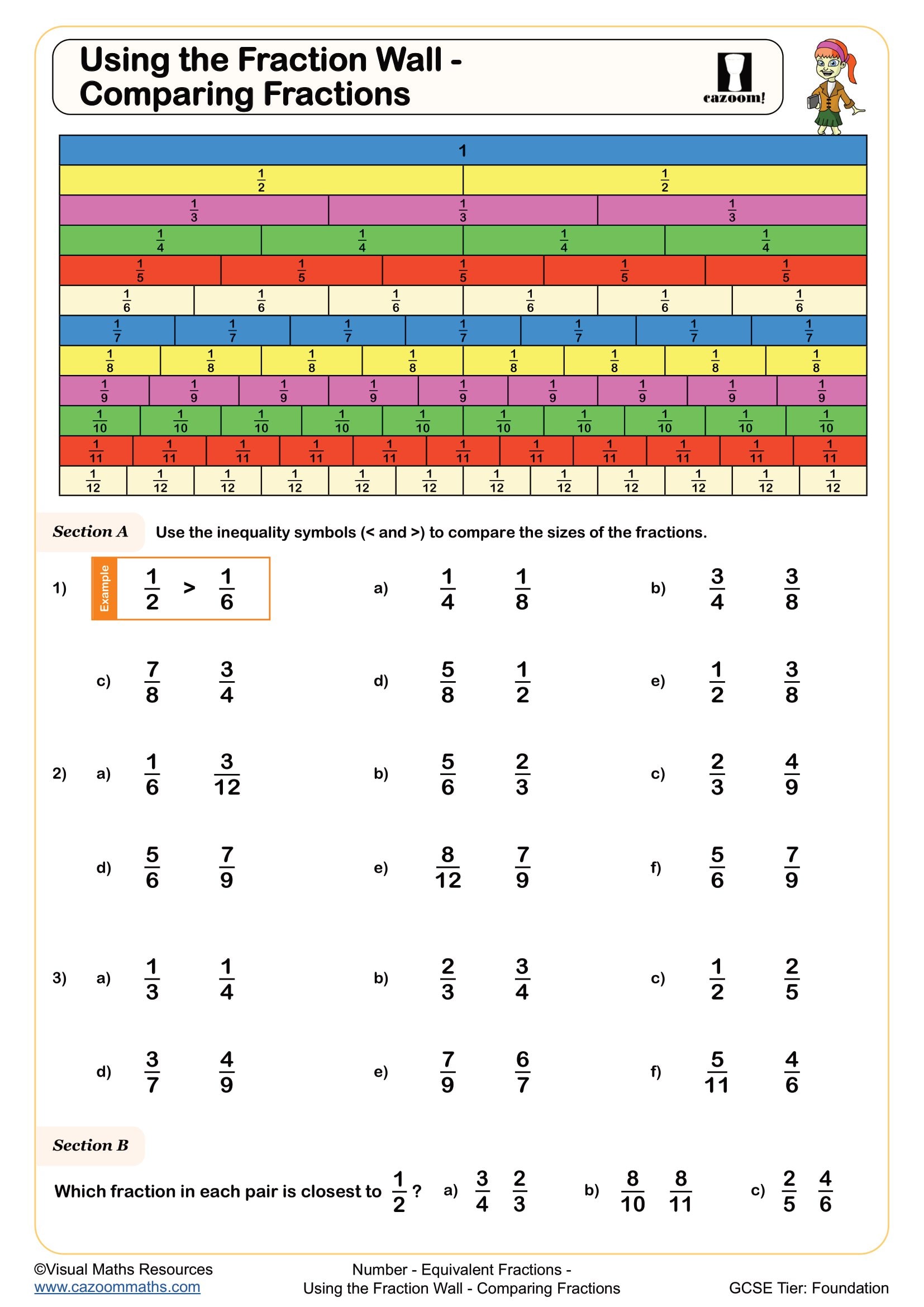
Using a Fraction Wall - Comparing Fractions
Year groups: 7, 8
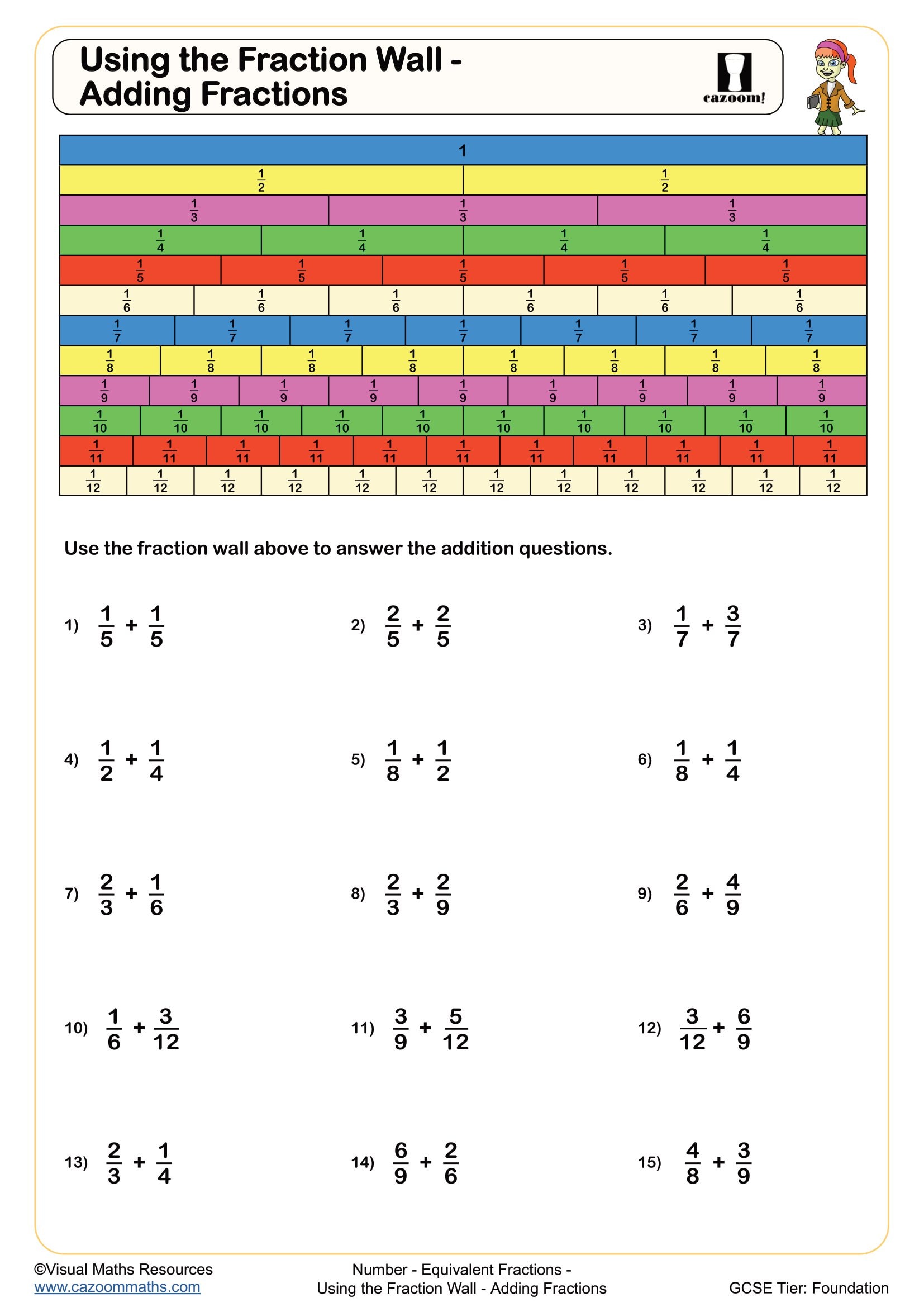
Using The Fraction Wall - Adding Fractions
Year groups: 7, 8
Using The Fraction Wall - Equivalent Fractions
Year groups: 7, 8
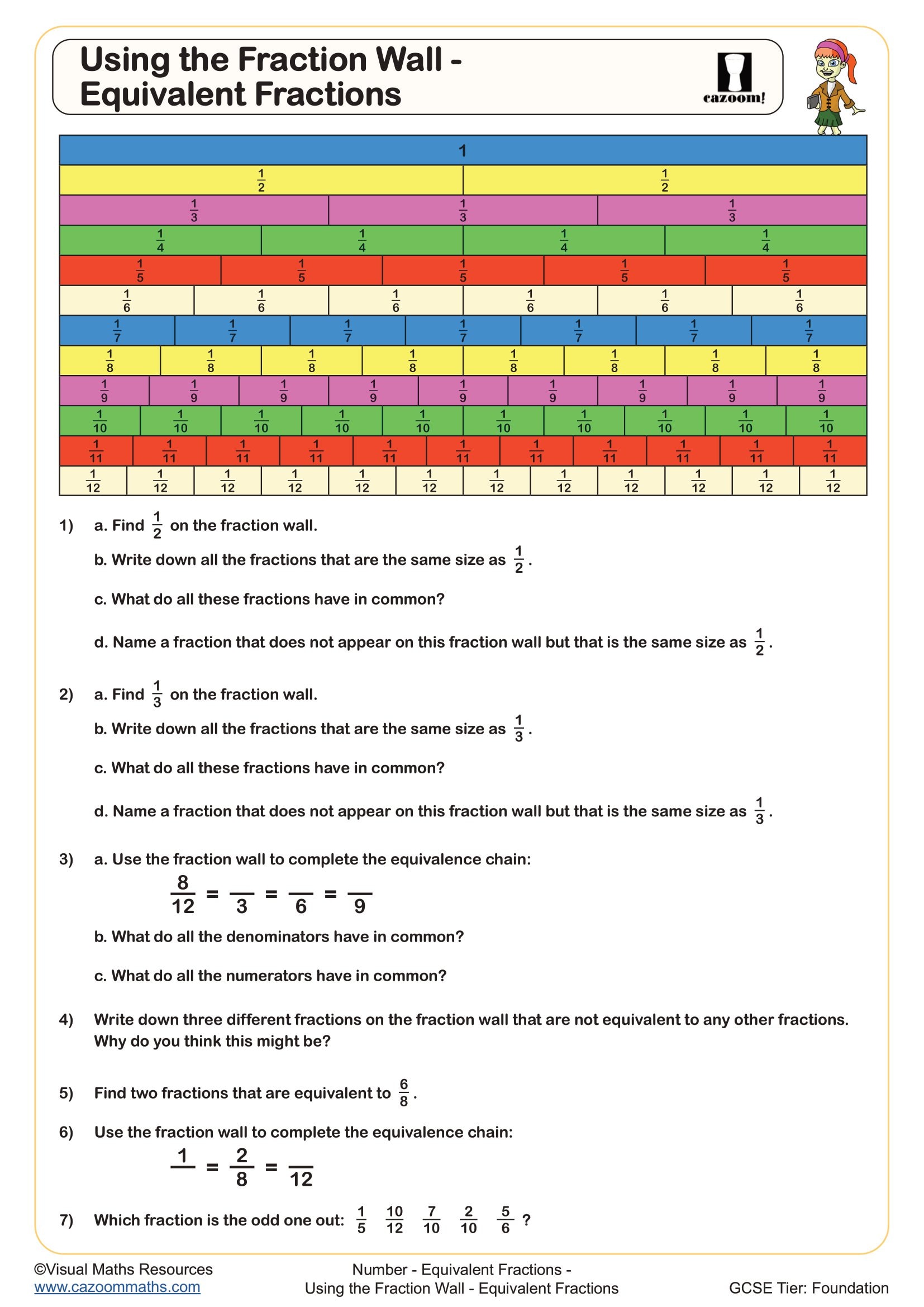
Add and Subtract Fractions and Decimals
Year groups: 8, 9
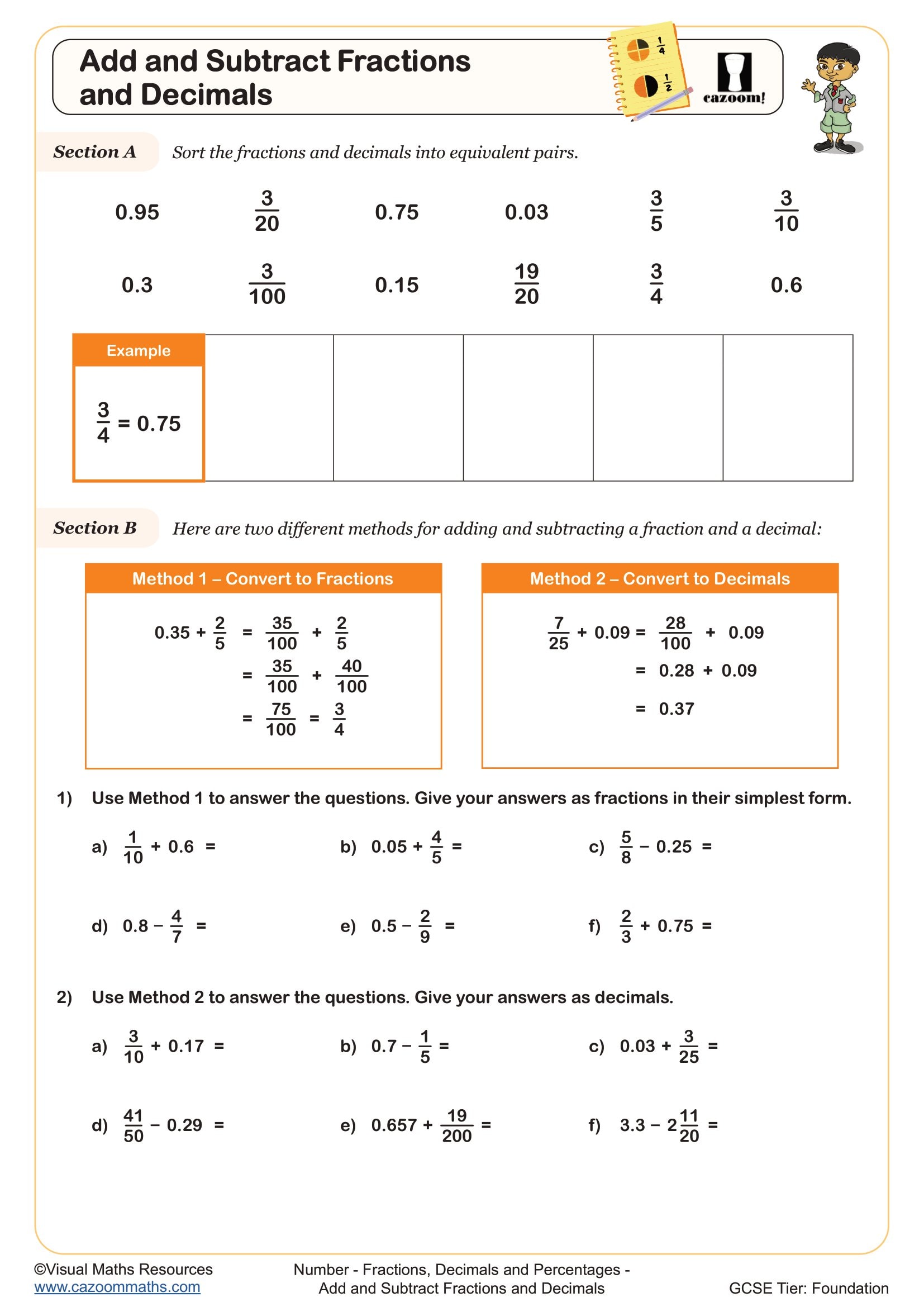
Add and Subtract Mixed Numbers
Year groups: 8, 9, 10
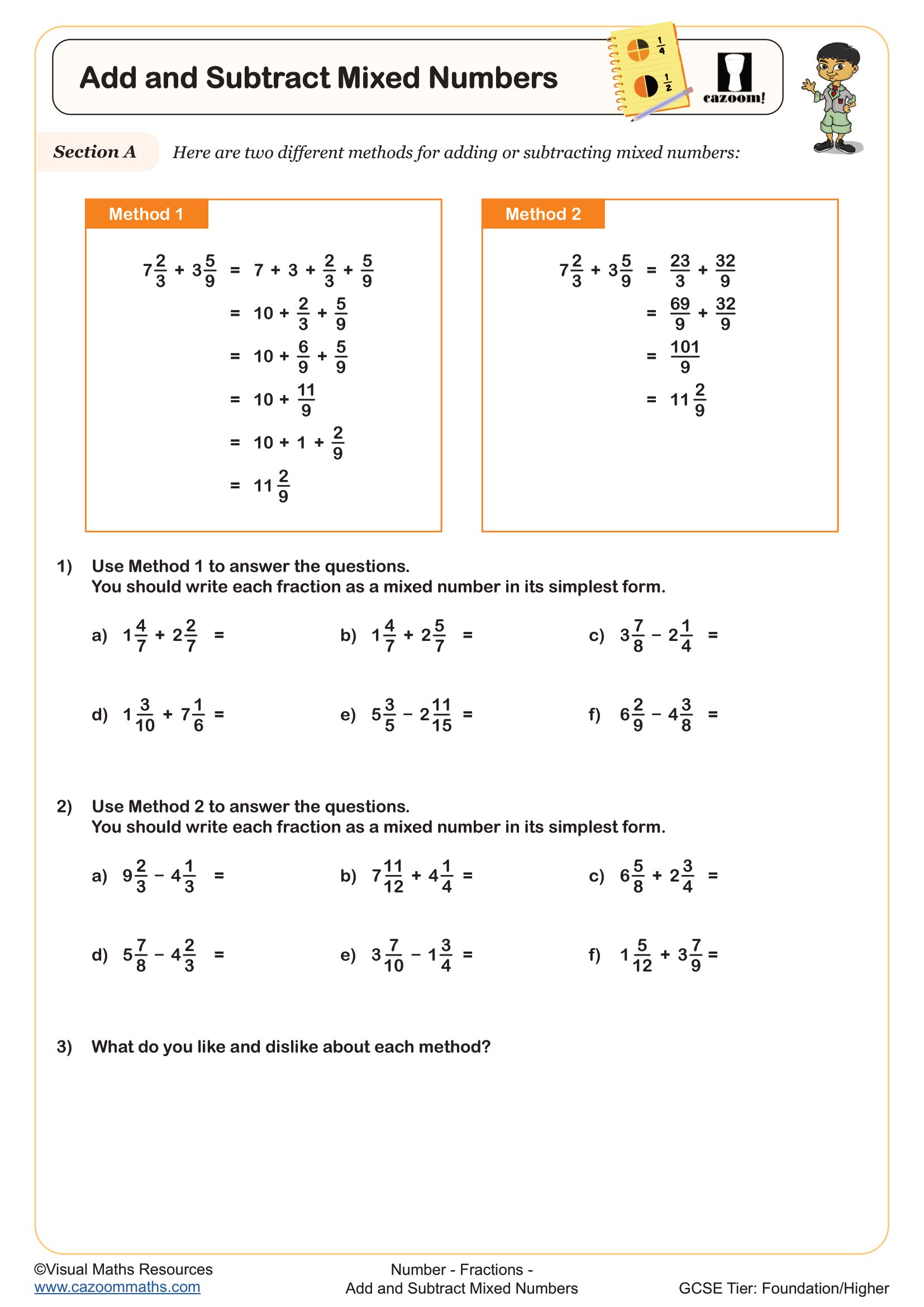
Adding and Subtracting Fractions
Year groups: 8, 9
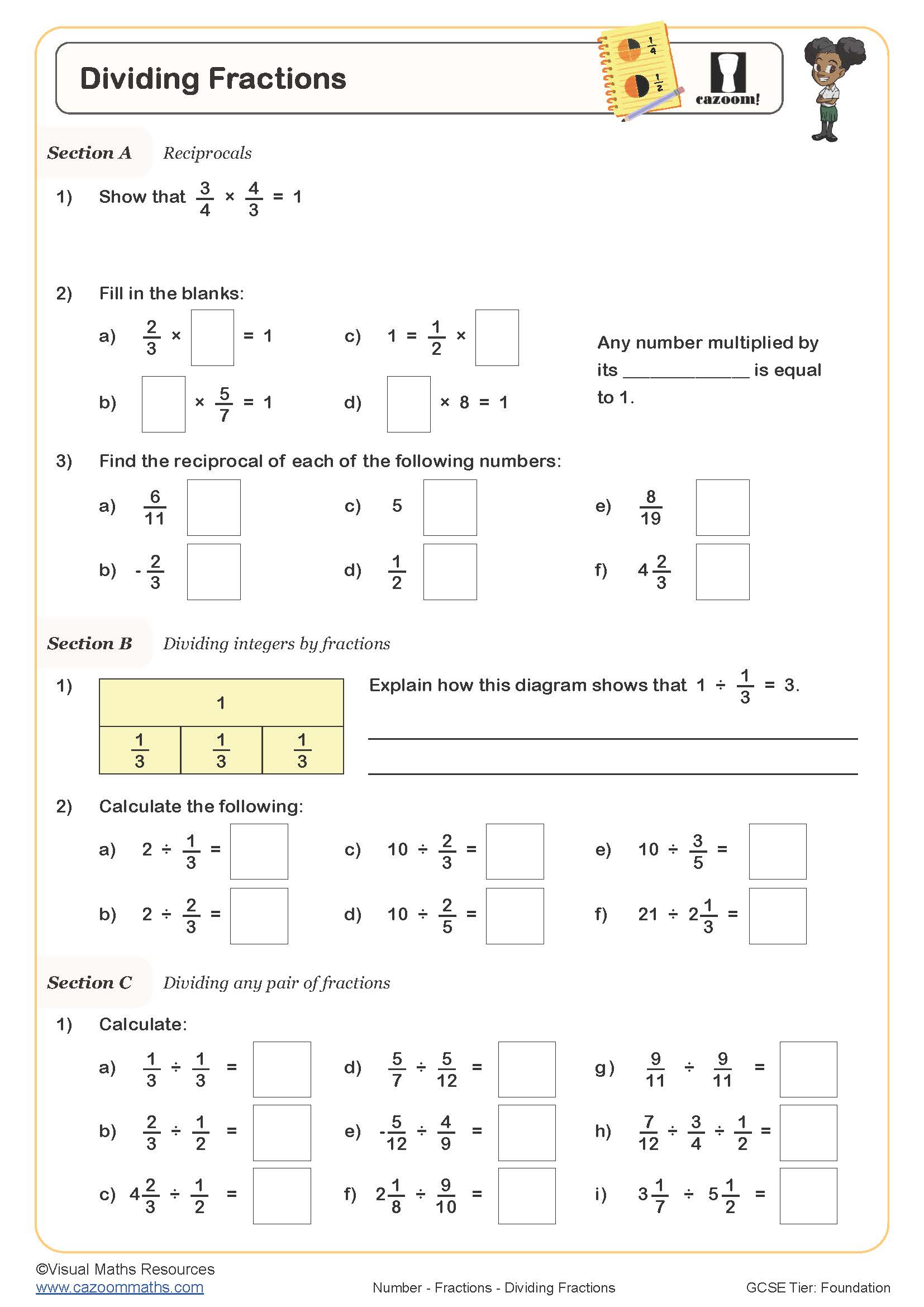
Dividing Fractions
Year groups: 8, 9
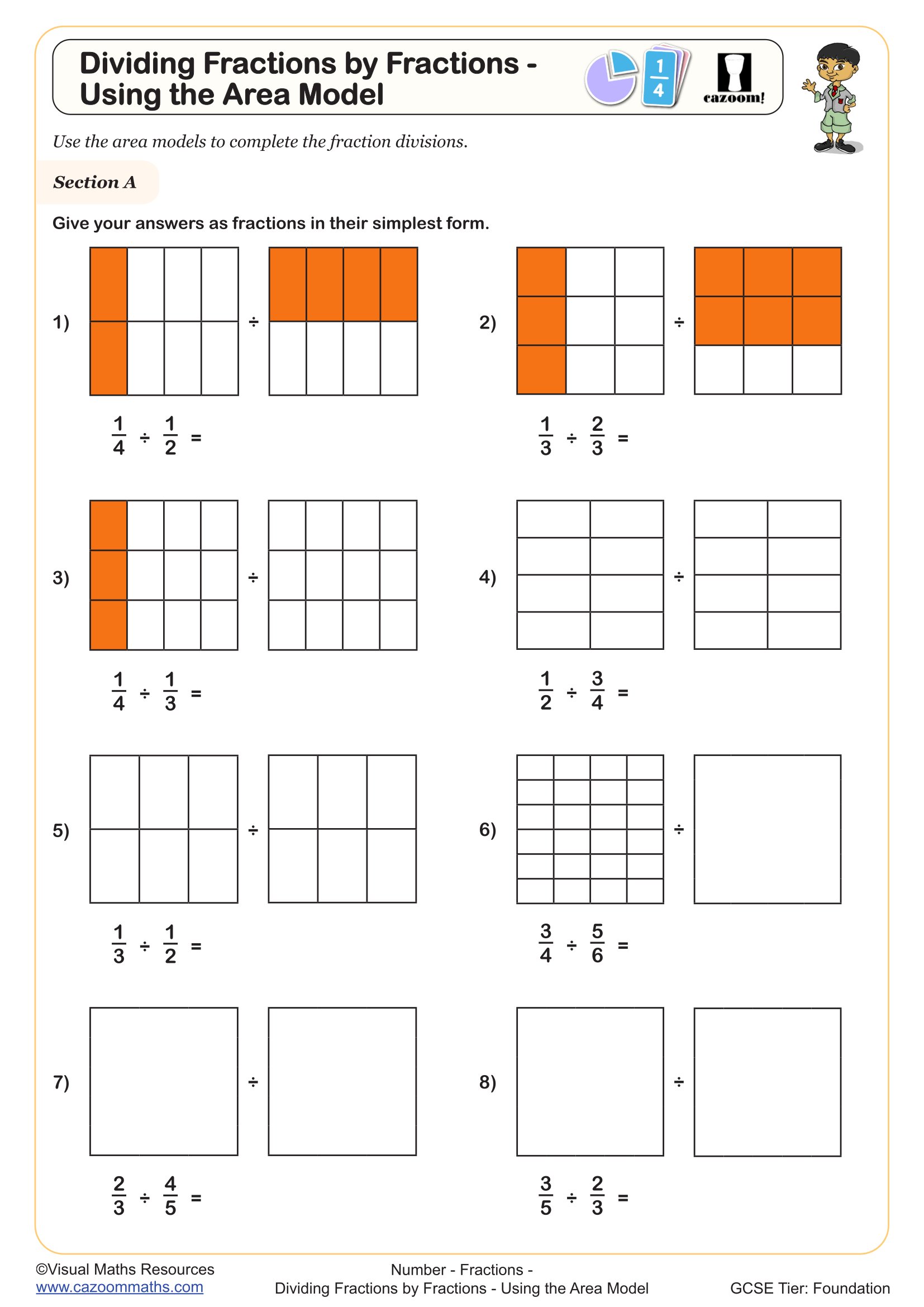
Dividing Fractions by Fractions - Using the Area Model
Year groups: 8, 9
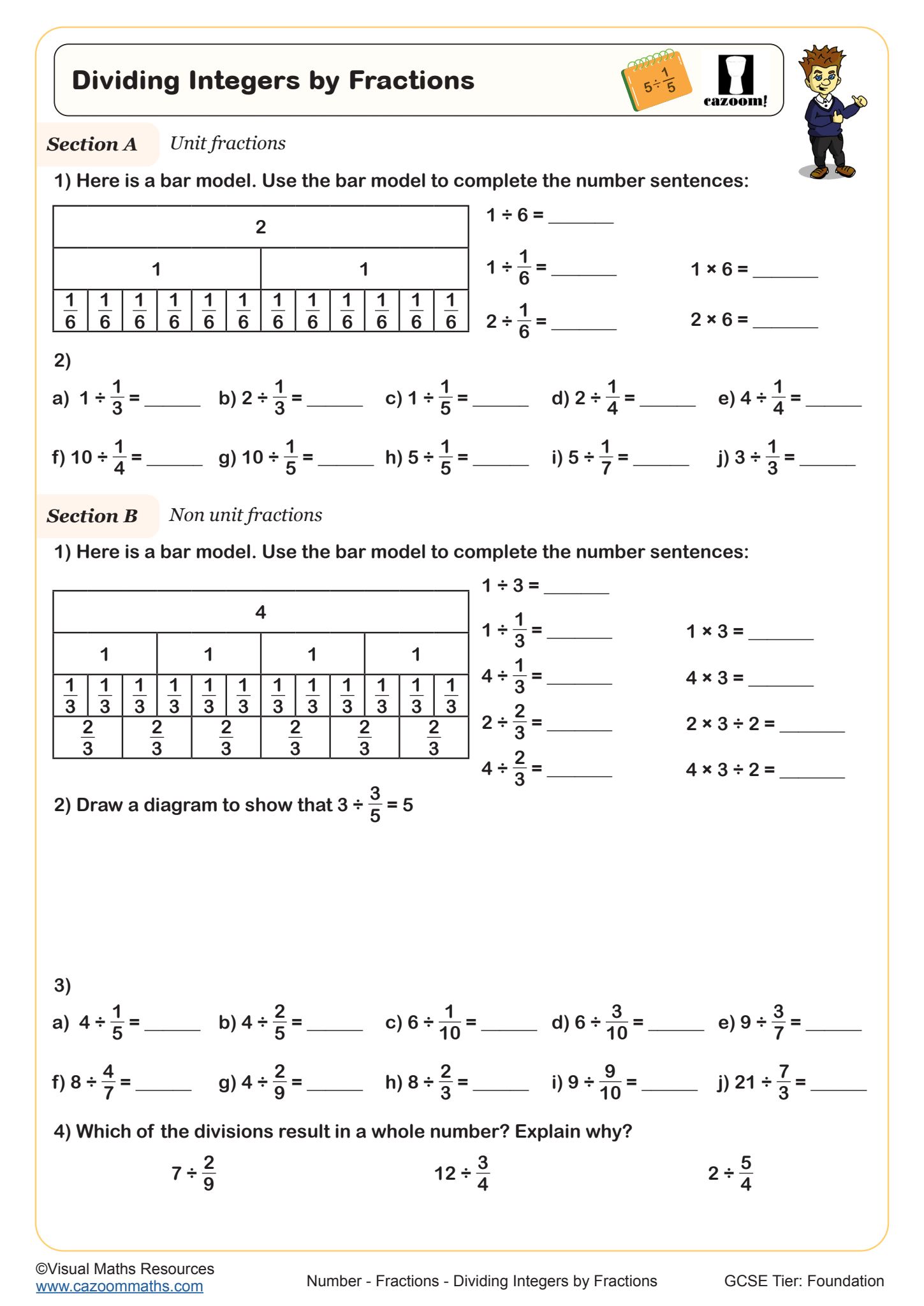
Dividing Integers by Fractions
Year groups: 8, 9
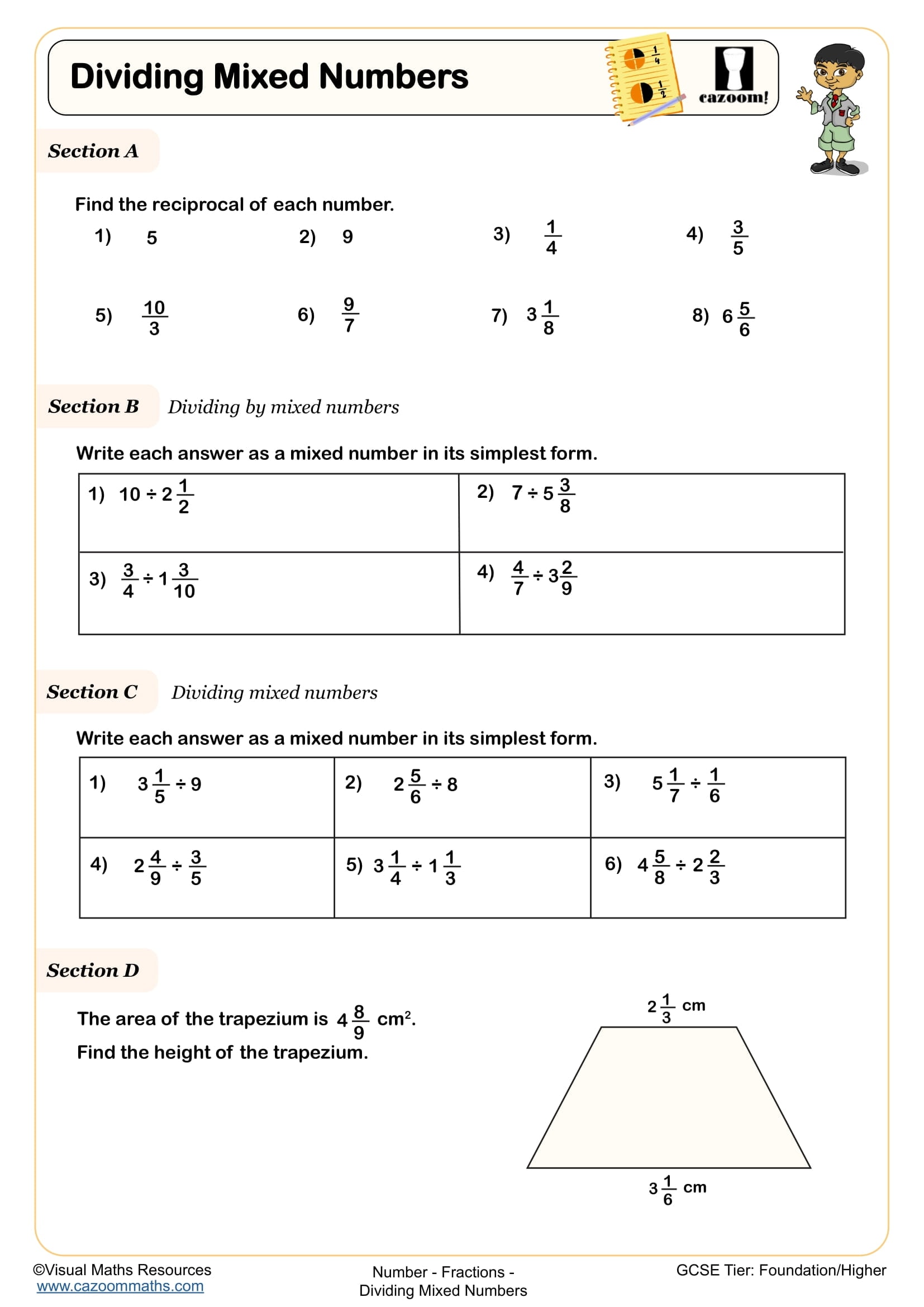
Dividing Mixed Numbers
Year groups: 8, 9, 10
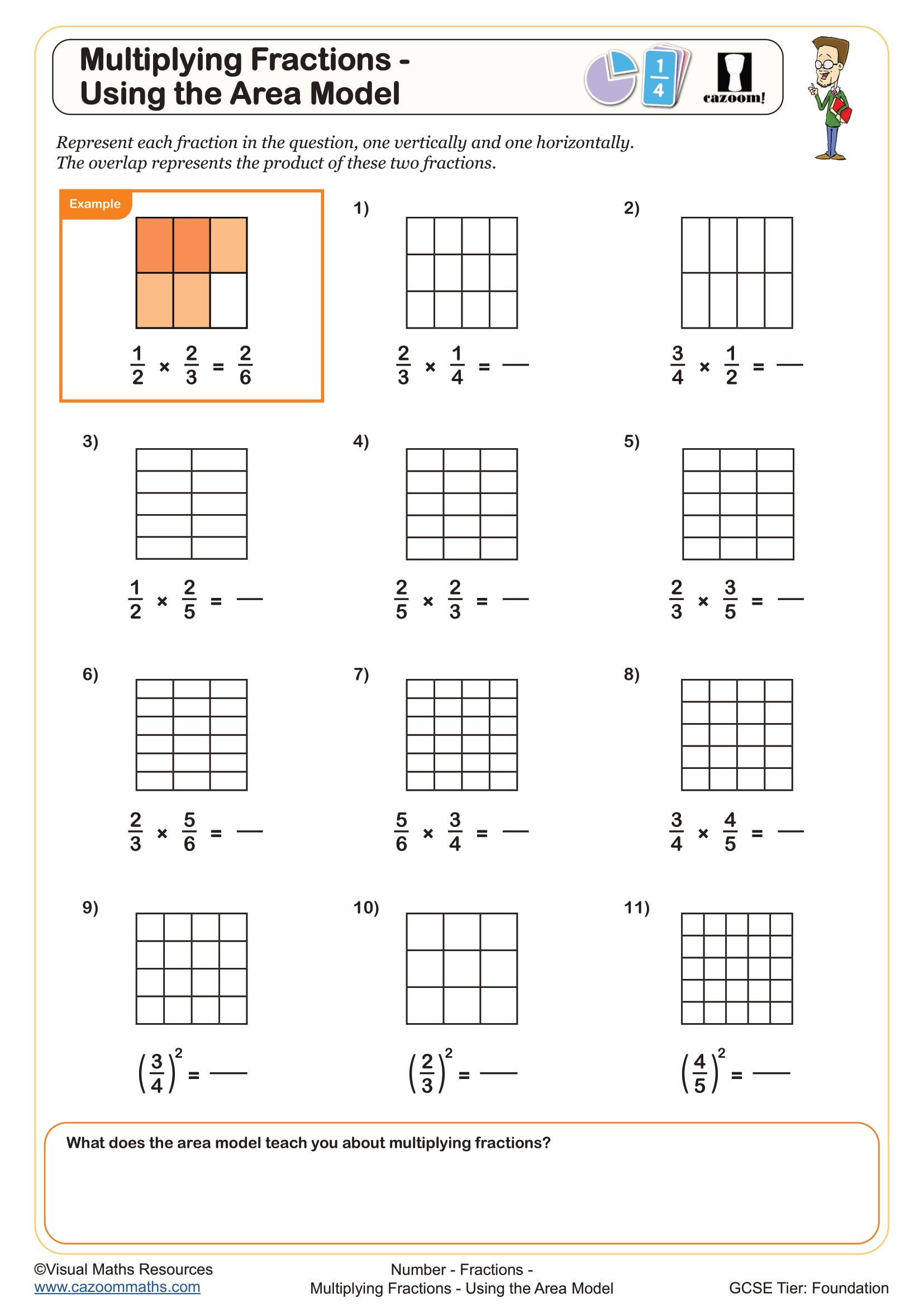
Multiply Mixed Numbers
Year groups: 8, 9, 10
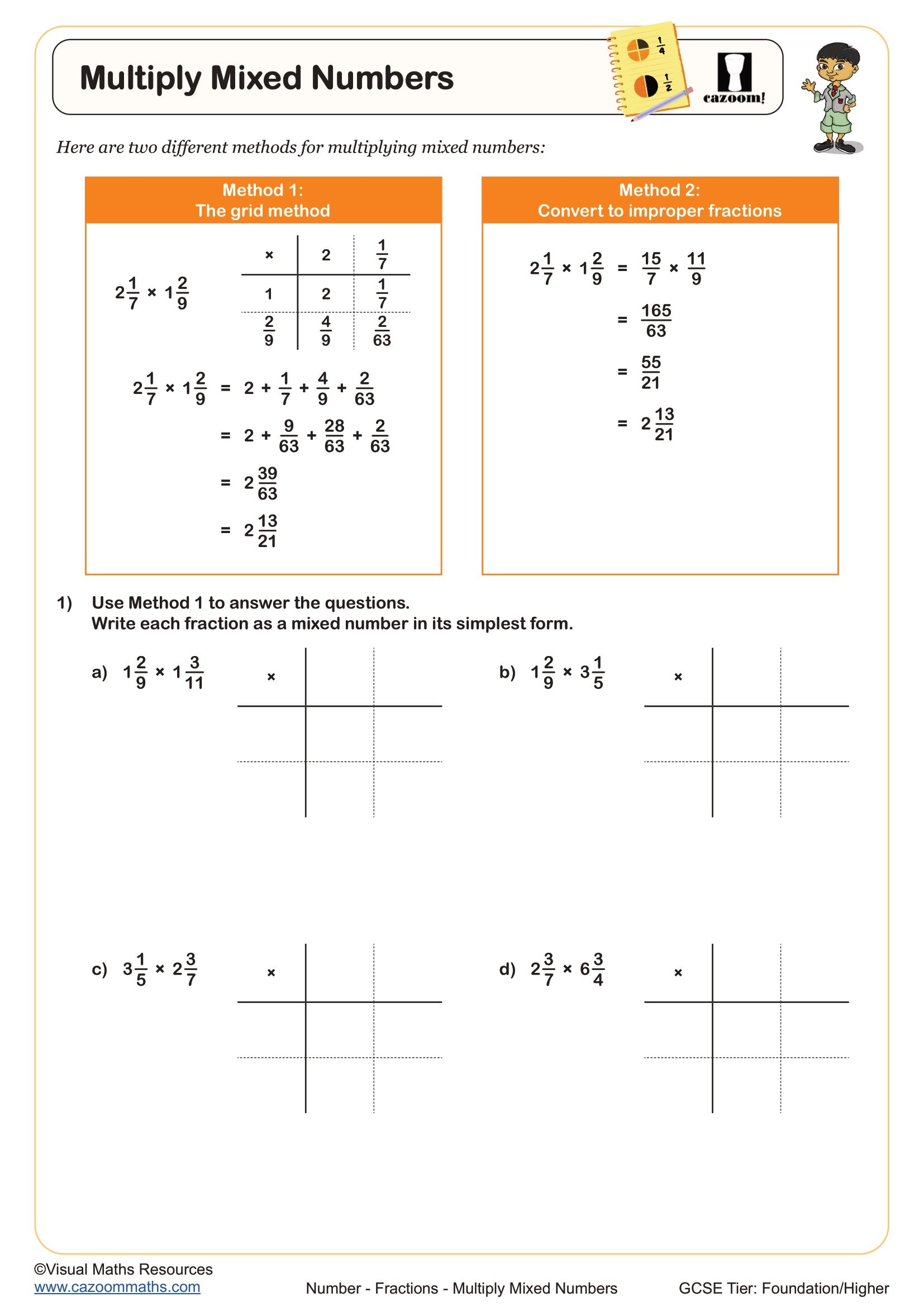
Multiplying and Dividing Fractions
Year groups: 8, 9
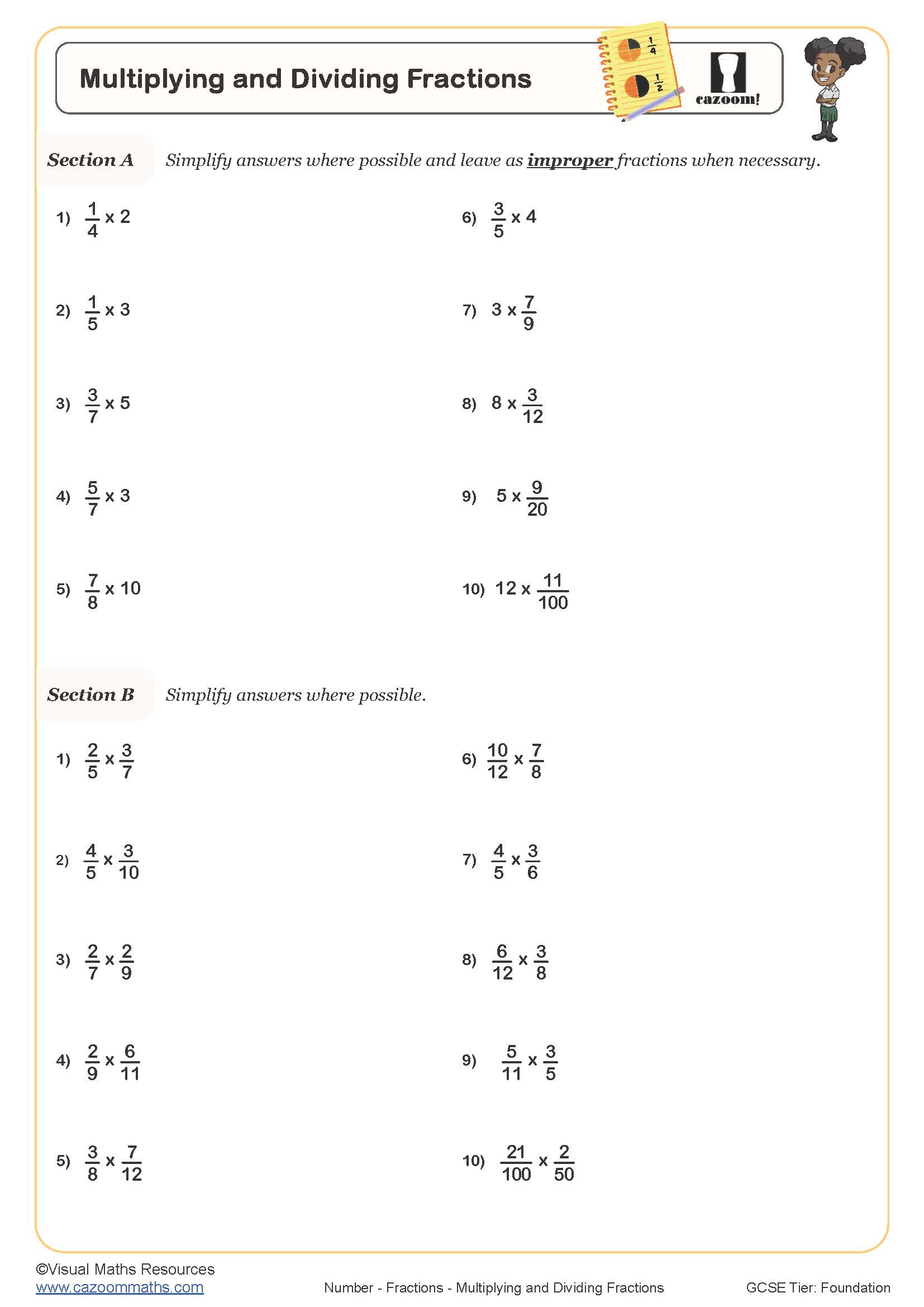
Multiplying Fractions
Year groups: 8, 9
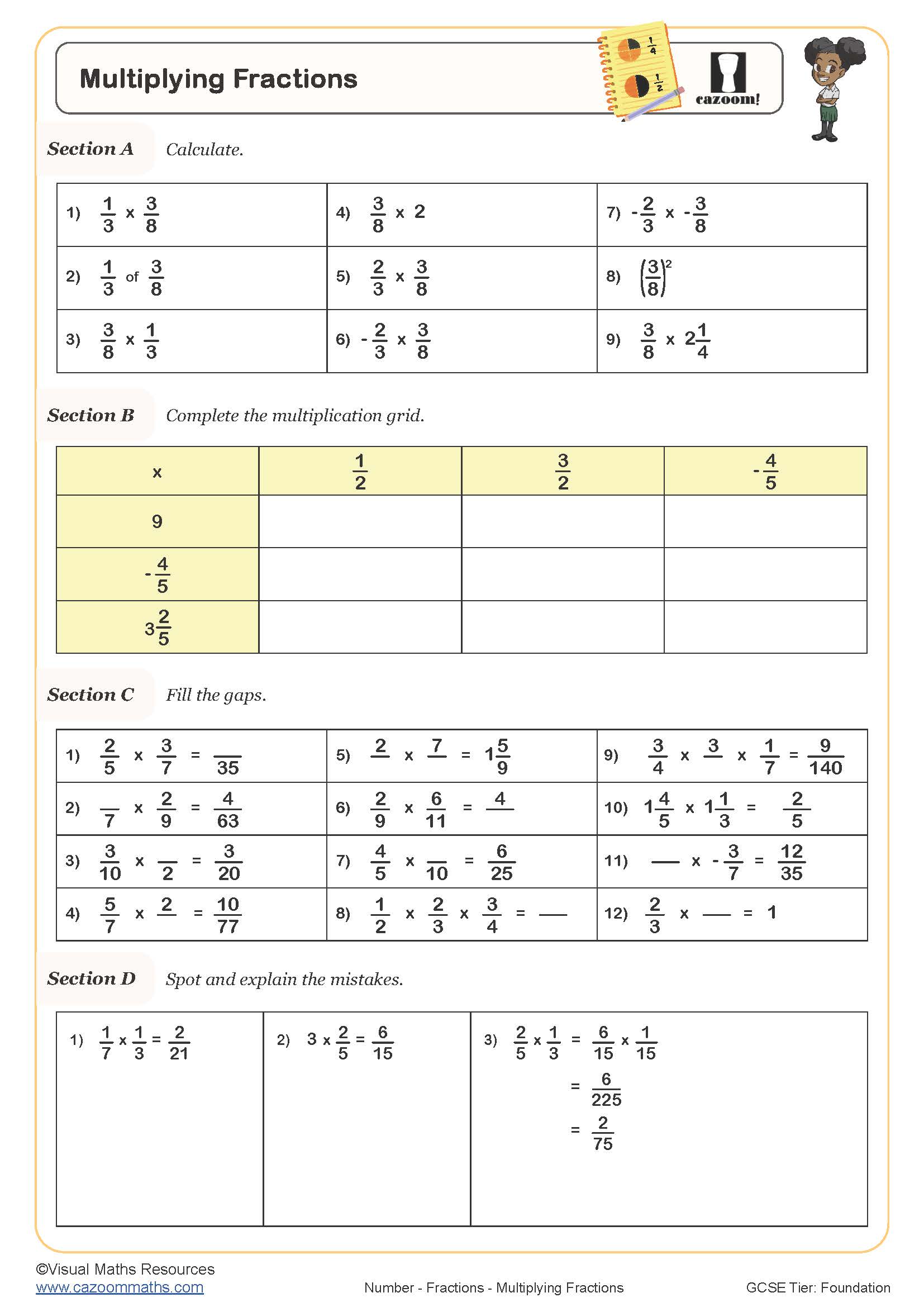
Multiplying Fractions - Using the Area Model
Year groups: 8, 9
Multiplying Unit Fractions - Using the Area Model
Year groups: 8, 9
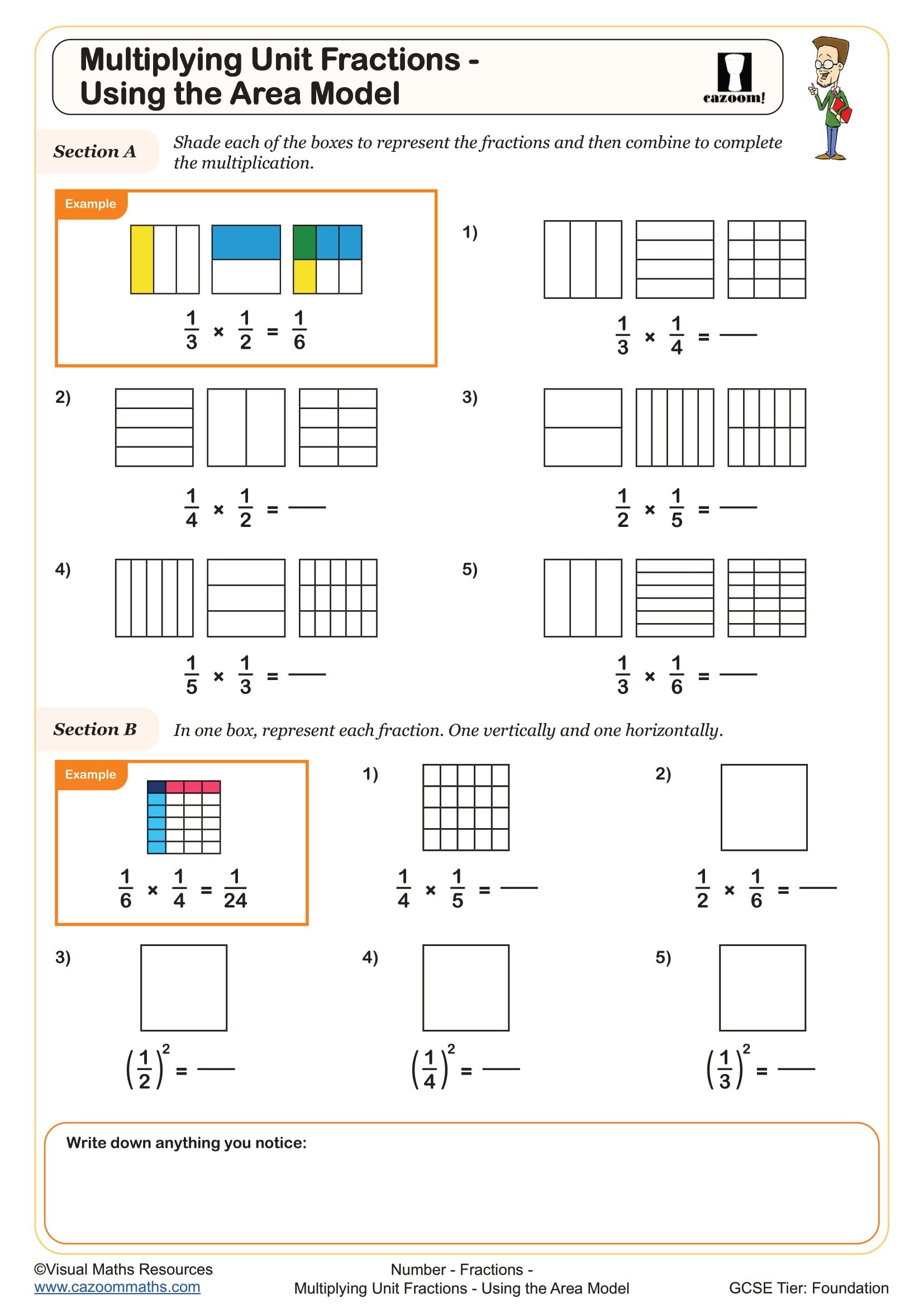
Operating Fractions (A)
Year groups: 8, 9
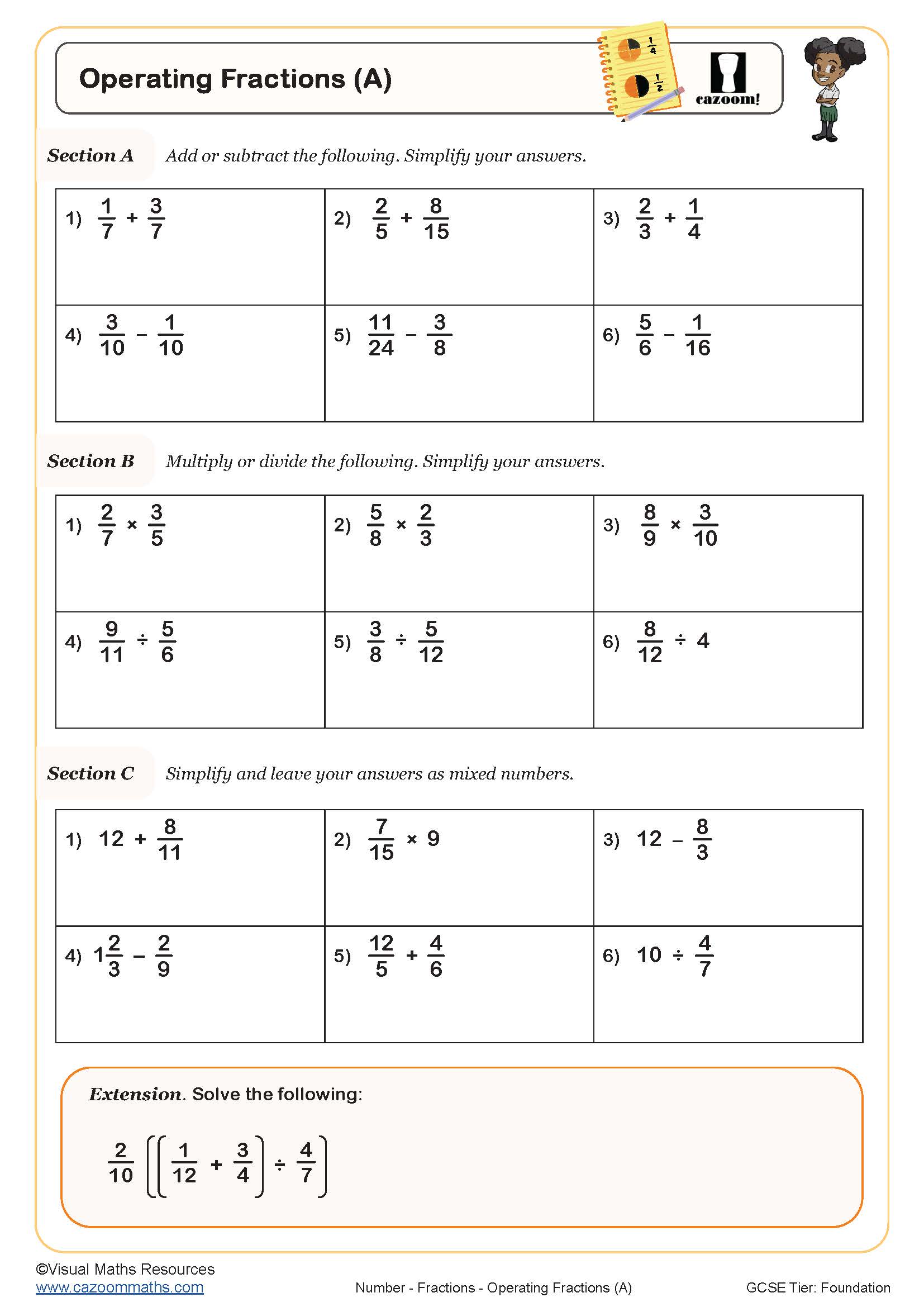
Operating with Fractions (C)
Year groups: 8, 9
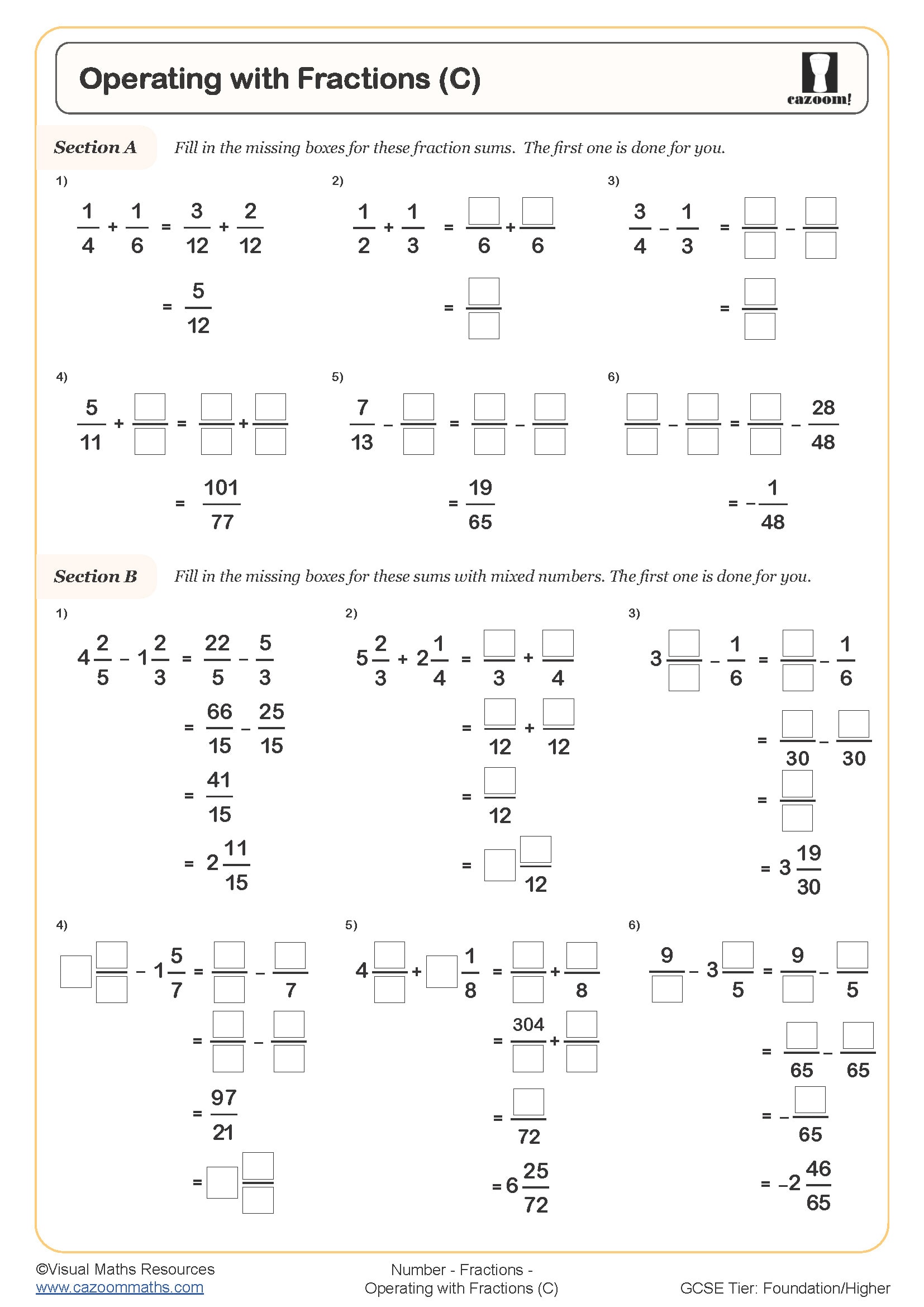
Fraction Problem Solving (A)
Year groups: 9, 10
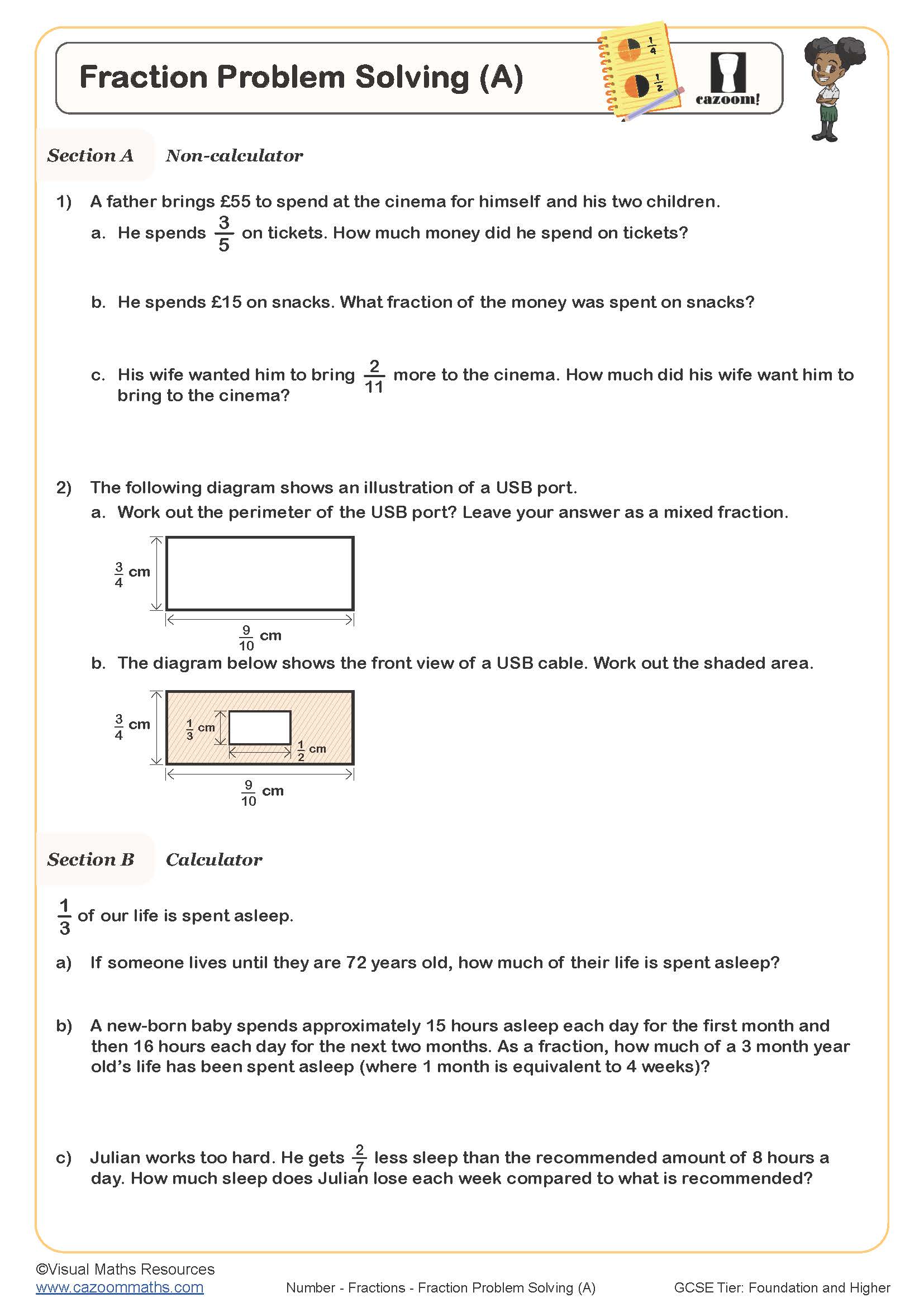
Fraction Problem Solving (B)
Year groups: 9, 10
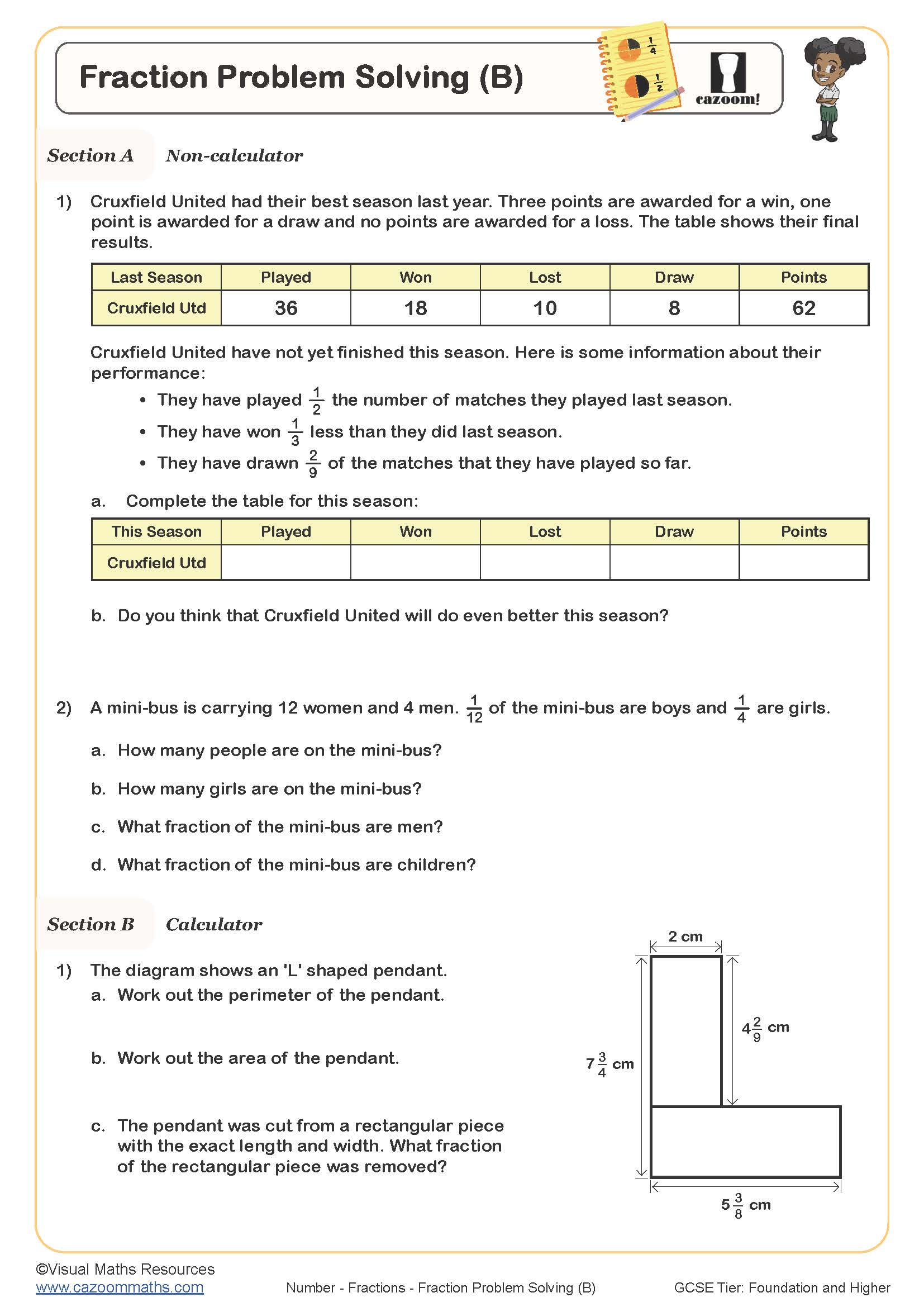
Fraction, Percentage and Ratio Problems
Year groups: 9, 10, 11
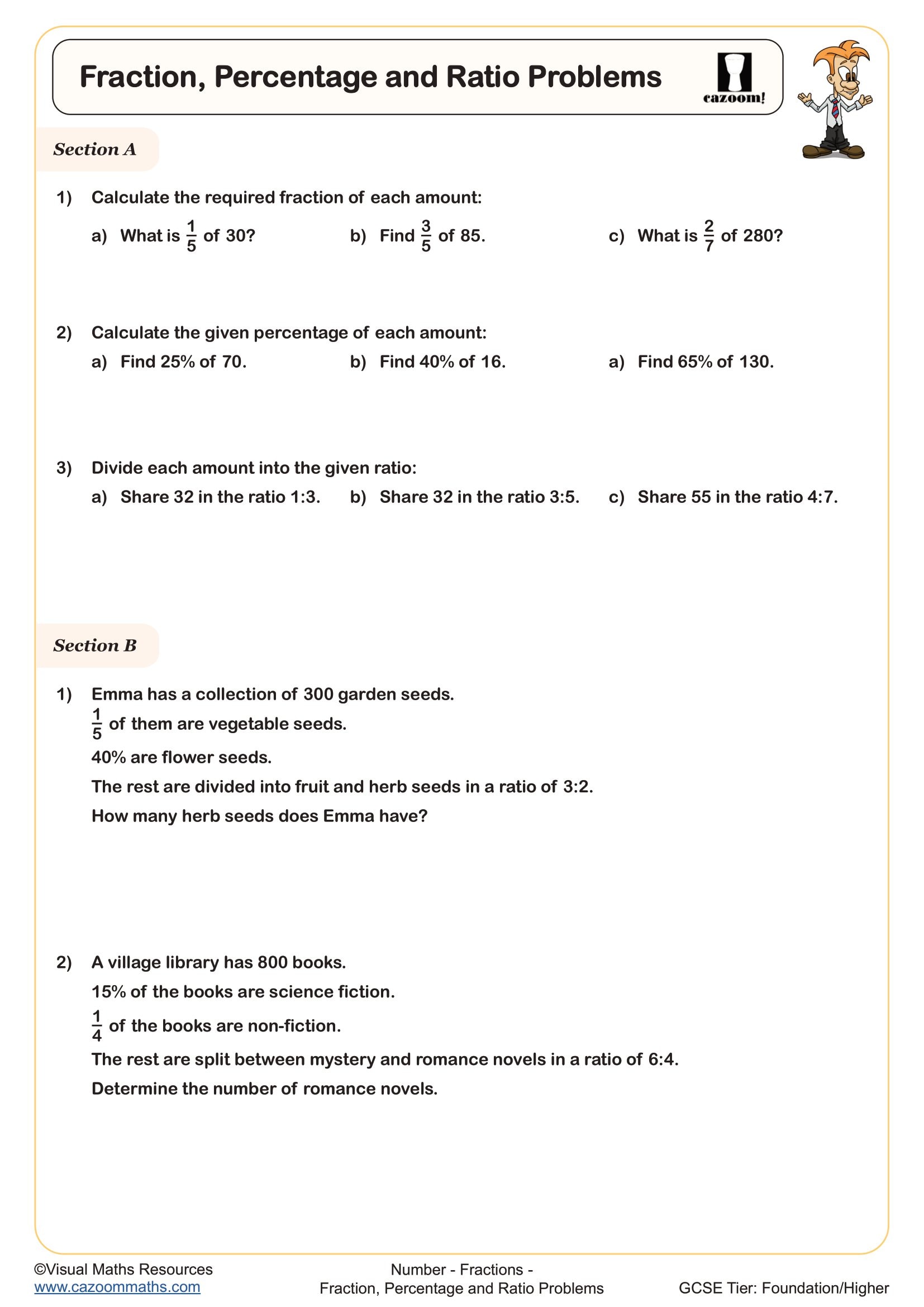
Recurring and Terminating Decimals
Year groups: 9, 10
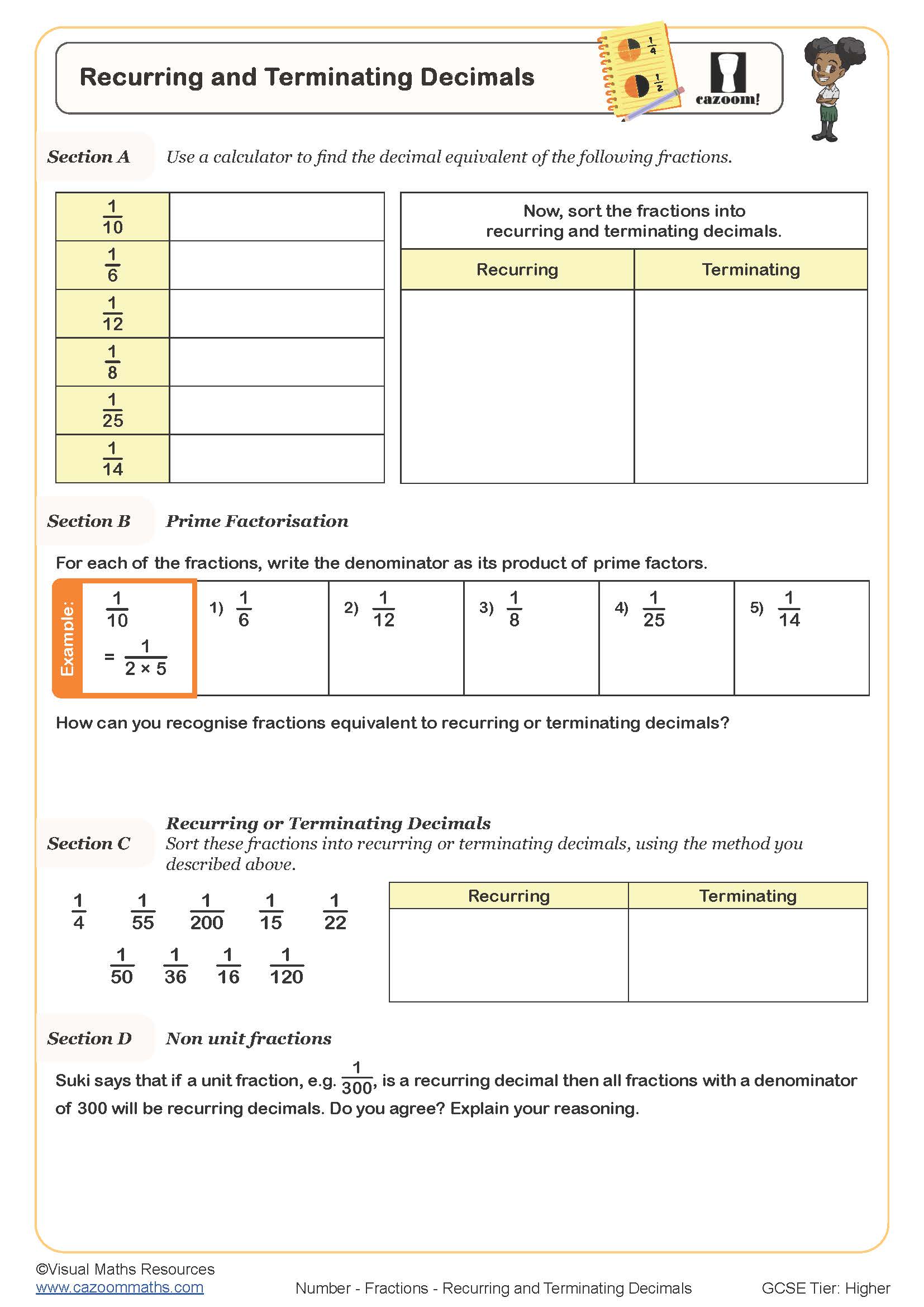
Finding the Reciprocal
Year groups: 10, 11
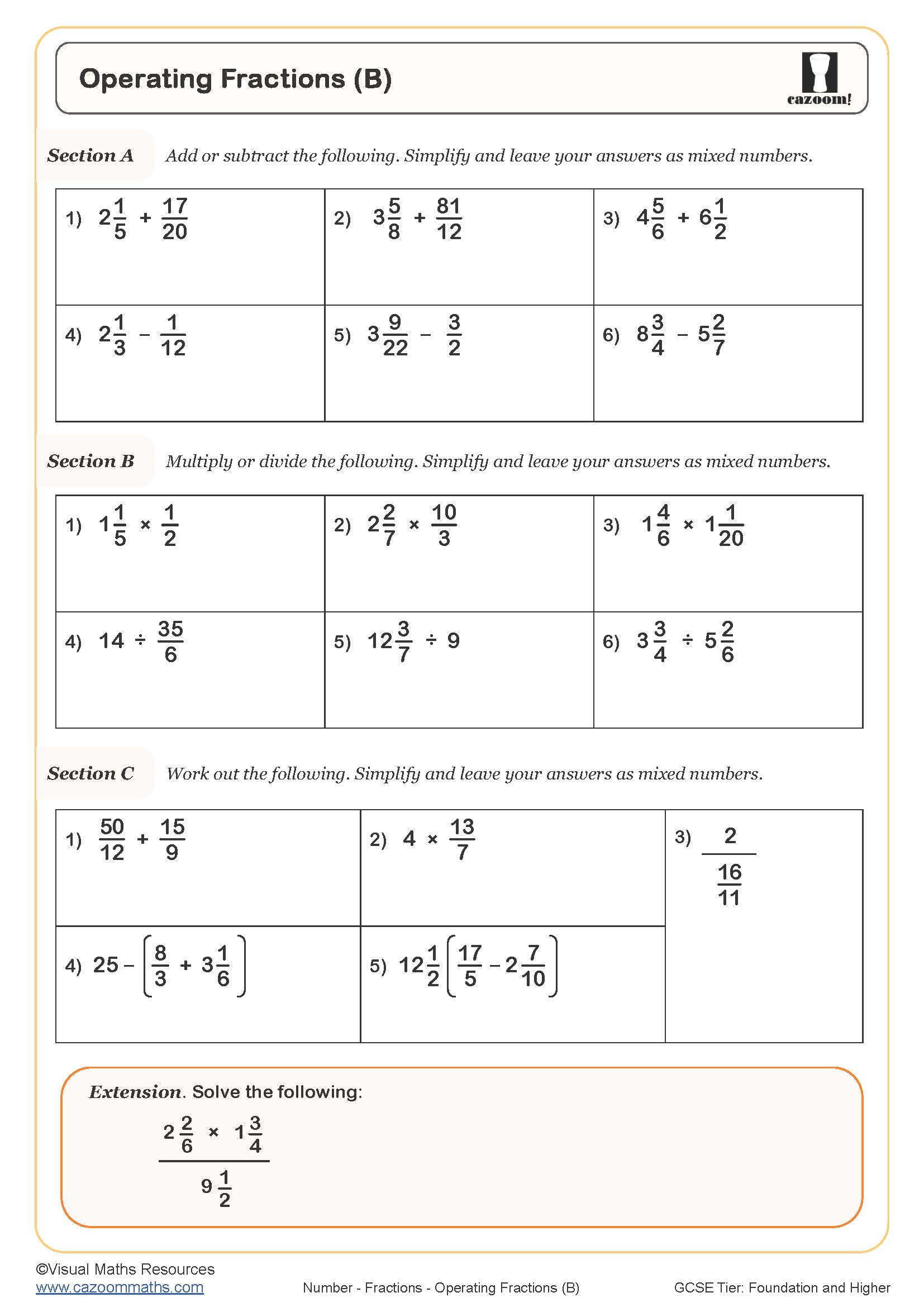
Operating Fractions (B)
Year groups: 10, 11
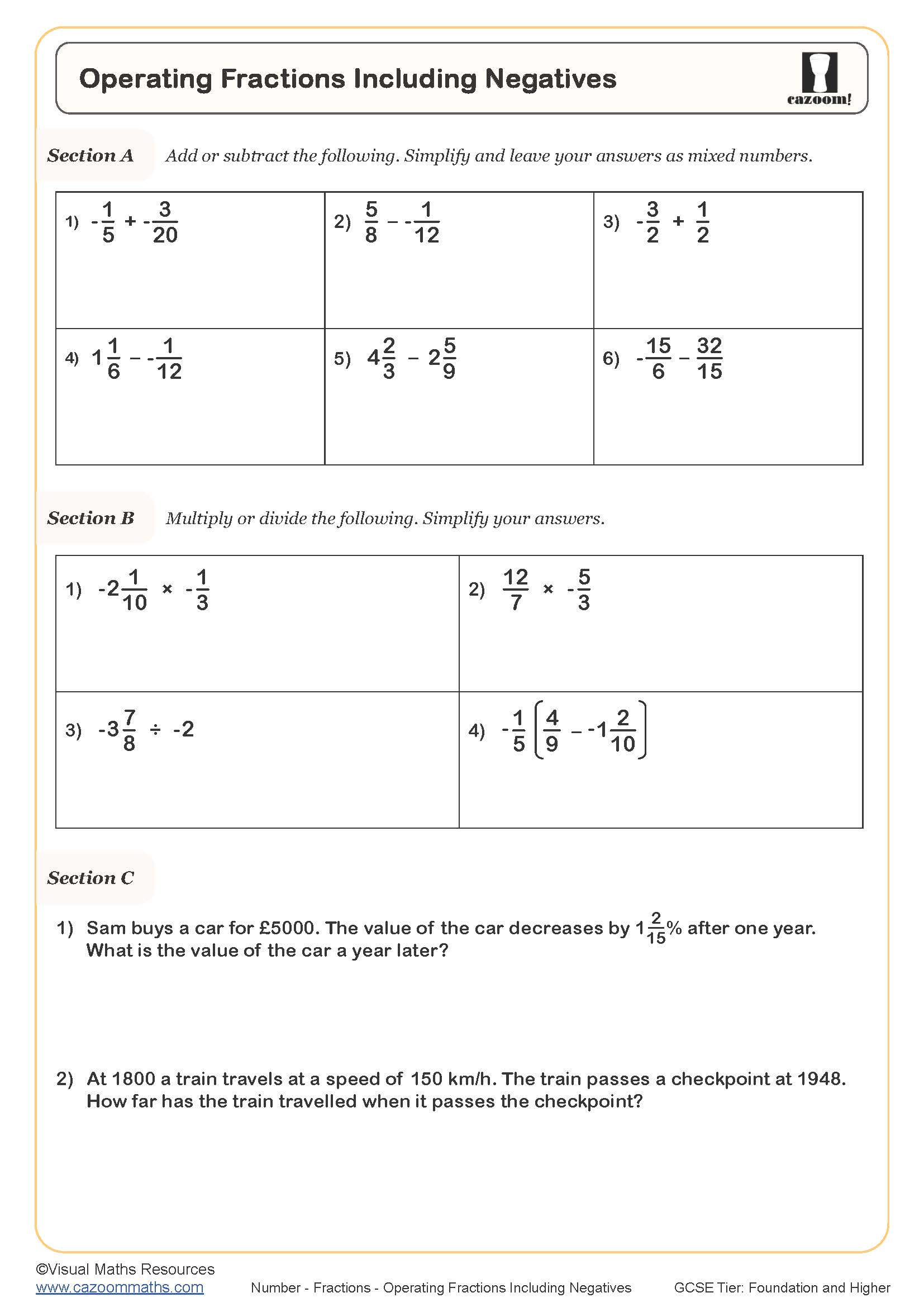
Operating Fractions Including Negatives
Year groups: 10, 11
All worksheets are created by the team of experienced teachers at Cazoom Maths.
What makes effective fractions worksheets with answers for secondary students?
Quality fractions worksheets with answers target specific misconceptions while building procedural fluency across Key Stage 3 and GCSE levels. Teachers need resources that systematically progress from equivalent fractions through to complex mixed operations, with detailed solutions that explain each step clearly.
Many teachers notice students perform well on basic equivalence but struggle when fractions appear within word problems or multi-step calculations. The most effective year 7 fractions worksheets introduce denominators gradually, starting with halves, quarters and eighths before progressing to less familiar fractions. GCSE fractions worksheets with answers should include contexts like probability, ratio problems, and algebraic fractions to mirror exam expectations.
Which fraction topics should different year groups focus on?
Year 7 students typically begin with equivalent fractions, ordering, and simple addition with like denominators, building towards mixed numbers by the end of the year. Teachers often find that KS3 fractions worksheet activities work best when they revisit primary concepts briefly before introducing new material, as many students arrive with gaps in foundational understanding.
GCSE students need exposure to algebraic fractions, complex word problems, and fraction operations within other mathematical contexts. Teachers report that students who struggle with basic fraction calculations in Year 7 often continue to lose marks in GCSE statistics, probability, and even trigonometry questions where fractional answers appear naturally.
How should teachers approach fractions of amounts calculations?
Fractions of amounts worksheet problems require students to connect multiplication and division concepts, which many find counterintuitive initially. Teachers observe that students often multiply by the numerator but forget to divide by the denominator, or they use incorrect operations entirely when working with fractions of numbers worksheet questions.
The most effective approach introduces fractions of amounts through visual representations first, then progresses to efficient written methods. Fraction operations worksheet activities should include contexts like finding 3/5 of £120 or calculating 2/7 of 84 students, helping pupils see the practical applications in everyday situations and building confidence with the underlying mathematical processes.
How can teachers use these fraction sheets most effectively in lessons?
Teachers find that fractions sheets work best when used strategically rather than as standalone activities. The most successful approaches involve using fraction calculations worksheet problems for targeted practice after teaching specific methods, with immediate feedback using the provided answer sheets to address misconceptions quickly.
Many teachers report success using these fractions sheets for differentiated homework, starter activities, or intervention sessions. The detailed answers help teaching assistants support struggling students effectively, while more confident pupils can work independently through multiple fraction sheet exercises. Regular low-stakes assessment using these materials helps teachers identify which students need additional support before moving to more complex topics.