Algebra GCSE Revision Worksheets
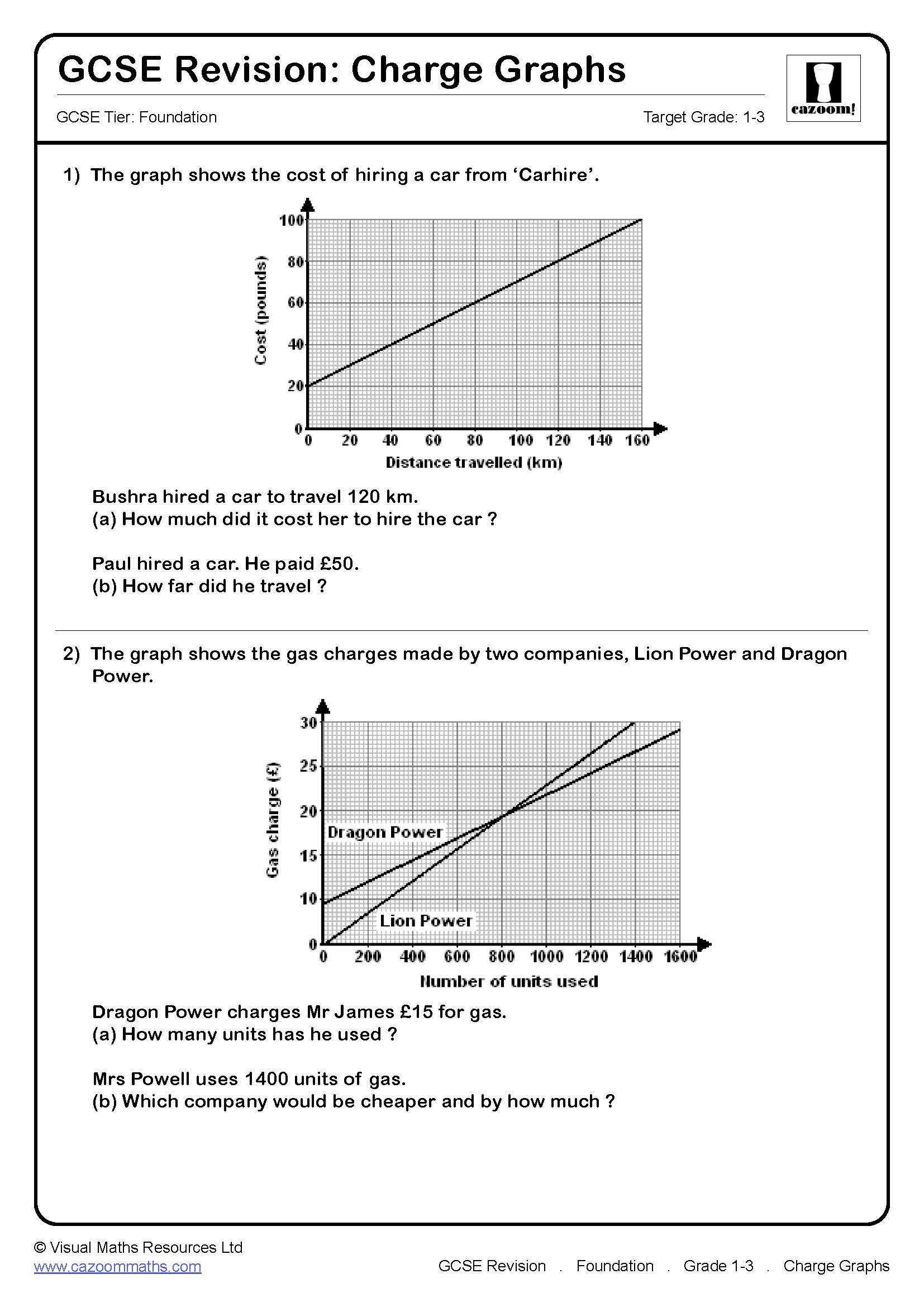
Charge Graphs
Target Grade: 1-3
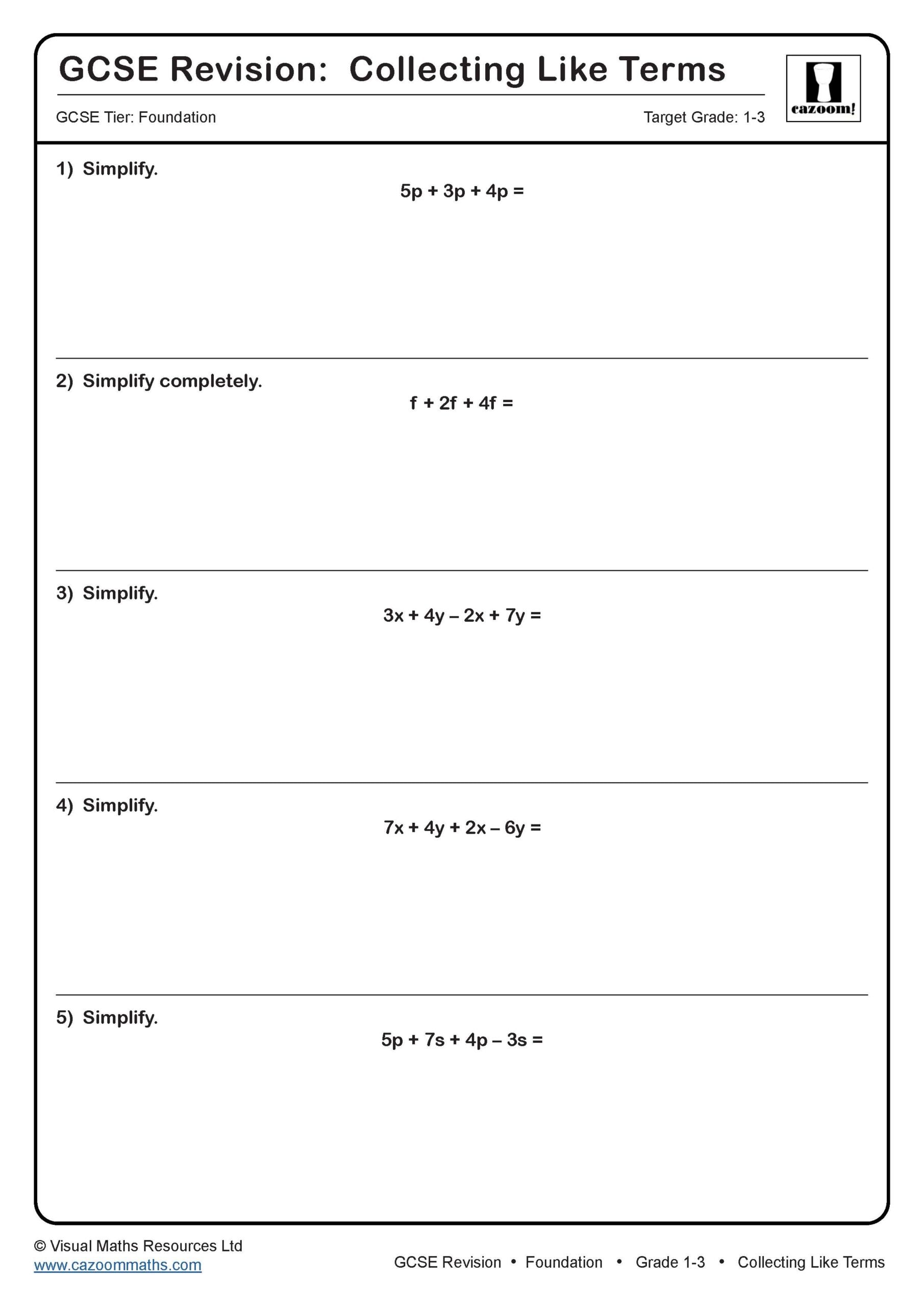
Collecting Like Terms
Target Grade: 1-3
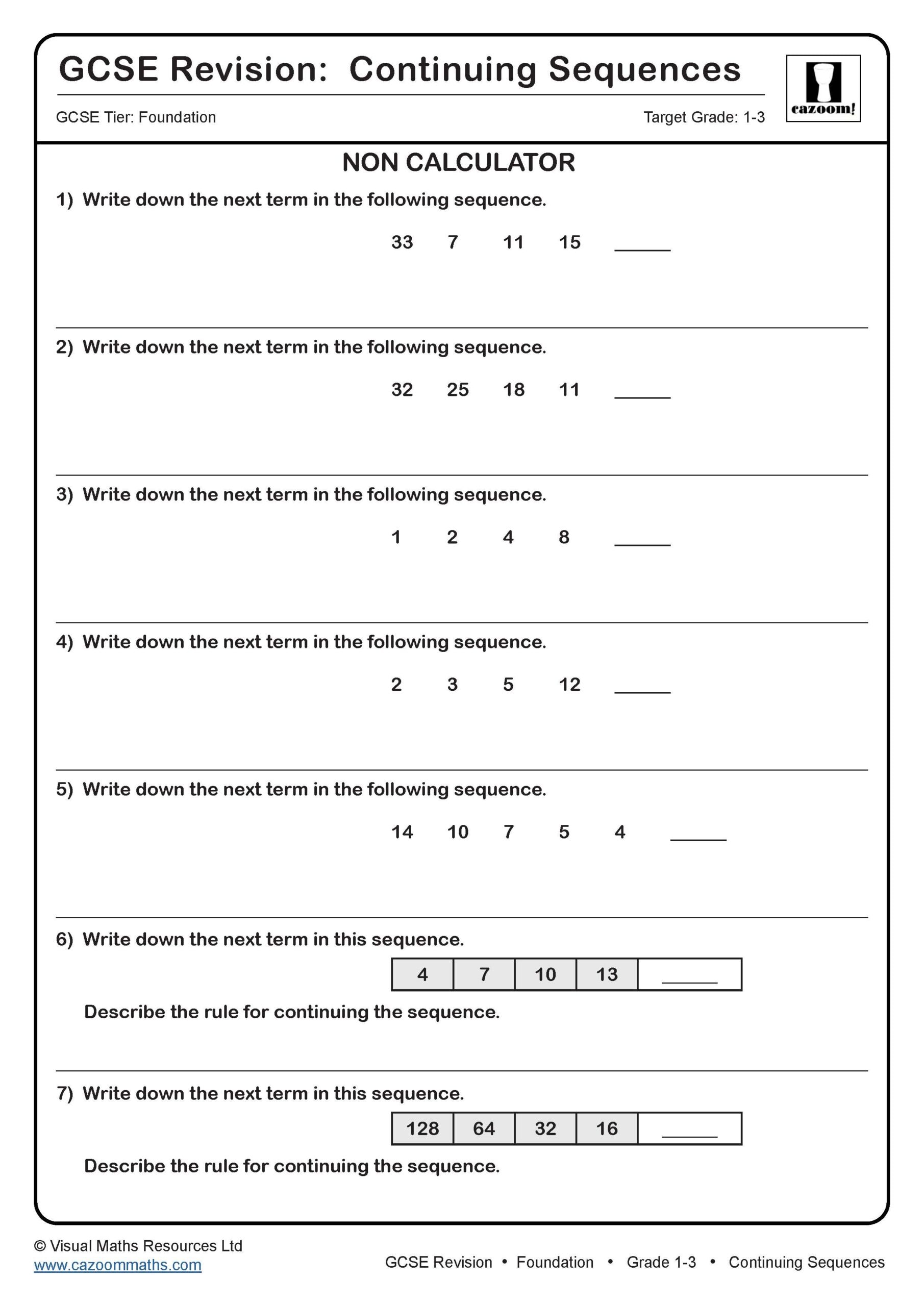
Continuing Sequences
Target Grade: 1-3
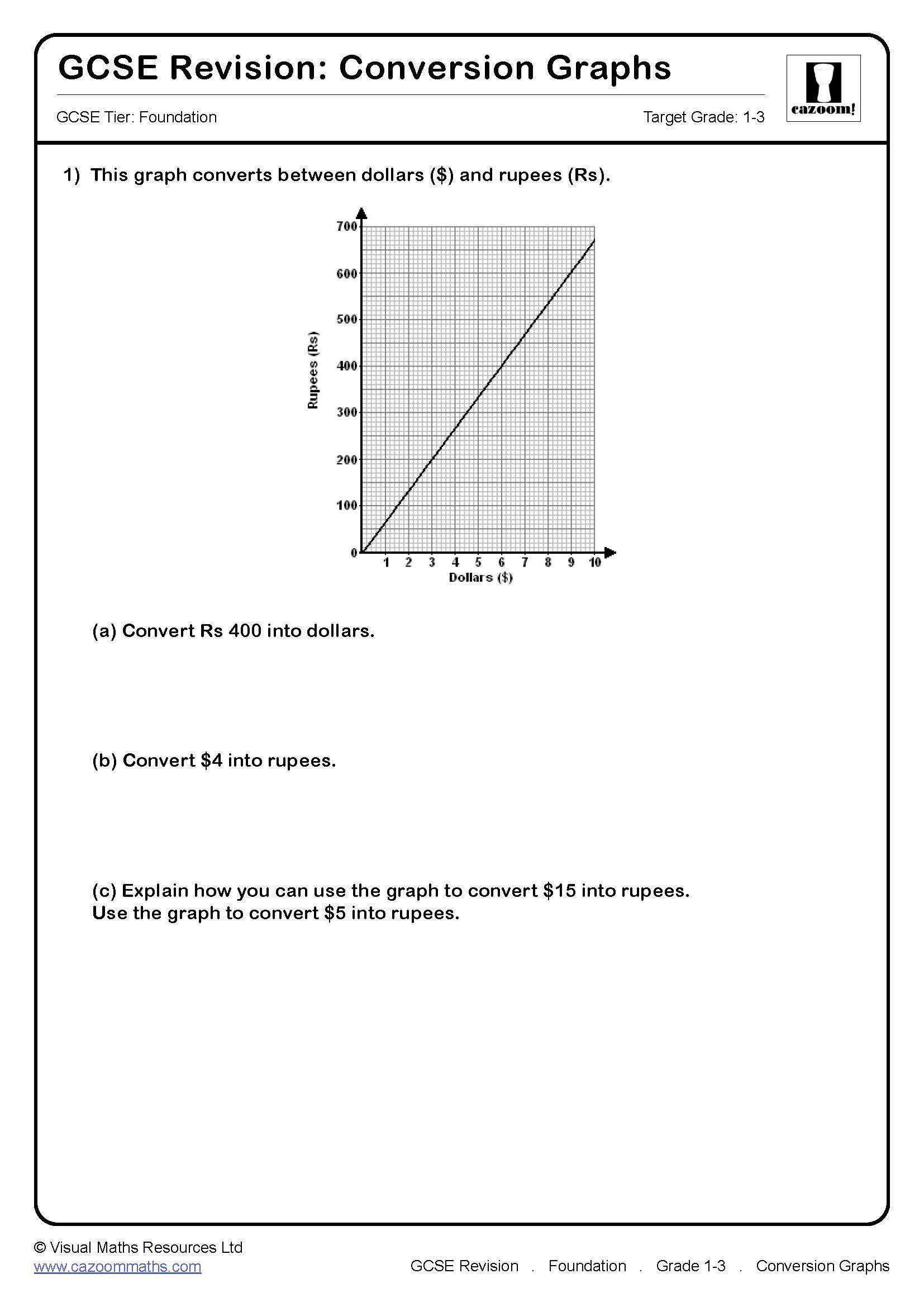
Conversion Graphs
Target Grade: 1-3
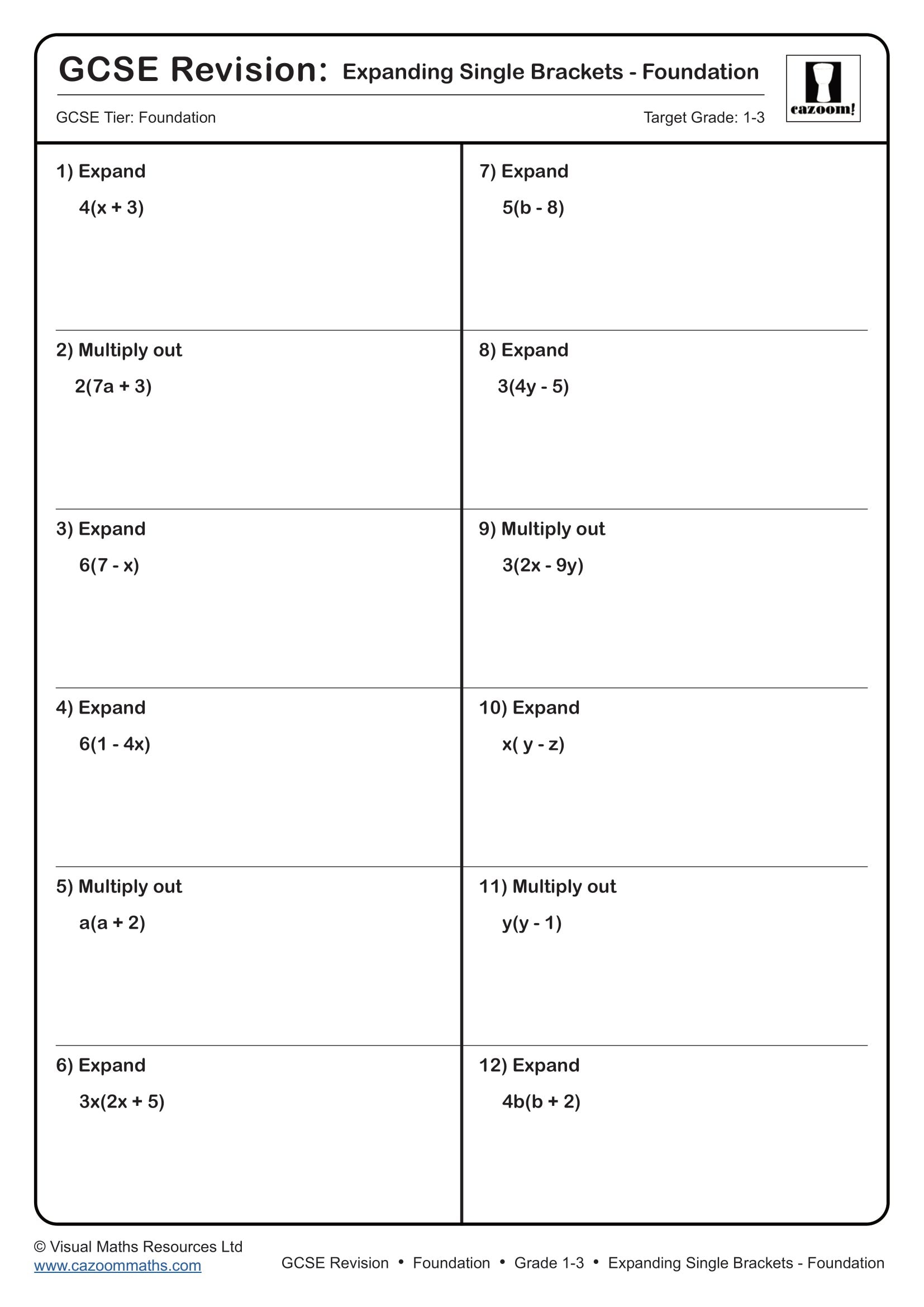
Expanding Single Brackets
Target Grade: 1-3
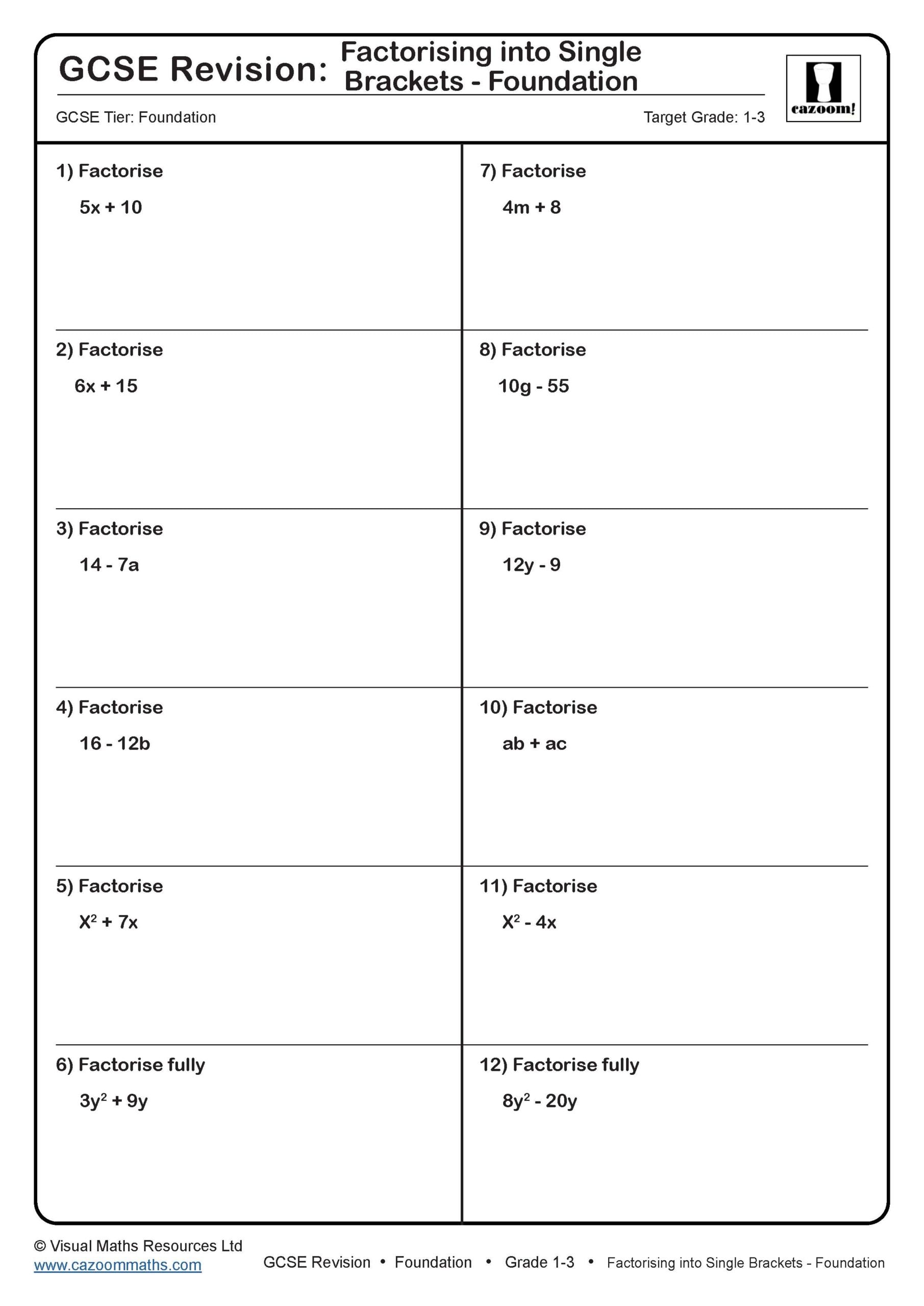
Factorising into Single Brackets
Target Grade: 1-3
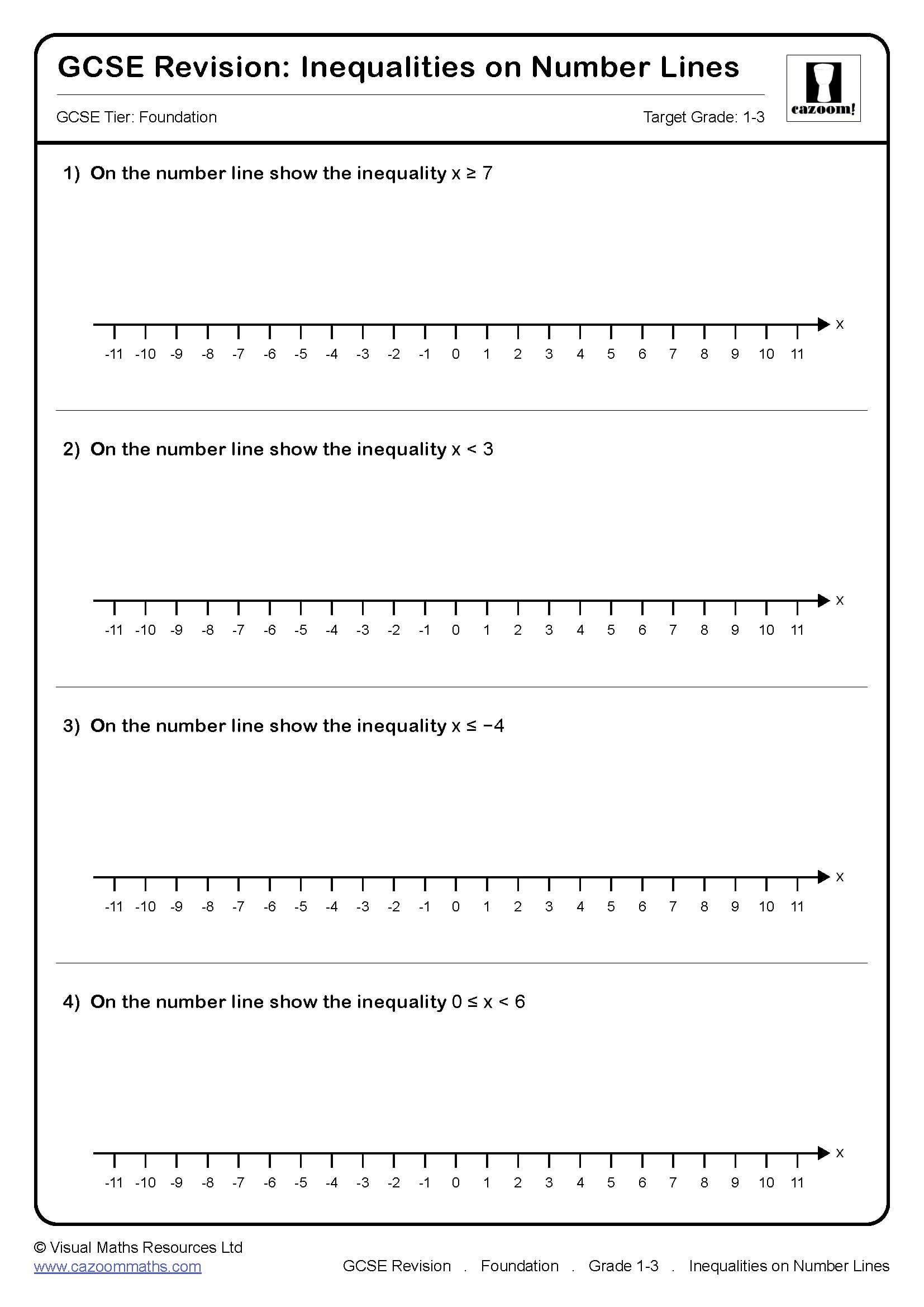
Inequalities on Number Line
Target Grade: 1-3
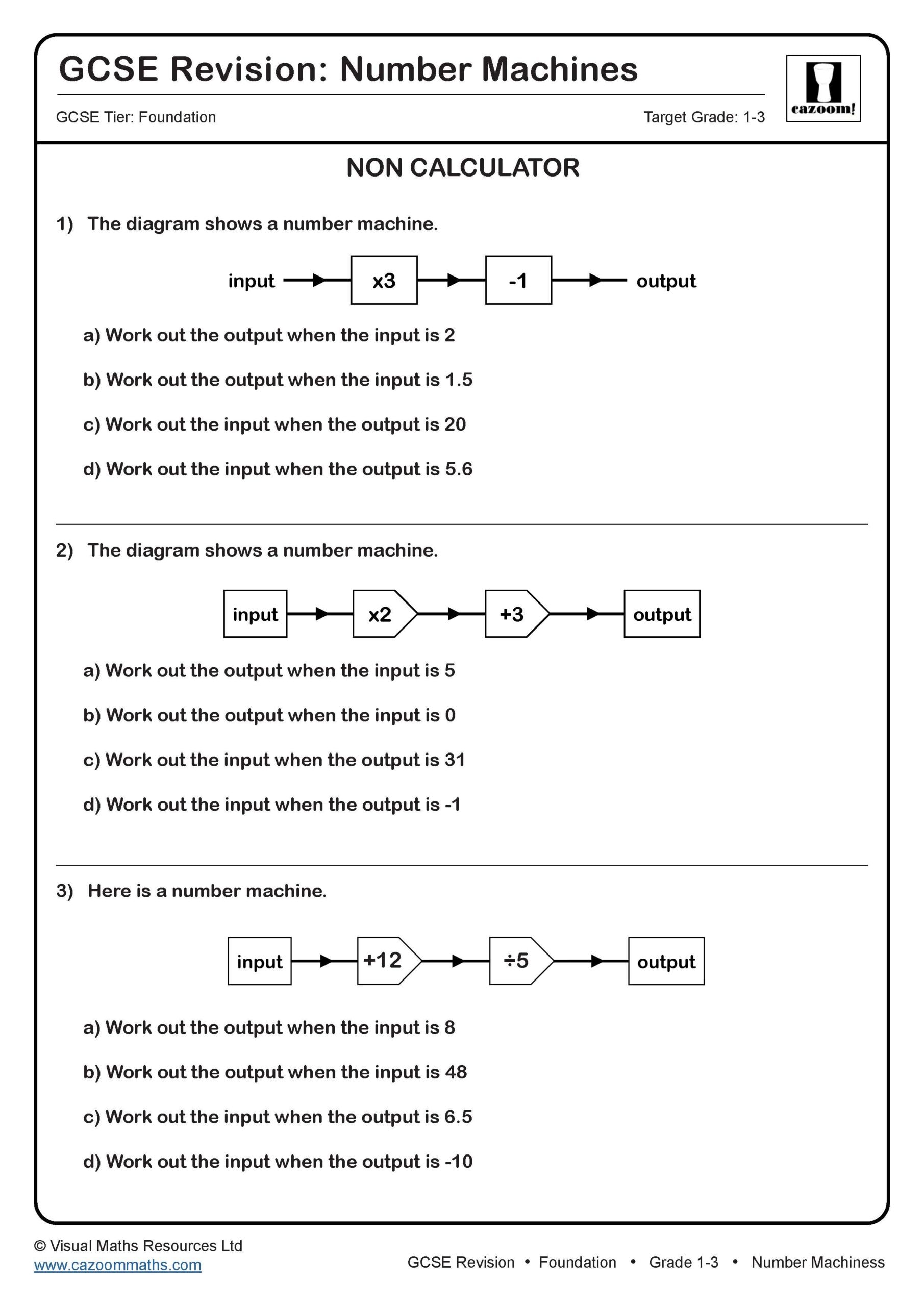
Number Machines
Target Grade: 1-3
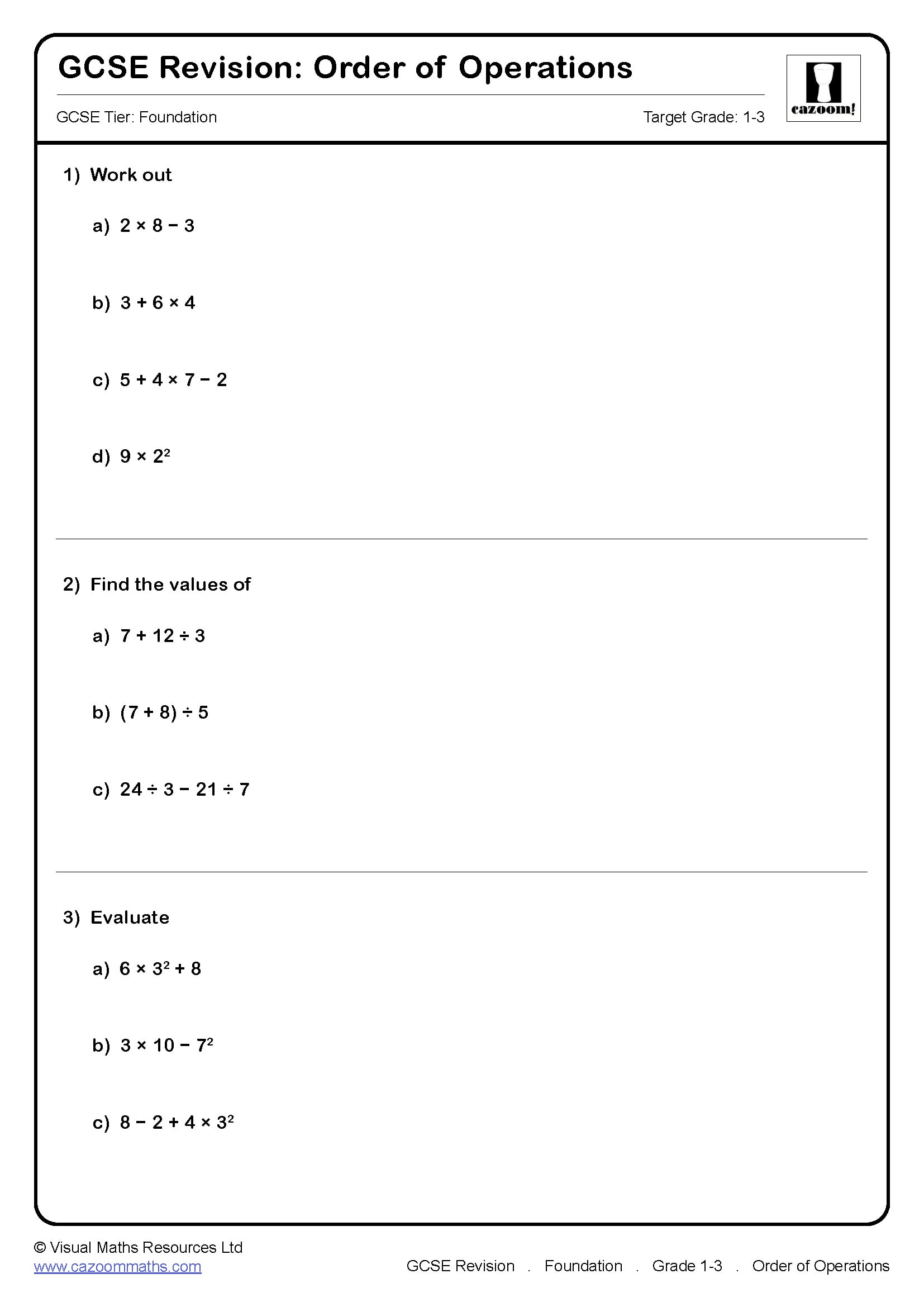
Order of Operations
Target Grade: 1-3
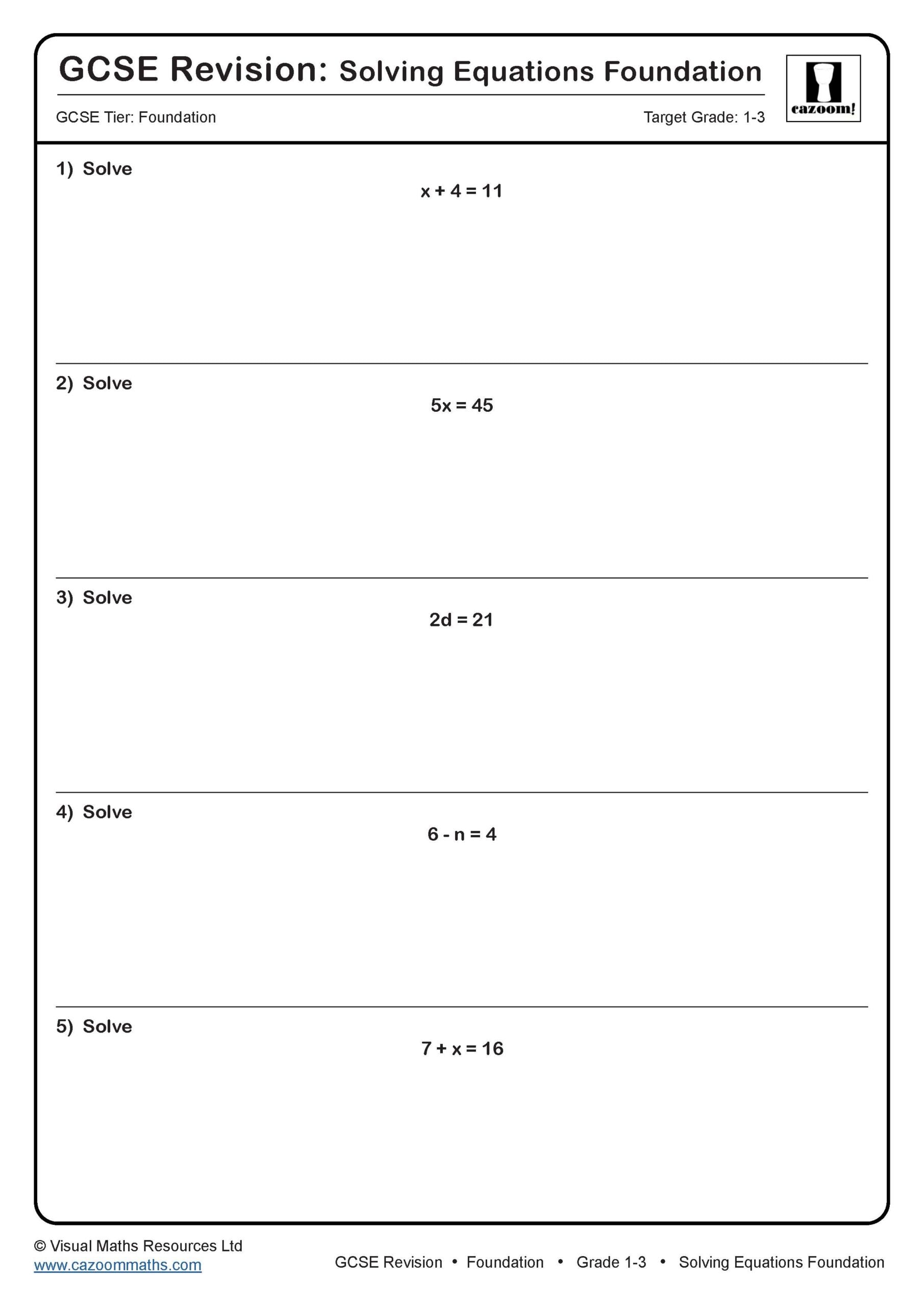
Solving Equations
Target Grade: 1-3
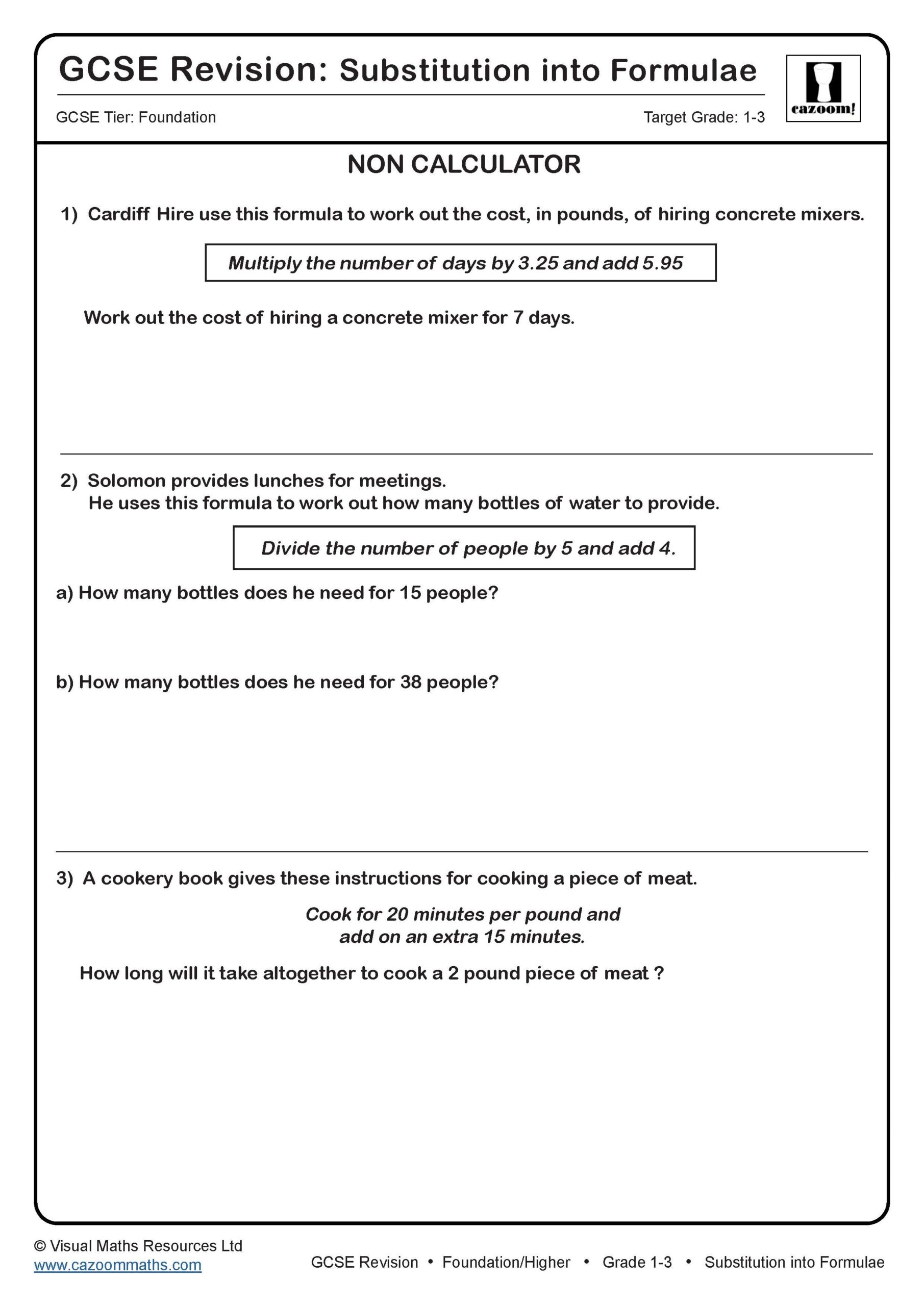
Substitution Foundation
Target Grade: 1-3
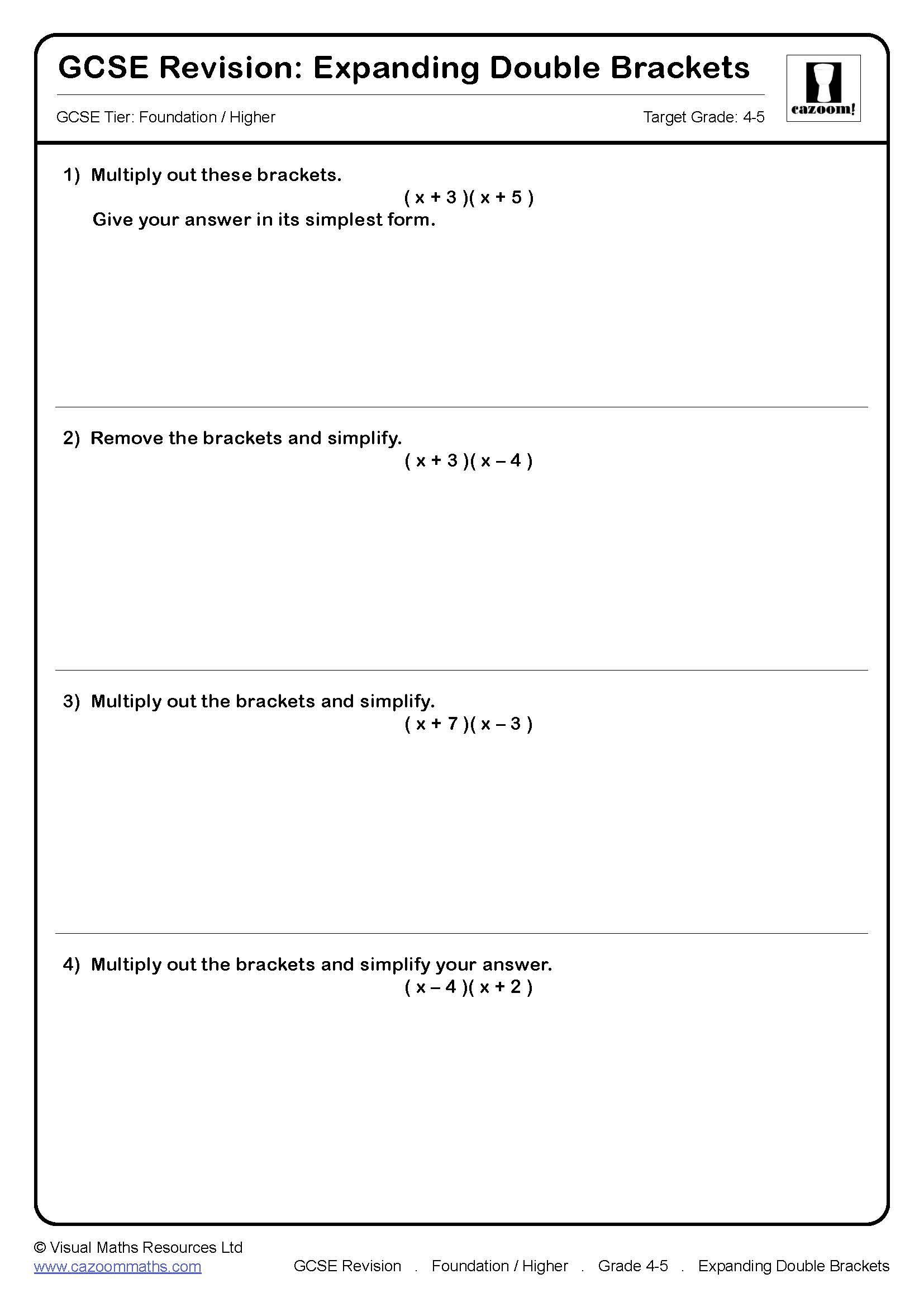
Expanding Double Brackets
Target Grade: 4-5
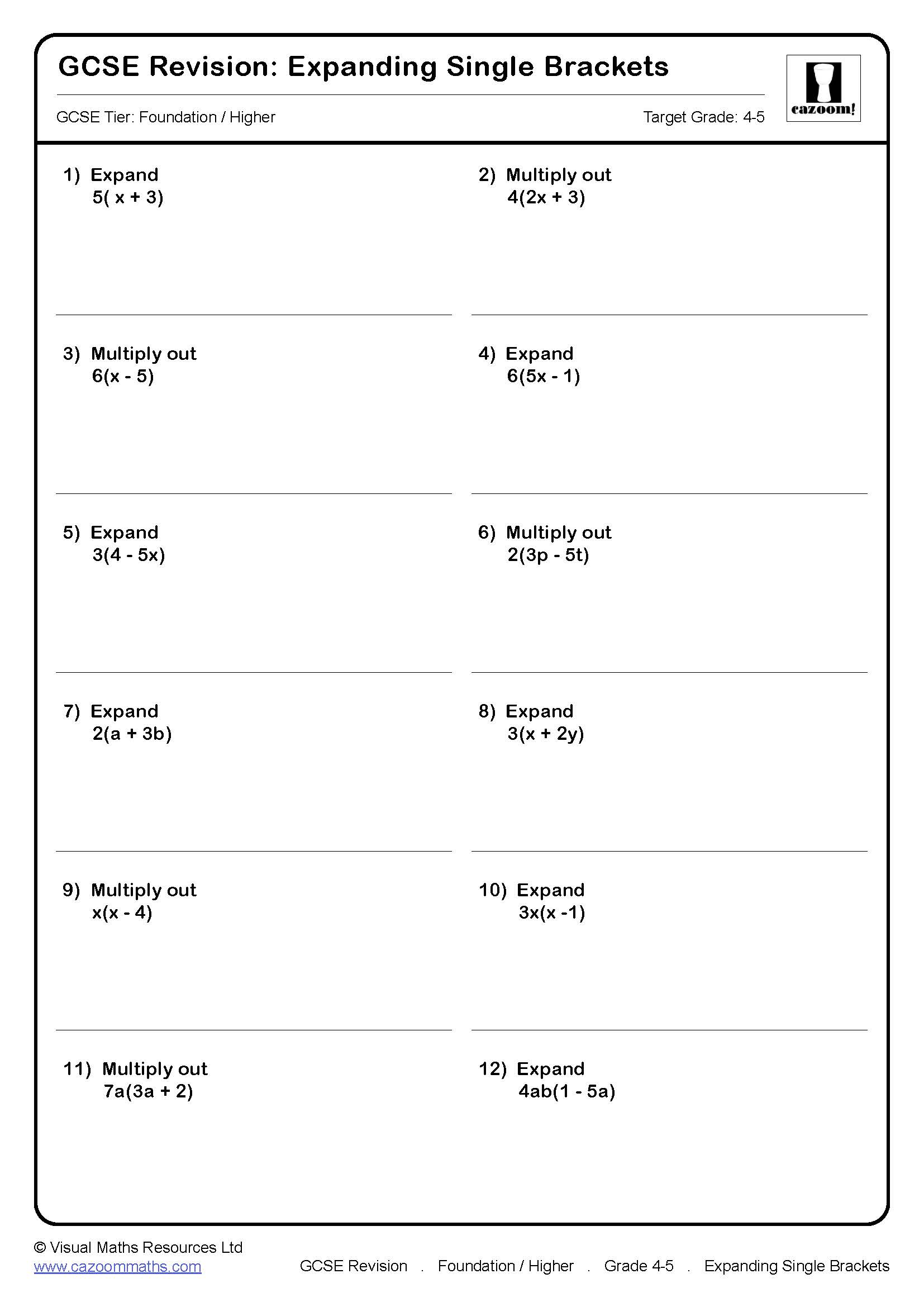
Expanding Single Brackets (B)
Target Grade: 4-5
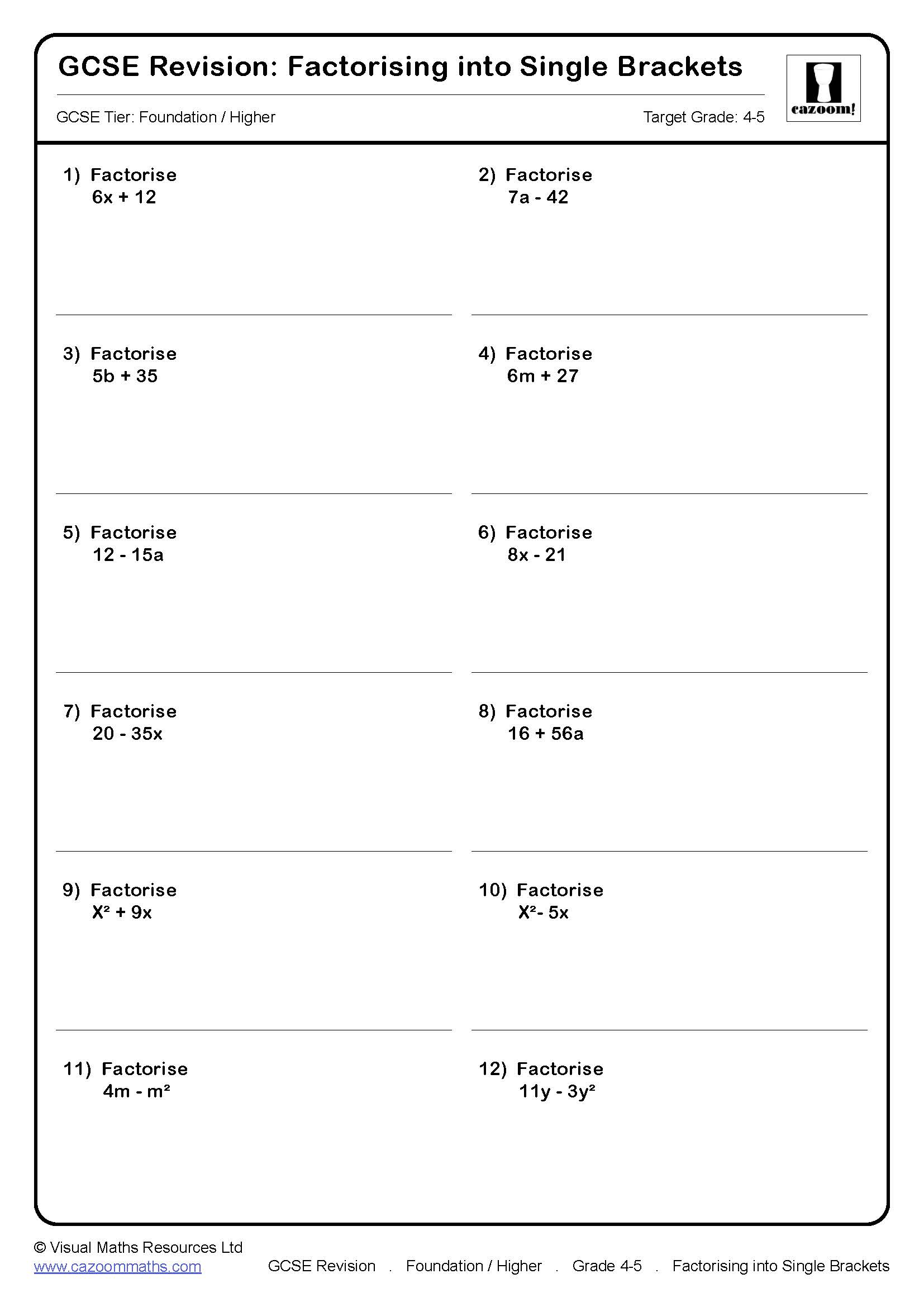
Factorising into Single Brackets (B)
Target Grade: 4-5
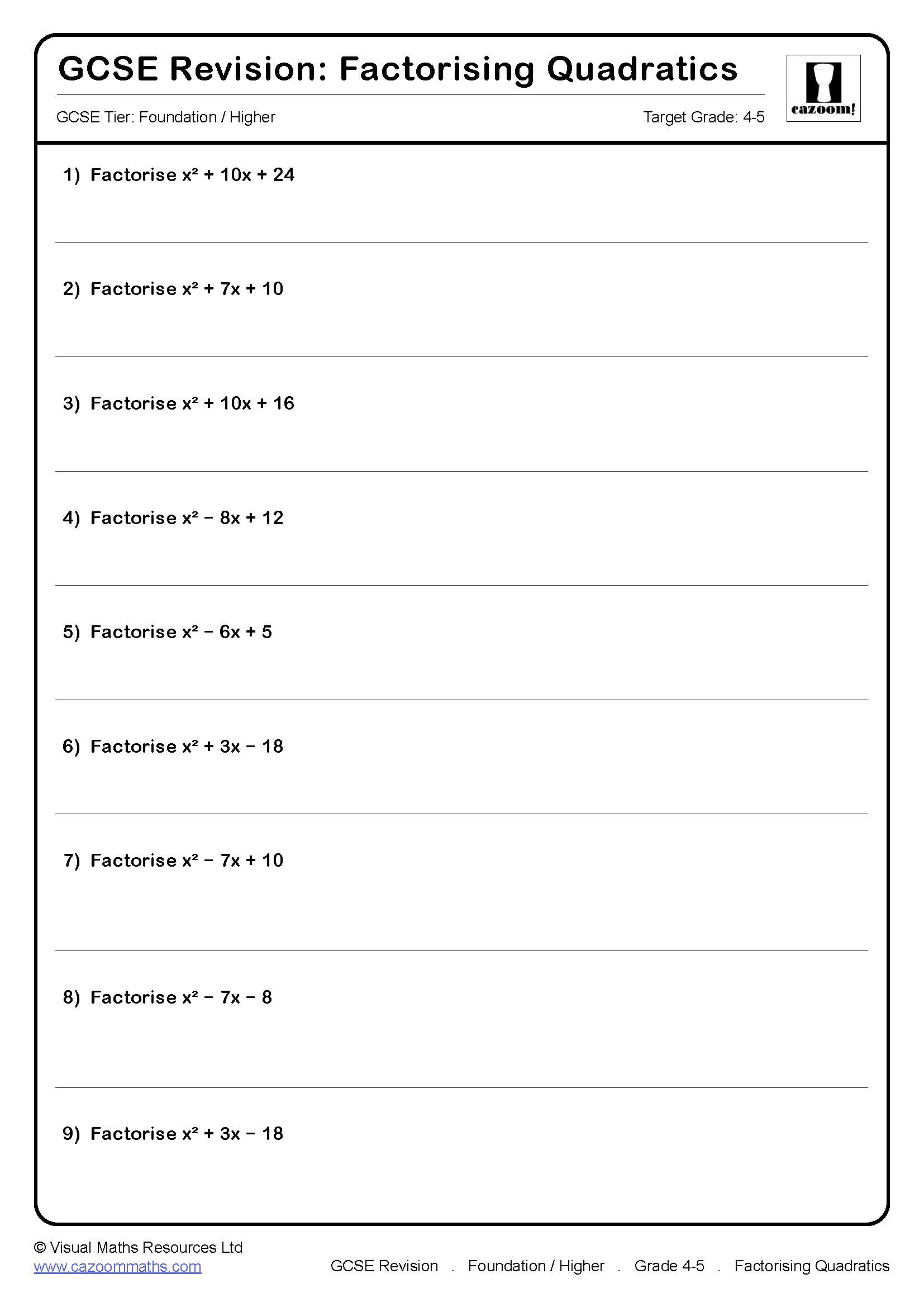
Factorising Quadratics
Target Grade: 4-5
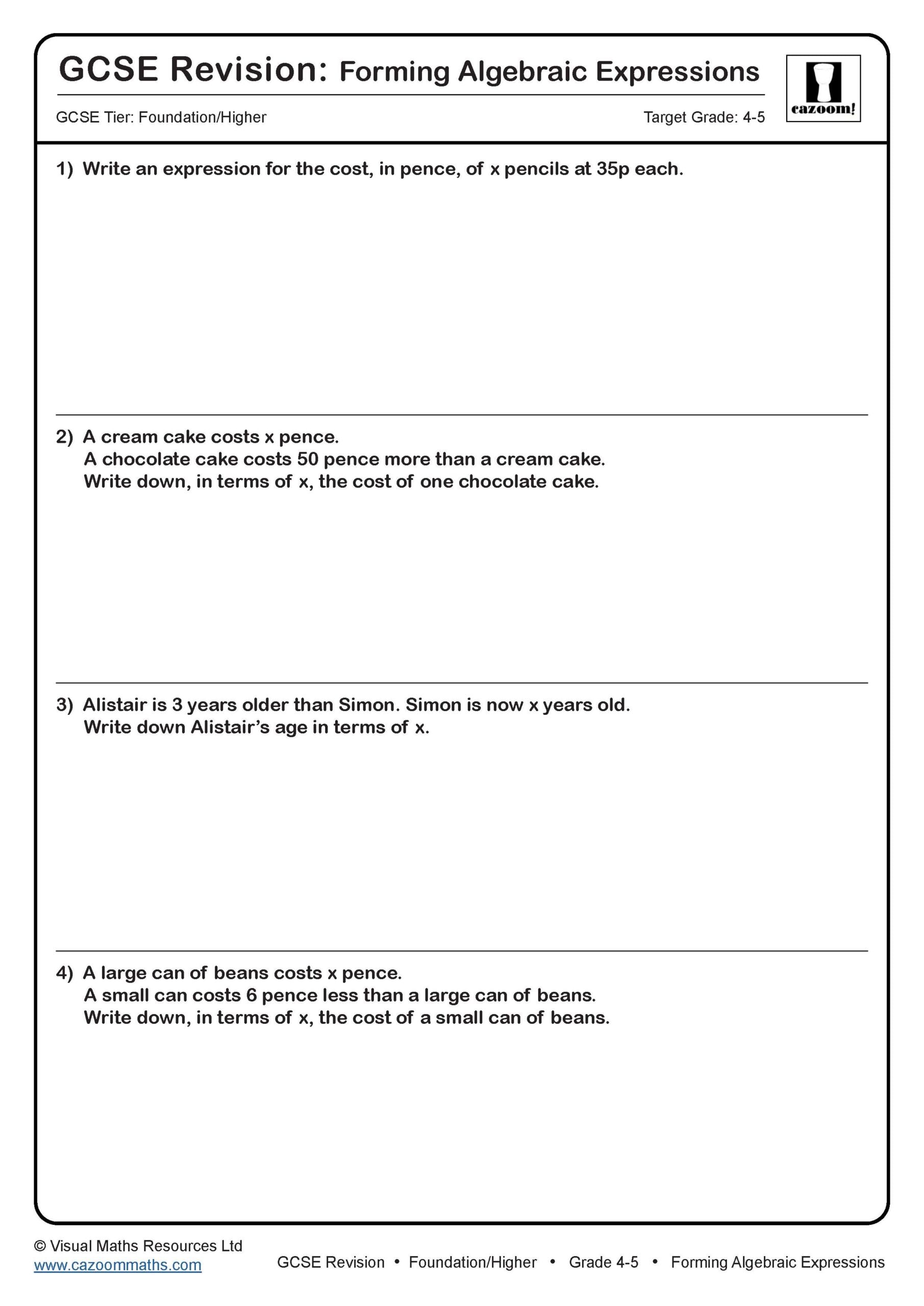
Forming Algebraic Expressions
Target Grade: 4-5
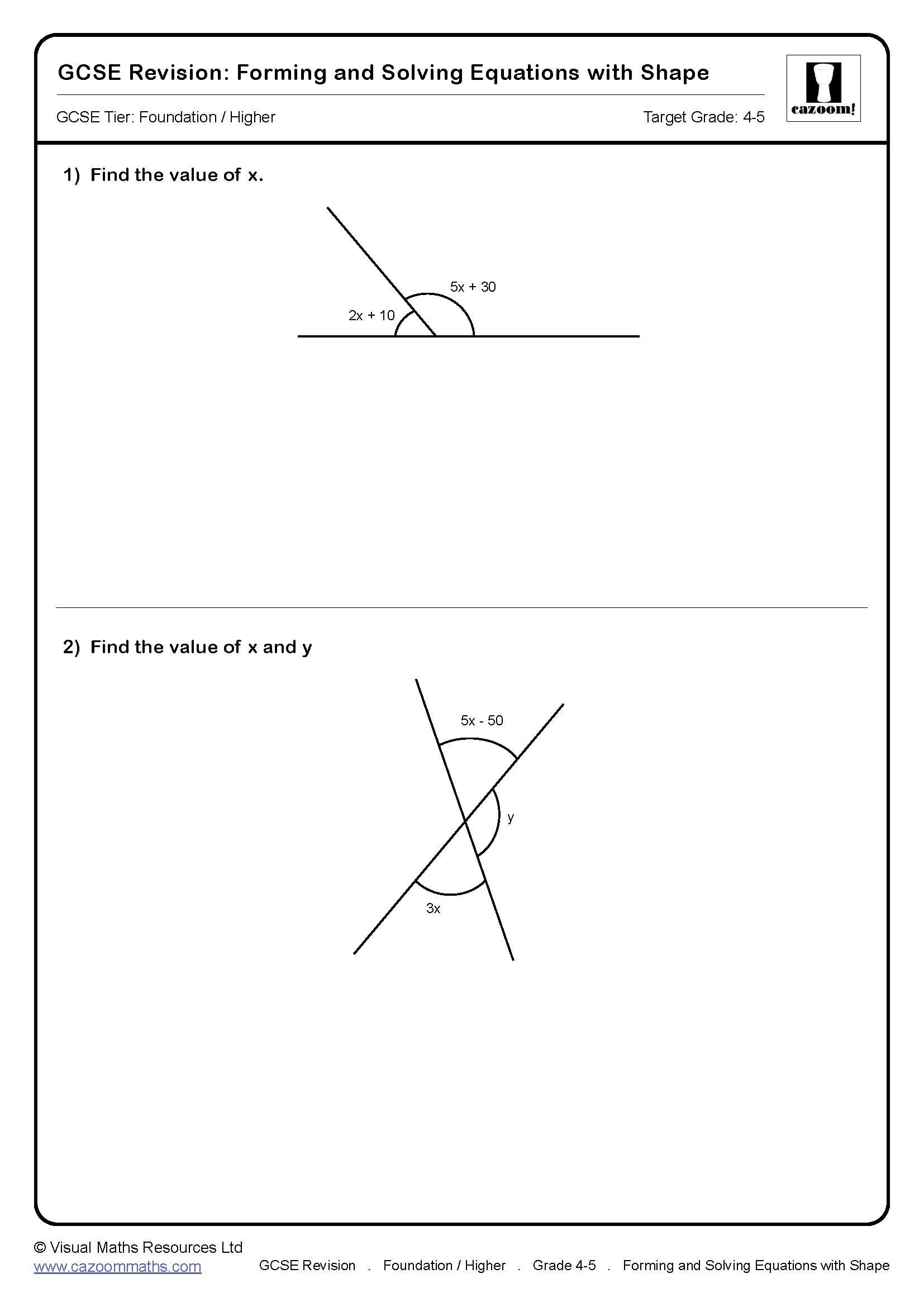
Forming and Solivng Equations with Shape
Target Grade: 4-5
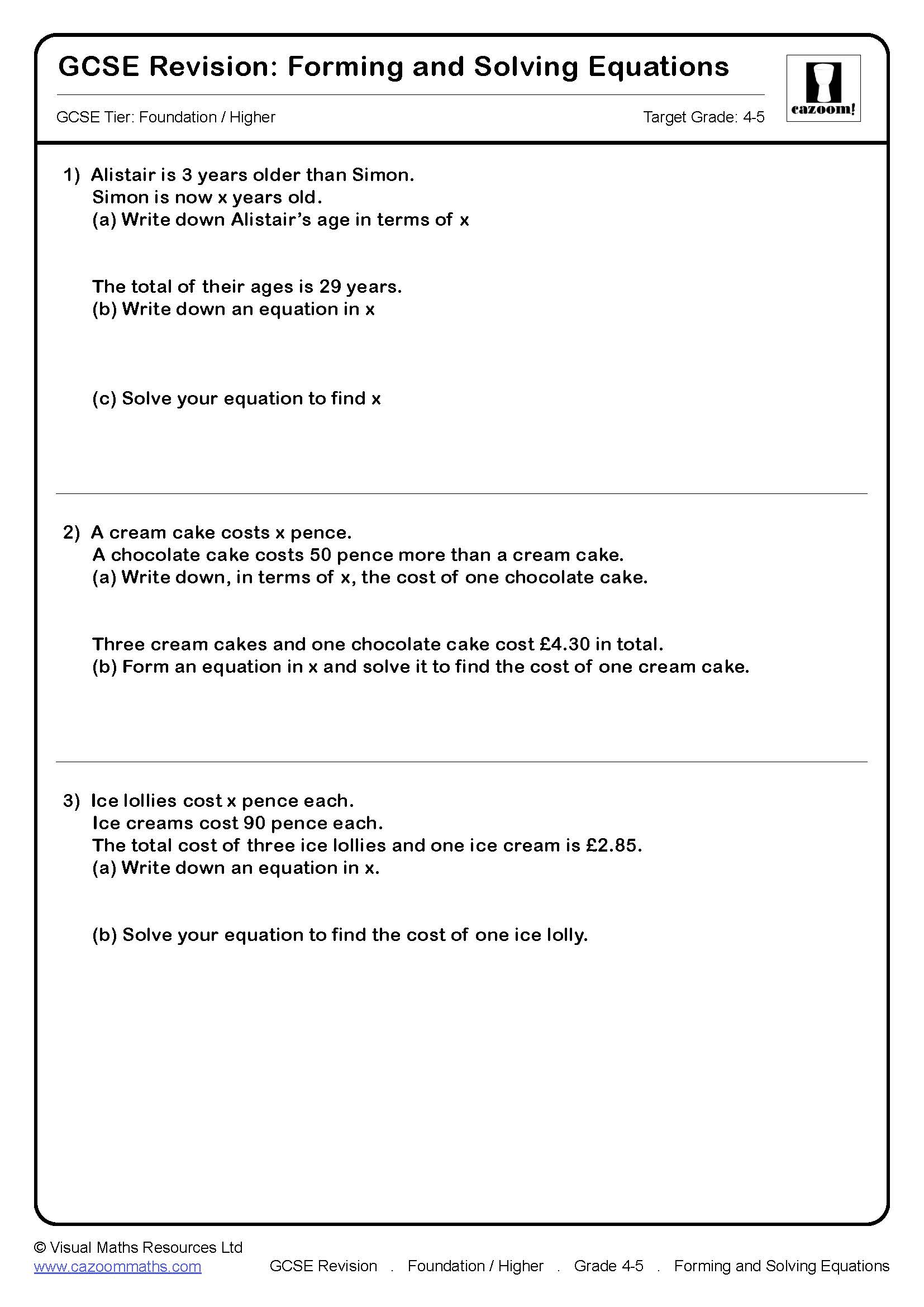
Forming and Solving Equations
Target Grade: 4-5
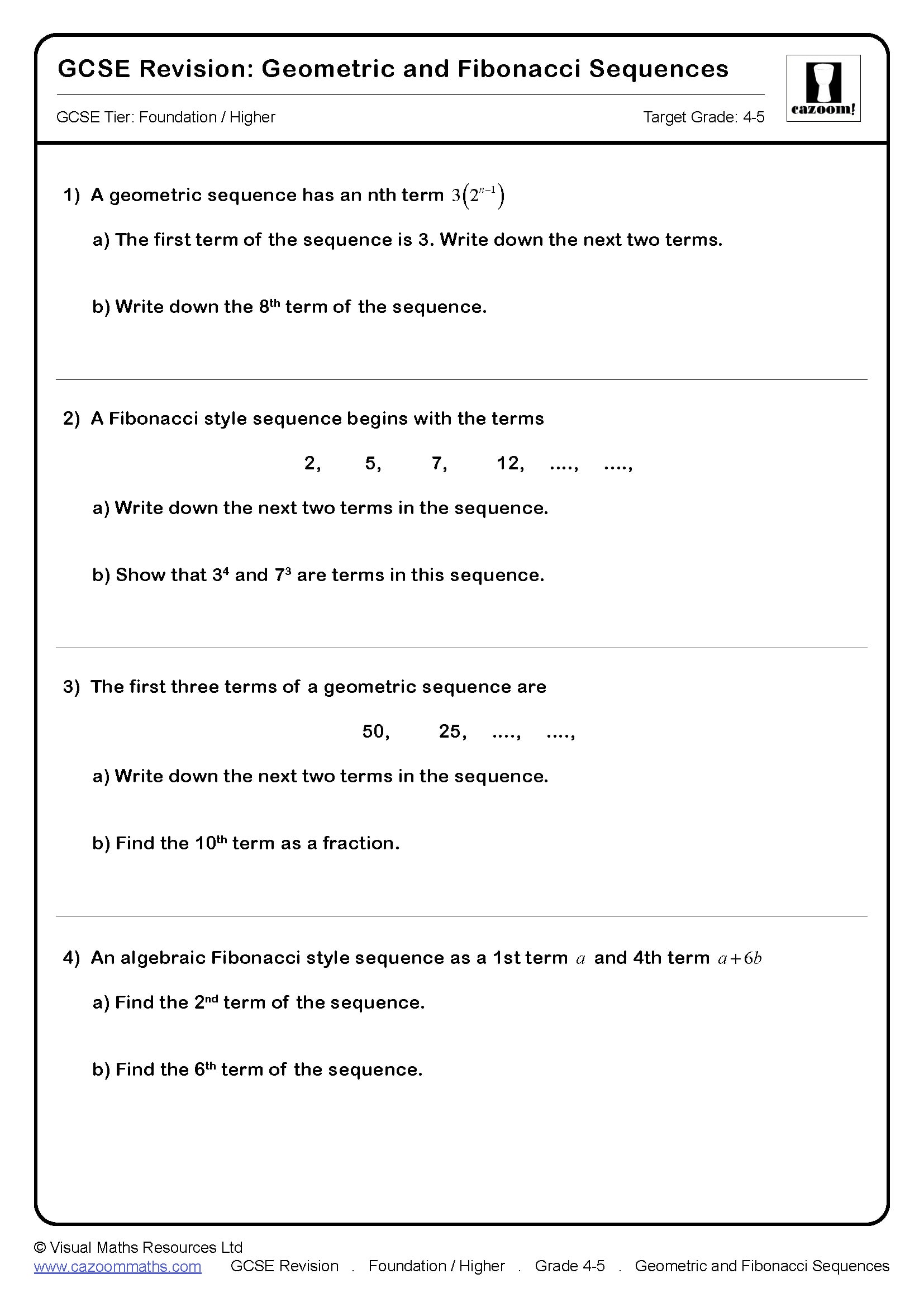
Geometric and Other Sequences
Target Grade: 4-5
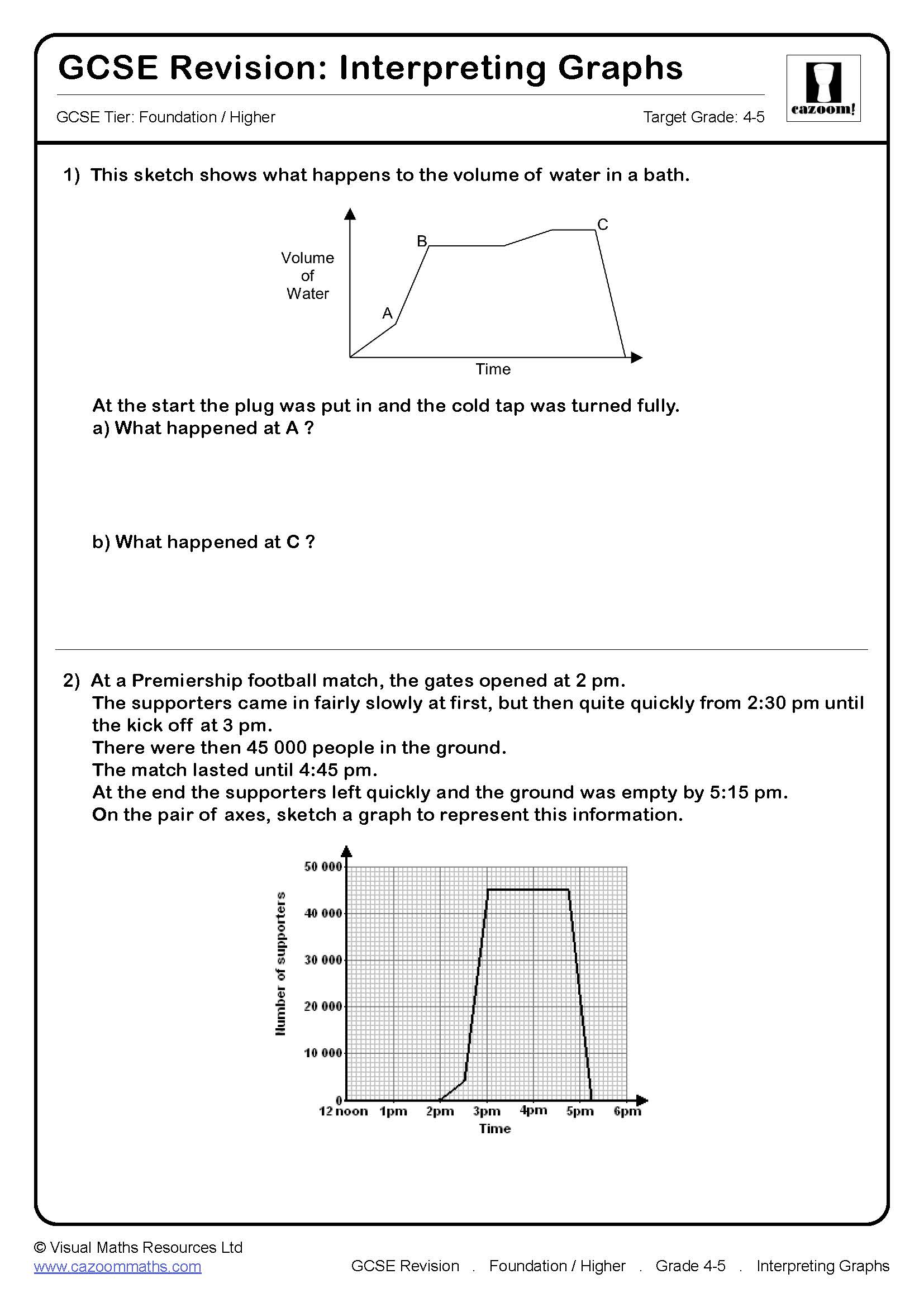
Interpreting Graphs
Target Grade: 4-5
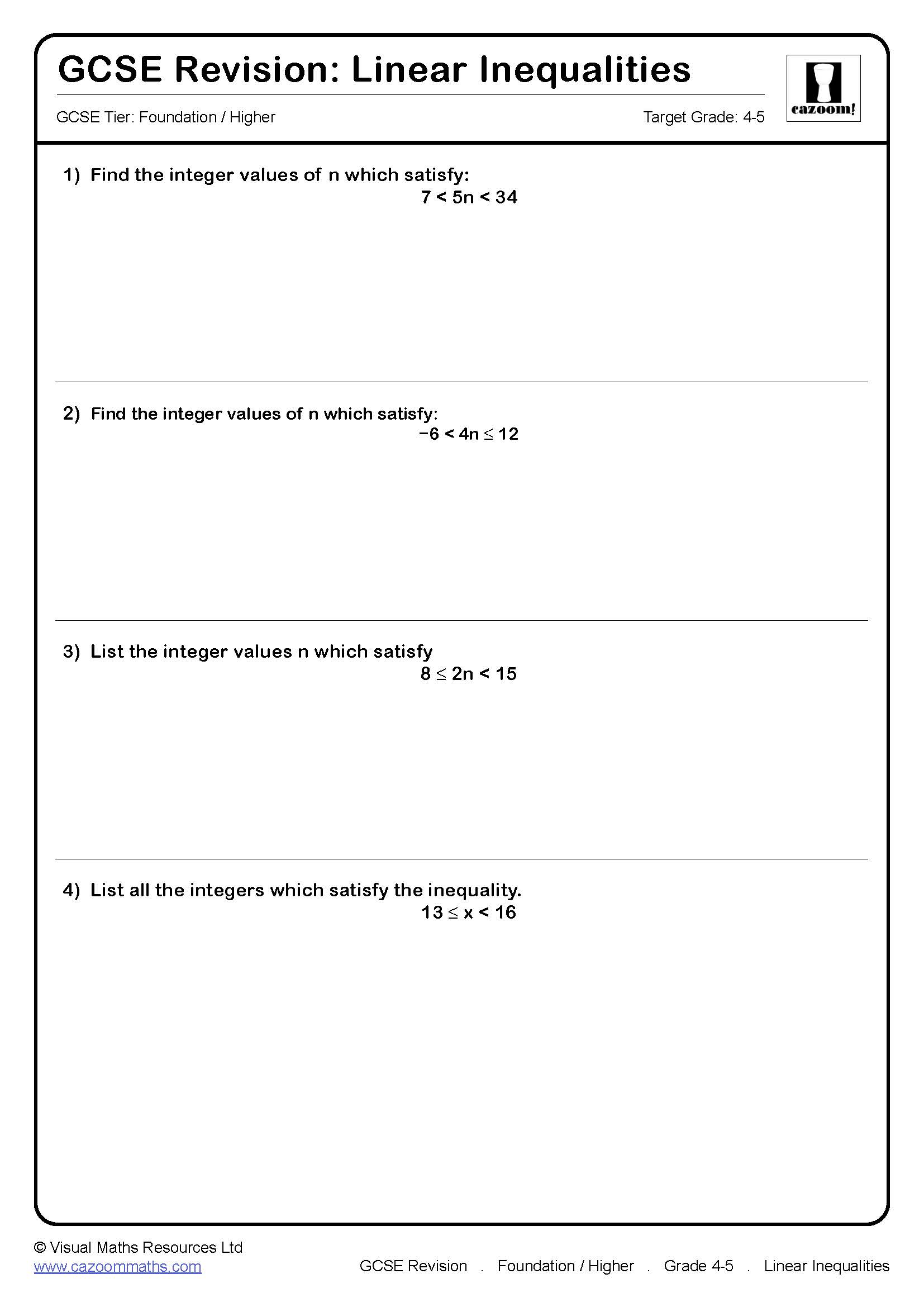
Linear Inequalities
Target Grade: 4-5
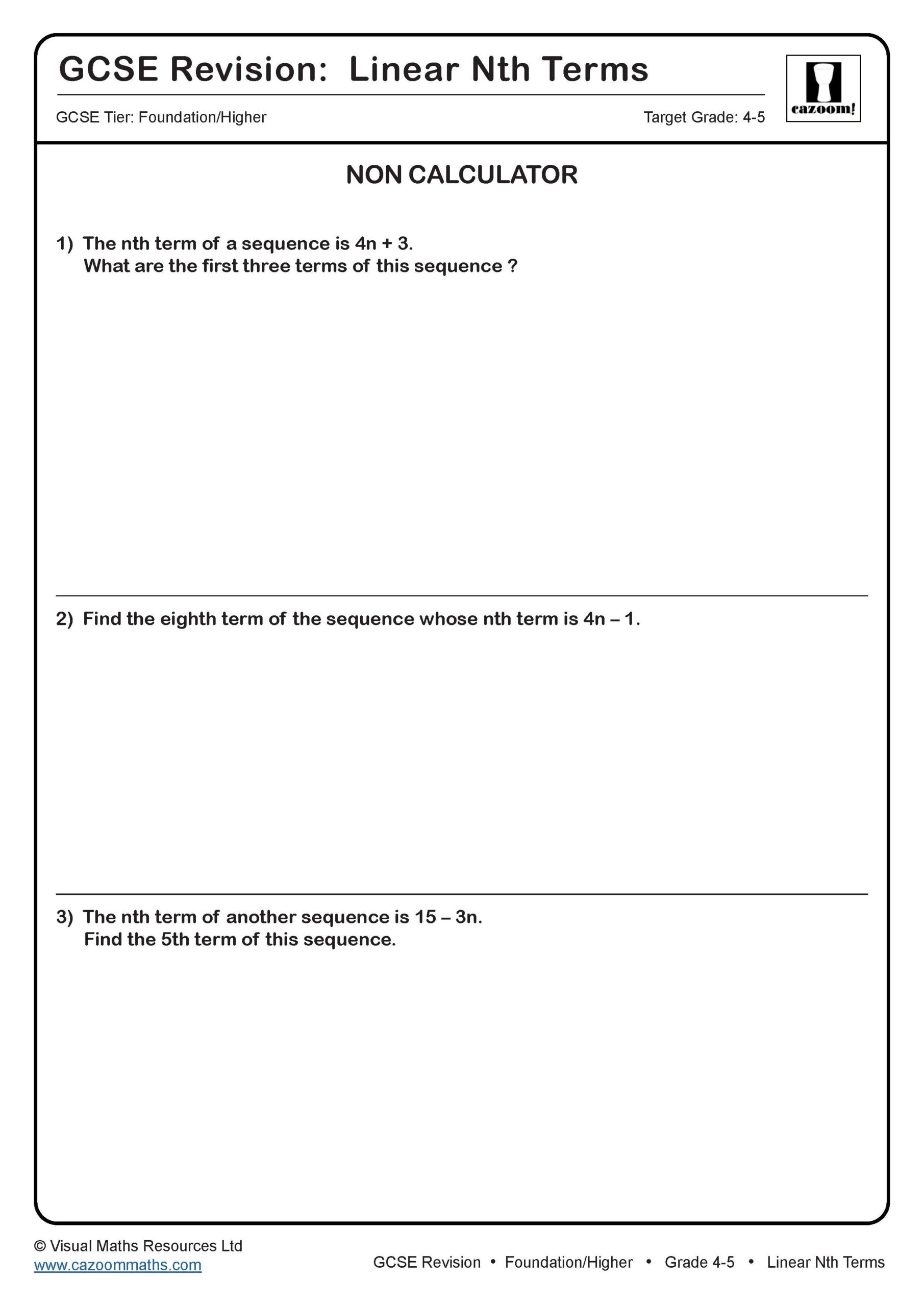
Linear Nth Terms
Target Grade: 4-5
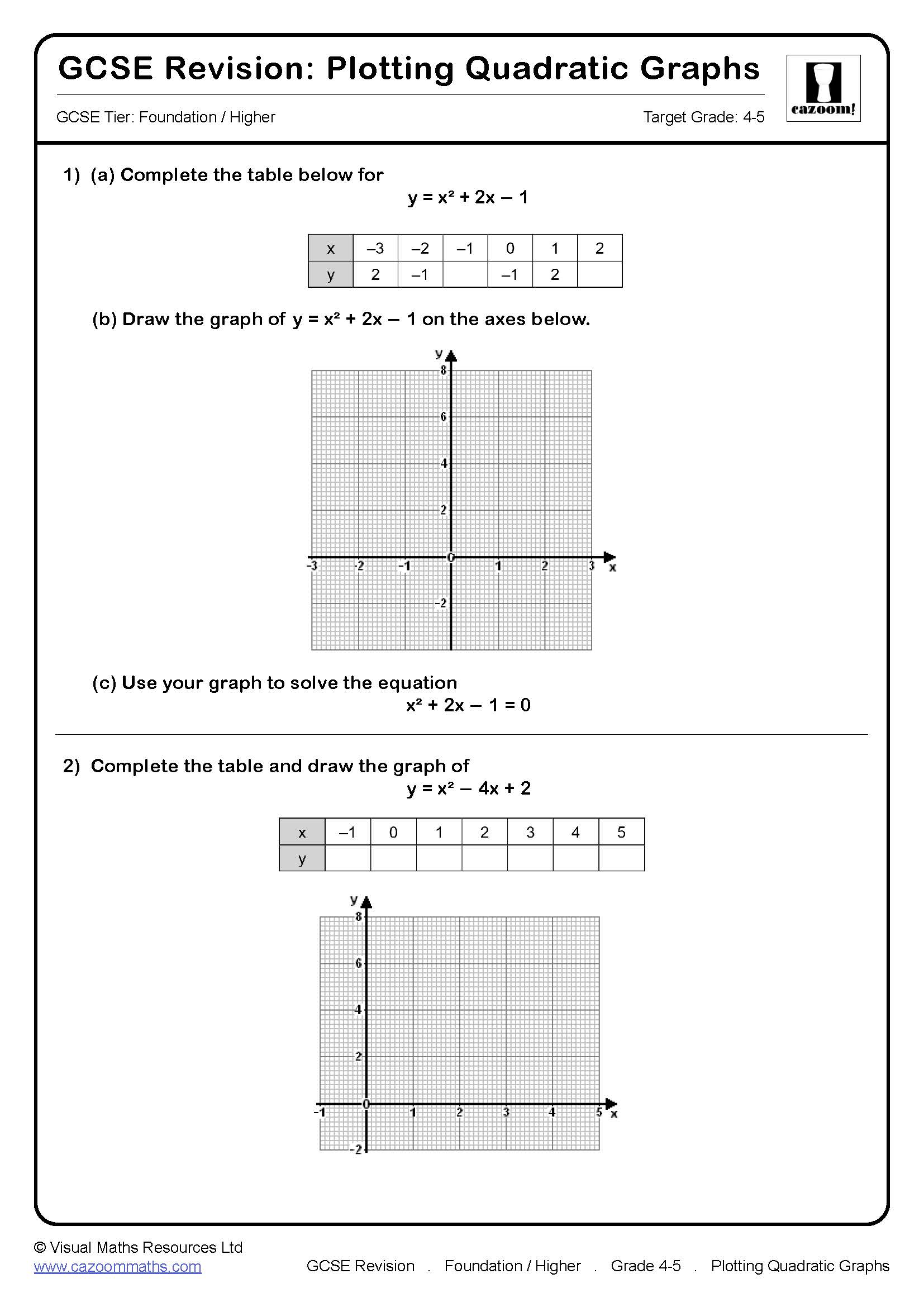
Plotting Quadratic Graphs
Target Grade: 4-5
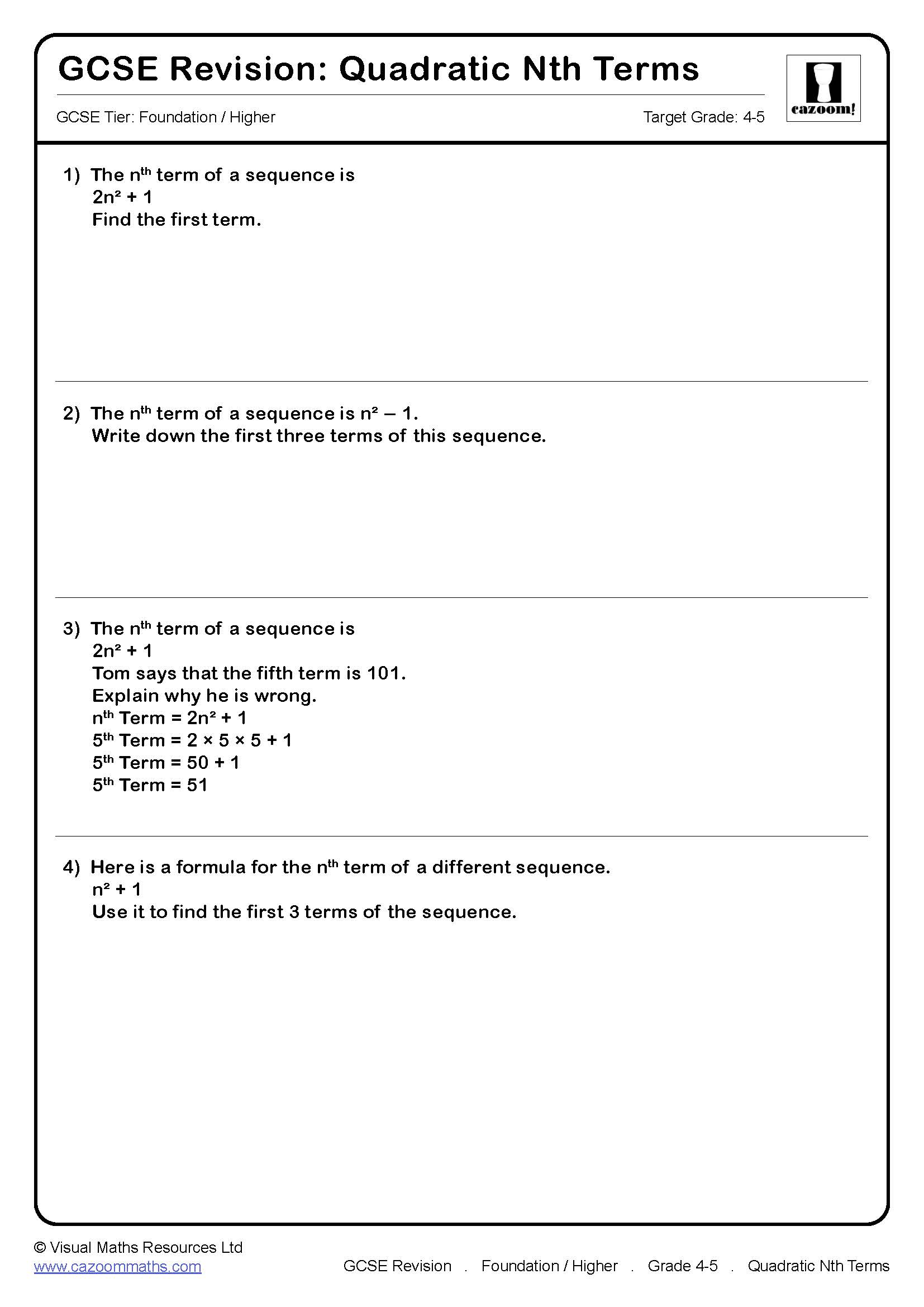
Quadratic Nth Terms
Target Grade: 4-5
Rearranging Formulae
Target Grade: 4-5
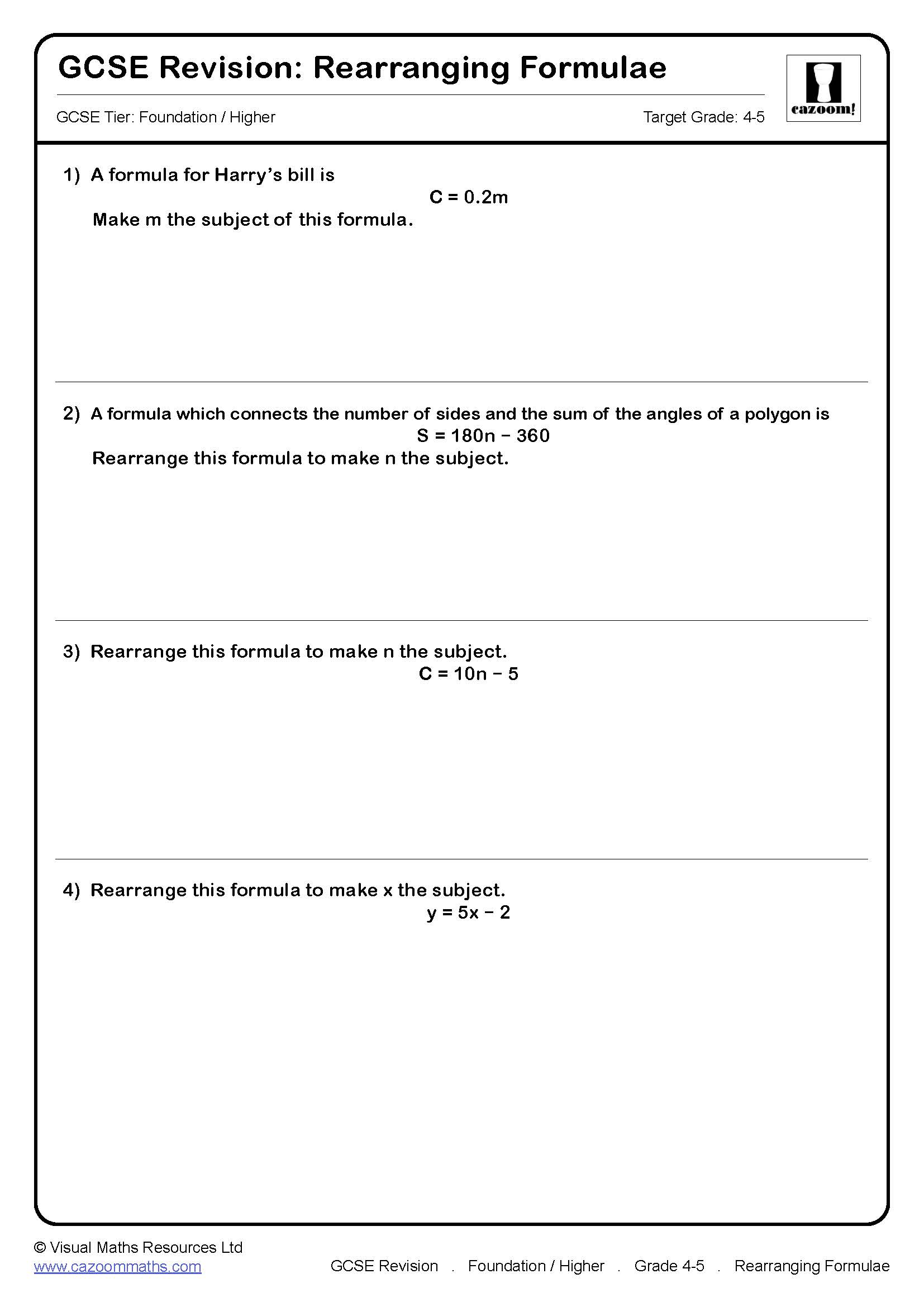
Rearranging Formulae (B)
Target Grade: 4-5
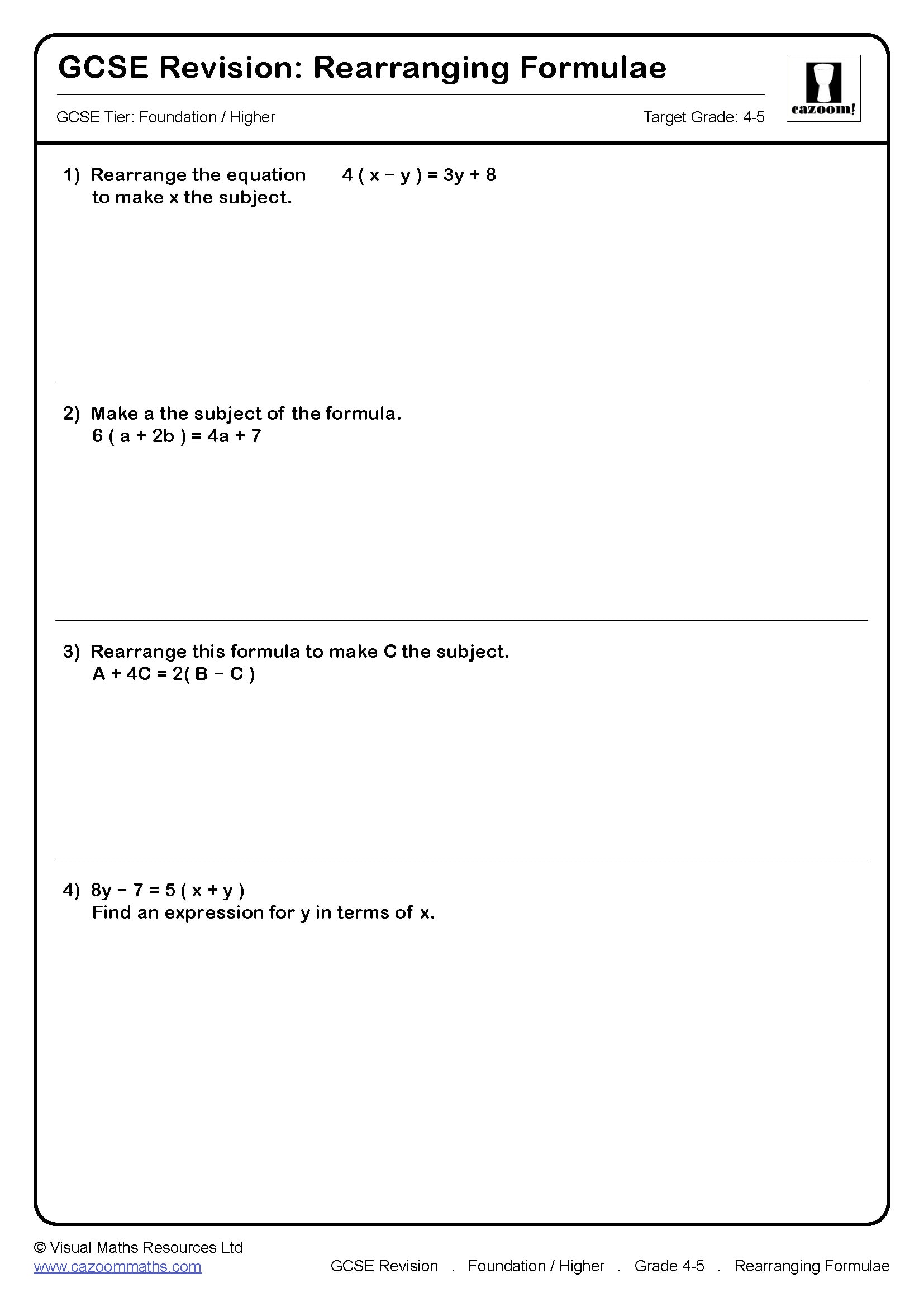
Solving Equations with Brackets and Unknowns on both sides
Target Grade: 4-5
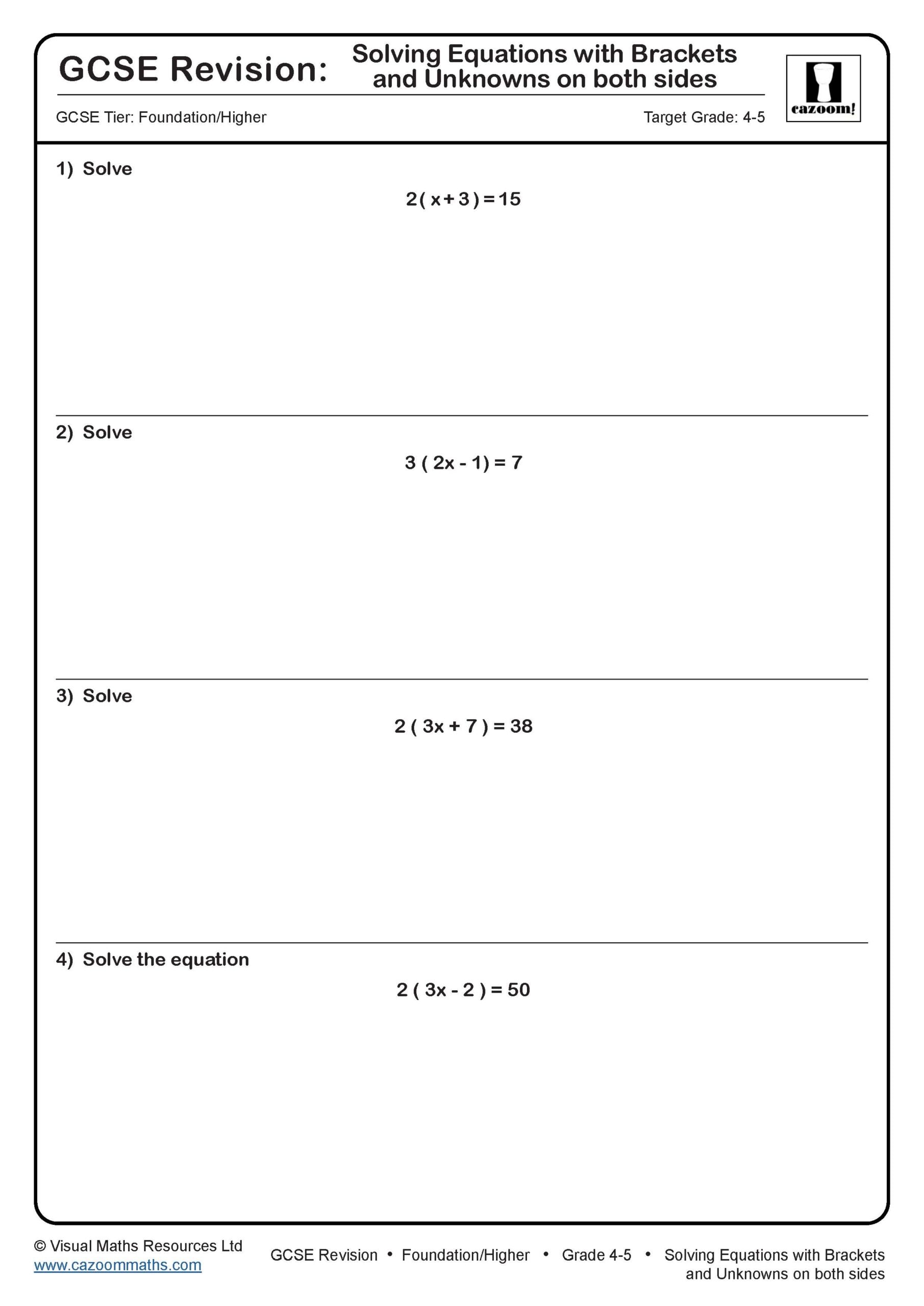
Solving Quadratic Equations by Factorising
Target Grade: 4-5
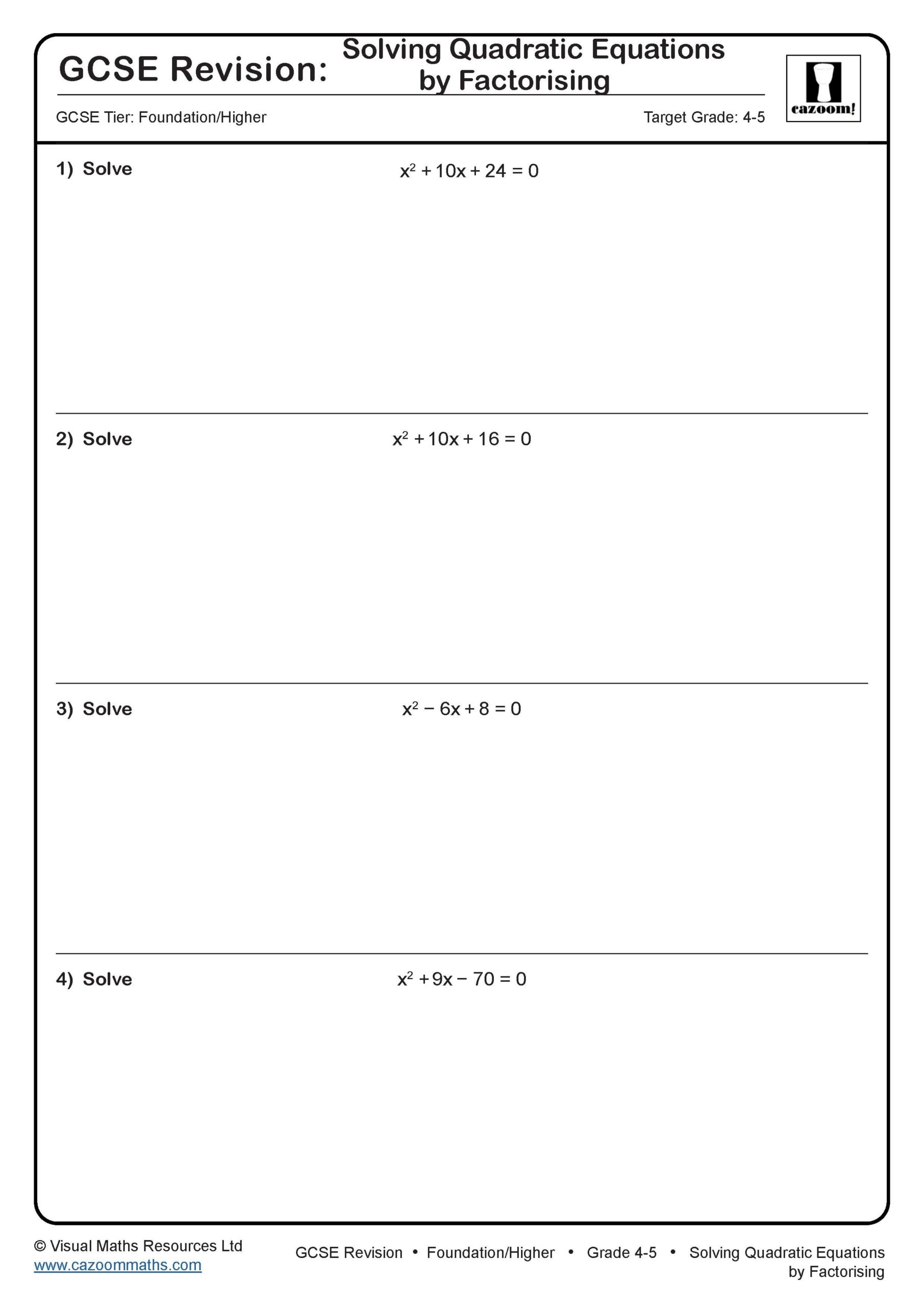
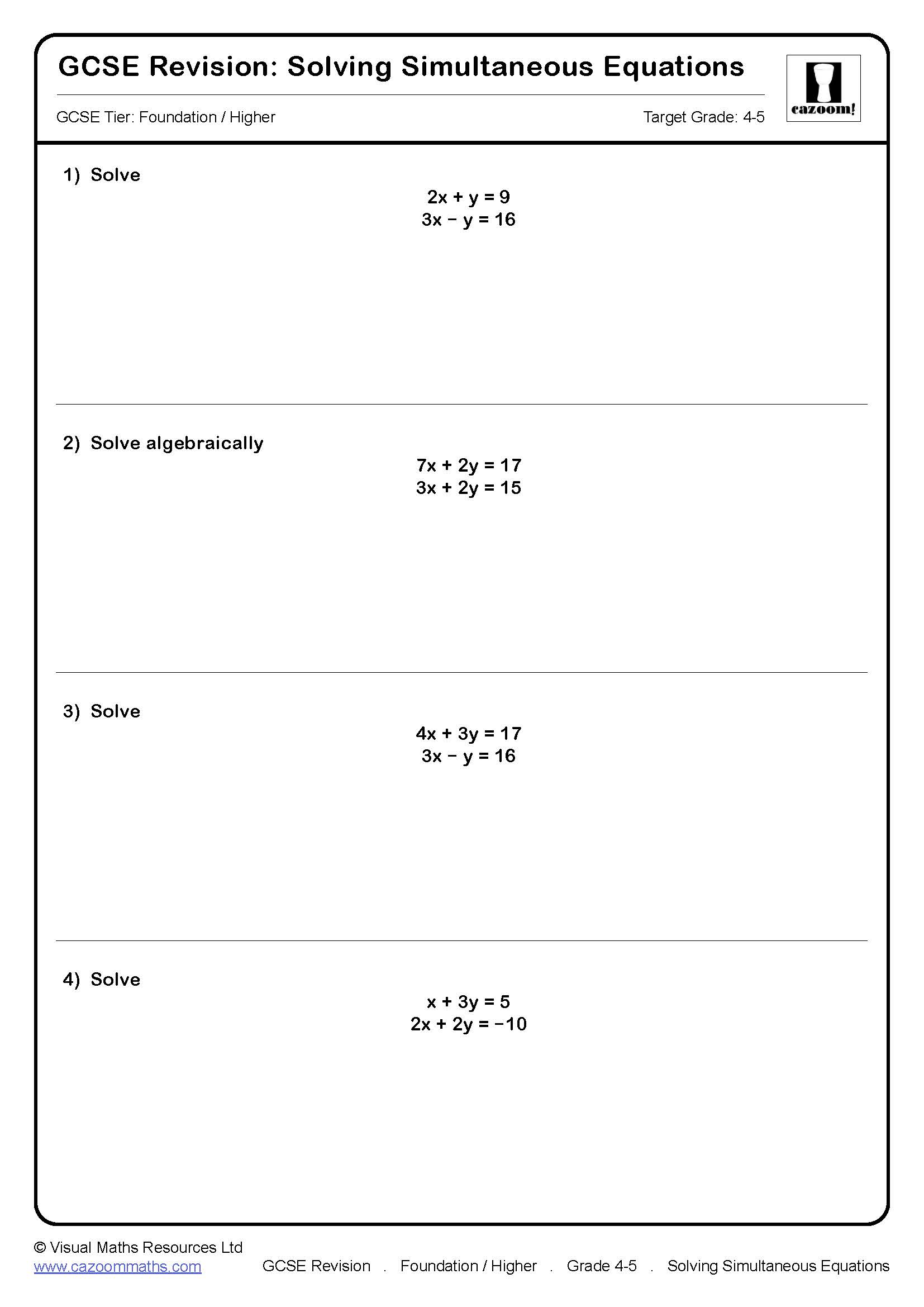
Solving Simultaneous Equations
Target Grade: 4-5
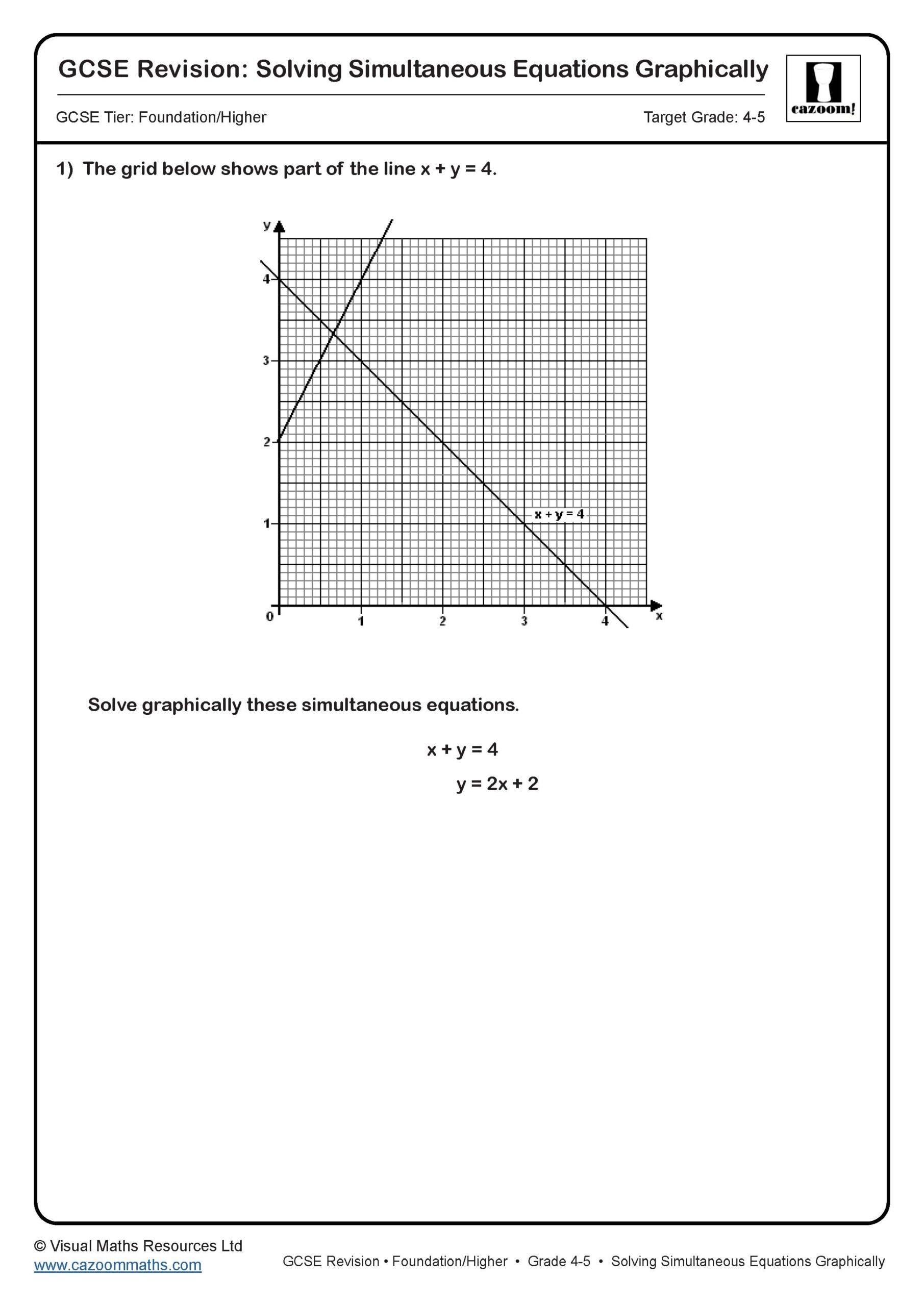
Solving Simultaneous Equations Graphically
Target Grade: 4-5
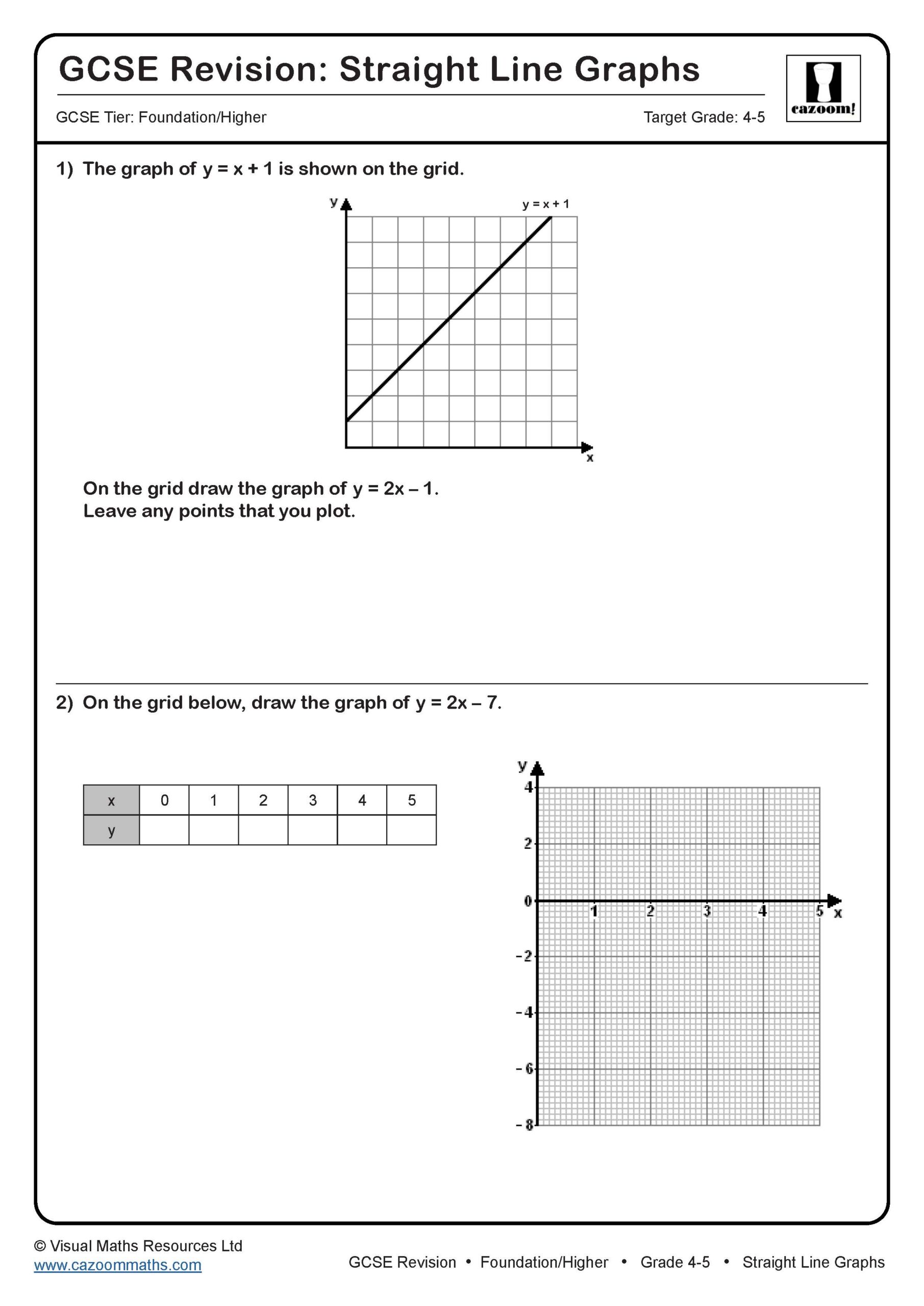
Straight Line Graphs
Target Grade: 4-5
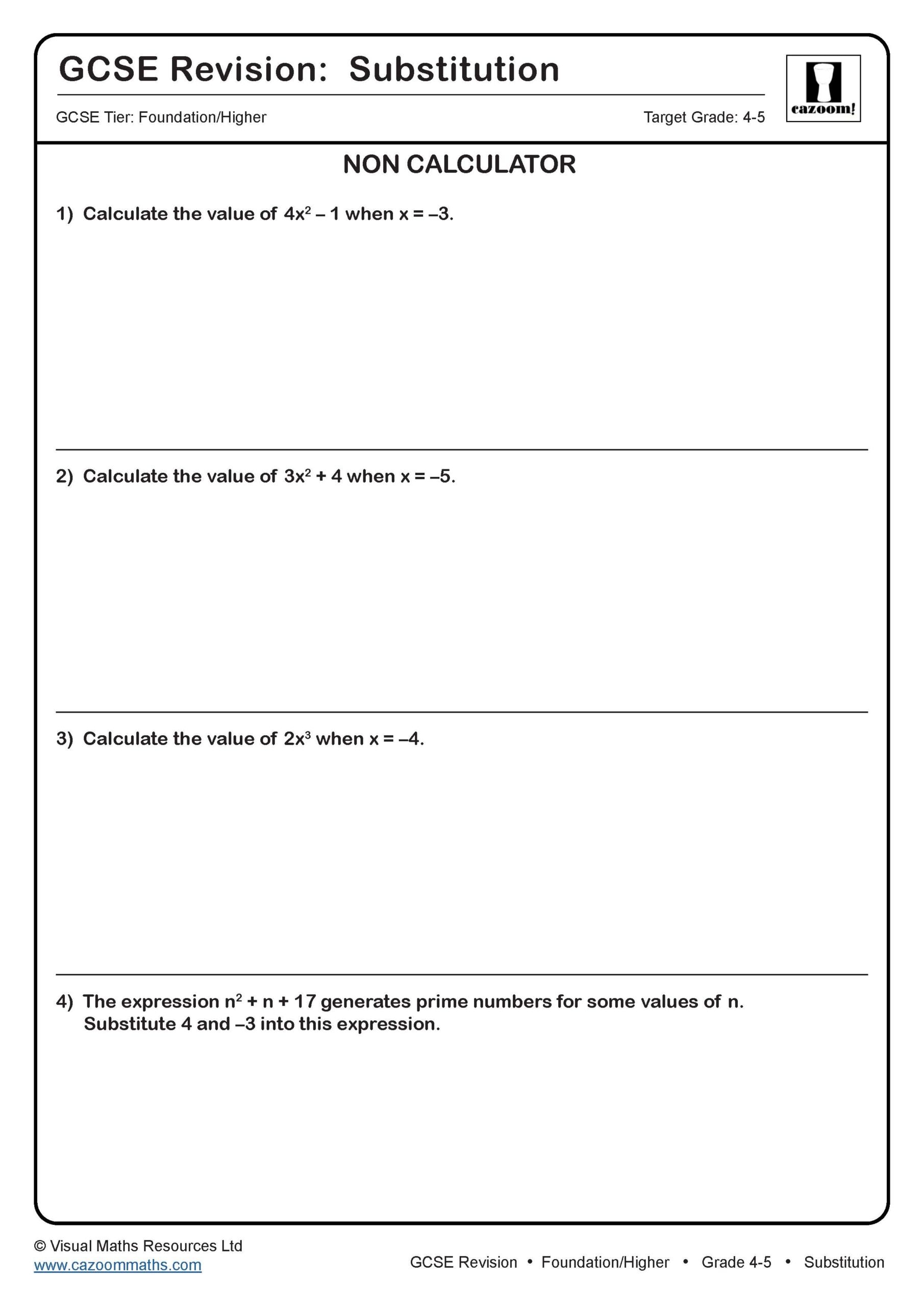
Subsitution
Target Grade: 4-5
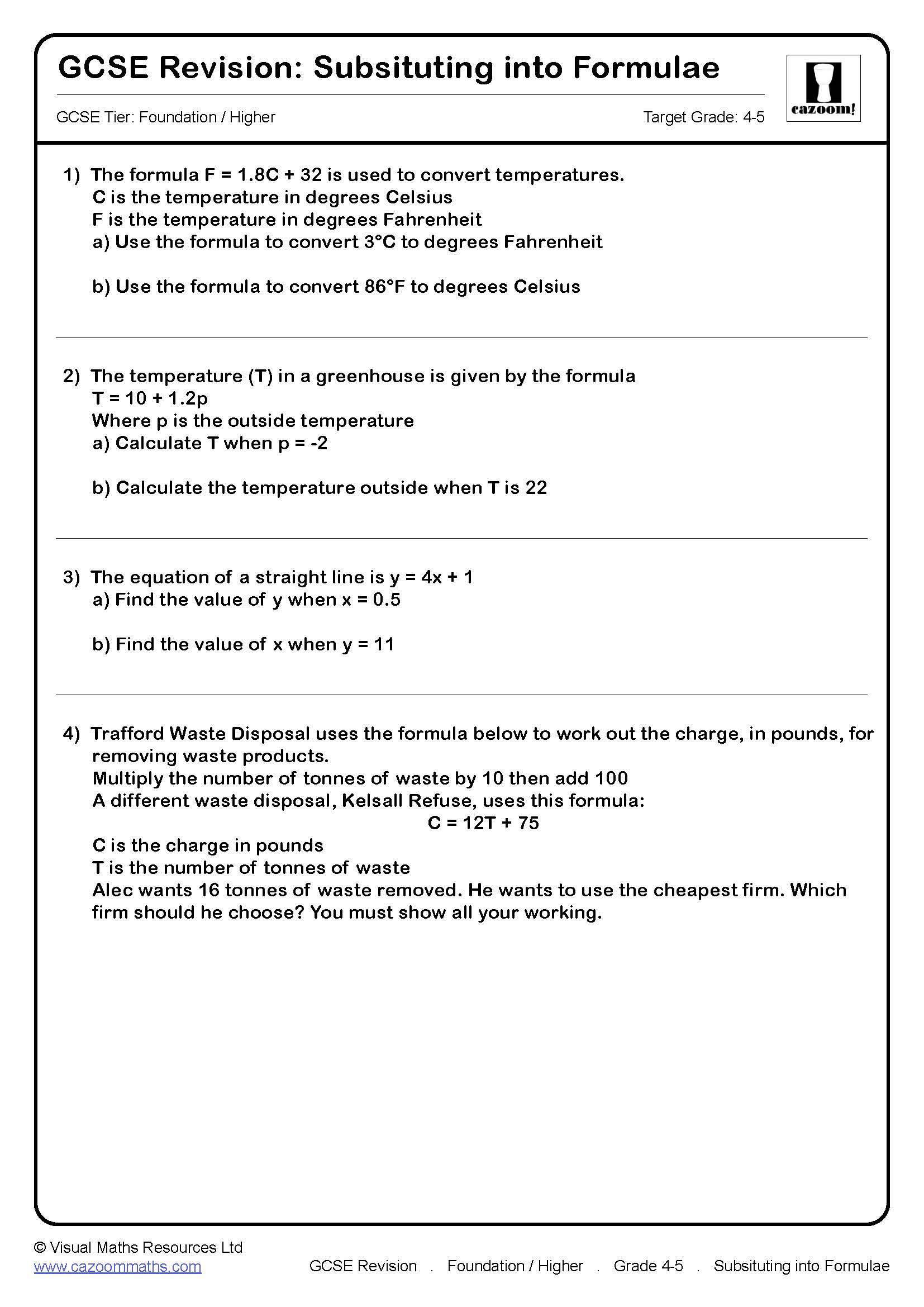
Substituting into Formulae
Target Grade: 4-5
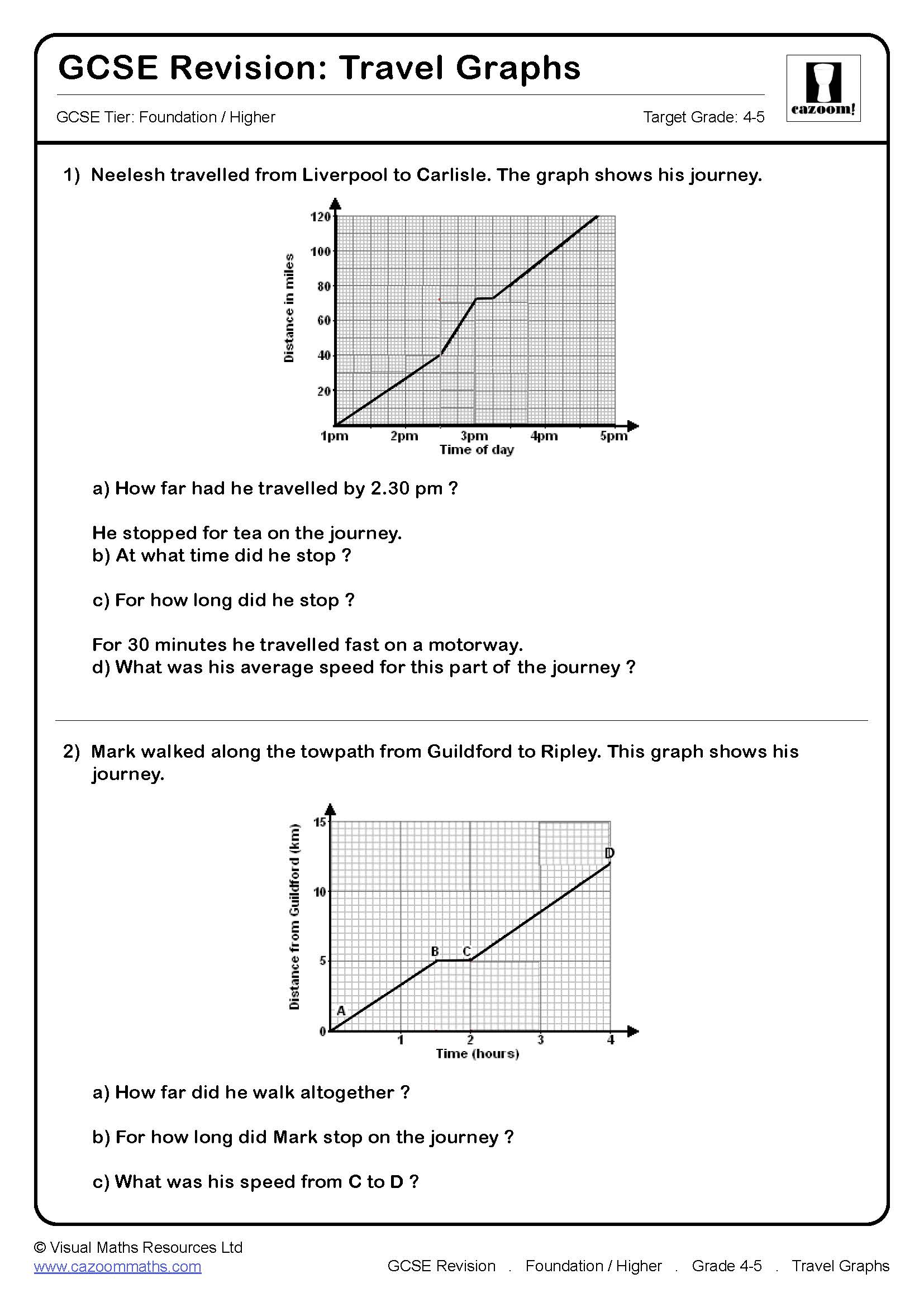
Travel Graphs
Target Grade: 4-5
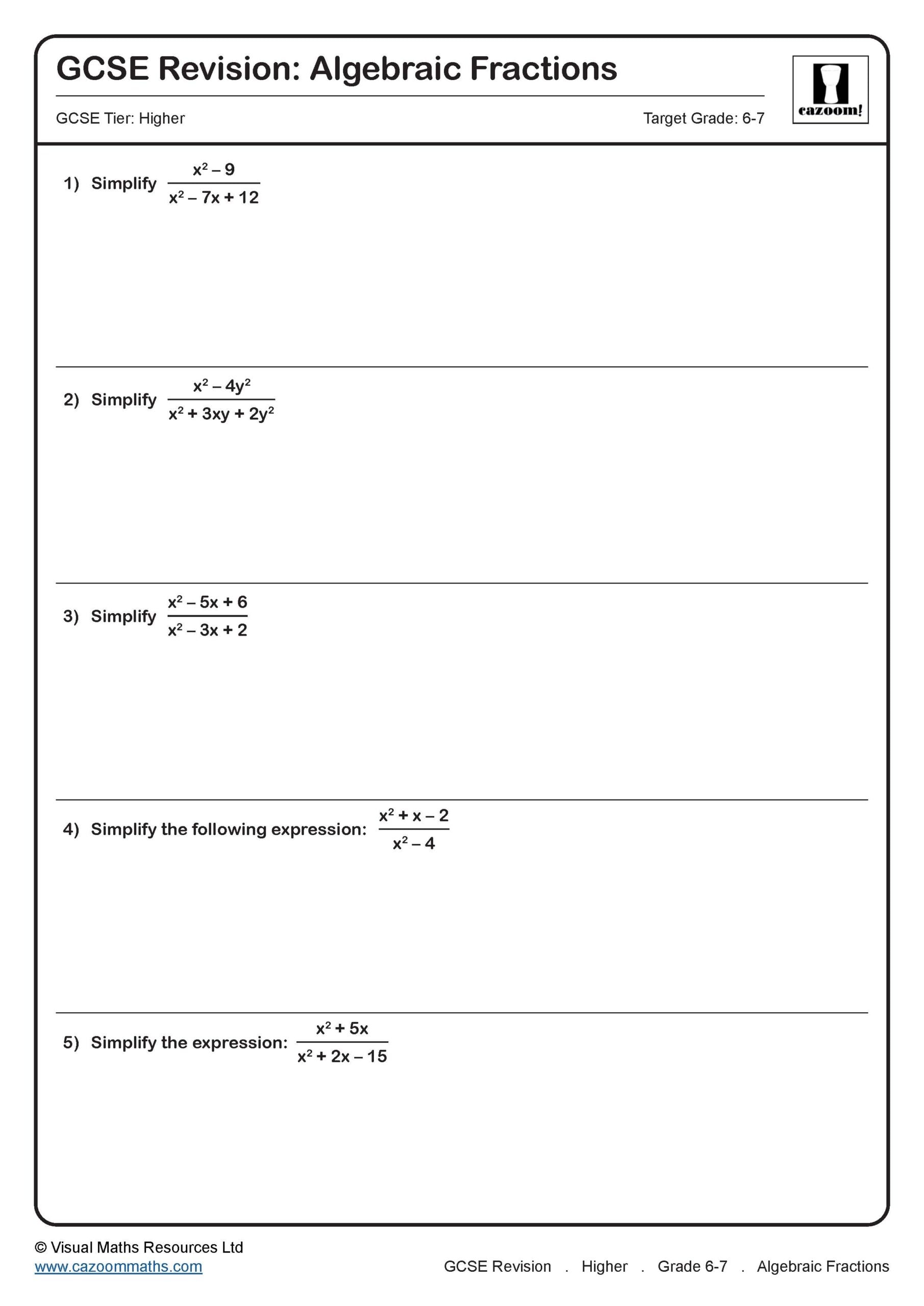
Algebraic Fractions
Target Grade: 6-7
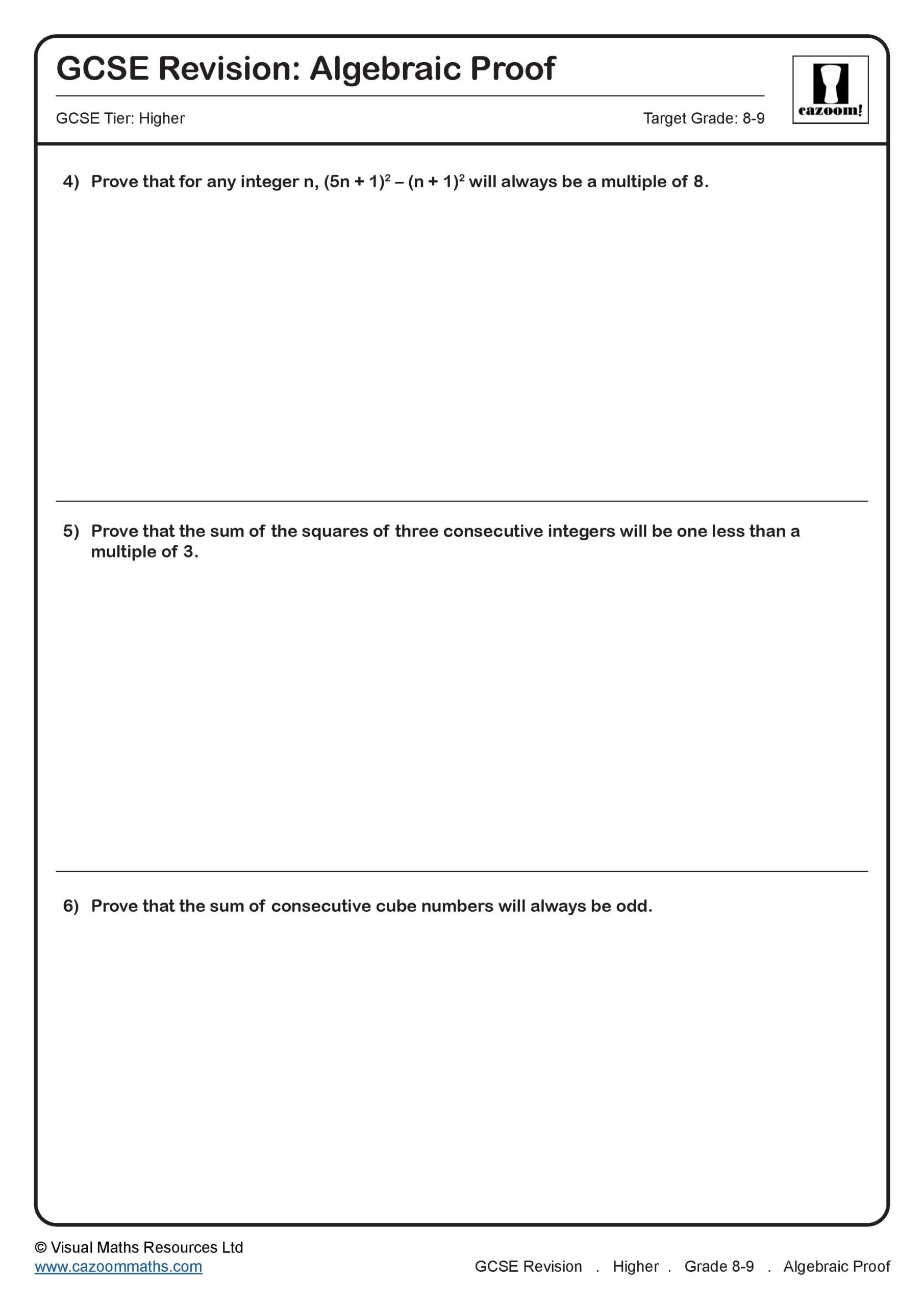
Algebraic Proof
Target Grade: 6-7
Completing the Square
Target Grade: 6-7
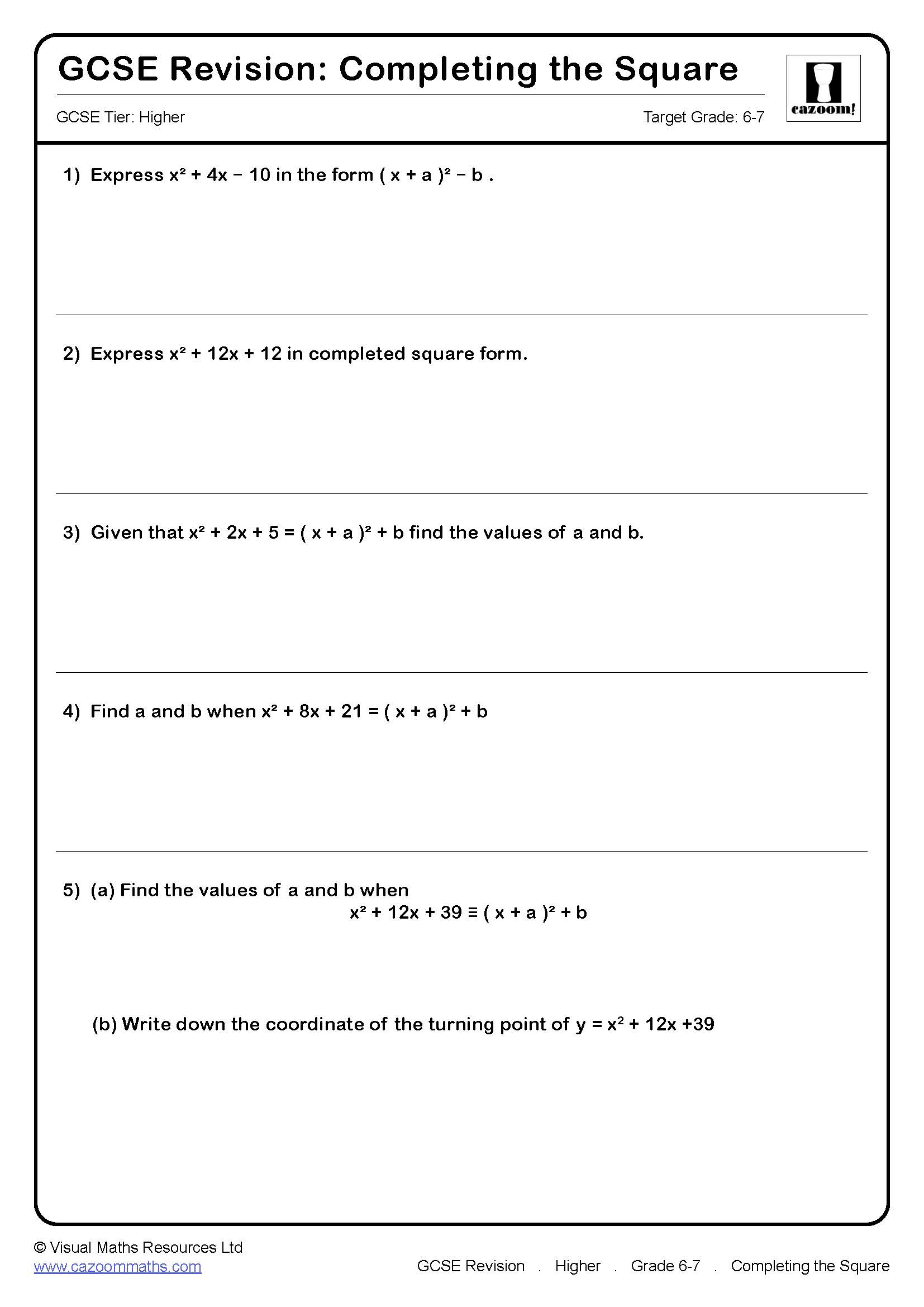
Cubic Functions
Target Grade: 6-7
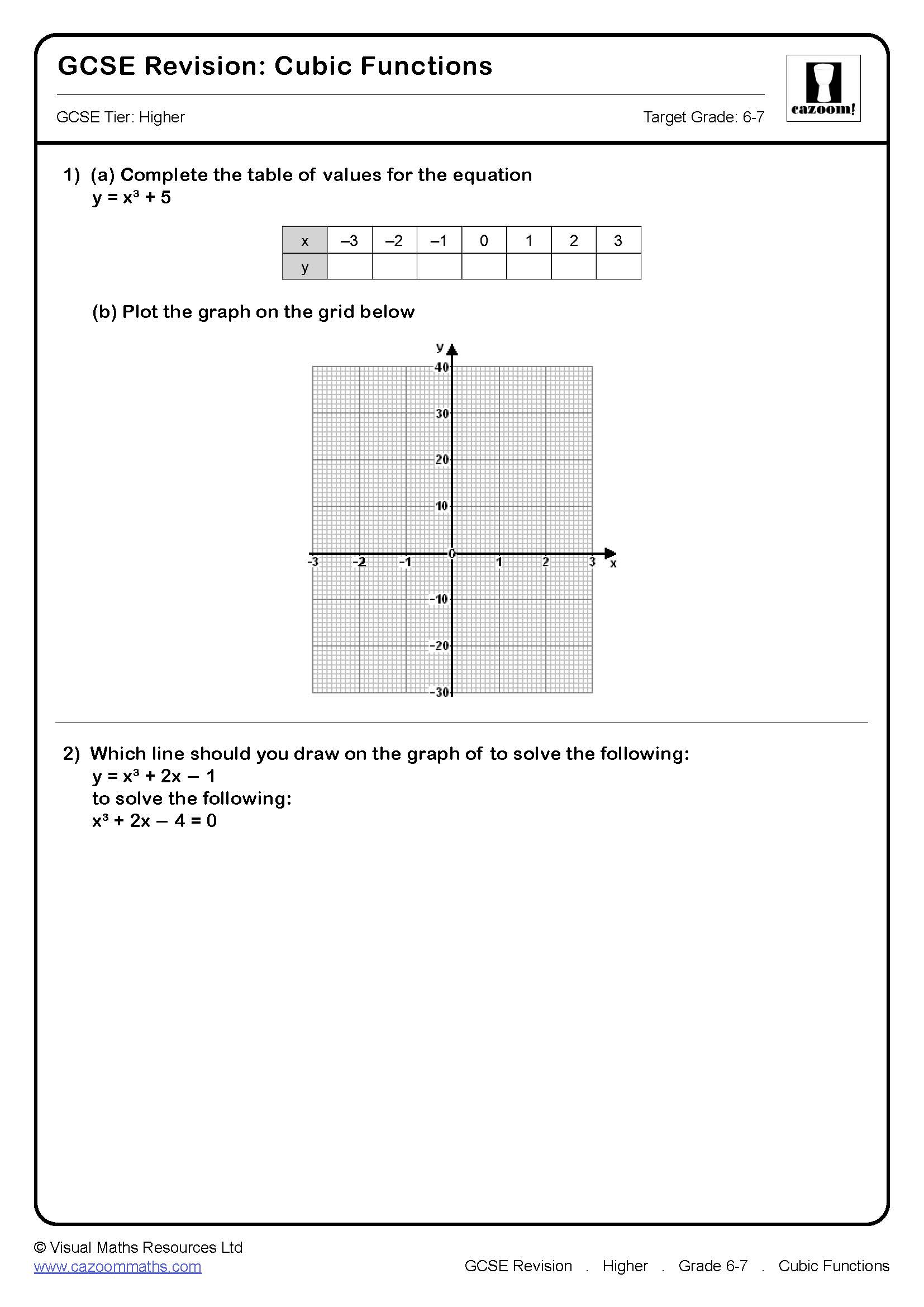
Expanding Triple Brackets
Target Grade: 6-7
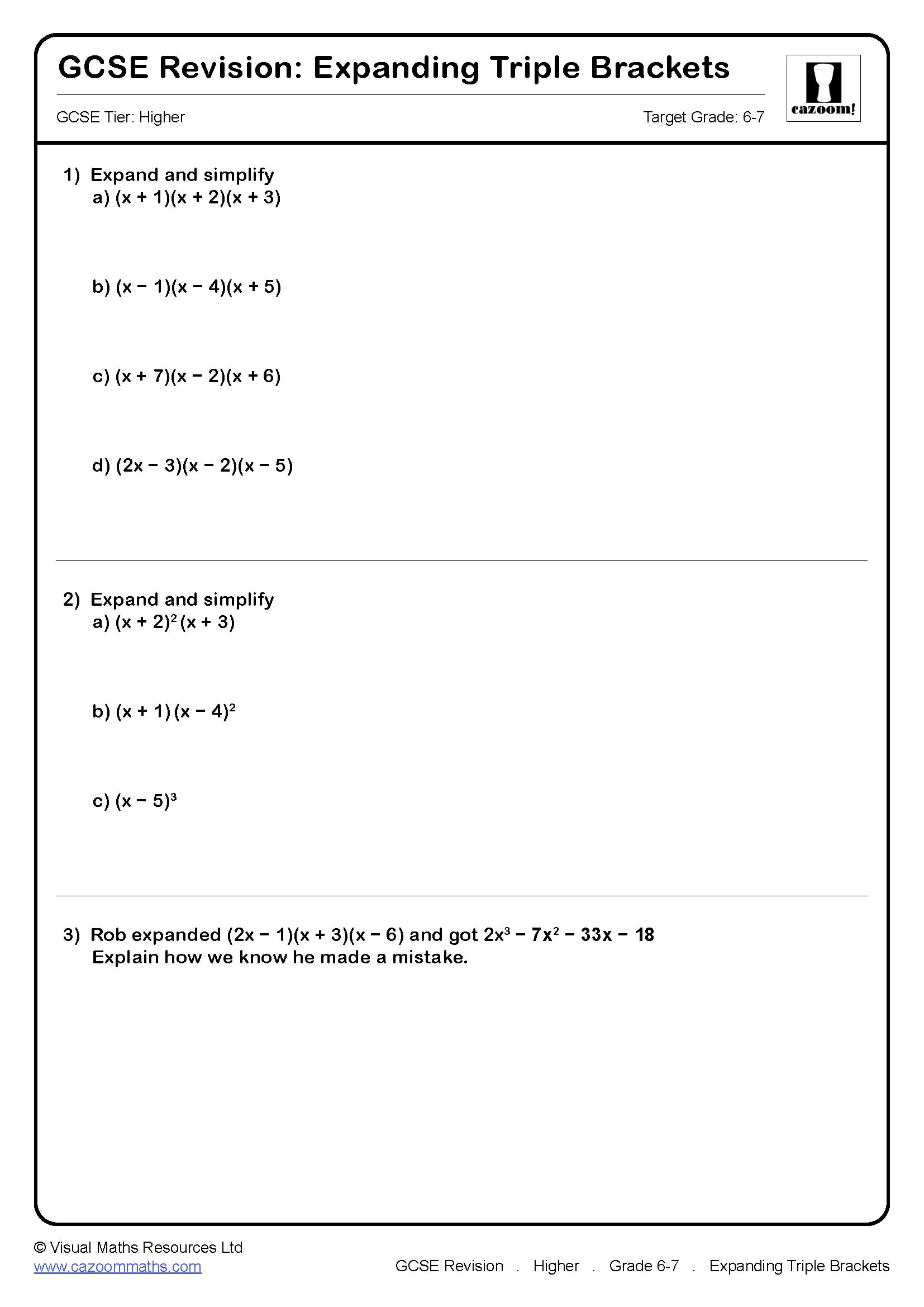
Factorising Quadratics (B)
Target Grade: 6-7
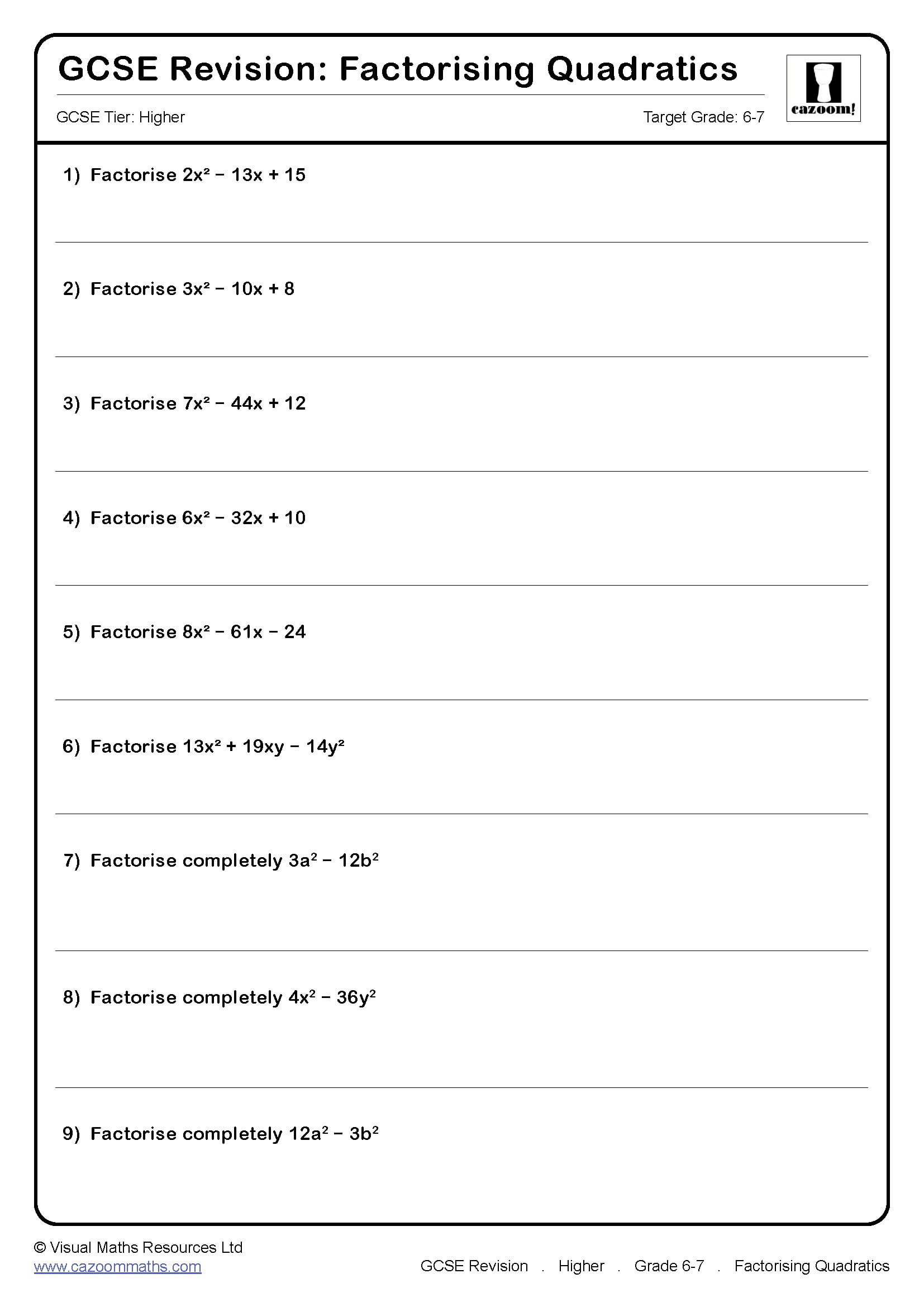
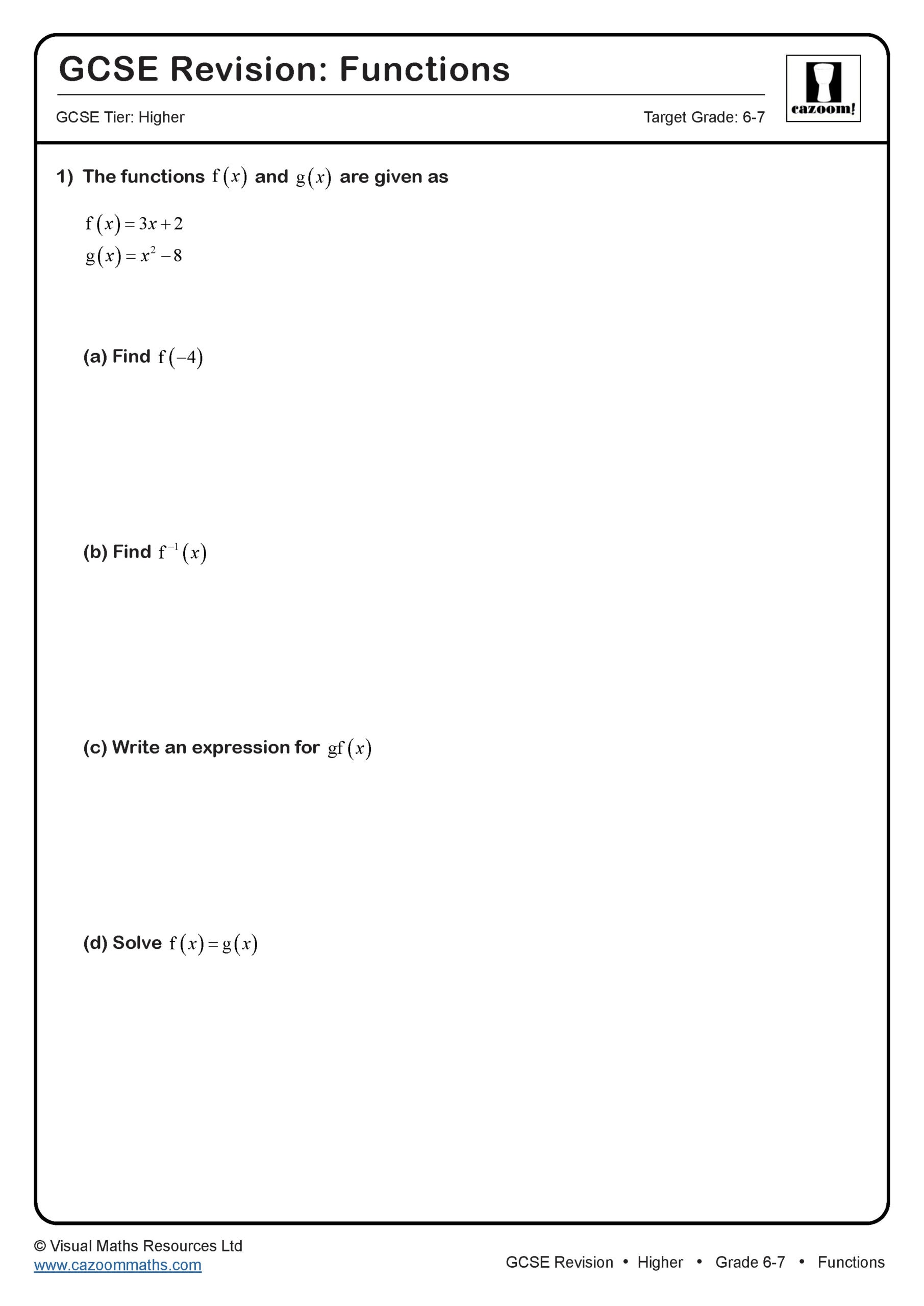
Functions
Target Grade: 6-7
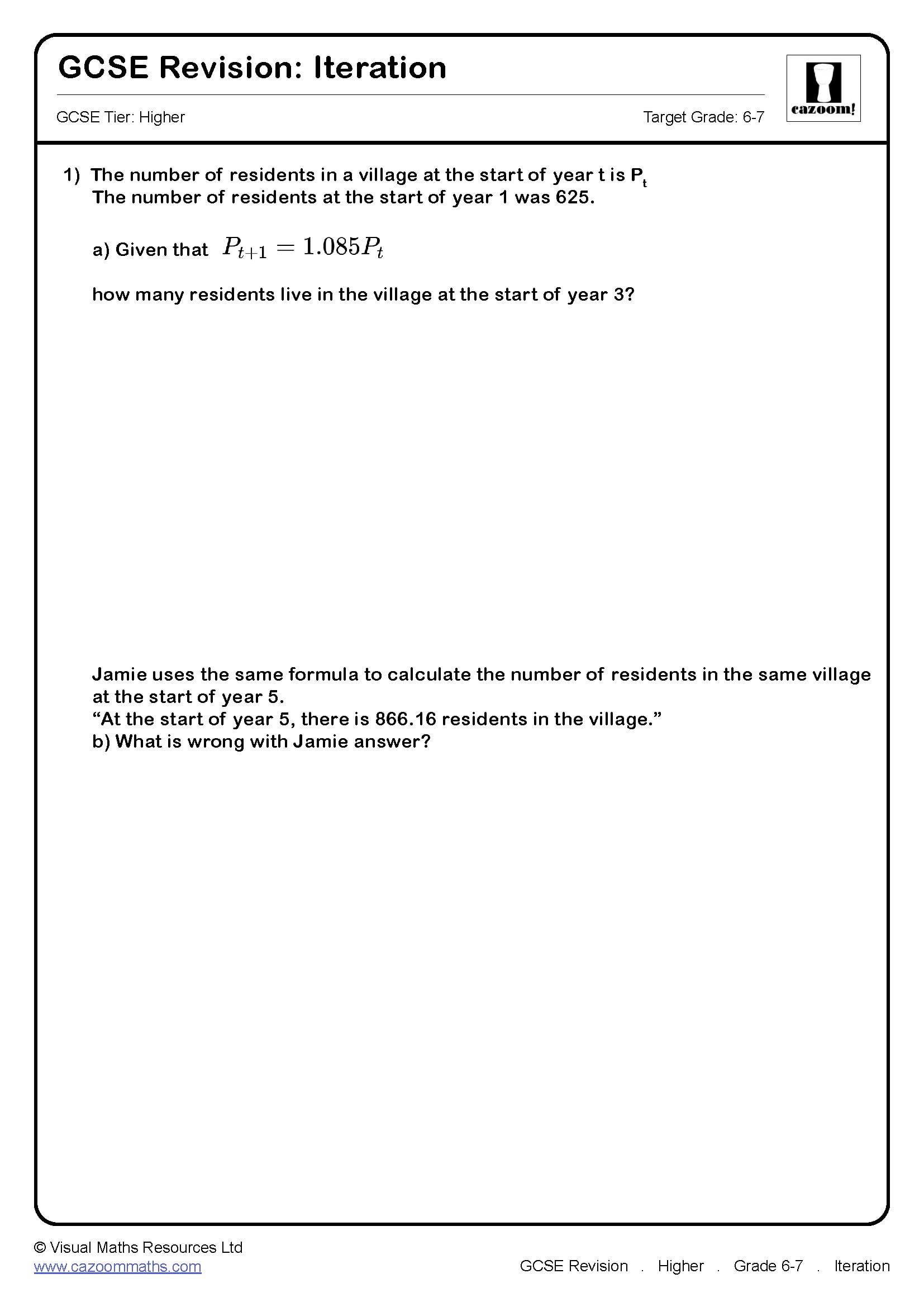
Iteration
Target Grade: 6-7
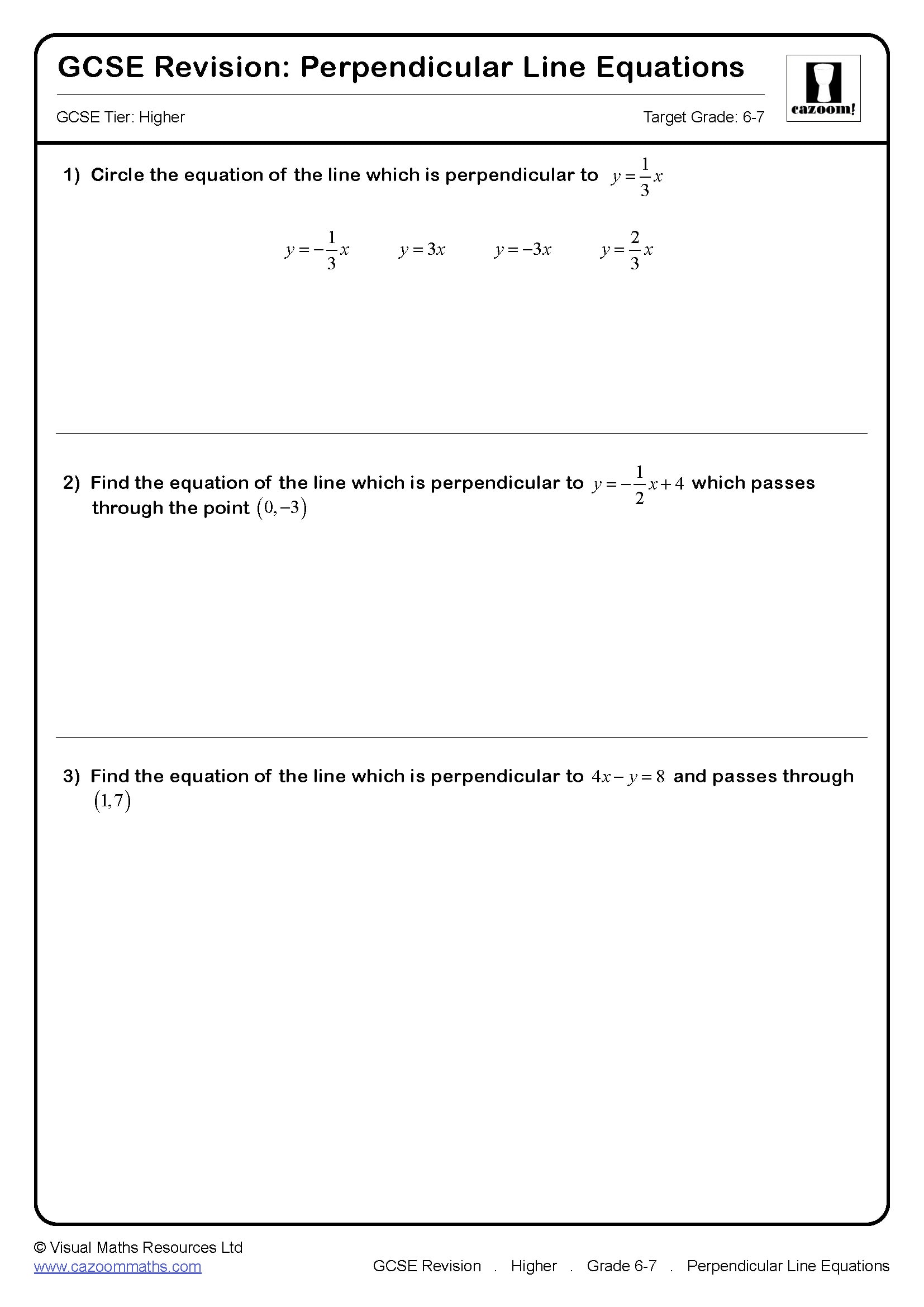
Perpendicular Line Equations
Target Grade: 6-7
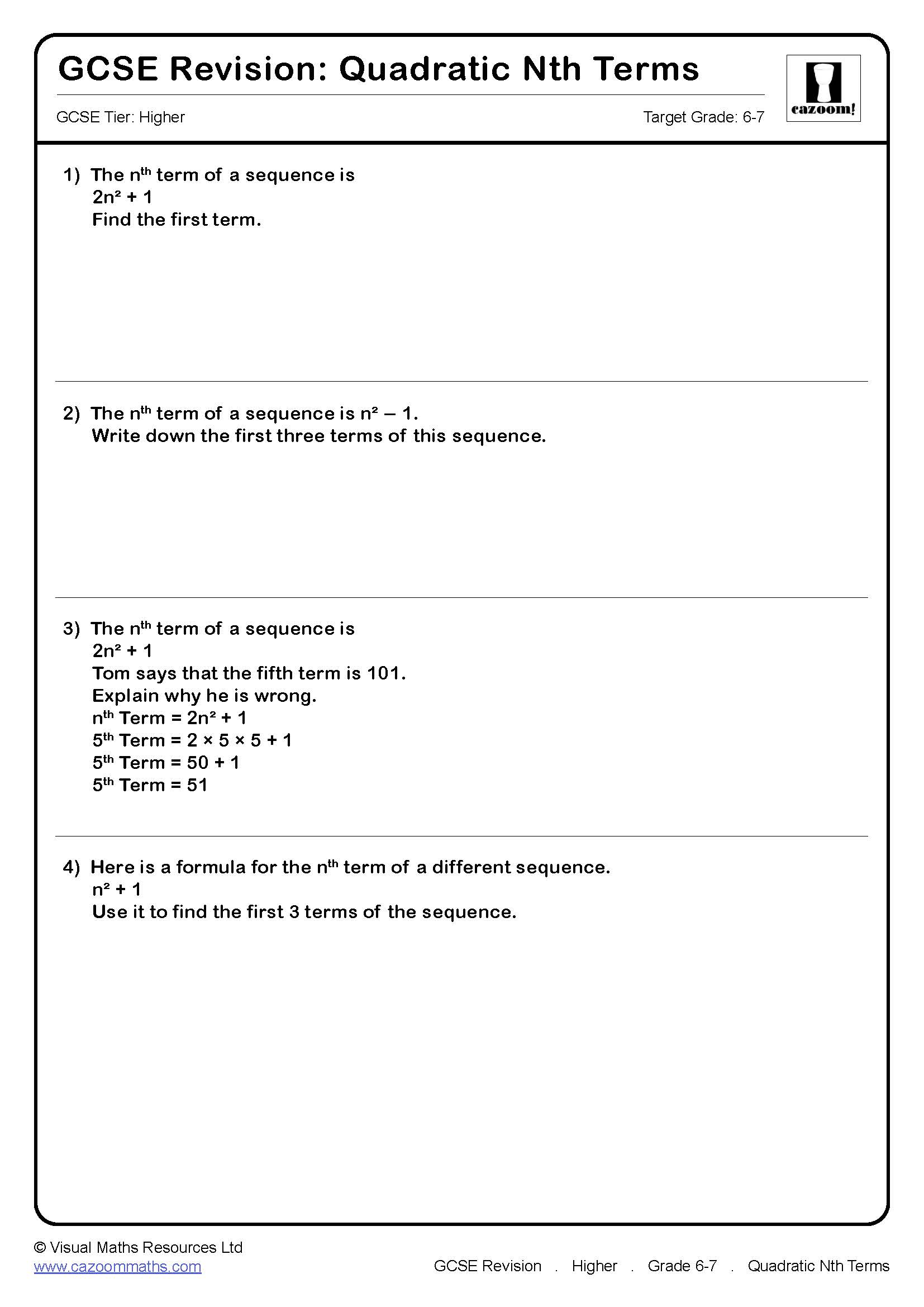
Quadratic Nth Terms (B)
Target Grade: 6-7
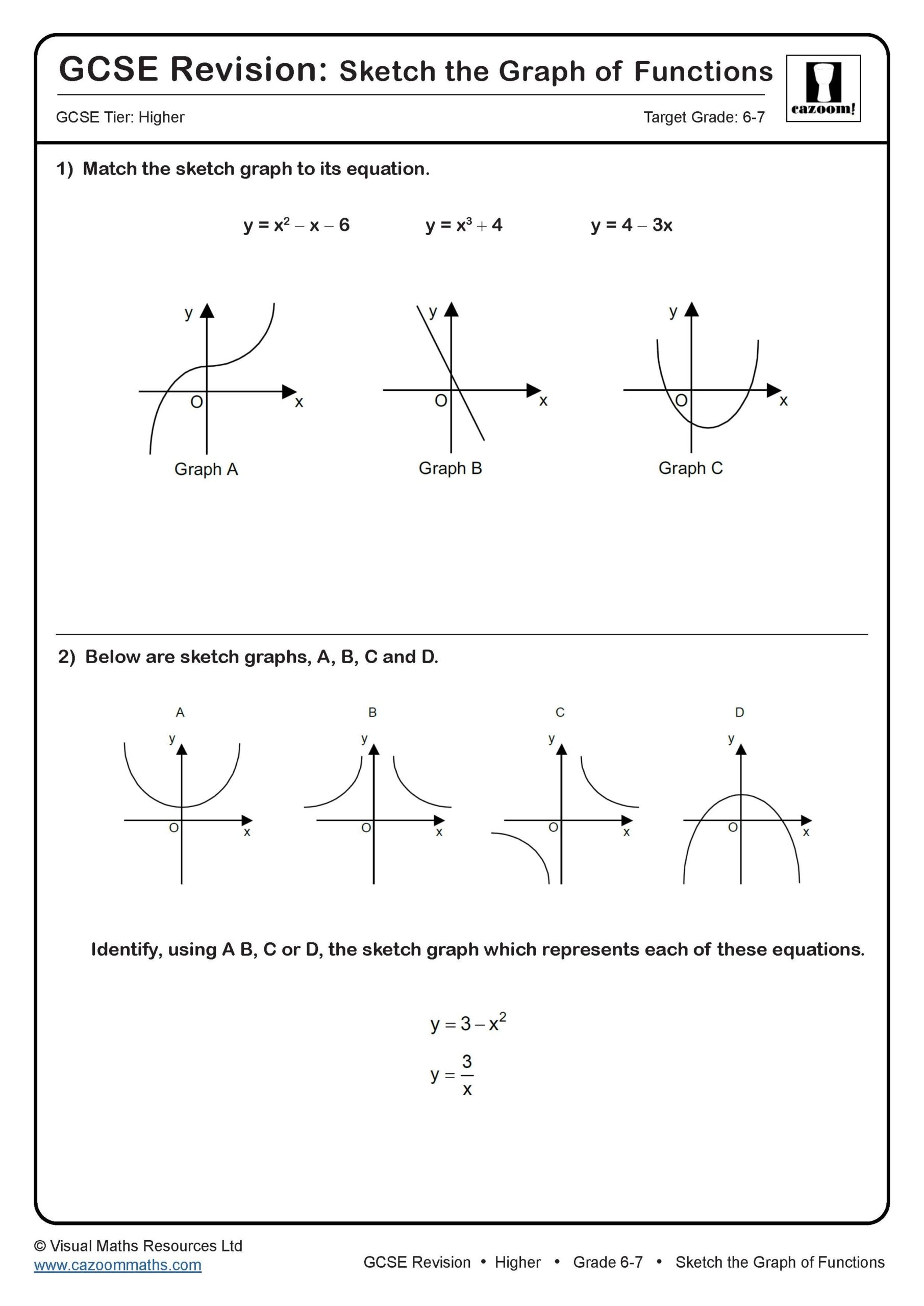
Sketch the Graph of Functions
Target Grade: 6-7
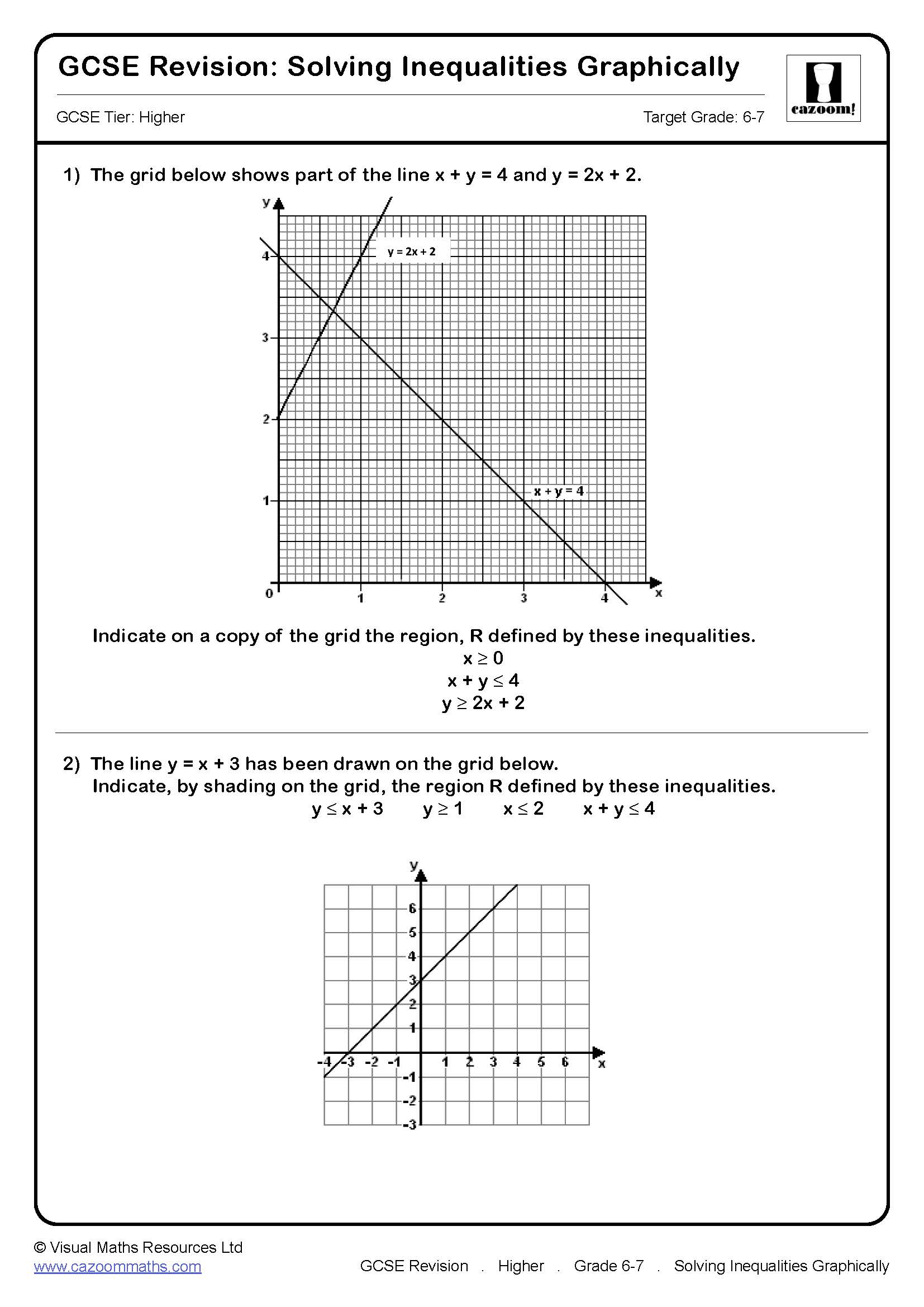
Solving Inequalities Graphically
Target Grade: 6-7
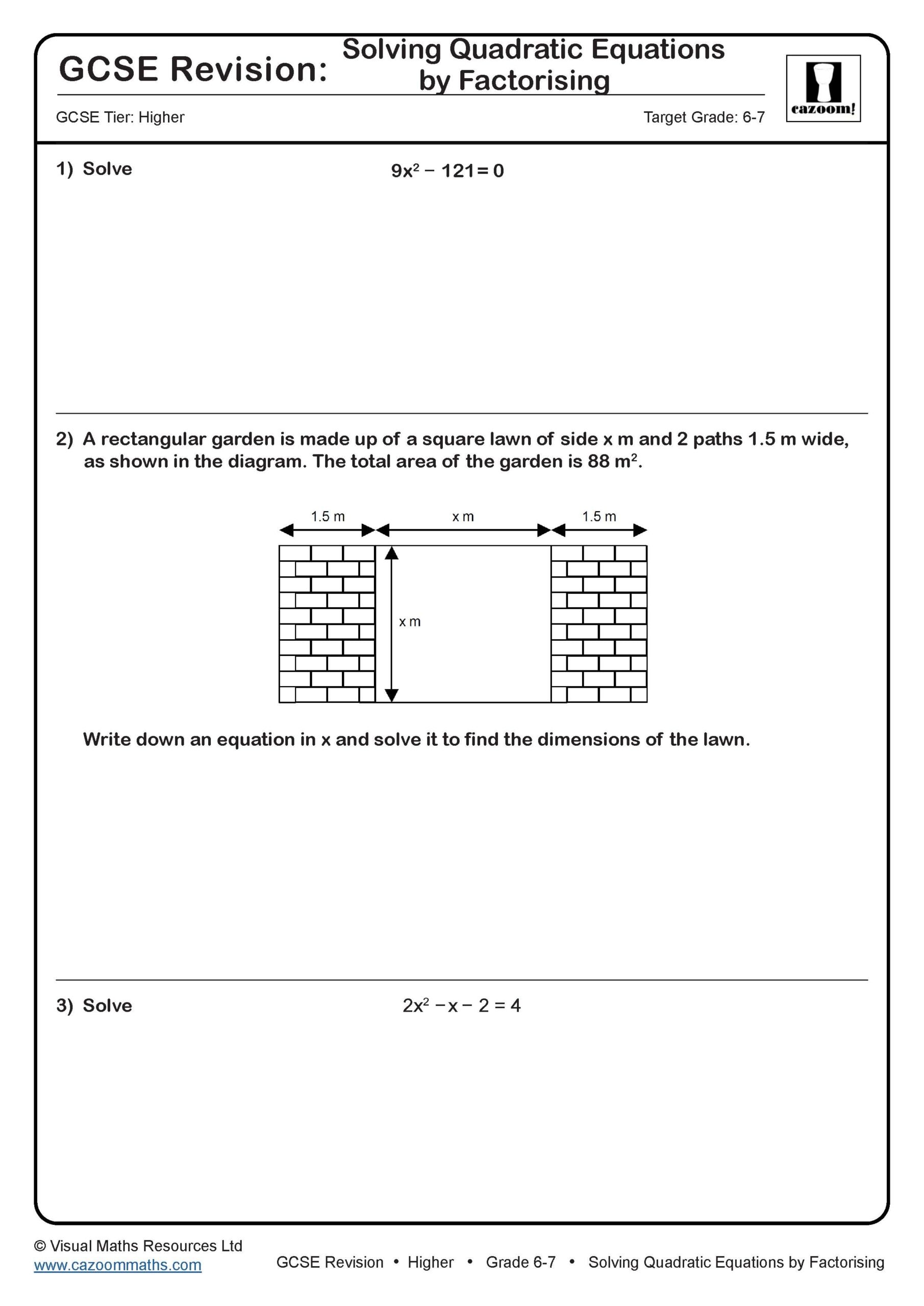
Solving Quadratic Equations by Factorising (B)
Target Grade: 6-7
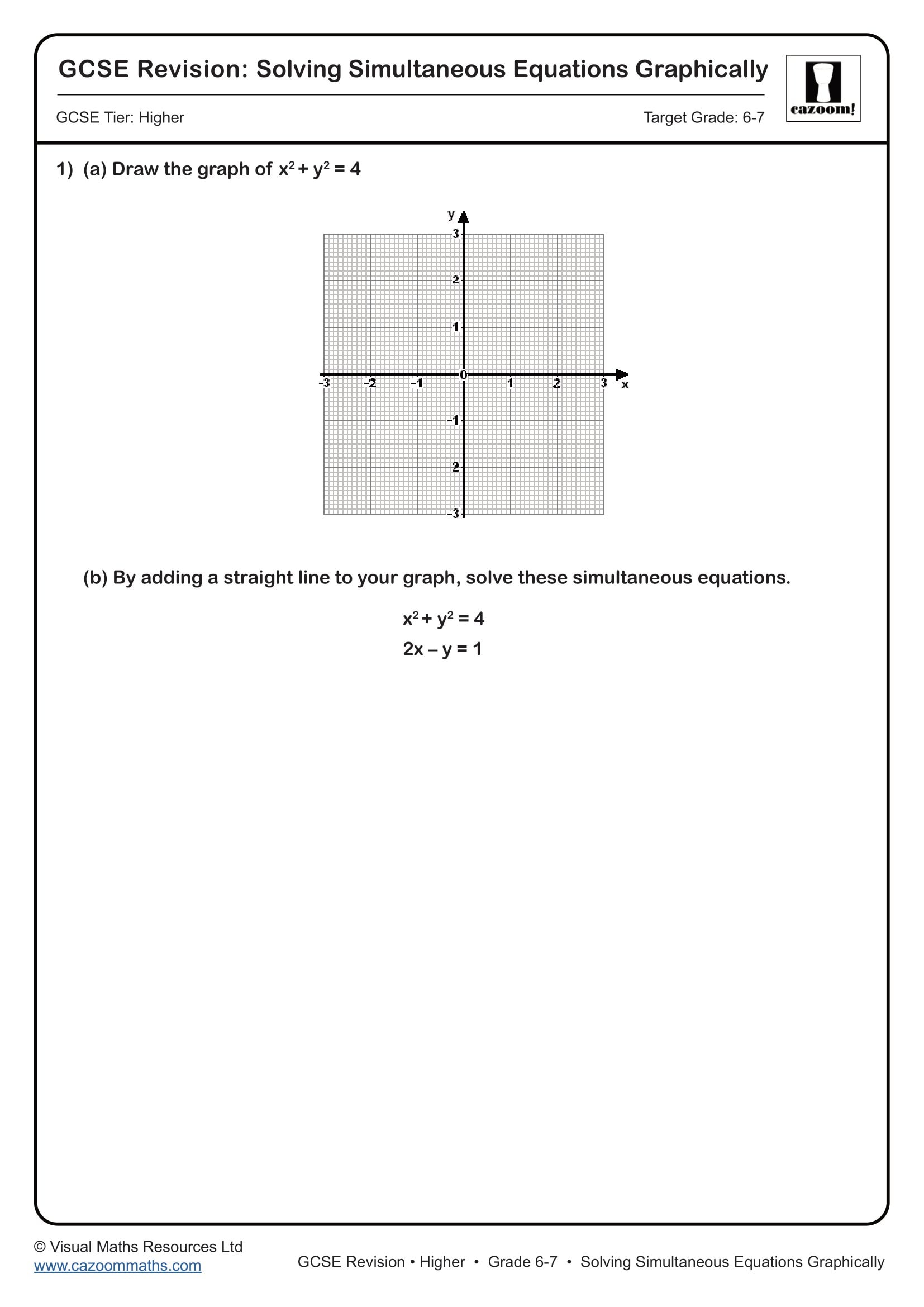
Solving Simultaneous Equations Graphically (B)
Target Grade: 6-7
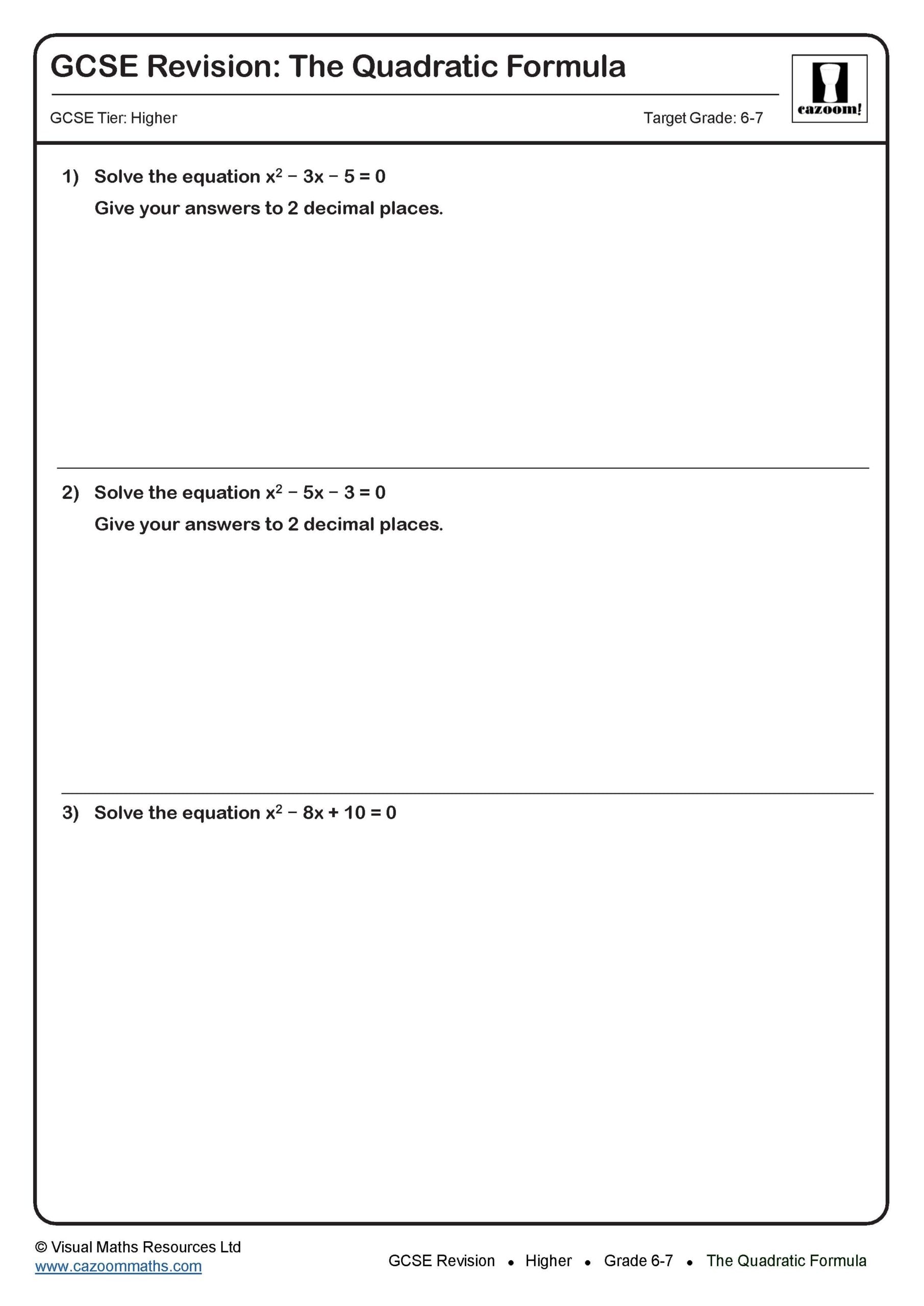
The Quadratic Formula
Target Grade: 6-7
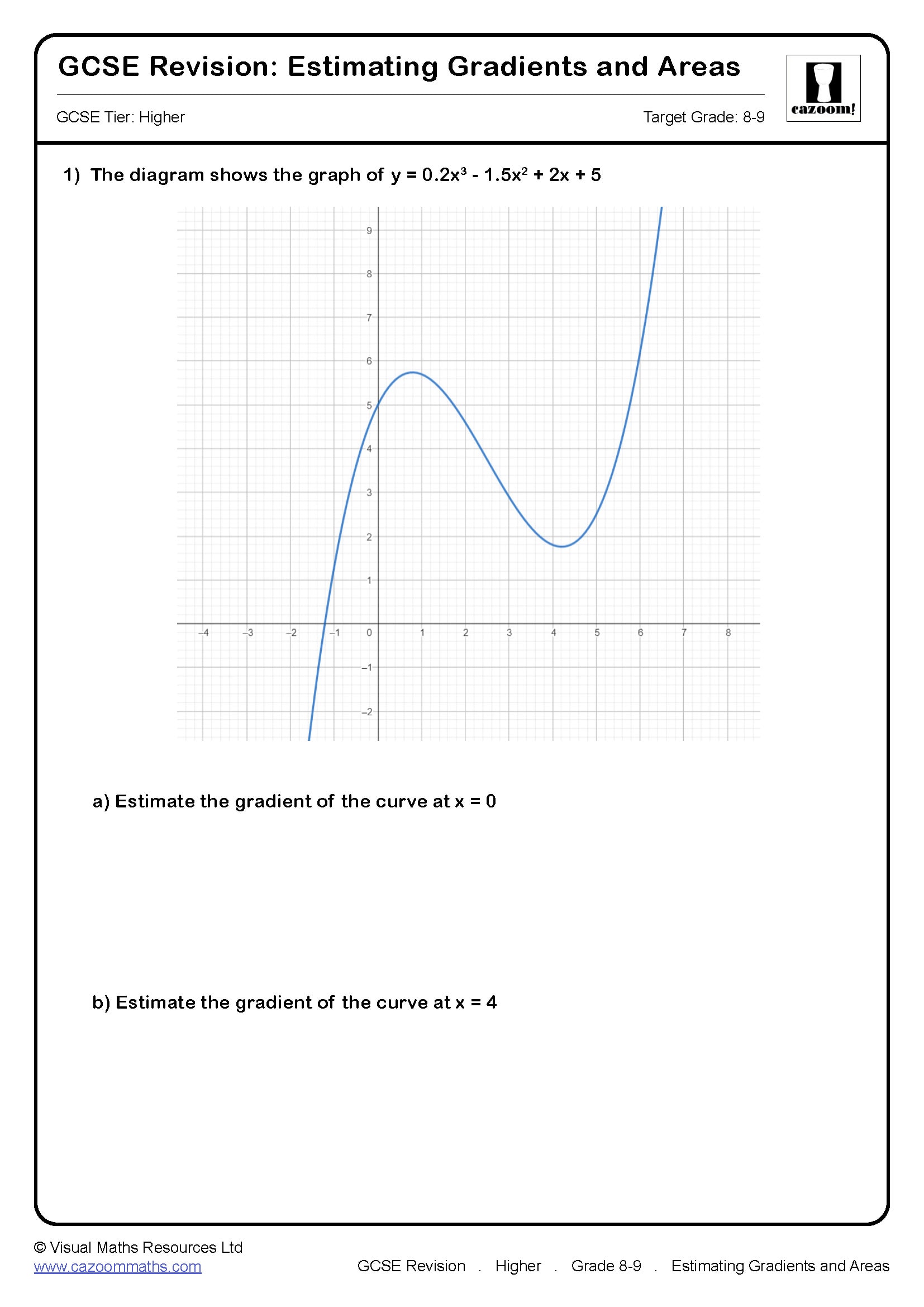
Estimating Gradients and Area
Target Grade: 8-9
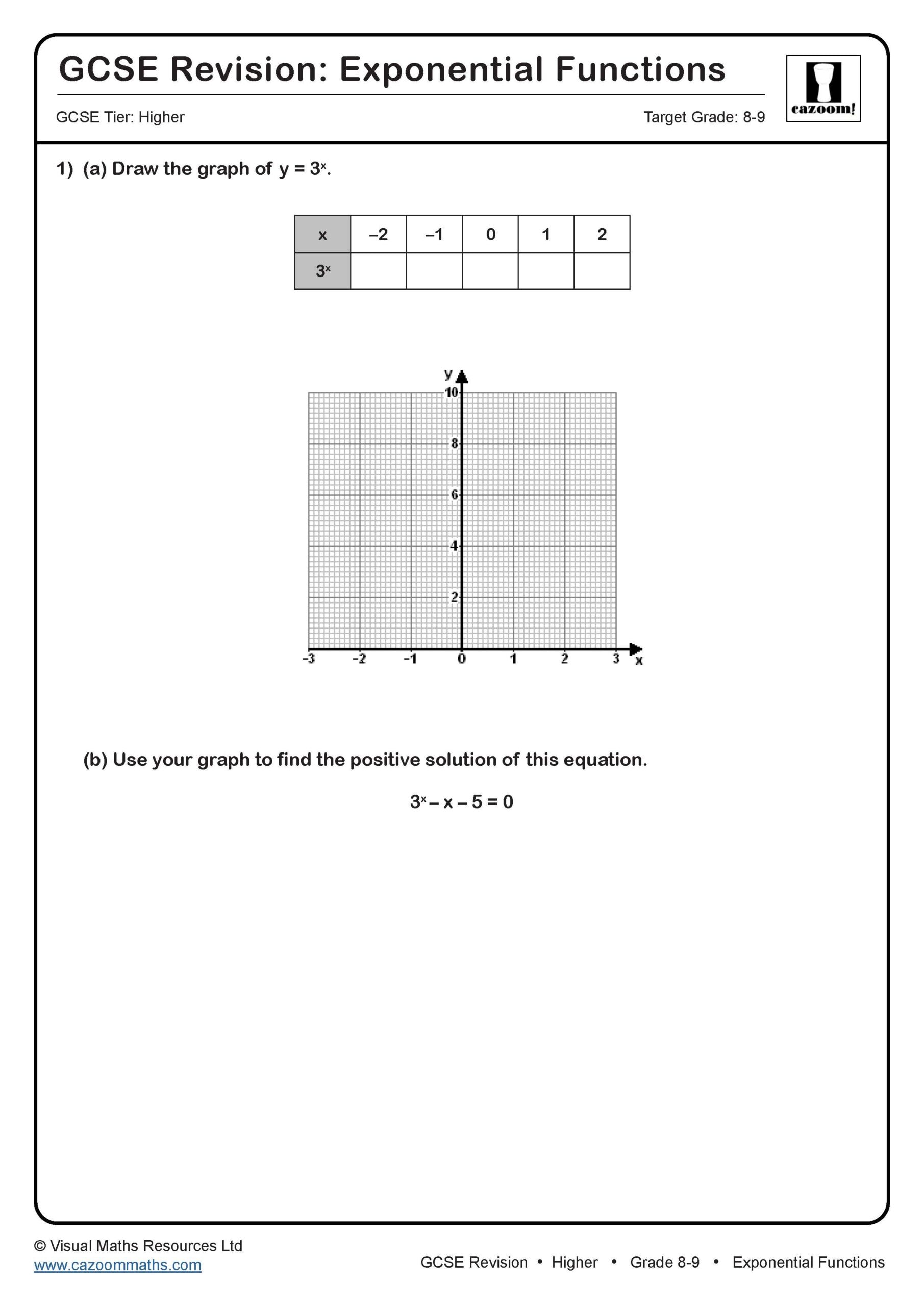
Exponential Functions
Target Grade: 8-9
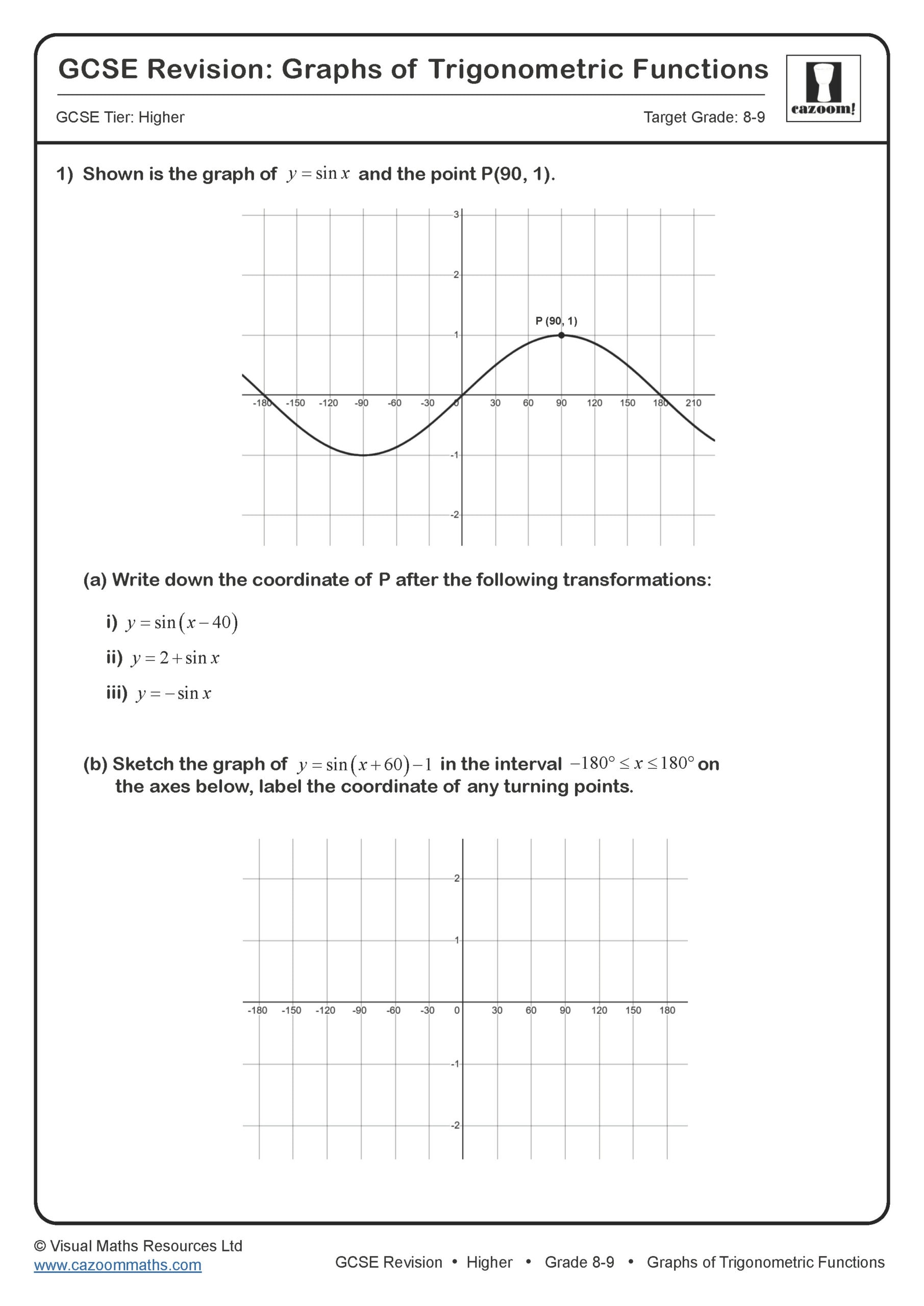
Graphs of Trigonometric Functions
Target Grade: 8-9
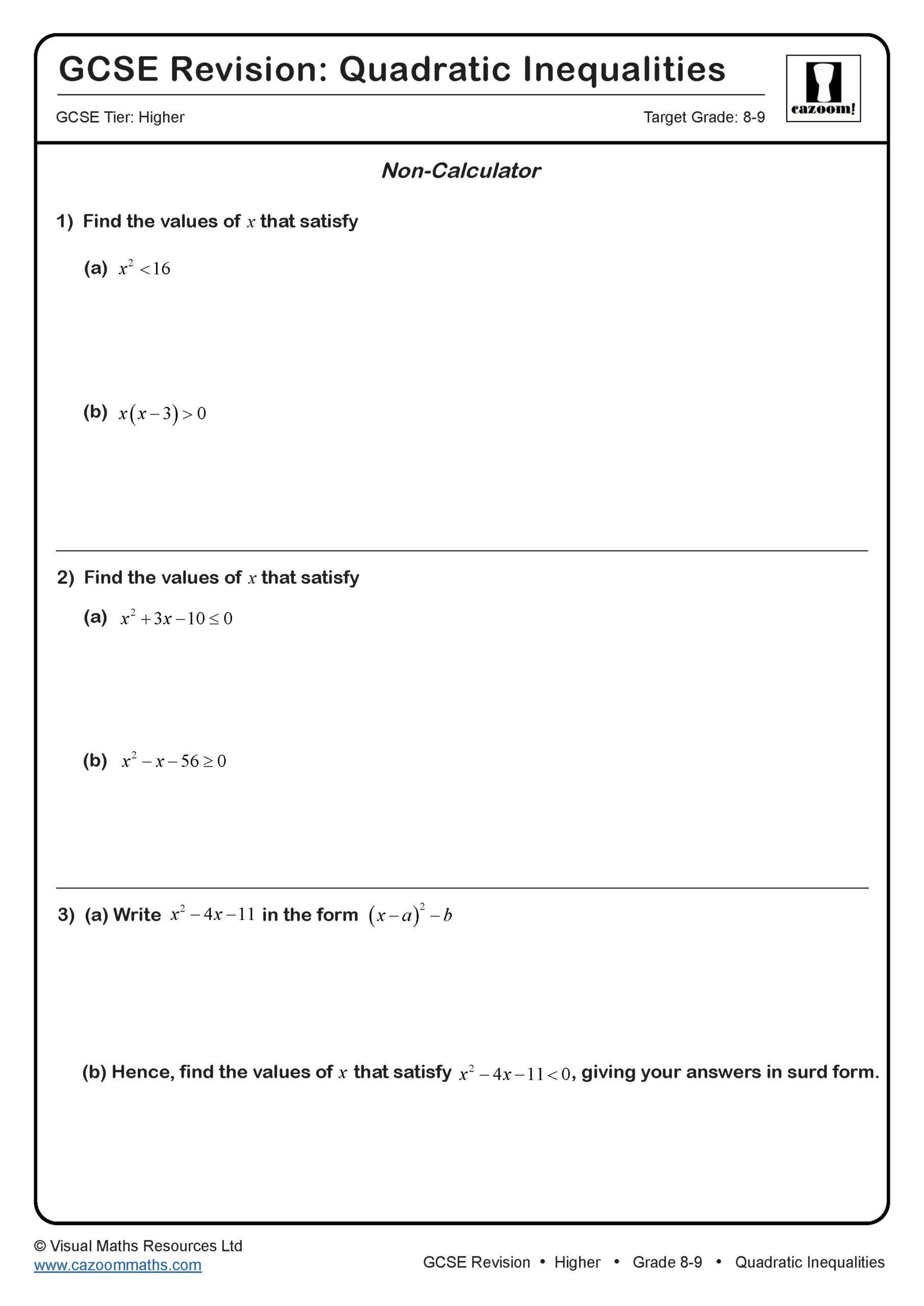
Quadratic Inequalities
Target Grade: 8-9
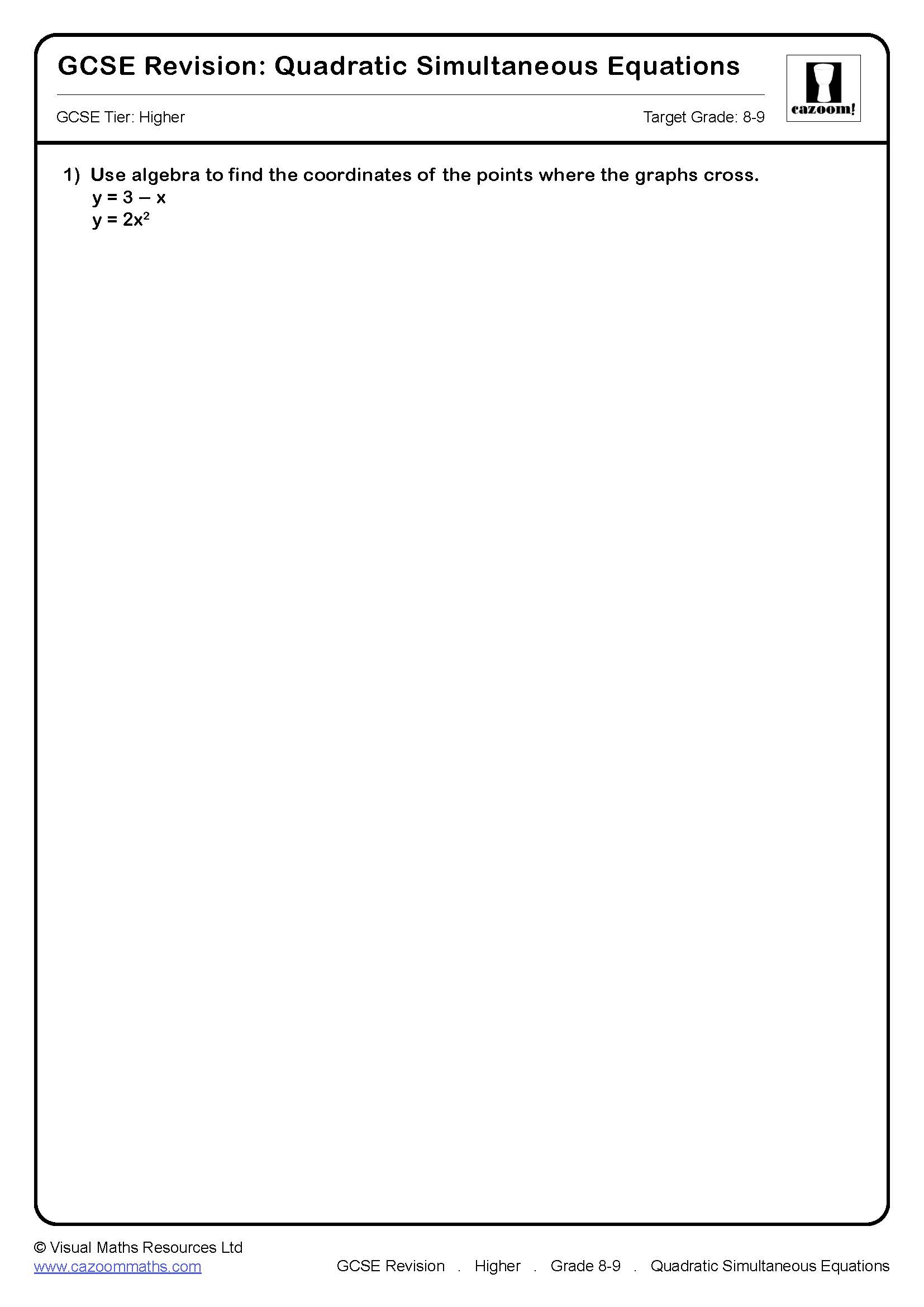
Quadratic Simultaneous Equations
Target Grade: 8-9
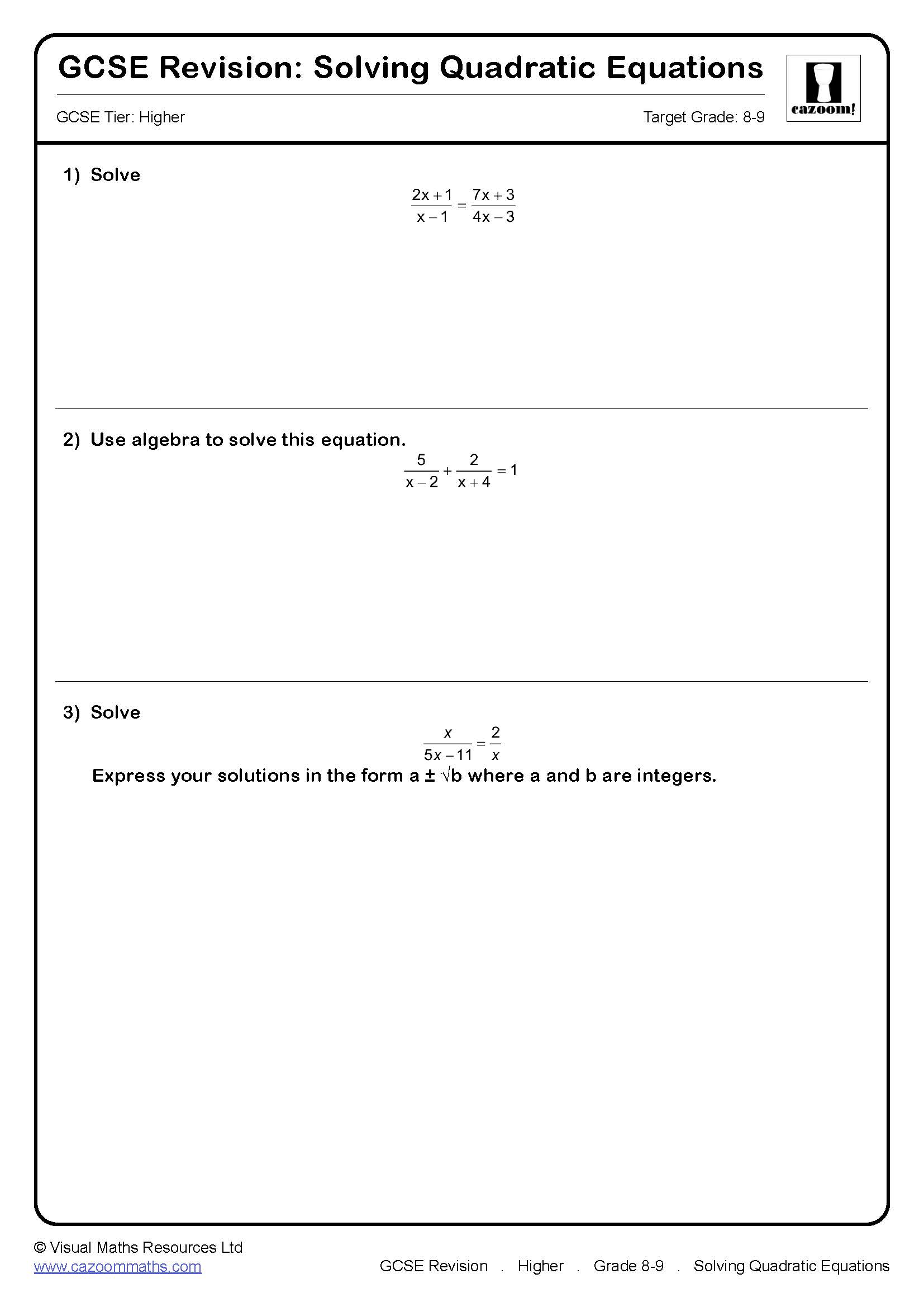
Solving Quadratic Equations
Target Grade: 8-9
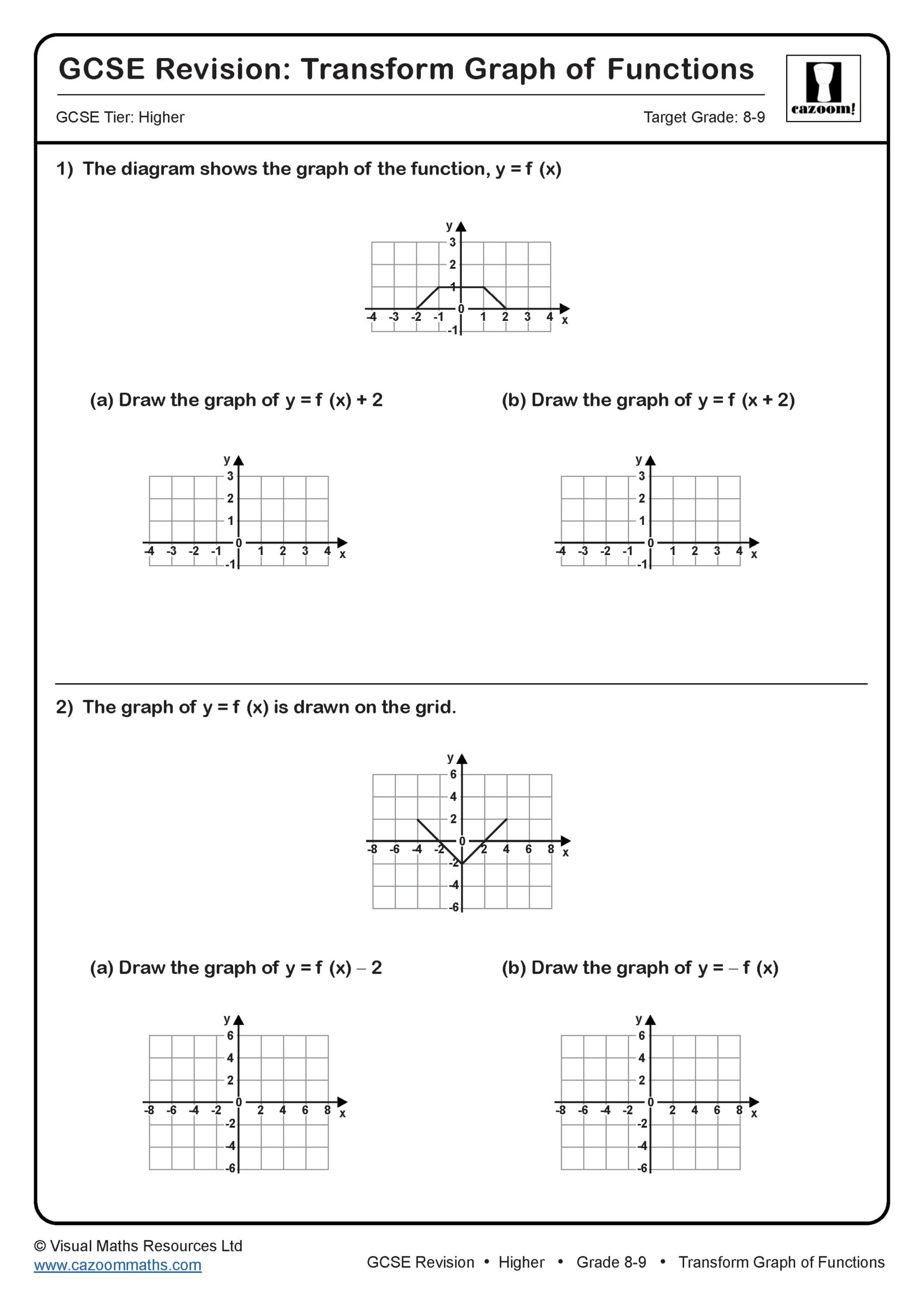
Transform Graphs of Functions
Target Grade: 8-9
All worksheets are created by the team of experienced teachers at Cazoom Maths.
What algebra topics are essential for GCSE maths?
Foundation tier students (grades 1-5) must secure solving linear equations, expanding and factorising single brackets, substitution, forming expressions, and linear sequences. Higher tier students (grades 4-9) need everything Foundation covers plus quadratics, simultaneous equations, algebraic fractions, functions, and proof. The grade 4/5 boundary typically requires secure manipulation of algebraic expressions and solving equations with unknowns on both sides.
Students lose marks when they rush rearranging formulae or drop negative signs during expansion. Examiners expect every algebraic step shown clearly, particularly when solving equations. Teachers find that students who practise mixed algebra questions across topics perform better than those who revise each skill in isolation, as exam papers deliberately test connections between methods.
How are these algebra worksheets organised by grade?
Worksheets are grouped into four grade bands: 1-3 covers foundational algebra including basic equations, substitution, and simple sequences; 4-5 bridges Foundation and Higher with quadratics, simultaneous equations, and rearranging formulae; 6-7 introduces Higher tier concepts like algebraic proof, completing the square, and functions; 8-9 targets top grades with circle equations, quadratic inequalities, and advanced transformation of graphs.
Foundation students preparing for grades 1-5 should focus on the lower three bands, ensuring complete mastery of grades 1-3 and 4-5 content before attempting grade 6-7 material. Higher tier students aiming for grades 7-9 need secure understanding of grades 4-5 concepts first, as exam questions often combine techniques from multiple grade bands. This targeted approach prevents students wasting revision time on content above their target grade.
How is algebra tested in GCSE maths exams?
Algebra appears across all three GCSE papers, typically accounting for 25-35 marks per paper. Foundation papers test equations, expressions, sequences, and basic graphs through 1-3 mark questions with occasional 4-5 mark problems involving forming and solving equations. Higher papers include similar foundational content but add multi-step questions on quadratics, proof, functions, and algebraic fractions, with problem-solving questions worth 6-8 marks combining several techniques.
Examiners expect clear algebraic working at every step. Students lose marks by jumping steps in equation solving or failing to show factorisation clearly. Mark schemes reward correct methods even with arithmetic errors, so writing out each stage matters. Teachers notice students often run out of time on algebra-heavy Paper 3, making timed practice essential. Questions rarely test one skill in isolation at Higher tier.
What revision strategies work best for GCSE algebra?
Start revision by identifying weak topics using diagnostic worksheets across grade bands, then focus practice on those specific skills before moving to mixed questions. Timed practice matters because algebra questions require methodical working under pressure. Students should aim to complete grade-appropriate worksheets within realistic exam time allocations, typically 1-1.5 minutes per mark. Spaced repetition works better than cramming—revisiting topics every few days embeds techniques more effectively than intensive single sessions.
Teachers find revision most effective when students complete worksheets independently, check answers immediately, then rework incorrect questions rather than just marking them wrong. Setting mixed algebra worksheets as weekly homework throughout Year 11 builds fluency gradually. Pairing worksheet practice with past paper questions shows students how topics combine in exam contexts. The answer sheets allow students to self-assess and identify patterns in their errors, particularly with sign errors or algebraic manipulation.