Geometry GCSE Revision Worksheets
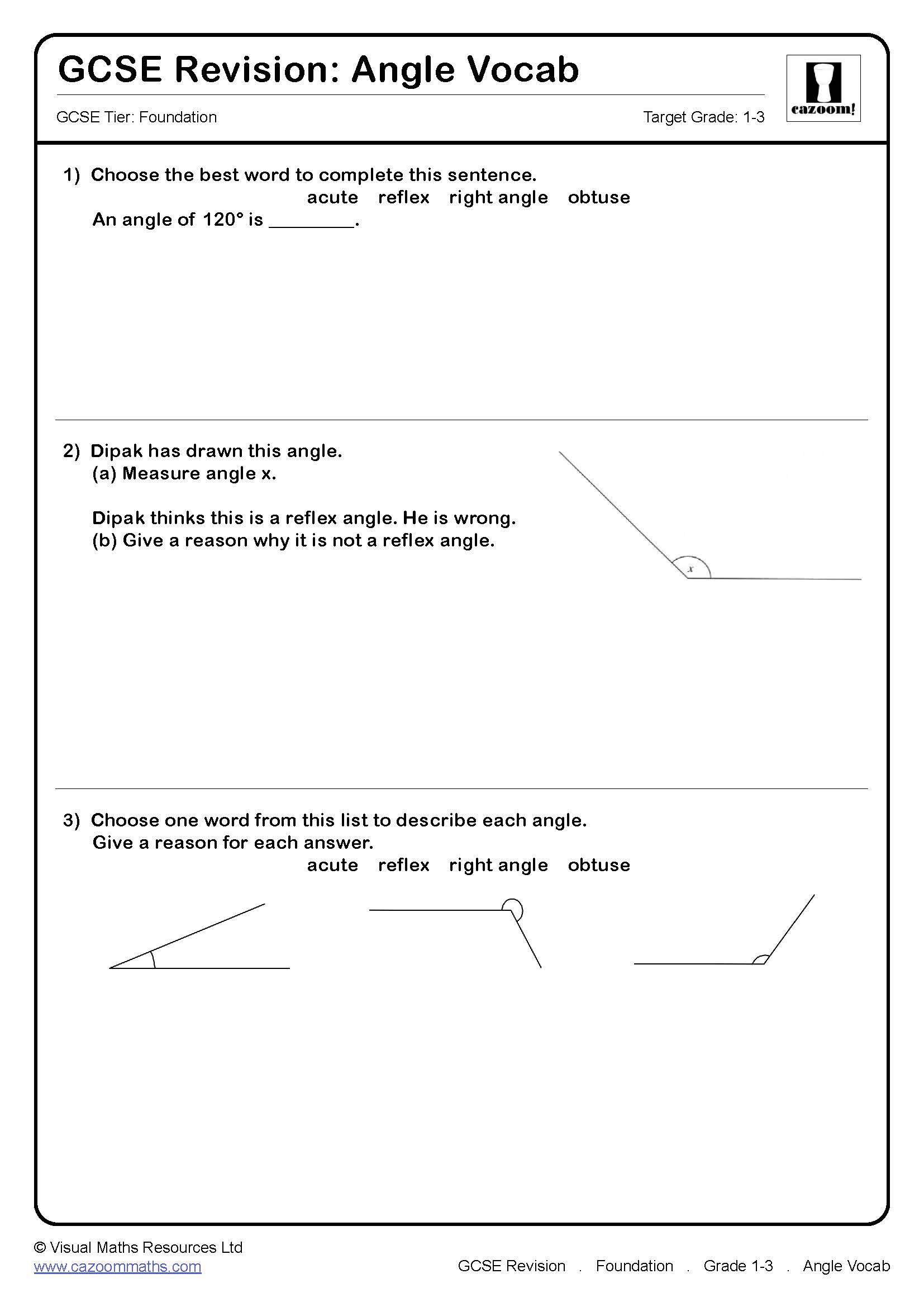
Angle Vocab
Target Grade: 1-3
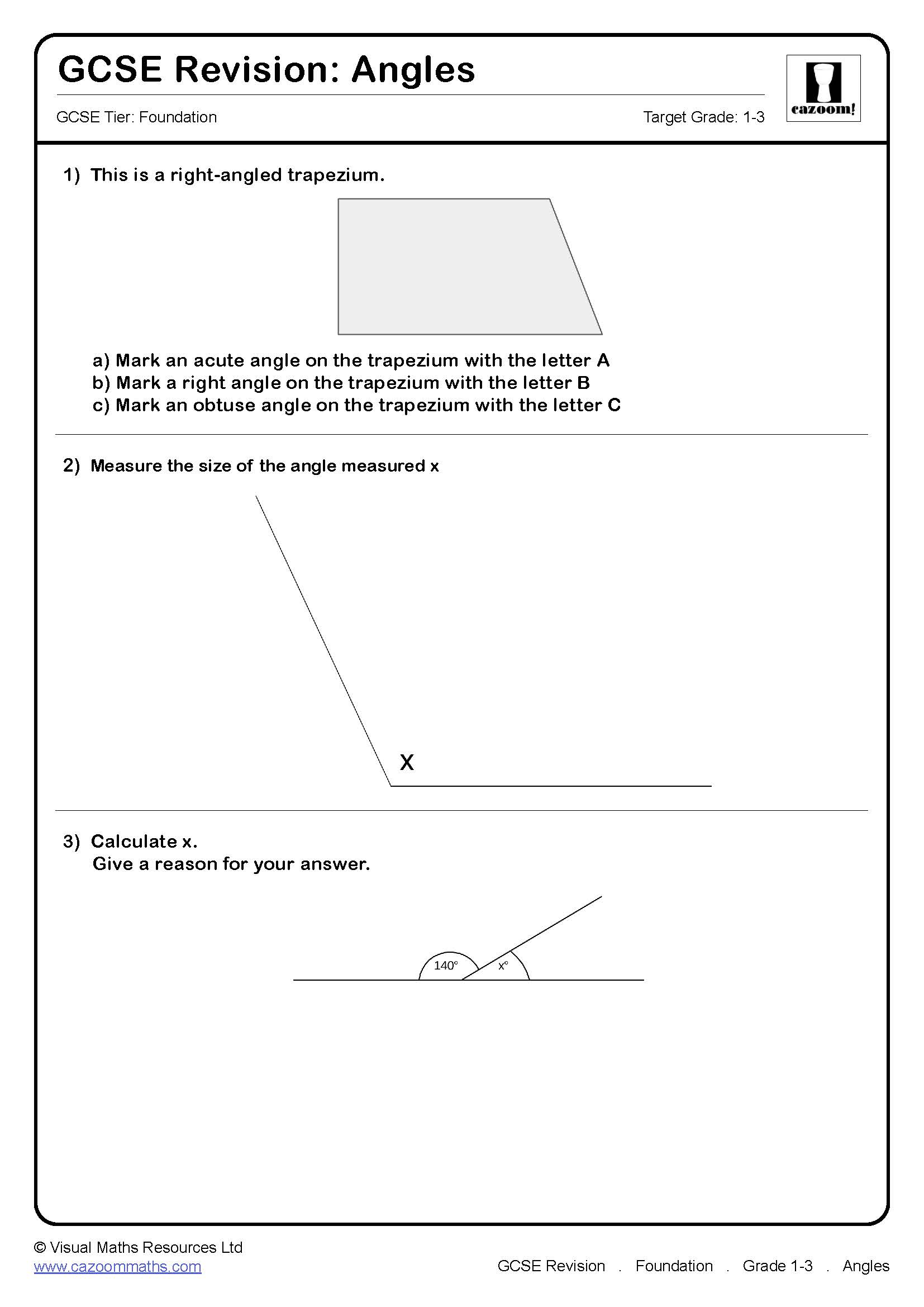
Angles
Target Grade: 1-3
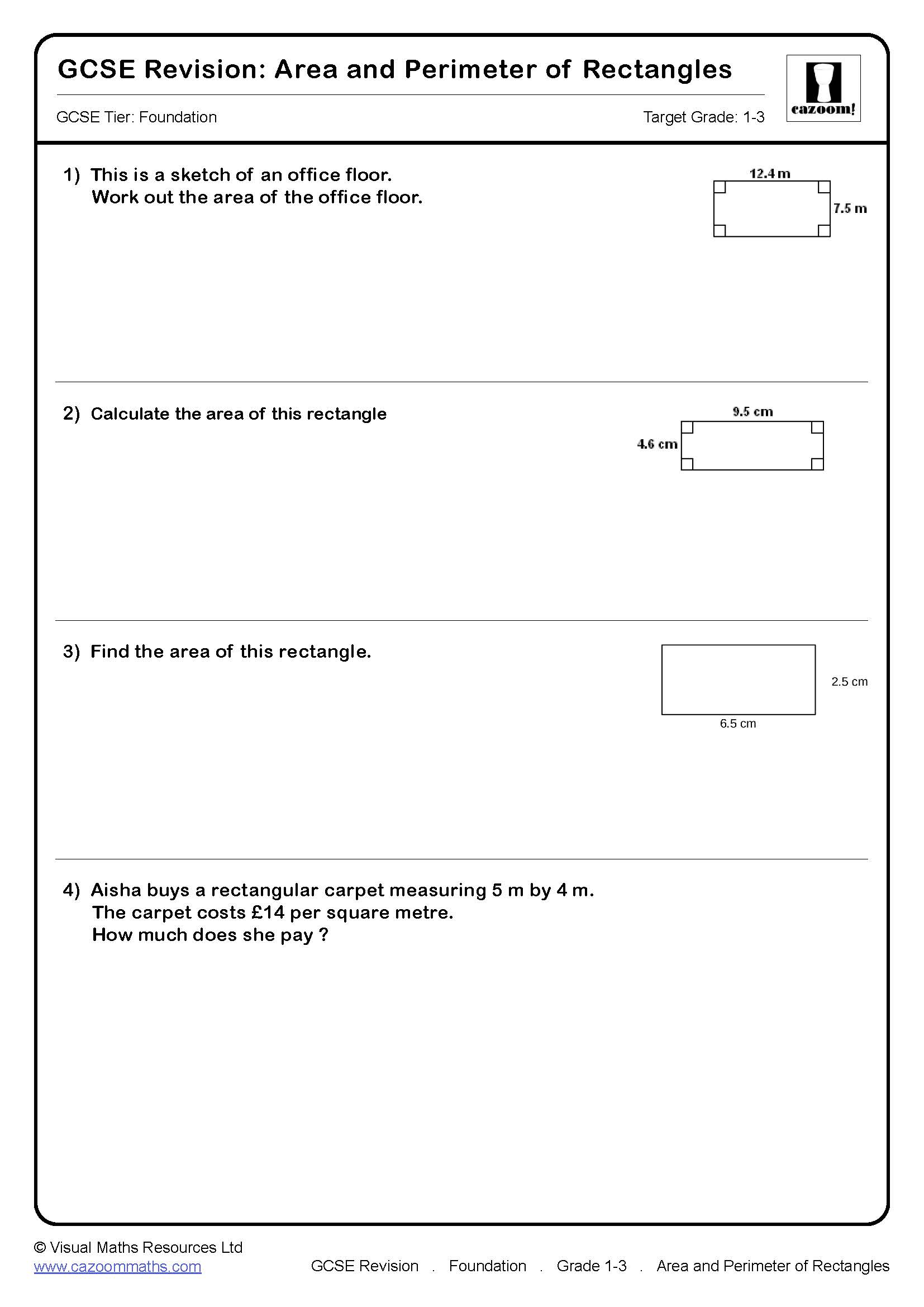
Area and Perimeter of Rectangles
Target Grade: 1-3
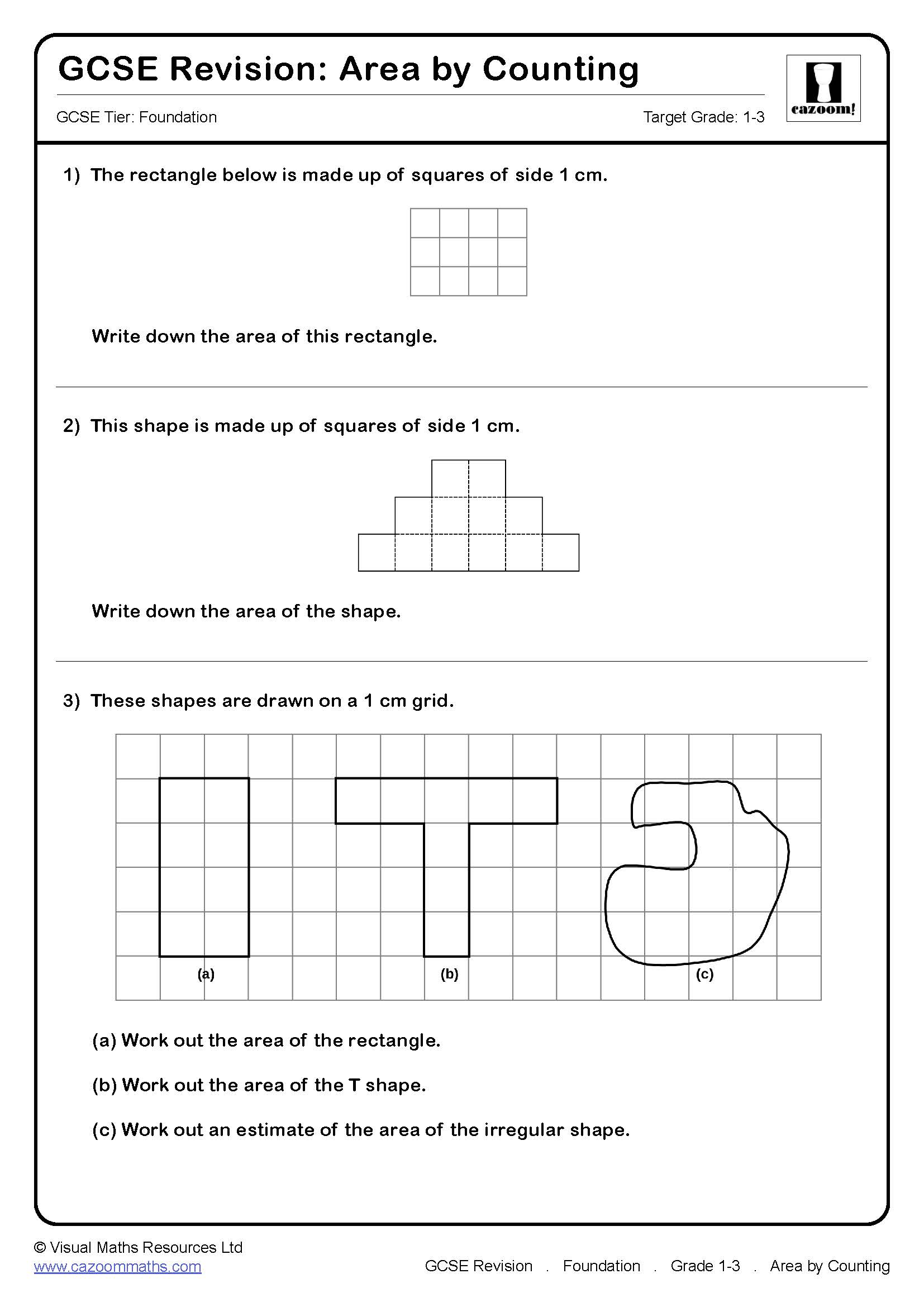
Area by Counting
Target Grade: 1-3
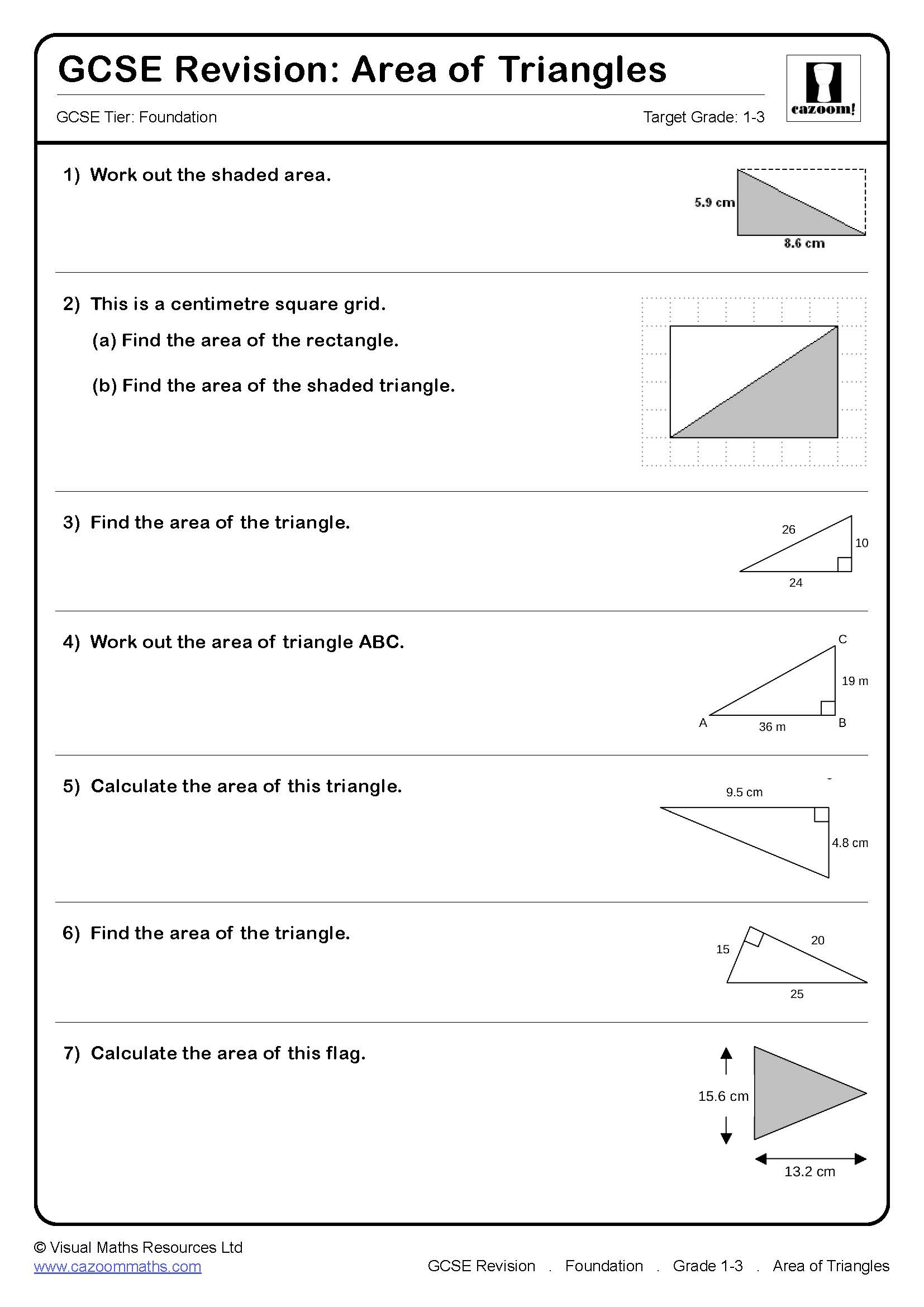
Area of Triangles
Target Grade: 1-3
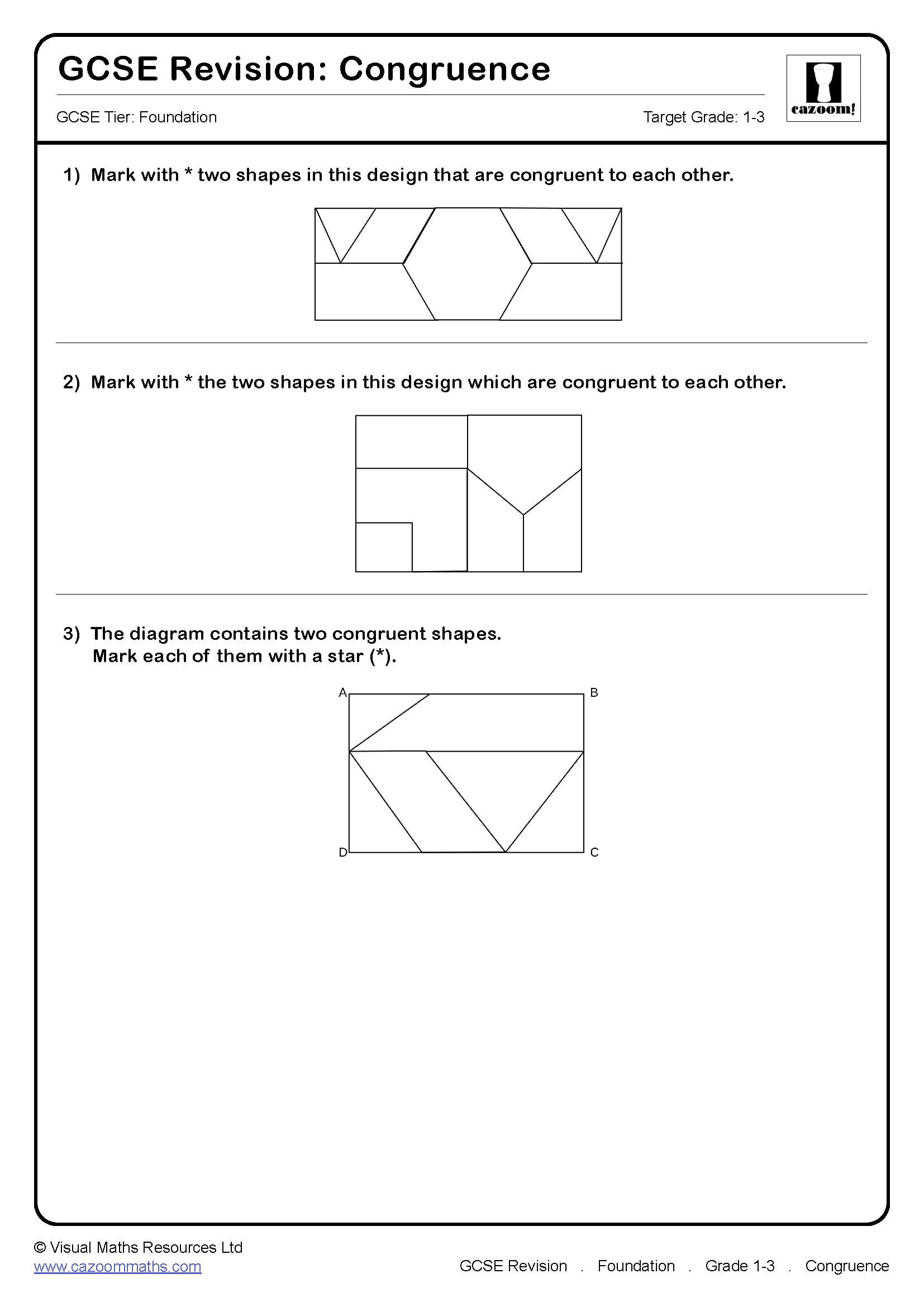
Congruence
Target Grade: 1-3
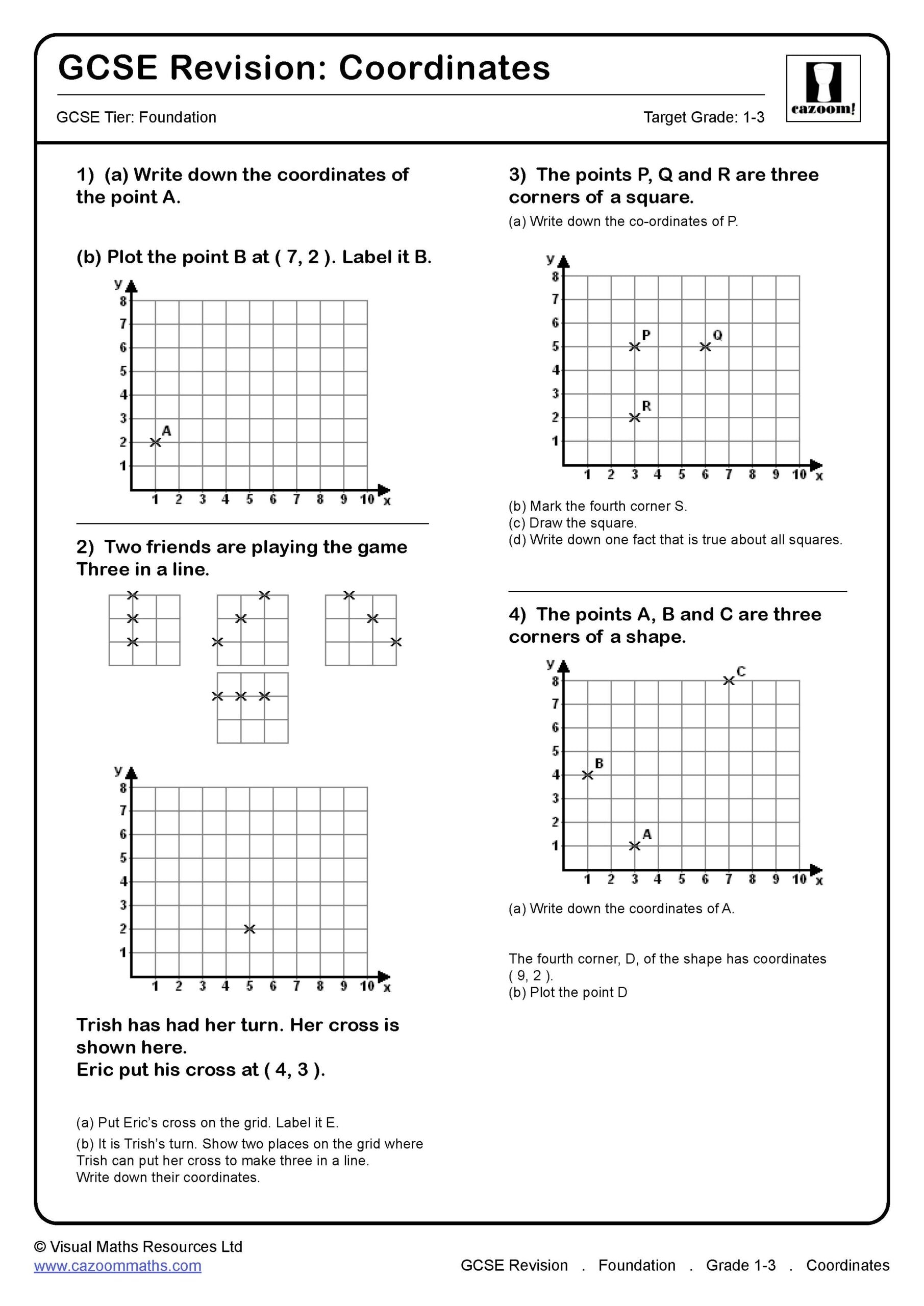
Coordinates
Target Grade: 1-3
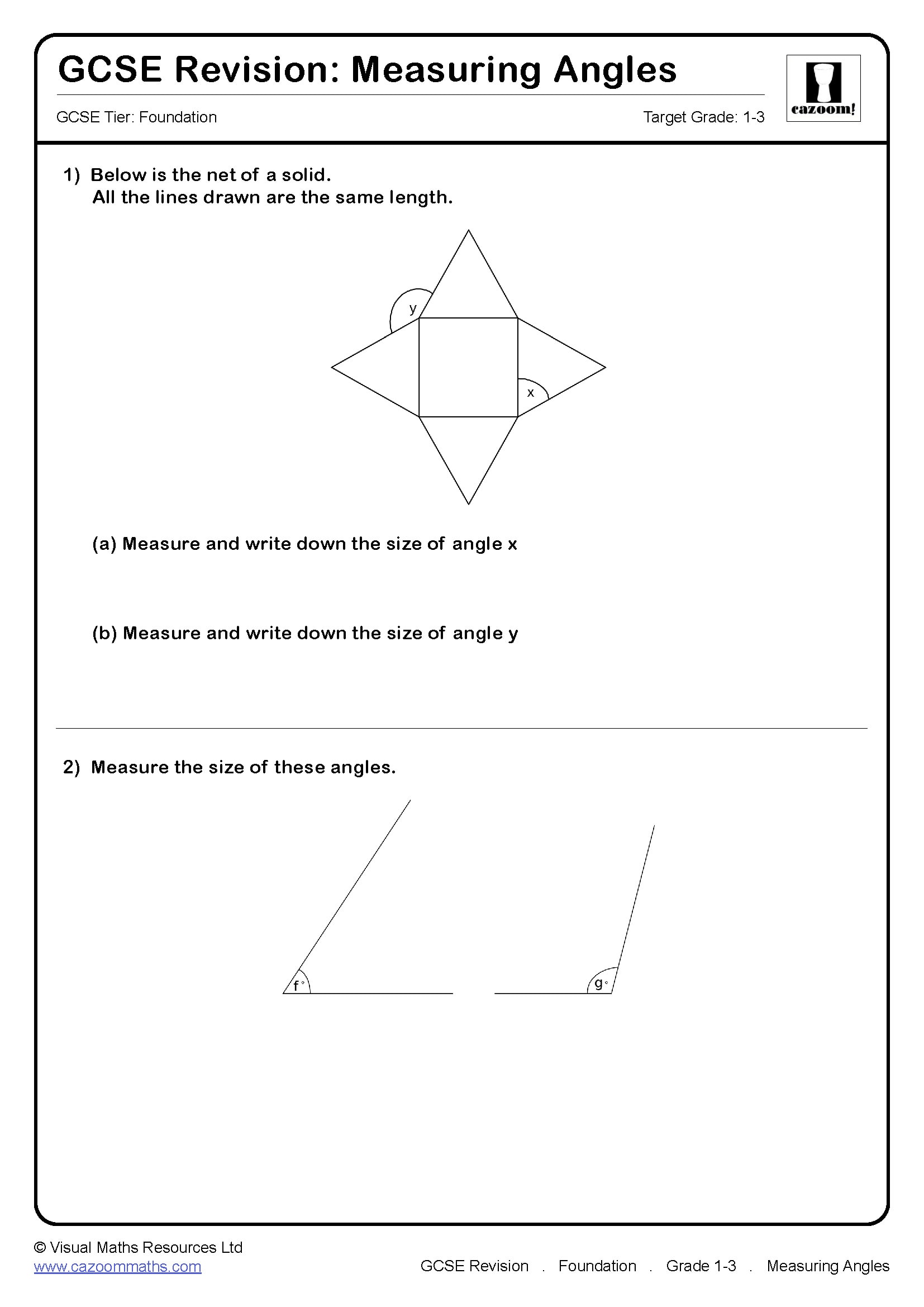
Measuring Angles
Target Grade: 1-3
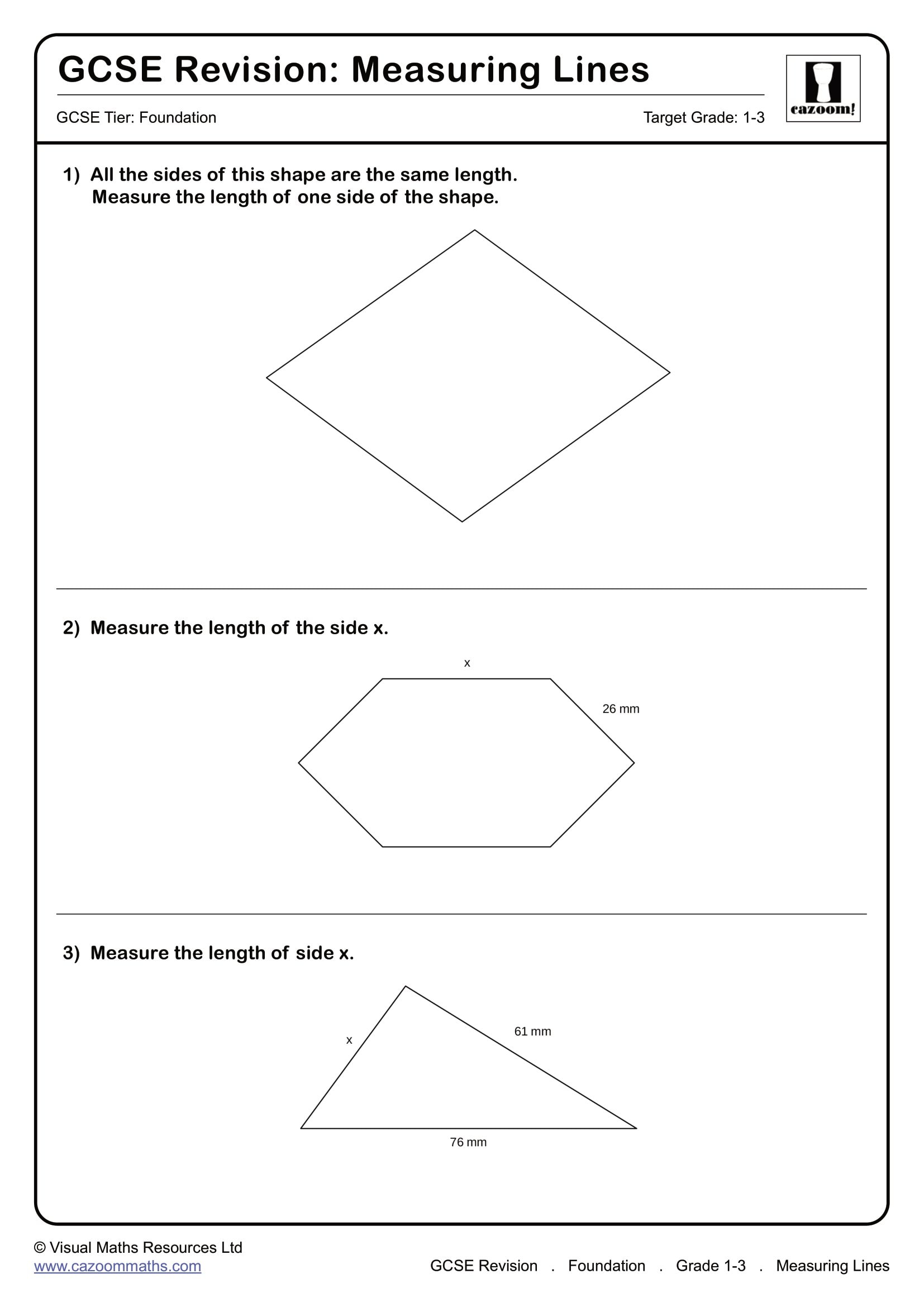
Measuring Lines
Target Grade: 1-3
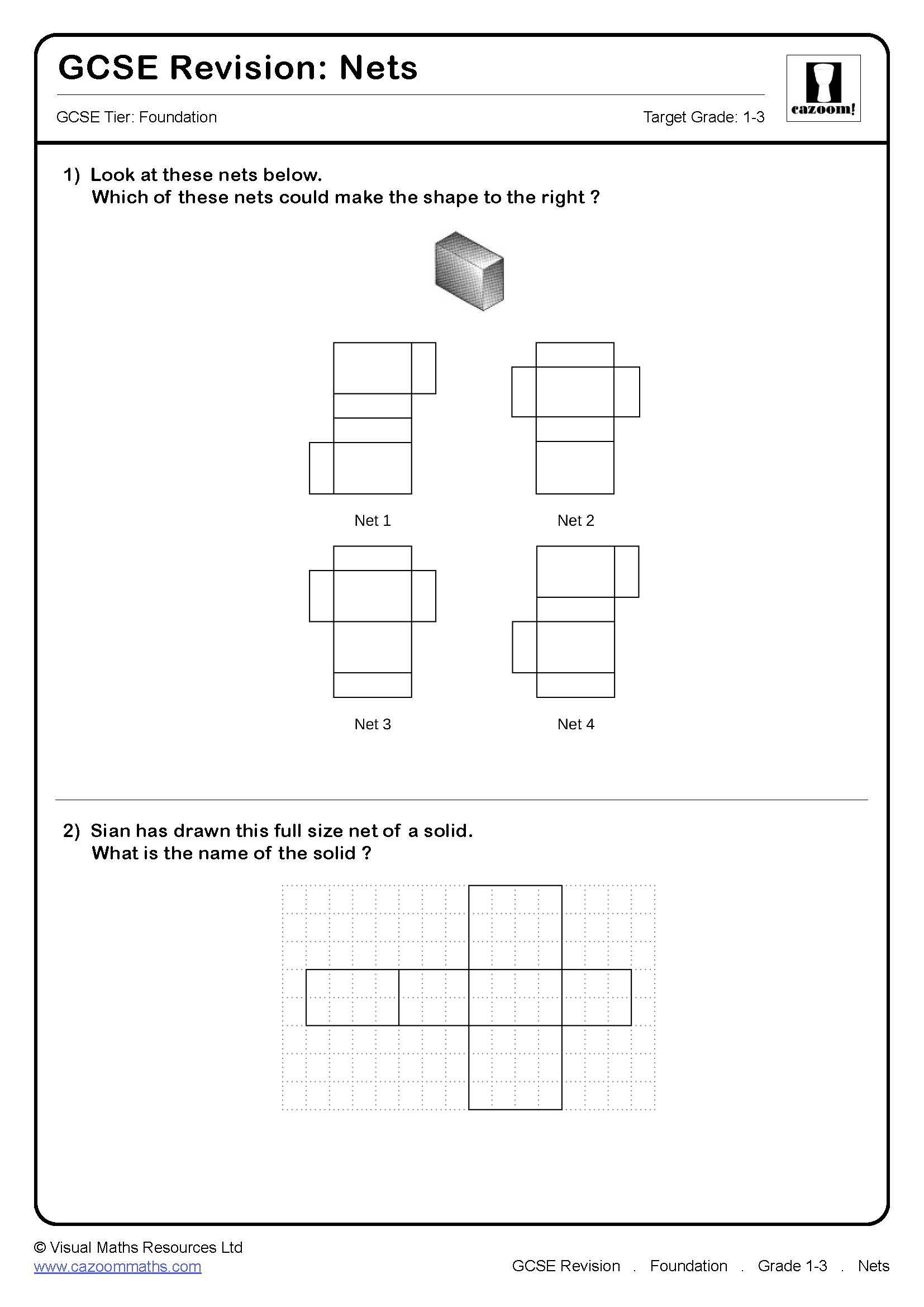
Nets
Target Grade: 1-3
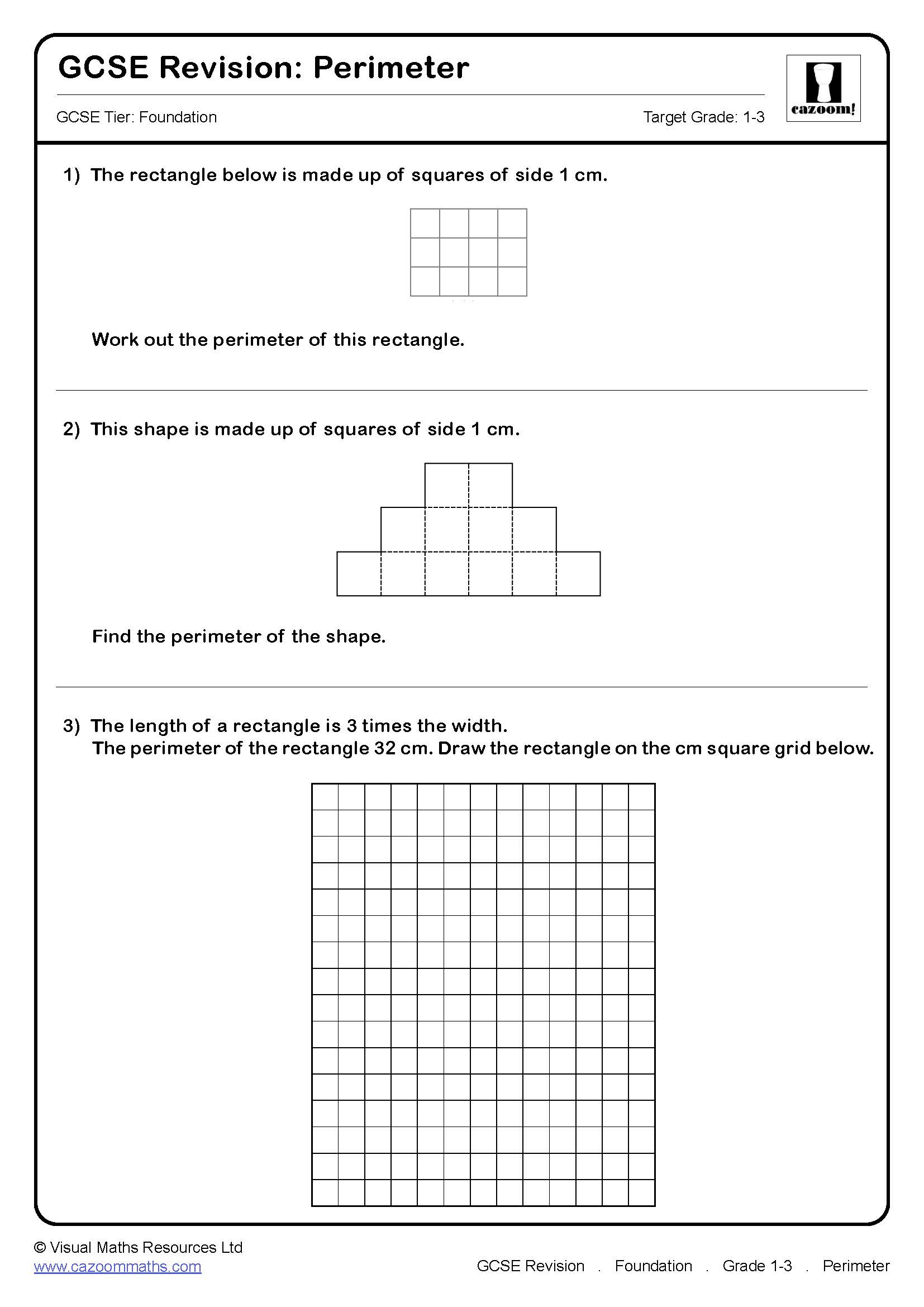
Perimeter
Target Grade: 1-3
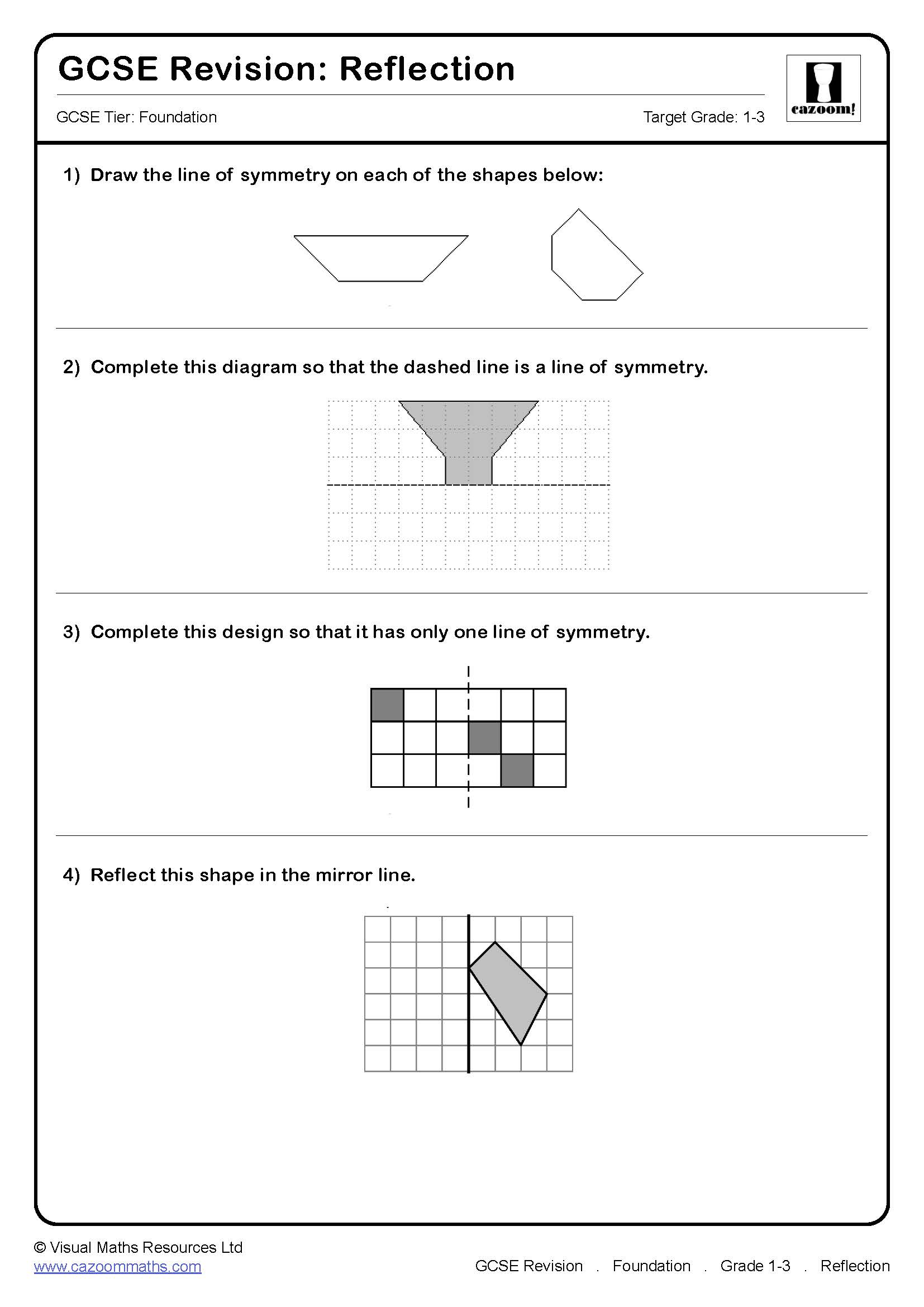
Reflection
Target Grade: 1-3
Rotation
Target Grade: 1-3
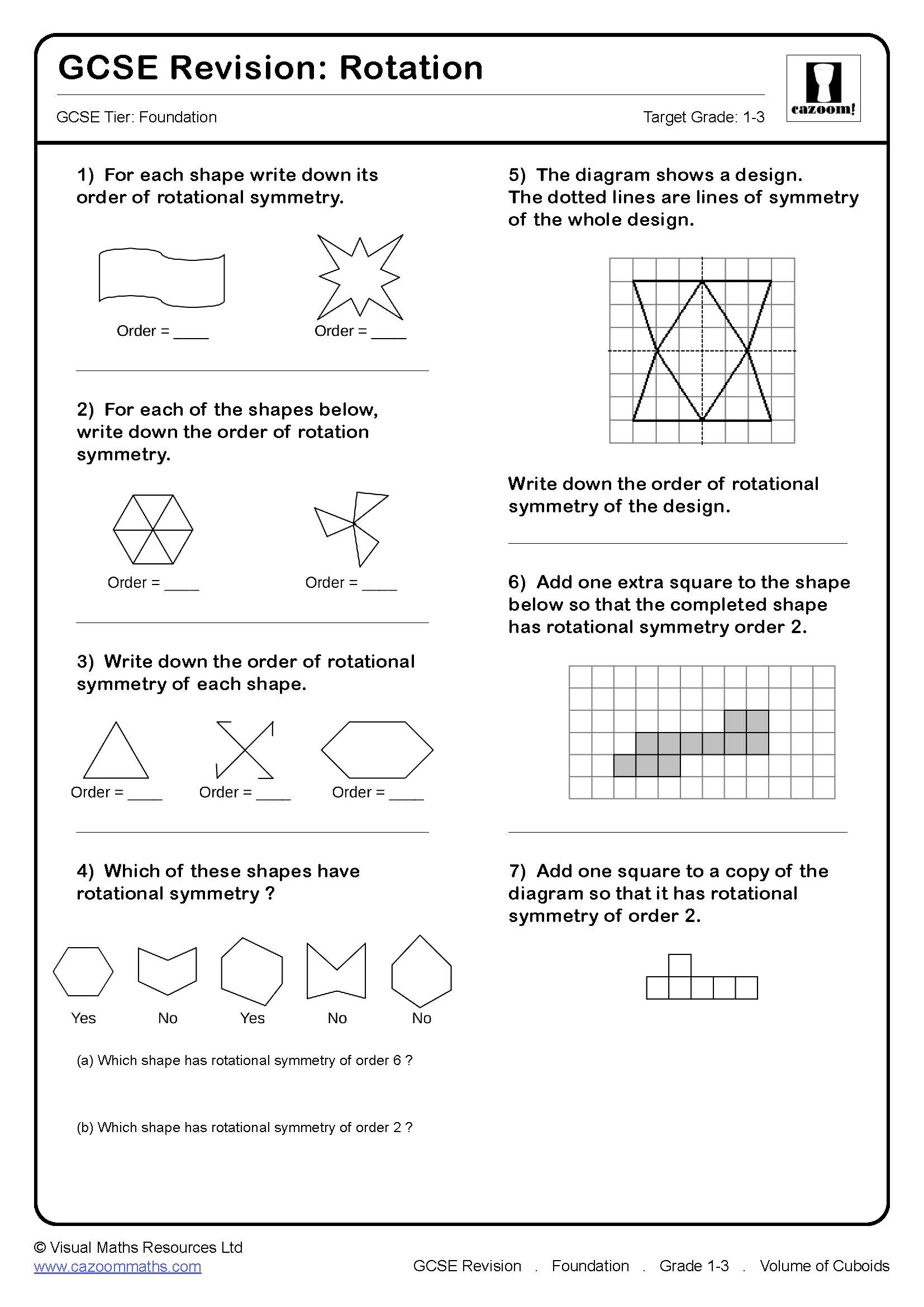
Scales and Scale Diagrams
Target Grade: 1-3
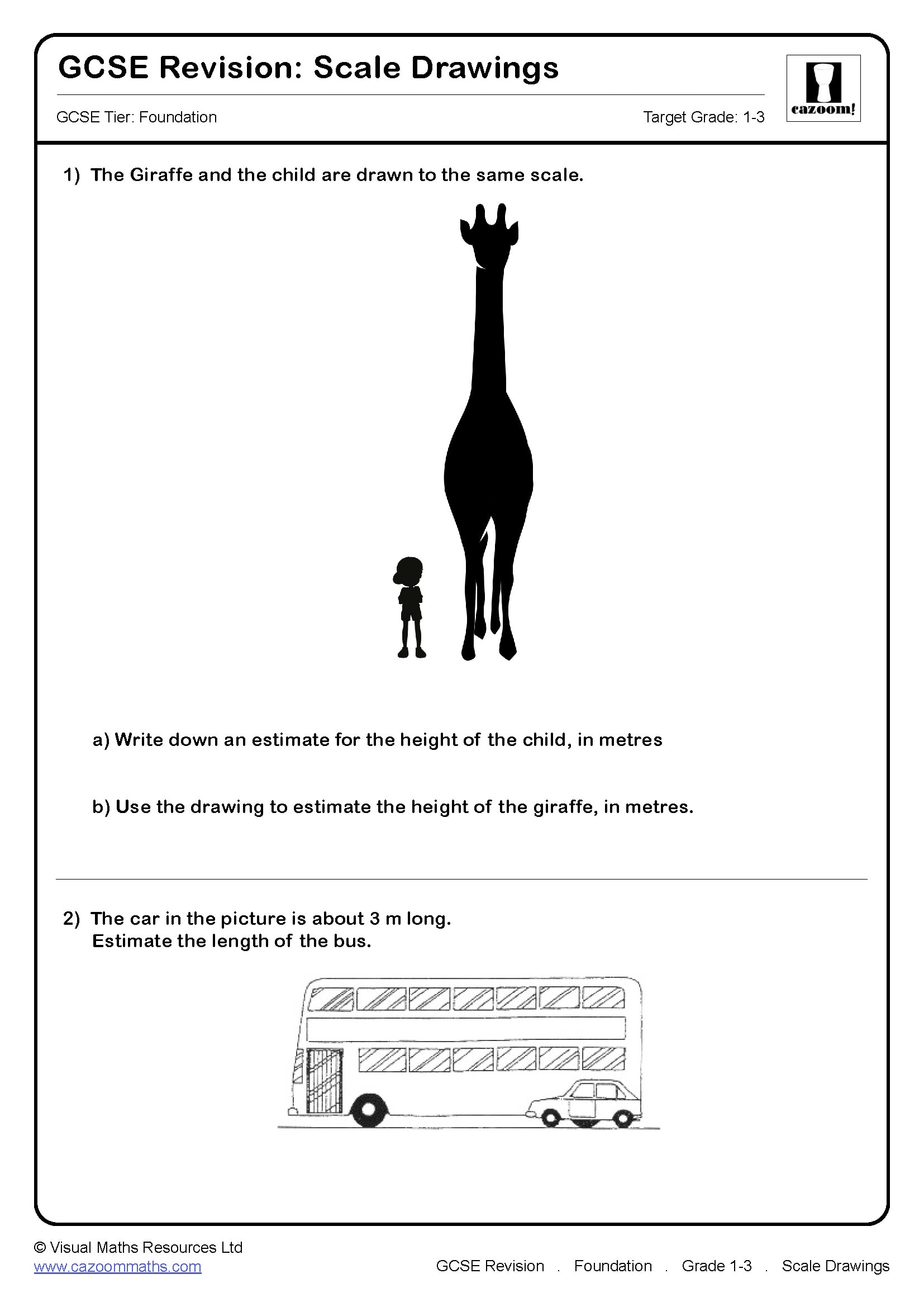
Shapes
Target Grade: 1-3
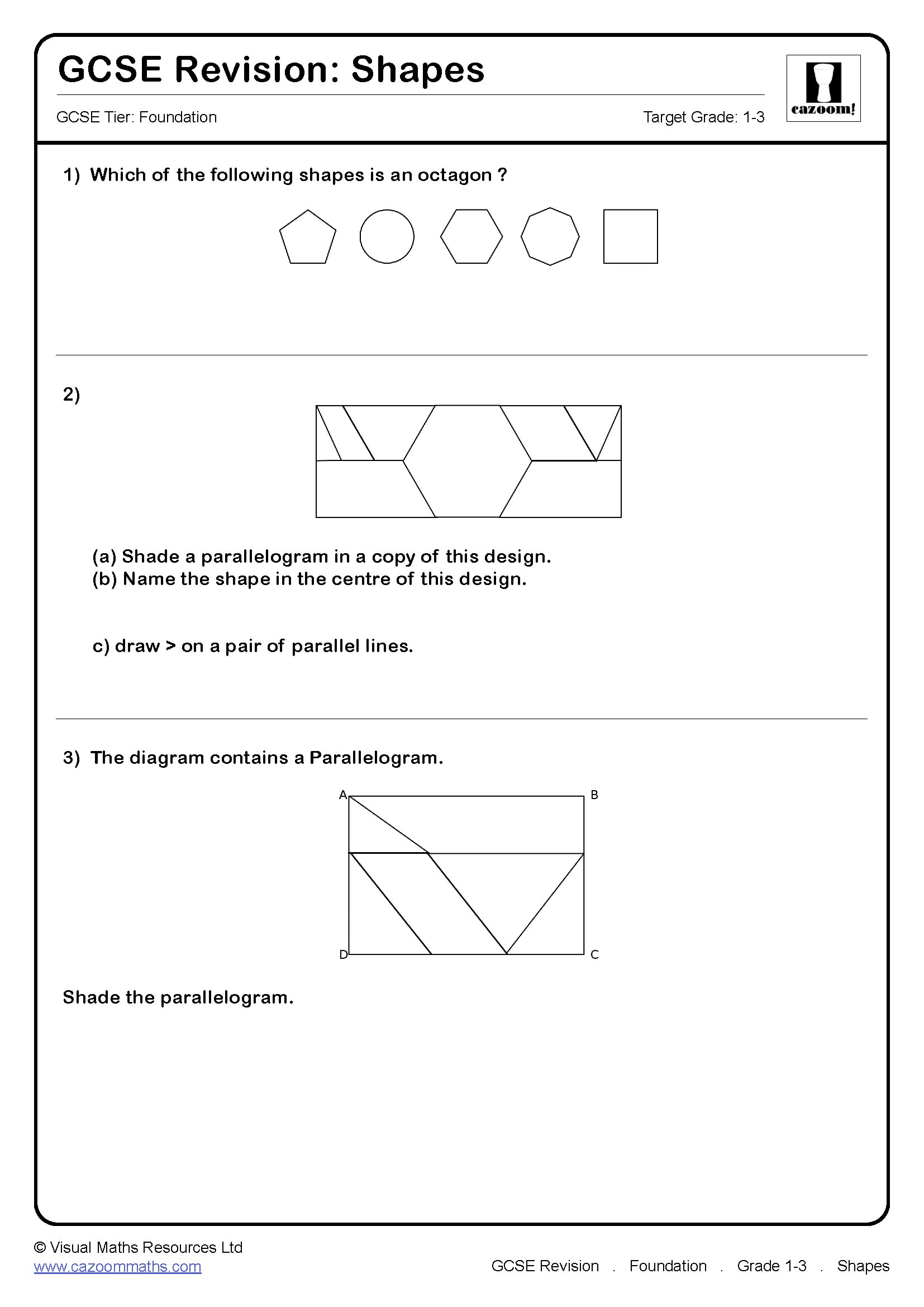
Surface Area of Cuboids
Target Grade: 1-3
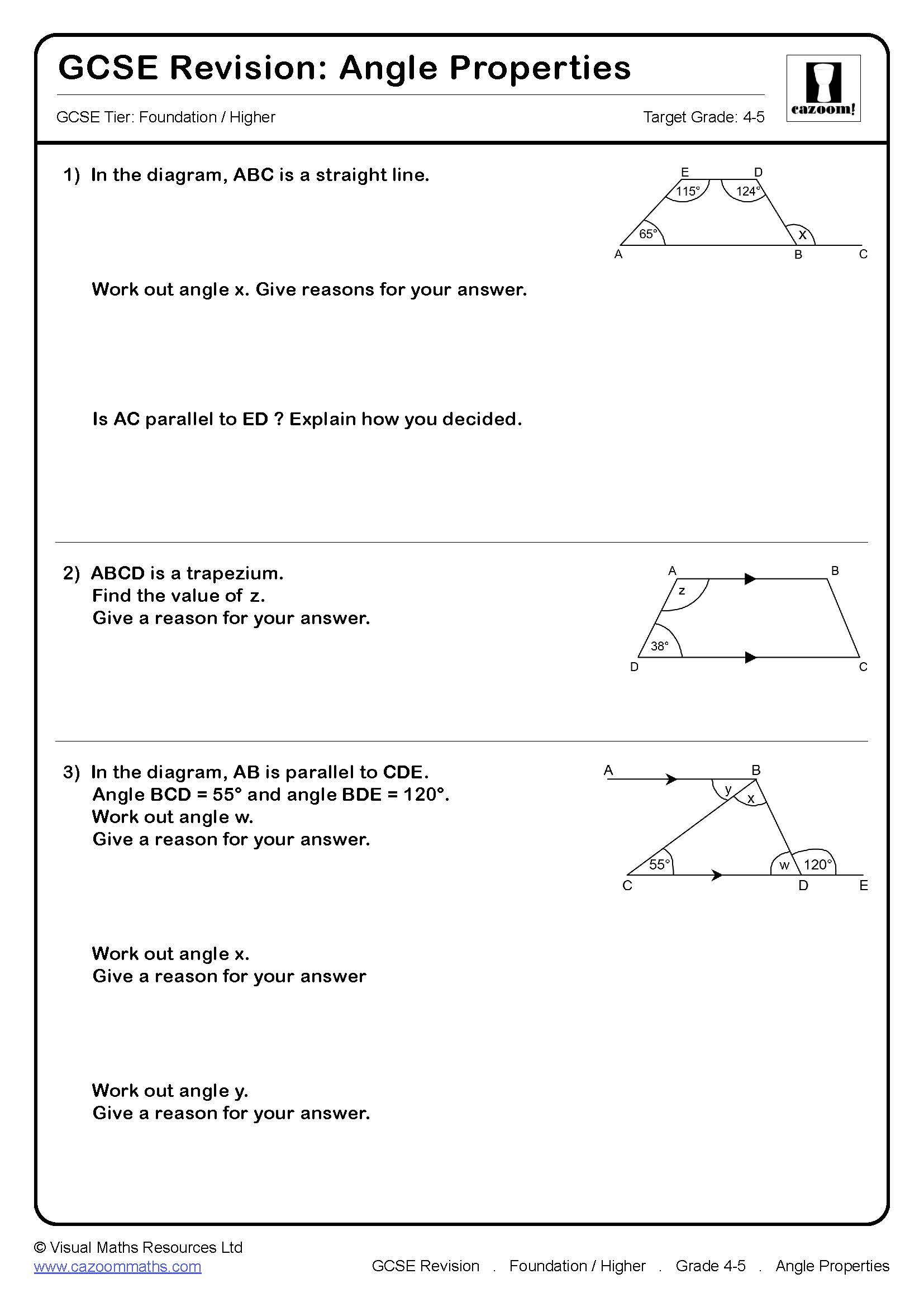
Angle Problems
Target Grade: 4-5
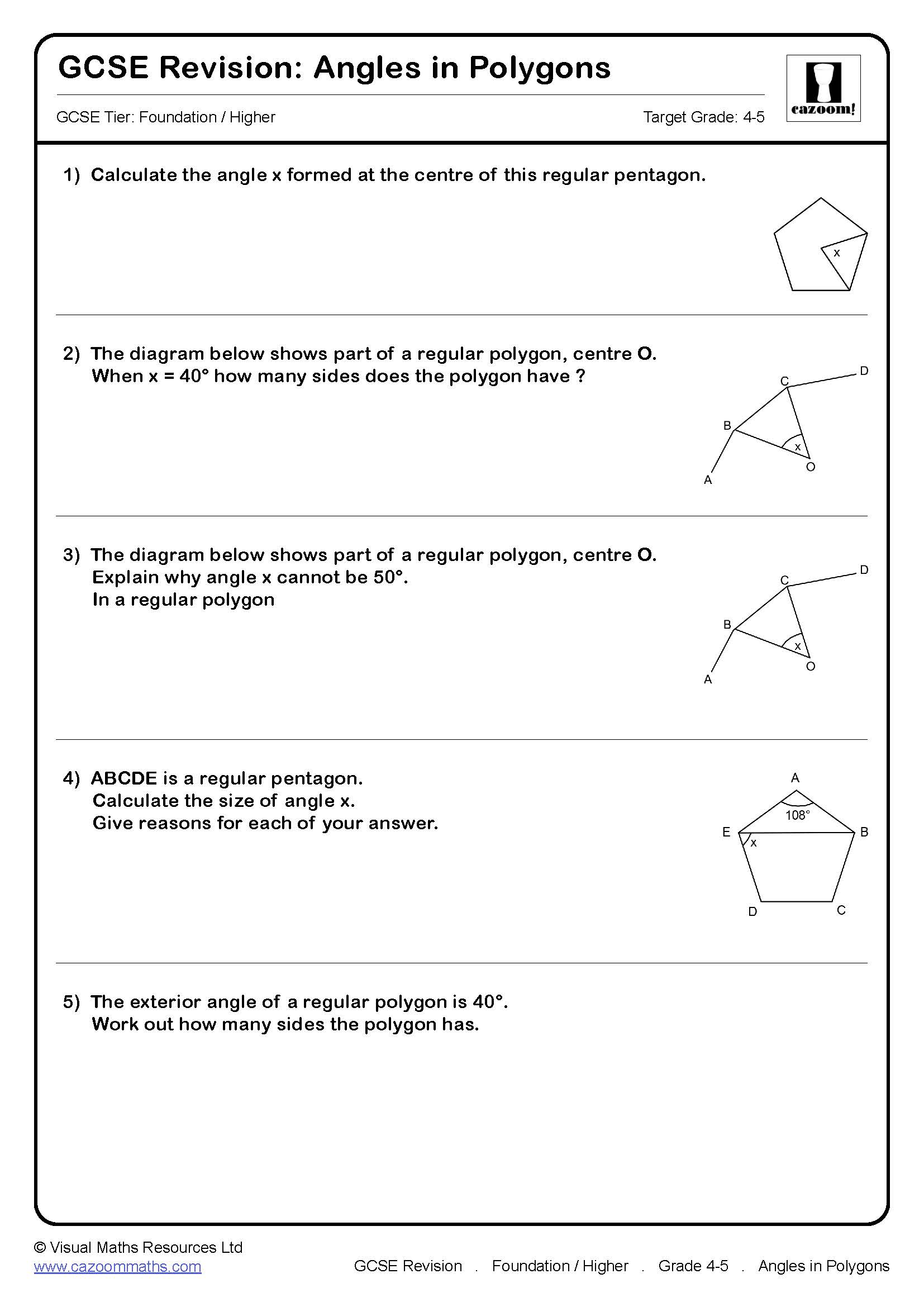
Angles in Polygons
Target Grade: 4-5
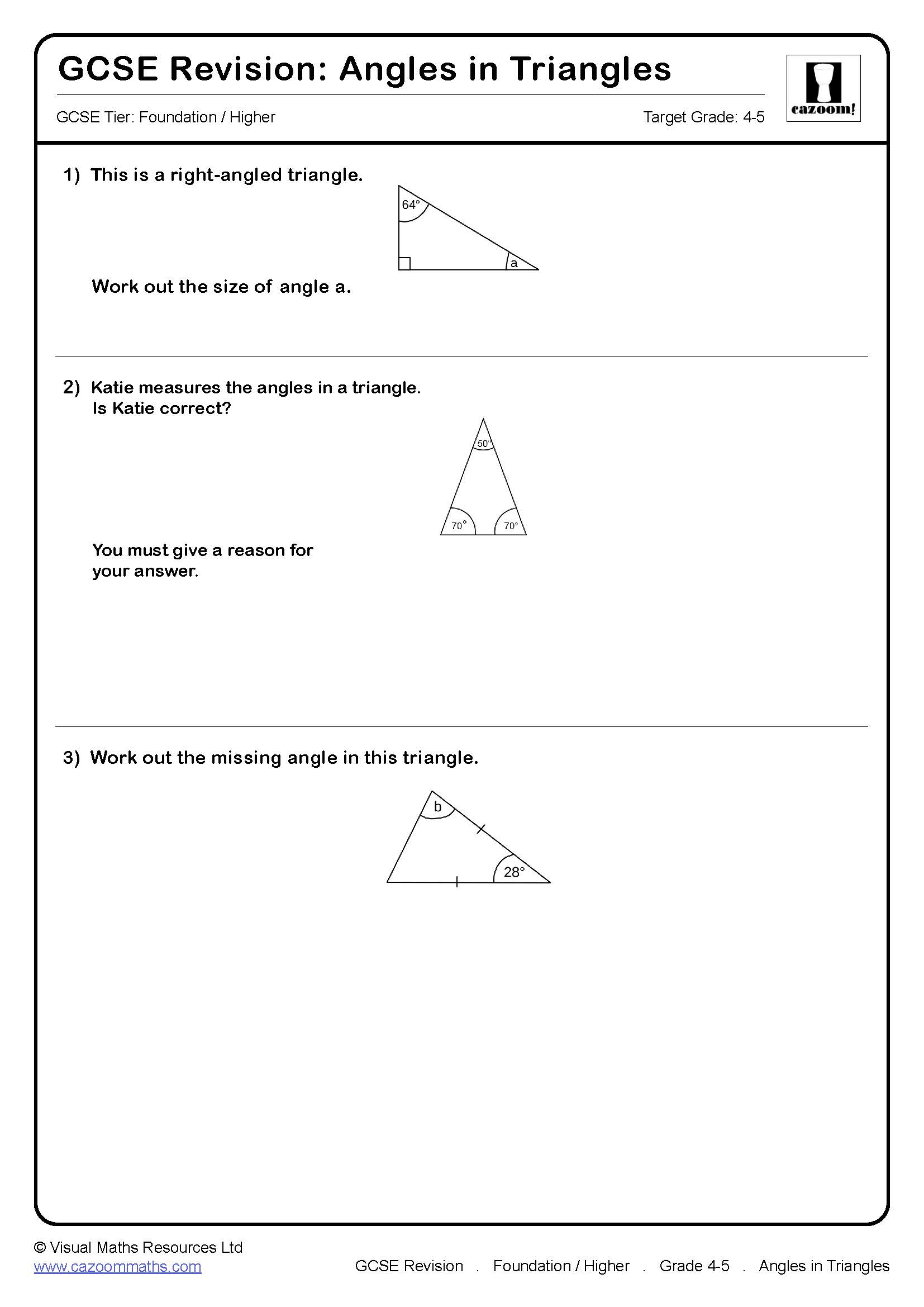
Angles in Triangles
Target Grade: 4-5
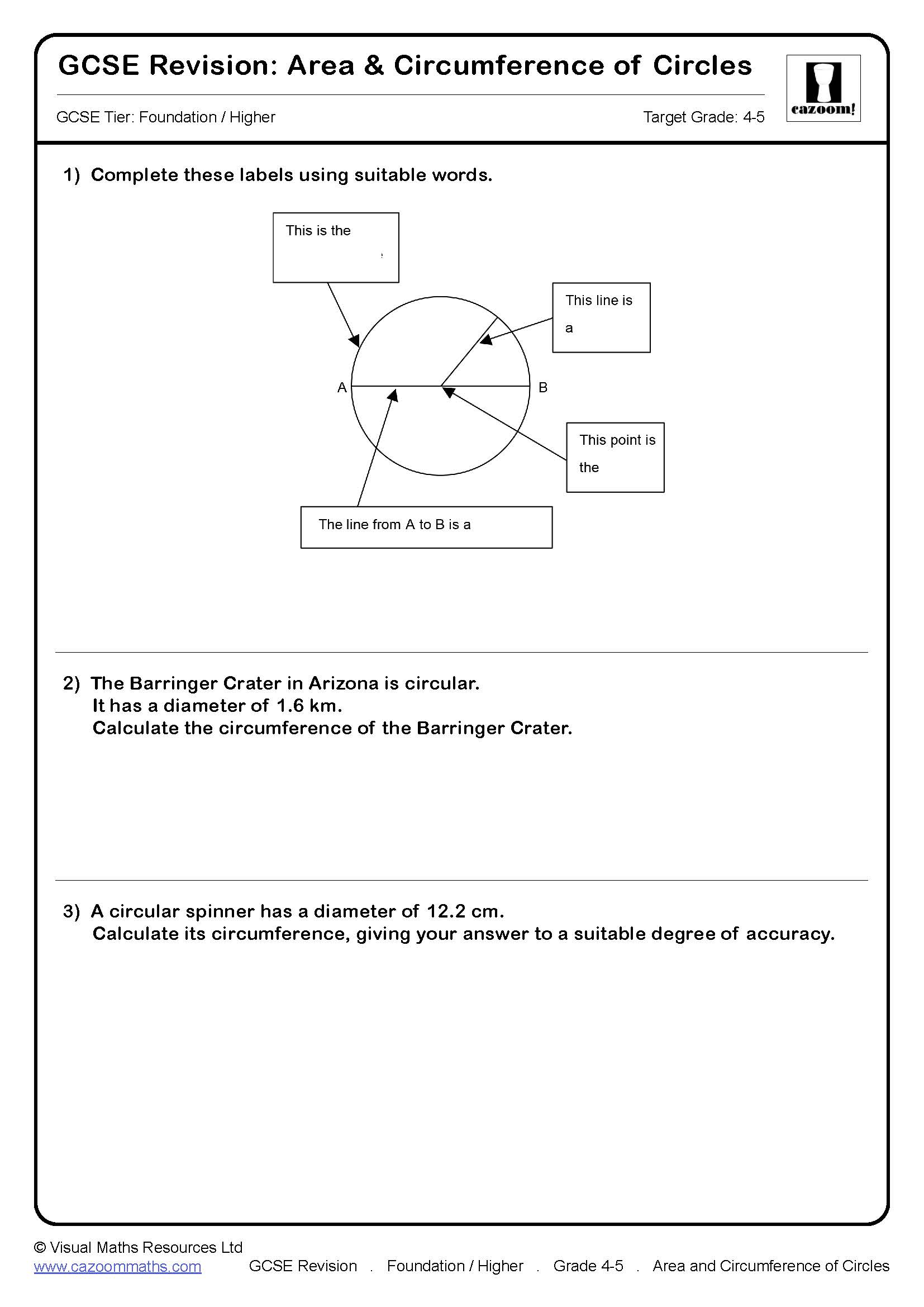
Area & Circumference of Circles
Target Grade: 4-5
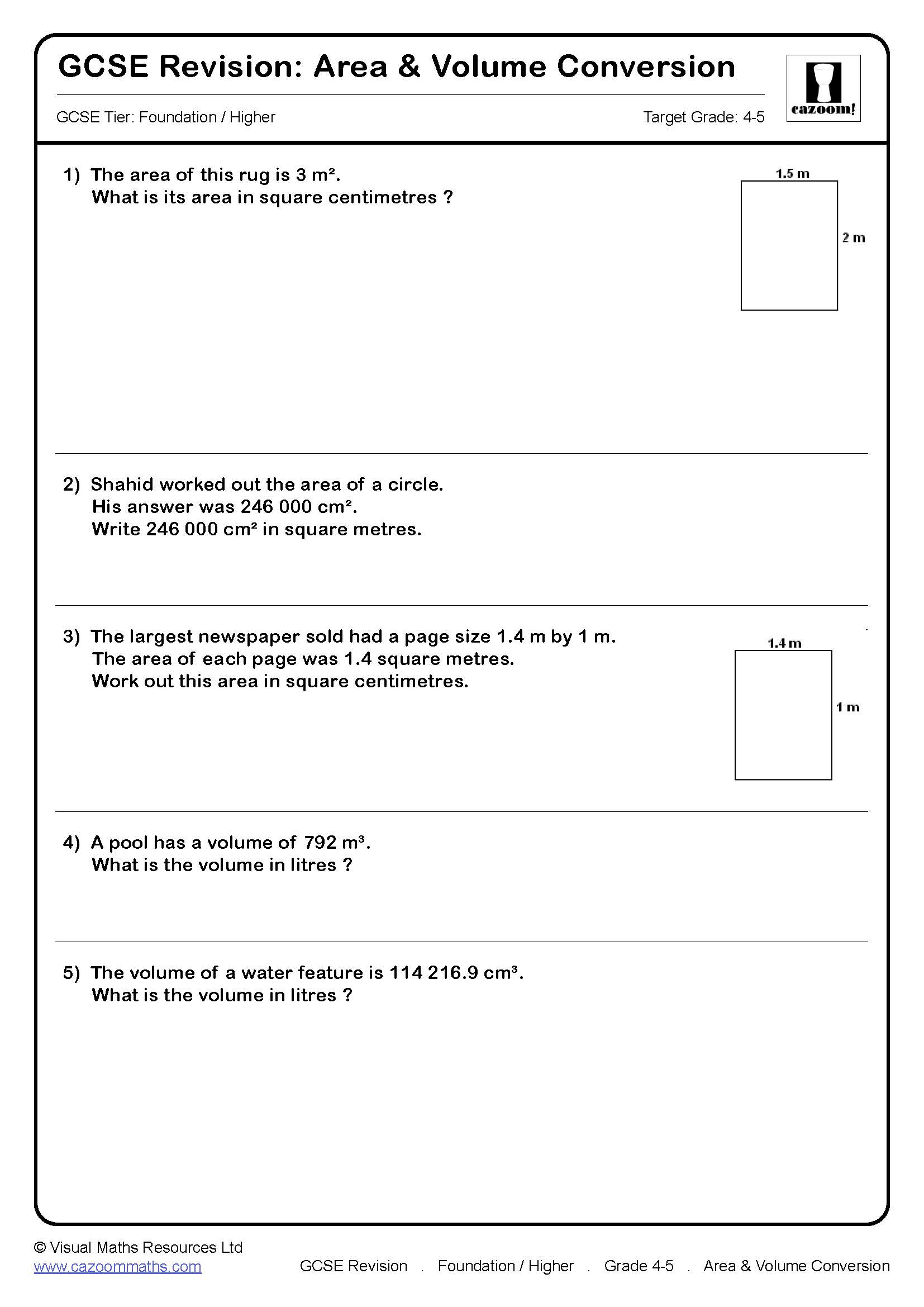
Area & Volume Conversion
Target Grade: 4-5
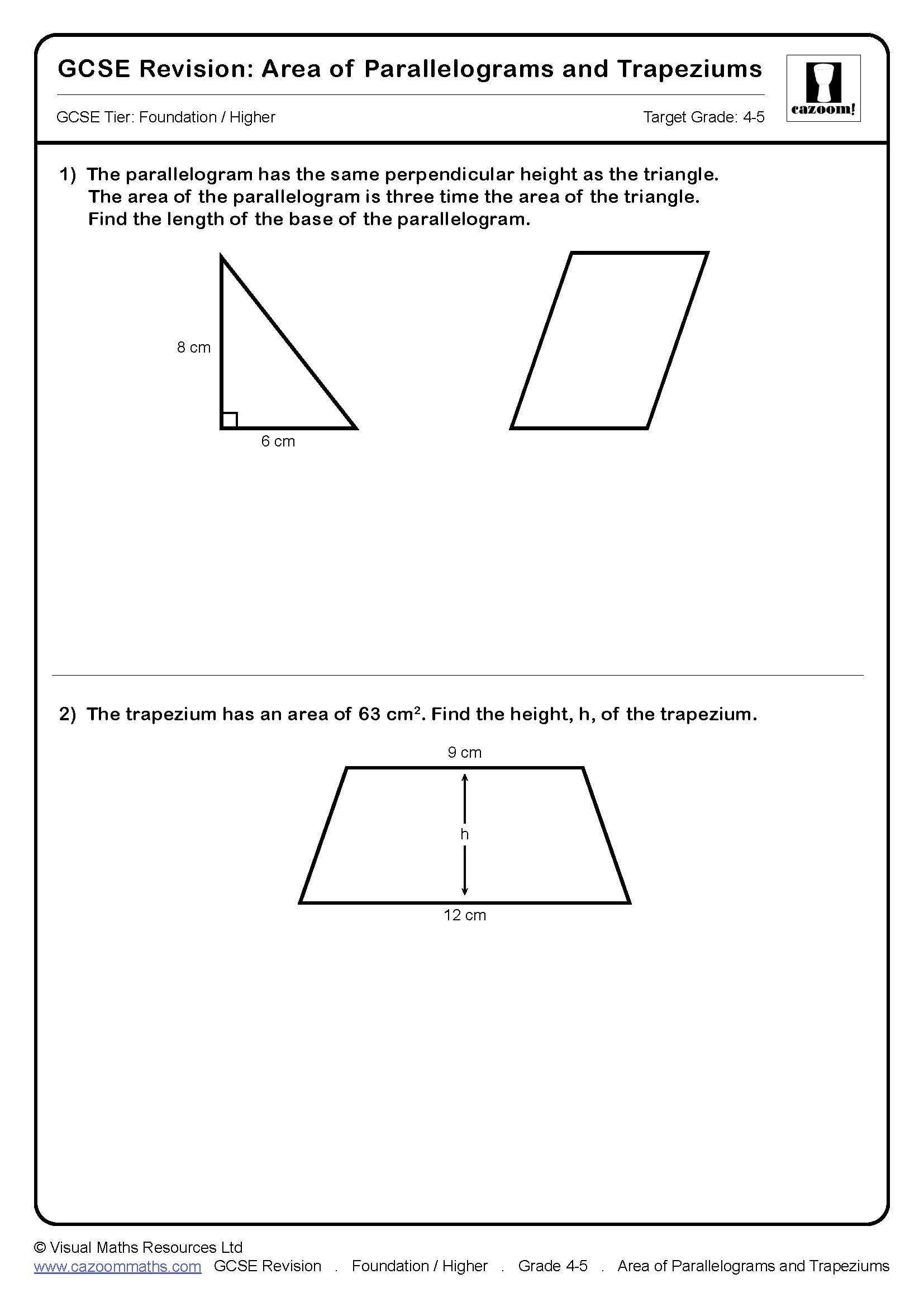
Area of Trapezium and Parallelogram
Target Grade: 4-5
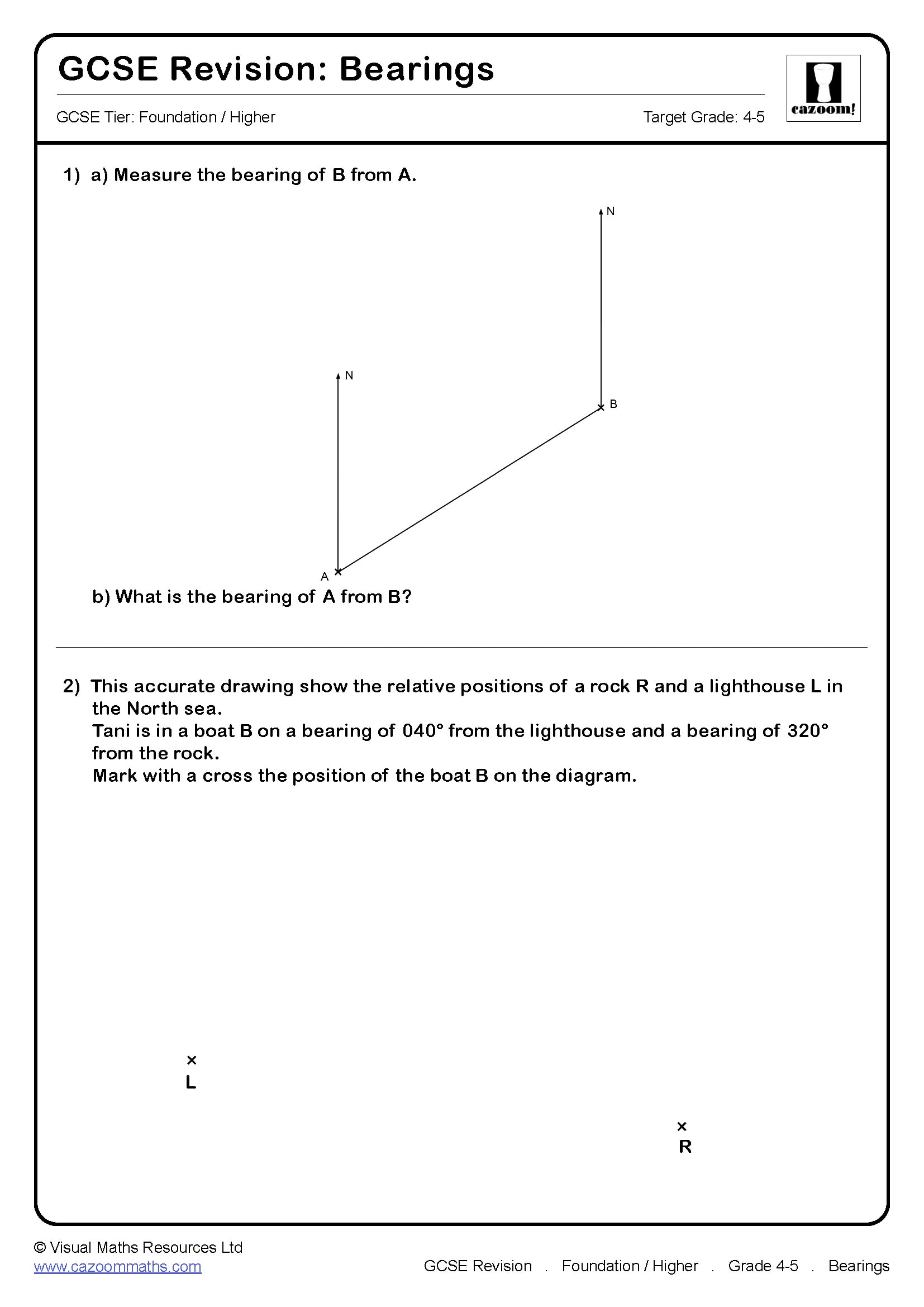
Bearings
Target Grade: 4-5
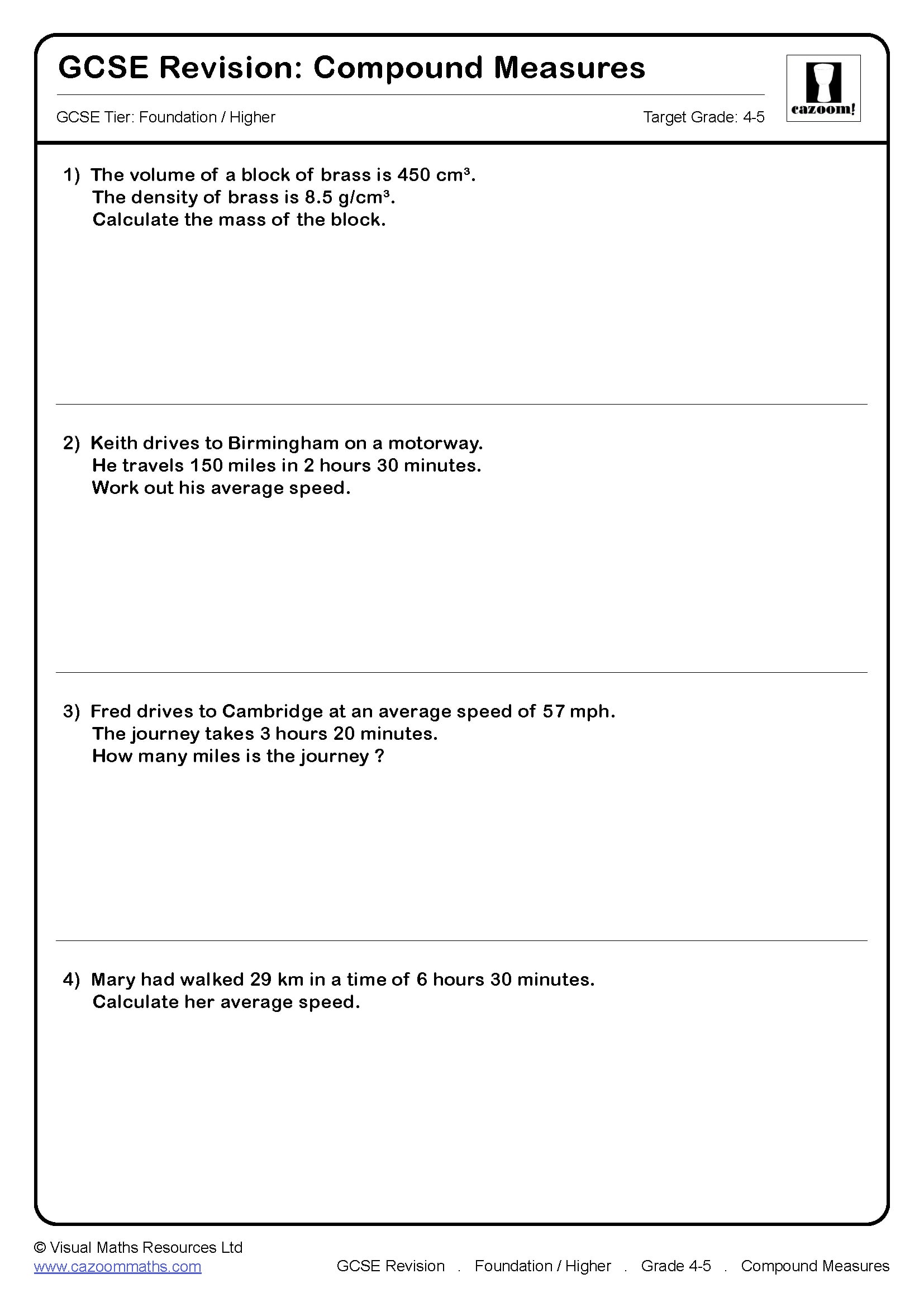
Compound Measures
Target Grade: 4-5
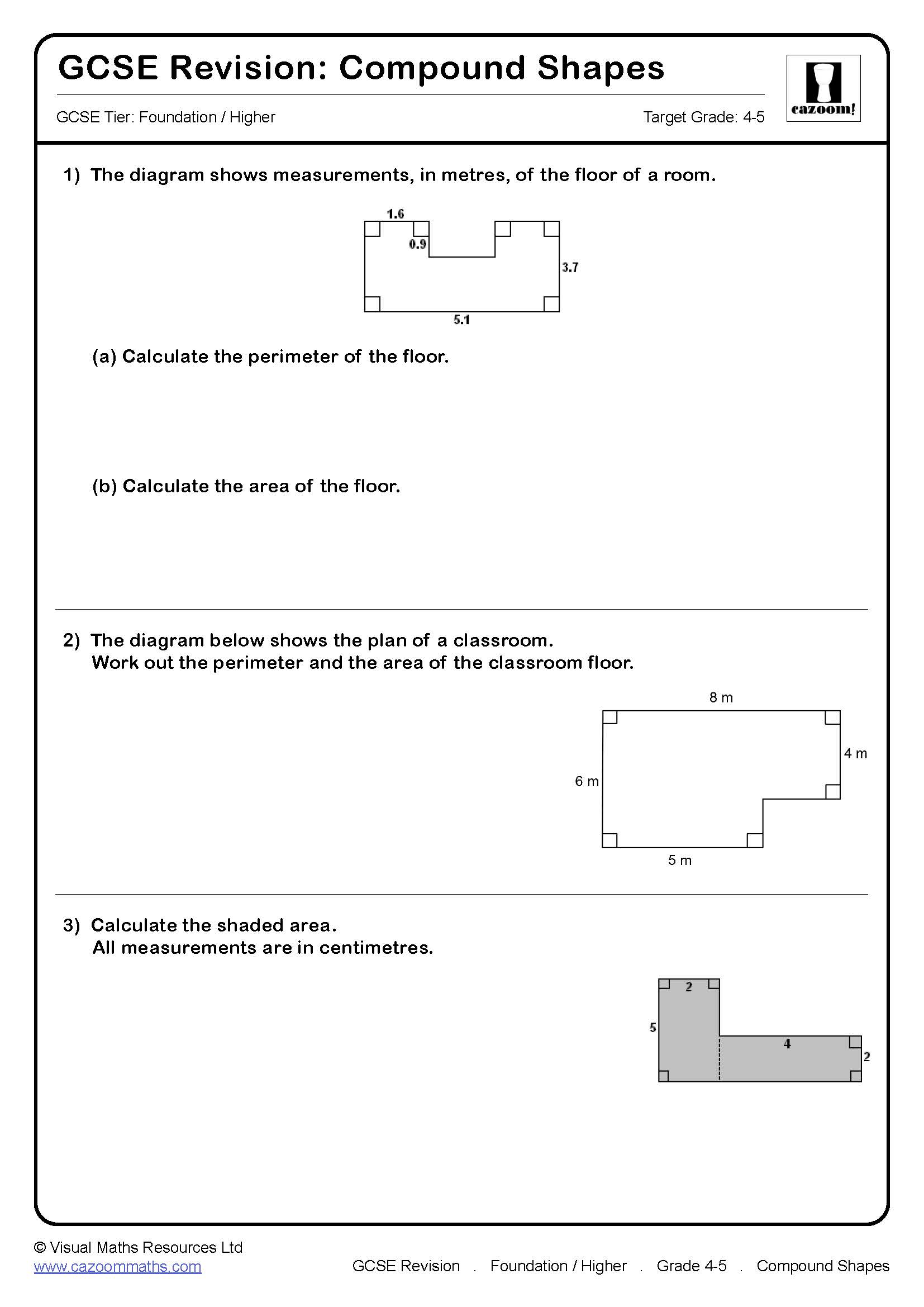
Compound Shapes
Target Grade: 4-5
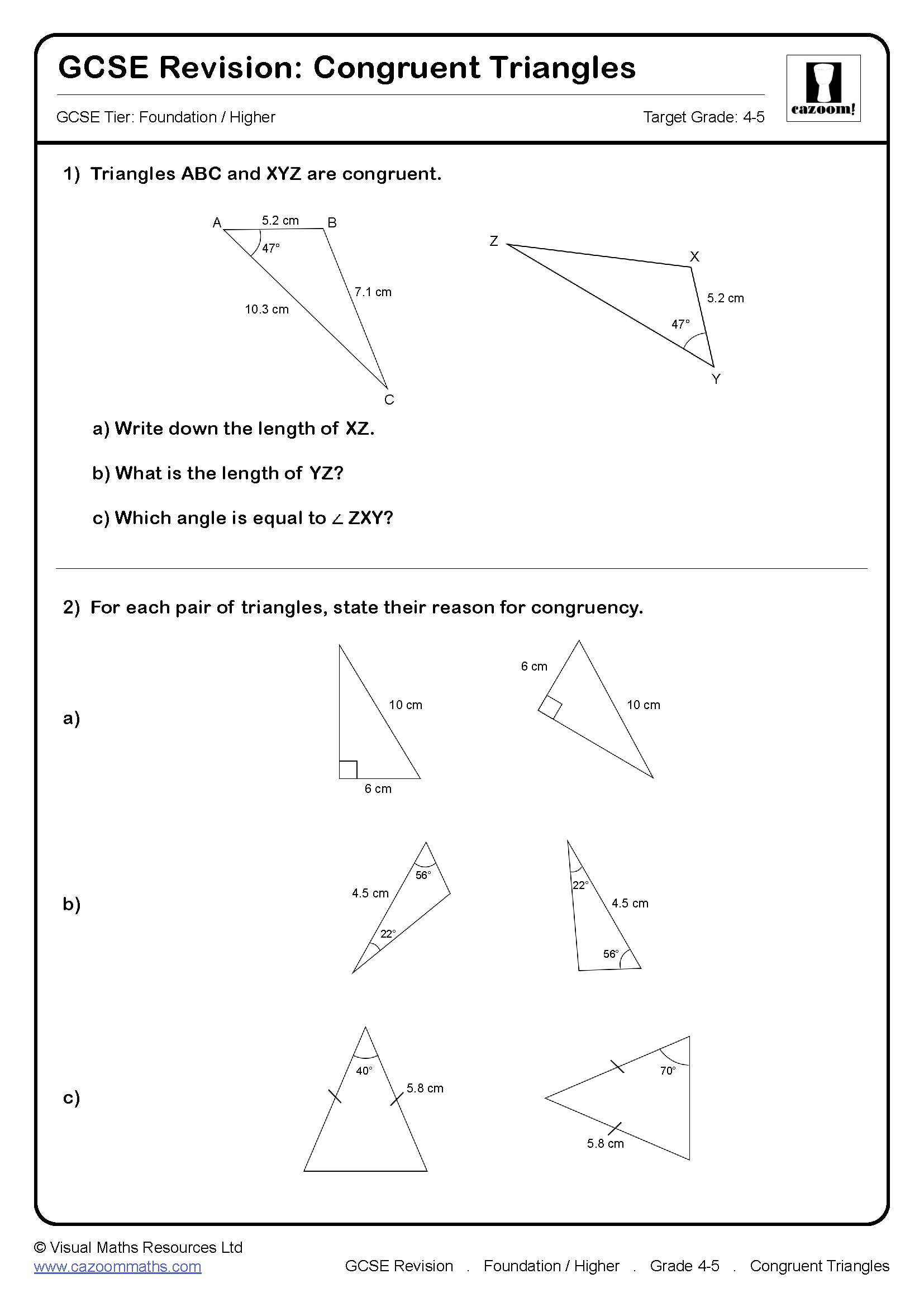
Congruent Triangles
Target Grade: 4-5
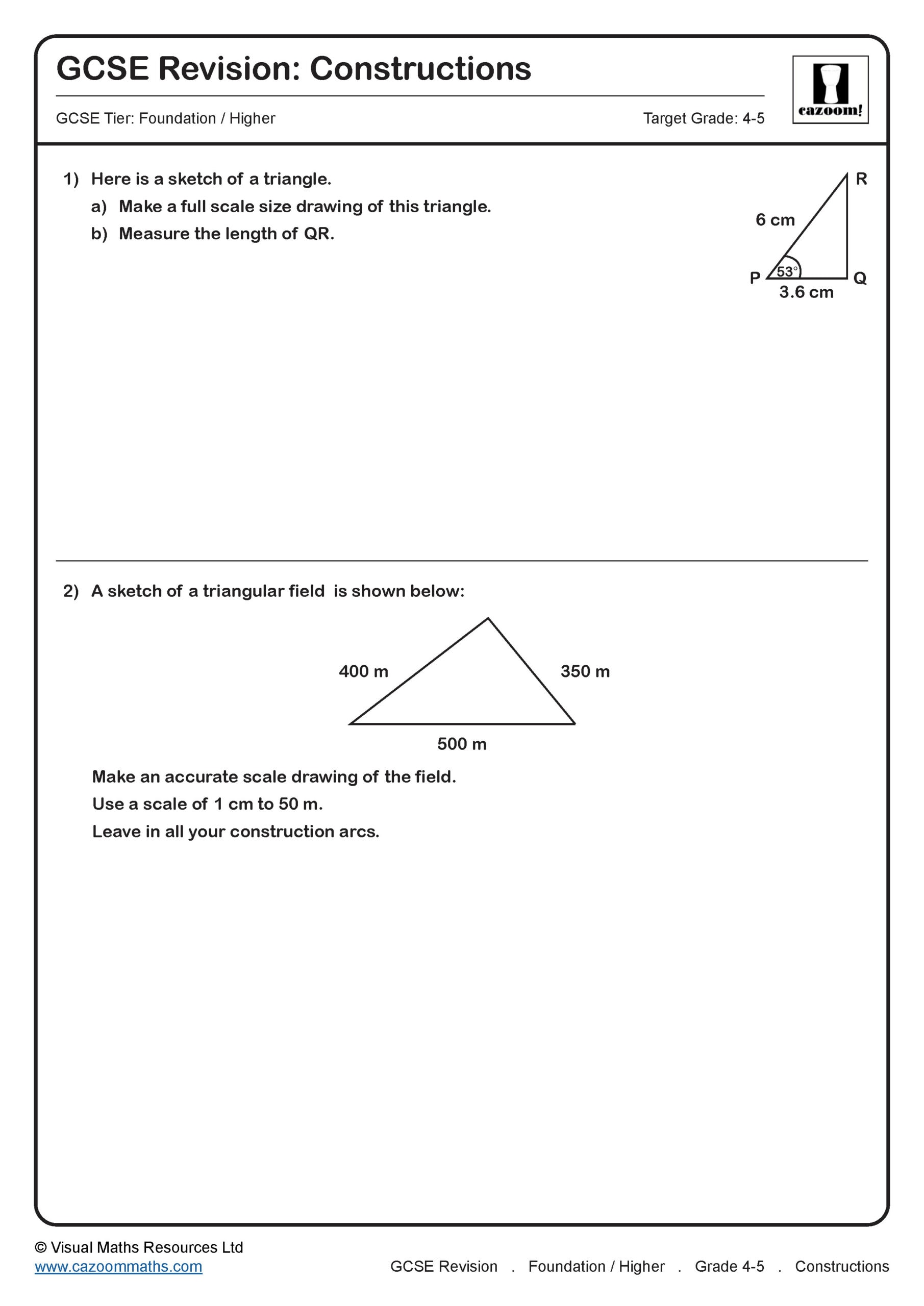
Constructions
Target Grade: 4-5
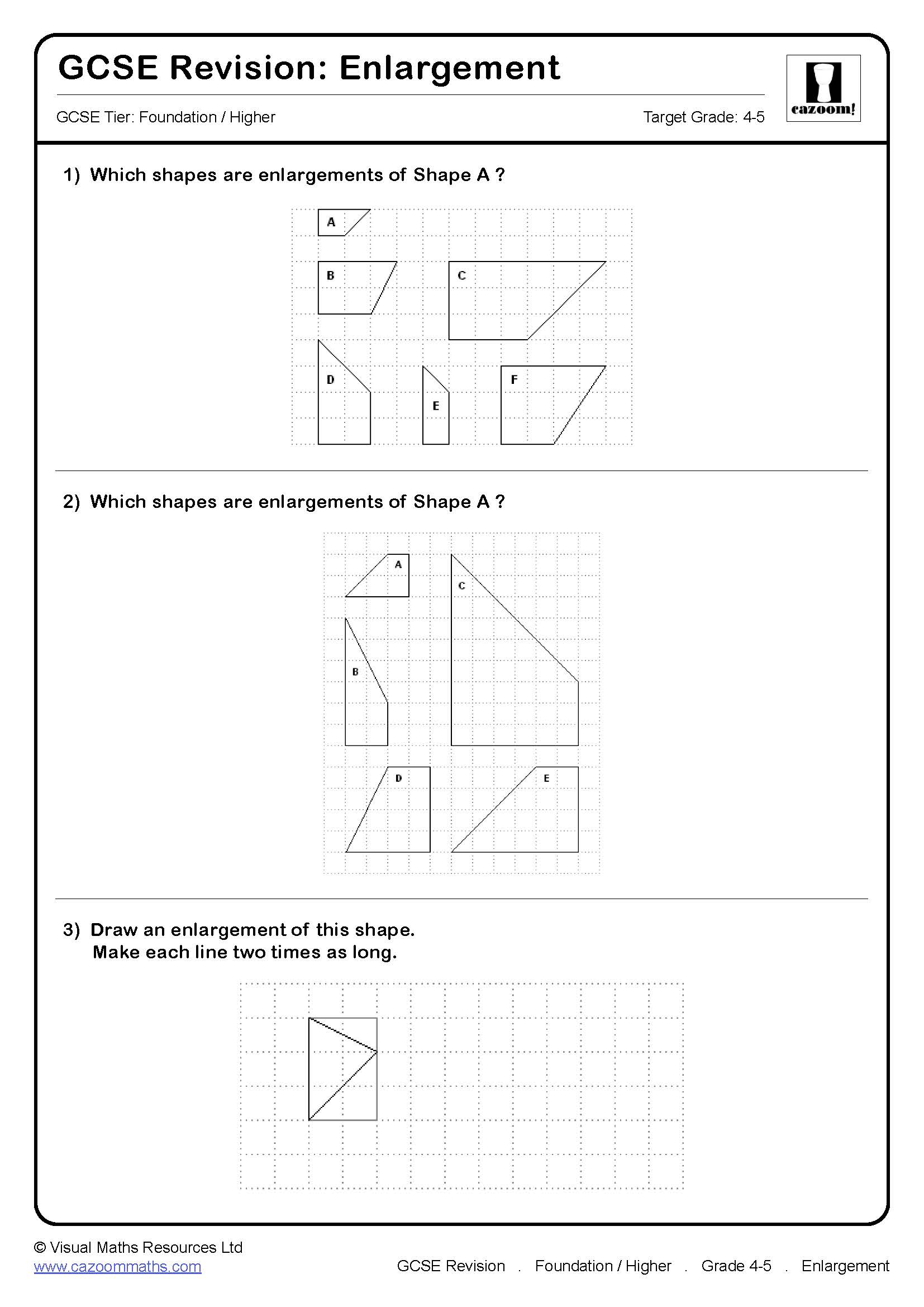
Enlargement
Target Grade: 4-5
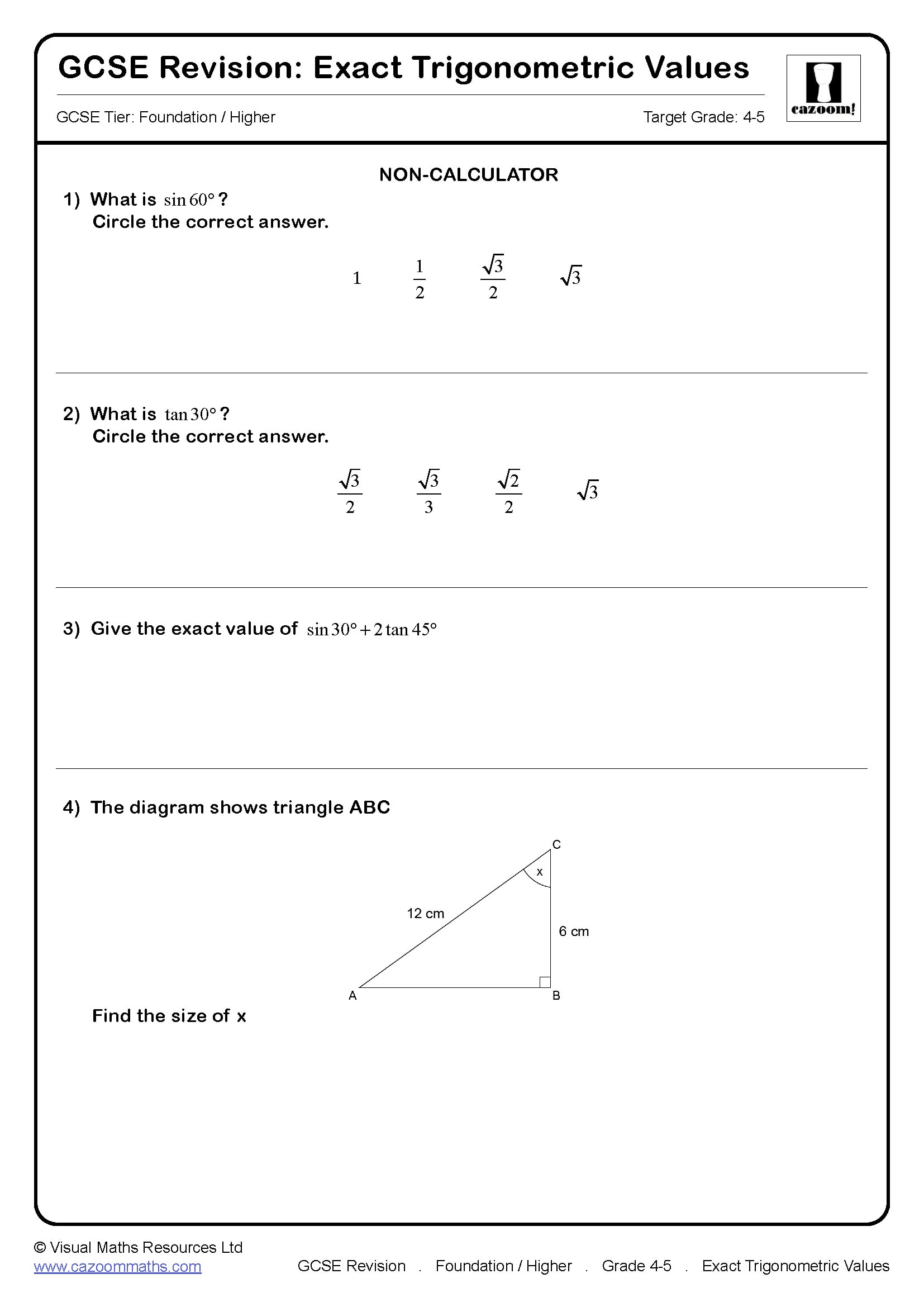
Exact Trigonometric Values
Target Grade: 4-5
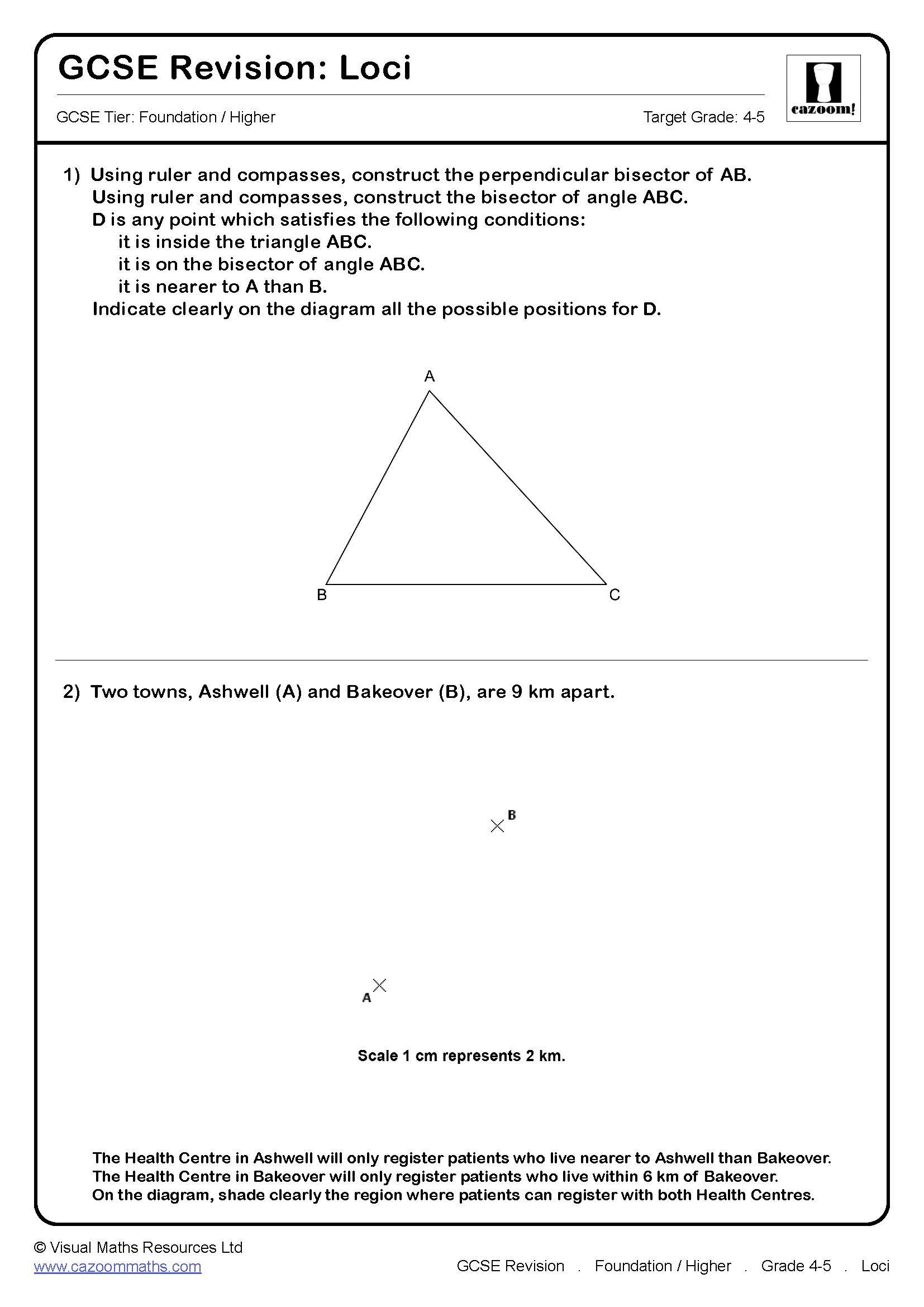
Loci
Target Grade: 4-5
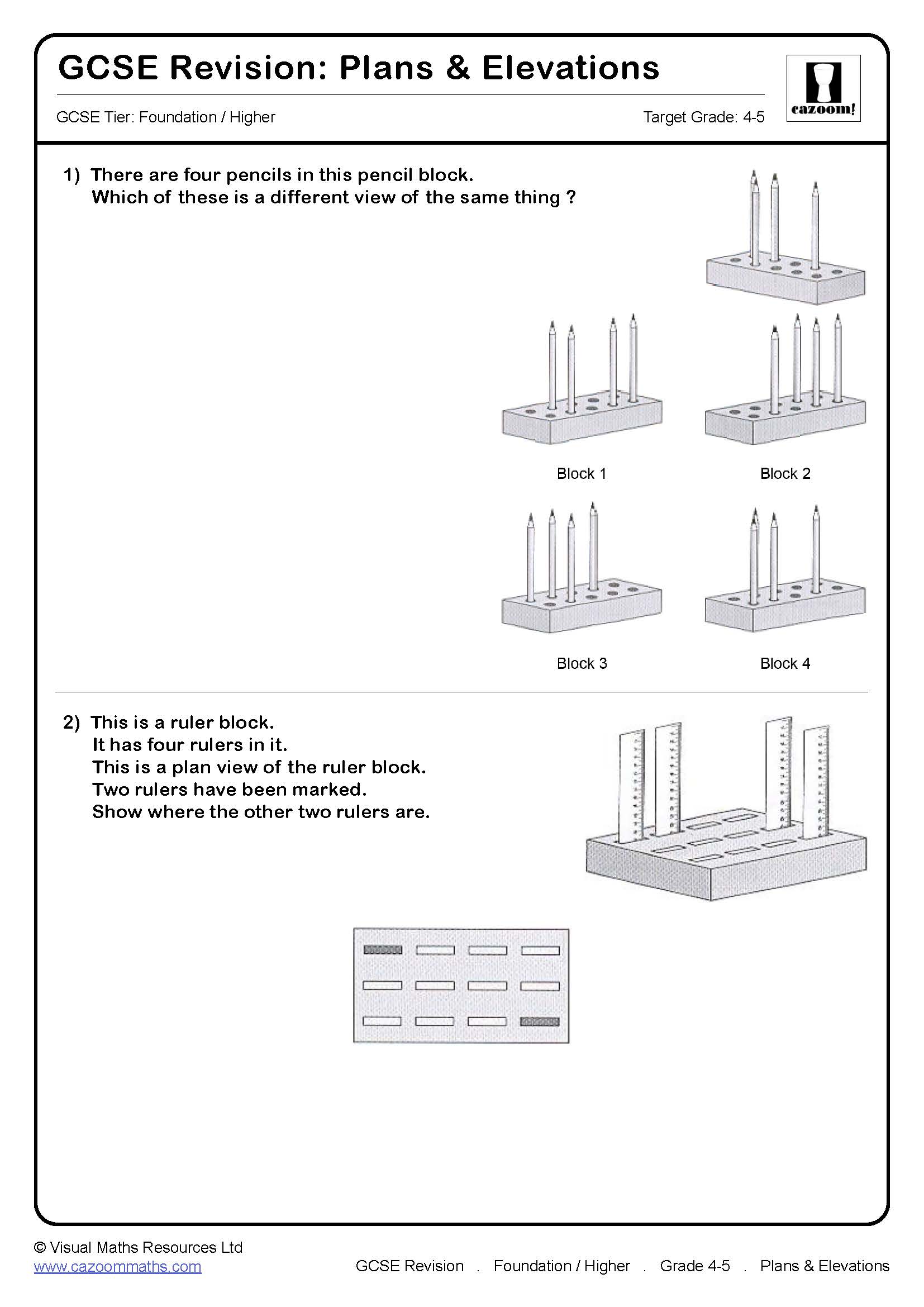
Plans & Elevations
Target Grade: 4-5
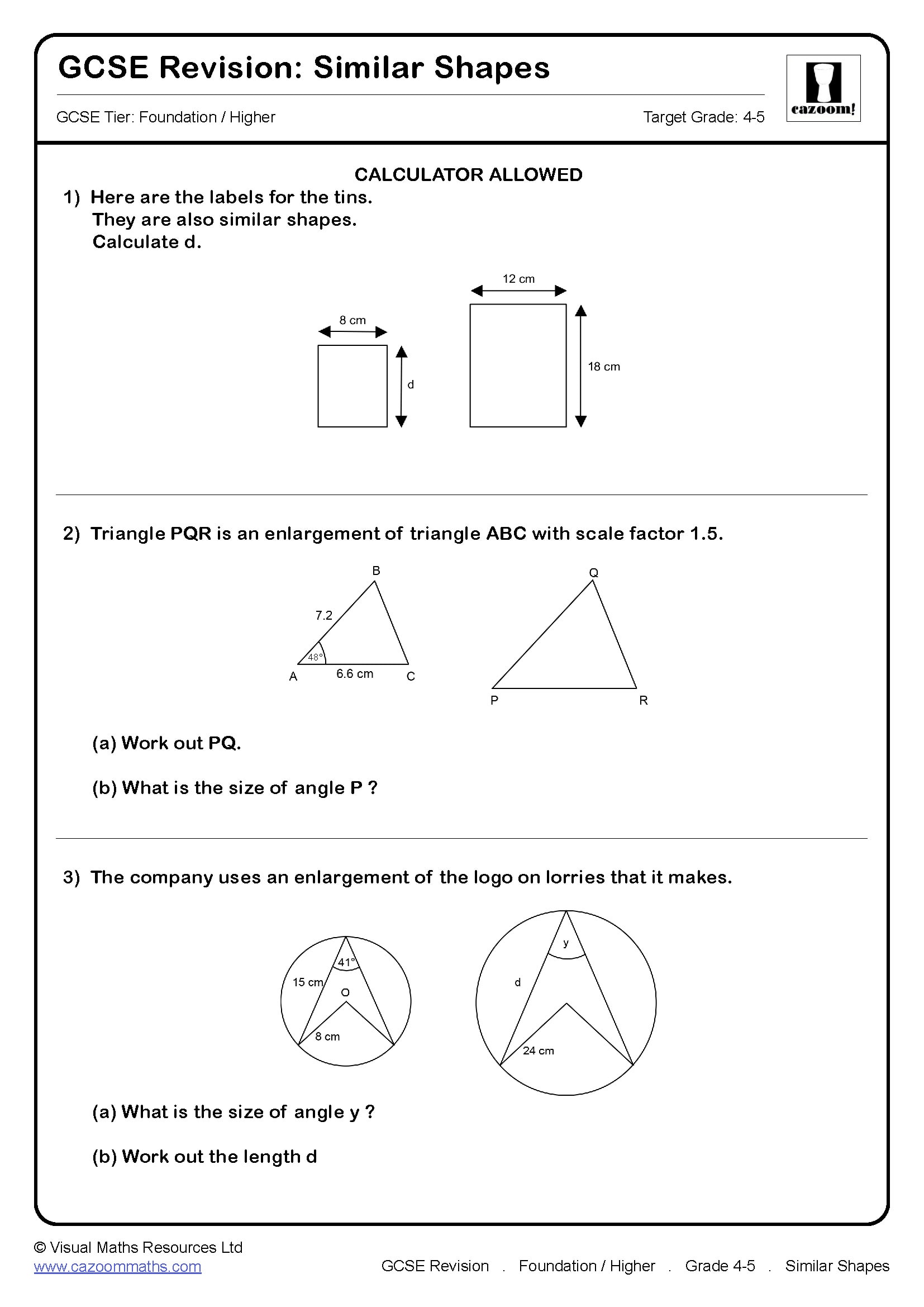
Similar Shapes
Target Grade: 4-5
Surface Area & Volume of Prisms
Target Grade: 4-5
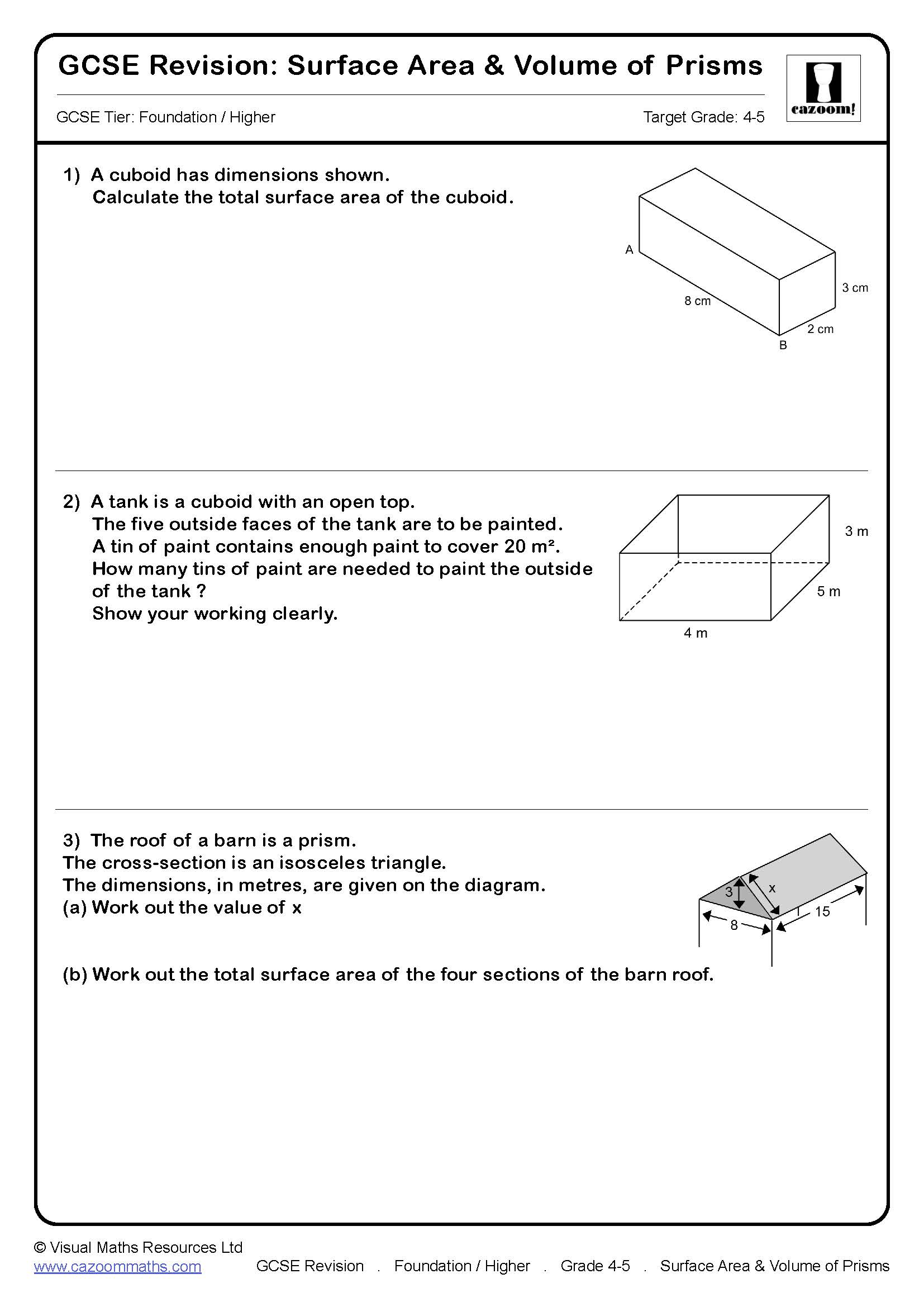
Transformations
Target Grade: 4-5
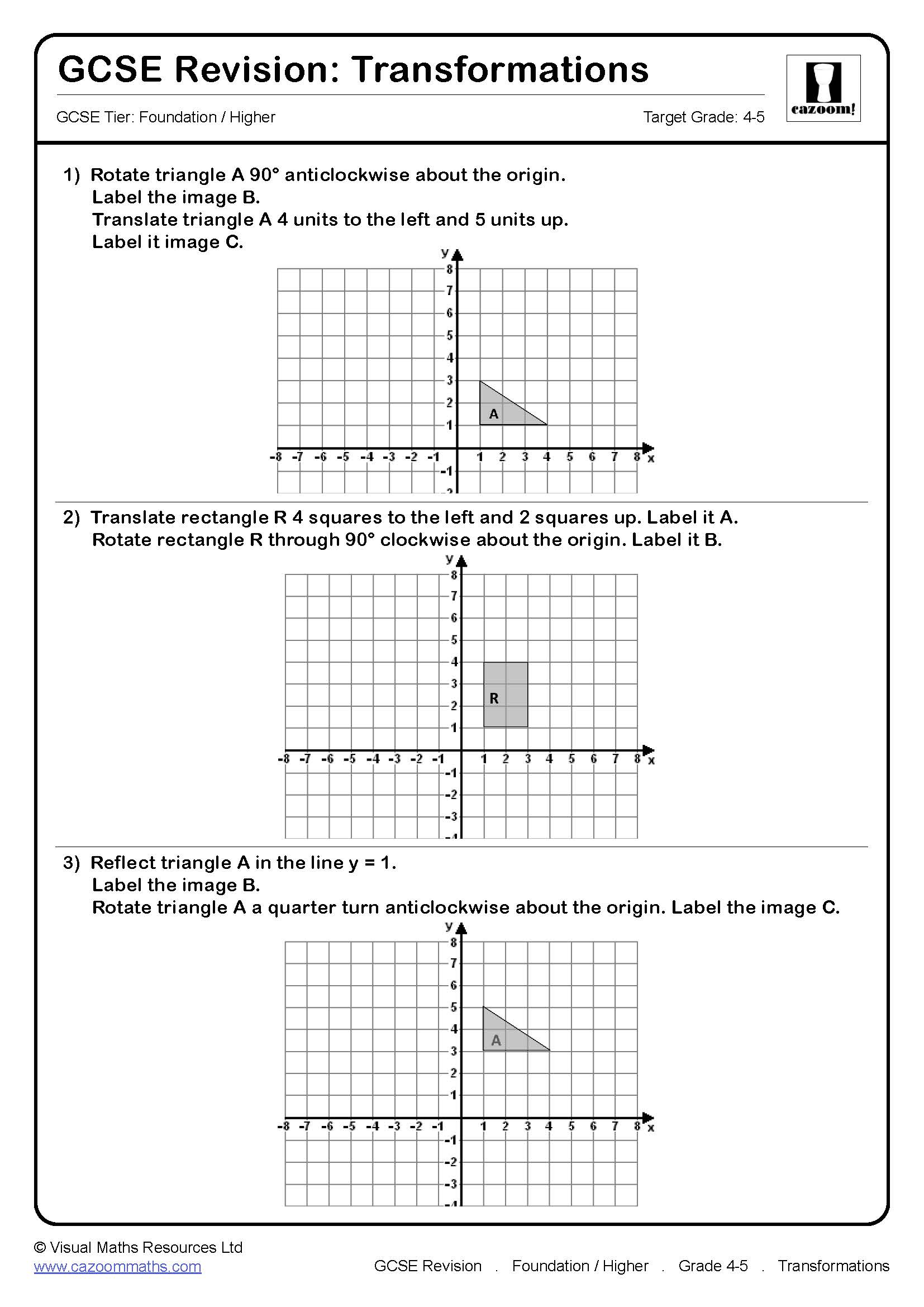
Translations
Target Grade: 4-5
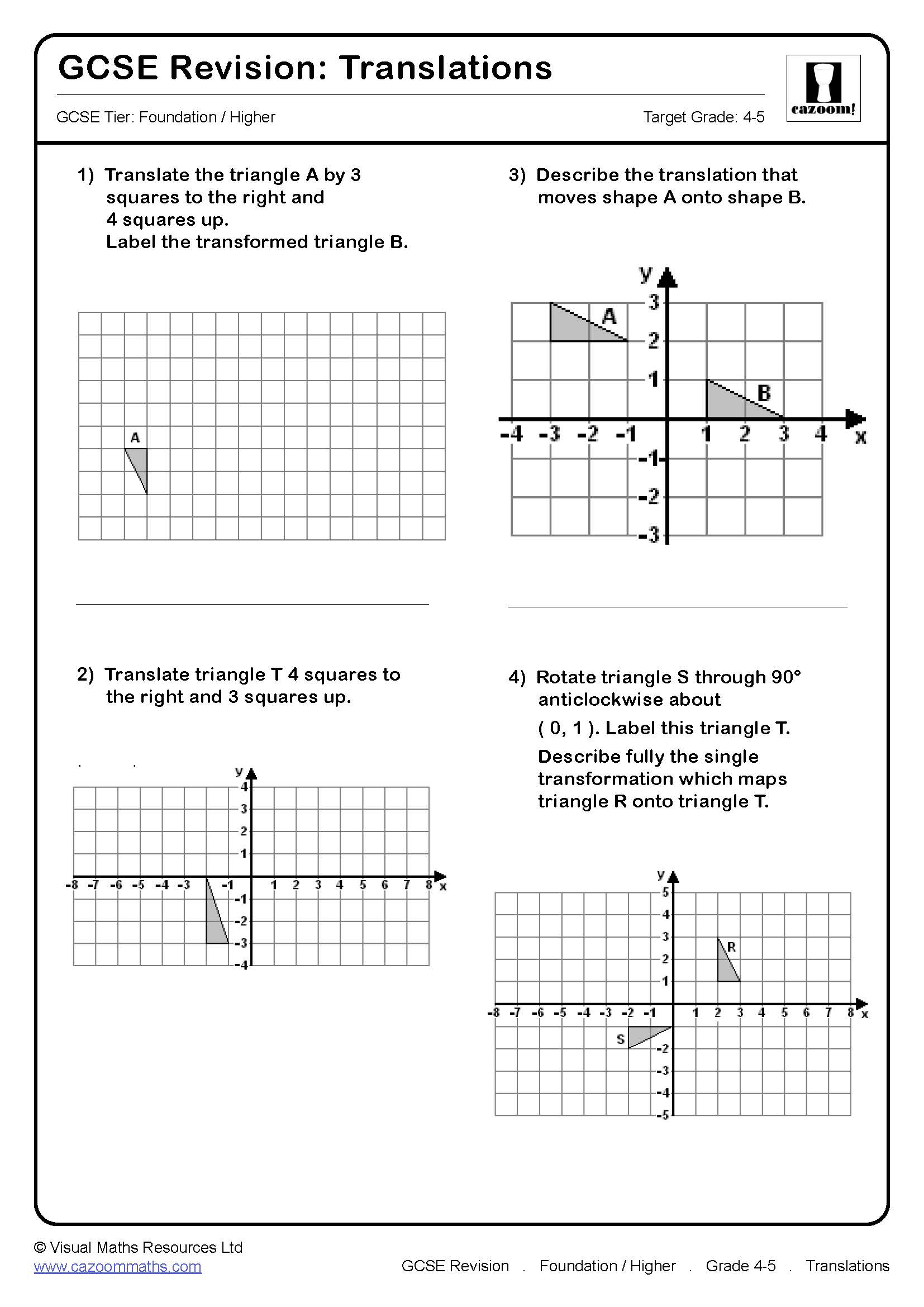
Trigonometry
Target Grade: 4-5
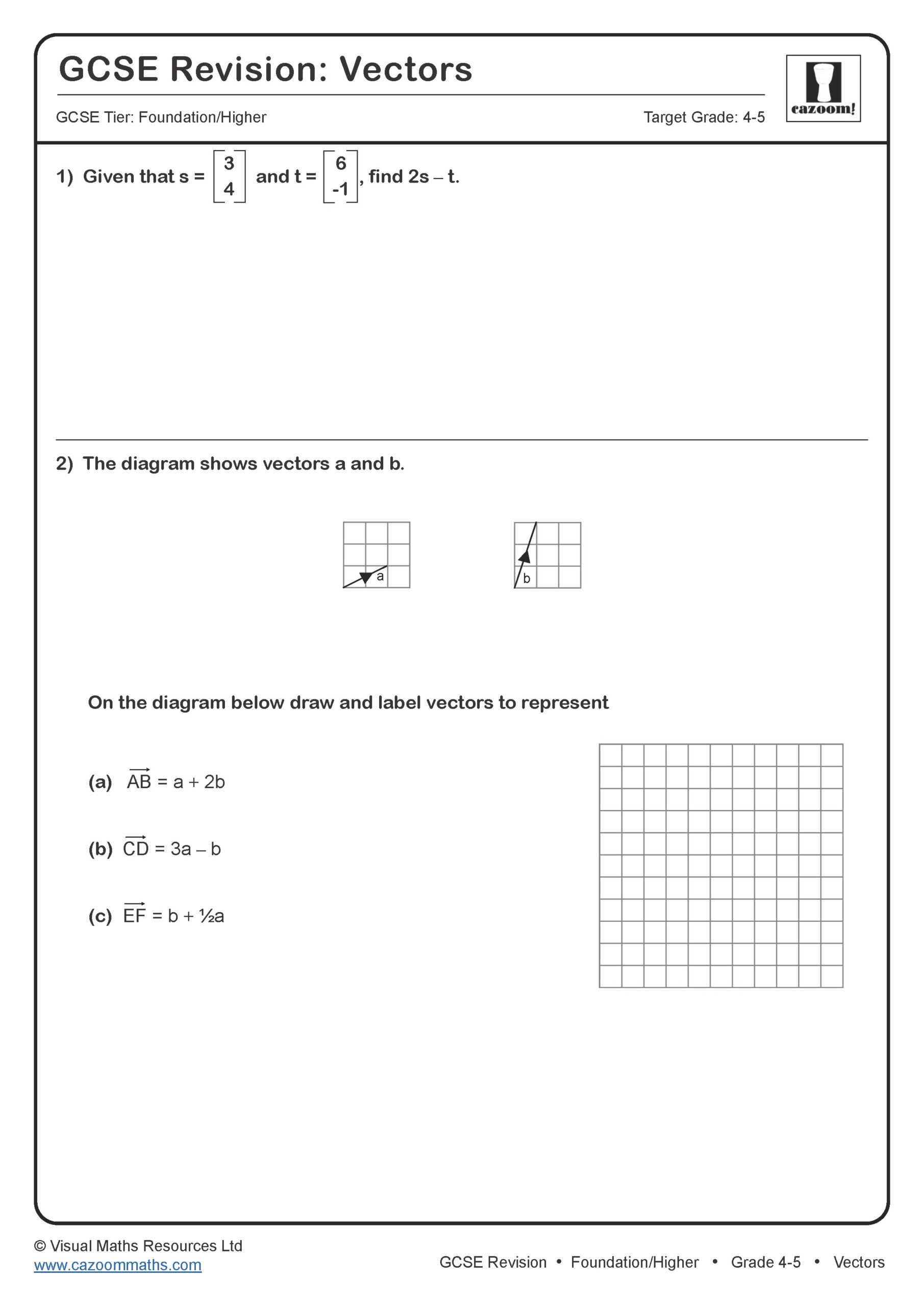
Vectors
Target Grade: 4-5
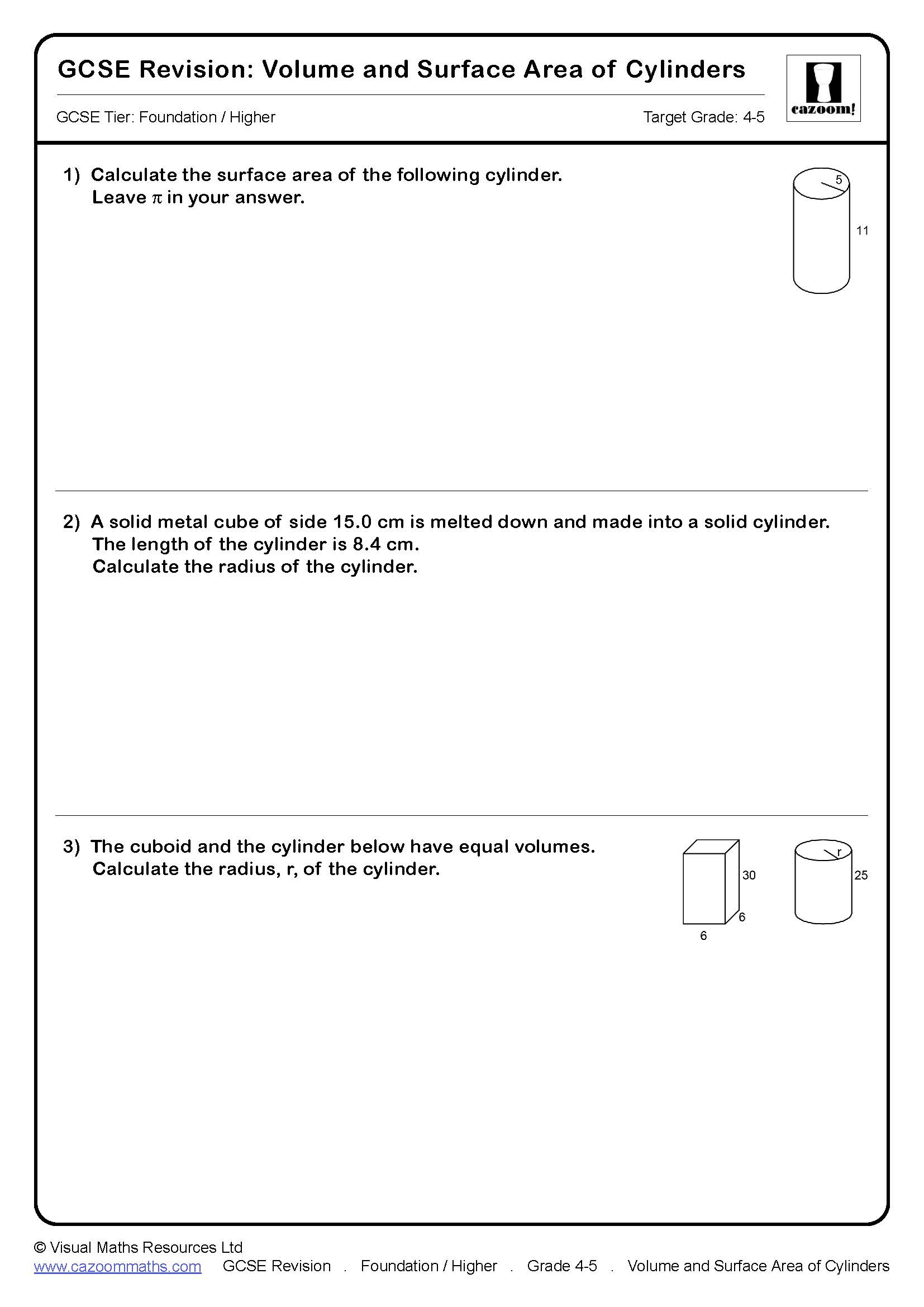
Volume and Surface Area of Cylinders
Target Grade: 4-5
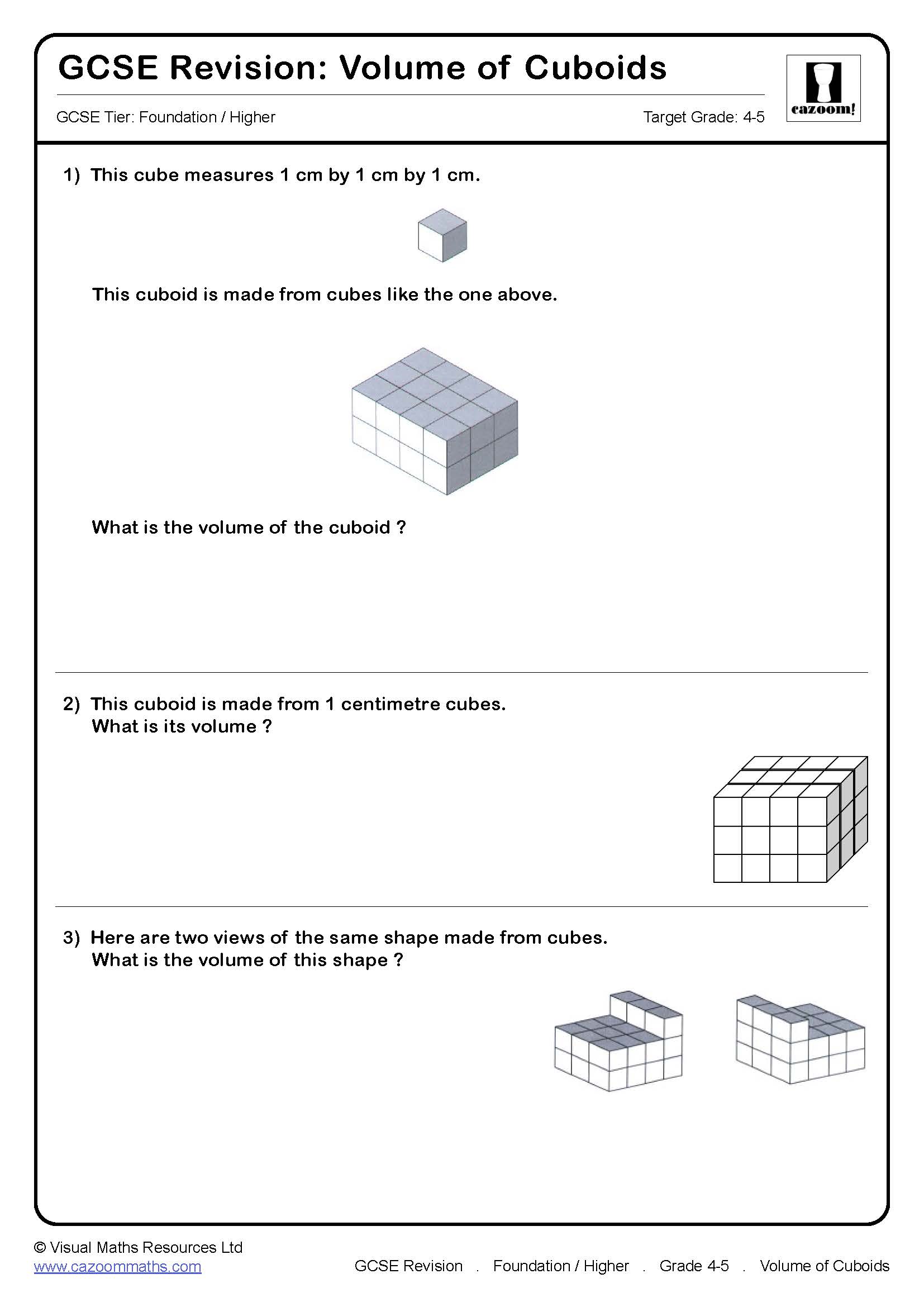
Volume of Cuboids
Target Grade: 4-5
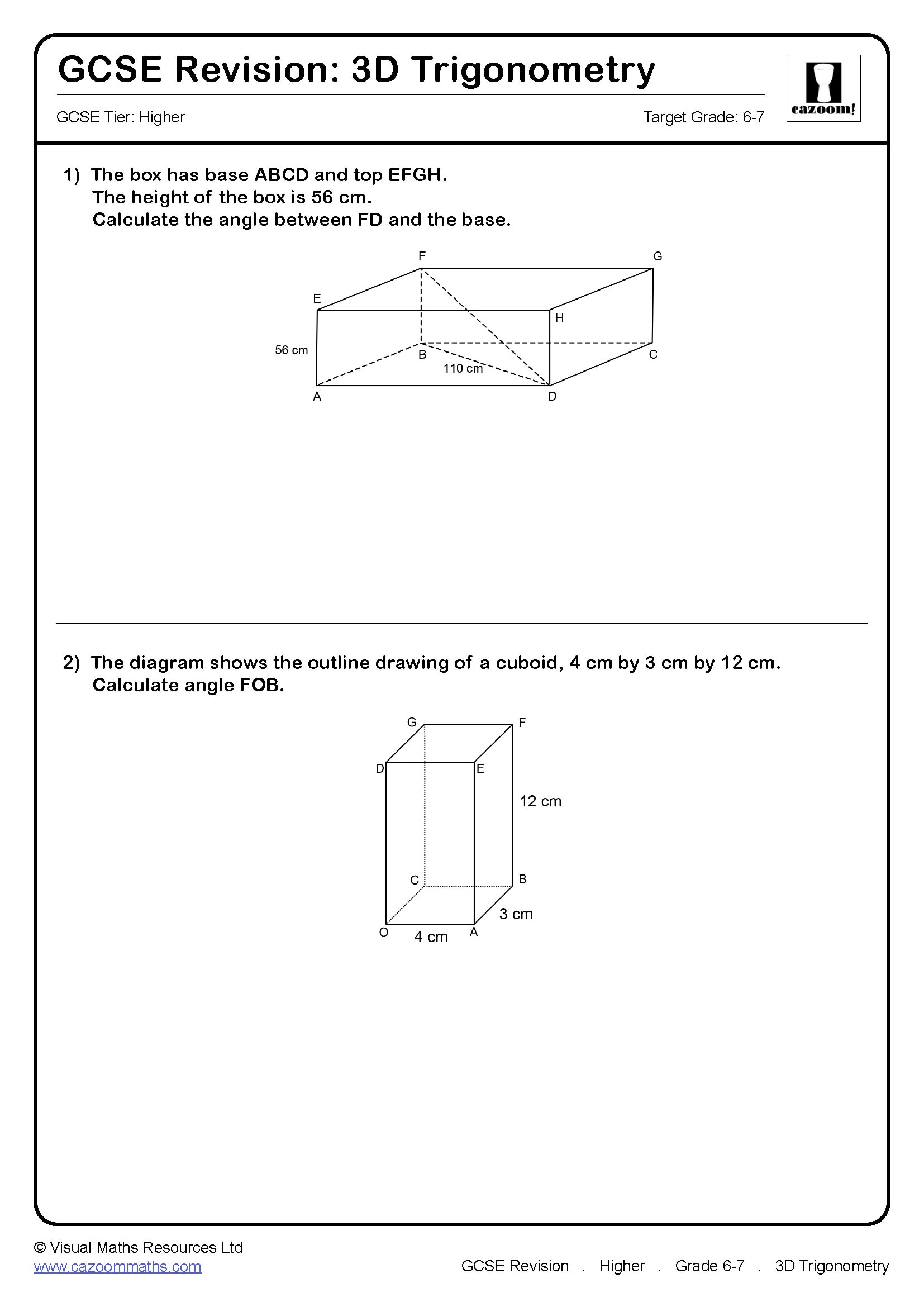
3D Trigonometry
Target Grade: 6-7
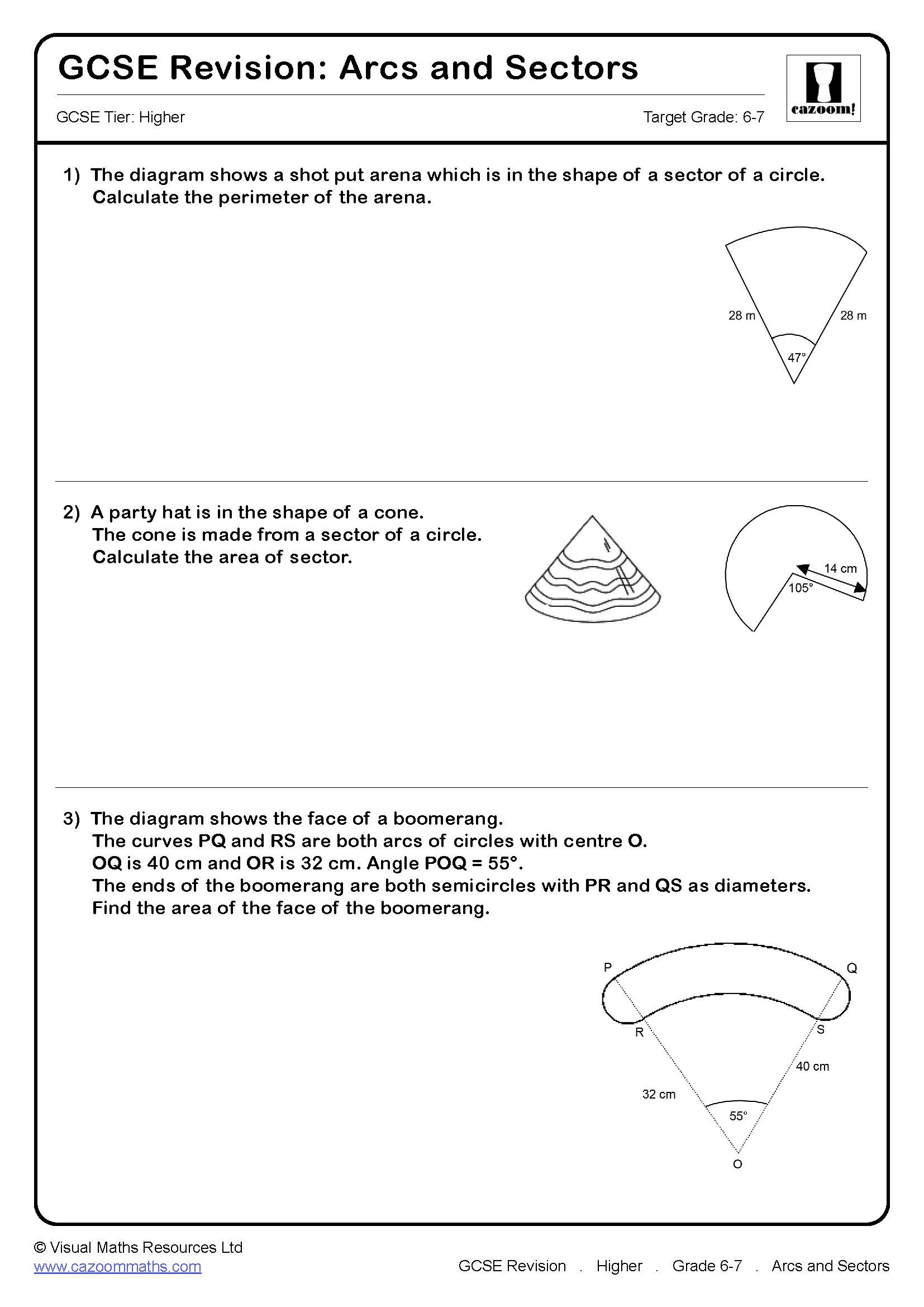
Arcs and Sectors
Target Grade: 6-7
Circle Theorems
Target Grade: 6-7
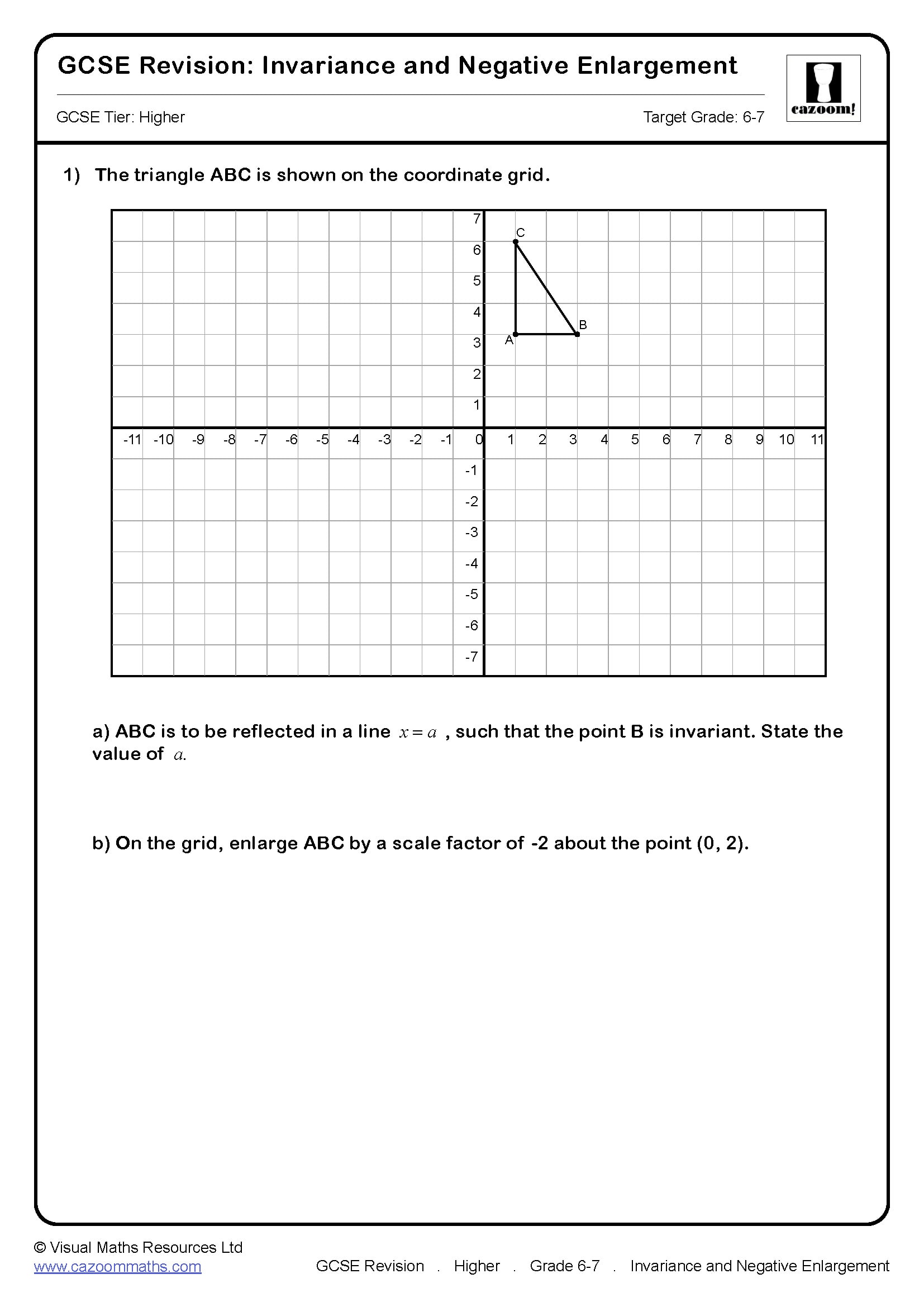
Invariance and Negative Enlargement
Target Grade: 6-7
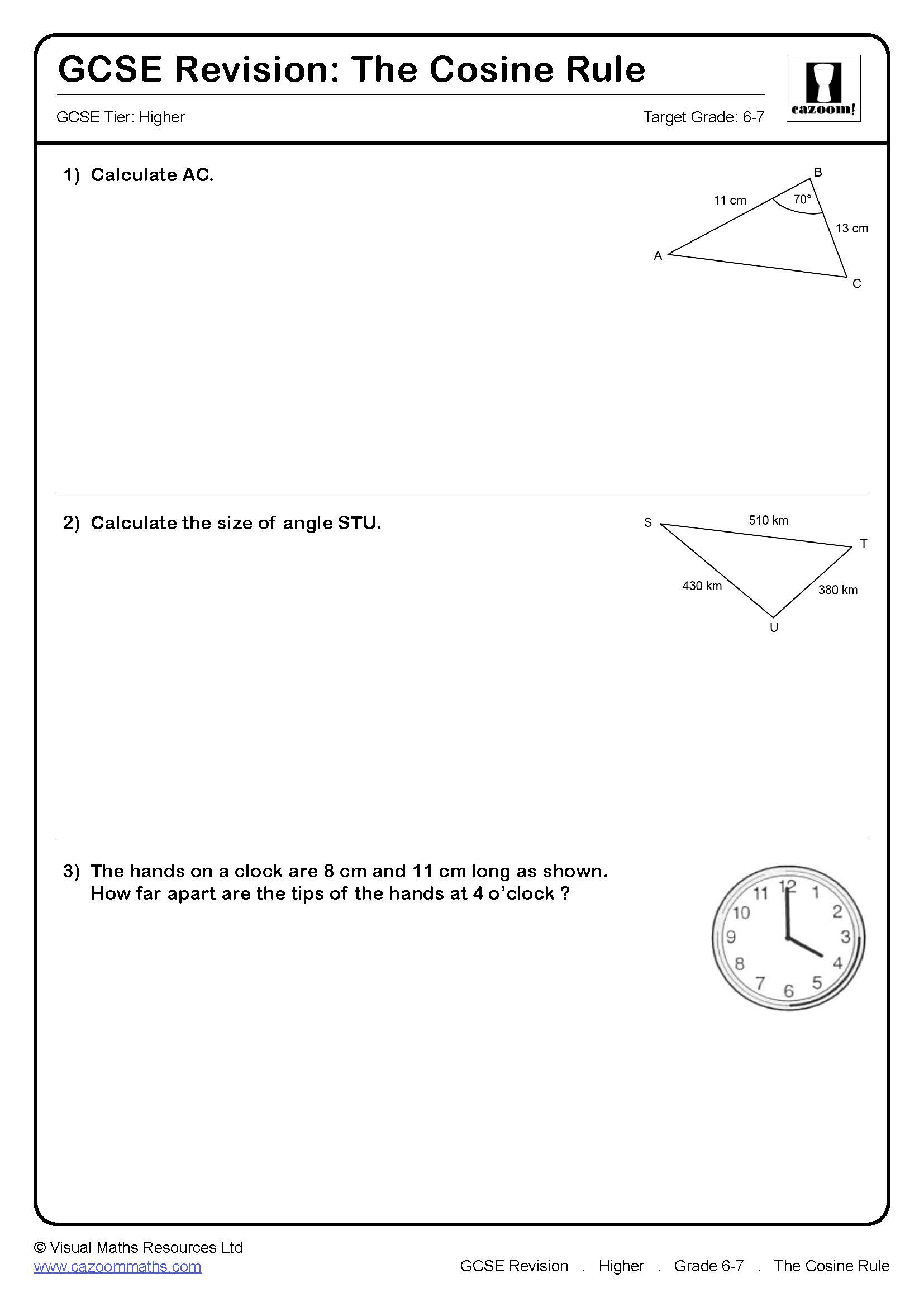
The Cosine Rule
Target Grade: 6-7
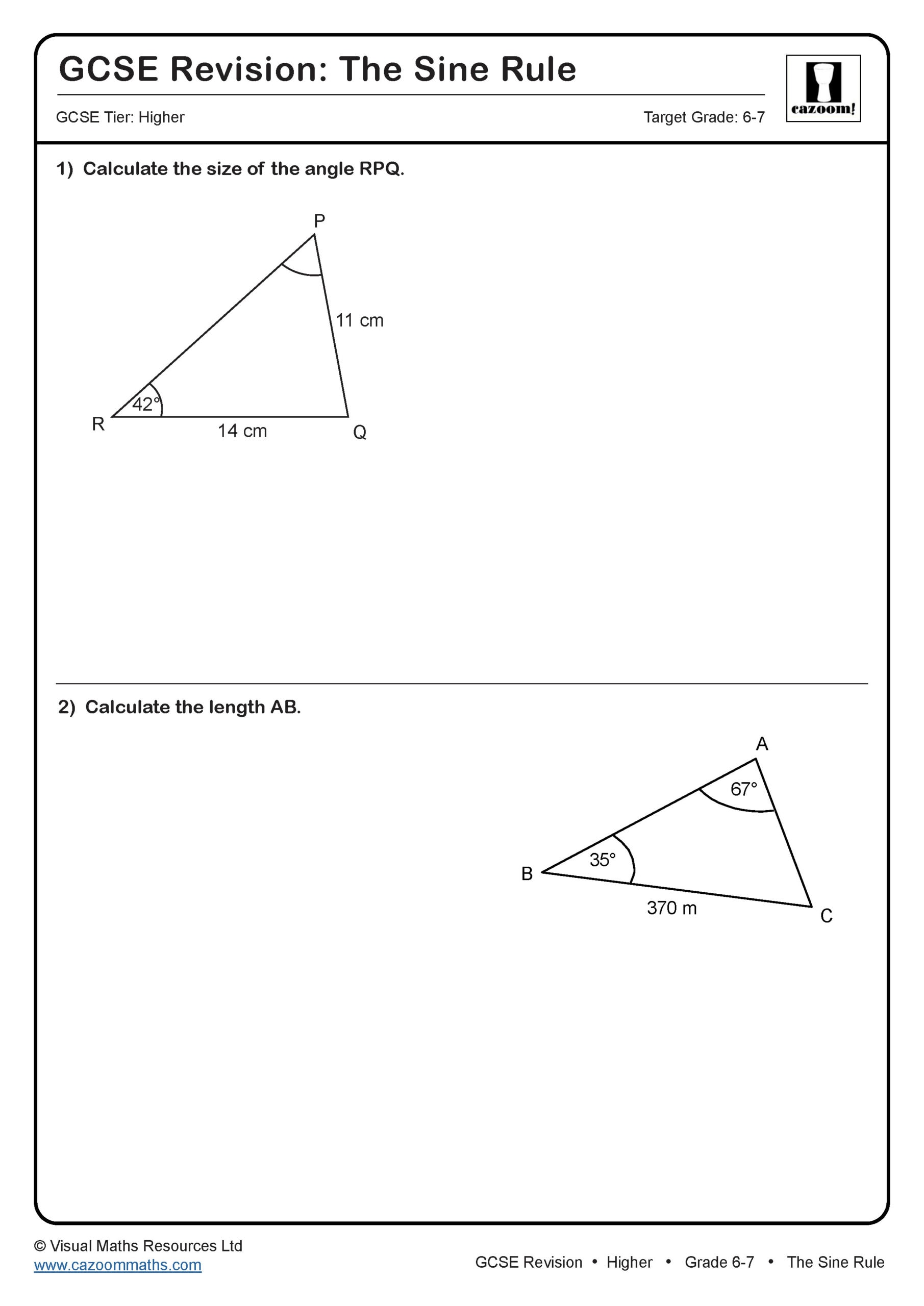
The Sine Rule
Target Grade: 6-7
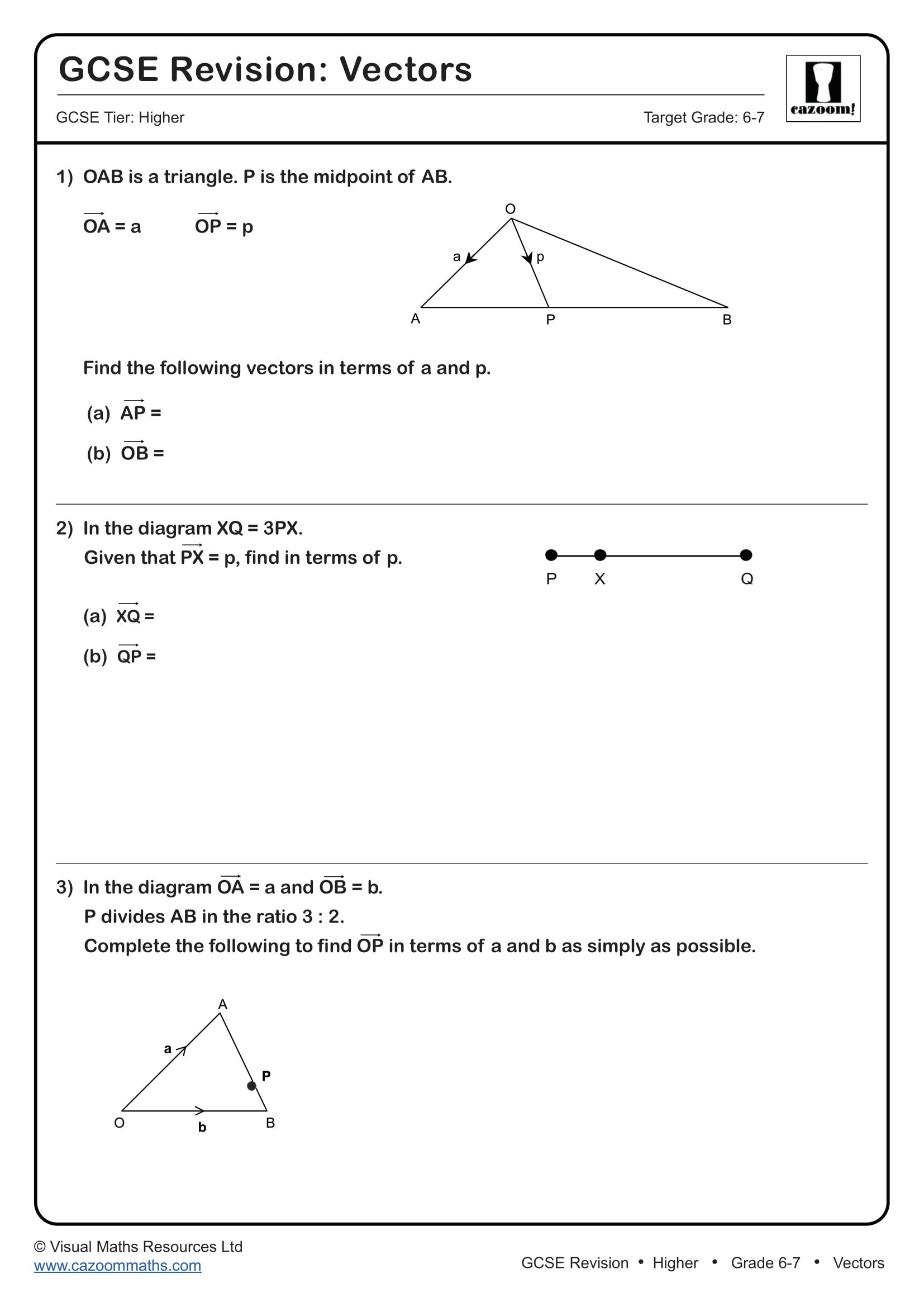
Vectors (B)
Target Grade: 6-7
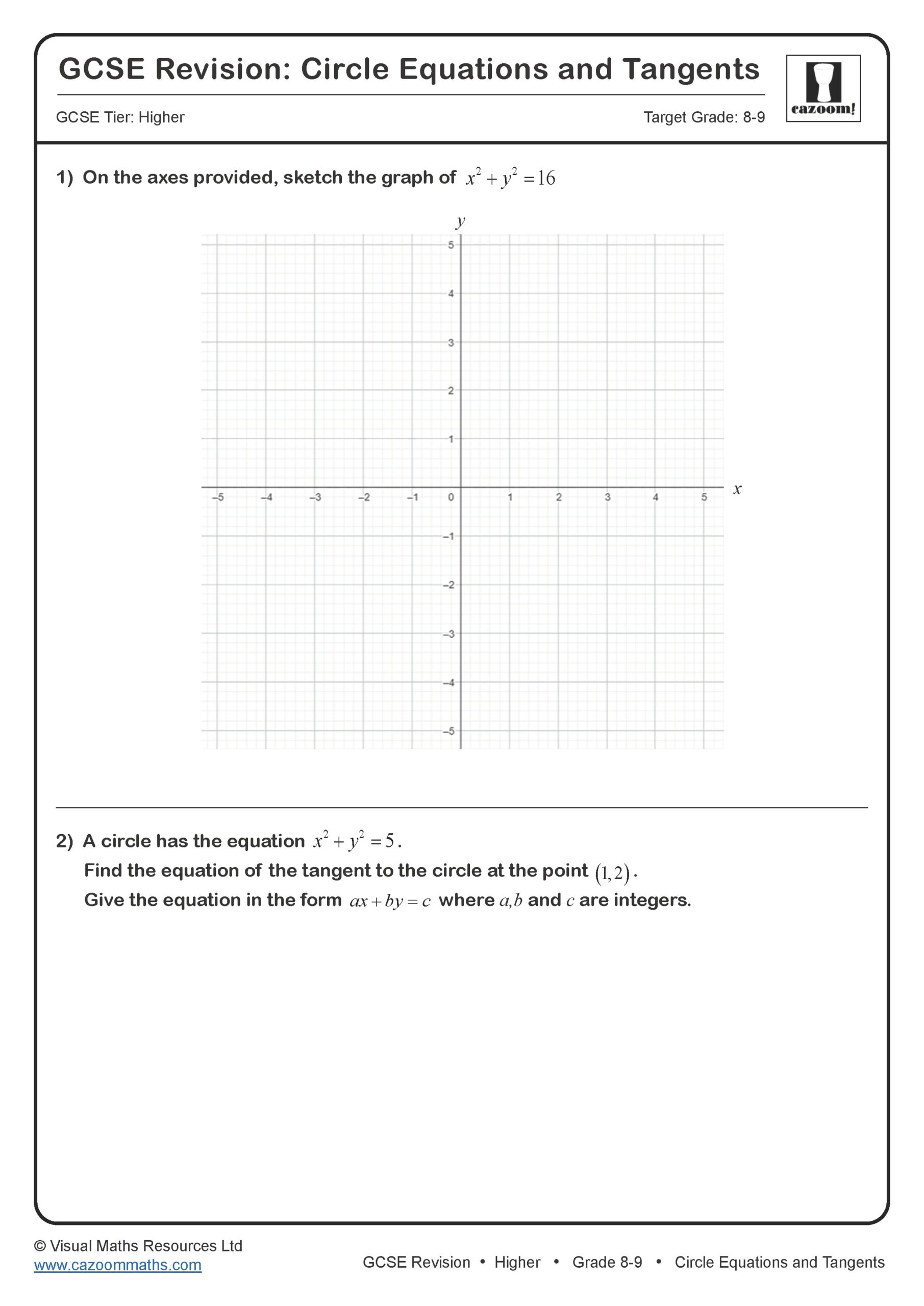
Circle Equations and Tangents
Target Grade: 8-9
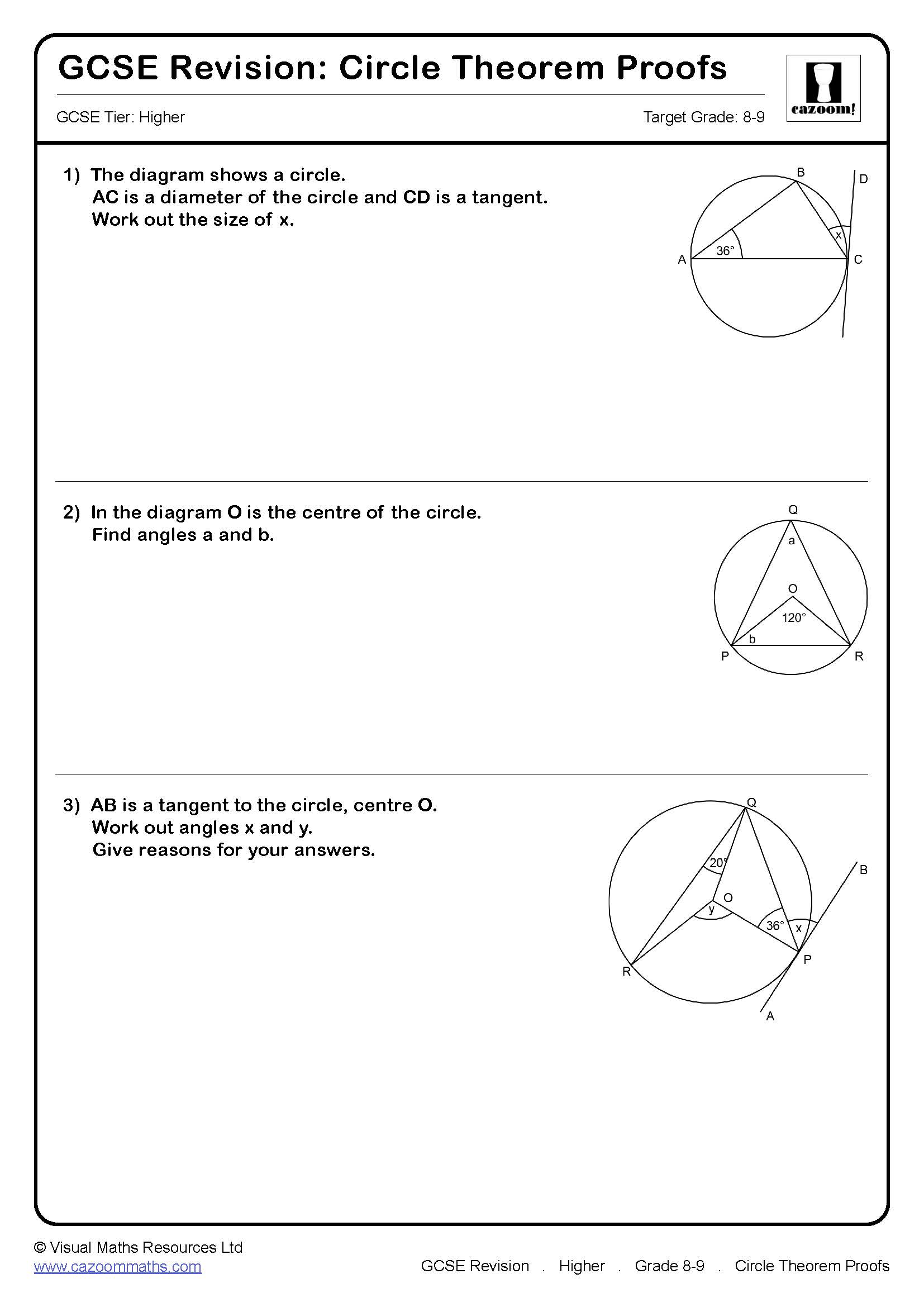
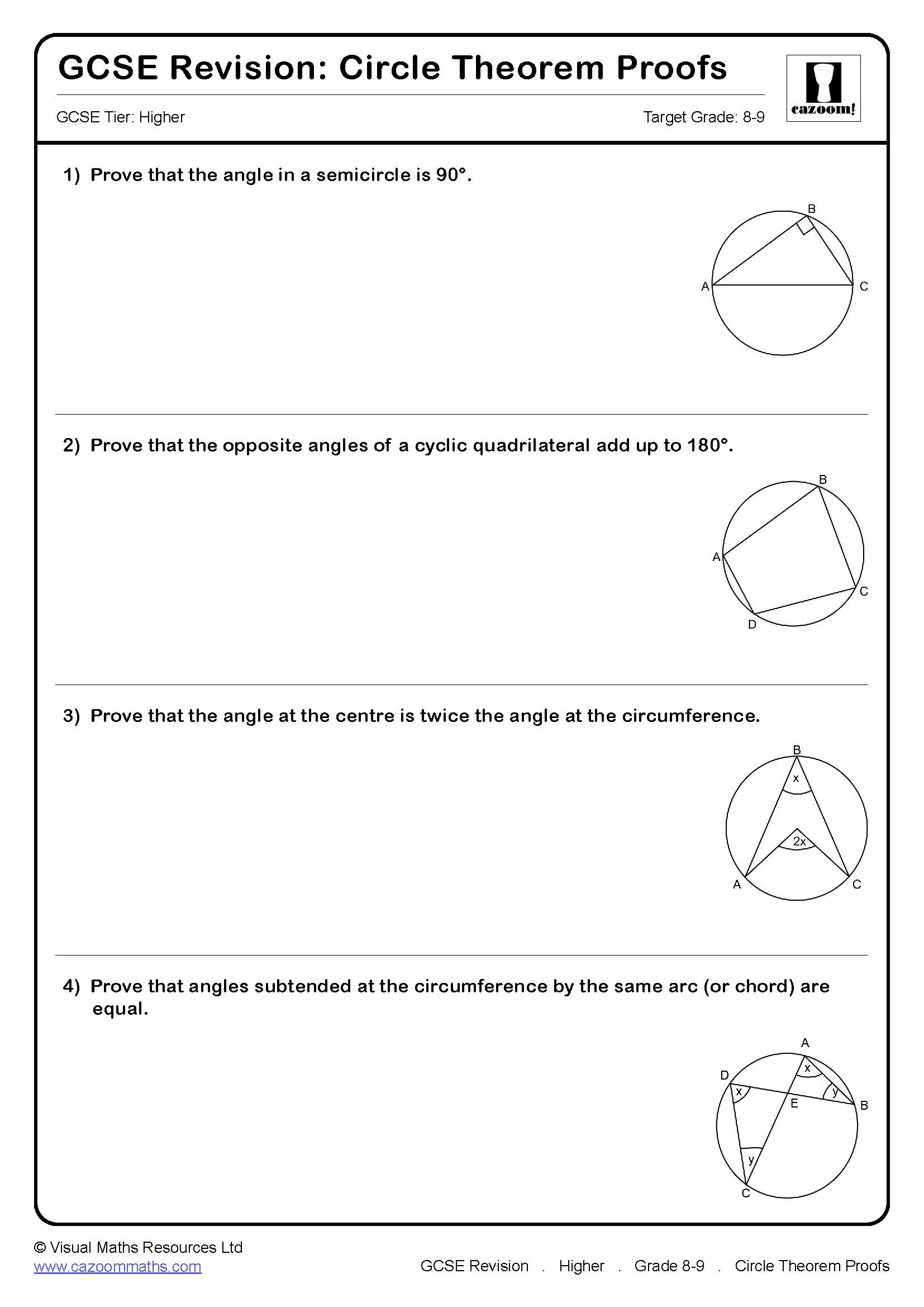
Circle Theorem Proofs
Target Grade: 8-9
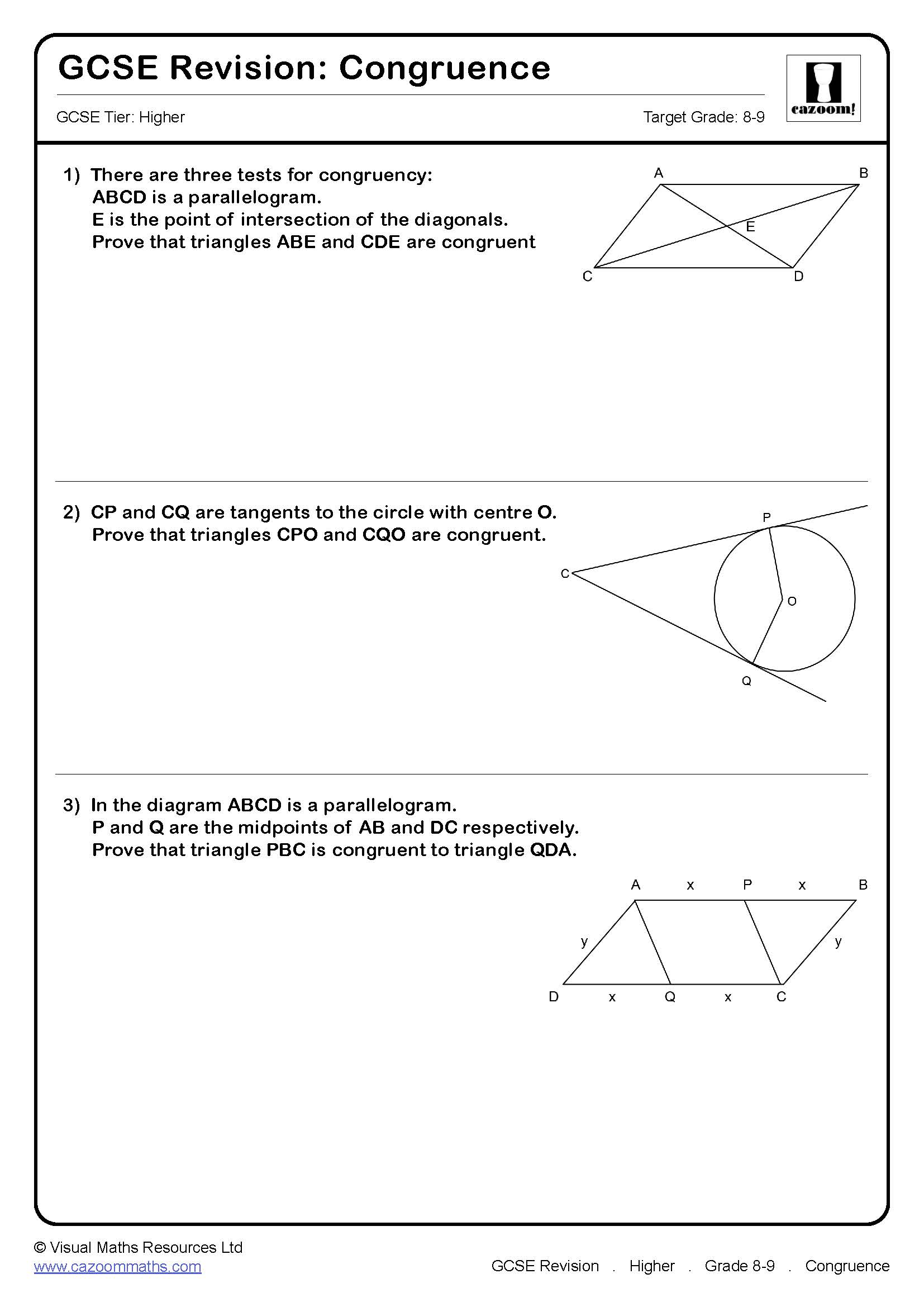
Congruence (B)
Target Grade: 8-9
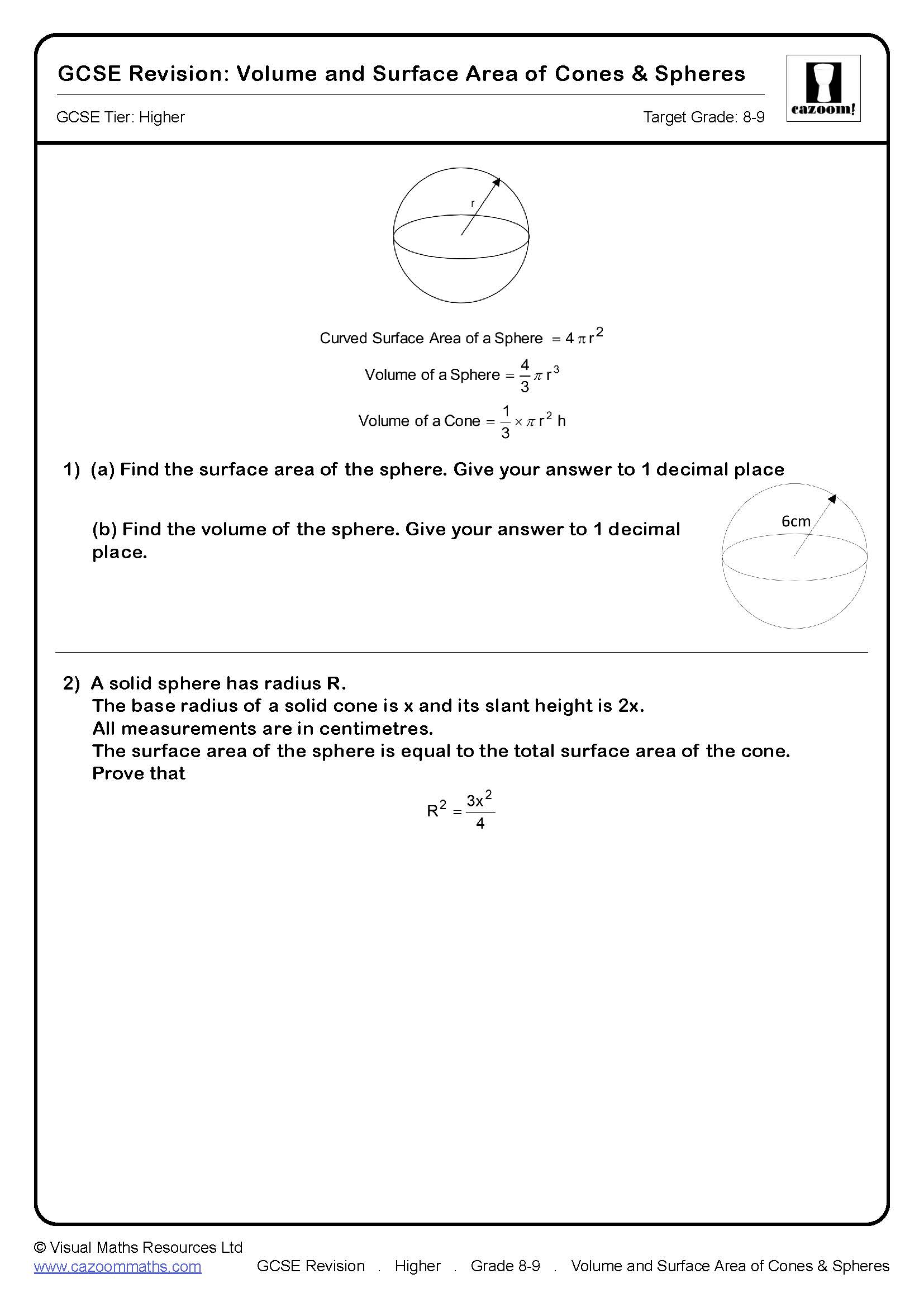
Volume and Surface Area of Cones & Spheres
Target Grade: 8-9
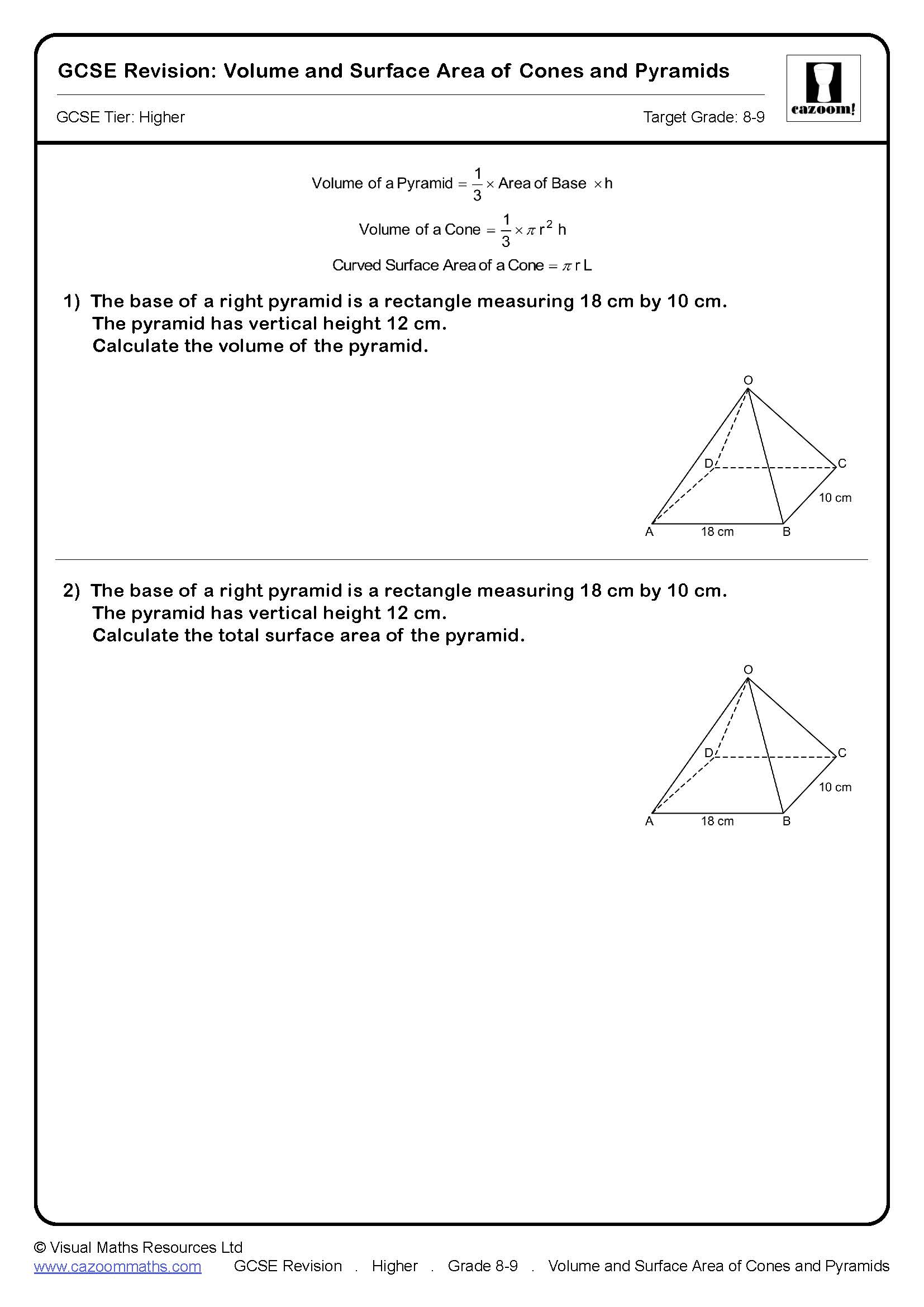
Volume and Surface Area of Cones and Pyramids
Target Grade: 8-9
All worksheets are created by the team of experienced teachers at Cazoom Maths.
What geometry topics are covered in GCSE maths?
GCSE geometry questions span shape properties, transformations, trigonometry, circle theorems, vectors, and mensuration. Foundation tier (grades 1-5) covers angle facts, constructions, Pythagoras' theorem, basic trigonometry, area and volume of standard shapes, and similarity. Higher tier (grades 4-9) extends to sine and cosine rules, circle theorems, 3D trigonometry, vectors in multiple dimensions, and geometric proof.
Students approaching gcse geometry revision should practise annotating diagrams with equal angles, parallel marks, and known lengths. Exam mark schemes reward clear geometric reasoning, so writing 'angles in a triangle sum to 180°' gains method marks even if the final answer contains arithmetic errors. This habit of stating geometric facts explicitly separates grade 5 responses from grade 7 work.
How are these geometry worksheets organised by grade?
The worksheets are structured in four grade bands: 1-3 covers foundation geometry including angle vocabulary, basic constructions, and area of simple shapes; 4-5 bridges Foundation and Higher with trigonometry, Pythagoras' theorem, and compound shapes; 6-7 introduces circle theorems, vectors, and the sine and cosine rules; 8-9 tackles geometric proof, transforming functions, and advanced circle geometry.
Foundation tier students (targeting grades 1-5) should work through grades 1-3 material first, then tackle 4-5 content as exam preparation. Higher tier students can start at grade 4-5 to secure fundamentals before moving to 6-7 and 8-9 material. Teachers often set mixed-ability classes different grade bands for the same topic, ensuring all students revise at an appropriate challenge level without limiting progression.
How is geometry tested in GCSE maths exams?
Geometry appears across all three GCSE papers, typically accounting for 20-25% of available marks. Questions range from single-step angle calculations worth 1-2 marks to multi-step problems involving multiple geometric concepts worth 5-6 marks. Examiners expect students to state geometric facts (alternate angles are equal, opposite angles in a cyclic quadrilateral sum to 180°) and show clear working through problems requiring multiple applications of theorems.
Students lose marks by rushing diagram interpretation or failing to identify which geometric properties apply. Mark schemes specifically allocate marks for stating reasons, not just calculations. Time management matters: a 6-mark geometry question deserves roughly six minutes. Teachers notice that students who practise annotating diagrams during revision gain confidence spotting angle relationships under exam pressure, particularly on non-routine gcse geometry questions where the approach isn't immediately obvious.
How should students revise geometry for GCSE maths?
Effective geometry revision combines regular worksheet practice with past paper questions. Students benefit from working through grade-appropriate worksheets under timed conditions, then using answer sheets to identify which geometric concepts need reinforcement. Teachers often observe that spaced repetition works better than cramming—revisiting circle theorems or trigonometry weekly rather than in single marathon sessions improves retention.
Set challenging worksheets as homework to expose gaps before revision lessons, then use class time to address common misconceptions. Pairing worksheet practice with past papers helps students recognise how geometric concepts combine in exam questions. Foundation students should master angle facts and basic trigonometry before attempting compound measures, whilst Higher students need solid grade 6-7 geometry before tackling proofs. Annotating printed diagrams during practice transfers directly to exam technique.