Number GCSE Revision Worksheets
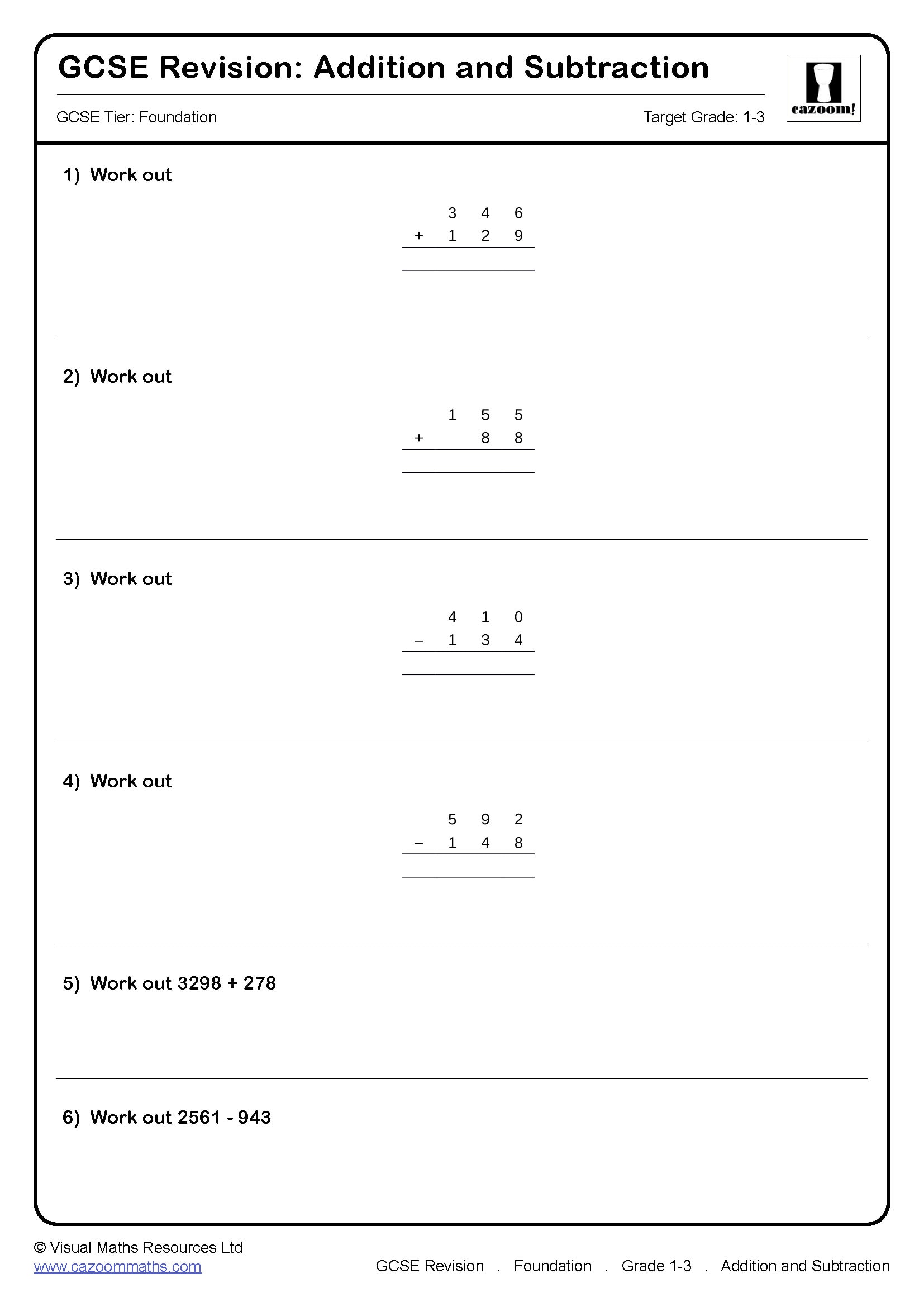
Addition and Subtraction
Target Grade: 1-3
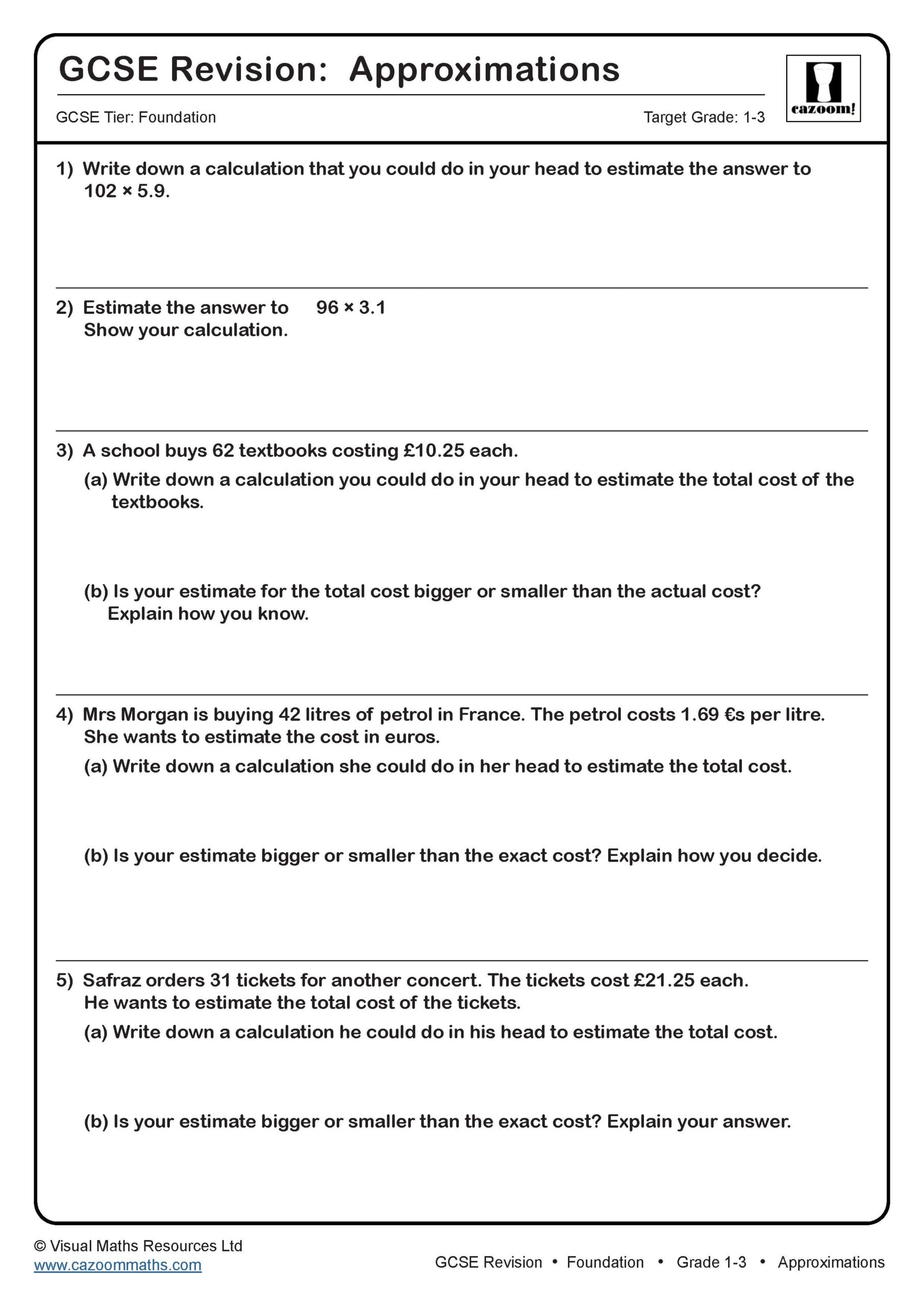
Approximations
Target Grade: 1-3
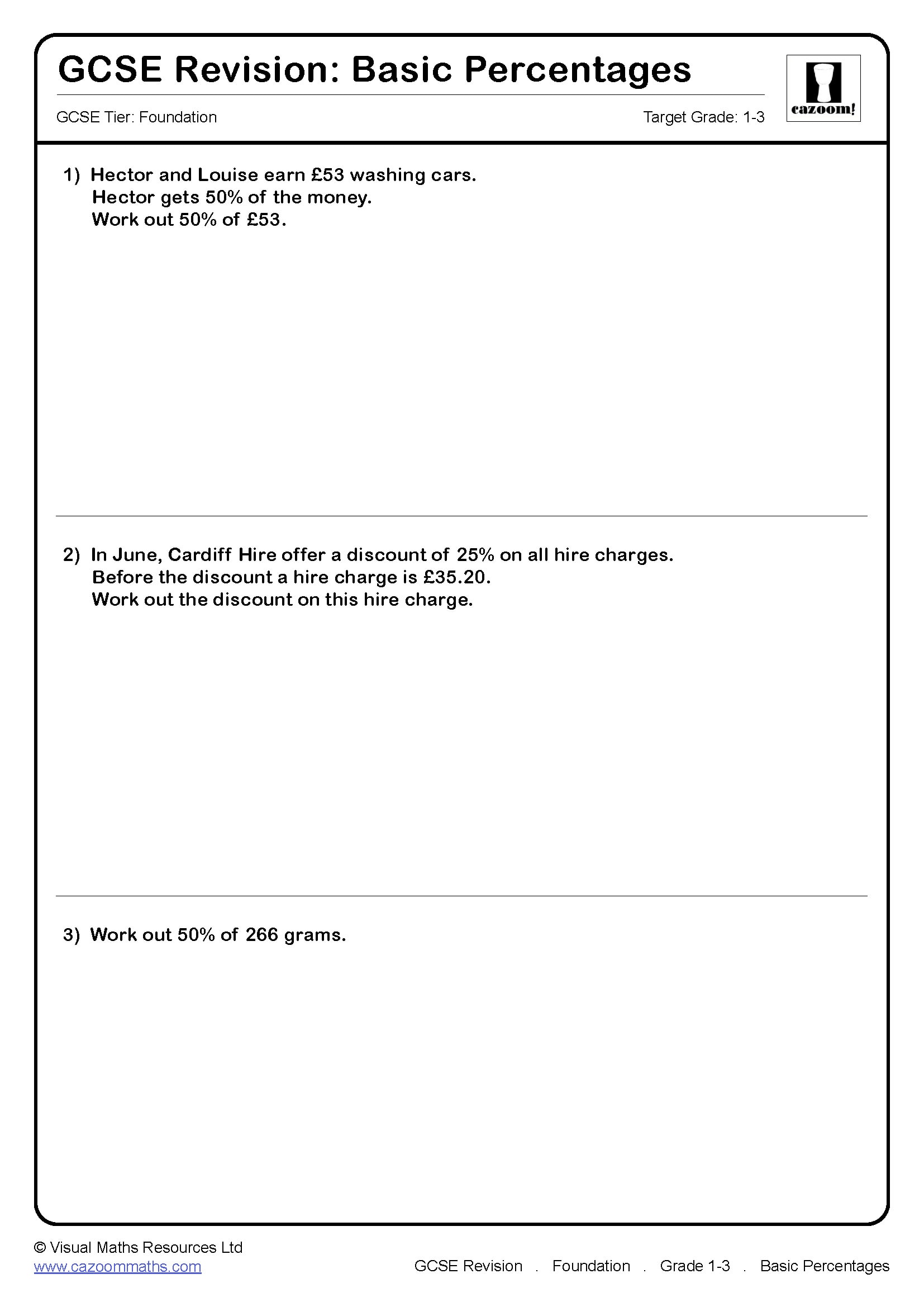
Basic Percentages
Target Grade: 1-3
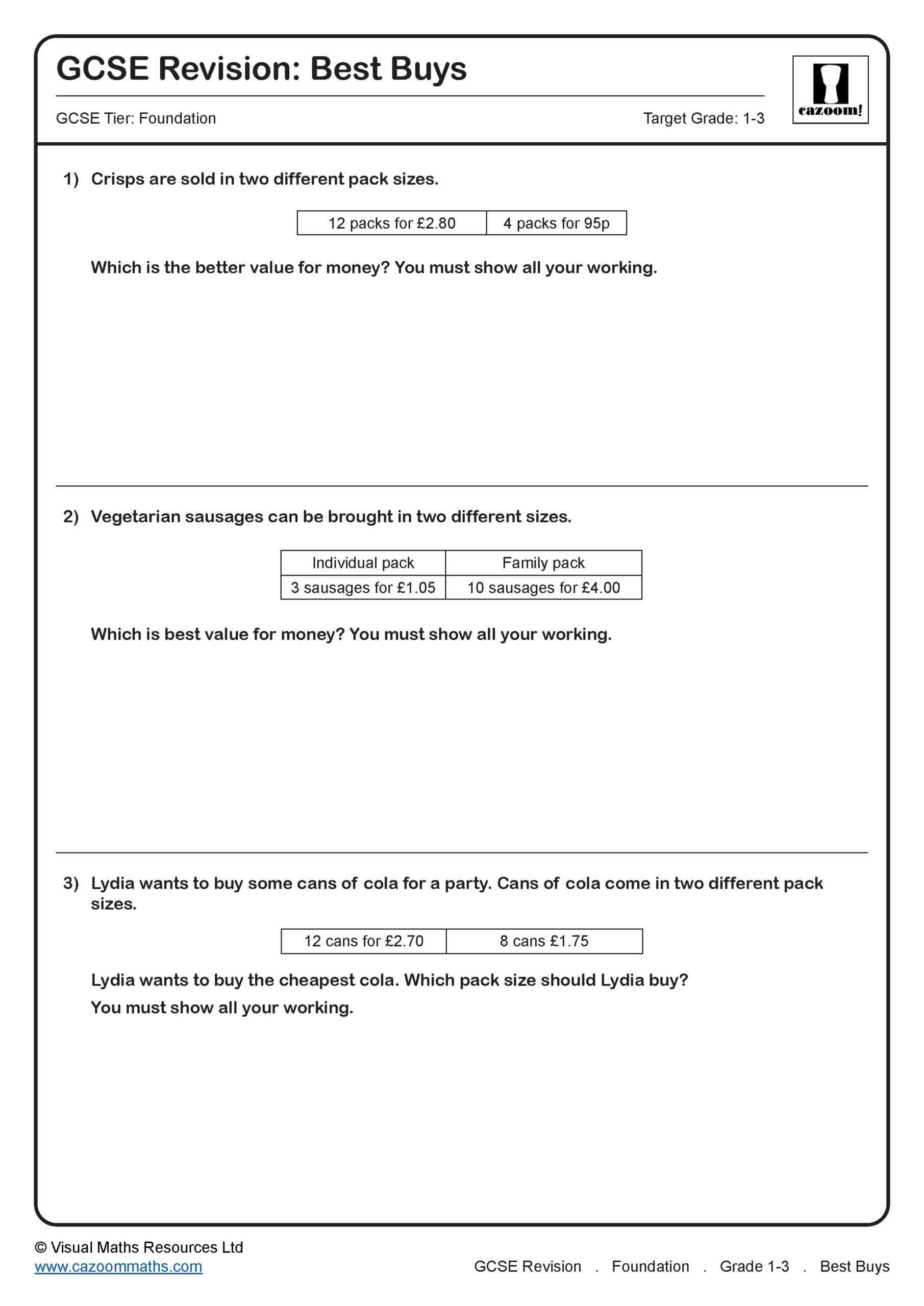
Best Buys
Target Grade: 1-3
Directed Numbers
Target Grade: 1-3
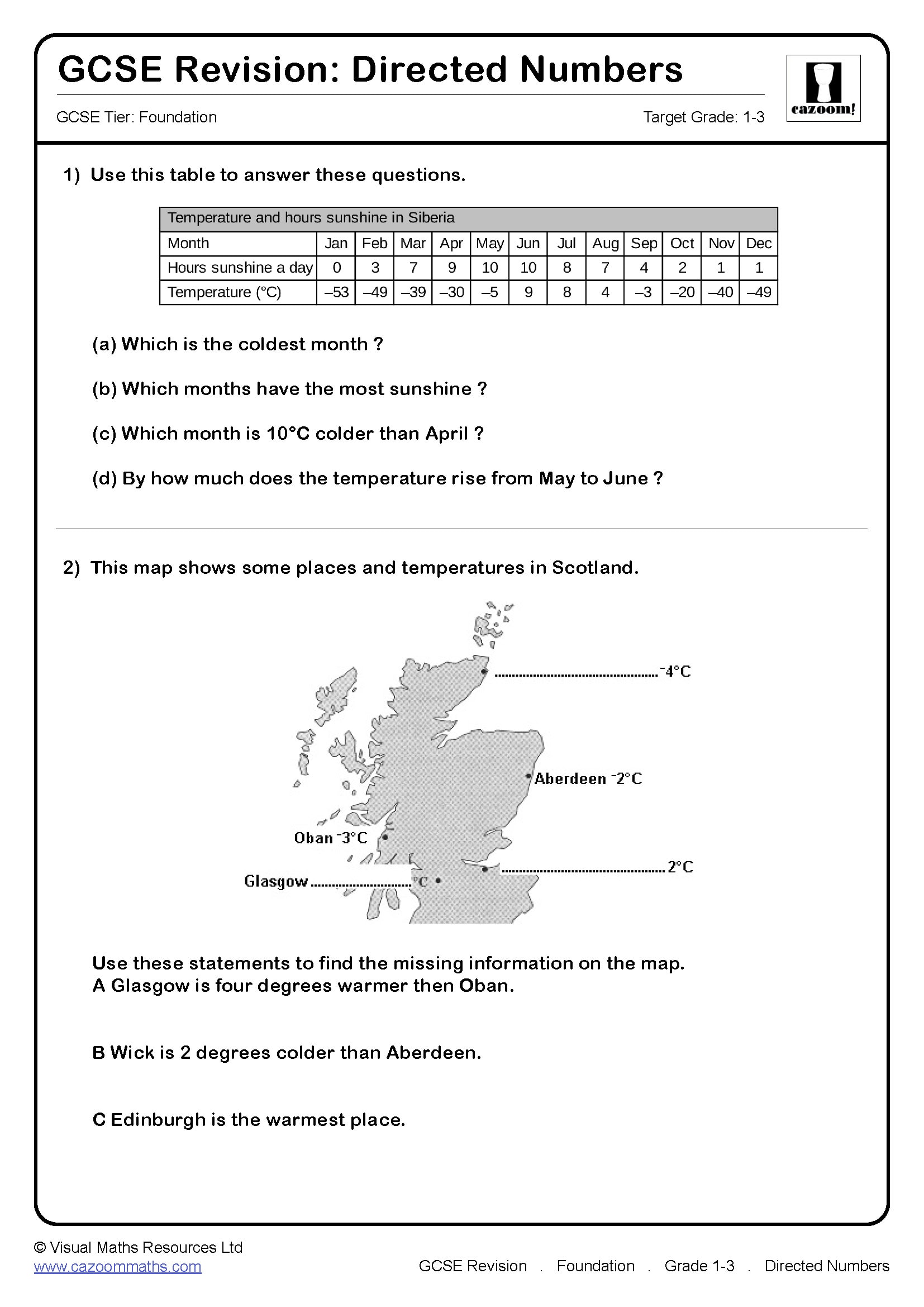
Fraction Arithemtic
Target Grade: 1-3
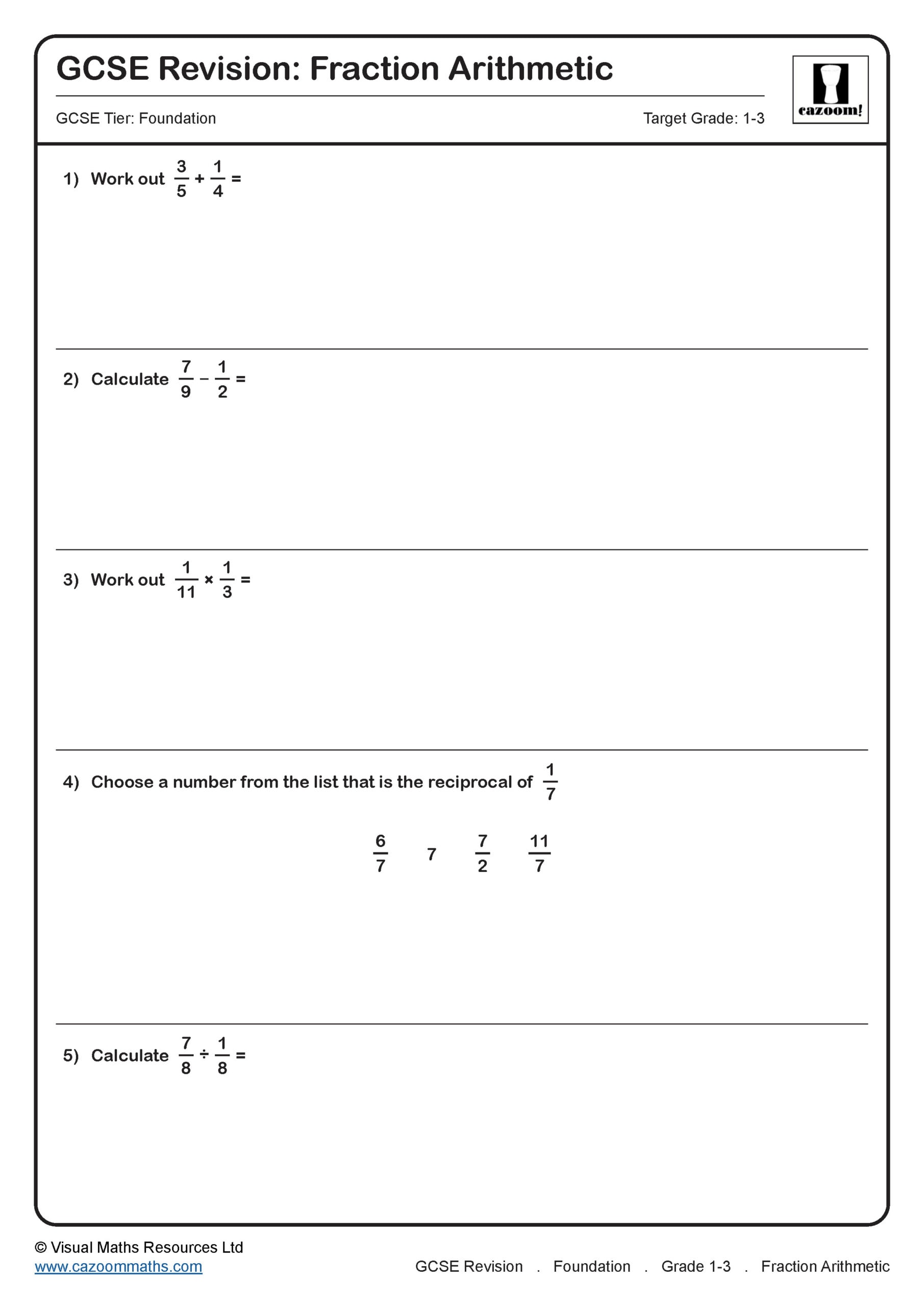
Fraction, Decimal and Percentage equivalence
Target Grade: 1-3
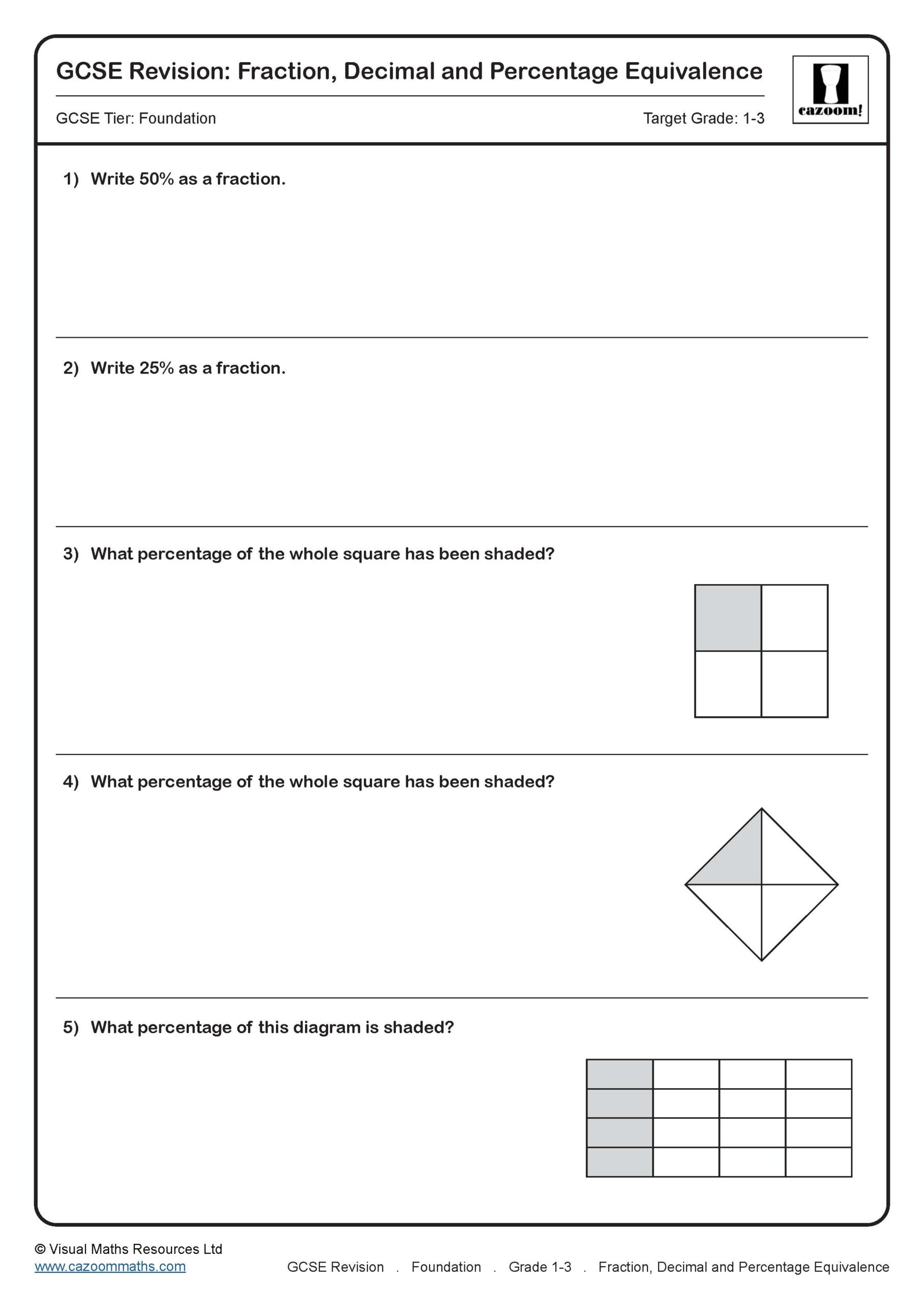
Fractions
Target Grade: 1-3
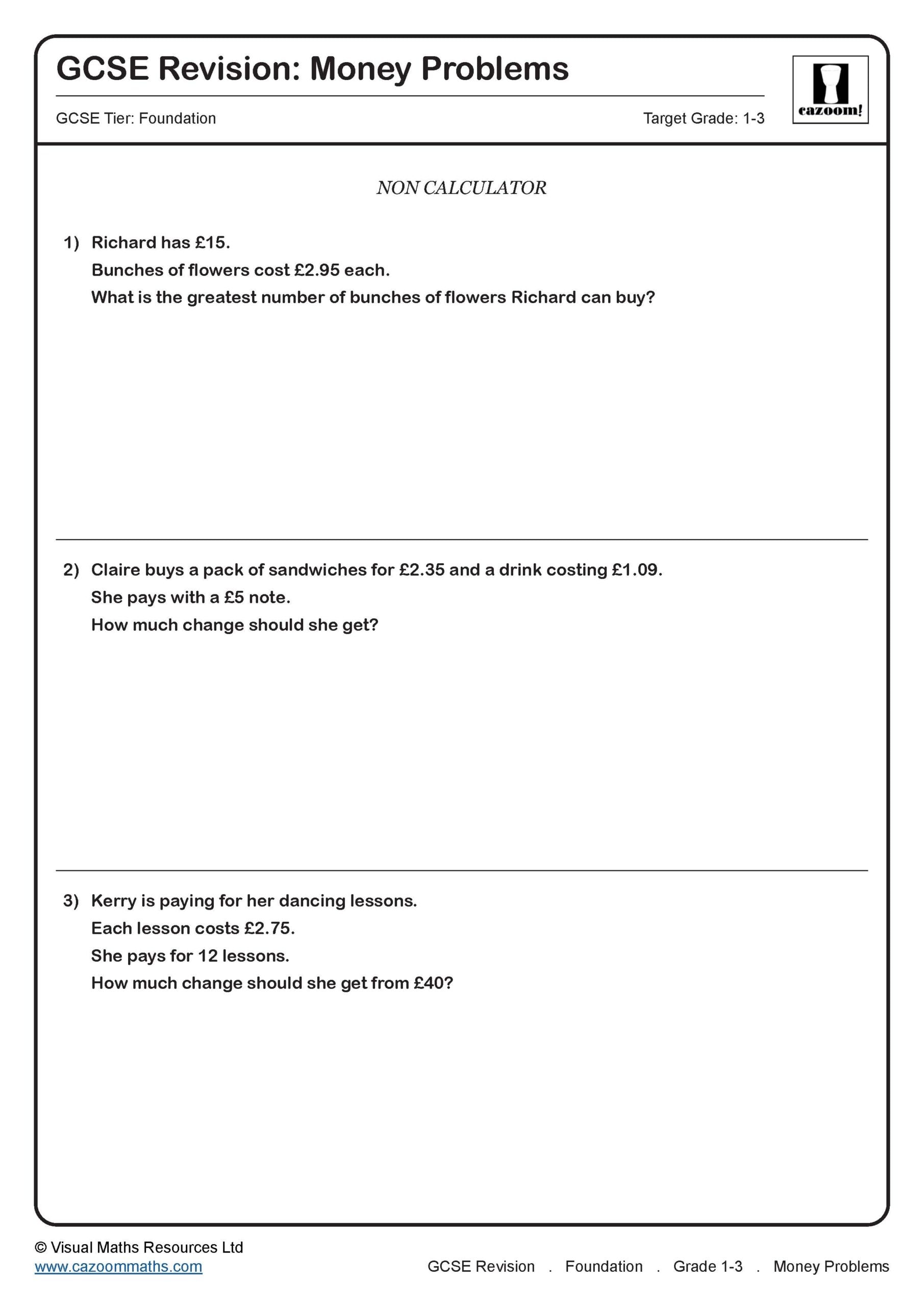
Money Problems
Target Grade: 1-3
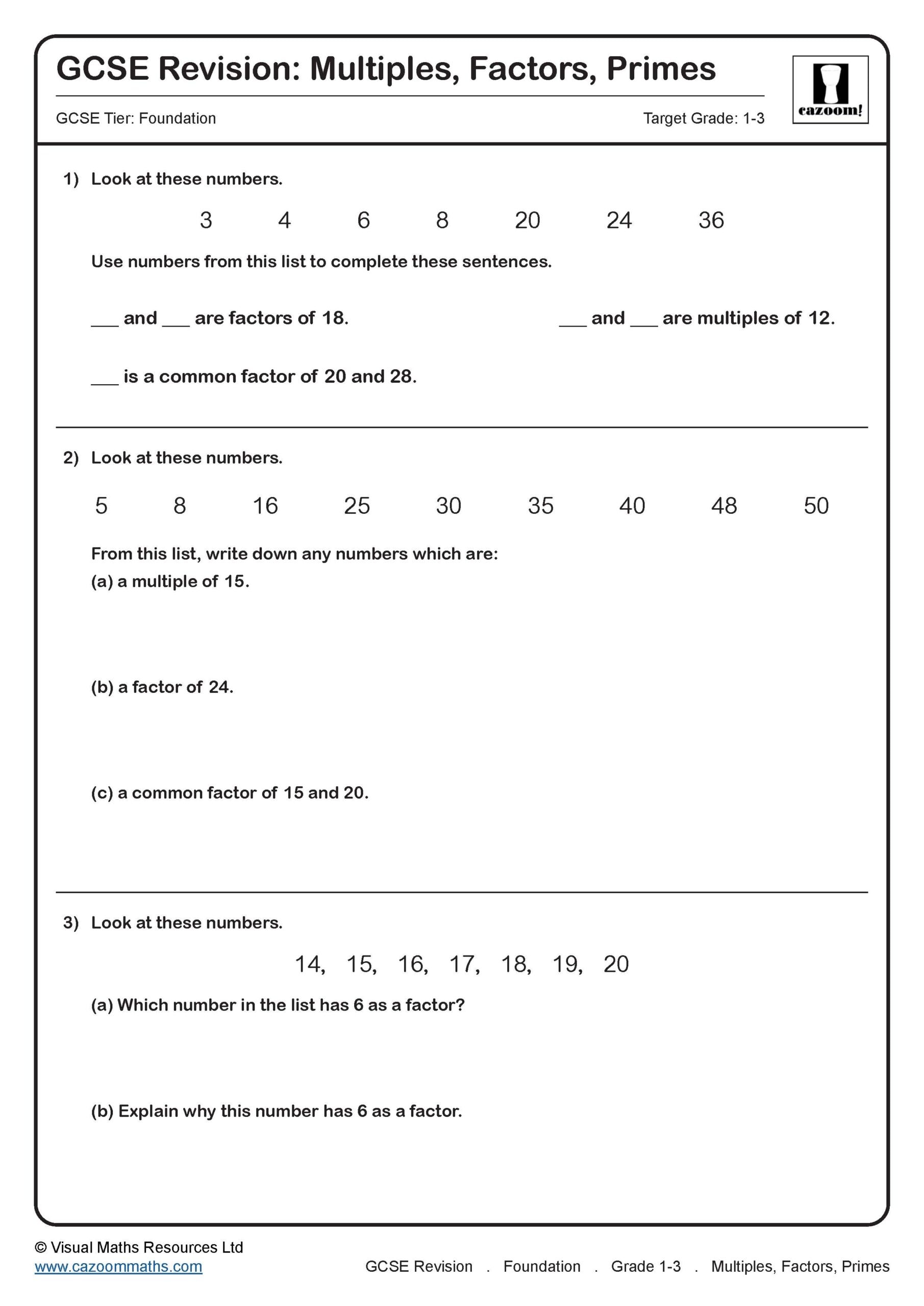
Multiples, Factors, Primes
Target Grade: 1-3
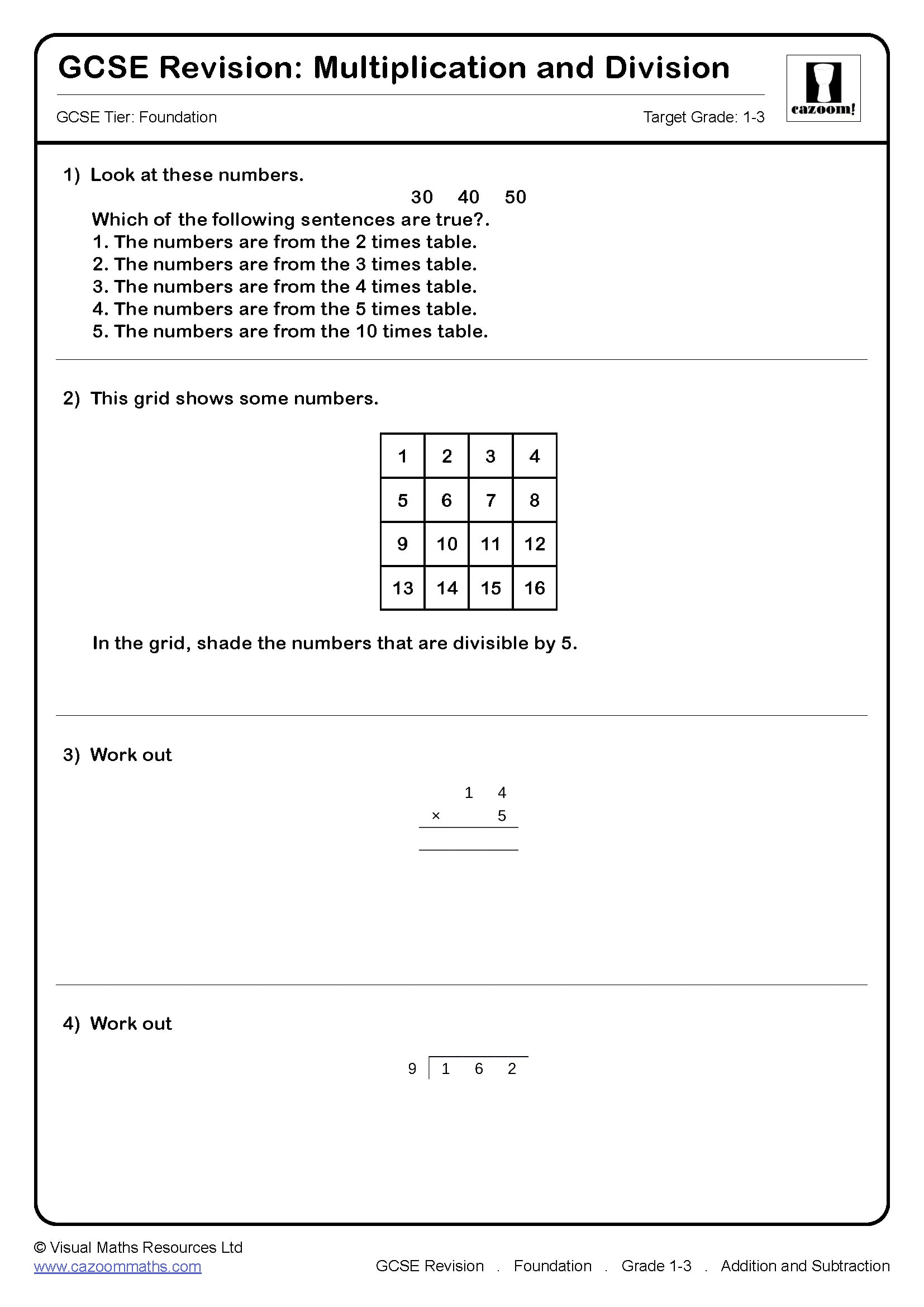
Multiplication and Division
Target Grade: 1-3
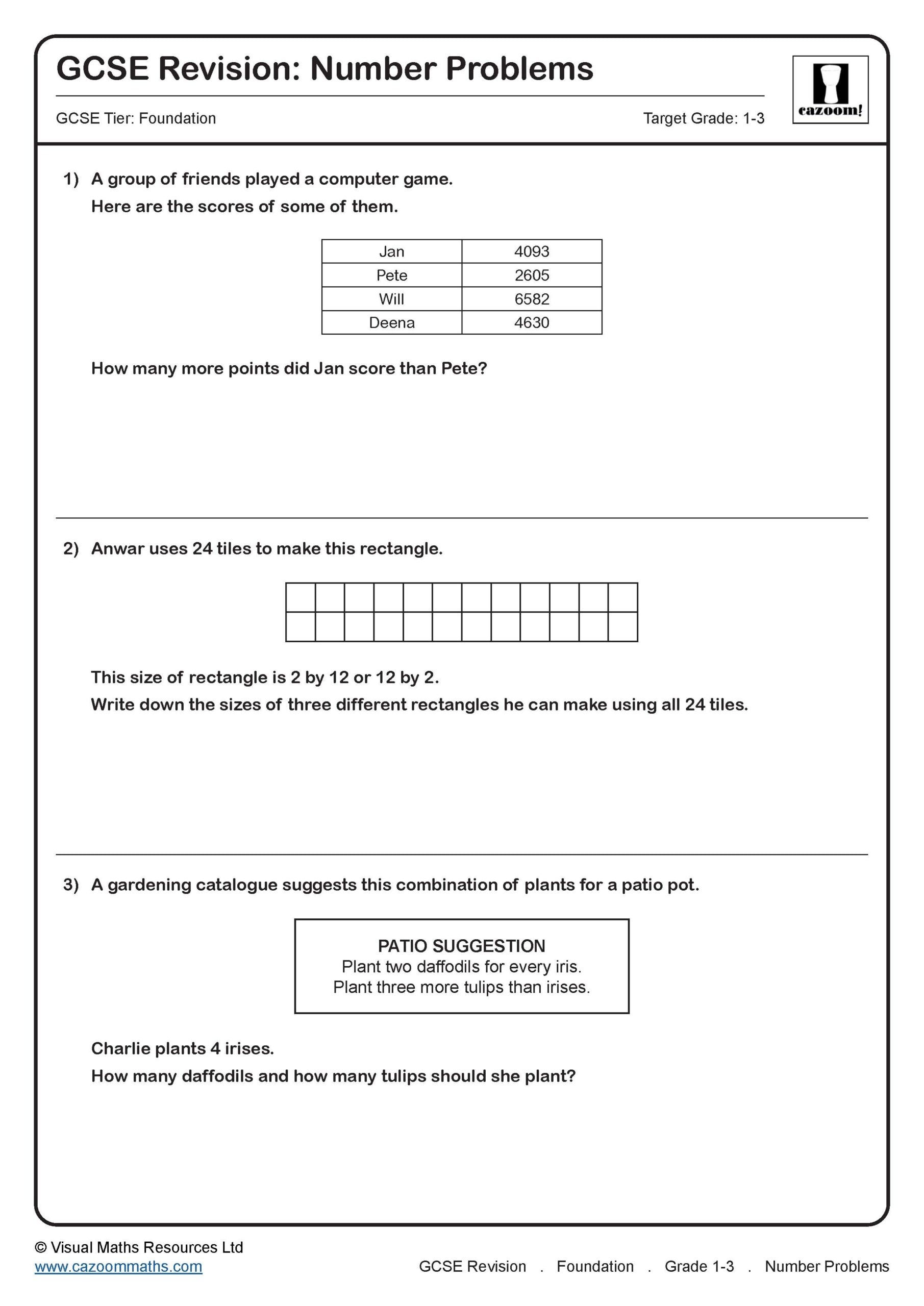
Number Problems
Target Grade: 1-3
Odd and Even Numbers
Target Grade: 1-3
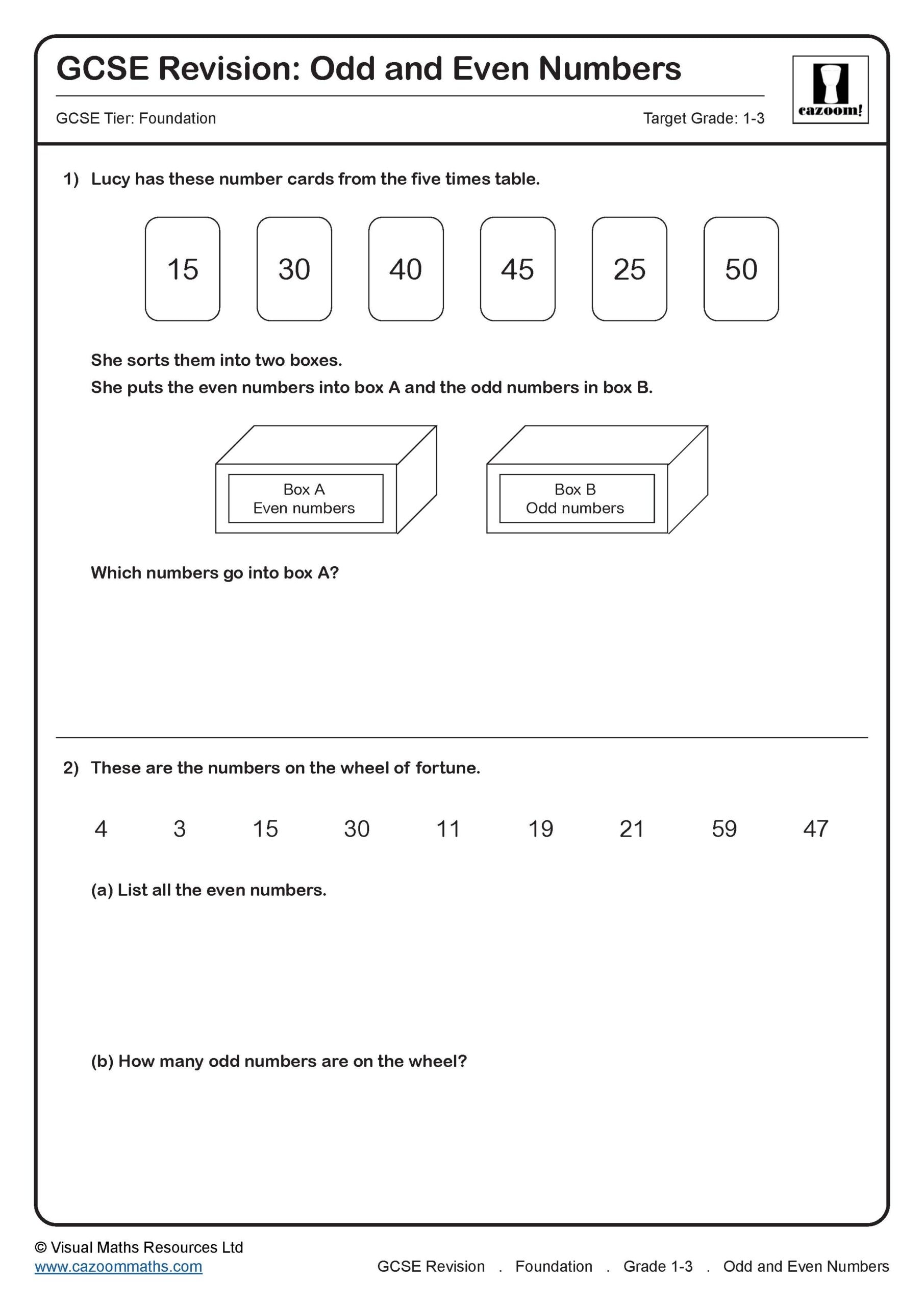
Ordering Fractions
Target Grade: 1-3
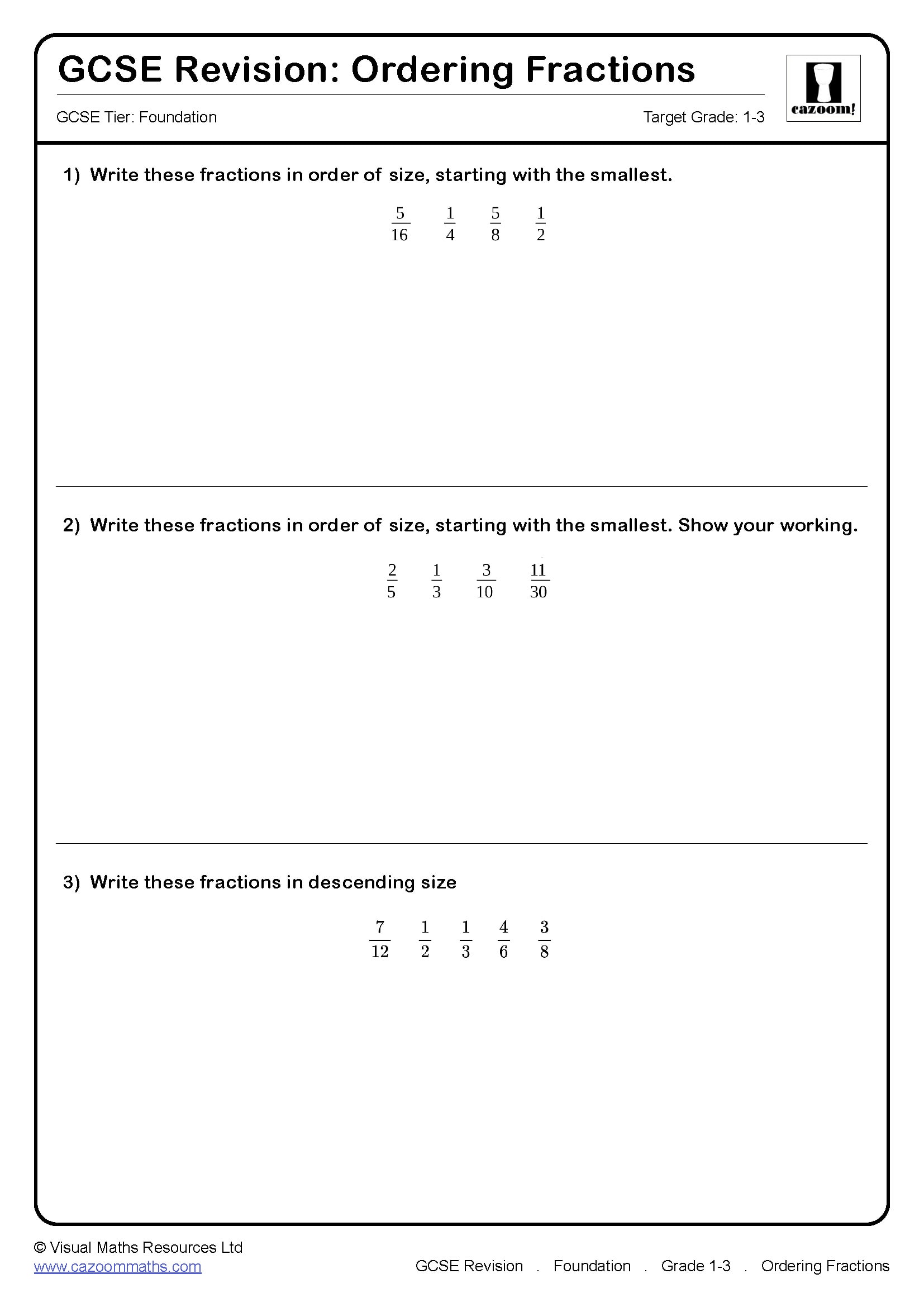
Place Value
Target Grade: 1-3
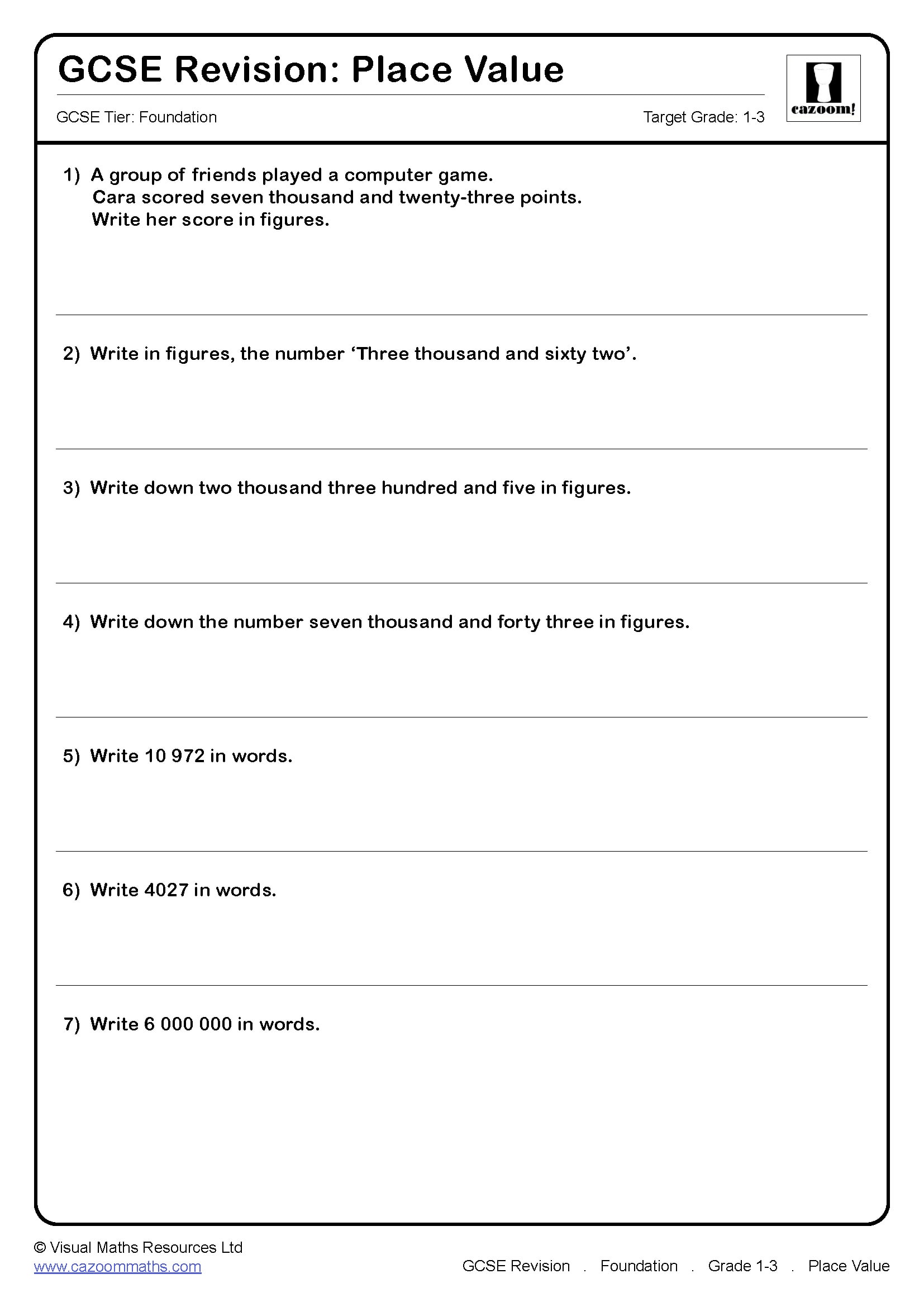
Powers
Target Grade: 1-3
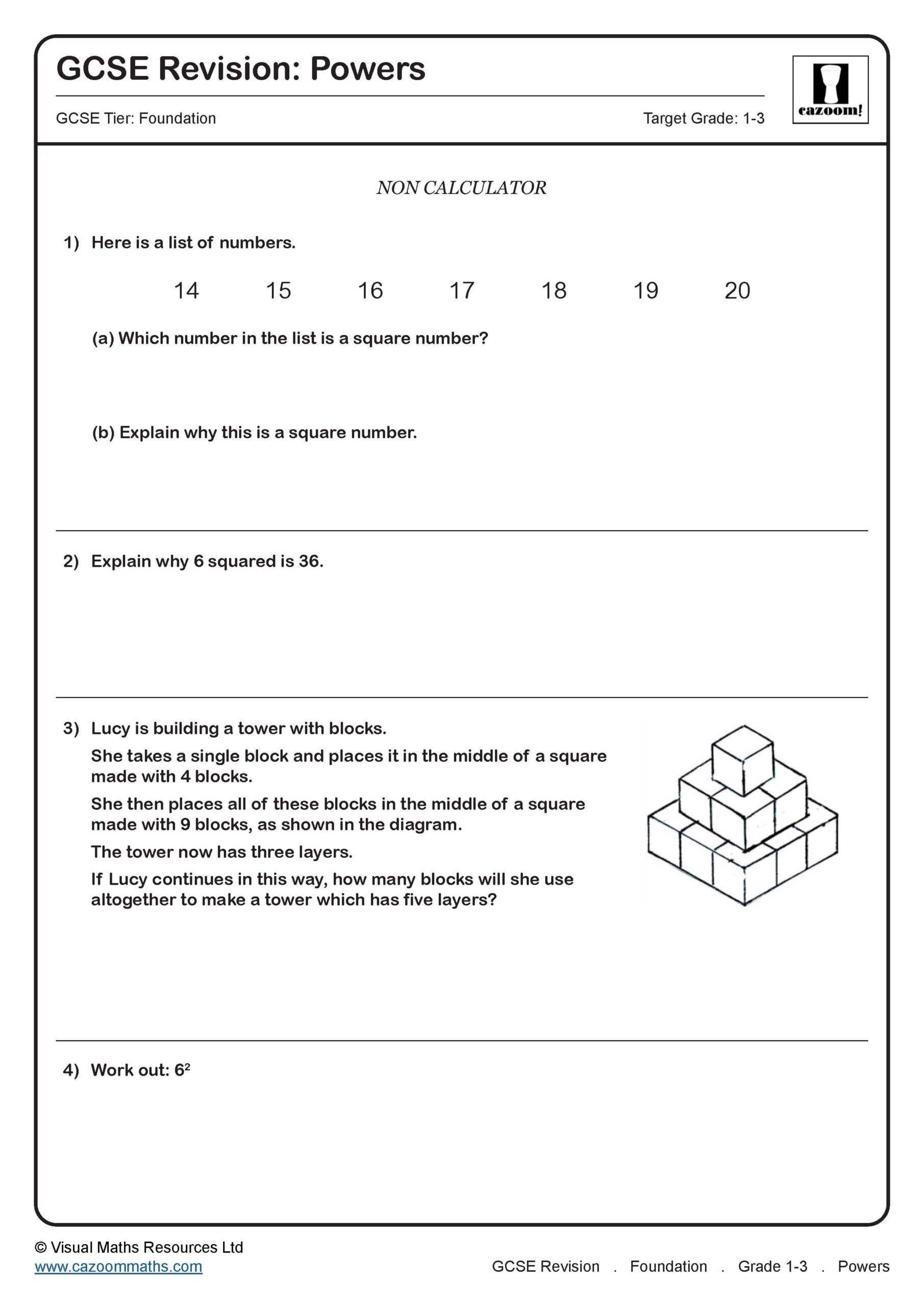
Proportion
Target Grade: 1-3
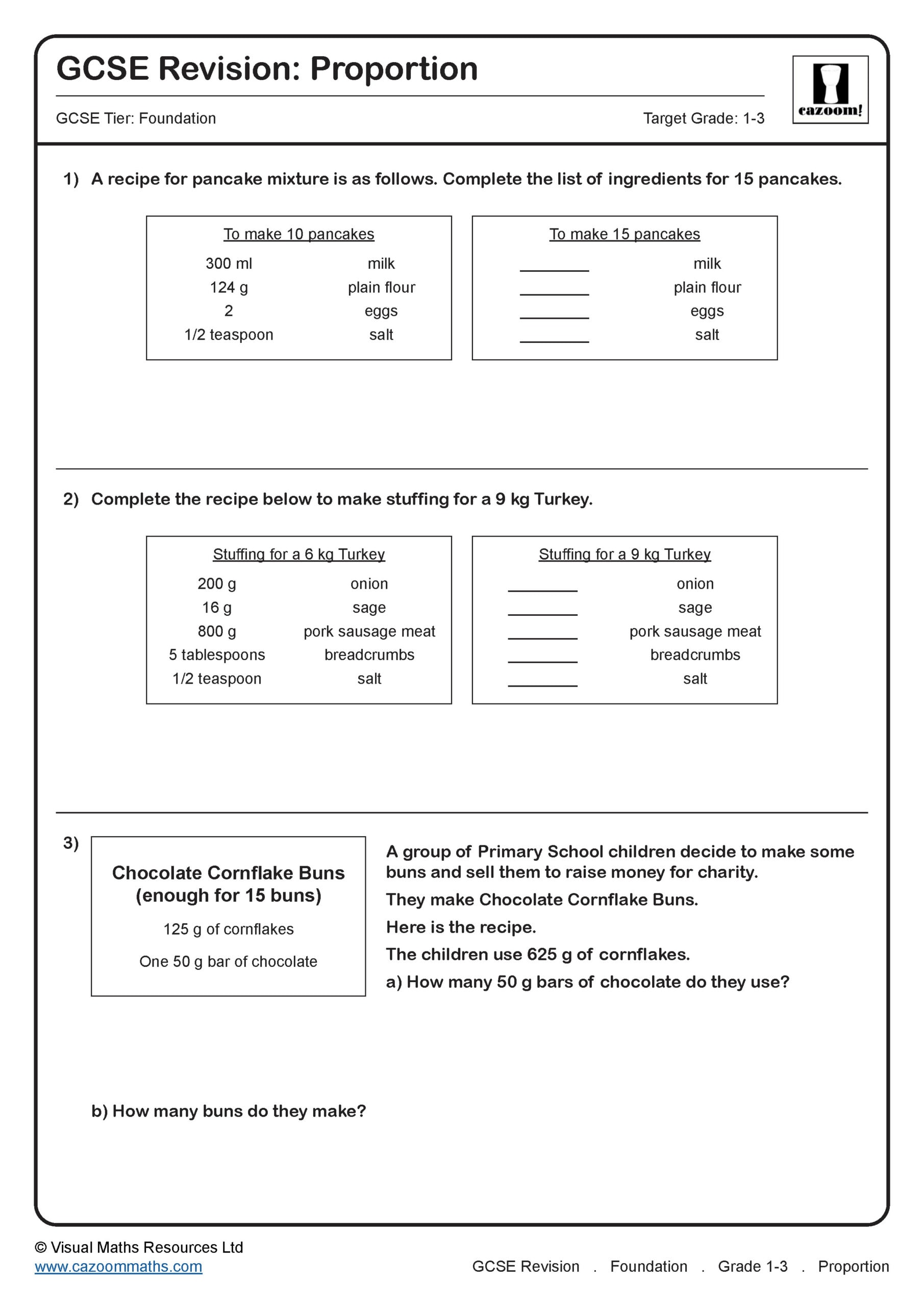
Ratio
Target Grade: 1-3
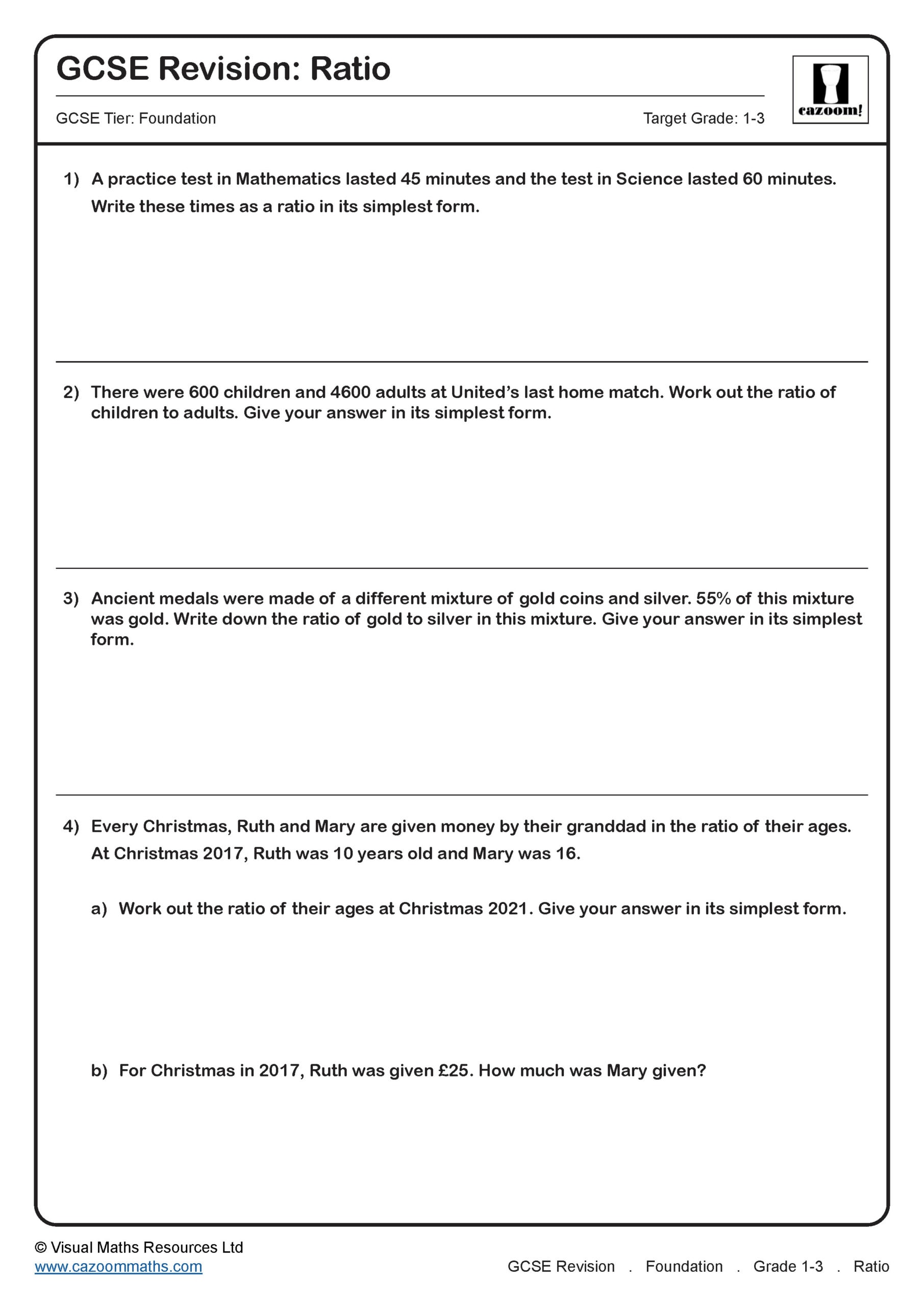
Rounding
Target Grade: 1-3
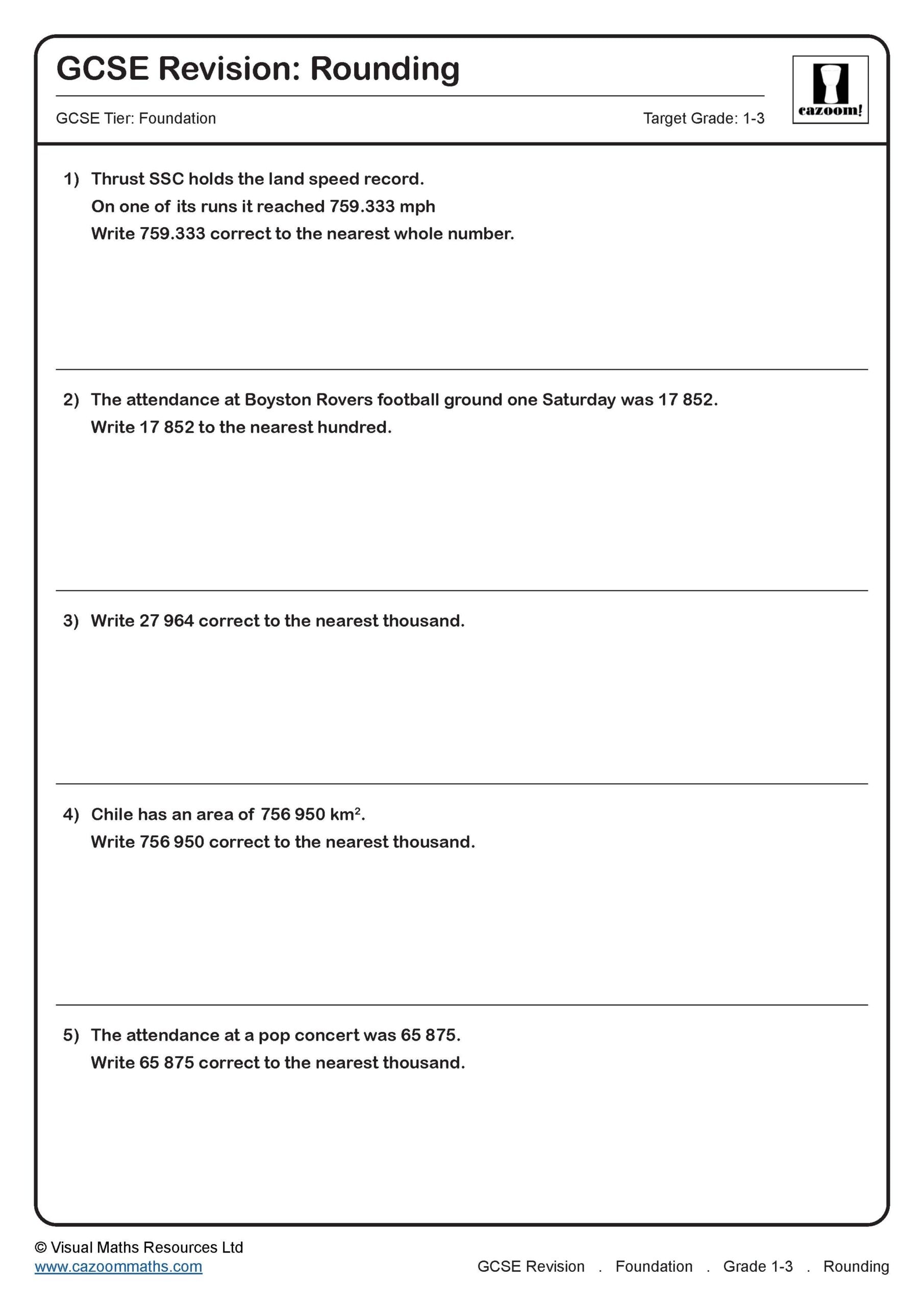
Upper & Lower Bounds
Target Grade: 1-3
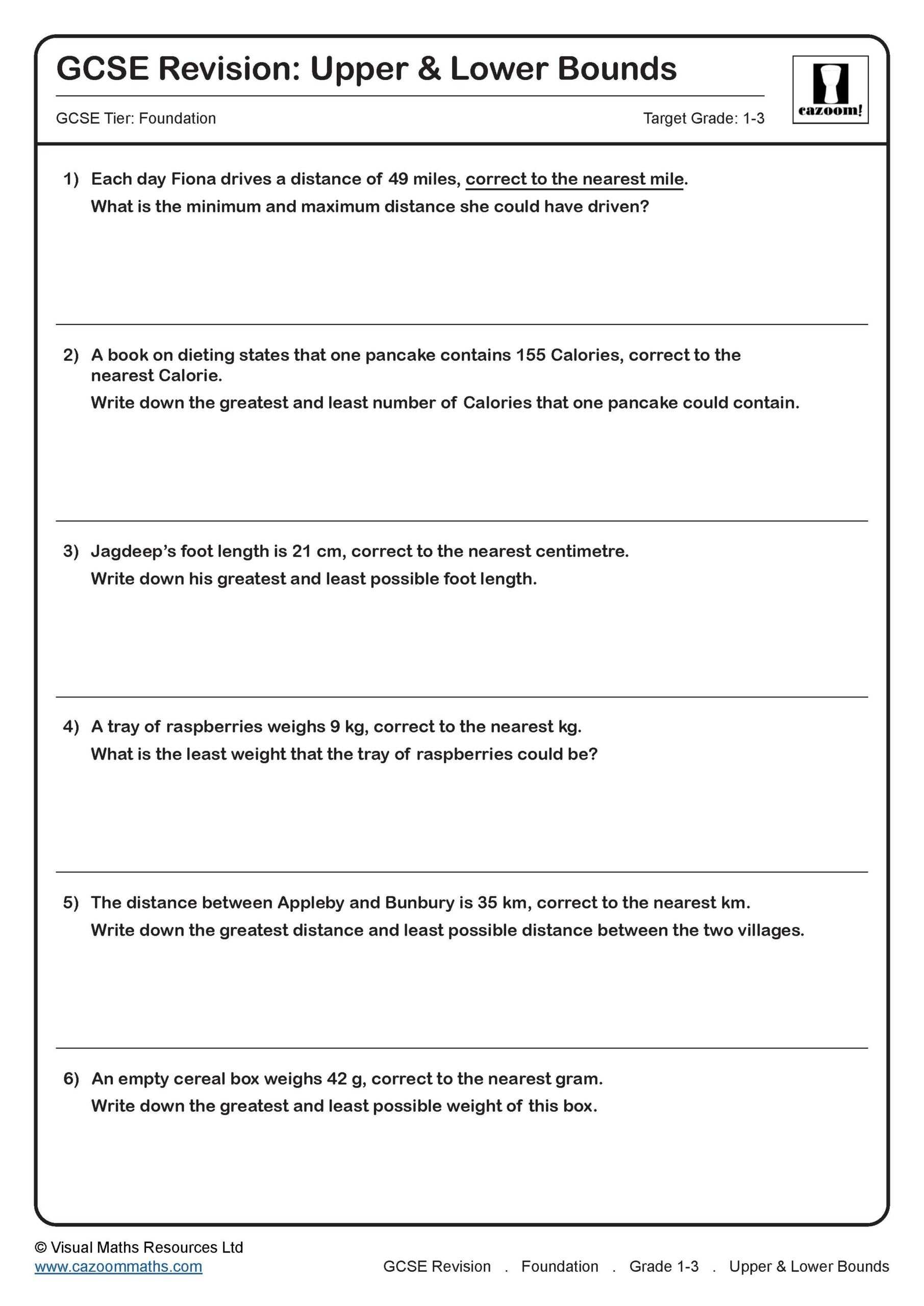
Using a Calculator
Target Grade: 1-3
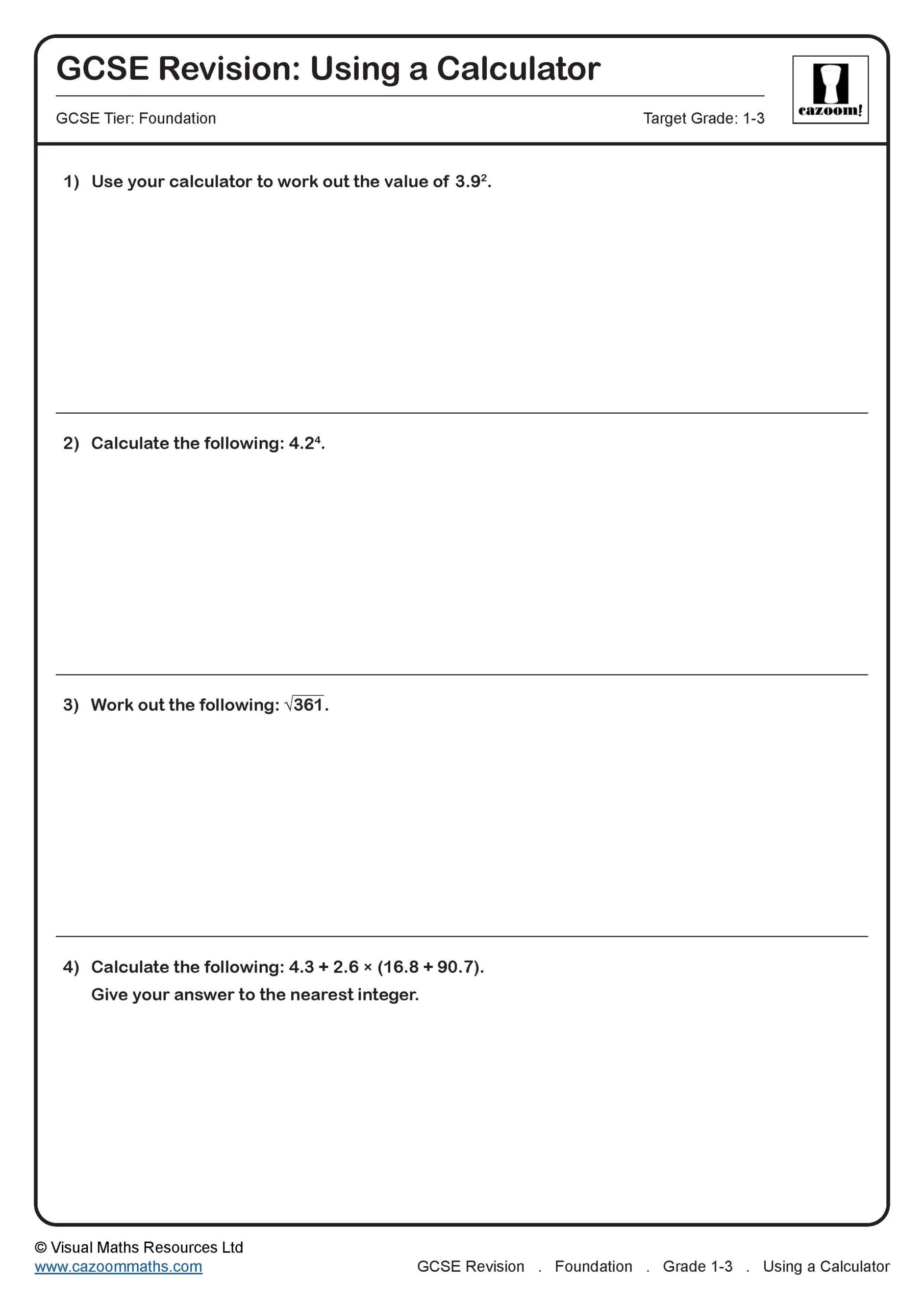
Approximations (B)
Target Grade: 4-5
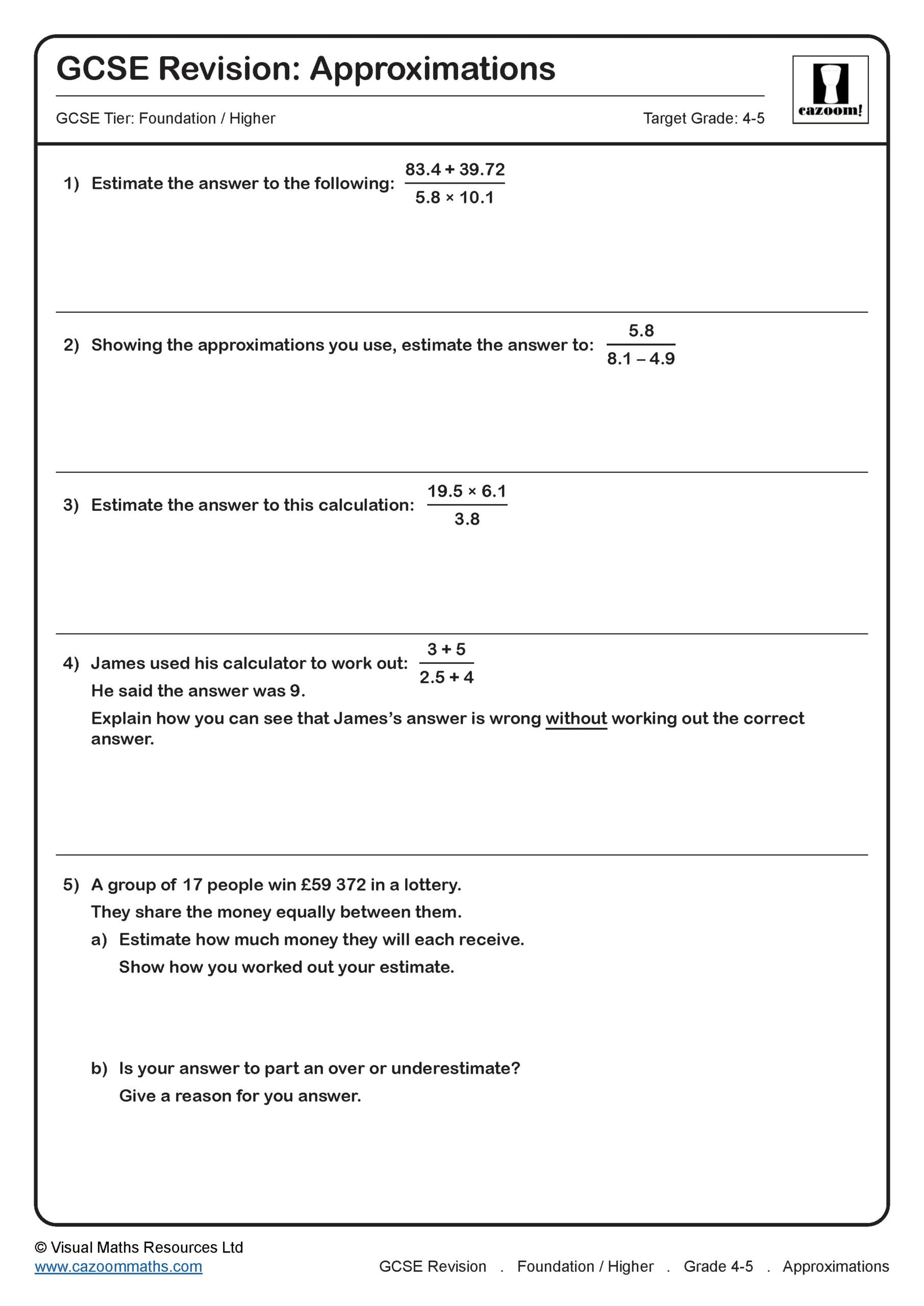
Combining Ratios
Target Grade: 4-5
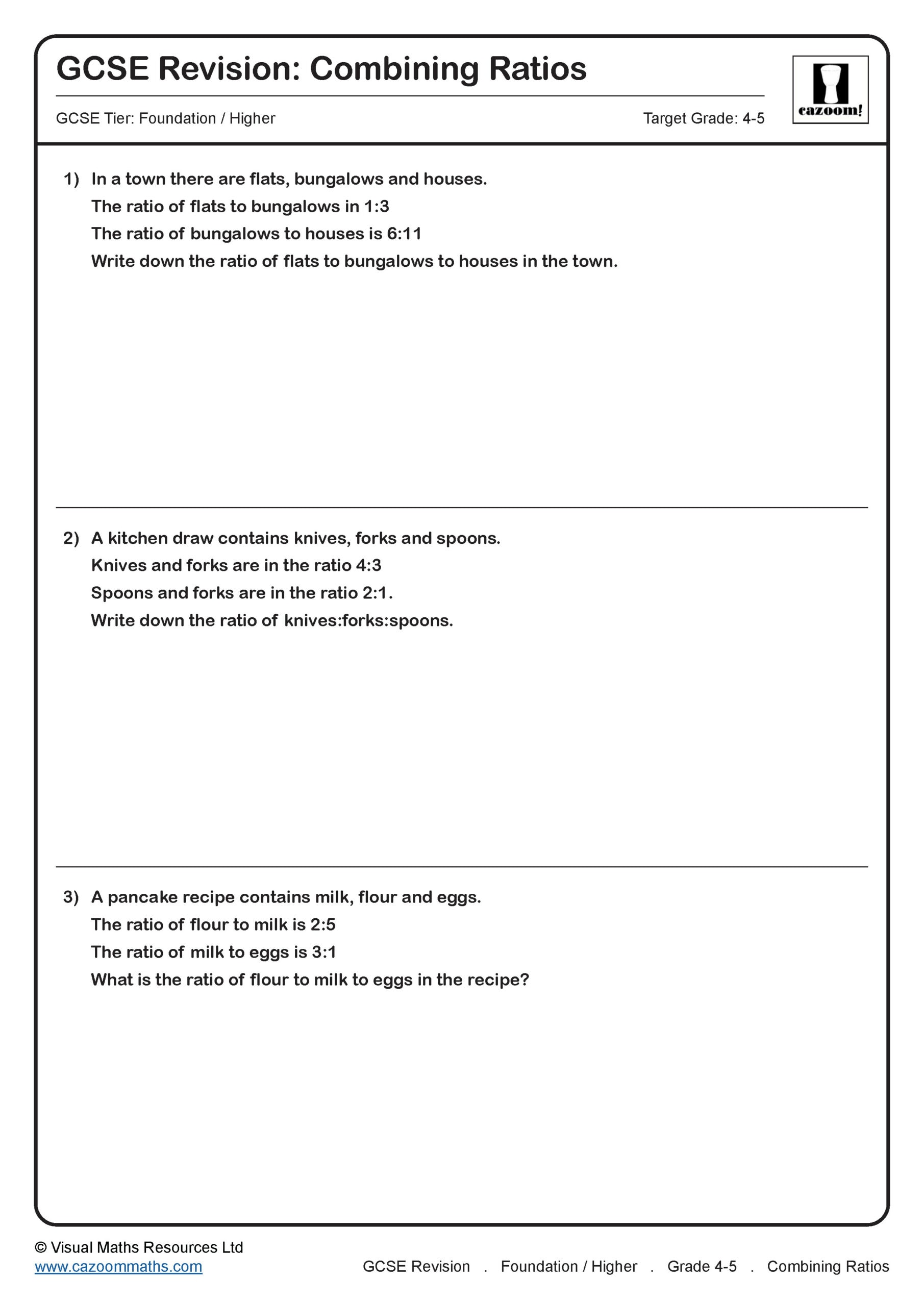
Error Intervals
Target Grade: 4-5
Exchange Rates
Target Grade: 4-5
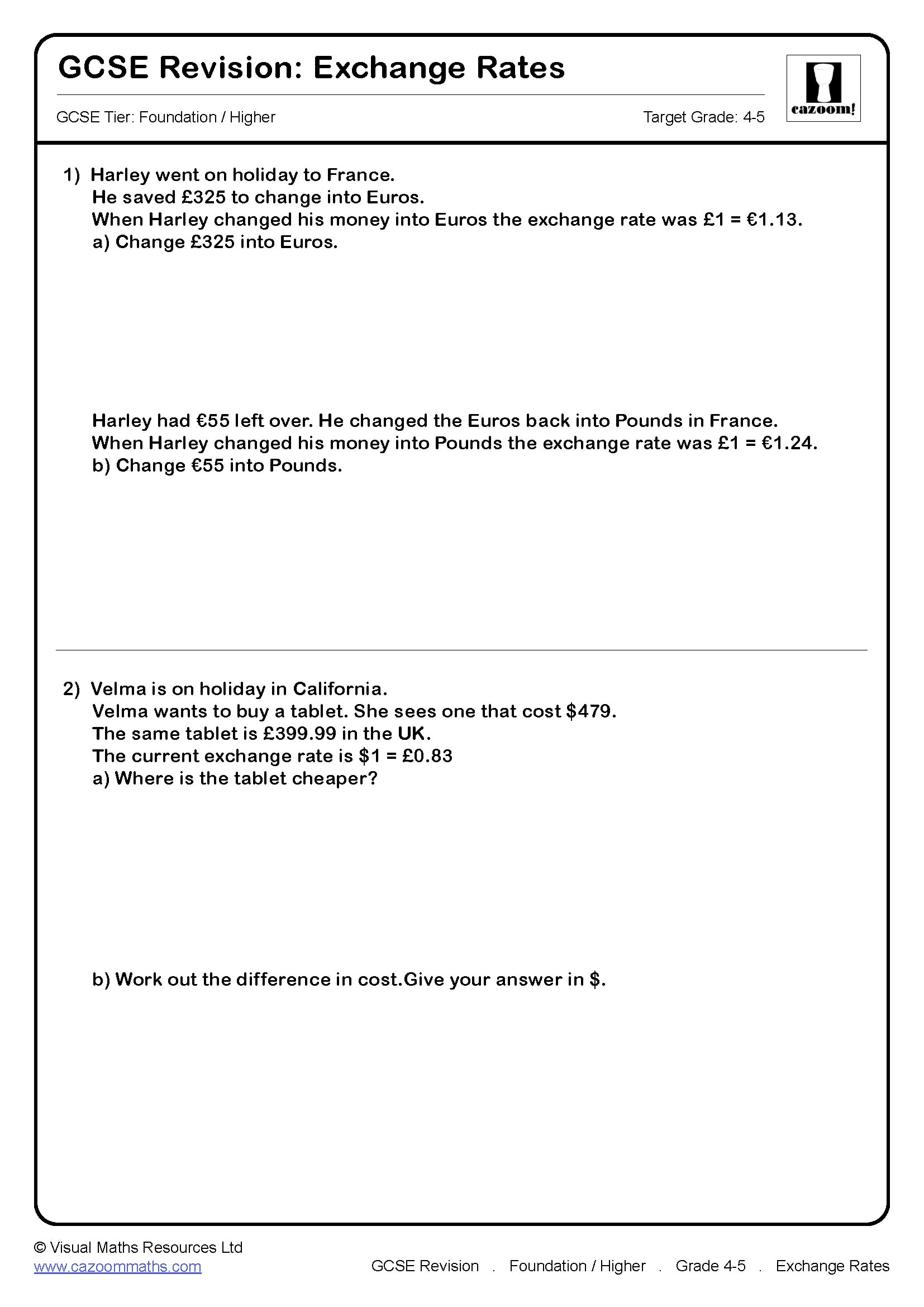
Indices
Target Grade: 4-5
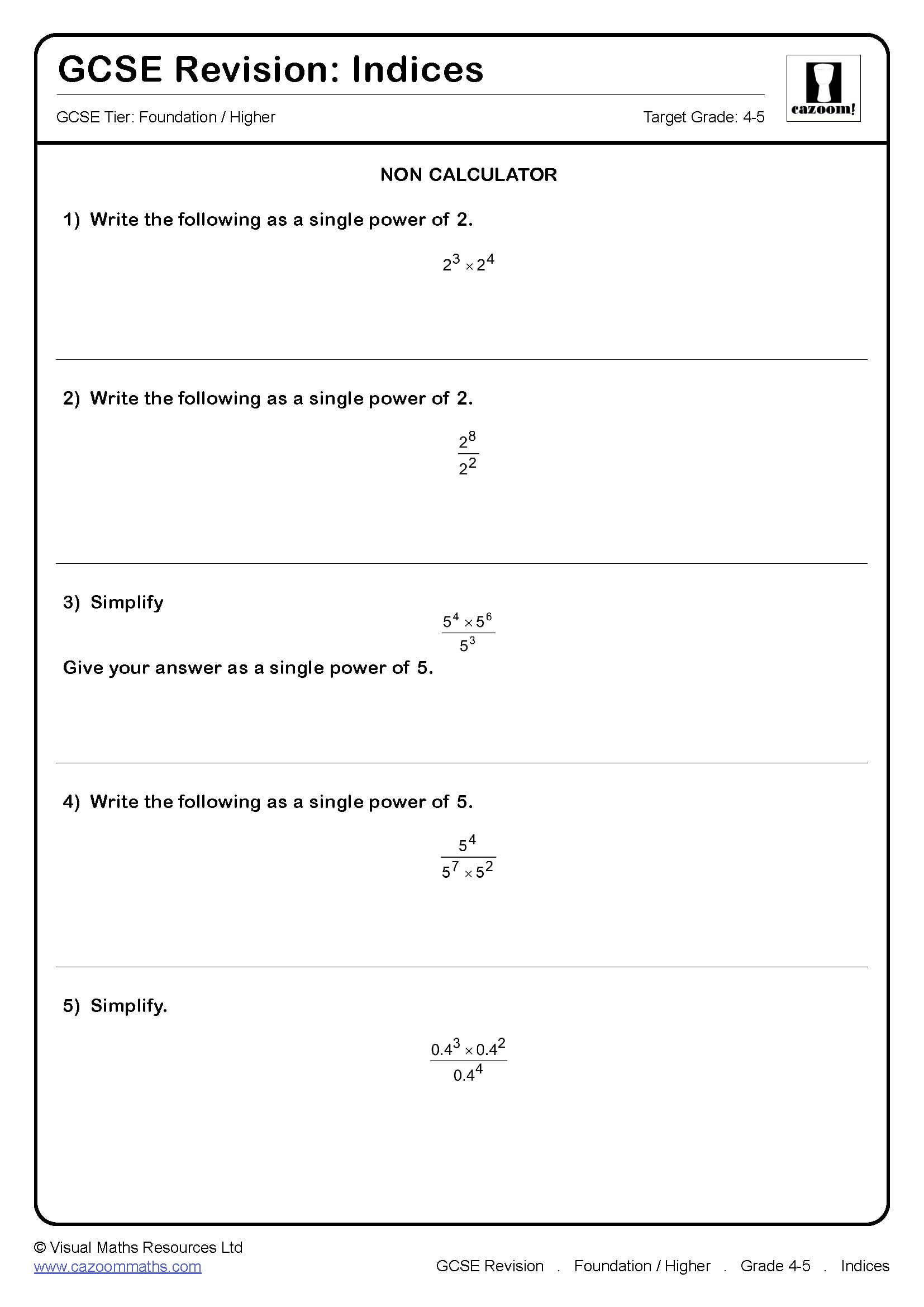
Laws of Indices
Target Grade: 4-5
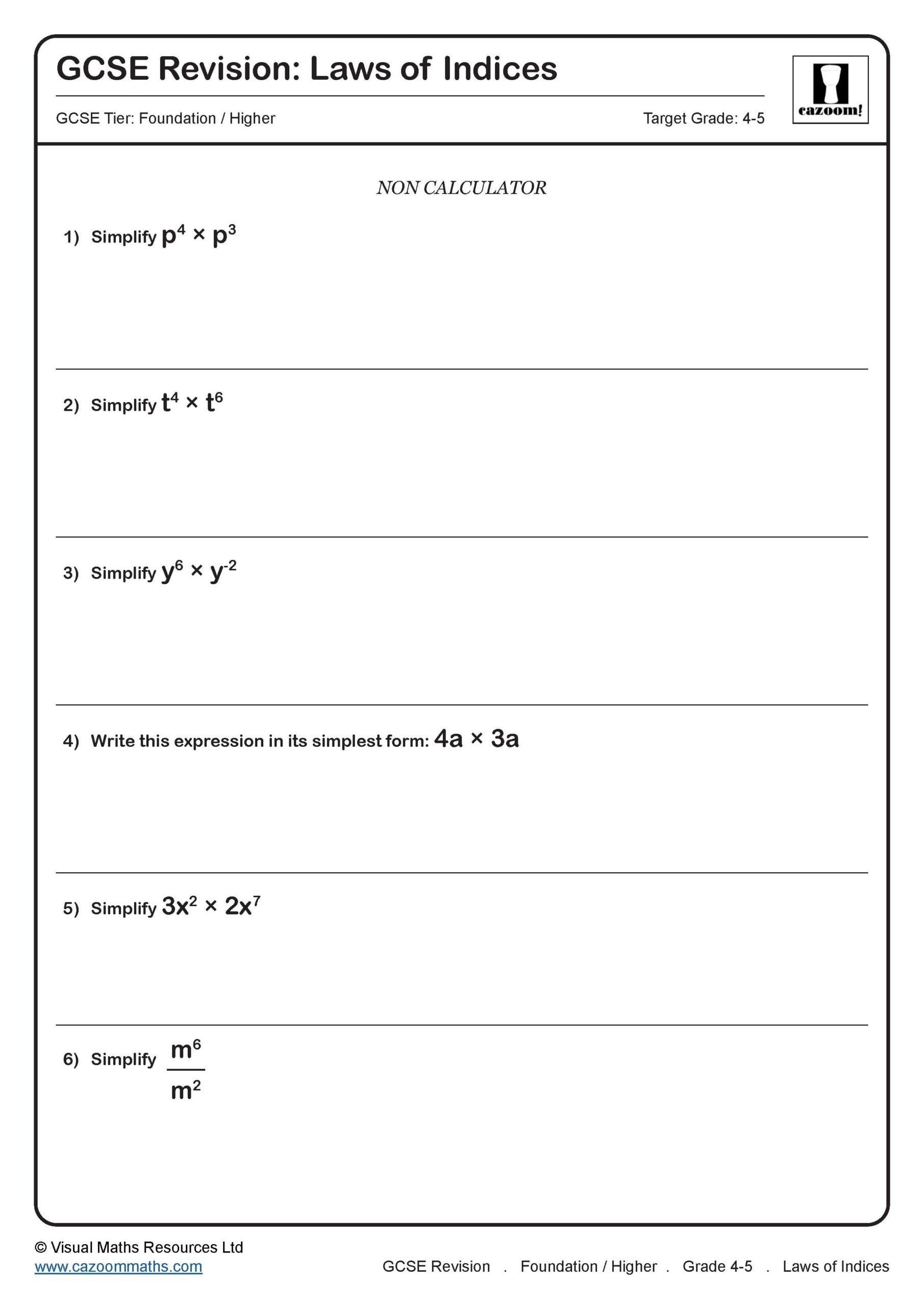
Mixed Number Arithmetic
Target Grade: 4-5
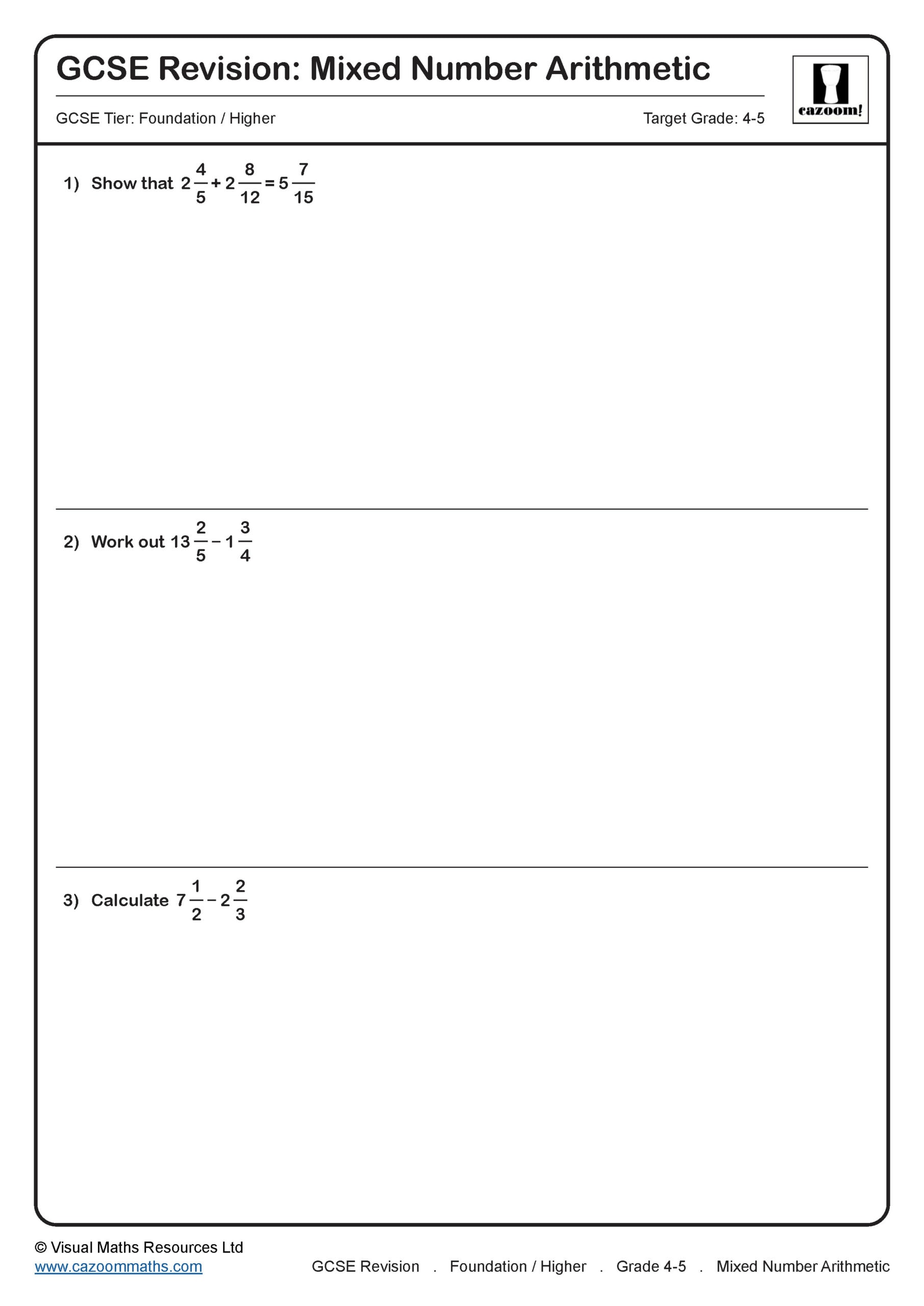
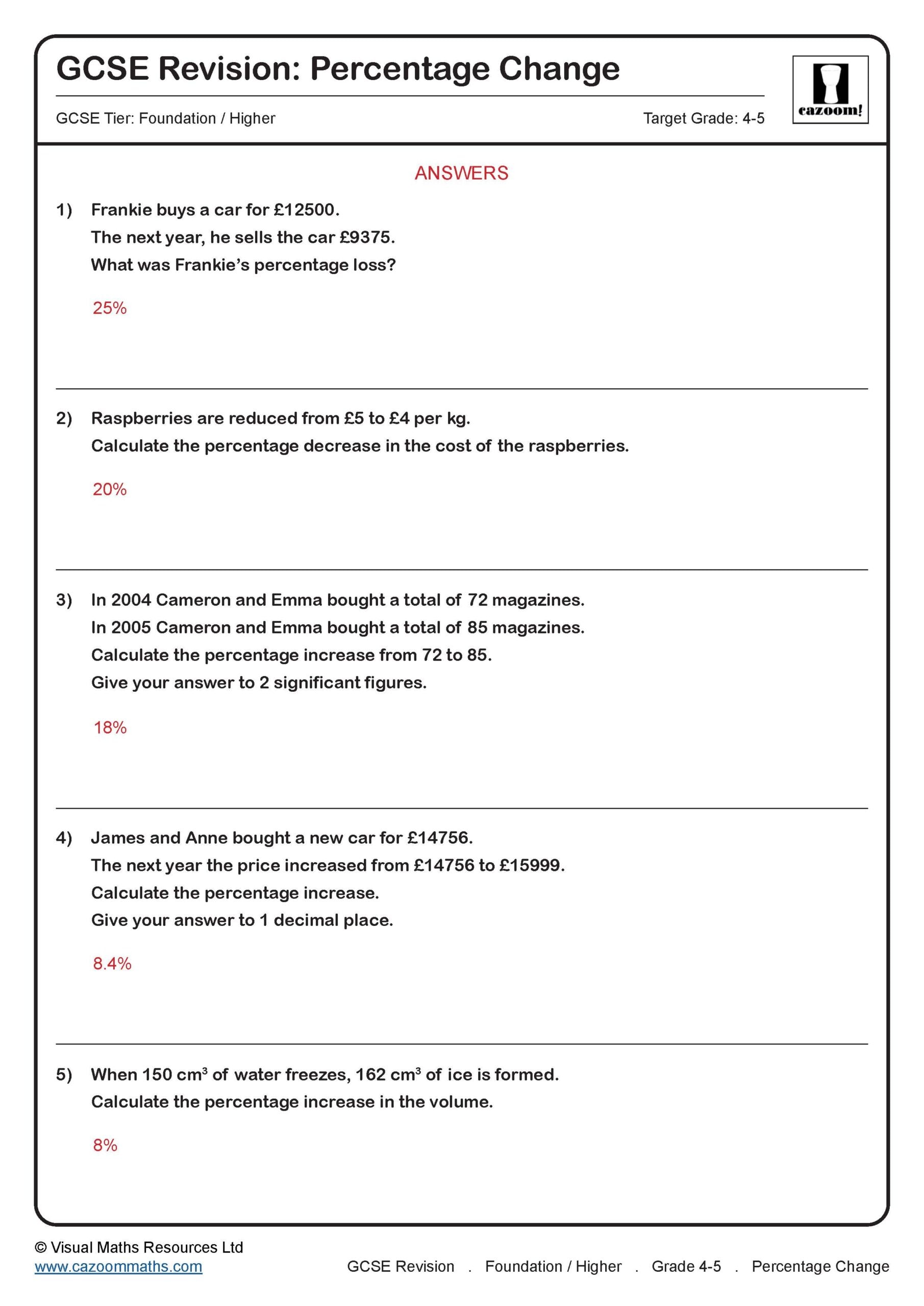
Percentage Change
Target Grade: 4-5
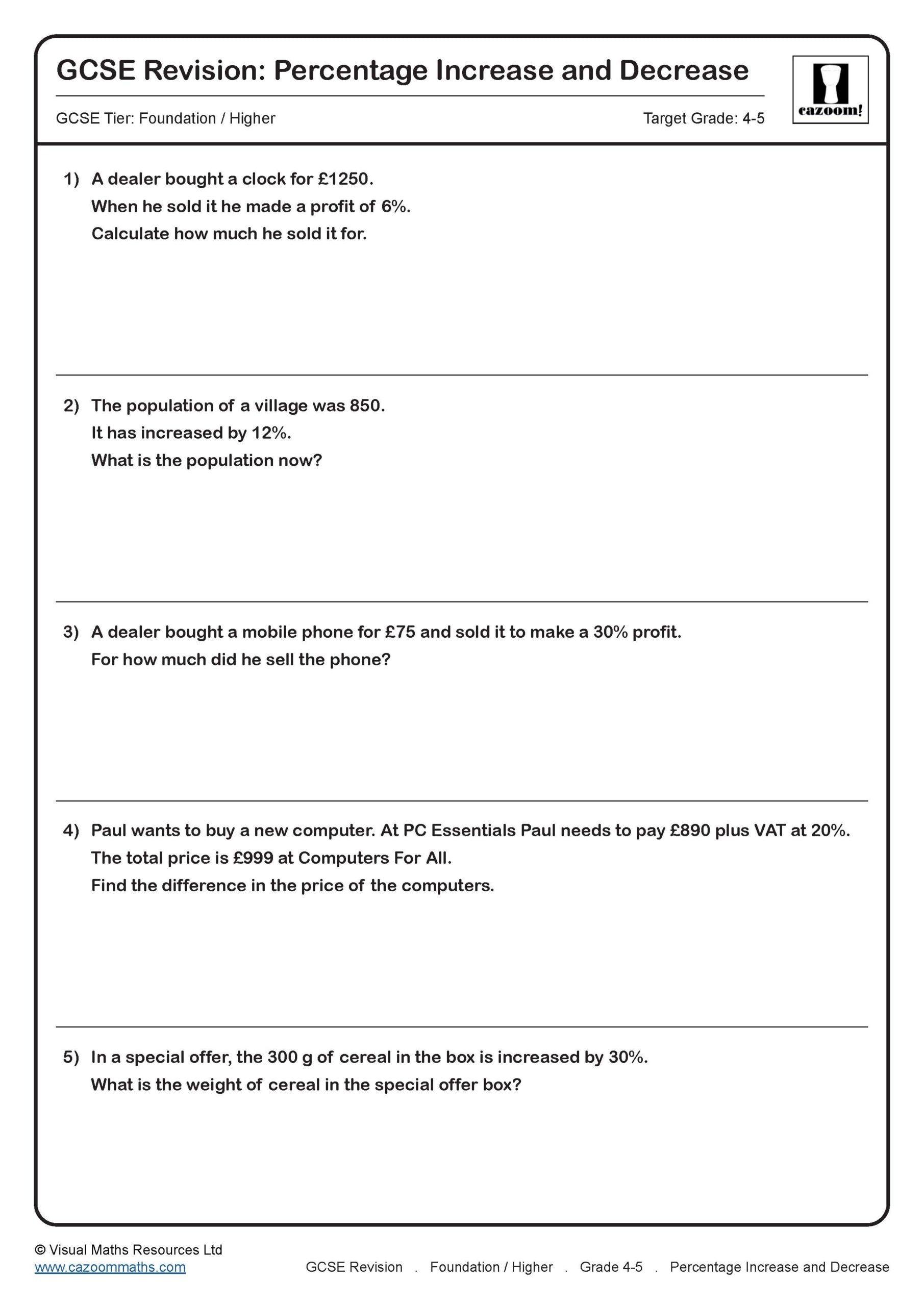
Percentage Increase and Decrease
Target Grade: 4-5
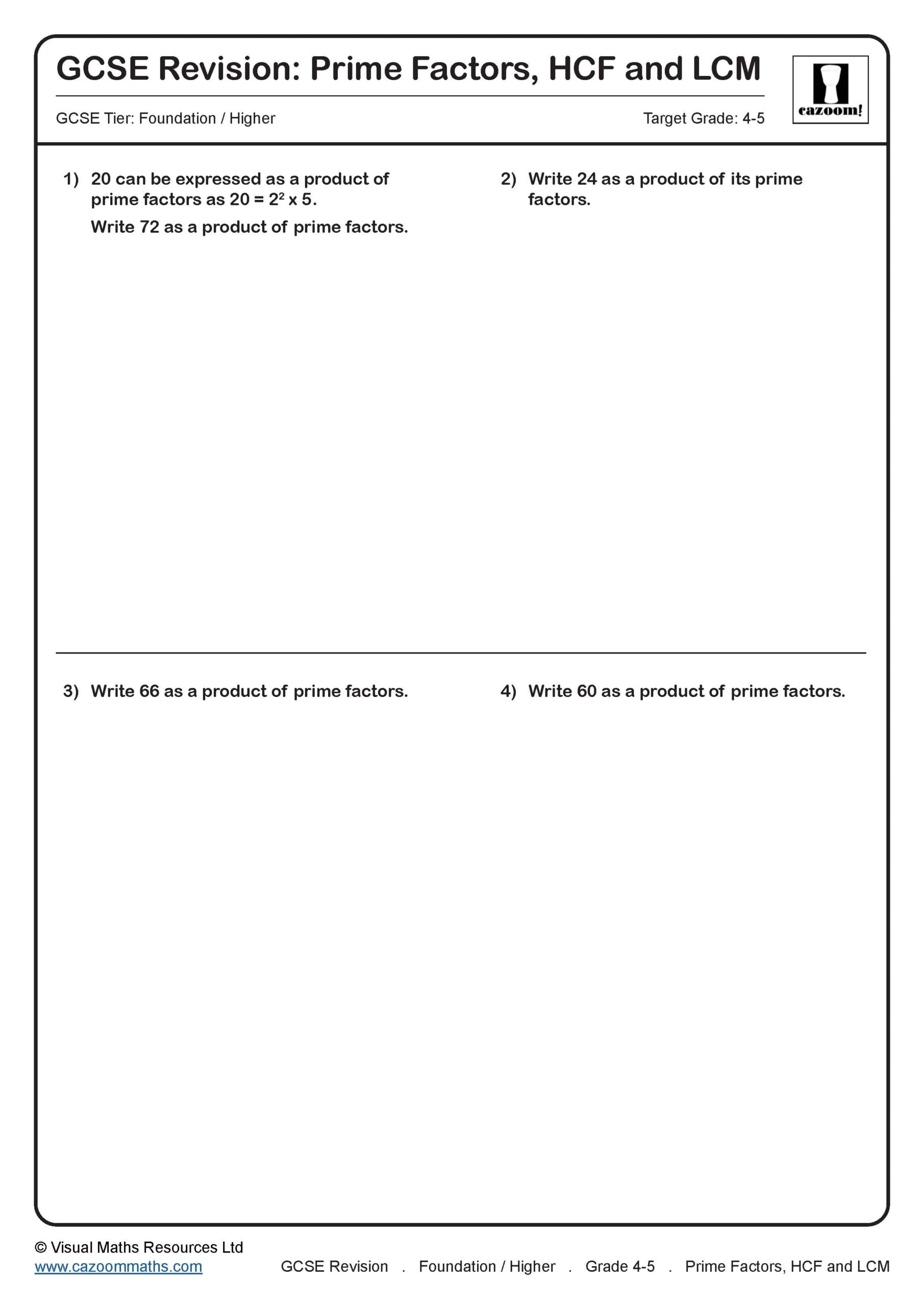
Prime Factors, HCF and LCM
Target Grade: 4-5
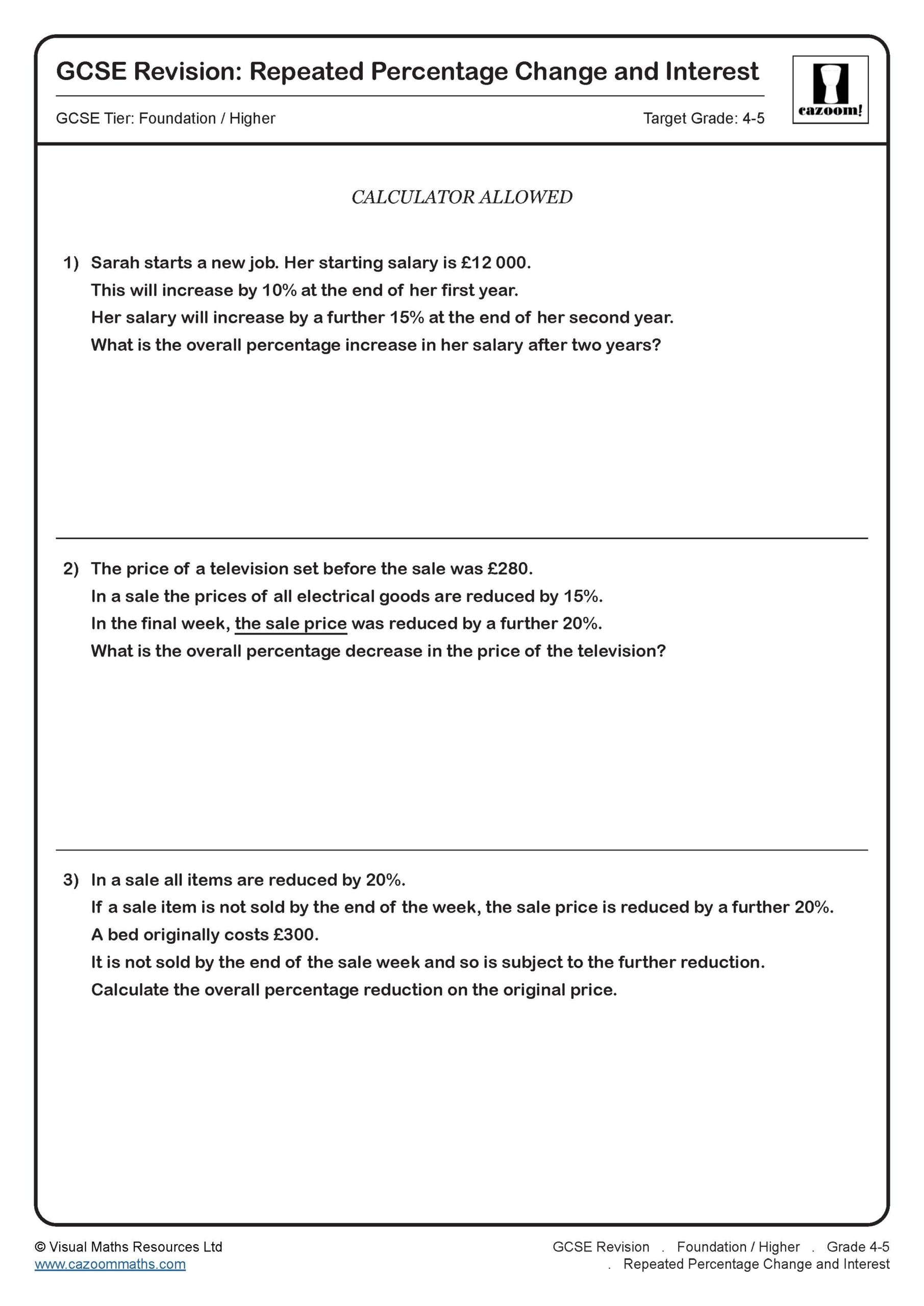
Repeated Percentage Change and Interest
Target Grade: 4-5
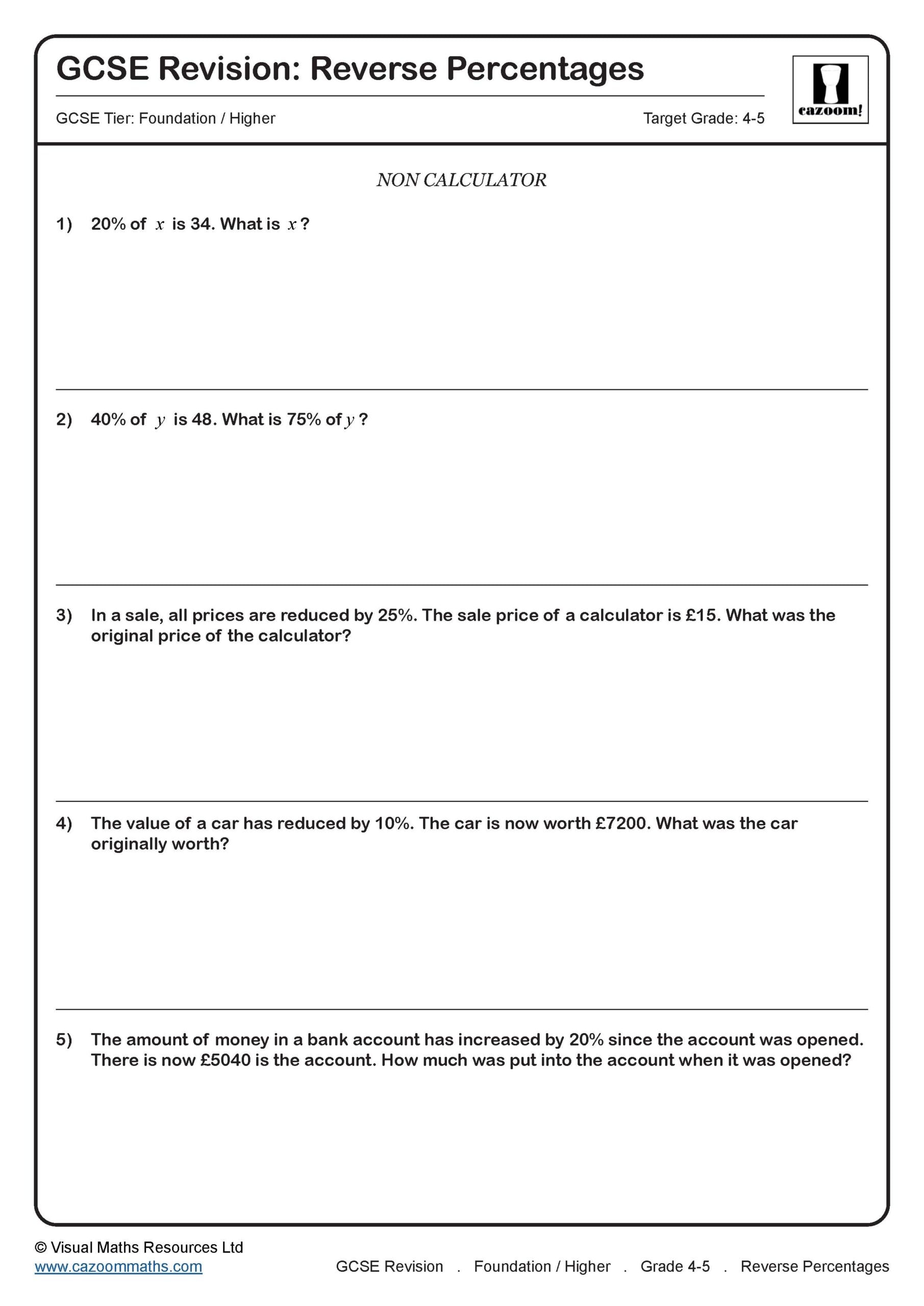
Reverse Percentages
Target Grade: 4-5
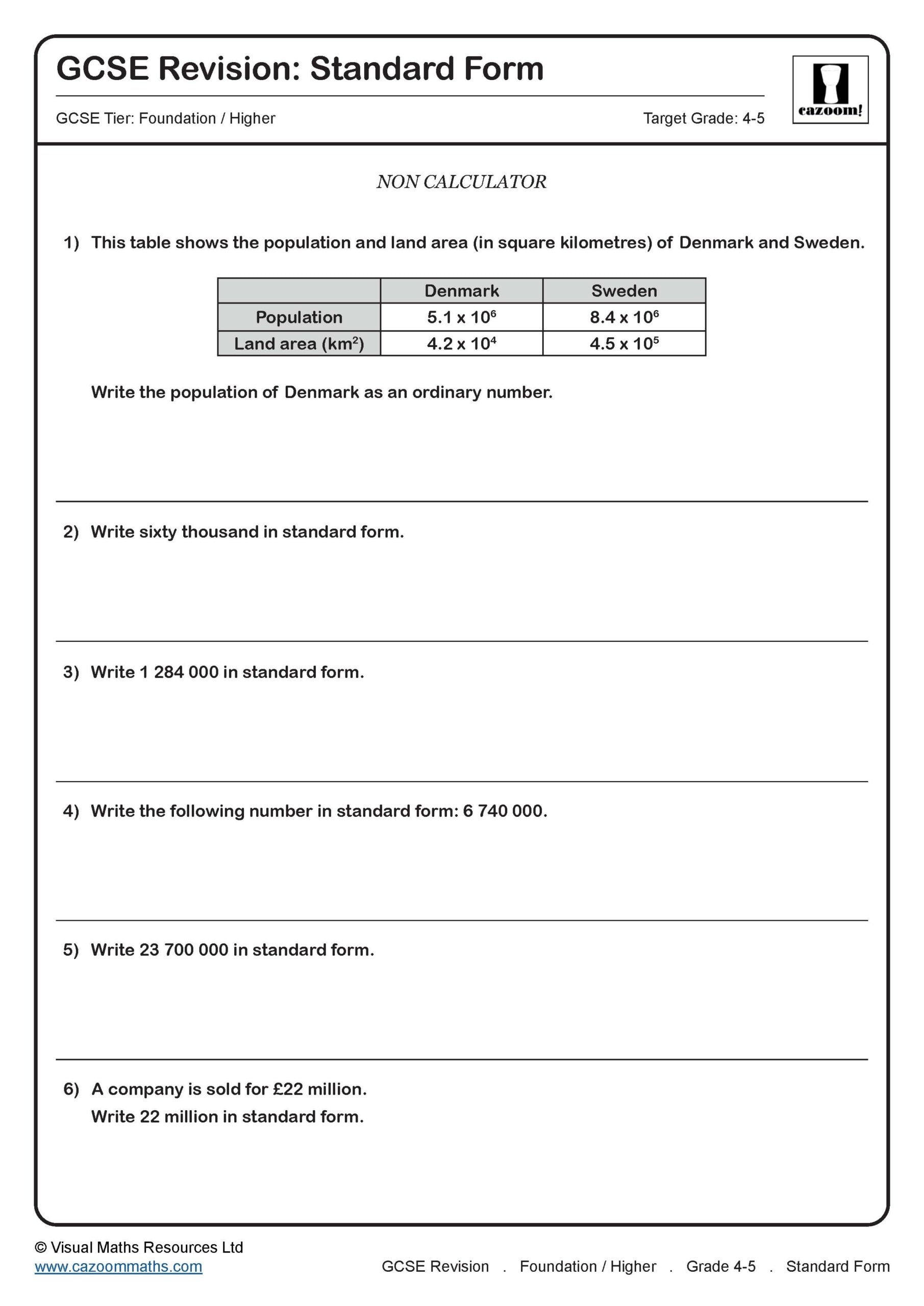
Standard Form
Target Grade: 4-5
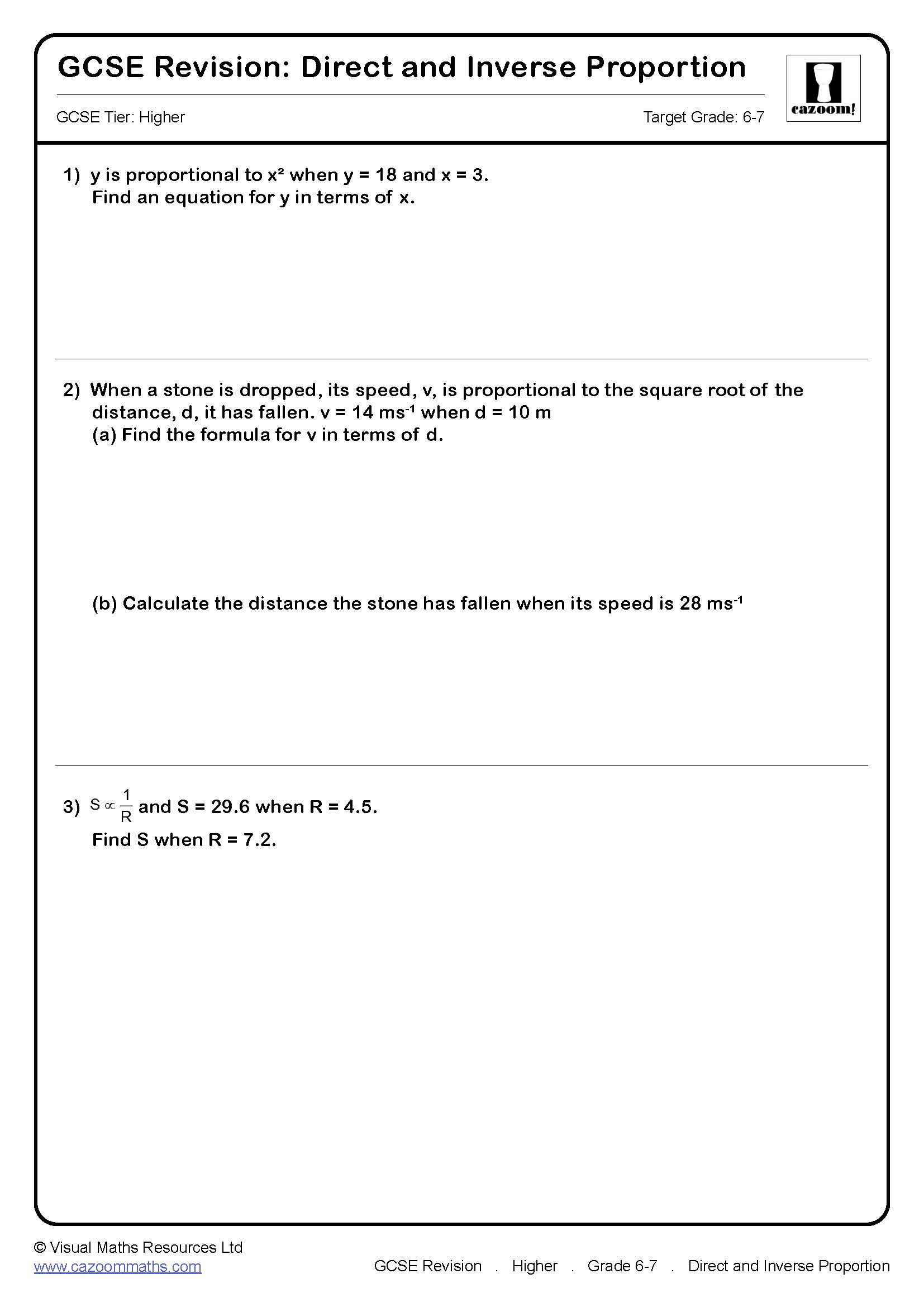
Direct and Inverse Proportion
Target Grade: 6-7
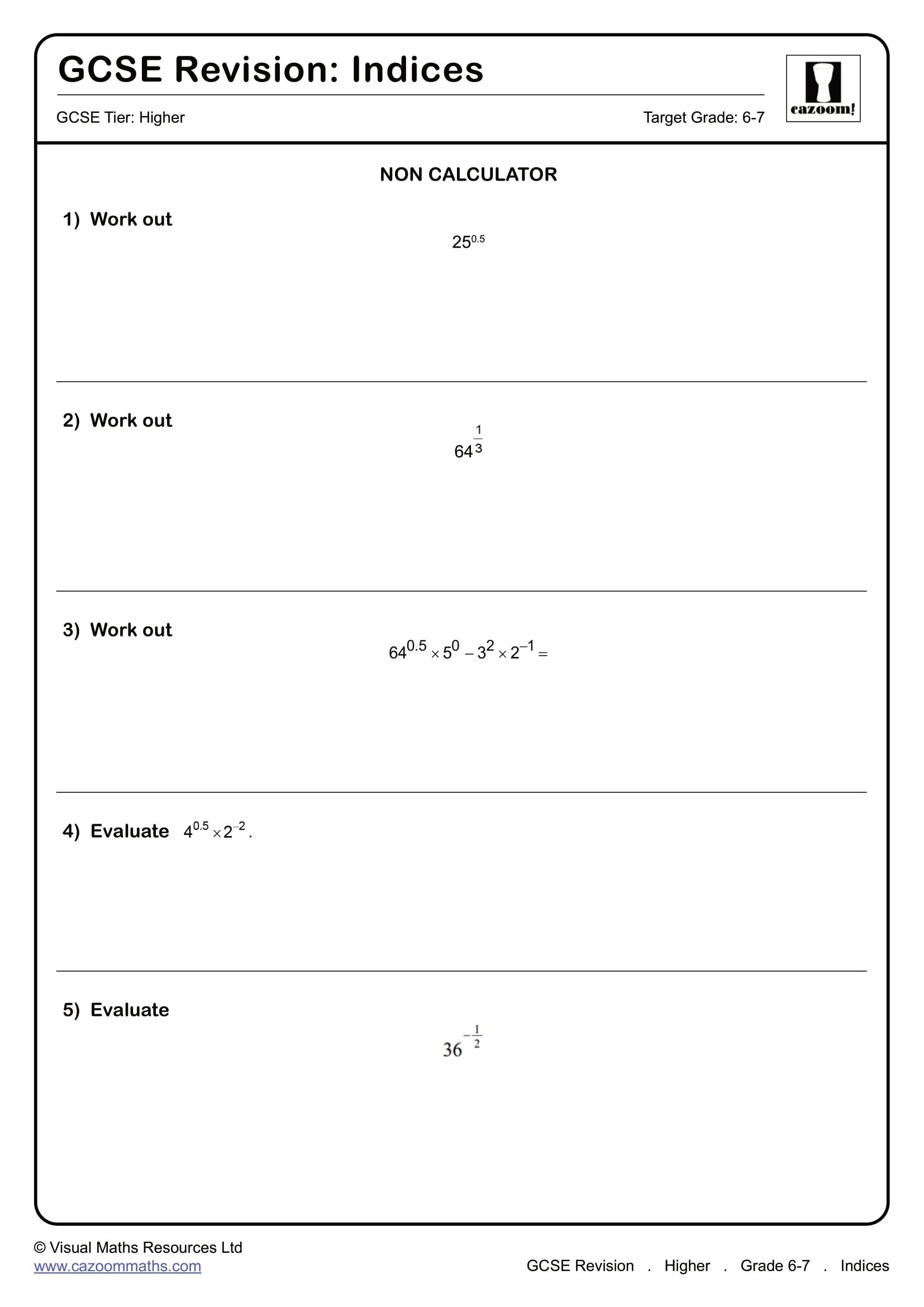
Indices (B)
Target Grade: 6-7
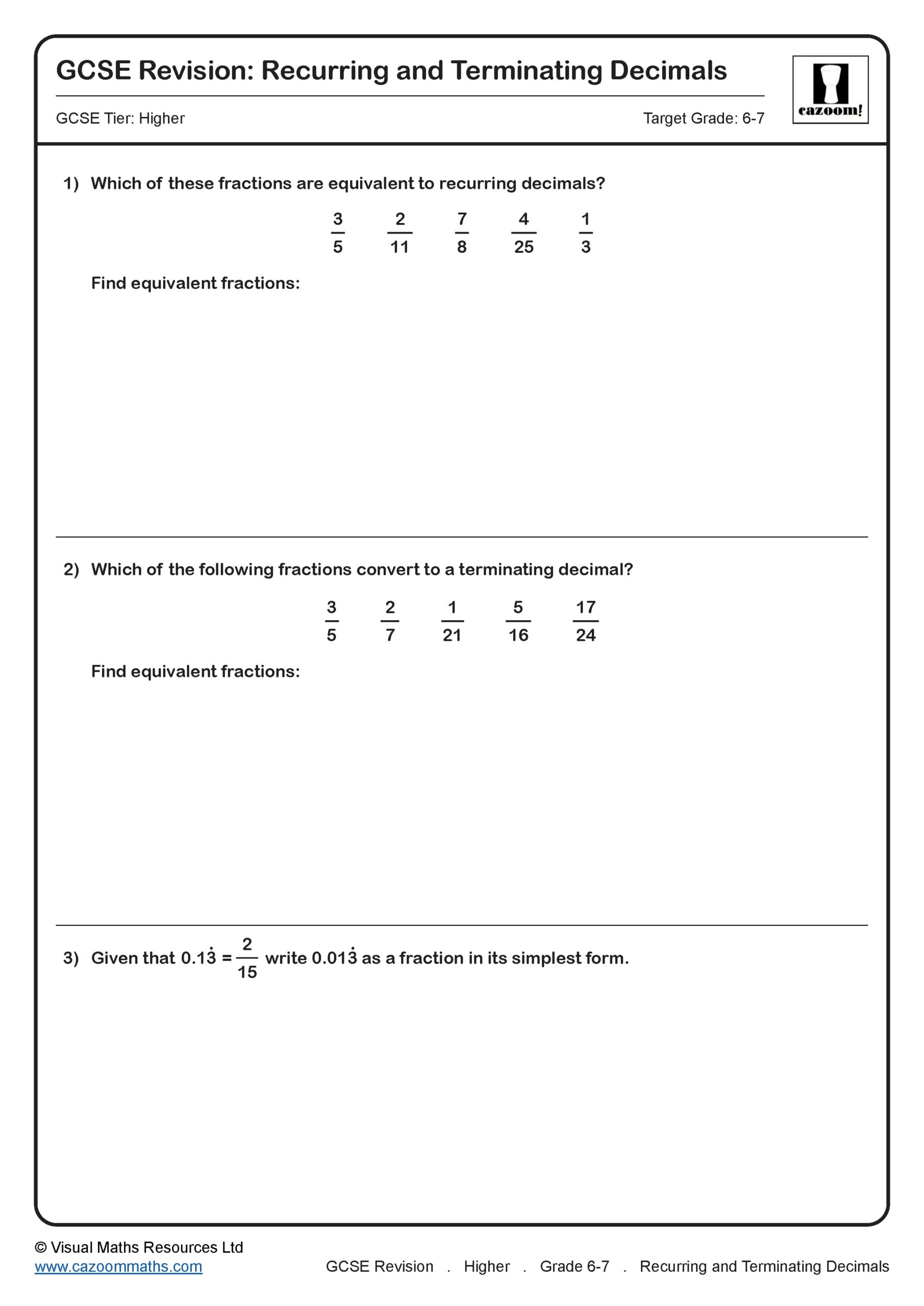
Recurring and Terminating Decimals
Target Grade: 6-7
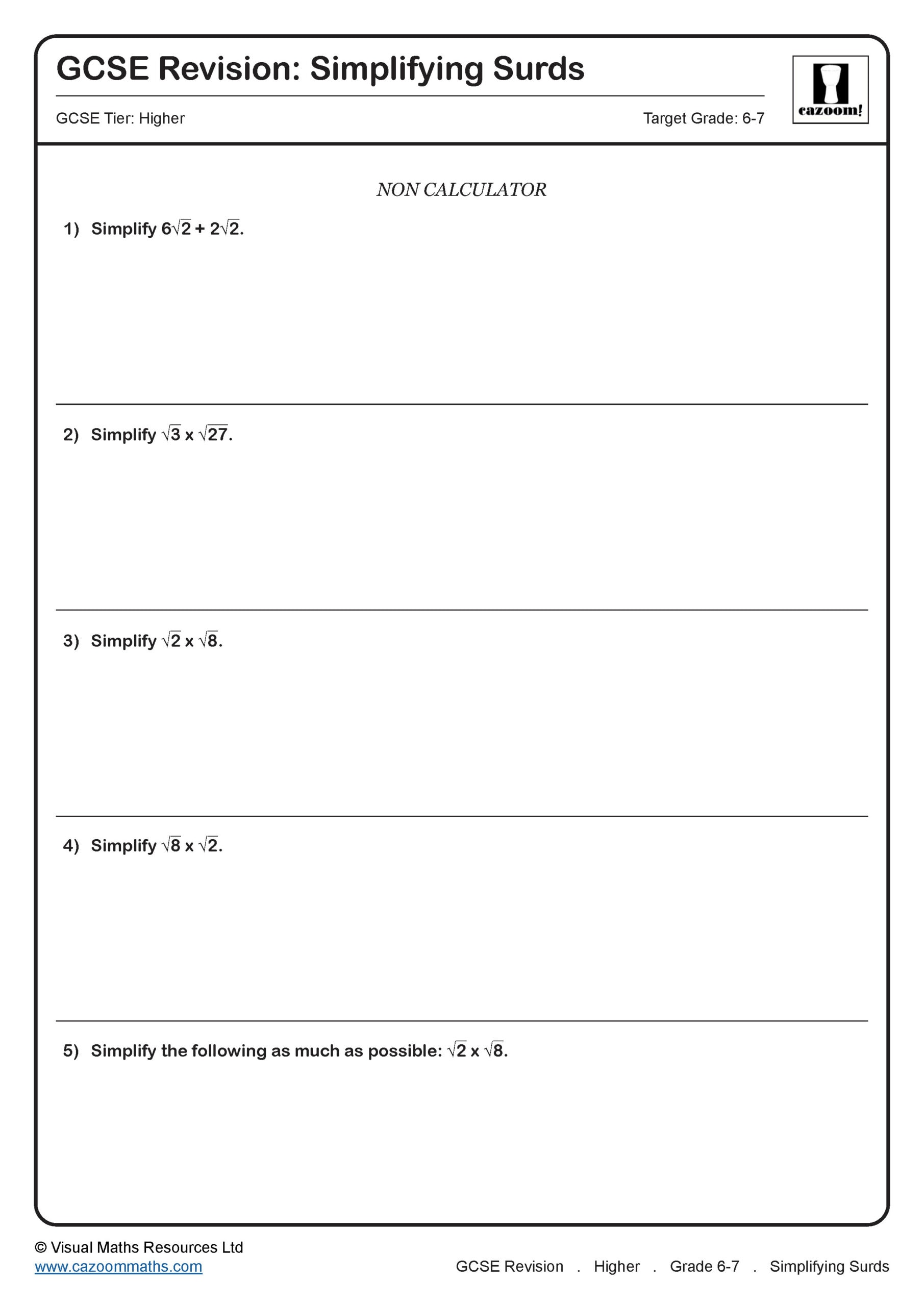
Simplifying Surds
Target Grade: 6-7
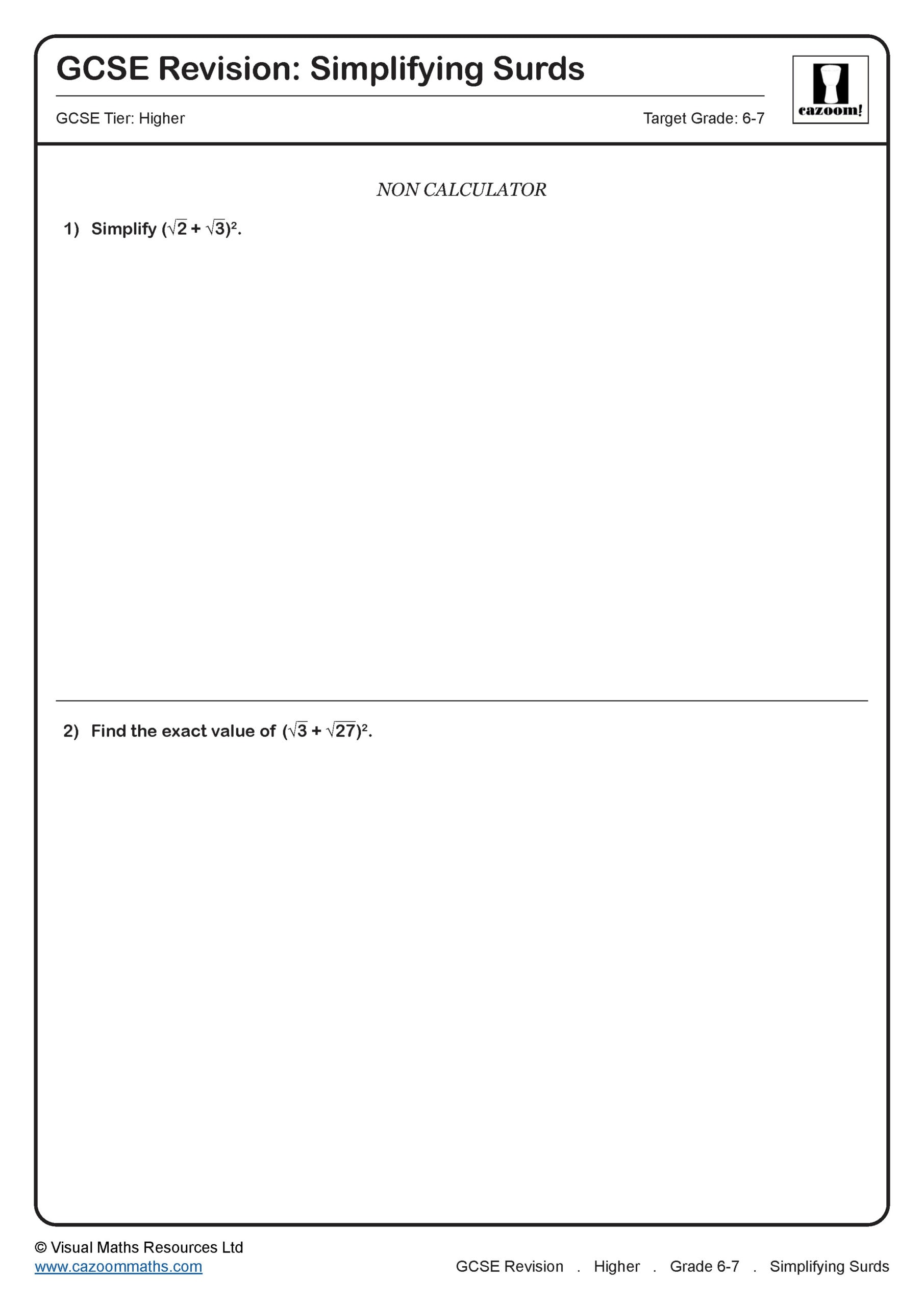
Simplifying Surds (B)
Target Grade: 6-7
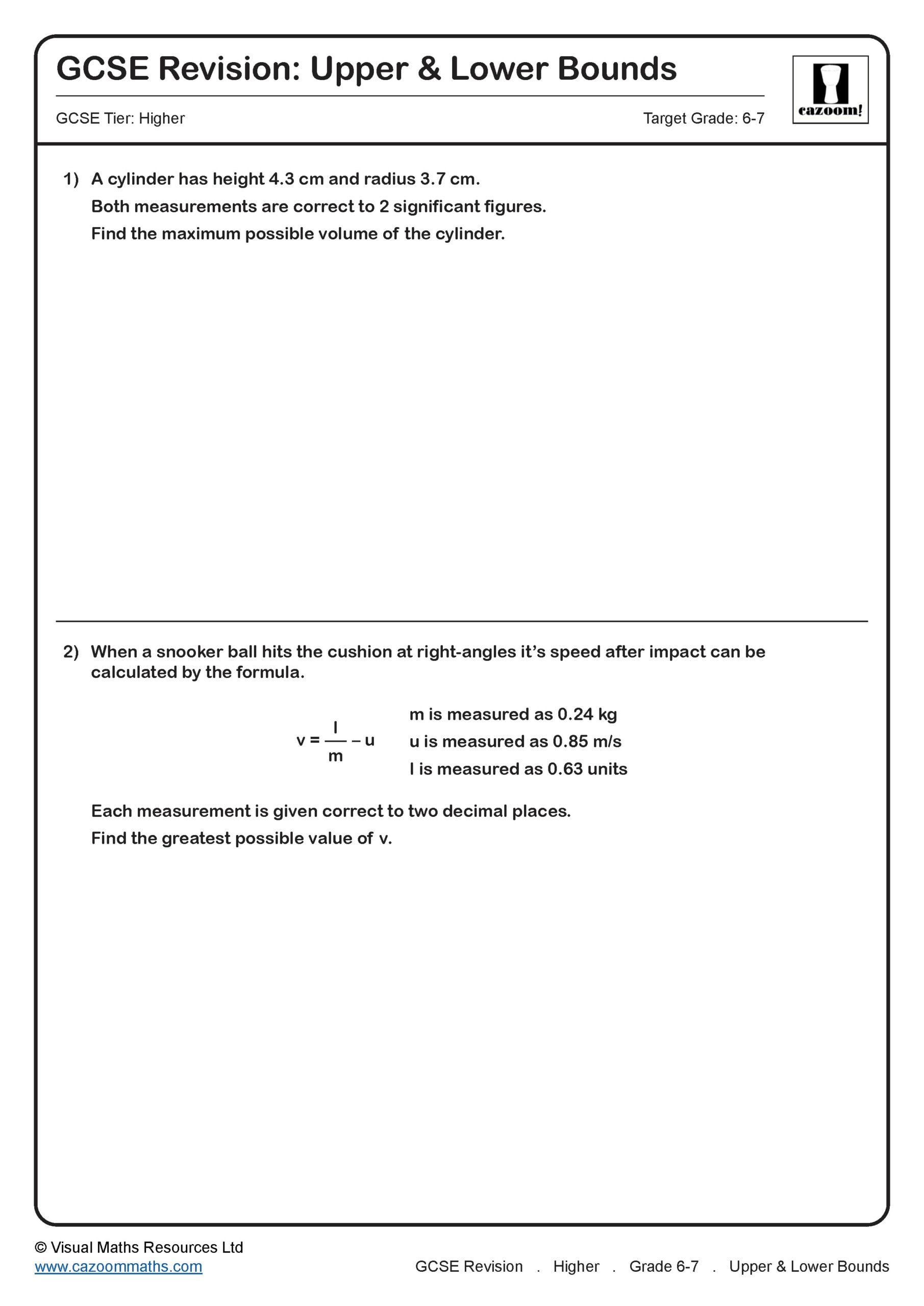
Upper & Lower Bounds (C)
Target Grade: 6-7
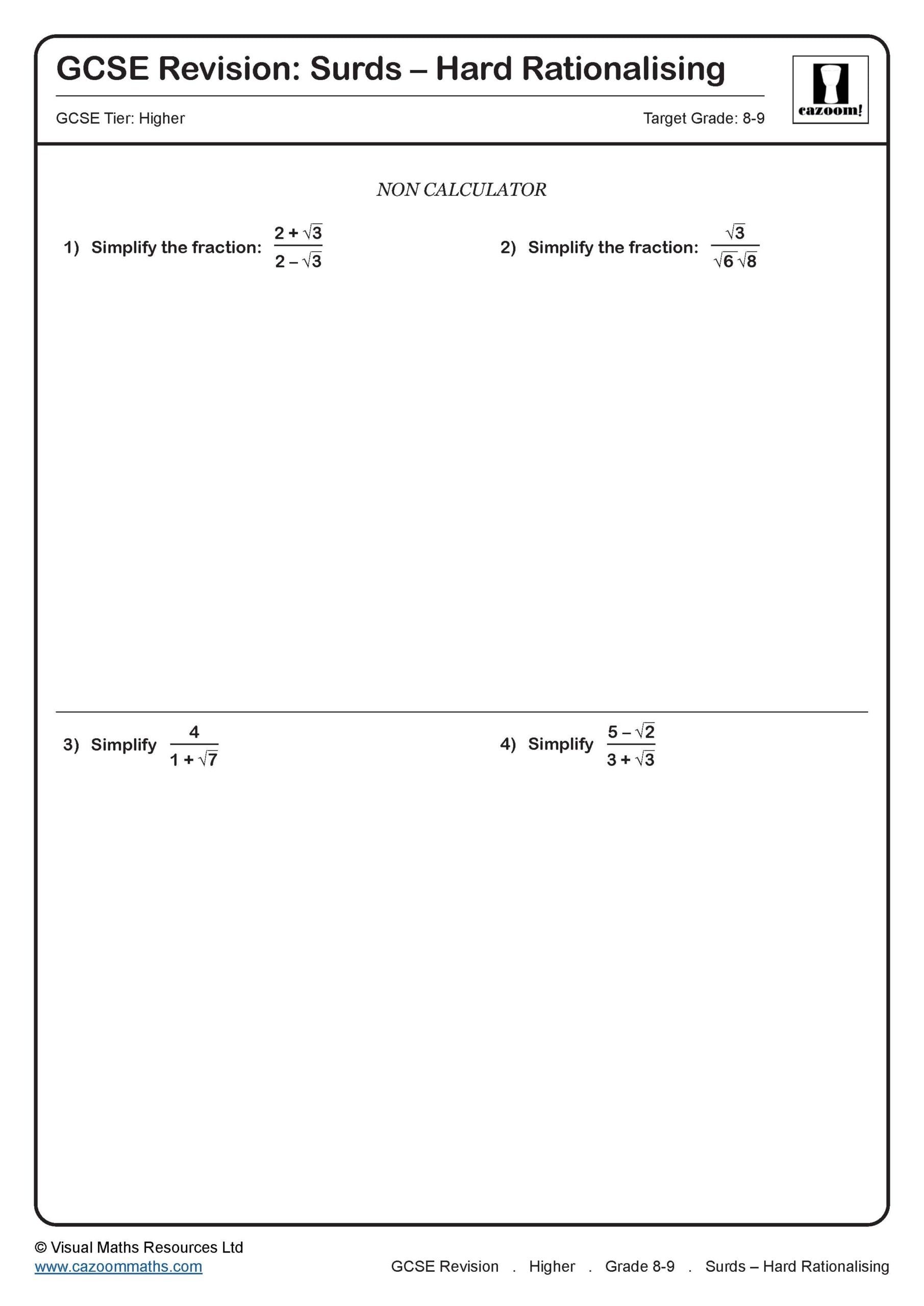
Surds - Hard Rationalising
Target Grade: 8-9
All worksheets are created by the team of experienced teachers at Cazoom Maths.
What should I focus on when using GCSE maths number revision worksheets?
Focus first on identifying which grade bands match your target tier and current attainment. Foundation students should concentrate on mastering grades 1-5 content thoroughly, whilst Higher students need solid fluency across grades 4-9. The gcse revision worksheets within each band build from basic recall to multi-step problem solving, so work systematically through rather than jumping to harder questions prematurely.
Students frequently underestimate how number skills underpin other topics. Weak manipulation of fractions compromises algebra; poor understanding of indices affects standard form and surds. Teachers notice that targeted number revision often unlocks progress across the whole specification. Use these gcse maths number revision worksheet collections to plug specific gaps, then revisit those skills regularly to maintain fluency heading into exams.
How are these number worksheets organised by GCSE grade?
The worksheets span four grade bands: 1-3 covers foundational skills like place value, basic operations, and simple fractions; 4-5 addresses both upper Foundation and lower Higher content including standard form, indices, and reverse percentages; 6-7 targets mid-Higher topics such as surds, recurring decimals, and upper and lower bounds; whilst 8-9 challenges top students with algebraic proof, complex surds, and demanding problem solving.
Foundation tier students (targeting grades 1-5) should work through the first two bands thoroughly, ensuring automaticity with calculations before attempting worded problems. Higher tier students need fluency across grades 4-9, but teachers observe that revisiting grade 4-5 material often strengthens understanding of more complex topics. Students aiming for grade 7 or above must be confident with all number content, as these skills form the foundation for challenging questions elsewhere in the paper.
How is number tested in the GCSE maths exam?
Number questions appear throughout all three GCSE papers, typically accounting for 20-25% of total marks. Straightforward calculation questions worth 1-2 marks test fluency, whilst multi-step problems can carry 4-6 marks and require students to select appropriate methods, show clear working, and interpret contexts. Examiners expect precise notation, particularly with recurring decimals, standard form, and bounds, and award method marks even when final answers contain errors.
Students lose marks through rushed arithmetic, incomplete working, or misreading question demands. A question asking for an answer in standard form will lose the final mark if given as an ordinary number. Teachers notice that higher-attaining students sometimes skip showing working for 'easy' number questions, costing method marks when mistakes occur. Time pressure makes basic errors more likely, so regular timed practice with these worksheets builds both accuracy and pace.
What revision strategies work best for GCSE number topics?
Spaced repetition proves most effective for number revision. Rather than marathon sessions on one topic, students benefit from shorter, focused practice distributed over weeks. Work through a specific worksheet, then revisit similar questions a week later to check retention. Teachers observe that this approach builds genuine fluency rather than superficial short-term recall.
Pair these worksheets with past paper questions to see how number skills appear in exam contexts. Set individual sheets as timed homework to simulate exam pressure, or use them in revision lessons for targeted intervention with small groups. The answer sheets enable independent marking, helping students identify patterns in their errors. Students aiming for higher grades should work through lower grade material at pace to maintain foundational fluency whilst tackling more demanding content.