GCSE Maths Revision Mats
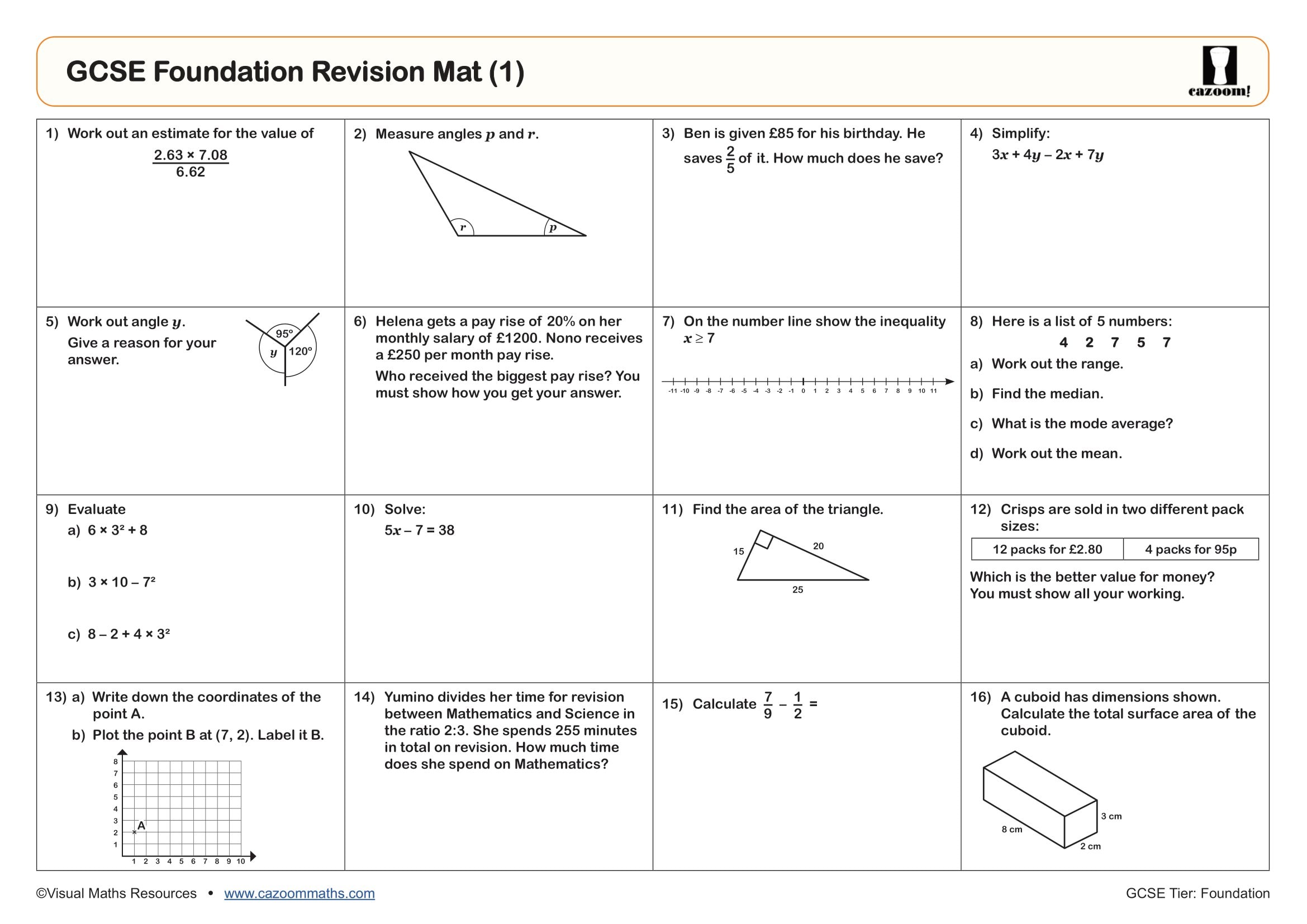
GCSE Foundation Revision Mat (1)
Target Grade: 1-3
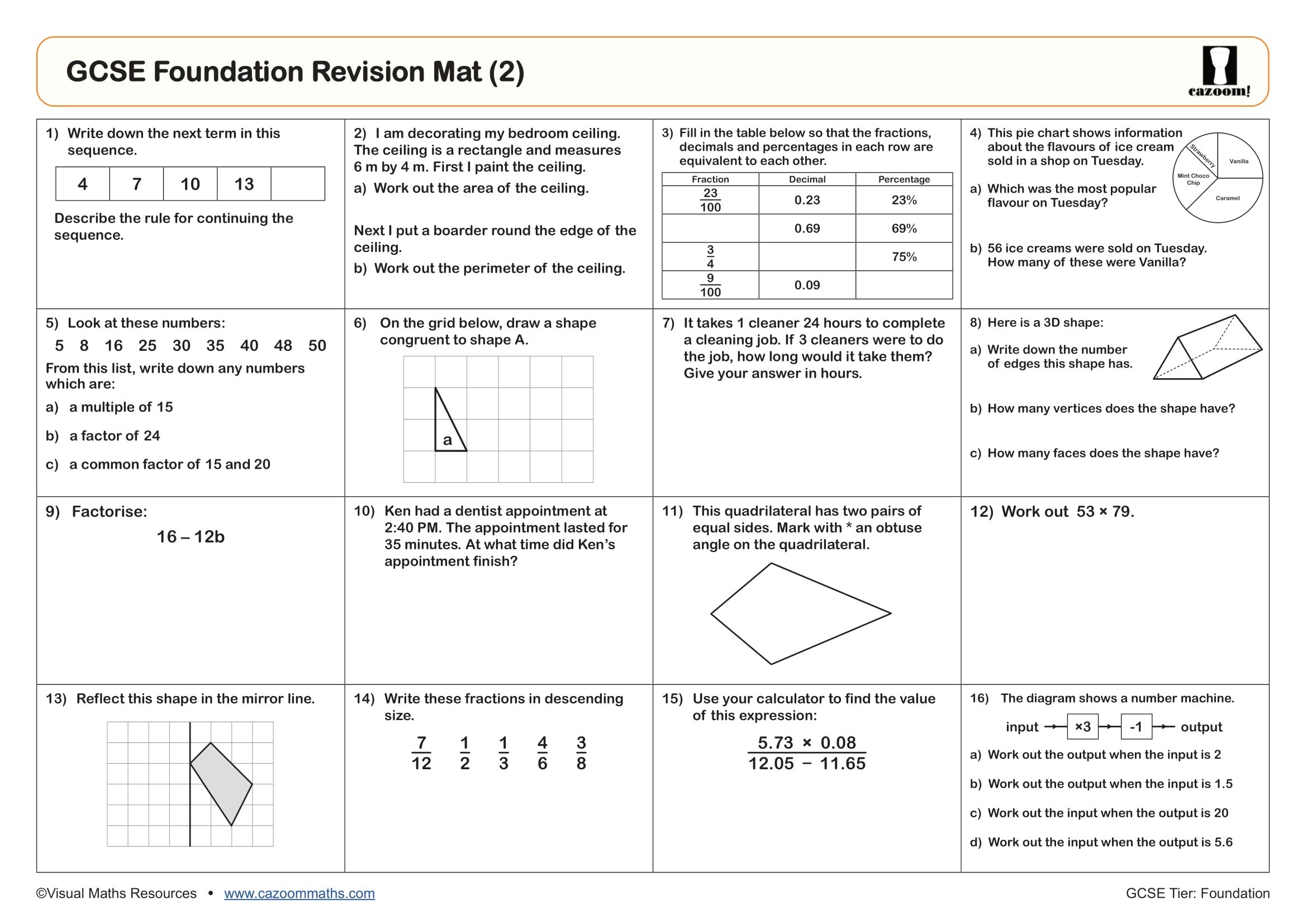
GCSE Foundation Revision Mat (2)
Target Grade: 1-3
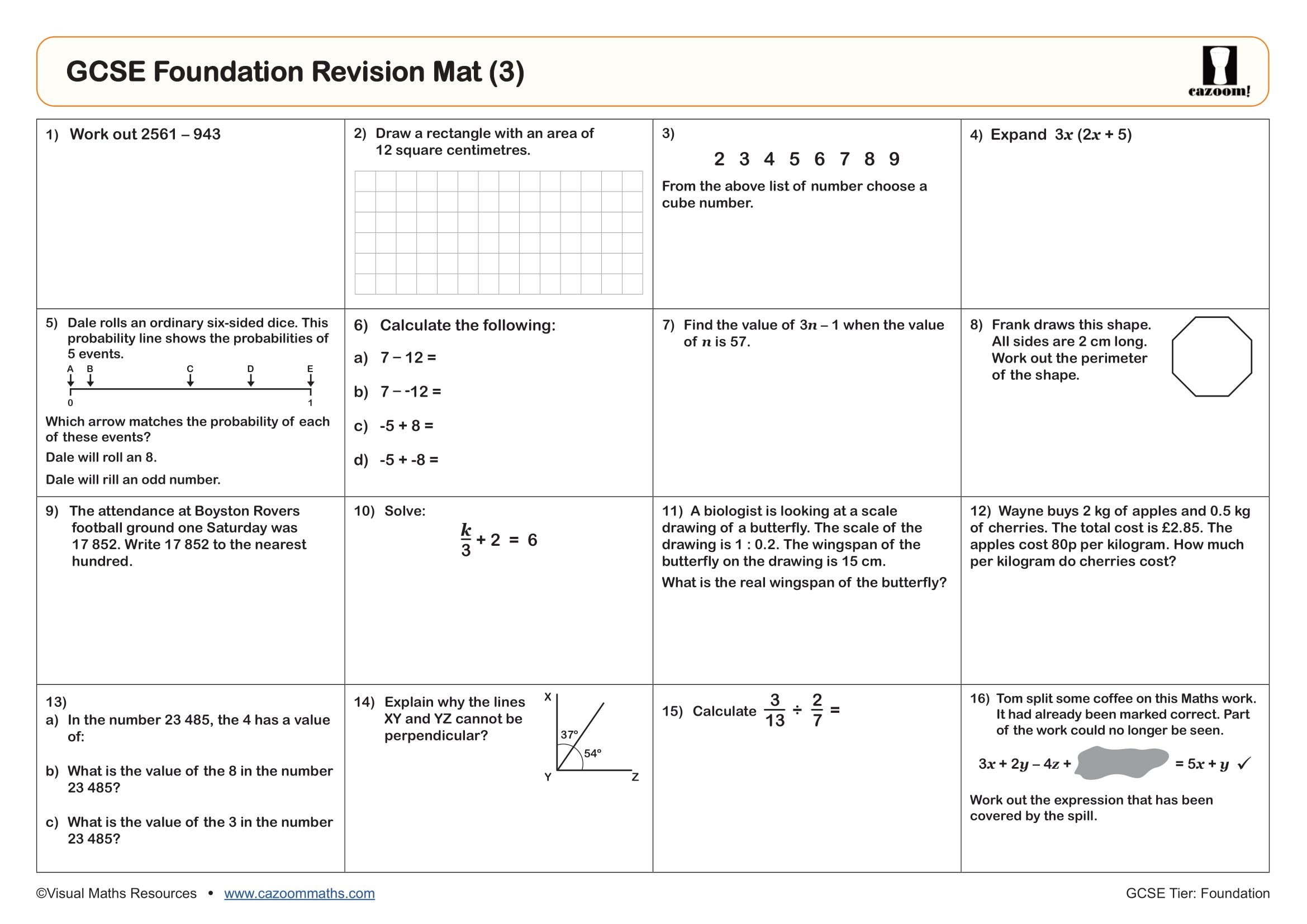
GCSE Foundation Revision Mat (3)
Target Grade: 1-3
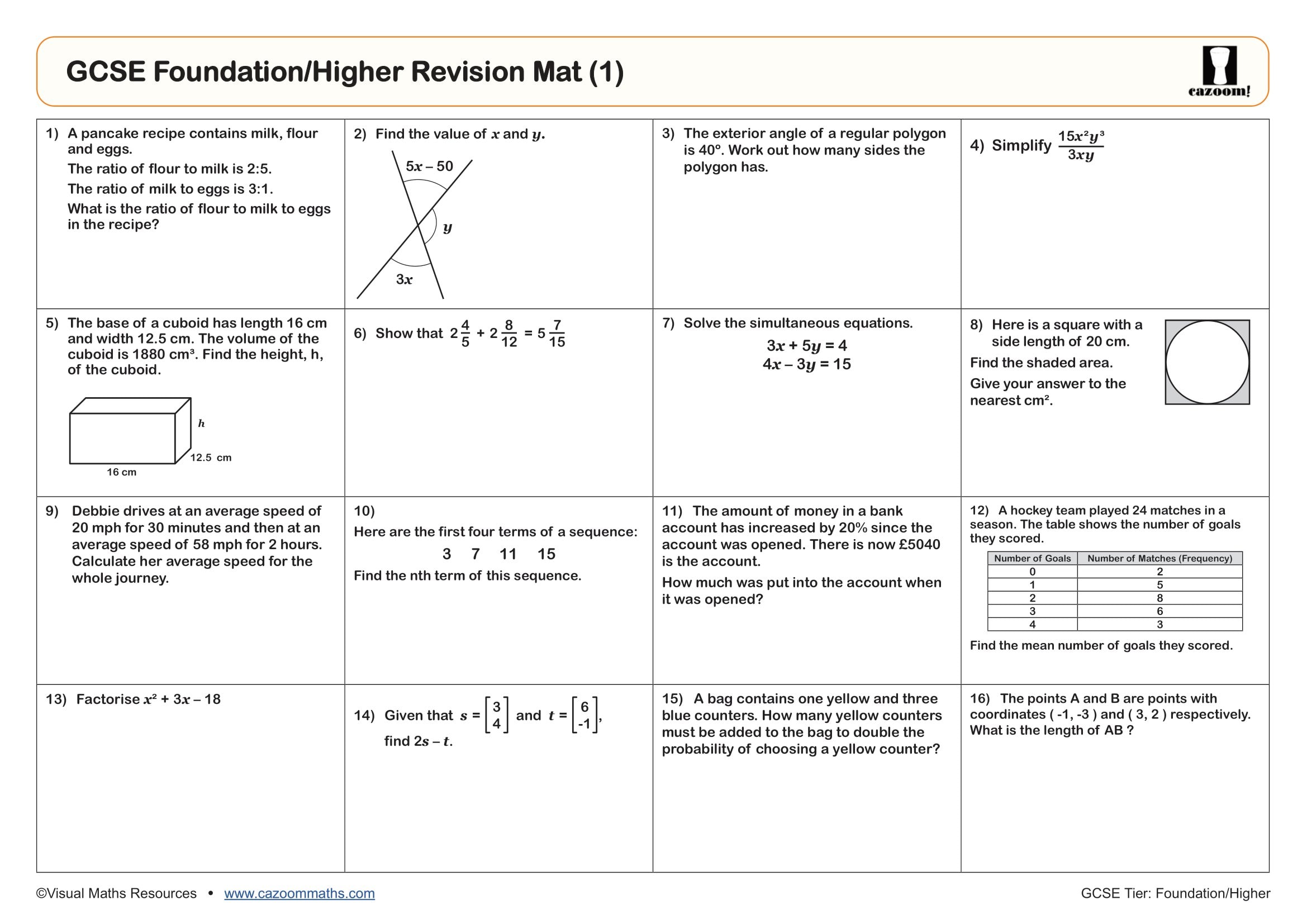
GCSE Foundation/Higher Revision Mat (1)
Target Grade: 4-5
GCSE Foundation/Higher Revision Mat (2)
Target Grade: 4-5
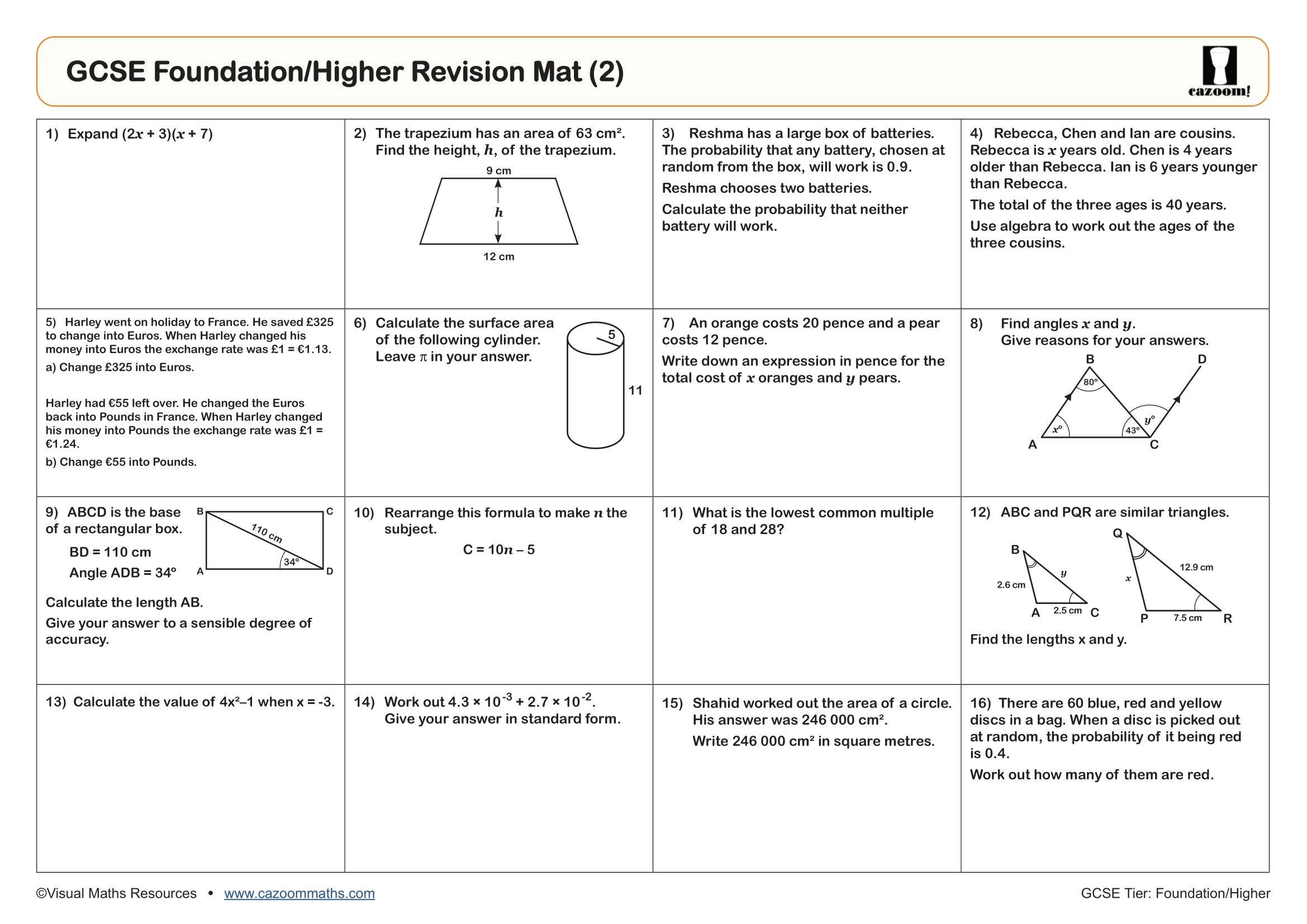
GCSE Foundation/Higher Revision Mat (3)
Target Grade: 4-5
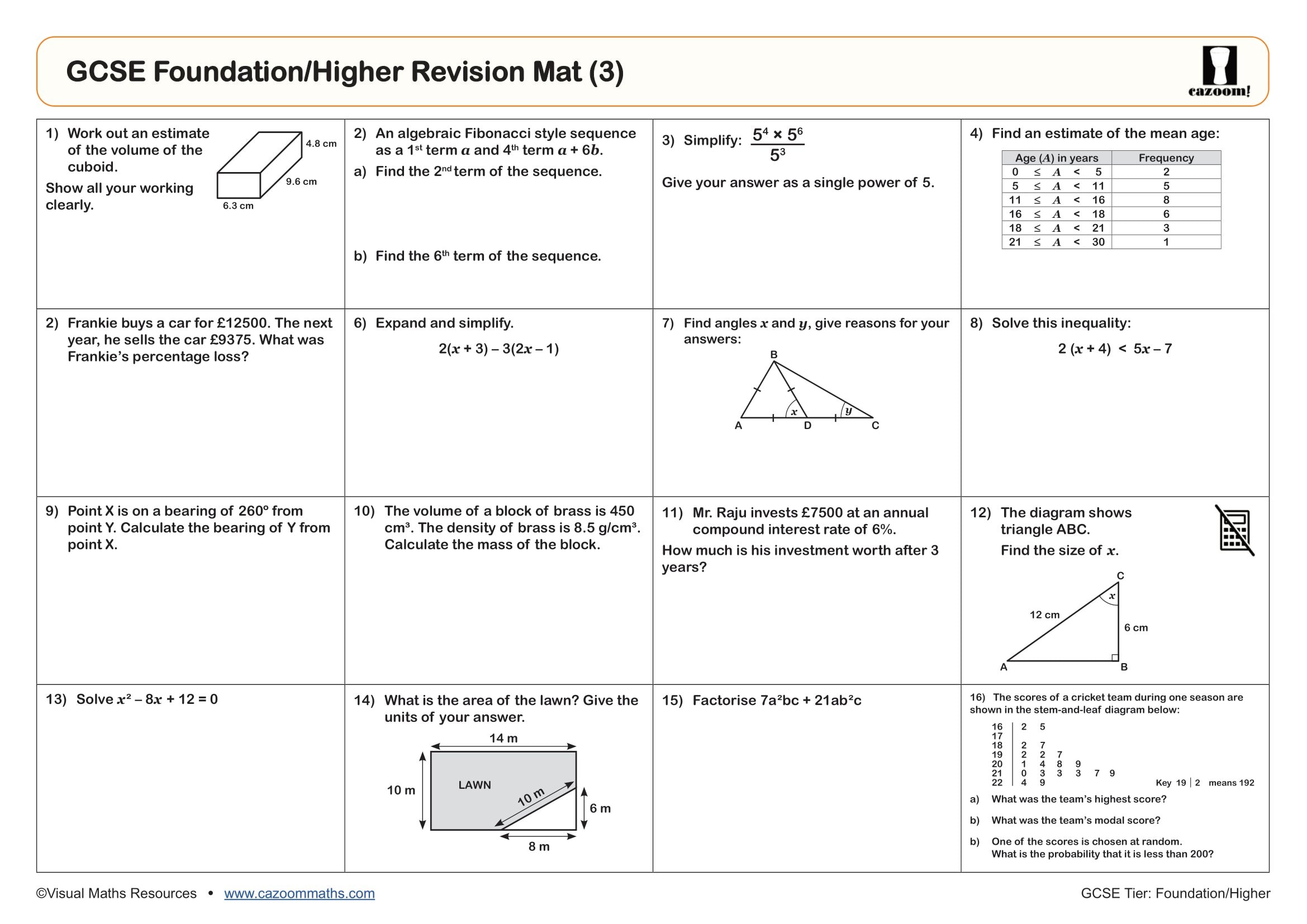
GCSE Higher Revision Mat (1)
Target Grade: 6-7
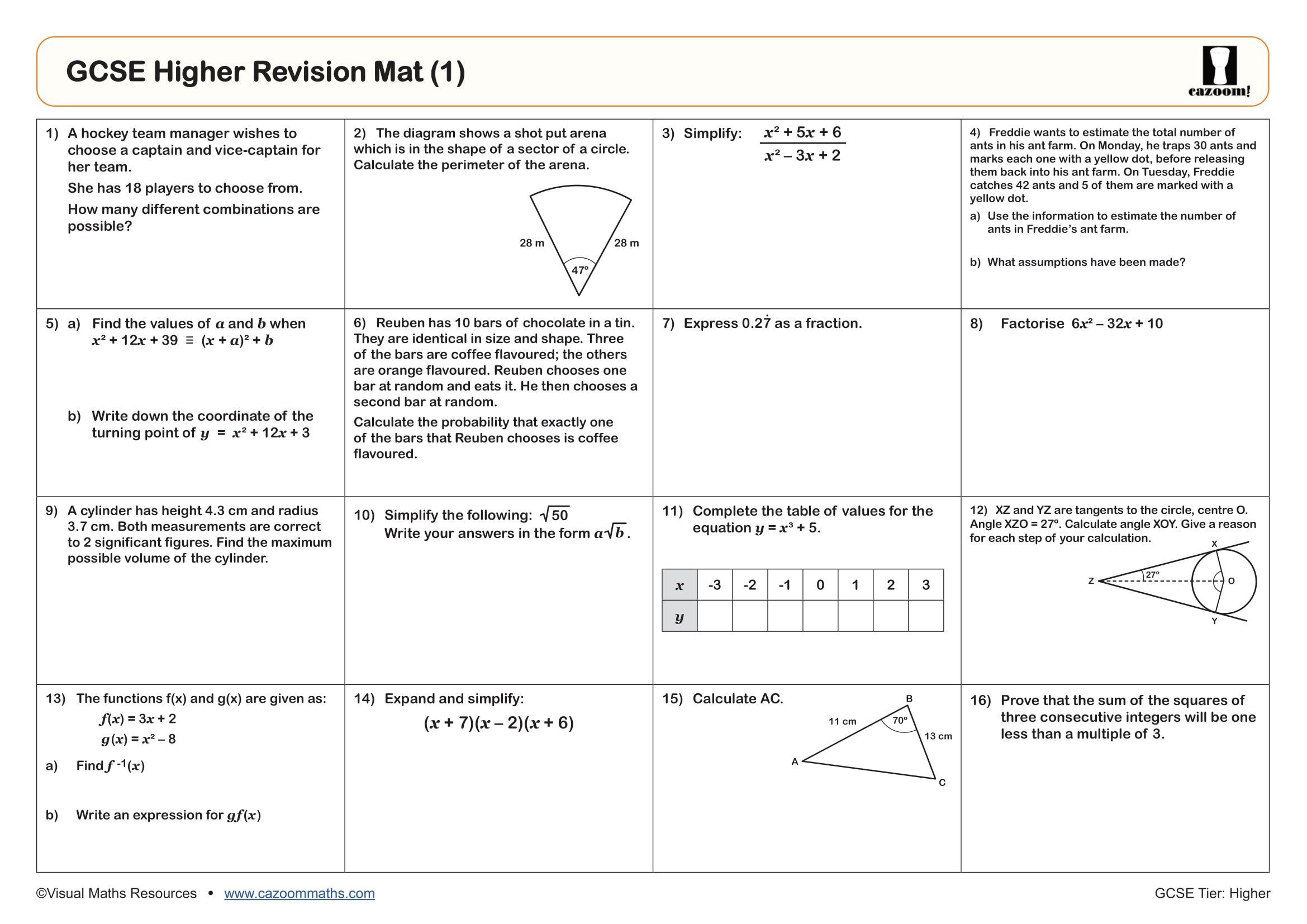
GCSE Higher Revision Mat (2)
Target Grade: 6-7
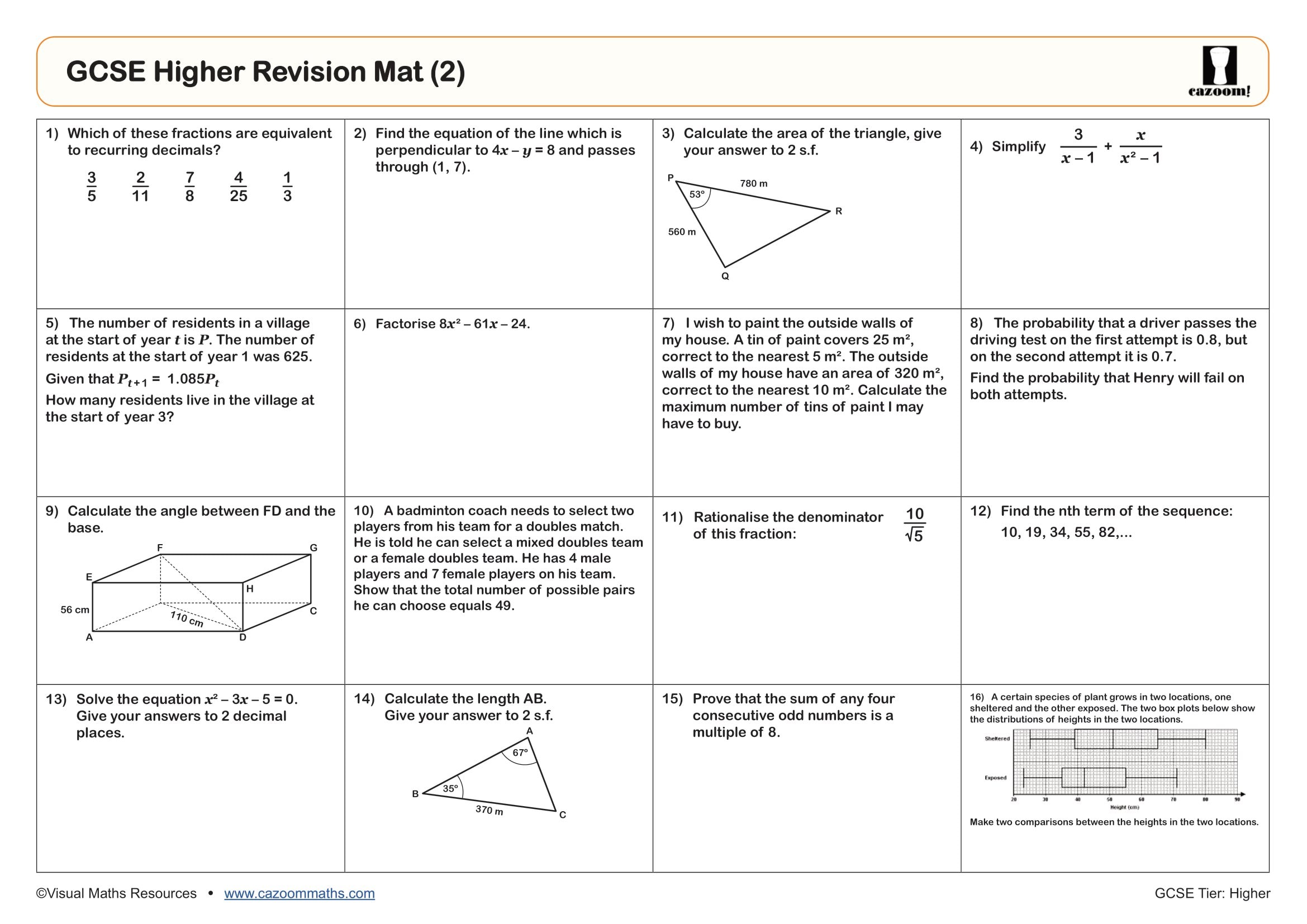
GCSE Higher Revision Mat (3)
Target Grade: 6-7
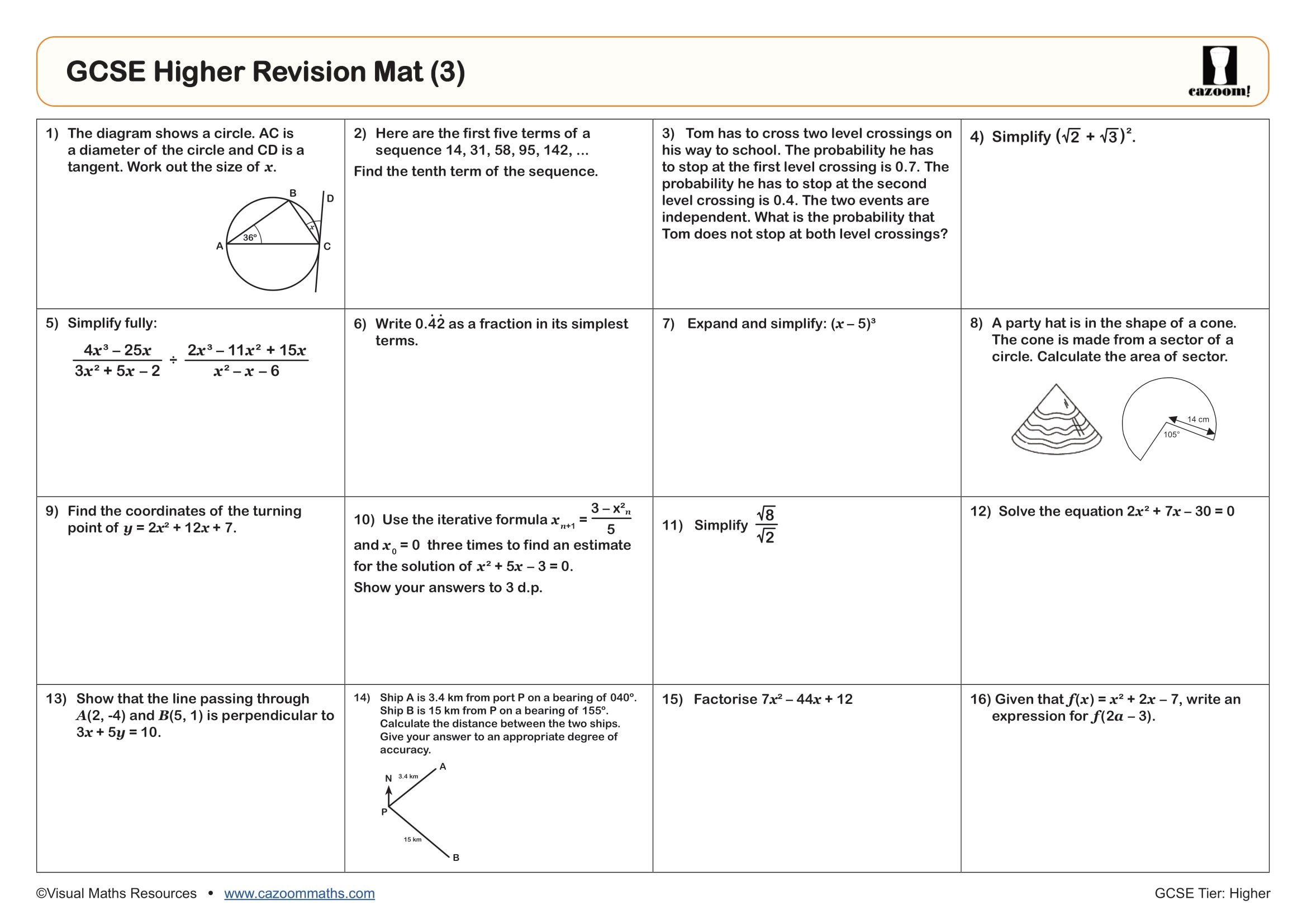
GCSE Higher Plus Revision Mat (1)
Target Grade: 8-9
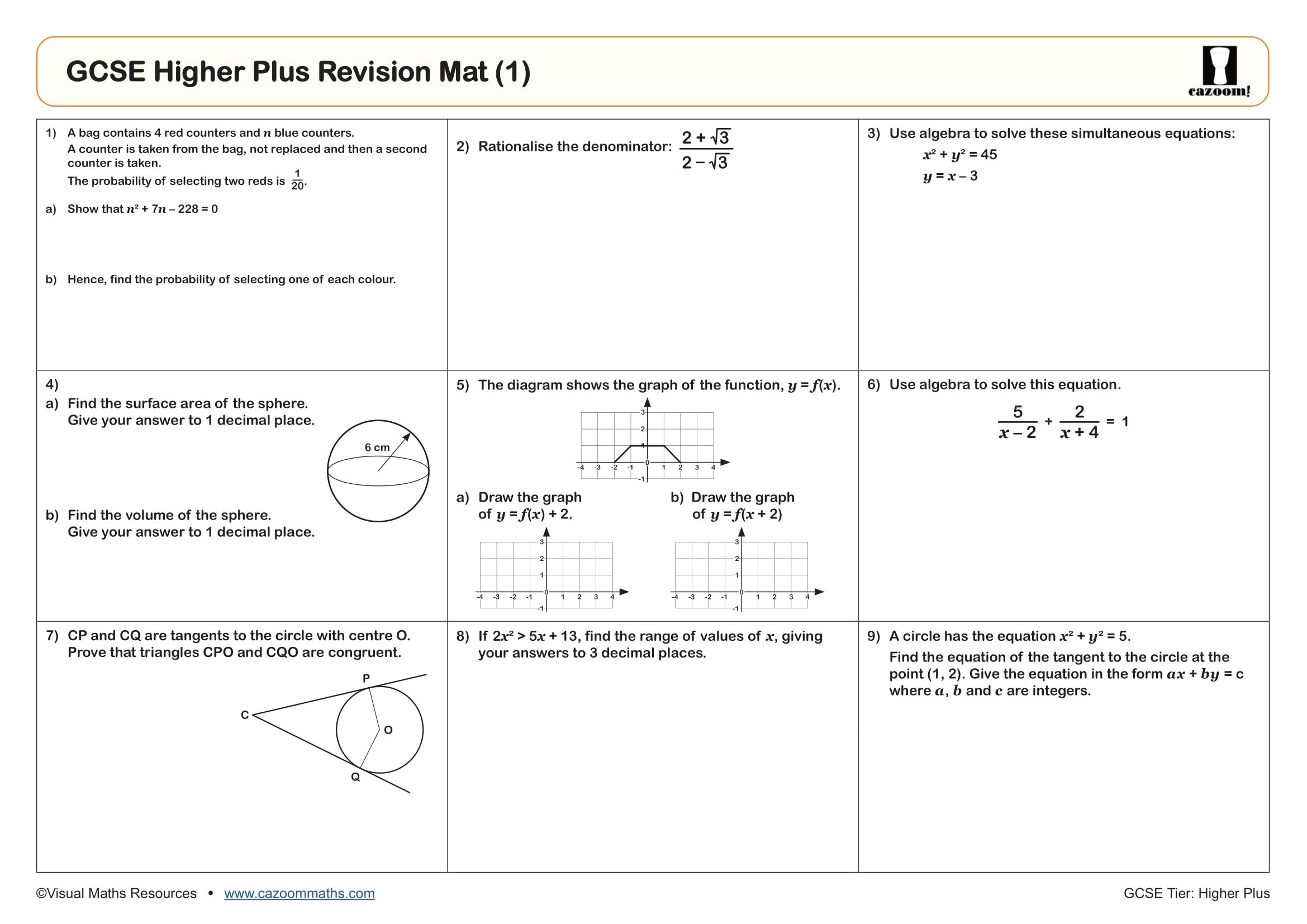
GCSE Higher Plus Revision Mat (2)
Target Grade: 8-9
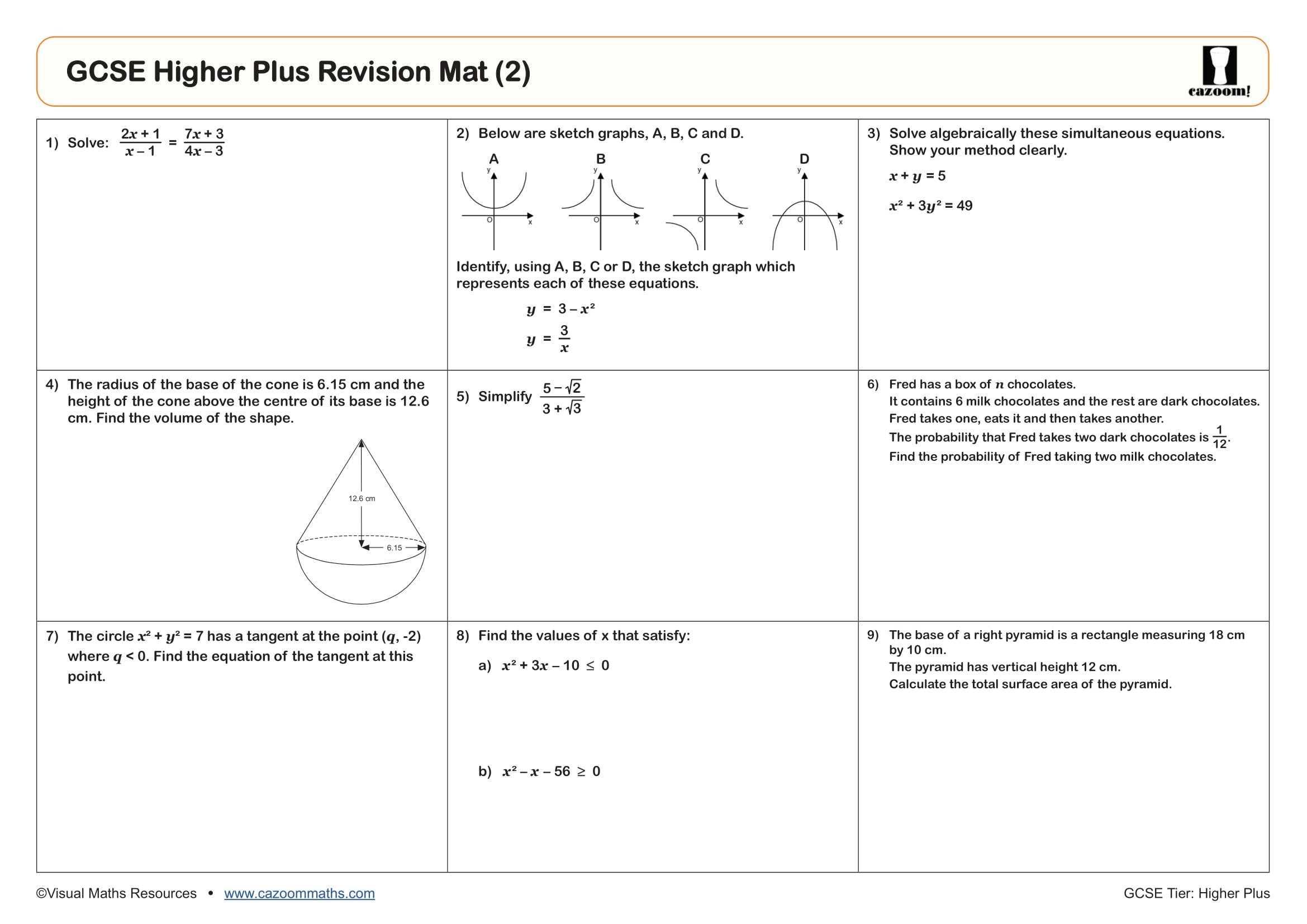
GCSE Higher Plus Revision Mat (3)
Target Grade: 8-9
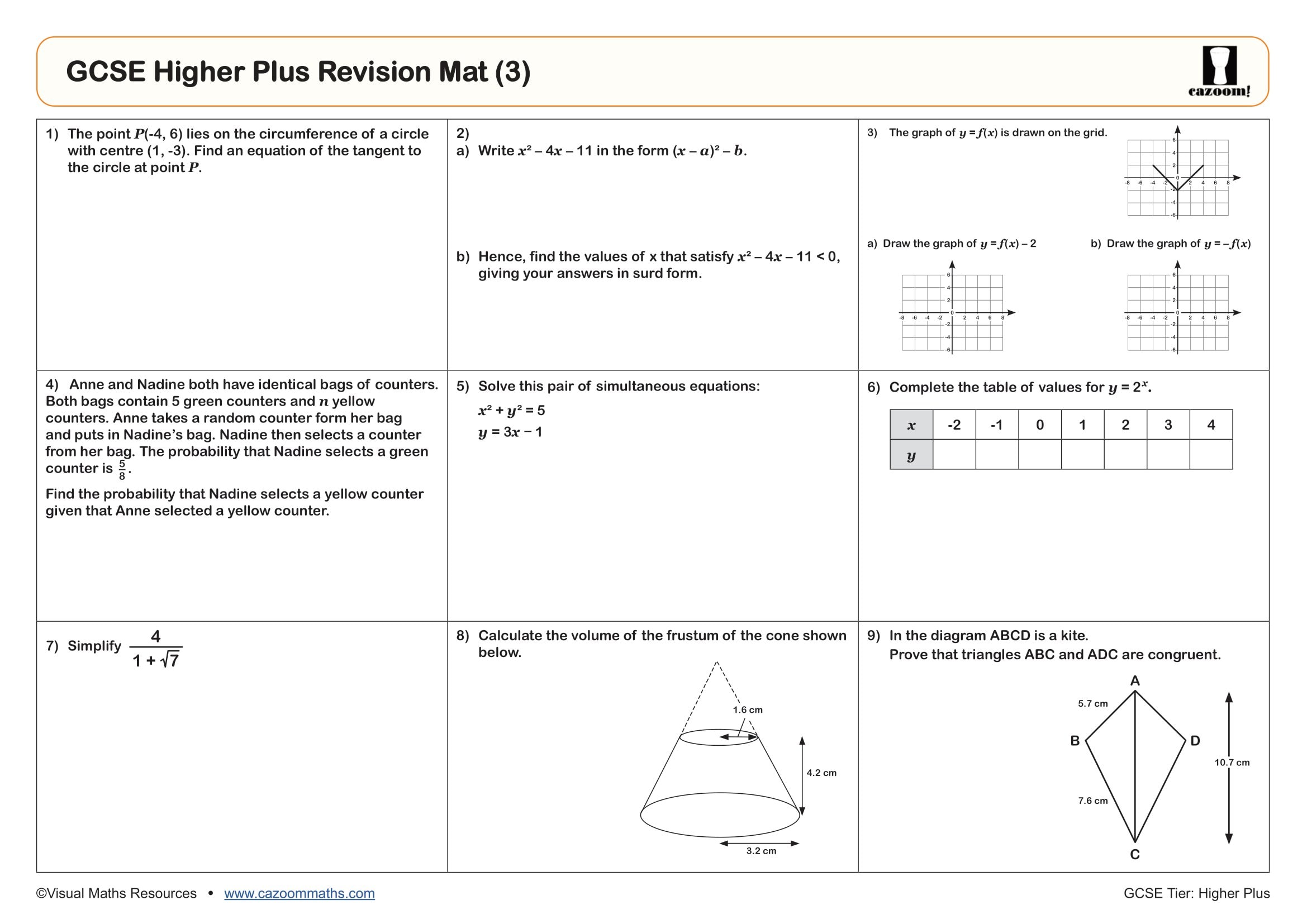
All worksheets are created by the team of experienced teachers at Cazoom Maths.
What makes GCSE maths revision worksheets effective for exam preparation?
GCSE maths revision worksheets with answers allow students to test themselves under exam-like conditions, then immediately check their working. These worksheets cover every specification topic from basic number work through to circle theorem proofs, organised by grade bands to match Foundation and Higher tier demands. Students working through maths revision gcse worksheets build stamina for the longer papers whilst identifying which topics need more attention.
The most effective revision strategy involves completing a worksheet in timed conditions, marking it honestly, then revisiting any errors within 48 hours. Students who simply read through worked solutions without attempting questions first rarely retain the methods. Teachers report that setting one worksheet per week from six weeks before exams creates a structured revision pattern without overwhelming students.
How are the revision mats organised by GCSE grade?
The worksheets divide into four grade bands: grades 1-3 cover foundational topics like fractions and basic algebra, grades 4-5 bridge Foundation and Higher content with trigonometry and simultaneous equations, grades 6-7 include circle theorems and algebraic proof, whilst grades 8-9 tackle Higher Plus material such as quadratic inequalities and function transformations. This structure mirrors how exam boards weight their papers, with overlap at grades 4-5 where both tiers meet.
Foundation tier students should focus primarily on grades 1-5 content, ensuring complete mastery before attempting grade 6 material. Higher tier students need fluency across grades 4-9, though the grade 4-5 topics often prove crucial as they underpin more complex questions. Students aiming for grade 7 or above must be comfortable working through grade 6-7 questions within eight minutes per problem.
How are revision mat topics tested in GCSE maths exams?
GCSE papers test these topics through standalone calculation questions worth 2-3 marks, multi-step problems carrying 4-6 marks, and extended questions reaching 8-10 marks on Higher tier papers. Examiners expect clear working at every stage, particularly for algebraic manipulation, geometric reasoning, and statistical calculations. Mark schemes typically award method marks even when final answers contain errors, provided the approach demonstrates understanding.
Students lose marks by omitting units, failing to show substitution into formulae, or presenting final answers without sufficient accuracy. The revision mats help students practise showing complete working under time pressure. Foundation students should aim to complete 2-mark questions within three minutes, whilst Higher students need to tackle 6-mark problems in under ten minutes. Regular timed practice using these worksheets builds the pace required for achieving target grades.
What revision strategies work best with these worksheets?
Spaced repetition proves most effective: students should attempt a worksheet, review it after two days, then revisit any errors after one week. This approach embeds methods into long-term memory far better than massed practice immediately before exams. Working through one complete revision mat per sitting, rather than cherry-picking easy questions, reveals genuine gaps in knowledge and builds exam stamina.
Teachers find these worksheets particularly valuable for setting differentiated homework during the final half-term before exams. Pairing worksheet practice with past paper questions on the same topic helps students recognise how examiners phrase questions differently. Students should complete each worksheet without calculators first where possible, then revisit with calculators to check answers, as this mirrors the structure of GCSE Paper 1 followed by Papers 2 and 3.