Angles in Parallel Lines Worksheets
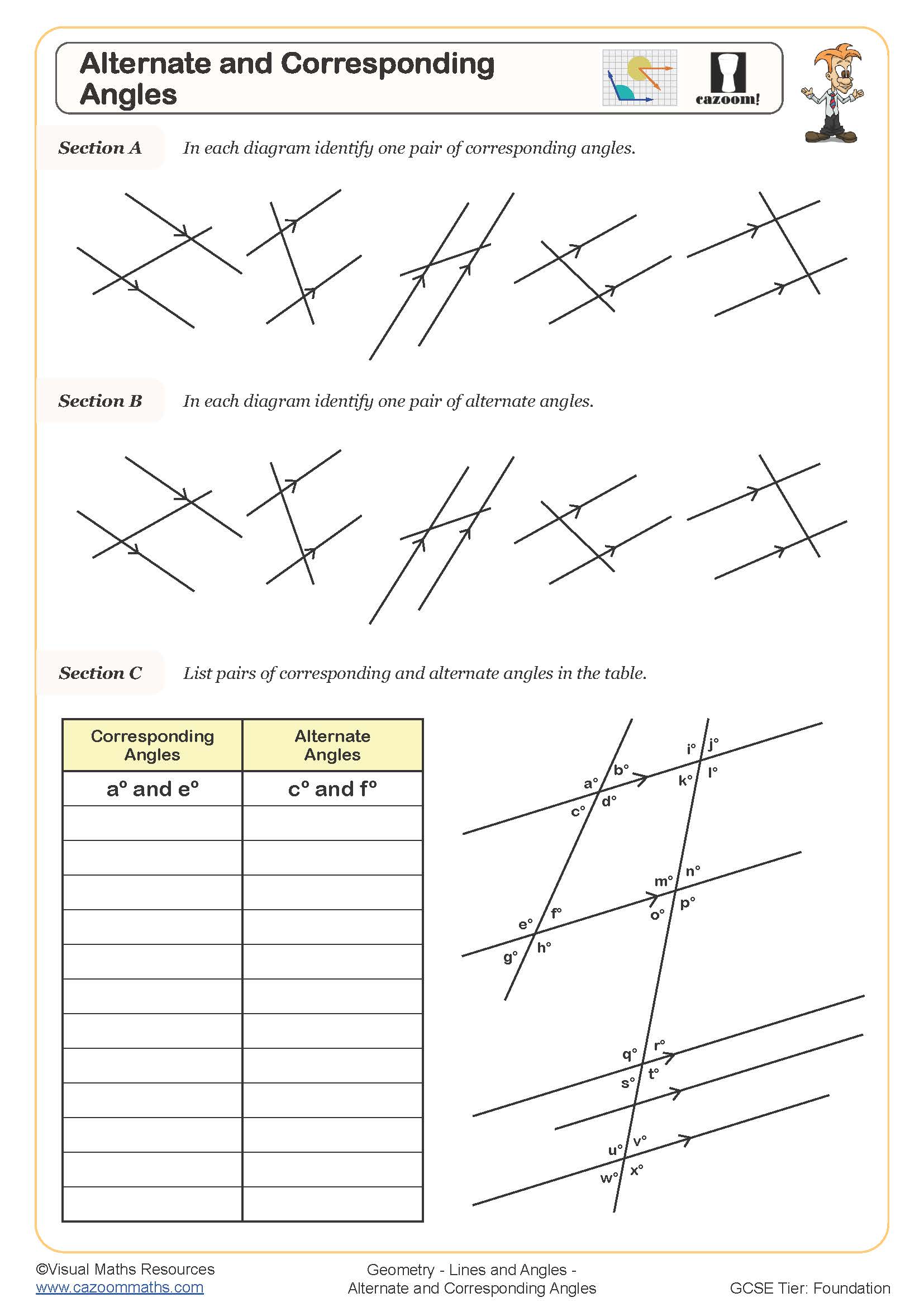
Alternate and Corresponding Angles (A)
Year groups: 8, 9
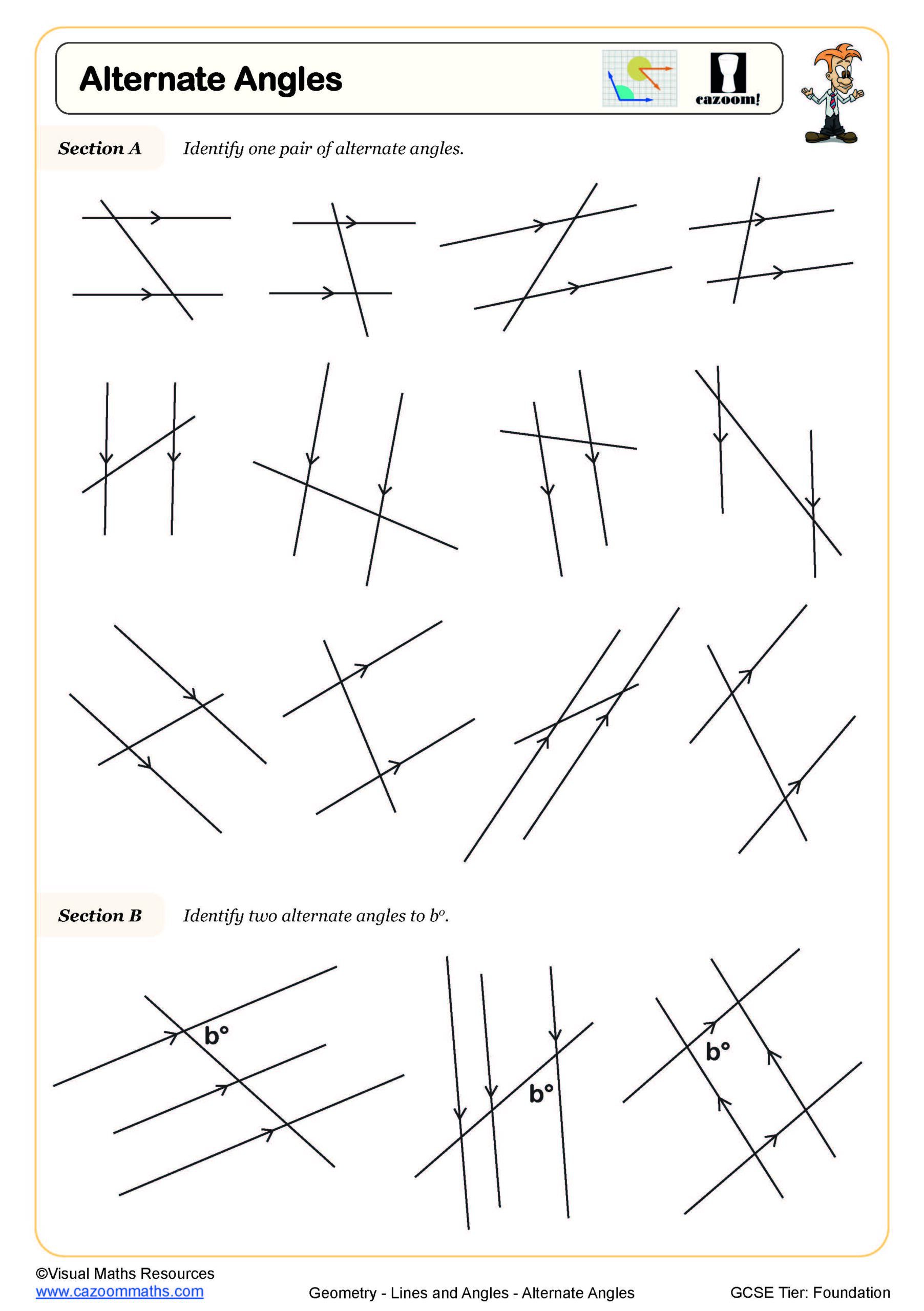
Alternate Angles
Year groups: 8, 9
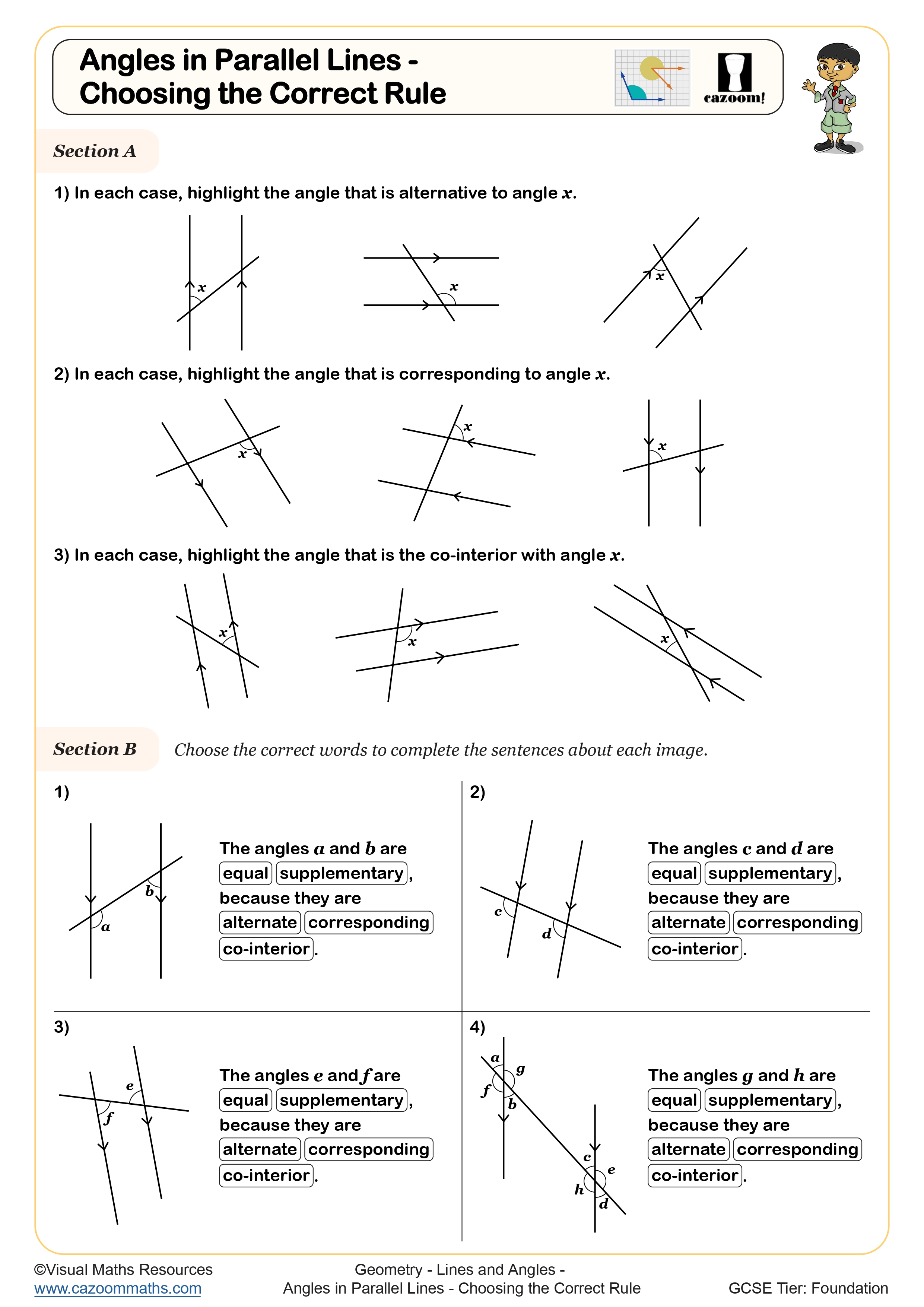
Angles in Parallel Lines - Choosing the Correct Rule
Year groups: 8, 9
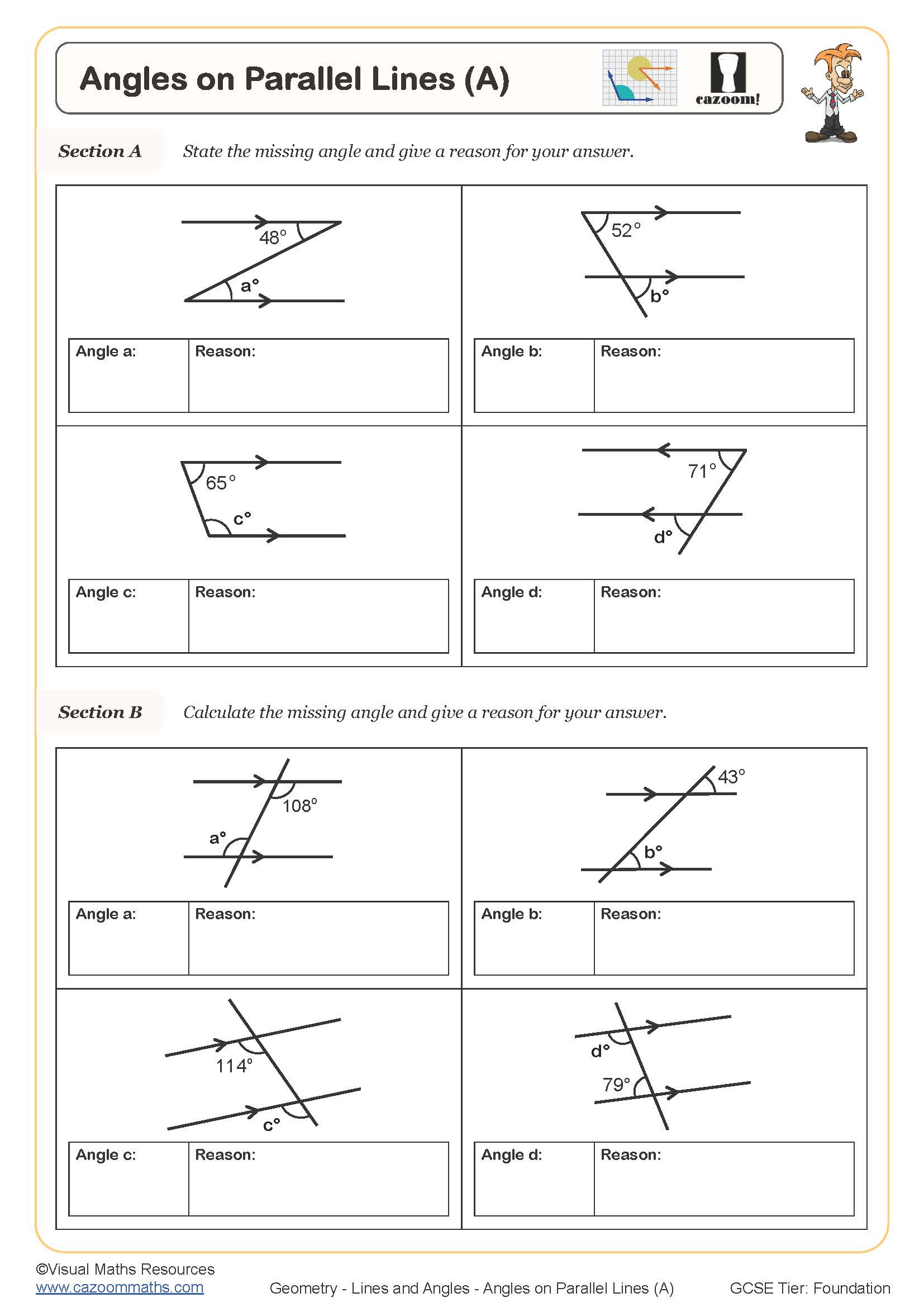
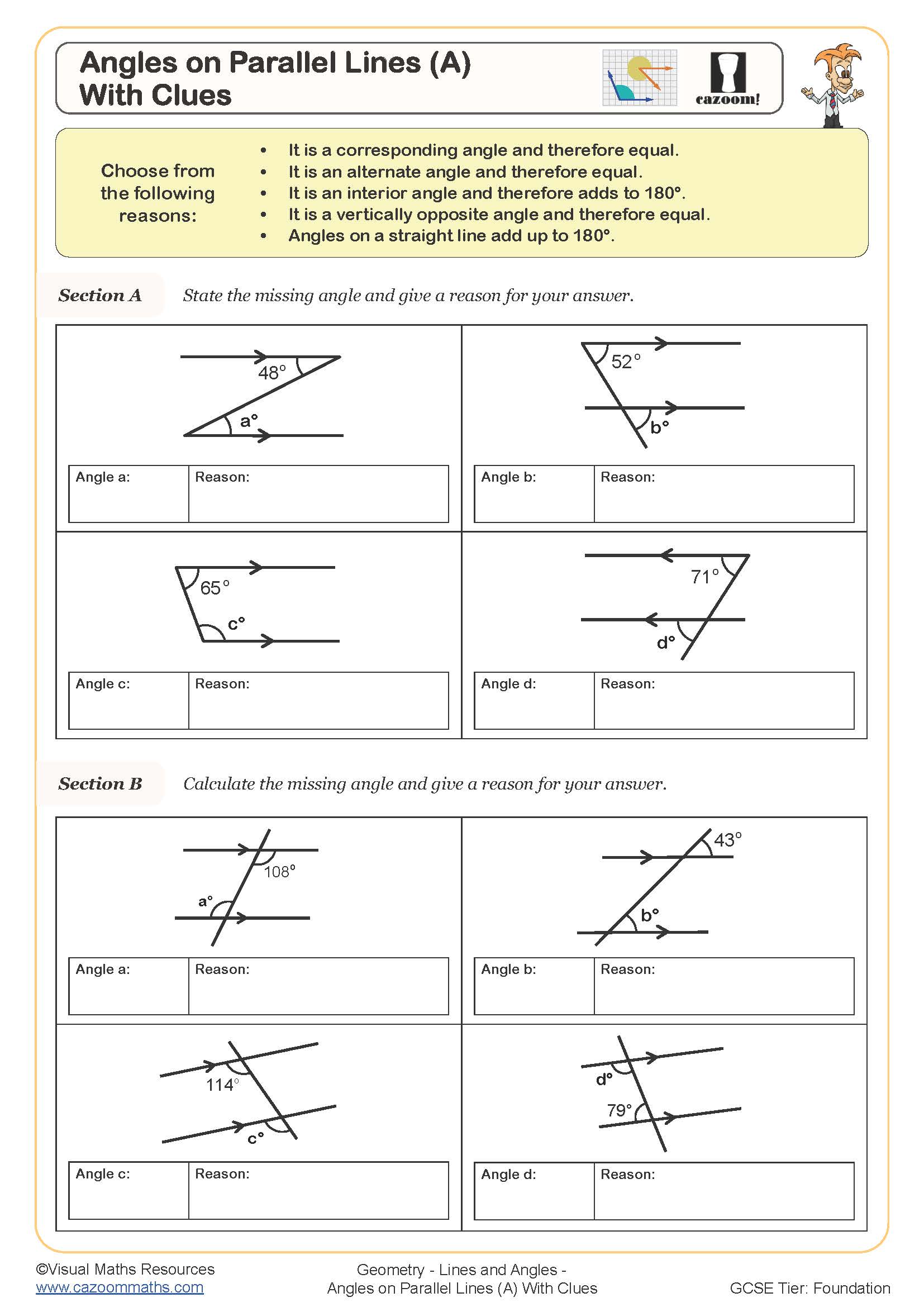
Angles on Parallel Lines (A)
Year groups: 8, 9
Angles on Parallel Lines (A) (With Clues)
Year groups: 8, 9
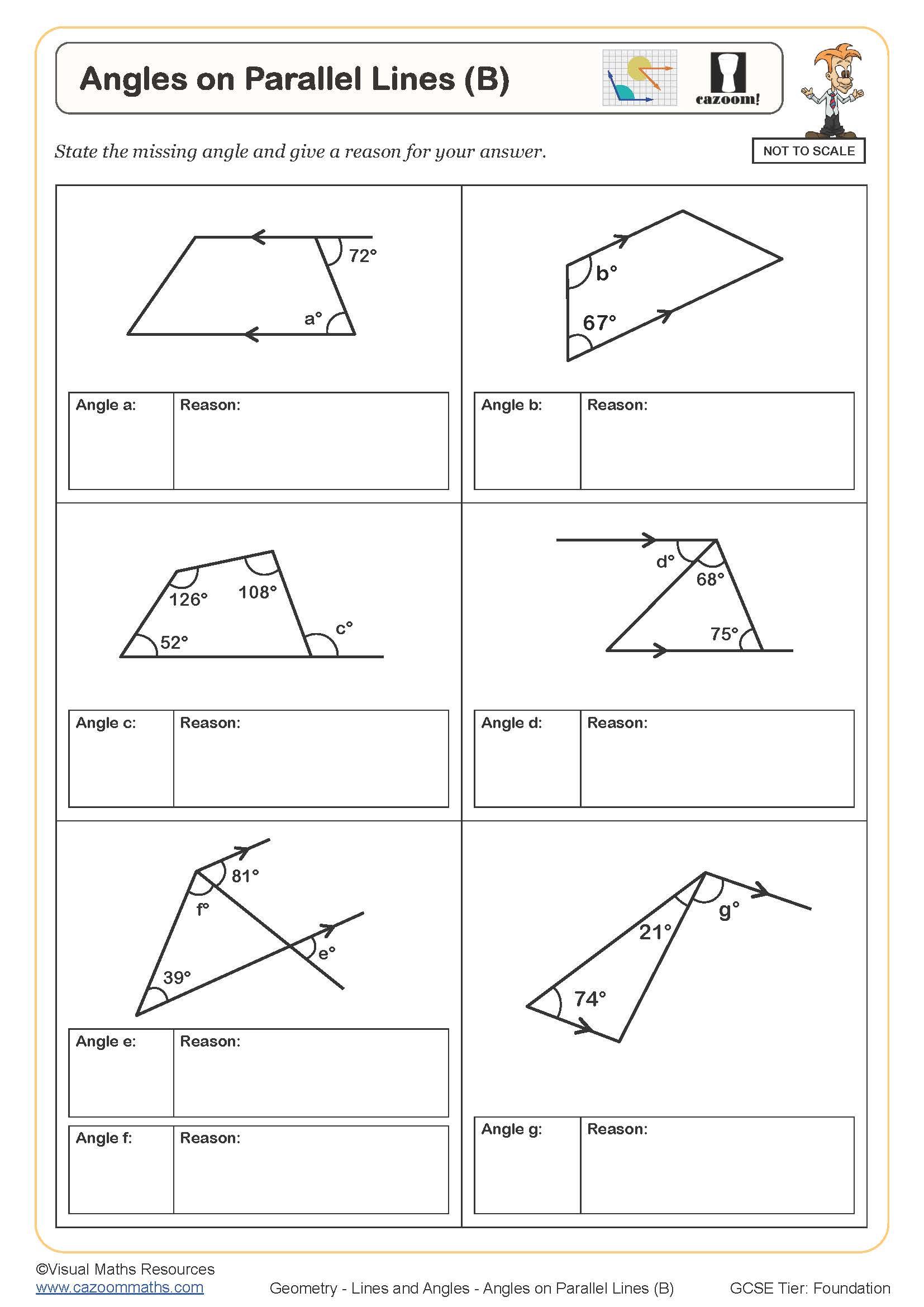
Angles on Parallel Lines (B)
Year groups: 8, 9
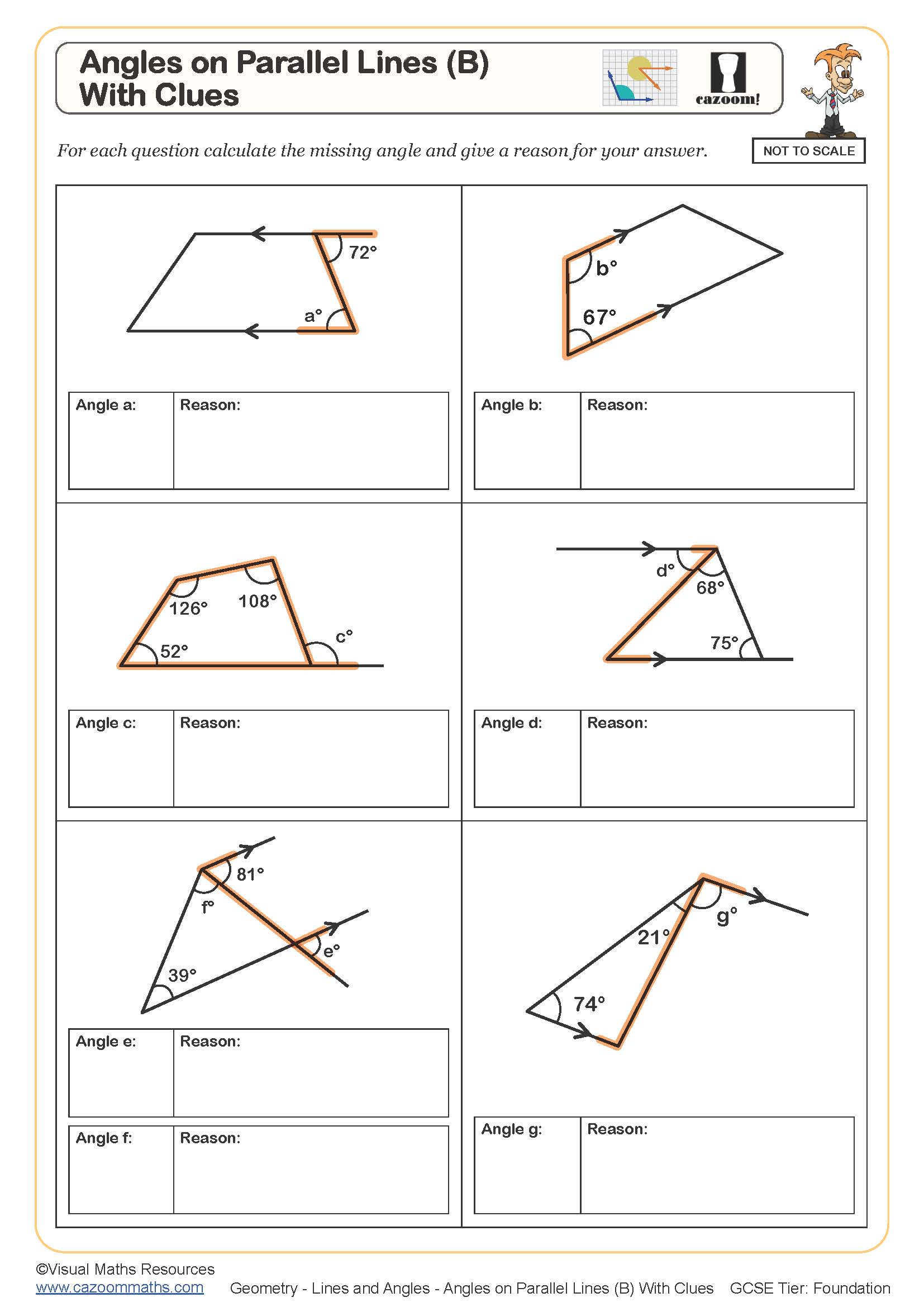
Angles on Parallel Lines (B) (With Clues)
Year groups: 8, 9
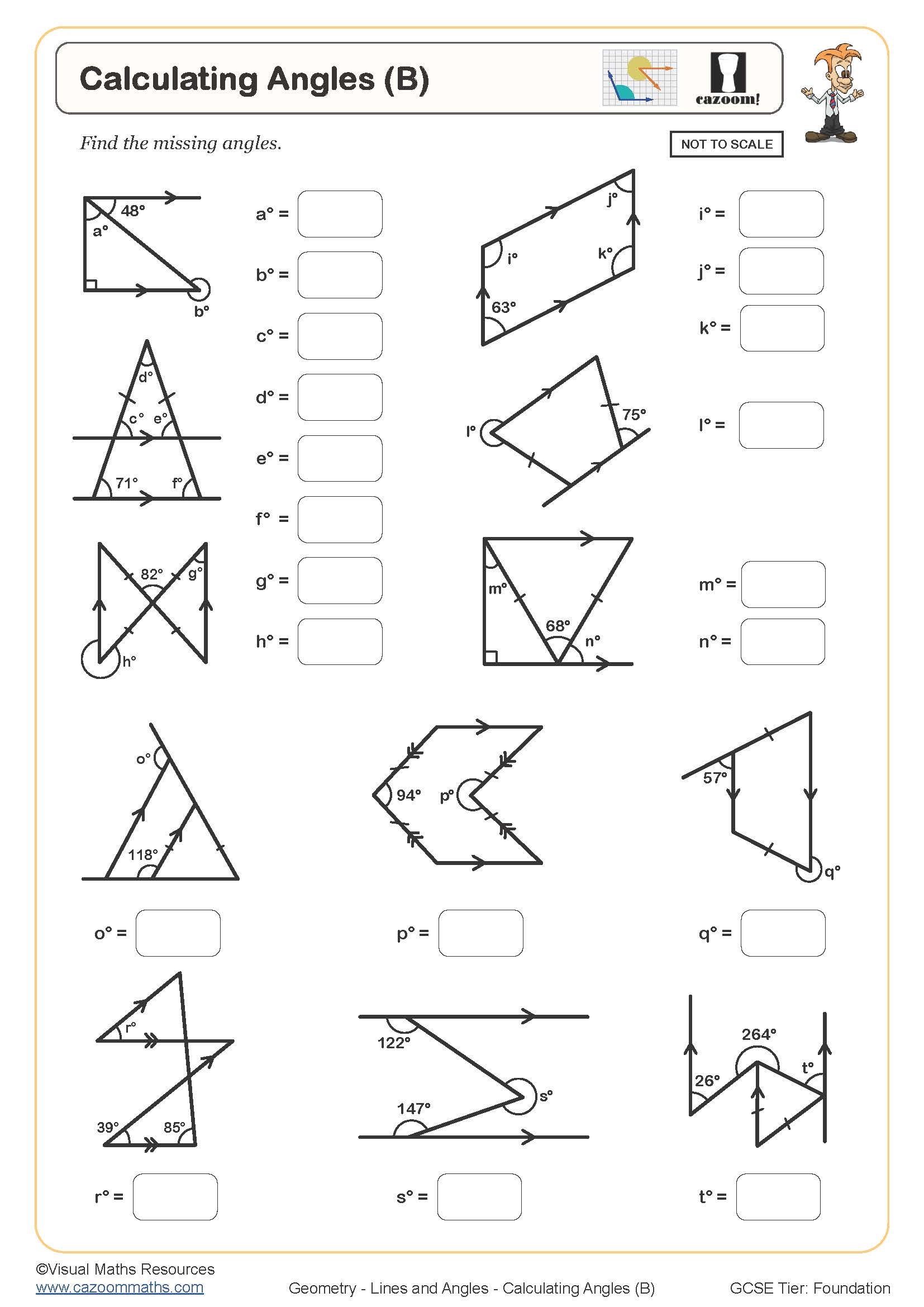
Calculating Angles (B)
Year groups: 8, 9, 10
Calculating Angles (B) (With Clues)
Year groups: 8, 9, 10
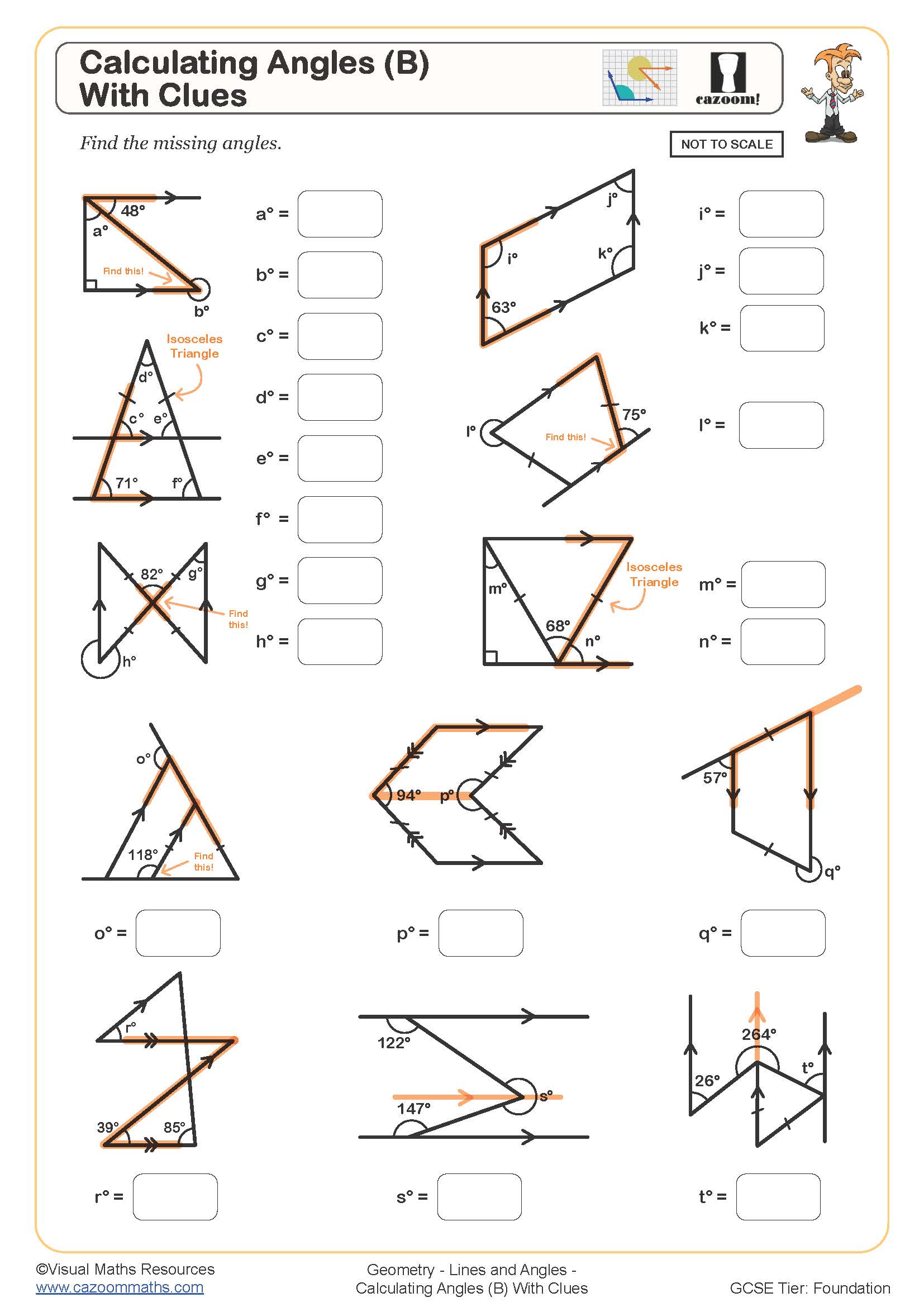
Co-interior Angles
Year groups: 8, 9
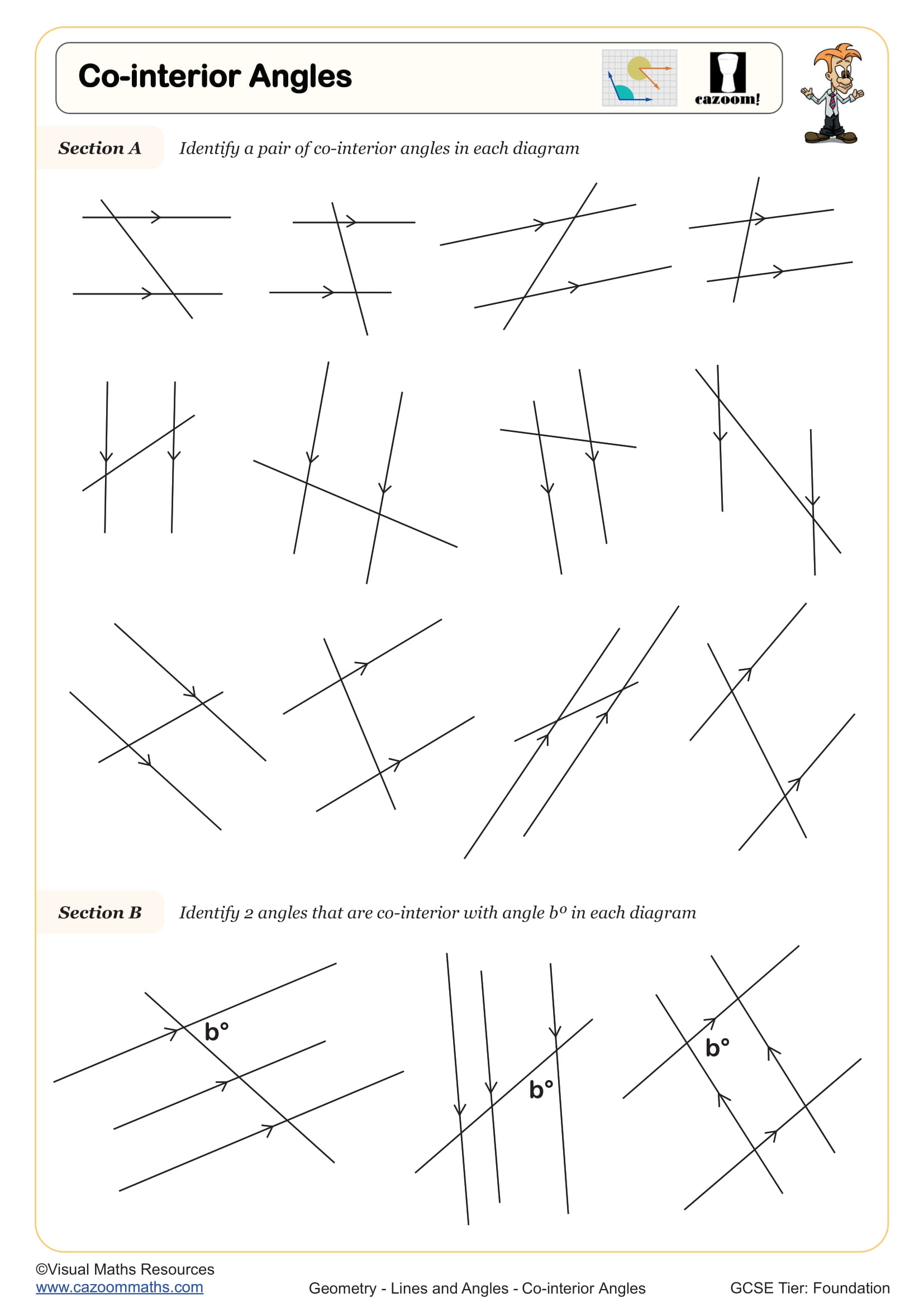
Corresponding Angles
Year groups: 8, 9
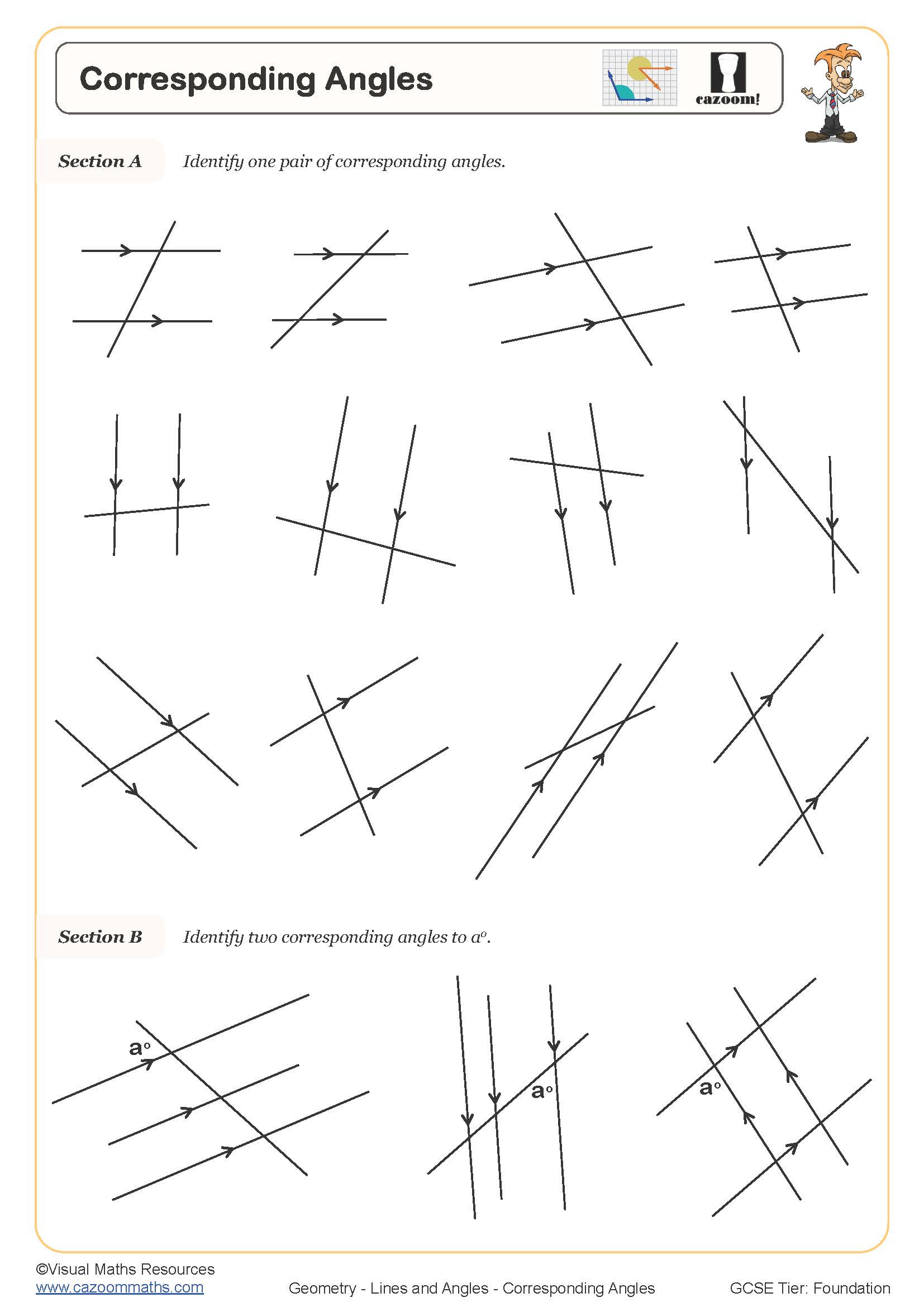
Algebraic Angles in Parallel Lines
Year groups: 9
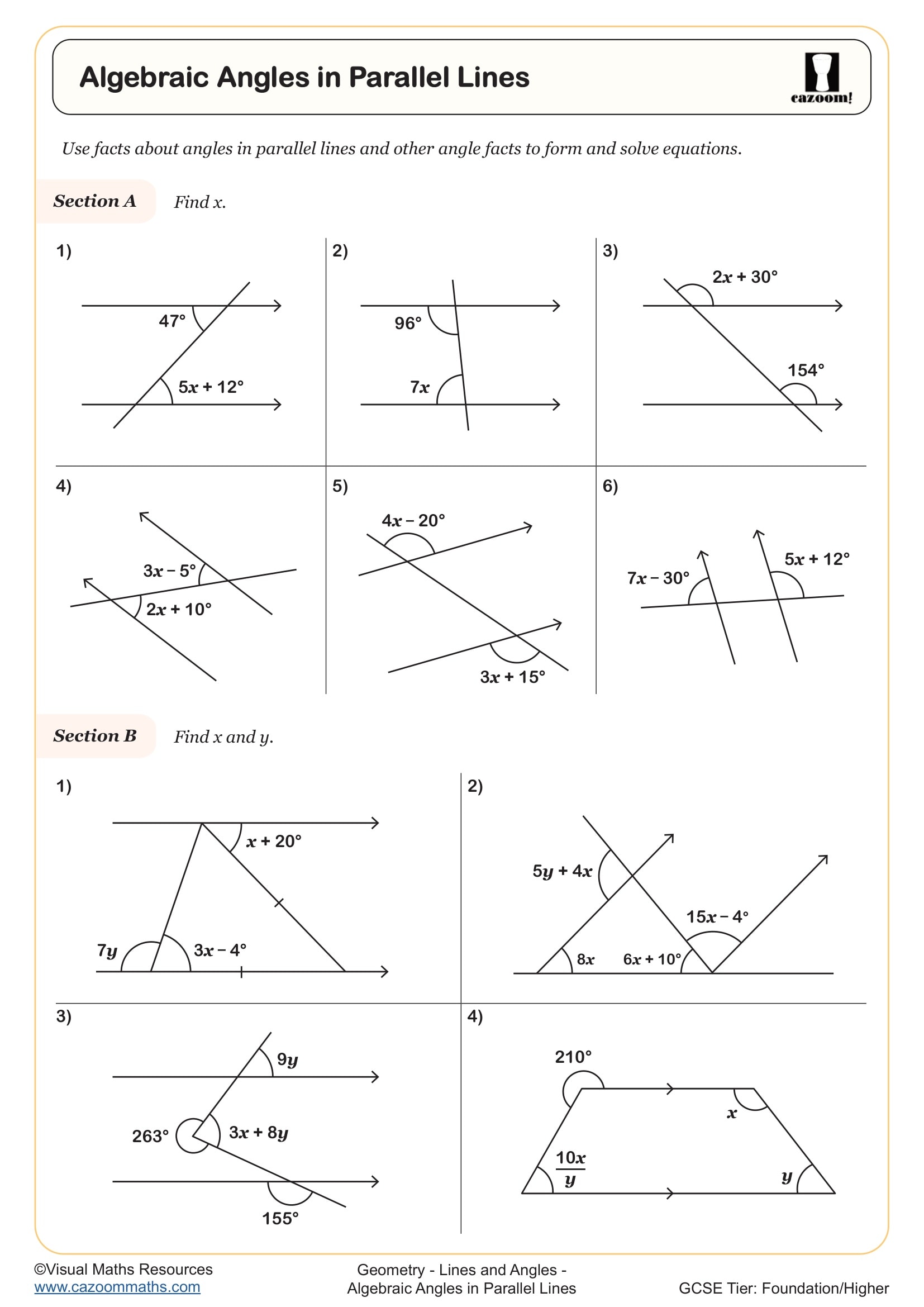
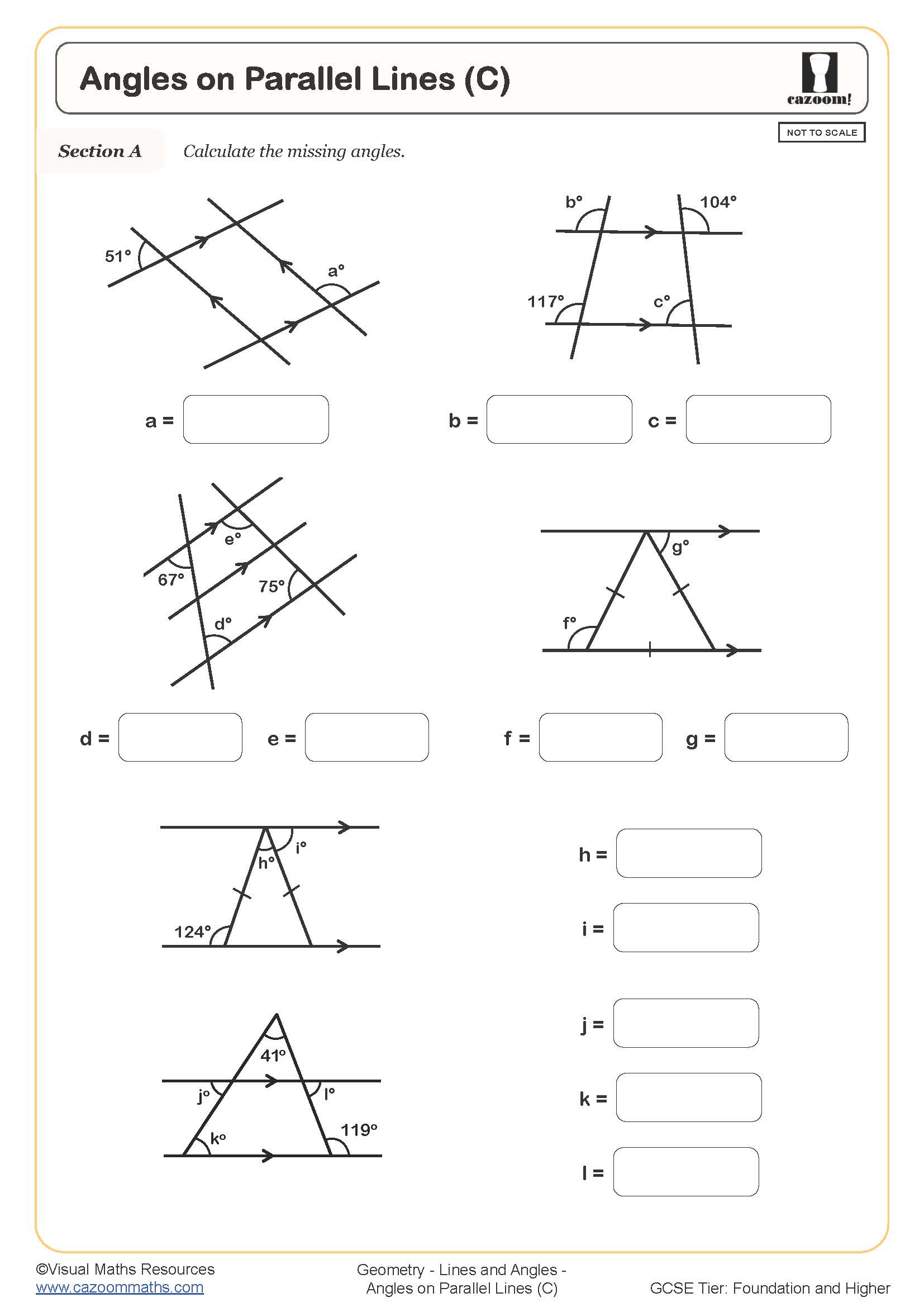
Angles on Parallel Lines (C)
Year groups: 9, 10, 11
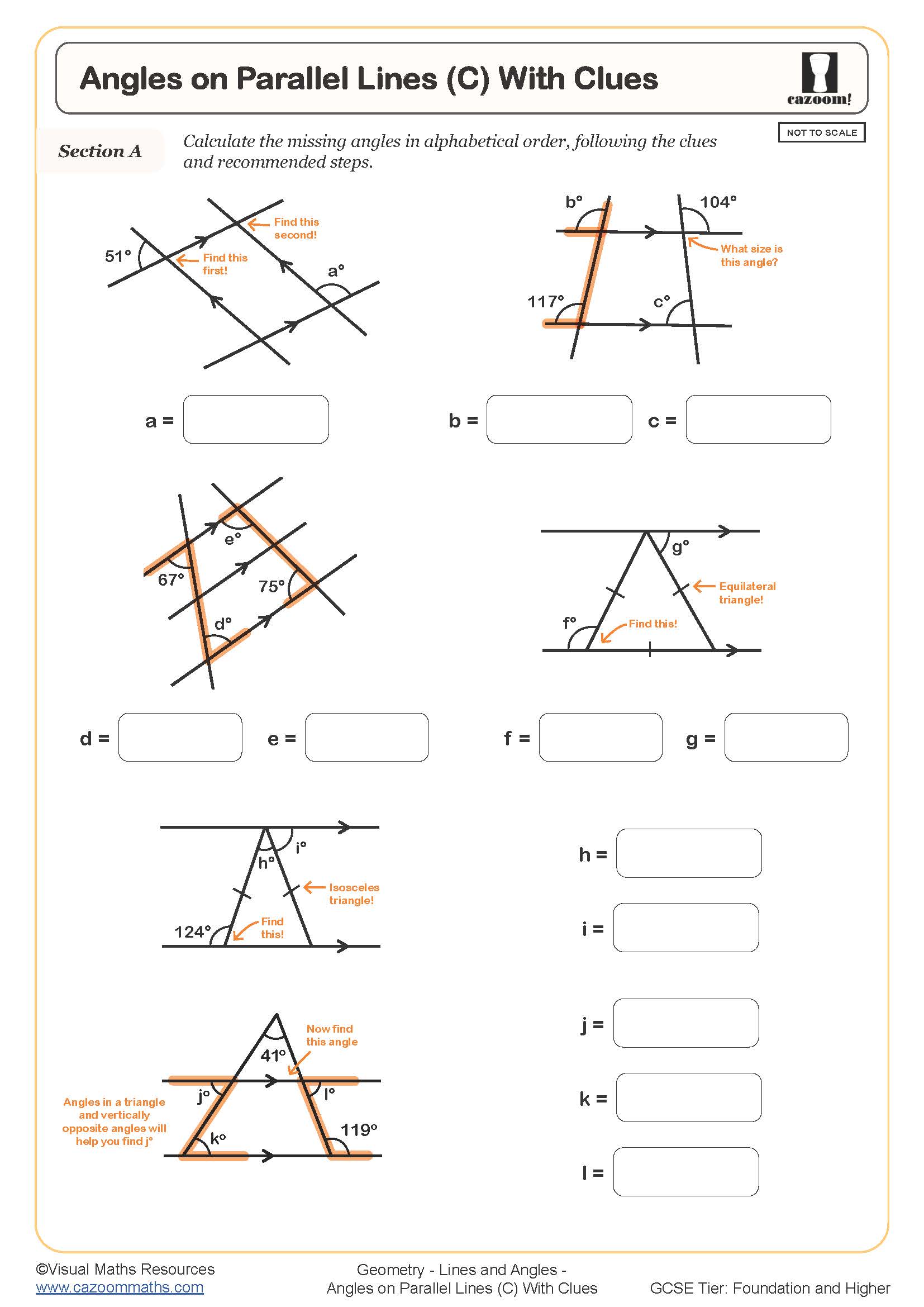
Angles on Parallel Lines (C) (With Clues)
Year groups: 9, 10, 11
All worksheets are created by the team of experienced teachers at Cazoom Maths.
What Are the Rules for Angles in Parallel Lines?
When a straight line (called a transversal) crosses two parallel lines, it creates three key angle relationships: corresponding angles are equal (these sit in matching positions), alternate angles are equal (these form a 'Z' shape), and co-interior angles add up to 180° (these sit on the same side of the transversal between the parallel lines). These rules only apply when lines are genuinely parallel, which the National Curriculum expects students to recognise from standard notation or arrow markings on diagrams.
Students often lose marks in exams because they identify angles correctly but fail to state which rule they've used. Exam mark schemes specifically require explanations such as 'corresponding angles are equal' or 'alternate angles on parallel lines', not just the numerical answer. Teachers report that students sometimes apply these rules to non-parallel lines, particularly in complex diagrams where multiple line segments intersect.
Which Year Groups Study Angles in Parallel Lines?
These worksheets cover Year 8, Year 9, Year 10 and Year 11, spanning both Key Stage 3 and Key Stage 4. The topic typically introduces in Year 8 as part of the KS3 geometry curriculum, where students learn to identify and use the three basic angle relationships. Schools generally teach this after students have secured their understanding of angles on straight lines and around a point.
Progression increases from simple problems involving a single angle relationship in Year 8, to multi-step problems requiring two or more angle rules by Year 9, and finally to algebraic expressions and geometric proof at GCSE level in Years 10 and 11. Higher tier papers expect students to combine angle rules with equation solving, where angles might be expressed as 3x + 20° or similar. The worksheets reflect this progression with scaffolded difficulty.
How Do You Work with Angles Between Parallel Lines?
Calculating angles between parallel lines requires systematic identification of angle pairs and logical reasoning through multiple steps. Students should first mark any angles they can calculate directly (vertically opposite angles are equal), then identify which of the three parallel line rules applies to find the next angle, continuing until they reach the required answer. Many teachers encourage students to annotate diagrams with angle reasons as they work, building habits that serve them well in formal proof questions at GCSE.
This geometric reasoning appears extensively in engineering and architecture, where parallel structural elements create predictable angle relationships. Roof trusses, railway track construction and manufacturing jigs all rely on these principles. Understanding these angle properties allows engineers to calculate stress distributions across parallel support beams and ensures that fabricated components will align correctly during assembly, making this topic genuinely applicable beyond classroom geometry.
How Can These Worksheets Support Teaching Angles in Parallel Lines?
The worksheets build competence through carefully sequenced questions that isolate specific angle relationships before combining them in multi-step problems. Early questions typically present clear diagrams where students identify single angle pairs, whilst later questions introduce algebraic expressions and problems requiring multiple applications of different rules. This structure allows teachers to pinpoint exactly where understanding breaks down, whether it's recognising angle types, applying the correct rule, or managing the algebraic manipulation that appears in GCSE questions.
These resources work effectively for same-day consolidation after introducing the topic, as homework to embed procedural fluency, or as targeted intervention for students who struggle with geometric reasoning. Many teachers use them for paired work where students explain their reasoning to each other, which surfaces misconceptions about angle identification. The complete answer sheets allow for self-marking activities or support teaching assistants working with small groups, whilst also proving useful for catch-up work when students have missed lessons.