Area Worksheets
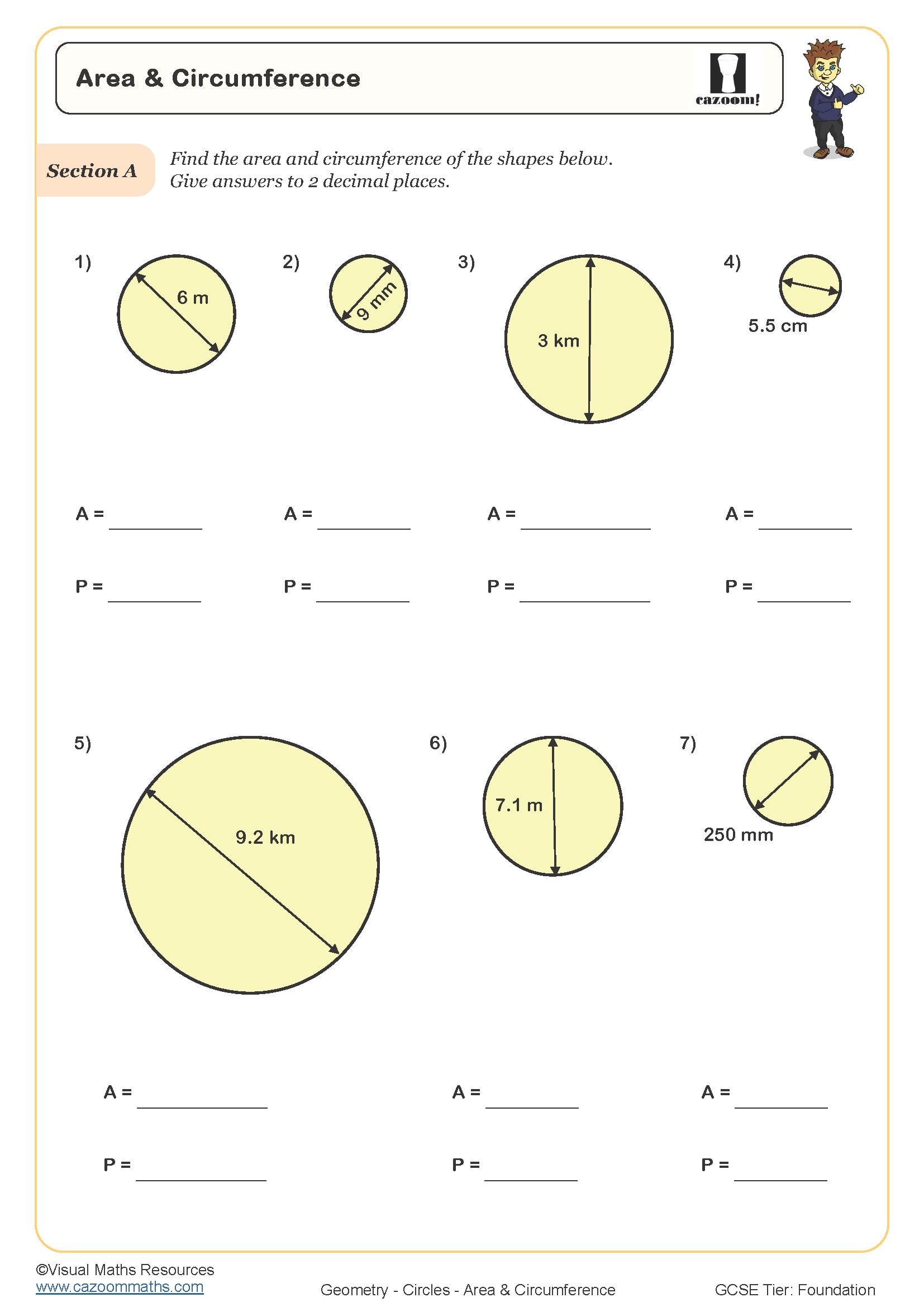
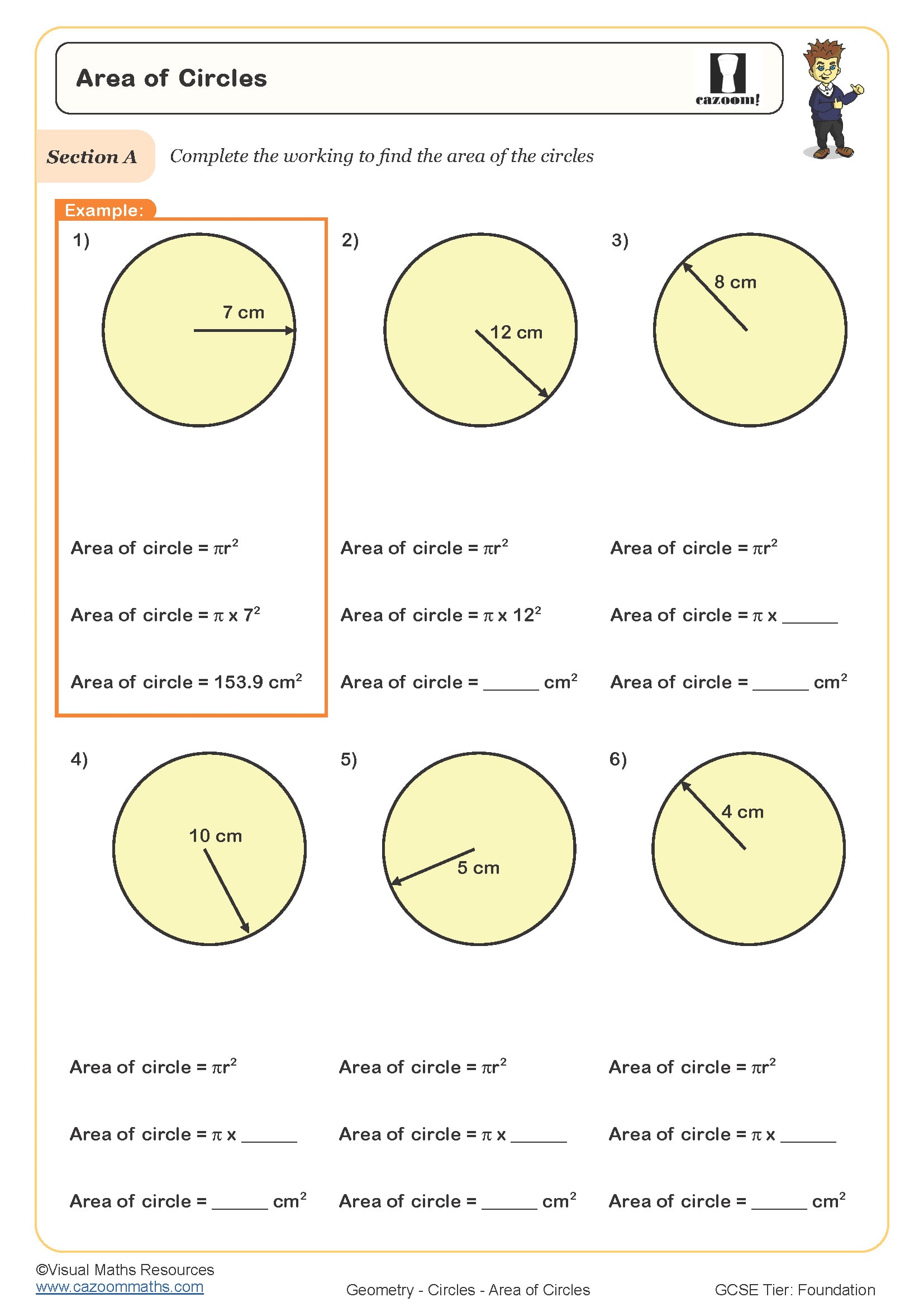
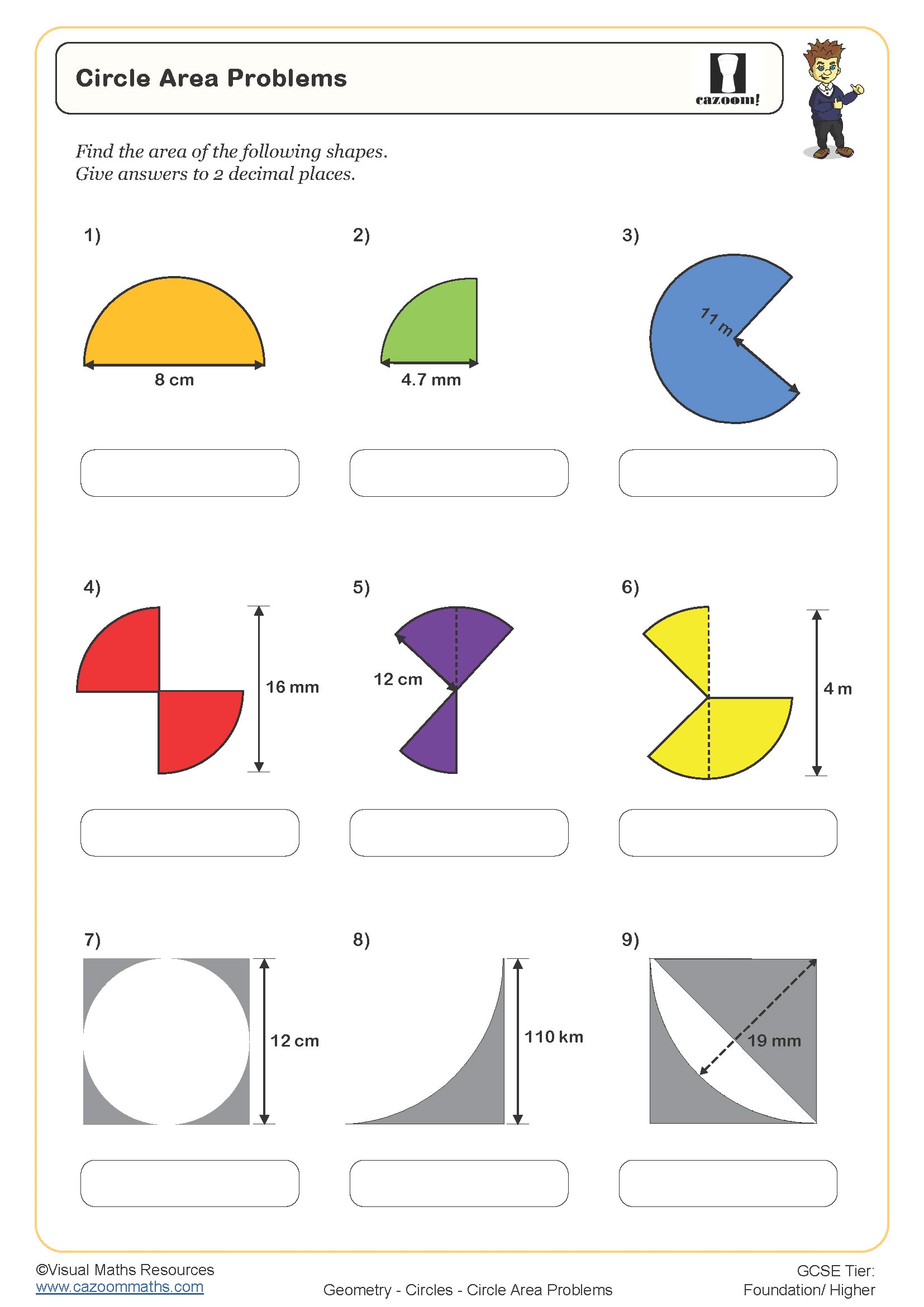
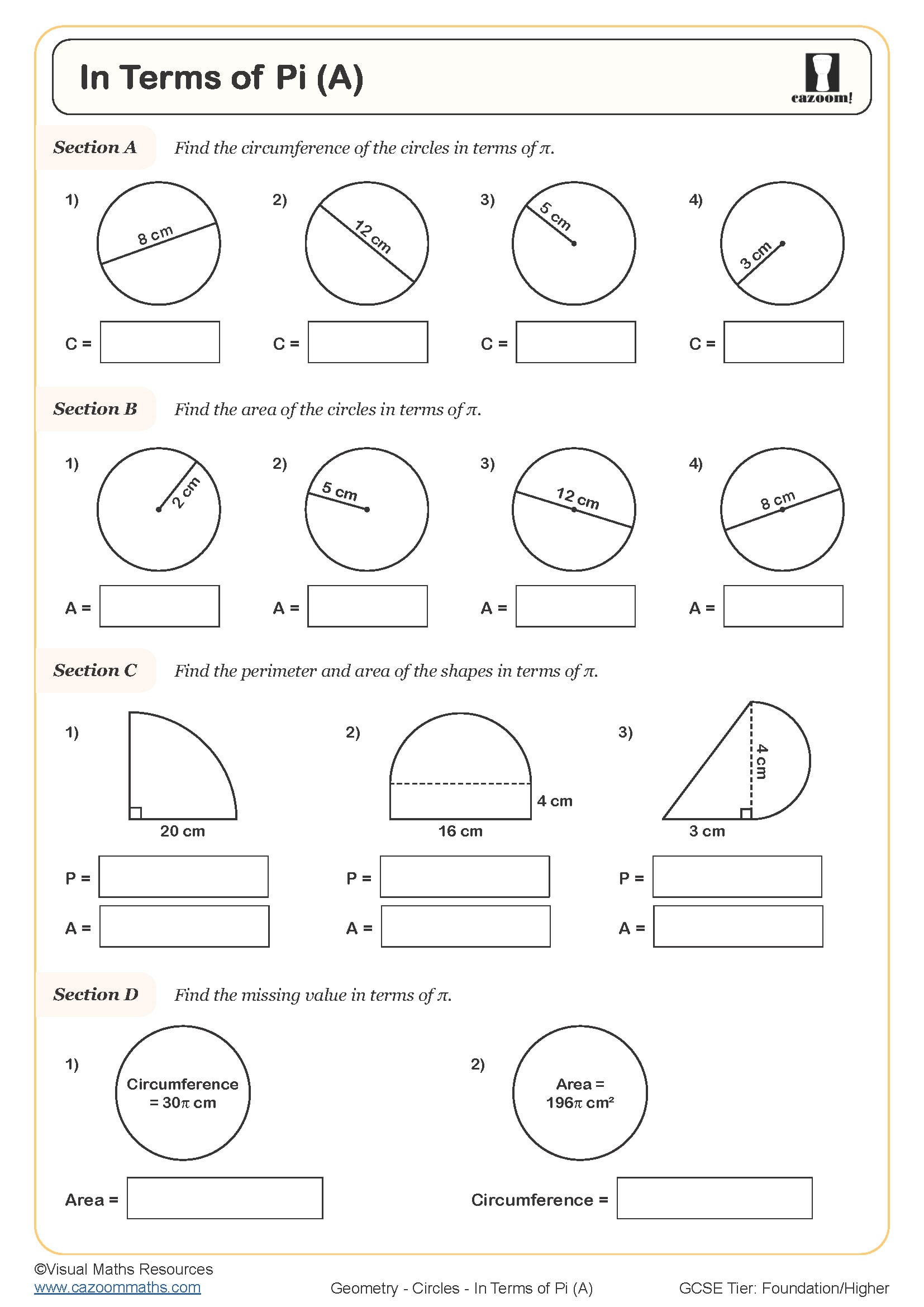
All worksheets are created by the team of experienced teachers at Cazoom Maths.
What shapes are covered in area worksheets?
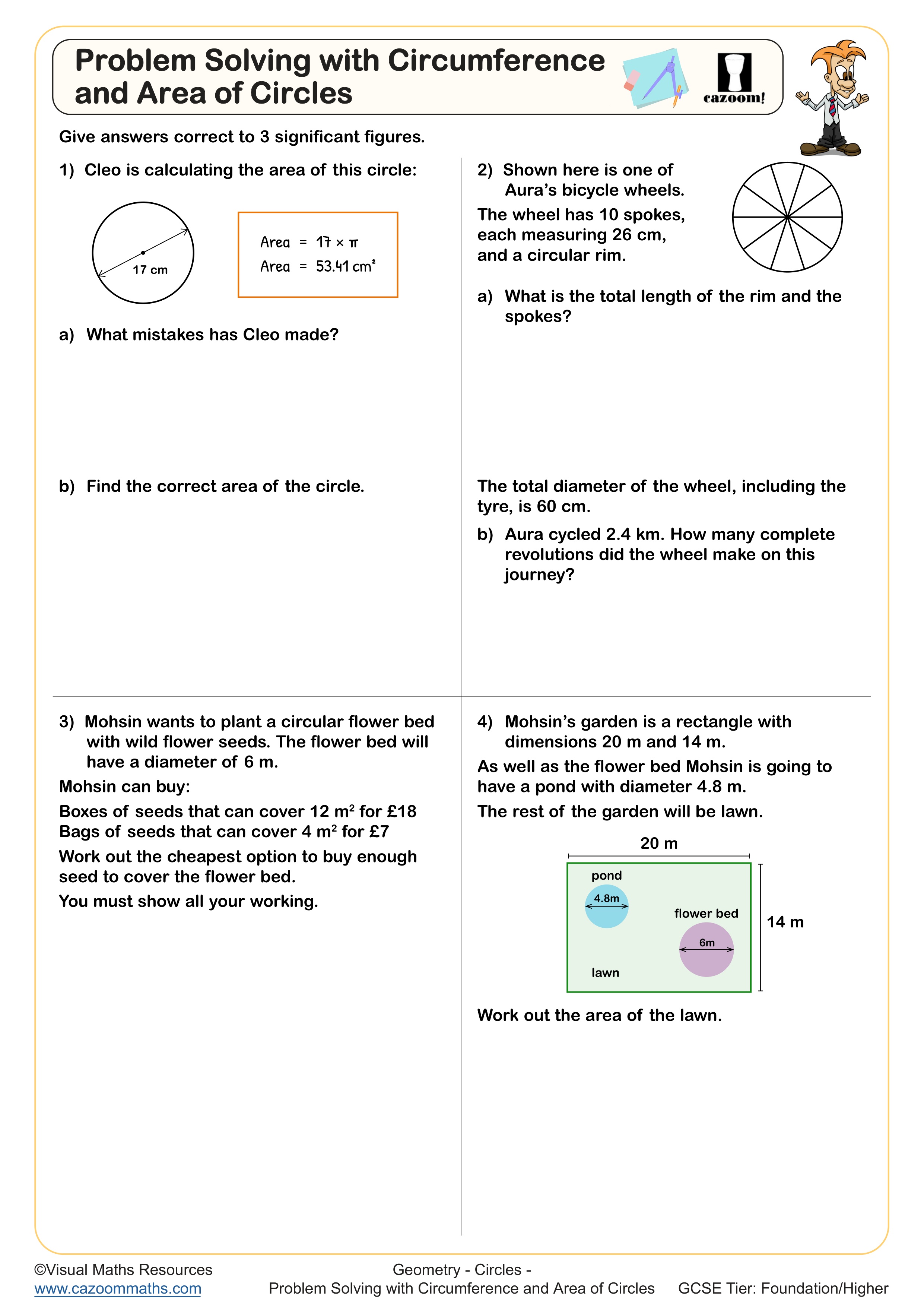
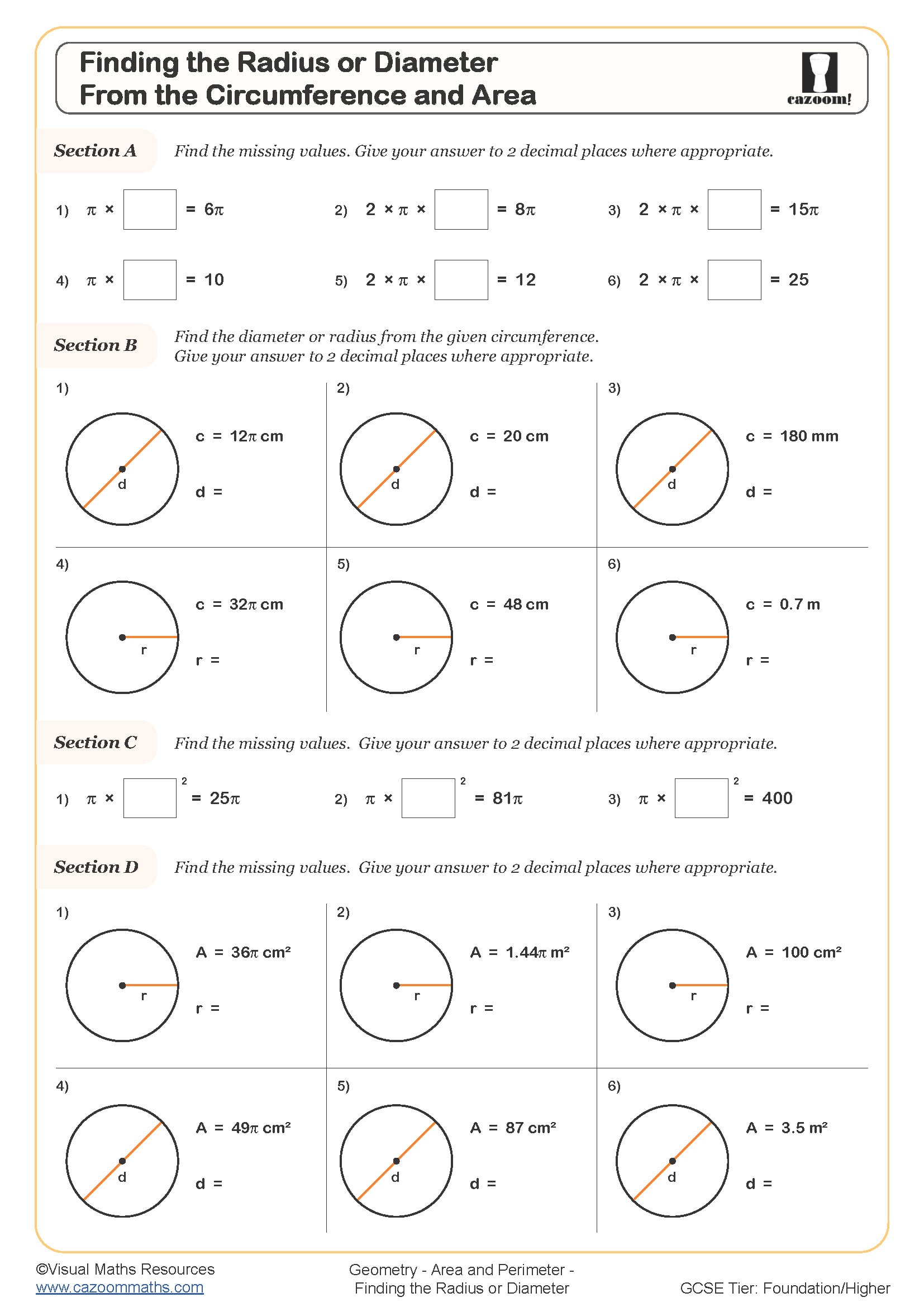
Area worksheets typically progress through rectangles and squares at the foundation level, moving to triangles, parallelograms, and trapeziums in Year 8 and Year 9. By Year 10, students work with compound shapes, circles (including sectors and segments), and surface area calculations for 3D shapes including pyramids and prisms. The National Curriculum requires students to derive and apply formulae for these shapes, linking to algebraic manipulation skills.
A common error occurs when students confuse the base and perpendicular height in parallelograms and triangles. Many students instinctively multiply any two given lengths without checking whether the height is perpendicular to the base. Exam mark schemes consistently penalise this, particularly in non-calculator papers where students can't verify answers by estimation. Worksheets that provide shapes in different orientations help address this misconception effectively.
Which year groups study area in the UK curriculum?
These area worksheets cover Year 8, Year 9, and Year 10, spanning both KS3 and KS4. At KS3, students consolidate area of standard shapes and extend to parallelograms and trapeziums, whilst KS4 builds towards GCSE requirements including circles, compound shapes, and problem-solving involving area. The topic threads through the geometry strand of the National Curriculum, with increasing emphasis on applying formulae in context and working backwards from area to find dimensions.
Progression across these year groups moves from procedural calculation to problem-solving. Year 8 students typically work with straightforward shapes where dimensions are given, whilst Year 9 introduces missing information problems and compound shapes. By Year 10, students encounter exam-style questions requiring multiple steps, such as finding the area of a shaded region or solving equations where area is known but dimensions contain algebraic expressions. This layered approach mirrors the demand of foundation and higher tier GCSE papers.
How do you calculate the area of a parallelogram?
The area of a parallelogram is calculated using the formula area = base × perpendicular height. The crucial aspect is that the height must be measured perpendicular to the base, not along the slanted side. Students often receive a parallelogram with both the slant height and perpendicular height marked, and identifying which measurement to use determines whether they answer correctly. This concept links directly to understanding perpendicular lines, a key geometry skill developed throughout KS3.
Parallelogram area calculations appear frequently in architectural and engineering contexts, particularly in structural design. Roof trusses, bridge supports, and mechanical linkages often contain parallelogram components where engineers must calculate load-bearing surface areas. In manufacturing, parallelogram-shaped panels for solar arrays require precise area calculations to determine energy output. These real-world applications demonstrate why understanding the perpendicular height matters—using the wrong dimension leads to incorrect material quantities and structural failures.
How can teachers use these area worksheets in lessons?
The worksheets provide structured practise with varied question styles, allowing students to build fluency with area formulae before progressing to problem-solving. Many teachers use them after introducing a new shape, with the answer sheets enabling students to self-check their understanding during independent work. The progression within each worksheet typically moves from straightforward calculations to questions requiring multiple steps or algebraic manipulation, mirroring the demand seen in assessment.
These resources work particularly well for intervention sessions where students need targeted practise on specific shapes, or as homework following a teaching sequence. Teachers often assign different sections to mixed-attainment groups, with some students focusing on consolidating basic formulae whilst others tackle compound shapes or equations involving area. The worksheets also support revision before assessments, allowing students to identify which area calculations they're secure with and which require further practise. Paired work using the answer sheets encourages mathematical discussion when students compare methods.