Area and Circumference of Circles, Sectors, and Segments Worksheets
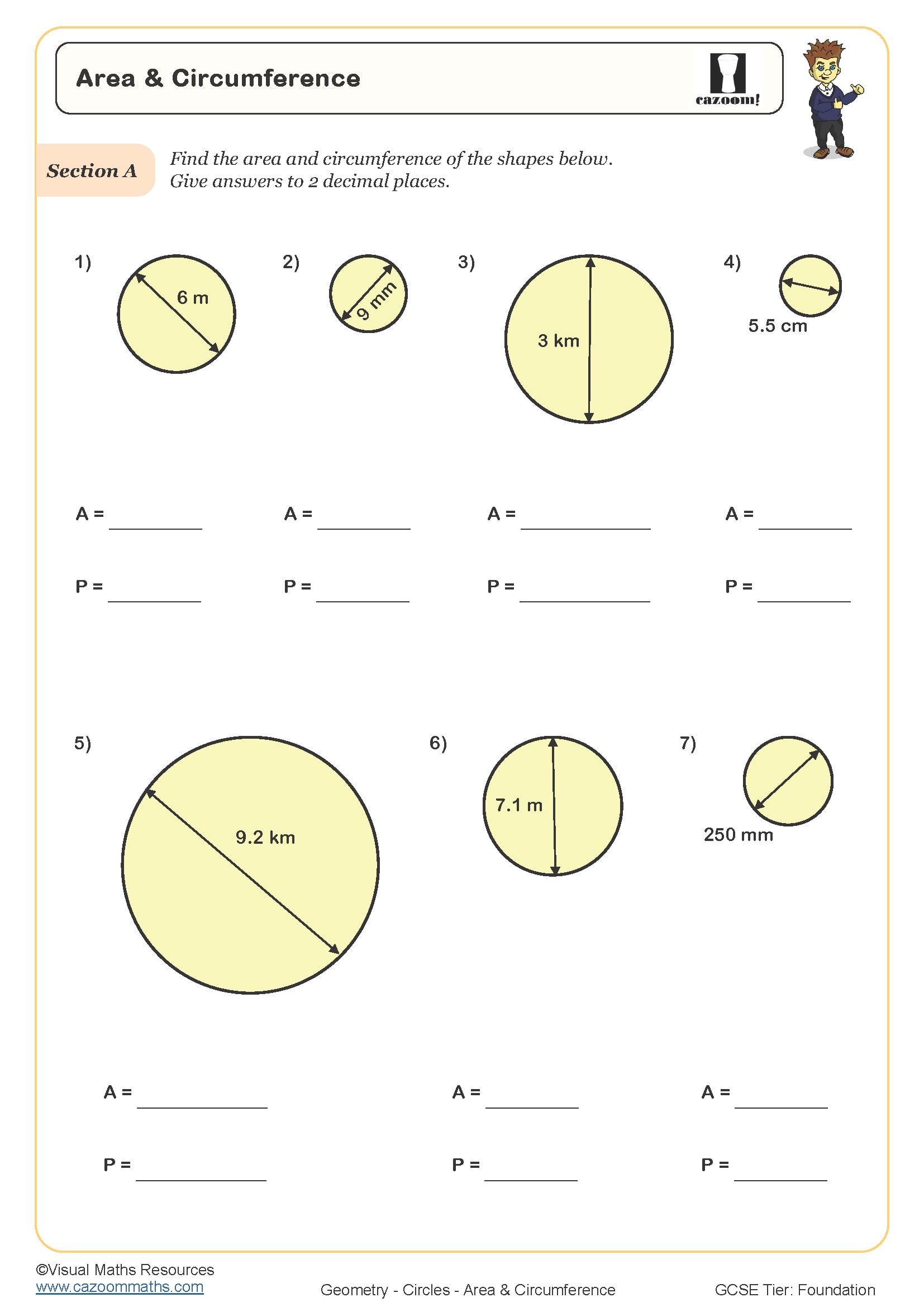
Area and Circumference
Year groups: 8, 9
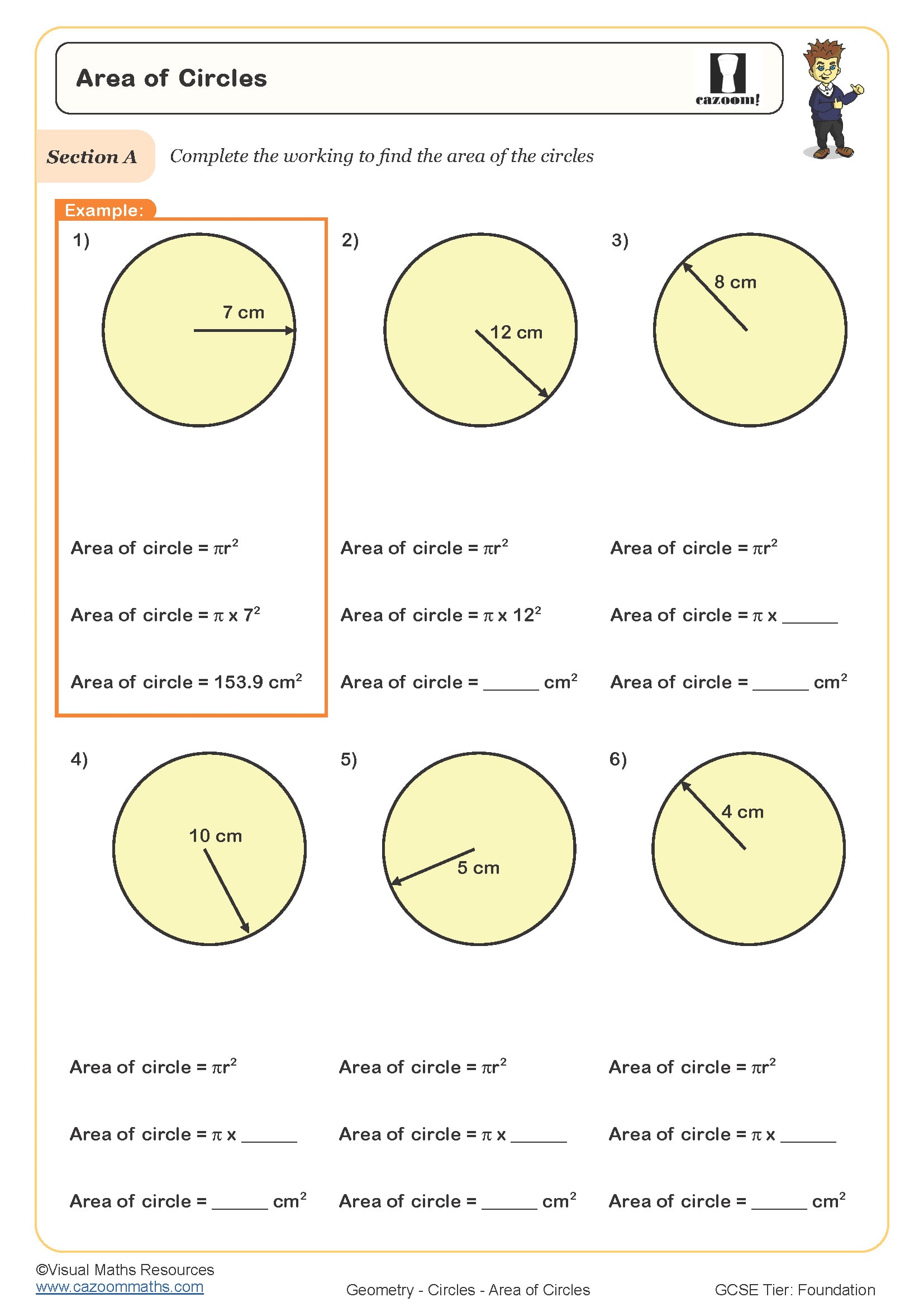
Area of Circles
Year groups: 8, 9
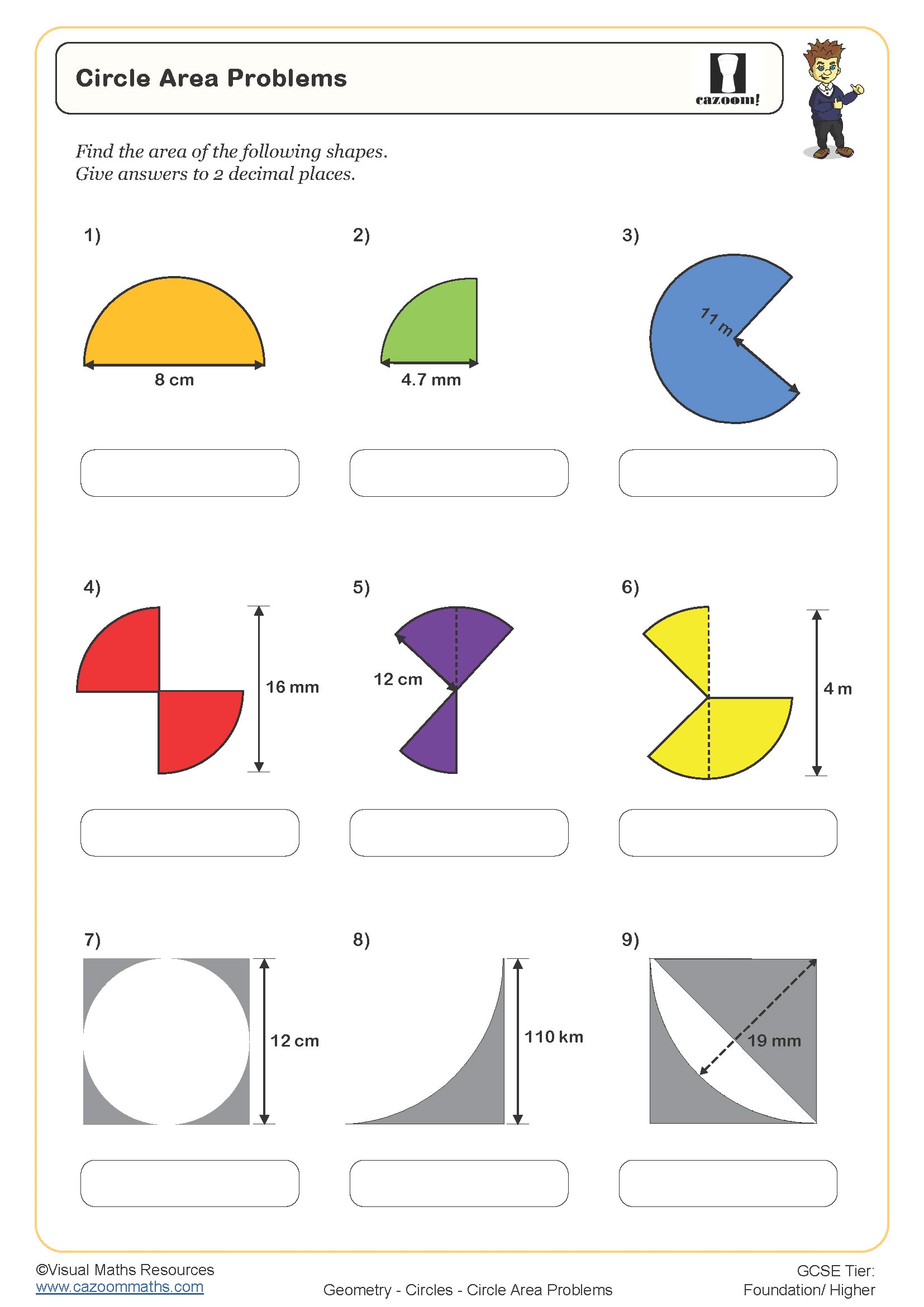
Circle Area Problems
Year groups: 8, 9
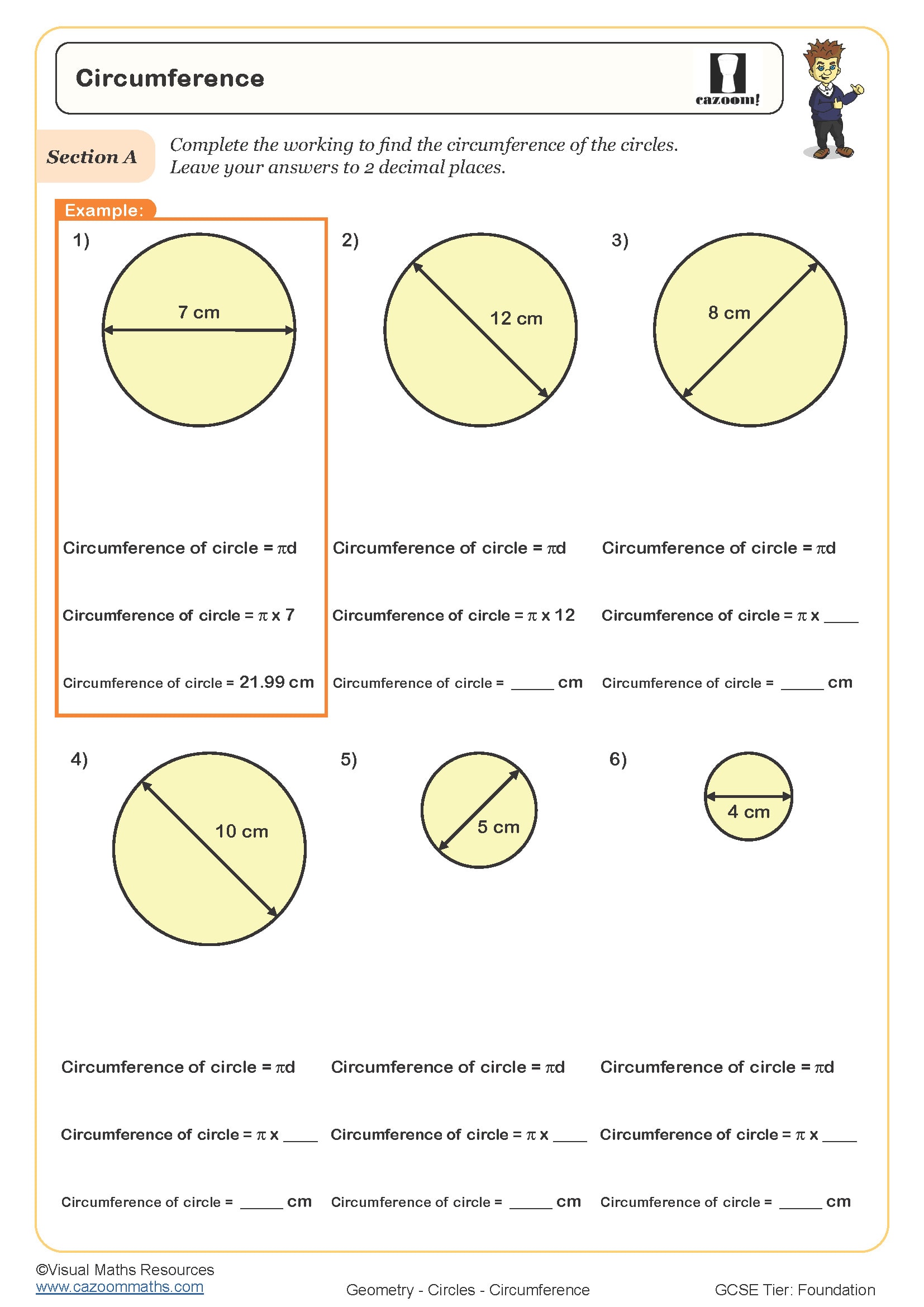
Circumference
Year groups: 8, 9
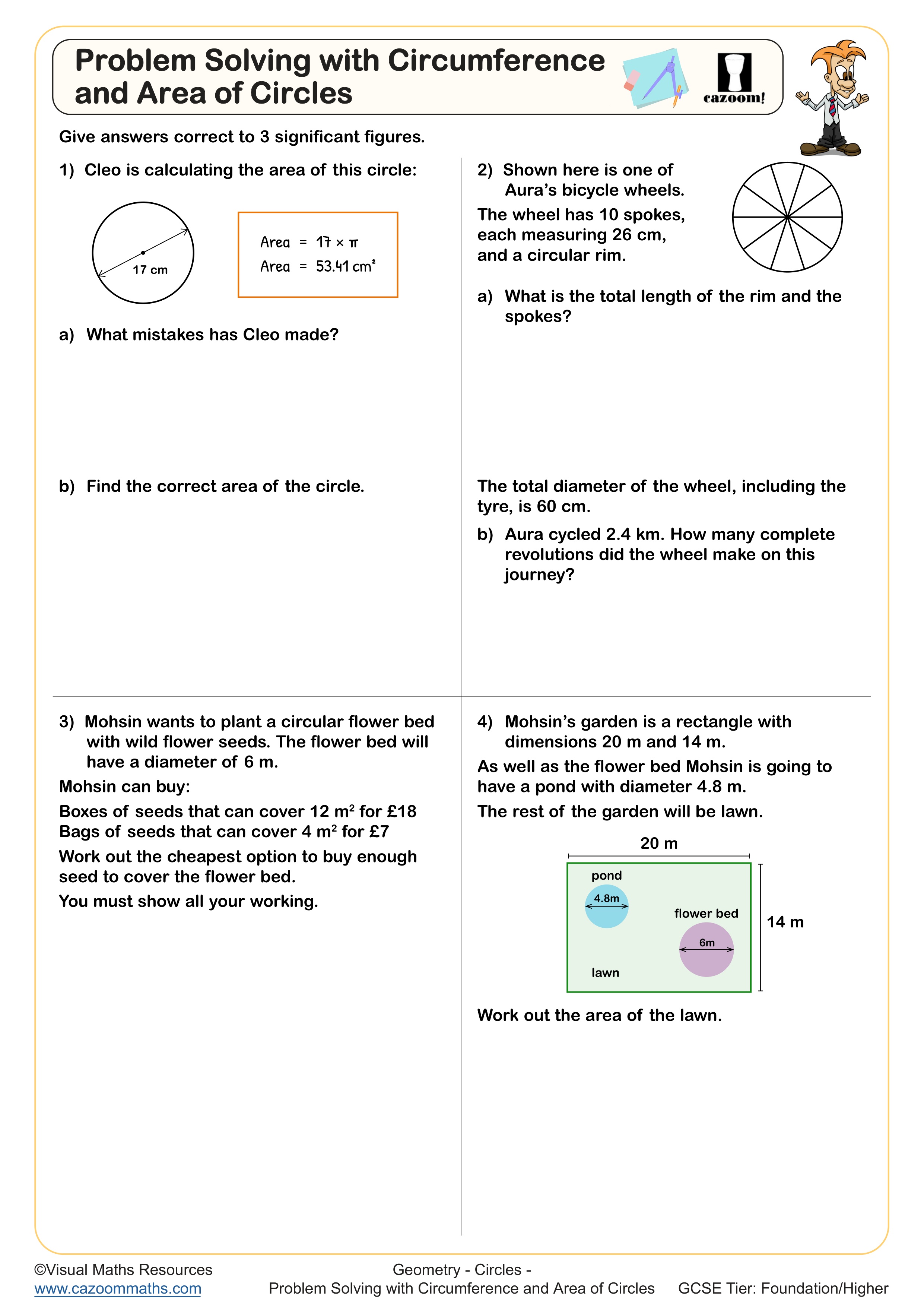
Problem Solving with Circumference and Area of Circle
Year groups: 8, 9
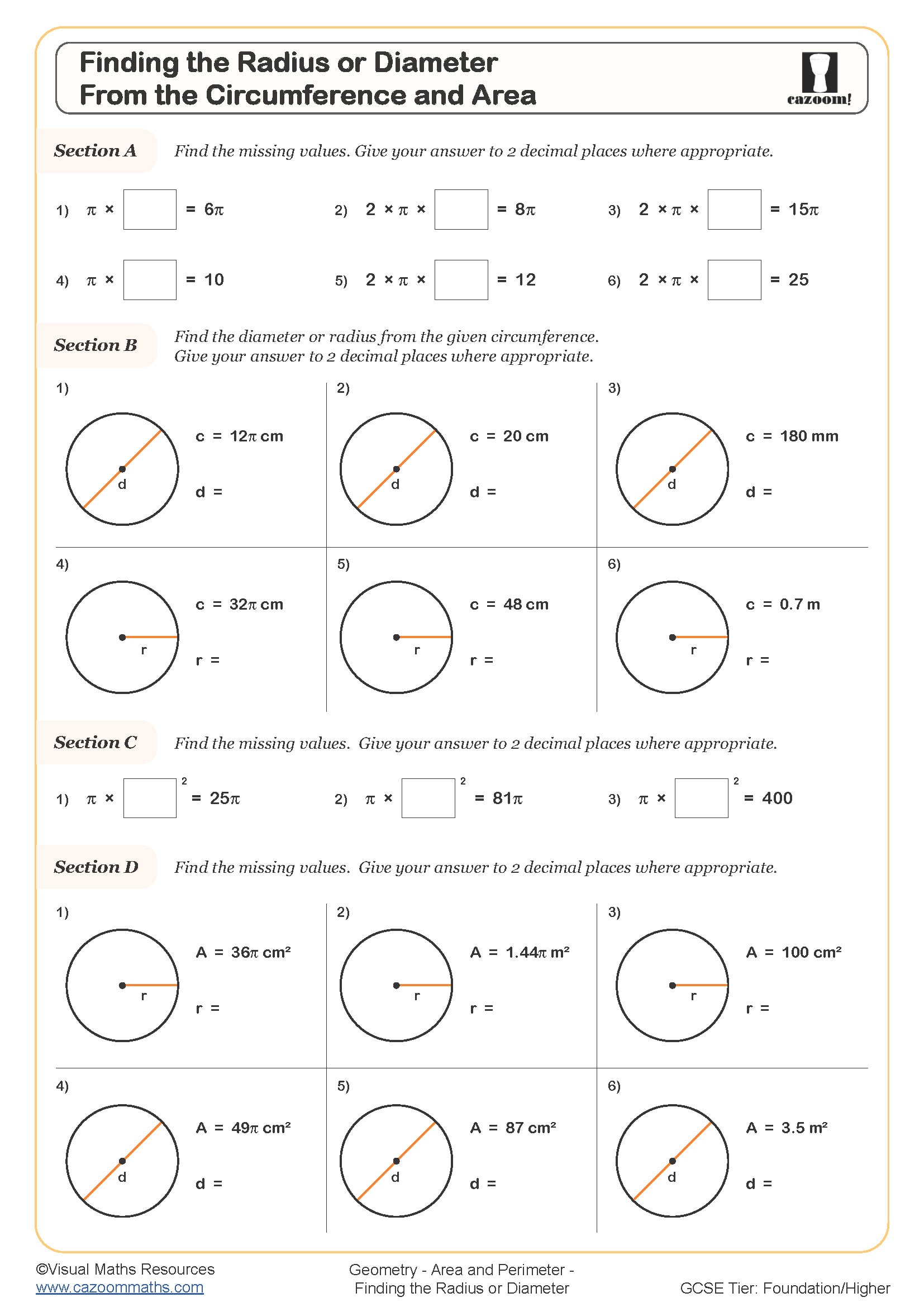
Finding the Radius or Diameter from the Circumference and Area
Year groups: 9, 10
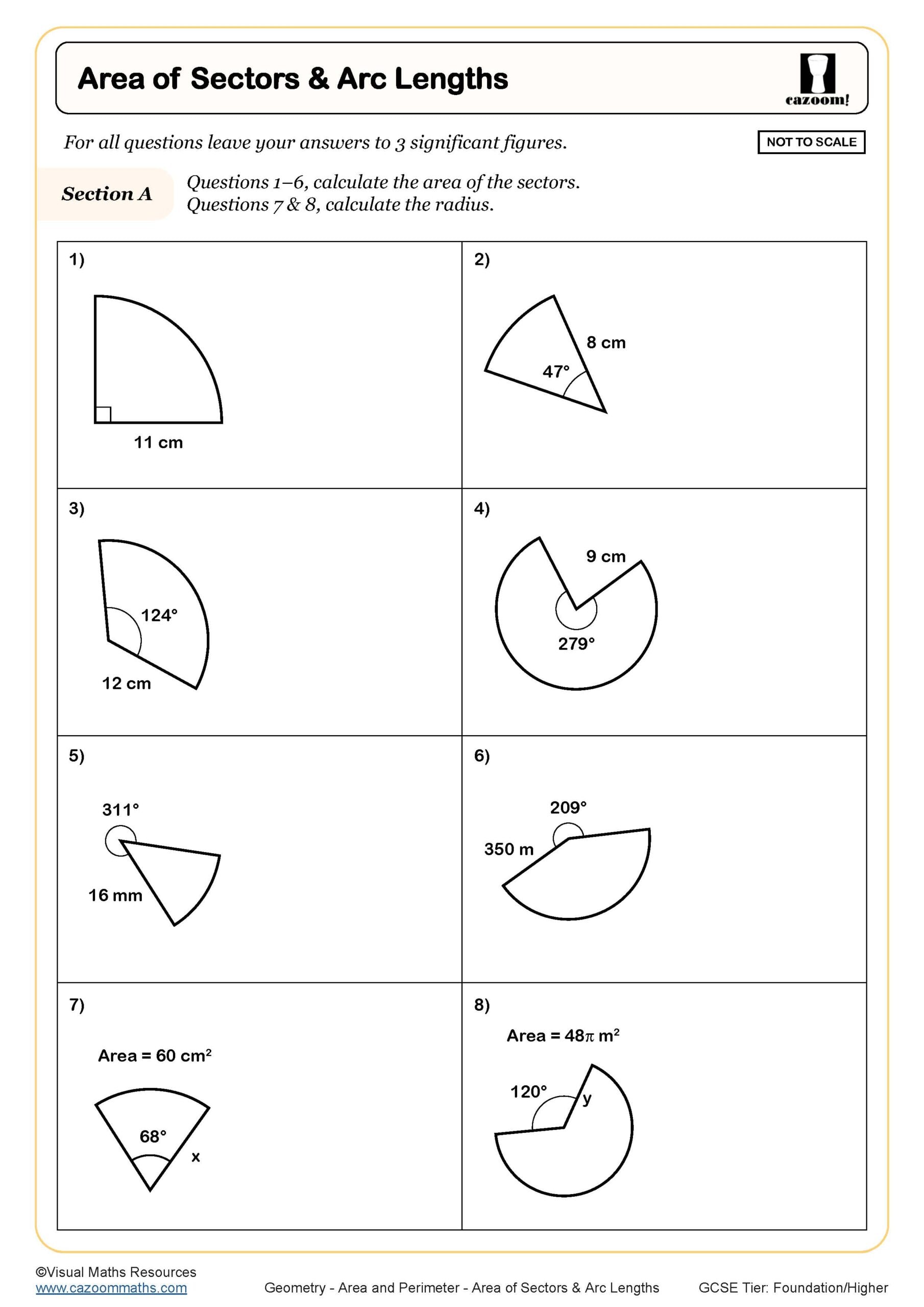
Area of Sectors and Arc Lengths
Year groups: 10, 11
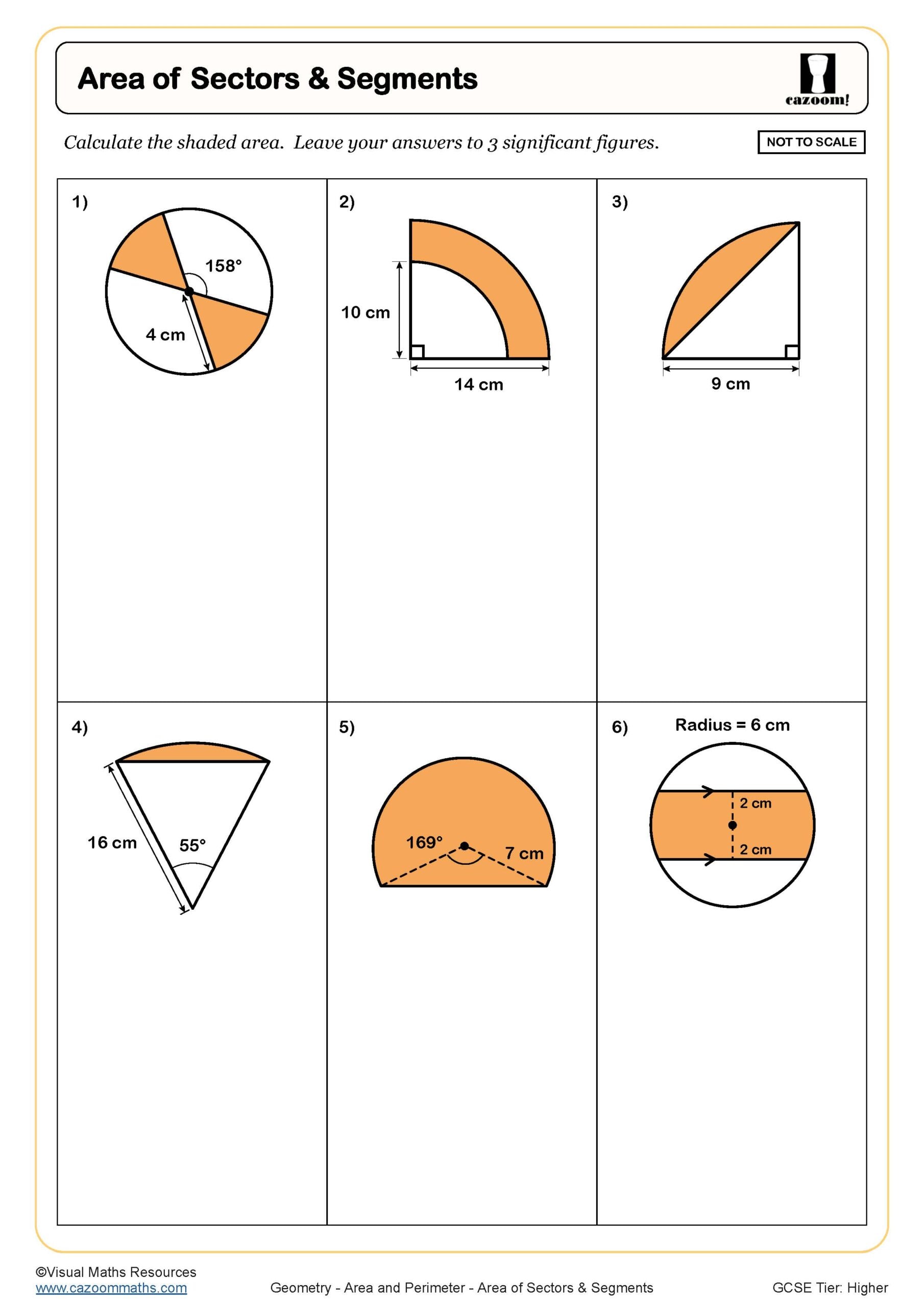
Area of Sectors and Segments
Year groups: 10, 11
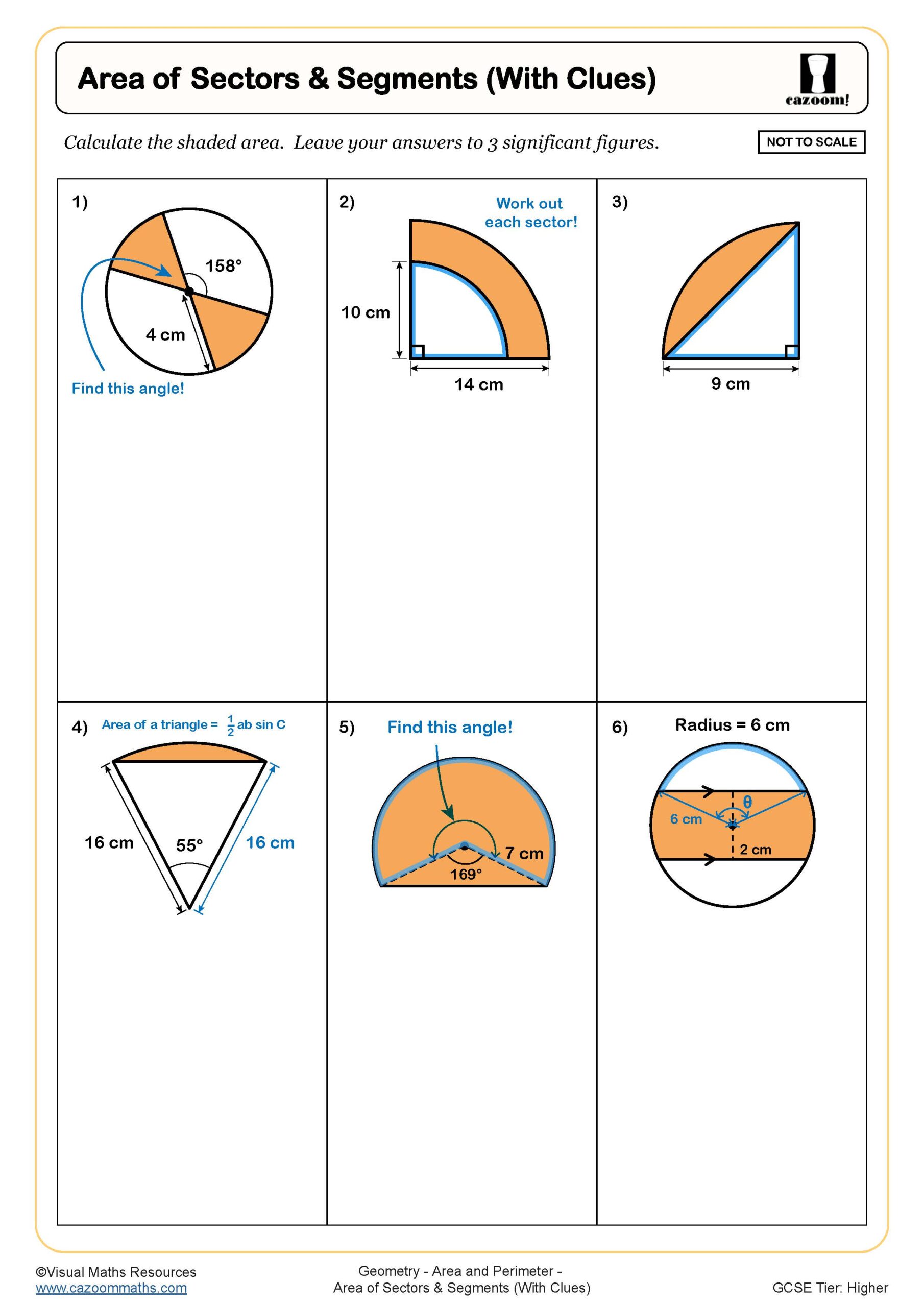
Area of Sectors and Segments (With Clues)
Year groups: 10, 11
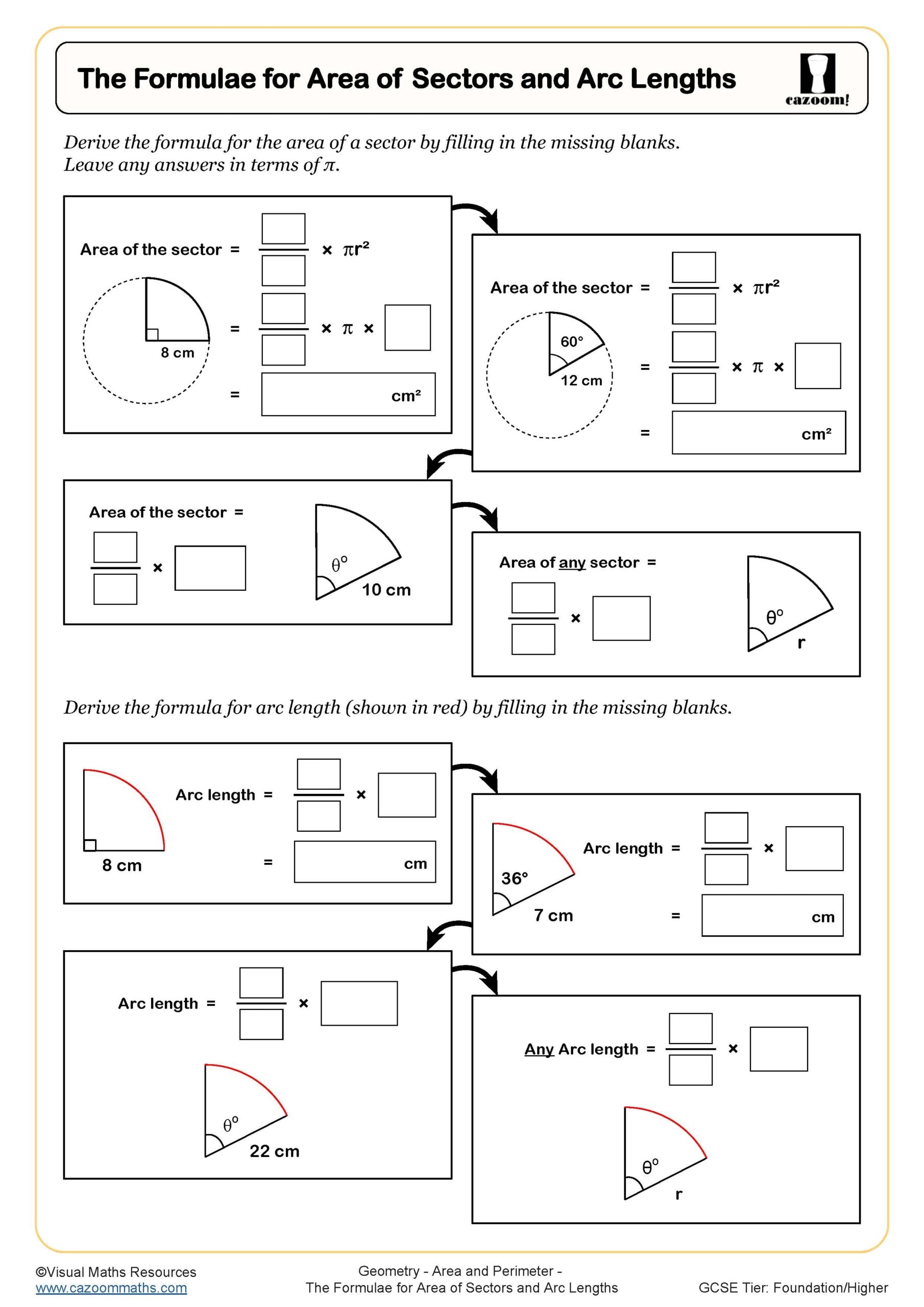
The Formulae for Area of Sectors and Arc Lengths
Year groups: 10, 11
All worksheets are created by the team of experienced teachers at Cazoom Maths.
What is the difference between a sector and a segment of a circle?
A sector is the region bounded by two radii and an arc, resembling a pizza slice, whilst a segment is the region bounded by a chord and an arc. This distinction matters because the formulas differ: sectors use the fraction of the circle multiplied by the full area or circumference, whereas segments require subtracting a triangle area from the sector area. Students at KS3 and KS4 typically start with sectors before progressing to segments.
Teachers frequently notice students attempting to calculate segment area without first finding the sector, or forgetting that the triangle within must be subtracted. Exam questions often give the angle at the centre and radius, expecting students to work methodically through sector area, triangle area using ½r²sinθ, then subtract. Worksheets that scaffold these steps separately before combining them help students avoid this common error pattern.
Which year groups study area and circumference of circles?
These worksheets cover Year 8, Year 9, Year 10, and Year 11, spanning both Key Stage 3 and Key Stage 4. At KS3, students begin with basic circumference and area formulas for whole circles, learning to work confidently with π in both exact and decimal forms. By Year 9, most students tackle compound shapes that incorporate circular sections alongside rectangles and triangles, developing their problem-solving strategies.
At KS4, the focus shifts towards sectors and segments with more demanding multi-step problems. Year 10 and Year 11 students encounter these shapes within GCSE contexts, often combined with other topics such as trigonometry or Pythagoras' theorem. The progression builds from straightforward substitution into formulas towards questions requiring students to work backwards from a given area to find radius, or to calculate arc lengths and perimeters of compound shapes involving both straight and curved boundaries.
How do you calculate the area of a segment?
To find segment area, students must first calculate the sector area using (θ/360) × πr² for angles in degrees, or ½r²θ for radians at A-Level. Next, they calculate the triangle area formed by the two radii and the chord, typically using ½r²sinθ. The segment area is then the sector area minus the triangle area. This two-stage process requires careful organisation, and students often lose marks by calculating only one component or making sign errors when subtracting.
Segment calculations appear in numerous engineering and design contexts. Architects use segment areas when designing arched windows or curved structural elements where material quantities must be precise. Manufacturing processes involving circular cuts or curved panels require accurate segment measurements for waste calculation and cost estimation. Understanding these calculations connects classroom geometry to industries where precision in curved surfaces directly affects both functionality and budget, particularly in aerospace and automotive design.
How do these worksheets help students practise circle calculations?
The worksheets provide structured practice that builds from straightforward formula application through to multi-step problem-solving. Each worksheet includes questions that require students to identify which formula applies, substitute values correctly, and work with both exact answers involving π and rounded decimals. Answer sheets show full working, allowing students to identify where their method diverges from the correct approach, which proves particularly valuable when self-marking or working through misconceptions independently.
Many teachers use these resources for differentiated homework, selecting sheets that match individual student needs following classwork. They work well for intervention sessions where small groups tackle similar difficulties, such as confusing diameter with radius or mixing up sector and segment formulas. During revision periods before assessments, students can work through progressively harder sheets to build confidence across all circle-related topics. The worksheets also support paired work effectively, with one student solving whilst their partner checks against the answer sheet, then swapping roles for the next question.