Area and Perimeter of Compound Shapes Worksheets
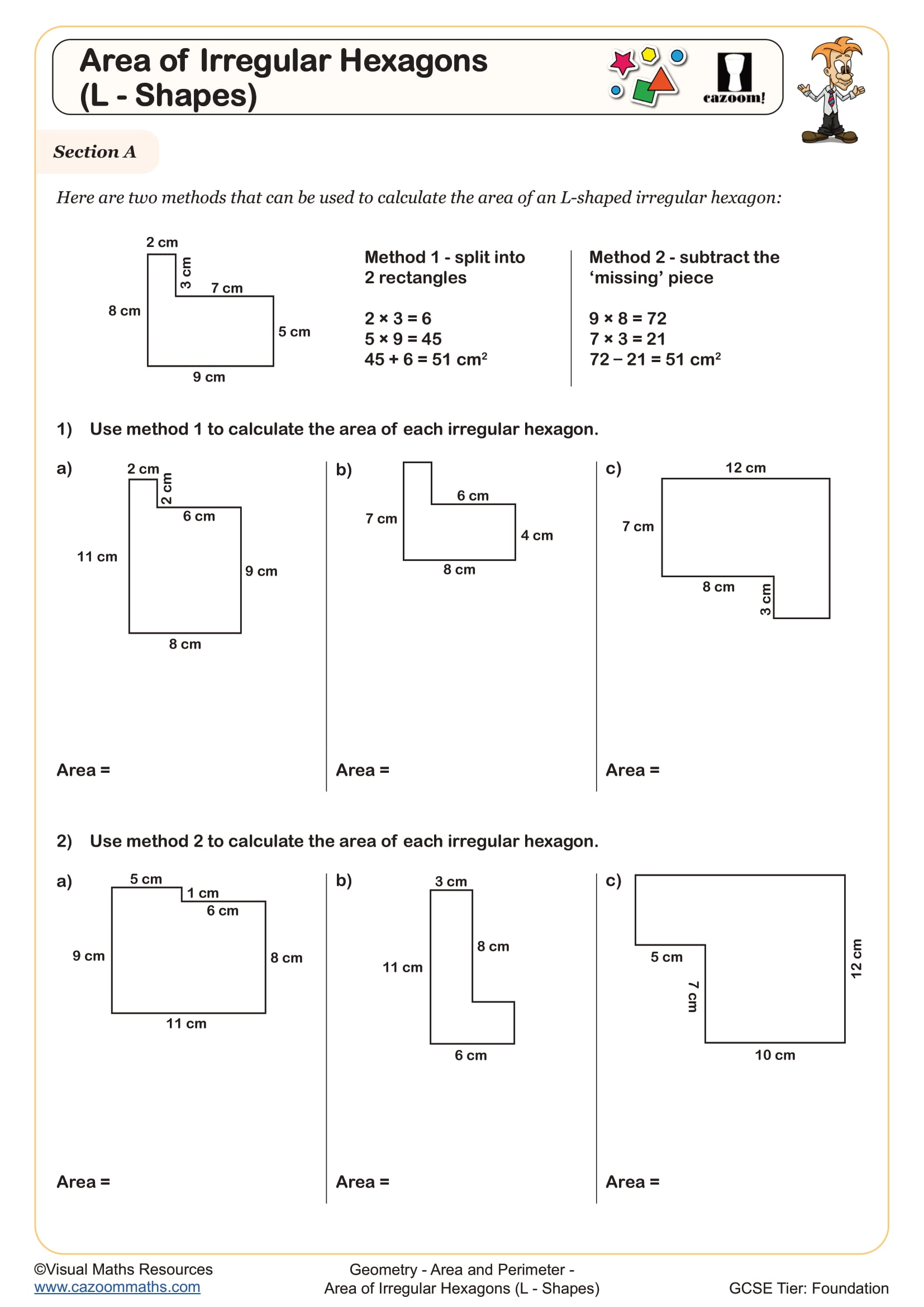
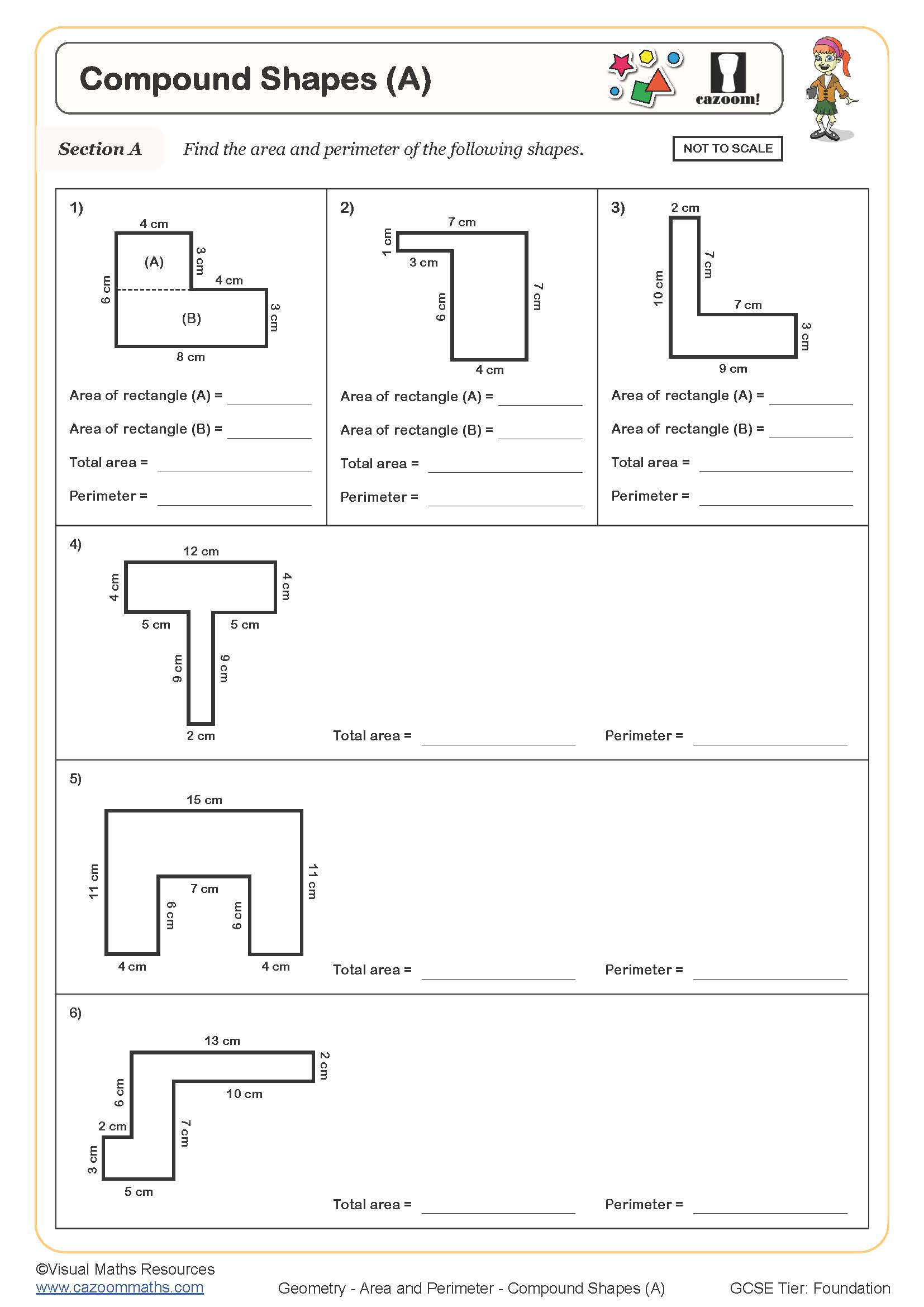
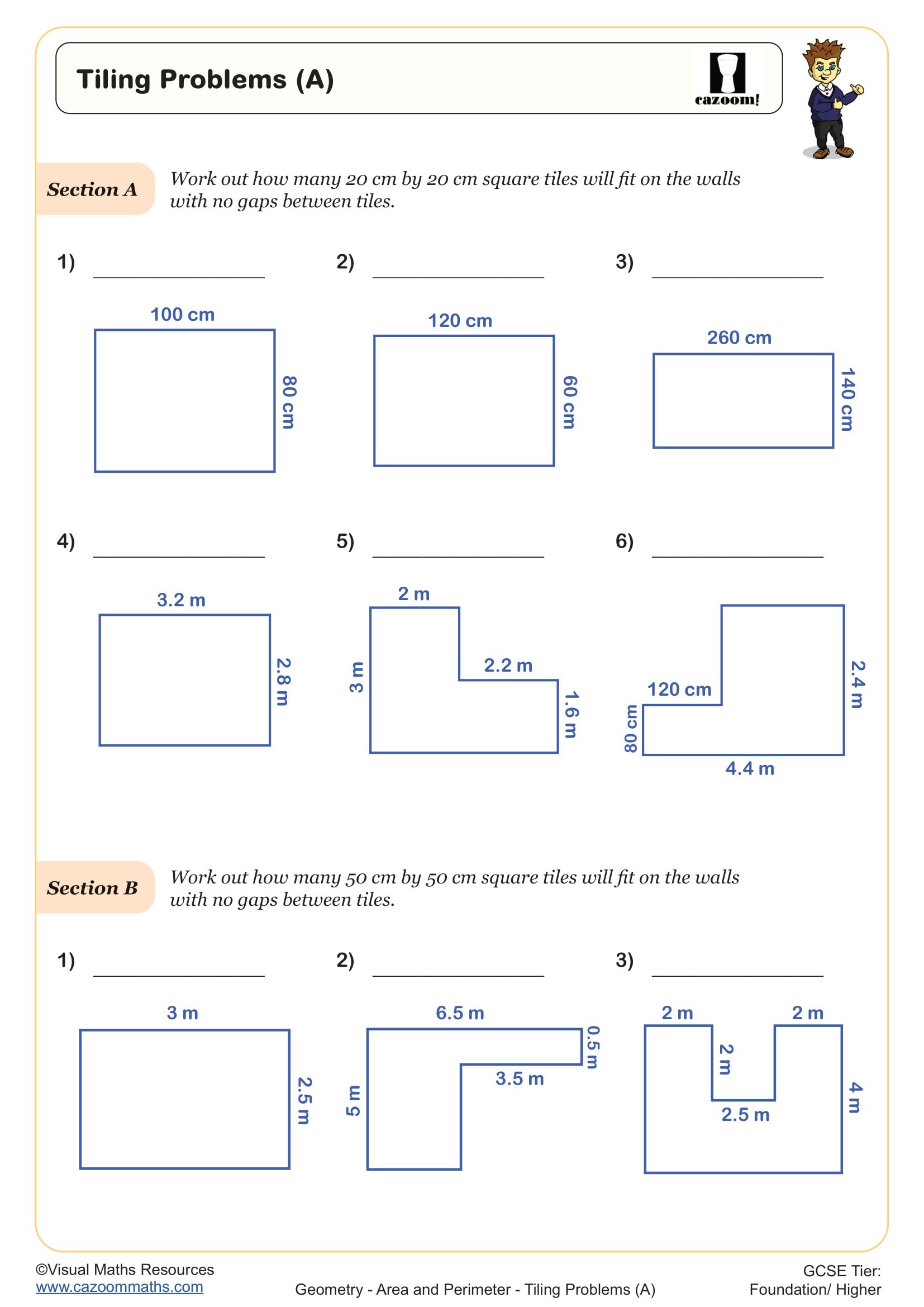
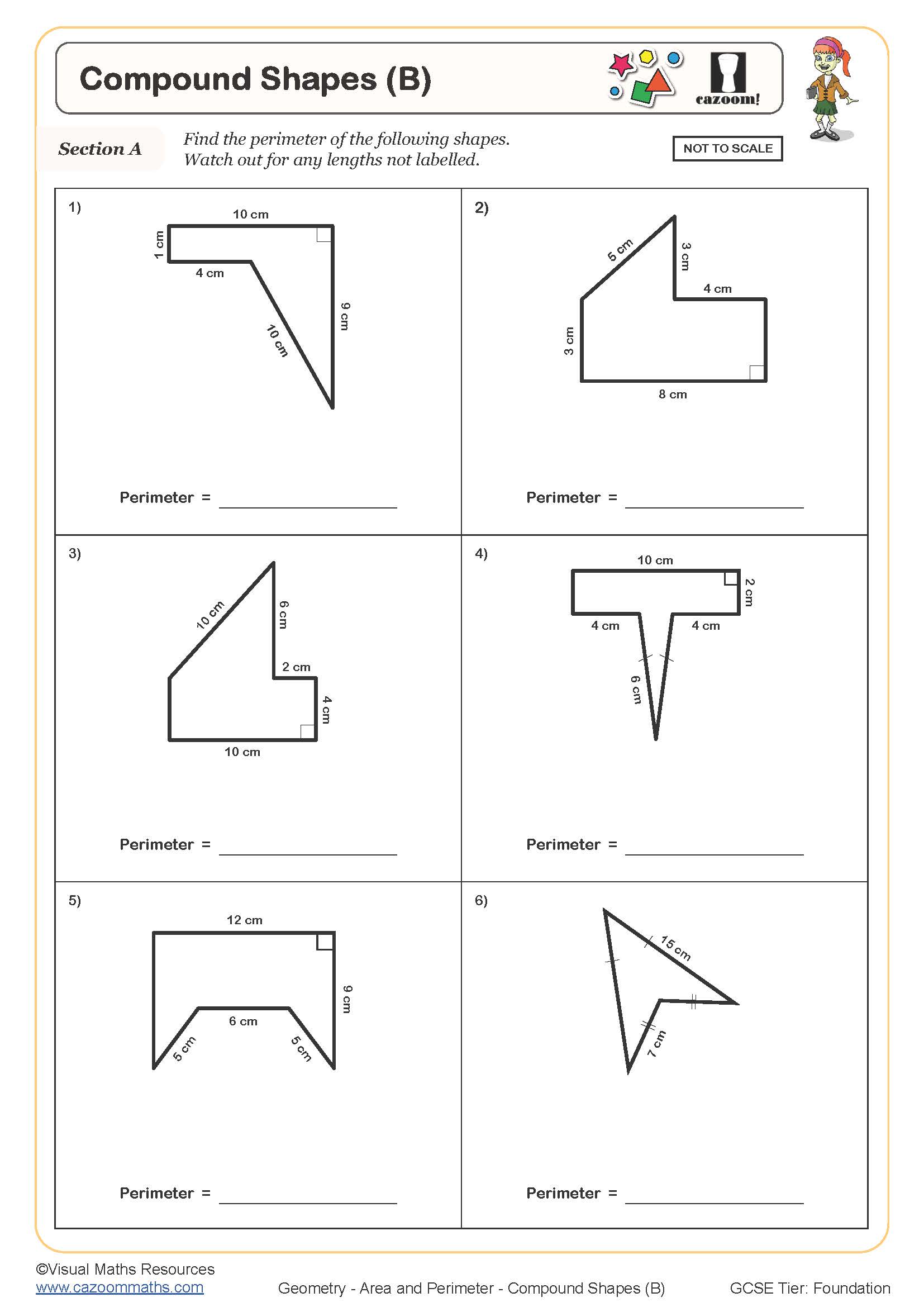
All worksheets are created by the team of experienced teachers at Cazoom Maths.
What are compound shapes in maths?
Compound shapes (sometimes called composite shapes) are two-dimensional figures made by combining two or more basic geometric shapes such as rectangles, triangles, semicircles, or trapeziums. In the National Curriculum, students encounter these from Year 7 onwards, where they apply their knowledge of individual shape formulae to more complex problems that mirror real-world scenarios like floor plans or construction diagrams.
A common error occurs when students count the same length twice or miss internal boundaries entirely when calculating perimeter. For example, when an L-shaped figure is drawn, students often forget that the perimeter includes the internal corner edges, not just the outer boundary. Teachers observe this particularly when shapes are oriented at angles rather than aligned to a grid, as students lose track of which measurements contribute to the outer edge.
Which year groups study area and perimeter of compound shapes?
These worksheets cover Year 7, Year 8, Year 9, Year 10, and Year 11, spanning both Key Stage 3 and Key Stage 4. The topic first appears in Year 7 when students extend their primary school knowledge of simple shapes to more complex configurations, typically starting with rectilinear (right-angled) compound shapes before progressing to those involving triangles and curves.
Progression becomes more demanding as students advance through secondary school. Year 7 and 8 work focuses on shapes with clearly labelled dimensions, whilst Year 9 introduces problems requiring algebraic expressions or missing lengths calculated through subtraction. By Years 10 and 11, GCSE questions expect students to work with circles, sectors, and shapes on coordinate grids, often combining area and perimeter calculations with ratio, reverse percentages, or problem-solving contexts worth multiple marks.
How do you calculate the area of a compound shape?
The standard approach involves partitioning the compound shape into recognisable components (rectangles, triangles, parallelograms, circles, or trapeziums), calculating each area separately using the appropriate formula, then adding or subtracting these values depending on whether sections overlap or create holes. Students must first identify all necessary dimensions, sometimes using subtraction to find unlabelled lengths before applying formulae. Mark schemes reward clear working that shows the partition strategy and individual calculations.
This skill directly applies to construction, interior design, and landscape architecture, where professionals calculate material quantities for irregularly shaped spaces. For instance, determining how much carpet fits an L-shaped room or calculating grass seed needed for a garden with a rectangular lawn and semicircular flower bed requires exactly this compound shape reasoning. Understanding these calculations also underpins more advanced STEM work in engineering drawings and architectural plans where complex floor areas determine heating requirements or structural loads.
How can teachers use these compound shapes worksheets effectively?
The worksheets build systematically from straightforward rectilinear shapes through to multi-step problems involving circles and missing dimensions. Each resource provides varied question types that encourage students to identify their own partition strategies rather than following a single method, developing the flexible thinking that GCSE problem-solving questions demand. Answer sheets allow students to self-check their working, making these resources valuable for identifying whether errors stem from incorrect partitioning, formula misapplication, or arithmetic mistakes.
Many teachers use these worksheets for targeted intervention with students who struggle to visualise how shapes divide, starting with physically cutting out shapes before moving to abstract diagrams. They work well as homework following initial teaching, as starter activities to refresh prior learning, or during revision sessions where students practise increasingly difficult variations. Paired work proves particularly effective, with students explaining their partition choices to each other, as verbalising the strategy often highlights misconceptions about which lengths to use or how sections connect.