Area of Quadrilaterals Worksheets
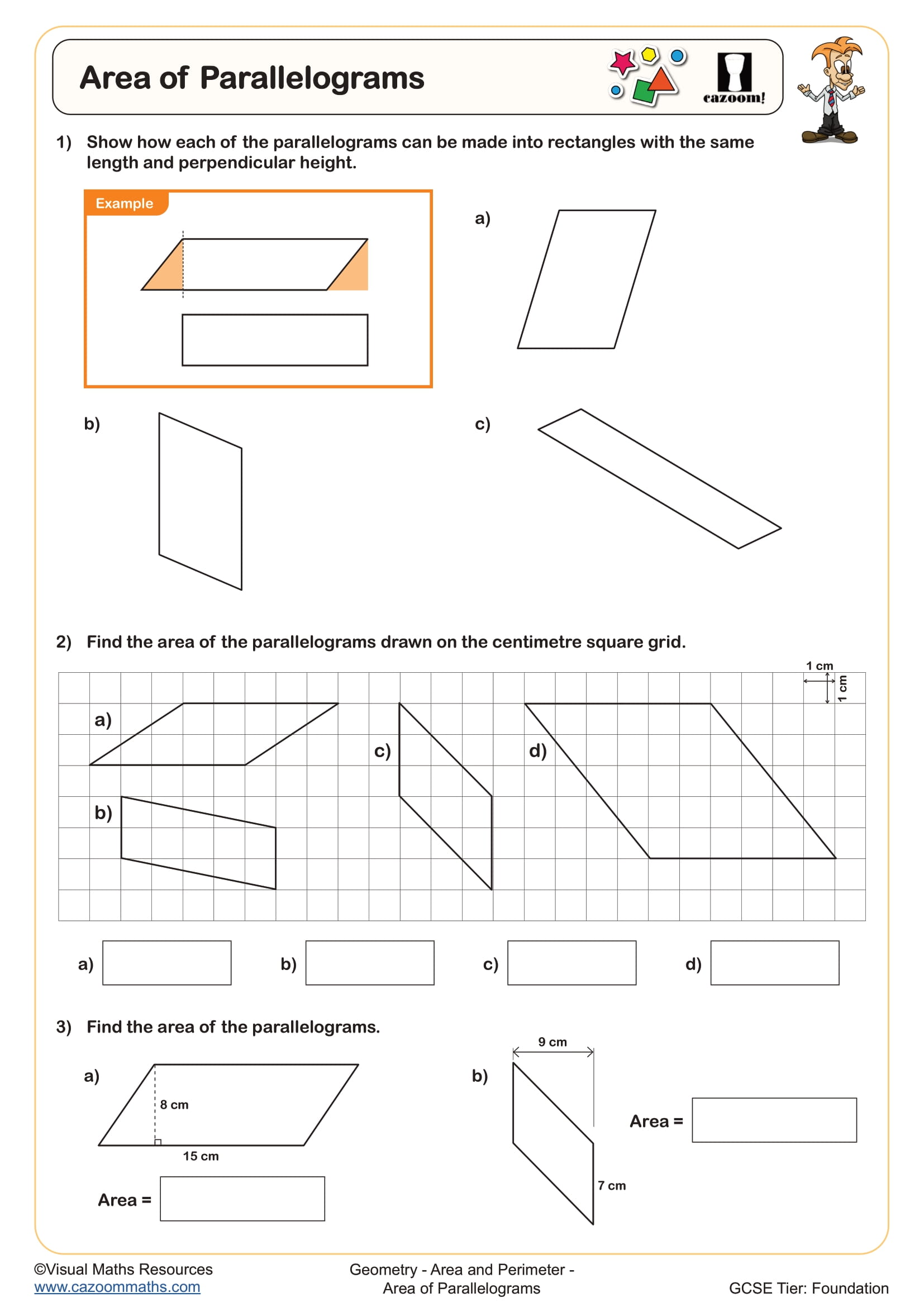
Area of Parallelograms
Year groups: 7, 8
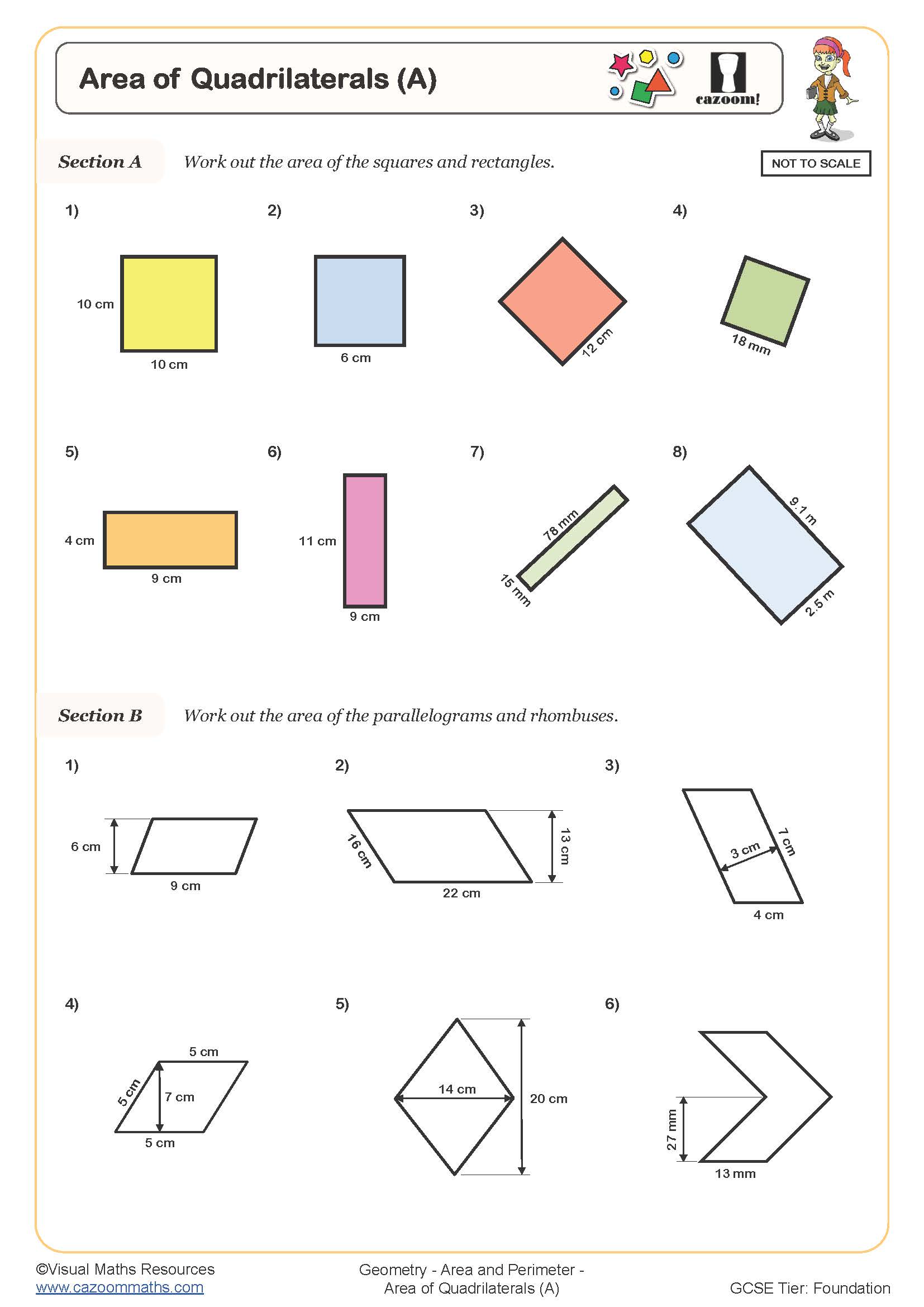
Area of Quadrilaterals (A)
Year groups: 7, 8
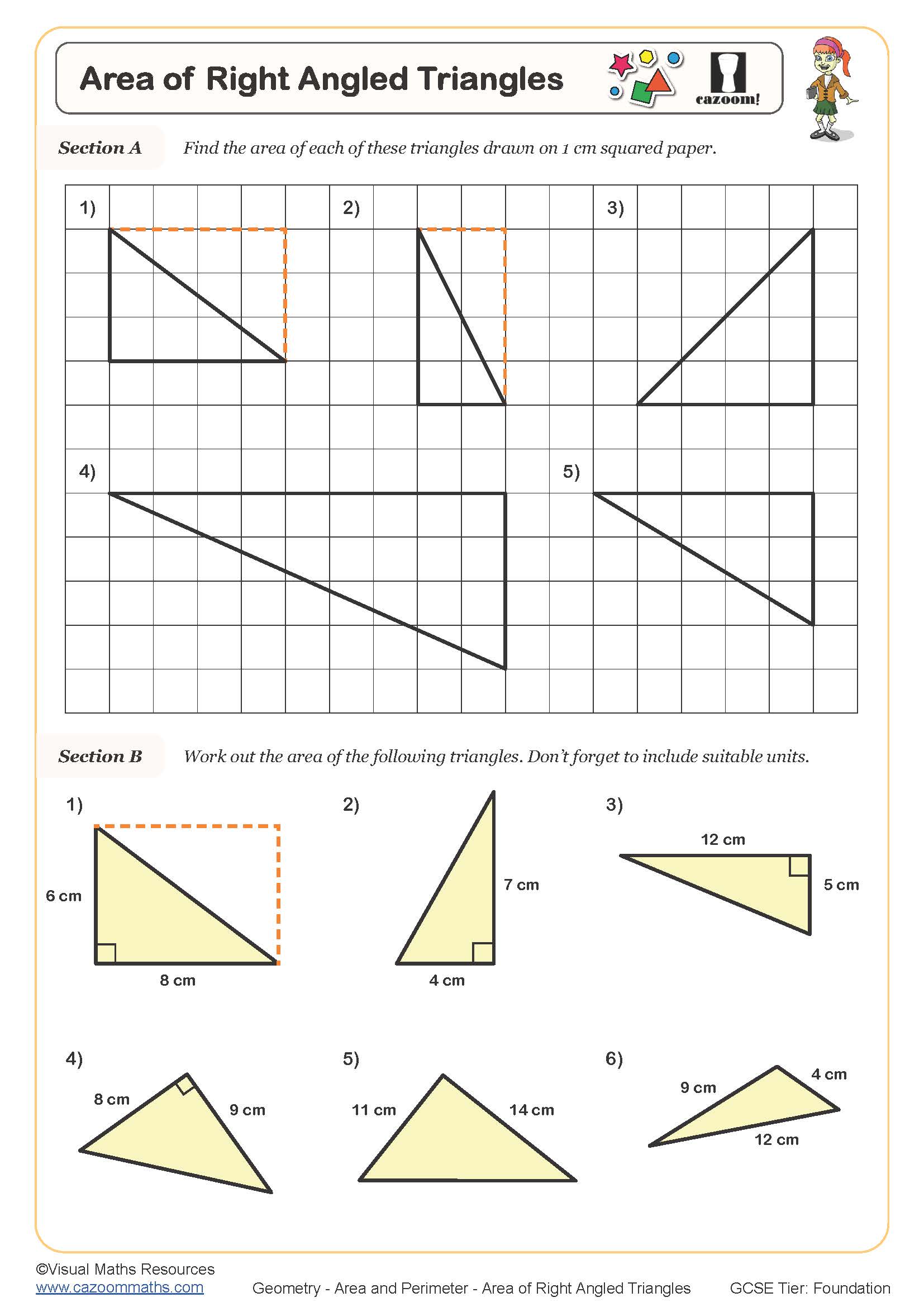
Area of Right Angled Triangles
Year groups: 7, 8
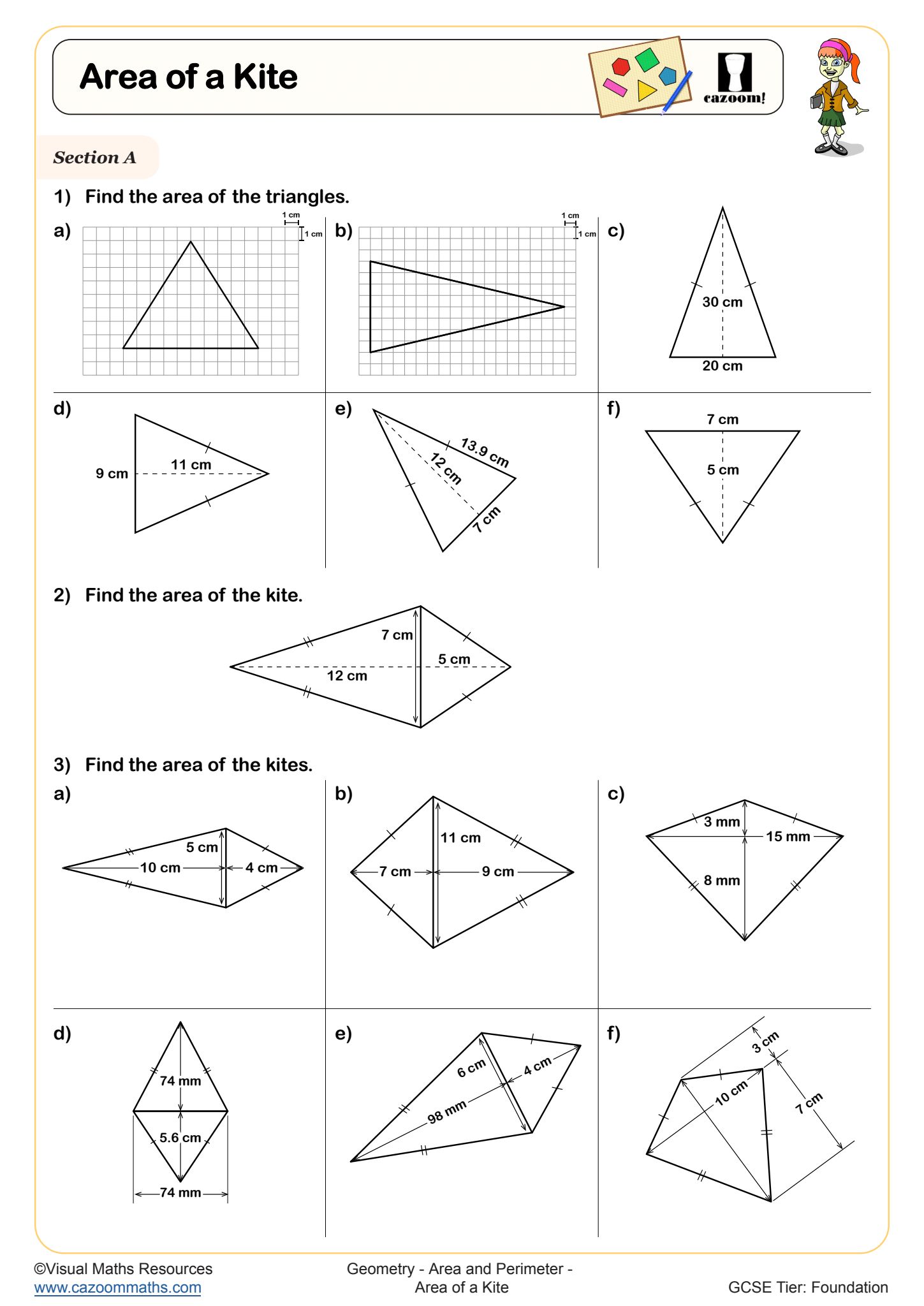
Area of a Kite
Year groups: 8, 9
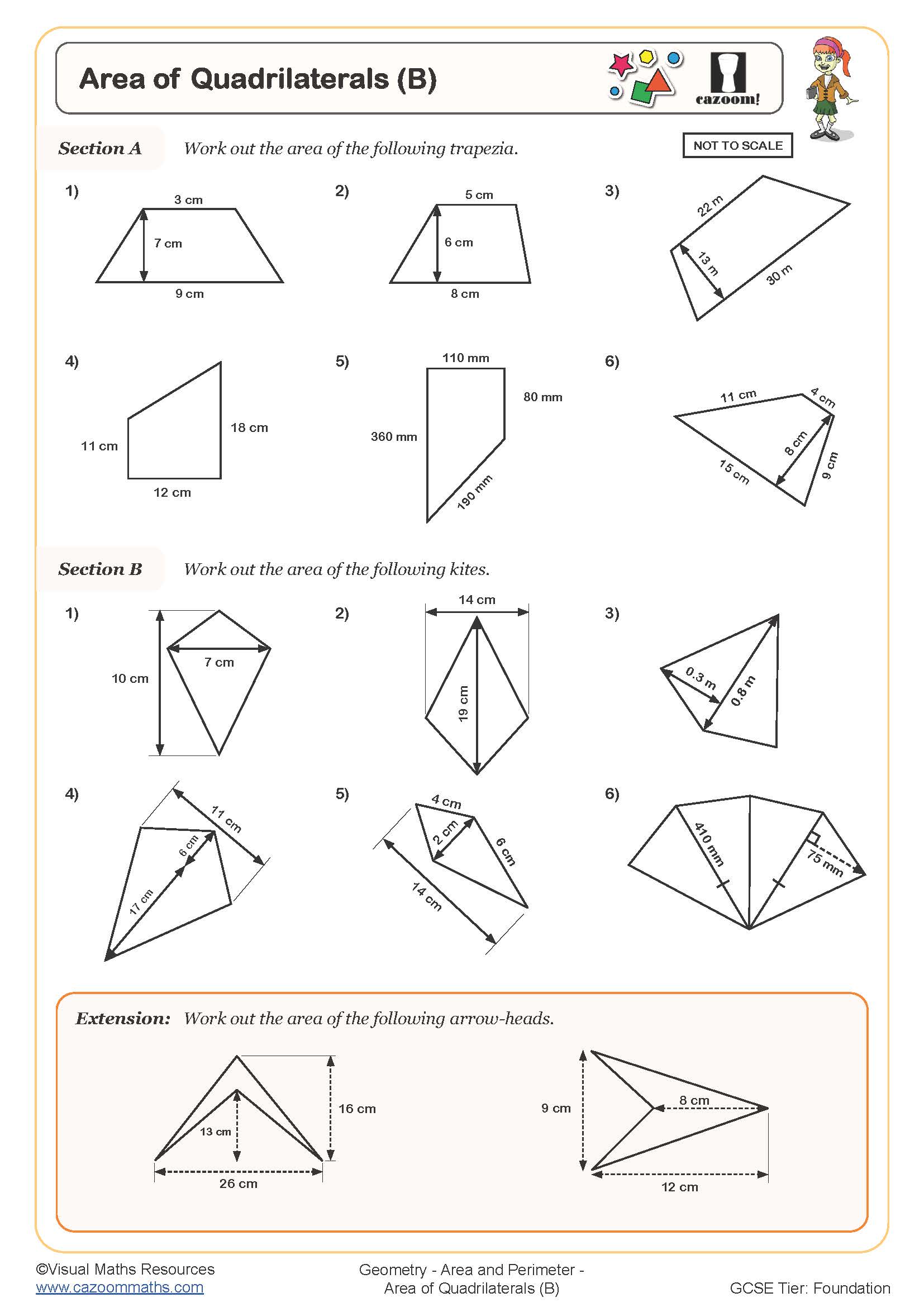
Area of Quadrilaterals (B)
Year groups: 8, 9
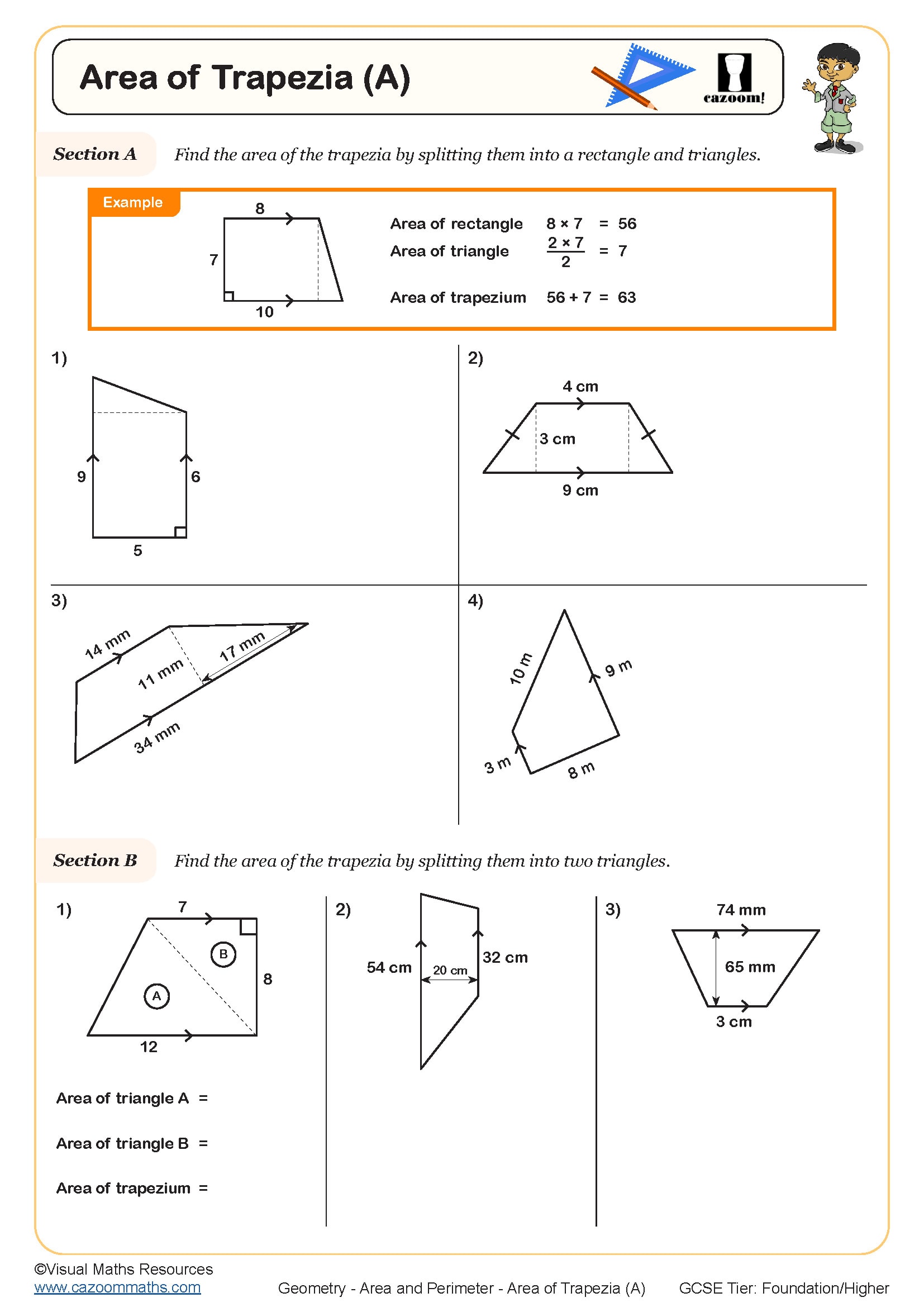
Area of Trapezia (A)
Year groups: 8, 9
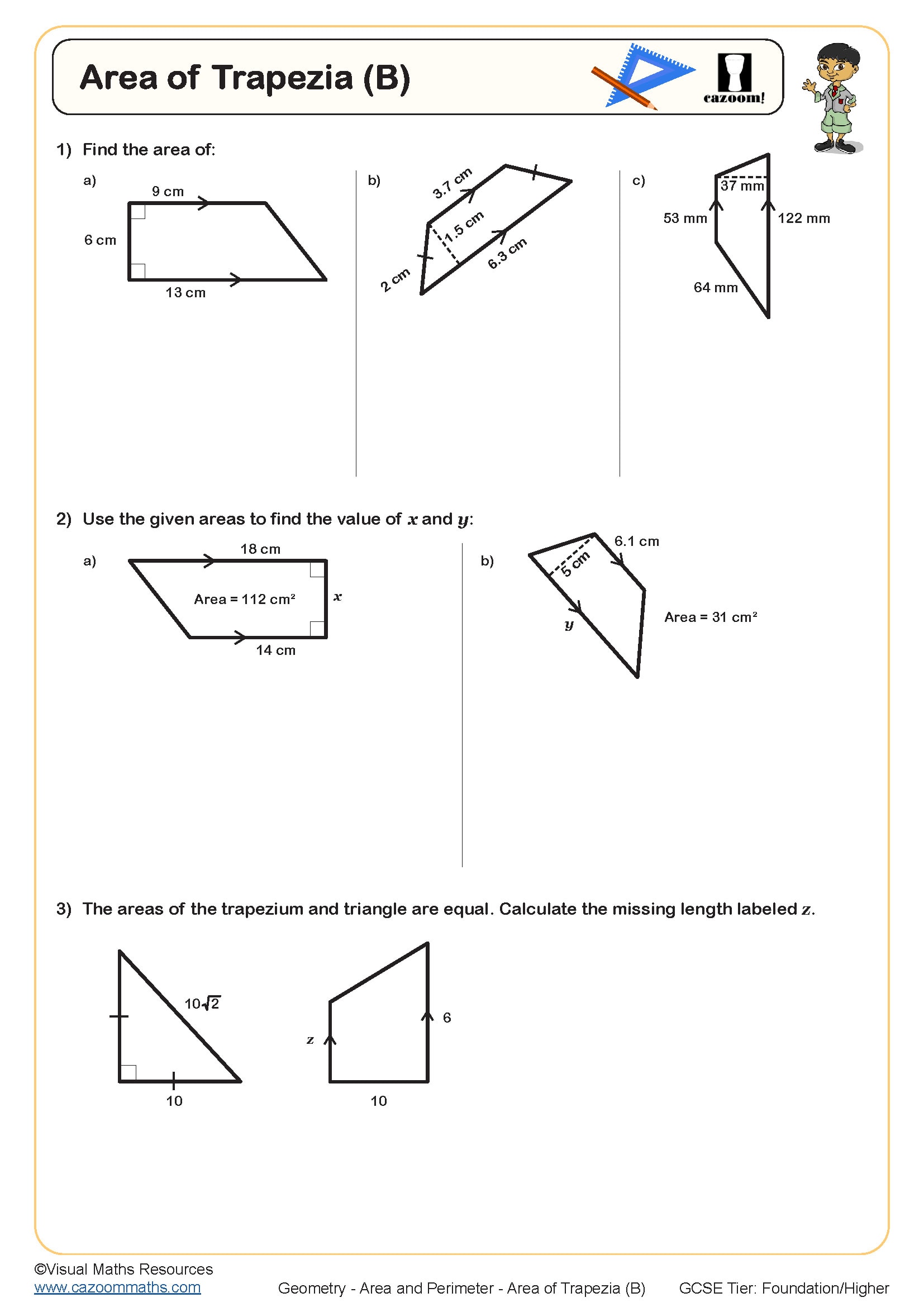
Area of Trapezia (B)
Year groups: 8, 9, 10
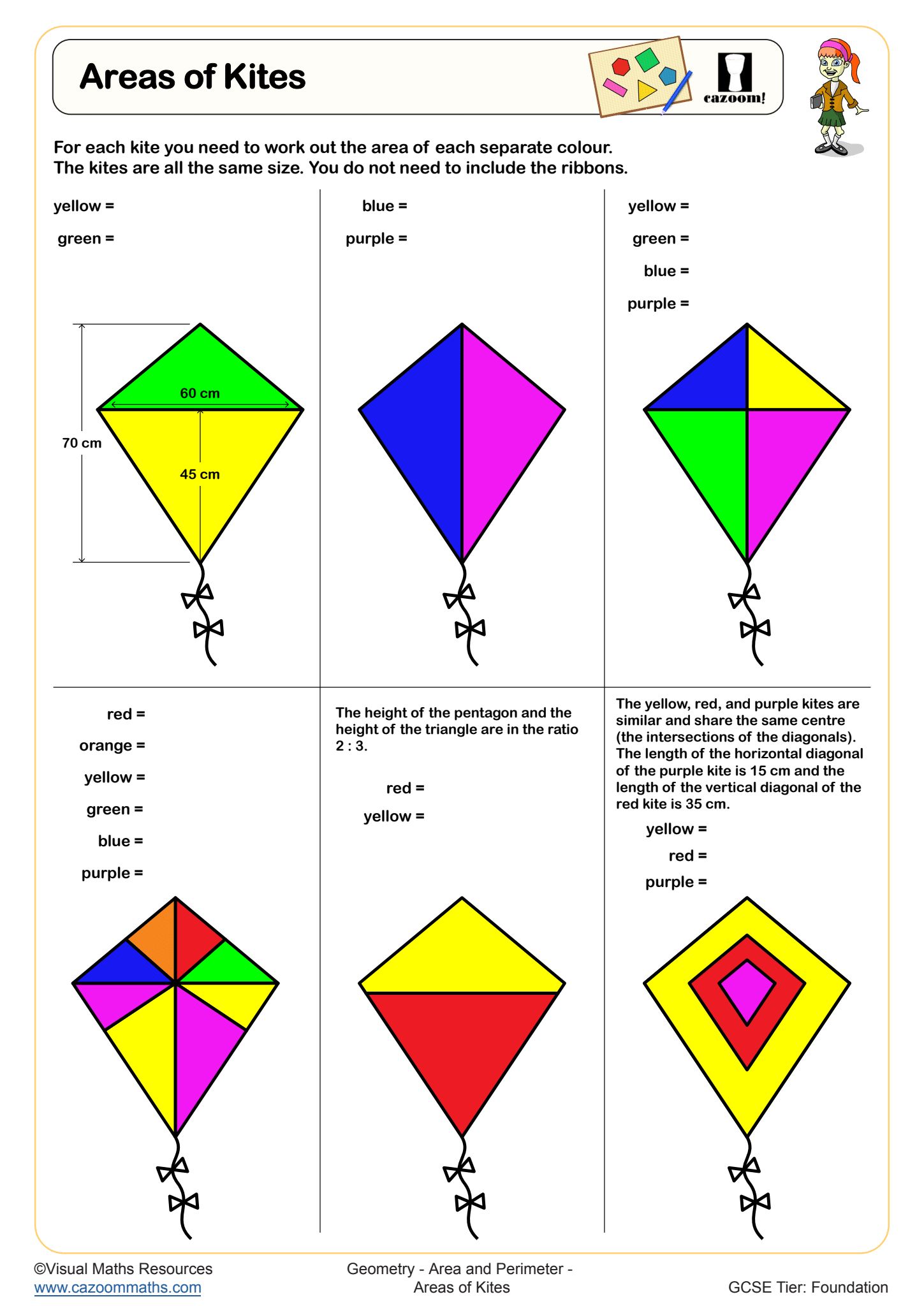
Areas of Kites
Year groups: 8, 9
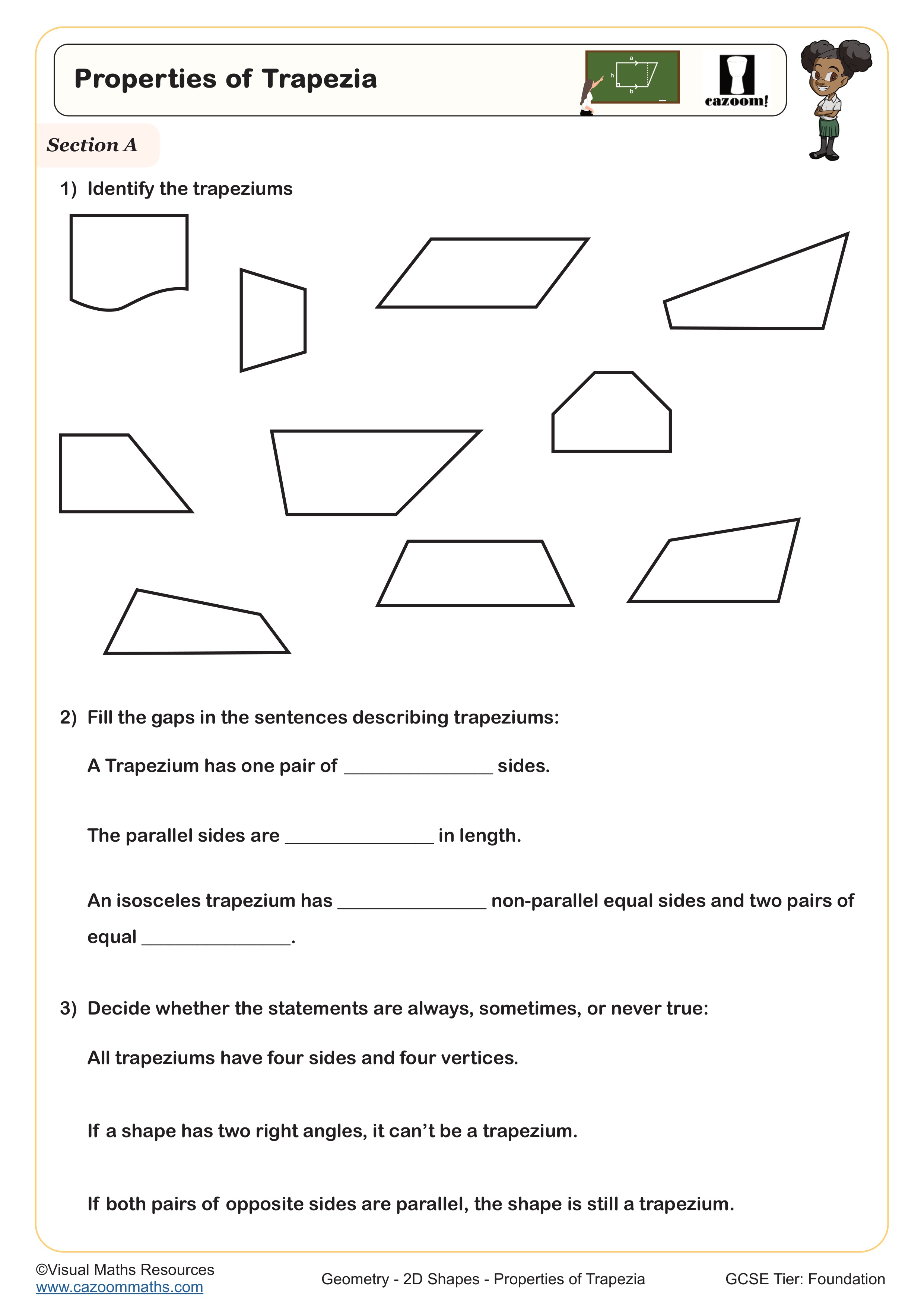
Properties of Trapezia
Year groups: 8, 9
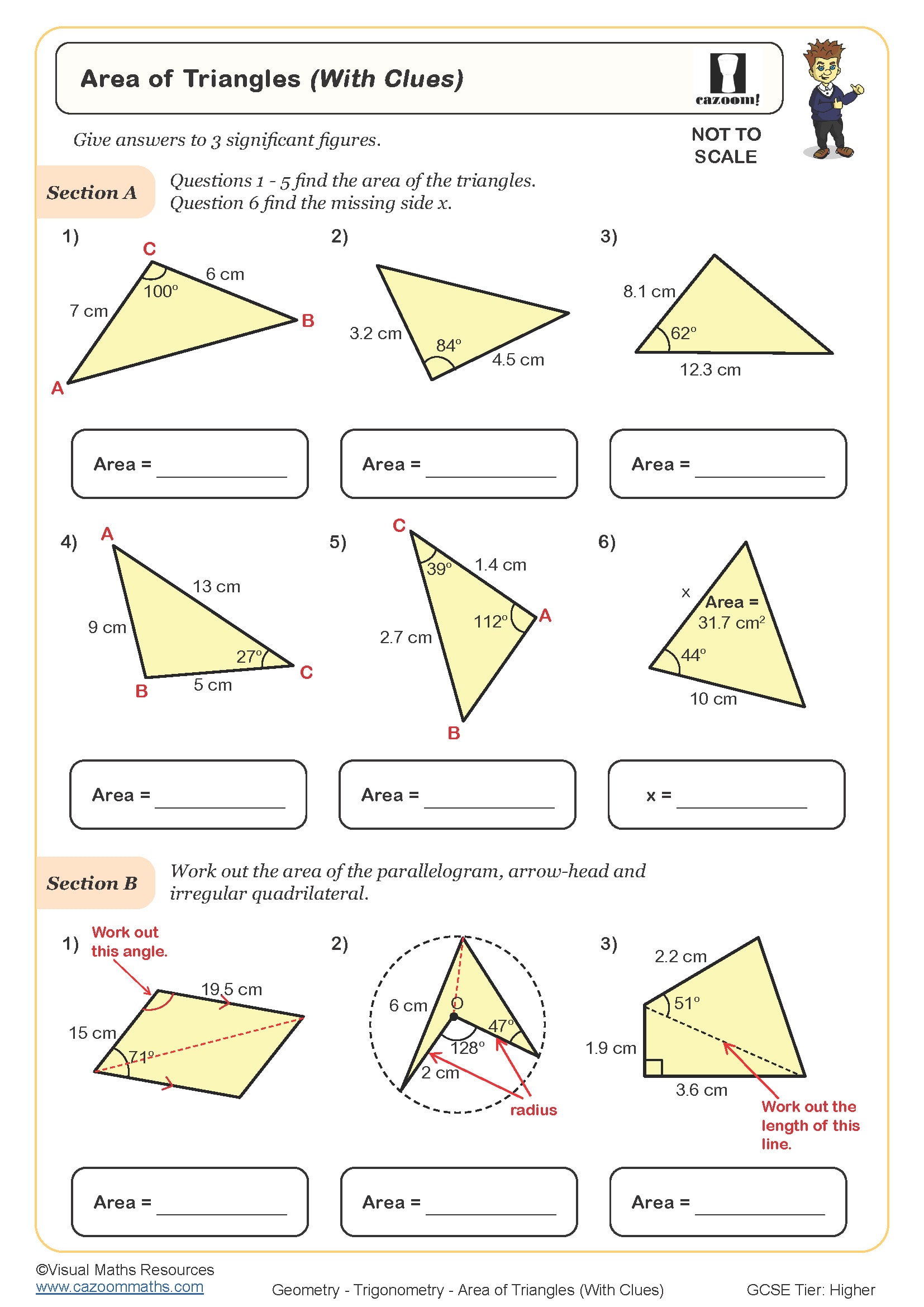
Area of Triangles (With Clues)
Year groups: 10, 11
All worksheets are created by the team of experienced teachers at Cazoom Maths.
What makes an effective area of quadrilaterals worksheet?
An effective area of quadrilateral worksheet balances formula application with conceptual understanding, progressing from simple rectangles to more complex shapes like trapeziums and compound figures. The worksheet should include clear diagrams with labelled dimensions, avoiding the common pitfall of unclear or missing units that confuses students during examinations.
Teachers notice that students perform better when worksheets explicitly distinguish between base and perpendicular height, particularly for parallelograms where the slanted side often misleads learners. Quality resources include varied question types, from straightforward calculations to problem-solving scenarios involving missing dimensions, mirroring the diversity found in GCSE examination papers.
Which year groups study area of quadrilaterals?
Area of quadrilaterals typically begins in Year 7 with rectangles and squares, expanding through Years 8-9 to include parallelograms, rhombi, and trapeziums as part of the KS3 geometry curriculum. Students revisit and deepen this knowledge during GCSE preparation in Years 10-11, where compound shapes and real-world applications become prominent.
The progression allows teachers to build complexity gradually, with KS3 focusing on direct formula application while KS4 emphasises problem-solving and reverse calculations. Many schools find that students who struggle with area calculations often lack solid understanding of perpendicular lines and parallel sides, making early intervention crucial for GCSE success.
How do students tackle trapezium area calculations effectively?
Trapezium area calculations often challenge students because the formula involves adding parallel sides before multiplying, unlike simpler quadrilaterals. Teachers observe that students frequently forget to divide by 2 in the final step, or they struggle to identify which sides are parallel when the trapezium is rotated or presented in non-standard orientations.
Successful teaching approaches emphasise the connection to triangle area, showing how a trapezium can be viewed as combining triangular sections. Visual representations help students understand why both parallel sides contribute to the calculation, and practice with isosceles trapeziums builds confidence before tackling irregular examples that appear in examination questions.
How can teachers use these worksheets most effectively?
Teachers achieve better results when they introduce each quadrilateral type systematically, using the worksheets to reinforce formula memorisation alongside conceptual understanding. Starting lessons with hands-on measuring activities before worksheet practice helps students connect abstract formulae to concrete shapes, reducing common errors during independent work.
The answer sheets enable efficient marking and immediate feedback, particularly valuable for identifying students who consistently apply incorrect methods. Many teachers use these resources for homework consolidation after classroom introduction, then return to challenging questions for whole-class discussion, ensuring misconceptions are addressed before moving to compound shapes or examination-style problems.