Bearings Worksheets
Bearings and Scale Word Problems
Year groups: 10, 11
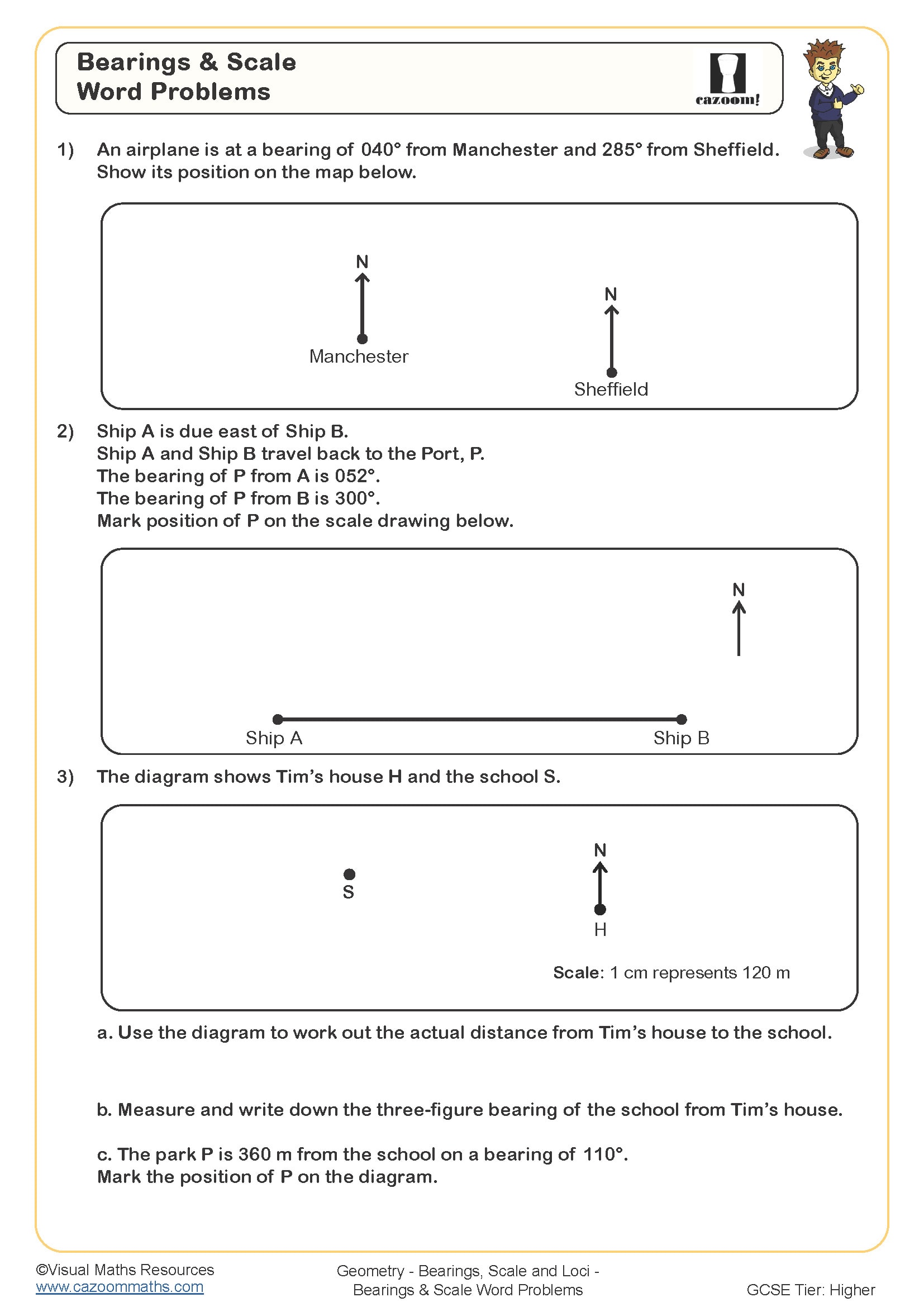
Calculating Bearings - with Angles in Parallel Lines
Year groups: 10, 11
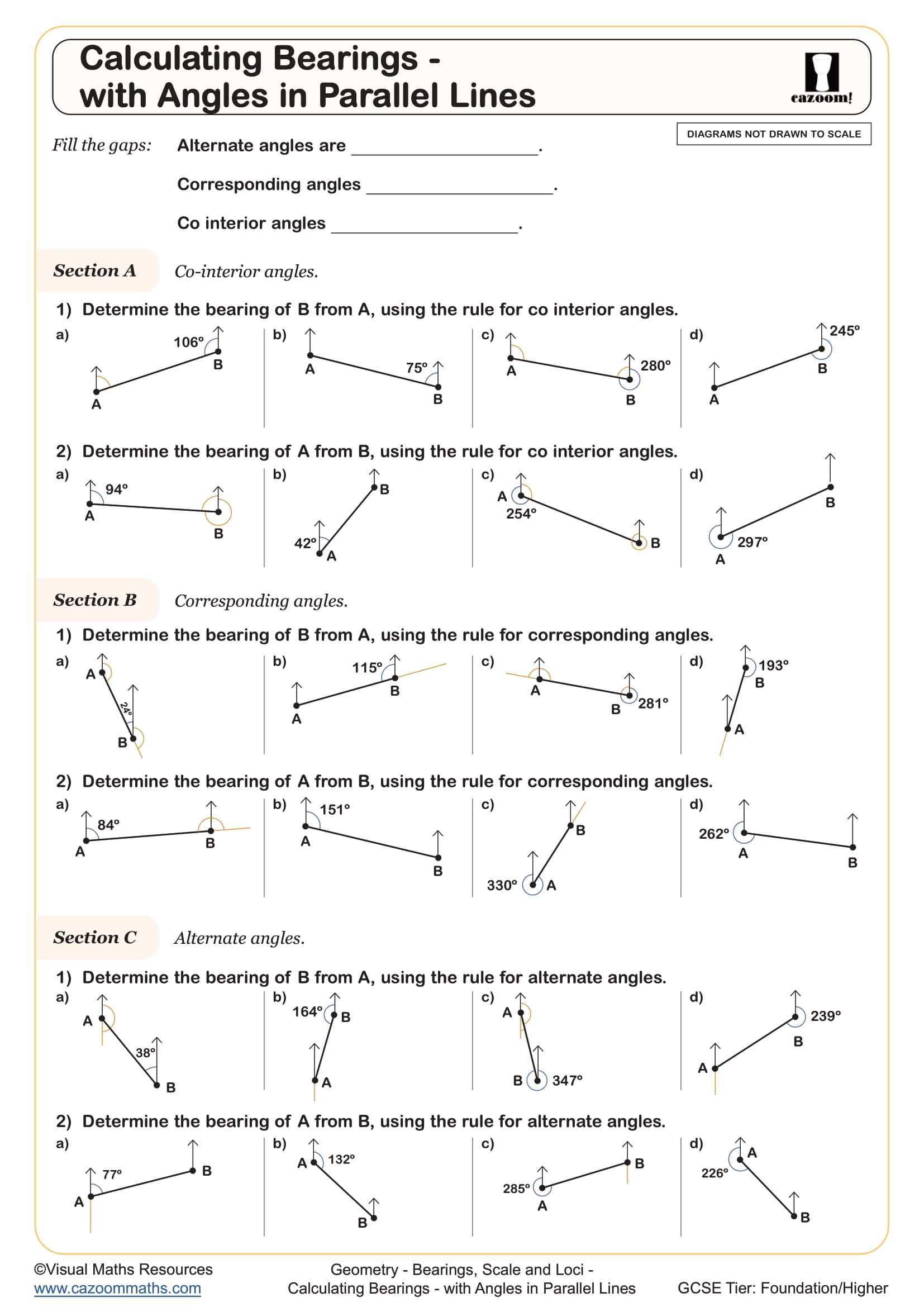
Calculating Bearings (A)
Year groups: 10, 11
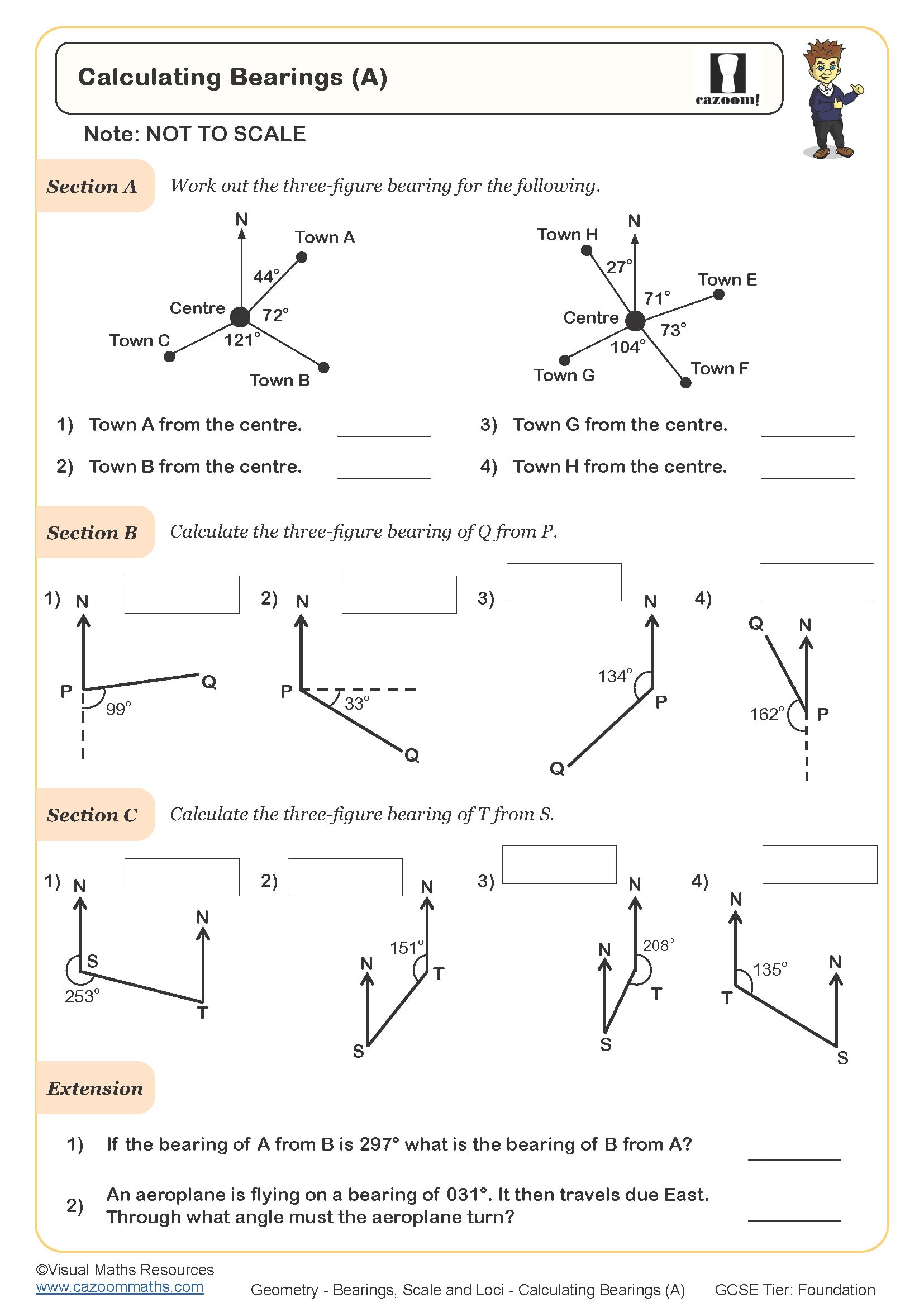
Calculating Bearings (B)
Year groups: 10, 11
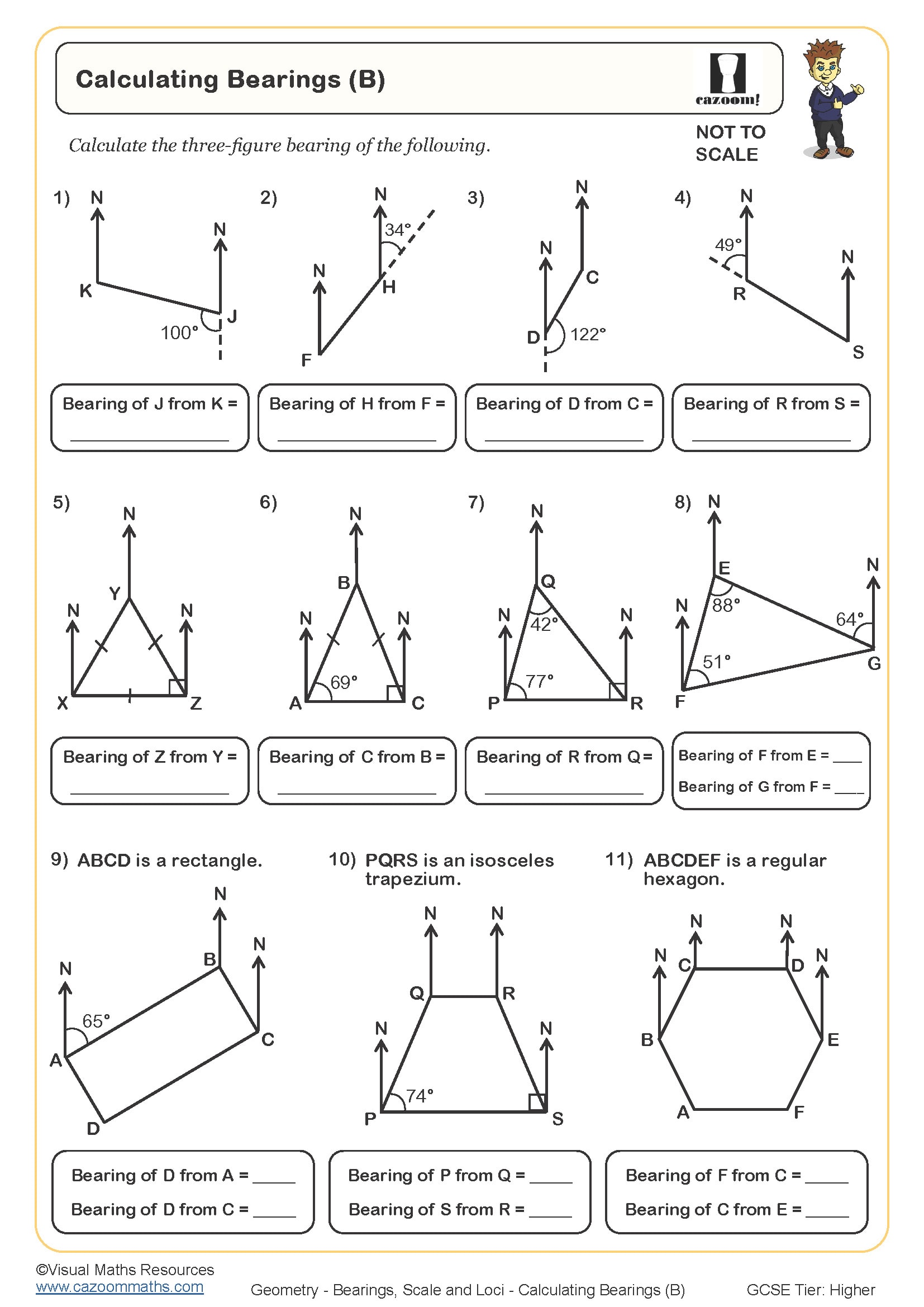
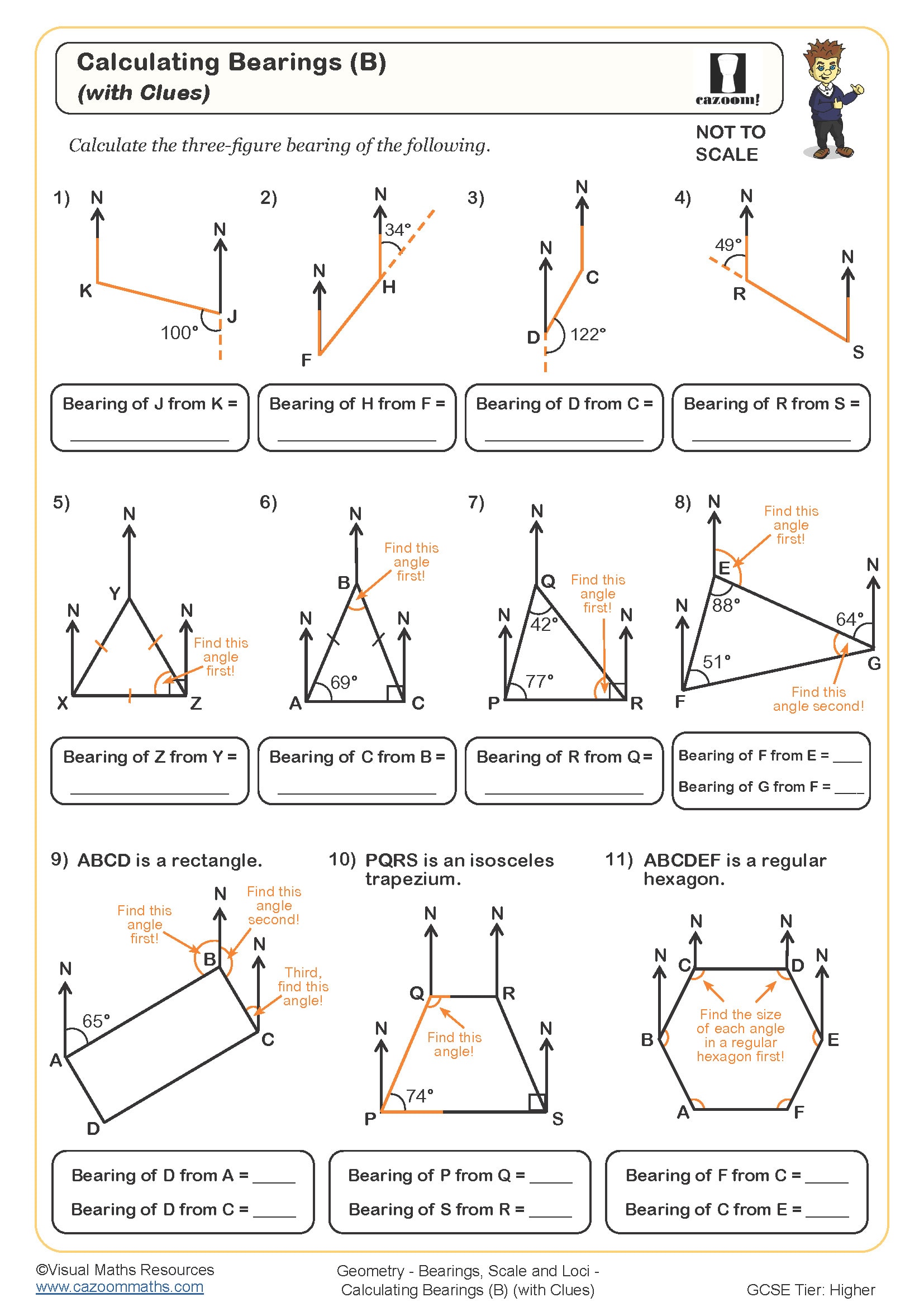
Calculating Bearings (B) (With Clues)
Year groups: 10, 11
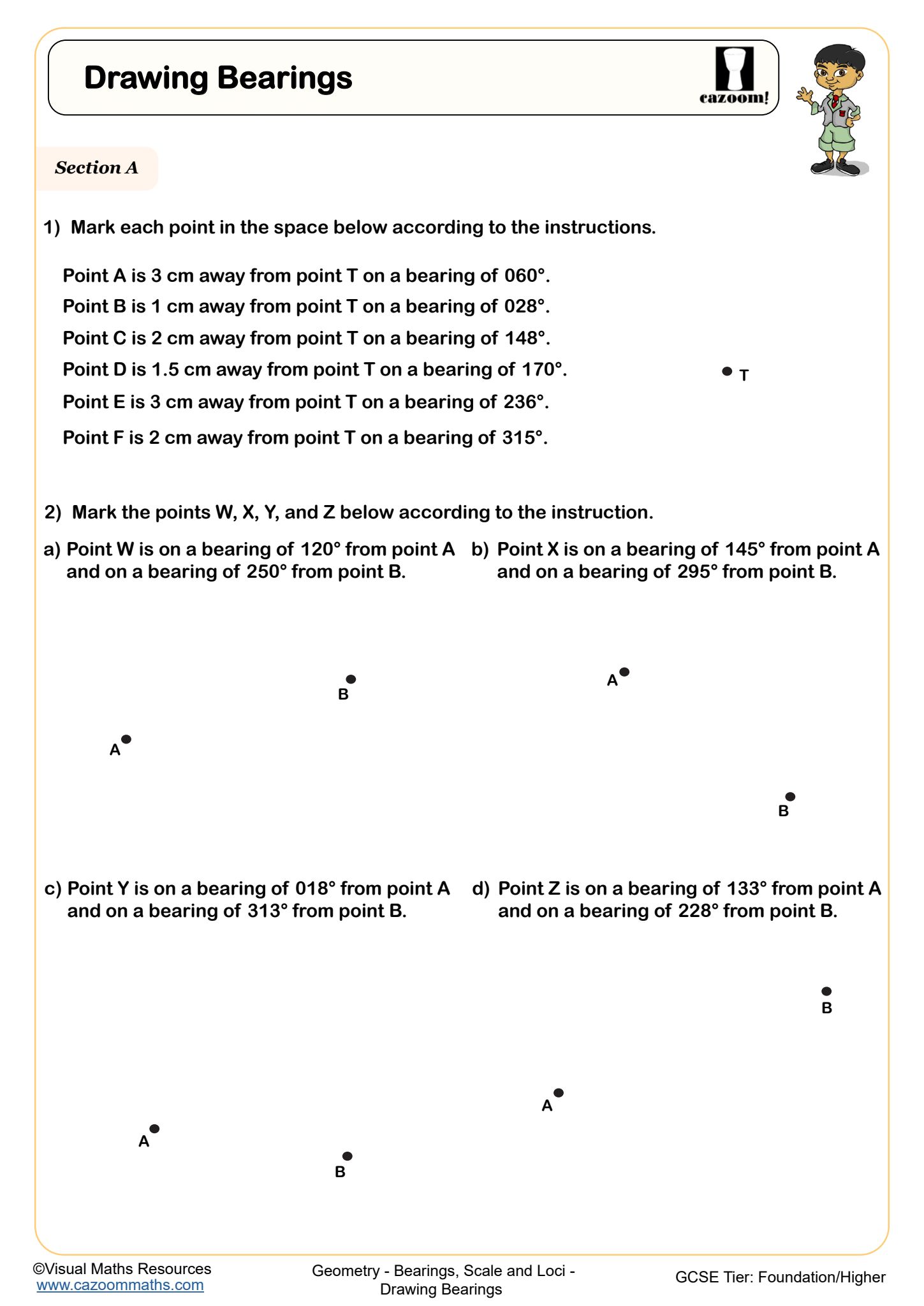
Drawing Bearings
Year groups: 10, 11
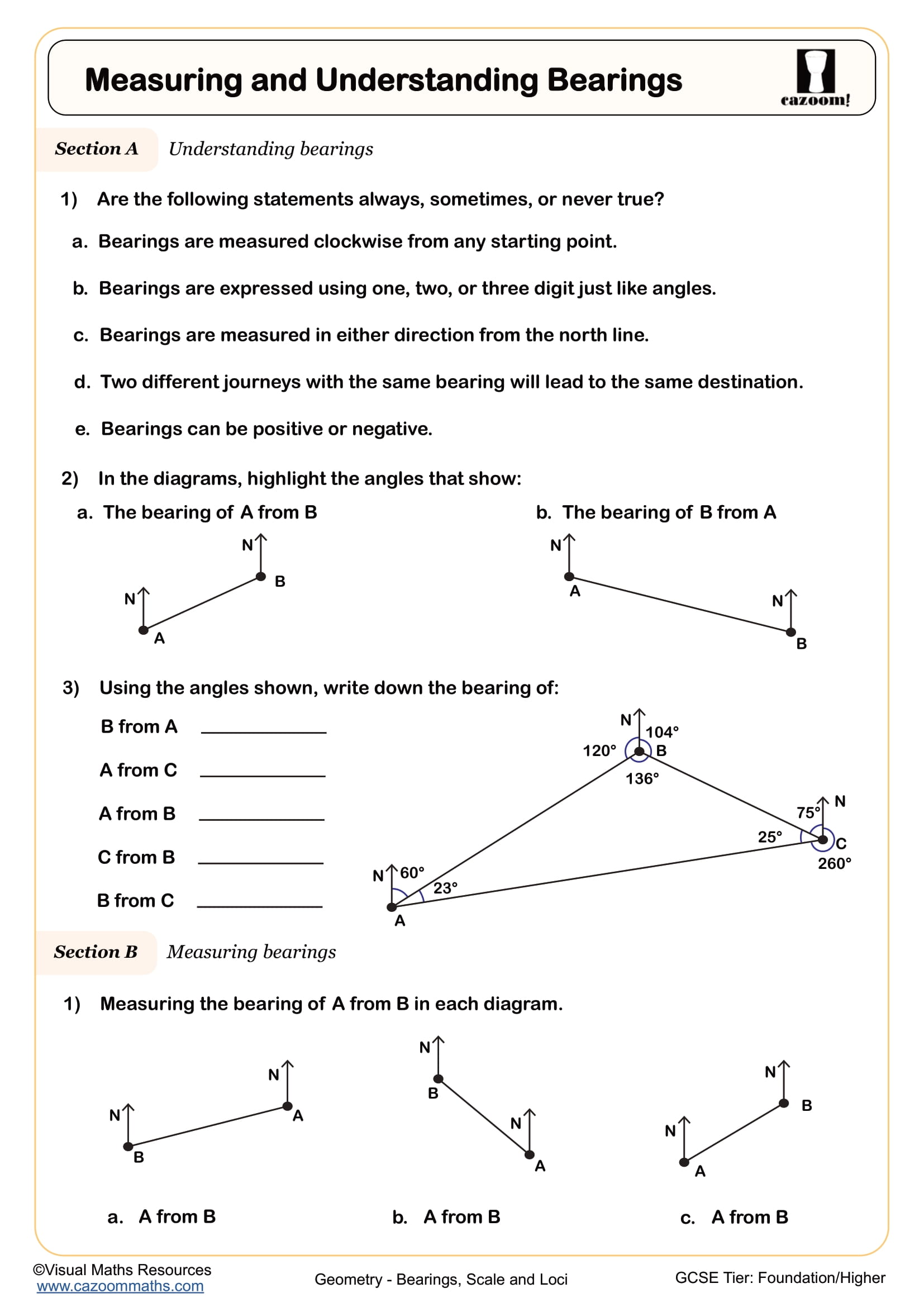
Measuring and Understanding Bearings
Year groups: 10, 11
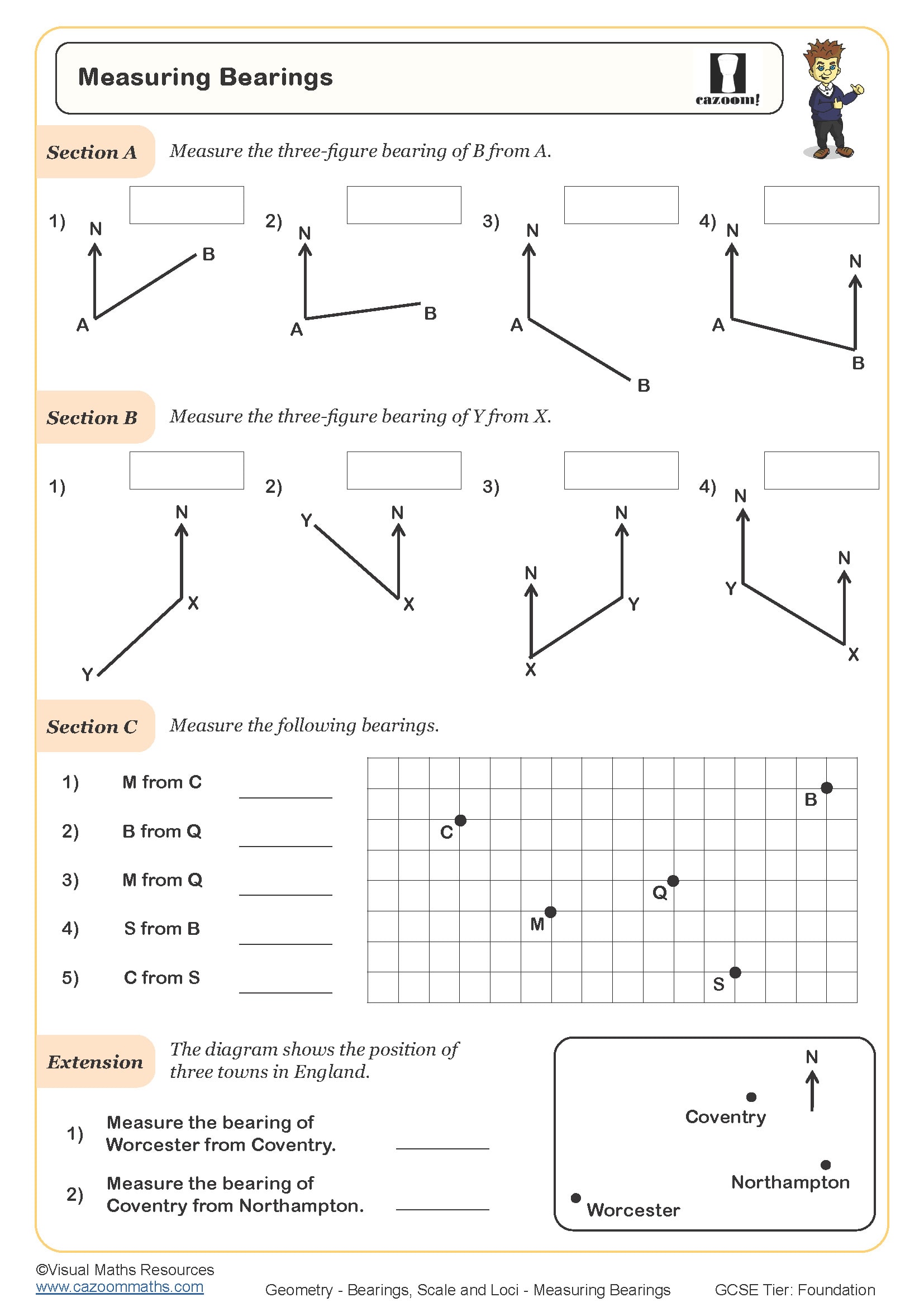
Measuring Bearings
Year groups: 10, 11
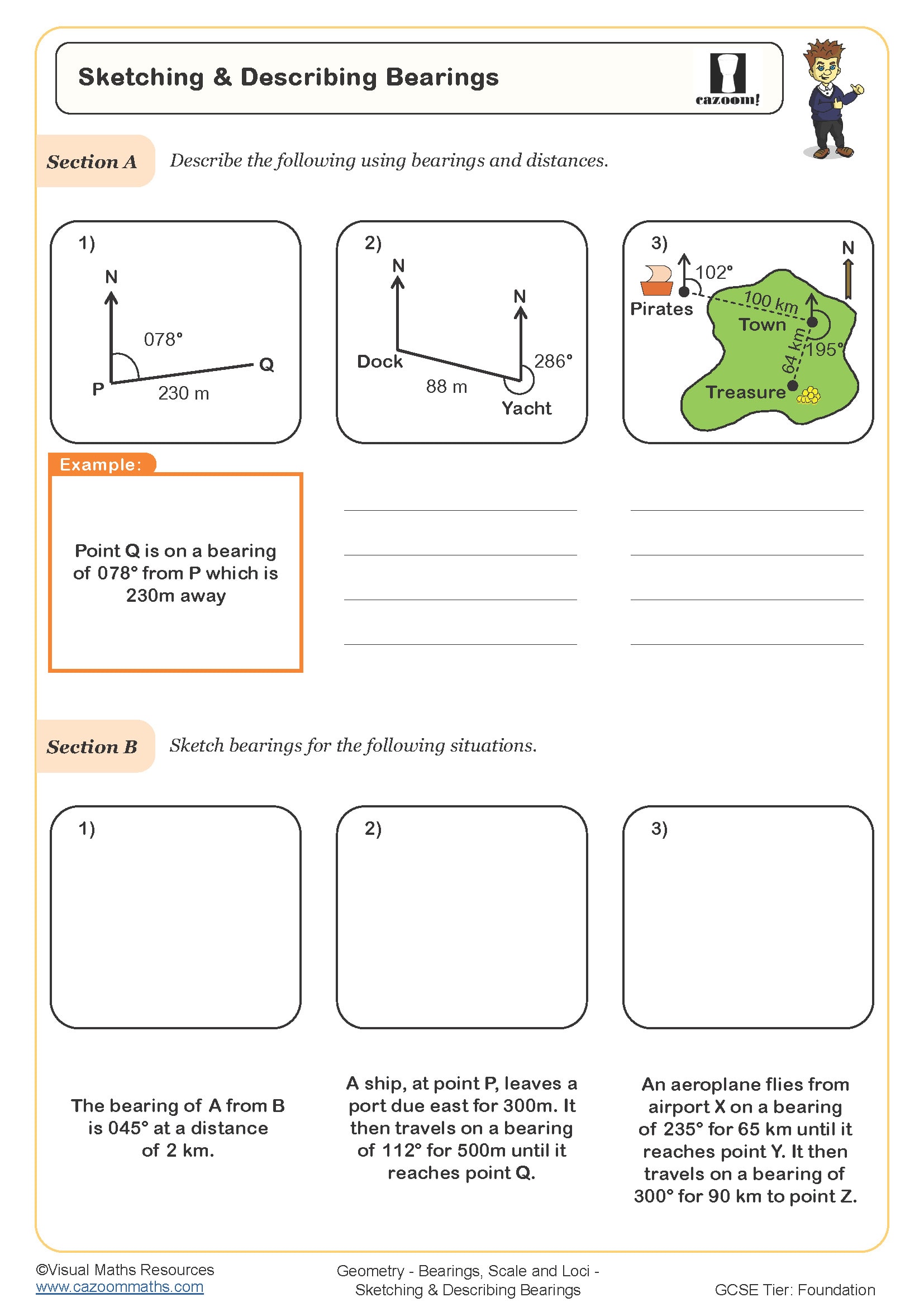
Sketching and Describing Bearings
Year groups: 10, 11
All worksheets are created by the team of experienced teachers at Cazoom Maths.
What makes a good bearings worksheet for KS4 students?
A quality bearing worksheet should progress from basic three-figure bearing identification to more complex problems involving calculations between multiple points. Students need practice with the fundamental convention that bearings are always measured clockwise from north, presented as three-digit numbers from 000° to 359°. The worksheet should include clear compass diagrams and varied question types that mirror GCSE expectations.
Teachers notice that students often make errors when converting between different direction formats or when working backwards from given bearings. Effective worksheets address these issues by including reverse bearing calculations and problems where students must determine original positions from bearing information, building the spatial reasoning skills key for geometry success.
Which year groups benefit most from bearings practice?
Bearings typically appear in the KS4 curriculum, with most students encountering them in Years 10 and 11 as part of their GCSE preparation. The topic connects to coordinate geometry, trigonometry, and real-world navigation applications, making it particularly relevant for students pursuing STEM subjects. Some high-attaining Year 9 students may also benefit from introduction to basic bearing concepts.
The progression usually moves from simple bearing identification and measurement to more complex problems involving scale drawings and trigonometric calculations. Teachers find that students who master bearings early often show improved confidence with angle work generally, as the topic reinforces understanding of rotational measurement and directional thinking that supports other geometry topics.
How do you calculate true bearing between two points?
To calculate true bearing, students must find the angle measured clockwise from north to the line connecting two points. This typically involves drawing or visualising the north line from the starting point, then measuring or calculating the clockwise angle to the destination point. The true bearing formula often requires coordinate geometry or trigonometry when working with grid references or maps.
Teachers observe that students frequently confuse bearing calculations with standard angle measurement, leading to incorrect answers when they measure anticlockwise or from the wrong reference direction. Successful teaching emphasises the consistent application of the 'clockwise from north' rule and provides plenty of practice with both direct measurement and calculated bearing problems using coordinate methods.
How can teachers use these bearings worksheets most effectively?
Teachers achieve best results by introducing bearings with practical compass work before moving to worksheet calculations. Students benefit from understanding the real-world applications in navigation, surveying, and GPS technology before tackling abstract problems. The worksheets work well as progressive homework tasks or revision materials, with answer sheets enabling self-assessment and independent learning.
Many teachers find that pairing bearing work with coordinate geometry lessons helps students see connections between topics and reinforces mathematical thinking. The visual nature of bearing problems makes them excellent for classroom discussions about problem-solving strategies, particularly when students compare different approaches to finding the same bearing or checking reverse calculations for accuracy.