Calculating Angles Worksheets
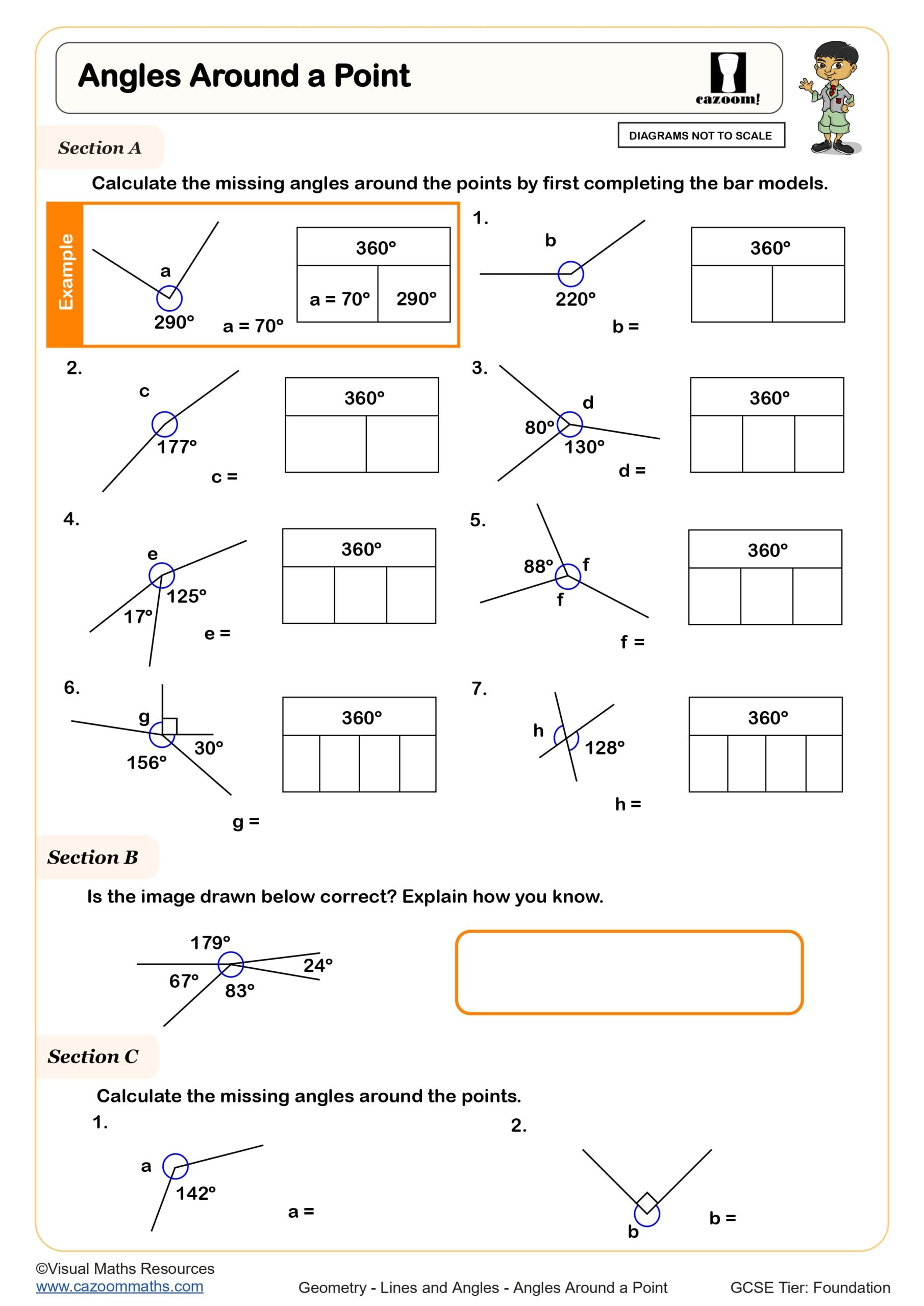
Angles Around a Point
Year groups: 7, 8
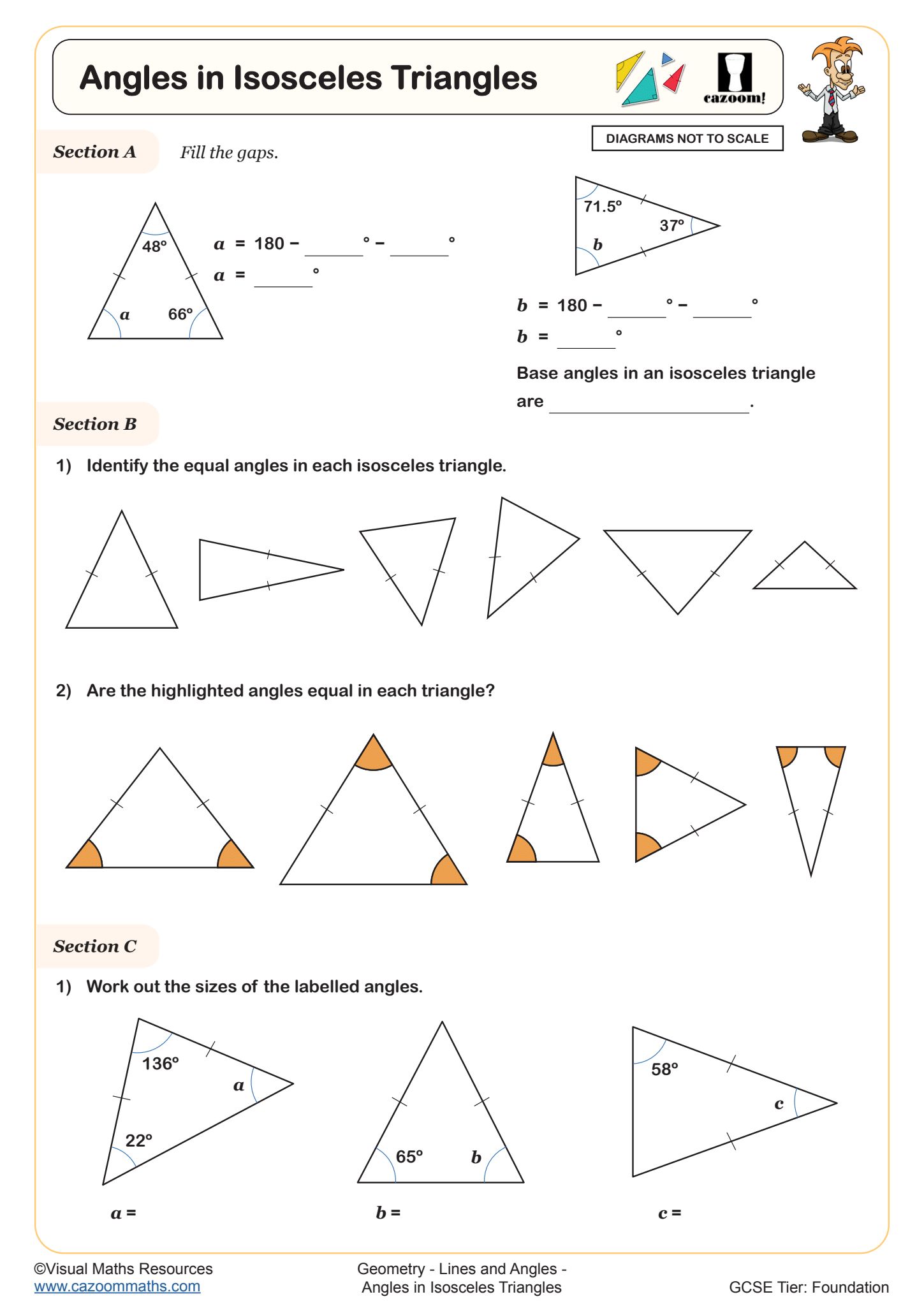
Angles in Isosceles Triangles
Year groups: 7, 8
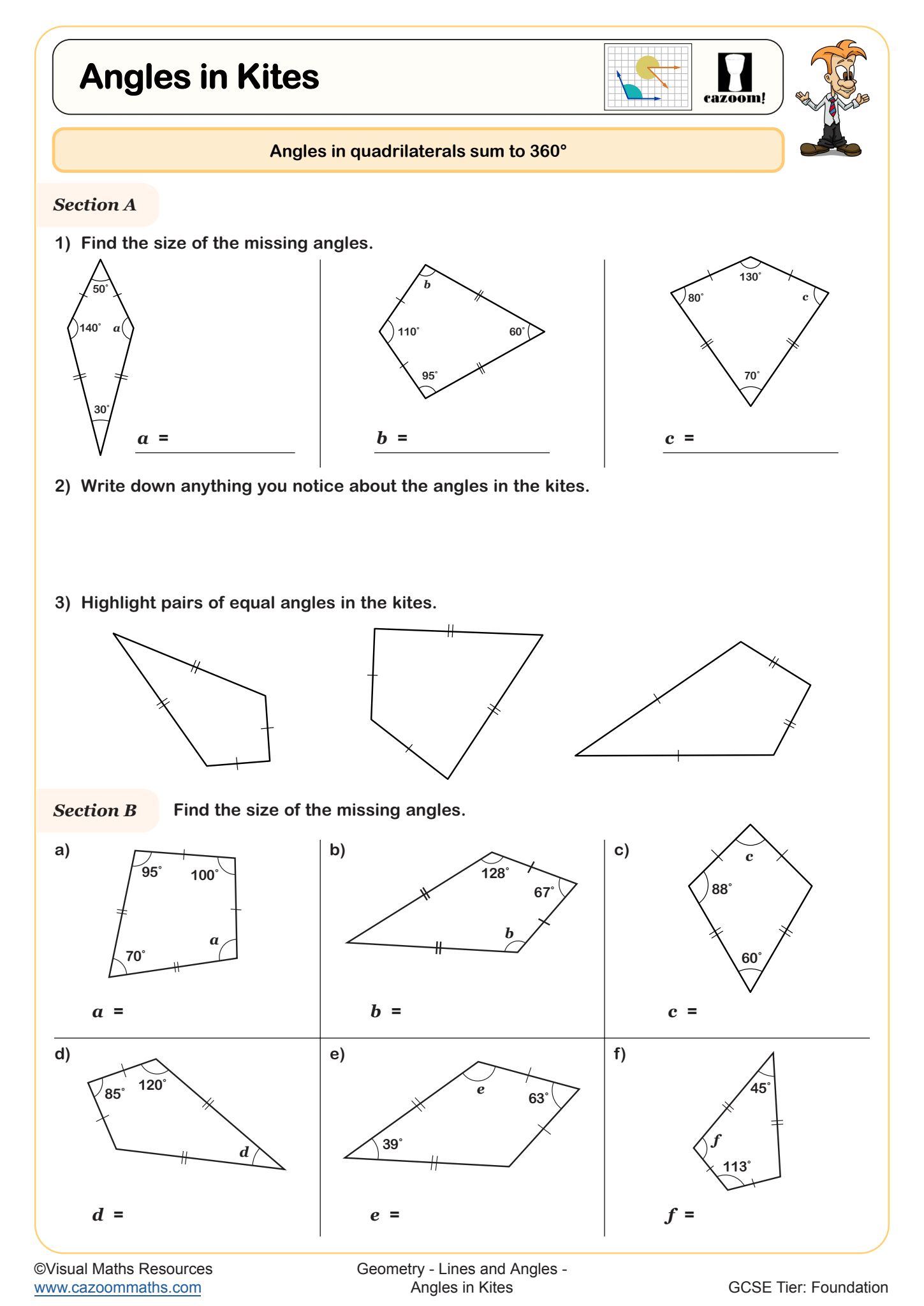
Angles in Kites
Year groups: 7, 8
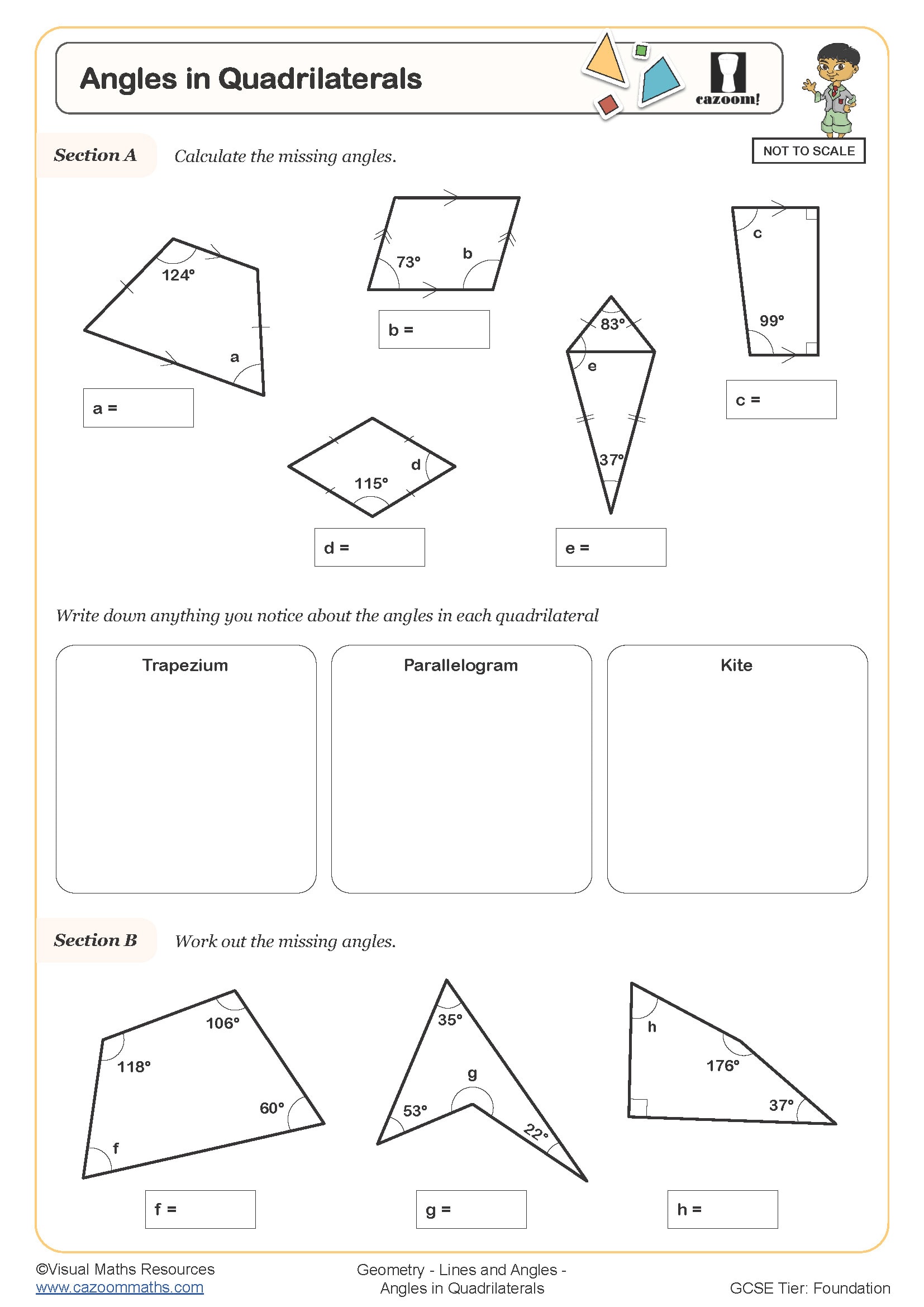
Angles in Quadrilaterals
Year groups: 7, 8
Angles in Triangles (A)
Year groups: 7, 8
-Worksheet.jpg?w=3840)
Angles in Triangles (B)
Year groups: 7, 8, 9
/Cazoom-Maths-Lines-and-Angles-Angles-in-Triangles-(B-Worksheet.jpg?w=3840)
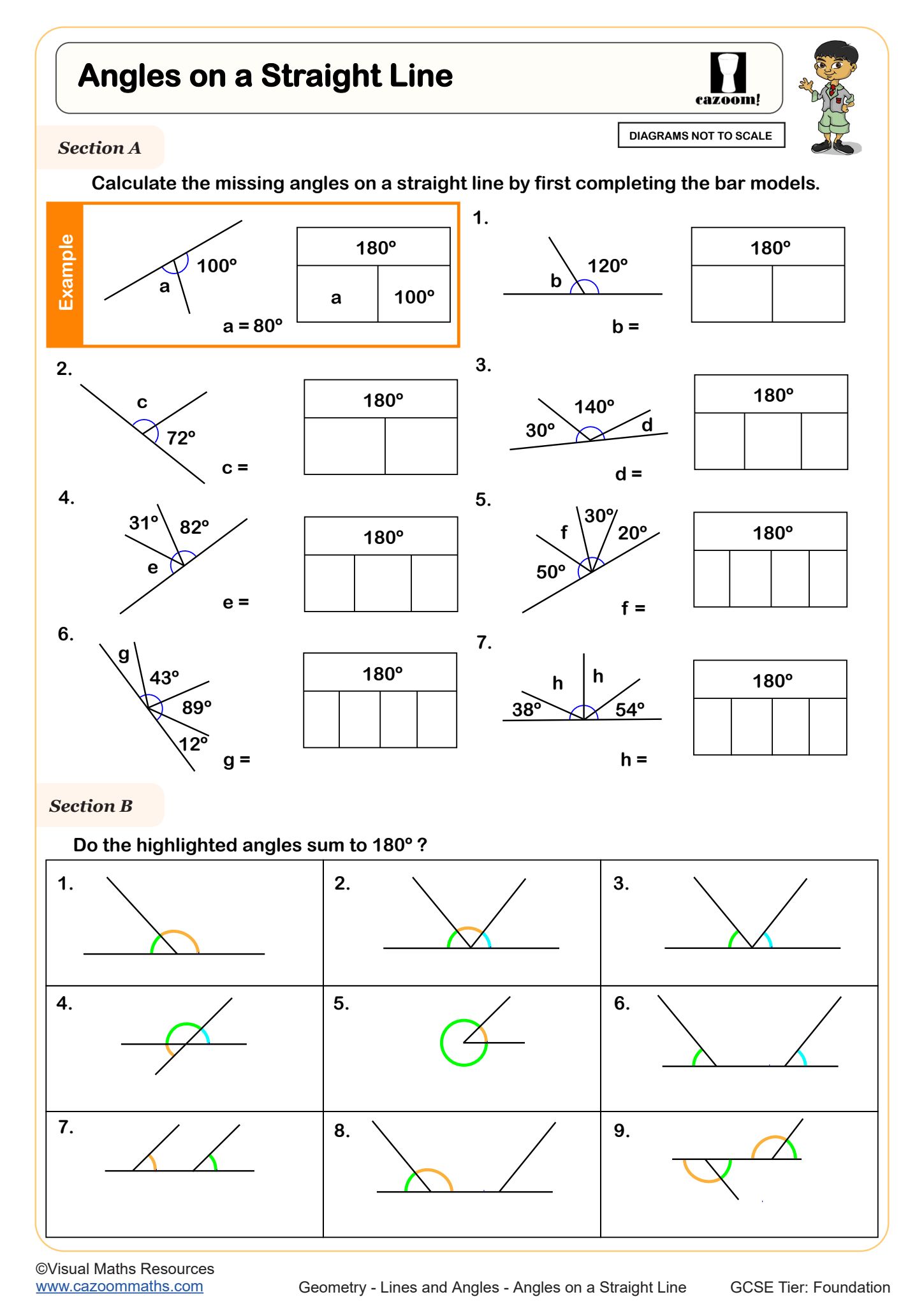
Angles on a Straight Line
Year groups: 7, 8
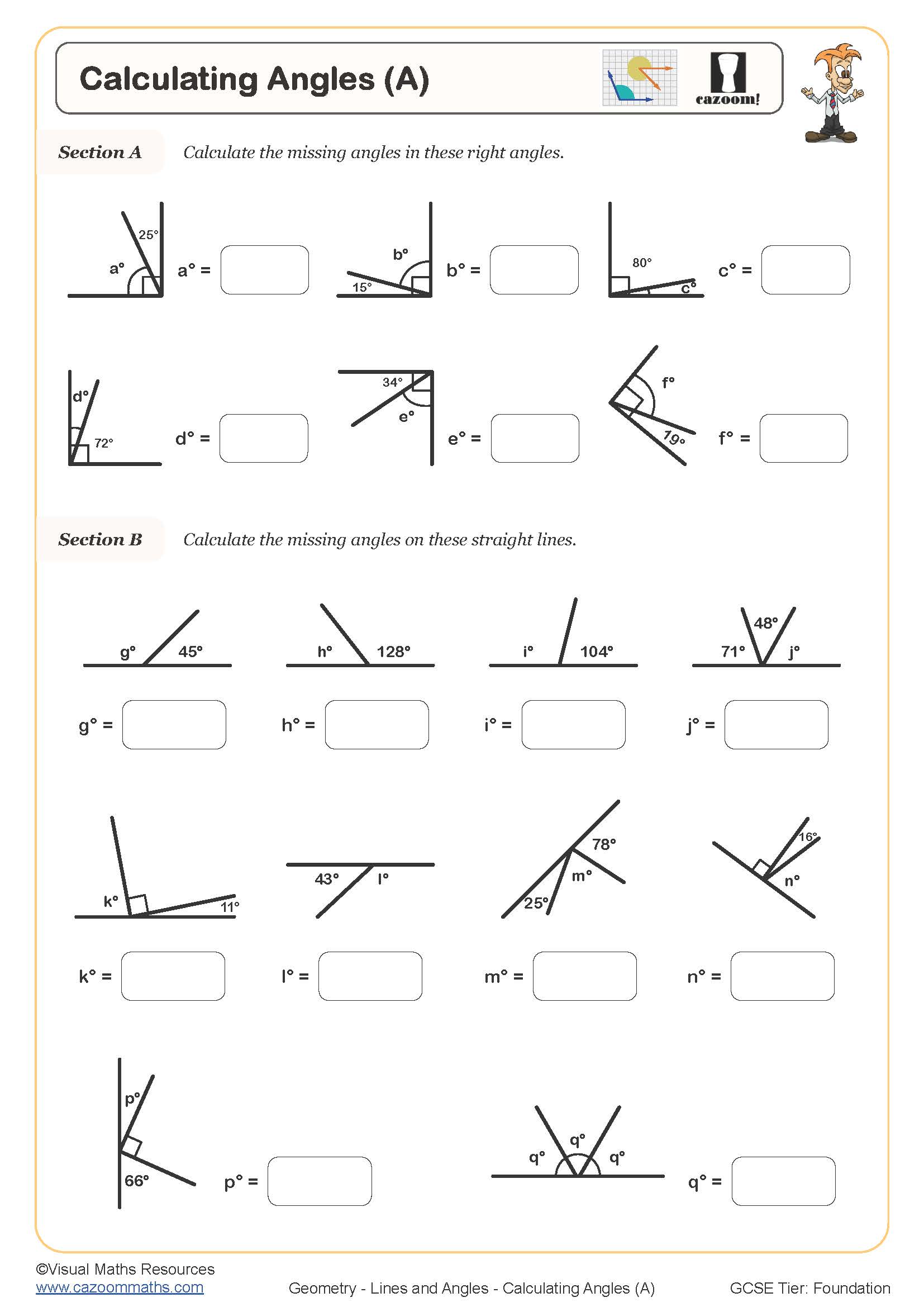
Calculating Angles (A)
Year groups: 7, 8, 9
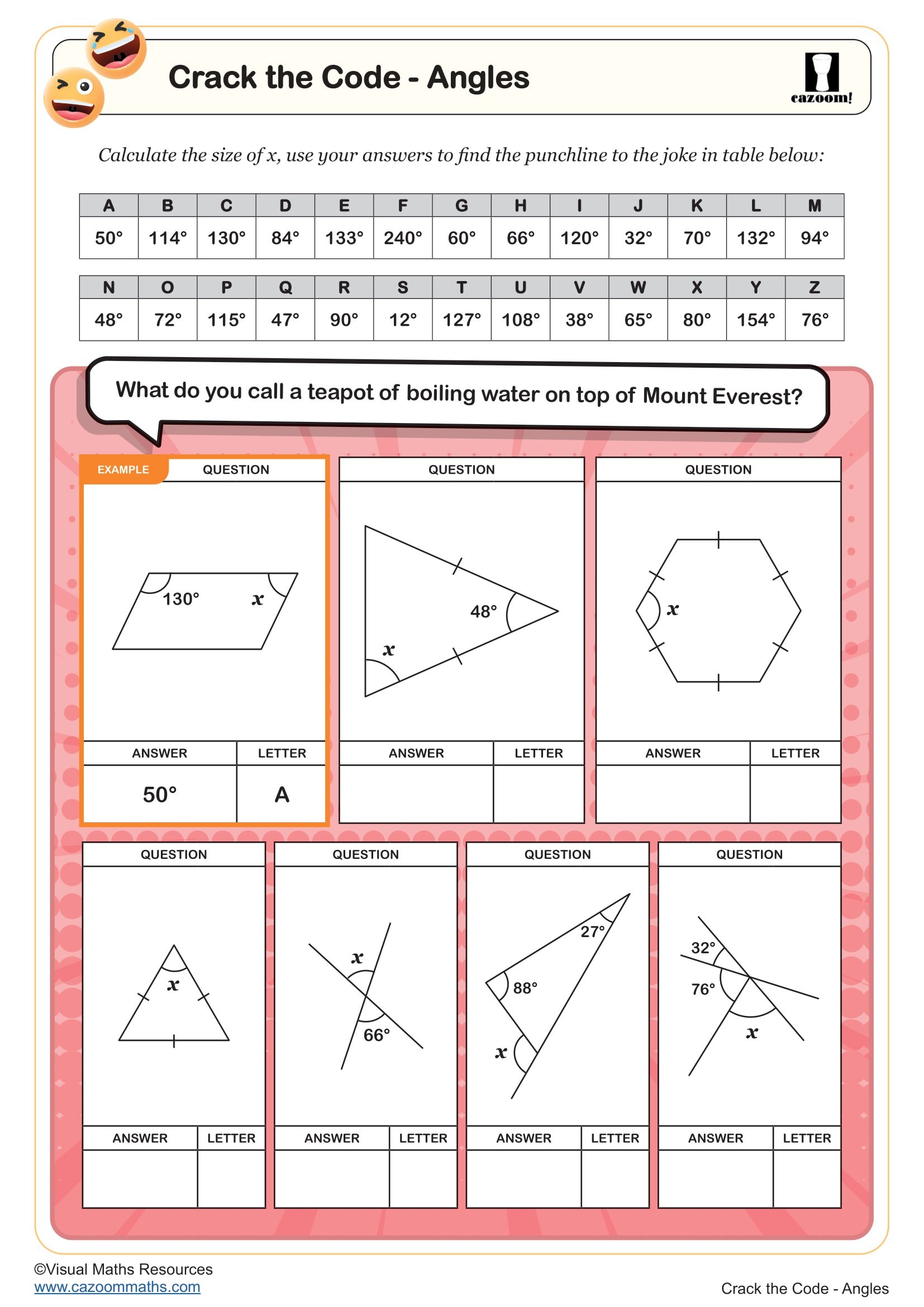
Crack the Code - Angles
Year groups: 7, 8
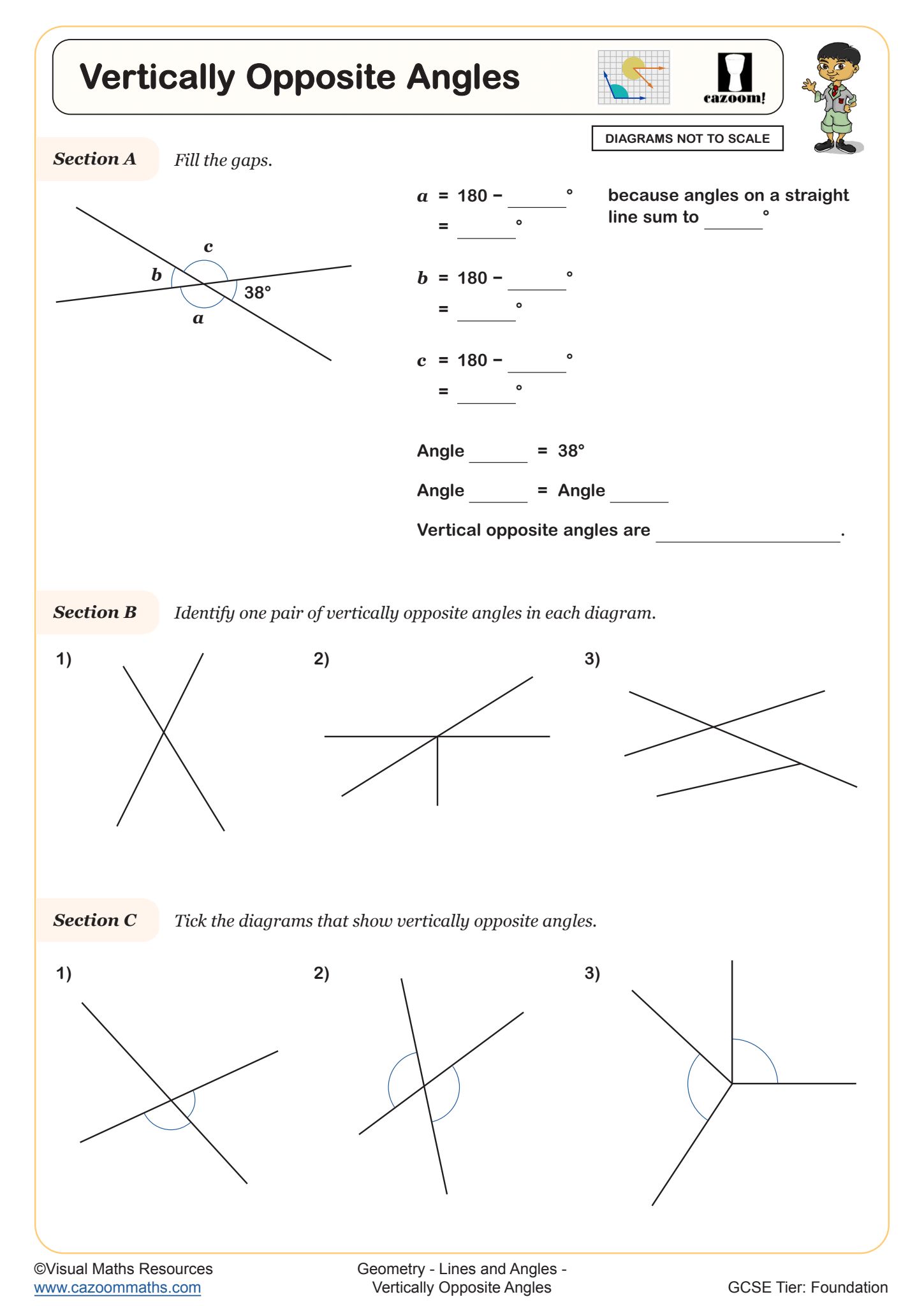
Vertically Opposite Angles
Year groups: 7, 8
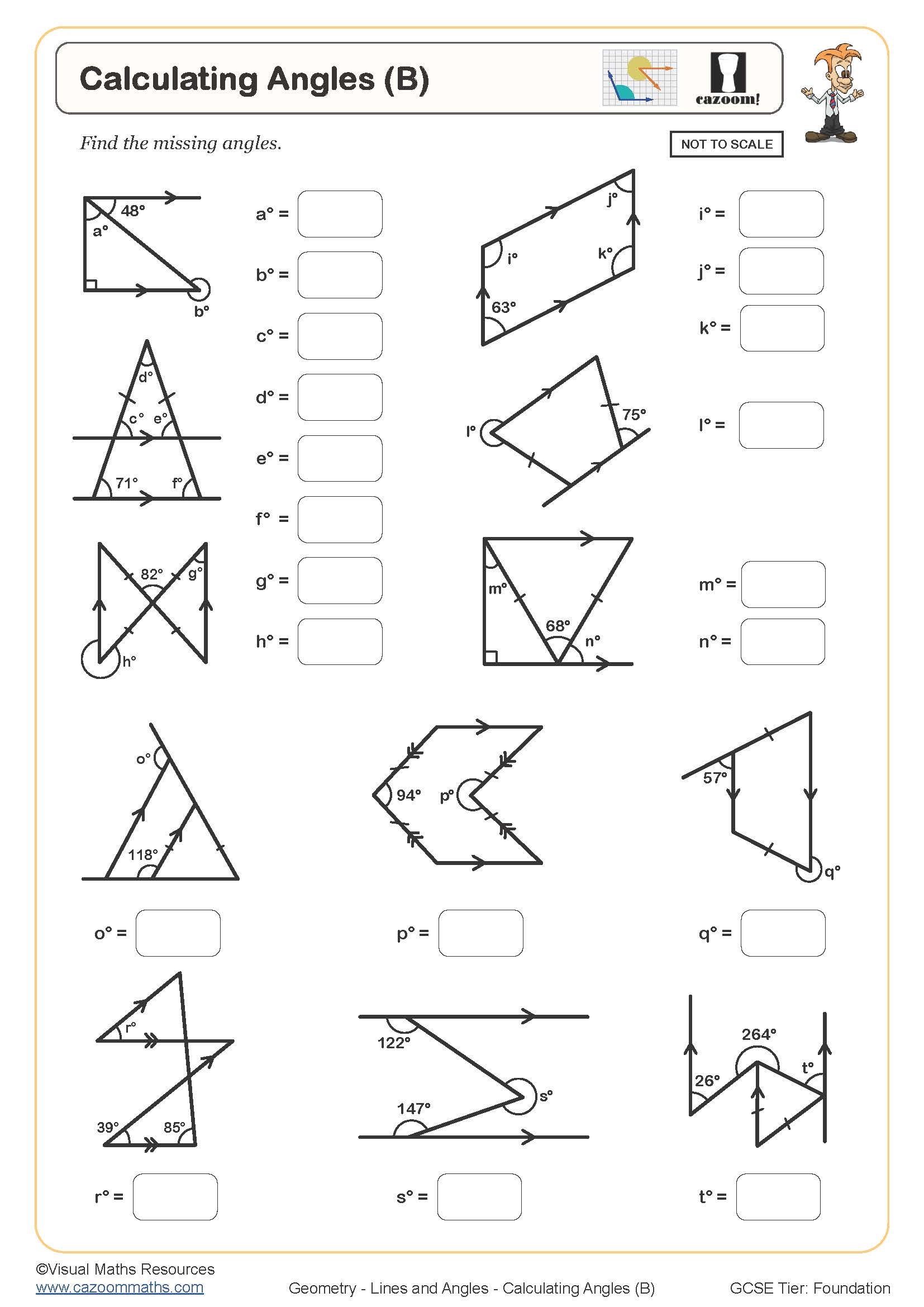
Calculating Angles (B)
Year groups: 8, 9, 10
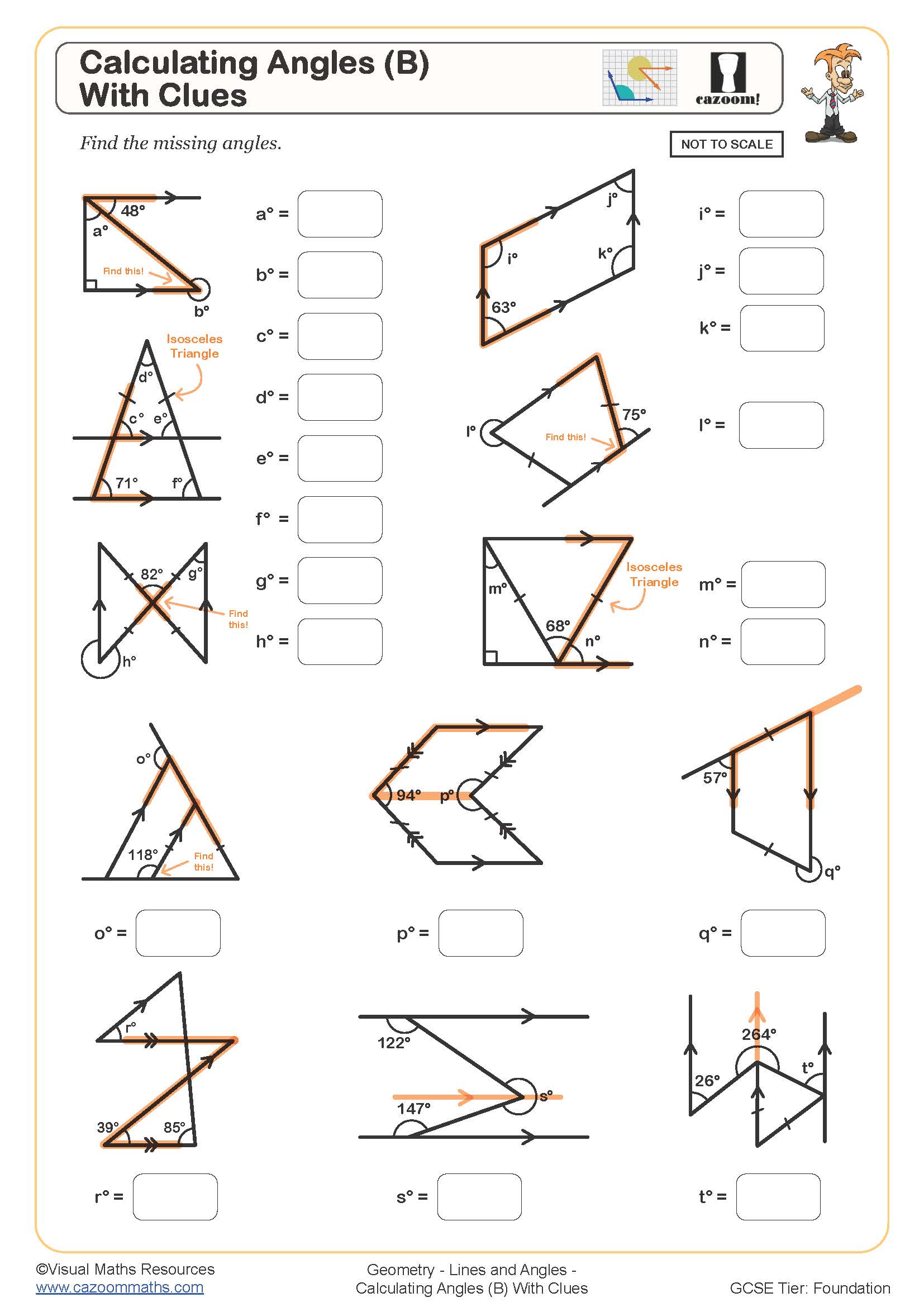
Calculating Angles (B) (With Clues)
Year groups: 8, 9, 10
Forming and Solving Equations Involving Angles (A)
Year groups: 8, 9
-Worksheet.jpg?w=3840)
Forming and Solving Equations Involving Angles (B)
Year groups: 8, 9
-Worksheet.jpg?w=3840)
All worksheets are created by the team of experienced teachers at Cazoom Maths.
What are the key angle properties students need for calculating angles?
Students need fluency with angles on a straight line (180°), angles around a point (360°), vertically opposite angles being equal, and the angle sum properties of triangles and quadrilaterals. At KS3 and KS4, these foundations extend to angles in parallel lines (alternate, corresponding, and co-interior angles), interior and exterior angles of polygons, and circle theorems including angles in the same segment and angles from a diameter.
A common error occurs when students correctly identify which angle property applies but then make calculation mistakes through poor organisation of their working. Teachers frequently notice students writing 180 - 60 - 70 without brackets, leading to incorrect answers. Mark schemes specifically require students to state which angle property they're using, so practising clear annotation alongside accurate calculation builds exam technique that directly translates to marks gained.
Which year groups study calculating angles?
These calculating angles worksheets span Year 7, Year 8, Year 9, and Year 10, covering both KS3 and KS4 content. The topic begins in Year 7 with basic angle facts and simple calculations, forming part of the geometry and measures strand of the National Curriculum. By Year 8, students tackle angles in parallel lines and begin polygon angle problems.
Progression through Year 9 and Year 10 increases problem complexity rather than introducing entirely new rules. Students move from single-step calculations to problems requiring multiple angle properties in sequence, often combining parallel line rules with triangle properties. At GCSE Foundation, questions typically involve two or three steps, whilst Higher tier problems may nest several angle relationships within a single diagram, requiring students to work systematically through interdependent calculations.
How do students use angle clues to solve problems?
Working with angle clues develops algebraic thinking within geometric contexts. Students use given information such as angles expressed as multiples (2x, 3x), relationships between angles ('one angle is 20° more than another'), or ratio clues to form equations. This requires translating geometric constraints into algebraic expressions, then solving to find unknown values before calculating specific angles.
This skill connects directly to engineering and architecture, where designers work backwards from constraints to determine specifications. Structural engineers calculate roof angles by balancing load-bearing requirements with material limits, whilst satellite engineers determine transmission angles using Earth's curvature and orbit geometry. These real-world applications demonstrate why systematic angle calculation matters beyond the classroom, making abstract geometric reasoning tangible for students questioning the relevance of angle problems.
How can teachers use these calculating angles worksheets effectively?
The worksheets provide structured progression within each year group, starting with straightforward applications of single angle properties before building to multi-step problems. Answer sheets showing complete working allow students to self-assess their reasoning process, not just their final answers. This makes the resources particularly valuable for identifying where logical gaps occur, helping teachers address misconceptions about which property applies when.
Many teachers use these sheets for starters to retrieve prior knowledge before introducing new angle contexts, or as targeted intervention for students who understand the rules but struggle with systematic application. The scaffolded difficulty within each worksheet supports paired work, where stronger students articulate their reasoning to peers. For homework, the answer sheets enable parents to support practice even if they're unsure of angle terminology themselves, whilst for revision, students can work through progressively challenging problems to build confidence before assessments.