Circumference Worksheets
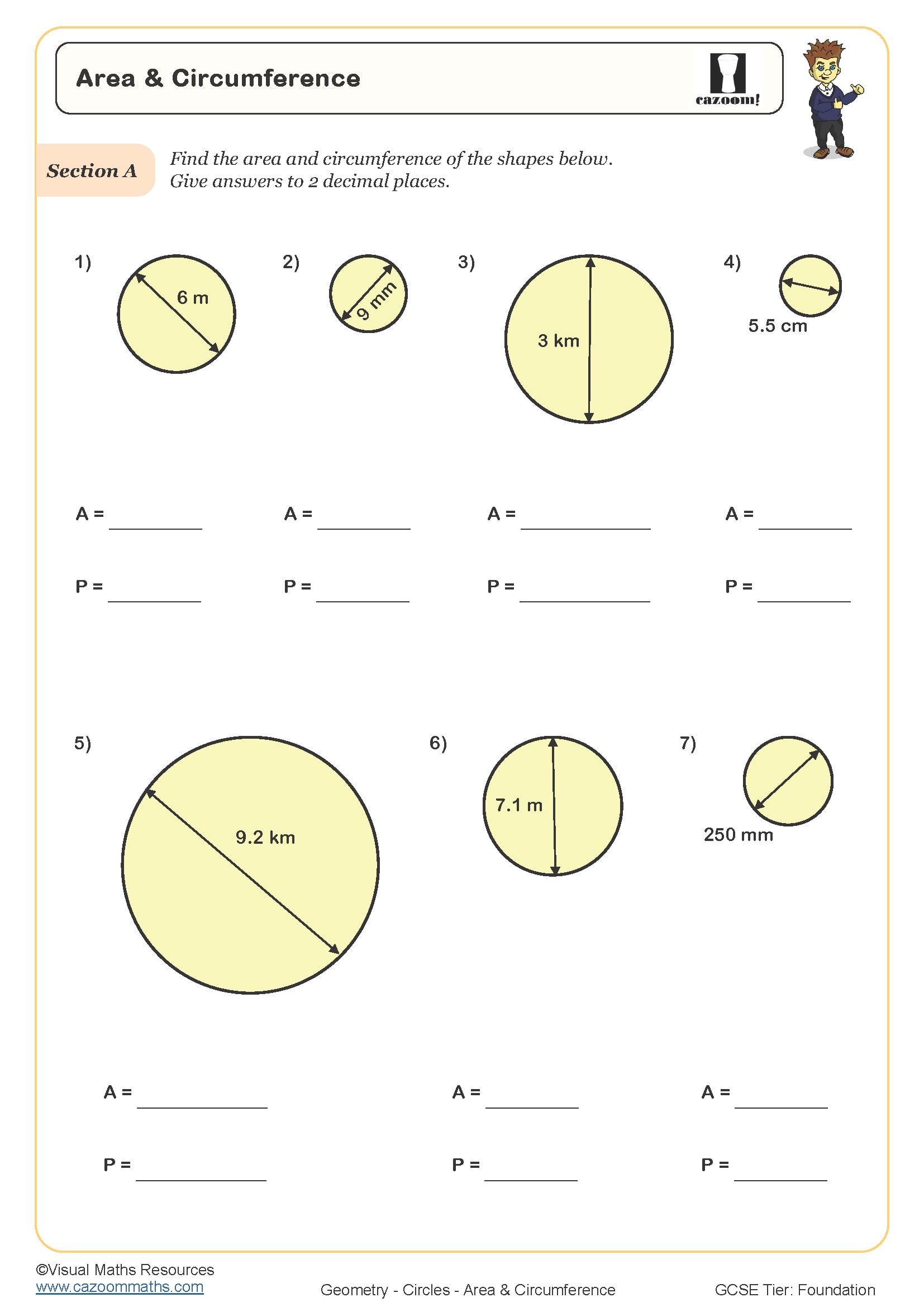
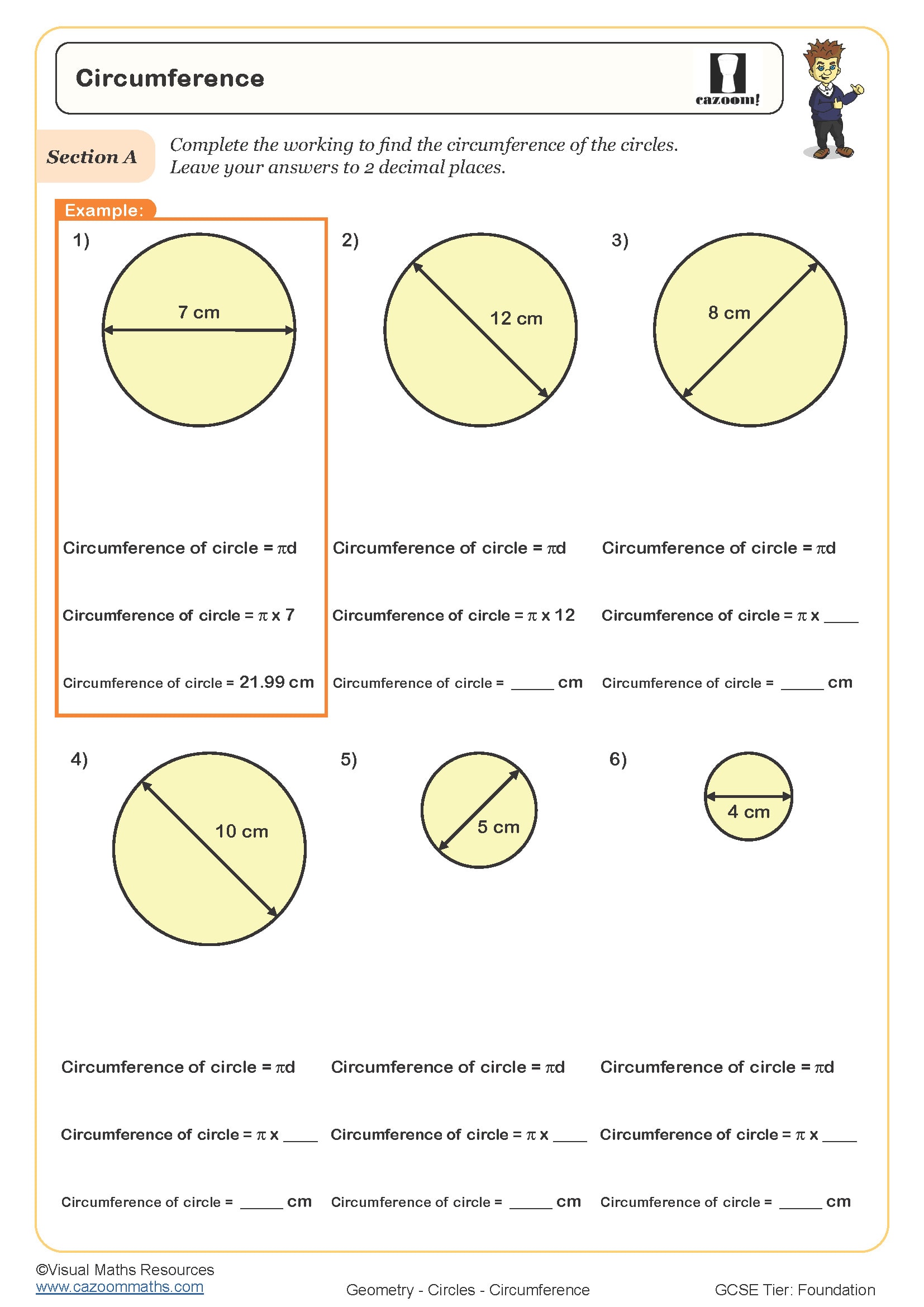
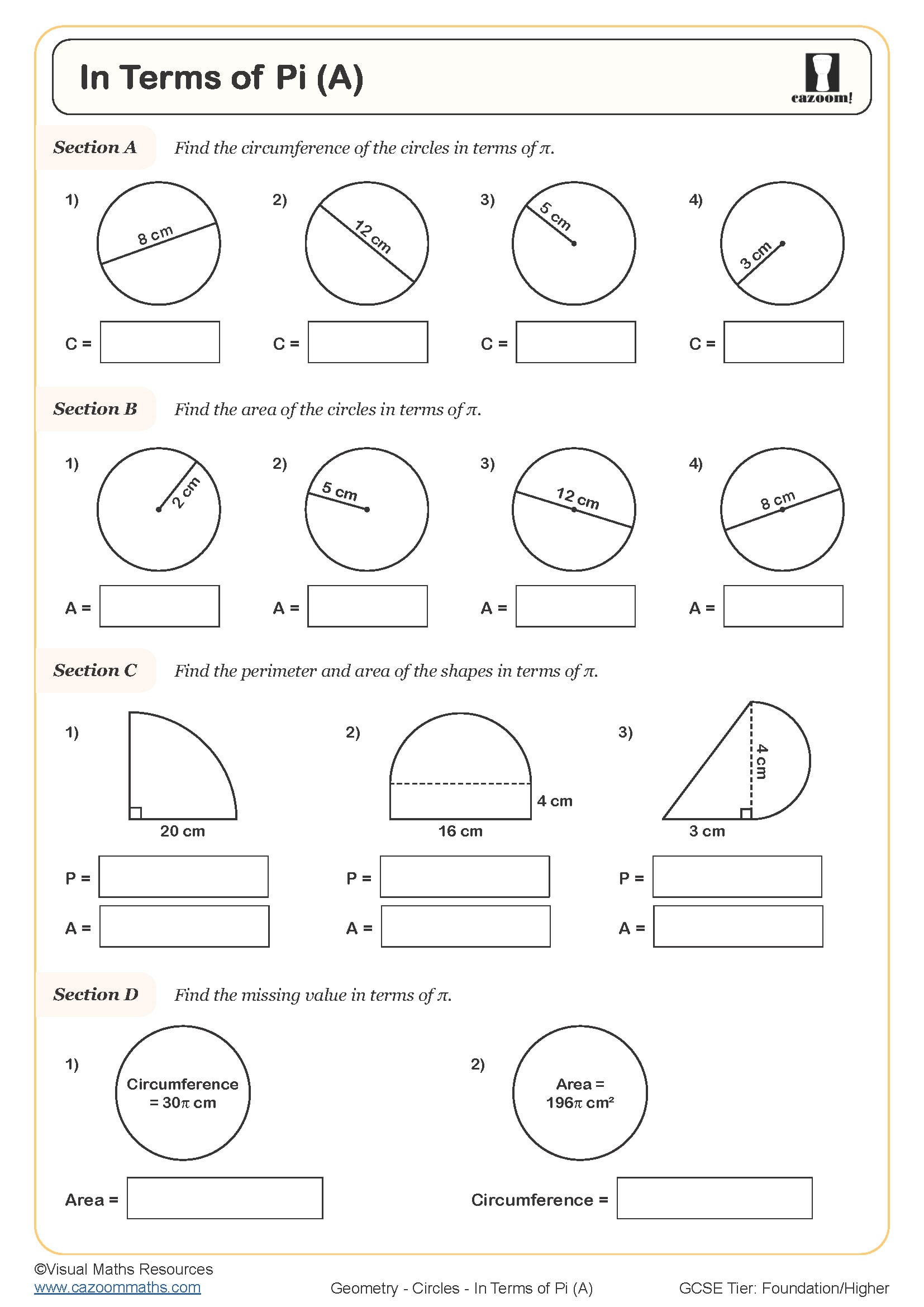
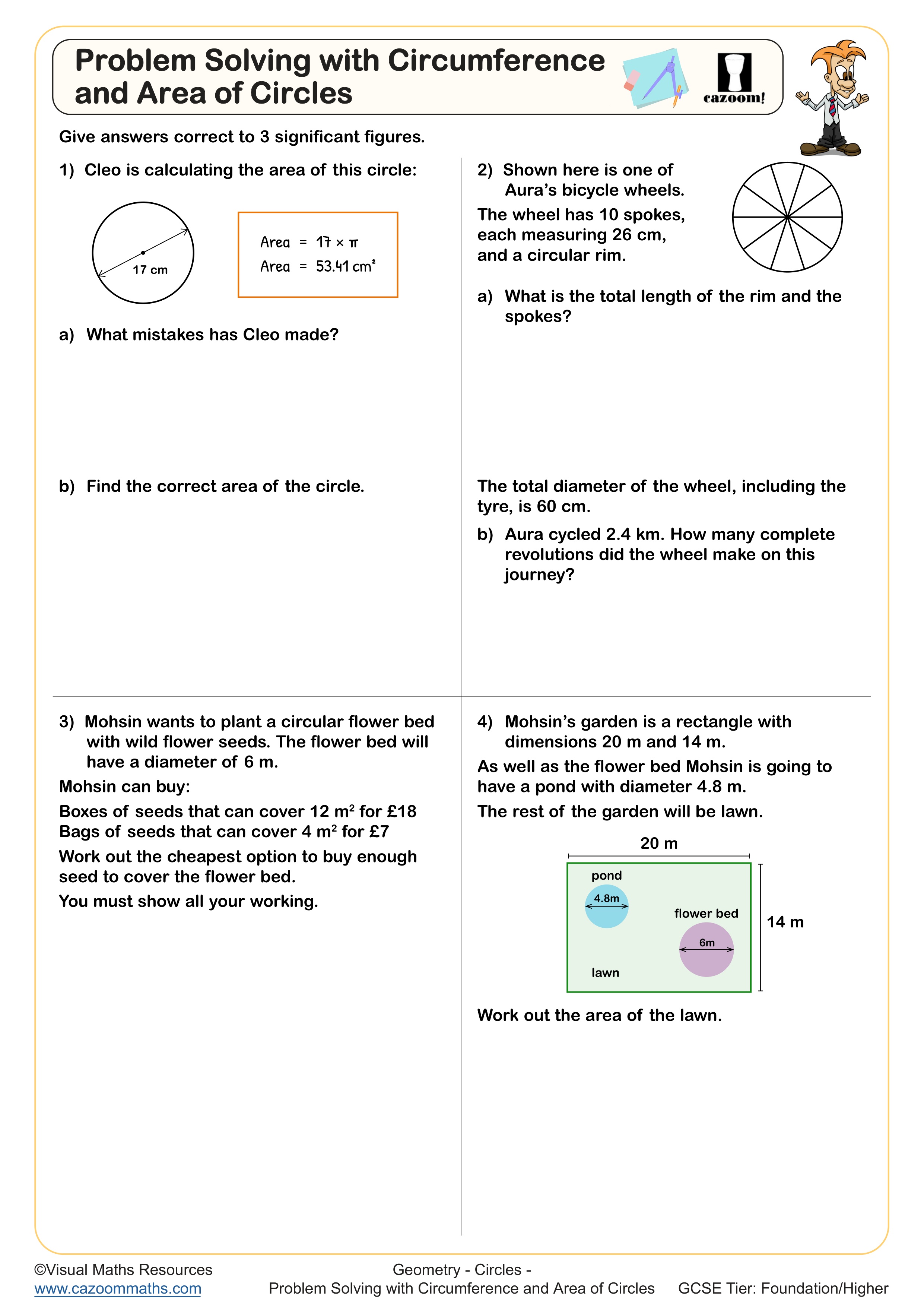
All worksheets are created by the team of experienced teachers at Cazoom Maths.
What is circumference of circle?
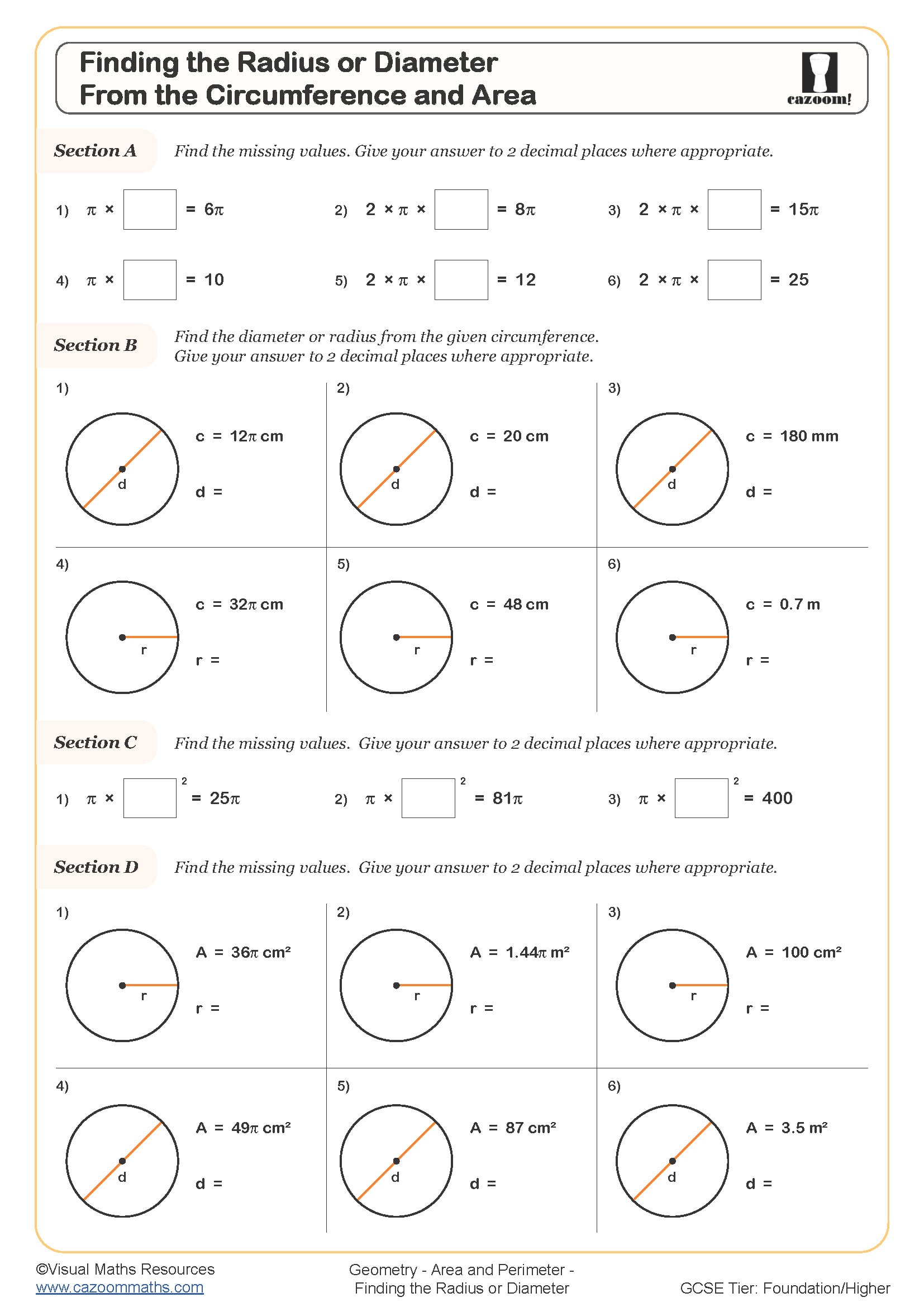
Circumference is the distance around the edge of a circle, equivalent to the perimeter of other shapes. Students learn two key formulas: C = πd (where d is diameter) and C = 2πr (where r is radius). This concept appears throughout KS3 and becomes particularly important for GCSE geometry questions.
Teachers notice students often struggle to identify whether they've been given the radius or diameter in word problems. Many assume all measurements are diameters, leading to incorrect answers. Providing clear diagrams and encouraging students to highlight key measurements helps address this misconception when calculating circumference.
Which year groups study circumference?
Circumference typically appears in Year 7 as part of the KS3 geometry curriculum, with students initially working with exact values like 6π cm. The topic develops through Years 8 and 9, incorporating decimal approximations and more complex applications. By Year 10, students tackle circumference within compound shapes and problem-solving contexts.
Teachers find that Year 7 students often struggle with the concept of π as both an exact value and approximation. Starting with simple integer radii helps build understanding before introducing more challenging measurements. The progression allows students to develop both procedural fluency and conceptual understanding across the key stages.
Should students leave answers in terms of π?
GCSE questions often specify whether to leave answers in terms of π or as decimal approximations. When exact answers are required, students should express circumference as expressions like 14π cm rather than calculating decimal values. This approach demonstrates understanding of π as an exact mathematical constant.
Teachers observe that students frequently round too early in multi-step problems, losing marks for accuracy. Encouraging students to work with exact values throughout calculations and only convert to decimals at the final step improves their precision. This skill becomes crucial for higher-tier GCSE questions involving compound shapes.
How can teachers use these worksheets effectively?
Teachers find these calculating circumference worksheet resources work well as starter activities to reinforce formula recall, or as homework to consolidate classroom learning. The answer sheets enable quick marking and allow students to self-assess their understanding. Differentiated questions support both foundation and higher-tier GCSE preparation.
Many teachers use the worksheets diagnostically to identify which students confuse radius and diameter, then provide targeted intervention. The real-world contexts help students see practical applications in engineering and design. Combining worksheet practice with hands-on measuring activities strengthens conceptual understanding alongside procedural skills.